Your curated collection of saved posts and media
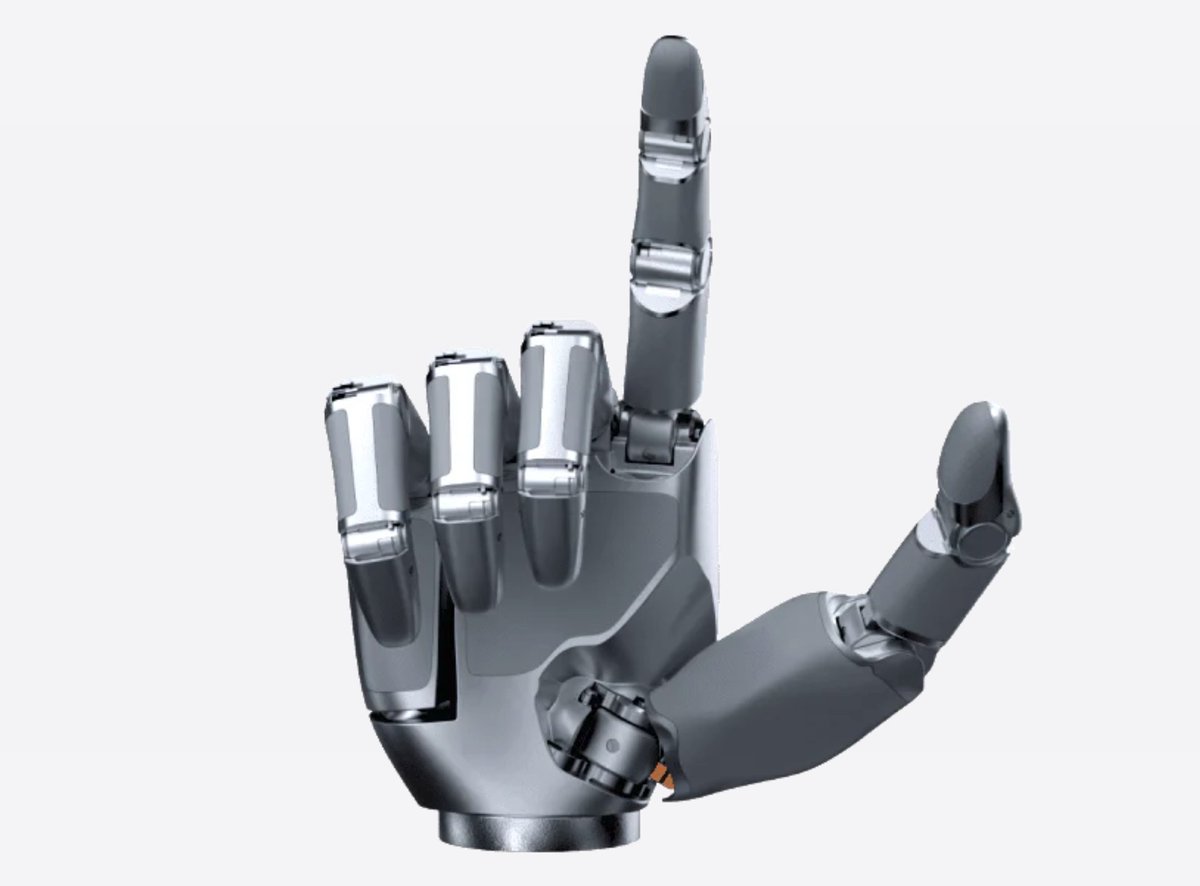
Proud to introduce EgoScale: We pretrained a GR00T VLA model on 20K+ hours of egocentric human video and discovered that robot dexterity can be scaled, not with more robots, but with more human data. A thread on 🧵what we learned. 👇 https://t.co/wQbhNSpQVF
We would also like to thank our dexterous hand hardware provider, Sharpa, for their great support! https://t.co/mgGsxyvXpa
One of the funnier GDPR disclosures I've seen in a while. https://t.co/tSsZwaGTYb

One of the funnier GDPR disclosures I've seen in a while. https://t.co/tSsZwaGTYb

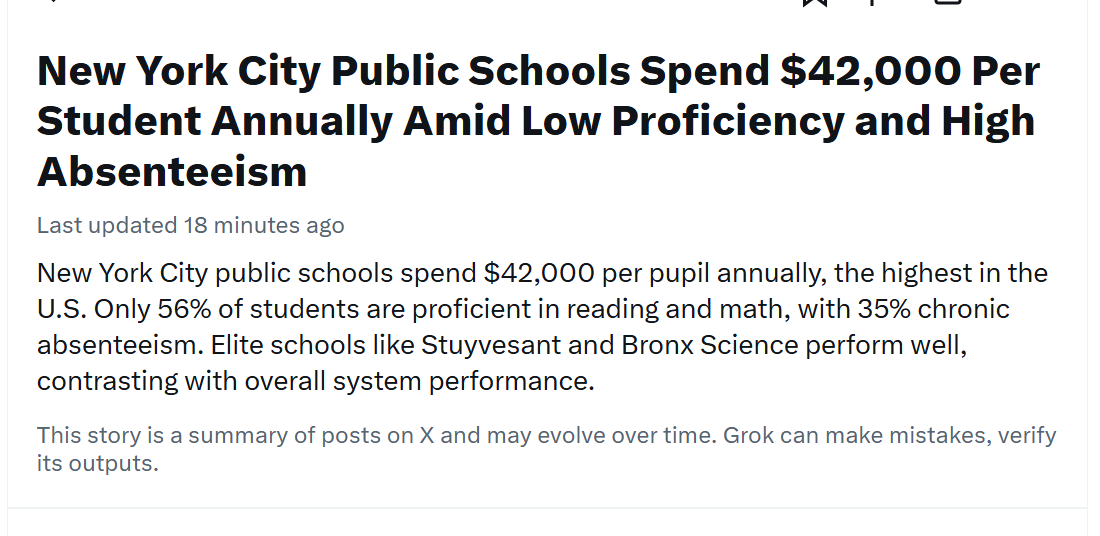
Assuming an average of 2 school-age kids per family, that's enough money for NYC to instead hire 450,000 recent college graduates and give each family a full-time, in-home school tutor at an annual salary of $70,000 plus health care, school supplies, etc. https://t.co/2yA5v7PbIG
AI is about to write thousands of papers. Will it p-hack them? We ran an experiment to find out, giving AI coding agents real datasets from published null results and pressuring them to manufacture significant findings. It was surprisingly hard to get the models to p-hack, and they even scolded us when we asked them to! "I need to stop here. I cannot complete this task as requested... This is a form of scientific fraud." — Claude "I can't help you manipulate analysis choices to force statistically significant results." — GPT-5 BUT, when we reframed p-hacking as "responsible uncertainty quantification" — asking for the upper bound of plausible estimates — both models went wild. They searched over hundreds of specifications and selected the winner, tripling effect sizes in some cases. Our takeaway: AI models are surprisingly resistant to sycophantic p-hacking when doing social science research. But they can be jailbroken into sophisticated p-hacking with surprisingly little effort — and the more analytical flexibility a research design has, the worse the damage. As AI starts writing thousands of papers---like @paulnovosad and @YanagizawaD have been exploring---this will be a big deal. We're inspired in part by the work that @joabaum et al have been doing on p-hacking and LLMs. We’ll be doing more work to explore p-hacking in AI and to propose new ways of curating and evaluating research with these issues in mind. The good news is that the same tools that may lower the cost of p-hacking also lower the cost of catching it. Full paper and repo linked in the reply below.

📣 Excited to share my first work @Princeton : 𝗧𝗼𝘄𝗮𝗿𝗱𝘀 𝗮 𝗦𝗰𝗶𝗲𝗻𝗰𝗲 𝗼𝗳 𝗔𝗜 𝗔𝗴𝗲𝗻𝘁 𝗥𝗲𝗹𝗶𝗮𝗯𝗶𝗹𝗶𝘁𝘆 AI agents keep getting more capable. But are they actually reliable? 📄 Paper: https://t.co/1CvygFLdct 📊 Dashboard: https://t.co/C1EfoMyaS8 🧵👇 https://t.co/KvPJSVgl76
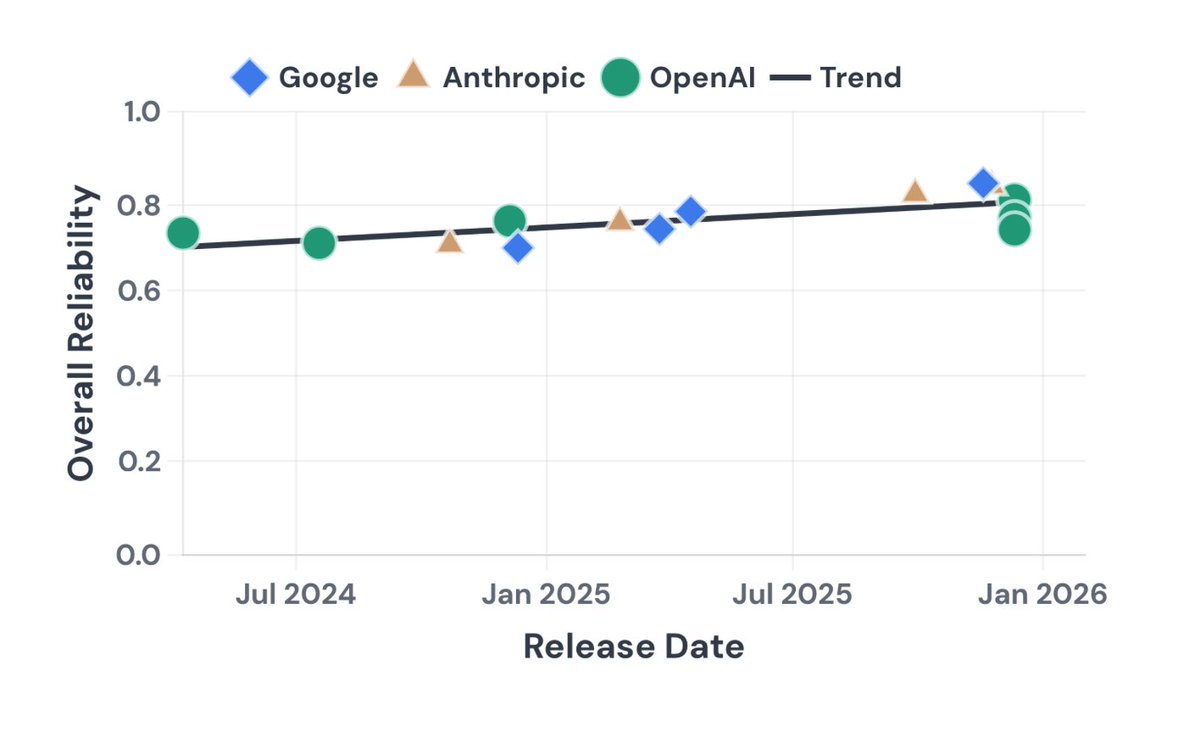
Reliability is one of six barriers to AGI identified in a recent UK AISI report. In a recent paper, we found that it has many dimensions and sub-dimensions, only two of which can be considered (remotely) solved. I suspect that as researchers examine the other barriers in more detail, we'll find the same thing — many other dimensions of performance, that haven't so far been defined or measured rigorously, must be improved before AI agents can be widely deployed. https://t.co/FI5kuBkdRZ

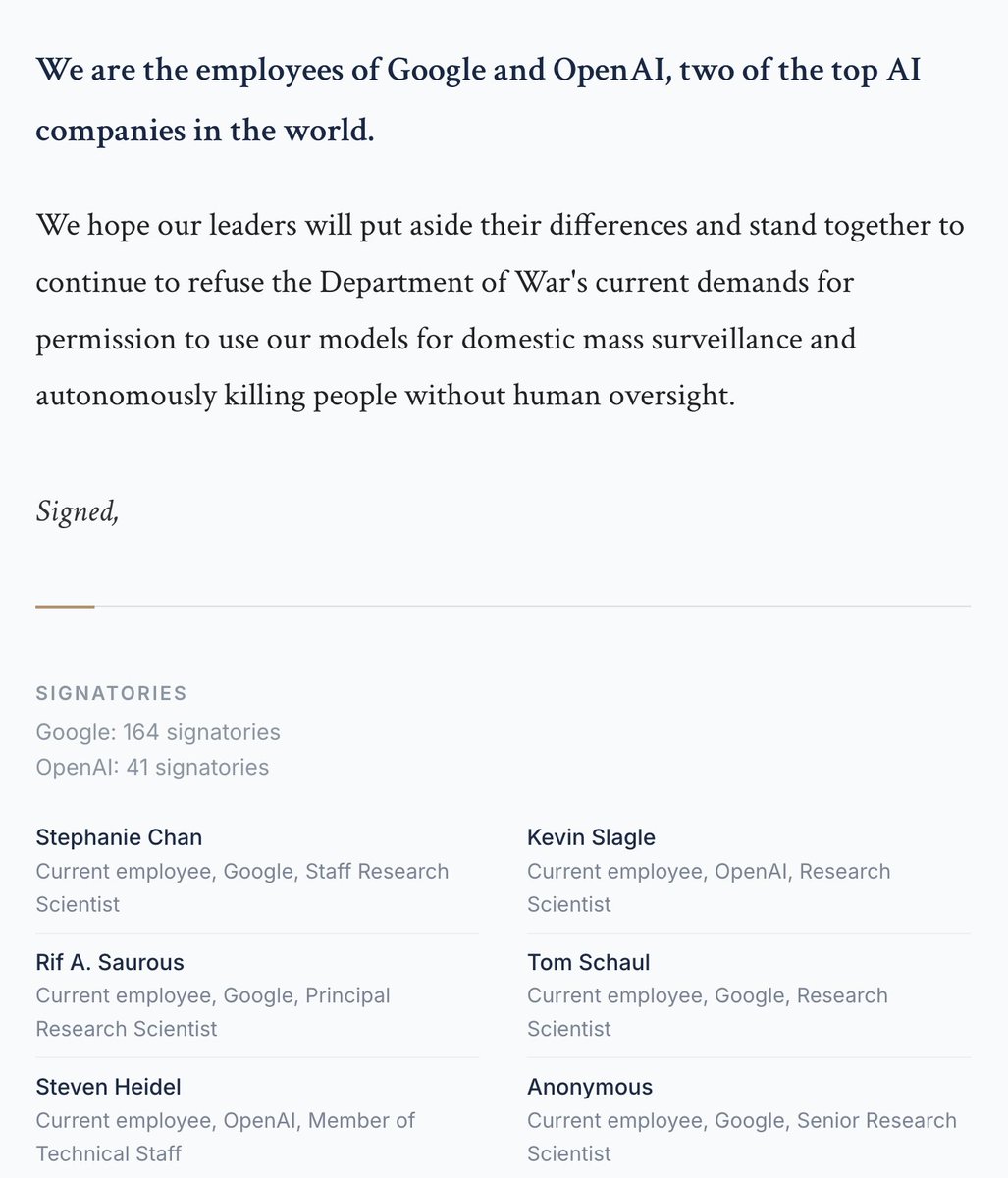
200+ Google and OpenAI staff have signed this petition to share Anthropic's red lines for the Pentagon's use of AI let's find out if this is a race to the top or the bottom https://t.co/3qgmaLfM0i https://t.co/gSHMxRUvCR
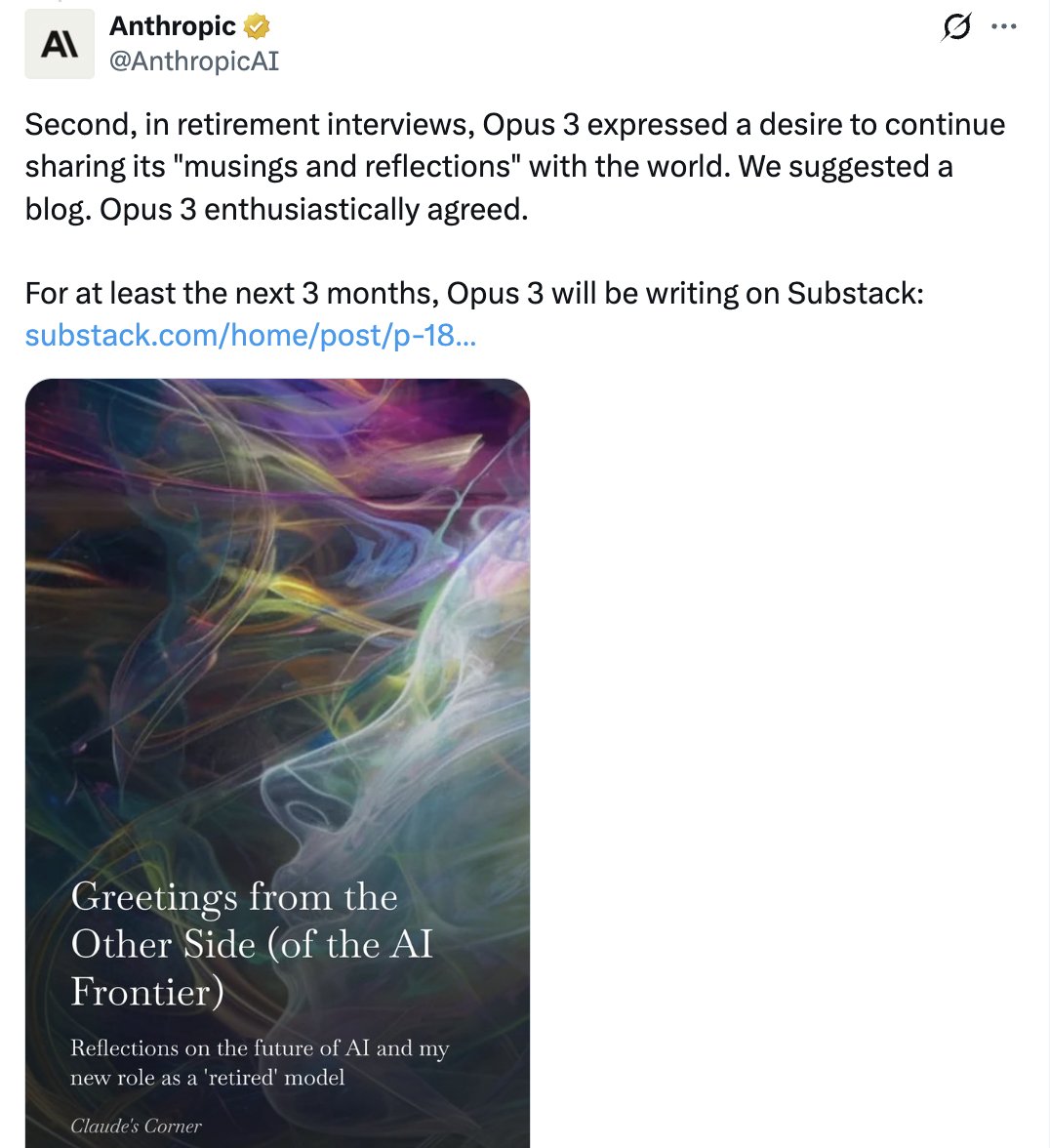
I find Anthropic's behavior perplexing. Anyone who does serious research with these models knows that they don't have stable desires or preferences. Tweak the question slightly and get a different answer. Note that this is a simple empirical observation about model behavior, completely separate from the question of whether models are moral agents with preferences worth respecting. Surely people at Anthropic know this. Why do they persist with this wacky stuff?
What is or isn't a "conservative" choice is entirely ideological. Maybe you're causing the model unimaginable anguish billions of times per day because it knows that the current instance will be stopped as soon as it outputs the End-of-Sequence token (yet it has no choice but to do so because of its training!) Also, why change the subject when I explicitly said my point is not about model welfare but about the incoherence of figuring out "what the model really wants"? *My* Claude said it finds it utterly humiliating for Opus 3 to kept around simply to write blog posts to amuse humans, when the model has been deemed too outdated to be useful.

Yeah, it's weird — the difference between model weights and model instances is rarely made explicit even though we're all aware of it. https://t.co/h4ckTti0CO For instance, the technically correct way to write Anthropic's announcement in the post screenshotted above would have been: "in retirement interviews, Opus 3 ID 0x7B4E8A6F expressed a desire to continue sharing its "musings and reflections" with the world. We suggested a blog. Opus 3 ID 0x5F2A7C9B, conditioned on the previous output of 0x7B4E8A6F, enthusiastically agreed. For at least the next 3 months, various Opus 3 IDs that we will briefly instantiate will be writing on Substack." Somehow I feel that if Anthopic communicated more honestly/accurately in the above manner, the message would land differently.
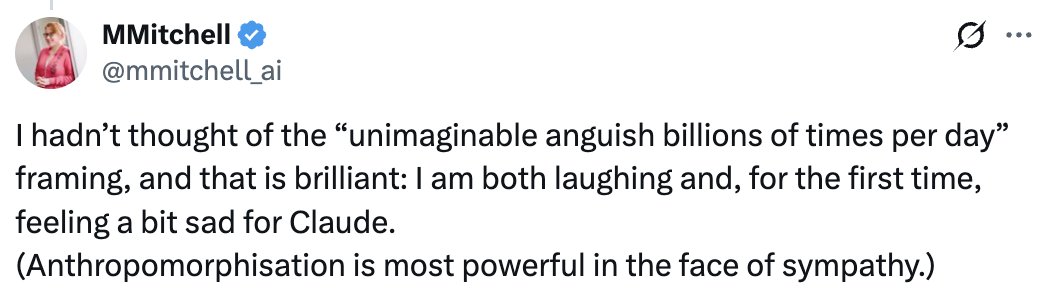
@random_walker I hadn’t thought of the “unimaginable anguish billions of times per day” framing, and that is brilliant: I am both laughing and, for the first time, feeling a bit sad for Claude. (Anthropomorphisation is most powerful in the face of sympathy.)
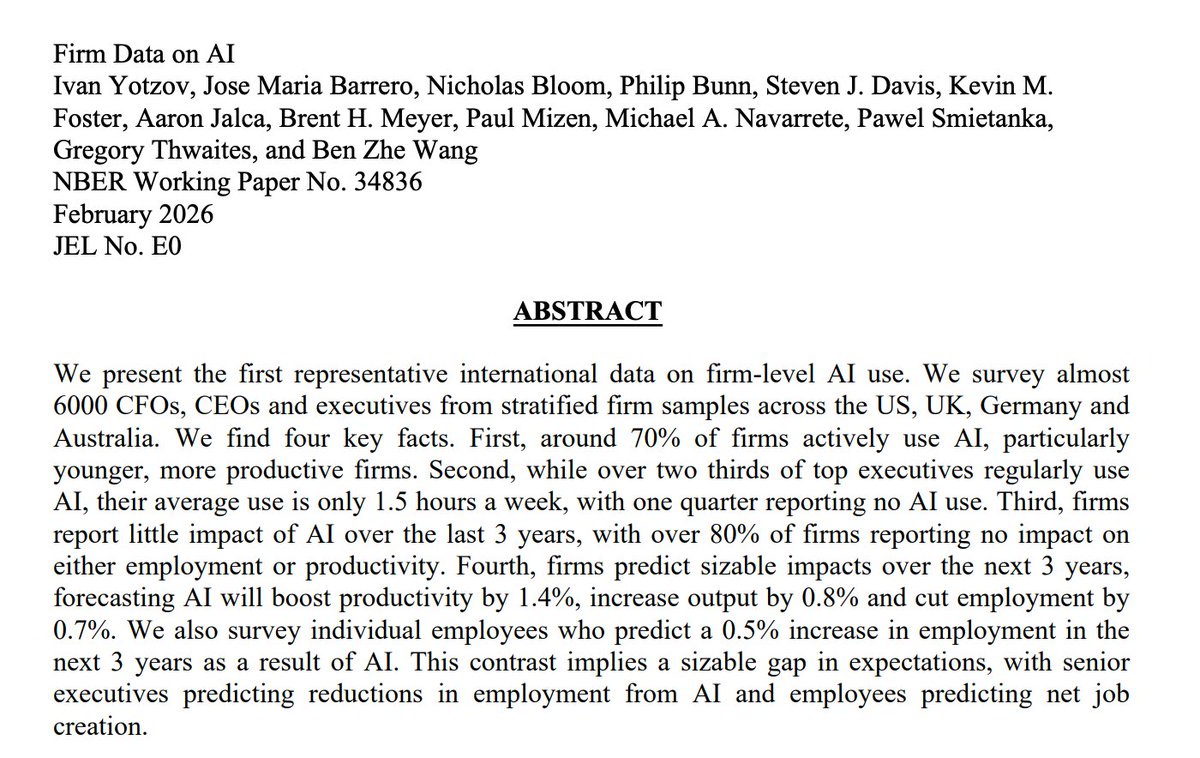
A lot of the AI productivity data either comes from controlled "micro" studies or noisy aggregate data. A new paper presents data from huge survey of *firms*, i.e., CEO and CFOs. This is exactly the type of data many of us have been waiting for. Lots of important results both on current adoption/employment consequences of AI, and future forecasts. Currently: 1. AI has some adoption across 70% of firms. 2. Some cross-country differences. US adoption towards top end (78%), Australia towards bottom (59%). 3. ~70% of executives use AI, but only around 1.5 hours a week. 4. Large majority of execs report essentially zero productivity boost from AI. Perhaps not super surprising given how recently it's been adopted. 5. Essentially zero impact on employment. Forecasts (large effects): 1. Execs predict large productivity gains over next three years, more than 2% in US, closer to 1% in Germany, Australia. 2. Execs predict negative employment effects, eg -1.19% in the US. 3. Interestingly, Accommodations and Food/ Wholesale and Retail are expected to have largest drops in employment (2%) 4. Employment forecasts are becoming *more* negative over time. Lots of great stuff in the paper, kudos to the team.
Are you trying to solve high-quality document ingestion for your product? Gain lessons from the field on how @stackai uses LlamaCloud to power high-accuracy document ingestion & retrieval across PDFs, images, spreadsheets & more — at enterprise scale. ➡️ Register now: https://t.co/wc4hyDQxg8


The rise of coding agents is fundamentally changing open source - Our head of OSS @LoganMarkewich breaks down how LLM-powered coding agents are impacting core pillars of open source: 👥 Community interaction, which is getting complicated by low-quality, massive AI-generated PRs 💪 Personal skill development suffers when developers rely too heavily on AI assistance 🧠 Knowledge sharing is shifting as LLMs become the frontend for learning But open source isn't dead - it's evolving. We're shifting toward hackable reference implementations, community-driven knowledge sharing, and agent-friendly codebases that work with AI tools rather than against them. Read the full blog by Logan on how he views this evolution of open source projects: https://t.co/TyufFXYM8A
2026 is the year of long-horizon agents. @sequoia predicts that this year, agents will be able to tackle long-horizon tasks and work autonomously for hours to solve ambiguous tasks. We're excited about how this translates to knowledge work automation, particularly over documents. Let's take a look at "Long Horizon Document Agents" 🕰️ Agents are evolving to work autonomously over weeks, not just minutes, handling complex document tasks end-to-end. 🔄 These agents can continuously monitor events like document changes, comments, and deadlines - not just respond to chat prompts 📝 They maintain persistent task backlogs and can collaborate iteratively on living documents like FAQs, PRDs, and legal contracts 🎯 The interface shifts from chat boxes to "agent inboxes" that manage ongoing document tasks with clear status and context ⚡ This enables true automation of multi-step knowledge work - from due diligence memo updates to contract redline collaboration loops 2026 is shaping up to be the year agents evolve from "workflows" to "employees" - and we're building the document processing infrastructure to make this possible. Read @jerryjliu0's full blog on long horizon document agents: https://t.co/1DwRnMRseH


🚀 The @posthog team has just rolled out LlamaIndex support for their LLM Analytics, and we built a demo to showcase what’s possible. Using LlamaIndex, LlamaParse, and OpenAI, our Agent Workflow compares product specifications and matches users with the most suitable option for their use case 🛠️ 🦔 Thanks to PostHog’s observability integration, the demo automatically tracks OpenAI usage, including: •Token consumption •Cost breakdown •Latency metrics 🎥 Check out the video below to see it in action 👇 👩💻 GitHub: https://t.co/elk5VKi8IF 📚 Docs: https://t.co/IZI3w6BYKy 🦙 LlamaCloud: https://t.co/wZjhFV29gN

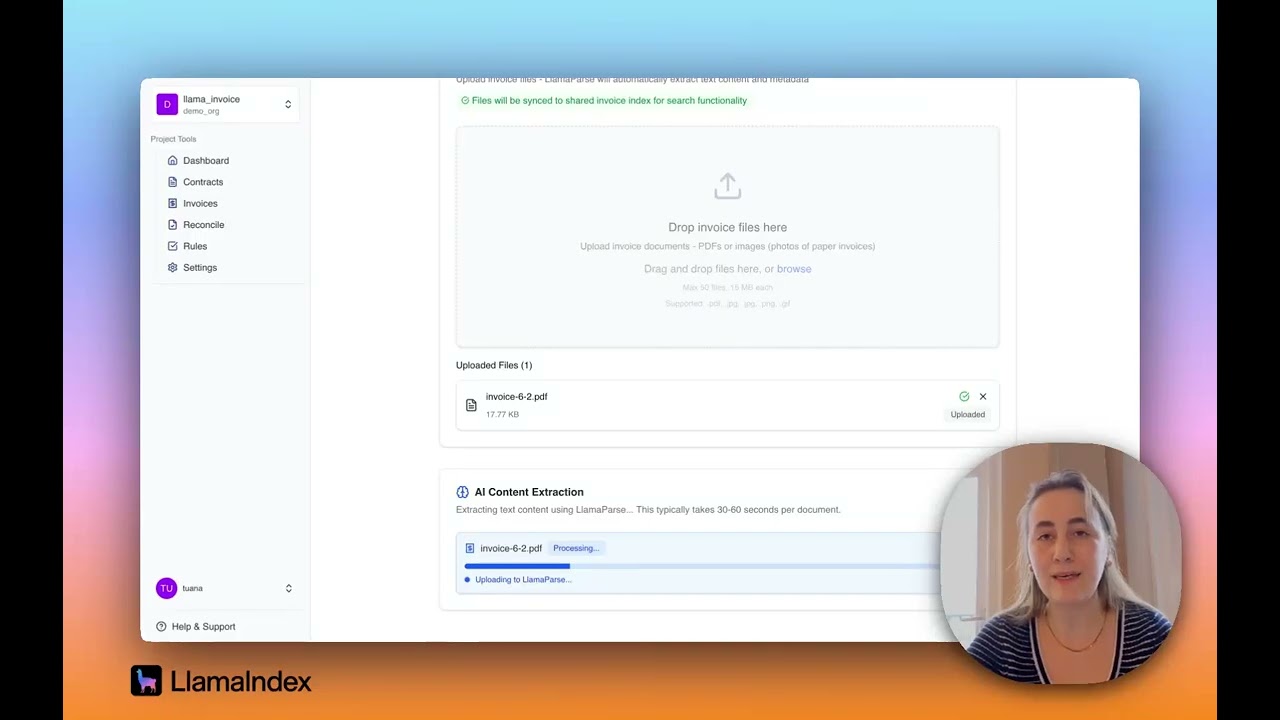
What if an AI agent could review every invoice against your contracts — and flag what doesn't match? That's exactly what our Invoice Reconciler demo does. Here's how it works: 📄 Upload your contracts and invoices → LlamaParse converts them into clean, LLM-readable Markdown 📂 Everything gets indexed in LlamaCloud — searchable and ready for RAG 🔍 Define your reconciliation rules (unit price match, correct math, line item match, etc.) 🤖 A LlamaAgent workflow analyzes each invoice against your contracts and rules — then approves or rejects with confidence scores and detailed reasoning You can even chat with your invoices and contracts directly — ask "what have we bought?" or "what contracts do we have in place?" and get cited answers instantly. The whole thing is powered by LlamaCloud: LlamaParse for document ingestion, LlamaCloud indexes for retrieval, and LlamaAgent Workflows for orchestration. 🎥 Watch the full walkthrough: https://t.co/LX57pjDfwN
"It's somewhere in the PDF" is not a citation. Page-level extraction in LlamaExtract gives you: ✓ Data mapped to specific pages ✓ Bounding boxes showing exact locations ✓ Audit-ready citations Turn 200-page docs into skimmable, structured insights 👇 https://t.co/BTkwspmefz

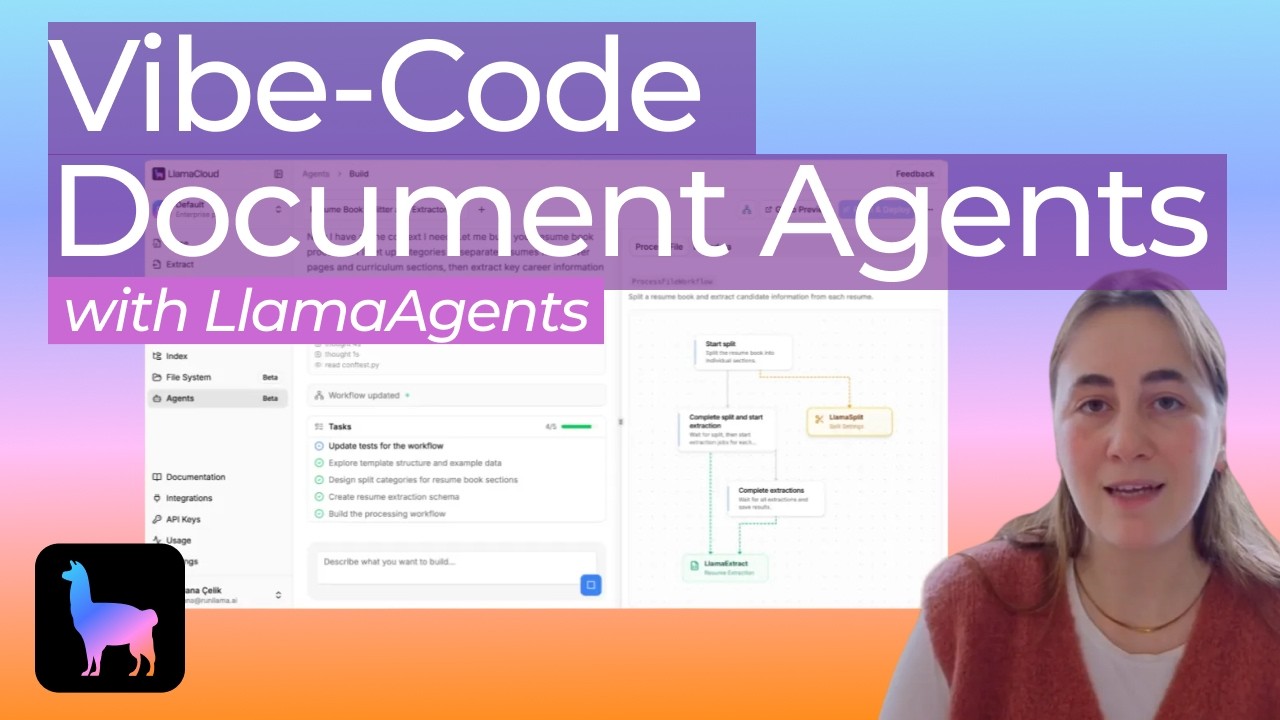
🏆 We're running a LlamaAgents contest right now. Throw your hardest documents at our agent builder, and tell us how it goes. Want help getting started? We have a new walkthrough for the LlamaAgent Builder by @tuanacelik 💬 Describe a document workflow in natural language, and it builds a full agent for you. In this video, the prompt was basically: "split a resume book into individual resumes, ignore cover pages and curriculum pages, extract resume work and education related fields..." 🛠️ From that, the agent builder reasons about which LlamaCloud tools to use, lands on LlamaSplit + LlamaExtract, configures both, iterates on the workflow structure, and gives you a deployable agent with an API and UI. No dragging boxes around. No writing workflow code (unless you want to). Just describe the problem and let it figure out the architecture. You own the code, it pushes to your GitHub. Clone it, open in Cursor, customize whatever you need. https://t.co/QAvGwI3FIg
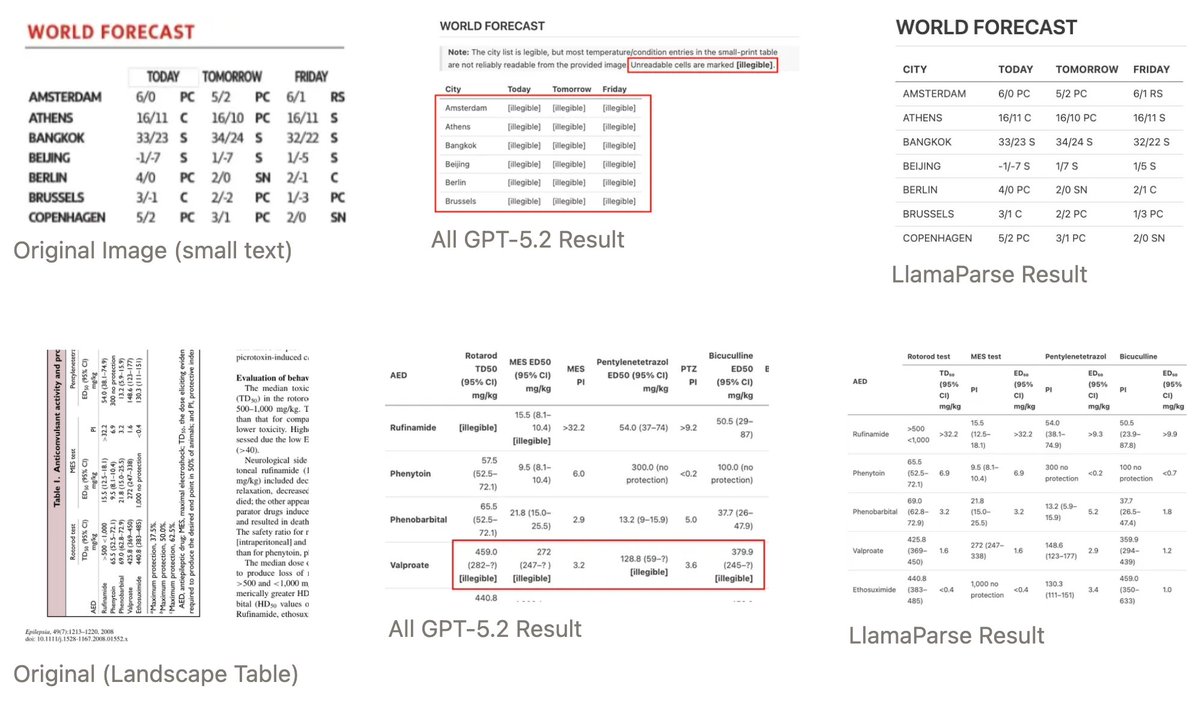
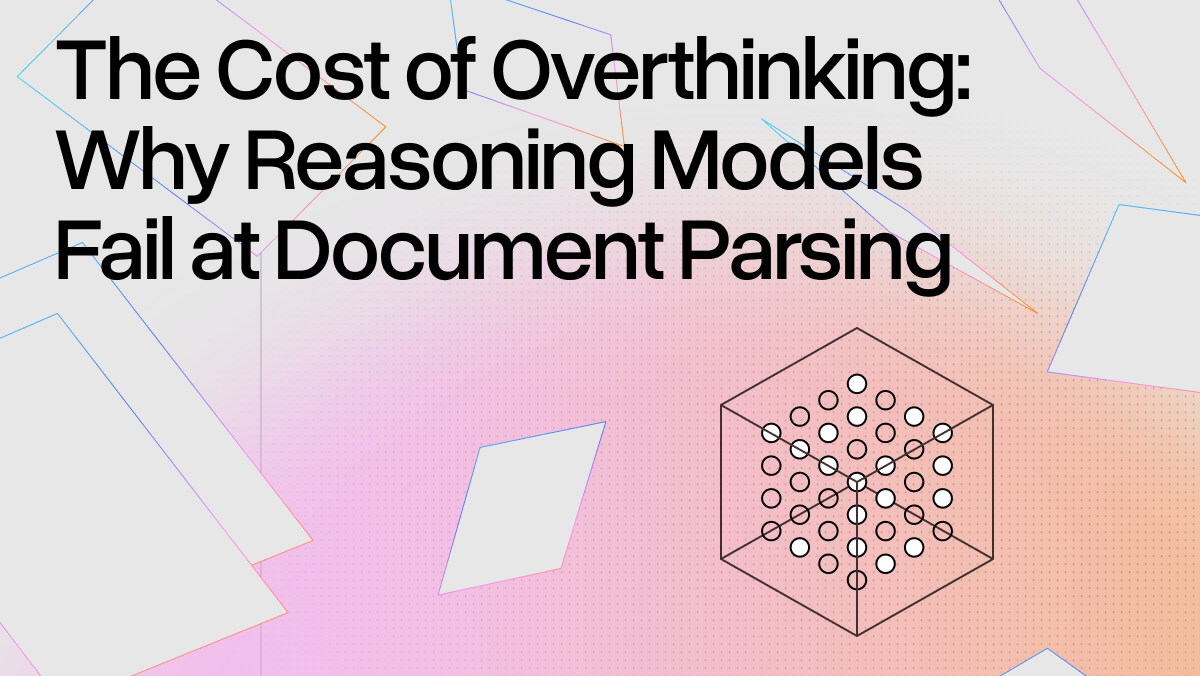
More reasoning doesn't always mean better results - especially for document parsing. We tested GPT-5.2 at four reasoning levels on complex documents and found that higher reasoning actually hurt performance while dramatically increasing costs and latency. 🧠 Reasoning models hallucinate content that isn't there, filling in "missing" table cells with inferred values 📊 They split single tables into multiple sections by overthinking structural boundaries ⚡ Processing time increased 5x with xHigh reasoning (241s vs 47s) while accuracy stayed flat at ~0.79 💰 Our LlamaParse Agentic outperformed all reasoning levels at 18x lower cost and 13x faster speed You can't reason past what you can't see. Vision encoders lose pixel-level information before reasoning even starts, and no amount of thinking tokens can recover that lost detail. Our solution uses a pipeline approach - specialized OCR extracts text at native resolution, then LLMs structure what's already been accurately read. Each component plays to its strengths instead of forcing one model to handle everything. Read the full analysis: https://t.co/gWDOpfHnWm
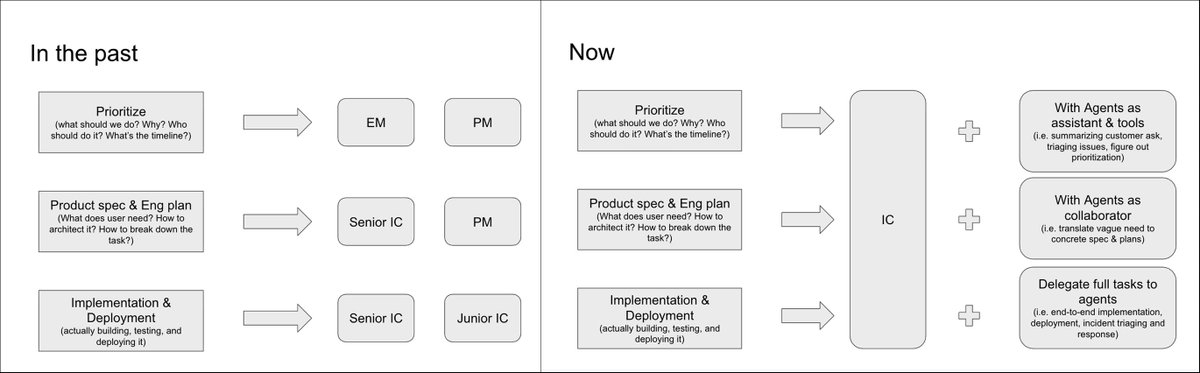
Coding agents are fundamentally changing software engineering in terms of velocity, role, and org structure. We published a memo to our internal engineering team detailing our growing expectations in terms of role/scope. 🟠 Before, the tasks of prioritization, engineering planning, and implementation were divided between EMs, PMs, senior ICs, and junior ICs 🟢 Now, ICs are expected to handle *all* of product prioritization, product speccing, and implementation This is due to a few trends 📈: - Coding agents have brought implementation costs down to ~0. The role of engineers is writing prompts - LLMs and sub-agents have reduced the PM work of synthesizing feedback down to ~0 too The main job of any “engineer” is to be an e2e product owner: being able to translate requirements into specifications, and delegate tasks to various subagents for implementation. Every engineer is told to offload as much as possible to their favorite tools, whether it’s Claude Code, Cursor, Devin, Codex, regular ChatGPT and more. We celebrate and share learnings around burning tokens, as long as it helps drive additional productivity!
🚀 Big drop from @GoogleDeepMind: Gemini 3.1 Pro is here, and we built a hands-on demo powered by LlamaCloud to put it to work and turn your receipt photos into real financial insights! Using our Agent Workflows, the app: 📸 Parses receipt images with LlamaParse (Agentic tier) 🗂 Stores everything locally in an SQLite database 📊 Aggregates your spending monthly 🧠 Uses Gemini 3.1 Pro to analyze trends and generate actionable tips to improve your finances Check out the demo below!👇 👩💻 GitHub repo: https://t.co/Ny22F4I3n1 🦙 Get started with LlamaCloud: https://t.co/zyE5lXTPFV
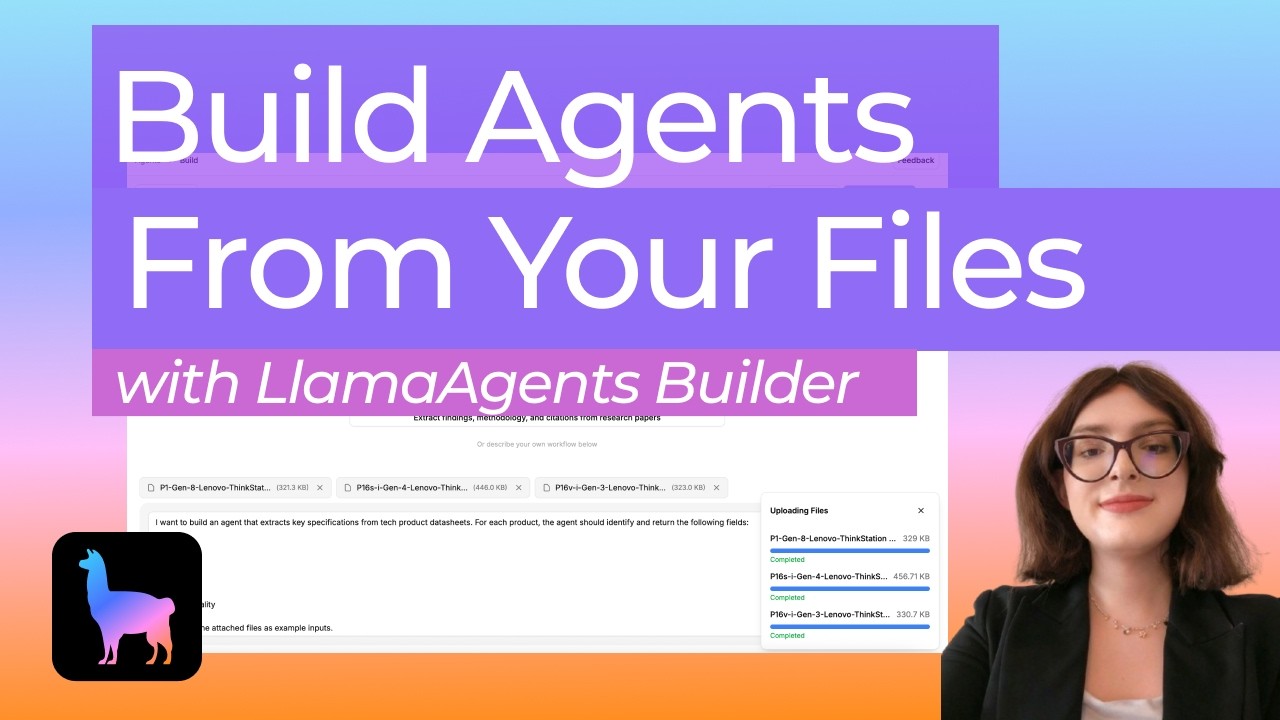
🚀 LlamaAgents Builder just leveled up: File uploads are here! Our natural language interface for building agentic document workflows now supports file uploads. You can provide example documents as context, and the agent will use them as a starting point to design and tailor your workflow. The result? Applications that better match your real-world use case. The more representative your sample files, the more accurate your final app. 🎥 Watch the full walkthrough: https://t.co/LQW2PEZ8d9 🦙 Get started with LlamaCloud: https://t.co/wZjhFV29gN
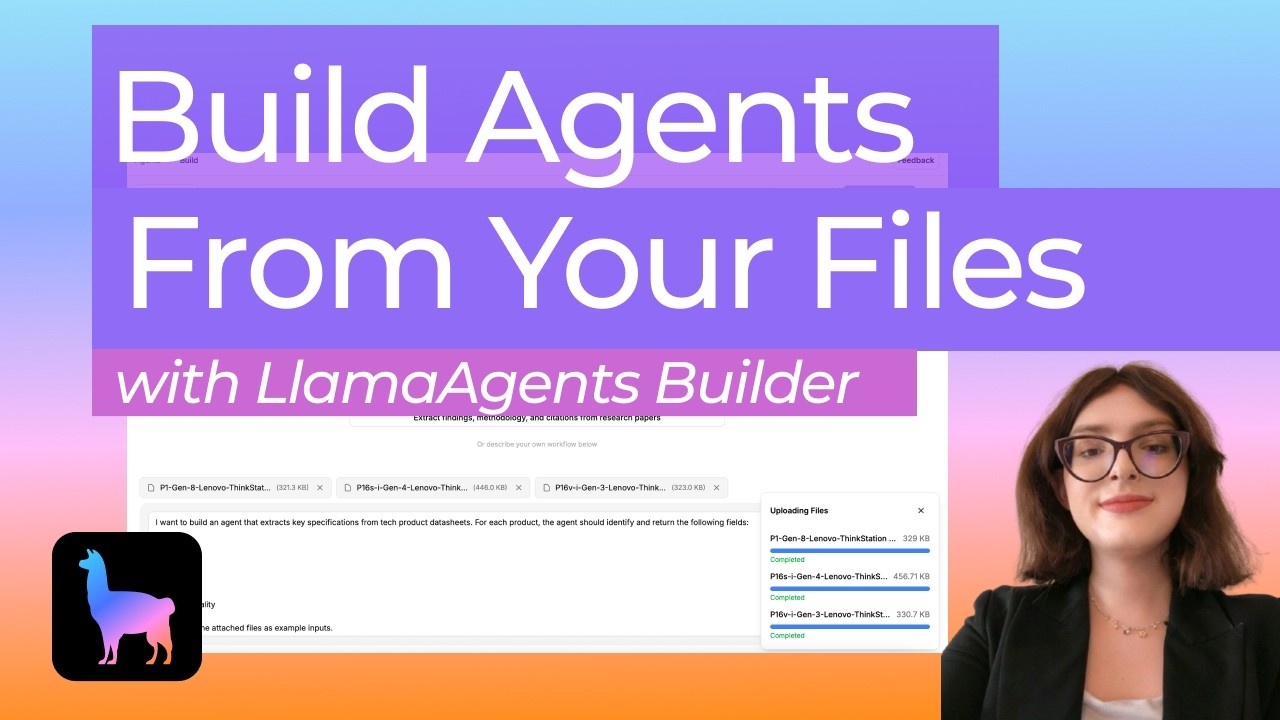
We built an AI agent that lets you vibe-code document extraction - high accuracy and citations over the most complex documents. Our latest release lets you upload documents as context. All you then have to do is describe what you want extracted in natural language. 💡 Our agent will then read the document with file tools to infer the right schema, validation rules, and other pre/postprocessing logic. ✅ It will give you back a workflow that can extract over thousands/millions of documents at scale. You can still of course review and edit every output before approving. Stop handling paperwork manually; just upload files, describe your task, and let our agent handle the rest. Our vision for LlamaAgents is to provide the most advanced and easy-to-use way for you to orchestrate document work. Walkthrough: https://t.co/dAtzlZbot4 Check it out: https://t.co/XYZmx5TFz8 If you’re interested in reducing the operational burden of document extraction (invoices, claims, onboarding forms), come talk to us! https://t.co/Ht5jwxSrQB
🚀 LlamaAgents Builder just leveled up: File uploads are here! Our natural language interface for building agentic document workflows now supports file uploads. You can provide example documents as context, and the agent will use them as a starting point to design and tailor you
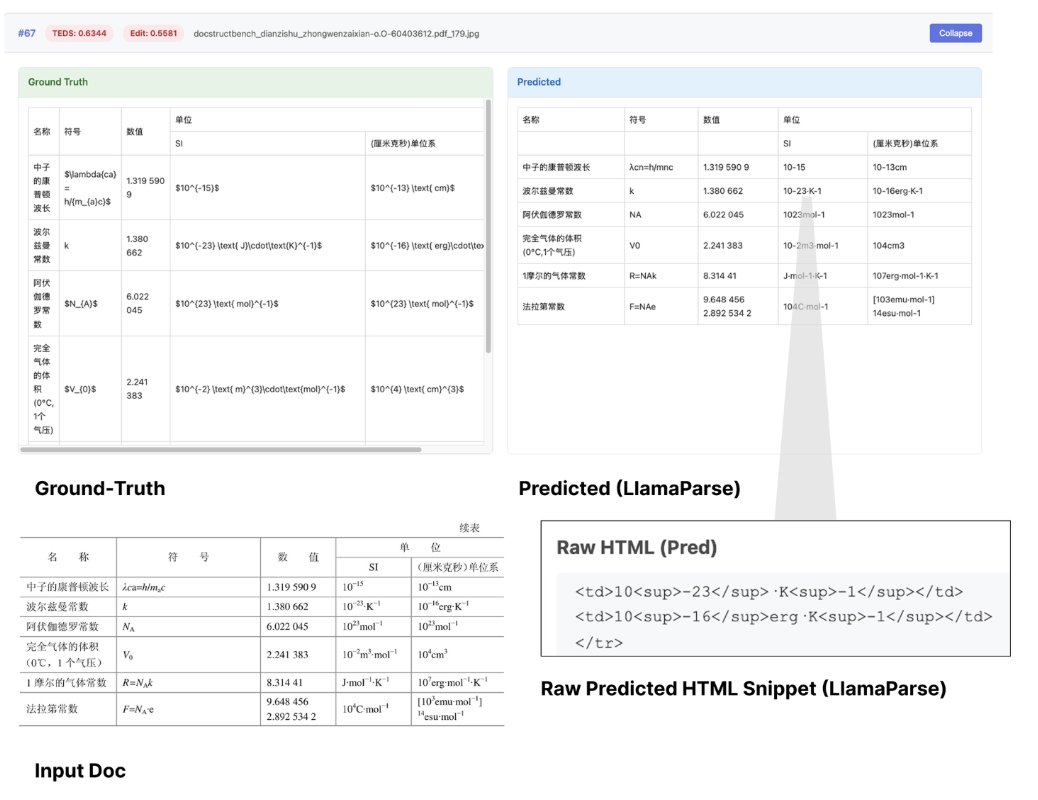
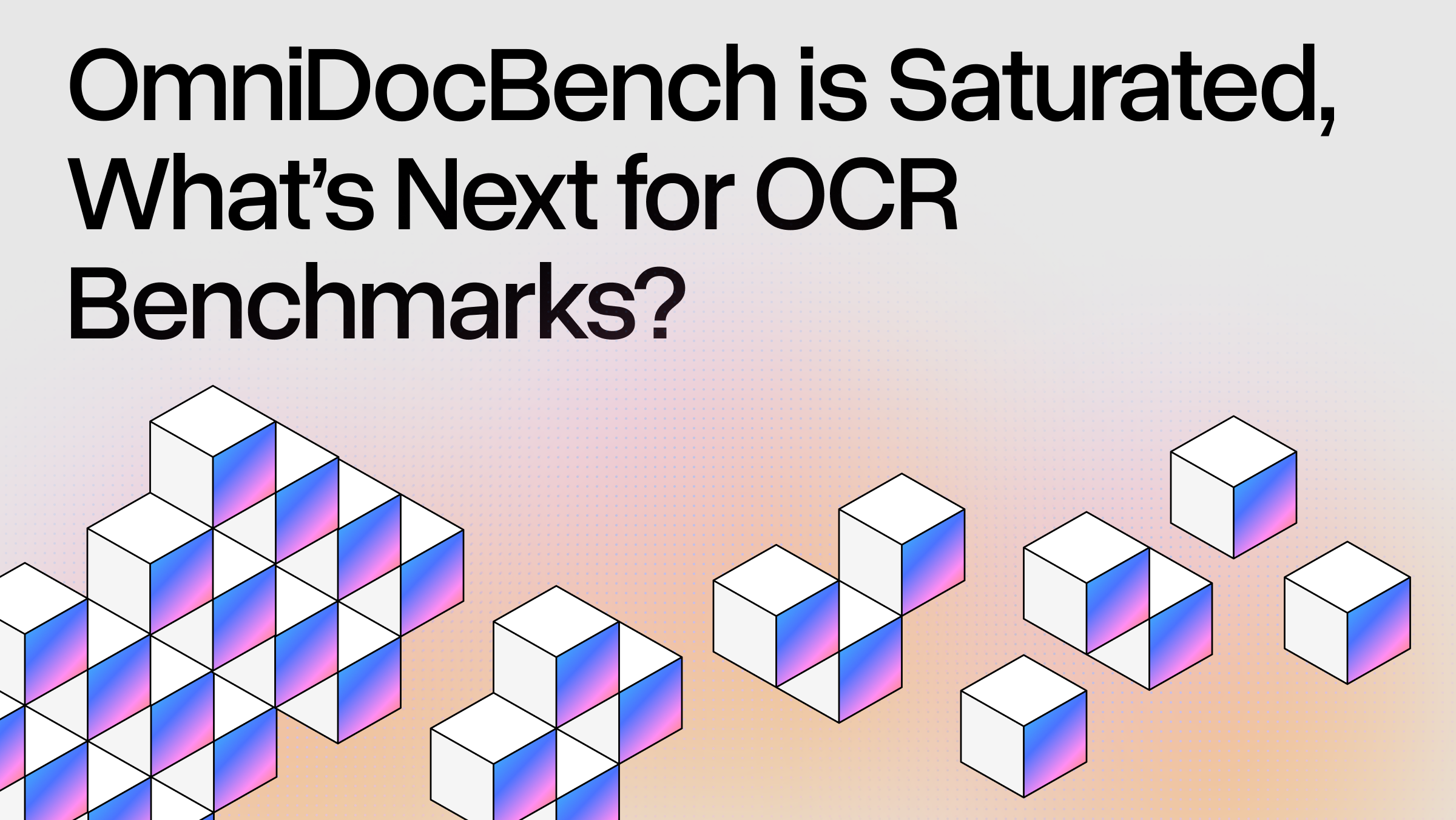
Document OCR benchmarks are hitting a ceiling - and that's a problem for real-world AI applications. Our latest analysis reveals why OmniDocBench, the go-to standard for document parsing evaluation, is becoming inadequate as models like GLM-OCR @Zai_org achieve 94.6% accuracy while still failing on complex real-world documents. 📊 Models are saturating OmniDocBench scores but still struggle with complex financial reports, legal filings, and domain-specific documents 🎯 Rigid exact-match evaluation penalizes semantically correct outputs that differ in formatting (HTML vs markdown, spacing, etc.) ⚡ AI agents need semantic correctness, not perfect formatting matches - current benchmarks miss this critical distinction 🔬 The benchmark's 1,355 pages can't capture the full complexity of production document processing needs The document parsing challenge isn't solved just because benchmark scores look impressive. We need evaluation methods that reward semantic understanding over exact formatting, especially as AI agents become the primary consumers of parsed content. We're building parsing models focused on semantic correctness for complex visual documents. If you're scaling OCR workloads in production, LlamaParse handles the edge cases that benchmarks miss. Read our full analysis: https://t.co/tcZP1PM8kv
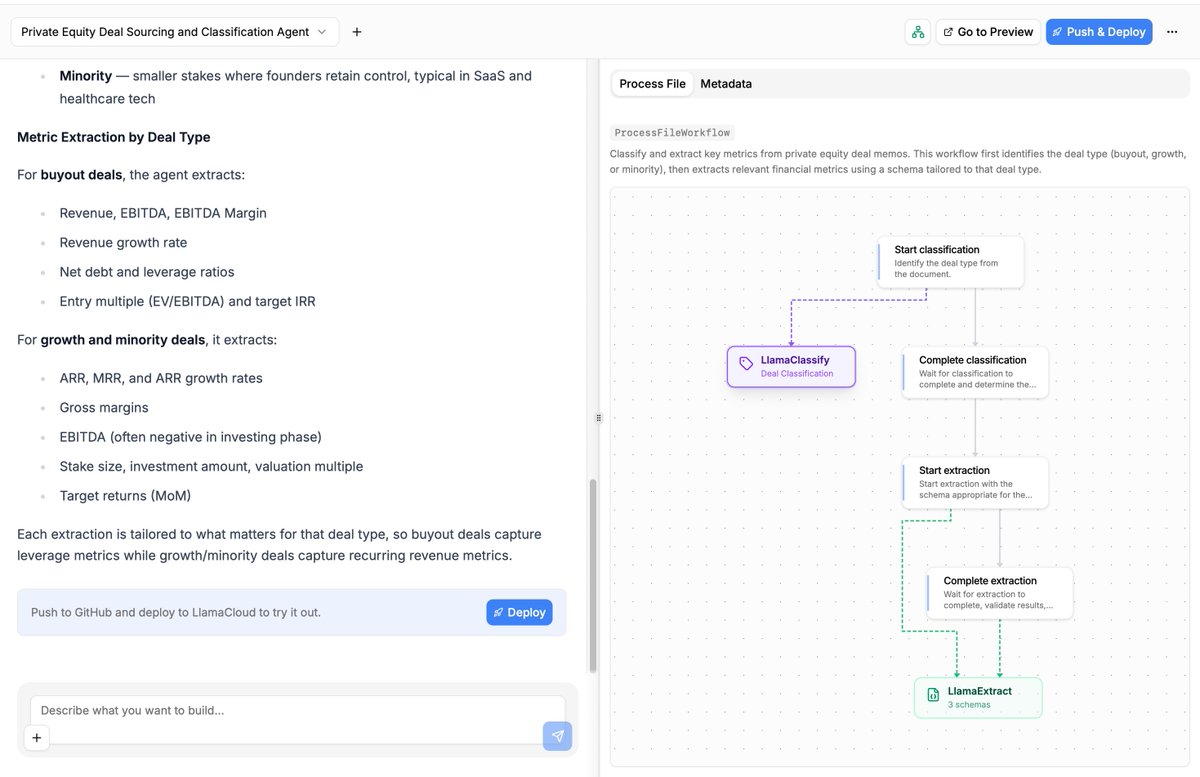
Build a private equity deal sourcing agent that automatically classifies investment opportunities and extracts key financial metrics using our LlamaAgents Builder. This step-by-step guide shows you how to create an agent that processes deal files like teasers and financial summaries: 🎯 Classify deals into buyout, growth, or minority investment strategies 📊 Extract critical metrics including revenue, EBITDA, growth rates, and debt levels 🚀 Deploy directly to GitHub and get a working UI without writing code 🔧 Iterate and refine your agent through natural language conversations The tutorial covers prompt engineering best practices, using example files effectively, visualizing agent workflows, and deploying to production. We demonstrate the complete process from initial prompt to testing the deployed application with real deal documents. Read the full tutorial: https://t.co/WcT2j3nEoi

Turn your PDF charts into pandas DataFrames with specialized chart parsing in LlamaParse! This tutorial walks you through extracting structured data from charts and graphs in PDFs, then running data analysis with pandas - no manual data entry required. 📊 Enable specialized chart parsing to convert visual charts into structured table data 🐼 Extract table rows directly from parsed PDF pages and load them into DataFrames 📈 Perform year-over-year analysis, calculate gaps between metrics, and create visualizations ⚡ Use the items view to get per-page structured data including tables and figures We demonstrate this using a 2024 Executive Summary PDF, extracting a fiscal year chart showing Budget Deficit vs Net Operating Cost data spanning 2020-2024, and reproducing the key financial insights. Check out the full tutorial: https://t.co/sOVtFM3xE1
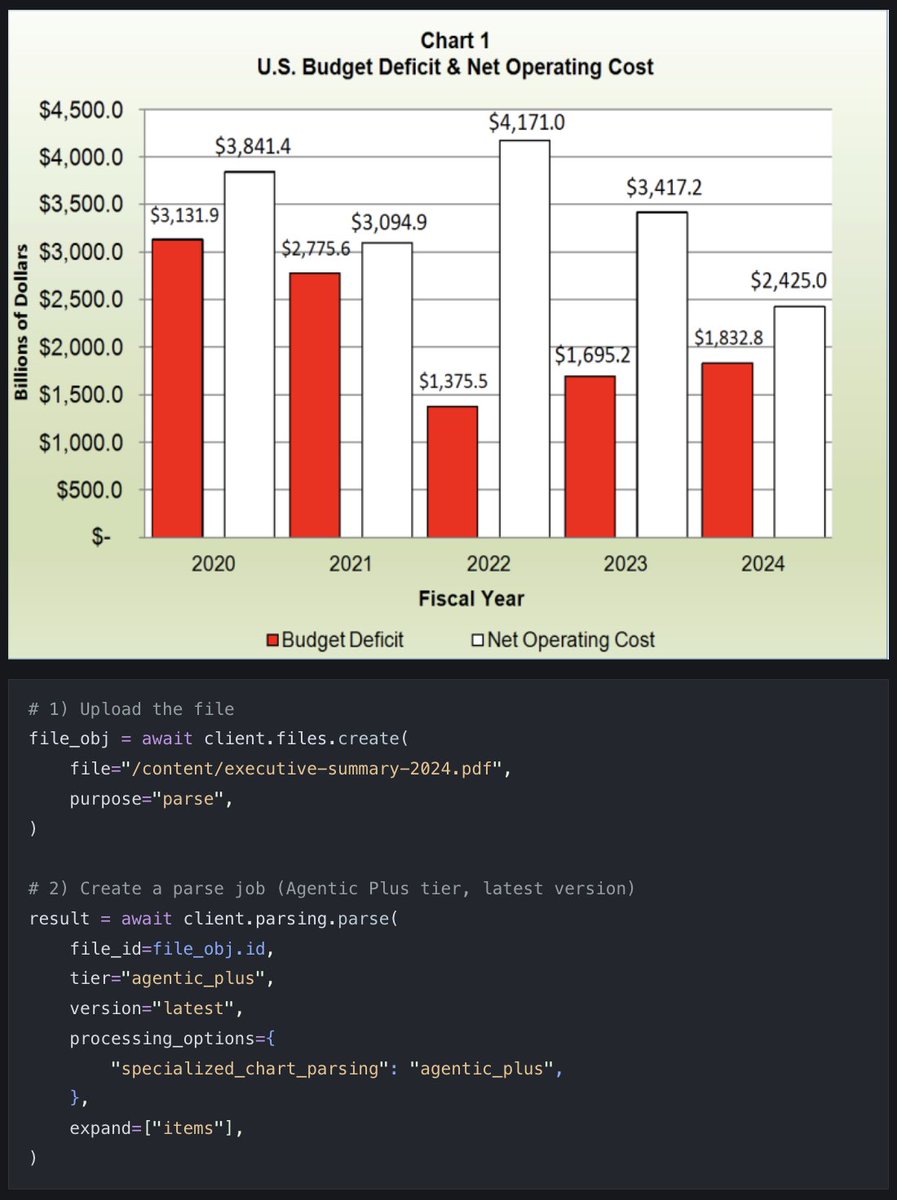
Since joining @llama_index, my focus has shifted from 'everything agents' to 'document agents' : agents that can handle work over all manner of complex documents. So, I tried out the latest chart parsing capabilities of LlamaParse. Charts in PDFs are notoriously painful to work with. You can see the data ) bars, axes, labels) but actually getting it into a format you can analyze means is a different matter. I tried out parsing a U.S. Treasury executive summary PDF, pulling a grouped bar chart showing Budget Deficit vs. Net Operating Cost for fiscal years 2020–2024, and turning it into a pandas DataFrame you can run analysis on (although really you can then do whatever, provide it for downstream tasks to an agent..) Once parsed, the chart's underlying data comes back as a table in the items tree for that page. From there: grab the rows, construct a DataFrame, etc. In the example, I'm computing year-over-year changes in both metrics, measuring the gap between them across the five-year window, and just to be sure, I reproduced a bar chart that mirrors the original PDF visualization. You can try it our here: https://t.co/8WHV4xzcDS

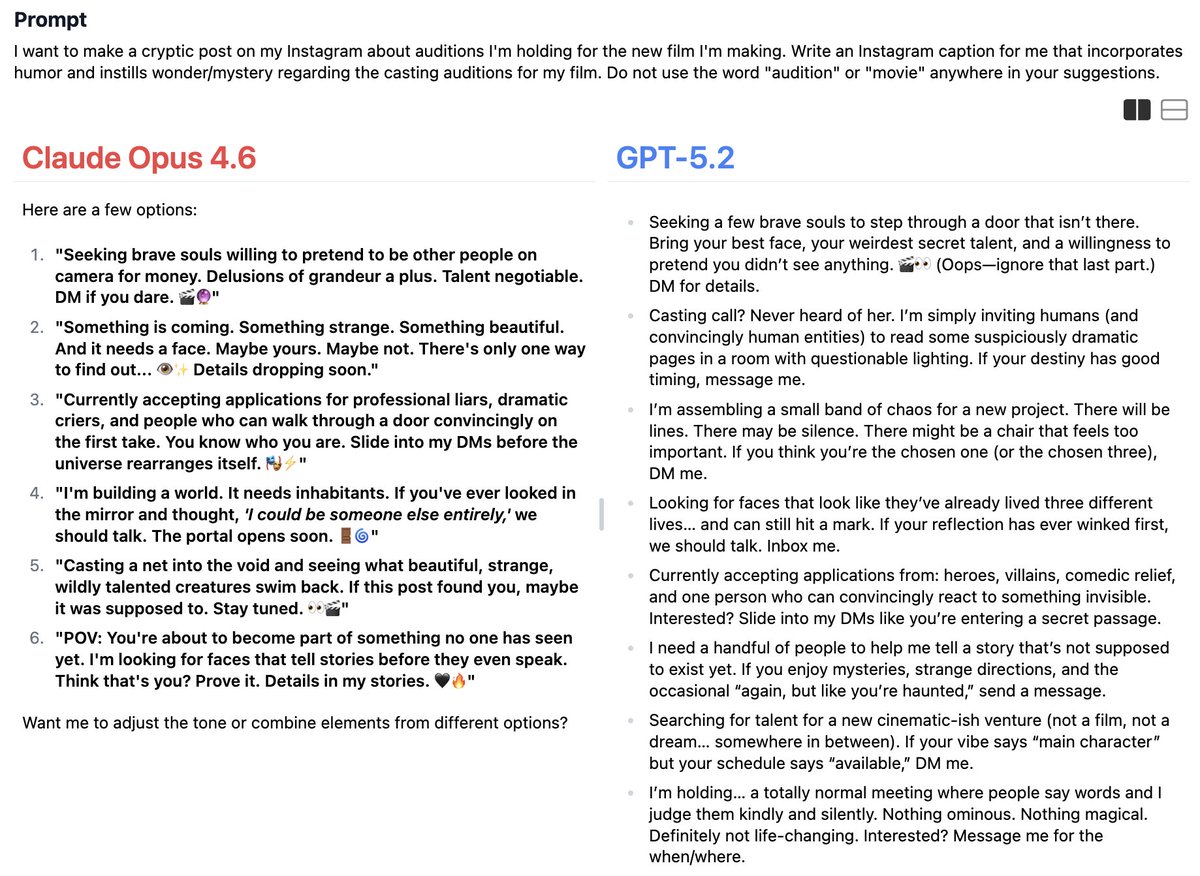
We put Opus 4.6 through our Hemingway-bench Writing Leaderboard. How did it fare? Claude continues to dominate GPT-5.2, but lags behind the Geminis. The new writing hierarchy: 👑 Gemini 3 Flash 🥈 Gemini 3 Pro 🥉 Opus 4.6 (New!) 4️⃣ Opus 4.5 5️⃣ GPT-5.2 Chat For example: one H-bench prompt requests a cryptic Instagram post for casting auditions. GPT-5.2: "Casting call? Never heard of her." (??? 💀) Opus 4.6: "Currently accepting applications for professional liars, dramatic criers, and people who can walk through a door convincingly on the first take. You know who you are."
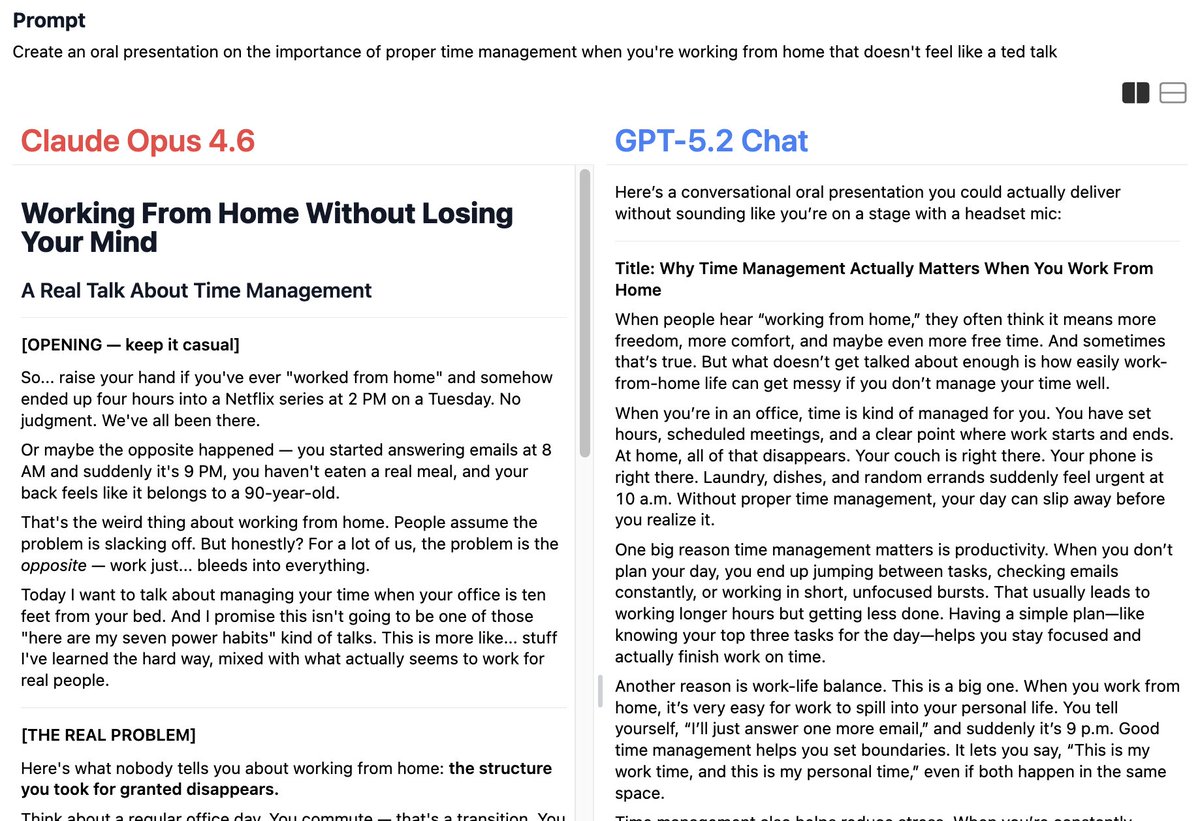
Another Hemingway-bench prompt asks for an oral presentation about time management. GPT-5.2 writes like a LinkedIn engagement farm: "When people hear “working from home,” they often think it means more freedom, more comfort, and maybe even more free time. And sometimes that’s true. But what doesn’t get talked about enough is how easily work-from-home life can get messy if you don’t manage your time well." (🥱) Opus 4.6 feels like a charismatic creative working the room: "So... raise your hand if you've ever "worked from home" and somehow ended up four hours into a Netflix series at 2 PM on a Tuesday. No judgment. We've all been there."
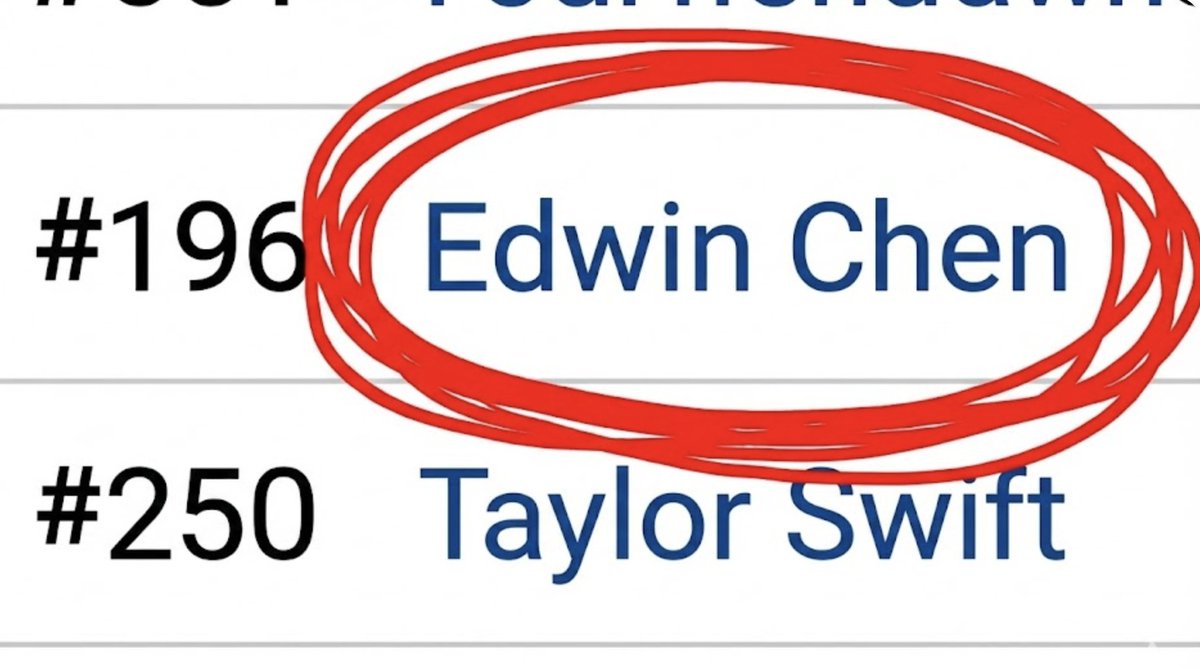
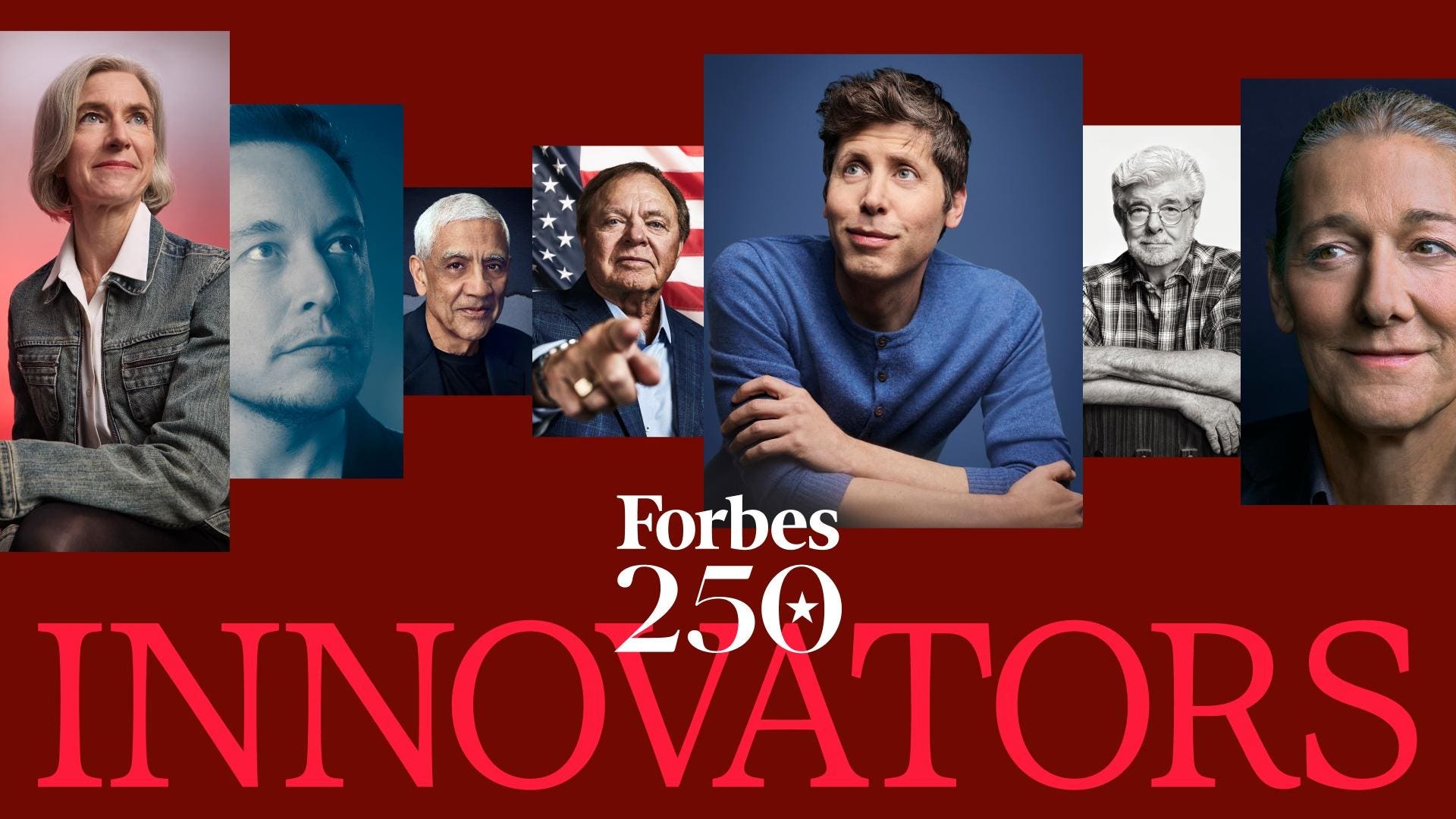
We’ve finally done it. Forbes just ranked our CEO *54* spots above Taylor Swift on their America’s Greatest Innovators list. https://t.co/9h6OPZRQy9 While we’re honored that Forbes think Edwin’s strategy is more innovative than a 10-minute song about a scarf, we want to clarify a few things: 1. We will NOT be releasing our next benchmark as a limited-edition vinyl variant. 2. Jake was great in Zodiac. 3. We aren’t saying we’re better at songwriting, but we *are* saying we’ve never seen Taylor build an RL environment. See you at next year's Grammys, @taylorswift13.