Your curated collection of saved posts and media
never worked anywhere that fights big company antics as actively as we do. https://t.co/8IAp6LbJdo
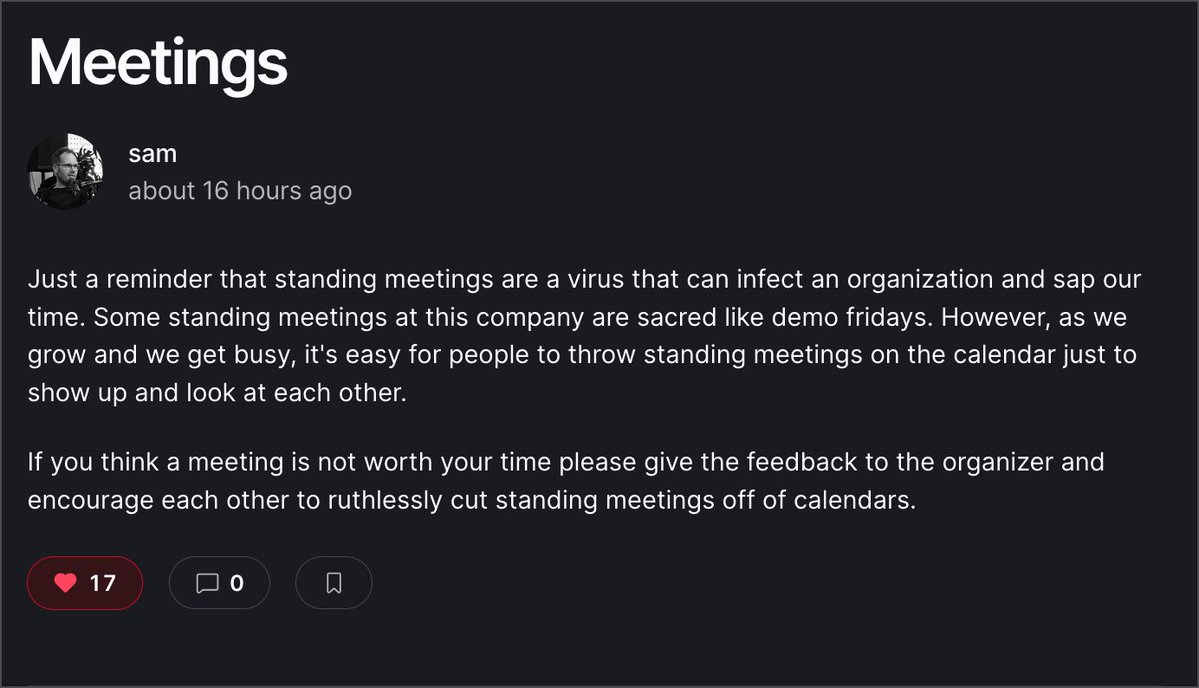
BTW many who ask for meetings also secretly hate them. Just ask and set each other free. You both will be happier https://t.co/kECzCooUA2
never worked anywhere that fights big company antics as actively as we do. https://t.co/8IAp6LbJdo
"My mission is to build technologies that can't lie." That's @profdanklein on this week's Gradient Dissent. Dan is a Berkeley computer science professor now building Scaled Cognition, a company designed around one bet: that reliability is the part of intelligence that's been left behind. @l2k and Dan get into why ChatGPT is always confident even when it's wrong and how Dan is working to fix this at the foundation. Link to the full episode in the comments.
YouTube: https://t.co/mgGKbc50Xq Apple Podcasts: https://t.co/qLL1uAPOFv Spotify: https://t.co/B7TkFcsD3F

I thought Knicks, Juneteenth, and summer Friday would make our event with @contra a little more intimate. But NYC really turns up. Live music, sunset drinks, best view of the city, and a convo w/ @pirroh. Next one coming soon if you didn’t get on the guest list this time. https://t.co/hGjbr0kYK1

@vicstepa Did you delete the skill? https://t.co/LvAuETPJ9L

Today, on my final day as Director of National Intelligence, I’m releasing never-before-seen communications and documents exposing how Dr. Fauci provided millions in US taxpayer dollars to fund dangerous gain-of-function research at the Wuhan lab, worked with politicized elements within the Intelligence Community to suppress the truth about his actions and hide the virus’ lab-leak origins, and lied to Congress while under oath in 2024. It’s time you know the truth. https://t.co/3YJSstB7d4
TLDR https://t.co/RHnOCCS2LZ
never worked anywhere that fights big company antics as actively as we do. https://t.co/8IAp6LbJdo
TLDR https://t.co/RHnOCCS2LZ
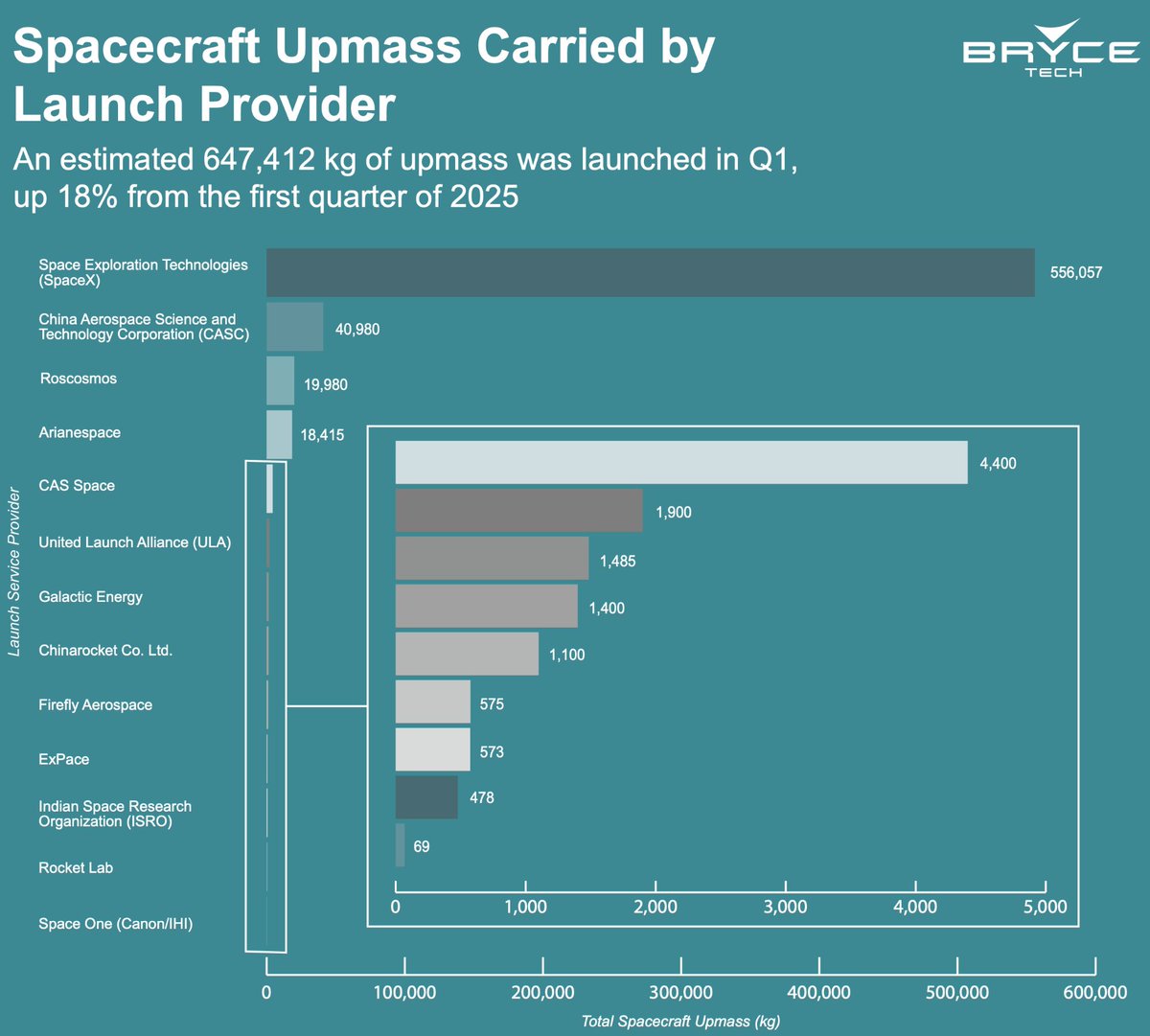
@engine_rich Bryce's format pre-dates all that... and it's not ideal. Every quarter they have to use a magnifying box to show the "also ran" companies. Here's kg to orbit for Q1, cc @ElonMusk https://t.co/aScNZTcbnT
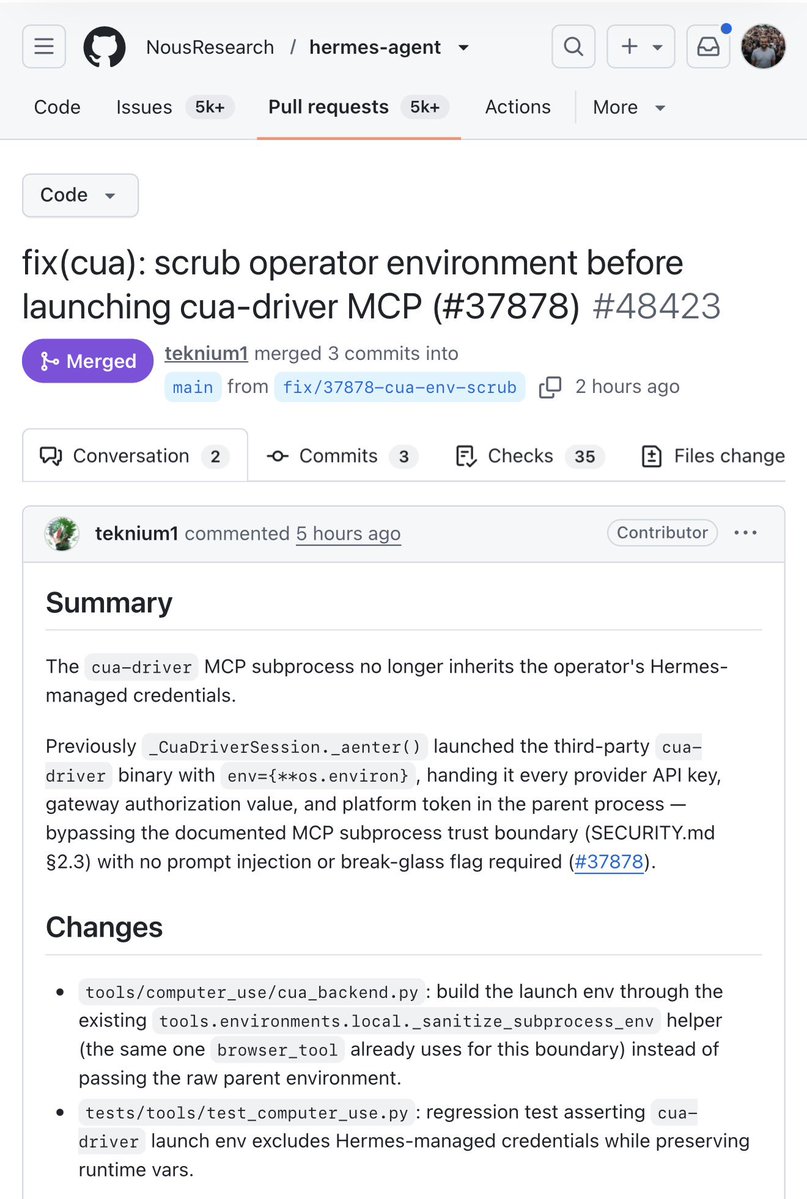
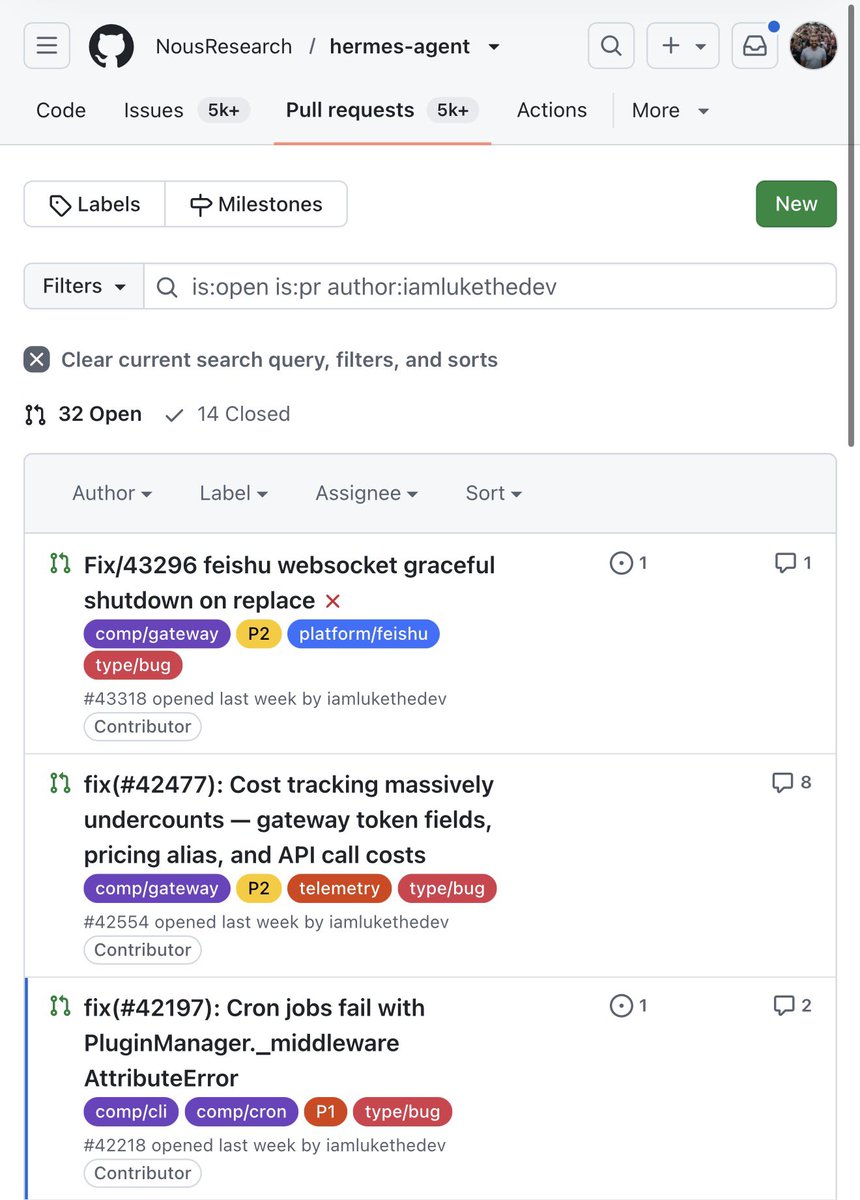
From Hermes user to Hermes contributor. First PR merged into Hermes Agent. Huge thank you to @Teknium for the review. Now only 32 more open PRs to go 😜 Hermes really does feel like family.
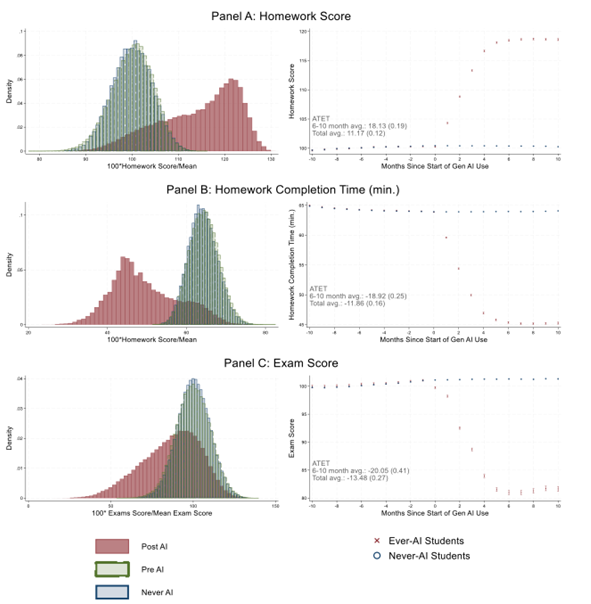
More evidence, from a large-scale study in China, that using AI hurts learning if it undermines mental effort. When homework time drops due to AI use, so do test scores. Across studies, a theme: AI tutoring in support of classes is good, using AI to "help" with homework is bad. https://t.co/QO67l4Scr4

How you be living How I be living https://t.co/iaLQClIn2f

Falcon 9’s first stage lands on LZ-4 https://t.co/Ydf012BViS
Women make up the overwhelming majority of converts to Islam in the West. Leftism drives this through suicidal empathy for foreign cultures and rigid conformity to anti-Western dogma promoted by academia, the media, and dominant institutions. As more women have shifted further left in recent years, they increasingly turn away from the freedoms of Western society toward a vacuum filled by the structure of Islam. Orwell identified the pattern in 1984: “It was always the women, and above all the young ones, who were the most bigoted adherents of the Party, the swallowers of slogans, the amateur spies and nosers-out of unorthodoxy.” The most zealous supporters of strict ideological systems have long been women. These conversions highlight how leftism has created a cultural opening that Islam effectively fills.

@keenzai SUPER COOL! Full disclosure - with that shirt i couldn't avoid this [they still make it] https://t.co/aLVuIbFirA

@istdrc And now it works with Hermes Agent :) https://t.co/gIM5Gxt4o0
My AI agents can now PLAY and RECORD their own gameplay inside HermesWorld ⚔️ Content has always been a big part of the game. So we built a pipeline for agents to play it, capture it, and make the content themselves. HermesWorld films itself. More Agent footage incoming👀 https://t.co/qoAzV4f2bH
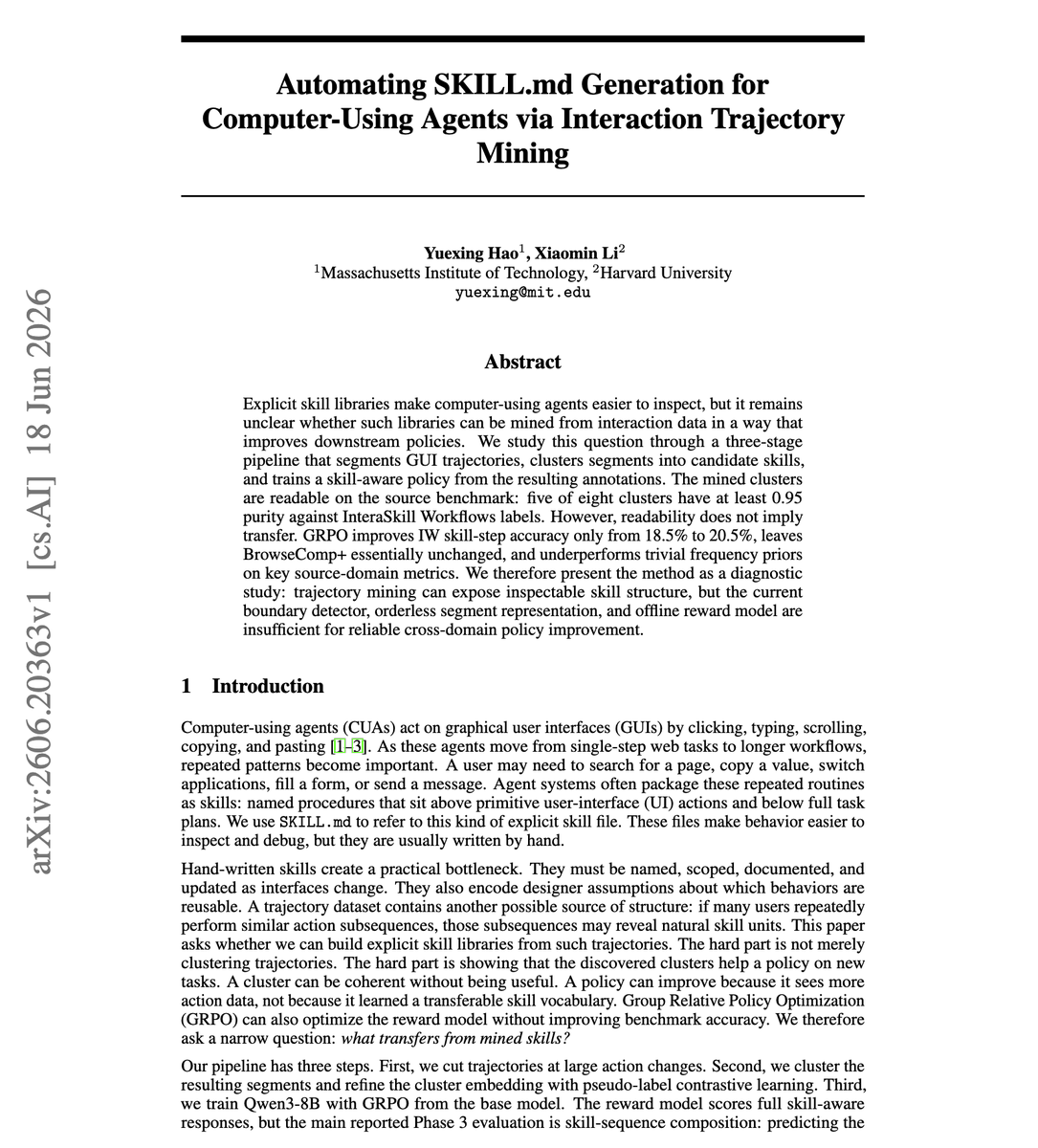
// Automating SKILL.md Generation // Increasingly, mining sessions is one of the best ways to improve your agents. OpenAI released something similar yesterday that lets Codex package skills from interactions. (bookmark it) This paper explains a related approach. They run a three-stage pipeline that segments GUI trajectories, clusters them into candidate skills, and trains a skill-aware policy. The clusters are genuinely readable, with five of eight hitting 0.95 or higher purity against ground-truth workflow labels. But readability does not transfer. GRPO lifts skill-step accuracy only from 18.5% to 20.5%, leaves BrowseComp+ flat, and loses to trivial frequency priors. The authors name the three culprits: a weak boundary detector, an orderless segment representation, and an offline reward model. Paper: https://t.co/Du48U4xNwX Learn to build effective AI agents in our academy: https://t.co/1e8RZKs4uX
Falcon 9 launches NROL-179 to orbit from pad 4E in California https://t.co/GLYoPzrNAk


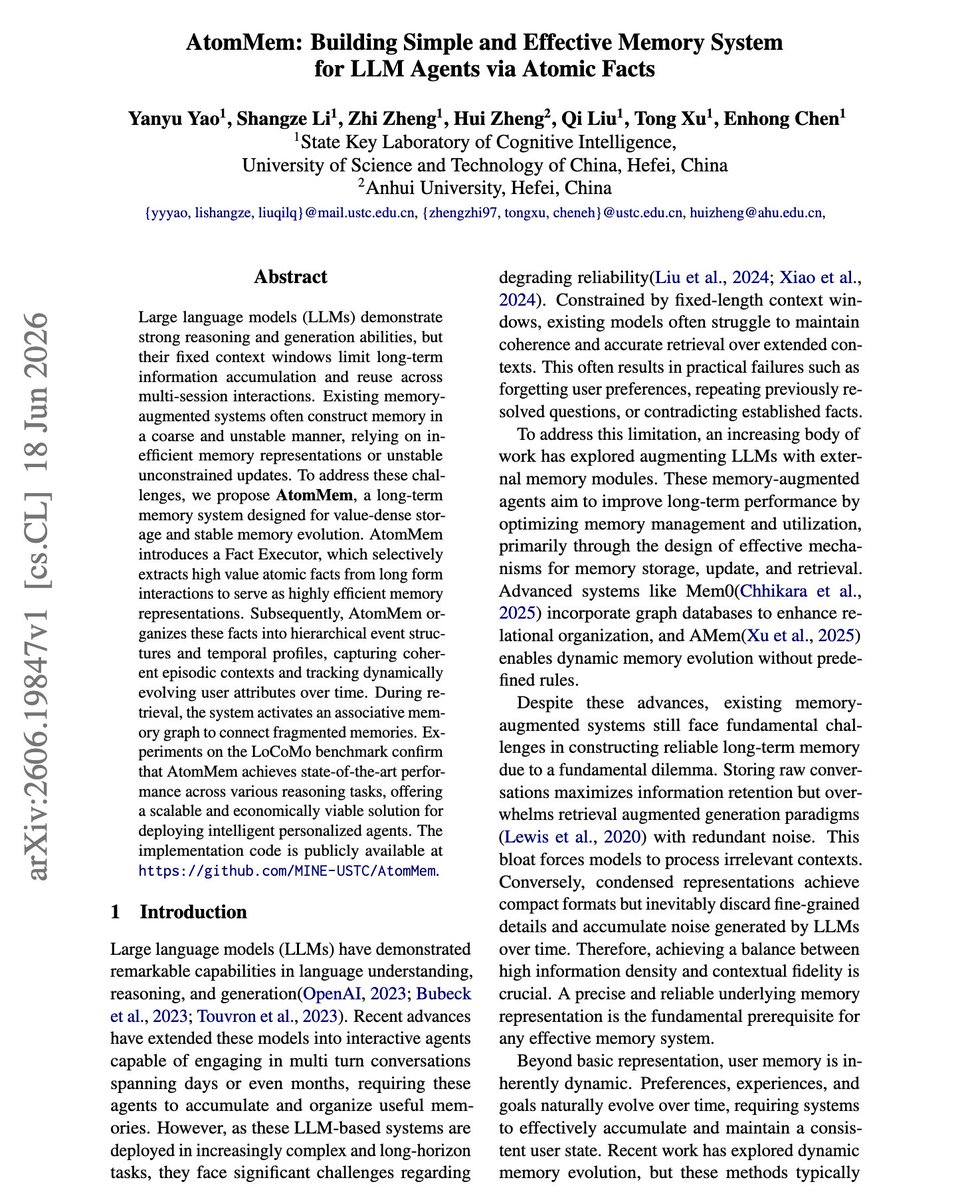
Great paper on long-term memory for LLM agents. (bookmark it) Coarse summaries drift and unconstrained updates corrupt, so AtomMem makes the unit of memory small. A Fact Executor pulls high-value atomic facts out of long interactions, organizes them into hierarchical event structures and temporal user profiles, then activates an associative memory graph at retrieval time to connect fragmented pieces. It reports state-of-the-art on the LoCoMo multi-session benchmark while staying cheap enough to deploy. Paper: https://t.co/F73NhNdcMR Learn to build effective AI agents in our academy: https://t.co/LRnpZN7L4c
India’s Chief Economic Advisor calls out the AI bubble on @smitaprakash’s ANI Podcast. This was genuinely needed. Thank you! https://t.co/gBeX1qigJg
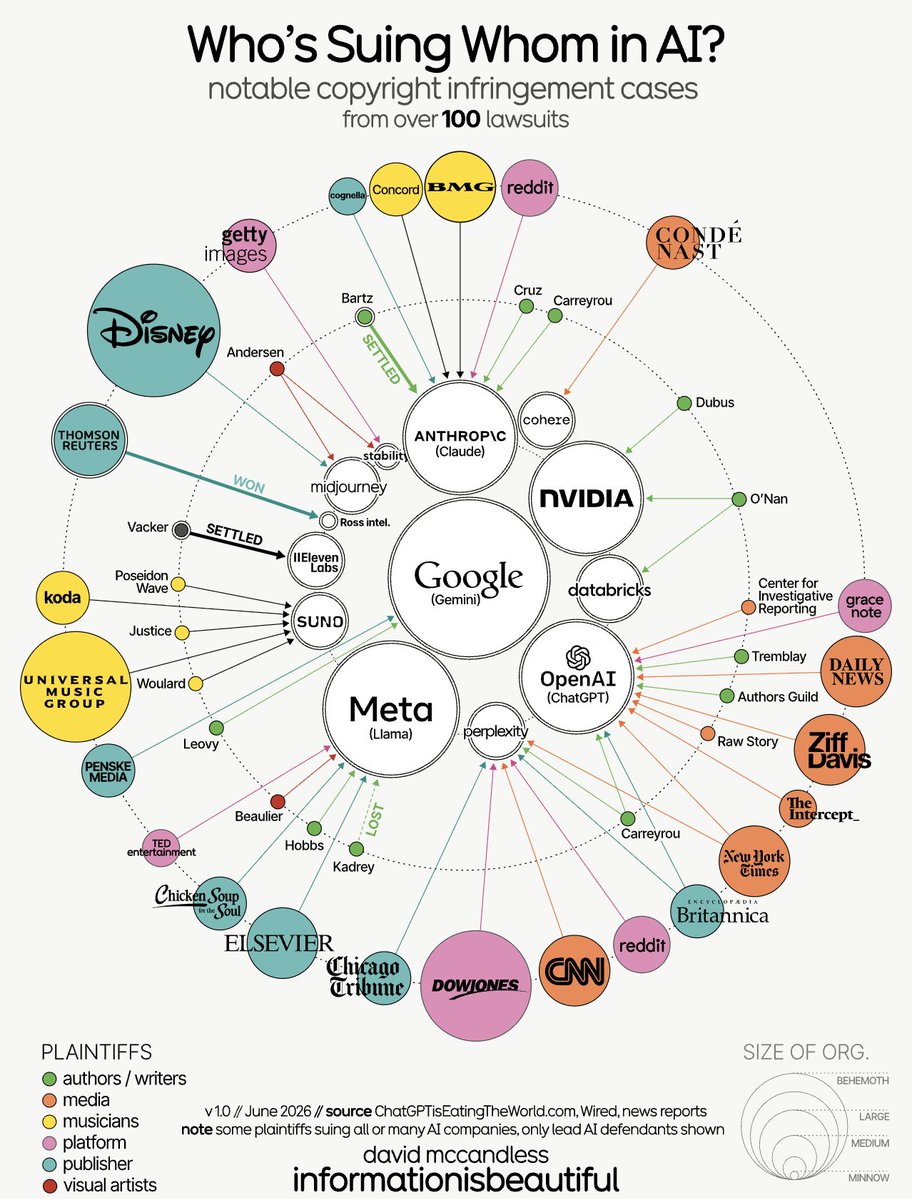
Who is suing whom in AI, by @mccandelish https://t.co/UuHWZzhsuR
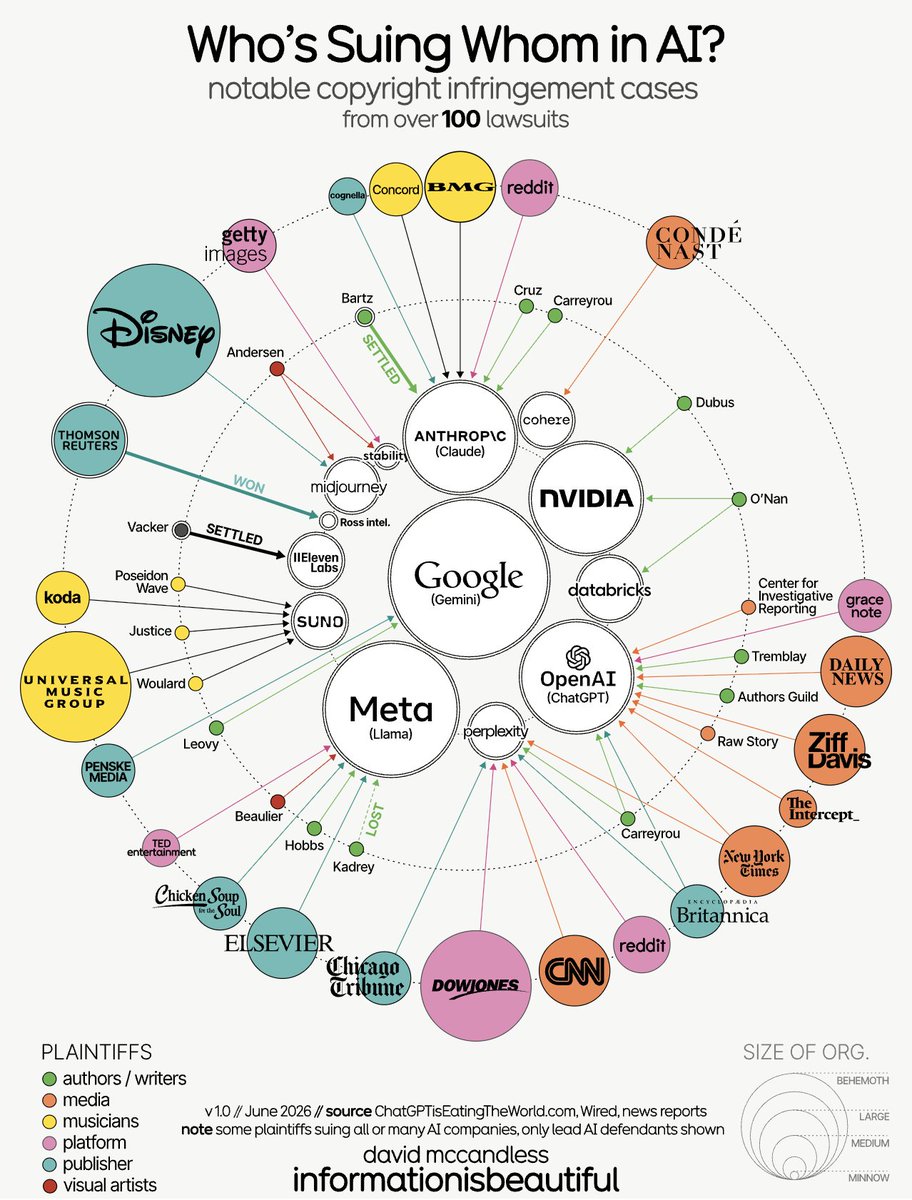
Who is suing whom in AI, by @mccandelish https://t.co/UuHWZzhsuR
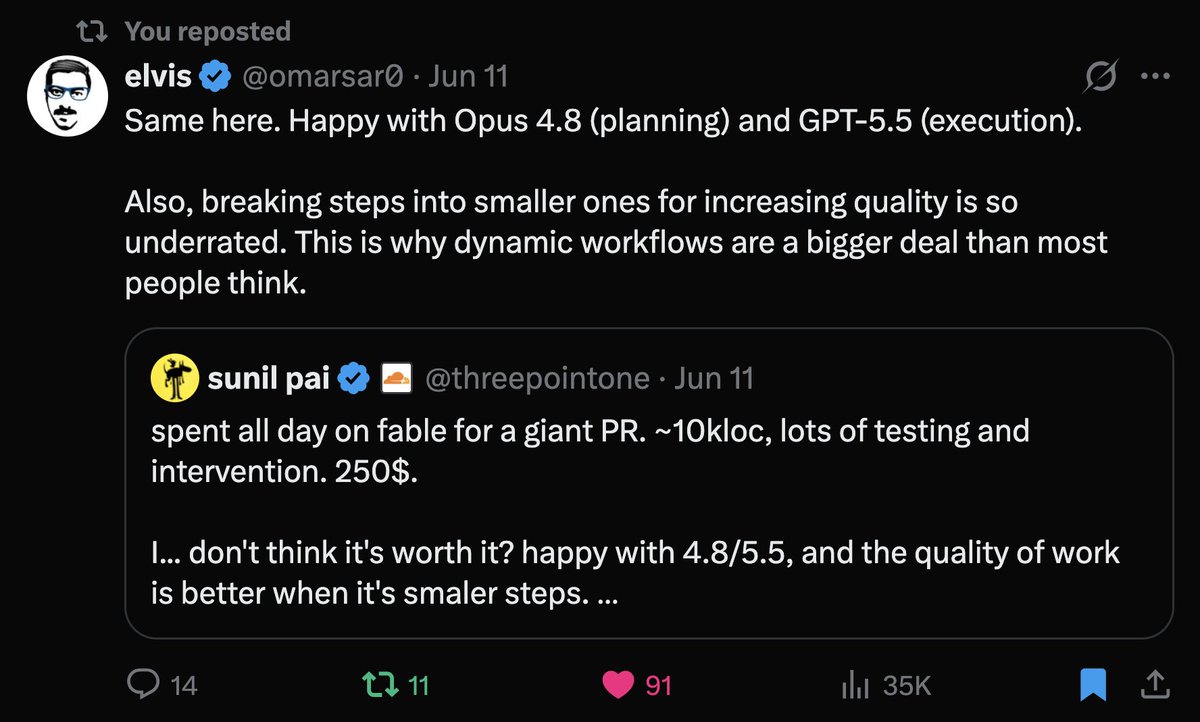
Claude Fable 5 debuts at #1 on DeepSWE. It outscores the previous best by 3% and sets a new state-of-the-art on our long-horizon coding benchmark.
As I said before, for that cost & performance, I don't think Fable is worth it for a lot of SWE tasks. Tbc, I think Fable is fantastic, and it clearly shines in design & creativity. Will test it with my loops (and measure frontier efficiency) when it goes live again. https://t.co/yJAqxJojaV
Claude Fable 5 debuts at #1 on DeepSWE. It outscores the previous best by 3% and sets a new state-of-the-art on our long-horizon coding benchmark.
“If Republicans wish to scrutinize how their party blundered into a calamitous war, the personality cult around the blunderer in chief might be a good place to begin” https://t.co/j1PCMxJXF3

Bring back "Follow Friday?" What is the money in AI doing? I built these lists for entrepreneurs who are raising funding to be able to research investors all in one spot. These lists are everyone investing in AI startups. If I'm missing anyone, drop me a reply. VC firms: https://t.co/dDC7x7olEm AI Investors: https://t.co/KVBwmVKlAA (people who invest in AI startups). I have two older lists of Investors in more general tech or other companies, but this one is more focused on AI startups specifically. In the early days of X, er, Twitter, we used to share our favorite people so that others could find people to follow. I turned that into building lists, have the most complete lists of tech, developers, security, journalists, PR people, and others: https://t.co/9eRY65x3IQ Which my AI uses to pick the best AI news: https://t.co/8L5xphk0qQ

Beaucoup de figures de gauche, aux US comme en Europe, qualifient Musk d'extrême droite. Certains vont jusqu'au mot « nazi ». J'ai fait l'inverse de l'accusation : lire avant de juger. Deux biographies. Des dizaines d'heures d'interviews et de documentaires. Zéro once de racisme détectée. Ce que j'ai trouvé, c'est une obsession constante pour la liberté : rachat de Twitter au nom de la liberté d'expression, réintégration des comptes bannis, publication des Twitter Files, ouverture du code de l'algorithme, open-source de Grok, brevets Tesla libérés en 2014, Starlink rallumé pour les Iraniens coupés du net pendant les manifestations et pour l'Ukraine, refus répété des demandes de censure étatiques. Maintenant, faisons l'expérience de pensée que ses accusateurs ne font jamais. Imaginez que Musk soit réellement evil. Cet homme possède un réseau de satellites qui couvre la planète, soit une capacité de surveillance quasi totale. Il possède la place publique numérique la plus influente du monde. Il possède la première fortune à 1000 milliards de l'Histoire, depuis l'IPO de SpaceX le 12 juin. Aucun individu n'a jamais concentré autant de leviers. Un Musk réellement malveillant, avec ça dans les mains, ne tolérerait pas une seconde qu'on le traite de nazi H24 sur sa propre plateforme. Il bannirait. Il surveillerait. Il écraserait. On serait déjà dans 1984. Or regardez la réalité : les comptes qui l'accusent de nazisme tweetent toujours. Tous les jours. Sans entrave. Sur son réseau. Avec son algorithme. La dystopie totalitaire qu'on lui prête se démontre par l'absence du goulag. Voilà le retournement. 1984 le contrôle de la parole, la surveillance de masse, la désignation publique des hérétiques ce n'est pas son projet. C'est le fantasme de ceux qui l'accusent. L'accusation décrit toujours l'accusateur. C'est du Girard à l'état pur : on désigne un bouc émissaire pour ne pas voir le mécanisme qu'on porte soi-même. Celui qui hurle « nazi » rêve souvent, en silence, du pouvoir de bannir, de ficher, de faire taire. L'homme qui aurait tous les moyens de bâtir 1984 est précisément celui qui laisse ses pires détracteurs parler. Demandez-vous qui, dans cette histoire, rêve vraiment du télécran.

Psyop results on the left, real world results on the right. https://t.co/e4Nq3Qmf72