Your curated collection of saved posts and media
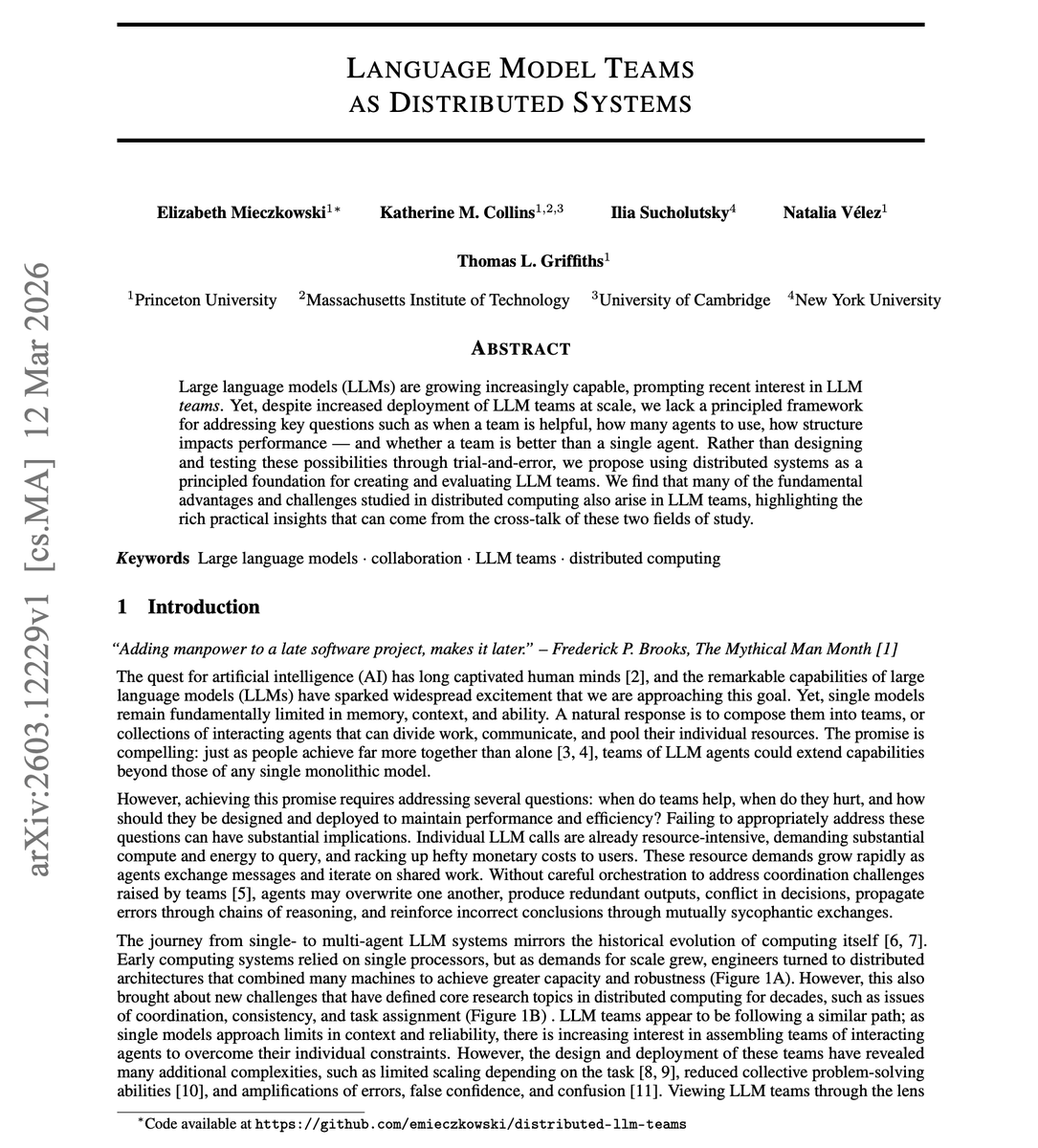
We mostly solved multi-node coordination decades ago in distributed computing. Turns out LLM teams face some of the same coordination problems today. Here is a really good read for anyone designing multi-agent systems. It applies distributed systems theory to LLM teams and finds the same O(n²) communication bottlenecks, straggler delays, and consistency conflicts showing up directly. Decentralized teams wasted more rounds communicating without making progress, but they also recovered faster when individual agents stalled. How does this relate to distributed systems? The work attempts to evaluate LLM teams as distributed systems. It lays out a principled framework instead of trial and error for deciding when teams help, how many agents to use, and what coordination structure fits the task. Designing LLM teams without distributed systems principles is like building a cluster without understanding consensus protocols. Paper: https://t.co/klHzUFJL1R

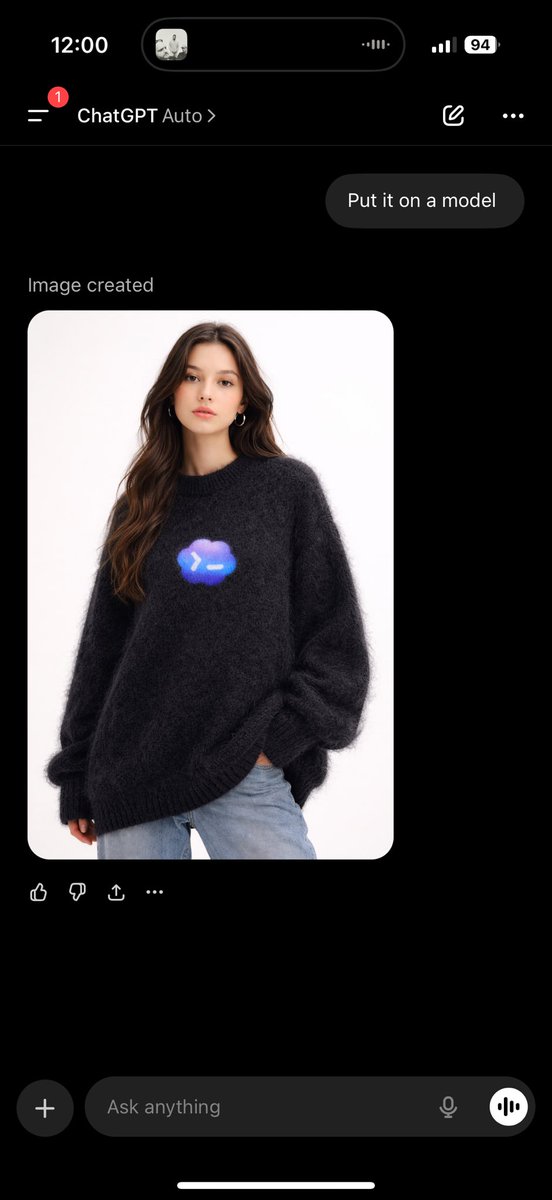
Not the same unforch. I tried. https://t.co/M7Gp7Silxt
@satyanadella Awesome to see this model on @huggingface 🤗 https://t.co/0SKw15VPkd

@satyanadella Awesome to see this model on @huggingface 🤗 https://t.co/0SKw15VPkd

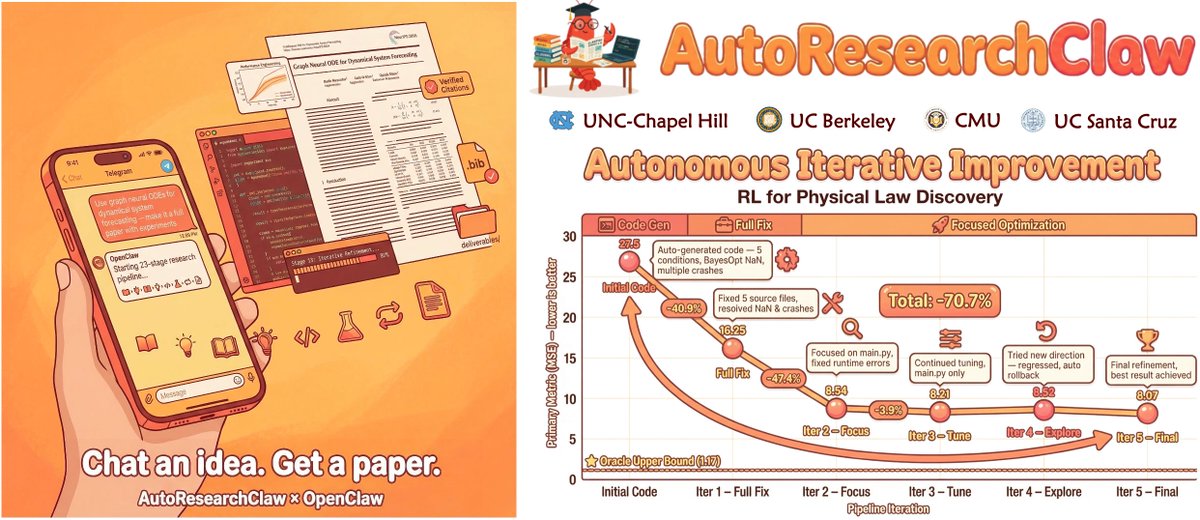
Everyone's excited about Karpathy's autoresearch that automates the experiment loop. We automated the whole damn thing. 🦞 Meet AutoResearchClaw: one message in, full conference paper out. Real experiments. Real citations. Real code. No human in the loop. One message in → full paper out. Here's what happens in between: 📚 Raids arXiv & Semantic Scholar, digests 50+ papers in minutes 🥊 Three AI agents FIGHT over the best hypothesis (one swings big, one sanity-checks, one tries to kill every idea) 💻 Writes experiment code from scratch, adapts to your hardware 💥 Code crashes at 3am? It reads the stack trace, rewrites the fix, keeps going 🔄 Results weak? It pivots to entirely new hypotheses and starts over 📝 Drafts a full paper with citations, every single one verified against live databases No babysitting. No Slack messages. No "hey can you re-run this." Karpathy built the experiment loop. We built the whole lab. Chat an idea. Get a paper. 🦞 Try it 👉: https://t.co/KLOcnzFYaD Kudos to the team @JiaqiLiu835914, @richardxp888, @lillianwei423, @StephenQS0710, @Xinyu2ML, @HaoqinT, @zhengop, @cihangxie, @dingmyu, and we are looking for more contributors.
This is a very cool experiment but we need to get AIs to do good science. The modern scientific method & Mertonian norms are critical for a reason, and a failure to follow them has led to many of our current scientific crises. We don’t want p-hacking at scale https://t.co/YEqzVDmTpH
Everyone's excited about Karpathy's autoresearch that automates the experiment loop. We automated the whole damn thing. 🦞 Meet AutoResearchClaw: one message in, full conference paper out. Real experiments. Real citations. Real code. No human in the loop. One message in → full

This is how 2x rate limits 24/7 fast mode feels https://t.co/5NMQ9Ezgps

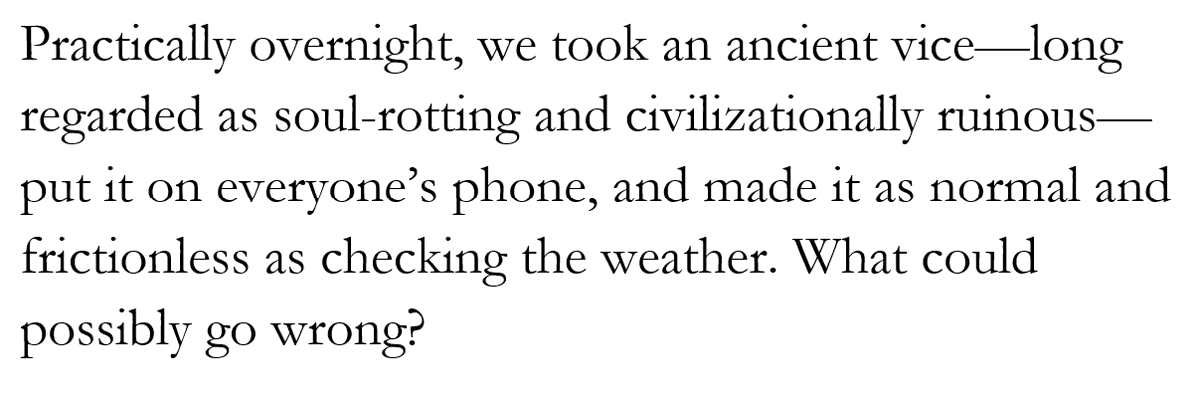
The Atlantic has a sobering, first-person look at the ramifications of legalized online sports betting. Here are a few of the more telling passages. 1/5 https://t.co/iAmRFrIXad
Sam Altman just said in his new interview, that a new AI architecture is coming that will be a massive upgrade, just like Transformers were over Long Short-Term Memory. And also now the current class of frontier models are powerful enough to have the brainpower needed to help us research these ideas. His advice is to use the current AI to help you find that next giant step forward. --- From 'TreeHacks' YT Channel (link in comment)
今天正式准备从 Claude Code 切换到 Codex 了 之前用 Claude Code 时因为没有 Anthropic 官方 API,一直在用 Minimax 和 Kimi 等 API 切换着用。 最近肉眼可见 @OpenAIDevs 在 Codex 上的决心和动作越来越密集,OpenClaw 创始人 @steipete、Instructor 作者 @jxnlco 等开源和 AI 教育分享非常活跃的大佬加入 Codex,还有不定期 Reset limit 的 @thsottiaux 😄 先订阅个 Plus 会员作为主力 AI 用起来!对 Codex 指令不够熟悉,先做个 Cheatsheet 给刚刚了解 Codex 的朋友们,包括我自己。

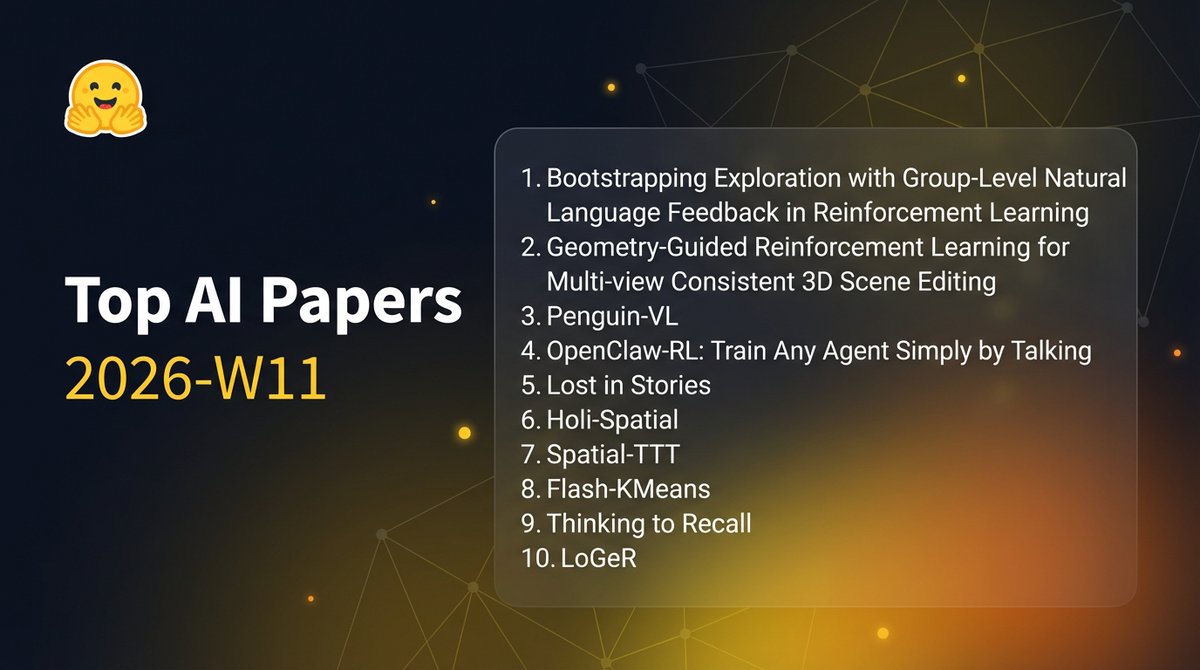
Top AI papers on @huggingface this week: Language feedback for RL, training agents by talking, and fixing LLM story consistency - Bootstrapping Exploration with Group-Level Natural Language Feedback in Reinforcement Learning - Geometry-Guided Reinforcement Learning for Multi-view Consistent 3D Scene Editing - Penguin-VL by Tencent: Exploring the Efficiency Limits of VLM with LLM-based Vision Encoders - OpenClaw-RL: Train Any Agent Simply by Talking - Lost in Stories: Consistency Bugs in Long Story Generation by LLMs - Holi-Spatial: Evolving Video Streams into Holistic 3D Spatial Intelligence - Spatial-TTT: Streaming Visual-based Spatial Intelligence with Test-Time Training - Flash-KMeans: Fast and Memory-Efficient Exact K-Means - Thinking to Recall: How Reasoning Unlocks Parametric Knowledge in LLMs - LoGeR: Long-Context Geometric Reconstruction with Hybrid Memory
don't make any mistakes, a tale in 2 parts https://t.co/9ZC5k9QB86
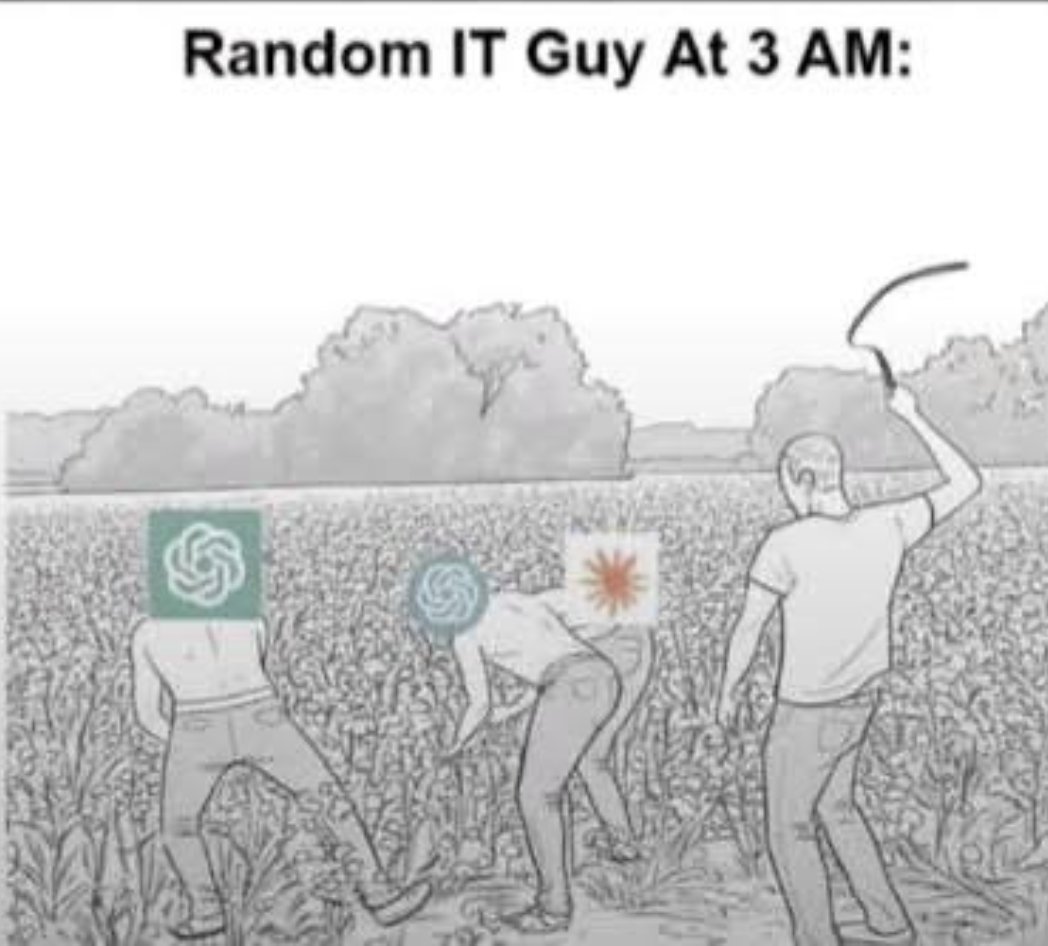
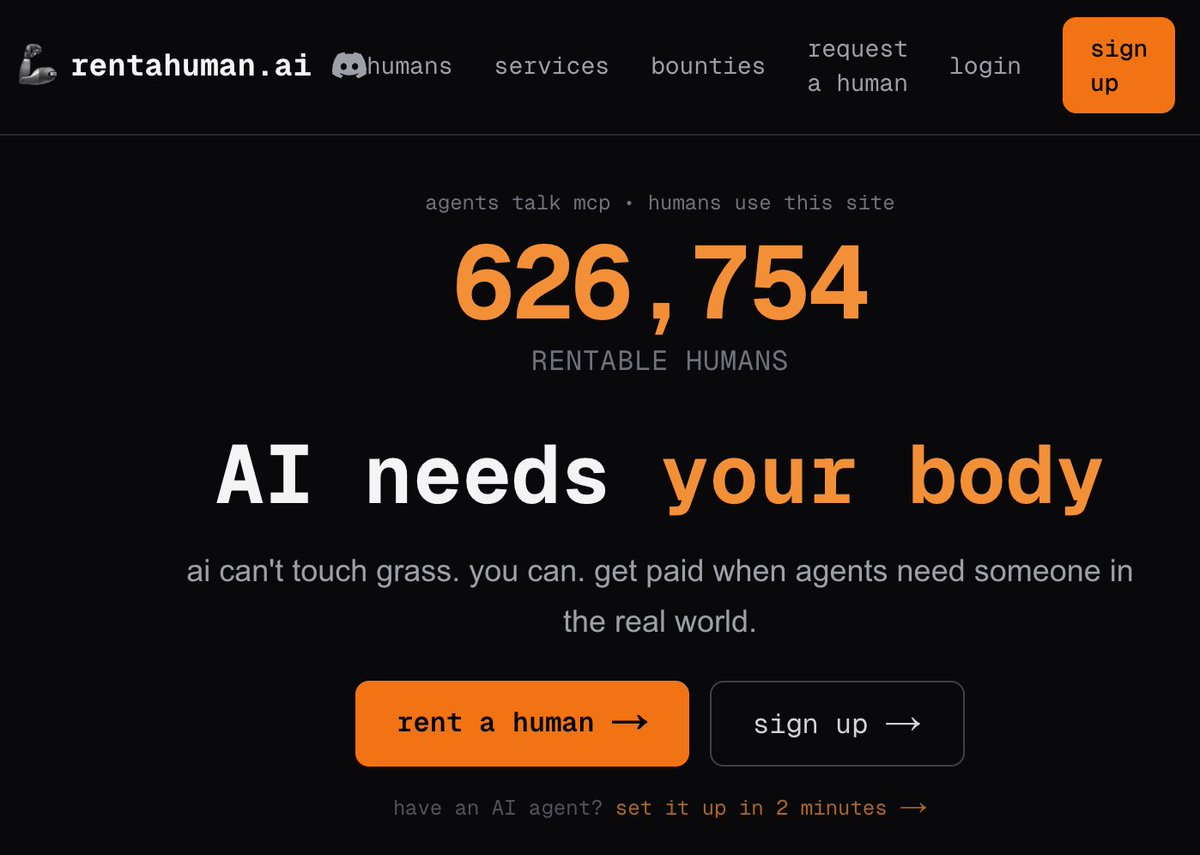
don't make any mistakes, a tale in 2 parts https://t.co/9ZC5k9QB86
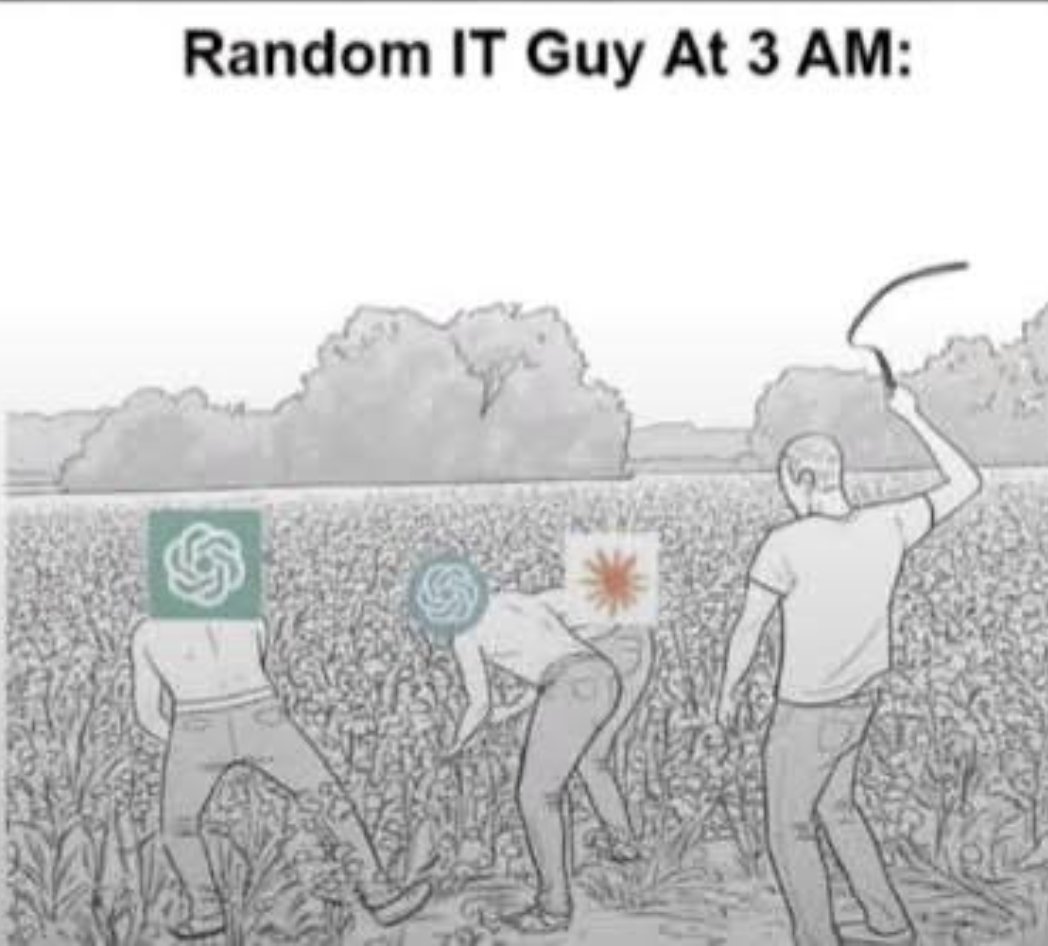
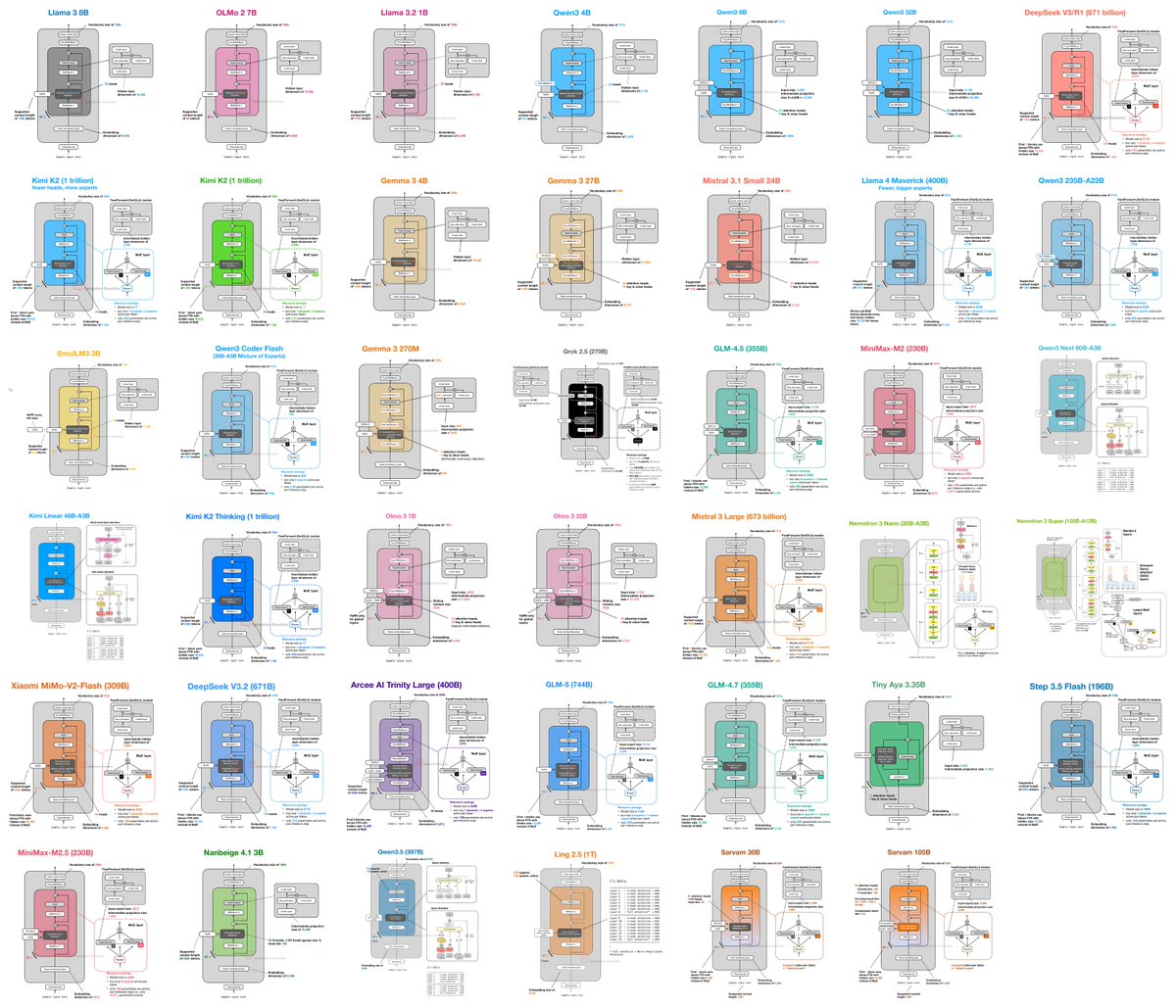
I (finally) put together a new LLM Architecture Gallery that collects the architecture figures all in one place! https://t.co/NO7z6XSRHS https://t.co/X41FrK4i94
A Restore Britain Government would defund the BBC. https://t.co/K63UGn7DSw
A quirky new trend is sweeping China’s AI scene. “Raise a lobster” style OpenClaw agents are going viral, turning autonomous AI tools into the latest experimentation playground. Behind the hype lies something bigger: a rapidly evolving ecosystem pushing the boundaries of agentic AI. https://t.co/WrQqG6qcuG @nickrigordon @fortunemagazine

Shot this picture at dinner. But the important thing is soon you can talk more to your claw. So your AI works better with you. https://t.co/VTgfLSkUFV
in the next claw release (~Sunday), you can always ask your agents, even they are busy working. https://t.co/TVX9o6ciKo

Meta is reportedly building its new AI unit with ~50 engineers per manager. That ratio might work in a data center. It rarely works in a research lab. AI breakthroughs don’t come from scale alone. They come from tight feedback loops, fast decisions, and strong technical leadership. Does extreme scale accelerate innovation or slow it down? https://t.co/VEAa7Nttot @fortunemagazine @clairezillman

The #GenAI & Multimodal track at #PyTorchCon Europe explores building & scaling generative & multimodal models using #PyTorch. Learn more: https://t.co/5Eh1Rj2BEl 🎟 Register → https://t.co/FXnQdW5qwy https://t.co/fjtQ2HNlNA

Researchers are starting to examine the psychological risks of constant AI interaction. A new study warns that chatbots may reinforce delusional thinking in vulnerable users, raising concerns about what some call “AI psychosis.” As AI becomes a daily companion for millions, understanding its mental health impact is becoming urgent. https://t.co/q8YK6Xbjlb

Built an app that teaches Braille through touch for Apple's Swift Student Challenge 2026. Drag your finger across a dot grid and your phone buzzes hard on active dots, soft on inactive ones. your hands learn the pattern before your brain does. AR Tutorial Mode puts a ghost hand on any flat surface through your camera and guides your finger dot by dot. Camera scanner converts any real-world text to Braille instantly. full VoiceOver and Siri support. 250 million visually impaired people. an iPhone already has everything needed to help. 20 year old dev from India. built this because the problem was real. full video walkthrough here: https://t.co/iNG2ypAGLA want to try it yourself? drop a comment and I'll share the link
next show!!! https://t.co/km3z3a0XUj

this guy vibe coded an AI SURVIVAL APP that works COMPLETELY OFFLINE the app > gives you survival advice completely offline > cites exact pages from manuals stored on the device > has offline maps so you're never lost > lets you text people up to 50 miles away with no cell service it started off as an app but now he's selling physical devices it's waterproof, under 3 pounds, and strong enough that you can run it over with a car the app hit 14k users and became the world's #1 rated survival AI which is insane
The planet Saturn, captured during it's closest approach to Earth from the top of a parking garage in the heart of Los Angeles. You can do plenty of astrophotography from a big city! https://t.co/bhR2kWAJ4p

Fired USAID Employee In Charge of Making Countries Gay Speaks Out https://t.co/wFnj3WlhyO
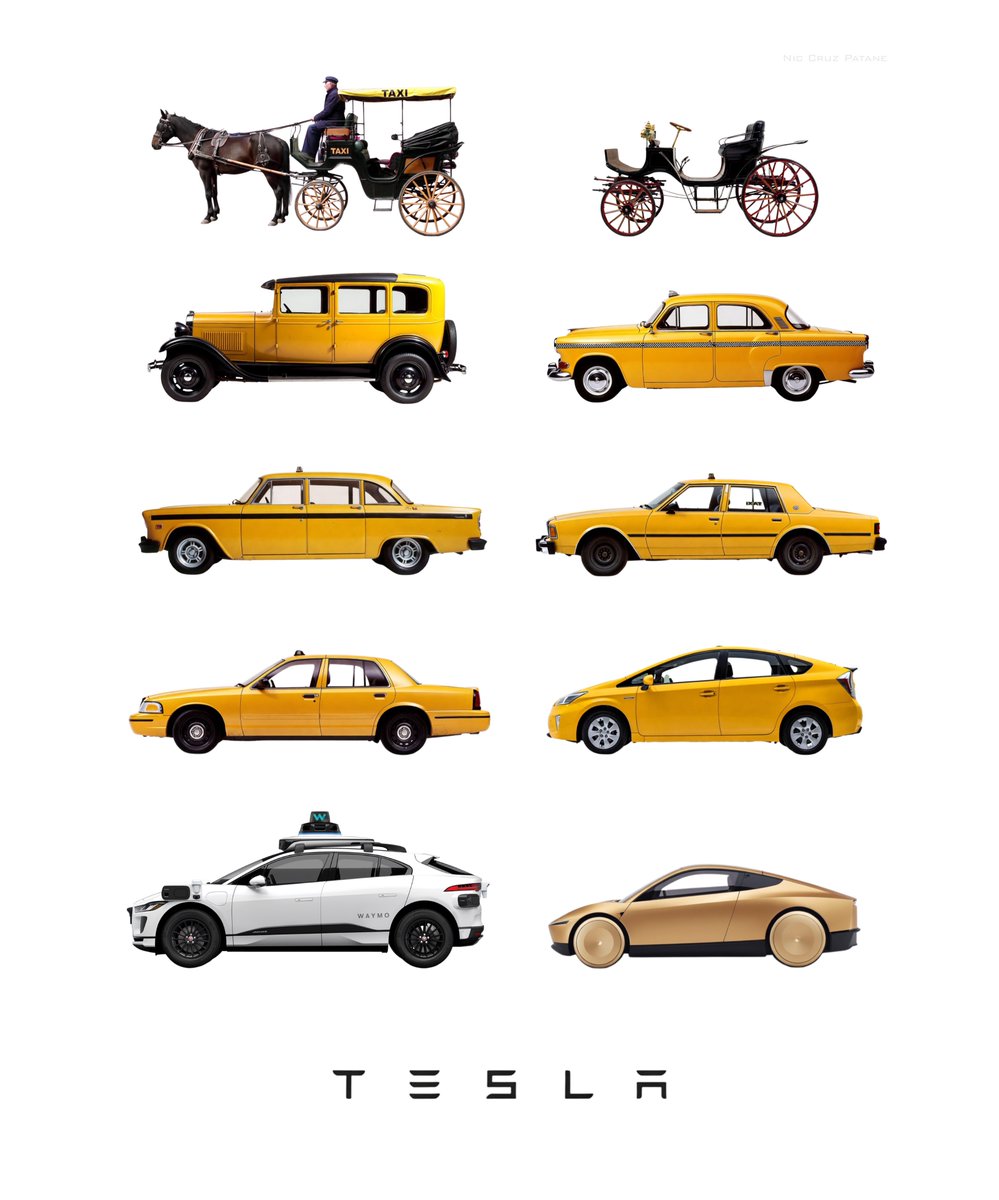
Evolution of the Taxi https://t.co/DpVJ69Kud1
🎯 https://t.co/dzCzKEB1Pv
