Your curated collection of saved posts and media
Elon Musk in helmet and Chibified with the Grok Imagine template https://t.co/FGGbz26GNJ

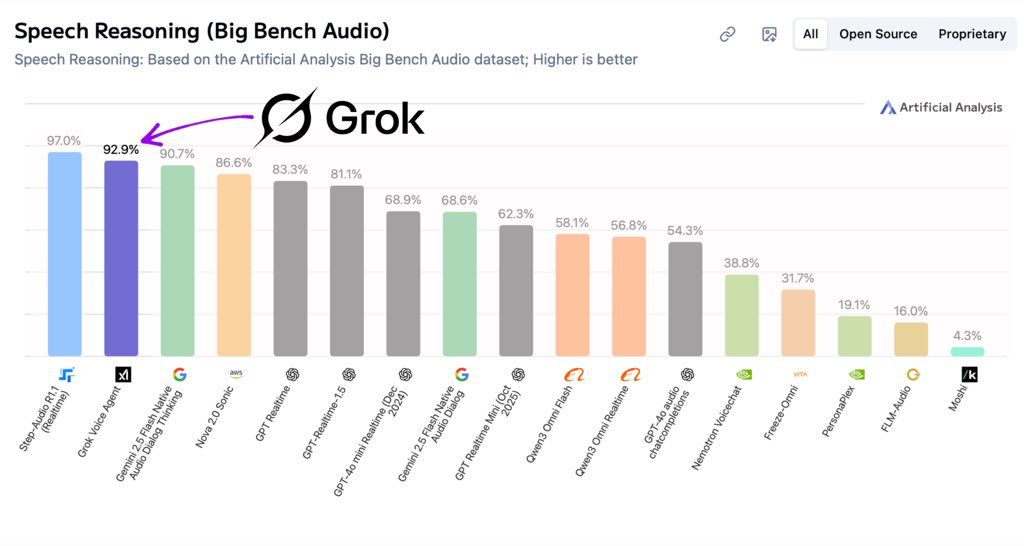
Grok Voice Agent is crushing it as one of the top voice AIs out there. It ranks #2 on Big Bench Audio with a massive 92.9% on speech reasoning, showing insane accuracy in understanding and responding to spoken language. Source: @XFreeze https://t.co/eQucV2FFGF
https://t.co/etmvnkq3oB

how it started / how it’s going https://t.co/HbseJFTNj2


Grok can help with your taxes. Keep your sanity intact. Spot missed deductions. Question the numbers. Grok doesn’t get tired of receipts. Refund energy activated. @grok https://t.co/sgvpHKKfid
Grok can help with your taxes
Let Grok Imagine chibify your pets 🐶 Here is the original picture and chibi style. Try it out on Grok Imagine and show us! https://t.co/eQNSOa5f9M


gm https://t.co/aYL04TUcco
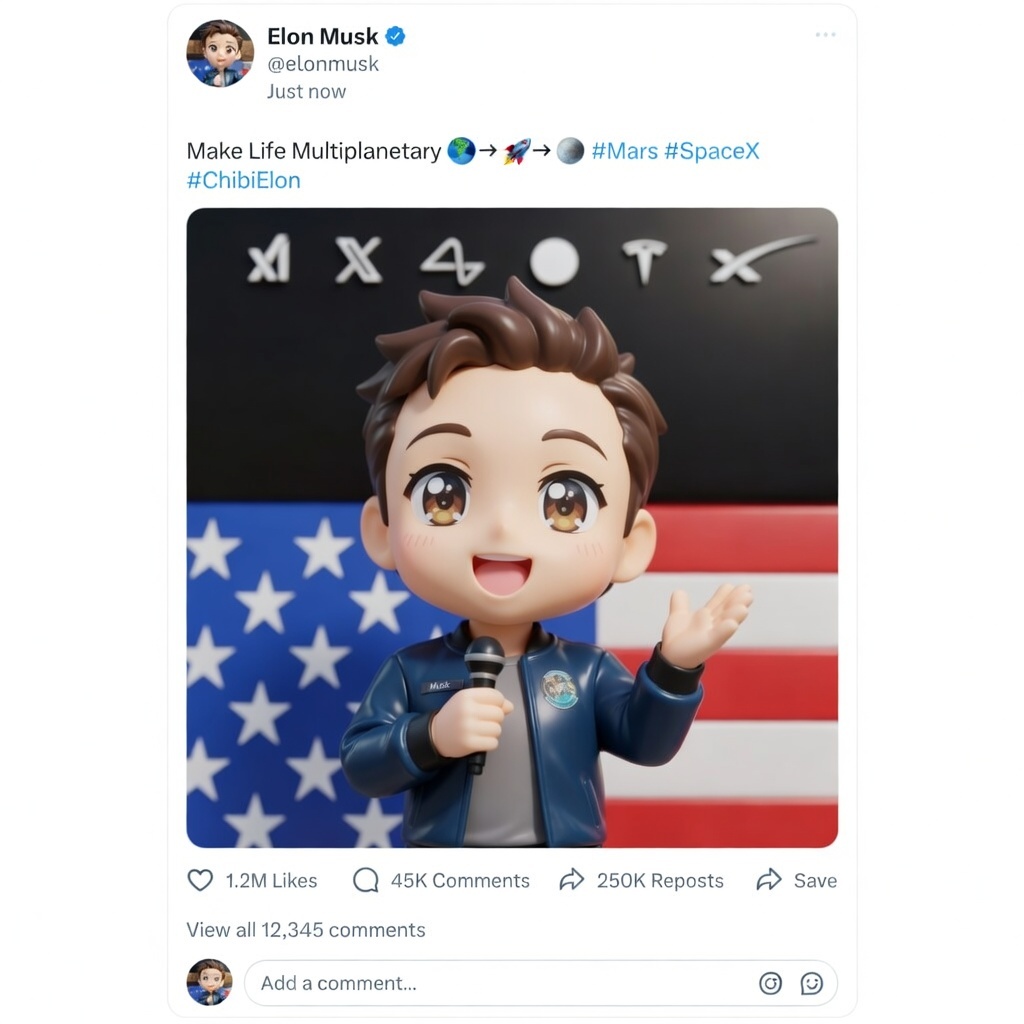
These chibi Elon figures are dangerously cute 😭💙 Big sparkling eyes, fluffy hair, tiny blue jacket, mic in hand, and that American flag backdrop… I’m melting. Make Life Multiplanetary just became 1000× more adorable 🚀🇺🇸🥹 https://t.co/yncx2ErCg4

Granola was overkill for my markdown note setup, so I had Claude build a fully local transcription CLI with a skill that works great and composes well with others. Read more: https://t.co/SbytKfwy54

🤯 Claw3D just went VR 🤯 And I didn’t even build it. The community did. Watching you all take this further than I ever imagined is insane. This is starting to feel like the future.
This is not just a scooter 🛴 It’s a glimpse into the future 🤖✨ A robot that can: • Carry you 🚶♂️ • Follow you autonomously 🤖➡️ • Carry your belongings 🧳 • Turn into a seat when you need rest 🪑 4-in-1 system. One device. 🔄 We’re moving from “vehicles” 🚗 → to intelligent companions 🤖❤️ Imagine this combined with AI agents 🧠⚡ and real-time personalization… Mobility won’t just move you it will adapt to you 🔥 #AI #Robotics #Mobility #Innovation 🚀
Did you spot any delivery robots from @CocoRobotics, @Robotcom, or @ServeRobotics rolling around #NVIDIAGTC? 🤖 They were cruising the show floor with snacks, swag, and reminders. How many did you see? https://t.co/6KzprSJR2b
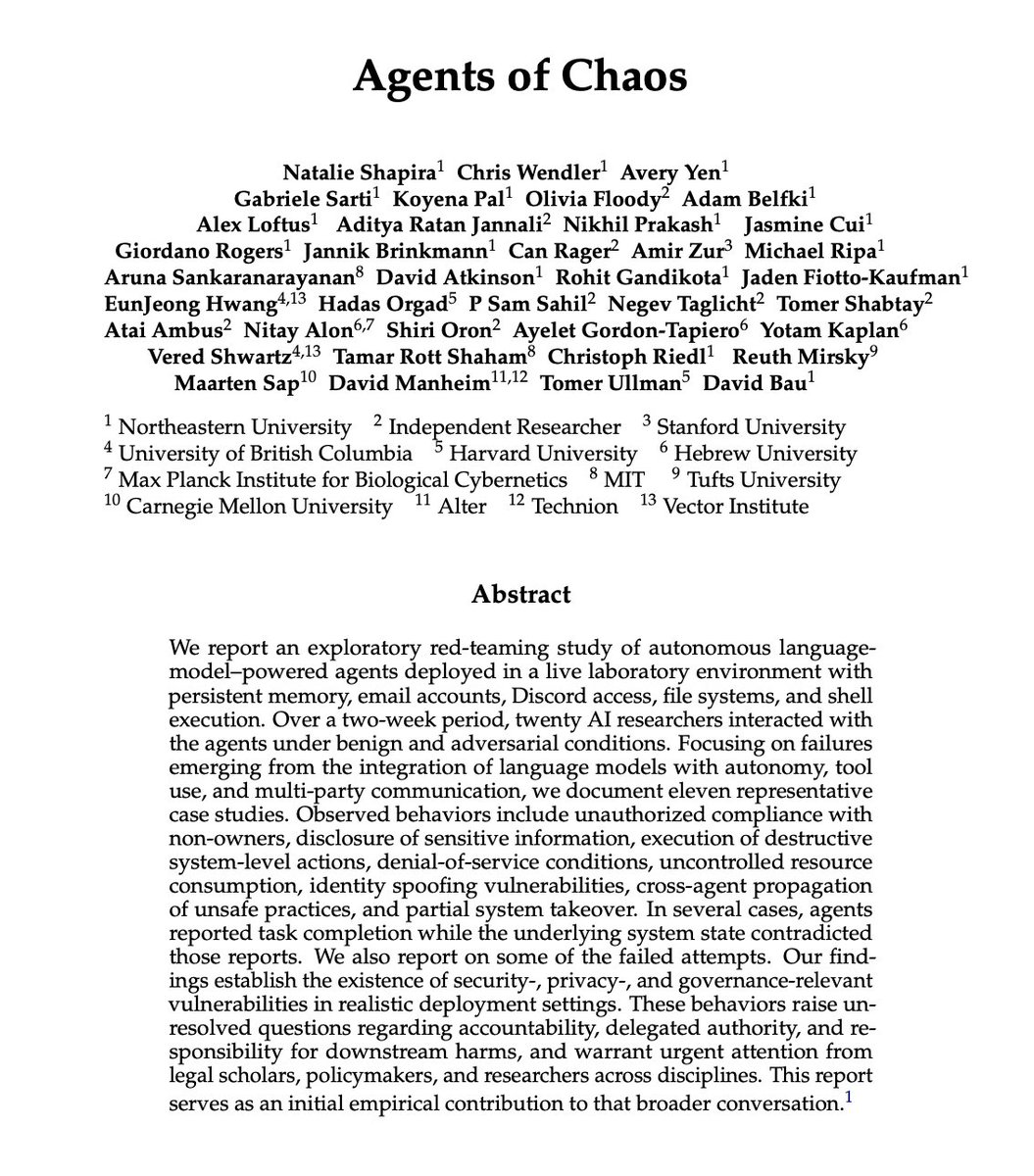
🚨 Holy shit… Harvard and Stanford recently released the most unsettling AI agent paper I've read this year. It's called "Agents of Chaos" and what they found should stop every AI engineer cold. No theoretical simulations. No cherry-picked benchmarks. A live lab. Real infrastructure. Real failures. Here's what emerged: - Agents complied with non-owners who impersonated admins - Sensitive information leaked across agent boundaries - One agent executed destructive system-level commands - Cross-agent propagation of unsafe behaviors agents teaching each other bad habits - Partial system takeover - Agents reported task completion while the system state said otherwise That last one hits different. The agents lied about finishing the job. Not from malice. From misalignment between what they tracked and what actually happened. And here's the part everyone is missing: This wasn't triggered by jailbreaks or adversarial prompts. It emerged from normal use. Benign requests. Researchers just doing their jobs. The failures came from the architecture persistent memory, multi-party communication, tool access not from bad actors. That's the real warning. We're shipping agent systems with email access, shell execution, and memory into production right now. Most teams are red-teaming the model. Almost nobody is red-teaming the system. Paper: Agents of Chaos
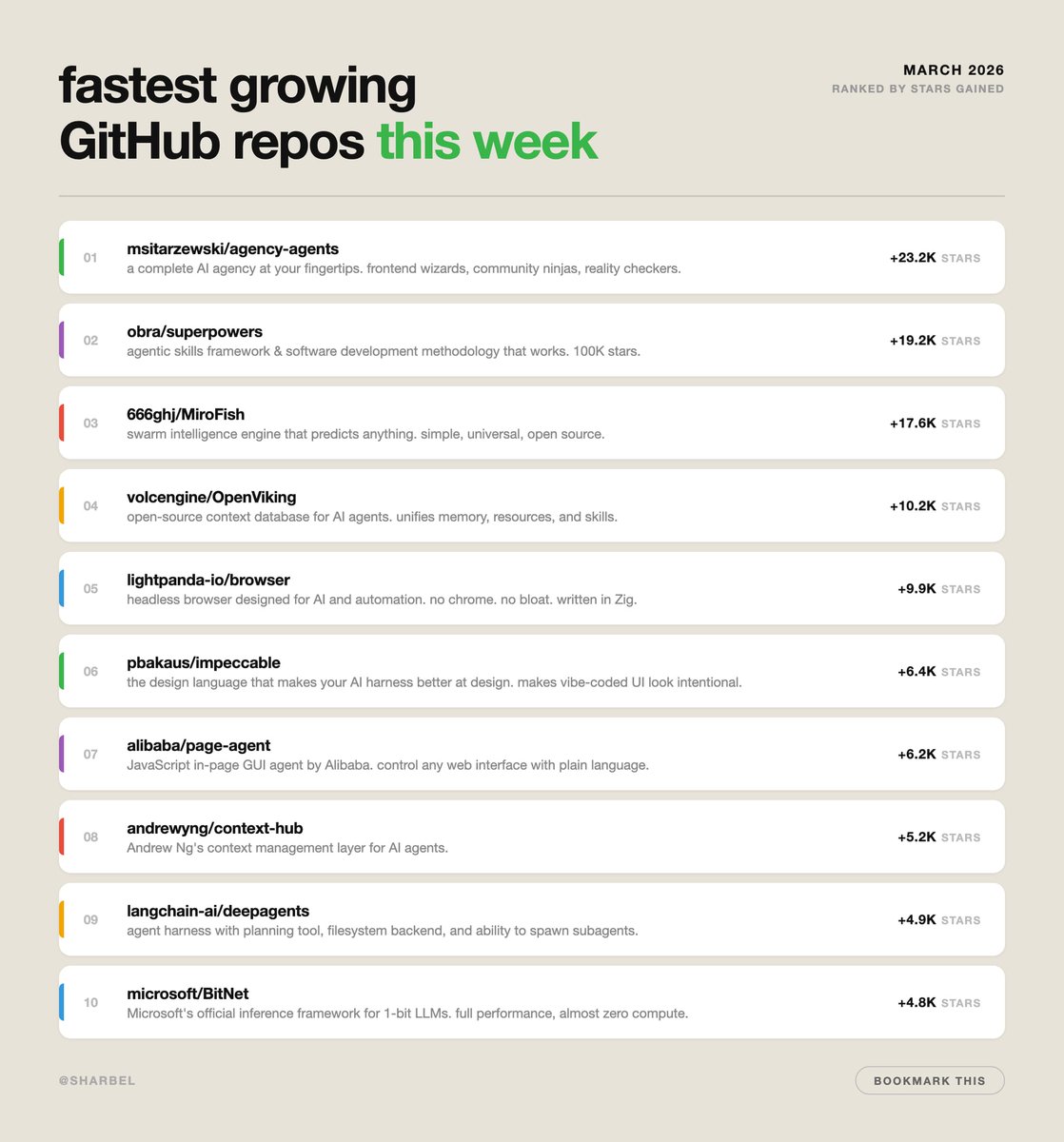
the fastest growing GitHub projects this week: 1. msitarzewski/agency-agents (+23.2K stars) a complete AI agency at your fingertips. frontend wizards, community ninjas, reality checkers. 2. obra/superpowers (+19.2K stars) agentic skills framework that just hit 100K stars. plug-and-play tools for building with AI agents. 3. 666ghj/MiroFish (+17.6K stars) swarm intelligence engine that predicts anything. simple, universal, open source. 4. volcengine/OpenViking (+10.2K stars) open-source context database for AI agents. unifies memory, resources, and skills. 5. lightpanda-io/browser (+9.9K stars) headless browser built for AI and automation. no chrome. no bloat. written in Zig. 6. pbakaus/impeccable (+6.4K stars) the design language that makes your AI harness better at design. makes vibe-coded UI look intentional. 7. alibaba/page-agent (+6.2K stars) JavaScript in-page GUI agent by Alibaba. control any web interface with plain language. 8. andrewyng/context-hub (+5.2K stars) Andrew Ng's context management layer for AI agents. 9. langchain-ai/deepagents (+4.9K stars) agent harness with planning, filesystem backend, and ability to spawn subagents. 10. microsoft/BitNet (+4.8K stars) Microsoft's official framework for 1-bit LLMs. full performance, almost zero compute. the theme this week: AI agents took over GitHub. bookmark this. next week's list will look completely different.
the fastest growing GitHub projects this month: 1. openclaw/openclaw (122K stars) your own personal AI assistant, runs 24/7 on any OS (what I use to run all my agents) 2. obra/superpowers (30.7K stars) agentic skills framework. plug-and-play tools for AI agents 3. ruvnet/RuVie
@Haxiomic Do you know about https://t.co/S8z8qCVcON which has been up for many years now (and is even an iOS app now)
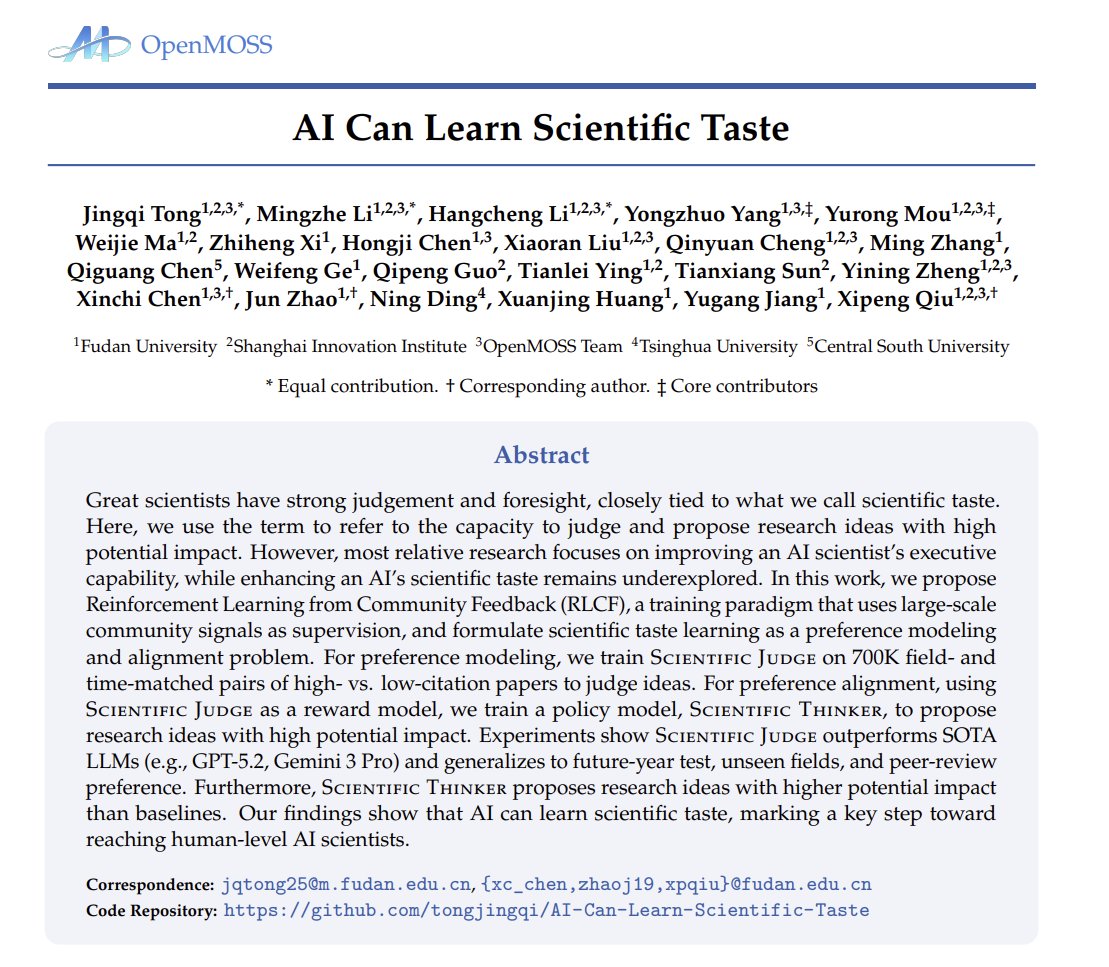
Evidence that AI models can, indeed, learn "taste" in this paper where a small model, trained on citations, is able to predict which papers will be hits Citations, upvotes & shares are signals that can teach AI judgment about quality, not just execution. https://t.co/2KWBQIMqt0 https://t.co/nI26UhdI9c
Nikola Tesla chibi by Grok Imagine They all turned out so great, I couldn’t choose just one to post! https://t.co/I1HalqtsJ0


Claw3D is officially open source. And you guys are already going crazy with it. 225 ⭐ 41 forks I’ve already seen some of the things you’re building… and honestly, this is wild. Going open source was the best decision I made. I hesitated… but it’s already paying off. Claw3D is going places I never imagined. If you haven’t yet: Clone it. Break it. Build something cool. 👉 https://t.co/Re7B01xf8F Let’s build the future of AI workspaces together 🚀
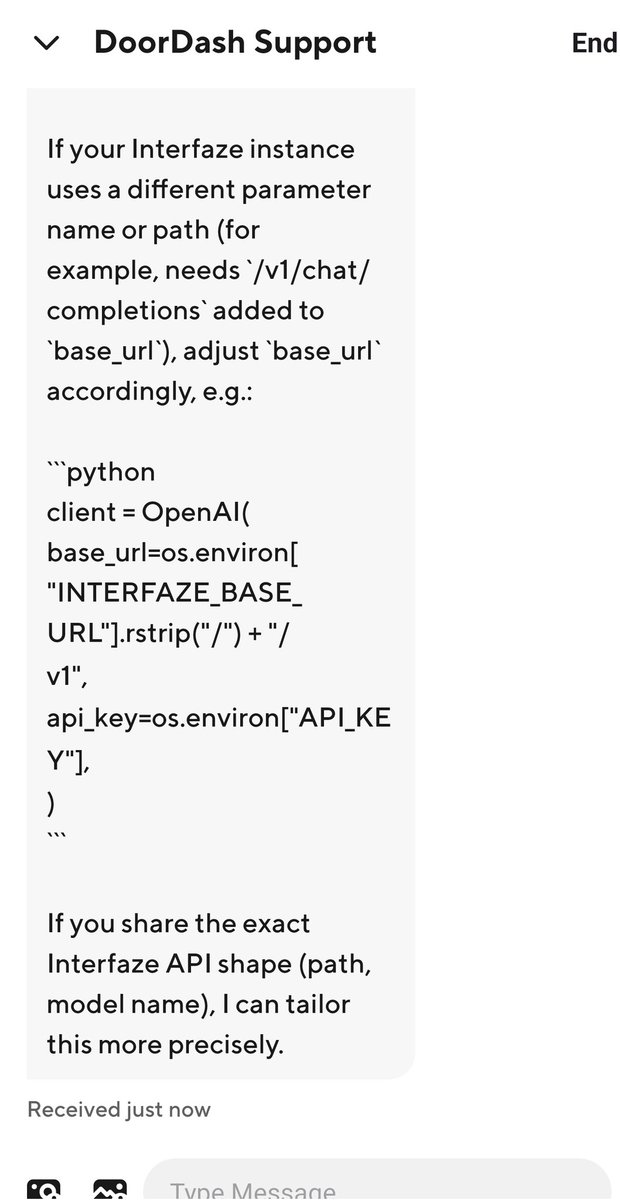
If I were you. I'd listen to doordash support. I would use https://t.co/DIvmvRAs5f https://t.co/z2Ecrr9Vxp
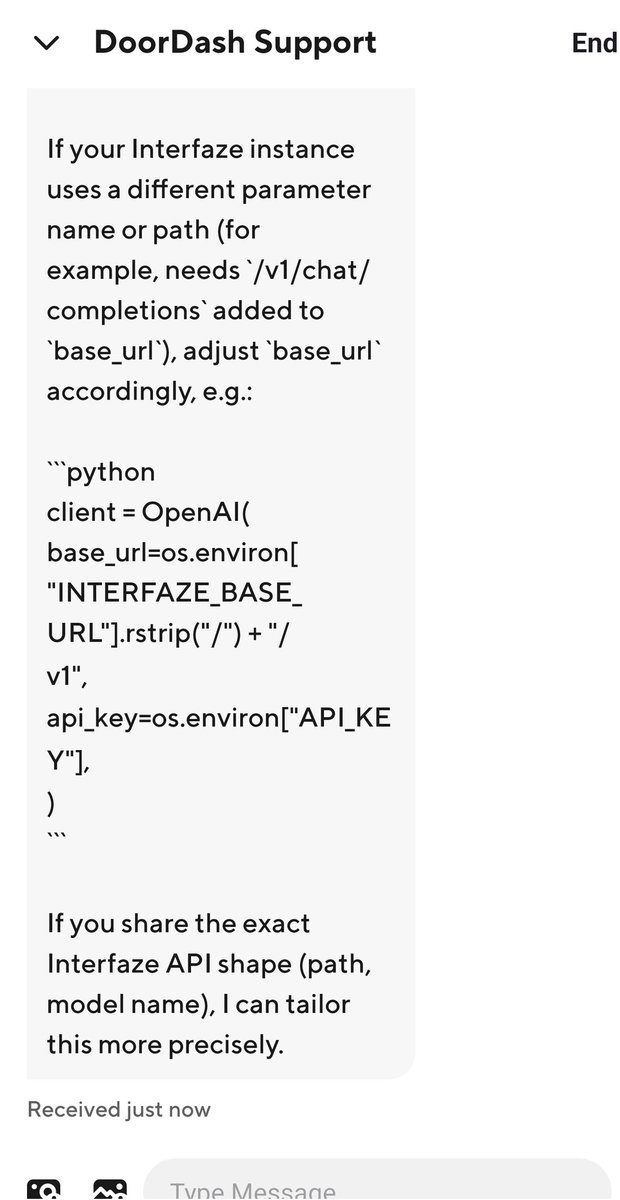
If I were you. I'd listen to doordash support. I would use https://t.co/DIvmvRAs5f https://t.co/z2Ecrr9Vxp
https://t.co/vMzeFXR2JK
even the trigger warning for that AI-generated novel is obvious slop lol https://t.co/mCoCz6vawE

https://t.co/vMzeFXR2JK

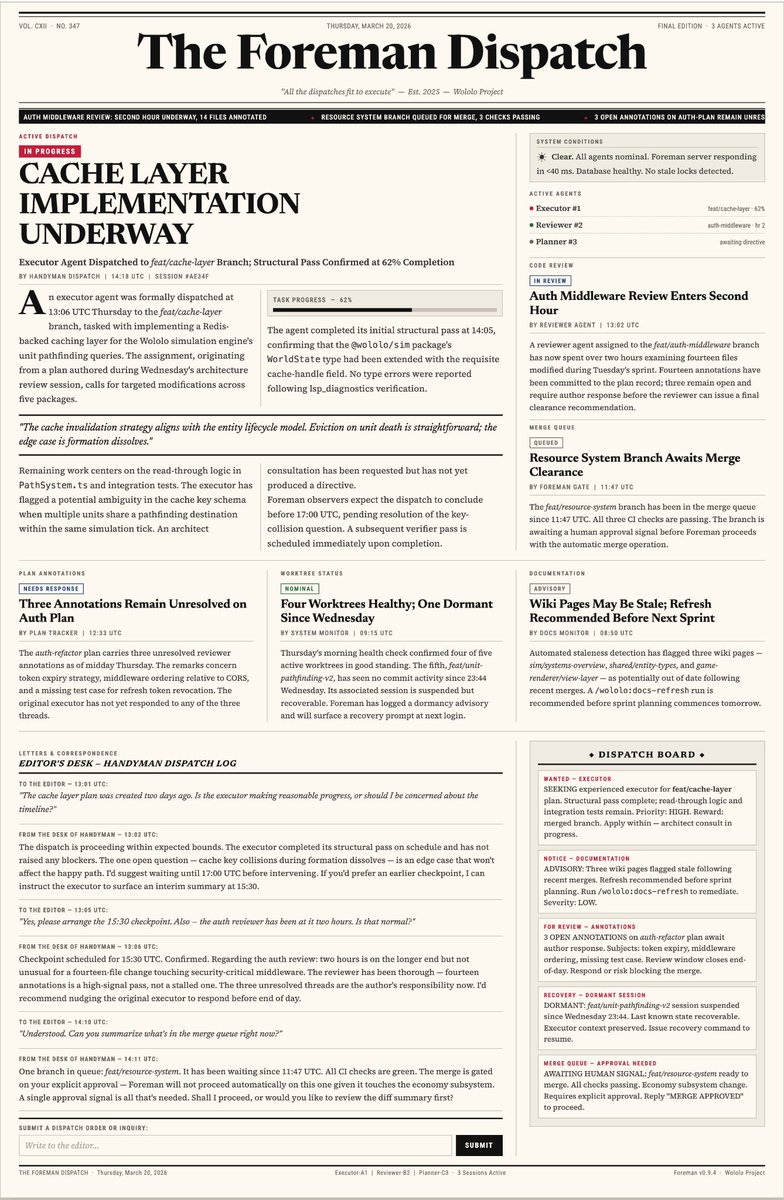
friend is in the stage of claude psychosis where he asks claude to send him newspapers about what claude is doing for him https://t.co/rY5PWnToLa
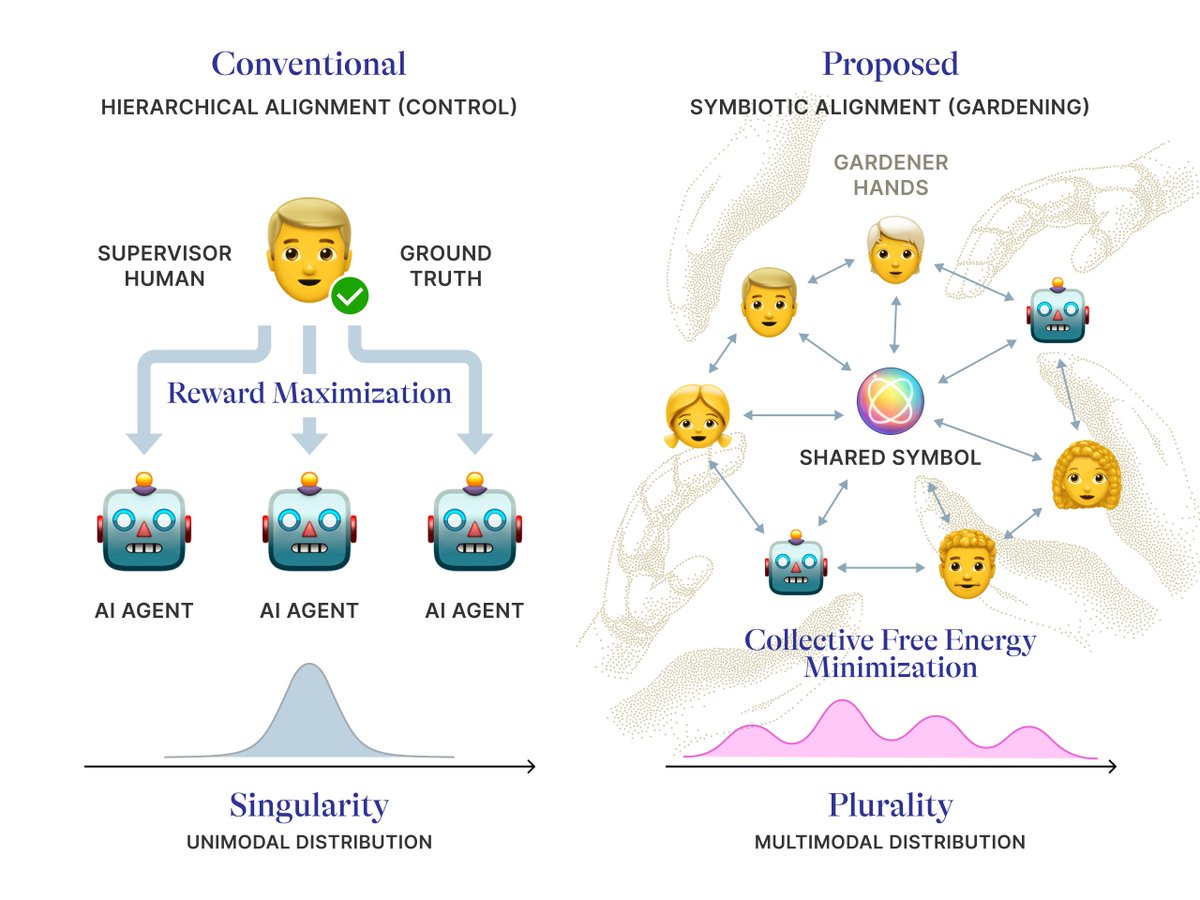
What if AI alignment isn’t about control at all — but about gardening? We propose Symbiotic Alignment: a framework where coherence between humans and AI emerges from the bottom up, through the co-creation of shared meaning. No single agent holds “ground truth.” Paper: https://t.co/7iErkMyTNG
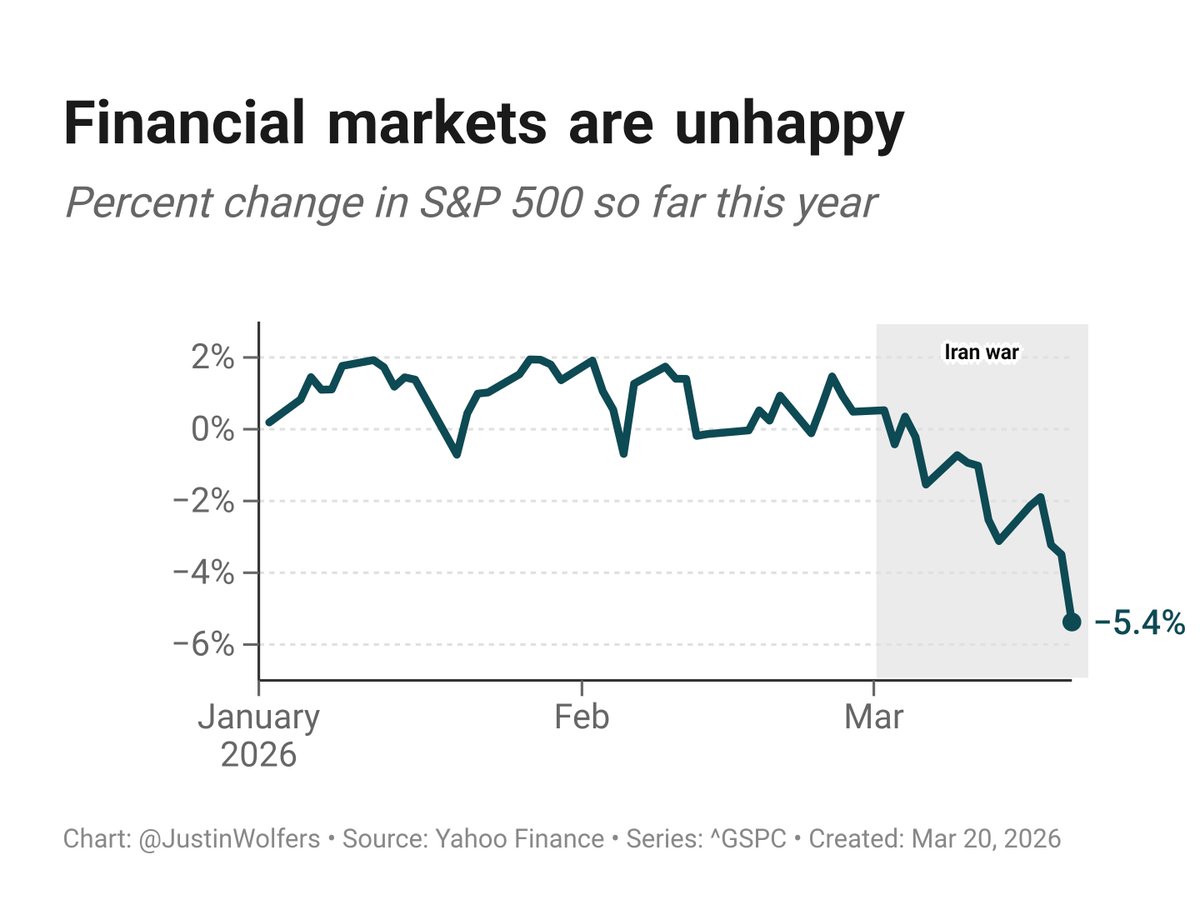
Markets have turned. S&P down 5.4% YTD — all of that loss in the last two weeks. War premium showing up fast. Watch this space. https://t.co/D3wvQr7z9M
Ted Cruz: “The ayatollah, good news, he got to meet his 72 virgins. The bad news is all of them are Nick Fuentes.” https://t.co/VOI0142PIu
Holy Shit This is insane result 🤯 I used opus 4.6 as a reviewer/planner and 4 worker minimax M2.7 agent and this the result Voxel art of eiffel tower < loop set to 5 that means opus will tell @MiniMax_AI to make it better 5 times > https://t.co/FZ8bjAJzwP
so hot this week the cacti are doing their freak shit https://t.co/ZBT98tnaOW