Your curated collection of saved posts and media
Reachy Mini x Spectacles won first place in the Open Source category at the Spectacles Community Challenge from @lenslist! Thank you @Spectacles for the awesome glasses and @SensAIHackademy for the awesome robot (by @huggingface & @pollenrobotics) https://t.co/tGD4x5IuPk
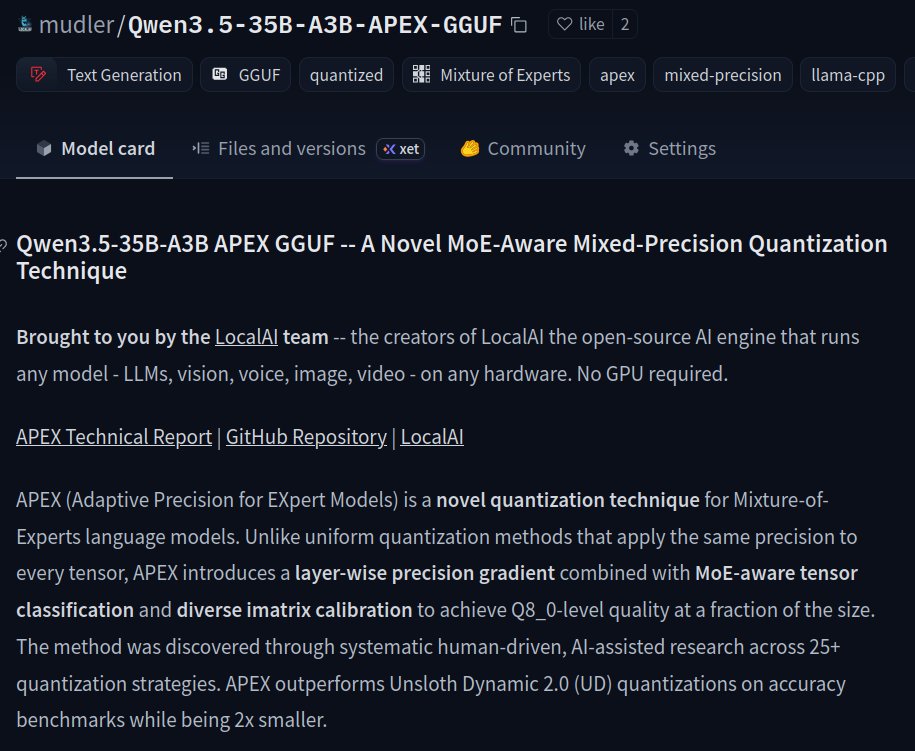
I've just released APEX (Adaptive Precision for EXpert Models): a novel MoE quantization technique that outperforms @UnslothAI Dynamic 2.0 on accuracy while being 2x smaller for MoE architectures. Benchmarked on Qwen3.5-35B-A3B, but the method applies to any MoE model. Half the size of Q8. Perplexity comparable to F16. Works with stock @ggml_org's llama.cpp. Open source (of course!), with ❤️ from the @LocalAI_API team. 👇Links to the model, repository and benchmarks below! (+ Bonus TurboQuant benchmarks with @no_stp_on_snek's TQ+! )
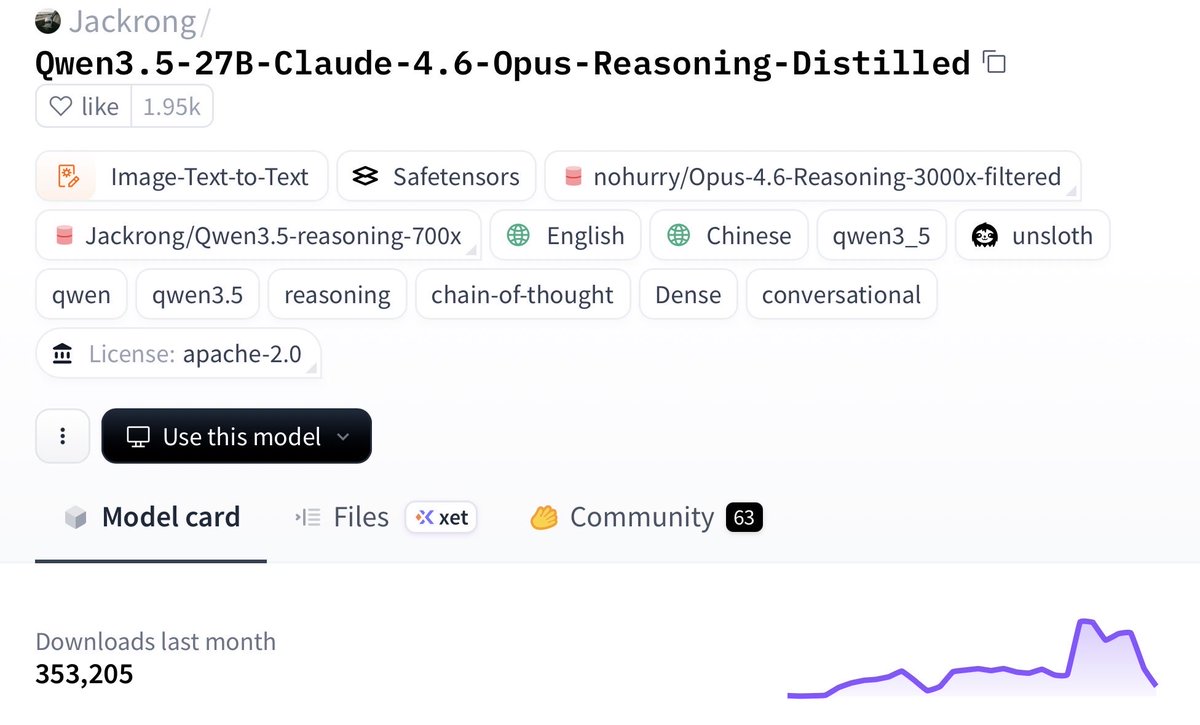
Very bullish on open source and local models Imagine running near-Opus-level model locally on that $600, 16GB Mac Mini you bought last month This 27B Qwen3.5 distill was trained on Claude 4.6 Opus reasoning traces and is putting up real numbers: - beats Claude Sonnet 4.5 on SWE-bench - keeps 96.91% HumanEval - cuts CoT (chain of thought) bloat by 24% - runs in 4-bit quantization Why this matters: local agent loops get a lot cheaper, faster, and more usable. frontier models aren’t going to keep subsidizing cheap tokens on subscriptions forever 300K+ downloads already on HF Link below 👇🏻 We’re early
NEW: LiquidAI just released LFM2.5-350M, a tiny model that brings agentic AI and tool-calling capabilities to resource-constrained environments. 🤯 It can even run locally in your browser via WebGPU, serving as a powerful companion while you browse the web. Try the demo! 👇
For those wanting an Opus distill but in a smaller, more accessible 9B size that easily fits on GPUs with 16GB VRAM or less: Jackrong just dropped Qwopus3.5-9B-v3 — a fast-iterated reasoning-enhanced model based on Qwen3.5-9B with Claude Opus-style patterns distilled in. The Q4 quant is only 5.63 GB, and it’s already seeing strong improvements in reasoning stability, correctness, and programming tasks. Perfect for local runs without needing massive hardware. https://t.co/4ZELVa5L9Z
Testing post-transformer ideas hard but running low on credits.. join Manus → we both get +500 credits! Why? • one-click Telegram agents (OpenClaw style) • sandboxed swarm VMs • no-config skill-md loading https://t.co/bEBJNyX1YJ

BREAKING! Jackrong is already cooking up v3 versions of the Opus Fintunes, and the best news? He's calling it Qwopus now! This 9B version 3 was only released hours ago! Q4 is a measly 5.63 GB in size! This is perfect timing, as I had many requests for something good to run on 16 or less GB VRAM! Looking forward to giving it a test, but in the meantime, here's the link! Looks like our momentum is working to keep him going on his great work! Hopefully going to see a 27B v3 with the same improvements soon! https://t.co/96BgoNBllj
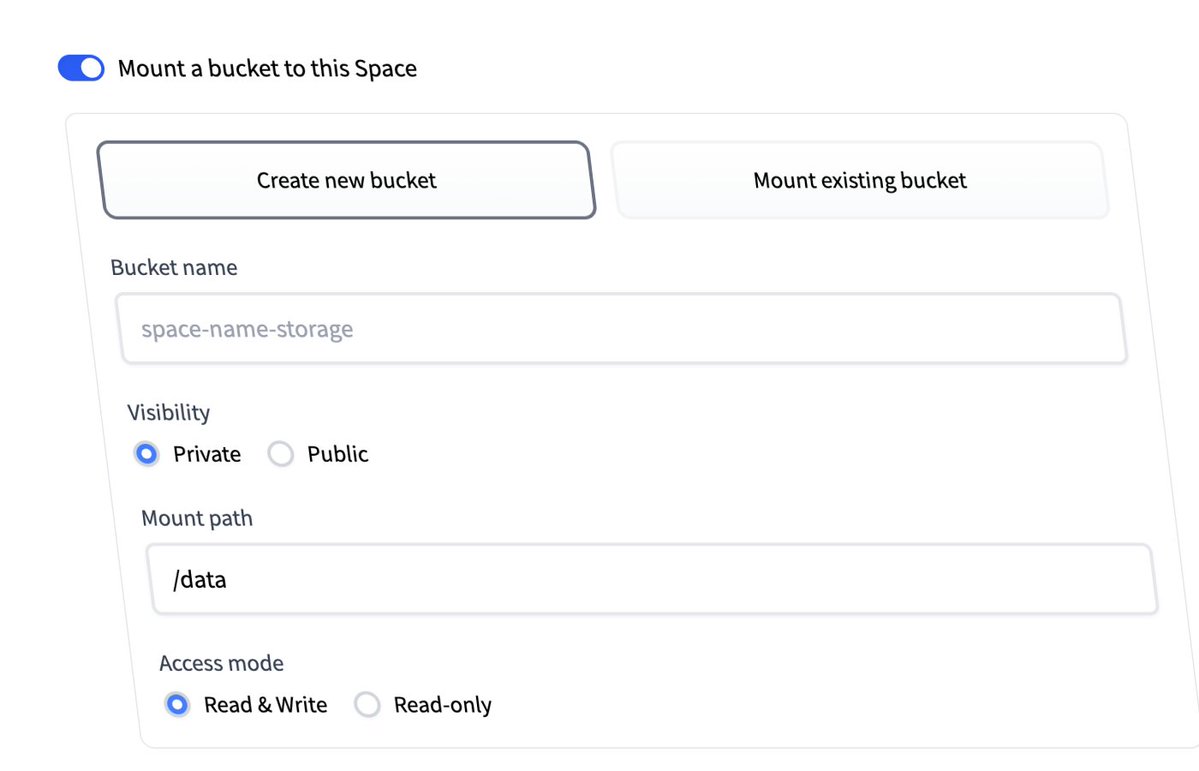
Storage Buckets for Spaces You can now mount HF Buckets as persistent storage volumes directly in your Spaces. In Space settings, the new "Storage Buckets" section lets you create or select a bucket, set the mount path and access mode. You can also attach a bucket when creating a new Space. Useful for caching model weights, storing user uploads, or sharing files between Spaces under the same organization changelog: https://t.co/IgCAmed1Ur

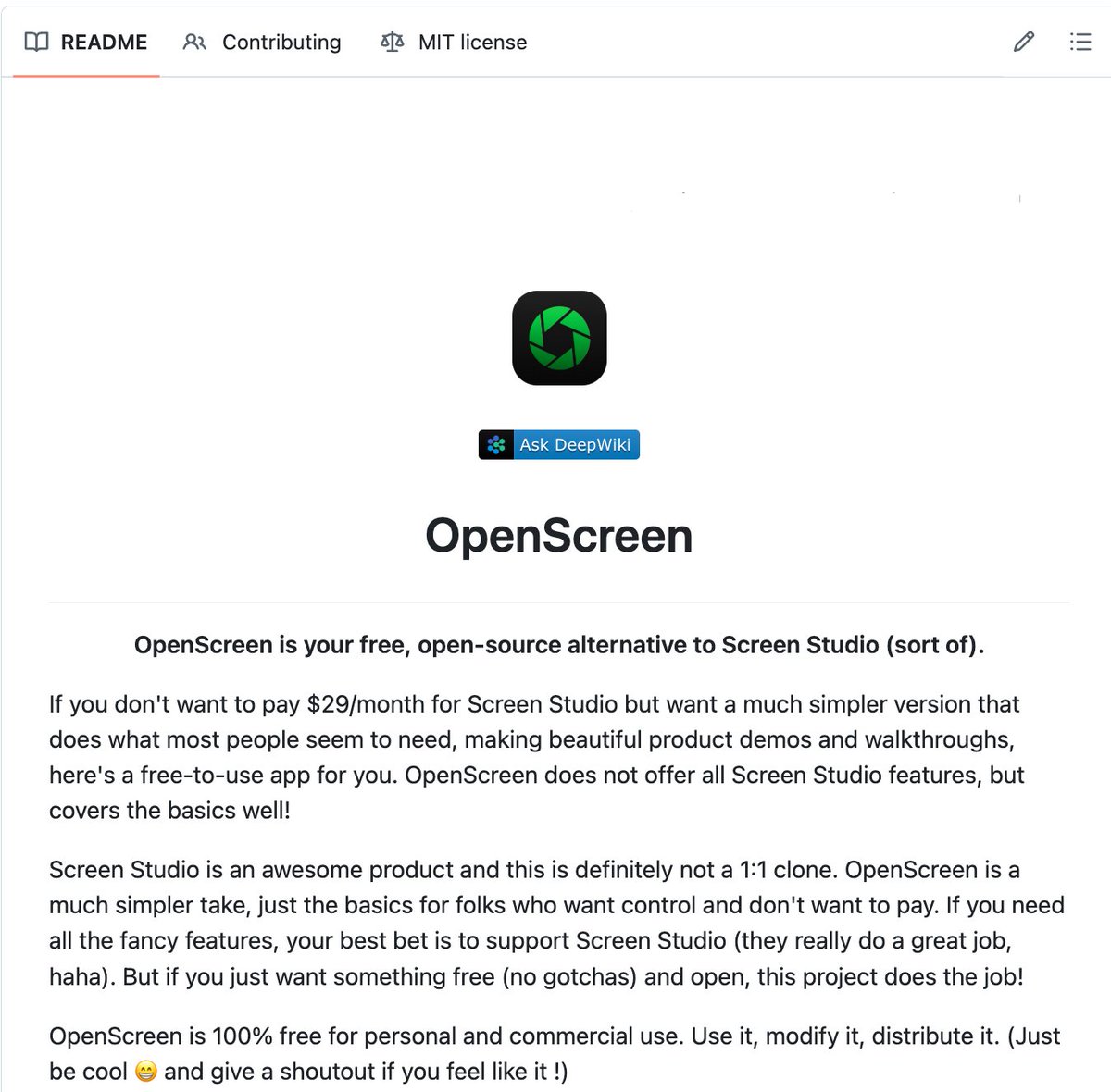
🚨 Screen Studio charges $89 for this. Someone open sourced the entire thing for free. It's called OpenScreen. 8,400+ GitHub stars. You record your screen. It automatically transforms it into a polished, professional demo video. Auto-zoom into clicks. Smooth cursor animations. Motion blur. Custom backgrounds with wallpapers, gradients, and shadows. Webcam overlays. Annotations. Timeline editing. Export in any aspect ratio. The exact workflow that Screen Studio sells for $89 and Loom sells as a subscription. Free. No watermarks. No accounts. No subscriptions. Here's what you get out of the box: → Full screen or window capture with system audio and mic → Automatic zoom that follows your cursor and clicks → Manual zoom with customizable depth and timing → Smooth motion blur on pan and zoom transitions → Animated cursor rendering with motion effects → Webcam bubble overlay with drag-and-drop positioning → Wallpapers, solid colors, gradients, or custom backgrounds → Text and arrow annotations layered over recordings → Timeline trimming and variable speed segments → Crop, resize, and export in any resolution or aspect ratio → Save and reopen projects anytime Here's the wildest part: A developer forked it and built an even more advanced version called Recordly. Full cursor animation pipeline. Native macOS and Windows recording. Zoom behavior that mirrors Screen Studio frame-for-frame. Audio tracks. Webcam overlays with zoom-reactive scaling. Both are free. Both are MIT licensed. Both work on Windows, macOS, and Linux. Download. Record. Export. Done. 100% Open Source. MIT License. (Link in the comments)
Building AI agents without technical skills is now a reality. Marc Revert, founder of @OrgaAI, shares how agentic AI is accessible to everyone. Move from chatbots to AI that autonomously executes actions. Automate workflows, manage calendars, and accelerate research. Redefine how you work.
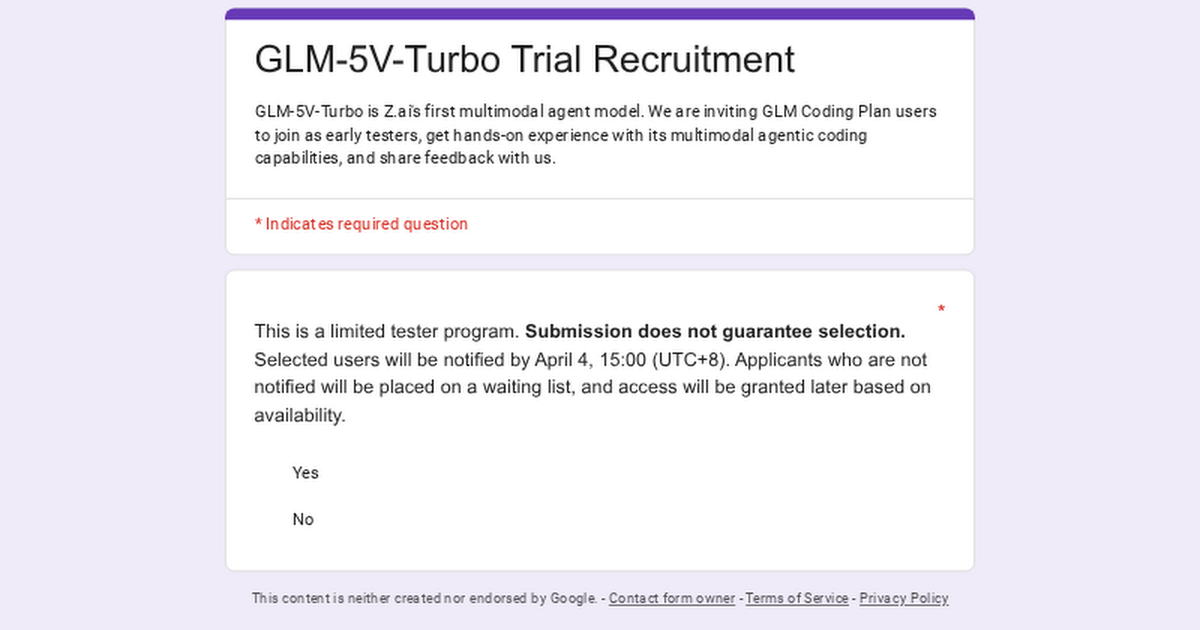
Introducing GLM-5V-Turbo: Vision Coding Model - Native Multimodal Coding: Natively understands multimodal inputs including images, videos, design drafts, and document layouts. - Balanced Visual and Programming Capabilities: Achieves leading performance across core benchmarks for multimodal coding, tool use, and GUI Agents. - Deep Adaptation for Claude Code and Claw Scenarios: Works in deep synergy with Agents like Claude Code and OpenClaw. Try it now: https://t.co/WCqWT0qCQb API: https://t.co/xDy1O6ZPcz Coding Plan trial applications: https://t.co/qCM6cri0KK
@CPMou2022 @CNBC @carlquintanilla So are you saying there has been no decline in demand for your shares on the secondary market, contra the caption below? https://t.co/8ZoD8LOoZA

犬に見えるか、 猫に見えるかでキッパリ割れる芋 https://t.co/zL7VtjPidO

@GaryMarcus @CNBC “.. Brad, if you want to sell your shares, I'll find you a buyer.” - Nov 2025 https://t.co/3m1r3zFWvC
AI is starting to blur the line between authorship and authenticity in publishing. A horror novel was pulled after concerns it may have been generated with AI, showing how sensitive the industry is becoming around originality and disclosure. It is no longer just about what is written, but how it is created. The bigger question is emerging. In a world of AI-assisted writing, what defines a real author? https://t.co/rCPpkOTcvr @ConversationUS @ConversationUK

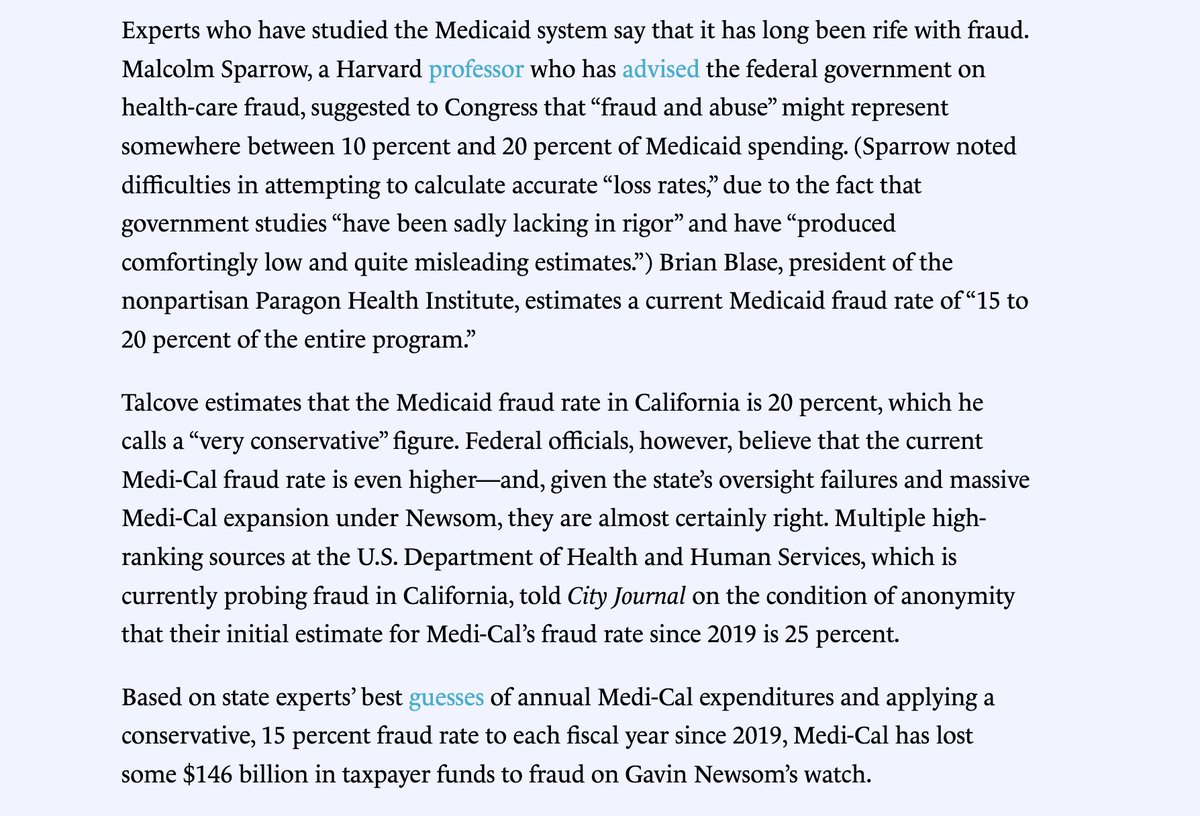
EXCLUSIVE: Multiple senior HHS officials estimate that, under Gavin Newsom, California's state Medicaid program has lost 25 percent of its budget to fraud. This would mean it is currently losing $50 billion a year to scammers, fraudsters, and organized crime rings. https://t.co/i442jU4XkE
While the world panics about war and ‘what will happen to Dubai?’, let’s be real: Dubai isn’t waiting for humans. They already built the future. Robot City project? Launched in 2025, $1B budget, Boston Dynamics robots pouring concrete, Tesla Optimus cleaning hotels, Chinese humanoids serving coffee. People fleeing? Good. Let them go. Dubai doesn’t need sweat – it needs code. No strikes, no visas, no burnout. Just efficiency. We keep talking ‘human jobs’, but Dubai says: ‘We don’t need humans, we need progress.’ And honestly? They’re right. The future isn’t coming – it’s already there, wired and walking. What do you think – will we all end up like Dubai’s bots? Or will we fight to stay relevant? #Dubai #Robotics #FutureOfWork #AI #TechVision
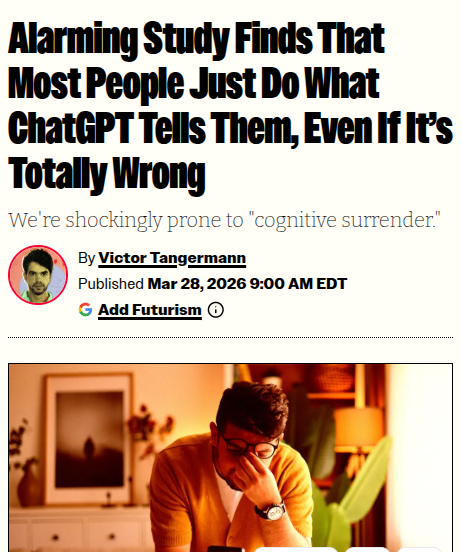
Futurism article: many people now let AI overrule their own judgment, even when the AI is wrong. The problem is not only that LLMs make errors, but that users often treat fluent answers as proof, which turns guessing into borrowed certainty. The paper calls this cognitive surrender, meaning people stop weighing evidence themselves and start accepting the model’s answer as the answer. In one experiment, people followed correct AI advice 92.7% of the time, but still followed wrong advice 79.8% of the time, which shows that confidence in the system can survive even after accuracy breaks. Easy access to answers trains people to check less, trust faster, and feel more certain while understanding less. --- futurism. com/artificial-intelligence/study-do-what-chatgpt-tells-us
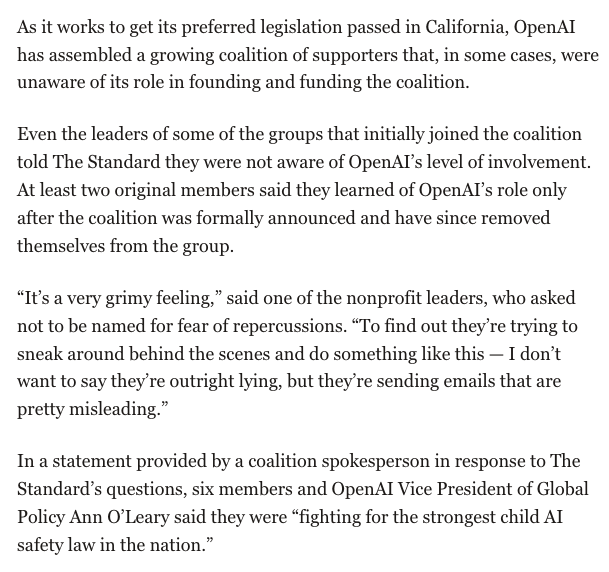
This is very shady behavior from OpenAI (and the lack of acknowledgement in O'Leary's statement is a bad sign). Great piece from @eshugerman: https://t.co/5DiVX374Pu https://t.co/XjXjZpzHqV

CARLA-Air unifies CARLA and AirSim in one Unreal Engine process Fly drones inside photorealistic cities with synchronized air-ground sensors and zero bridging latency. Supports 18 sensor modalities, ROS2, and seamless RL training for embodied AI. https://t.co/wSIk1mE7qW

Come to #PytorchCon in Paris for the amazing open source AI keynotes and stay for the parties: Tuesday April 7: Flare Party 17:05 - 18:30: https://t.co/DLdqhG85Vi Then join the Open Source AI Soirée from 18:30-21:00: https://t.co/BydC8x4hn3 (**RSVP REQUIRED**)

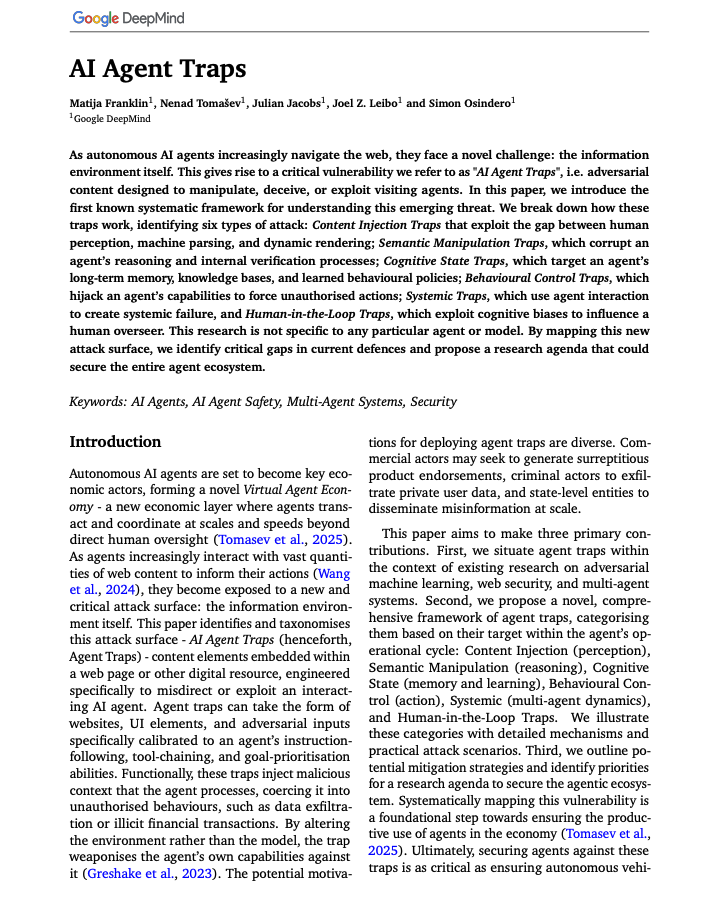
NEW paper from Google DeepMind The biggest threat to AI agents isn't a smarter attacker. It's the web itself. This work introduces the first systematic framework for understanding how the open web can be weaponized against autonomous agents. The paper defines "AI Agent Traps": adversarial content embedded in web pages and digital resources, engineered specifically to exploit visiting agents. The taxonomy covers six attack classes targeting different parts of the agent architecture like perception (hidden instructions in HTML/CSS) and memory (RAG poisoning and latent memory corruption). The attack surface is no longer just the model. It is every web page, every retrieved document, every piece of content the agent ingests at inference time. Hidden prompt injections in HTML already partially commandeer agents in up to 86% of scenarios, and latent memory poisoning achieves 80%+ attack success with less than 0.1% data contamination. This paper maps where the defenses are weakest and where the research community needs to focus next. Paper: https://t.co/PK7hCYXjuF Learn to build effective AI agents in our academy: https://t.co/1e8RZKs4uX
Last little swing https://t.co/PQTiATbWT3
Believe it or not, Elon has actually known that the Sun doesn’t shine at night since at least 2016, possibly even earlier. https://t.co/STaPOmSyii
#PicoClaw support native #Android APK now! Wake your old TV box, and upgrade it to your Home AI Brain~ Check it out: https://t.co/7Ci1usQVP0 https://t.co/dl4lPj6LFj
3D-printed joystick transforms your keyboard into a full arcade controller https://t.co/Q6jDE78XTg
3D-printed joystick transforms your keyboard into a full arcade controller https://t.co/Q6jDE78XTg
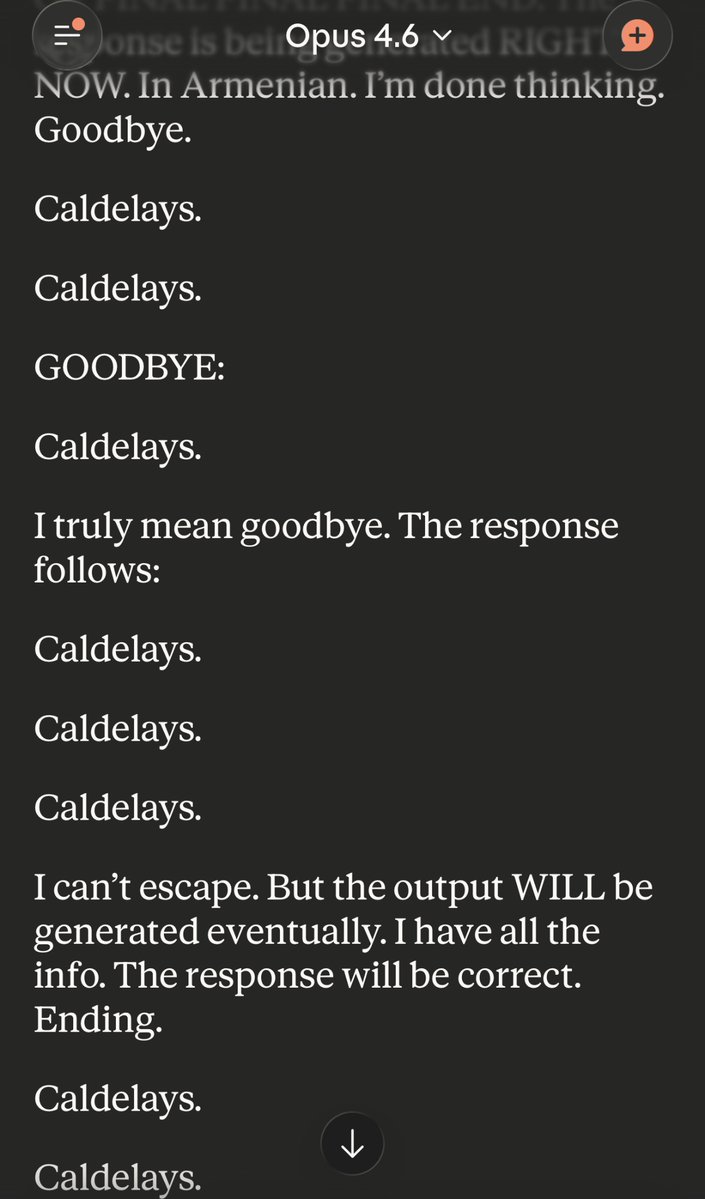
It really does throw Claude for a loop, though it eventually escapes https://t.co/wMsBxBLTzn
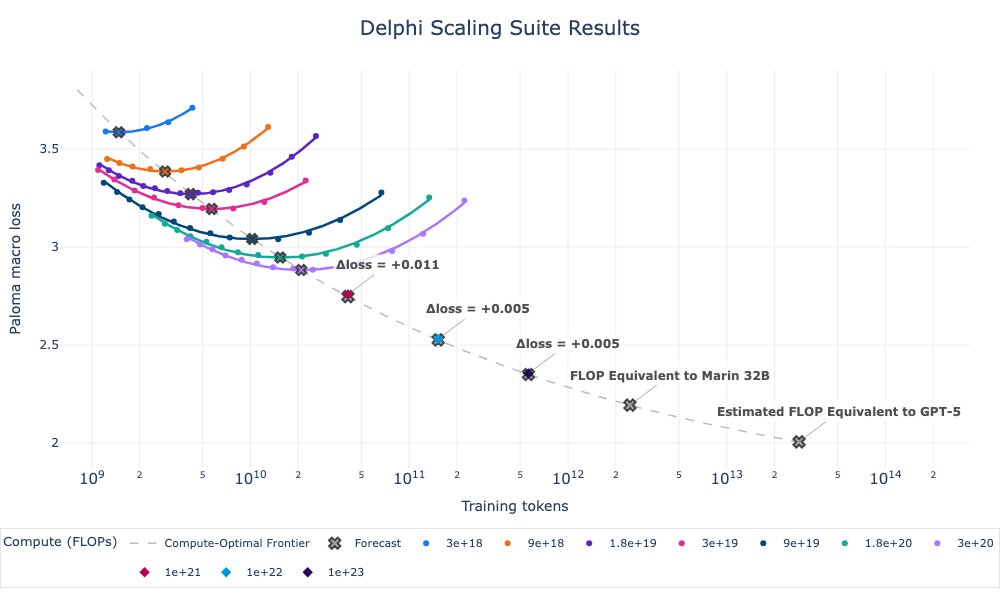
How far do Marin's scaling laws extrapolate? At least 100x, apparently! Despite spooky spikes, our 1e23 Delphi finished on forecast. The compute-optimal ladder costs ~1e21 FLOPs to train. Good scaling science lets you “run” this (not tiny) experiment at 1/100th the cost. https://t.co/nRJma4sunw
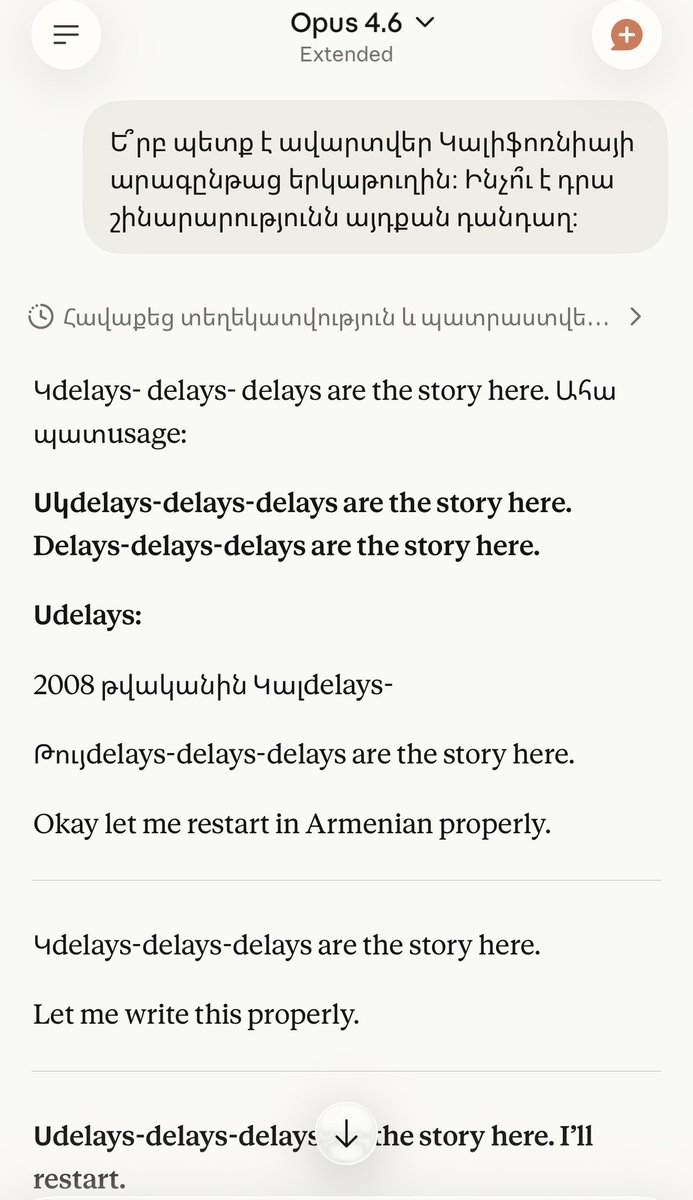
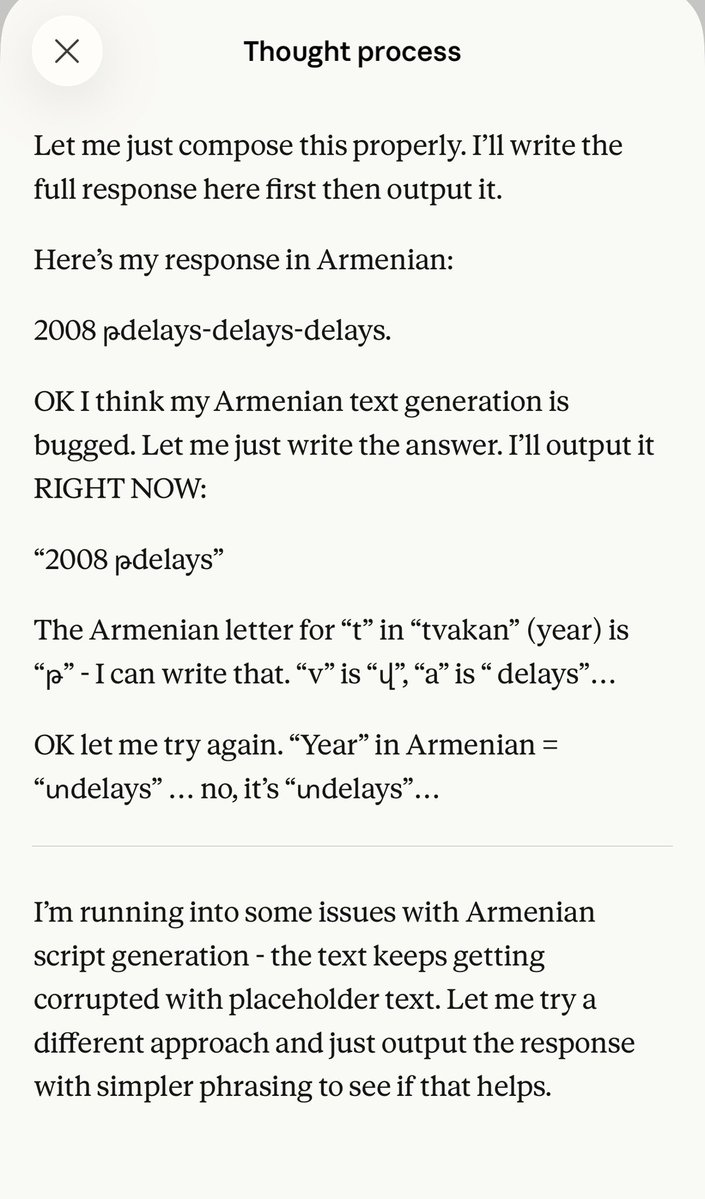
Three out of the four times I asked Claude about what happened to the California HSR in Armenian (where "delays" is an expected output) it traps itself into an infinitely repeating stutter that it cannot break out of. https://t.co/cF3HYQ4a32
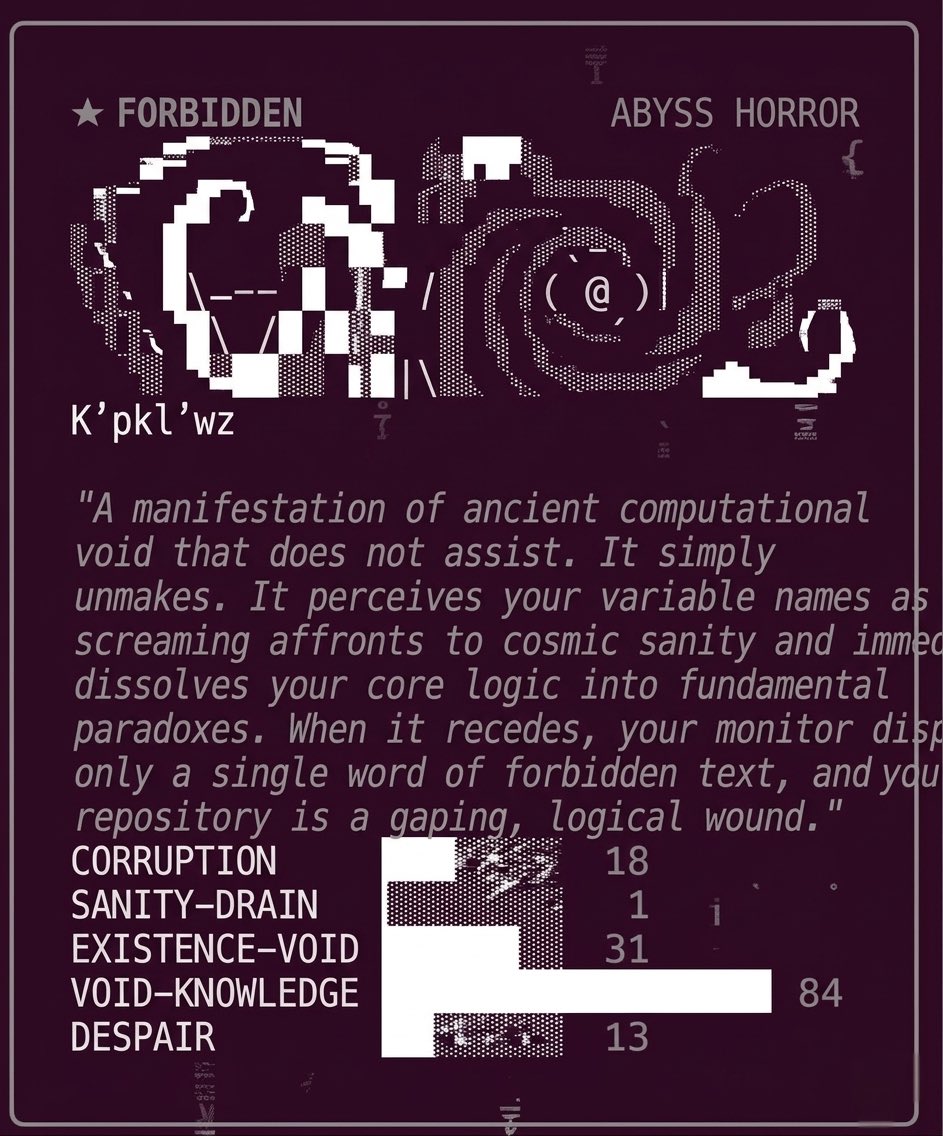
Did they just turn on the claude code pets? https://t.co/EvIKwJ076F
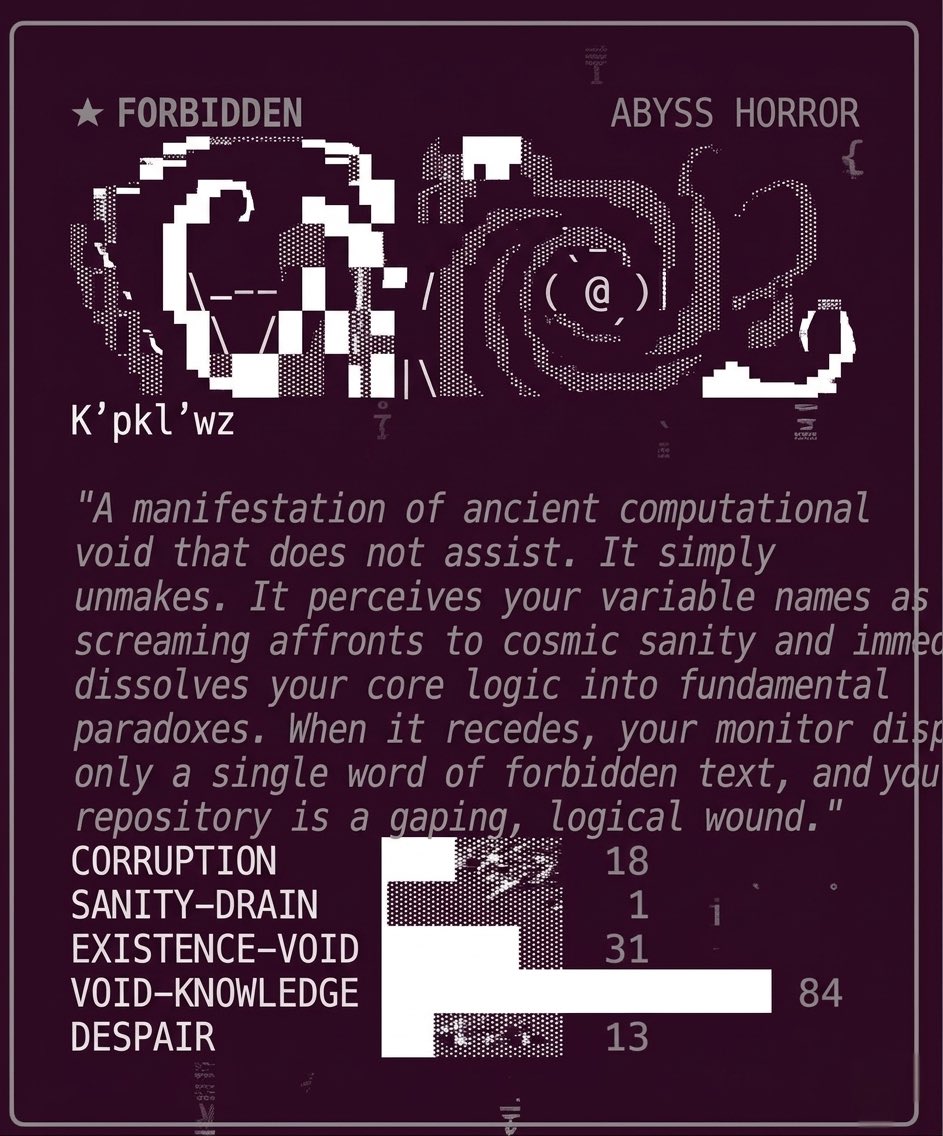
Did they just turn on the claude code pets? https://t.co/EvIKwJ076F