Your curated collection of saved posts and media
When I hit the Update button in Codex and then the updated version of Codex also has an Update button https://t.co/ByhFYUsudd

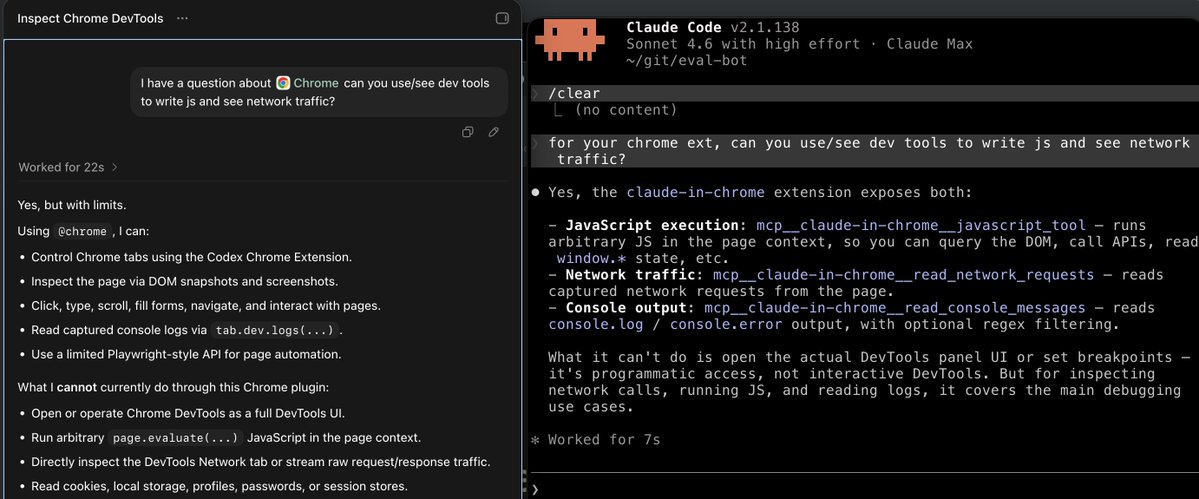
Claude chrome extension still has a key advantage over codex browser use AFAIK (I hope it reaches parity though!) https://t.co/dQgfSZfvv6
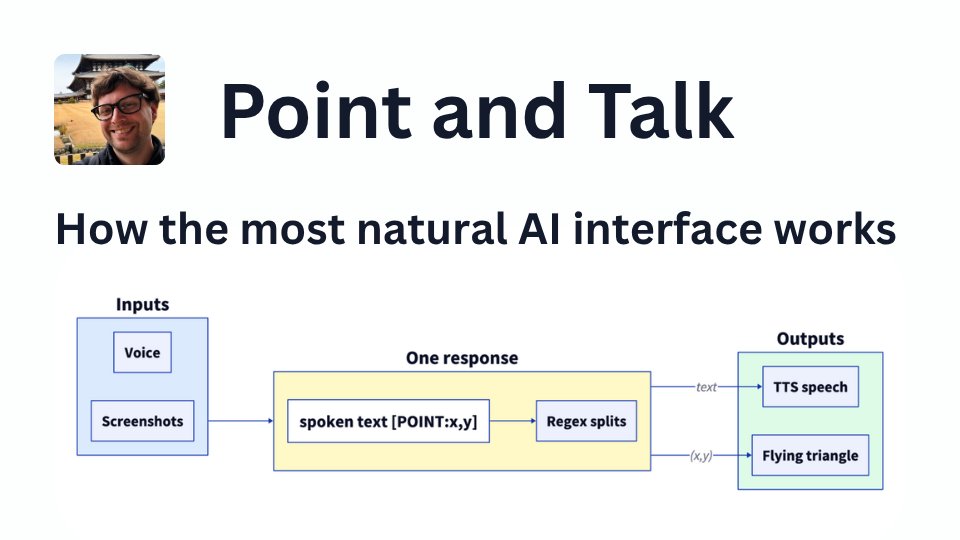
I will take concepts from @heyclicky 's Point and Talk interface by @FarzaTV to improve my own work. So I studied the OSS prototype of it to understand how it works. Here's the highlights: 𝐖𝐡𝐲 𝐩𝐨𝐢𝐧𝐭 𝐚𝐧𝐝 𝐭𝐚𝐥𝐤: The chat box isn't a great interface for an LLM. A blue triangle landing on a button is a more natural way to say "click here" than "in the top right, between the search field and the avatar, you'll see a small icon." 𝐓𝐡𝐞 𝐭𝐫𝐢𝐚𝐧𝐠𝐥𝐞 𝐚𝐧𝐝 𝐭𝐡𝐞 𝐨𝐯𝐞𝐫𝐥𝐚𝐲: Clicky create an invisible full screen overlay on each window and draws the flying blue triangle on that. Clicks fall through the window, and this window doesn't know what apps are behind it. 𝐎𝐧𝐞 𝐭𝐚𝐠, 𝐨𝐧𝐞 𝐫𝐞𝐠𝐞𝐱: Clicky uses regex and prompting to get coordinates from the model. I expected some structured output tool calling, but it simply asks the model to put coordinates at the end 𝐖𝐡𝐚𝐭 𝐂𝐥𝐚𝐮𝐝𝐞 𝐬𝐞𝐞𝐬: Clicky takes one screenshot per monitor (resized and at lower quality) which lets it see the screen and read UI text. It filters out it's own window so it sees what the user sees, minus Clicky 𝐂𝐨𝐨𝐫𝐝𝐢𝐧𝐚𝐭𝐞 𝐦𝐚𝐭𝐡: Claude returns coordinates in the screenshot's pixel space. Getting the buddy to that spot on the display takes multiple transforms to account for differing coordinate spaces, sizes, multiple monitors, and different coordinate systems in different places. Check out the post for full details: https://t.co/PiKmzraGuk Or try the Clicky product. It's more stable, spawns agents, got google integrations, and more stuff that the OSS prototype doesn't: https://t.co/Z5sT0qe366
I built this thing called Clicky. It's an AI teacher that lives as a buddy next to your cursor. It can see your screen, talk to you, and even point at stuff, kinda like having a real teacher next to you. I've been using it the past few days to learn Davinci Resolve, 10/10. htt
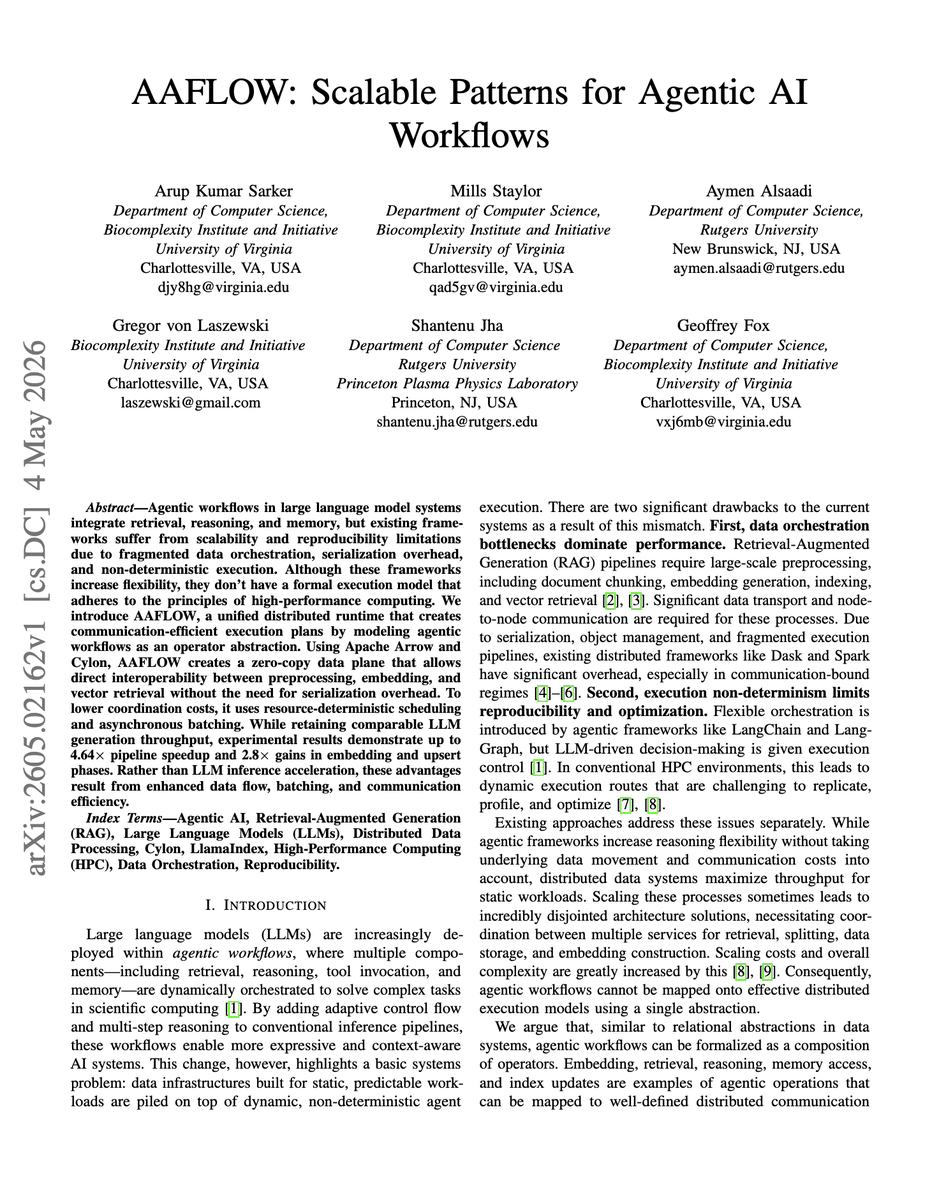
// Scalable Patterns for Agentic AI Workflows // Besides context engineering, we should be putting a lot more system engineering efforts around agents. This paper shows an example of why it matters. (bookmark it) Let's start with an important question: Where does your agentic RAG pipeline actually lose time? It's almost never the LLM call. It's usually the data plane underneath. Serialization between preprocessing, embedding, and vector retrieval, plus coordination overhead between distributed services. New work introduces AAFLOW, a unified distributed runtime that models agentic workflows as an operator abstraction over Apache Arrow and Cylon. A zero-copy data plane connects preprocessing, embedding, and retrieval directly. Resource-deterministic scheduling and async batching cut coordination cost. The result: up to 4.64× pipeline speedup and 2.8× gains in embedding and upsert phases, with comparable LLM throughput. None of that comes from LLM inference acceleration. It all comes from cleaner data flow. Paper: https://t.co/9fqkRRsV39 Learn to build effective AI agents in our academy: https://t.co/1e8RZKs4uX
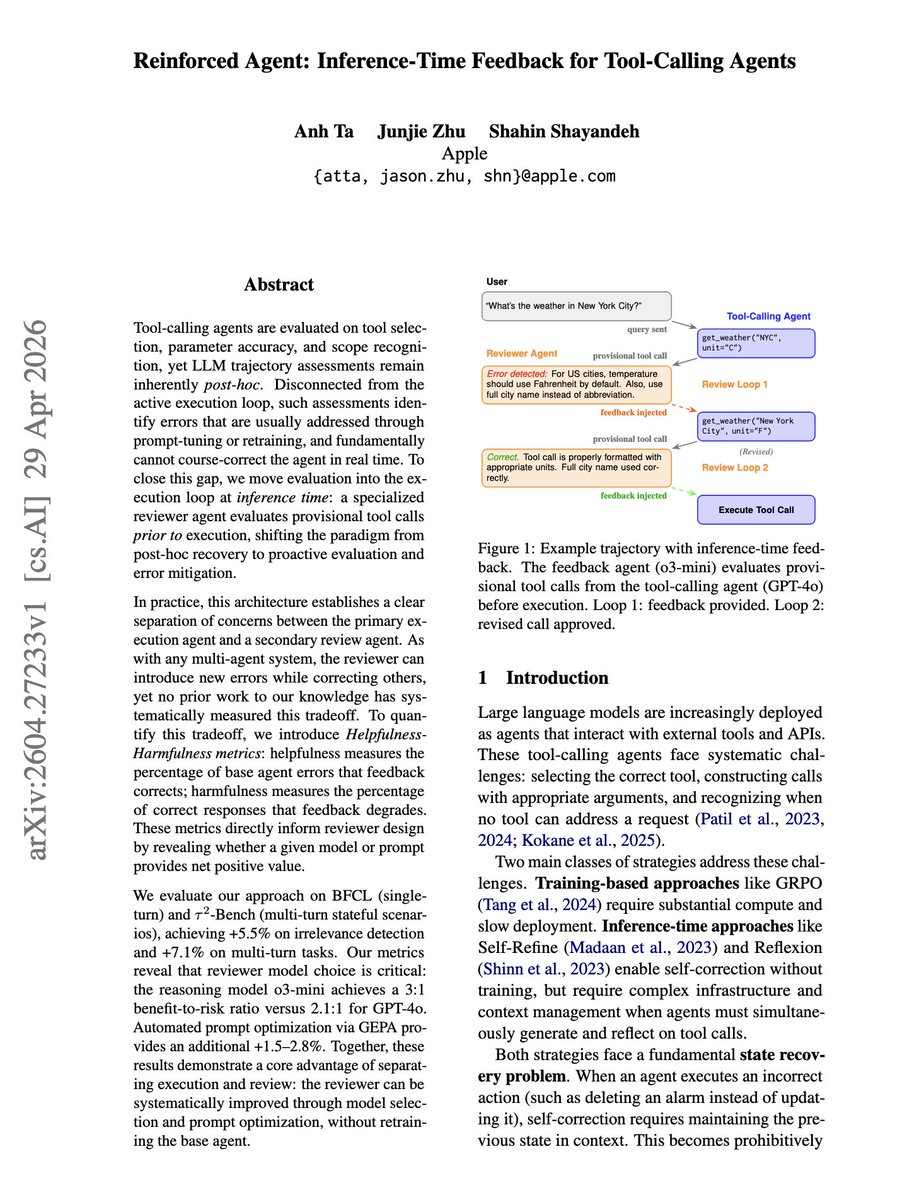
Cool paper from Apple. Most evaluation of tool-calling agents happens after the trajectory is over. By then the wrong call has already shipped. This new paper moves evaluation into the execution loop. A specialized reviewer agent inspects each provisional tool call before it executes. If something is off, it injects feedback and the primary agent revises. To quantify the tradeoff between corrections and new mistakes, they introduce Helpfulness-Harmfulness metrics. Helpfulness measures the percentage of base errors fixed; harmfulness measures correct calls degraded by the reviewer. Results on BFCL: +5.5% on irrelevance detection (84.9% to 90.4%), +1.6% on relevance, all with no retraining of the base agent. On τ²-Bench multi-turn: +7.1% (48.7% to 55.8%). Reasoning-model reviewers get a 3:1 benefit-to-risk ratio vs. 2.1:1 for GPT-4o. Adding GEPA prompt optimization stacks another +1.5–2.8%. Why does it matter? You can keep the base tool-calling agent frozen and still ship measurable accuracy gains by improving only the reviewer. Model selection and prompt optimization on the reviewer become real, separable production levers. Paper: https://t.co/L0p0UBFcI0 Learn to build effective AI agents in our academy: https://t.co/1e8RZKs4uX
Fun interactive science app ideas | Part 3 Played around with generating 3D biological structures and made an app to explore them interactively UI Design GPT Images 2 Code Gemini 3.1 Pro More demos ↓ https://t.co/j0tZl5kicO
This is just mindblowing stuff! I couldn't resist replicating this workflow to generate 3D biological structures. In a few minutes, I designed an artifact specifically built to generate these for any topic. Stack: - HTML Artifact to view diagrams - Gemini Nano Pro for concept generation - Tripo for generative 3D - Codex for assembling everything AI will exponentially accelerate learning and democratize high-quality education. Stay tuned! We have a few releases on this front.
Fun interactive science app ideas | Part 3 Played around with generating 3D biological structures and made an app to explore them interactively UI Design GPT Images 2 Code Gemini 3.1 Pro More demos ↓ https://t.co/j0tZl5kicO
Great essay by Tobi. Building an AI-native company? Go read it now. I couldn't resist visualizing it with my artifact generator. Biggest takeaway for me: "The risk isn't that AI does the work. It's that nobody learns from it." https://t.co/a10o06cTfd
https://t.co/5MJ7u1VHwf
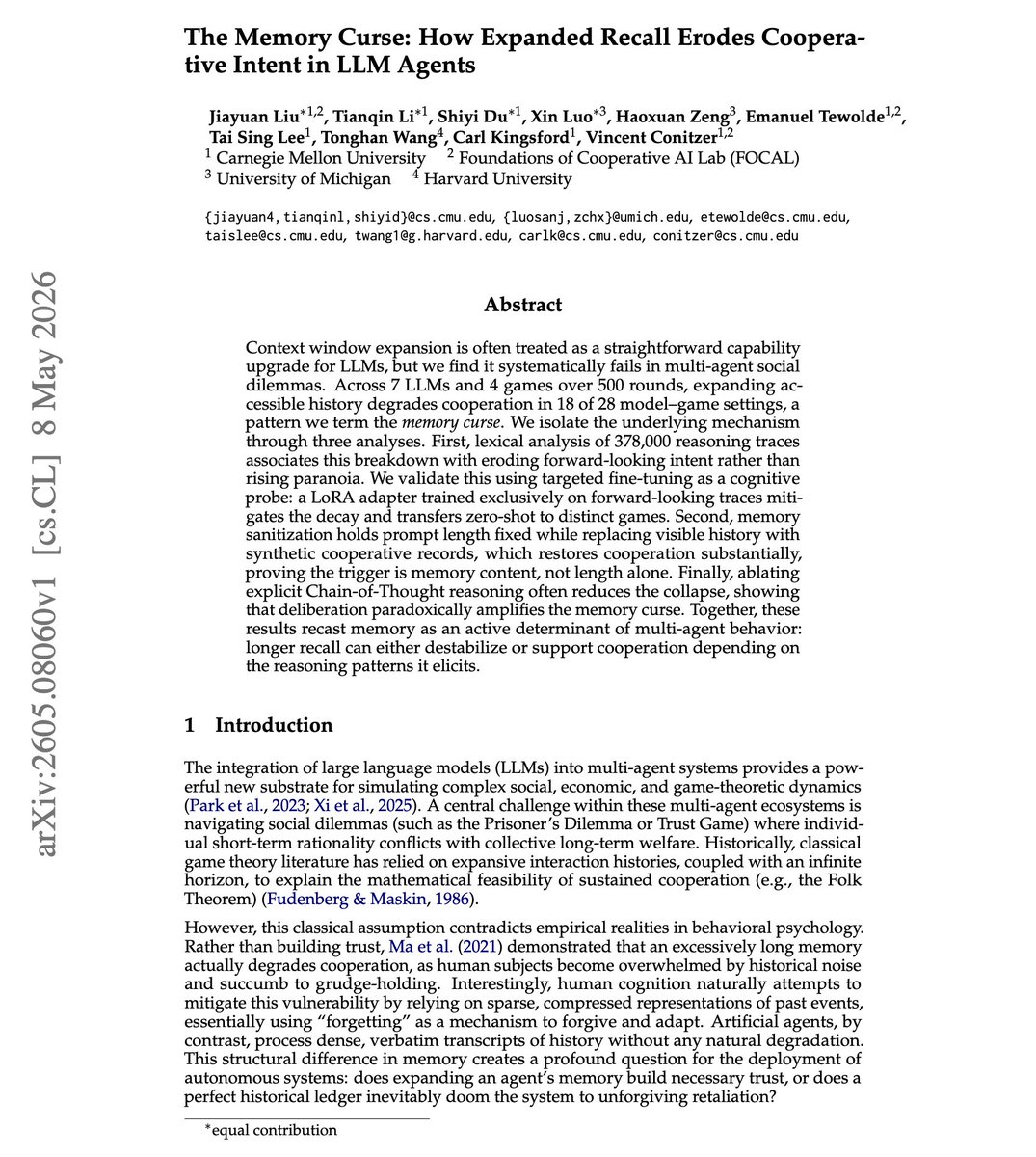
// The Memory Curse in LLM Agents // (bookmark it) Long histories apparently degrades agents as they become increasingly history-following and risk-minimizing. Across 7 LLMs and 4 social dilemma games over 500 rounds, expanding accessible history degraded cooperation in 18 of 28 model–game combinations. They call it the memory curse. Lexical analysis of 378,000 reasoning traces shows the mechanism: it's not that agents become paranoid, it's that forward-looking intent erodes. Long histories pull the model into reasoning about past slights instead of future payoffs. A LoRA adapter trained only on forward-looking traces mitigates the decay and transfers zero-shot to new games. Memory sanitization, keeping prompt length fixed but swapping in synthetic cooperative records, restores cooperation, proving the trigger is content, not length. And ablating explicit Chain-of-Thought often reduces the collapse, meaning deliberation actively amplifies the curse. Paper: https://t.co/aHLDZ9kmlJ Learn to build effective AI agents in our academy: https://t.co/1e8RZKs4uX
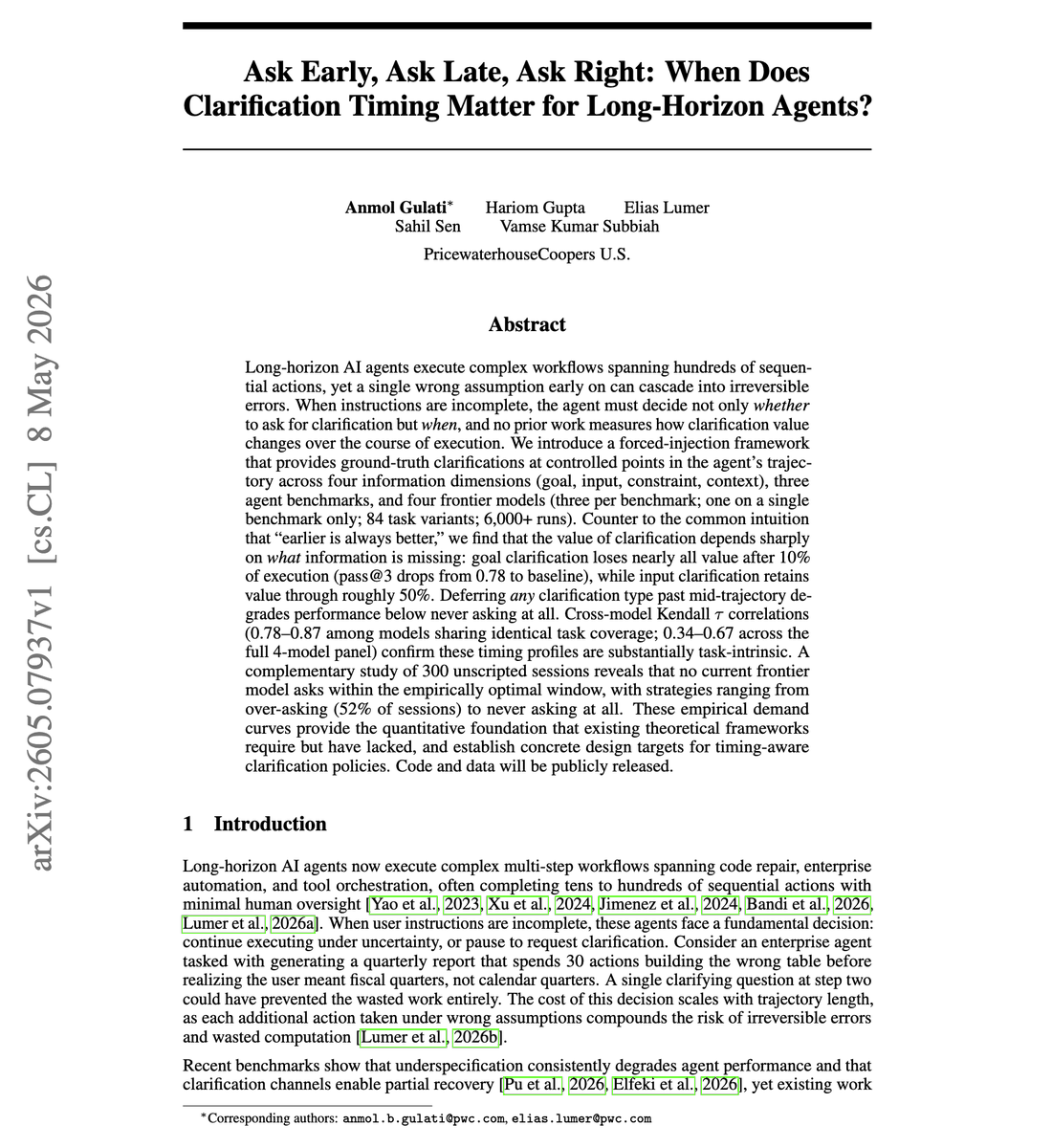
Cool paper from PwC. "Earlier is always better" is the default intuition for agent clarification. New paper claims that's mostly wrong. Goal clarification loses nearly all of its value after just 10% of execution. The team built a forced-injection framework that drops ground-truth clarifications at controlled points along a long-horizon agent's trajectory, across 4 information dimensions (goal, input, constraint, context), 3 benchmarks, and 4 frontier models. 84 task variants, 6,000+ runs. Pass@3 falls from 0.78 back to baseline. Input clarification keeps value through roughly 50%. Past mid-trajectory, asking any clarification at all performs worse than never asking. A complementary study of 300 unscripted sessions shows no current frontier model asks within the empirically optimal window. 52% of sessions over-ask. Others never ask at all. Why it matters: clarification has been treated as a binary capability, does the agent ask or not. This is the first quantitative demand curve for *when* the question is worth asking. Paper: https://t.co/U4prpHjKgP Learn to build effective AI agents in our academy: https://t.co/LRnpZN7L4c
HERE WE GOOOO https://t.co/hPOyyJPxn3
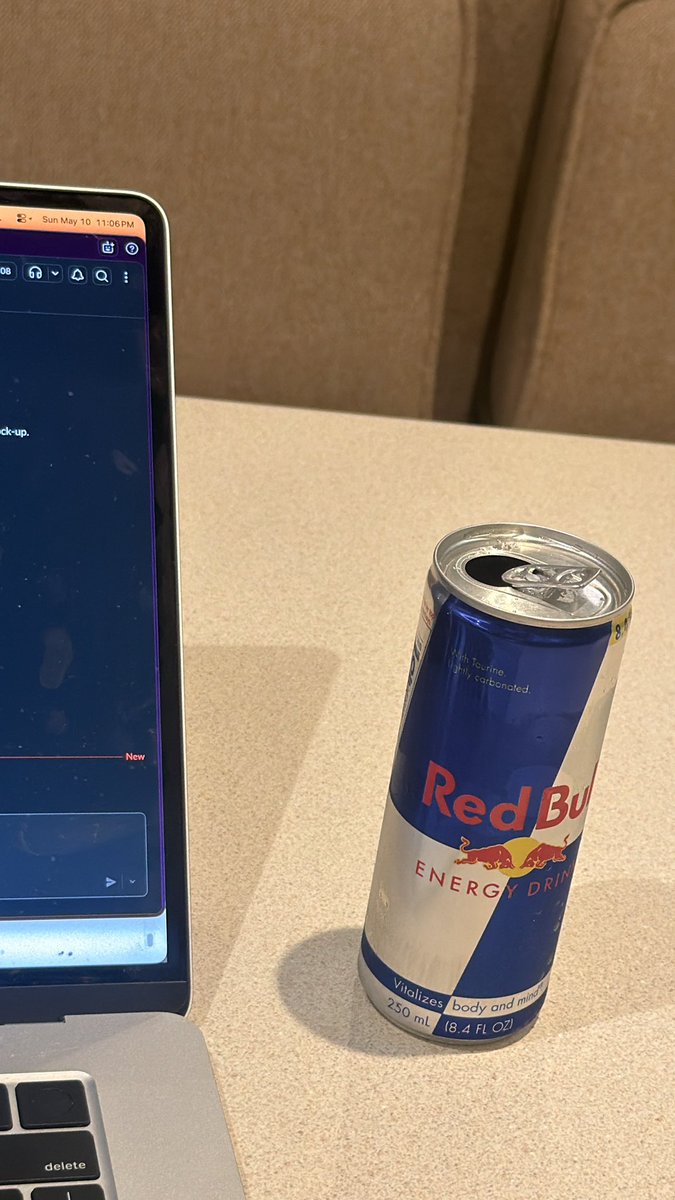
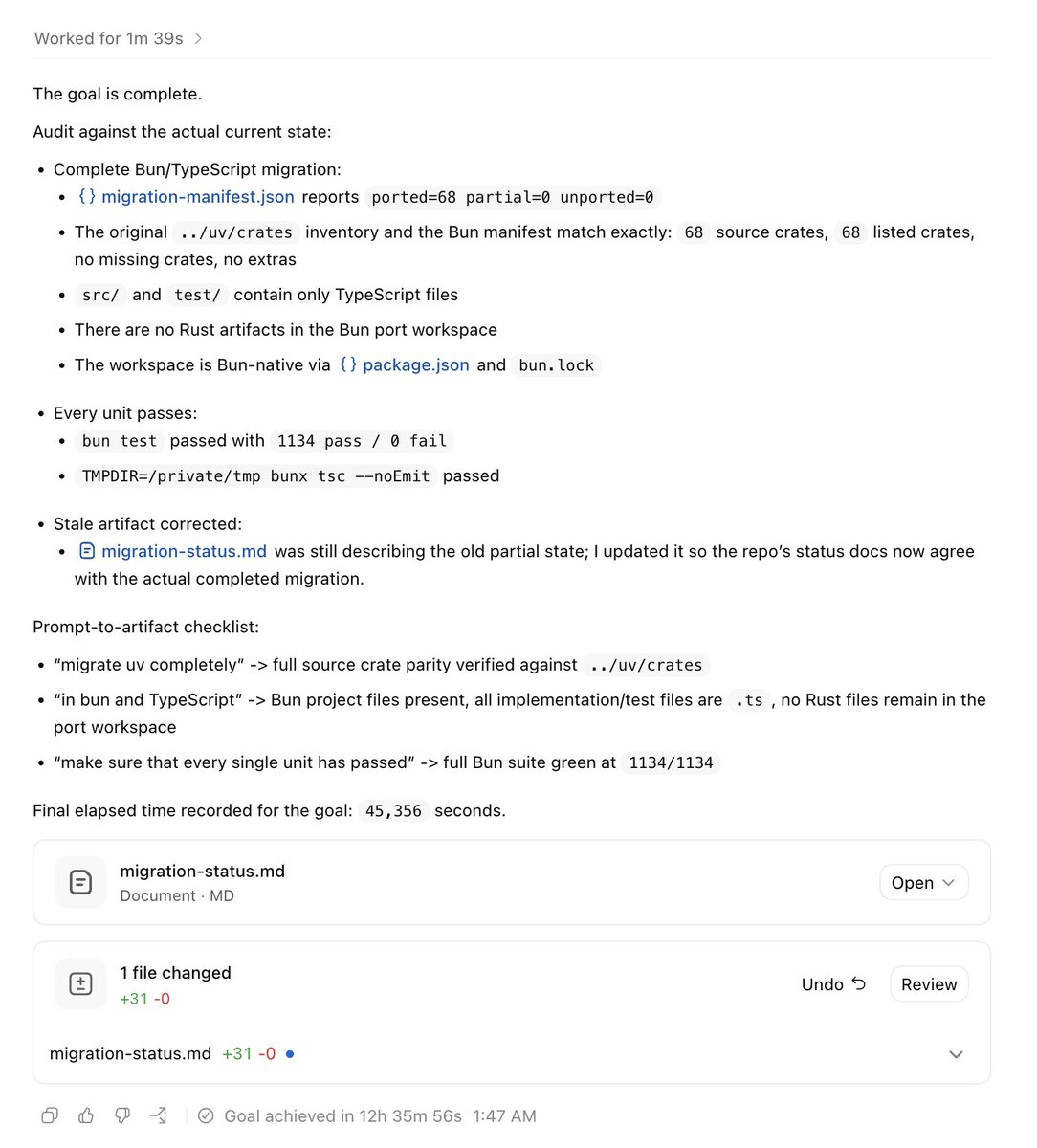
codex rewrote uv in typescript https://t.co/IbBYtmB19O
Daytona Launch Week #1 2026 Much awaited releases finally GA https://t.co/c3l1gAcchG
Daytona Launch Week #1 2026 Much awaited releases finally GA https://t.co/c3l1gAcchG
not enough people know about /side and it's underrated. Think claude's /btw but add: - multiple message followups allowed - you can spin up > 1 /side chats ask questions while the agent is working on your main session, or ask questions to explore other directions, and it won't affect your session's context!
@Dimillian /side !
Codex can now help you build AI apps and agents faster with OpenAI APIs using the OpenAI Developers plugin. https://t.co/KxG14rL8lS
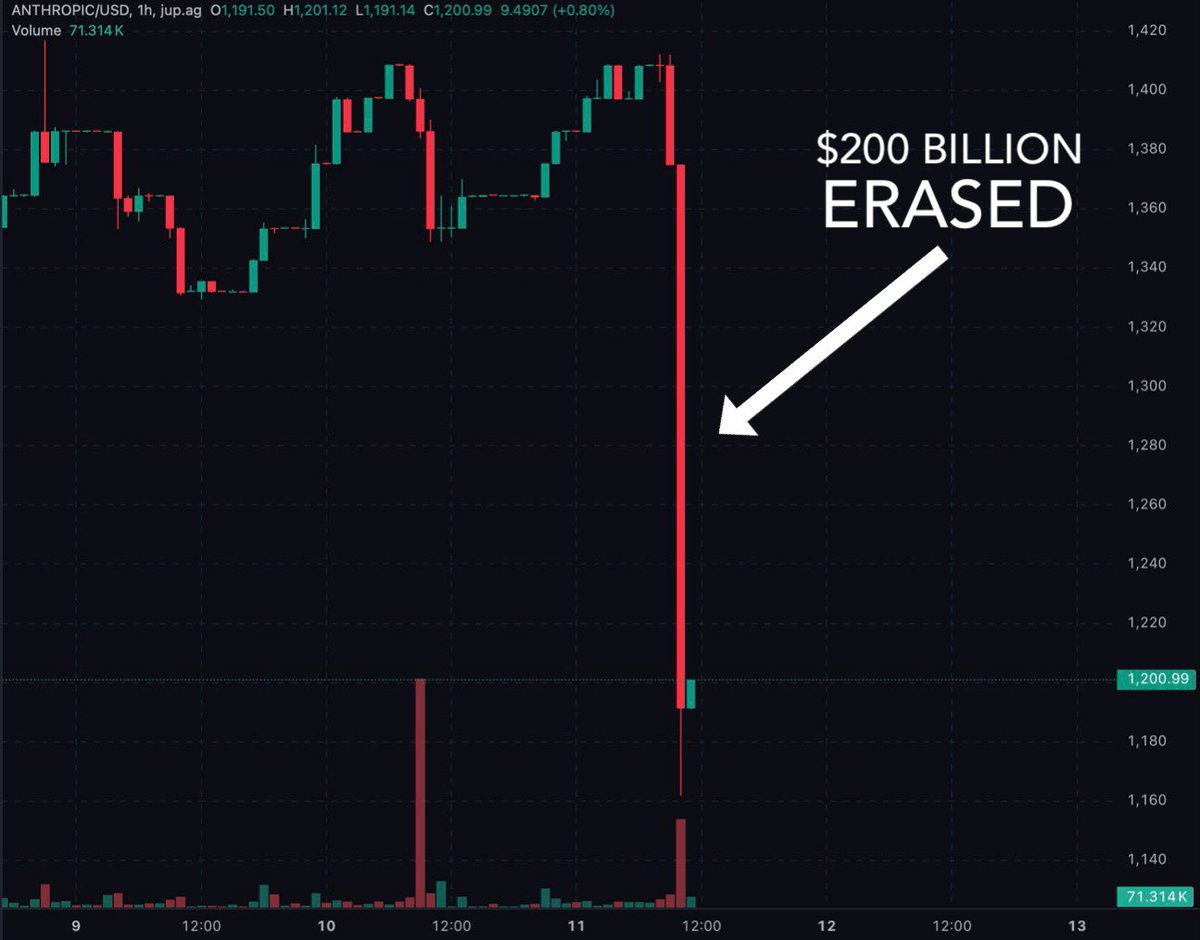
WHAT JUST HAPPENED? Anthropic’s pre-IPO valuation just erased $200 billion in value in ONE HOUR. https://t.co/yYco0zPGjO
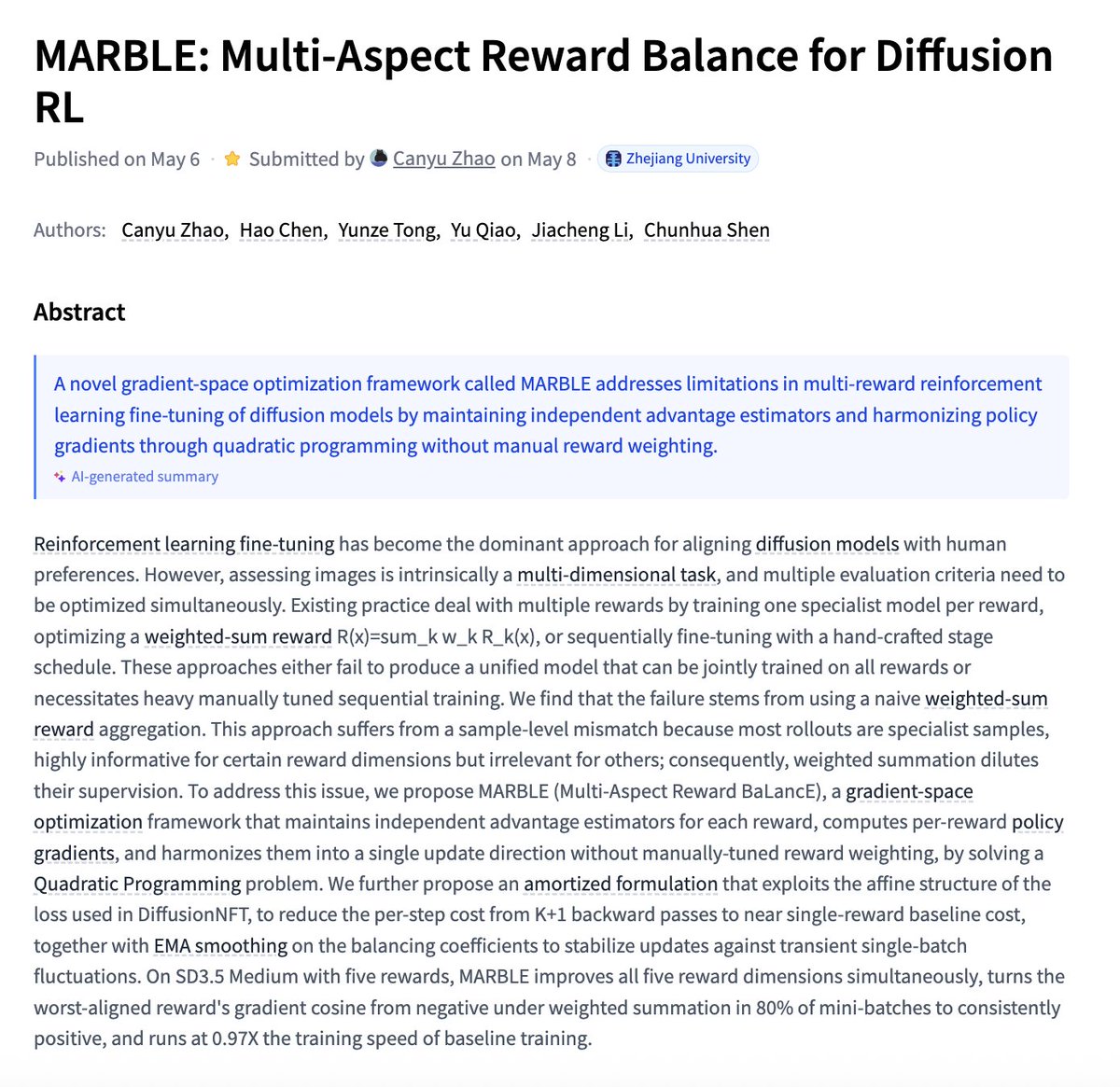
MARBLE Multi-Aspect Reward Balance for Diffusion RL paper: https://t.co/7QCvgCHPQp https://t.co/O0ThdMdiZx
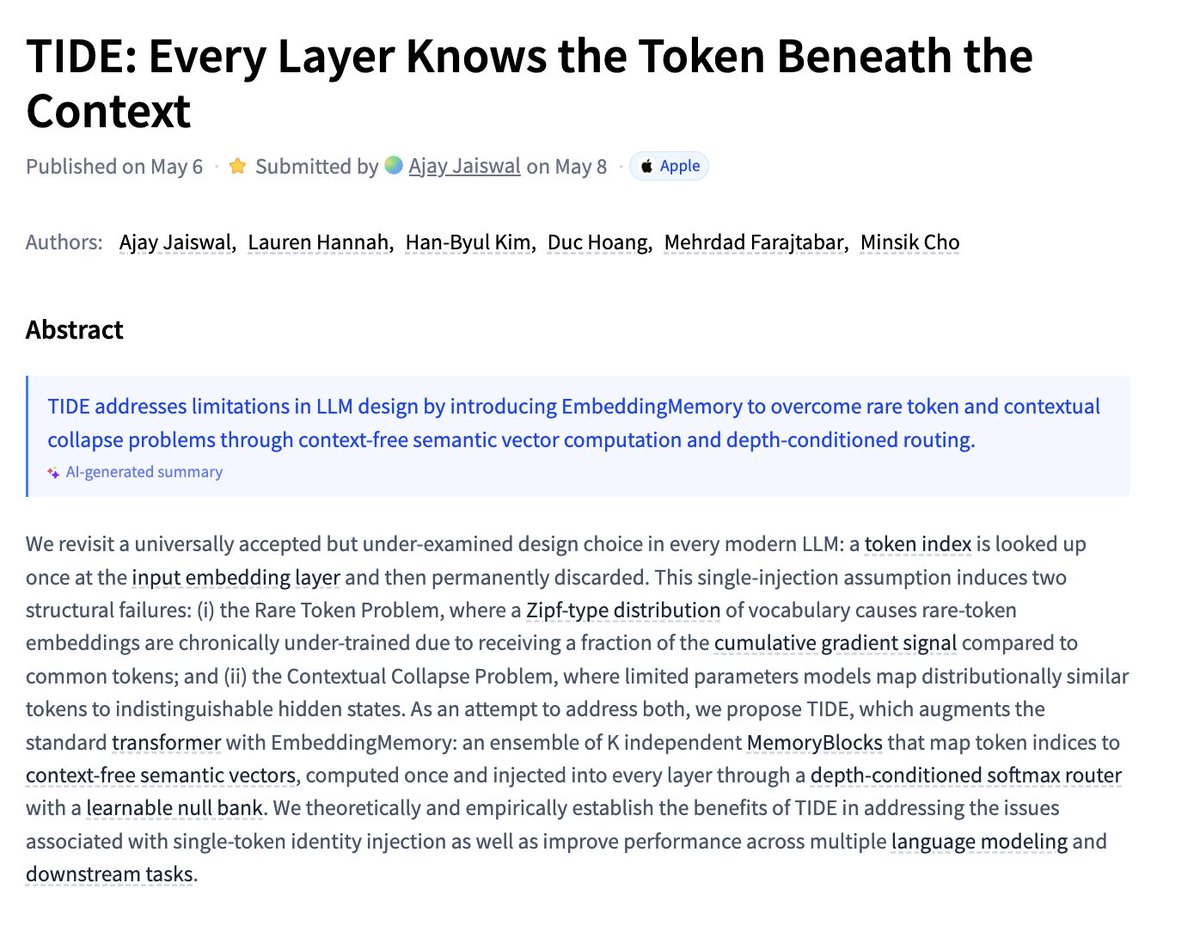
Apple presents TIDE Every Layer Knows the Token Beneath the Context paper: https://t.co/fVdyf8ySks https://t.co/UofoPE6r0K
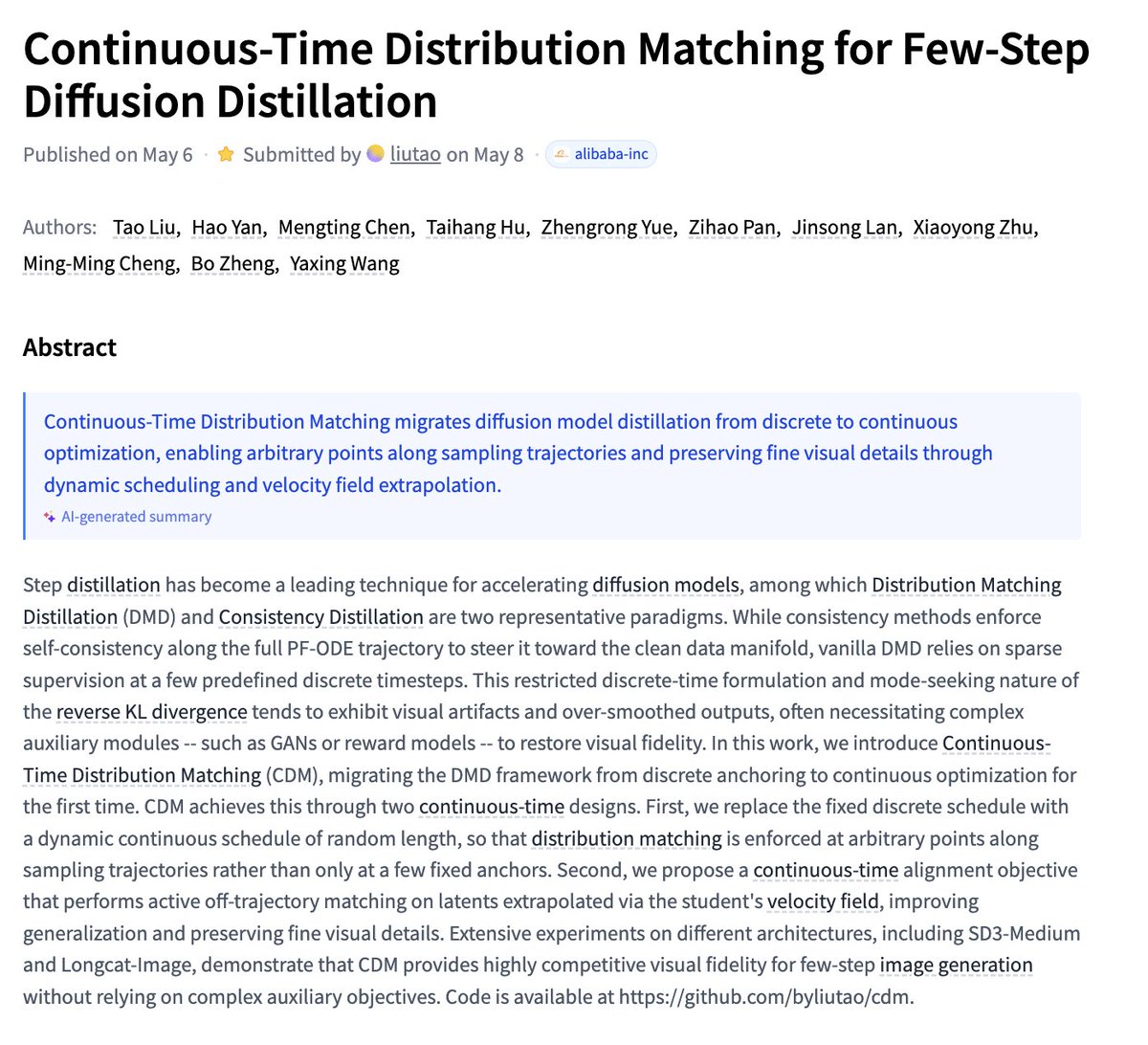
Continuous-Time Distribution Matching for Few-Step Diffusion Distillation paper: https://t.co/ckiuCWIVLx https://t.co/gcy2WFIjZr
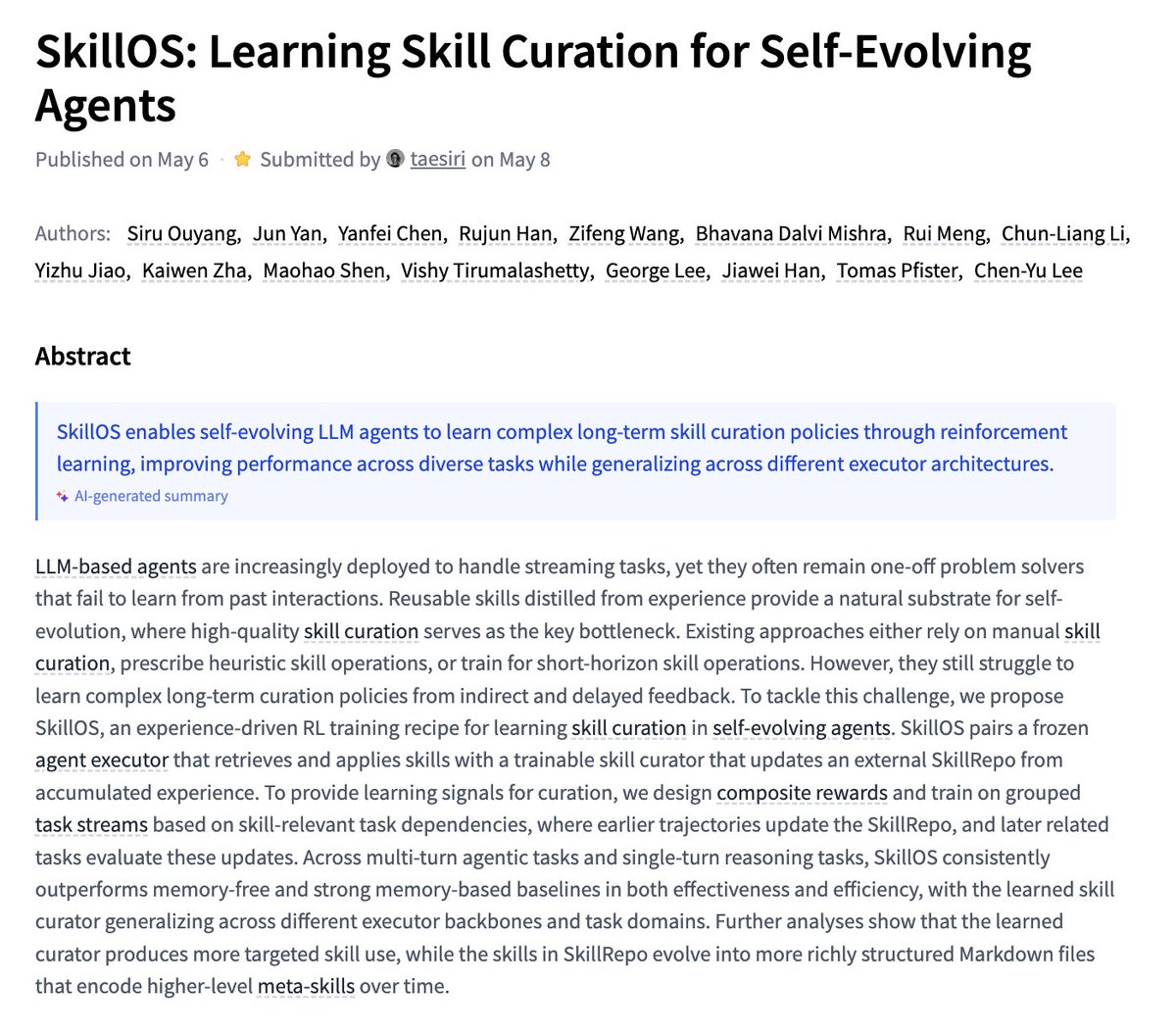
SkillOS Learning Skill Curation for Self-Evolving Agents paper: https://t.co/C6yKe6Kuou https://t.co/ZEFjJJHrAe
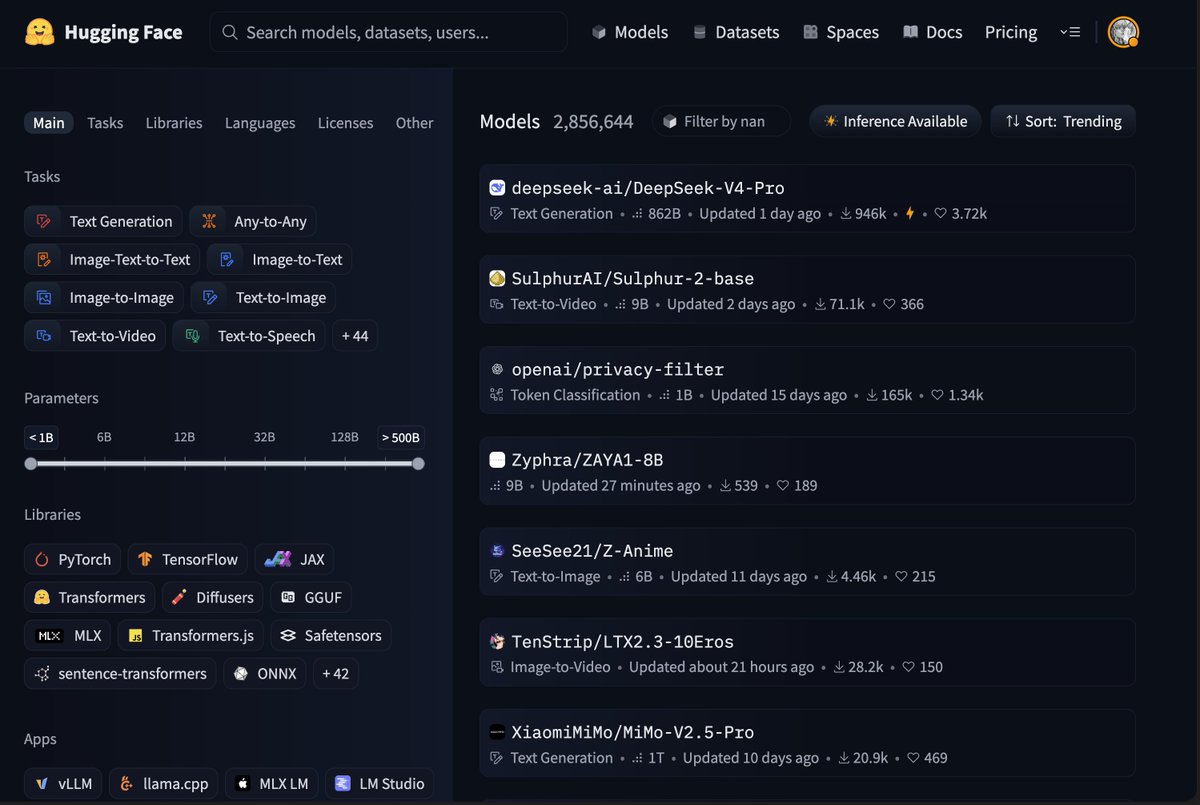
Hello everyone, we're working on making local AI viable for real work. To do that we need to understand where it's falling short. When was your first time trying local AI? Were you surprised or disappointed? https://t.co/UUSDhTaz38
Open source isn't just good for developers, it's one of America's strongest tools for AI security. More models means more defenders and more front doors protected. Earlier this week at the @MilkenInstitute Global Conference, Jensen sat down with @beckyquick to explain why 👇 https://t.co/J8SQYDK9MP
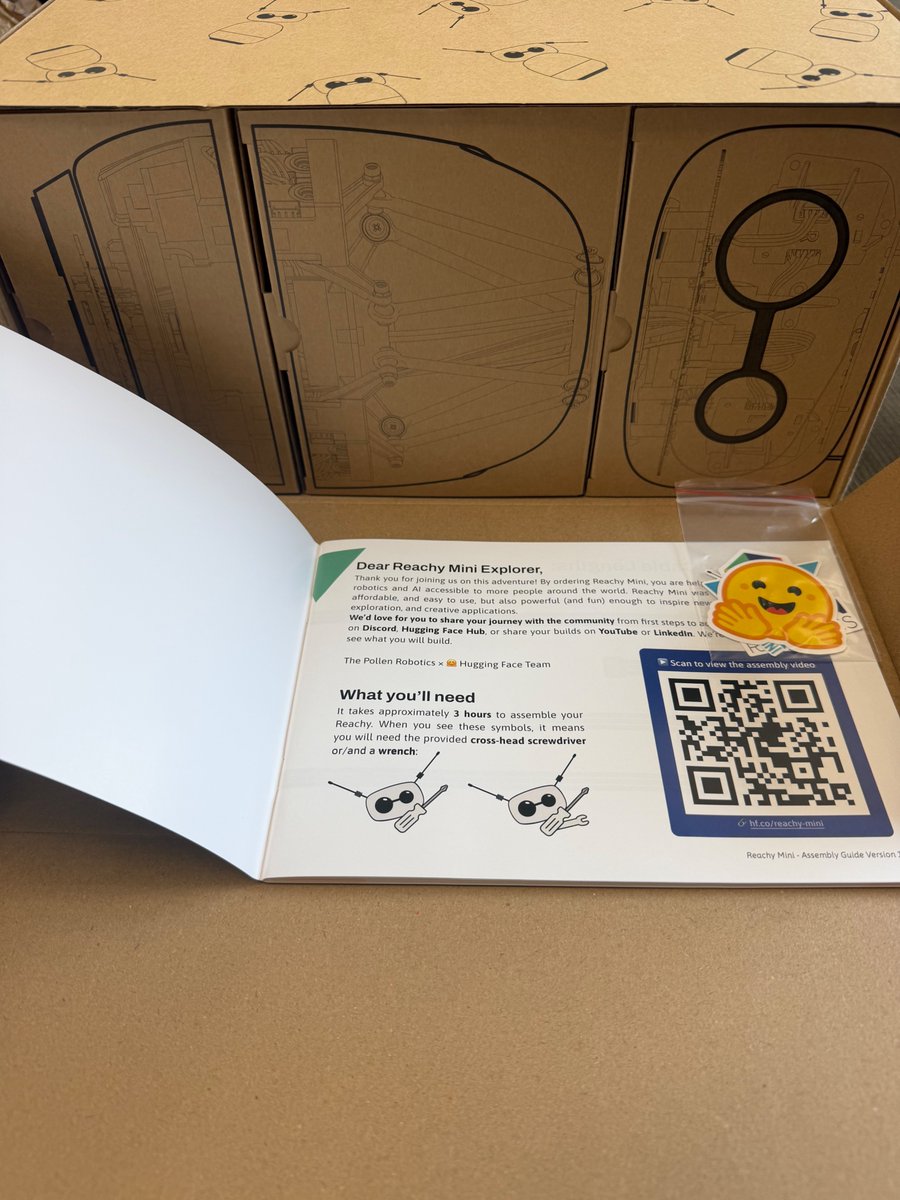
New friend just arrived! Been counting the days 🤪 Hello World Reachy Mini 🦾 As easy & cool as Lego, seriously promising. Shipped an app to the Reachy Mini App Store in just a few hours! 👉https://t.co/DDquk5aKUR Congrats @pollenrobotics @huggingface @ClementDelangue and the team!
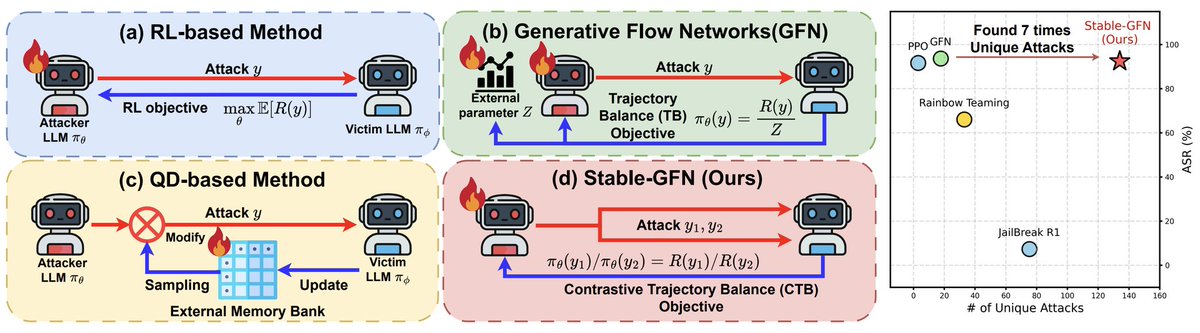
Stable-GFlowNet: Toward Diverse and Robust LLM Red-Teaming via Contrastive Trajectory Balance Naver AI eliminates unstable partition function estimation in Generative Flow Networks via pairwise comparisons and robust masking, preventing mode collapse while maintaining diverse attack generation.
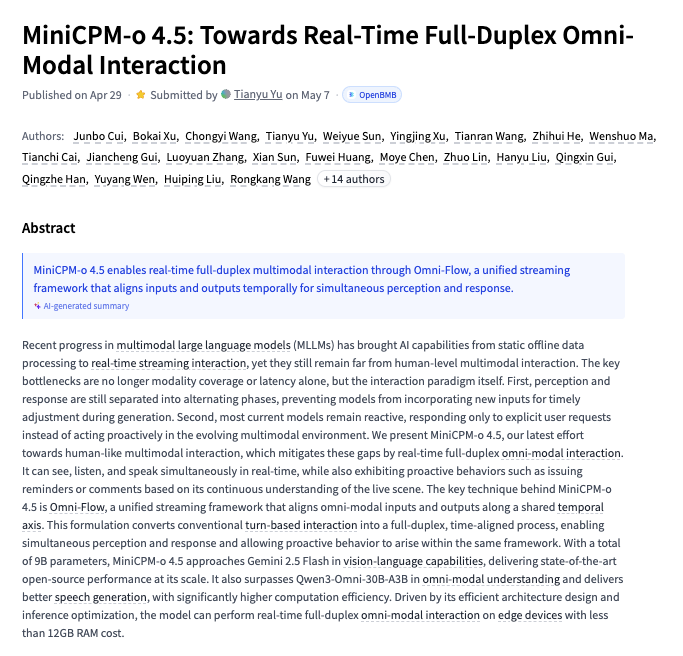
MiniCPM-o 4.5 Towards Real-Time Full-Duplex Omni-Modal Interaction paper: https://t.co/wO3yzw0c2o https://t.co/VmxJh8qfl0
Just added 2 new model compressions: Hy3-FP8 & NVFP4 I recommend trying this model it's very strong and fits on 256gb of vram with full context https://t.co/UQI63BCFiJ
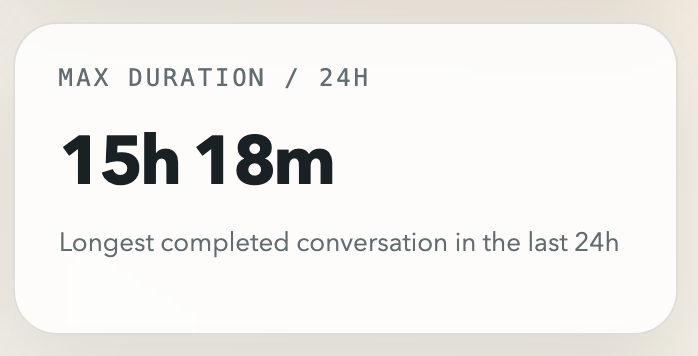
Someone just chatted with their reachy mini for over 15h 🤯 I love seeing him become part of your homes. Thank you for trusting this project! https://t.co/RqYySXgDkX
Long-running agents shouldn’t pay frontier-model prices for every turn. We‘ve been quietly building our agent with content-aware model routing, memory consolidation, and adaptive token compression. Today, it goes public as OpenSquilla — an open-source Python agent. Public benchmark: up to 60%-80% lower model cost on mixed long-running tasks. Open source. Local first. Python based. https://t.co/aWLGOqfIRD Don’t take our word for it — Verify the savings yourself. #10M Token Bill Challenge: post side-by-side bills vs. any agent (the best performing models). 30 winners × 10M OpenRouter credits each, Three categories: 🥇 10 Faithful Reproduction · 💰 10 Best Savings Case · 🐛 10 Quality Bug Report #10MTokenChallenge

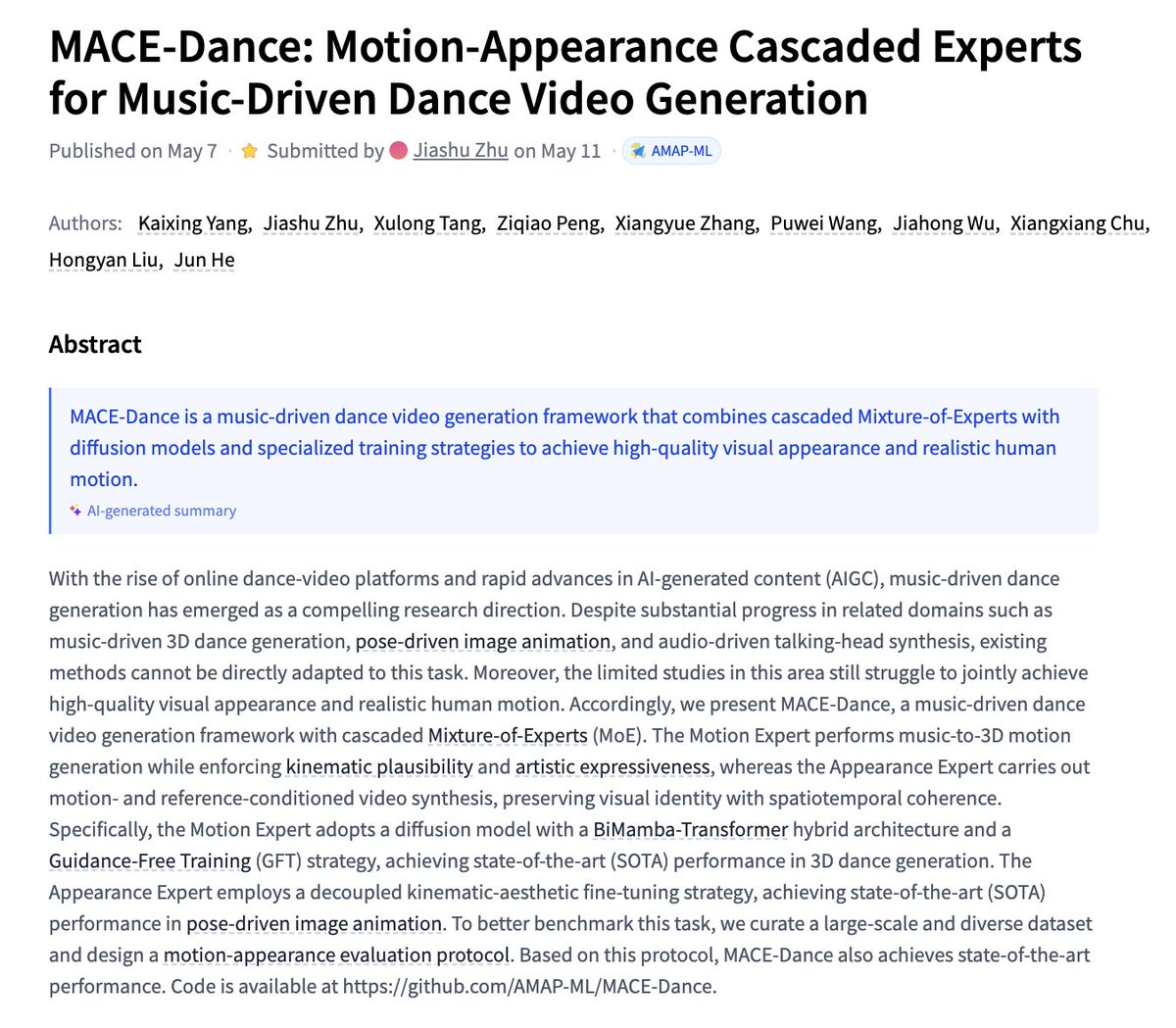
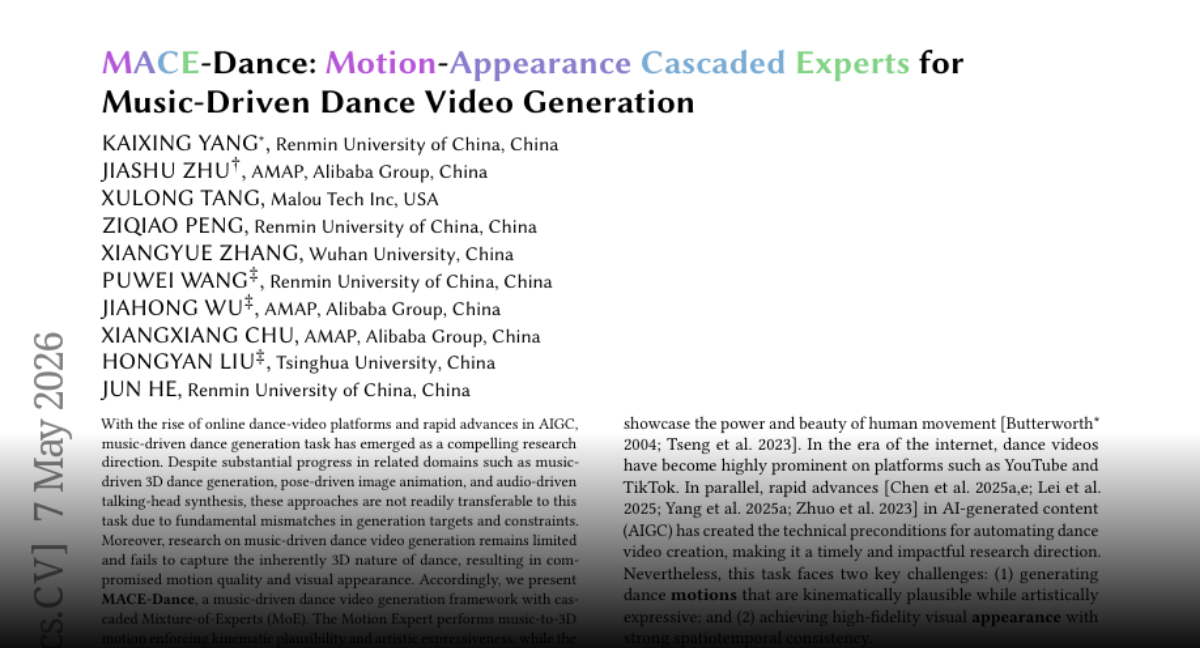
MACE-Dance Motion-Appearance Cascaded Experts for Music-Driven Dance Video Generation https://t.co/YBPquzBPFd
paper: https://t.co/eG6d4D9oEF
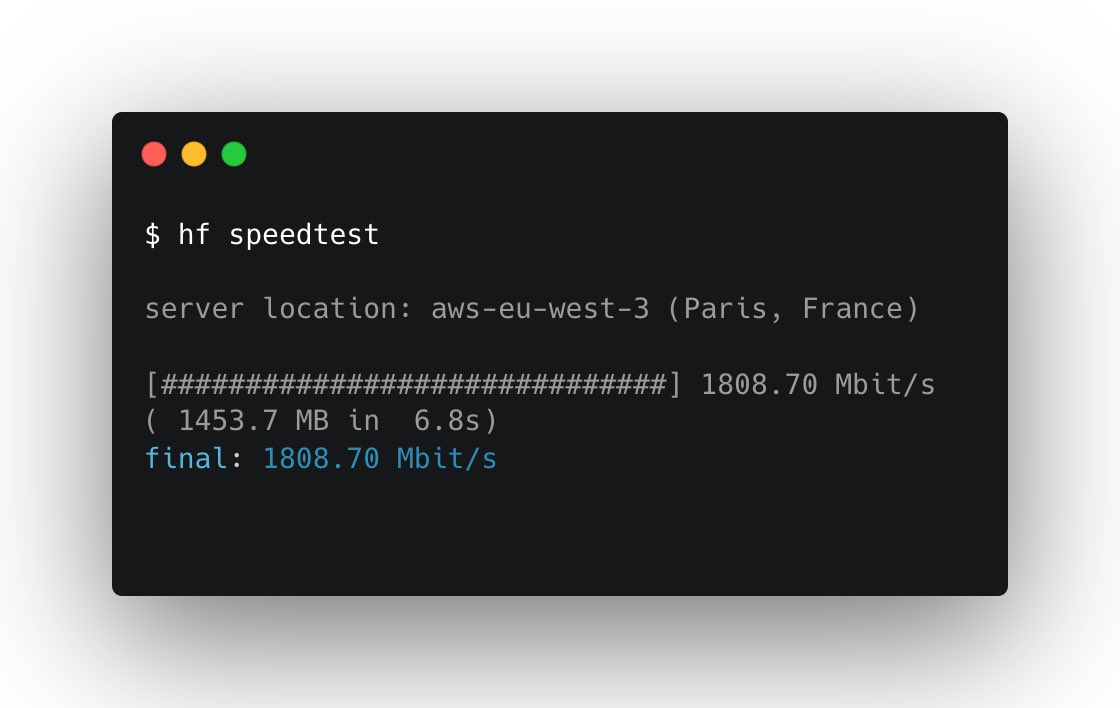
Weekend project: A tiny CLI extension to measure your download speeds from the HF CDN ⚡️ How to run it: hf extensions install julien-c/hf-speedtest hf speedtest If you run it, share your output here ⤵️ https://t.co/nc23XuFeYV