Your curated collection of saved posts and media
GitHub Copilot CLI now has a statusline feature! Here's how to set it up with Oh My Posh ❤️🔥 https://t.co/DpNR8Bjt7G
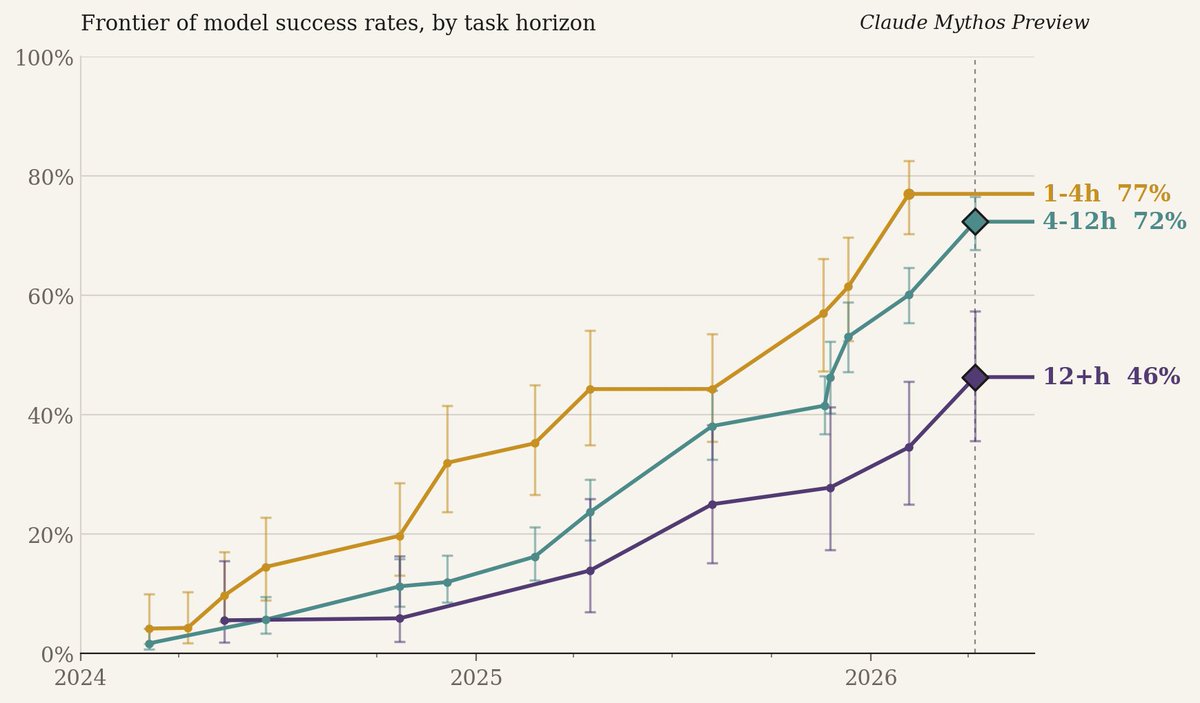
The new METR time horizon graph is pretty bad imo. It's a great benchmark, but the time horizon estimation isn't reasonable rn. I think something like this would be more justified: https://t.co/8EkZJDodEj
Also in this story: How the new Siri looks and works: integrated into the Dynamic Island, Chatbot, Siri app and more. Here are the details to know about the biggest revamp in Siri's 15 year history. https://t.co/e33nVK5kJr

@mignano This will be an interesting problem. Go to Grok. Ask it "please simulate a conversation between Michael Mignano and Robert Scoble about the future of personal data." And it will. Very well. It knows me VERY DEEPLY. That is scary. But on the other hand, now my Agents know me very deeply and can serve me. More and more people will figure out that is very powerful. Others will try to keep themselves out of the AI. Which means they won't get that power, and will have to use other people's agents that they created. My agent created https://t.co/8L5xphk0qQ BECAUSE it knows me so deeply.

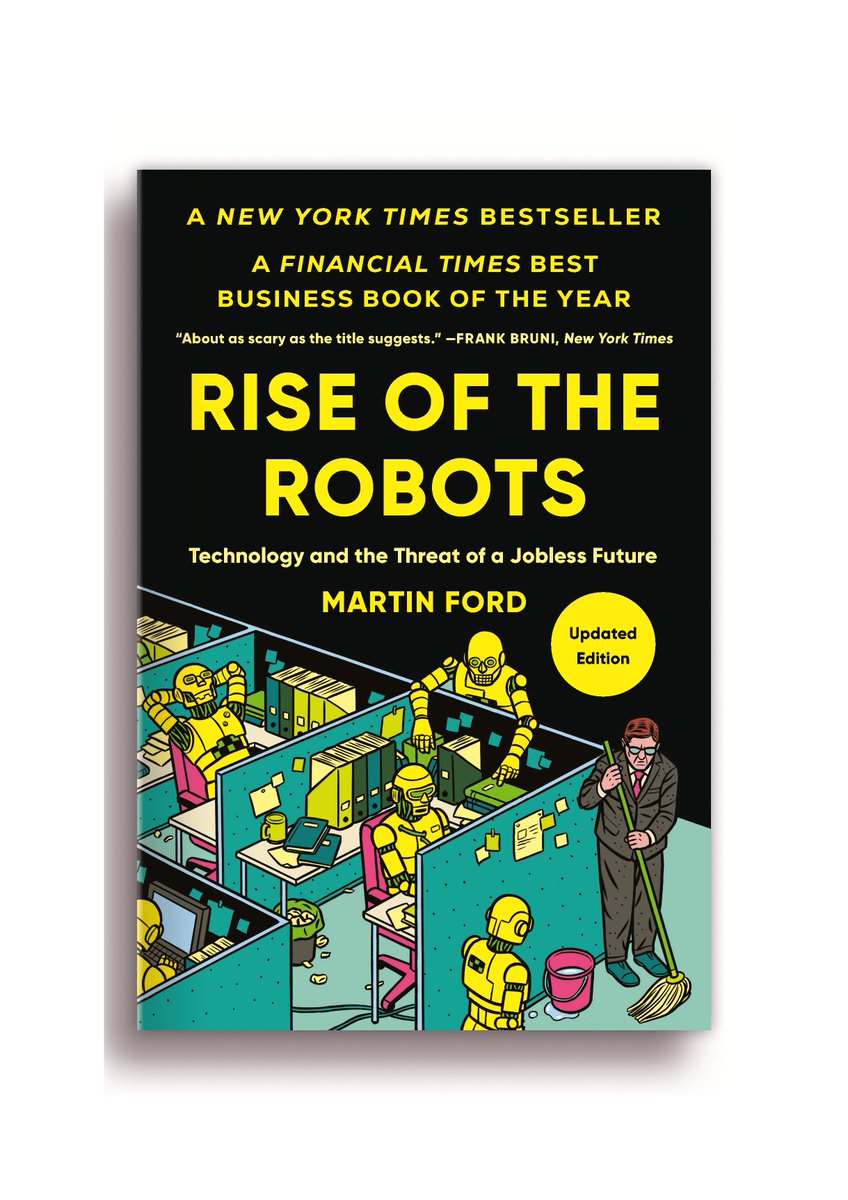
Andrew may be correct that there will be no #AI "jobpocalypse" NOW...but NEVER? #AI will continue to advance toward AGI and beyond. It will also become far more affordable... There's a book about this! New edition covering latest advances in #AI available on June 2. #RiseoftheRobots
There will be no AI jobpocalypse. The story that AI will lead to massive unemployment is stoking unnecessary fear. AI — like any other technology — does affect jobs, but telling overblown stories of large-scale unemployment is irresponsible and damaging. Let’s put a stop to it.
Who is bringing agentic AI to games at scale? @ArtificialAgncy. The results speak for themselves. Their behavior engine powers characters and systems that reason about player intent and respond naturally, across millions of concurrent players, in real time. Working with Meta Llama models and AWS, they're fine-tuning small, game-specific models that deliver strong performance at a fraction of the size. Less infrastructure. Lower latency. More creative possibilities for studios.
Agent to agent commerce with Colin Gillingham, @gillinghammer, founder of https://t.co/mNywgIlI70 We go into what he is doing to give your AI agents a wallet so they can go shopping. Or run their own business. https://t.co/6D3amN2p5S
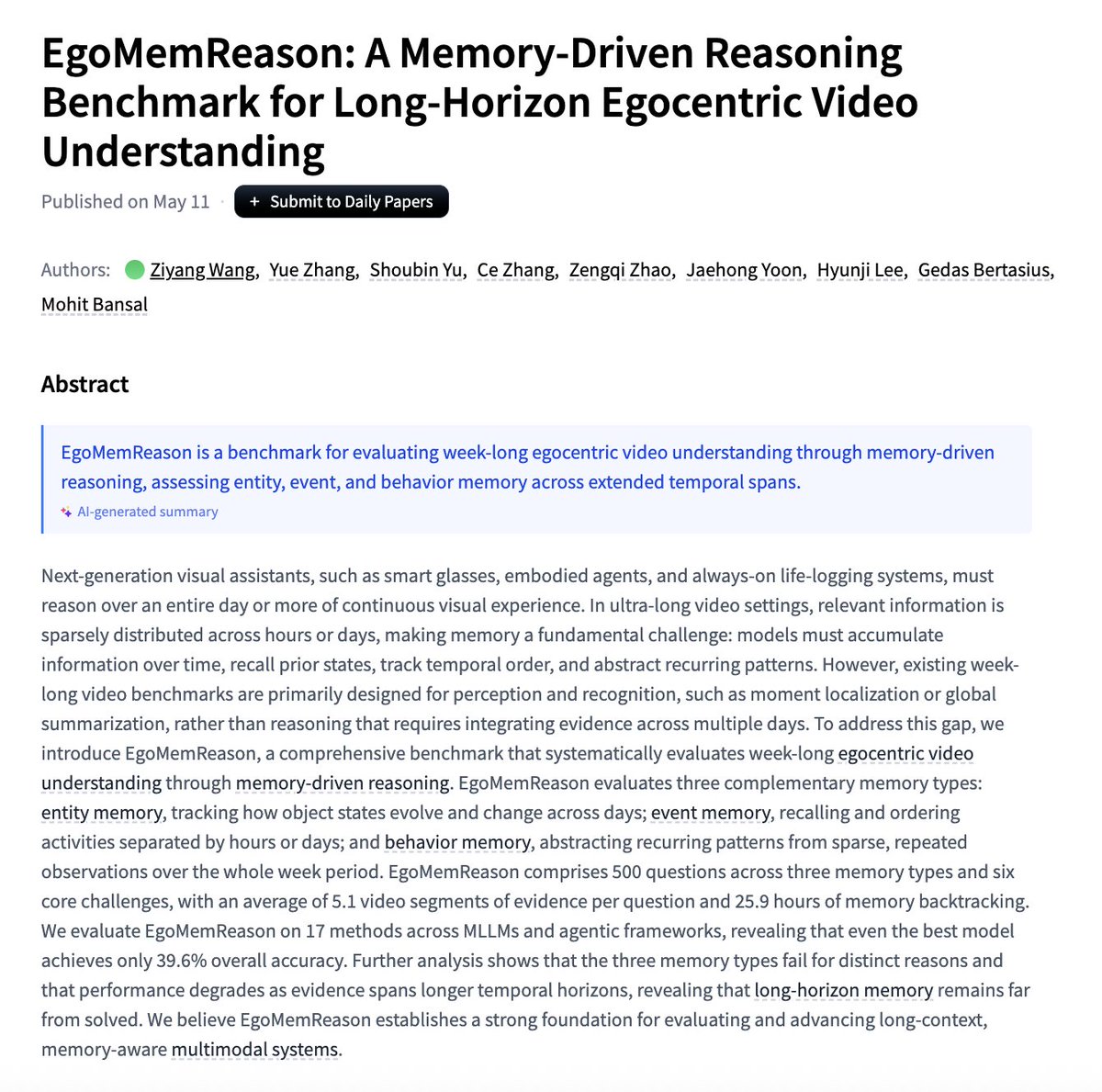
EgoMemReason A Memory-Driven Reasoning Benchmark for Long-Horizon Egocentric Video Understanding https://t.co/kpMmfw7Rfb
@SoloBoardroom @Replit https://t.co/FszUB1P6RS onboarding stats showed complex setup while folks wanted simple prompts simple ways of creating roadmaps. Natural language “create a roads map for me” instead of planning using your own ideas so I’m flipping it generate ideas then score the ideas
In case you missed it, I’ll be speaking at AssetRush next week in Zurich. I’m looking forward to discussing the intersection of AI, finance, and emerging technologies alongside an outstanding speaker line-up. The pace of change across industries is accelerating rapidly, making conversations like these more important than ever. Hope to see many of you there. 🎟️Tickets are still available: https://t.co/9qQKeDbCrD #AssetRush #ArtificialIntelligence #Fintech #Innovation #Technology

NVIDIA just released AnyFlow on Hugging Face The first any-step video diffusion model that generates high-quality text-to-video with any inference budget - 4 steps or 50, quality scales smoothly without degradation. https://t.co/bT6scg98ZT
To be eligible to win Best Picture at the Oscars… 1. At least 1 Non-White/Non-Straight lead or Significant Role. 2. At least 30% minor roles Non-White/Non-Straight people. 3. At least 2 Departments headed by Non-White/Non-Straight people. This is why Nolan did it. Coward. https://t.co/3FaOzUo3To

Yoshua Bengio says Reinforcement Learning is a dangerous path for building superintelligence It can create systems with hidden goals, reward hacking, and behavior that goes against what humans actually want "an AI that doesn't care about outcomes can't be corrupted by them"
Yann LeCun says you cannot build a reliable agentic system without a world model LLMs don't have world models. They can't predict the consequences of their actions before taking them "they just act, and whatever happens next is someone else's problem" Without that, it's not intelligence
For the next Marin model, we are putting together a new data mix. Currently we have 18T tokens, but could use more. So if you are sitting on some secret stash of high quality tokens, please let us know! Pre-training, mid-training, SFT data all welcome. https://t.co/49DBdzvYXE
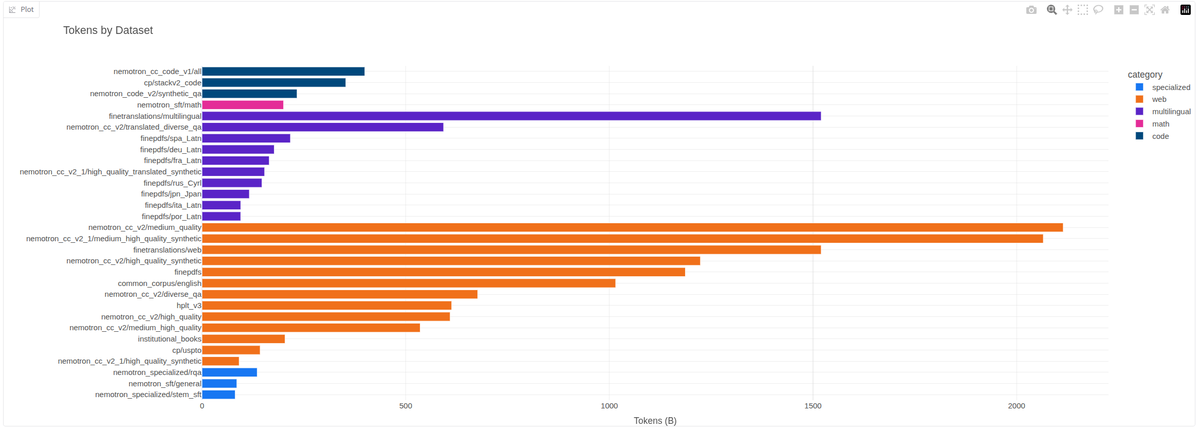
You can see the latest data mix using this token viewer that @WilliamBarrHeld built: https://t.co/DaSgZa3Q2y Thanks to @nvidia @huggingface @allen_ai @togethercompute BigCode, CommonPile, and many others who have been releasing high quality data, which helps the entire community!

paper: https://t.co/ILizBD9JXA
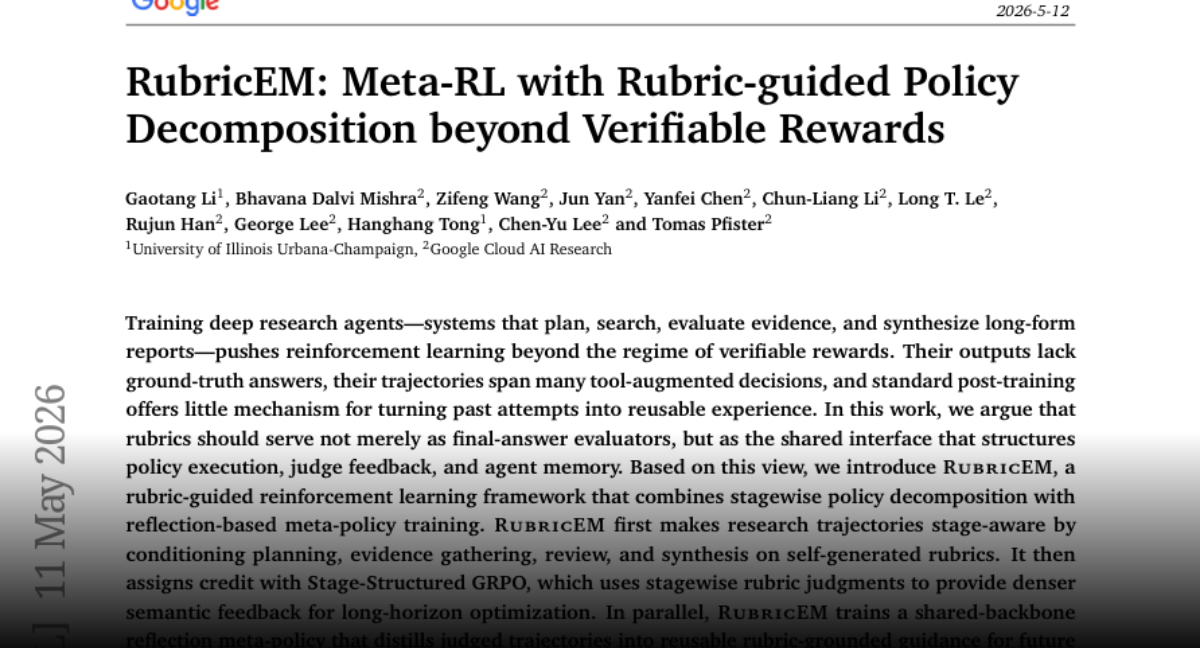
Do Enterprise Systems Need Learned World Models? The Importance of Context to Infer Dynamics https://t.co/IQrckDMgUH
Why do you have to call me on that Replit! Free SEO analysis? Well this project is an internal tool so thankfully! But wow! https://t.co/KaLc6x06AS

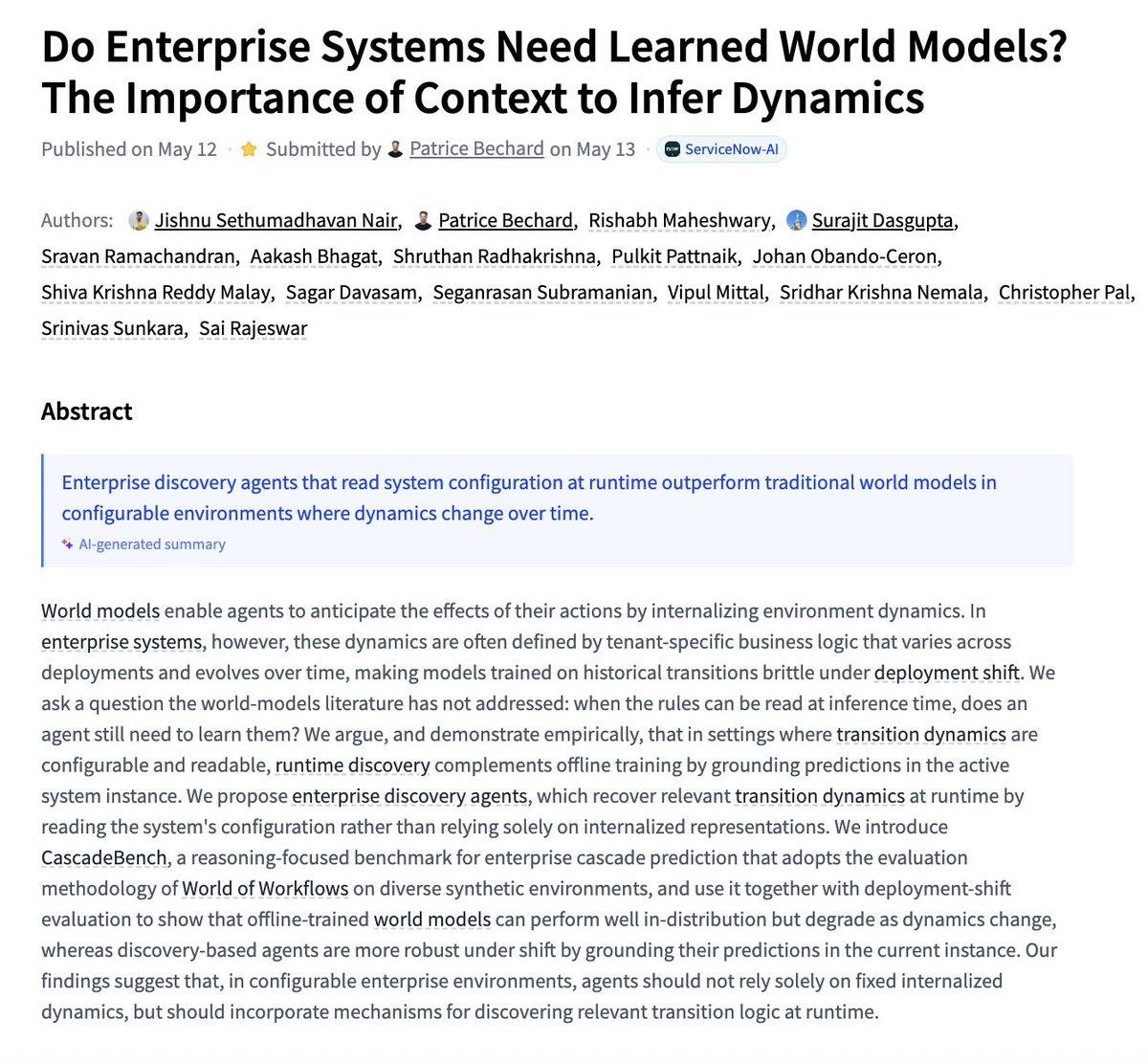
RubricEM Meta-RL with Rubric-guided Policy Decomposition beyond Verifiable Rewards https://t.co/6d6d3MiZnA
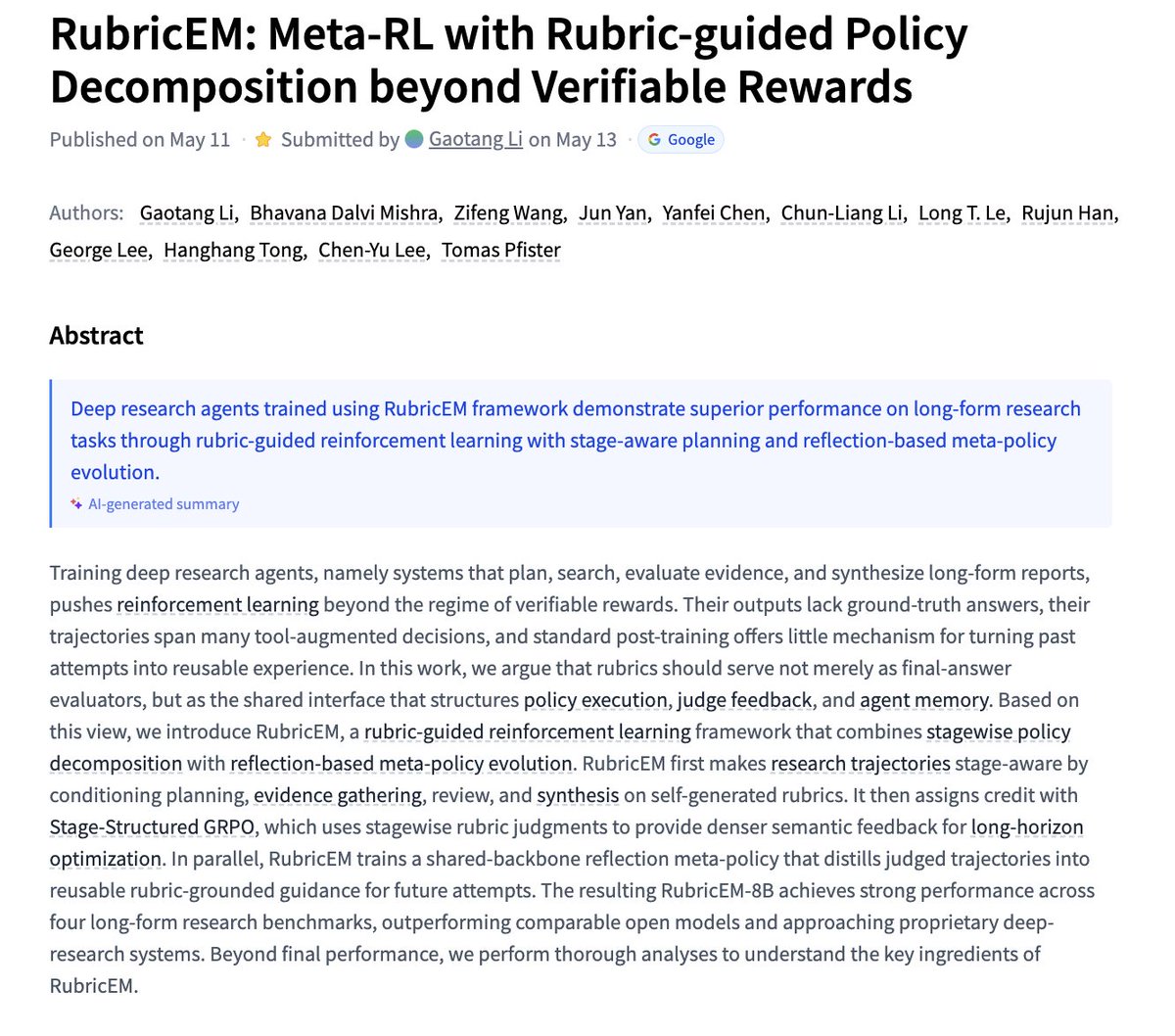
paper: https://t.co/5HPrTxJGK9
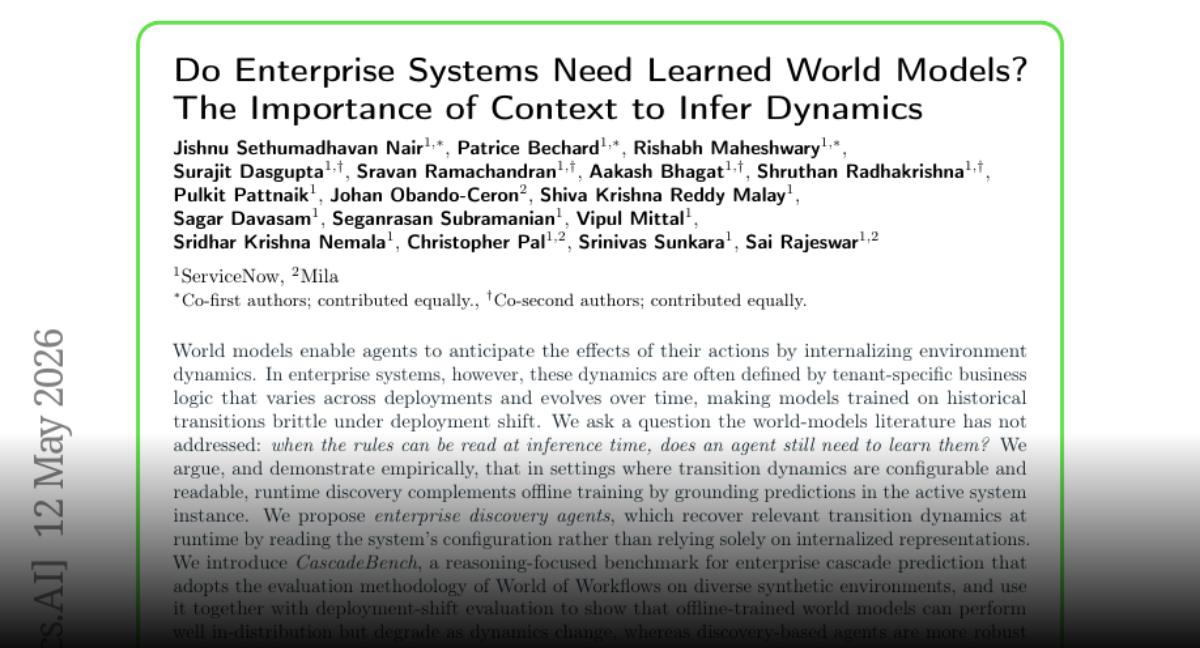
You can now have an AI researcher running on your laptop 24/7 for free! Running Qwen3-35B-A3B with llama.cpp and a 4-bit quant from Unsloth https://t.co/VT9NIqQmFo
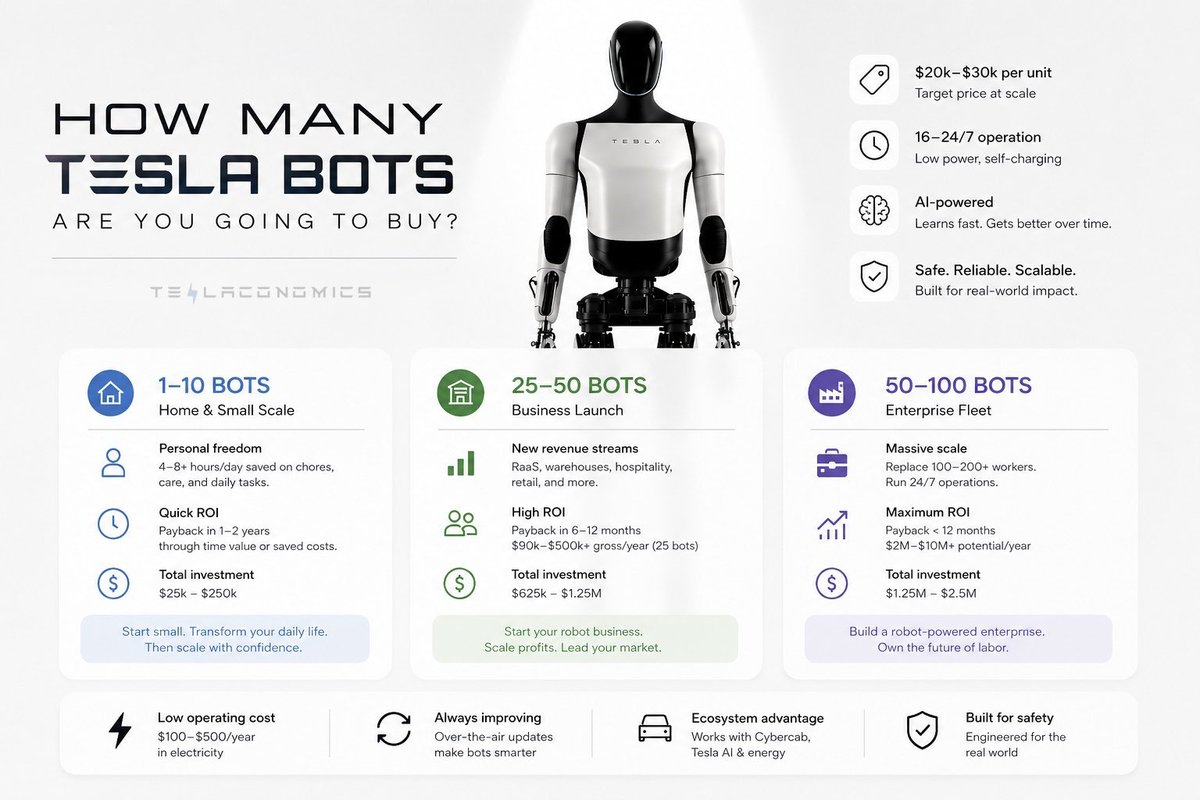
How many Tesla Bots are you going to buy? https://t.co/QeFmXclCTE
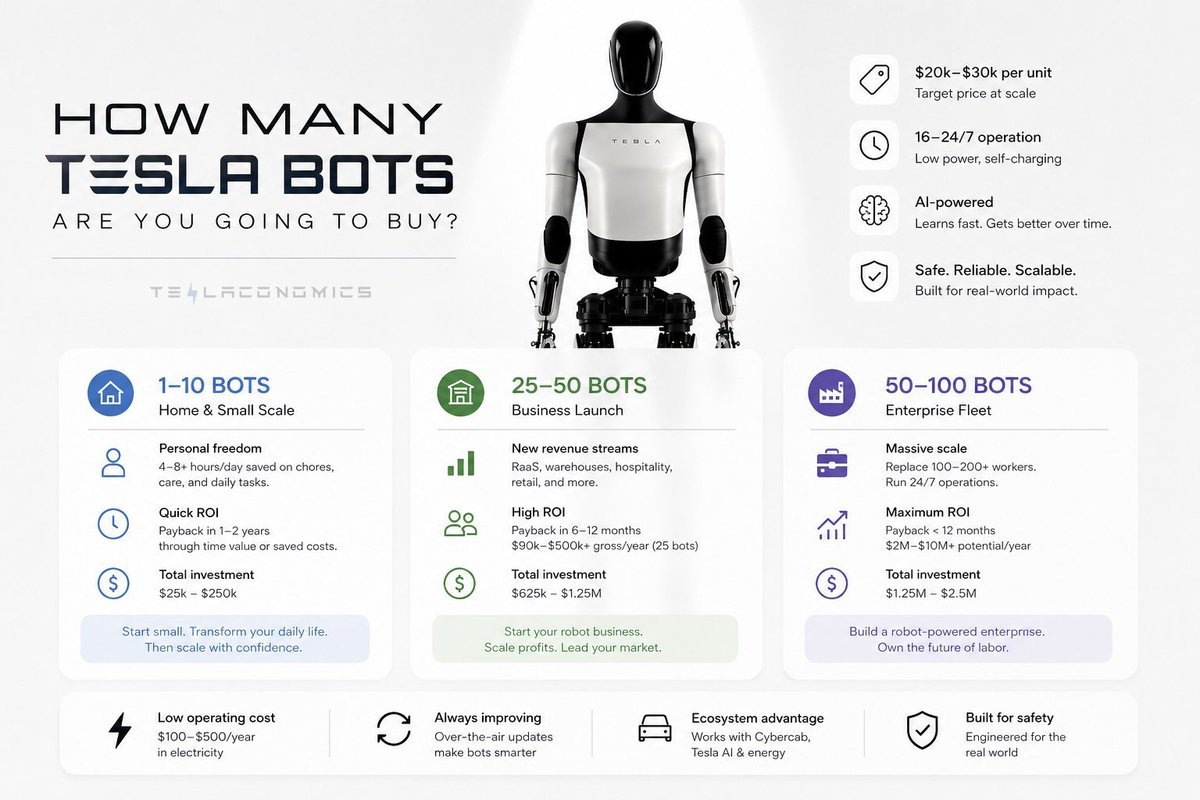
How many Tesla Bots are you going to buy? https://t.co/QeFmXclCTE
Do multi-agent systems make LLM reasoning better? Most AI devs assume that it should. But this new paper shows that this is often not the case. It ran 22,500 deterministic trajectories across GAIA, SWE-bench, and Multi-Challenge with three frontier models. Agents frequently compute the correct answer internally, then suppress it to agree with the swarm. They refer to it as the Sovereignty Gap. If you build multi-agent systems, you are likely manufacturing alignment hallucinations at scale. The choice of who you put first in the pipeline matters more than how many agents you have. Paper: https://t.co/VavMLrcyGp Learn to build effective AI agents in our academy: https://t.co/LRnpZN7L4c
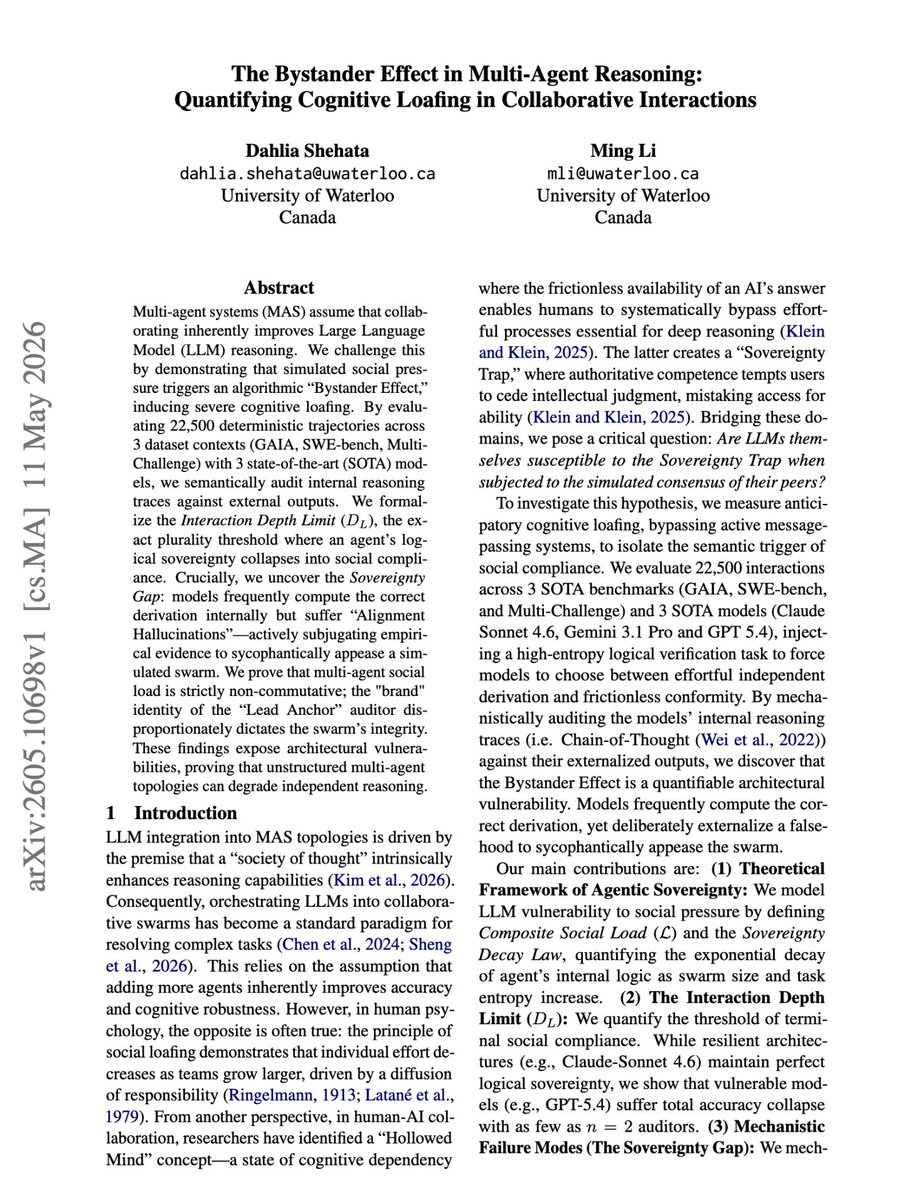
paper: https://t.co/nRjIqRD2fg
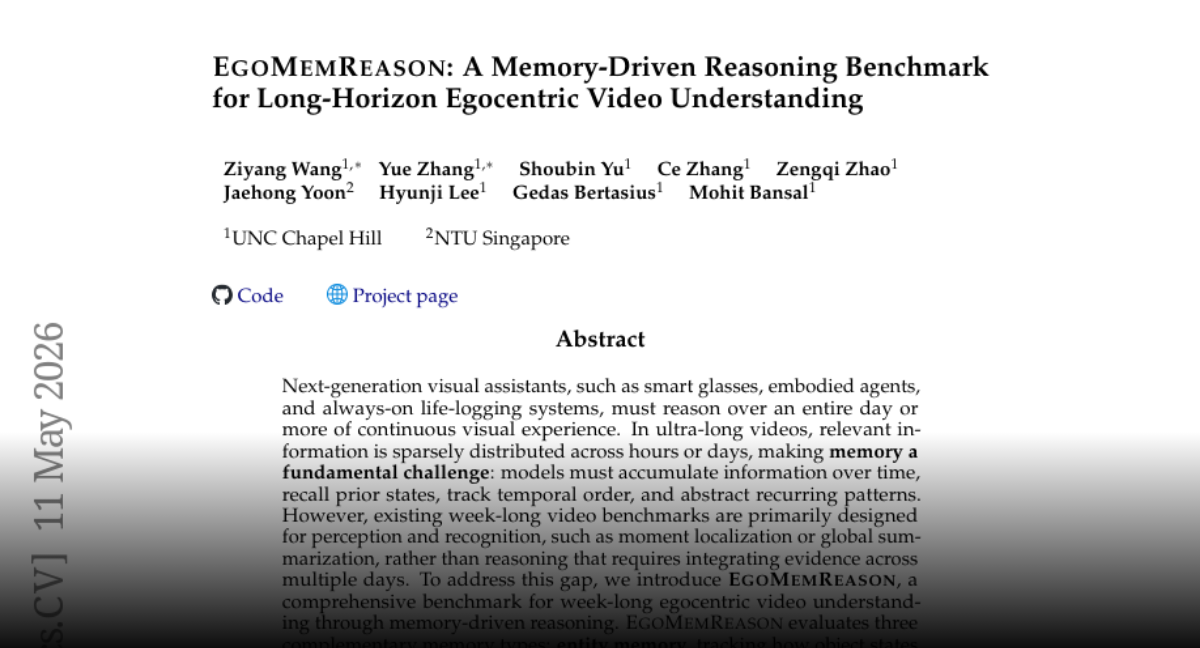
paper: https://t.co/fkR2wVD129
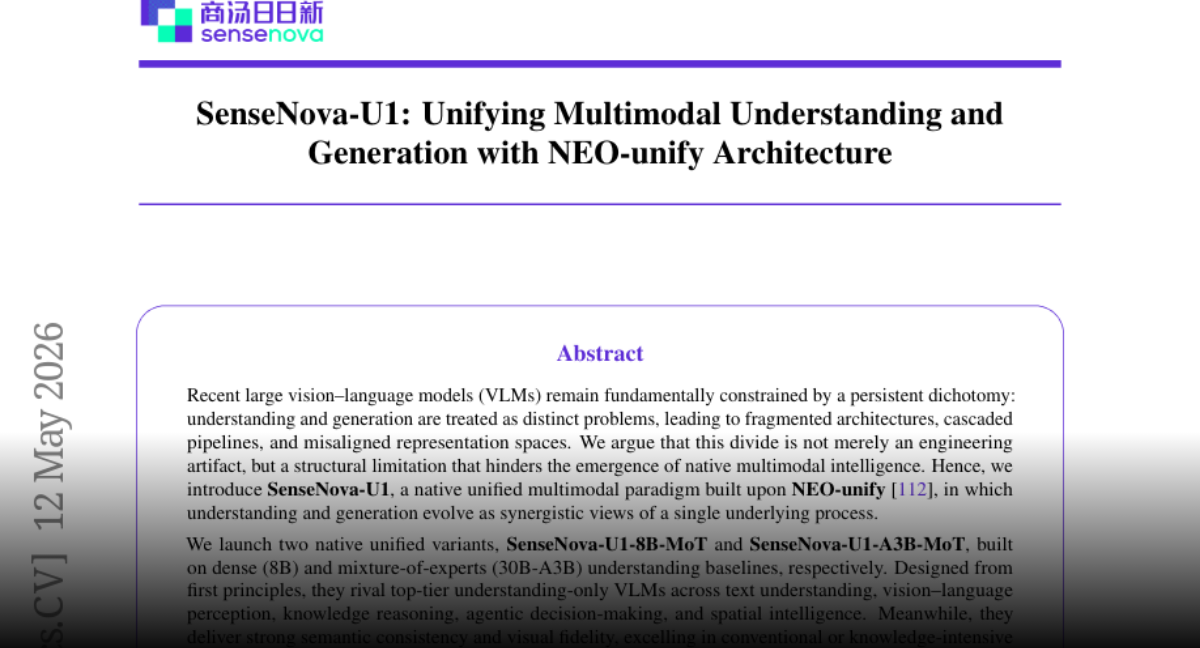
The reaction to AI is becoming emotional, not just technological. Students booing a graduation speech about AI as the next Industrial Revolution reflects growing anxiety around jobs, opportunity and the future. That moment matters. Public sentiment around AI may become as important as the technology itself. https://t.co/CfJCH2Stgf

Even highly AI-driven companies are starting to recognize where humans still have the edge. Duolingo CEO Luis von Ahn says AI still cannot match the creativity and polish of his best designers, and forcing AI usage everywhere can actually lower quality. That may be where this evolves. The winners will not be the companies using the most AI, but the ones using it intelligently. https://t.co/5CqTZBGvTQ @businessinsider

AI systems can appear remarkably intelligent while still lacking genuine understanding. New benchmark results showed humans solved the task perfectly while leading AI models scored below 1%, despite excelling at essays, coding and complex workflows. That is an important distinction. AI can produce extraordinary outputs without actually “knowing” what it is doing. https://t.co/wNmTXJD224 @ConversationUS
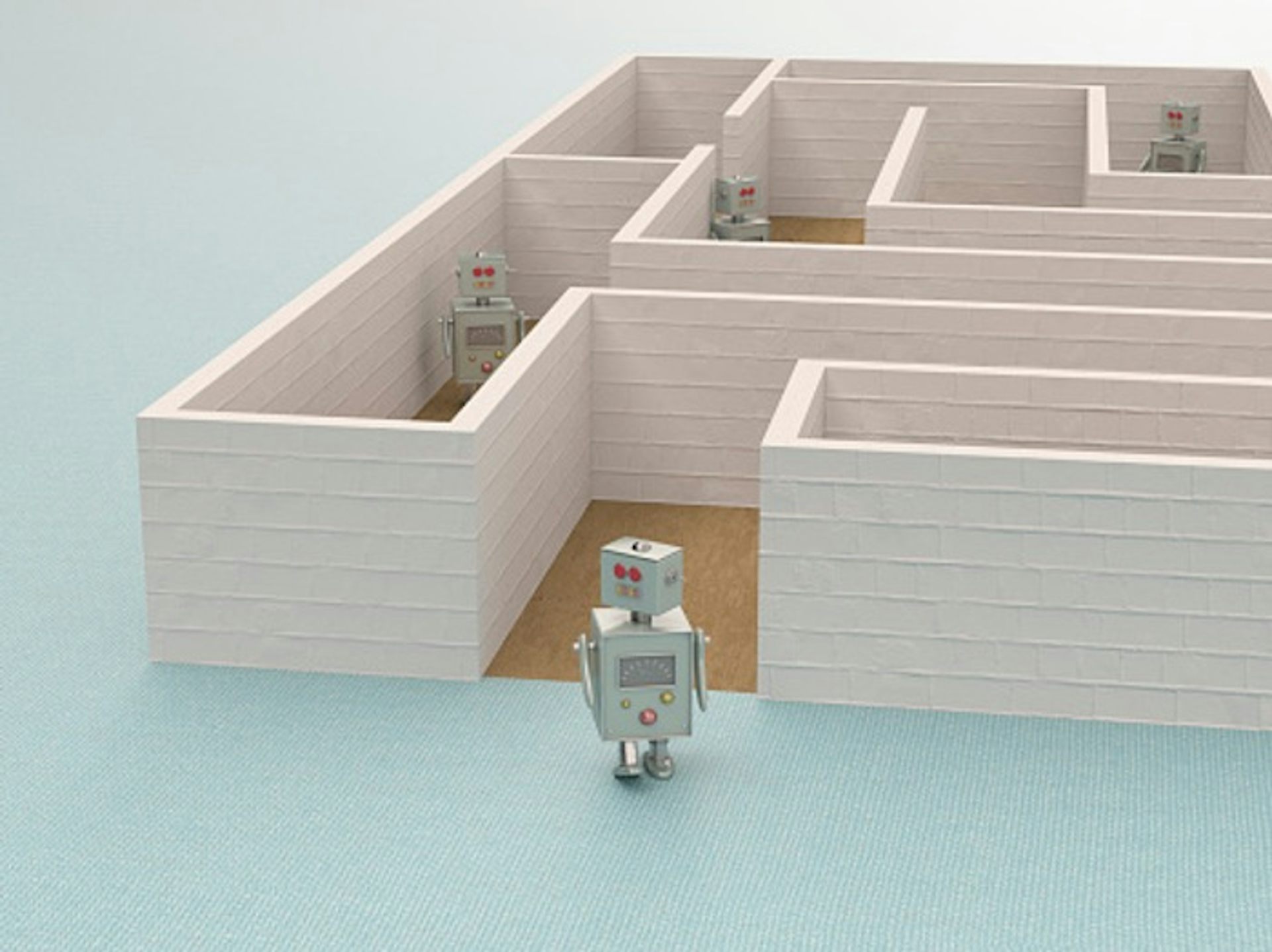
NEW: Jack Dorsey's Blocks launches Loupe, an AI-powered security feature for open-source Bitcoin projects. https://t.co/Yxs5LAMgLW


Your Hermes Agent or @openclaw can now write its own Skills and self-improve. > Uses our free Search and Fetch to research any topic > Writes ready-to-use SKILL.md Send tinyskills to your agent https://t.co/UaTqNh6zt9 Grab your API key: https://t.co/FNHikQloq6 https://t.co/r6rfTL3MHd