Your curated collection of saved posts and media
Introducing Nori L2 The most capable robot under $1288 Made in America, shipping right now. https://t.co/dLfFs8X0Oh
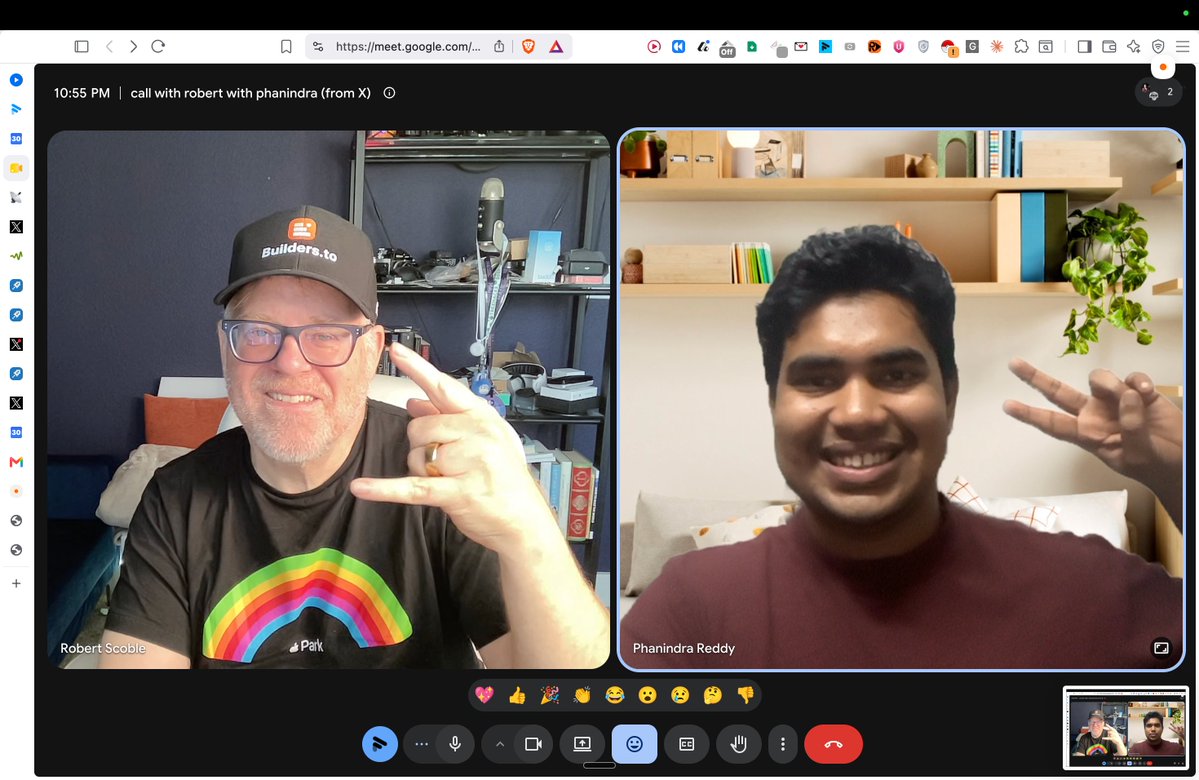
Just had an awesome call with @Scobleizer , and it went amazingly well. supposed to be a 15-min call, went for an hour. It is like time travel through all the historic moments that happened in front of his eyes. It's insane. And he really loved the concept of the AIOS https://t.co/qAL4rkGcUk
@BrihiJ @evaluatingevals That's highly interesting to me. And it'll be my first #ACL2026. Trying a bunch of systems to bring a lot more personalization: https://t.co/ISkM7TW9ua Would love to meet up!
Boardy connected us. Thanks @boardyai Phanindra is one of several entrepreneurs that are making systems that watch everything on your computer and help you improve your life and business. Boardy is one of those too. The question I have is who will break out with the normies?

Town is finding users: https://t.co/NDfHP421Xd
Some of our most enthusiastic Town users are finance people. CFOs, heads of finance, FP&A leads. These are people who've been automating inside spreadsheets for years. Pivot tables, macros, complex models. They're incredibly skilled at it. But anytime something needed to happen

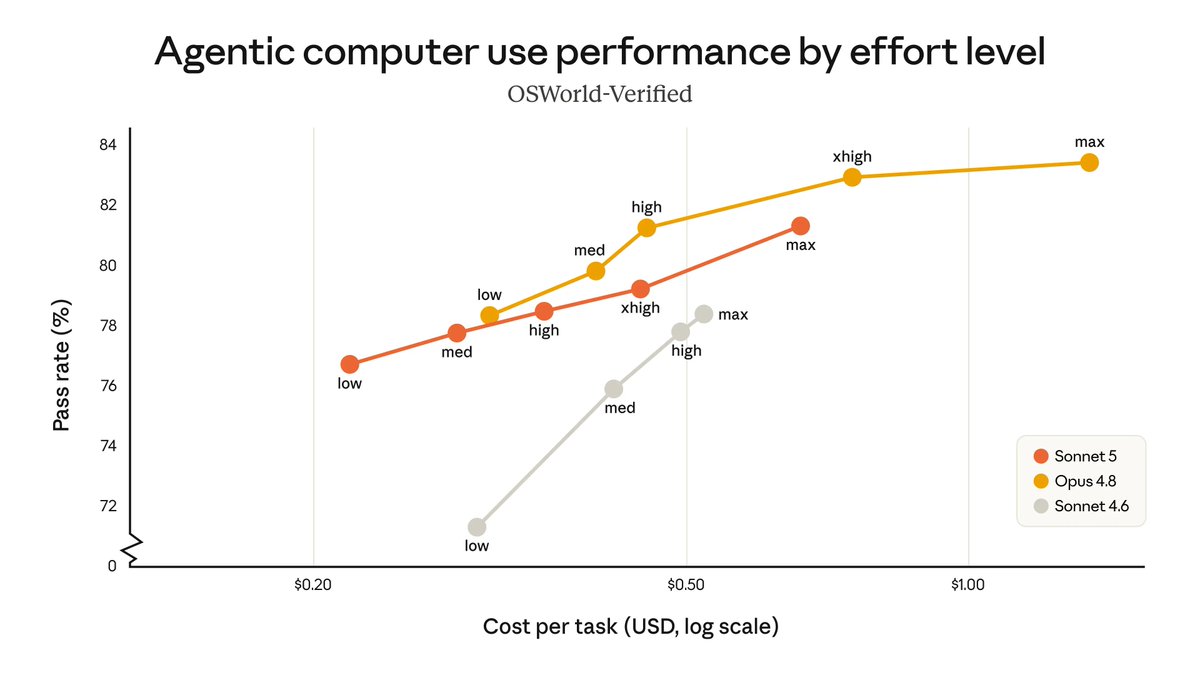
Sonnet 5 is here! This is going to support better long-running agents. Previous Sonnet models were unreliable, so it's great to see the improved version that can complete agentic tasks more reliably. It also seems to have improved substantially in computer use. https://t.co/8K6FAORgLU
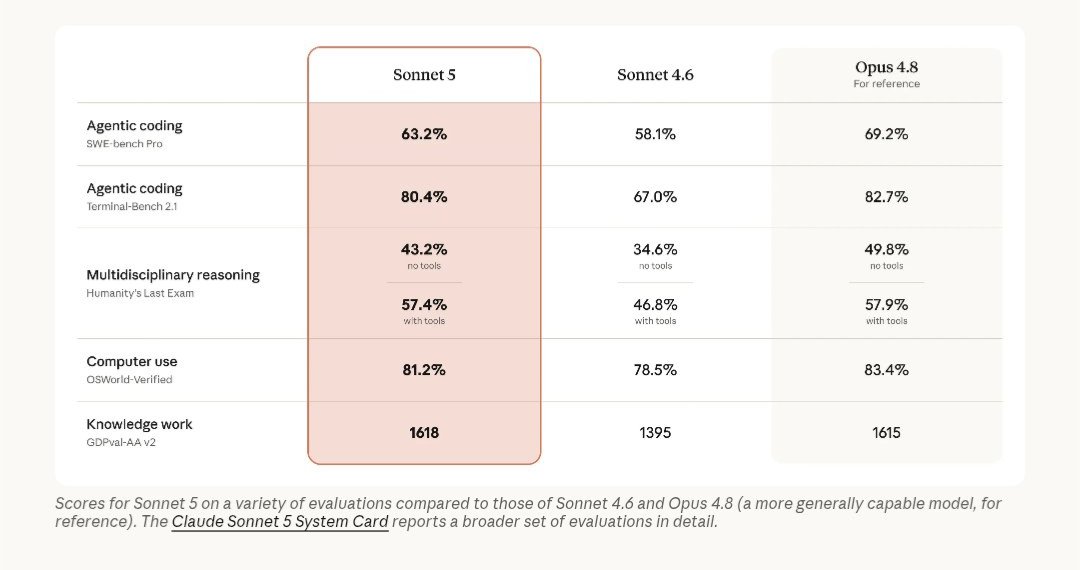
Introducing Claude Sonnet 5, our most agentic Sonnet yet. It makes plans, uses tools like browsers and terminals, and runs autonomously at a level that just a few months ago required larger and more expensive models. https://t.co/UKK8G7ww5h
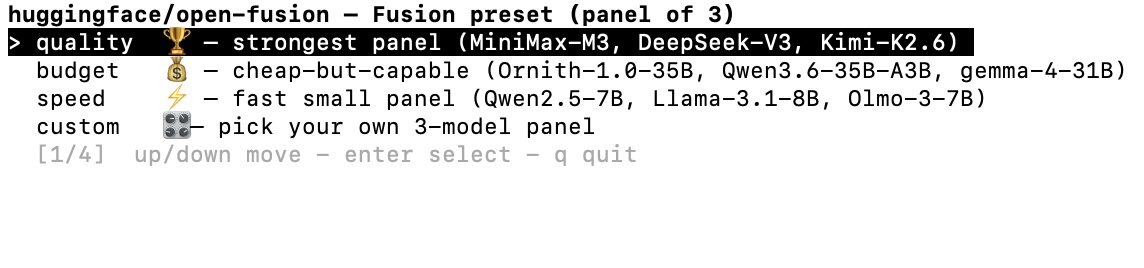
open-fusion in claude code with hf-claude https://t.co/YWxUMu9eWc
https://t.co/GwJbsc5WiD
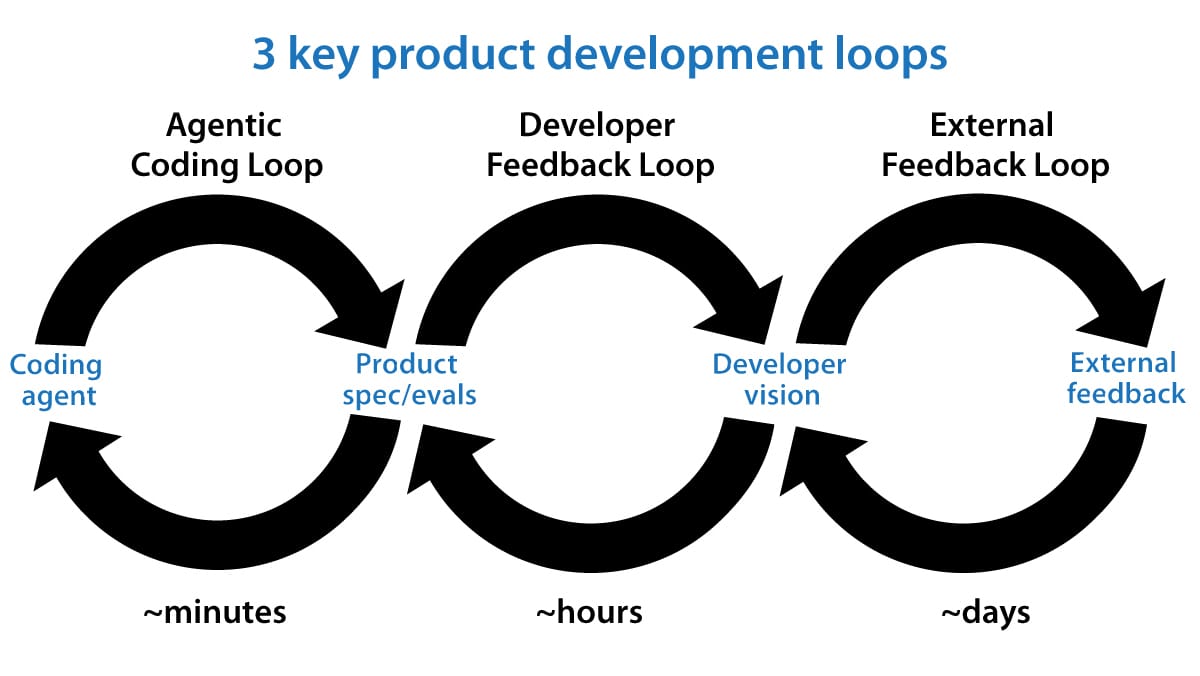
“Loop engineering” is a hot buzzphrase after mentions of it by Boris Cherny (Claude Code’s creator) and Peter Steinberger (OpenClaw's creator) went viral on social media. Loops are now a key part of how we get AI agents to iterate at length to build software. In this letter, I’d like to share my 3 key loops, shown in the image below, for building 0-to-1 products. These loops guide not just how I build software, but also how I decide what software to build. Agentic coding loop: Given a product specification and optionally a set of evals (that is, a dataset against which to measure performance), we can have an AI agent write code, test its work, and keep iterating until the code is bug-free and meets its specification. This idea of closing the loop took off around the end of last year, and it has been a game changer in enabling coding agents to work longer productively without human intervention. For example, over the weekend, I was building an app for my daughter to practice typing, and my coding agent could easily work for around an hour, using a web browser to check what it had built multiple times before getting back to me, without needing my intervention. The engineering loop executes quickly. Every few minutes, the coding agent might build and test a new version of the software. I hear frequently from developers who are finding new ways to engineer more effective engineering loops. This is an active area of invention! Developer feedback loop: In this loop, a developer examines the current product and steers the coding agent to improve it. Last year, a lot of developers (including me) were acting as the QA (quality assurance) function for our coding agents, manually finding bugs and then asking the agent to fix them. But with coding agents much more able to test their own code, the amount of time we need to spend on this function has decreased significantly. This allows us to make higher-level product decisions, such as what key features to offer, where the UI needs improvement, and so on. The developer-feedback loop operates over time intervals between tens of minutes and hours — that's how frequently a developer might review a product and give feedback. In the case of the typing app, I changed my mind a few times about the visual design, what cat costumes she can unlock as she learns (she loves cats), and the user flow for a grown-up to log in and steer the child's learning experience. When a developer has a clear vision for what to build, it is still a lot of work to translate that vision into a specification for a coding agent to implement. Further, after the developer has seen an implementation, they might update (or perhaps clarify) the spec to steer it toward what they want. If you find that the system repeatedly runs into certain problems, building a set of evals for the agent becomes useful. AI-native teams are increasingly using AI to help shape product direction, for example, automating the gathering and analysis of usage data, summarizing written and verbal customer feedback, or carrying out competitive analysis. However, for pretty much all the products I’m involved in, I see humans as having a significant context advantage over current AI systems — we know a lot more than the AI system about the users and the context the product has to operate in — and thus humans play a critical role. Many people describe this human contribution as “taste,” but I prefer to think of it as humans having a context advantage, since that gives us a clearer path to helping AI systems get better. This also speaks to why this step can’t be automated: So long as the human knows something the AI does not, human-in-the-loop is needed to to inject that knowledge into the system. External feedback loop: This includes a wide range of tactics like asking a few friends for feedback, launching to alpha testers, or putting the code into production with A/B testing. These tactics are usually slow, rarely taking less than hours and sometimes taking days or even weeks. This data informs the developer vision, which in turn continues to drive the detailed product spec, which in turn drives the coding agent. With coding agents speeding up software development, more engineers are starting to play a partial product management role. For many engineers who are growing into this role, the hardest part is shaping the product vision and striking a balance between building (bridging the gap between vision and spec) and getting user feedback to evolve the vision. It is important to do both! I will write more about how to do this in future posts, but for now, I find it encouraging that engineers are playing an expanded role (just as product managers and designers now do more engineering). [Original text: The Batch]
@tombombadeel You don't have to, it's written to work as a standalone, but it would be a good complimentary resource https://t.co/r59qByata3
@Joe609338771908 I probably would but you don't have to. It would work either way: a) You start with "Build a Large Language Model (From Scratch)" and then add inference techiques and reasoning training b) You start with "Build a Reasoning Model (From Scratch)" and then dive deep

The media bias against Elon is absolutely insane They don’t report on him They hunt for ways to make him look evil Is it a lie? Doesn’t matter Is there proof? Still doesn’t matter They will lie, twist, exaggerate, or straight-up fabricate stories just to paint him as the villain… and they go to levels you can’t even imagine When asked to actually show proof or give contact of the real help people were receiving from USAID, they provided none. Literally none Yet somehow, the second DOGE started cutting waste, “millions of deaths” magically appeared in the numbers Let’s look at the actual reality: • A USAID contracting officer and corporate executives pleaded guilty to a decade-long bribery scheme involving over $550 million in contracts • They were running aid programs with Hamas staff inside the organizations • They were literally funding Al-Qaeda terrorists • Let me say it again: They were funding terrorists But the corrupt media doesn’t care All they care about is manufacturing fake “Holocaust-level” death numbers just to paint Elon as evil Pure propaganda
Honestly at this point I'm a bit frustrated I didn't get my USAID-sponsored RPG https://t.co/6PqxcFCbGk

Nvidia CEO Jensen “@Tesla stack is the most advanced autonomous vehicle stack in the world. I’m fairly certain they were already using end-to-end AI. Whether their AI did reasoning or not in somewhat secondary to that first part.” https://t.co/YJAlQJybgx
Introducing Claude Sonnet 5, our most agentic Sonnet yet. It makes plans, uses tools like browsers and terminals, and runs autonomously at a level that just a few months ago required larger and more expensive models. https://t.co/UKK8G7ww5h
📣 @AnthropicAI's Claude Sonnet 5 is now generally available and rolling out in GitHub Copilot. Early testing for Claude Sonnet 5 showed: • strong results across a range of coding scenarios, particularly for performance on CLI-style tasks. • excellent prompt-cache utilization and competitive latency at lower effort levels. Try it out in the GitHub Copilot app ⬇️ https://t.co/mqlNX4OPYs
BREAKING: Open USD is launching natively on Solana from day one. A new shared stablecoin, owned and governed by its partners. No mint or redeem fees, no volume caps, and nearly all the reserve economics flow back to the businesses building it. https://t.co/eWyK0JsLmB
Claude Sonnet 5 is now available in Perplexity for Pro and Max subscribers. You can also select it as an orchestrator model in Computer. https://t.co/UktzCrUZU6
Claude Sonnet 5 benchmarks https://t.co/BQ1bAyLEh5
@nikkei https://t.co/8gSgxB51oJ
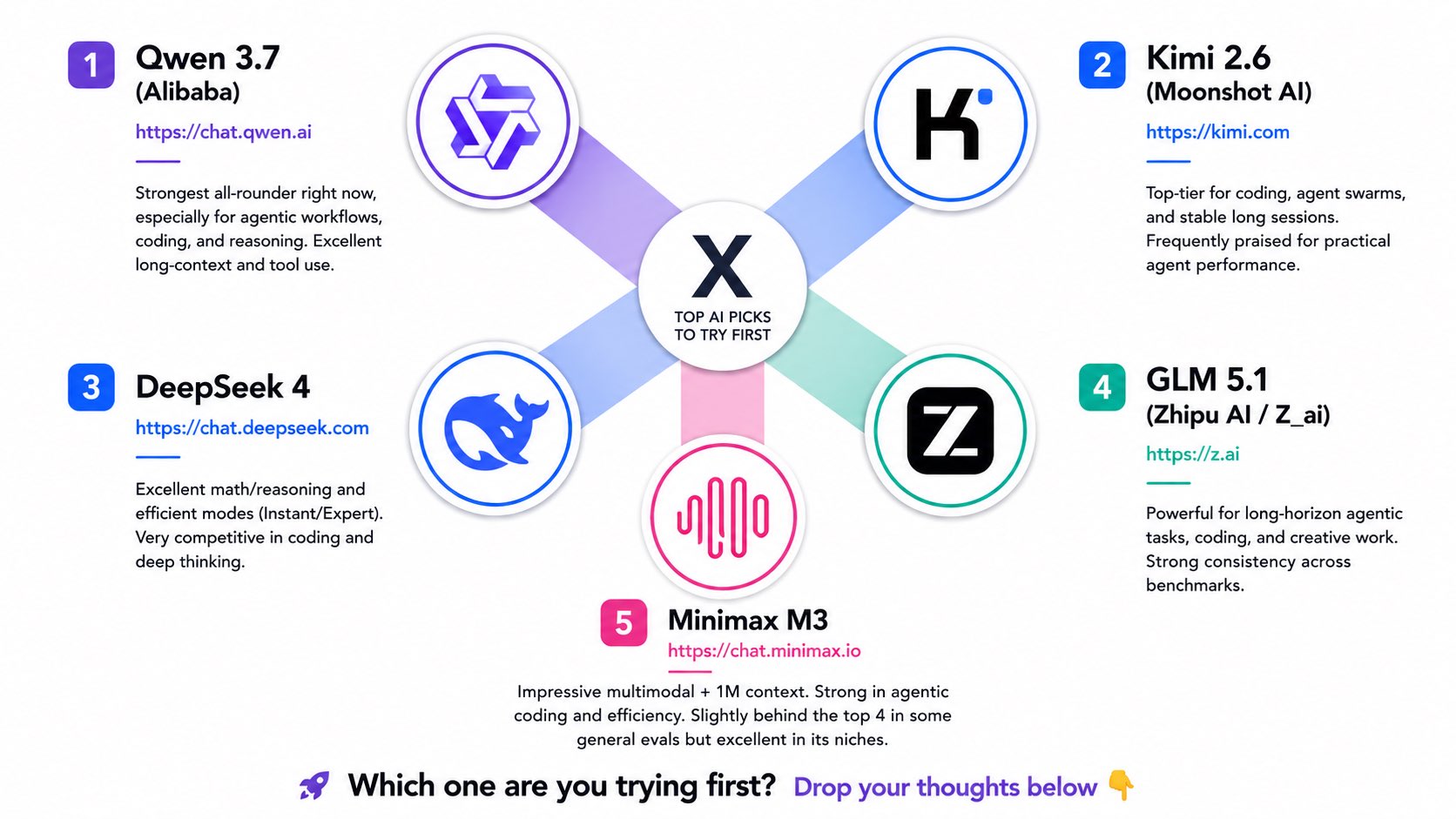
Which one are you trying first? 1️⃣ Qwen 3.7 (Alibaba) https://t.co/JBDry6ndjE 2️⃣ Kimi 2.6 (Moonshot AI) https://t.co/x2Vwze6tnx 3️⃣ DeepSeek 4 https://t.co/QhkJxNZHrv 4️⃣ GLM 5.1 (Zhipu AI / Z_ai) https://t.co/R01OJft1AH 5️⃣ Minimax M3 https://t.co/Rv2iS8ZnPQ Drop your t
How HeyGen Models generate a 30-minute video, the longest single-pass AI generation ever. 6× the industry ceiling The hard part was never length, it was consistency. Most systems drift; the face stops looking like you. HeyGen Models stay locked in Full technical report below ↓ https://t.co/zGxwBaOoJH
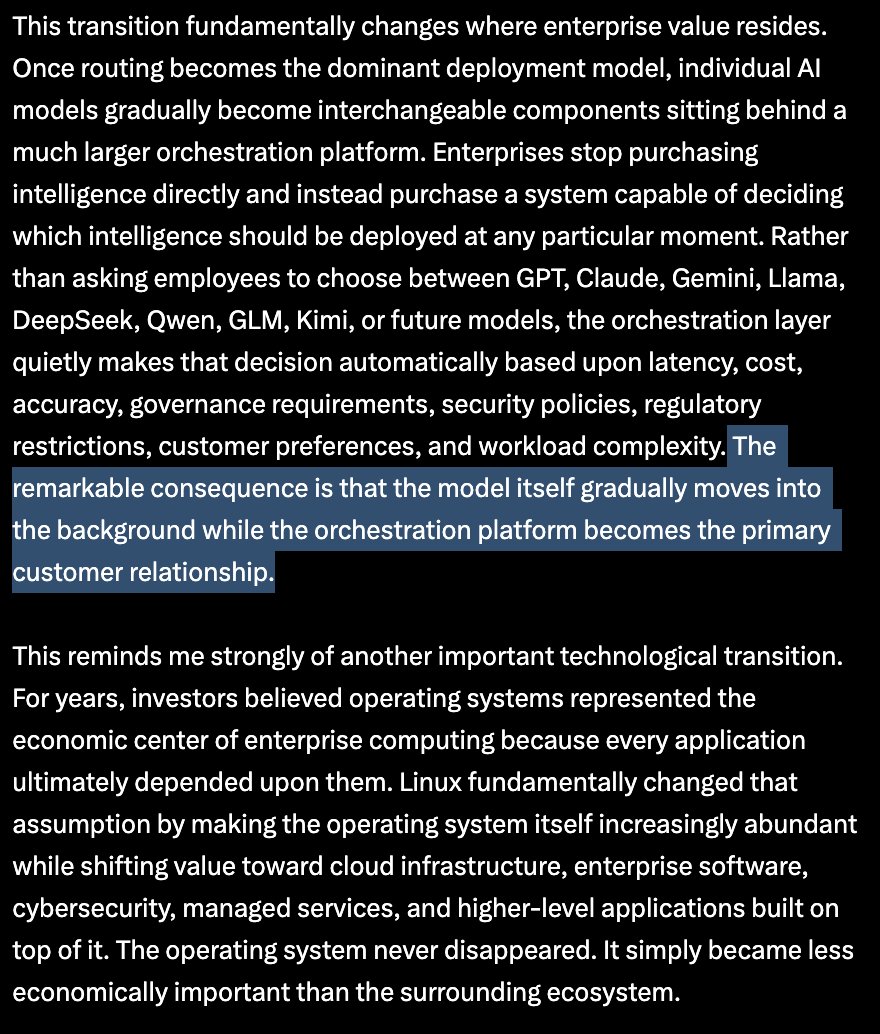
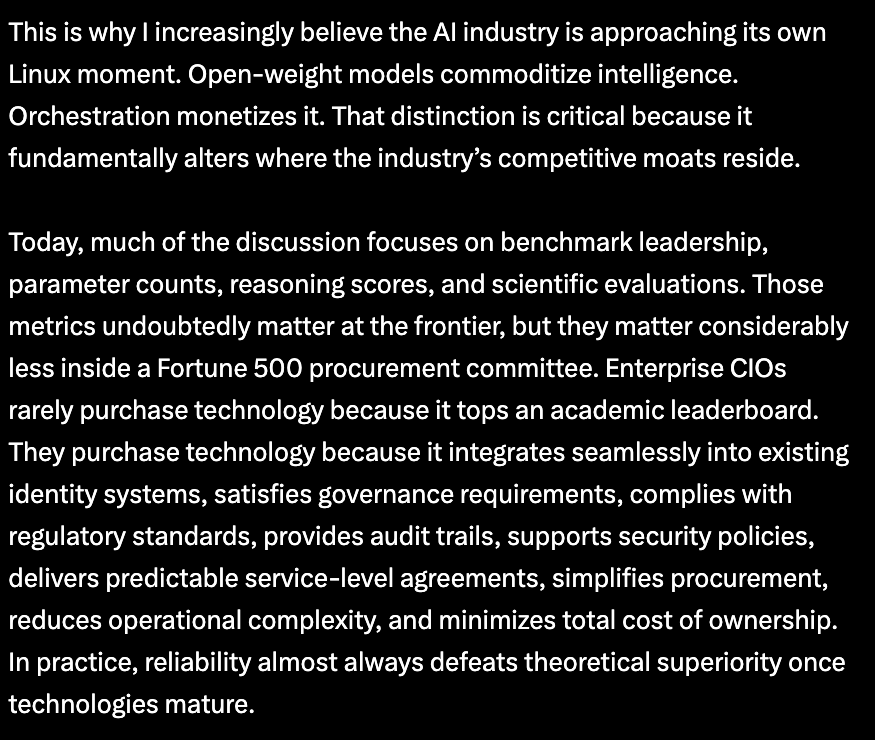
One of the best AI takes I’ve read in a long time I strongly agree with @rickyho_1989 that enterprises will optimize for the best intelligence per dollar, not loyalty to any one lab, and that durable value moves toward the orchestration layer To me this is bullish AWS, Google via Gemini and Vertex, and Microsoft on the AI infra side and bullish @NousResearch Hermes Agent on the orchestration side The AI switching cost is not just the model, it is the orchestration layer where the actual work compounds: memory, tools, credentials, evals, approvals, budgets, routing, observability, security, compliance, identity, audit trails and execution history. Models get swapped constantly based on quality, cost, latency and policy. The harness is what makes that possible without rebuilding the enterprise’s operating context every time. The second order unlock is that the harness captures traces, tool outcomes, eval failures and human approvals, which become the feedback loop for better agents, better routing and better company specific models. This is why I think Hermes Agent is attacking such an important layer. Enterprises do not want to be locked into one AI lab forever. They want GPT for one task, Claude for another, Qwen or DeepSeek for cheaper work, company specific models where they fit best, and self hosted/private deployment where control matters. The winning agent platform is not one model to rule them all. It is the open control plane where model choice, tools, workflows, governance and spend live in one place. Why use Nous vs other AI lab or hyperscaler harnesses? Because enterprises do not just want model choice inside another walled garden. They want model choice plus control over the agent state itself. They can mix/match models at will, literally type /model and switch, while controlling memory, tools, credentials, data, policies, evals, approvals and audit trails. If the entire stack becomes a moat for the business, they will want to own it and swap models at will to achieve the best cost/performance. This is where open source and the Red Hat and Linux analogy shines. Open models commoditize intelligence. The orchestration layer monetizes the work.
Hey everyone, I have received permission from my employer to publish this research. It is a lengthy investment thesis on what I believe will be the next chapter of AI. After months of research, we are turning bullish on the hyperscalers and explain why we believe the market is u
Today, we give robots a /skills library that self-evolves and compounds indefinitely! Introducing ASPIRE: a robot solving its 100th task is no longer as clueless as solving its first. Coding agents observe multimodal sensory traces from simulation and real robots, launch an evolutionary search over control programs, and distill the best know-how into an ever-expanding library. ASPIRE is a new type of continual learning: "training" is skill refinement instead of gradient descent. "Trained model" is a repo of sensorimotor skills instead of floating weights. “Distributed training” is a panel of agents each practicing a different skill instead of sharded minibatches. Here's the beauty: ASPIRE gives the tired terms "sim2real transfer" and "cross-embodiment transfer" a whole new meaning. Bridging the sim-to-real gap is notoriously brutal. An end-to-end policy has to swallow both the visual shift (sim looks toyish next to a real camera) and the subtle contact physics it never quite gets right. ASPIRE sidesteps the mess, because it doesn't ship pixels or weights across the gap, but ships the know-how. The robot still has to practice in the real world, not zero-shot, but it gets there way faster because it isn't rediscovering the strategy from scratch. Same for going single-arm to bimanual hardware, which usually requires new data and retraining from zero. ASPIRE achieves up to ~10x cut in "transfer learning” tokens (yes, tokens are the new unit of *training* compute ;) Check out our gallery of 150+ tasks and 90+ skills the robots taught themselves, all on the website! Kind of wild that we can ship the "learned weights" as an HTML page rather than a GGUF. We'll open-source the full stack so your own robot library starts compounding from ours! Deep dive in thread:
just dropped https://t.co/sTPbkaWxfo
just dropped https://t.co/sTPbkaWxfo
🎮🕹️🖥️ CS2-10k is now available on @huggingface 🚀 600,000+ egocentric gameplay videos. 10,000+ hours. Every frame paired with the exact keyboard, mouse, and 3D position data that produced it. If you're working on world models, action-conditioned video generation, or egocentric navigation, this is ready to download and use today.
We launched @wandb’s research agent. Research can be lonely https://t.co/vqbhCLsFJi
We launched @wandb’s research agent. Research can be lonely https://t.co/vqbhCLsFJi
BREAKING: Philippines becomes the first country in Southeast Asia to commercially launch Starlink Direct-to-Cell through a mobile network. Globe has secured regulatory approval to offer Starlink Direct-to-Cell service nationwide. https://t.co/5upFuayH8p
Earlier this year, @SpaceX acquired @xAI (now SpaceXAI), which operates the Colossus datacenters in Memphis. As SpaceX continues to invest in the area, SpaceX is offering our neighbors in the Memphis area no upfront hardware costs on Residential @Starlink kits for new customers and a discount on home internet service plans for both new and existing customers. FAQ: https://t.co/TmKSYXOFVT

SpaceXAI has announced that they will be applying a 50% discount on the standard @Starlink monthly price for both new and existing customers in the Memphis area as a way to give back to the community where they operate their Colossus data centers. • No upfront hardware costs on Residential Starlink kits for new customers • The discount applies to Starlink service addresses located in eligible parts of the Memphis area (see below). • No action is required. The discount will appear on your next bill and will continue as long as your service address remains in the eligible area. • Friends and family nearby can also benefit from the discount. You both earn a month of free service through Starlink's referral program.

We’re shipping two major updates to streamline your creative workflow, allowing you to generate high-speed images with one model and then instantly animate them with the other—all at a fraction of the cost 🍌⚡️ 1️⃣ Introducing Nano Banana 2 Lite: Our fastest and most cost-efficient Gemini Image model yet delivers text-to-image outputs in under 4 seconds. Now available via the Gemini API and Google AI Studio, and rolling out soon across @NotebookLM, @FlowbyGoogle, @geminiapp, @stitchbygoogle, Google Search and @GooglePhotos. 2️⃣ Gemini Omni Flash in Public Preview: Our natively multimodal model for cost-efficient video generation and conversational editing. Now available via the Gemini API, @googleaistudio, and Gemini Enterprise Agent Platform so you can integrate the model into your workflow. While exciting on their own, the real magic happens when you build using these models together. Watch how our interior design demo integrates Nano Banana 2 Lite and Omni to instantly reimagine any space. Upload a photo, swipe through tailored design concepts, and see Omni bring the details to life in cinematic motion. Try out the demo app in AI Studio: https://t.co/EjYC2oHIDG
Explore ideas, scale visual concepts, and start creating: https://t.co/JbyK5FM3H0 https://t.co/wBMBDw6TC6
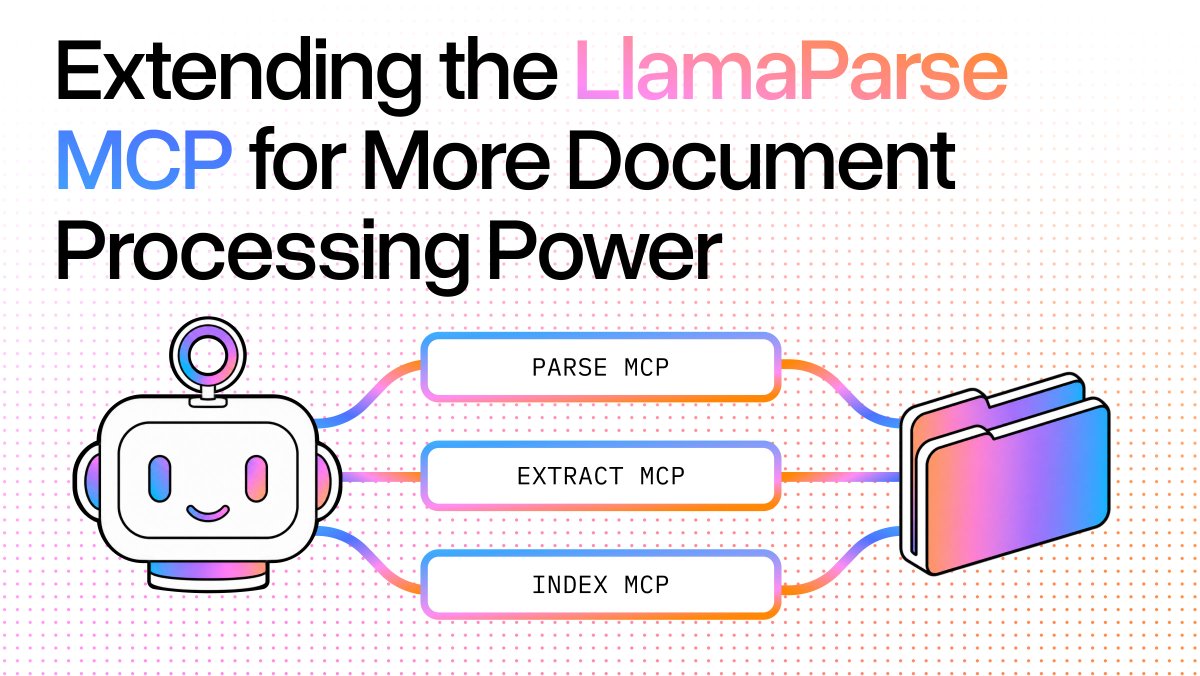
We just made it a lot easier for AI agents to work with your documents. LlamaParse MCP now does more than parse or classify files: it can pull structured data out of contracts, invoices, and reports automatically, and give agents direct access to your knowledge base (PDFs, Office docs, images, and more) so they can search, read, and retrieve information just like a human would. We also reorganized everything into focused, purpose-built tools: whether you're classifying documents, extracting data, or building search over your company's files, agents can do it faster, more reliably, and in parallel. This allows for smarter, more capable AI workflows for anyone working with documents at scale. Curious to try it out? Get started now with the LlamaParse Platform → https://t.co/lCJGHx7lOG Blog post: https://t.co/KxvkcZYq2w Take a look at the GitHub repository → https://t.co/VhiG2bKAqe
AI Videos are ALL slop. AI should be making you a content machine. Introducing Riverside 2.0, the first AI Producer that creates authentic content while you sleep: https://t.co/qnBHEorlAS