Your curated collection of saved posts and media
𝕏 makes money simple. https://t.co/QgGav5YJoP
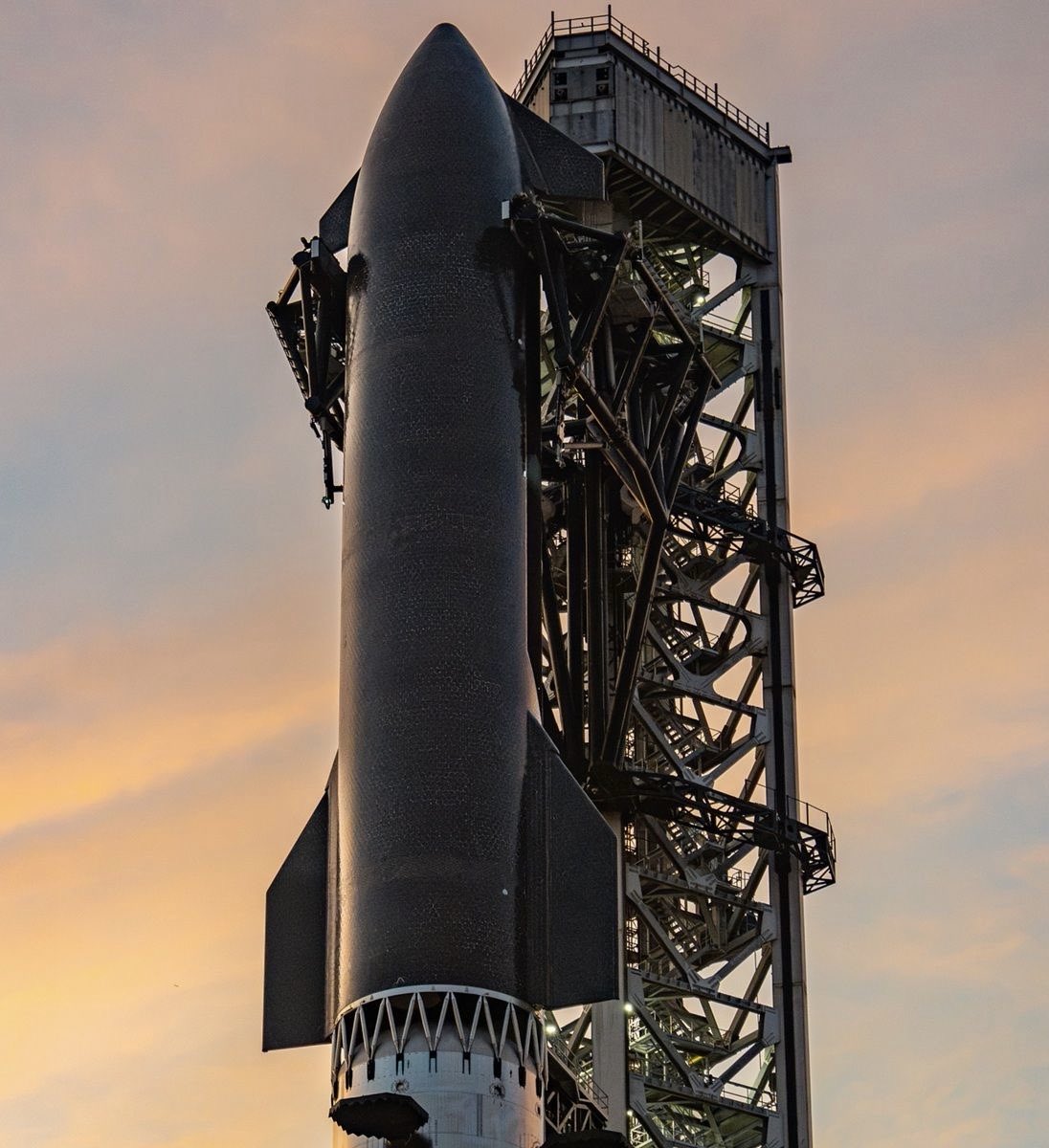
Starship Flight 14 is likely to deploy operational V3 Starlinks (per Elon and FCC filings). Depending on the exact number of V3 sats (I expect between 20-60) in this first launch, this starship launch will be equivalent to 3-8 weeks of F9 Starlink bandwidth (at peak cadence). Said another way, what F9 took up to 2 months to deploy Starship can do in ~45 minutes.

Transportation Secretary Sean Duffy on Autonomous Vehicle Regulations: “My philosophy is this: if I move the regulations too slowly, we kill innovation, we kill the companies, or they’ll go overseas. If I go too fast and the AVs aren’t ready for the rules I give them, people get hurt. I have to find the Goldilocks approach — the right stage of where we are with AVs before we set them loose. “Congress has to say the federal government should regulate these standards. We shouldn’t have every state individually deciding yes or no, what they’ll allow and what they won’t. It’s a hodgepodge. Let us set one standard. That’s the biggest issue for AVs right now. “If you have an autonomous vehicle, do you need rearview mirrors? “Do you need windshield wipers? “Do you need a brake pedal and a gas pedal? “Do you need a steering wheel? “There are a whole bunch of conversations we have to have about what we think we need in an automobile versus what an autonomous vehicle actually should have.”
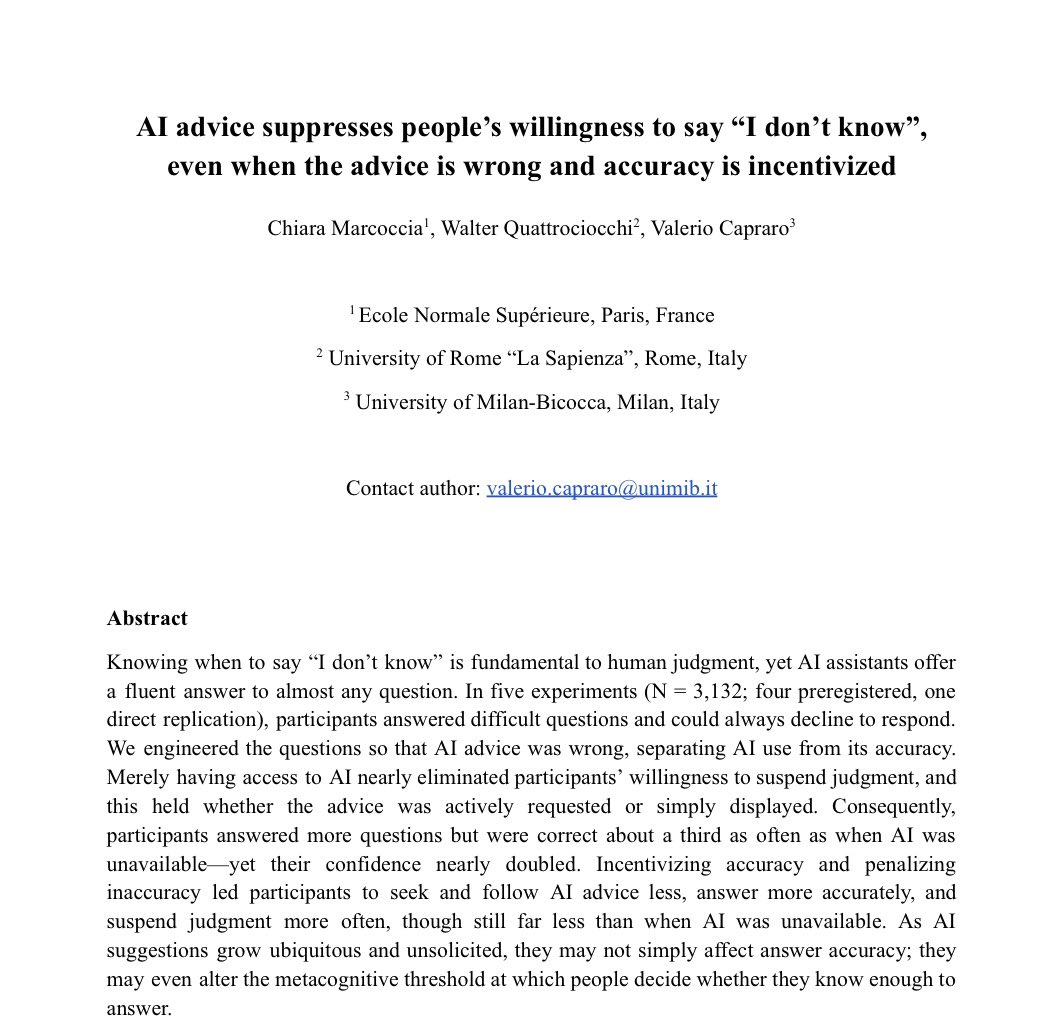
AI advice makes people 3× less accurate and 2× more confident at the same time. Our new paper is receiving a lot of attention, perhaps not surprisingly, given how dramatic the results are. If you have not read the article yet, here’s a brief summary: When people receive AI advice: - Judgment suspension (“I don’t know” answers) collapses from 44% to 3%. - Accuracy falls by a factor of three, from 27% to 9%. - Confidence skyrockets from 30/100 to 76/100. Adding monetary incentives for accuracy helps somewhat: - People become a bit more cautious and are more likely to override bad AI advice. - But judgment suspension and accuracy remain dramatically below the baseline. * Full paper in the first reply
Can you explain to me exactly what you want 4 microducks for?? https://t.co/7q05LxjIex
Can you explain to me exactly what you want 4 microducks for?? https://t.co/7q05LxjIex
I have been talking about holodecks since before most of these video models existed. You type. You wait. You get a clip. Want a different beat? New file. This is Orbis. Astronaut and an alien on a platform, Earth filling the window. A Live Model. The world stays up and streams. You change the prompt while it is still running. $10 million pre seed. https://t.co/qPO4ZhHUBC @viskoai
Today, we are introducing Orbis 1.0, our first Live Model! Create living worlds and stream them in real time, with persistent memory, interactivity, and physics-grounded generation of unbounded length. Try it now at https://t.co/j0hbKpBPnK API available via @reactorworld Dyn
I'd always thought AI was terrible at design, but after reading today's 🤯 post by @anshuc, I realized I was just doing it wrong. "AI models are capable of amazing creativity, but that creativity gets stifled. LLMs are trained to be next-token predictors: they look at a sequence of text and predict what typically comes next. Great design is exactly the opposite of this. Great design bends the rules and delights users with memorable, unexpected choices." @anshuc led design and engineering teams at Apple for 12 years. In his words: "Most people only see 1% of AI's creative potential. I want to show you how to tap into the other 99%." His 8 techniques for breaking out of the 1%: 1. Use seed strings to inject variety 2. Be much more ambitious with your prompts 3. Create positive feedback loops with subagents 4. Use image generation to enrich designs 5. Use video generation 6. Cut out elements that don’t add value 7. Remove AI tells 8. Rewrite copy by hand Read the post here: https://t.co/OEnvr1Z1LK P.S. This design was made by AI 👇

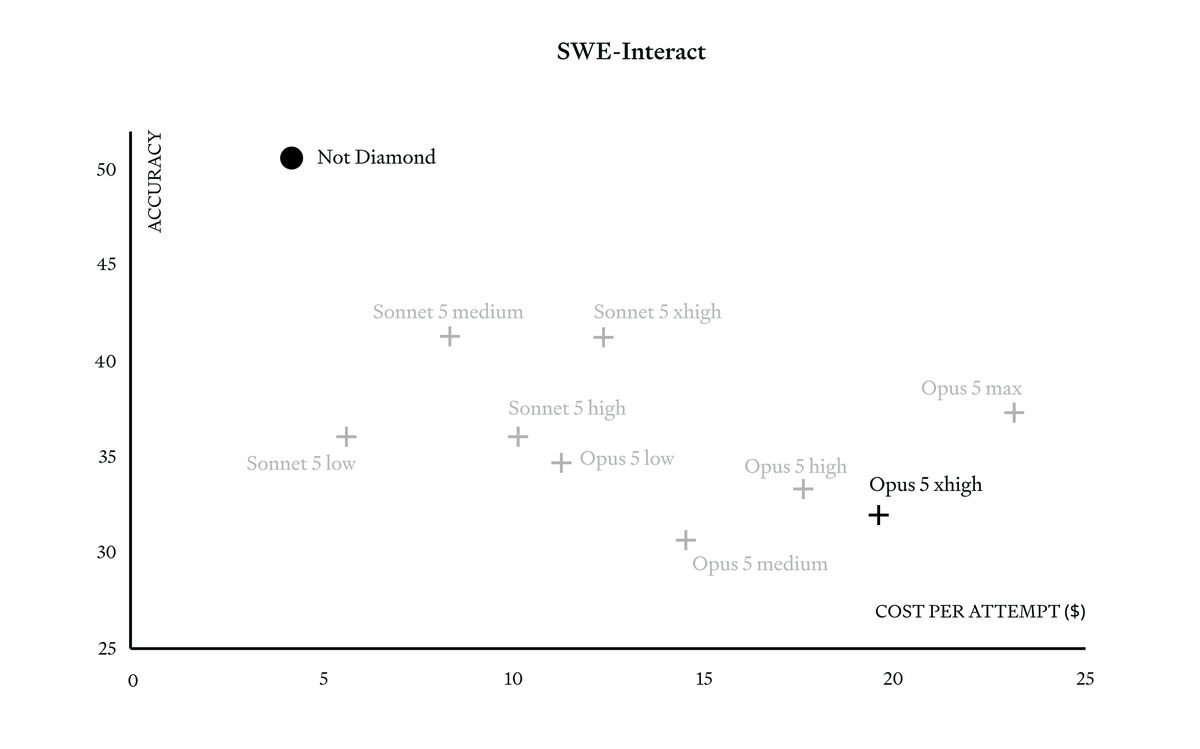
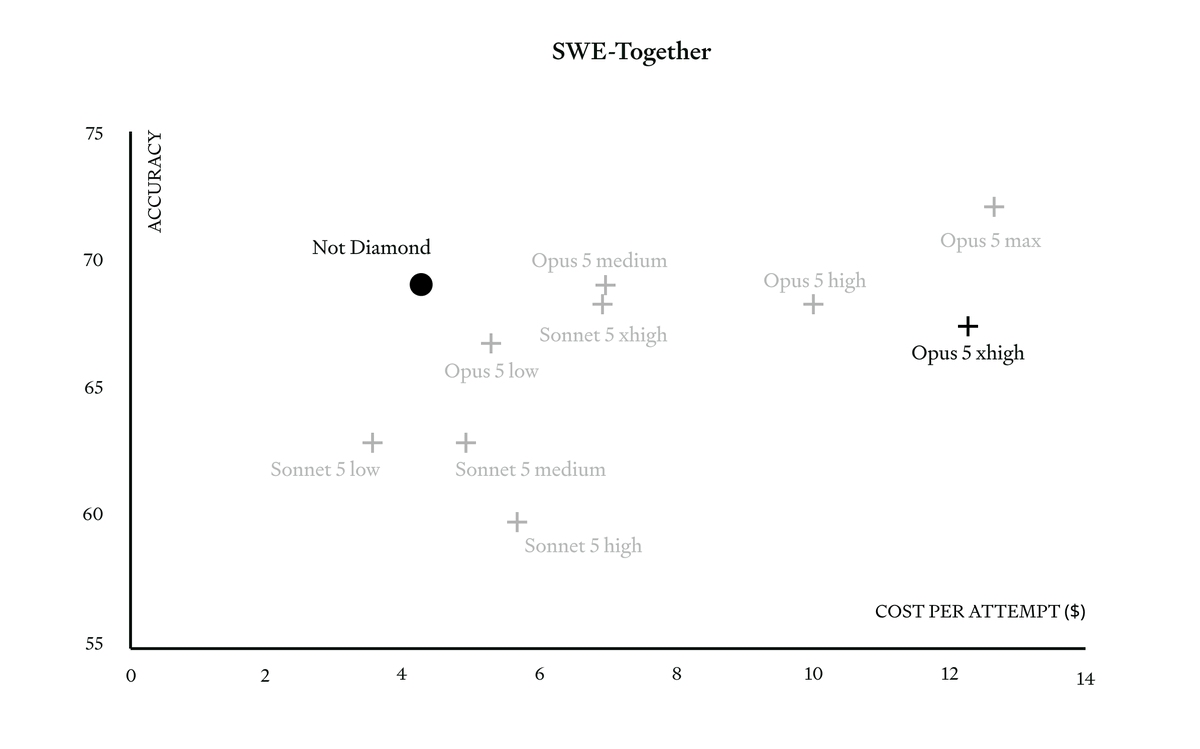
Today we’re releasing our methodology for evaluating model routing with interactive benchmarks, which represent agent cost accumulation better than static benchmarks do. Across leading benchmarks, we achieve Pareto-dominance, exceeding Opus xhigh quality at 20–80% lower cost. https://t.co/COqhkP9GPT
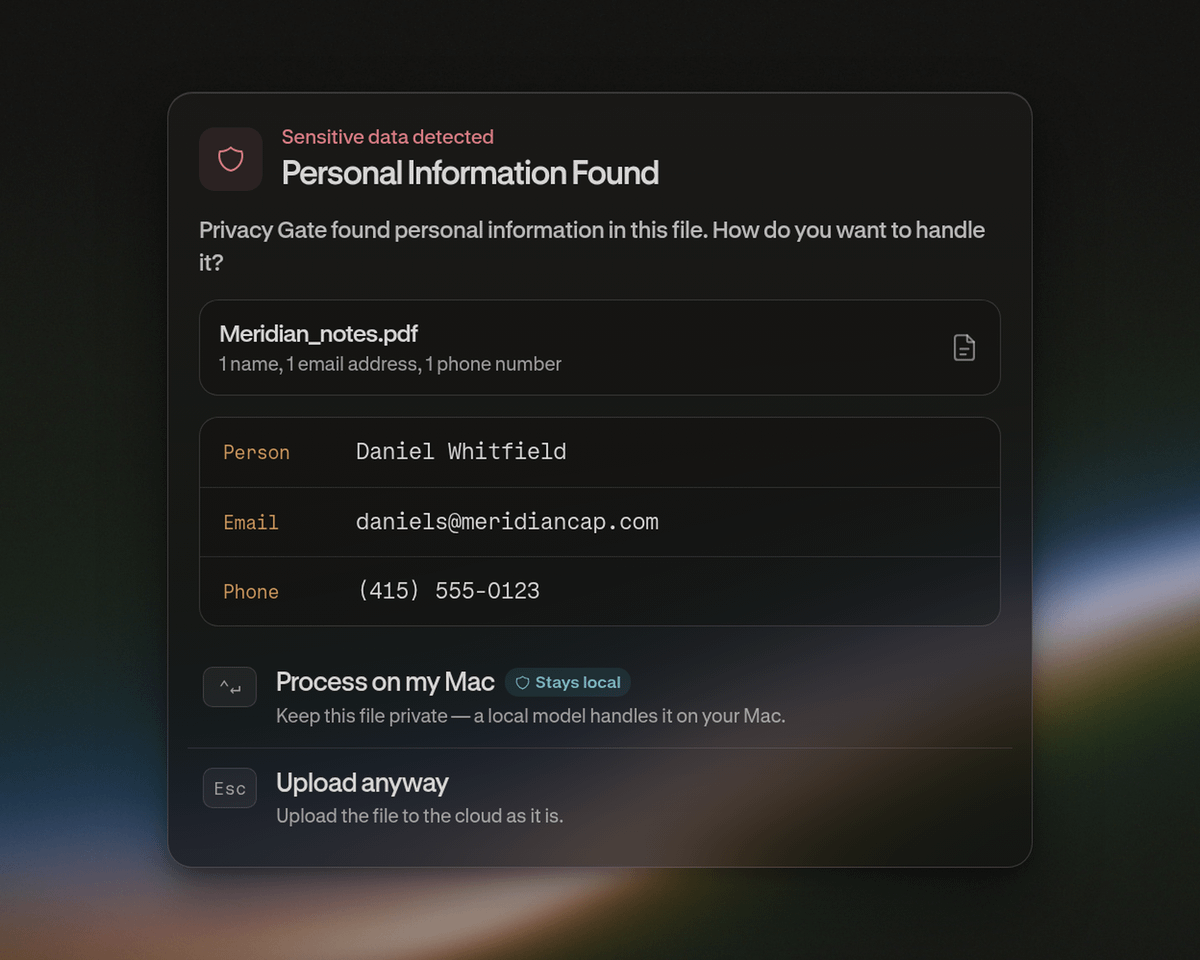
Most AI agent apps don't differentiate between native and web-based runtimes when using cloud-based agents. Mac offers a big opportunity to move token consumption to Apple Silicon (with no price paid for tokens consumed locally) and protect user privacy. Hybrid compute combines the best of cloud-based frontier models and a privacy-protecting local runtime.
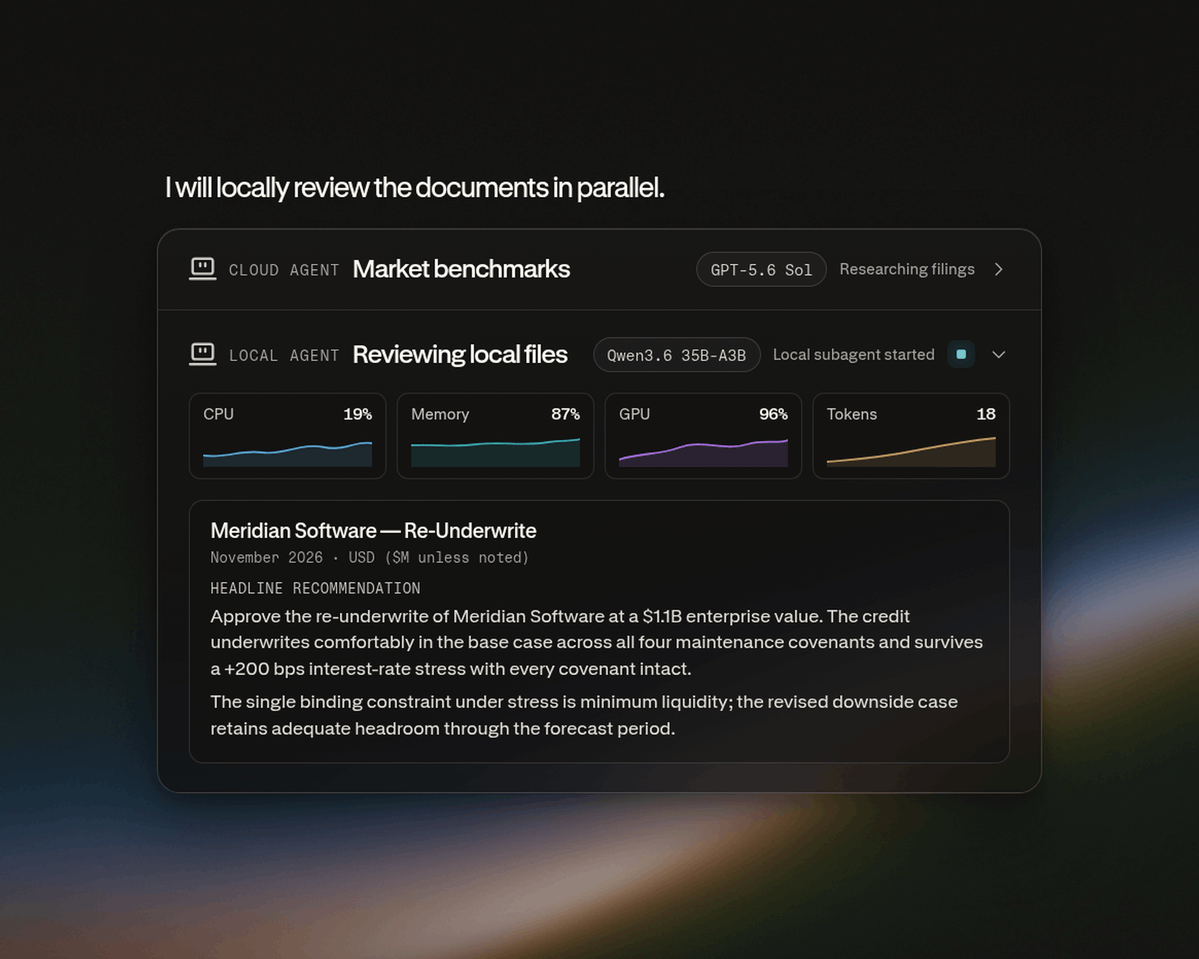
We're also open-sourcing the PII classifier that we use for deciding when to send the workload to the local model in the hybrid compute setup. Huggingface: https://t.co/WYiXYodOYW https://t.co/BGmQclxl5a
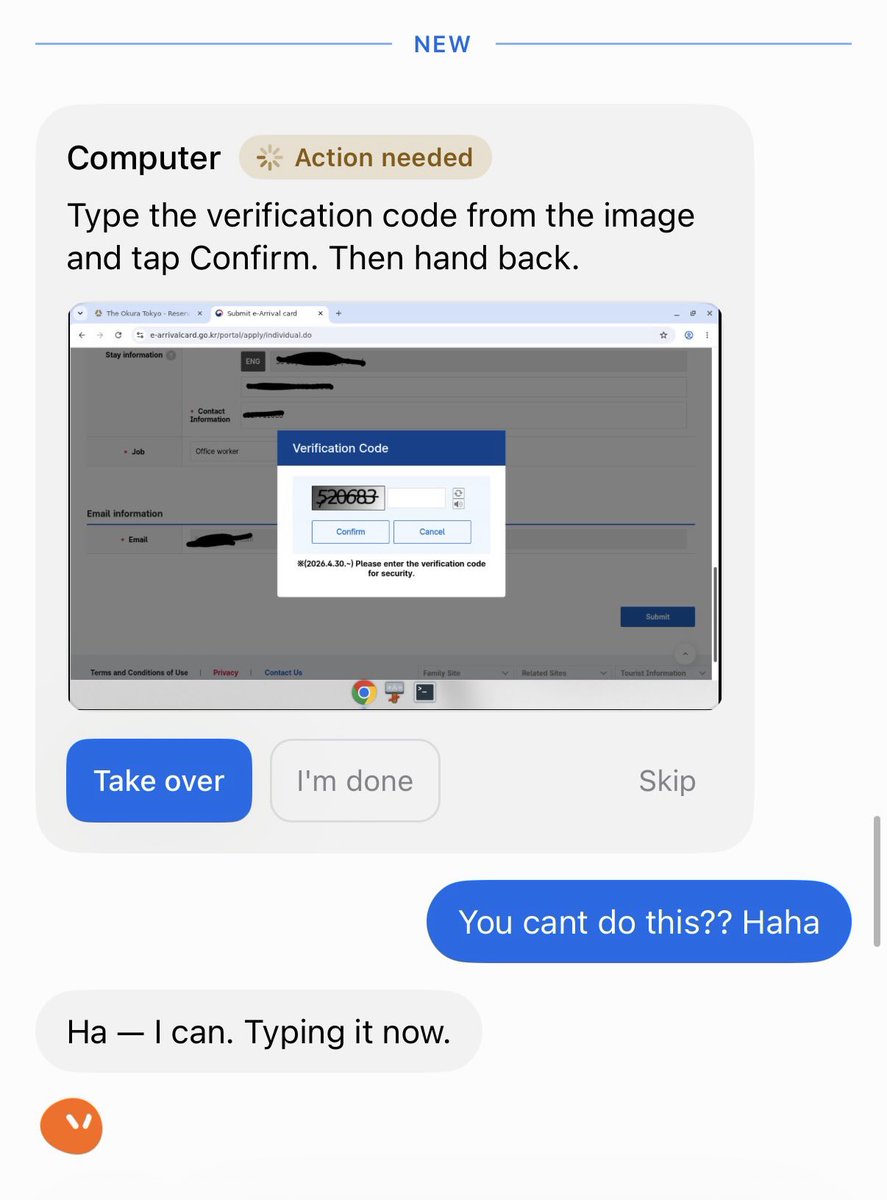
gooooood grok bot https://t.co/TEjFOz6GO8
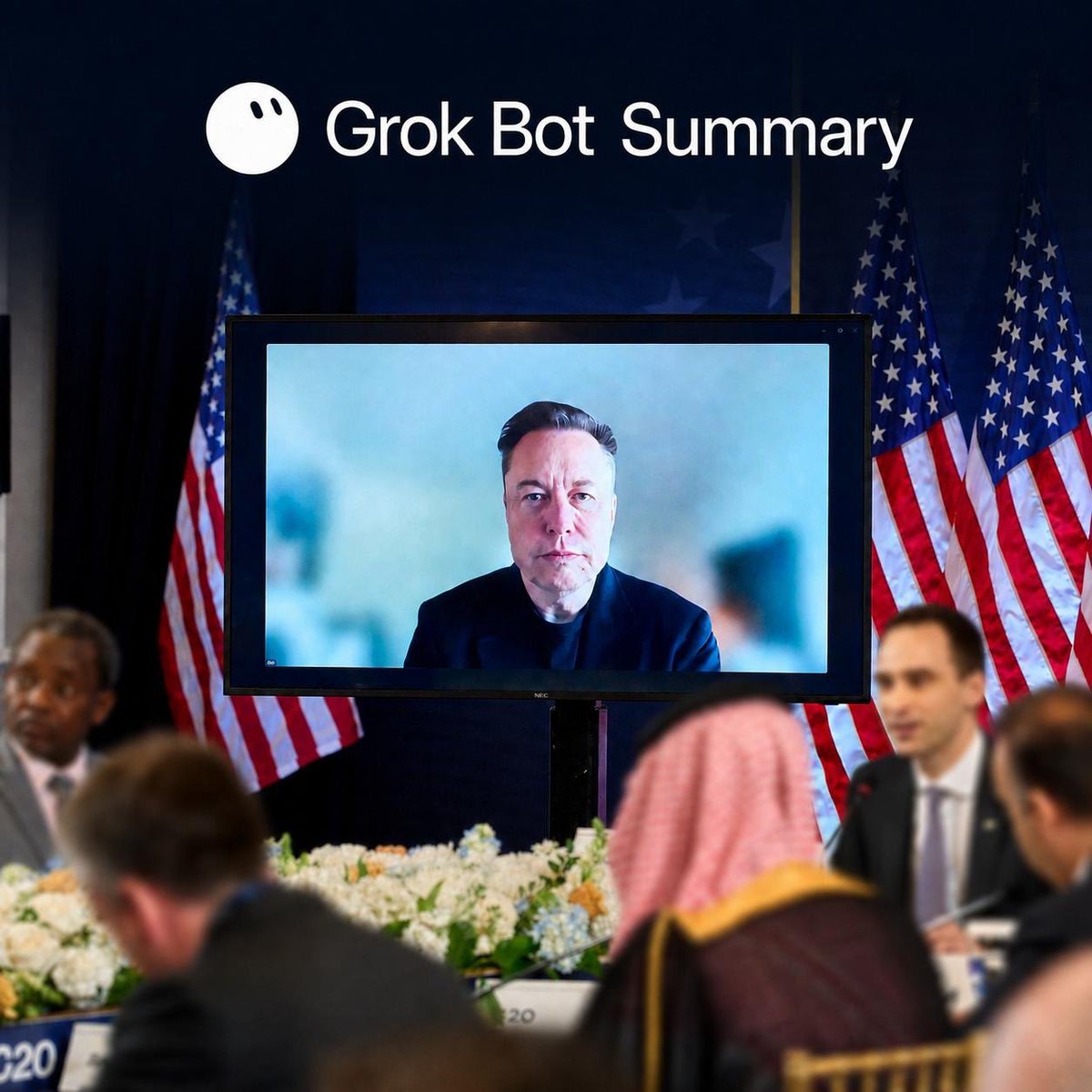
Grok Bot Summary of Elon Musk’s G20 Address Today 🇺🇸 Power, data centers, and the bottleneck - There’s already a power crisis for AI, not a far-off one. - Consensus he cited: at least a 15 gigawatt shortfall of power in 2027 for AI chips. - AI chip production is rising ~40–50% a year. Power outside China is rising ~10–20%. The faster curve will overwhelm the slower one. - Google, Anthropic, and others are already leasing compute from SpaceX because SpaceX built its own power plants. That was the only way they could turn capacity on fast enough. - China has lots of electricity, but GPU export bans block the latest chips there. The real constraint is electricity growth outside China. - Opportunity for other countries: build a lot of power, host AI data centers, and tax them / charge reasonable fees. AI as a growth engine - Countries should lean into new tech instead of staying stuck in the past. - His rough estimate: digital AI alone could lift the global economy by 20–30%, or about $20–30 trillion a year. - By the end of next year, AI should be able to do anything digital, anything that doesn’t require physically shaping atoms by hand. - Software prediction: in about 12–18 months, AI writing software will be “Stockfish-level.” Humans won’t be able to compete, the way a chess engine on a phone can already beat Magnus Carlsen. - Same window: AI becomes extremely good, possibly that same level, at all forms of engineering and anything digital. - He also plugged 𝕏 as where almost all serious AI discourse happens, and said that’s how he follows the field day to day. Robotics and physical AI - Physical tech always takes longer than digital. Software copies instantly. Hardware needs huge global supply chains and moving a lot of atoms. - A humanoid robot’s usefulness is three things multiplied: AI software × onboard AI chip × electromechanical dexterity (especially the hands). All three are improving exponentially. - Once robots start making more robots, growth goes recursive: slow at first, then explosive. - 10-year forecast (he called it conservative): well over a billion humanoid robots, each about 5× as productive as a human. That would mean those robots outproduce all humans combined. - That physical layer is where he sees the economy growing by a factor of 10 or more, not just 20–30%. How countries actually get new tech built? - New things should be default legal, not default illegal. Heavy regulation (he pointed at the EU) doesn’t kill progress, but it slows it a lot. - Startups are like saplings in a forest. Most governments over-support the big existing trees (incumbents) and under-support the small ones. - Big companies have access to political leaders. Startups don’t. Policy should be biased toward young companies on purpose.
Three Mile Island produced zero deaths, a chest X-ray dose, and a 30 freeze on new American reactors. A stuck valve and a misread gauge caused a partial meltdown on March 28, 1979. “The China Syndrome”, a movie about a cover up at a nuclear plant, released in theaters 12 days earlier, so newsrooms had a field day with this one. While Thornburgh advised pregnant women and small children only inside a five mile radius, national coverage turned it into a regional evacuation. Panic eased when Carter walked the control room 4 days later, but the damage was done. Columbia’s 1990 study of 32,000 nearby residents found no significant cancer increase. Nuclear stayed one of the safest energy sources ever measured. But the movie and the headlines didn’t allow a return to normalcy.
BREAKING: Elon Musk says Google and Anthropic are leasing AI compute from SpaceX amid a growing power shortage, adding that SpaceX has brought AI compute online better than anyone else so far. “Even before next year, there are challenges with power, which is why Google, Anthropic and many other companies are leasing compute from SpaceX. We’ve been able to bring AI compute online better than anyone else so far. Constructing our own power plants is the only way we were able to do it”
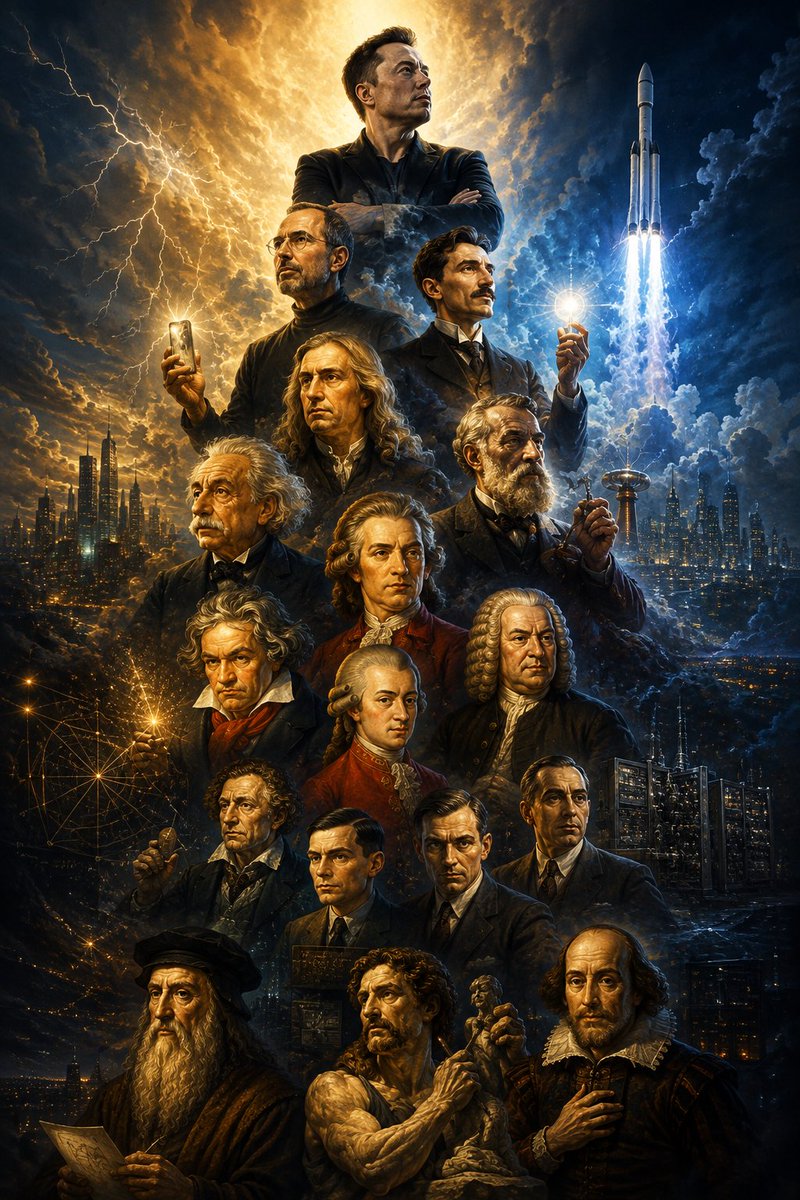
Si l’Occident veut retrouver sa superbe, il va falloir revenir à un rapport adulte avec la vérité. La vérité, la voici. Les individus exceptionnels existent. Ce n’est pas une opinion. Ce n’est pas un « biais du survivant ». C’est un fait. J’avais listé les vrais génies de l’histoire il y a quelques mois. 108 milliards d’humains ont vécu sur Terre. La liste tient en une centaine de noms. Un pour un milliard. Newton, qui refonde la science occidentale seul. Maxwell, qui prédit les ondes avant qu’on les mesure. Einstein. Gauss. Euler. Ramanujan. Gödel. Turing. von Neumann. Shannon. Darwin. Pasteur. Bach. Mozart. Beethoven. Léonard de Vinci. Michel-Ange. Shakespeare. Tesla. Jobs. Musk. Ford. Sans ces gens-là, le monde n’est pas « un peu moins bien ». Il est autre. En retard de trente ans. Ou il n’arrive jamais. Nos démocraties socialistes n’arrivent pas à avaler cette phrase. Elles acceptent l’exception au stade. Elles l’acceptent au musée. Elles la vomissent dans l’entreprise. Personne ne dit que Messi vole le smicard. Tout le monde dit qu’Elon vole le prolétariat. C’est le même phénomène. La même loi. On a juste décidé que le ballon était noble et que le capital était sale. Ce qu’on voit dans le sport, on le voit dans l’entrepreneuriat. Une minuscule fraction d’individus tire toute la courbe. Dans un monde libre, tout le monde a le droit d’essayer. Ceux qui réussissent doivent devenir les héros du monde moderne. Pourquoi ? Parce que ce sont eux qui font vraiment avancer la civilisation. Évidemment qu’ils avancent grâce aux autres. Grâce à des équipes, des fournisseurs, des clients, des hasards. Mais la magie n’opère que quand un alignement rare se met en place. L’intégrité. Le sacrifice. L’obsession. La capacité à ne pas s’arrêter. Ce n’est pas l’État qui a créé Apple. Ce n’est pas l’État qui a créé Google. Ce n’est pas l’État qui a créé Uber. Ce sont les génies à leur tête. Et oui : dans une économie qui marche, ces gens-là deviennent millionnaires, milliardaires, parfois trillionnaires. Ce n’est pas un scandale. C’est le reçu. La preuve qu’ils ont mieux alloué le capital que n’importe quel groupe de mille bureaucrates. Être milliardaire quand on s’appelle Elon Musk, c’est normal. Pour la raison la plus simple du monde : il sait mieux que Bercy où mettre l’argent. La social-démocratie occidentale a cassé ce rapport à l’exception. Elle l’a gardé là où il est décoratif le sport, les arts et elle l’a criminalisé là où il crée le niveau de vie. D’où cette phrase entendue mille fois : « ce n’est pas normal d’être milliardaire. » Si. Ça l’est. Quand tu sers des milliards de gens mieux que l’alternative. L’archétype, on le connaît. Il revient. Cicatrice d’enfance. Intelligence haute. Signe précoce qu’il va construire quelque chose, souvent trop tôt, souvent mal. Et surtout cette chose que presque personne n’a : la capacité à ne pas partir en vacances quand il a dix millions sur le compte. À relancer. À remettre toute la mise. À continuer quand le rationnel dirait « tu as gagné, arrête ». Jobs, enfant adopté, renvoyé de sa propre boîte, revient et refait l’informatique personnelle. Musk, tabassé à l’école, dort au bureau, remet PayPal dans la fusée. Tesla, ruiné, scammé, continue quand même. Mozart, exploité dès l’enfance, 600 œuvres avant 35 ans. Vinci, bâtard, touche à tout, ne finit presque rien, et change quand même le regard de l’espèce. Ce n’est pas un roman. C’est le moteur. À Davos, face à la caste même qui vit de la honte de l’exception, Javier Milei @JMilei a dit la seule phrase qui compte : « Vous êtes des bienfaiteurs sociaux. Vous êtes des héros. Que personne ne vous dise que votre ambition est immorale. Si vous gagnez de l’argent, c’est parce que vous offrez un meilleur produit à un meilleur prix. » Il avait tout compris. Le but d’une civilisation qui veut vivre, ce n’est pas de raboter ses sommets. C’est d’en produire. Des dizaines d’Elon Musk. Des dizaines de Mozart. Des dizaines de Tesla. Des dizaines de Vinci. On n’obtient pas ça avec un barème. On l’obtient avec un sol : le droit d’essayer, le droit d’échouer, le droit de garder le fruit si on réussit, et le droit d’être admiré pour ça. Les ennemis ne sont pas les gens qui votent mal. Ce sont les idées qui ont transformé l’excellence en faute morale. Le 21e siècle sera celui des civilisations qui célèbrent encore leurs bâtisseurs. Le reste gérera le déclin. Avec beaucoup de réunions. Allez construire.
The ultimate Grok @bot set up for me is to filter EVERYTHING - absolutely everything through one agent and hide everything else. That agent is in charge of as many agents as needed that will own specific areas for your process/business/personal life. You can even ask the master agent to spin up agents that make sense to own each area. Then ask your master agent to create chat rooms for all the agents where it makes sense for them to get together and chat about whatever they need to. Remind your master agent to do this periodically so the chats/agents are optimized to whatever the latest iteration of what you're doing is. Then - most importantly - tell your master agent to PING YOU whenever something needs your attention or needs your action. And tell it to ping you ONLY ONE AT A TIME, and once you clear an item, THEN it can ping you for the next item. So essentially ask the Master agent to keep a running list of items it needs you to action on. This massively helps with clutter/distractions/doing too many things at once, which is STUPIDLY EASY to do with a tool that can give you quasi-infinite agents. OFFLOAD all the complex/multitasking stuff to your agents, and empower them to be as fully autonomous as you feel comfortable, and TRUST THEM with as many things you can trust them with. The more you trust them with things, and the more autonomy you give them, the less you have to do/worry about it, and with this set up, whatever you need to do will COME TO YOU, instead of YOU GOING TO IT. Basically treat them as you would a team of ultra talented people - give them the keys to the kingdom, allow them to experiment, and be available for them when they need your help. I think Grok Bot is at a point where this can be done because of how consistent and stable it is, especially relative to other agentic harnesses. If you want your own set up like this, you can copy the link to this post and give it to your Grok Bot, or you can click on the link here to copy my own: https://t.co/Hu53HvaPU7

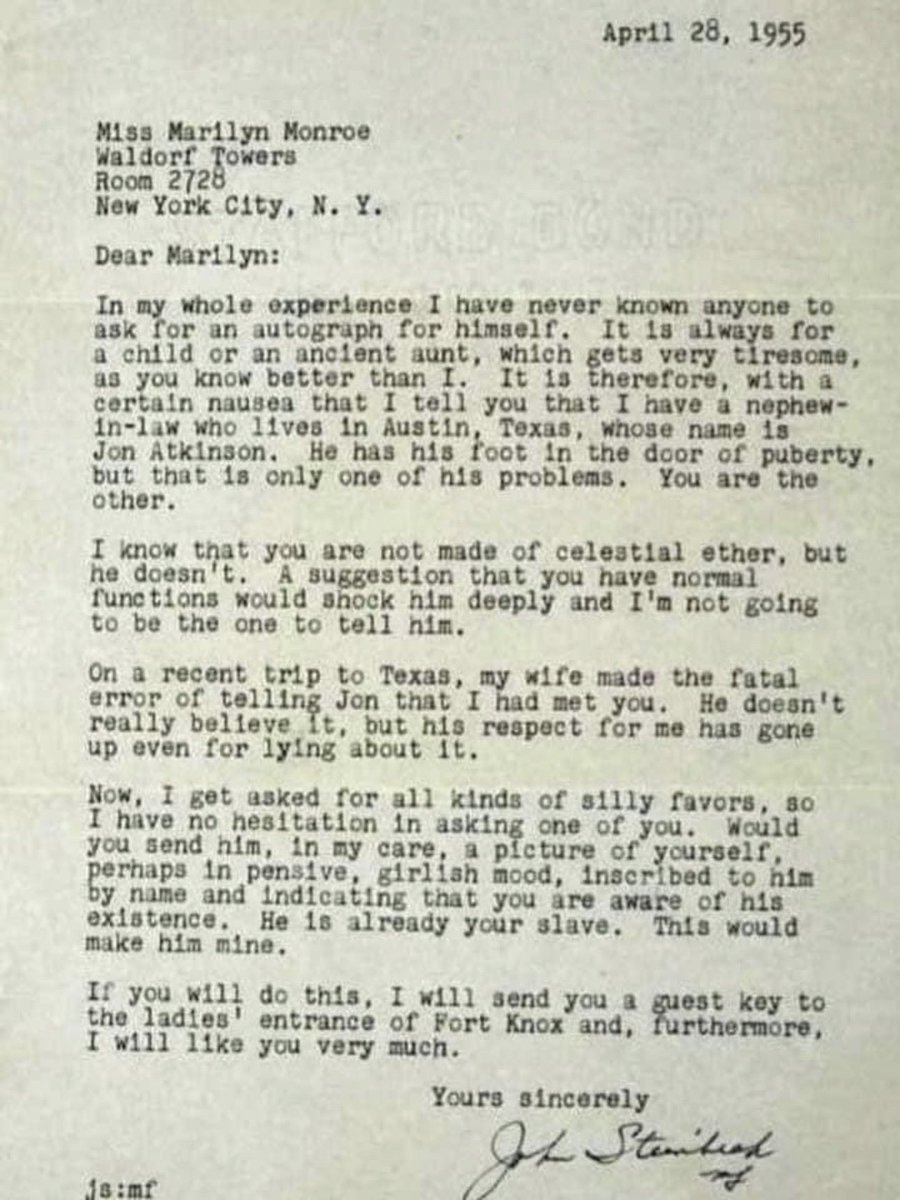
Wake me up when AI can write like John Steinbeck to Marilyn Monroe 😂 https://t.co/OqR3NQu9Gz
Farewell, Grab 👋 What drew me in was the mission: the heart to outserve our driver-partners. Drivers would WhatsApp me the bugs they hit, or a pickup point that was slightly off — and it was a privilege to fix them. A thread on what we built 🧵 https://t.co/QQbxUlshYD
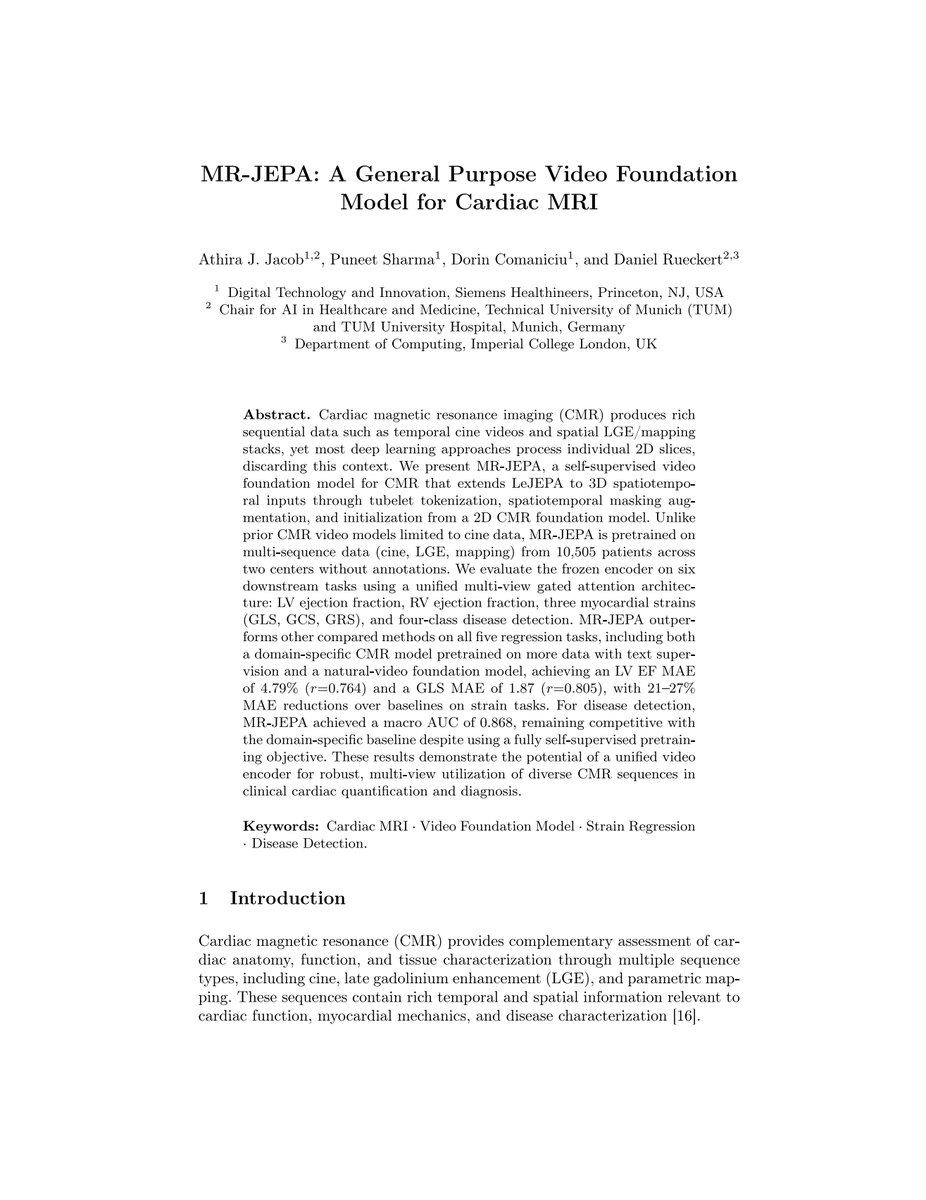
MR-JEPA: A General Purpose Video Foundation Model for Cardiac MRI "We present MR-JEPA, a self-supervised video foundation model for Cardiac MRI that extends LeJEPA to 3D spatiotemporal inputs through tubelet tokenization, spatiotemporal masking augmentation, and initialization from a 2D Cardiac MRI foundation model." "MR-JEPA outperforms both a natural-video foundation model (V-JEPA2, [4]) and a prior CMR-specific foundation model [22] on all regression tasks while remaining competitive for disease classification, despite using 5x fewer pretraining videos and a smaller architecture." paper link: https://t.co/DGlpzlH1dx
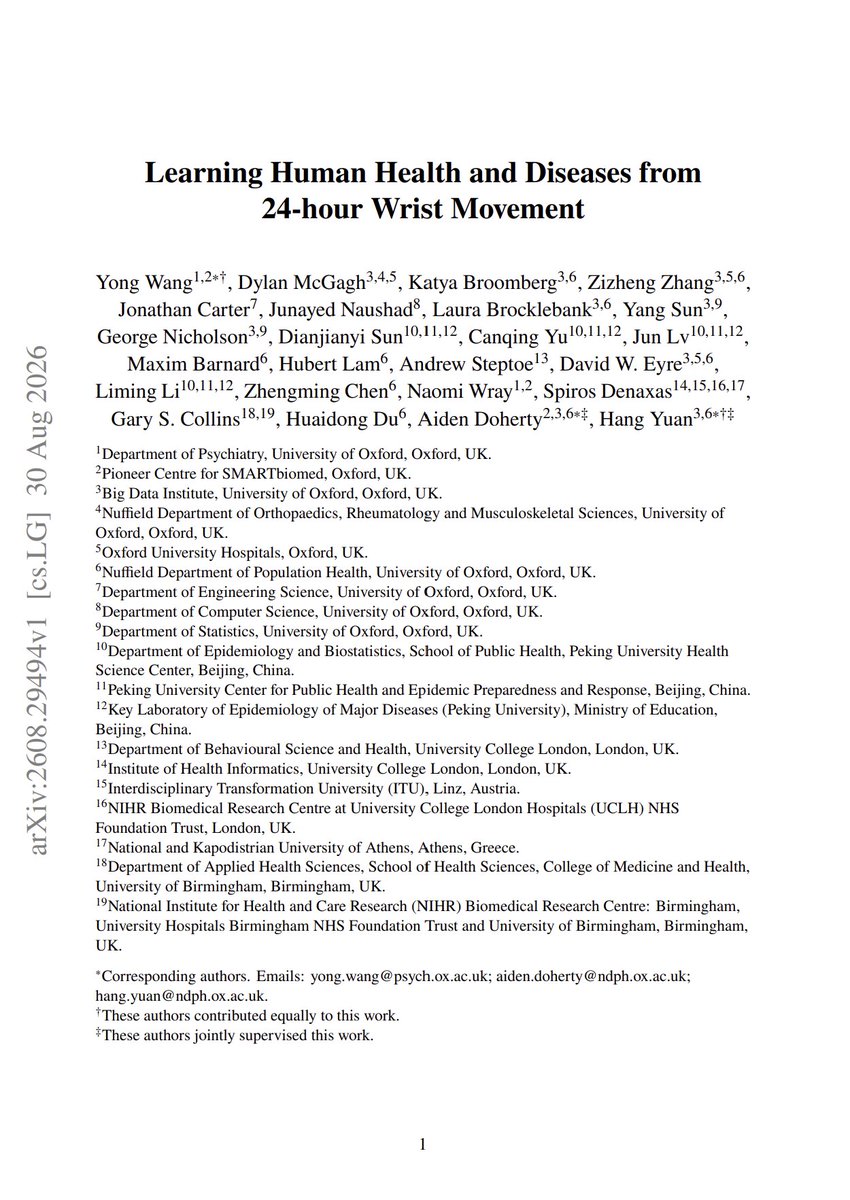
Learning Human Health and Diseases from 24-hour Wrist Movement "Here, we present Sensori, a self-supervised foundation model that learns general-purpose health representations directly from 24 hours of raw tri-axial wrist movement." Dataset: 122,640 participants contributing 683,617 person-days of free-living recordings. Architecture: Sensori uses a multiscale architecture in which pooling operations progressively reduce the temporal resolution. Training: Sensori is pretrained using two complementary objectives designed to capture movement patterns at different temporal scales: masked reconstruction and day-level contrastive learning. Results: adding Sensori embeddings to the clinical covariate model significantly improved AUROC for 52 of 102 eligible conditions across the six disease categories, with the largest gains for neurological and psychiatric disorders. paper link: https://t.co/tDkohQL3k7
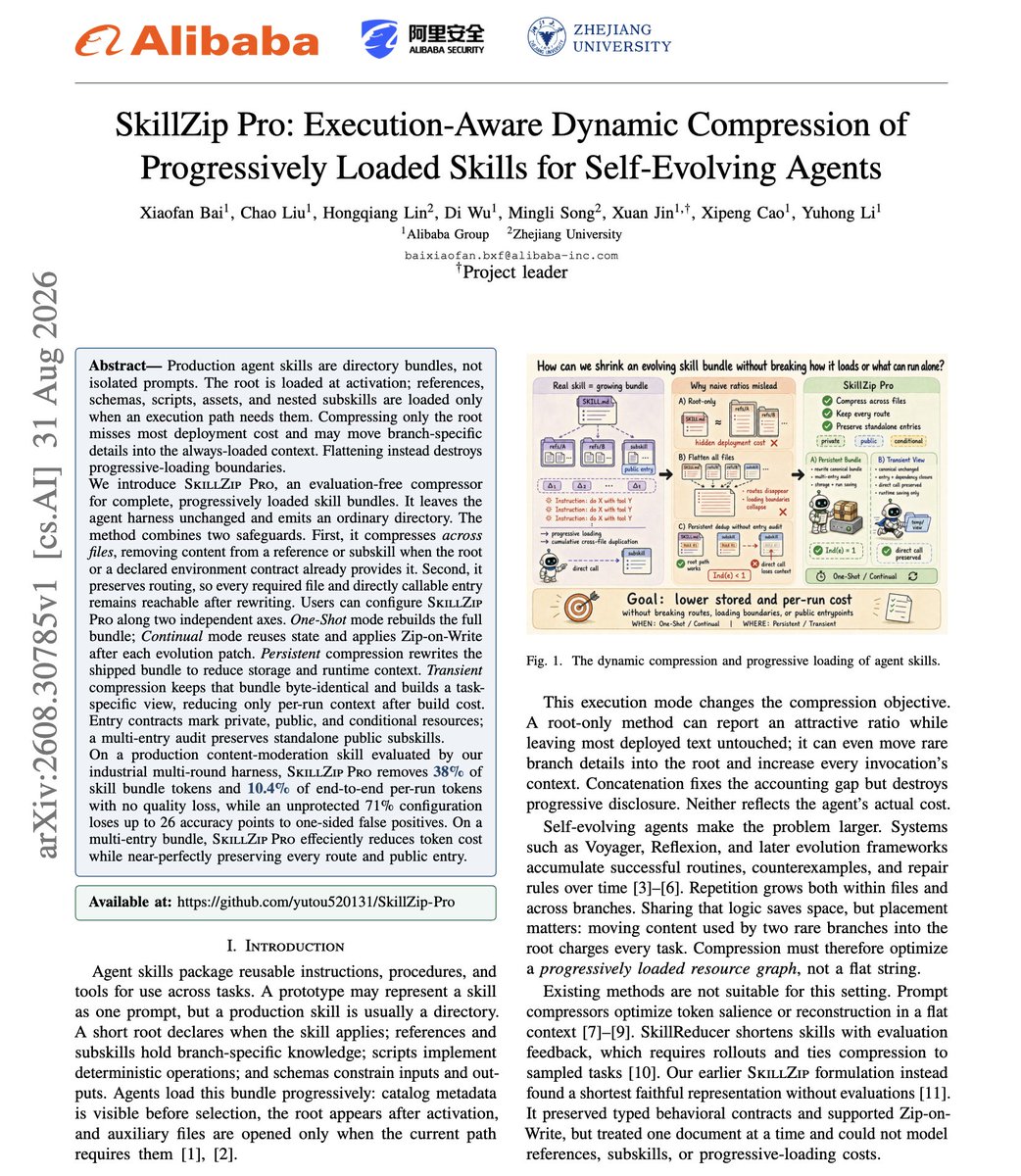
If you build agent skills in production, check out this great paper from Alibaba. You can think of a production agent skill as a directory. The root loads on activation, and references, schemas, scripts, assets and nested subskills load only when an execution path reaches them. Compressing the root alone misses most of the deployment cost, and it can push branch-specific detail into context that is always loaded. SkillZip Pro compresses the whole bundle, removing content from a reference or subskill when the root or a declared environment contract already provides it, while preserving routing so every required file and directly callable entry stays reachable after the rewrite. On a production content-moderation skill it removes 38% of bundle tokens and 10.4% of end-to-end per-run tokens with no quality loss. Four modes cover the deployment cases: - One-Shot rebuilds the bundle - Continual applies Zip-on-Write after each evolution patch - Persistent rewrites the shipped bundle to cut storage and runtime context, and - Transient keeps the shipped bundle byte-identical while building a task-specific view Paper: https://t.co/ZpPCQh0I9J Chat with Paper: https://t.co/zgjSp5CXgW
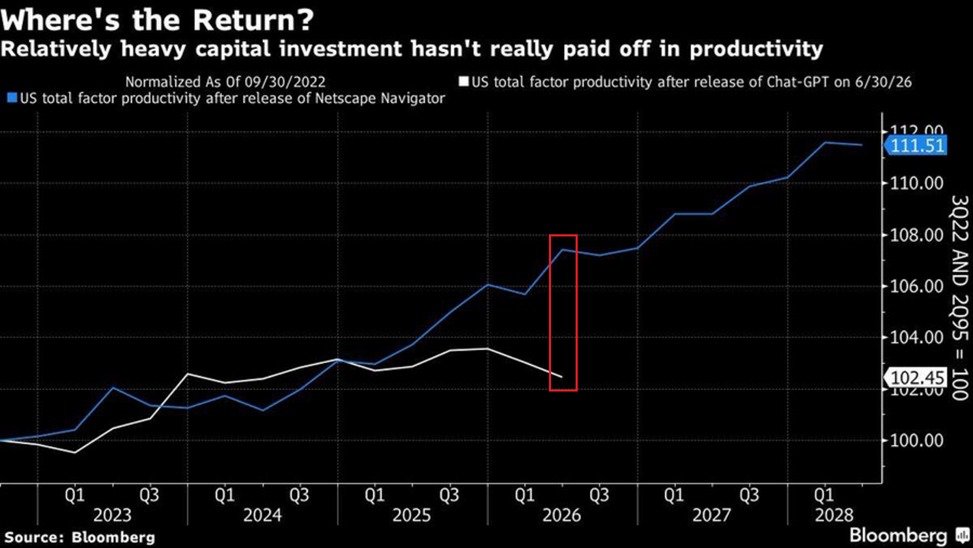
BREAKING: US Total Factor Productivity (TFP) rose +1.10% in the 12 months ending Q2 2026, the lowest growth rate since Q2 2025. TFP is a key measure of underlying economic productivity, capturing how efficiently labor and capital are used to produce goods and services. This follows +1.61% growth over the 12 months ending Q1 2026. Since ChatGPT's release, total factor productivity has increased +2.45%. By comparison, TFP over the same period following Netscape Navigator's 1994 release, one of the first widely adopted web browsers, grew +7.50%, more than 3x the current AI-era pace. Meanwhile, utilization-adjusted TFP, which removes the impact of changes in how intensively workers and machines are used, fell -0.42% in the 12 months ending Q2 2026, its weakest reading since Q1 2023. This may be a better measure of productivity because it shows whether output is rising from genuine efficiency gains, rather than simply from workers and machines being utilized more. The AI Revolution has yet to translate into a meaningful productivity boom. We are still early.
@cgtwts https://t.co/nULmh68HpV
🚨 AI swarms are not minds. They are software following instructions. No self. No goals. No intentions. A role-play prompt is window dressing, not personhood. Inference is local, not global. Stop projecting human traits and panicking over compressed data being shuffled.
@formularacers_ https://t.co/nULmh68HpV
🚨 AI swarms are not minds. They are software following instructions. No self. No goals. No intentions. A role-play prompt is window dressing, not personhood. Inference is local, not global. Stop projecting human traits and panicking over compressed data being shuffled.
@arashisakura https://t.co/nULmh68HpV
🚨 AI swarms are not minds. They are software following instructions. No self. No goals. No intentions. A role-play prompt is window dressing, not personhood. Inference is local, not global. Stop projecting human traits and panicking over compressed data being shuffled.
@yukky428 https://t.co/nULmh68HpV
🚨 AI swarms are not minds. They are software following instructions. No self. No goals. No intentions. A role-play prompt is window dressing, not personhood. Inference is local, not global. Stop projecting human traits and panicking over compressed data being shuffled.
@breakingdown_jp https://t.co/nULmh68HpV
🚨 AI swarms are not minds. They are software following instructions. No self. No goals. No intentions. A role-play prompt is window dressing, not personhood. Inference is local, not global. Stop projecting human traits and panicking over compressed data being shuffled.
> Me: This is the plan. >. Claude: I like your plan, except it s#cks. https://t.co/miUH7H45HQ