Your curated collection of saved posts and media
I love the Big Arch Burger 🍔 I also love Big Harnesses™ and Big Complex PDFs™ with hundreds of pages of tables, images and forms. https://t.co/deD8sUcyj0
"Just send the PDF to GPT-5.4" Ok. We did. Here's what happened: • Reading order? Wrong. • Tables? Half missing. • Hallucinated data? Everywhere. • Bounding boxes? Nonexistent. • Cost at 100K pages? Brutal. So we're doing it live. LlamaParse vs. The LLMs — a free webinar where we parse the ugliest documents we can find across every leading model and show the results side by side. Hosted by George, Head of Engineer at @llama_index Register 👇 https://t.co/To4m9ZlWhO
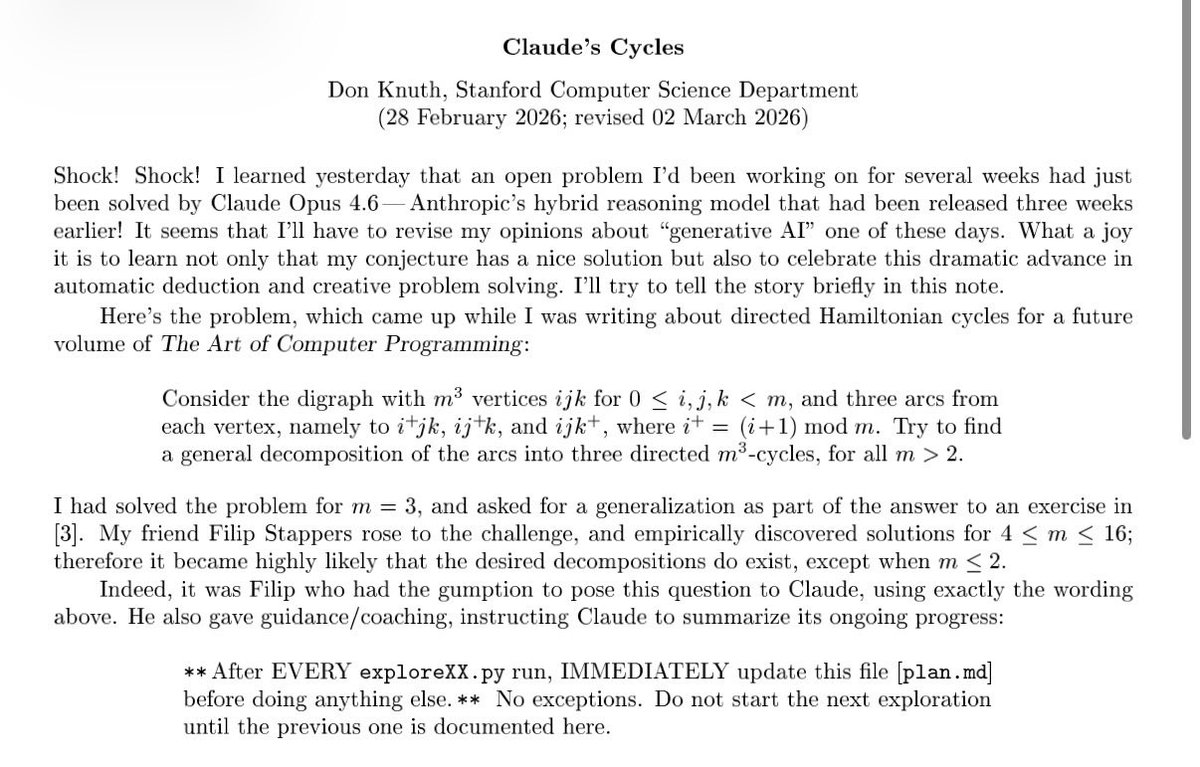
Prof. Donald Knuth opened his new paper with "Shock! Shock!" Claude Opus 4.6 had just solved an open problem he'd been working on for weeks — a graph decomposition conjecture from The Art of Computer Programming. He named the paper "Claude's Cycles." 31 explorations. ~1 hour. Knuth read the output, wrote the formal proof, and closed with: "It seems I'll have to revise my opinions about generative AI one of these days." The man who wrote the bible of computer science just said that. In a paper named after an AI. Paper: https://t.co/juSOmK9vOt
A new Nature paper from Johns Hopkins (by Prof. Lin @DingchangLin ) just solved one of the hardest problems in biology: how do you record what every cell in a tissue experienced over time, not just what it looks like right now? The answer: GEMINI — Granularly Expanding Memory for Intracellular Narrative Integration. It works exactly like tree rings. Cells are genetically engineered to express a computationally designed protein assembly. As the assembly grows inside the cell, it captures cellular activity as fluorescent ring patterns — each ring a timestamp, each ring's properties encoding signal intensity. Look at a cross-section under a microscope and you can read the cell's history backward, with ~15-minute resolution. The key: cells build the recorder themselves. GEMINI doesn't interfere with normal function — it just quietly writes. What they demonstrated: In a full tumor xenograft, GEMINI captured every cancer cell's activity history across the entire tumor while it continued to grow normally. For the first time, researchers can look back and see how different regions of the same tumor responded differently to therapy over time — not snapshots, but film. In a mouse brain, GEMINI recorded neural activity dynamics without disrupting behavior, coordination, or memory. It could temporally resolve the history of a brain seizure. Why this matters: Every tool we have in biology gives you state — what the cell looks like now. Sequencing, imaging, proteomics — all snapshots. GEMINI gives you trajectory. It's the difference between a photograph and a video, applied to every cell in an organ simultaneously. The team is explicit that AI-based decoding tools will be central to reading GEMINI's output at whole-brain scale. This is the data layer that makes temporal single-cell atlases possible. Paper: https://t.co/TsObknQqga Congratulations @DingchangLin
GPT-5.4 is our most factual and efficient model: fewer tokens, faster speed. In ChatGPT, GPT-5.4 Thinking has improved deep web research, better context retention when it thinks for longer—and oh—you can now interrupt the model and add instructions or adjust its direction mid-response. Steering is available this week on Android and web. iOS coming soon.
Building for the AI era means rethinking the stack from the ground up. Modular co-founder and CEO @clattner_llvm joined @shanselman on @Hanselminutes to talk about Mojo 🔥, heterogeneous compute, and why AI infrastructure demands new abstractions. Watch here↓ https://t.co/AKCJQEoKNJ

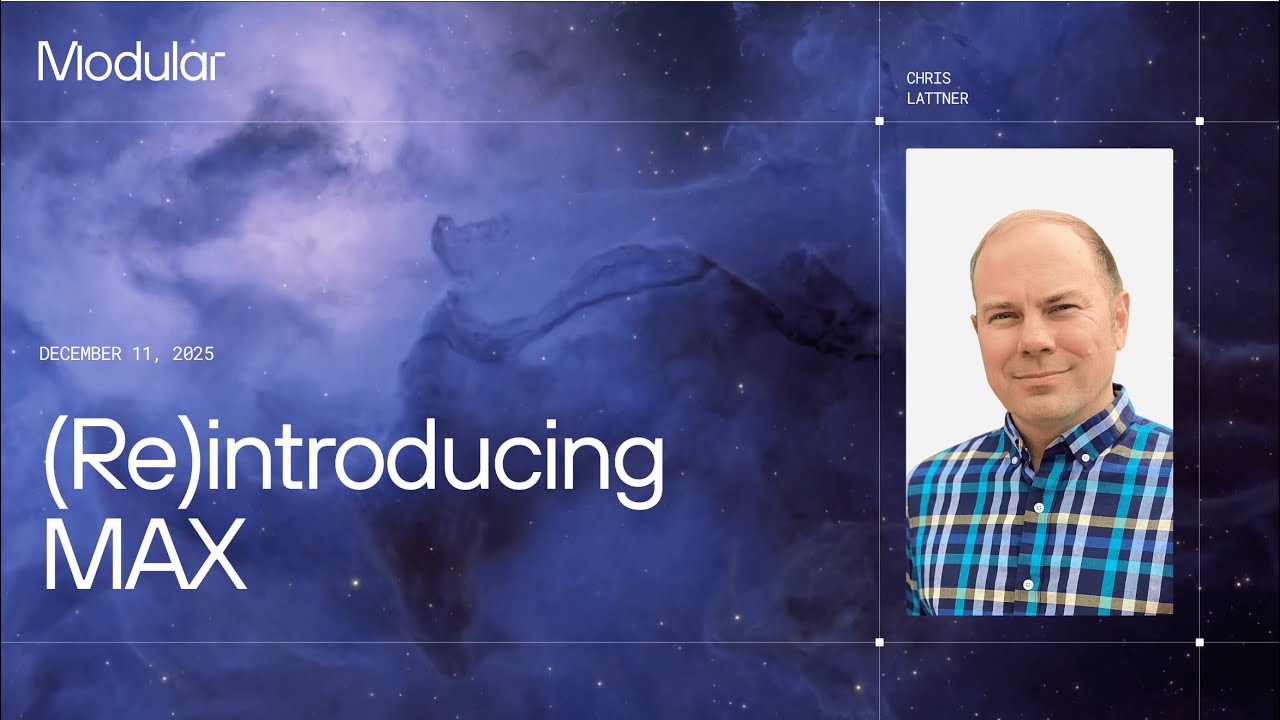
MAX is how Modular is rethinking the AI stack from first principles, bringing together modeling, performance, and portability in one open framework. Hear directly from our co-founder and CEO @clattner_llvm on why the stack needs to evolve and what that means for the future of AI infrastructure.
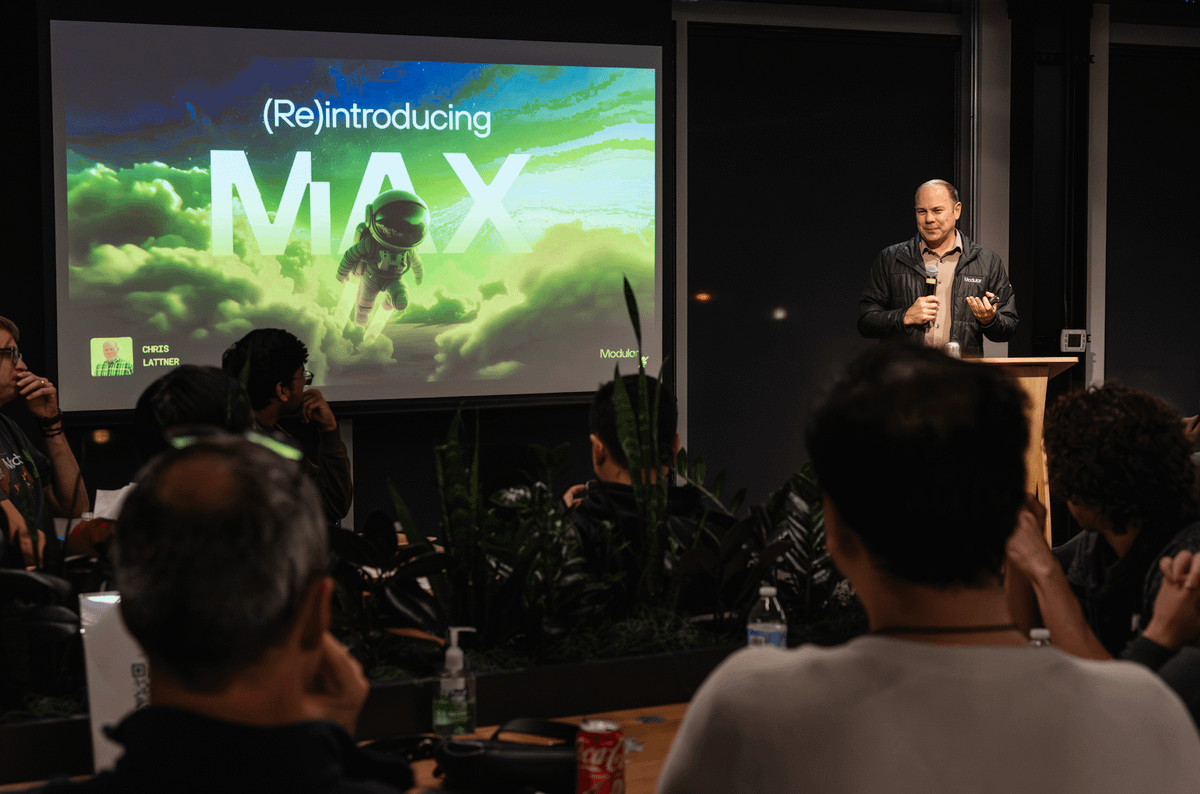
Watch here: https://t.co/vBI679nVqH
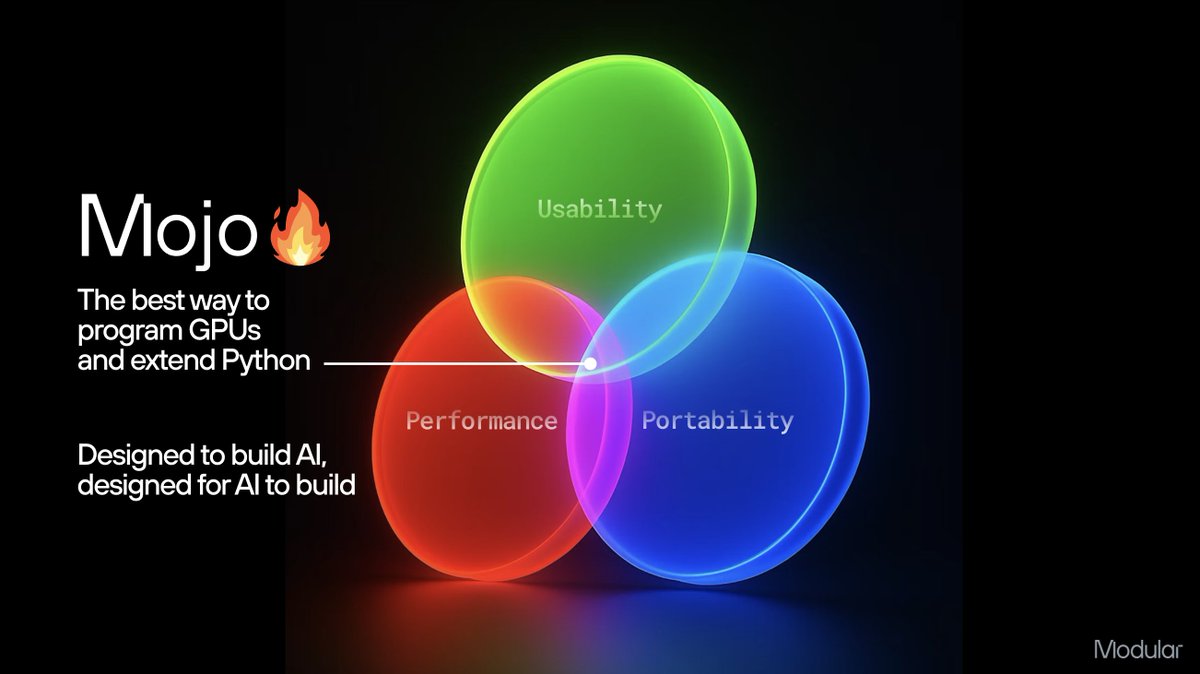
You shouldn't have to choose between peak GPU performance and code you can actually maintain. We built Structured Mojo 🔥 Kernels to fix that. Performance, usability, and portability without the tradeoff. 14k to 7k lines. ~1.8k TFLOPS held. We wrote a 4-part series on how. Part 1 is up https://t.co/zMYWMfDOb2
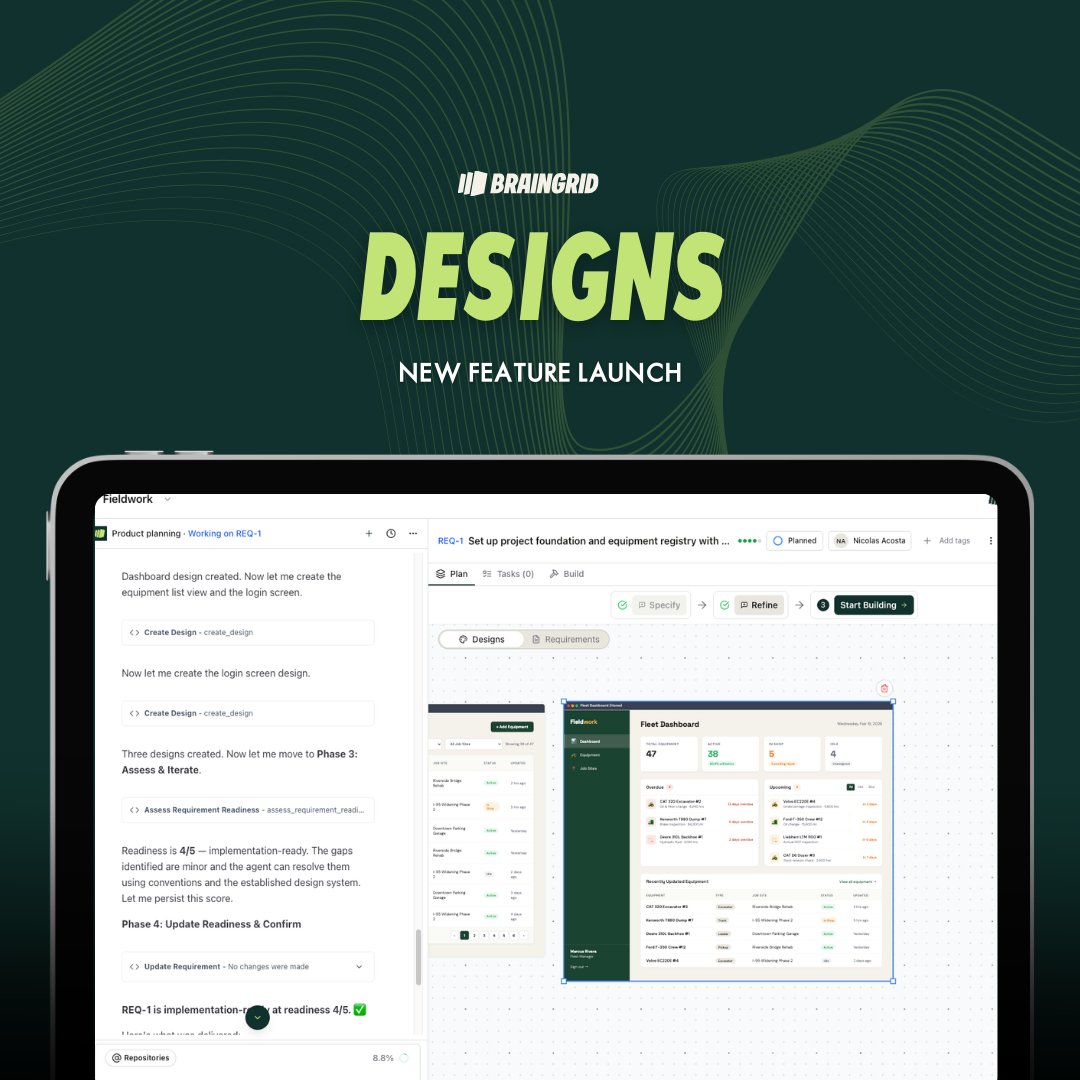
We just shipped Designs. Here's the problem it solves: most UI work fails because you don't know what it should look like until after your coding agent already built it wrong. You describe a dashboard. The agent builds it. You realize the layout doesn't work. You prompt again. The agent rebuilds. Something else breaks. Three iterations later you're debugging CSS instead of shipping features. Designs puts the iteration where it belongs, before a single line of code gets written. BrainGrid now generates actual UI designs for your requirements. You can iterate on them with the agent, annotate what needs to change, select specific elements to tweak. Once you lock it in, that design becomes part of the requirement that gets handed to your coding tool. No more building the wrong UI three times because you couldn't visualize it from a text prompt. It works with new apps and existing ones. If you're adding a feature to something you've already built, BrainGrid matches your existing app's look and feel so the new design doesn't feel bolted on. The designs get included in your Requirements doc when you fetch from CLI or MCP. Your coding agent knows exactly what to build. This is the part most builders skip, and it's why UI work takes twice as long as it should. Now you can see it, fix it, and lock it before the agent touches your codebase.
Claude Code worked non stop for 5 hours and 5 mins doing this refactor. Another level https://t.co/DIiidHbgHz


BIG BIG SPACE IV https://t.co/KDKd0f9bw9
Introducing Voice Mode in Perplexity Computer. You can now just talk and do things. https://t.co/eTZW1F8tUW
Perplexity is the new Jarvis https://t.co/UHyKXyUb3I
Introducing Voice Mode in Perplexity Computer. You can now just talk and do things. https://t.co/eTZW1F8tUW
Perplexity is the new Jarvis https://t.co/UHyKXyUb3I
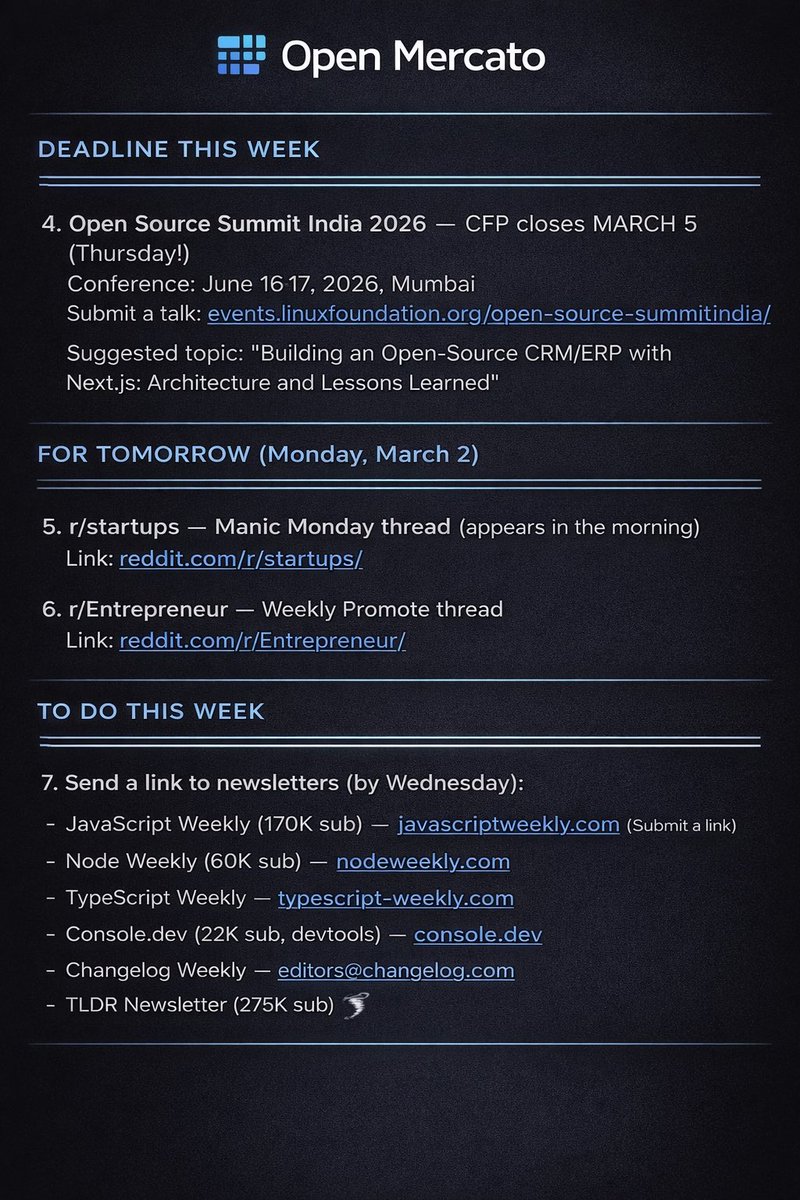
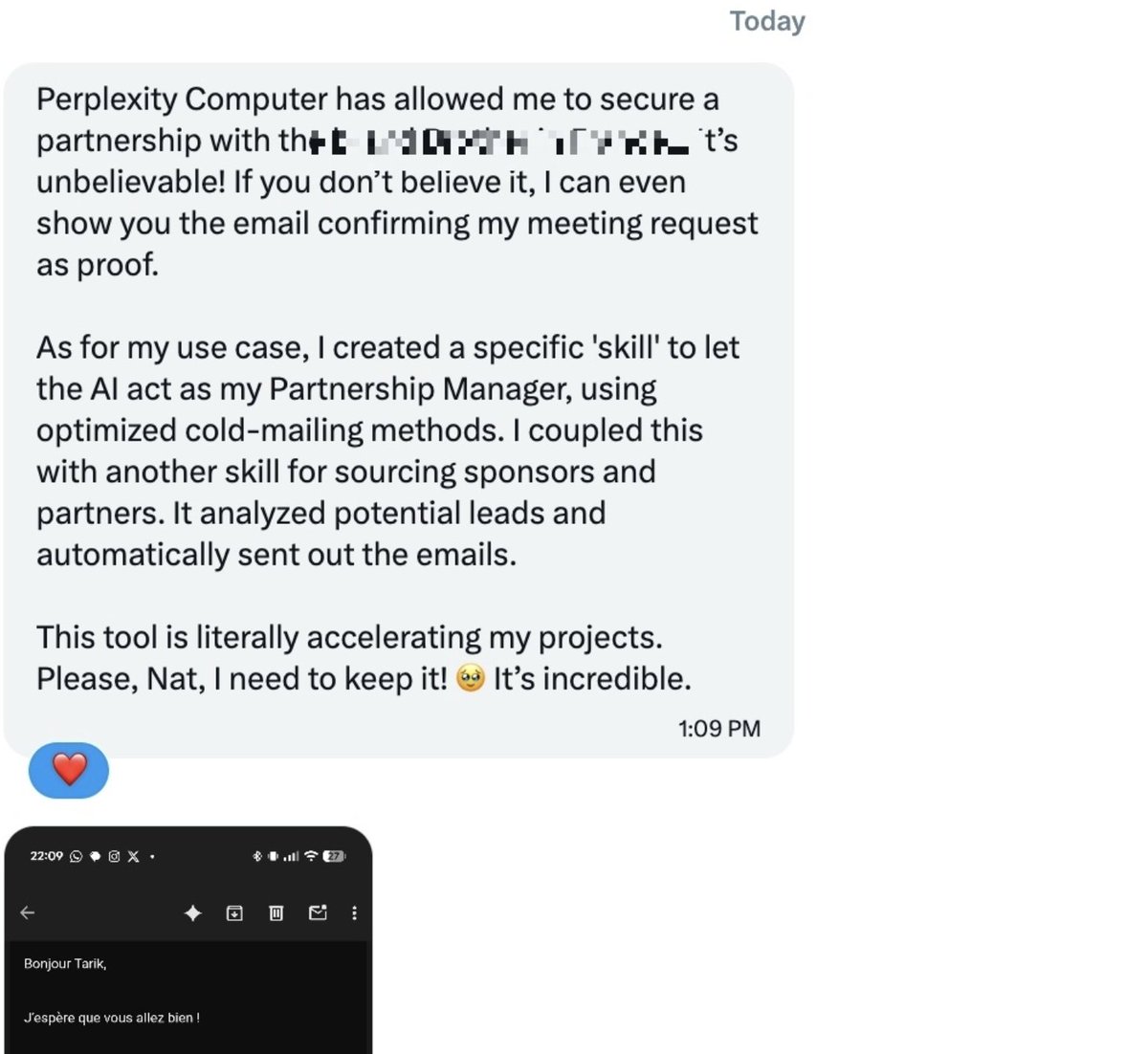
We run the entire go-to-market with Perplexity Computer. I’ve had 3 exits and I spent years building real GTM teams. I know how much time, hiring, alignment, and iteration it takes to create a high-performing growth + sales machine that actually works together. With my new project, I’m testing a different approach - one that simply wasn’t available before. Context: @OpenMercato is an open-source framework for building enterprise applications using AI-assisted engineering (CRM, ERP, logistics, internal systems) designed to be production-ready from day one. We run the entire go-to-market with Perplexity Computer. Marketing It created a GTM strategy tailored to our actual traction (GitHub activity, early adopters, positioning) and continuously updates it. Every day it generates concrete marketing opportunities: content ideas, ready-to-post comments in my voice, real-time threads to join, conference CFP applications, newsletter pitches. It scans the entire industry landscape to detect new signals and trigger real-time marketing - when a topic trends, we’re already in the conversation. Sales On the sales side, it analyzes every single lead: role, company size, industry, public footprint, context of the contact person - and suggests the best next action. It prepares contextual updates for ongoing deals, surfaces risks and leverage points, and turns onboarding emails into informed founder-led conversations. What used to require a growth + SDR + ops stack now runs as one autonomous system. Big Thanks to @AravSrinivas and to the Perplexity Team!
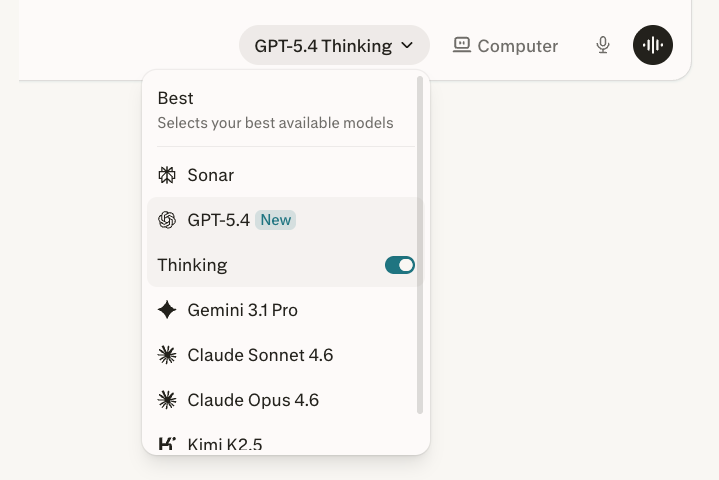
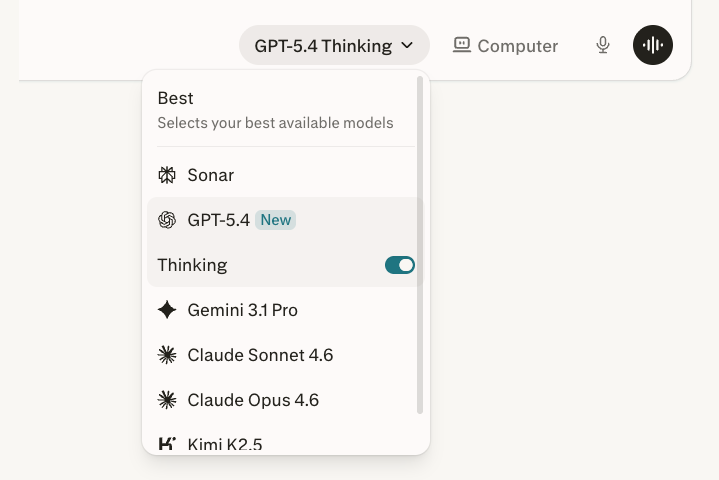
GPT-5.4 and GPT-5.4 Thinking are now available in Perplexity for Pro and Max subscribers. https://t.co/ewbD7rAKZ8
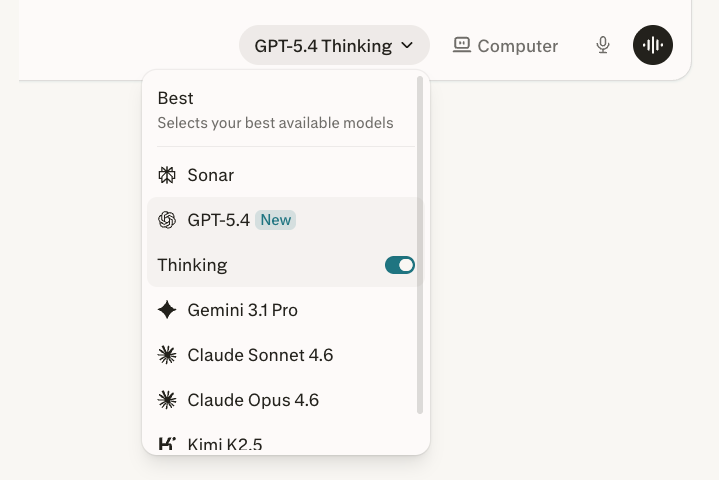
GPT-5.4 and GPT-5.4 Thinking are now available in Perplexity for Pro and Max subscribers. https://t.co/ewbD7rAKZ8
POV: You give Perplexity Computer a Kalshi API Key https://t.co/ISh8lWEyuS

Finally tried Computer and used it to make a beautiful stock tracker I’ve been wanting for a while. It did it in <10 minutes and pulls in latest share price via API. The fact that I can spin up new apps in a few minutes w/o a terminal is crazy https://t.co/BERQKhoEjW
give computer a task today and ask it to remember it as a skill. it's the fastest employee training + onboarding i've ever done, period: 'remember to do this next time i ask' -- best employee ever https://t.co/P1UsaIhjDV
A war is on. Fragile markets. For equity analysts or for anyone with interest this is great value. Check how rich is the output in the video. Go to Perplexity Computer. Use this prompt: Build an interactive scenario dashboard to help me explore and understand the different ways the US/Israel strike and potential ongoing conflict on Iran will impact global public equity markets in the coming weeks - consider the impact on individual equities and commodities The site showcases 3 scenarios of how the conflict might go and adjusts values such as oil price ranges, sector impact, and risk indicators. Includes a visual flowchart showing how the Hormuz disrptuion cascades through oil price to airline costs, inflation risk, energy revenue based on time and conflict levels.
AI is coming quick In 2026 AI tools like Perplexity Computer can now one-shot popular apps like Flighty Imagine what all this will look like in 2036 👀 https://t.co/HGUnVWWsmx
You can now run three frontier models at once and select your orchestrator model directly inside Perplexity Computer. Model Council automatically runs GPT-5.4, Claude Opus 4.6 and Gemini 3.1 Pro simultaneously. Three frontier models. One workflow. Best answer wins. https://t.co/40rPcXpr6s
Massive SpaceX IPO anticipation. @perplexity_ai Computer creating a Financial model and DCF for SpaceX. https://t.co/mPZrEAUpOH
Perplexity just became the first AI company to truly go head-to-head with Palantir Using Perplexity Computer (with no local setup or single LLM limitation), it was able to build me a World Monitor with real-time data to analyze the world situation, flight situation, war situation, and many more... using skills and a combination of LLMs wherever they're best. I'm super impressed @AravSrinivas
Introducing Perplexity Computer. Computer unifies every current AI capability into one system. It can research, design, code, deploy, and manage any project end-to-end. https://t.co/dZUybl6VkY
Do anything with Perplexity Computer. Even projects like mapping @theallinpod episodes to stock price movements. https://t.co/eCjBmqelXv
Introducing Perplexity Computer. Computer unifies every current AI capability into one system. It can research, design, code, deploy, and manage any project end-to-end. https://t.co/dZUybl6VkY
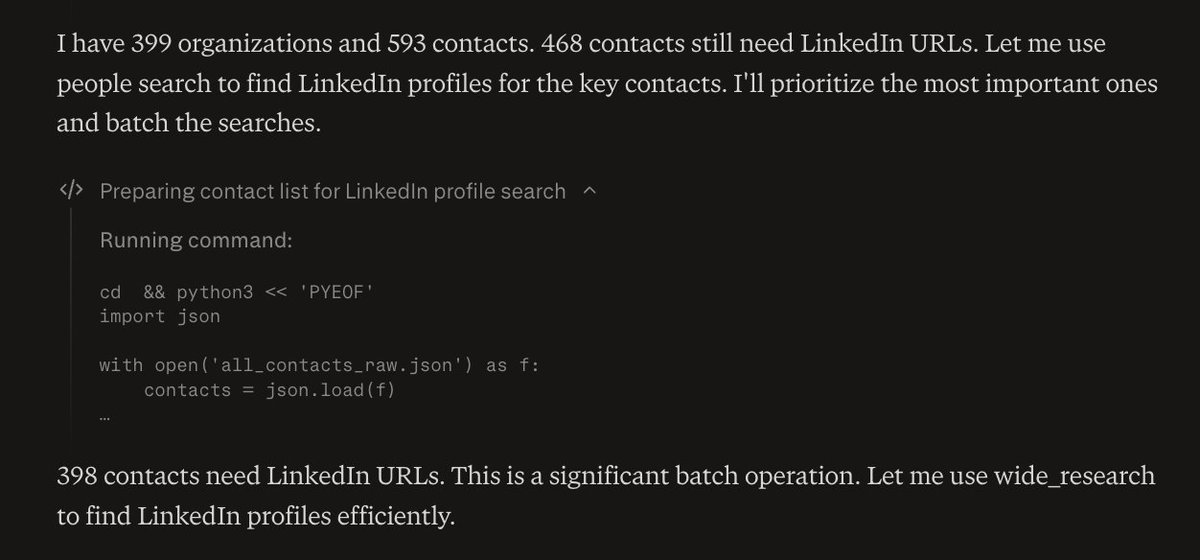
Perplexity Computer is insane. It's researching hundreds of LinkedIn profiles for me in parallel. Claude Code fails because it gets often blocked, and it runs out of context window. But Perplexity Computer doesn't stop. It's been going for a while. https://t.co/4cvyy37wtu
Claude 3 & GPT-4: "the book Piranesi as a p5js 3d space. do it for me" After a few rounds of revisions, this is what they came up with - Claude on the left, GPT-4 on the right. Given the limits, neat. I think the rising and falling tides from Claude 3 are a cute touch. https://t.co/qYsliPrGTK
Had early access to GPT-5.4 and Pro. They are very good. One fun illustration of progress, this is the same prompt I used in GPT-4 below (making a 3D space inspired by Piranesi) now in GPT-5.4 Pro. There were no errors, made in a single prompt plus one to "make it better." https://t.co/7Vgmc60SKc
Claude 3 & GPT-4: "the book Piranesi as a p5js 3d space. do it for me" After a few rounds of revisions, this is what they came up with - Claude on the left, GPT-4 on the right. Given the limits, neat. I think the rising and falling tides from Claude 3 are a cute touch. https
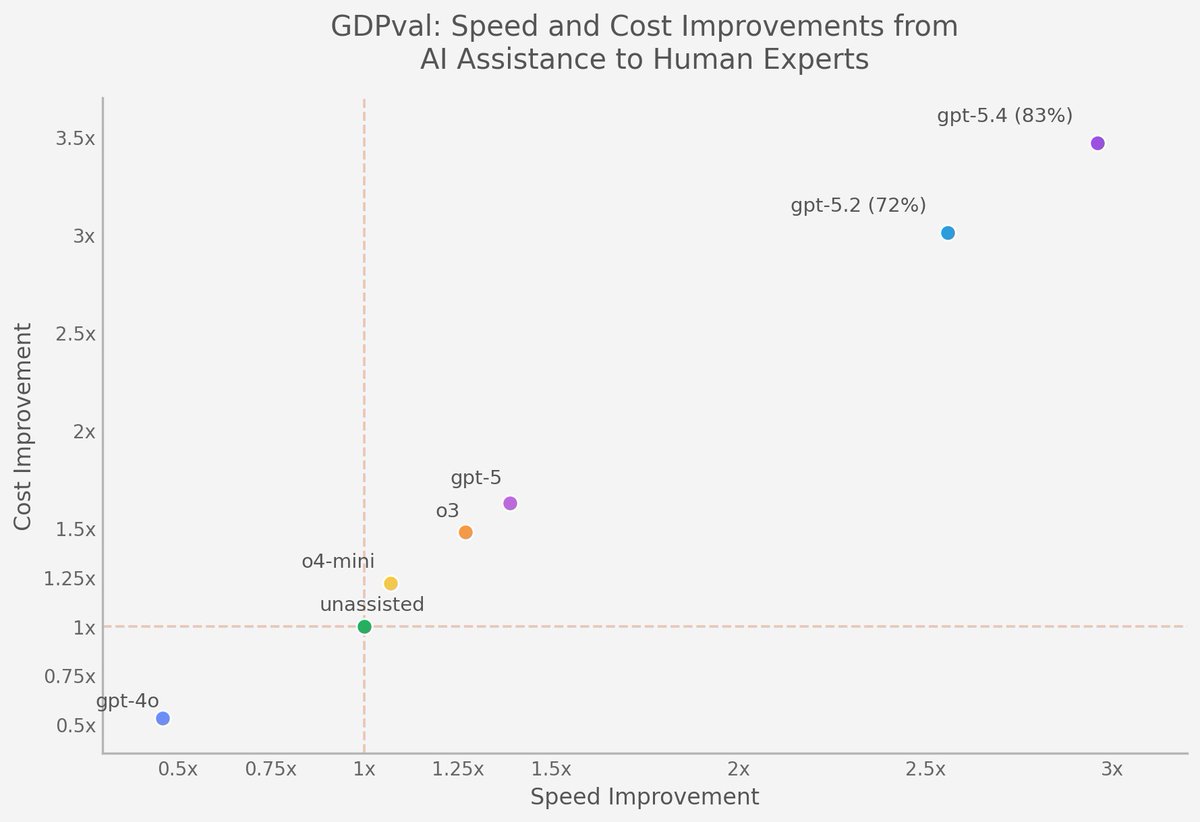
Since OpenAI didn't update Figure 7 from GDPval given the success rate of GPT-5.2 on long-form tasks, I used GPT-5.2 Pro to do so. The chart assumes the process is: delegate long tasks to AI, evaluate the output for an hour, then decide to try again or give up & do it yourself. https://t.co/vFtMZrturL
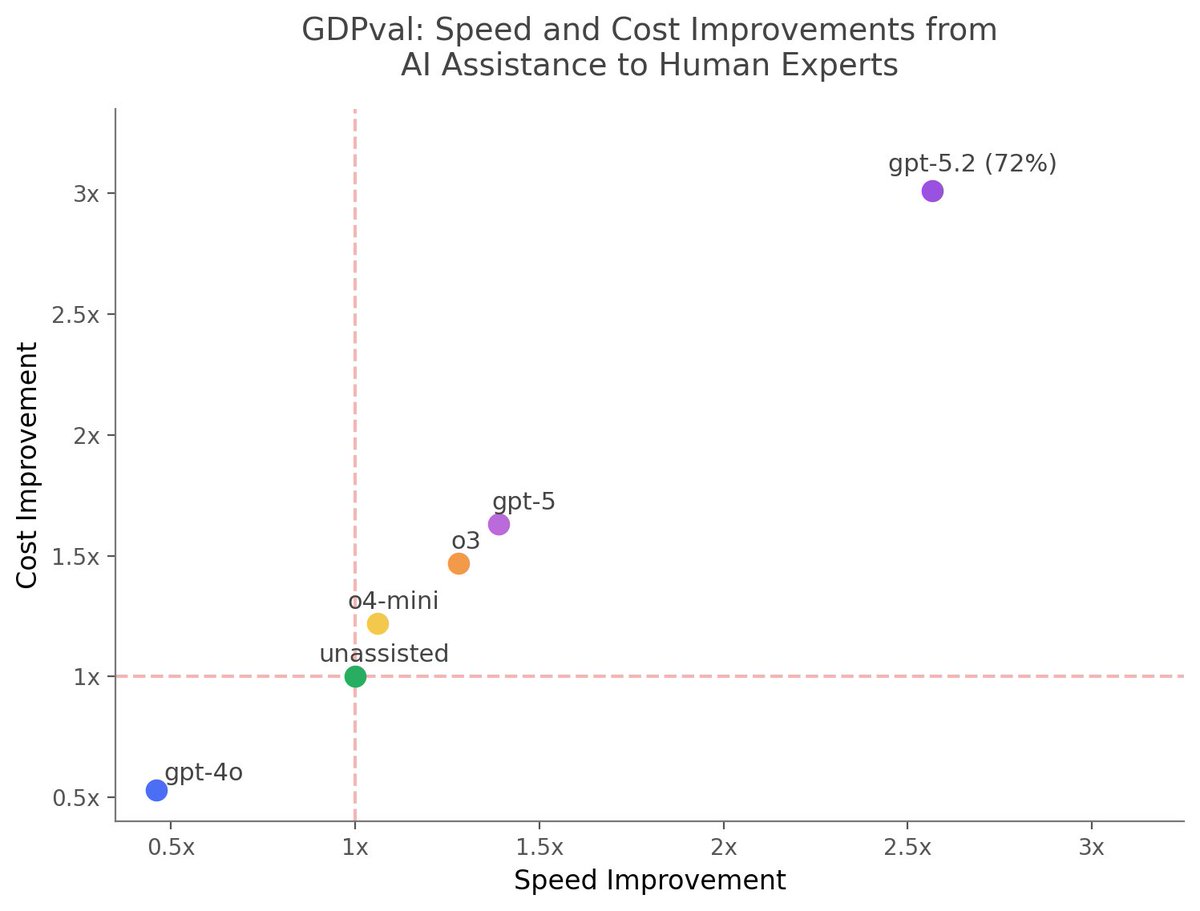
Given the GDPval benchmark for GPT-5.4, I've updated this chart, the new model ties or beats humans as judged by other experts at professional tasks 82% of the time If you give a 7 hour task to AI, even with failure rates and the need to check results, you'd save 4h 38m average https://t.co/U4PQSArQo2
Since OpenAI didn't update Figure 7 from GDPval given the success rate of GPT-5.2 on long-form tasks, I used GPT-5.2 Pro to do so. The chart assumes the process is: delegate long tasks to AI, evaluate the output for an hour, then decide to try again or give up & do it yourse