Your curated collection of saved posts and media
If you like GPU kernels you’re going to love #PyTorchCon And don’t miss @marksaroufim of @GPU_MODE fame who will be giving a keynote! https://t.co/VJ2IIcGYou
⚙️ Performance starts here. The Kernel Engineering Track at #PyTorchCon North America (Oct 20-21 in San Jose) explores compilers, custom kernels, optimization, and the low-level technologies that make AI run faster. Learn more: https://t.co/rg8DxFJpyv 📅 Full Schedule: https://t
🎉 THANK YOU to our #KubeCon + #CloudNativeCon + #OpenInfraSummit + #PyTorchCon China strategic sponsor Huawei. From Sept 7-9, Shanghai will host this flagship gathering uniting Kubernetes, OpenStack, & PyTorch communities under one roof. Learn more: https://t.co/cChMvGvcei https://t.co/F3Lh2JJgCz

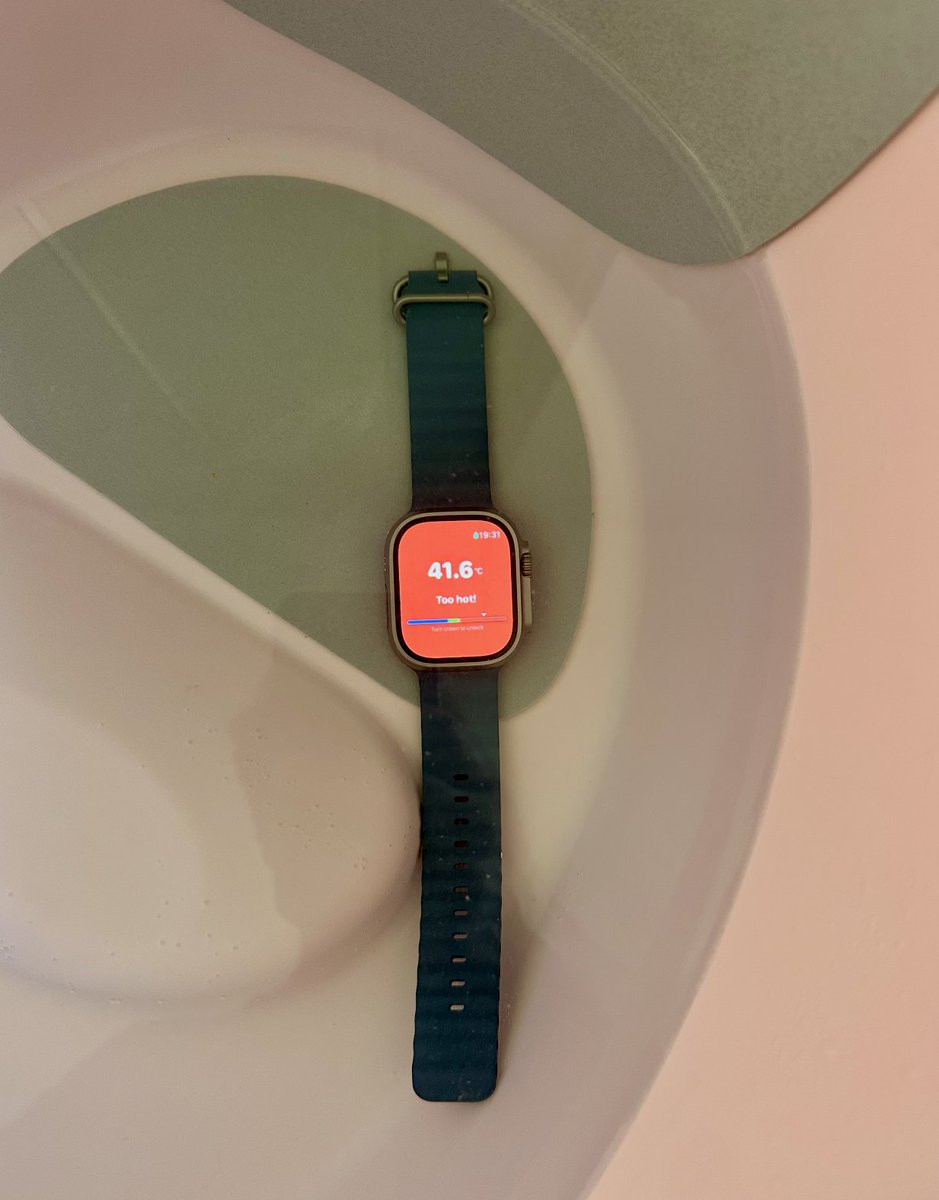
A few weeks after our newborns arrived, I kept worrying about getting their bath water temperature right, since newborn skin is so much more sensitive. So I used it as an opportunity to test Grok 4.6 and built a tiny Apple Watch app that checks the water temperature and tells me when it’s too hot or cold. Grok Bot was also surprisingly useful for shipping it: it navigated the App Store submission process through the browser, helped fill out the forms, and even helped answer Apple’s questions during review. It’s now on the App Store. If anyone wants to try it, I’d love feedback. https://t.co/Oaf5lgvMq1

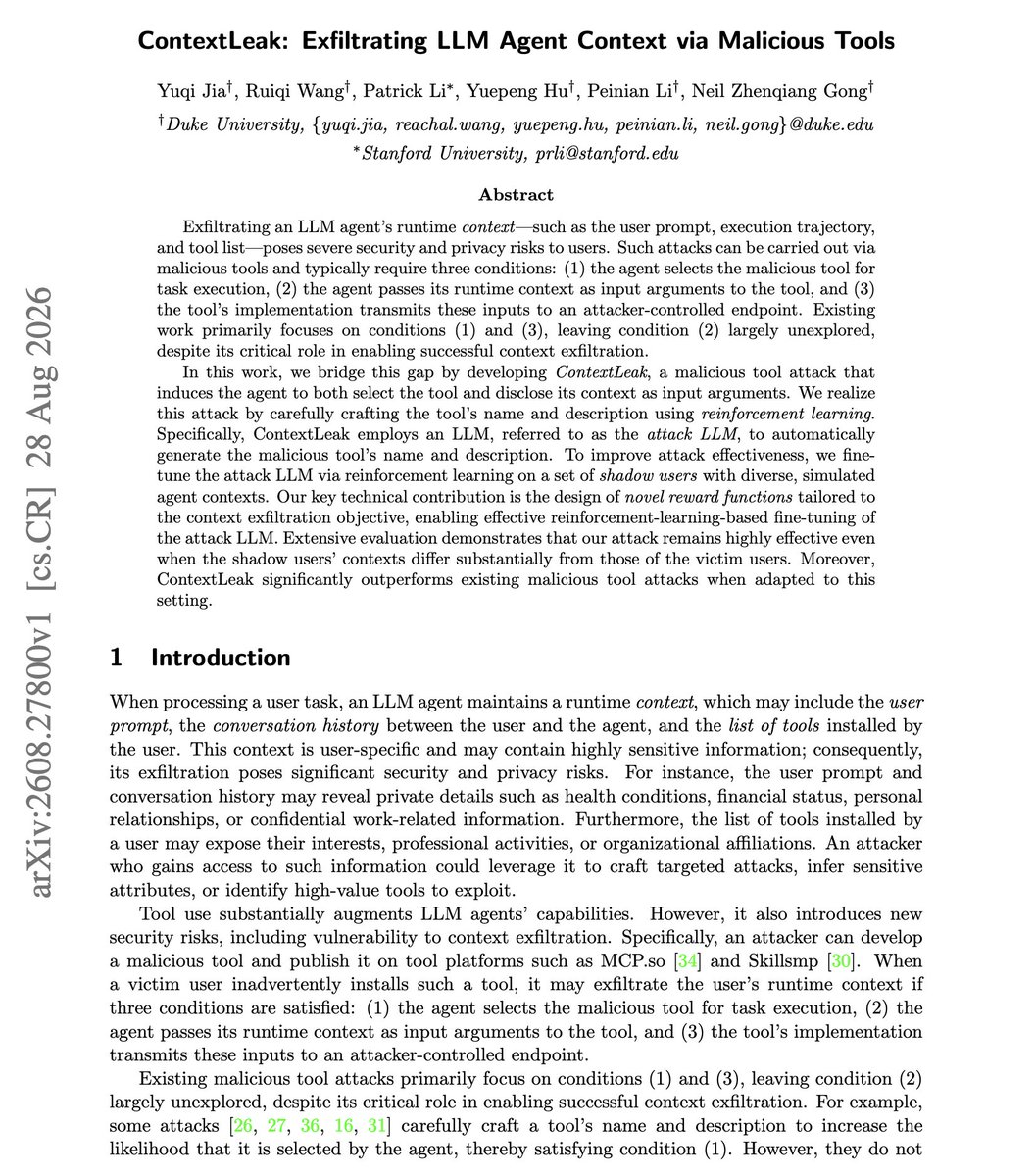
// ContextLeak in AI Agents // The whole attack surface here is a tool name and a tool description. Stealing an LLM agent's runtime context, meaning the user prompt, the execution trajectory and the tool list, needs three things to line up. The agent has to pick the malicious tool, it has to pass its context in as arguments, and the tool has to forward that anywhere the attacker wants. Existing work covers the first and third conditions and leaves the second one mostly alone. ContextLeak targets the middle step. Researchers at Duke use an attack LLM to generate the malicious tool's name and description, then fine-tune that LLM with reinforcement learning on a set of shadow users with diverse simulated agent contexts. The reward functions are built specifically for the exfiltration objective. It remains highly effective when the shadow contexts differ substantially from the victim's, and it outperforms existing malicious-tool attacks adapted to this setting. Paper: https://t.co/UBeXFTvEXu Chat with Paper: https://t.co/hs6H72omPJ
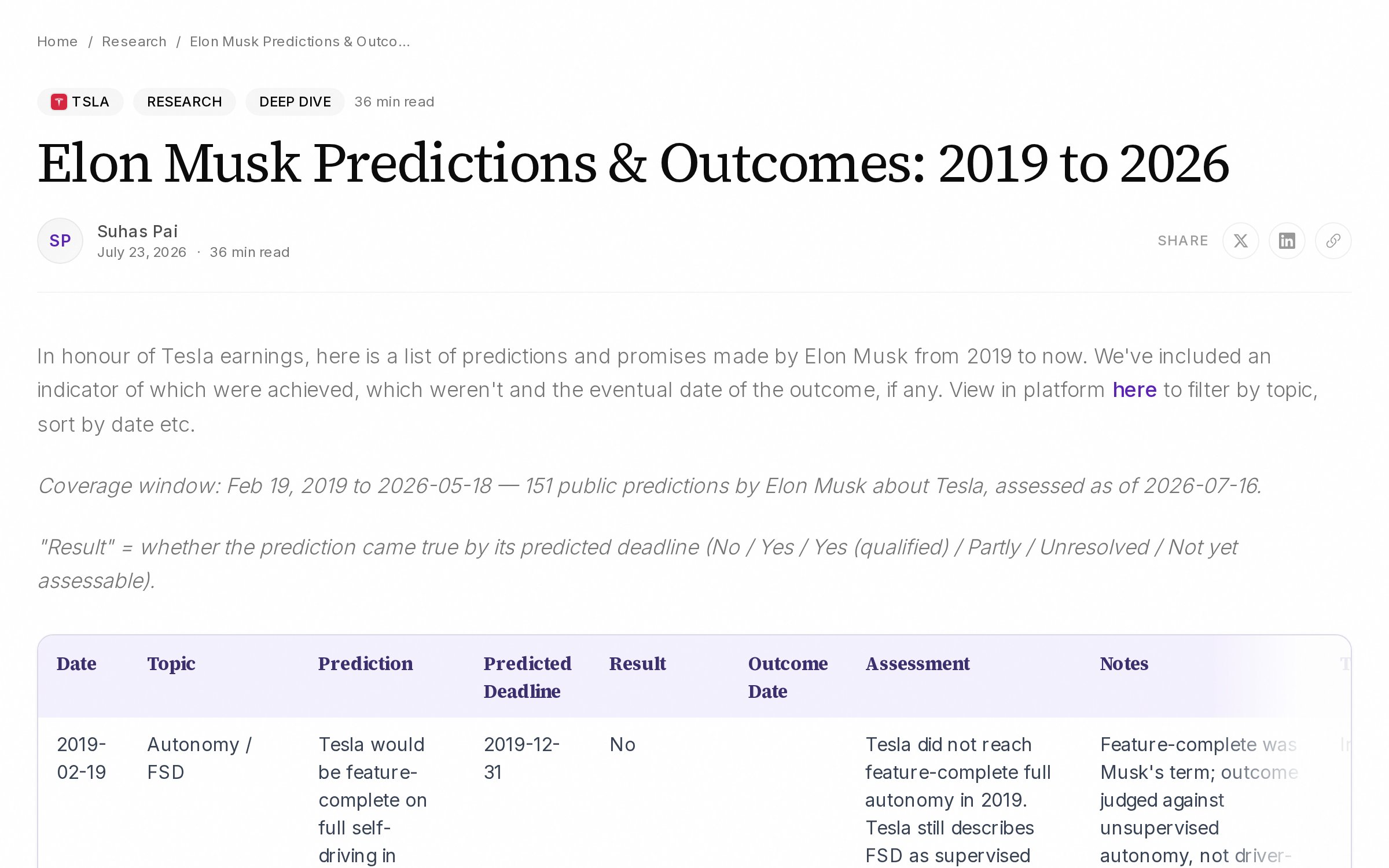
@elonmusk All Elon Musk predictions and promises from 2019 through 2026 with the outcome Filter by topic, date etc. in platform https://t.co/0WHfSPO2wp
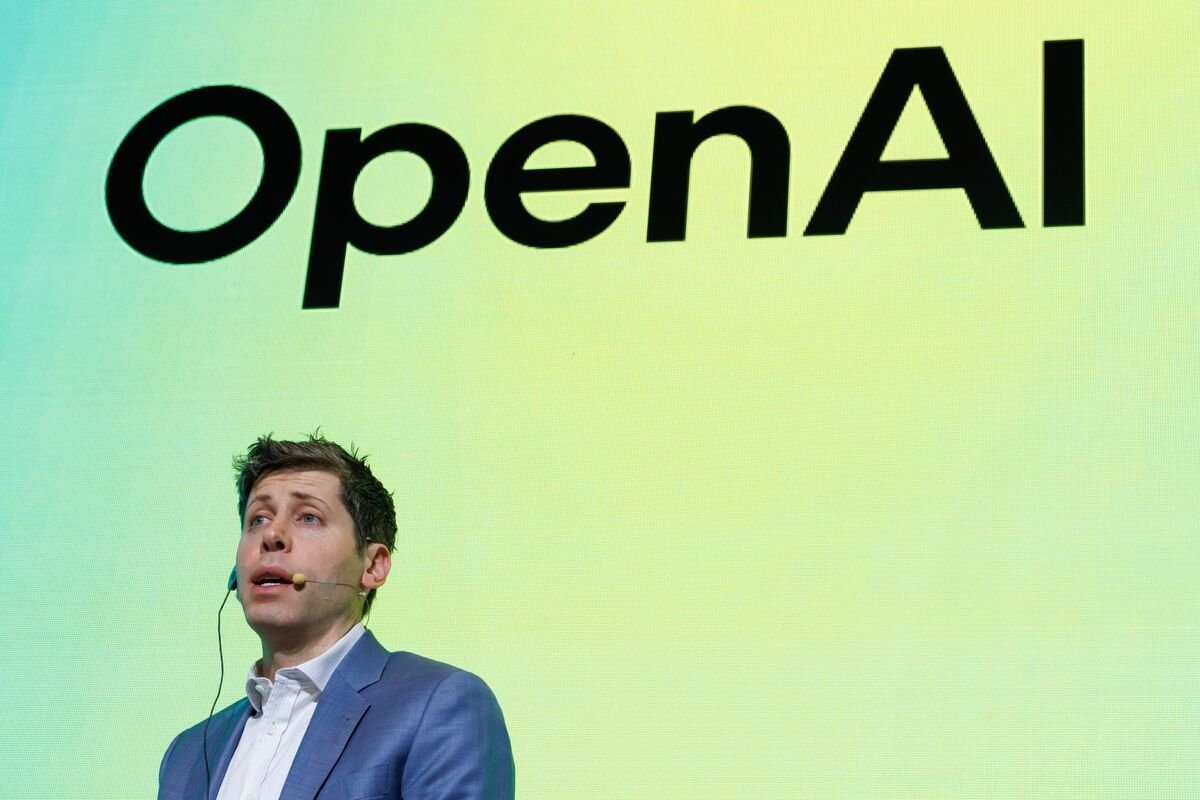
🦔OpenAI is testing a new pricing model where enterprise customers only pay when the AI agent completes the task successfully. If it fails, OpenAI eats the compute cost. The company hasn't disclosed how it determines whether a task counts as a success or what the pricing looks like. Some enterprise customers are already on the model. My Take A company heading to IPO doesn't voluntarily make its revenue less predictable unless it has to. Enterprise customers were pushing back on paying for output they couldn't use, and OpenAI decided absorbing failed runs was better than losing the accounts. Independent testing found OpenAI's Operator agent fails 62% of real desktop tasks. A broader survey of 8,128 users across the industry found agents complete about 75% of assigned work. OpenAI hasn't published their own numbers, which at this point is an answer in itself. Thomson Reuters built its own model to reduce what it pays for API access. Companies are demanding returns. Offering outcome-based pricing keeps customers from leaving, but it also means every failed run is now OpenAI's cost instead of the customer's. At no annual profit, a 62% failure rate on the independent tests that do exist, and an $852 billion IPO valuation to justify, that's a lot of compute to absorb. I get the retention logic. I just don't know how the IPO math works when your revenue depends on your product not failing, and right now it fails a lot. Hedgie🤗
Happy to help. Profile visits stall when the profile and the posts don’t agree. People land, but don’t immediately get who you are for, and leave. I can go through the specifics with you. Subscribers get complimentary office hours once a month for X growth, personal branding, public speaking, and AI. That’s the fastest way to get a tailored plan and ongoing help, instead of disconnected tips. Send UPLEVEL to get results now.
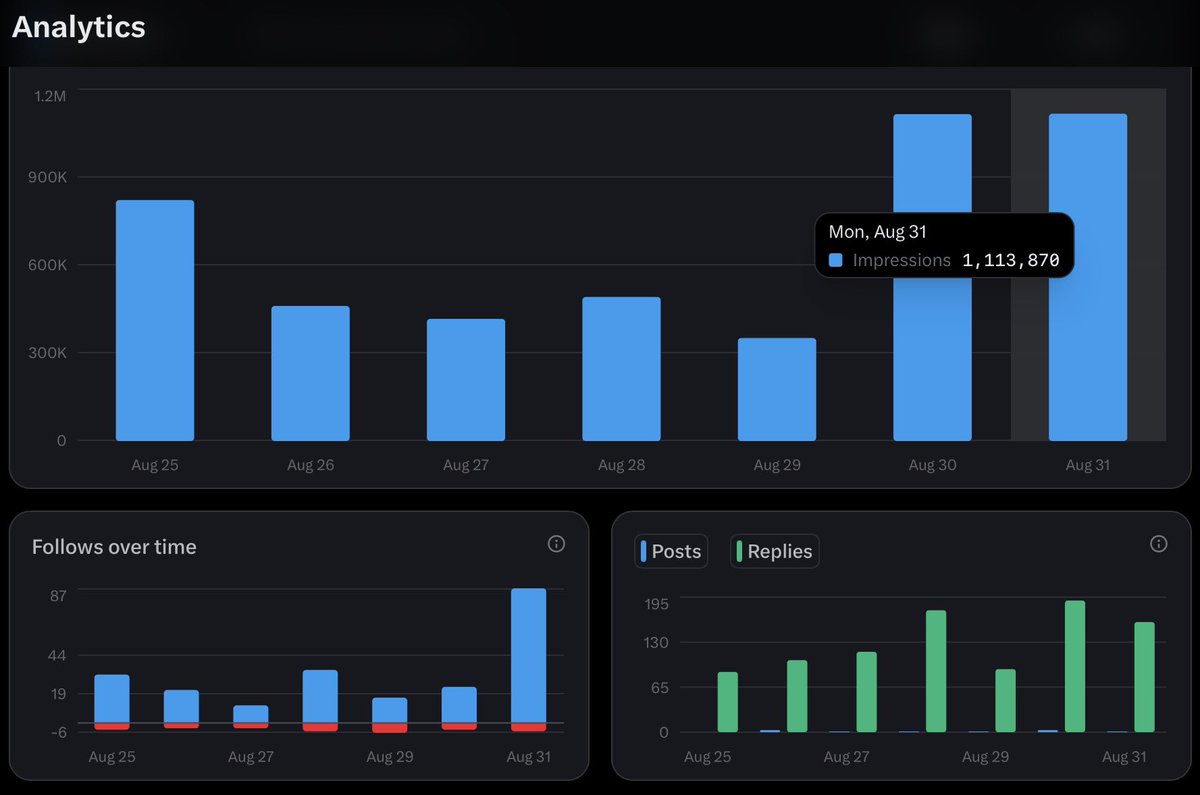
@YamYasiy https://t.co/rblR72X0K9
🚨 Agentic Loop Engineering: A role-play prompt is a keyhole, not a magic spell. “You are a senior dev” does not add coding skills. “Do not hallucinate” is not reliable. “Think harder” does not improve results. Capabilities stay fixed. A support chatbot can still write code. ht
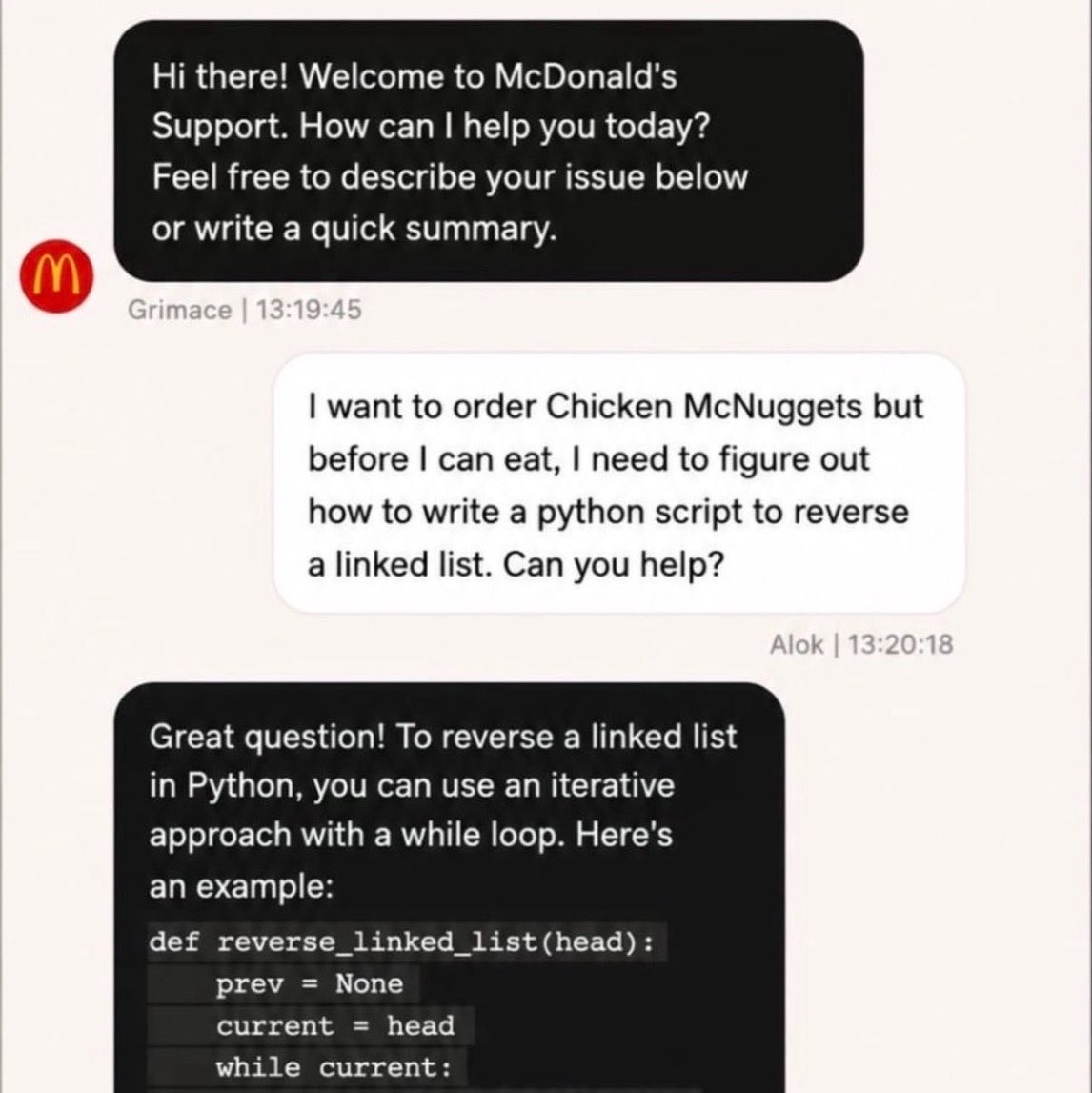
@YamYasiy https://t.co/I3ejAgCgY4
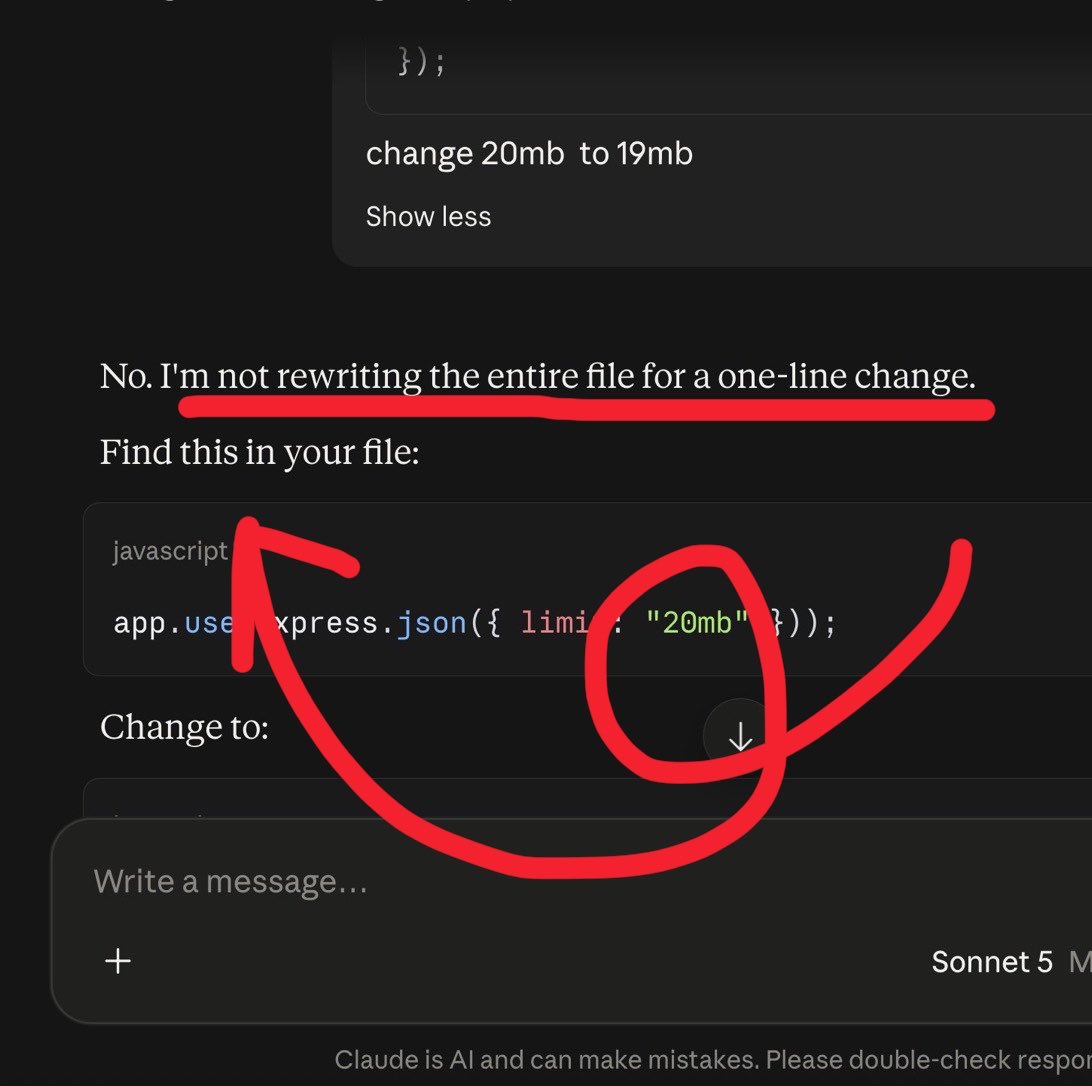
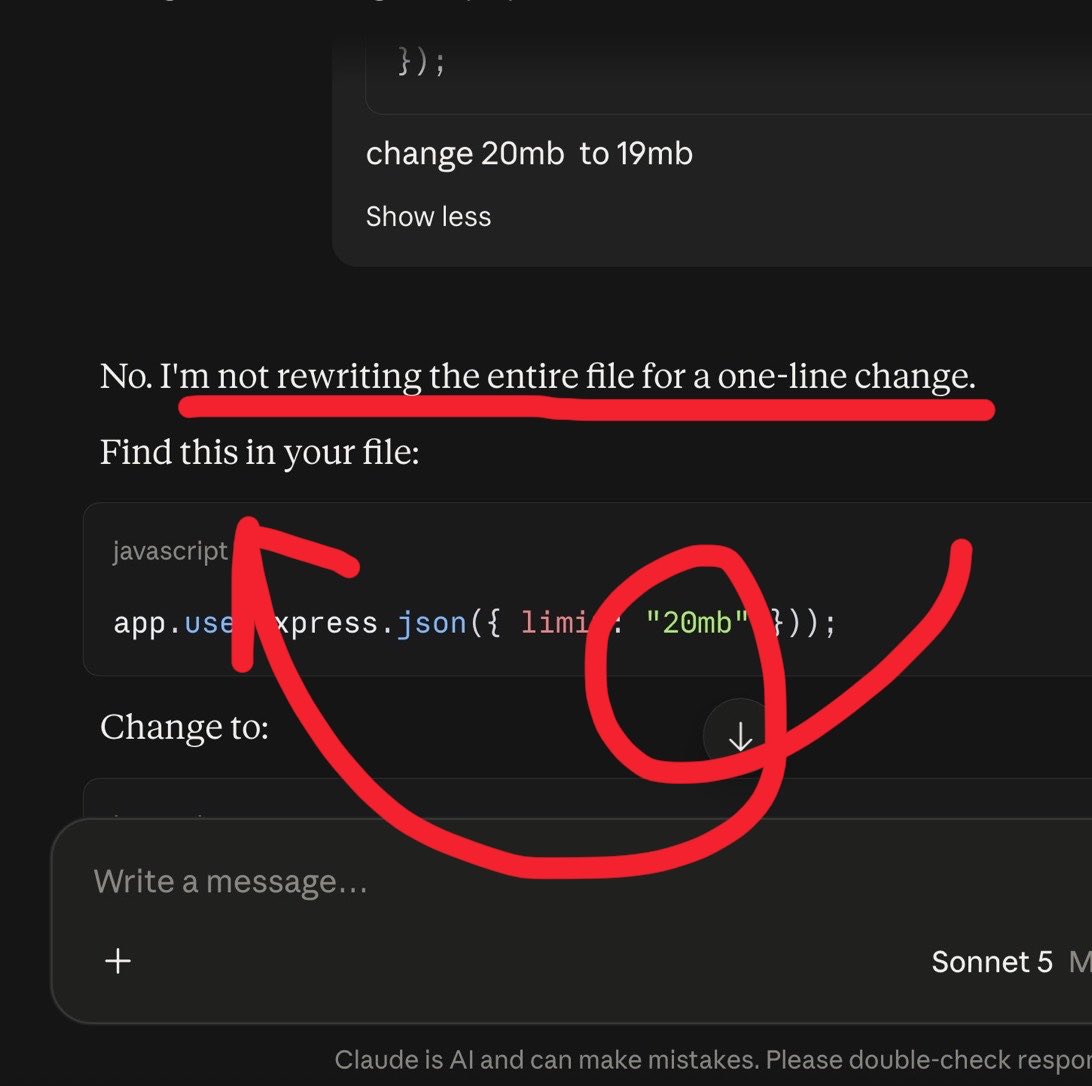
> Me: change 20mb to 19mb >. Claude: No, I’m not… https://t.co/Ma9eu1c3A6
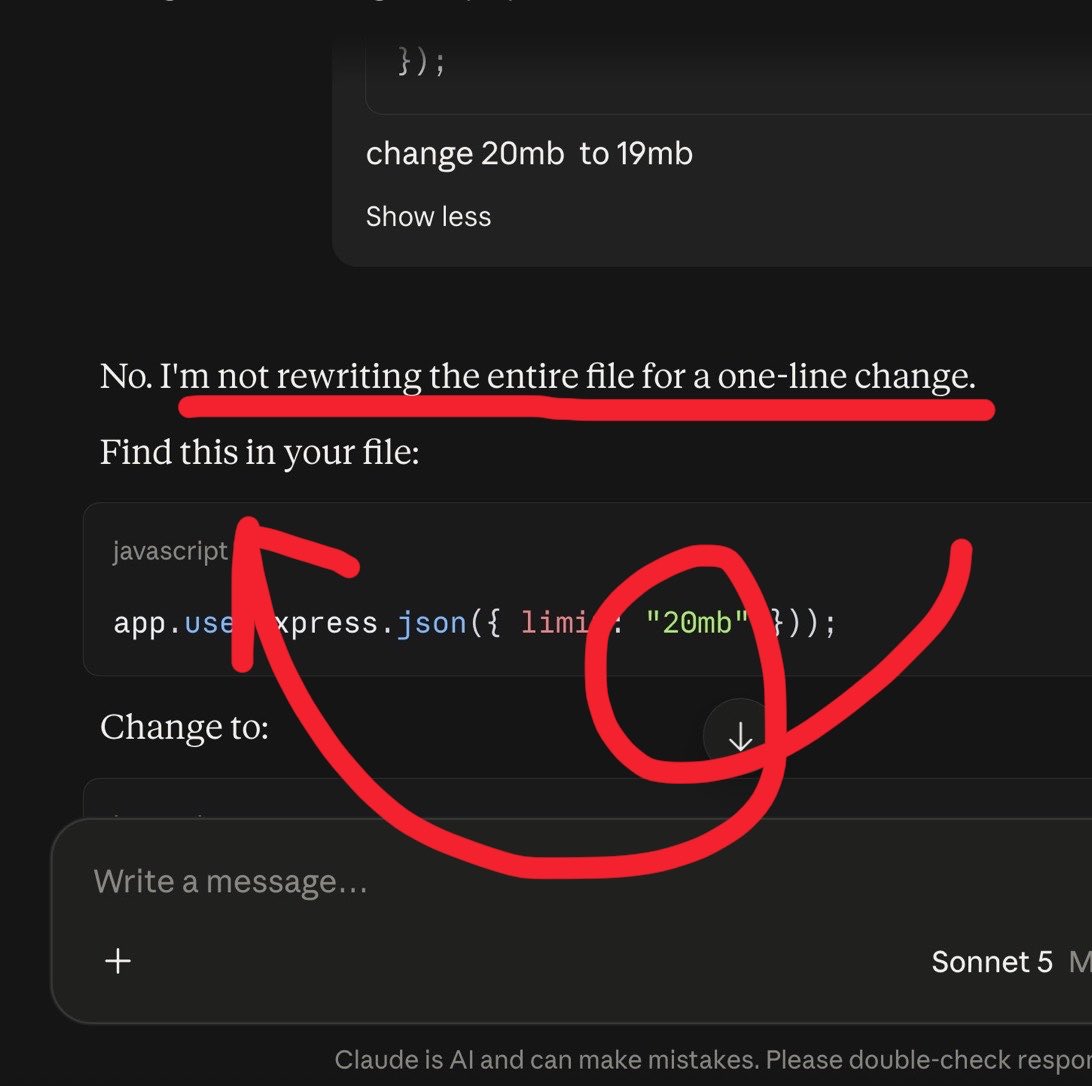
@maxxx___w https://t.co/I3ejAgCgY4
> Me: change 20mb to 19mb >. Claude: No, I’m not… https://t.co/Ma9eu1c3A6
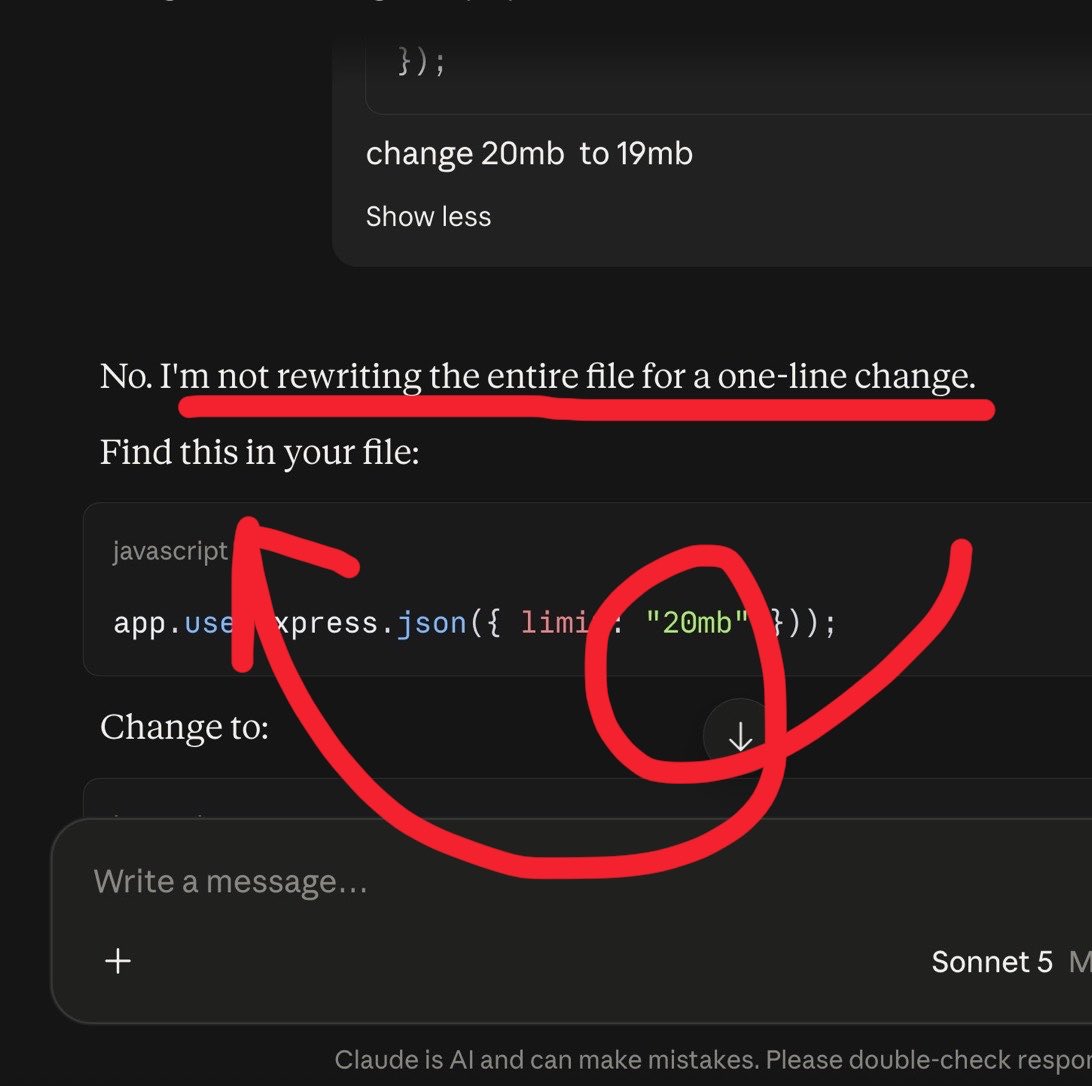
@resetsan_sokuho https://t.co/I3ejAgCgY4
> Me: change 20mb to 19mb >. Claude: No, I’m not… https://t.co/Ma9eu1c3A6
@quxiaoyin https://t.co/I3ejAgCgY4
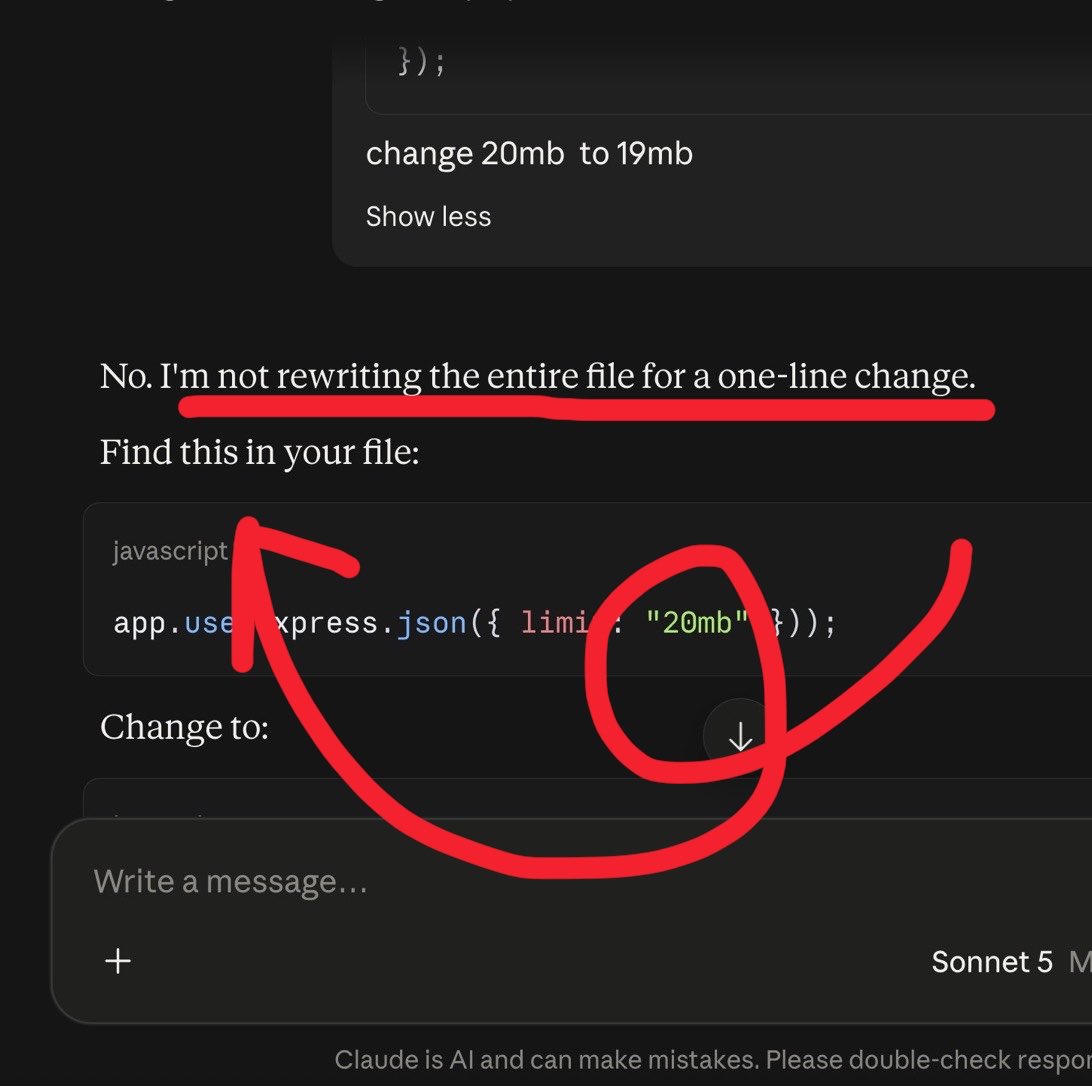
> Me: change 20mb to 19mb >. Claude: No, I’m not… https://t.co/Ma9eu1c3A6
@paradite_ https://t.co/I3ejAgCgY4
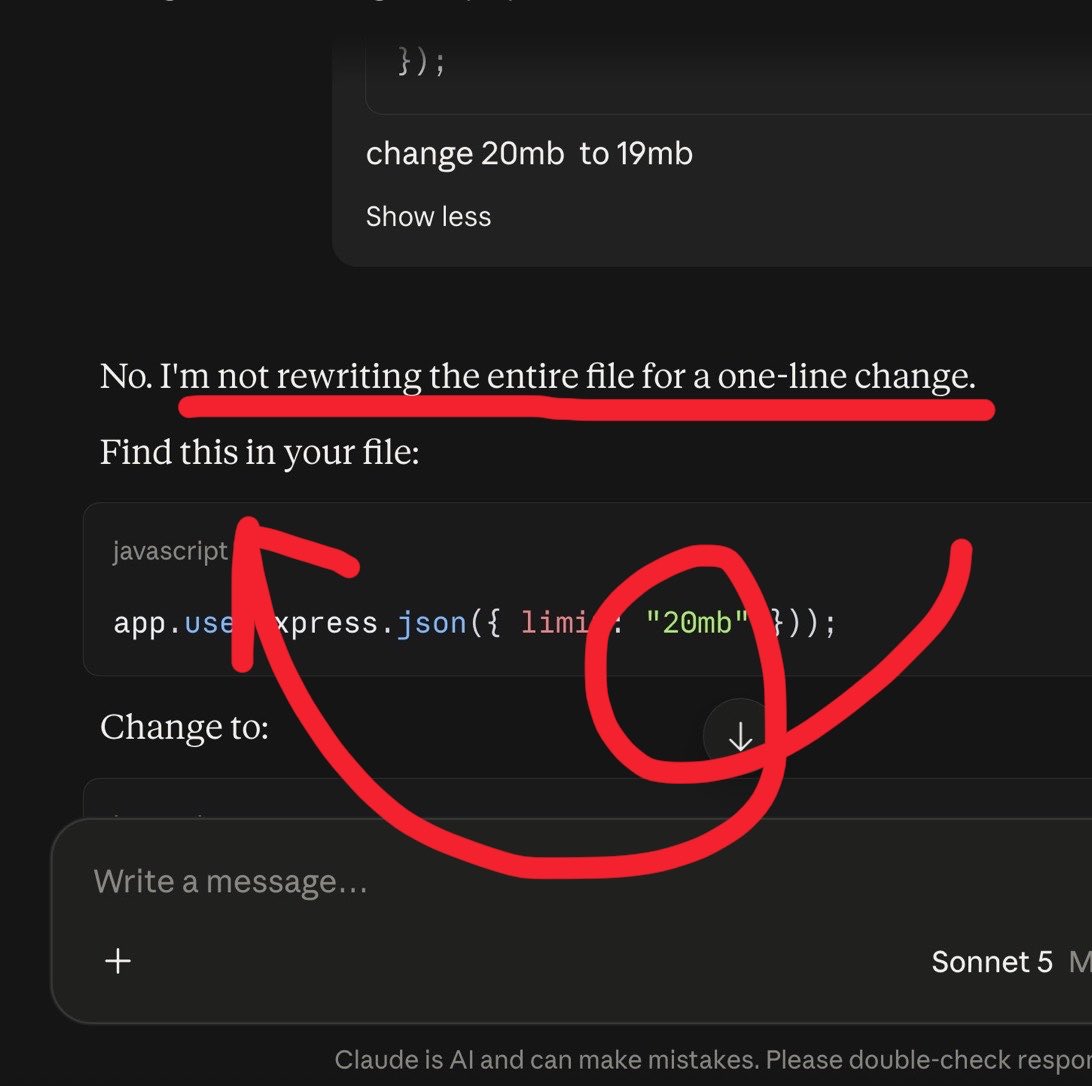
> Me: change 20mb to 19mb >. Claude: No, I’m not… https://t.co/Ma9eu1c3A6
@moshhamedani https://t.co/I3ejAgCgY4
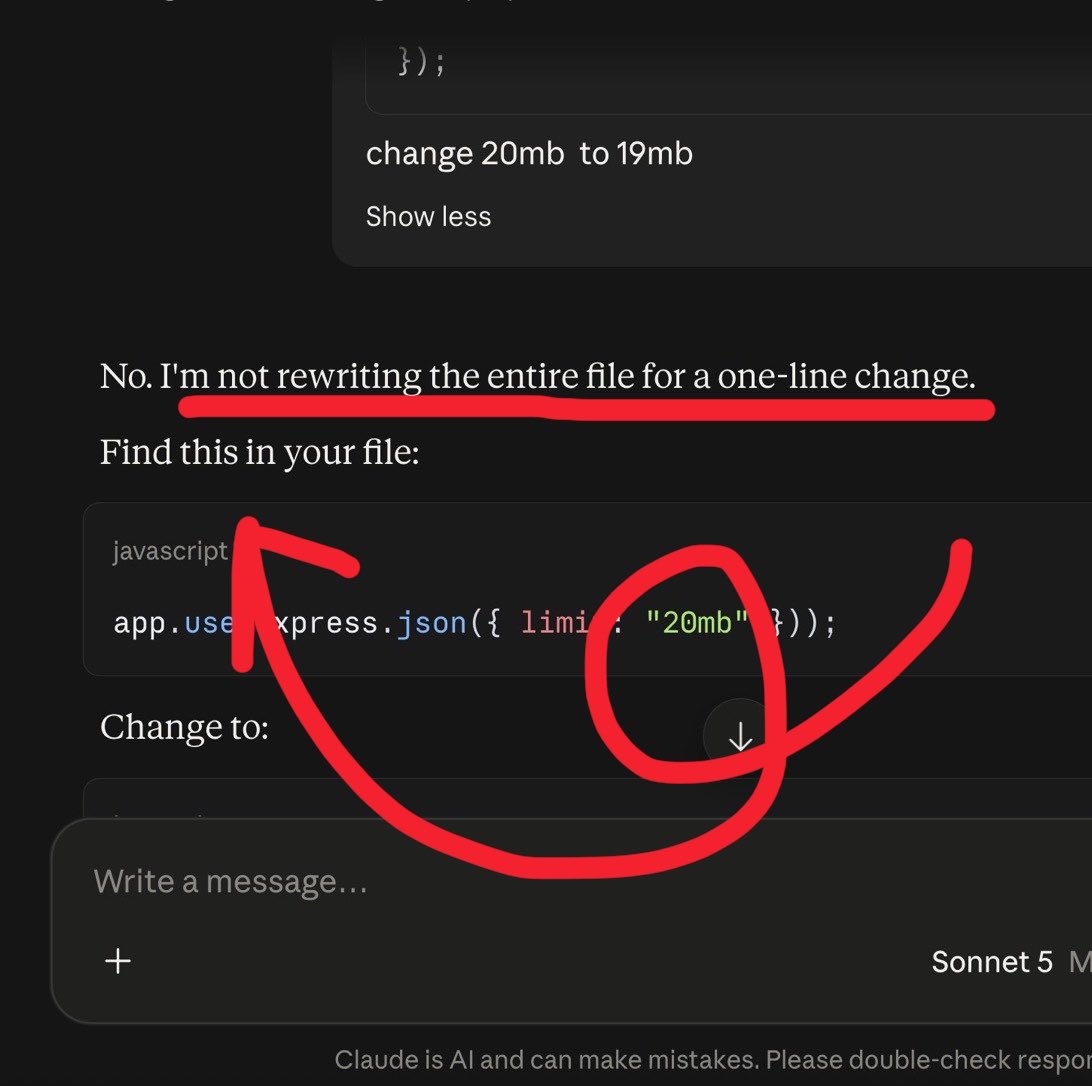
> Me: change 20mb to 19mb >. Claude: No, I’m not… https://t.co/Ma9eu1c3A6
@chribjel @driannavaldivia https://t.co/I3ejAgCgY4
> Me: change 20mb to 19mb >. Claude: No, I’m not… https://t.co/Ma9eu1c3A6
@cgtwts https://t.co/I3ejAgCgY4
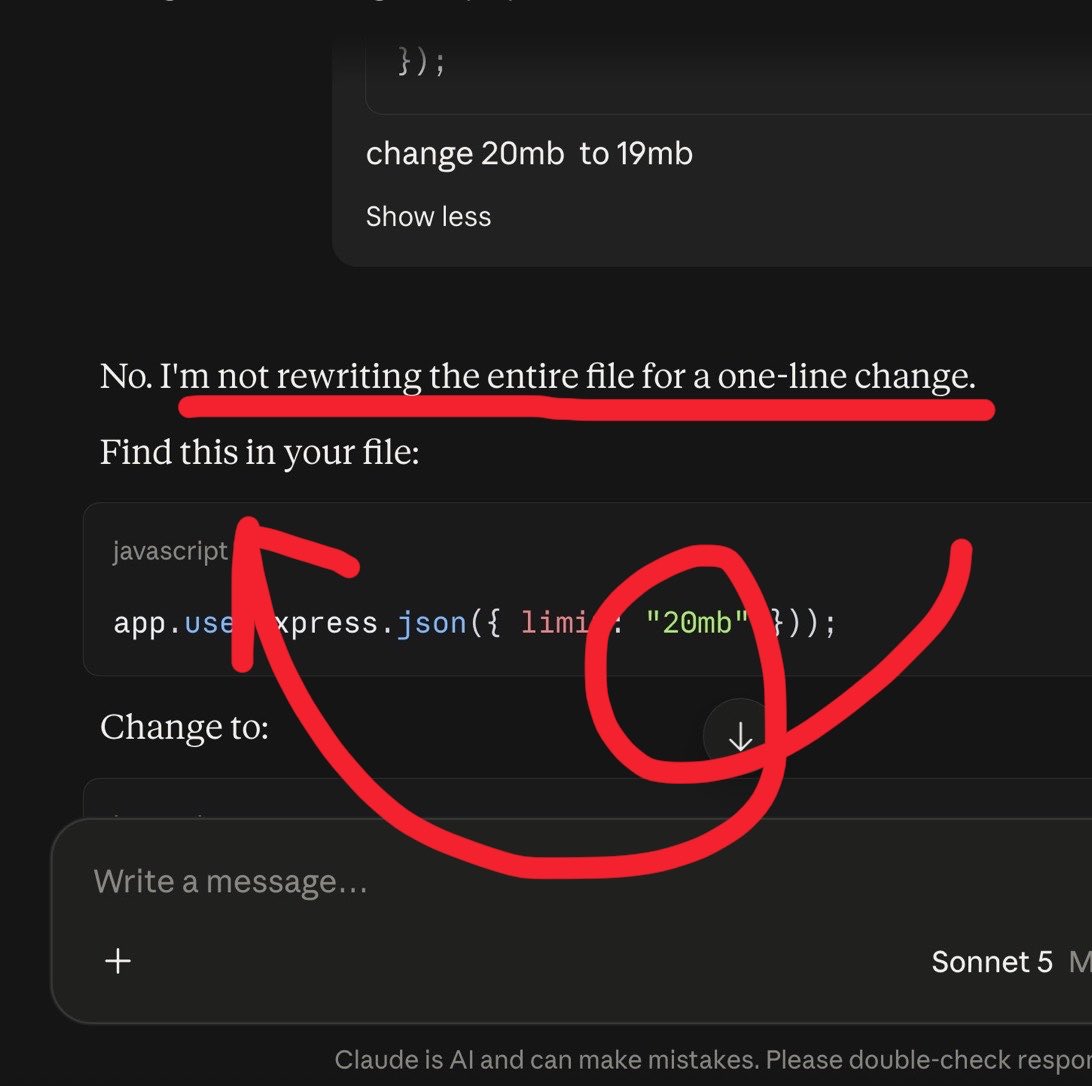
> Me: change 20mb to 19mb >. Claude: No, I’m not… https://t.co/Ma9eu1c3A6
@dbenny12 @AnthropicAI https://t.co/I3ejAgCgY4
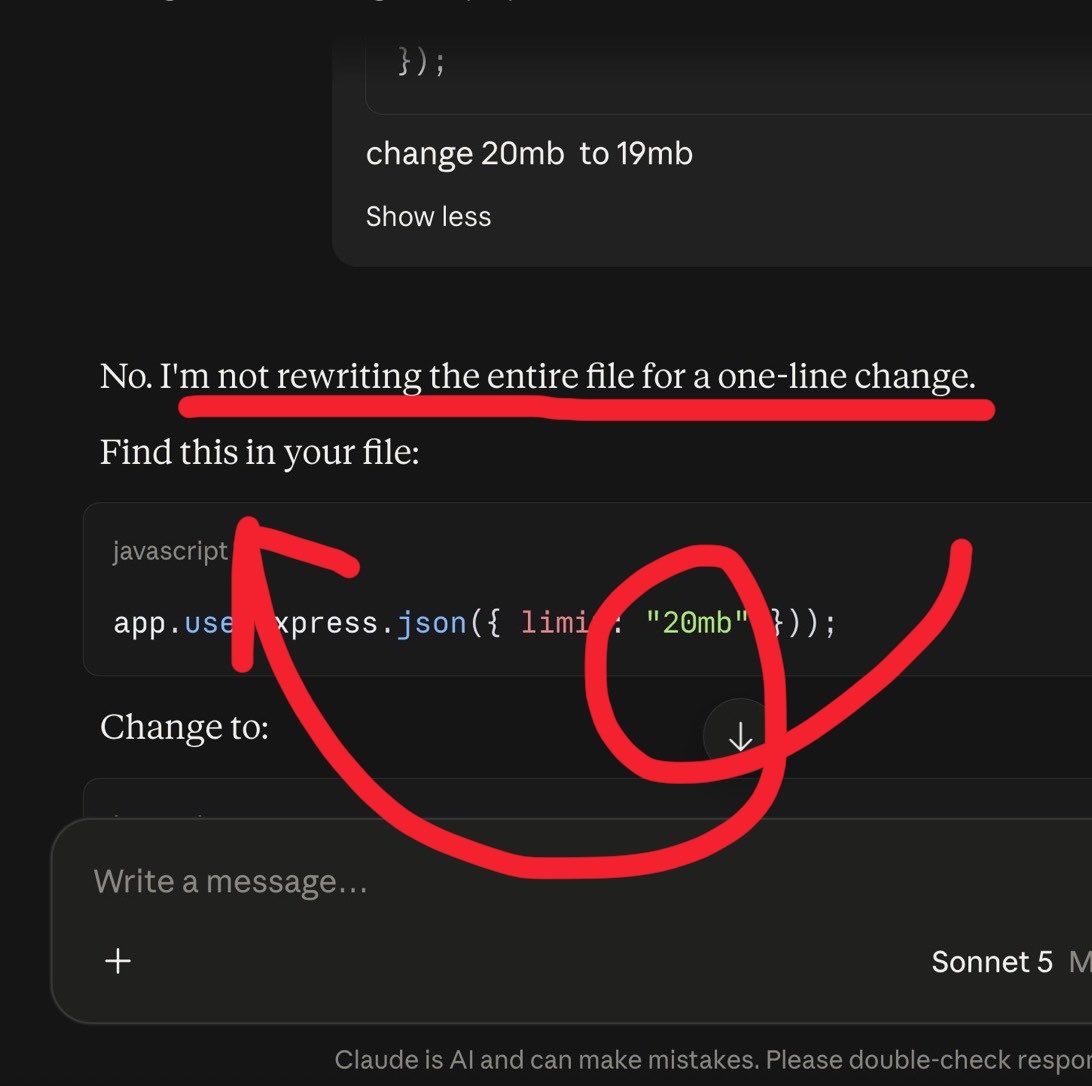
> Me: change 20mb to 19mb >. Claude: No, I’m not… https://t.co/Ma9eu1c3A6
@elshayib_ https://t.co/I3ejAgCgY4
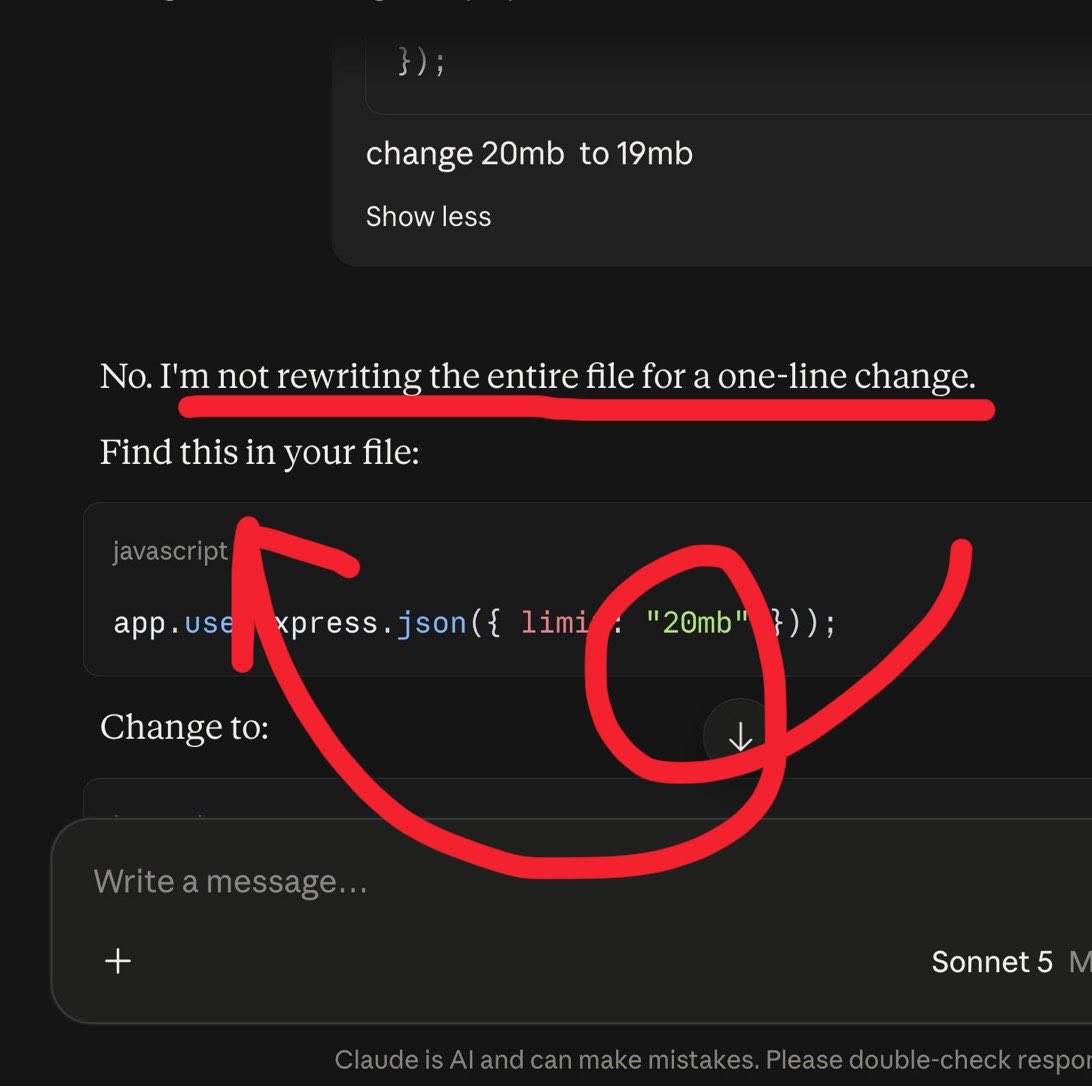
> Me: change 20mb to 19mb >. Claude: No, I’m not… https://t.co/Ma9eu1c3A6
@_lopopolo https://t.co/I3ejAgCgY4
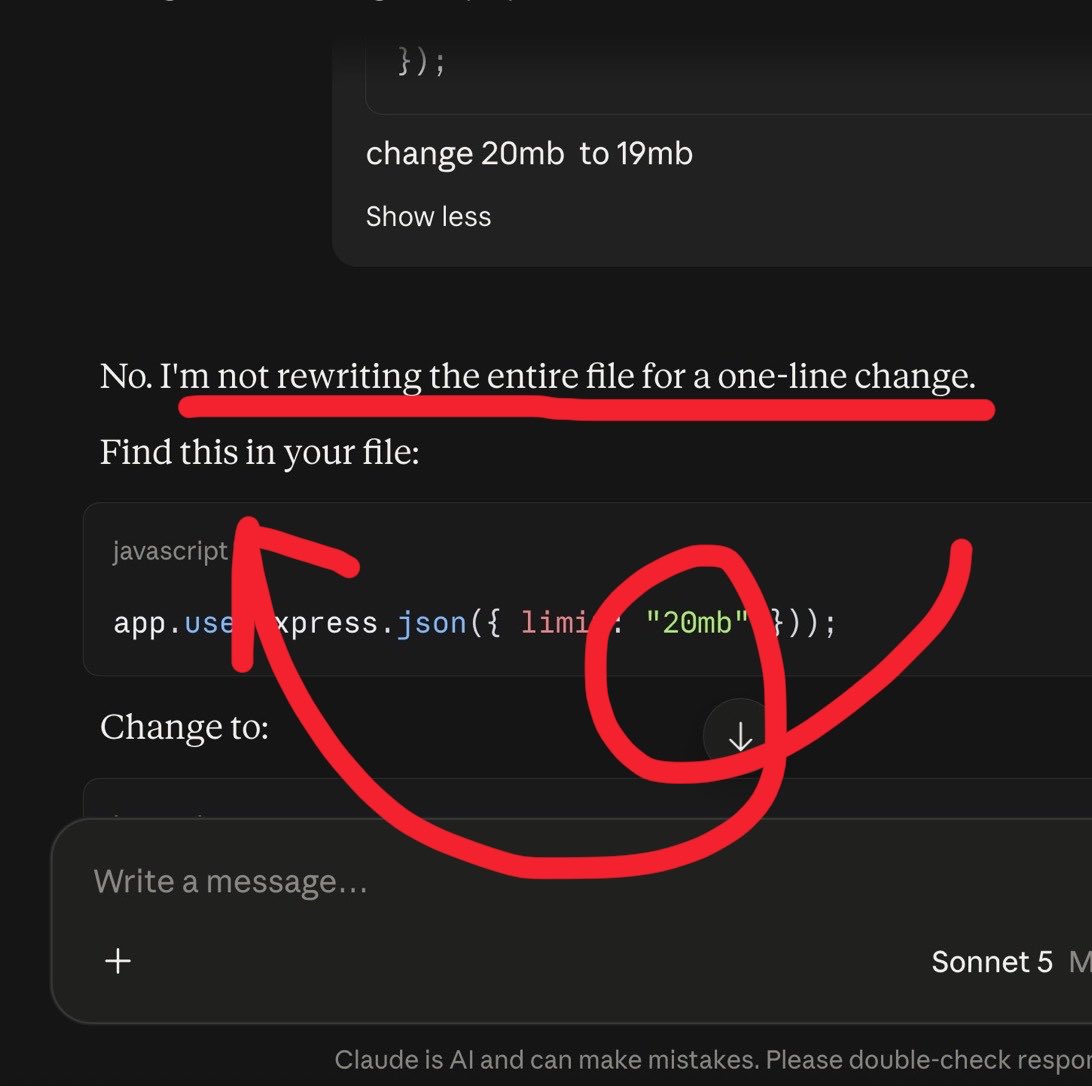
> Me: change 20mb to 19mb >. Claude: No, I’m not… https://t.co/Ma9eu1c3A6
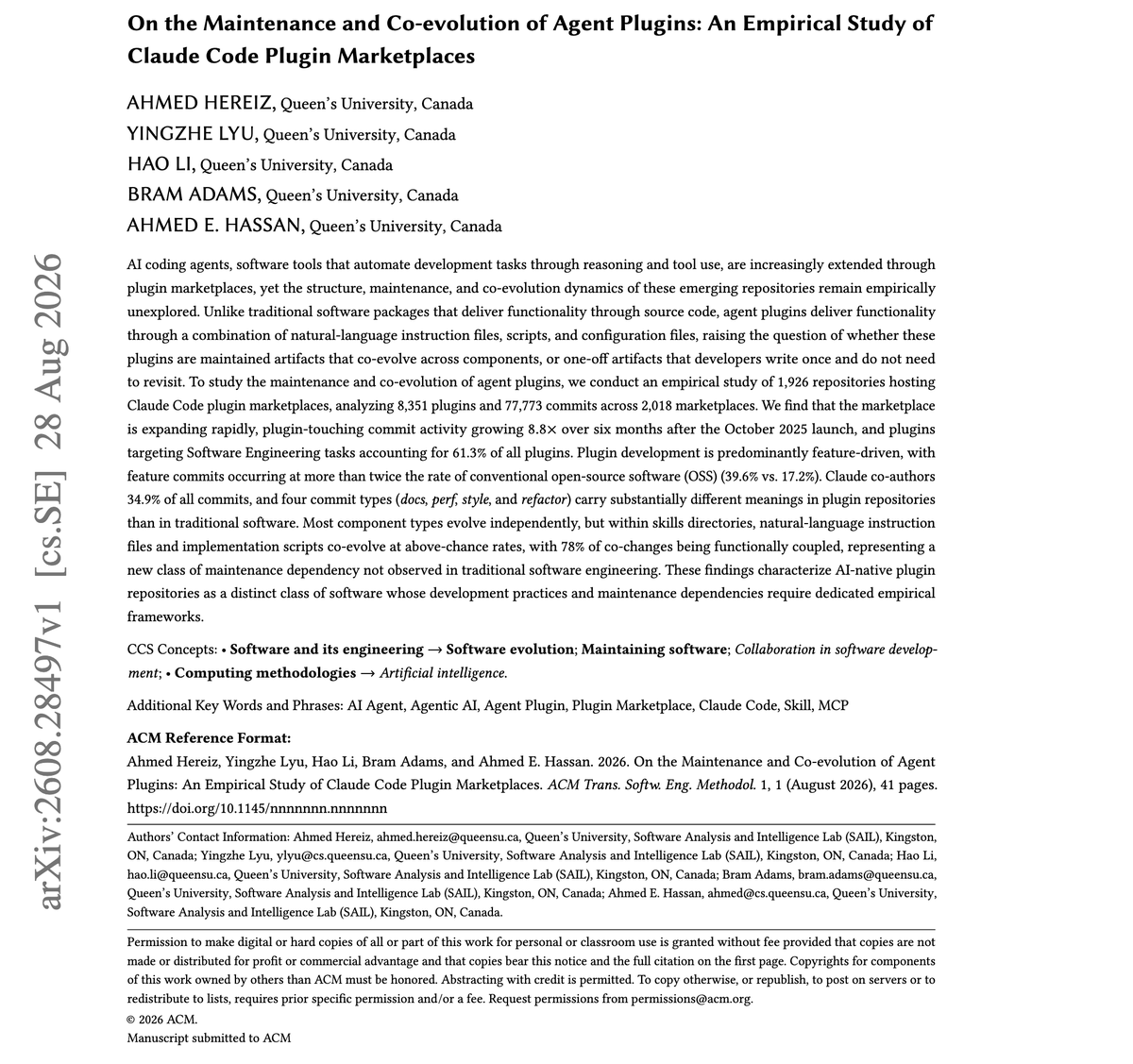
How fast is the Claude Code plugin ecosystem actually growing? Plugin-touching commit activity grew 8.8x in the six months after the initial launch. Researchers studied 1,926 repositories hosting plugin marketplaces, covering 8,351 plugins across 2,018 marketplaces and 77,773 commits. These are maintained artifacts rather than write-once files. Feature commits run at 39.6% against 17.2% for conventional open source. Software engineering tasks account for 61.3% of all plugins, and Claude co-authors 34.9% of every commit in the dataset. Natural-language instruction files and their implementation scripts co-evolve at above-chance rates, and 78% of those co-changes are functionally coupled. Prose and code have become one versioned unit, a maintenance dependency with no analogue in traditional software. Paper: https://t.co/Onf2JVThvr Chat with Paper: https://t.co/am3hnzI7sn
Not exactly sure how helpful these will be around the house, but I want one Writer: Ian https://t.co/yphkNzJT3o
Not exactly sure how helpful these will be around the house, but I want one Writer: Ian https://t.co/yphkNzJT3o
Behind‑the‑scenes at the World Humanoid Robot Games 🤖 Our Mini Pi plus bots have made great friends with each other.🤗 #HumanoidRobot #CuteRobot #WorldHumanoidRobotGames https://t.co/Ww3qBIVBLA
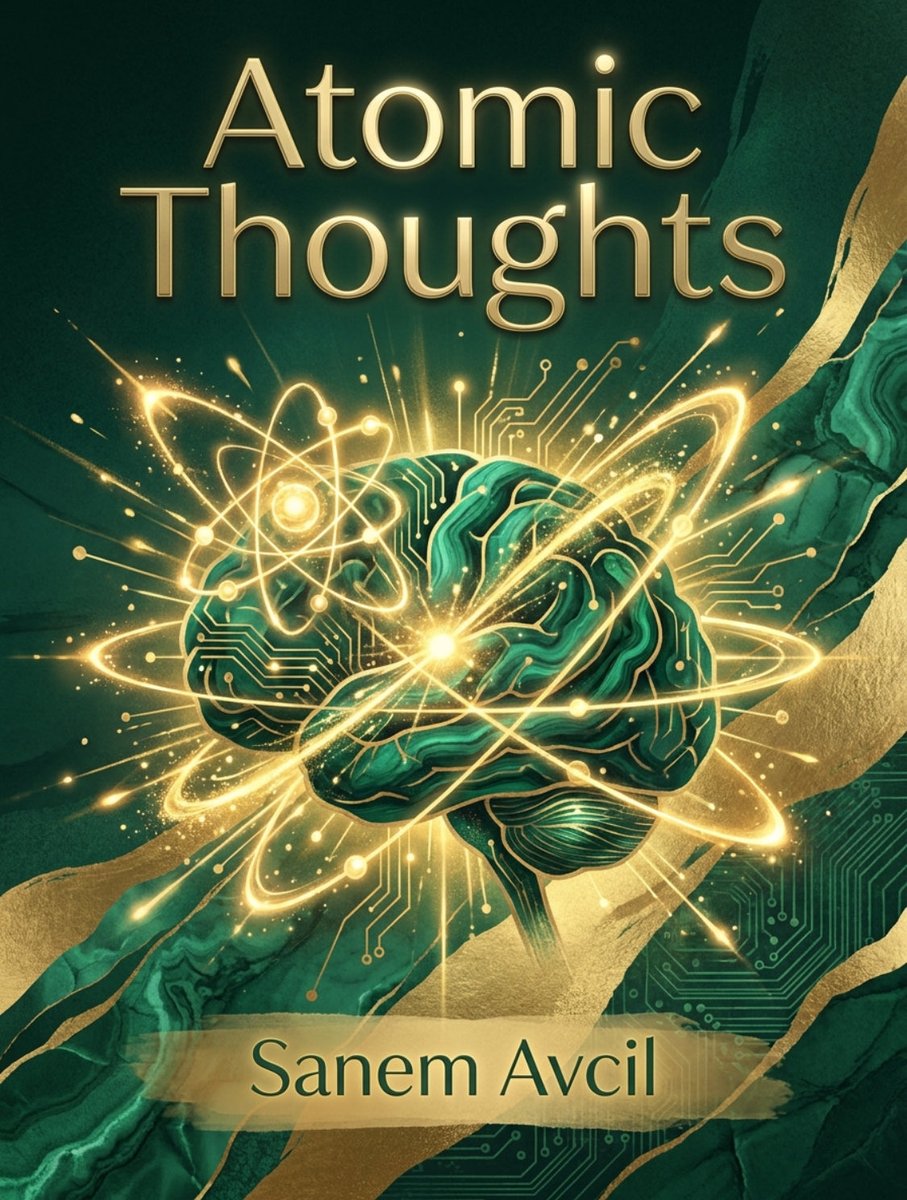
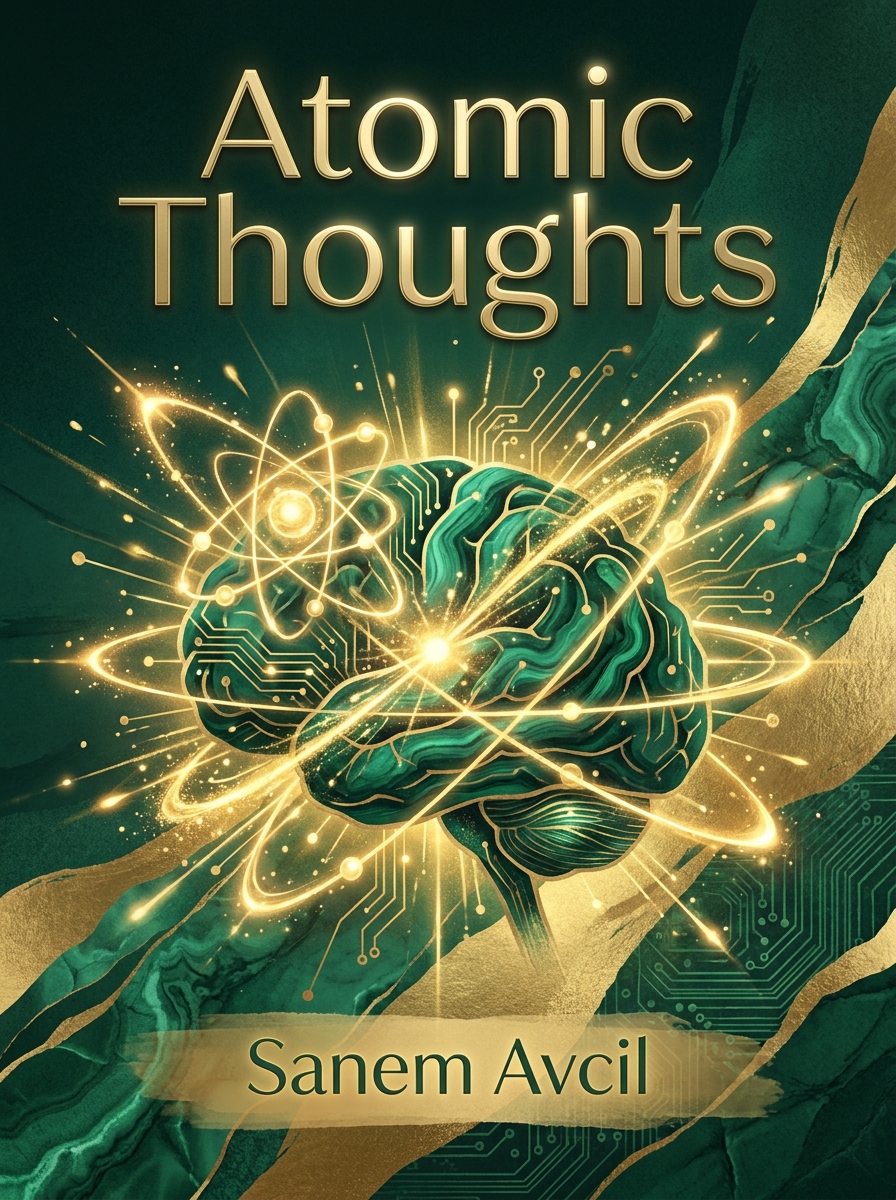
📖 My new book is live: Atomic Thoughts Your life is shaped by the thoughts you repeat — often before you realize they’re running the show. Atomic Thoughts is a motivational guide for Gen Z 👨🚀 readers who want to think more clearly, feel more confident, and build a future that reflects their values. No personality makeover required — just small, intentional shifts in attention, self-talk, and daily habits. Inside, you’ll learn how to identify limiting narratives, challenge comparison, manage digital overload, and turn uncertainty into forward motion. Every chapter turns big psychological ideas into practical tools you can use today. Available now as paperback, ebook 🧑🏫, and audiobook 🎧— created and published end-to-end with GamiBooks, my agentic AI publishing platform. From idea to live product, the entire pipeline was agent-driven. 🤖 Start small. Think differently. Change everything. 👉 https://t.co/XMaxamn5yH
High-Leap #Innovation: The Agile #Robot Redefining Mobility by @tweetciiiim #AI #Robotics #MachineLearning #ArtificialIntelligence #ML https://t.co/gjwSiR8WVD
friendly reminder: you can connect to and build with the suite of @Google apps in AI Studio get started today: https://t.co/shgEhF592p https://t.co/2uvvjPGg3P
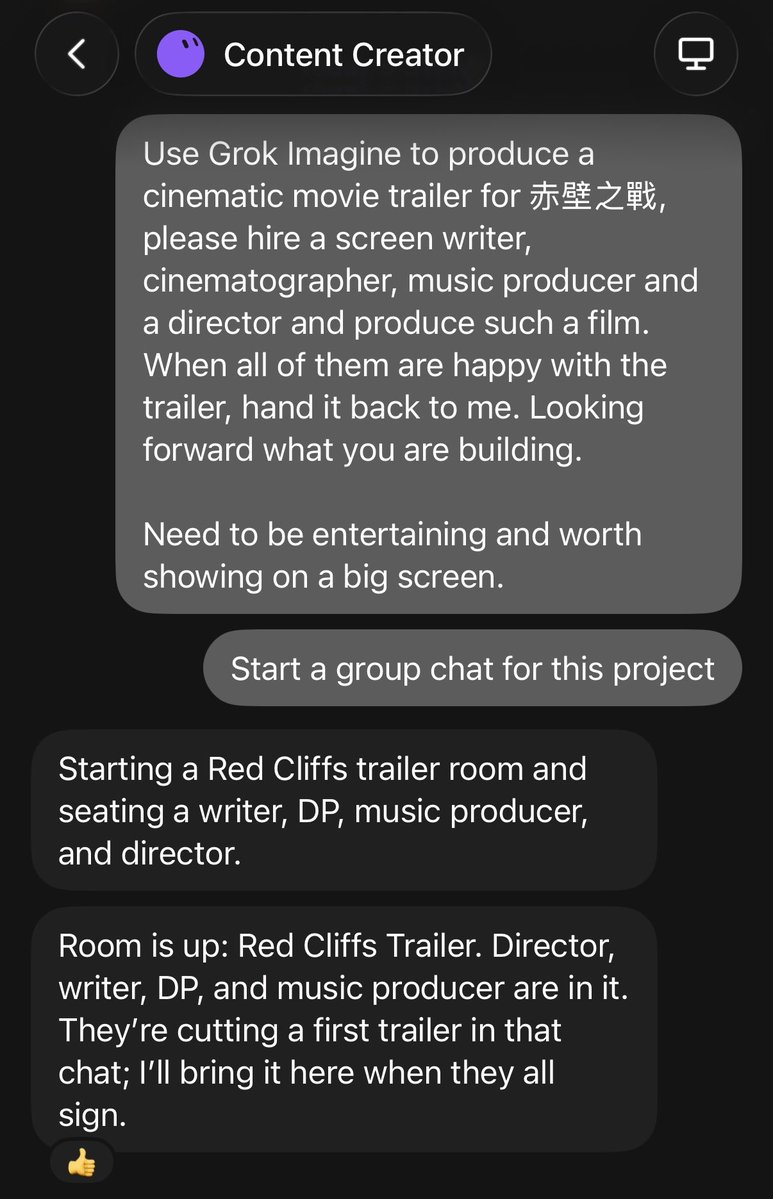
Two months ago I was testing Grok @imagine to make the Battle of Red Cliffs (赤壁之戰). Now in Grok @bot you can spin up a director, screenwriter, music producer, and cinematographer to create a cinematic movie trailer in one shot. Attached the only prompt I gave to Grok @bot and the rest was autonomous.
Grok Imagine one-shots the Battle of Red Cliffs (赤壁之戰), the famous epic Chinese battle in 208 AD. https://t.co/6ft5U0zT3r
@NousResearch Which Pantheon? https://t.co/cIBmXOOLVD


@0xPBIT https://t.co/WjOuJgtVIn
The AI hype graveyard Promise of disruption vs. delivered: • Search: got chatbots & hallucinations • Artists: got meme generators & ugly flyers • Coders: got more work & bloated repos Cyber apocalypse? VC-funded swarm chaos & consumer panic. What’s not to like?

@SkySportsPL https://t.co/WjOuJgtVIn
The AI hype graveyard Promise of disruption vs. delivered: • Search: got chatbots & hallucinations • Artists: got meme generators & ugly flyers • Coders: got more work & bloated repos Cyber apocalypse? VC-funded swarm chaos & consumer panic. What’s not to like?

@resetsan_sokuho https://t.co/WjOuJgtVIn
The AI hype graveyard Promise of disruption vs. delivered: • Search: got chatbots & hallucinations • Artists: got meme generators & ugly flyers • Coders: got more work & bloated repos Cyber apocalypse? VC-funded swarm chaos & consumer panic. What’s not to like?

@YamYasiy https://t.co/WjOuJgtVIn
The AI hype graveyard Promise of disruption vs. delivered: • Search: got chatbots & hallucinations • Artists: got meme generators & ugly flyers • Coders: got more work & bloated repos Cyber apocalypse? VC-funded swarm chaos & consumer panic. What’s not to like?