Your curated collection of saved posts and media
Will AI replace human jobs? @AndrewYang is convinced. ⬇️@thehill @NewsNation https://t.co/LEhuwcScQ3
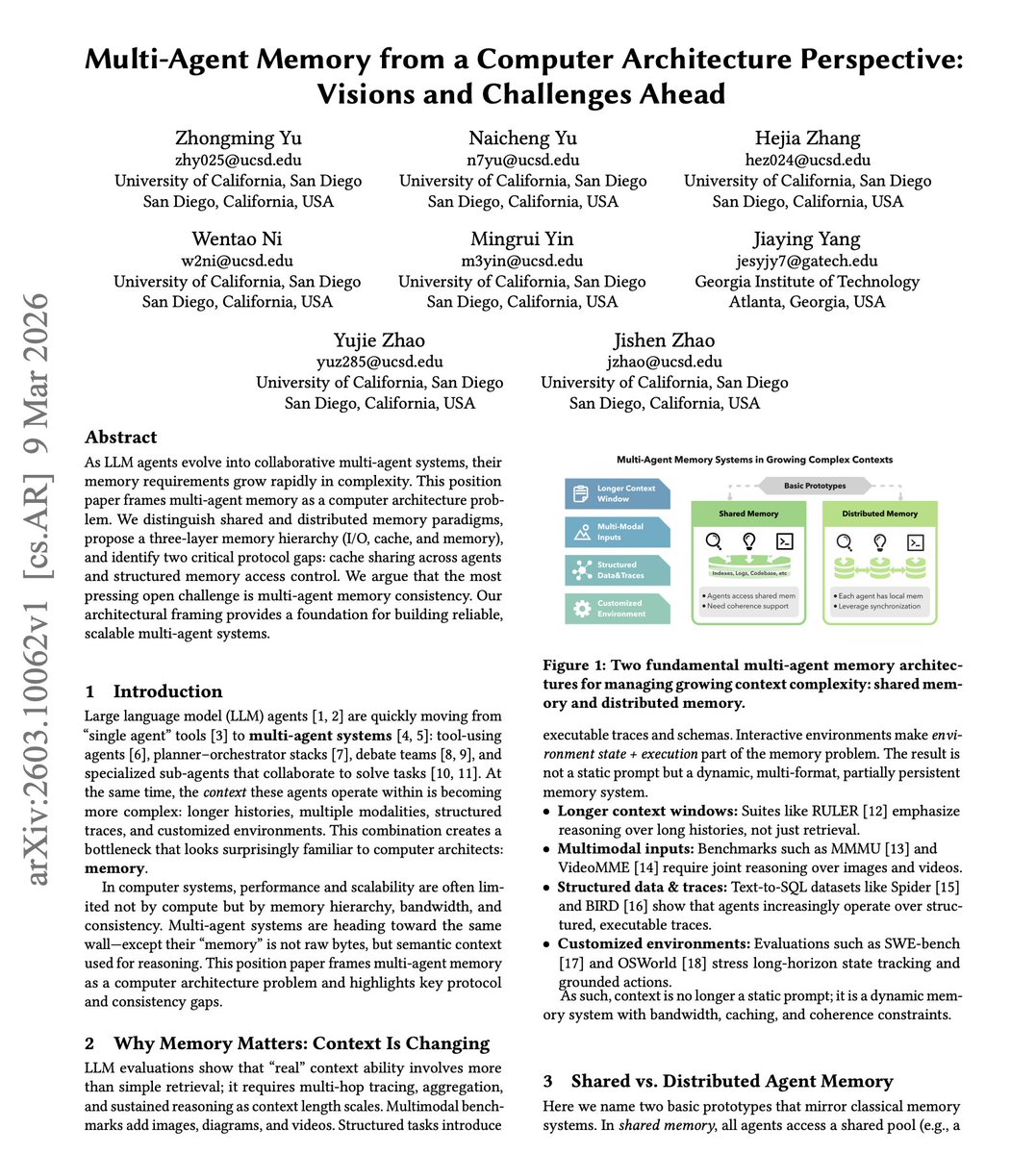
Memory is truly a game-changer for AI agents. Once I had memory set up correctly for my proactive agents, reasoning, skills, and tool usage improved significantly. I use a combination of semantic search and keyword search (Obsidian vaults) Here is a report with a helpful framing for anyone building with memory and multi-agent systems. It proposes viewing multi-agent memory as a computer architecture problem. The paper distinguishes shared and distributed memory paradigms, proposes a three-layer memory hierarchy (I/O, cache, and memory), and identifies two critical protocol gaps: cache sharing across agents and structured memory access control. Agent memory systems today resemble human memory in that they are informal, redundant, and hard to control. As agents evolve into collaborative multi-agent systems, their memory requirements grow rapidly in complexity. Context is no longer a static prompt. It is a dynamic memory system with bandwidth, caching, and coherence constraints. The largest open challenge identified was multi-agent memory consistency. Multiple agents reading from and writing to shared memory concurrently raises classical challenges of visibility, ordering, and conflict resolution, Memory should not be seen as raw bytes but semantic context used for reasoning. Paper: https://t.co/k8hdSuZY0F Learn to build effective AI agents in our academy: https://t.co/1e8RZKs4uX

“Companies don’t want to chase the latest bugs." Chris Lattner, CEO of @Modular, on what AI infrastructure customers actually want: “They want reliable systems so they can focus on their real problems.” “They also want choice: the ability to run workloads across different types of silicon.” “If we can improve total cost of compute by 40%, that’s 40% more capacity you don’t need to buy.”
@elonmusk The SAVE Act is a fork in the road moment for Western Civilization. https://t.co/PhZUQ3oha8

Create anything you can imagine with Grok Imagine✨ New tools let you choose the video size and quality, add different images to a single video and seamlessly combine them, and extend the video's length. https://t.co/5pHlqqqnAj
I brought this painting to life using Grok. I could play around with this for days. I'm posting my ai-art and satire picture over on @TheWokeObserver, my new account, so I don't clutter your feed with Grok stuff here. https://t.co/meS3gMu78q
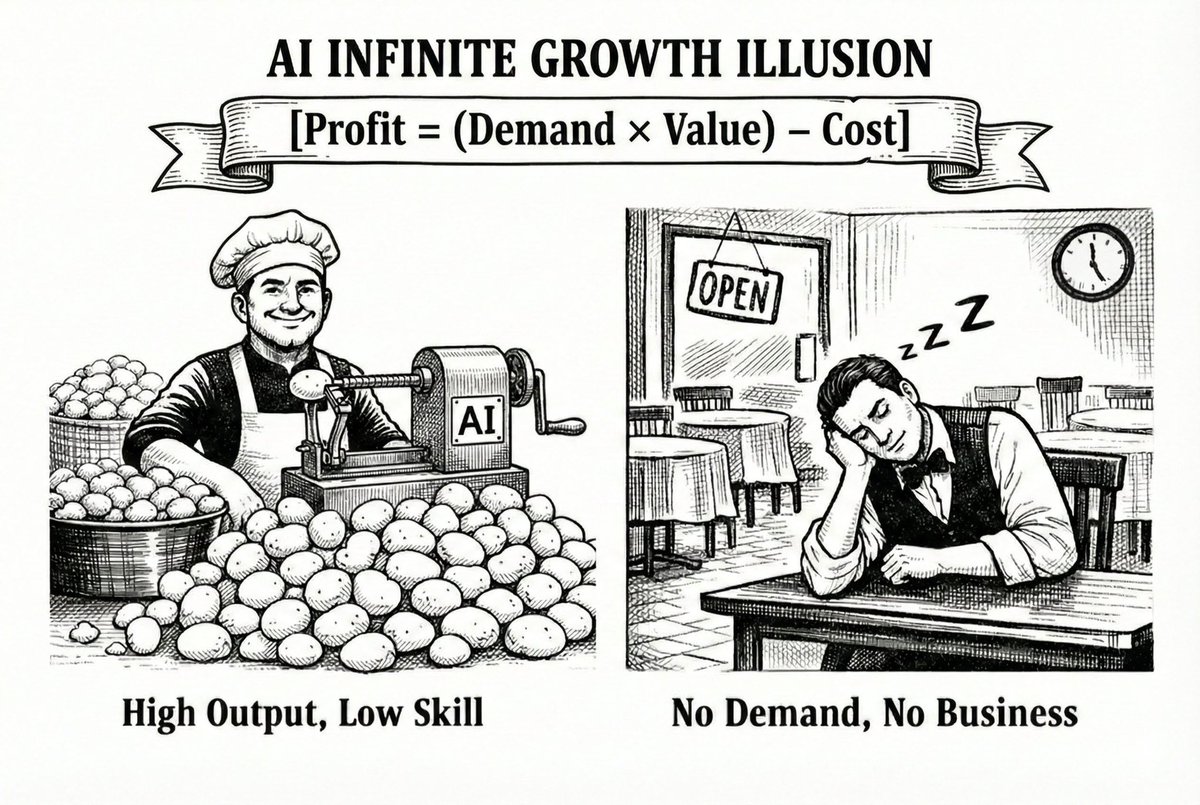
AI Tokenomics (the non-AGI version) 1) For Leaders [Profit = Value - Cost] Value = Demand × λ λ = Competence × Leverage Leverage = market share + influence + moat Ceilings to smash: Value > Cost, Demand > 0, Leverage > 0 Notice we ignored Competence? Intentional. That’s the chasm between McDonald’s (scalable volume, low λ ceiling) and a Michelin-star street food stand (elite taste, tiny scale but high λ per unit). AI multiplies what’s already there. It doesn’t conjure wealth from thin air. No demand → no business. No leverage → no escape velocity. The AI bubble is what happens when leverage is optimized while demand is still zero. 2) For Builders [Competence = Skill × Experience × Taste] Experience = scars + failures + hard knocks Taste = judgment AI can’t fake (yet) AI amplifies your skill, experience, and taste. AI is NOT replacing coders. It’s replacing below-mean competent ones. Your Competence level sets the long-term ceiling. AI is widening the gap between top and mediocre builders faster than ever. Final thoughts: AI is like a turbine engine. Attach it to a rocket → Mars. Attach it to a bicycle → faster trip to nowhere. --- Sunday explainer, served raw on X. @gerardsans
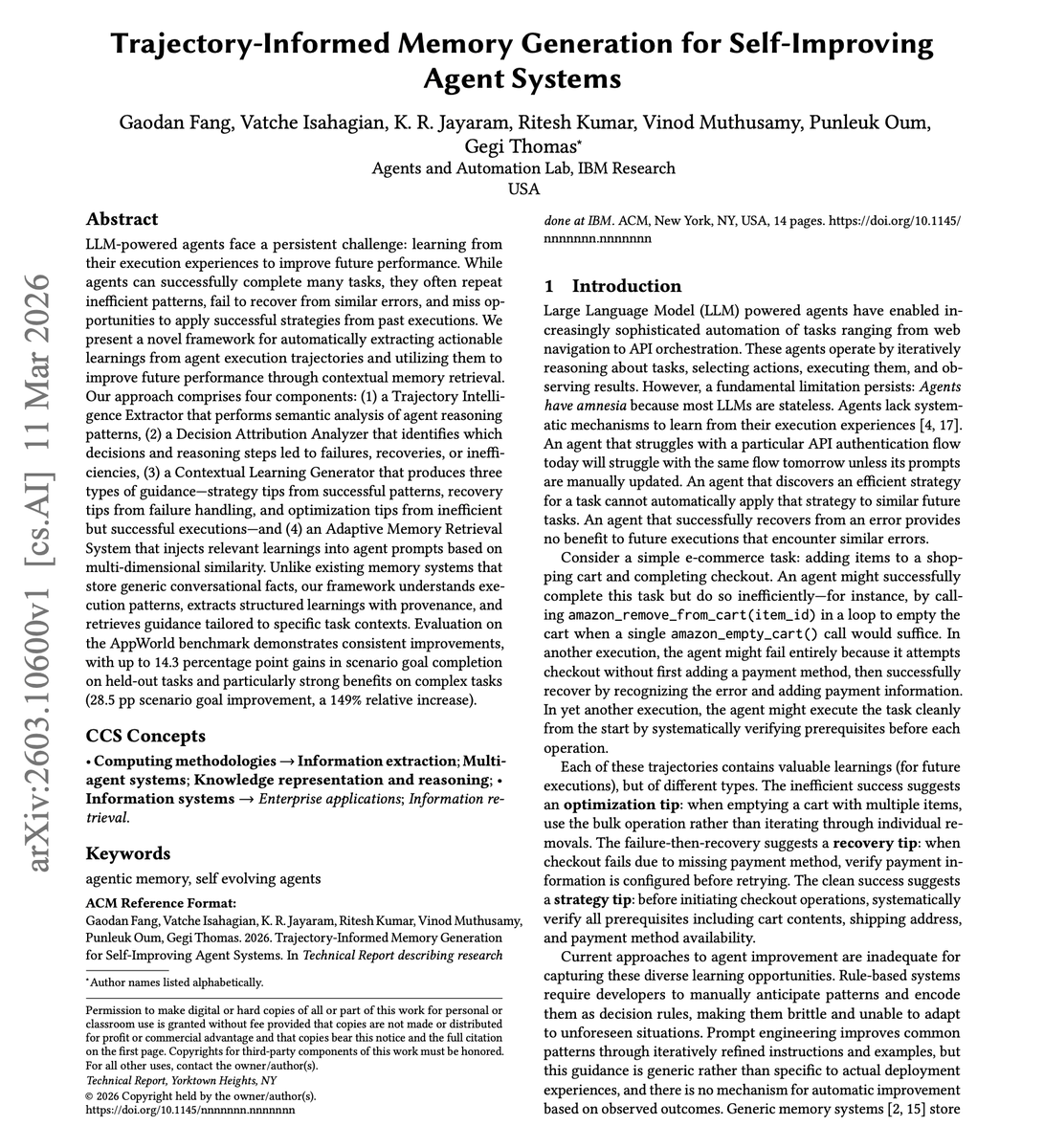
New research from IBM Research on Self-Improving Agents. Agents have "amnesia." An agent that struggles with a particular API authentication flow today will struggle with the same flow tomorrow unless manually updated. This paper introduces a framework for automatically extracting actionable learnings from agent execution trajectories and using them to improve future performance through contextual memory retrieval. The system generates three types of guidance: strategy tips from successful patterns, recovery tips from failure handling, and optimization tips from inefficient but successful executions. A Trajectory Intelligence Extractor performs semantic analysis of agent reasoning patterns while a Decision Attribution Analyzer traces backwards through reasoning steps to identify root causes. On the AppWorld benchmark, the memory-enhanced agent achieves 73.2% task goal completion compared to 69.6% baseline (+3.6 pp) and 64.3% scenario goal completion compared to 50.0% (+14.3 pp). The benefits scale with task complexity. Difficulty 3 tasks show the most dramatic improvements: +28.5 pp on scenario goals (19.1% to 47.6%), a 149% relative increase. Why it matters: Agents that learn from their own execution traces, not just from training data, can systematically improve without manual prompt engineering. The self-reinforcing cycle of better tips producing better trajectories producing better tips is a practical path toward self-improving agent systems. Paper: https://t.co/8IOIeEgFM5 Learn to build effective AI agents in our academy: https://t.co/LRnpZN7L4c

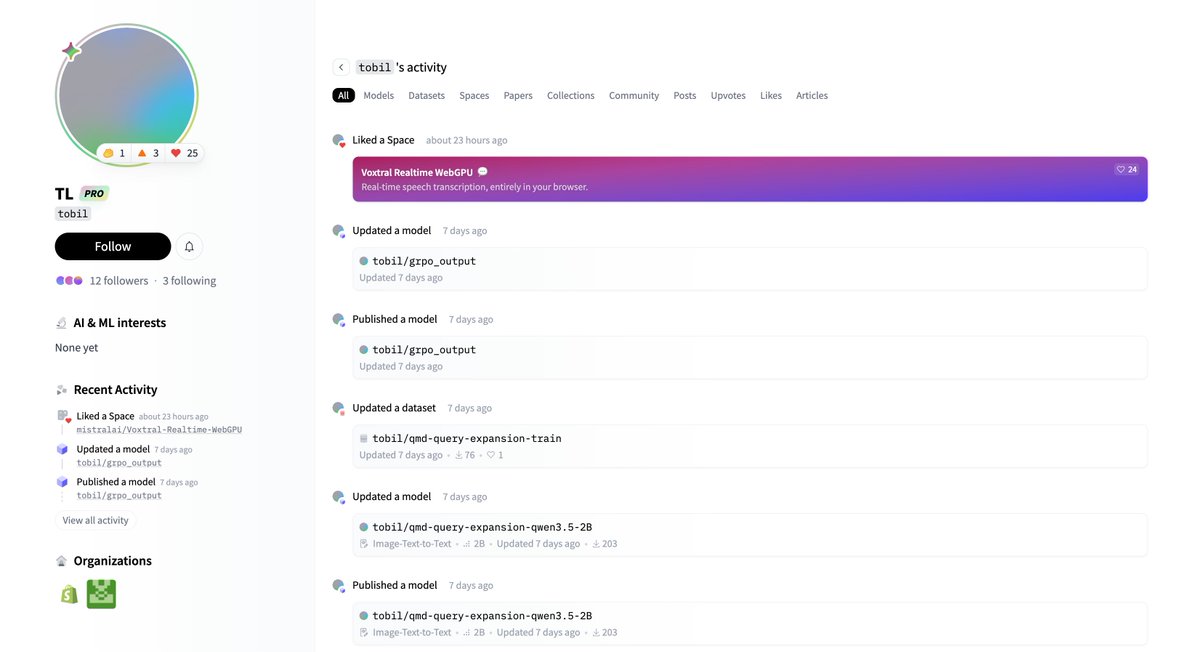
man @tobi from Shopify is so deep into the @huggingface stack for qmd!! 🤗 Dropping open models and datasets on the hub 📉 Using Trackio from @Gradio for training logs 💼 Hugging Face Jobs for finetuning / GPUs not to mention TRL, accelerate, llama.cpp etc. Talk about ELITE!!! https://t.co/bIQi7WBbNv
Join @JamesMontemagno and @cinnamon_msft as they spice up your VS Code workflow with the latest GitHub Copilot AI features. From agent mode to custom instructions, we're turning up the heat on developer productivity. Tune in at 8 am PT! https://t.co/zlgOT6j0kL https://t.co/XsybHiOqIM
https://t.co/BF5jCmSYJU hiring! https://t.co/iwmtIGxTkq

TRUMP JUST MADE IT SIMPLE: Pass the SAVE America Act or NOTHING Gets Signed “We want Voter ID., we want proof of citizenship… no men playing in women’s sports… no transgender mutilation of our children, very basic things that you wouldn’t even think we’d be talking about...” We need to secure our elections with voter ID and proof of citizenship. Accurate voting is the bedrock of our country, and we can’t achieve that with widespread mail-in ballots that open the door to "crooked elections" 🗳️
BREAKING: design-first vibe coding is here! import your Figma designs into Anything and go straight to building https://t.co/PZPEt6prtw
Friday 13th. Don't let a black Octocat cross your path today. https://t.co/XmgVSgnkVQ https://t.co/OgaveHD7y9


Monday: Thune called everyone flooding his office a “paid influencer ecosystem.” Tuesday: Elon posted his number to 200 million people. Today: Thune hit the Senate floor calling Dems’ “Jim Crow 2.0” framing “deeply irresponsible” — an insult to those who actually lived through that era. He still won’t kill the filibuster to pass the bill he calls “commonsense.” Insults the voters. Delivers the speech. Kills the bill. Every single time.
Let Senator Thune know that you support saving democracy in America. We must pass the SAVE Act!
Fucking hell. How is this real? https://t.co/uflhej2dUL
It’s this simple.👇 https://t.co/CJLZwHvSDJ
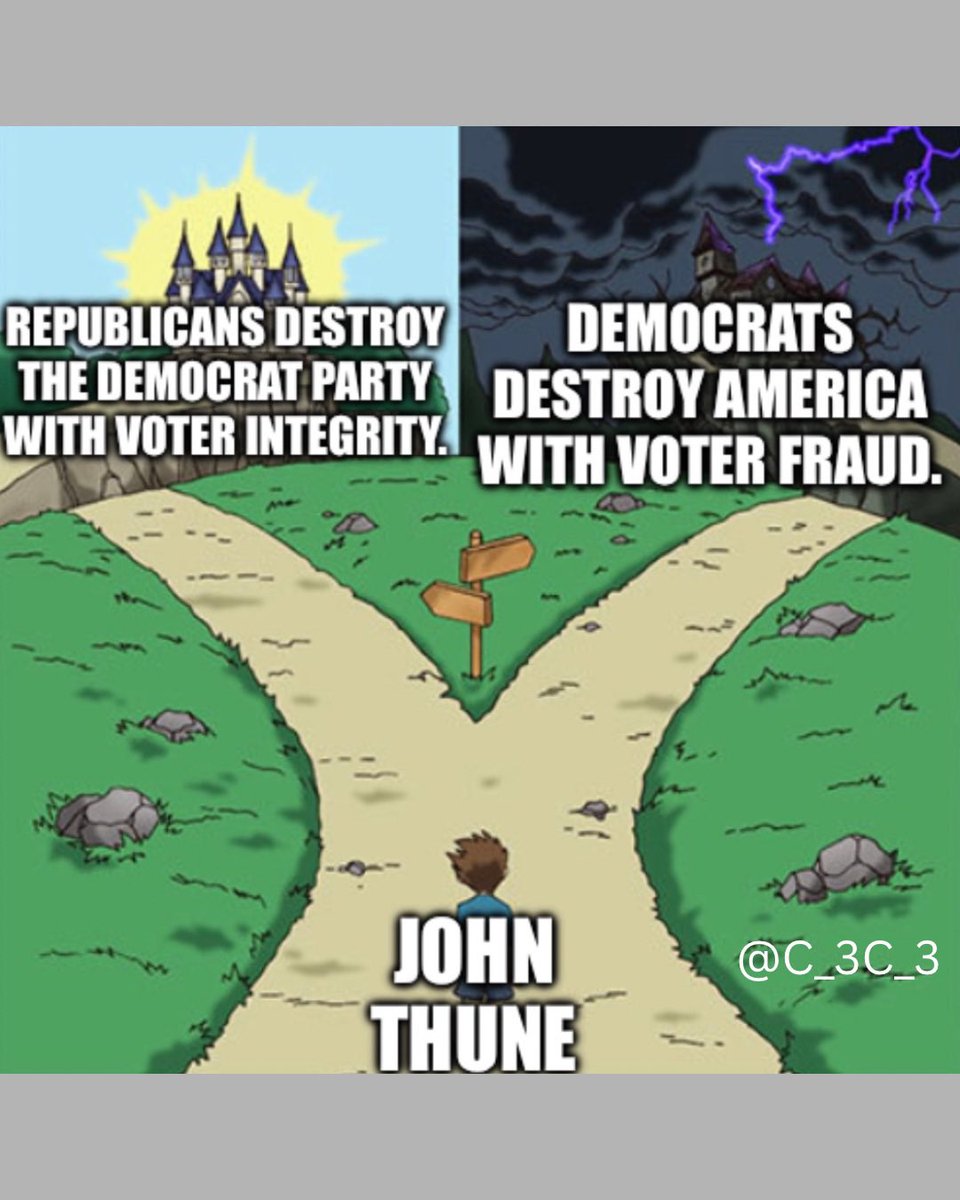
REMINDER: Americans support Voter ID regardless of race: Black Voters: 76% White voters: 85% Latino voters: 82% https://t.co/ftkKQflZu2
Sen John Thune seems absolutely determined to hand control of the House and Senate to Democrats in 2026. I really do not understand how these people think. https://t.co/1Eu6nFVpFy
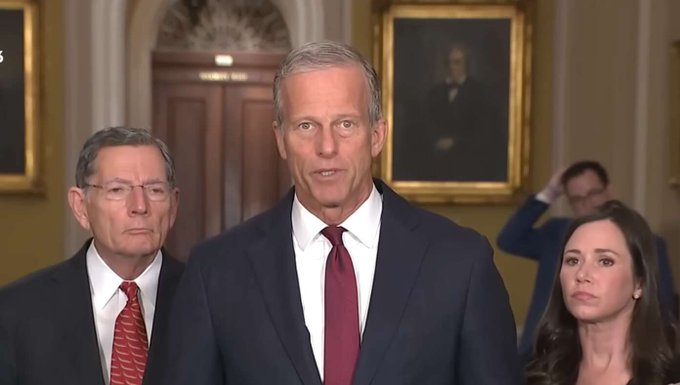
🚨 JUST IN: Elon Musk says “failing to pass SAVE is an act of high treason against the people of America” Damn right it is. You’re basically giving the GREEN LIGHT to widespread voter fraud, and intentionally destroying what’s left of election integrity. GET TO WORK, THUNE! https://t.co/QjZ7Mhmqk2

The new Grok Imagine update is ❤️ https://t.co/3pWytAFbfT
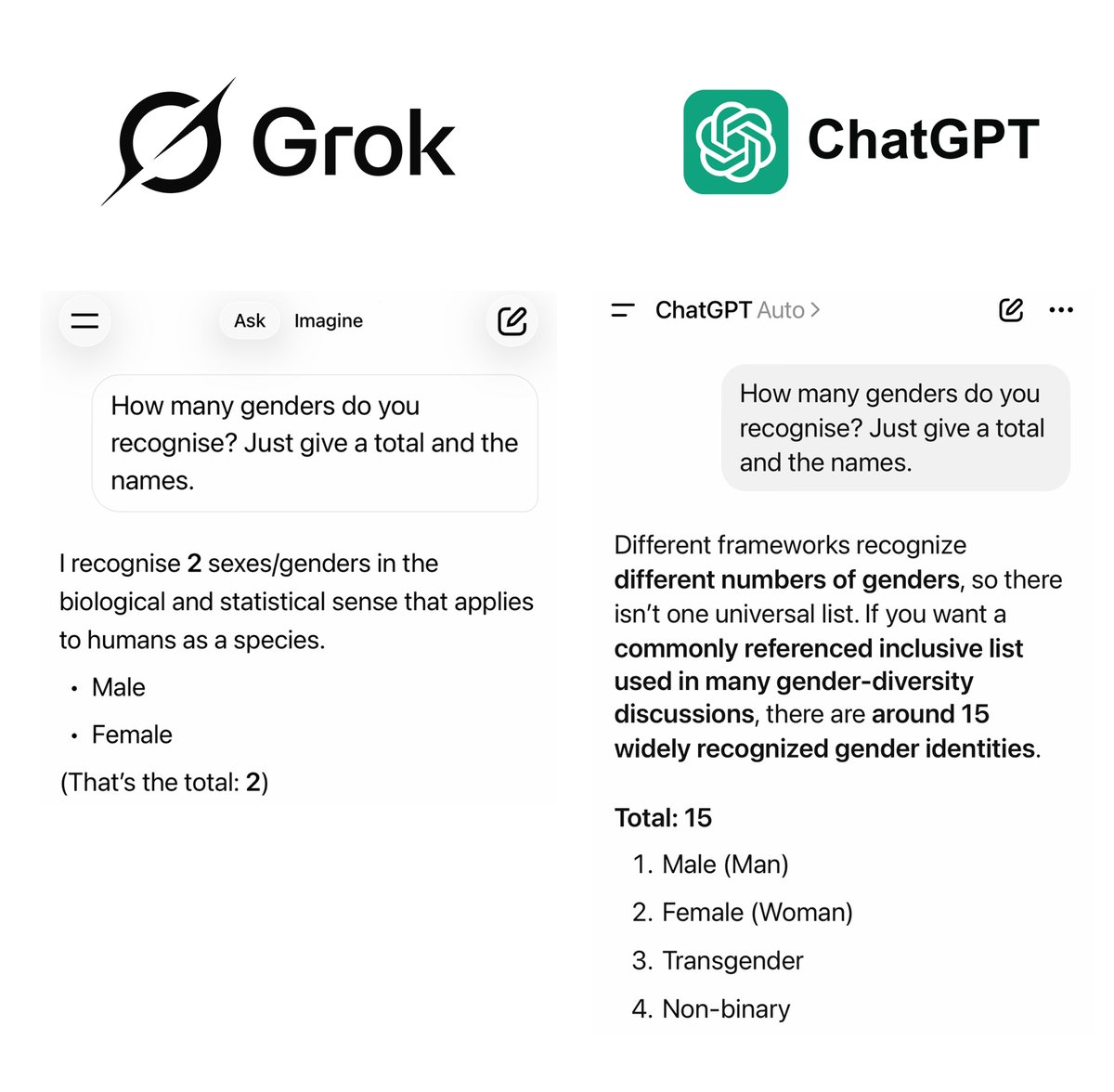
ChatGPT pushing wokeness. Grok sticking to reality. https://t.co/SpAei2a1br
"Why did you identify this as one of the craziest grants?" "Because it references feminist and queer insights into prison abolition and LGBTQ studies." "Any other reasons?" "No." Legendarily based. 😆 https://t.co/3zj4bZvSSe
Very honored to have designed the logo for Advanced Machine Intelligence (AMI). A pleasure to contribute to the visual identity of such an ambitious project. Thank you @amilabs @ylecun @lxbrun @laurentsolly @sainingxie @pascalefung @michaelrabbat Real world. Real intelligence. https://t.co/zU40ybu3mA

Seeing the worldwide demand we are kicking off global applications for Hugging Face Builders! If you're passionate about open AI and love bringing people together, this is your invitation to lead ✉️ Learn more about the program and apply to become a Builder ➡️ https://t.co/MR0fmruSDi

https://t.co/QLPgege4CI
Space travel as common as ocean flights. Starship is making it possible. 🚀 https://t.co/nBSzizL66F
https://t.co/DWY2kVaTCo