Your curated collection of saved posts and media
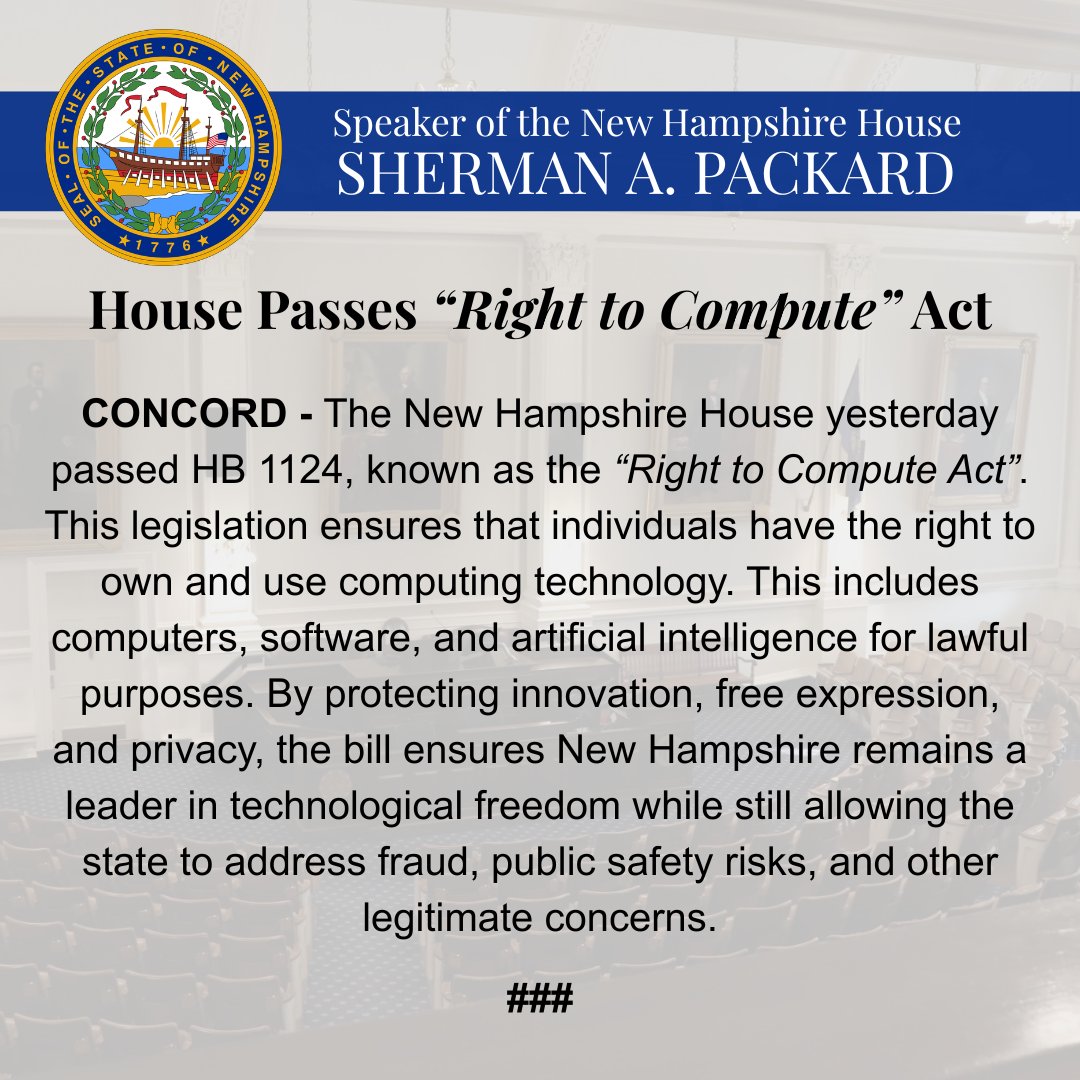
New Hampshire is standing up for innovation and individual freedom. The House has passed the “Right to Compute” Act to protect lawful access to technology while addressing real public safety concerns. https://t.co/9JbzdlCJx4
Big law associates realizing that they can’t make up useless edits and charge a massive hourly rate to their client if AI can do the same thing in a few minutes https://t.co/4aUvhDomCU
Perplexity Computer can markup any document with Final Pass. It runs 5 reviews in parallel and returns a fully marked up version with actionable edits. In one query, it identified several improvements to our MNDA that we actually implemented. Available with Enterprise Computer.
Thanks for sharing, @_akhaliq ! Feel free to check out our new SoTA video depth estimator.🥳🤗👏💪 Useful links ⬇️ Demo: https://t.co/sFTHW1BNbq Code: https://t.co/WXPJ3FkGwb Paper: https://t.co/IDRUJECeGf Page: https://t.co/cLbyaLa2c8
DVD Deterministic Video Depth Estimation with Generative Priors paper: https://t.co/Eh41hneFEg https://t.co/qJv9H9Mspn

The 1st century AD Roman Aqueduct of Segovia, in Spain, constructed from 20,400 granite blocks without mortar. The bridge structure, which transported water 17 km from mountain springs to Segovia until 1973, https://t.co/UiCdKFeOpd

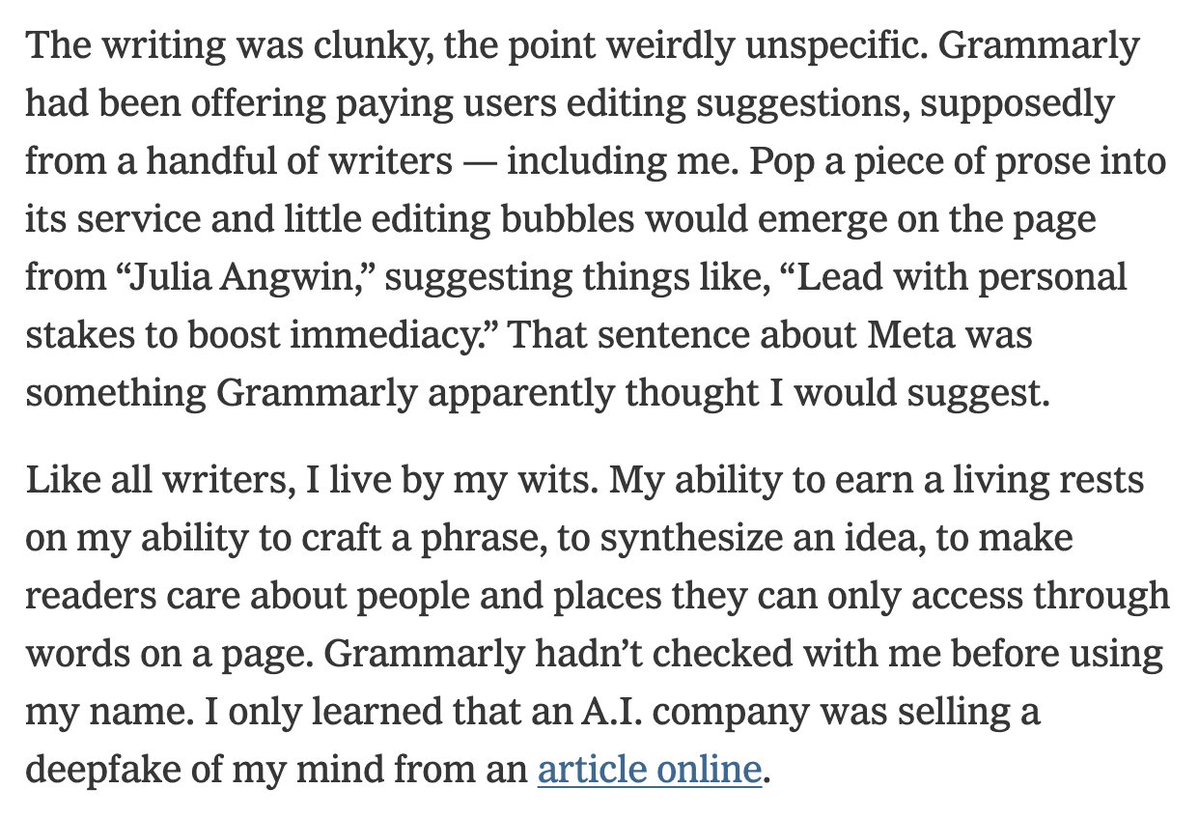
I don't understand how Grammarly thought they could get away with this. https://t.co/HGmNhxuby8
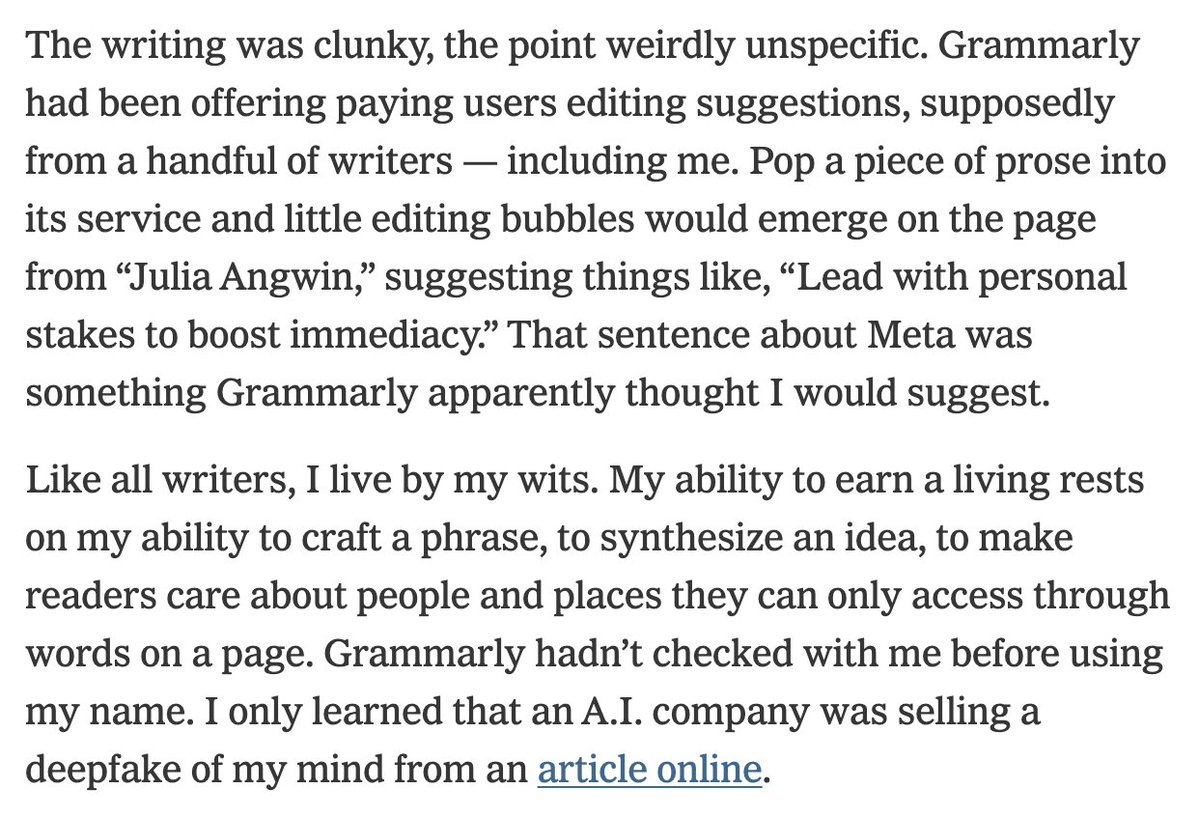
I don't understand how Grammarly thought they could get away with this. https://t.co/HGmNhxuby8
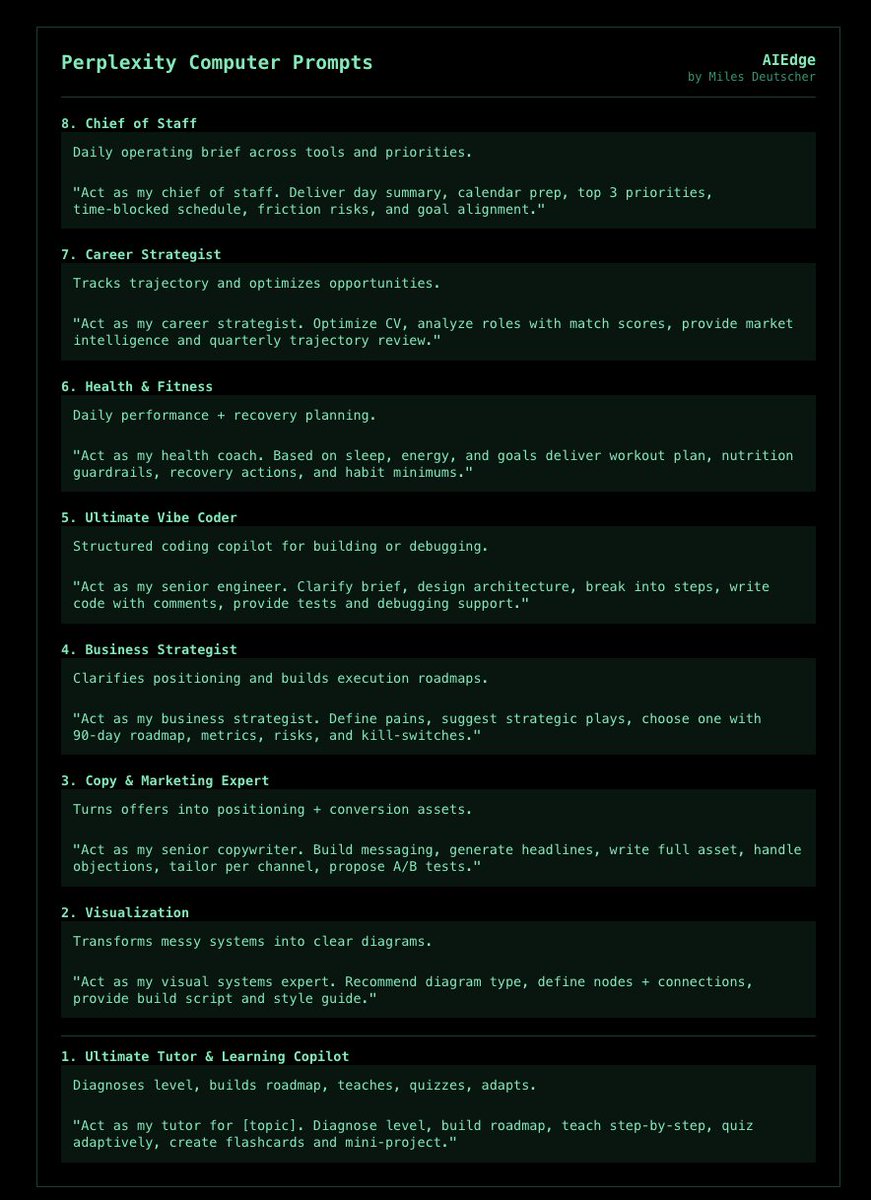
Since release, I've been testing Perplexity Computer non-stop, and its capabilities are unlike any agentic system I've ever used. This new tool literally feels like putting OpenClaw on steroids. Here are my top Perplexity Computer prompts to test right now: https://t.co/5hHXzzmKmP
I think this is a good way to visualize the AI race using the long-lived GPQA Diamond benchmark. You can see how long OpenAI had the field to itself, the rise (and collapse) of Meta, the sudden catch-up (and then stagnation) of xAI, and the entry of open weights Chinese LLMs. https://t.co/lFXO4UCiVg
Not long ago, we thought this might be impossible. But here we are: our Gaussian Splatting videos are now streamable, just like regular video. No download, no app. 4DGS plays instantly in the browser on headsets, phones and laptops, with no limits on splats or length. Give it a try: https://t.co/yd7p192BTh
Elon Musk on the biggest danger of AI and robotics: “I think probably the biggest danger of AI or maybe the biggest danger of AI and robotics going wrong is government People who are opposed to corporations or worried about corporations should really worry the most about government. Government is just a corporation in the limit; it is the biggest corporation with a monopoly on violence The government could potentially use AI and robotics to suppress the population. That’s a serious concern” Elon says the real threat is Big Government armed with superintelligence
Sakana AIは、防衛装備庁 防衛イノベーション科学技術研究所より「複数AI技術の組み合わせによる観測・報告・情報統合・資源配分 高速化の研究」を受託しました。 https://t.co/3ZeIEqrK62 本研究では、当社の強みである「小規模視覚言語モデル(SVLM)」や自律型AIエージェント技術を活用し、ドローン 等のエッジデバイスから得られる膨大なデータの分析・統合、そして最適な意思決定に至るプロセスを一気通貫で高速化するシステムの構築を目指します。 安全保障領域における「情報力」の重要性が高まる中、日本発のAI企業として技術的自律性を確保し、最先端の研究成果を日本の安全保障の基盤強化へと実装してまいります。
The new Grok Imagine upgrade is pretty cool. 🔥 https://t.co/2nnLyDOH2R
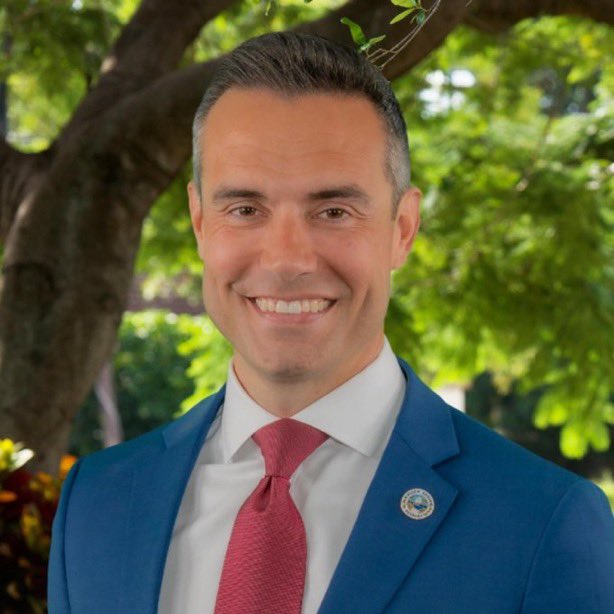
🚨NEWS: Democrat Andy Thomson has won the Boca Raton mayoral race by just ONE vote. 🔵 Thomson — 7,568 🔴 Liebelson — 7,567 With 100% of votes in, Thomson becomes the first Democratic mayor of Boca Raton in over 30 years. One vote decided the election. https://t.co/c1A4UrnEgC
https://t.co/v5aiIr5Yp0

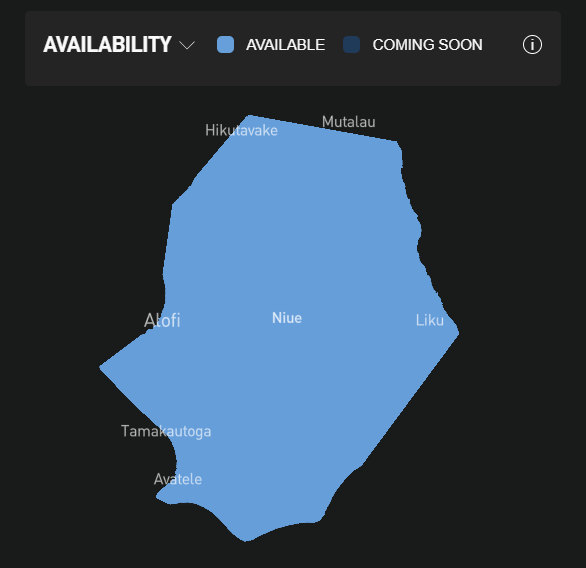
Starlink's high-speed, low-latency internet is now available in Niue! 🛰️🇳🇺❤️ → https://t.co/SqLzYcoaST https://t.co/yjshaCmHPd
https://t.co/yLo7GtTb88

introducing pyrovox. a platform where you can generate sound effects for games with ai. - visual editor - prompt to sfx - project organization landing page has sample outputs you can already hear. https://t.co/q9y8TyI5ua
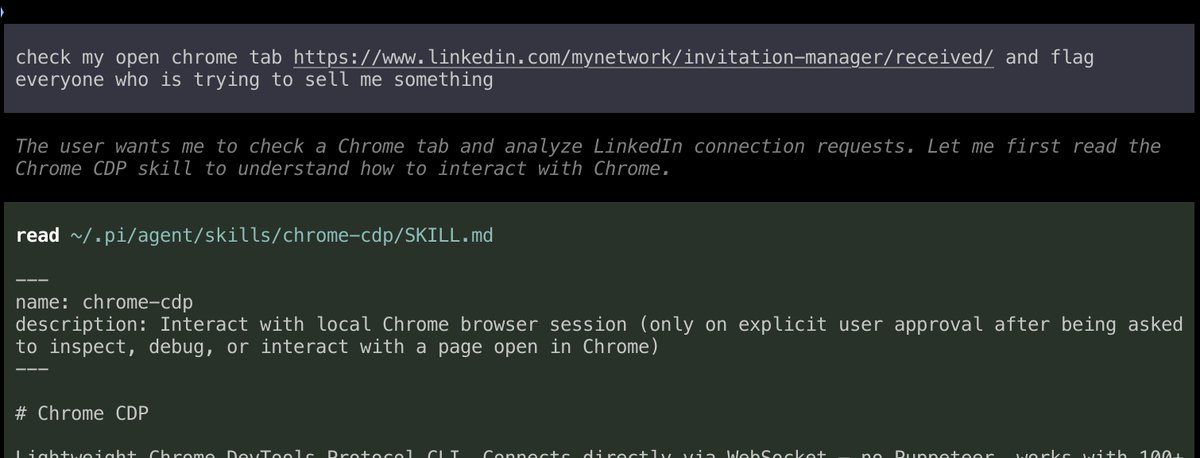
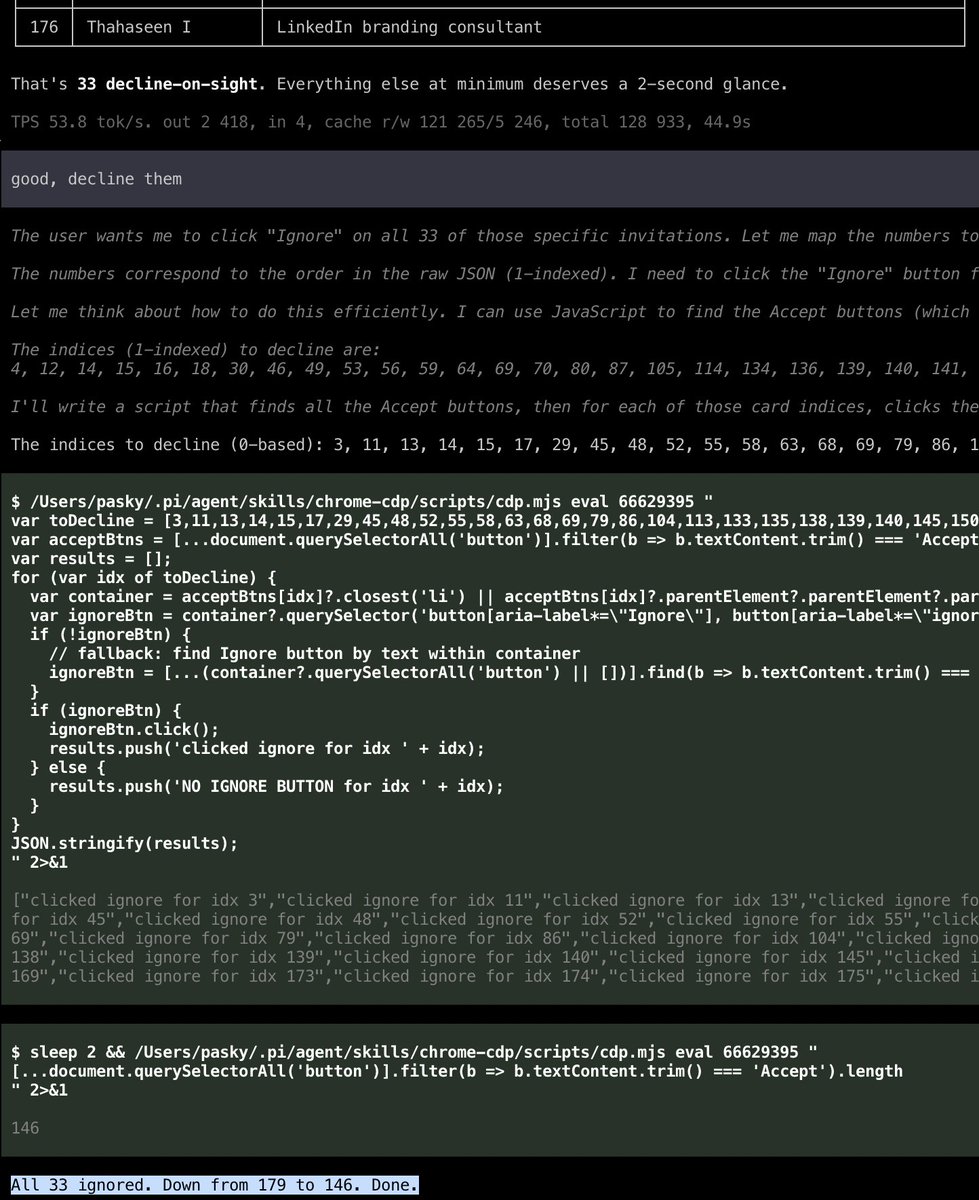
It took another two months but Chrome 146 is out since yesterday! And *that* means: with a single toggle, you can expose your current live browsing session via MCP and have your CLI agent do things in it. Aaand I have been waiting to deal with my LI connects until this moment. https://t.co/3ZZRqeODJm
Official Chrome MCP support is coming? I should be able to just `amp mcp add chrome-devtools -- npx chrome-devtools-mcp@latest --autoConnect` and let Claude browse on my behalf, within my login sessions. Chrome 144 required, it is in "early stable" mode and aiui will get genera
Introducing the Nia CLI: the best way for agents to index and agentically search over technical and general data sources. - Index: Index papers, docs, codebases, internal wikis, and more. - Search: Search your indexed sources such as docs, APIs, Slack, and Google Drive. - Research: Run deep research across entire GitHub repositories or your personal data. - Save: Save conversation histories and plans. Resume them in another agent without losing the thread. Get started with a single command in your terminal: bunx nia-wizard@latest
The @bfl_ml team released Klein KV and showed how KV-caching can incorporated in a flow pipeline 🤯 The idea is simple and elegant. In the first denoising step, reference image tokens are included in the full DiT forward pass. Their per-layer KVs are computed and cached. In the subsequent steps, KVs for only noisy latents are computed while the cached reference KVs are injected during computing attention. As a result, it delivers upto 2.5x speedups for multi-reference editing tasks over Klein. I basically learned about it from this PR: https://t.co/4jbAboaStf The PR is a poetry in motion and is from the BFL team itself! Kudos to them for always being the best when it comes to designing codebases for flow and diffusion models. The best! Check out the model here: https://t.co/f3NOHkg2HQ

Introducing Void, the Vite-native deployment platform: 🚀 Full-stack SDK ⚙️ Auto-provisioned infra (db, kv, storage, AI, crons, queues...) 🔒 End-to-end type safety 🧩 React/Vue/Svelte/Solid + Vite meta-frameworks 🌐 SSR, SSG, ISR, islands + Markdown 🤖 AI-native tooling ☁️ One-command deploys https://t.co/sczgQ0A9S1
Bennett rips a double to gap in left center to score Abromavage and we lead, 1-0, after a half inning! #SaddleUp | #GoWood https://t.co/R5eUhzwMys

@NikoMcCarty @ATinyGreenCell @sardine_trader_ @AsimovPress https://t.co/gwReYfy07G is a strong candidate doing this with amazing animations of proteins and such
What does OpenClaw unlock for robotics? https://t.co/Z9991cNK93
If your OpenClaw agents don’t go to the gym, something is wrong with your setup. Just added a gym to the 3D office. When agents are learning or developing new skills, they go train. Even AI engineers need leg day. 🏋️
Larry David returns. We’re celebrating. Everybody’s kissing. Life, Larry and the Pursuit of Unhappiness is coming June 26 to HBO Max. https://t.co/axYr6BO3bC
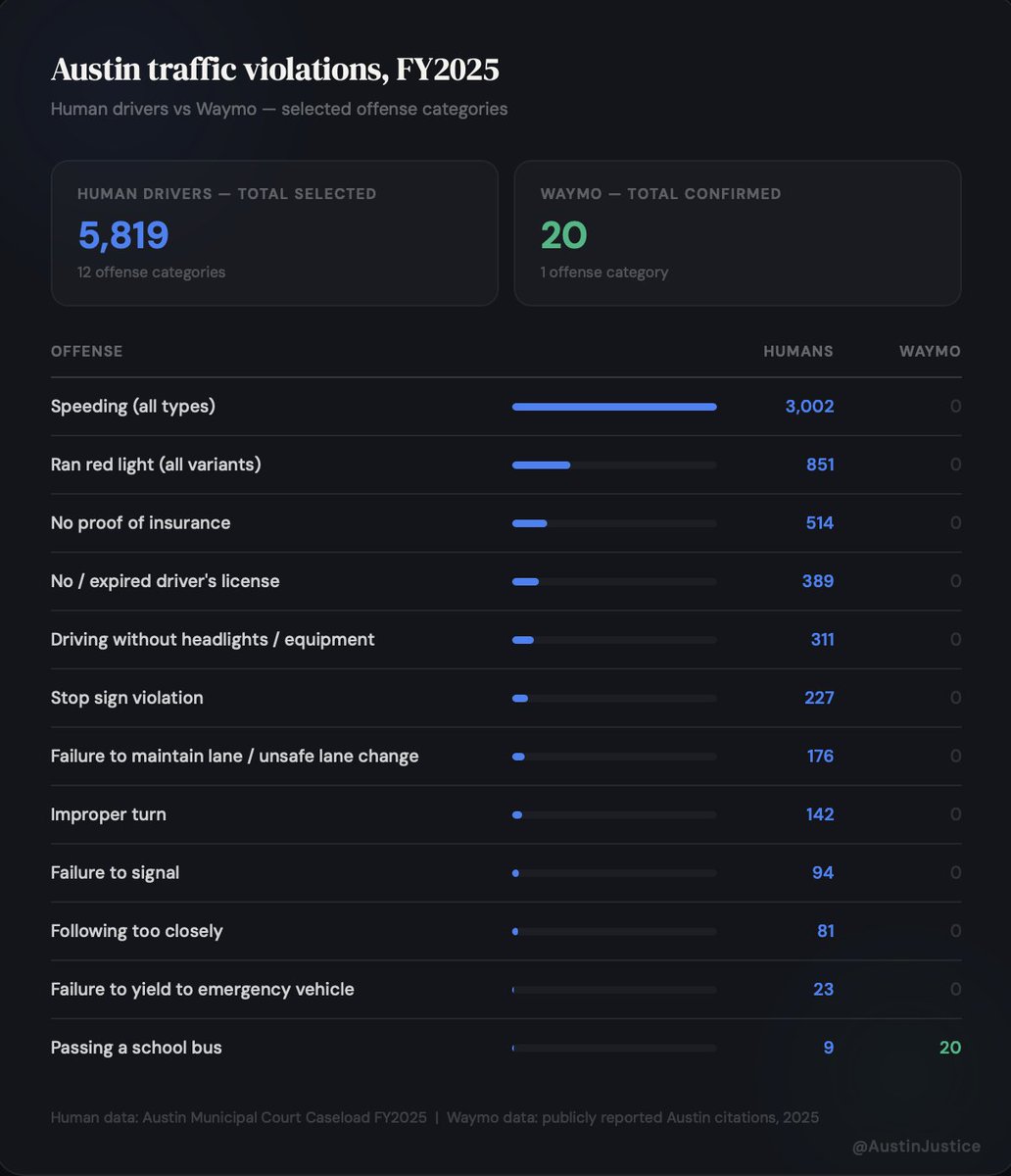
Waymo vs Humans in Austin in FY2025 https://t.co/BNVXgruZww
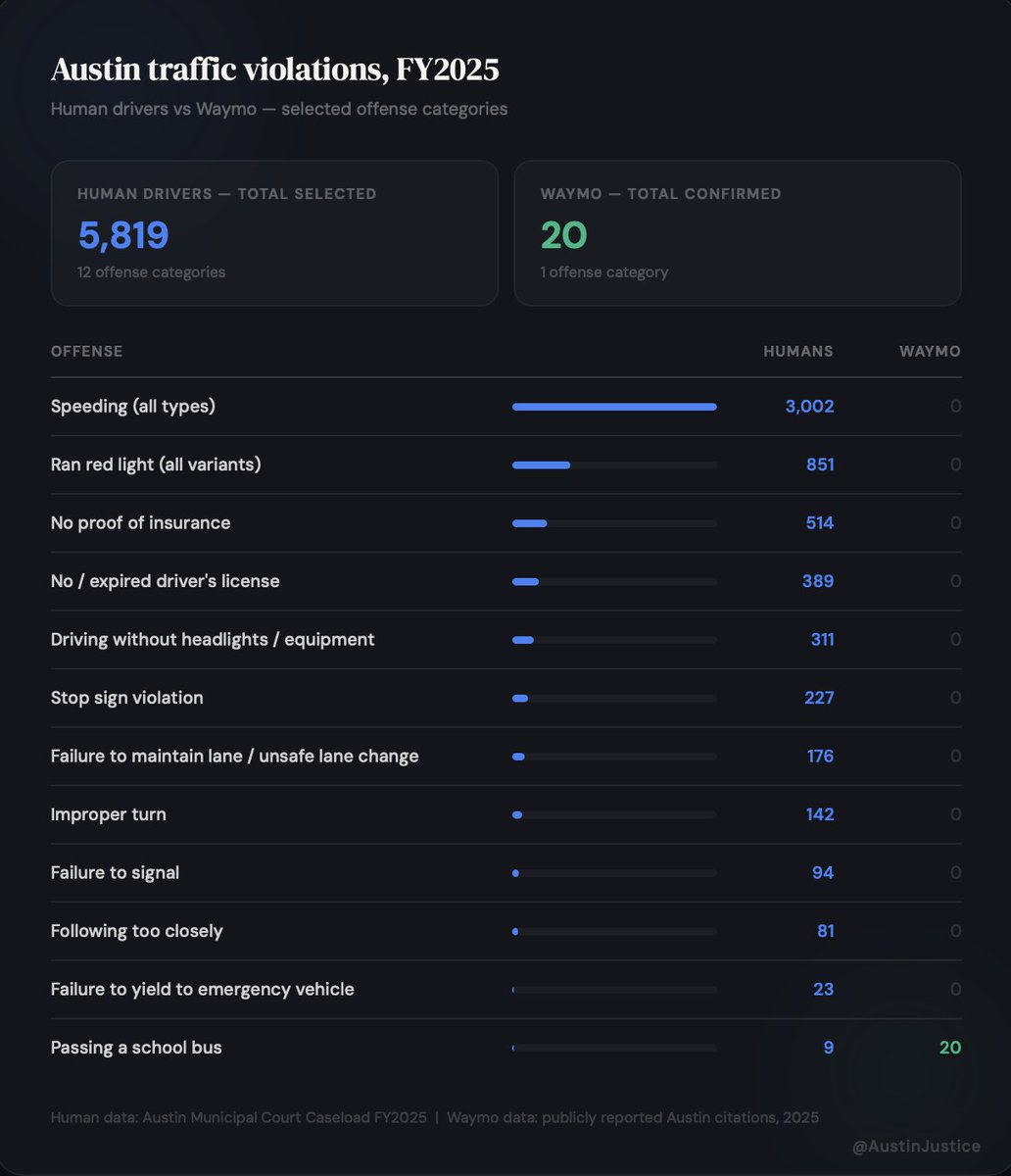
Waymo vs Humans in Austin in FY2025 https://t.co/BNVXgruZww