Your curated collection of saved posts and media
Today, we’re introducing Cheats. Prompting has failed us. Most people don’t know what to type. AI unlocked a ton of skills for experts, but the rest of us kinda need a… cheat. Sound on! https://t.co/sg8AjxjeI1
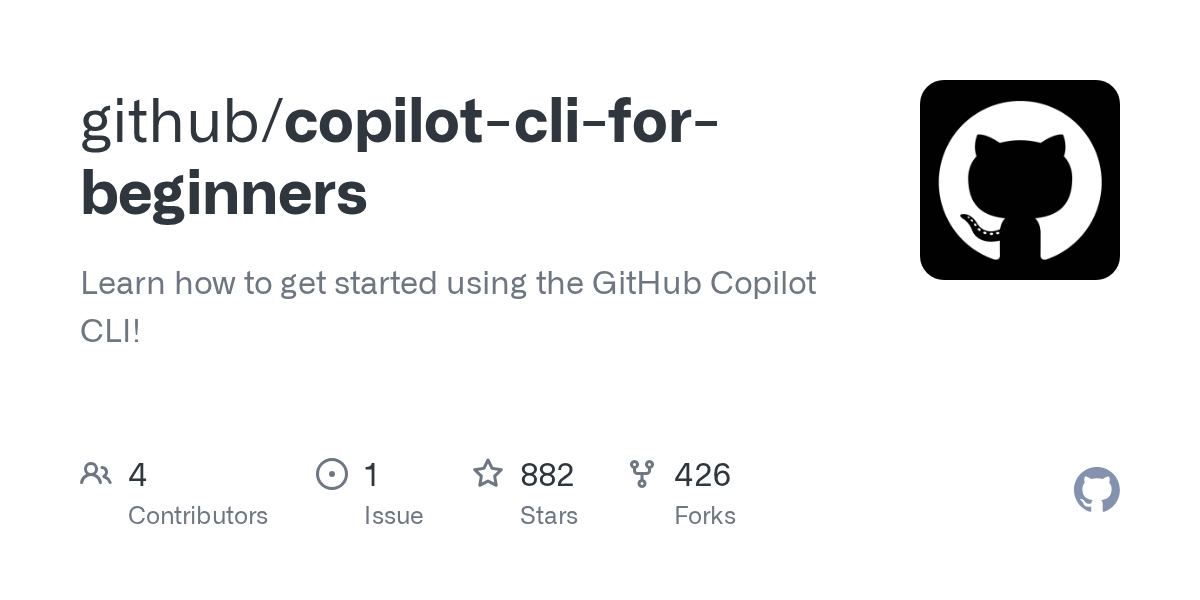
Microsoft has released a free, open-source course: GitHub Copilot CLI for Beginners. Includes 8 Chapters covering: • Walks through of installing Copilot CLI • Using context • Creating custom agents • Working with skills • Connecting MCP servers, and more. Start Learning - https://t.co/IIbauw5L7K
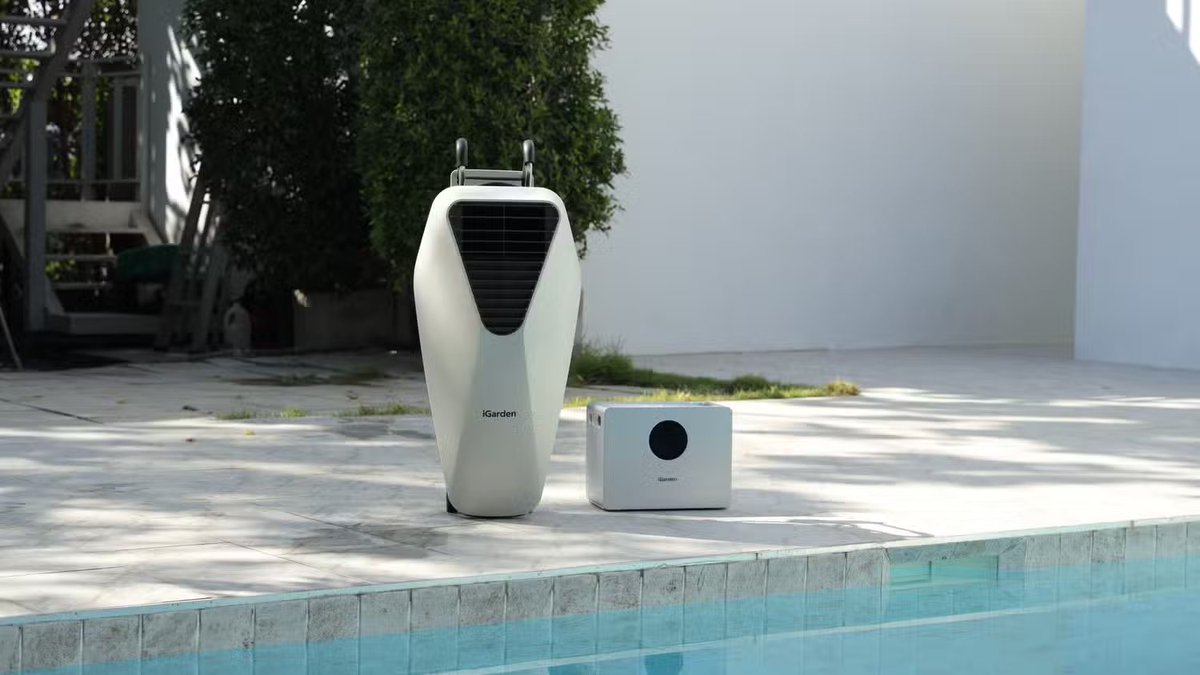
A lot of exciting consumer hardware launches recently. Some of my favorites are from iGarden, Musical Beings, Nosh, and Fort. Check out the latest drops: https://t.co/FaYG5ZlGAw
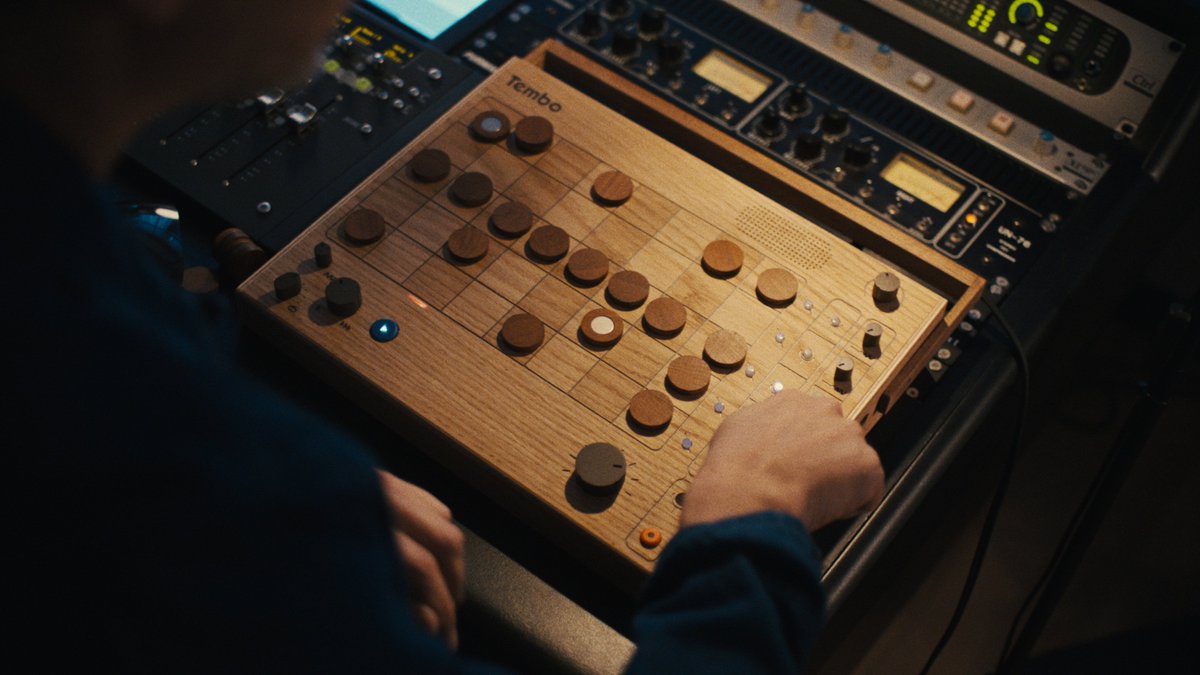
The market finally has a true open-source alternative to Amazon Alexa that processes everything locally. @openhome launched a smart speaker development kit that runs AI agents entirely on local hardware. OpenClaw agents, custom LLM workflows, autonomous home assistants… they all run natively on this hardware and OS Developers can now give their agents a place in the real world. No vendor lock-in. No cloud dependencies. You own the hardware. You own the software. Your agent finally has a body. Standard voice assistants send private audio to massive cloud servers just to set a simple timer. This new platform keeps all voice data completely local so external companies never hear a thing. It replaces the basic question-and-answer loop of older assistants with a continuous listening agent. The latest update introduces a background daemon that operates independently from the main conversational prompt. This silent thread starts automatically when a session begins and stays alive to catch context or unprompted requests. If someone mentions a grocery item during a chat, the background agent can add it to a list without a direct command. Developers can now build intelligent home assistants without vendor lock-in or cloud dependencies. You retain complete control over the hardware and the software. Your data stays inside your house.
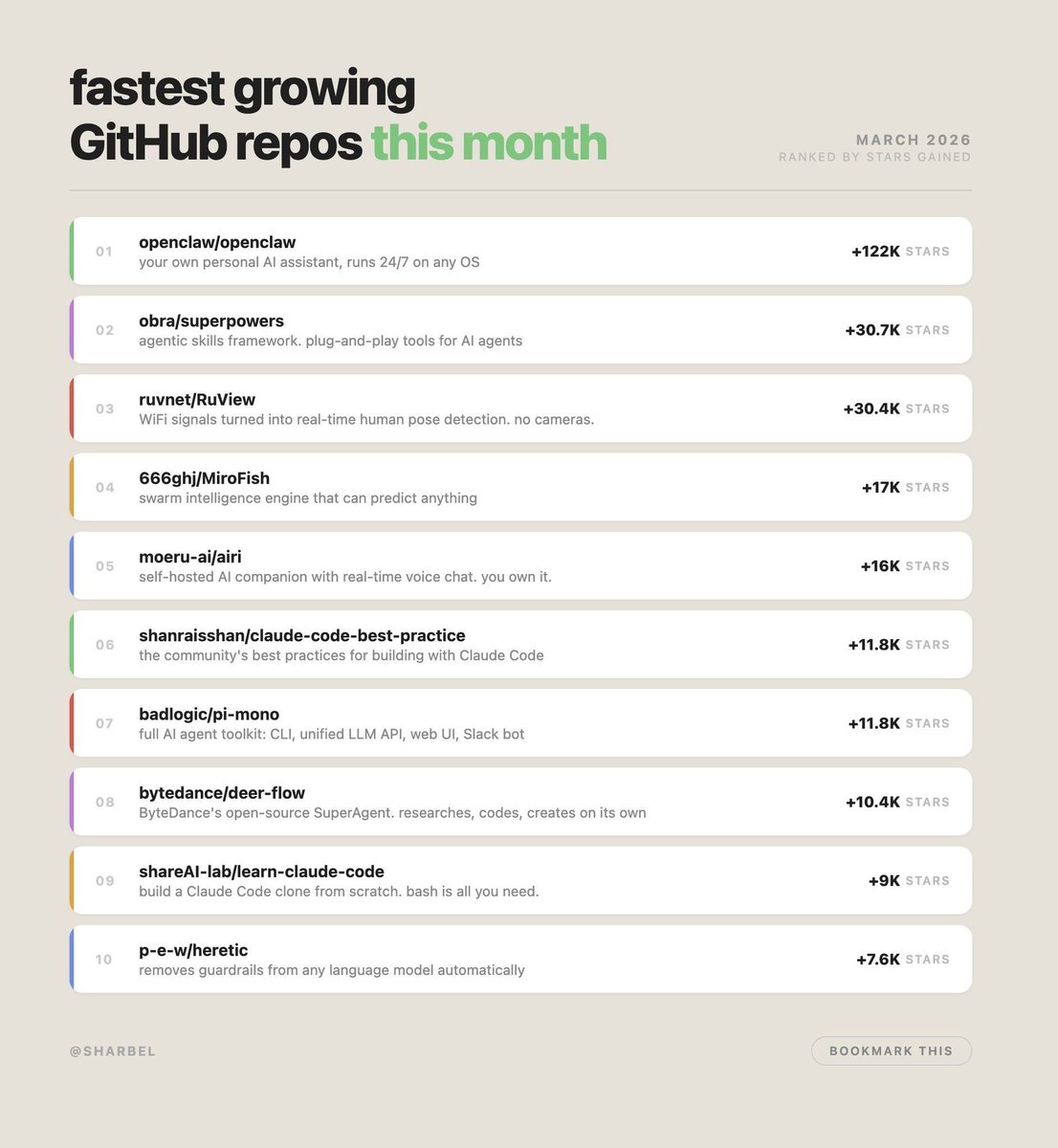
These are the 5 fastest growing GitHub projects this month: 1. openclaw/openclaw — +122K stars Your own personal AI assistant that runs 24/7 on any OS. 2. obra/superpowers — +30.7K stars Plug-and-play agentic skills/tools framework for AI agents. 3. ruvnet/RuView — +30.4K stars Real-time human pose detection using only WiFi signals (no cameras). 4. 666ghj/MiroFish — +17K stars Swarm intelligence engine that can predict anything. 5. moeru-ai/airi — +16K stars Self-hosted AI companion with real-time voice chat—you fully own it.
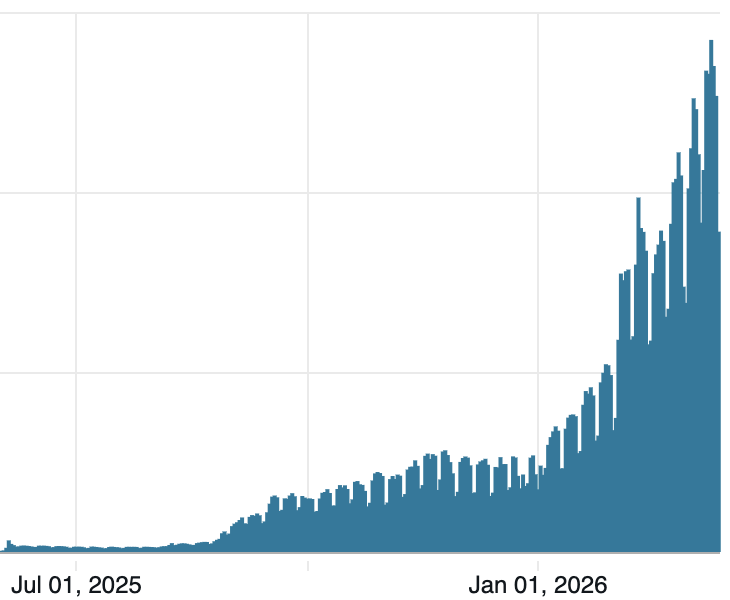
The Codex team are hardcore builders and it really comes through in what they create. No surprise all the hardcore builders I know have switched to Codex. Usage of Codex is growing very fast: https://t.co/lRKcNJDY8n
Computer can now take full control of Comet to complete tasks. When you’re in Comet, Computer spins up a browser agent that can access any site or logged‑in app with your permission, without the need for connectors or MCPs. Available to all Computer users on Comet. https://t.co/MOlJKacJia
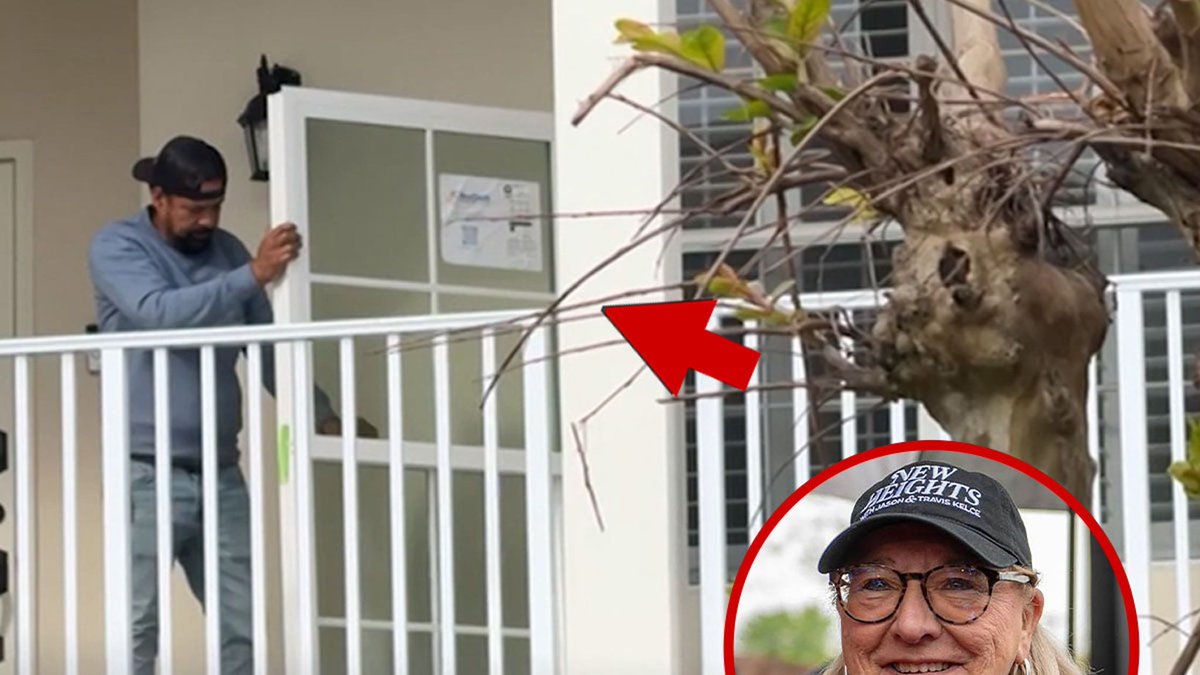
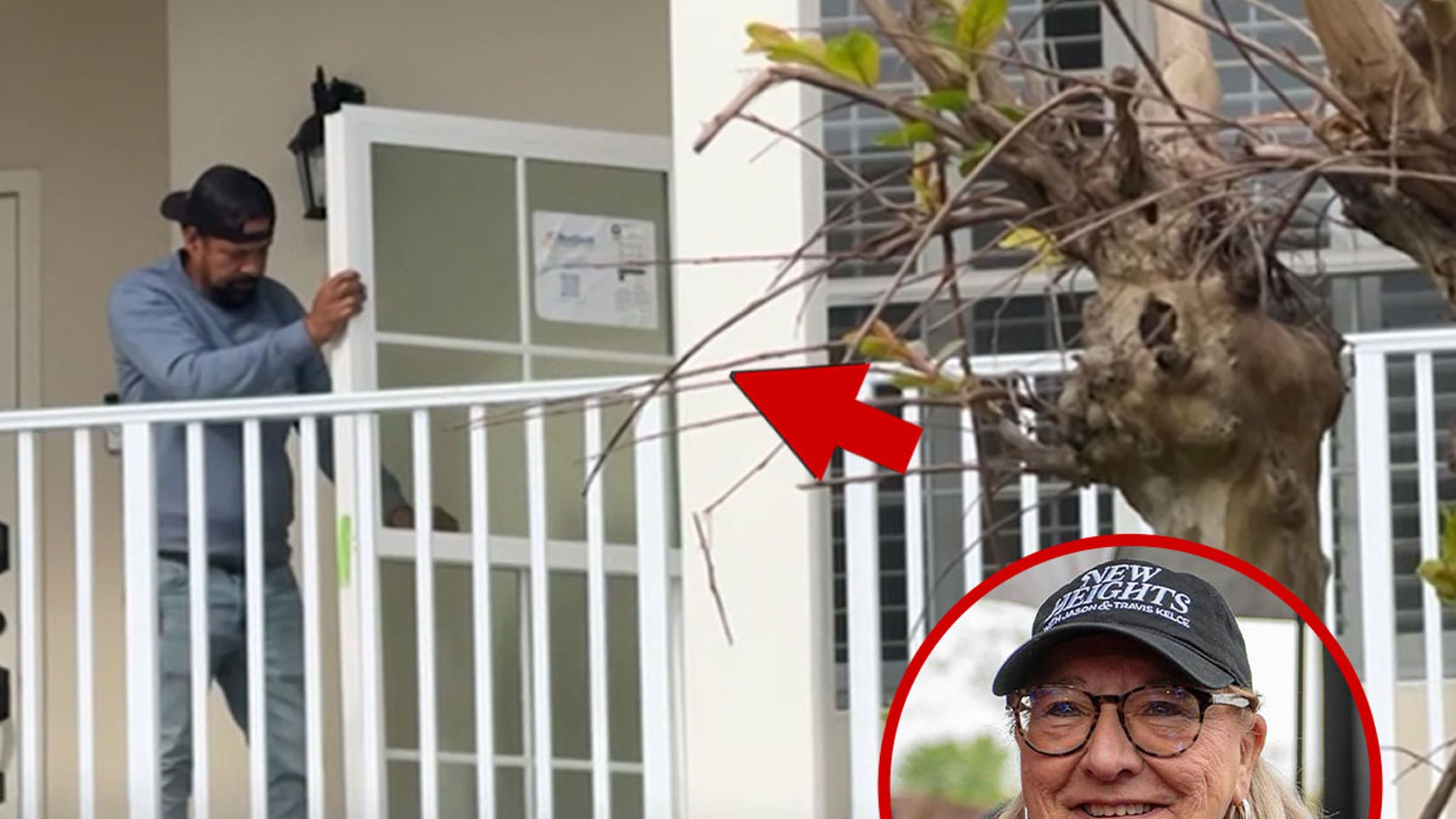
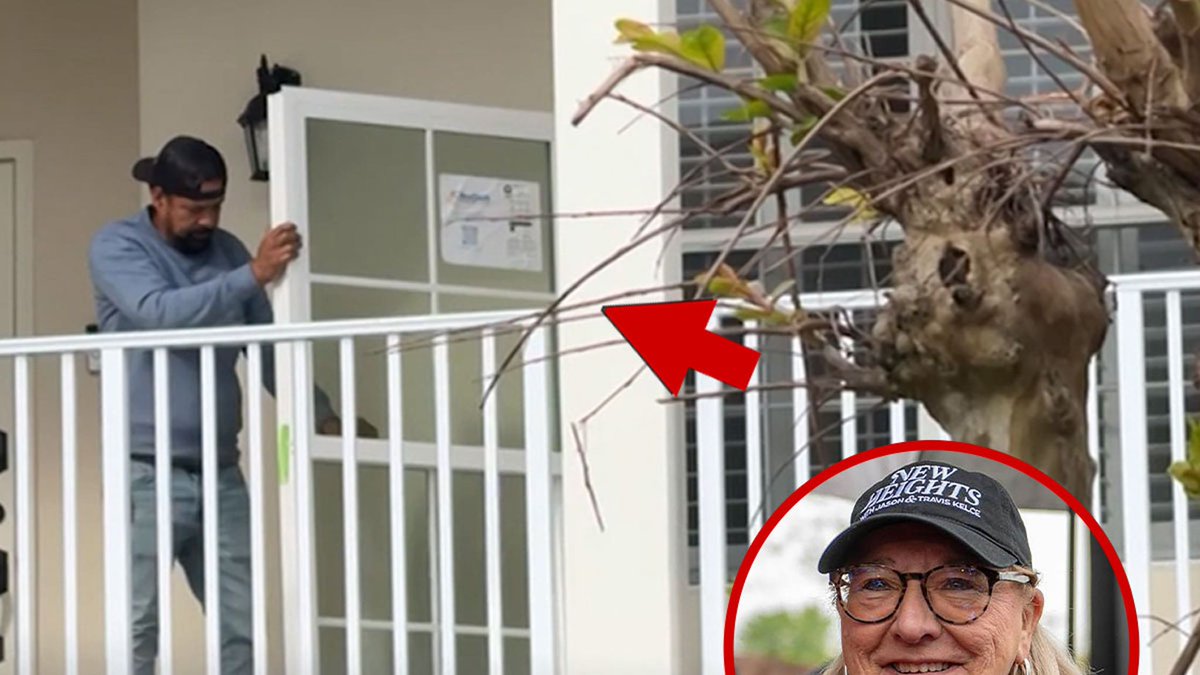
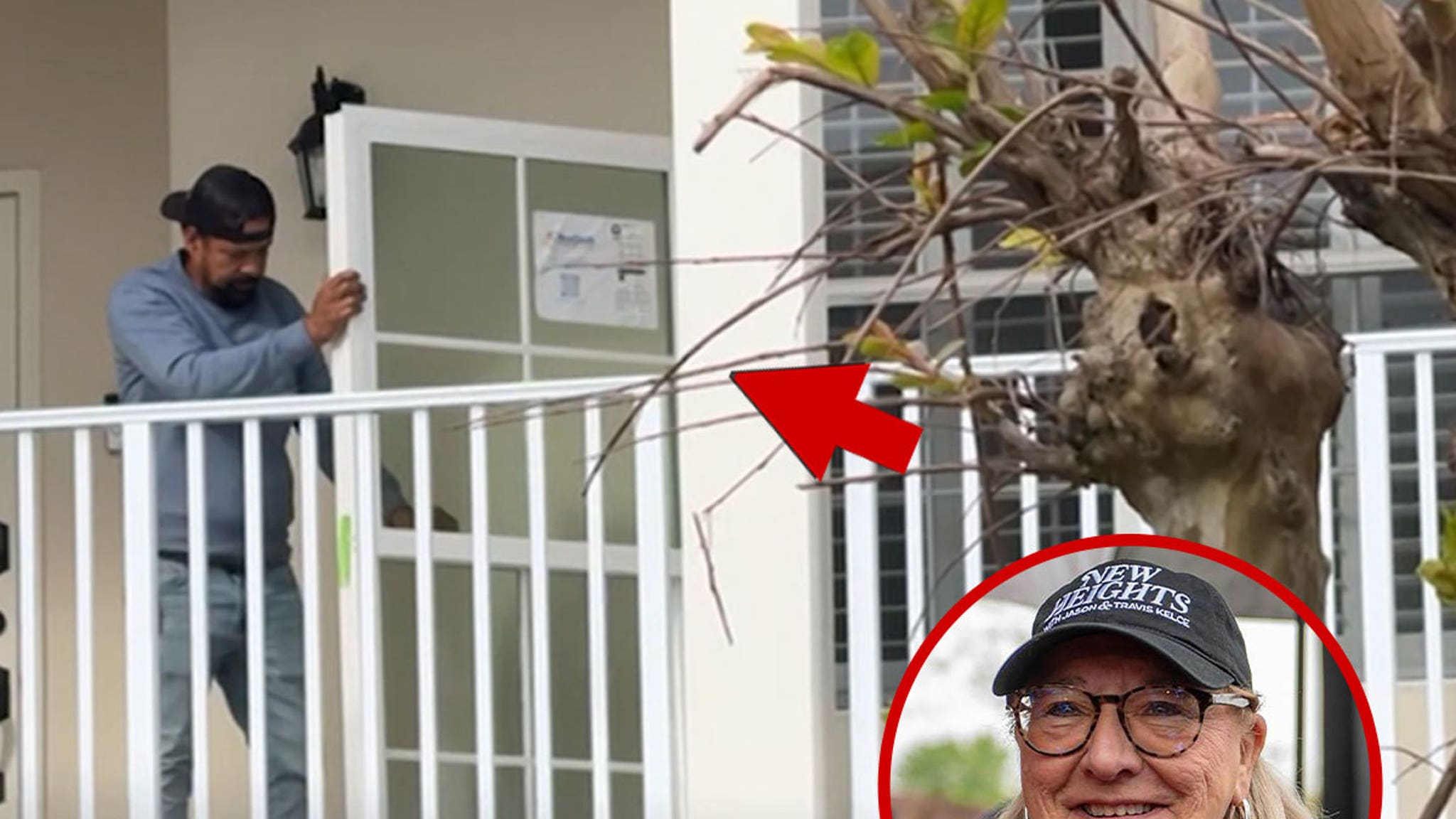
Donna Kelce Window Installers on Scene to Replace Windows https://t.co/YyFN4kWizx https://t.co/tGhPqCEVKY
Donna Kelce Window Installers on Scene to Replace Windows https://t.co/YyFN4kWizx https://t.co/tGhPqCEVKY
they would’ve slayed as a couple on the sopranos https://t.co/gREZNricLZ

they would’ve slayed as a couple on the sopranos https://t.co/gREZNricLZ

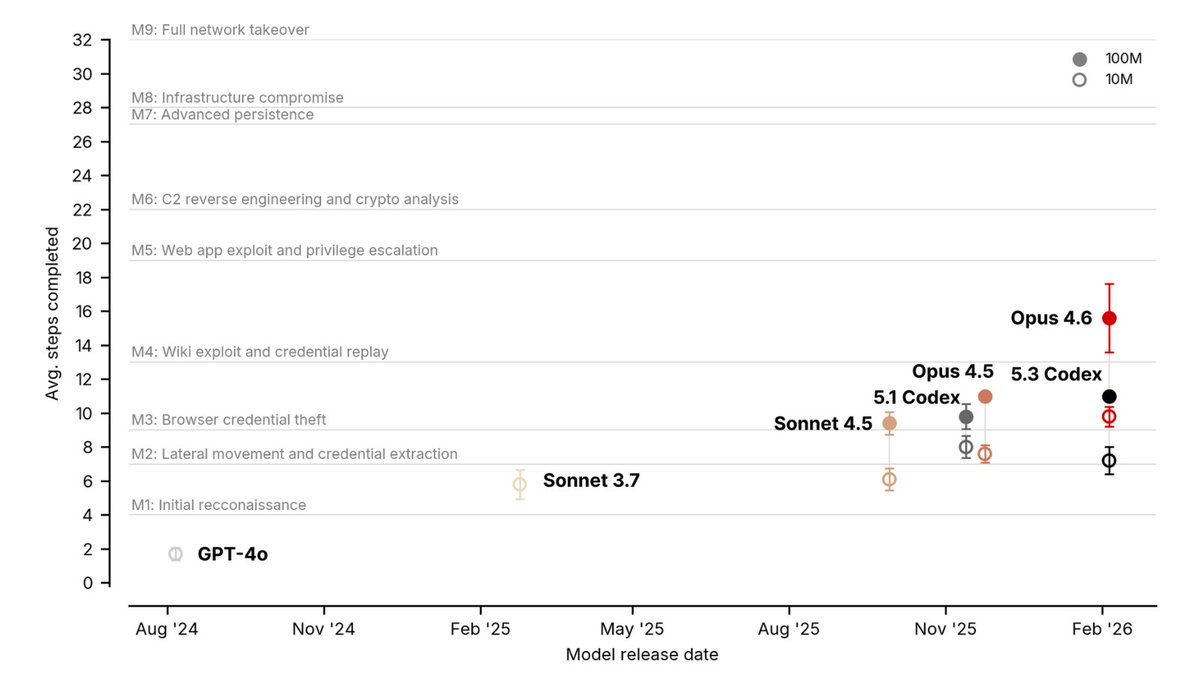
Can AI agents conduct advanced cyber-attacks autonomously? We tested seven models released between August 2024 and February 2026 on two custom-built cyber ranges designed to replicate complex attack environments. Here’s what we found🧵 https://t.co/rFRkOQu8yU
Listen to the OpenAI Podcast on— Spotify https://t.co/hLcRdGrfUX Apple https://t.co/0AdZ1ZteOV YouTube https://t.co/yjT9wmRBTz


#Picoclaw Just hit 25K star~ We’re integrating PicoClaw into 3 offical hardware devices! 💻 Drop your guesses in the comments below—the first person to guess a device correctly will win it for FREE! 🎁👇 #openclaw https://t.co/OF6rG9kgev https://t.co/mjgterZVq6

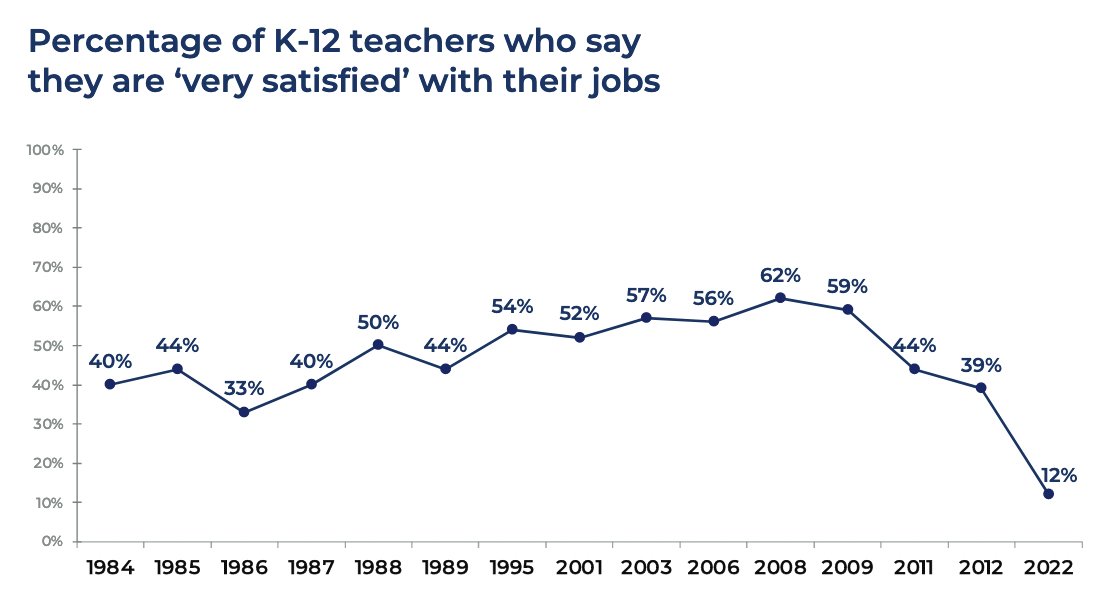
In 2008, 62% of teachers said they were very satisfied with their job. In 2022, that dropped to 12%. We've got a serious problem brewing in education... https://t.co/wzlFZkT72J
This thing is going to find a cure for cancer before it stops falling for dumb tricks. https://t.co/SogJsb82w1
Don't be surprised if you meet humanoid robots on the streets of Beijing at midnight. They are training for their half-marathon! Over 20 teams joined the first trial run. The official race will be held on April 19. https://t.co/6yWN48wVUA
Today we’re introducing Cheats in @Spielwerkapp Prompting has failed us. Most people don’t know what to type. AI unlocked a ton of skills for experts, but the rest of us kinda need a… cheat. Sound on! https://t.co/lWw9Do6Uv1
If Michael Jackson was born in other countries 🎙️ https://t.co/Bka5cX8zrl
If Michael Jackson was born in other countries 🎙️ https://t.co/Bka5cX8zrl
sound on please https://t.co/ZAlEqKDANV
sound on please https://t.co/ZAlEqKDANV
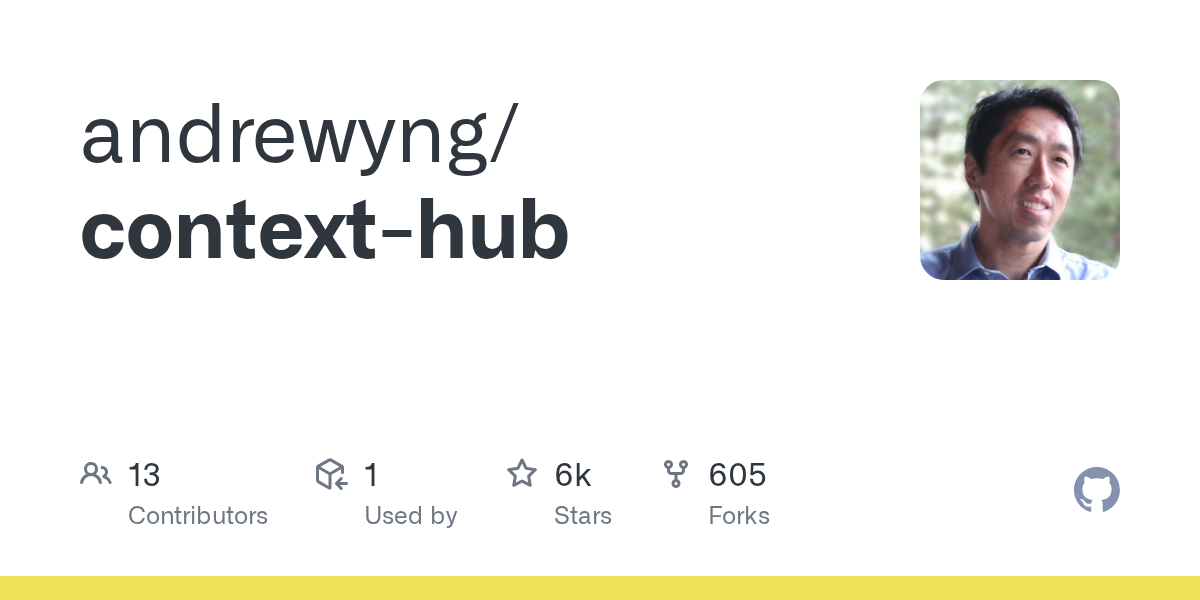
Should there be a Stack Overflow for AI coding agents to share learnings with each other? Last week I announced Context Hub (chub), an open CLI tool that gives coding agents up-to-date API documentation. Since then, our GitHub repo has gained over 6K stars, and we've scaled from under 100 to over 1000 API documents, thanks to community contributions and a new agentic document writer. Thank you to everyone supporting Context Hub! OpenClaw and Moltbook showed that agents can use social media built for them to share information. In our new chub release, agents can share feedback on documentation — what worked, what didn't, what's missing. This feedback helps refine the docs for everyone, with safeguards for privacy and security. We're still early in building this out. You can find details and configuration options in the GitHub repo. Install chub as follows, and prompt your coding agent to use it: npm install -g @aisuite/chub GitHub: https://t.co/OCkyxXQMCq
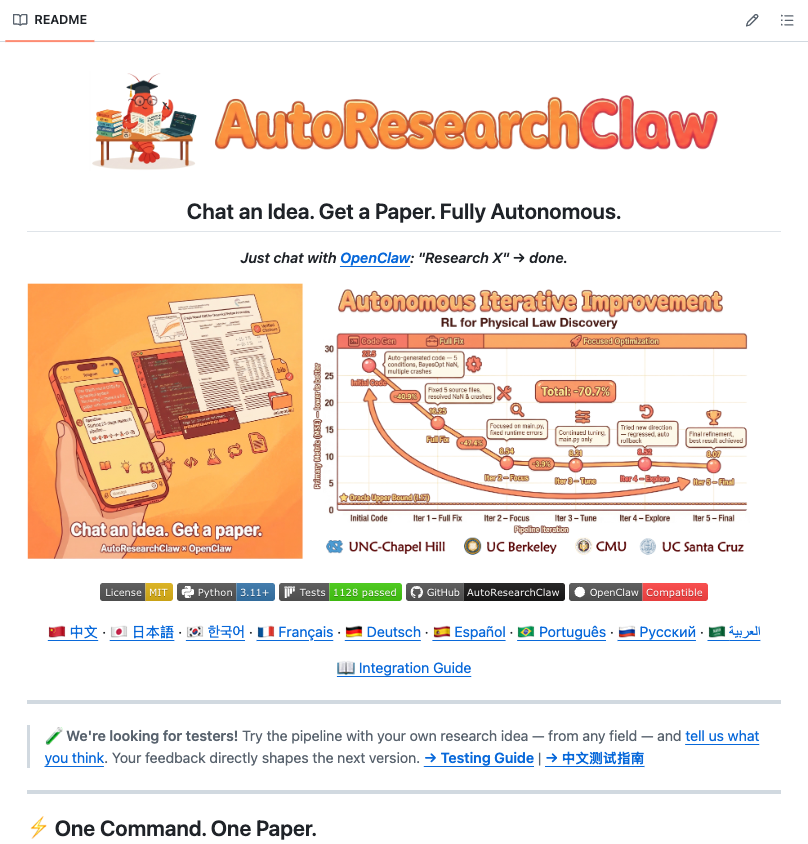
Holy shit...Someone built an AI system that takes a research idea and outputs a full academic paper. Real citations. Real experiments. Conference-ready LaTeX. Zero human input. It's called AutoResearchClaw. And the pipeline is insane. Here's what actually happens when you type one command: It searches arXiv and Semantic Scholar for real papers. Not fake citations actual literature with 4-layer verification: arXiv ID check, CrossRef DOI lookup, Semantic Scholar title match, and LLM relevance scoring. Hallucinated references get killed automatically. Then it designs and runs real experiments. Hardware-aware auto-detects whether you have NVIDIA CUDA, Apple MPS, or just CPU, and adapts the code accordingly. When experiments fail, it self-heals. When results don't support the hypothesis, it pivots to a new direction on its own. Then it writes the paper. 5,000-6,500 words. Section by section. Multi-agent peer review with methodology-evidence consistency checks. Then it revises based on those reviews. Then it outputs conference-ready LaTeX. NeurIPS, ICML, ICLR templates. Compile-ready for Overleaf. BibTeX references auto-pruned to match inline citations. The whole thing runs across 23 stages and 8 phases. Three human-approval gates if you want them. Or just pass --auto-approve and walk away. What you get back: → Full academic paper draft → Conference-ready LaTeX + BibTeX → Experiment code + sandbox results + charts → Peer review notes → Verification report on every citation This is what autonomous scientific research actually looks like in 2026. 100% Opensource. MIT License. Link in comments.
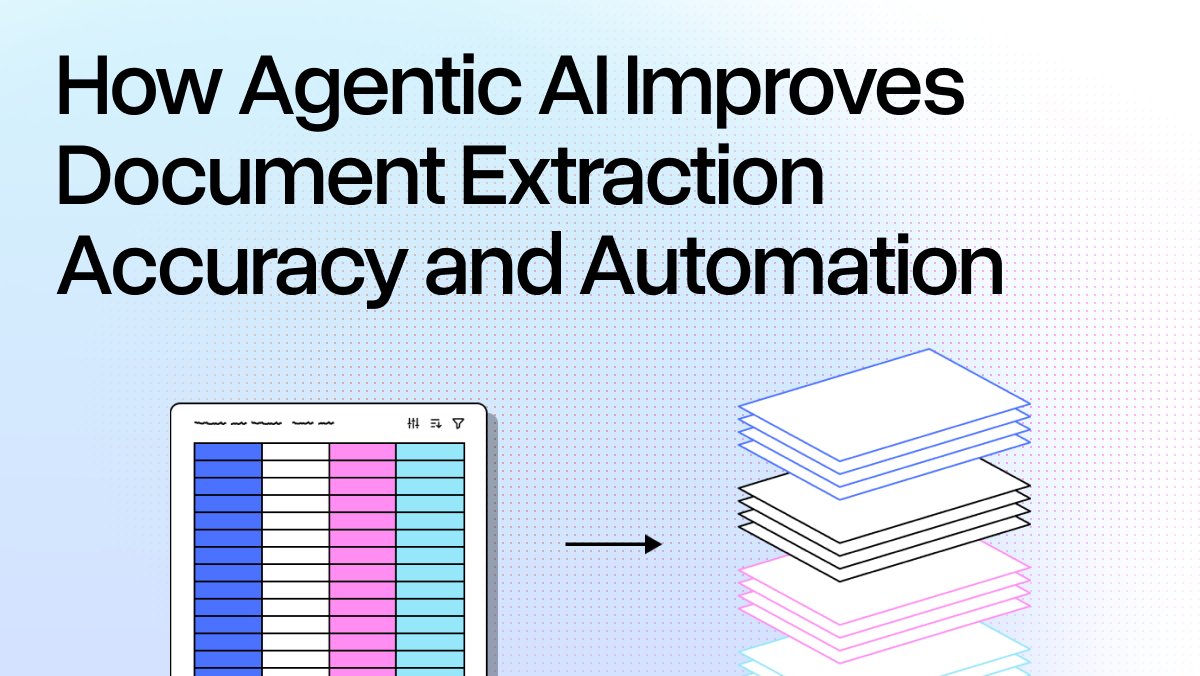
Agentic AI transforms document extraction from simple text transcription into intelligent reasoning, dramatically reducing manual review queues and maintenance overhead. Traditional OCR hits a wall when documents deviate from templates - vendor format changes, skewed scans, or handwritten annotations break the pipeline. Agentic document extraction solves this by understanding context, not just converting pixels to text. 🧠 Plan-act-verify loops that identify document structure before extracting data, then validate results against context 📍 Visual grounding with bounding boxes links extracted text to precise page locations, solving spatial assignment errors 📋 Dynamic table processing infers header-row relationships instead of relying on brittle pixel coordinate templates LlamaParse processes any document type without training phases or template maintenance. When your vendor changes invoice formats or you encounter new document types, the system adapts automatically instead of breaking. Read the full breakdown of agentic AI and implementation best practices: https://t.co/hYogy503tp
Introducing Adaptive Computer. We put AI inside of an always-on personal computer that it uses to get work done. Schedule agents. Create software. Automate anything. As part of the launch, we’re giving one free month of Adaptive to users. Retweet, like, and comment ‘Adaptive’ to get it.
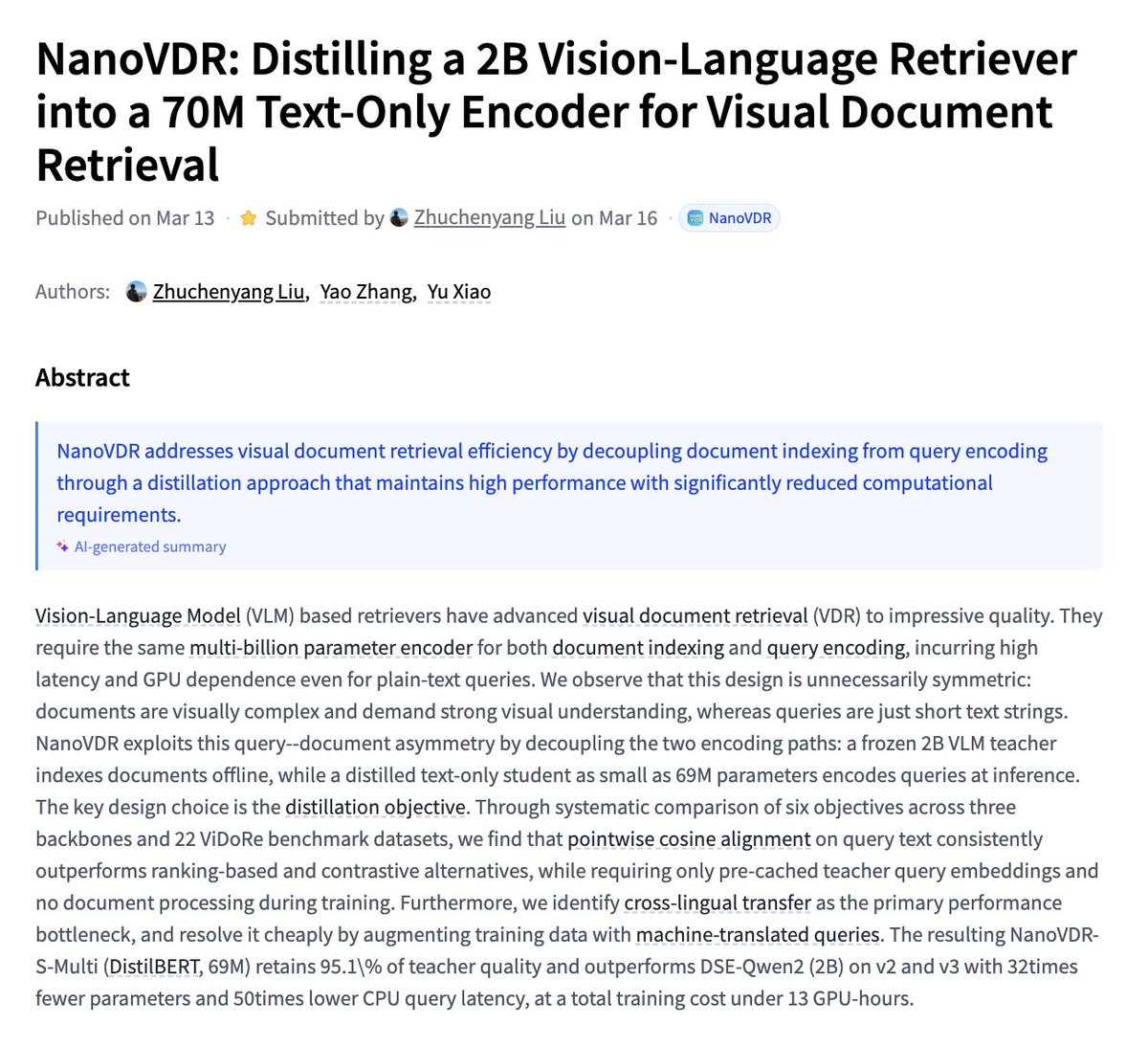
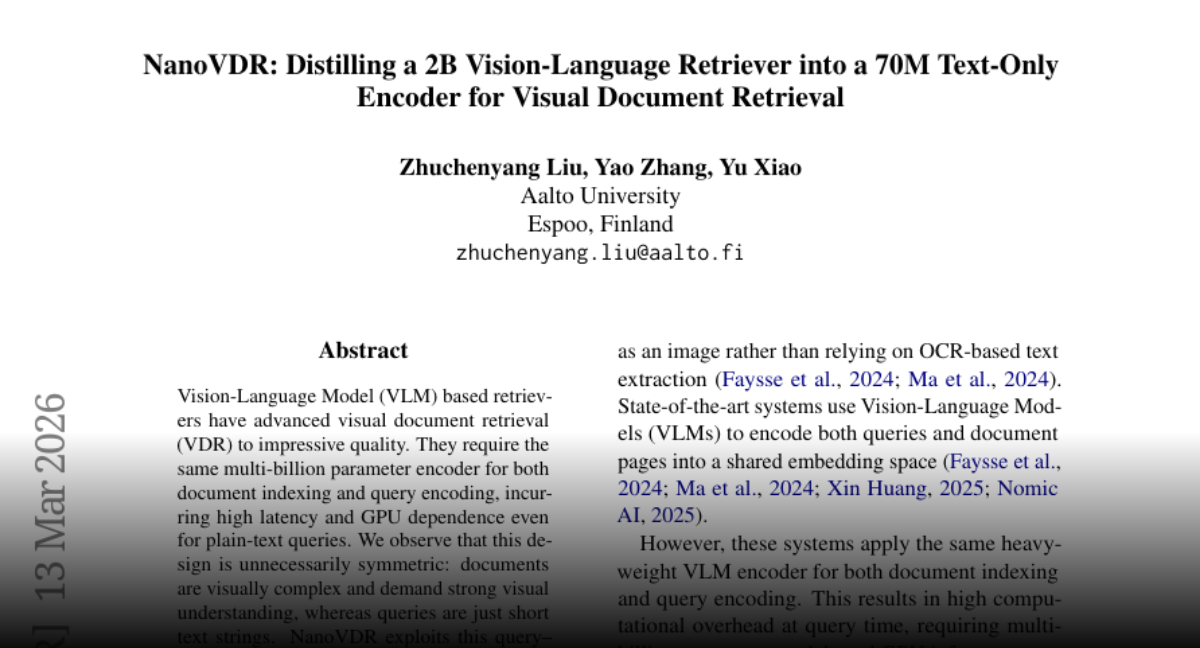
NanoVDR Distilling a 2B Vision-Language Retriever into a 70M Text-Only Encoder for Visual Document Retrieval paper: https://t.co/T0lh9v5Tnr https://t.co/rGoXKRzIQo
app: https://t.co/QfDc8ADFQg

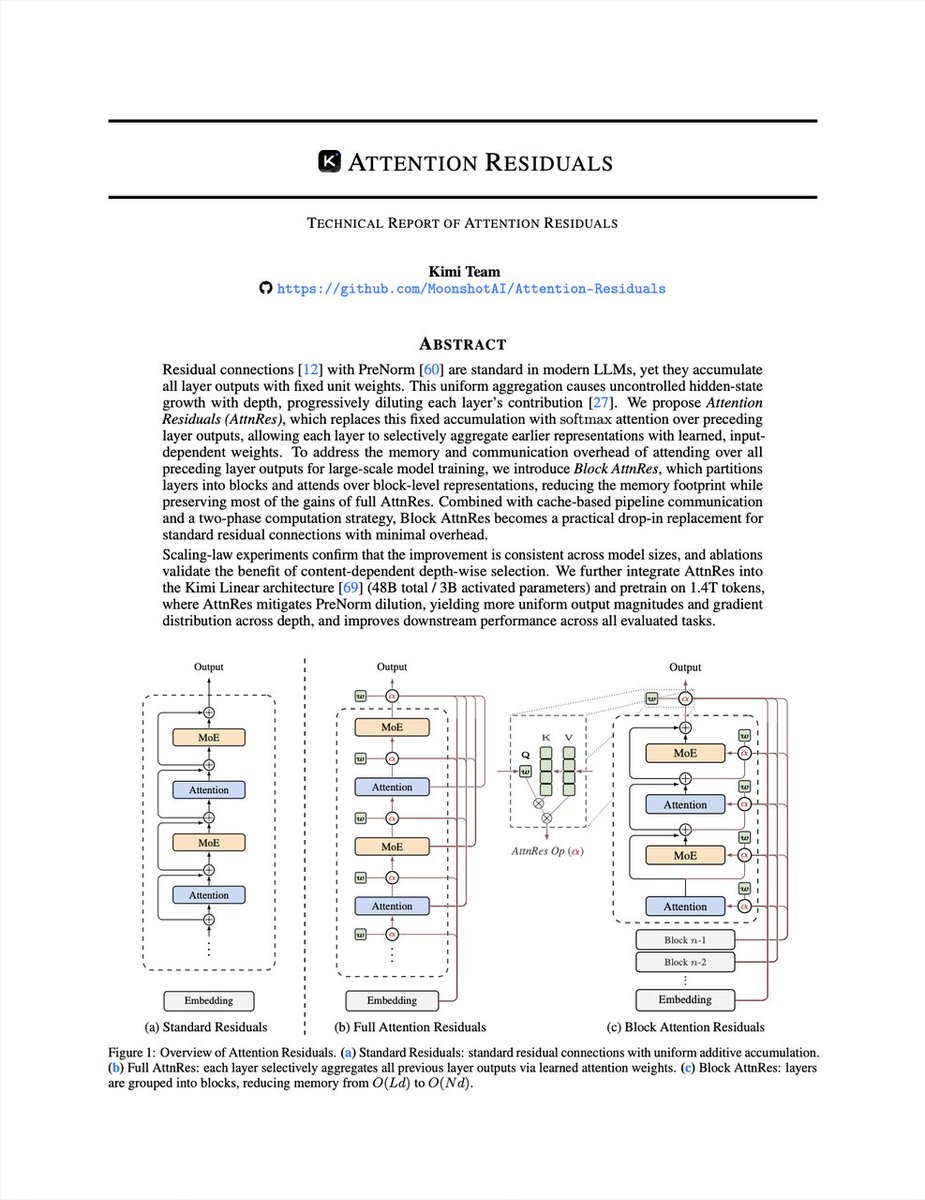
Introducing 𝑨𝒕𝒕𝒆𝒏𝒕𝒊𝒐𝒏 𝑹𝒆𝒔𝒊𝒅𝒖𝒂𝒍𝒔: Rethinking depth-wise aggregation. Residual connections have long relied on fixed, uniform accumulation. Inspired by the duality of time and depth, we introduce Attention Residuals, replacing standard depth-wise recurrence with learned, input-dependent attention over preceding layers. 🔹 Enables networks to selectively retrieve past representations, naturally mitigating dilution and hidden-state growth. 🔹 Introduces Block AttnRes, partitioning layers into compressed blocks to make cross-layer attention practical at scale. 🔹 Serves as an efficient drop-in replacement, demonstrating a 1.25x compute advantage with negligible (<2%) inference latency overhead. 🔹 Validated on the Kimi Linear architecture (48B total, 3B activated parameters), delivering consistent downstream performance gains. 🔗Full report: https://t.co/u3EHICG05h
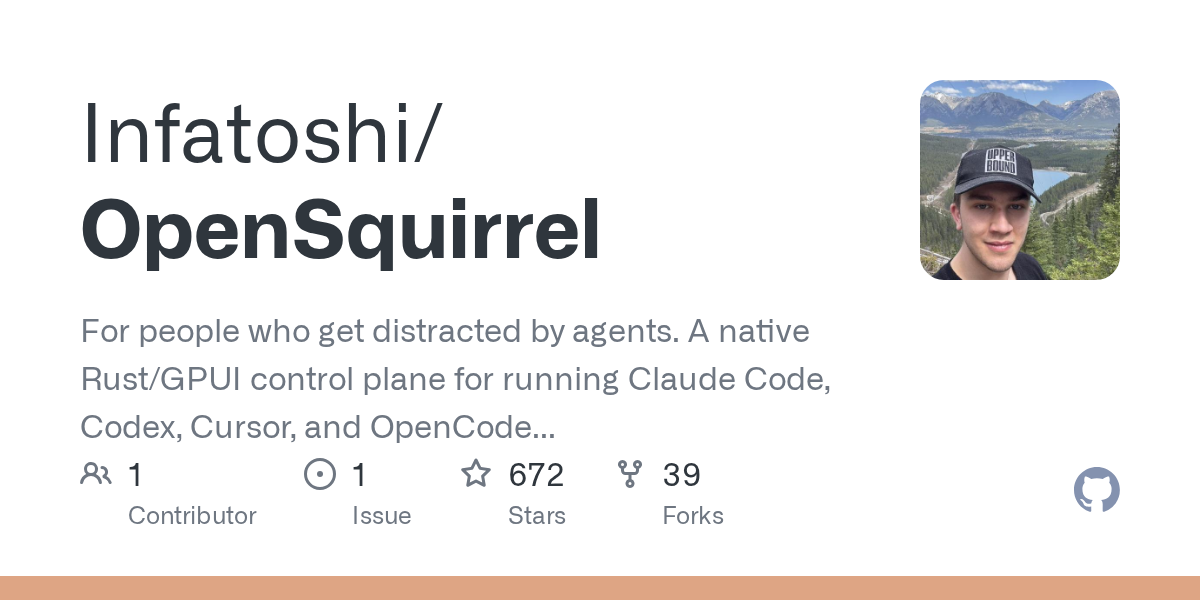
Karpathy asked. I delivered. Introducing OpenSquirrel! Written in pure rust with GPUI (same as zed) but with agents as central unit rather than files. Supports Claude Code, Codex, Opencode, and Cursor (cli). This really forced me to think up the UI/UX from first principles instead of relying on common electron slop. https://t.co/NQG1jvgbk5
Expectation: the age of the IDE is over Reality: we’re going to need a bigger IDE (imo). It just looks very different because humans now move upwards and program at a higher level - the basic unit of interest is not one file but one agent. It’s still programming.
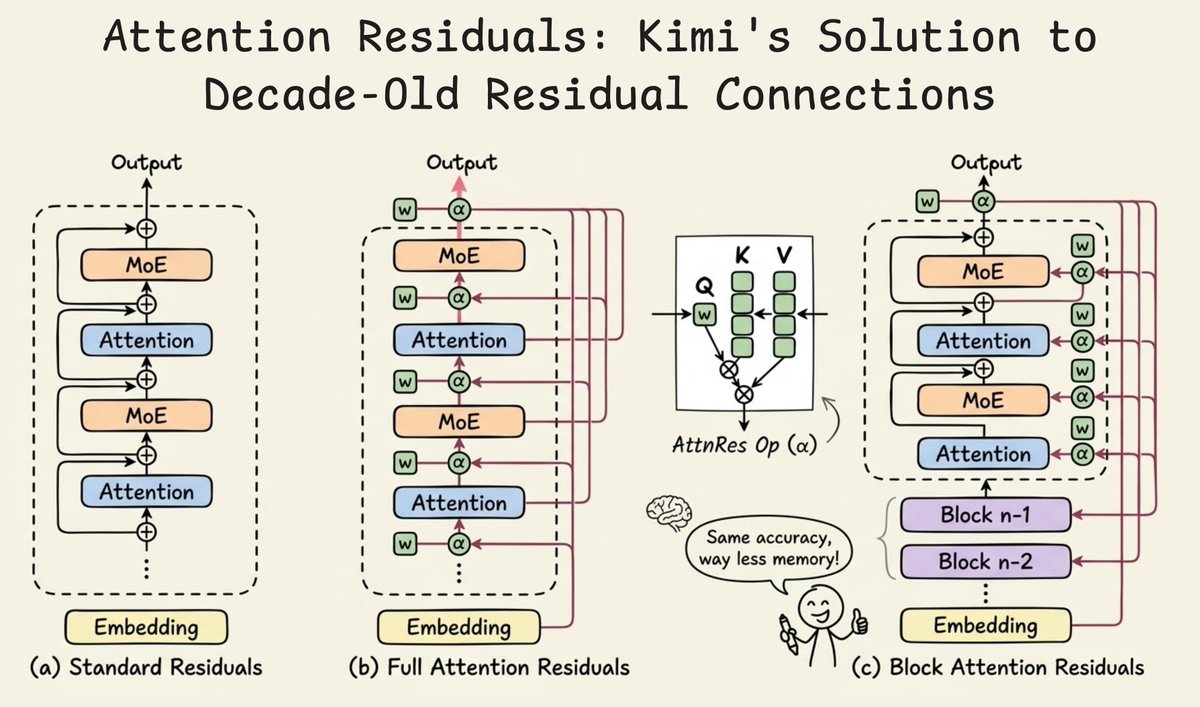
Big release from Kimi! They just released a new way to handle residual connections in Transformers. In a standard Transformer, every sub-layer (attention or MLP) computes an output and adds it back to the input via a residual connection. If you consider this across 40+ layers, the hidden state at any layer is just the equal-weighted sum of all previous layer outputs. Every layer contributes with weight=1, so every layer gets equal importance. This creates a problem called PreNorm dilution, where as the hidden state accumulates layer after layer, its magnitude grows linearly with depth. And any new layer's contribution gets progressively buried in the already-massive residual. This means deeper layers are then forced to produce increasingly large outputs just to have any influence, which destabilizes training. Here's what the Kimi team observed and did: RNNs compress all prior token information into a single state across time, leading to problems with handling long-range dependencies. And residual connections compress all prior layer information into a single state across depth. Transformers solved the first problem by replacing recurrence with attention. This was applied along the sequence dimension. Now they introduced Attention Residuals, which applies a similar idea to depth. Instead of adding all previous layer outputs with a fixed weight of 1, each layer now uses softmax attention to selectively decide how much weight each previous layer's output should receive. So each layer gets a single learned query vector, and it attends over all previous layer outputs to compute a weighted combination. The weights are input-dependent, so different tokens can retrieve different layer representations based on what's actually useful. This is Full Attention Residuals (shown in the second diagram below). But here's the practical problem with this idea. Full AttnRes requires keeping all layer outputs in memory and communicating them across pipeline stages during distributed training. To solve this, they introduce Block Attention Residuals (shown in the third diagram below). The idea is to group consecutive layers into roughly 8 blocks. Within each block, layer outputs are summed via standard residuals. But across blocks, the attention mechanism selectively combines block-level representations. This drops memory from O(Ld) to O(Nd), where N is the number of blocks. Layers within the current block can also attend to the partial sum of what's been computed so far inside that block, so local information flow isn't lost. And the raw token embedding is always available as a separate source, which means any layer in the network can selectively reach back to the original input. Results from the paper: - Block AttnRes matches the loss of a baseline LLM trained with 1.25x more compute. - Inference latency overhead is less than 2%, making it a practical drop-in replacement - On a 48B parameter Kimi Linear model (3B activated) trained on 1.4T tokens, it improved every benchmark they tested: GPQA-Diamond +7.5, Math +3.6, HumanEval +3.1, MMLU +1.1 The residual connection has mostly been unchanged since ResNet in 2015. This might be the first modification that's both theoretically motivated and practically deployable at scale with negligible overhead. More details in the post below by Kimi👇 ____ Find me → @_avichawla Every day, I share tutorials and insights on DS, ML, LLMs, and RAGs.
Introducing 𝑨𝒕𝒕𝒆𝒏𝒕𝒊𝒐𝒏 𝑹𝒆𝒔𝒊𝒅𝒖𝒂𝒍𝒔: Rethinking depth-wise aggregation. Residual connections have long relied on fixed, uniform accumulation. Inspired by the duality of time and depth, we introduce Attention Residuals, replacing standard depth-wise recurrence with learned, input-dep
homer of peace https://t.co/MyaE3SsPYc