Your curated collection of saved posts and media
Contact lens ball update https://t.co/3ltQ66yfXj
@zureeal Queen, please, I need a ball update, it’s been too long

Contact lens ball update https://t.co/3ltQ66yfXj

On this date in 1962, the first Taco Bell restaurant opened in Downey, CA #nostalgia #fastfood https://t.co/27Rent1VvY

Pops into my head every time I see a wacky skeleton https://t.co/ZzhQDgJYTQ
Twitter turns 20. What is your favorite tweet of all time? https://t.co/DGhHGxY6SI

Pops into my head every time I see a wacky skeleton https://t.co/ZzhQDgJYTQ

This isn’t China. This is California. Tesla built the world’s largest Supercharger station in Lost Hills, CA, called “Oasis.” The site features 11 MW of solar capacity. Energy is stored in 10 Tesla Megapacks, providing 39 MWh of battery storage to power 164 stalls. https://t.co/sJJWy6a31R
Large BYD super charging station sustained by its own solar panel & BESS. This is the future. https://t.co/a6SRBCwqO5
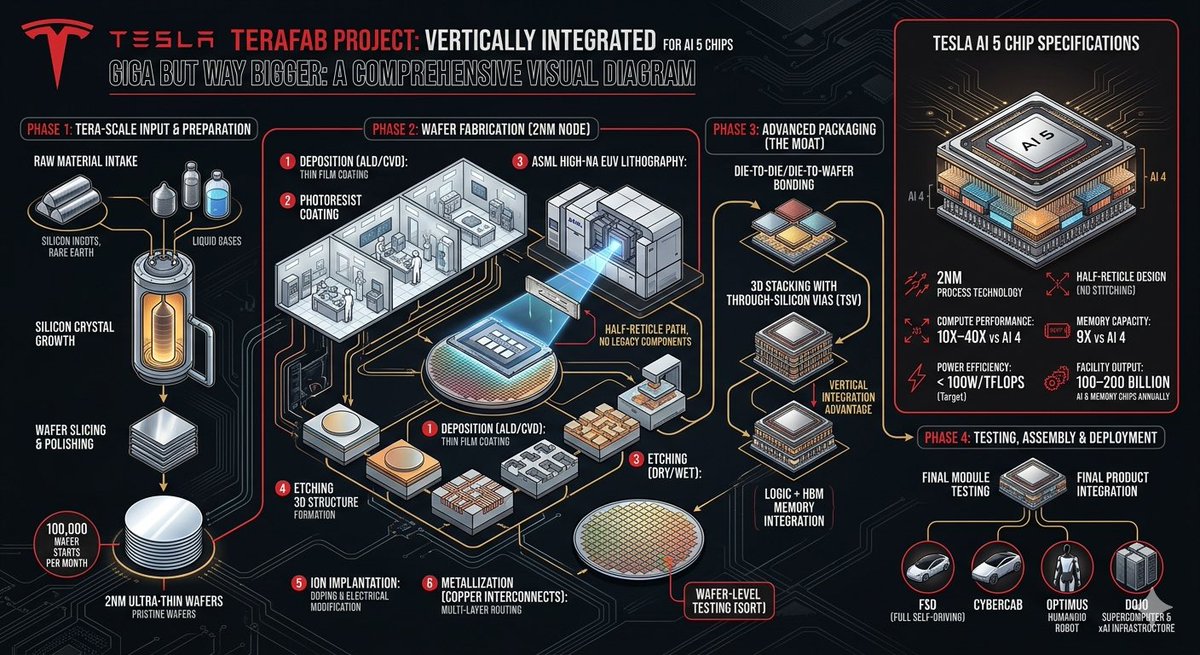
Tesla’s TeraFab officially begins TODAY 🏭 This is make or break for possibly the whole AI industry Elon’s trying to build a 2nm chip fab from scratch. The most advanced process node on Earth. Only 3 companies can do this. TSMC spent $165 billion on their Arizona cluster alone. It took decades of institutional knowledge. Tesla has manufactured zero semiconductors. Ever. But they don’t really have a choice choice: Even in the best-case scenario where TSMC, Samsung, and Micron all max out production for Tesla, it’s still not enough chips for the Optimus and Cybercab roadmap…let alone the rest of the industry The AI5 chip this fab is designed to produce has 50x the compute of AI4. They need 100-200 billion of them per year. No foundry on the planet can commit to that volume on Tesla’s timeline. If it works, Tesla becomes one of maybe 4 entities on Earth that can produce frontier AI silicon in-house, and the only one that also builds the robots and cars. It would be game over
Terafab Project launches in 7 days
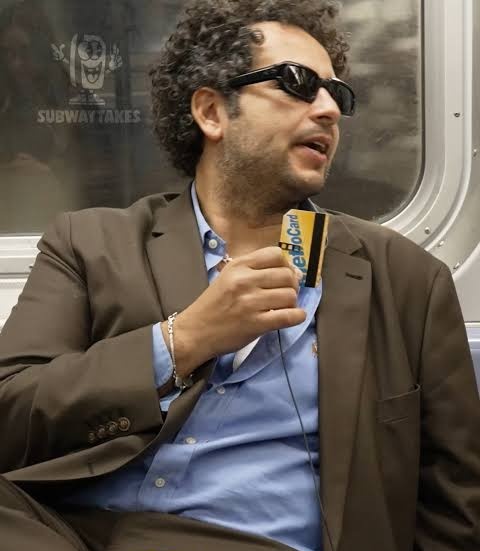
"So what's your take" "This subway should be filled with sarin, a deadly nerve agent" "100% disagree" https://t.co/uKvEg4cAyJ

.@realDonaldTrump you are a vile disgusting man. Petty and pathetic, you are a hypocrite who reeks of weakness and insecurities with no moral core. Regardless of the politics, the American people should be embarrassed and ashamed for ever having entrusted you with leadership. God rest Robert Mueller.

@nicochristie https://t.co/ODvgzCaUtn
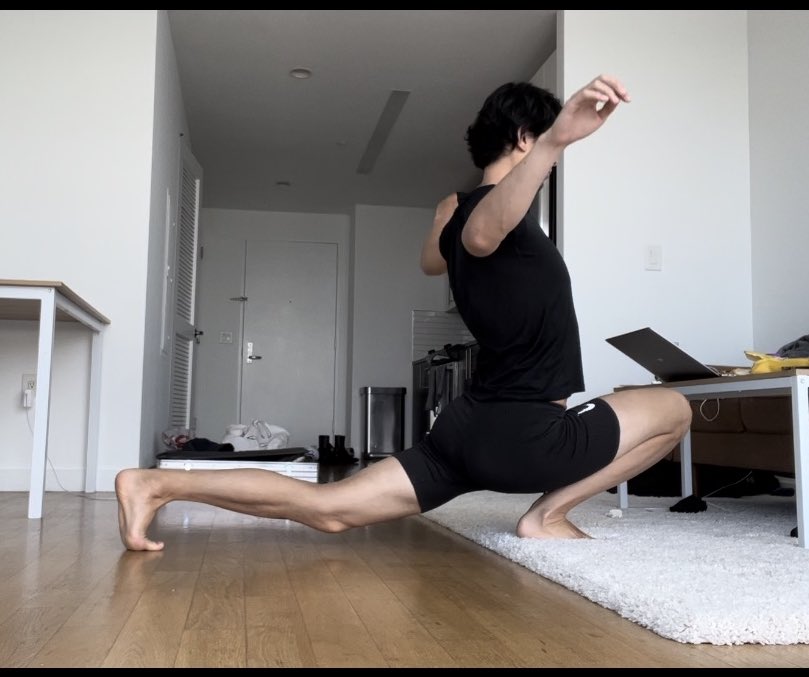
"I only see the faults, flaws, the imperfections. That attracts me" - yohji yamamoto https://t.co/WXSR7289jz

"I only see the faults, flaws, the imperfections. That attracts me" - yohji yamamoto https://t.co/WXSR7289jz

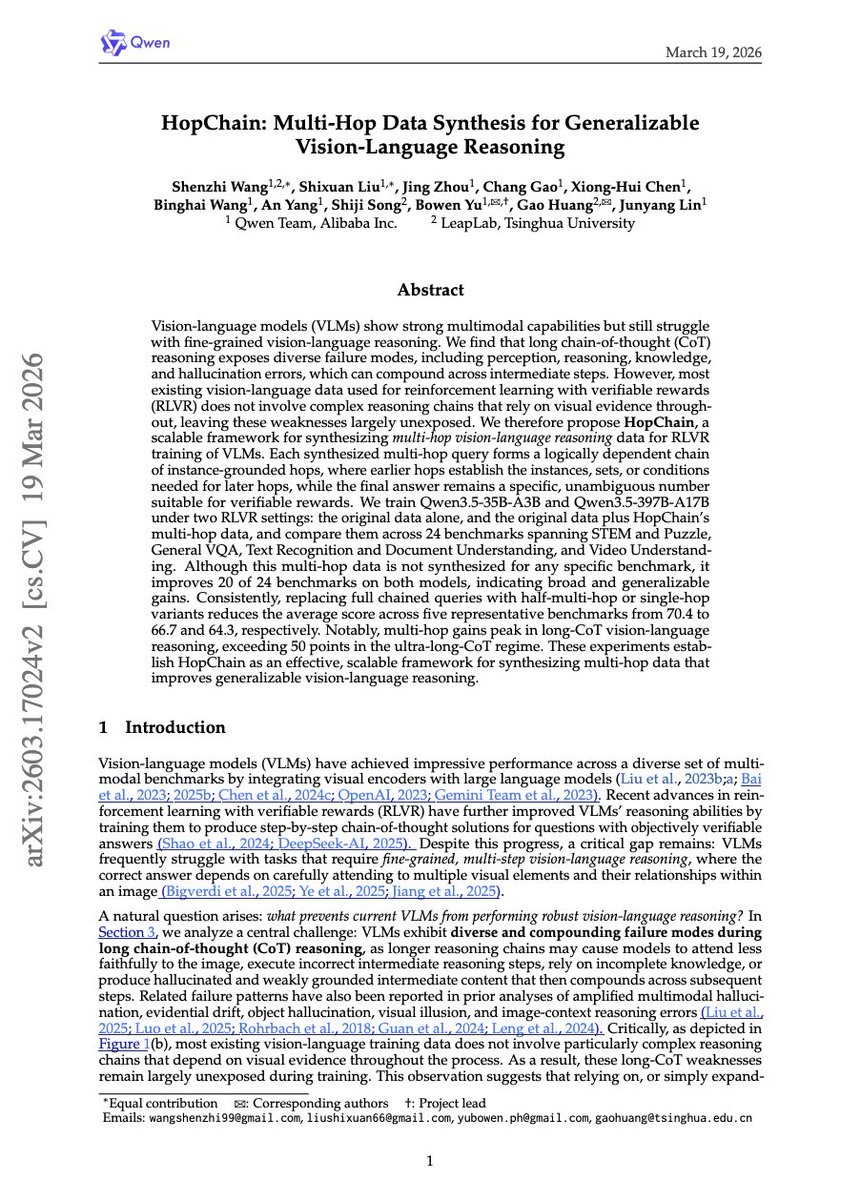
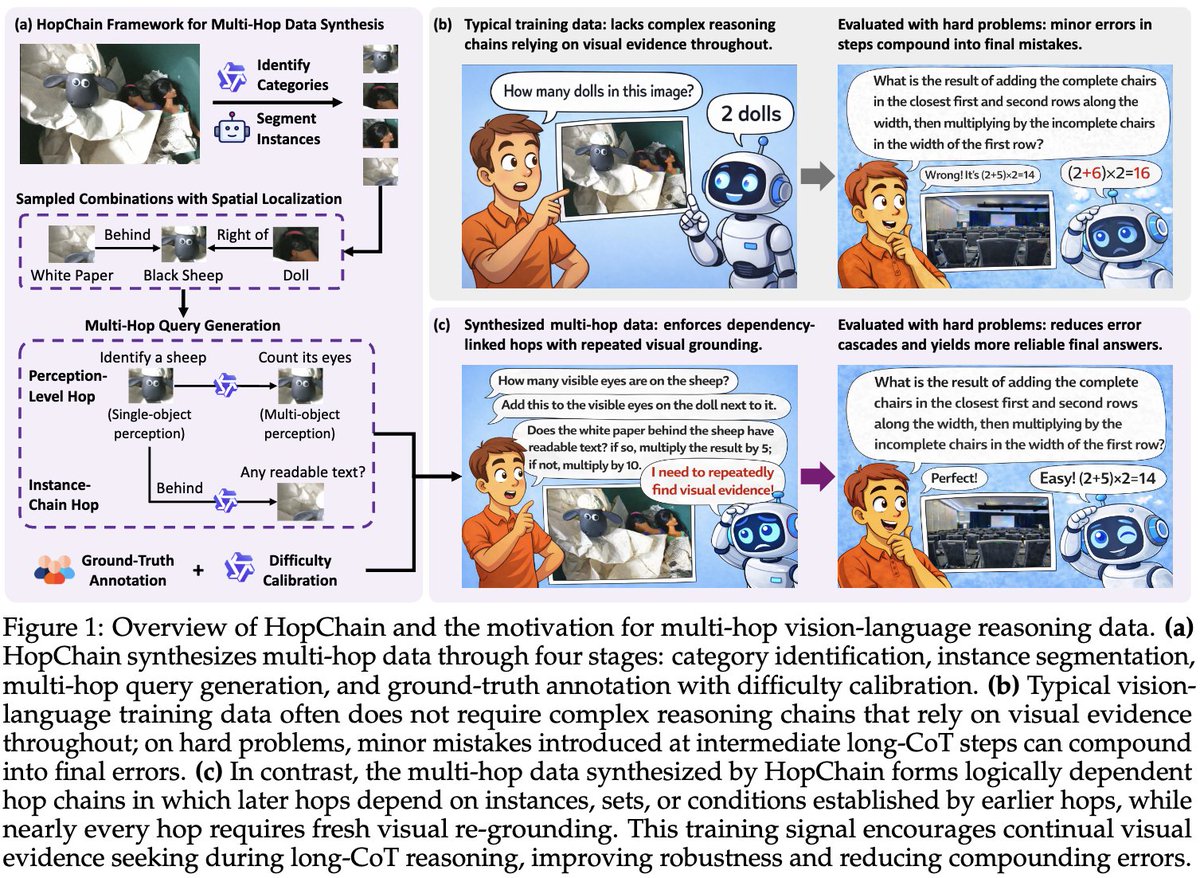
When training Qwen3.5, we kept asking ourselves: 🧐What kind of multimodal RLVR data actually leads to generalizable gains? 💡We believe the answer may not lie only in data tightly tailored to specific benchmarks, but also in OOD proxy tasks that train the foundational abilities behind long-chain visual reasoning. The motivation is simple: VLMs are still unreliable in long-CoT settings. Small mistakes in perception, reasoning, knowledge use, or grounding can compound across intermediate steps and eventually lead to much larger final errors. However, much of today’s RLVR data still does not require complex reasoning chains grounded in visual evidence throughout, meaning these failure modes are often not sufficiently stressed during training. 🚀Excited to share our new work from Qwen and Tsinghua LeapLab: HopChain: Multi-Hop Data Synthesis for Generalizable Vision-Language Reasoning This is also one of the training task sources used in Qwen3.5 VL RLVR. To study this question, we propose HopChain, a scalable framework for synthesizing multi-hop vision-language reasoning data for RLVR training. The key idea is to build each query as a chain of logically dependent hops: earlier hops establish the instances, sets, or conditions needed for later hops, while the model must repeatedly return to the image for fresh visual grounding along the way. At the same time, each query ends with a specific, unambiguous numerical answer, making it naturally suitable for verifiable rewards. Concretely, HopChain combines two complementary structures: perception-level hops and instance-chain hops. We require each synthesized example to involve both, so the model cannot simply continue reasoning from language inertia. Instead, it is forced to keep grounding intermediate steps in the image, maintain cross-step dependencies, and control error accumulation across long reasoning trajectories. Our goal is not to mimic any specific downstream benchmark, but to strengthen the more fundamental abilities that long-CoT vision-language reasoning depends on. We add HopChain-synthesized data into RLVR training for Qwen3.5-35B-A3B and Qwen3.5-397B-A17B, and evaluate on 24 benchmarks spanning diverse domains. Despite not being designed for any particular benchmark, HopChain improves 20 out of 24 benchmarks on both models, indicating broad and generalizable gains. We also find that full chained multi-hop queries are crucial: replacing them with half-multi-hop or single-hop variants reduces performance substantially. Most notably, the gains are especially strong on long-CoT and ultra-long-CoT vision-language reasoning, peaking at more than 50 accuracy points in the ultra-long-CoT regime. Our main takeaway is simple: beyond benchmark-aligned data, OOD proxy tasks that systematically train the core mechanics of long-chain visual reasoning can be a powerful and scalable source of RLVR supervision for VLMs — and can lead to more generalizableimprovements. 🔗 https://t.co/Bv887MDDdt
Is AI making us all use the same tools, or is it empowering us to try new things? 🤔 The Head of GitHub Next, Idan Gazit, sees two trends colliding: • Consolidation around popular frameworks where AI excels • Lower barriers to programming languages you've never written What do you predict will win out? Gather more insights here. ⬇️ https://t.co/9HHAusGV1J

If you have an Apple Vision Pro and want to play with dynamic foveated streaming, I've just released my app... https://t.co/e5Vnra3ZCY and https://t.co/ZpNIpeAJAj


This is the latest Google research on XR Interaction: World Mouse. Instead of using hand rays or gestures to point at things in the physical space, you move a cursor with a mouse and the system figures out where that cursor should sit in the 3D world. It works in two main ways: - On an object, the cursor follows the surface, so you can move precisely across walls, screens, furniture, or virtual objects. - Between objects, the system creates a smooth bridge through space, so the cursor can travel from one surface to another. That means you can go from a 2D panel to a 3D object, place content on a real wall, manipulate virtual objects, or interact with physical devices through digital proxies. This is the type of news, tools and product updates I share weekly in my newsletter. If you are into 3D XR and AI make sure to check it out (link on top of my profile). Based on “World Mouse: Exploring Interactions with a Cross-Reality Cursor” by Esen K. Tütüncü, Mar Gonzalez-Franco, Khushman Patel, and Eric J. Gonzalez
i’m paying to get insulted by claude https://t.co/YeQugagRuv

🚨 China has released an AI employee that runs 100% locally. It can do research, code, build websites, create slide decks, and generate videos.. all by itself. And it comes with its own computer. 100% Open Source. https://t.co/KuhKCteBYA
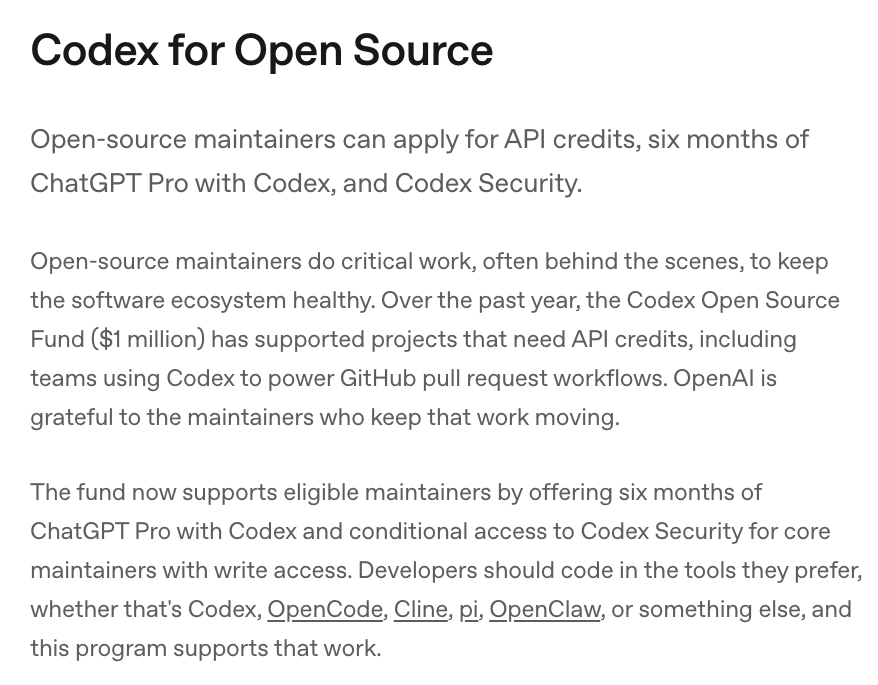
Extremely happy and grateful to @reach_vb and @OpenAI for supporting my research and addiction for open-source contributions with Codex open source for the win! I am working on something I am super proud of right now, releasing it soon 👀🧑🍳 https://t.co/RlaC4mrGK7
Allied leaders stopped trying to find hidden logic behind Trump's actions. They understand any contribution they make will count for nothing. Few days later, Trump will not even remember it happened — Anne Applebaum, The Atlantic. 1/ https://t.co/RfNS2yNSQi

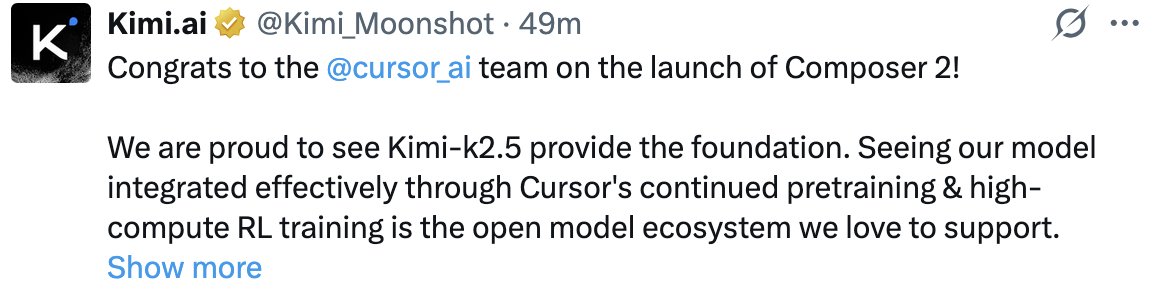
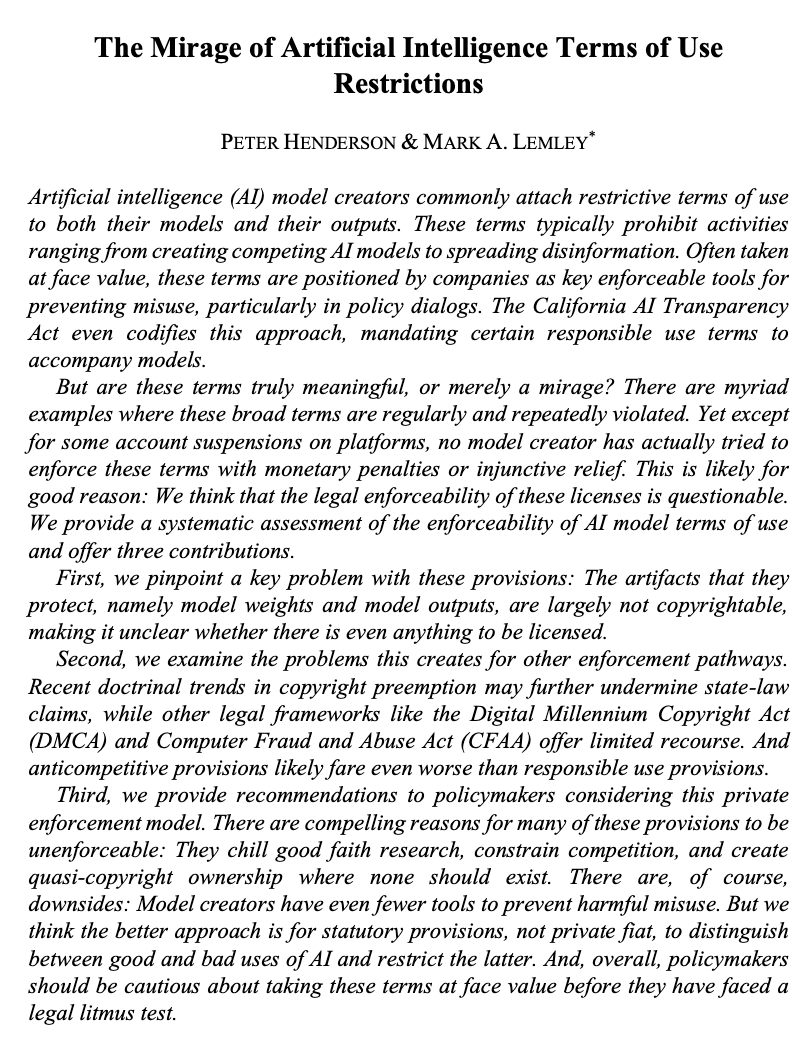
There was a bit of a question earlier in the day about whether Cursor was complying with the Kimi-K2.5 license in their extended training and release of Composer 2. Seems like they are. But! I'd once again caution against over-indexing on open-weight model licenses. They might not be so enforceable, as we recently wrote about in "The Mirage of Artificial Intelligence Terms of Use Restrictions!"
It is little things that bring a better experience with a brand. @tesla https://t.co/GocLG5vrKD
NVIDIA VP Adel El Hallak told me at GTC they run an internal agent swarm for deep research Not one agent. A team of specialists. Opus orchestrates. Nemotron runs the sub-agents Won both DeepResearch benchmarks They eat their own dogfood https://t.co/3sOvyhgQMj
The first PC VR local streaming client that takes advantage of visionOS 26.4’s built in Foveated Streaming framework is coming to TestFlight very soon! It is called ClearXR and taps into NVIDIA’s OpenXR runtime: it already performs much better for PCVR gaming than ALVR https://t.co/mlSmZUmdnu
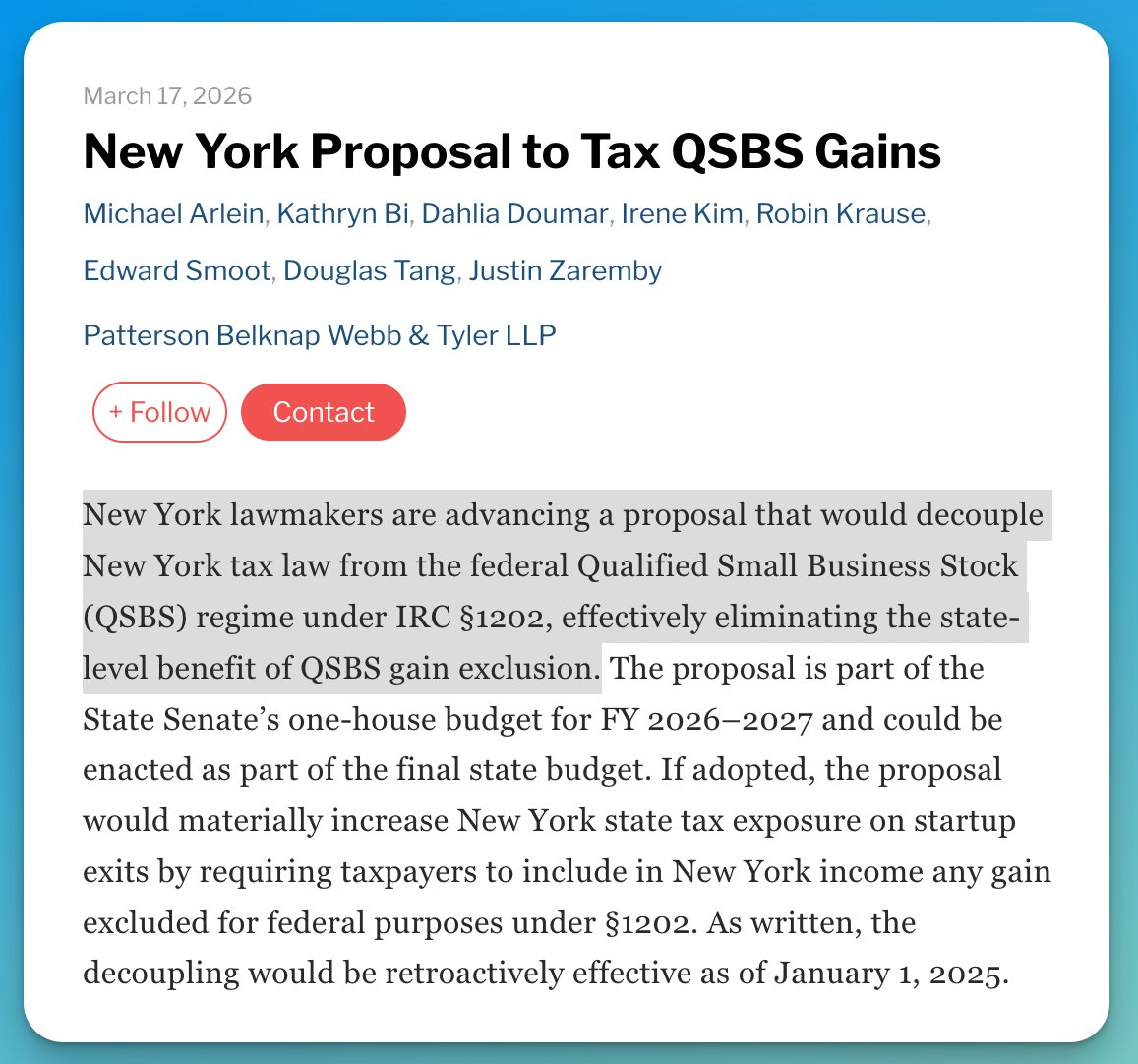
New York is about to make a massive mistake. The NY State Senate is advancing a proposal to decouple from federal QSBS (Section 1202) — the tax provision that lets startup founders exclude gains on qualifying exits. If this passes, founders would owe 10-13% in combined state and city tax on exits that are tax-free at the federal level and in nearly every other major tech state. Even worse: it's retroactive to January 1, 2025. This comes right as the federal government just expanded QSBS benefits and New Jersey moved to full conformity. New York wants to go in the opposite direction. As a seed investor in NYC who has backed hundreds of companies, I can tell you: founders are mobile. If New York becomes one of the most punitive states for startup exits, the best founders will simply build somewhere else — and the jobs, tax revenue, and innovation will follow. NYC has built something special over the last two decades. This proposal puts it all at risk for a short-sighted revenue grab. If you're a founder, investor, or anyone who cares about the NYC tech ecosystem — please sign the TechNYC open letter before Monday below 👇🏾👇🏾👇🏾 Keep building, NYC 🗽
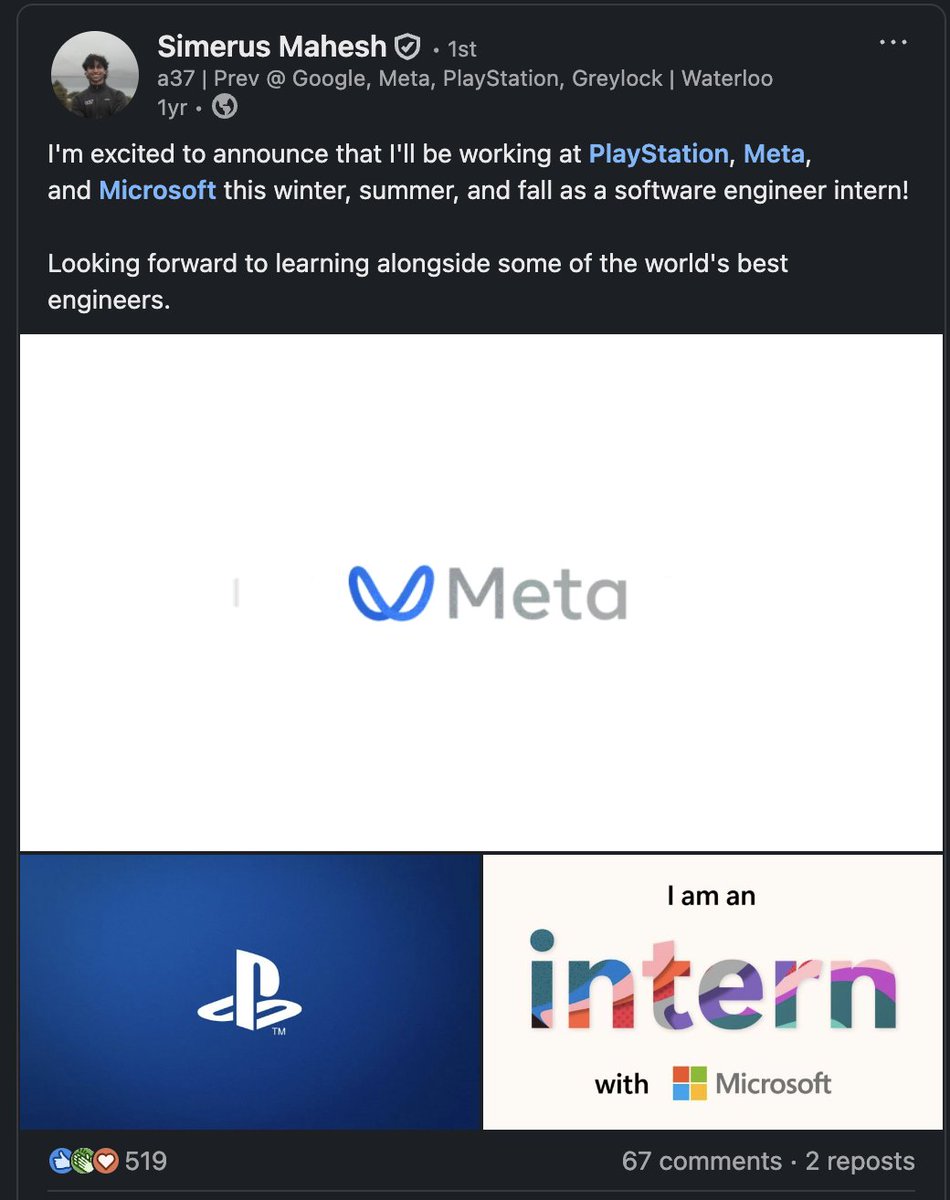
waterloo needs to be nerfed https://t.co/4XxN0JXTfc

i could be at home eating nuggies while chatting with codex right now https://t.co/yHfgZexkqR

i could be at home eating nuggies while chatting with codex right now https://t.co/yHfgZexkqR

小红书刷到的 感同身受 不知道大家有这个感觉没 codex 推理设置为高的时候兜底代码越来越多 为了不抱错越写越多 其实failfast 也是很重要的 让问题尽快暴露出来 所以我都把推理设置成中 并且明确要求它不要过度设计不要写过度防御性代码 新项目不要过度考虑兼容性 https://t.co/JPG0WV7Dl2

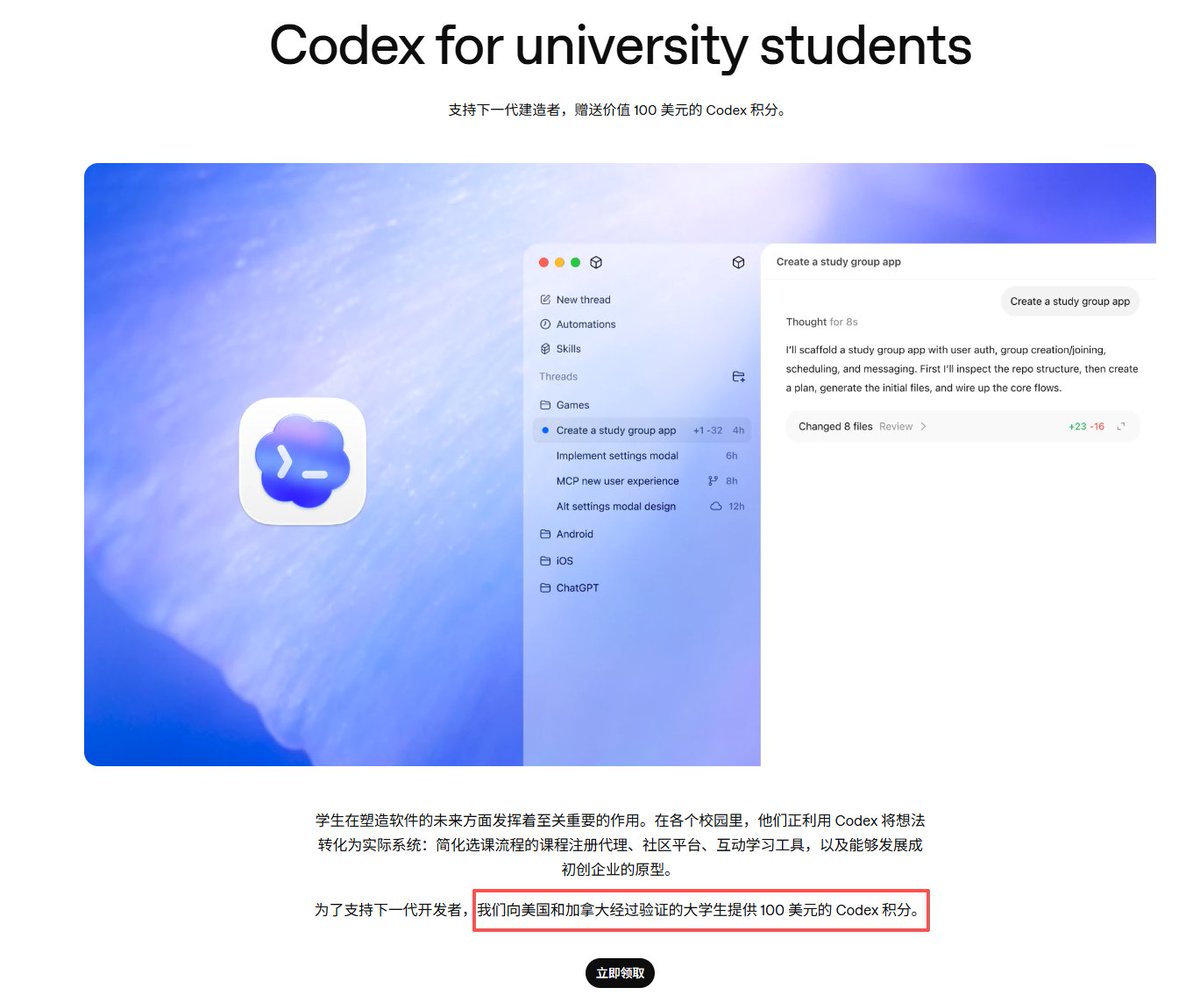
完蛋!咸鱼大军又要来了,codex这么搞能顶住吗?真担心你们把资本家薅没了!OpenAI现在成了赛博菩萨了,到处散福利! https://t.co/lxhPyhDXq2
📢We are now actively working on Omni model quantization through AutoRound and published some quantized models recently: https://t.co/vBwvq5R1EB https://t.co/LzziGiXsdI https://t.co/RY1qBMISKZ Feel free to repost and welcome any feedbacks! @huggingface @Alibaba_Qwen @Zai_org