Your curated collection of saved posts and media
https://t.co/3br4MHKknz

Gemma 4 E4B is impressive for an on-device LLM. GPT-4ish quality, and expect hallucinations. Here is: “List five sociological theories starting with u and what they are. Then describe them in a rhyming verse” Its in real time, the last is a little bit of a stretch, but not bad! https://t.co/nJ5HuQsFSB
@BetaTomorrow @AndrewCMyers @maxdkozlov @dangaristo @Nature Well, it was worth a try 🤷♀️ https://t.co/E7GbUf3LJf

Liberate your @openclaw with an open model or local model with these tools from our friend @ClementDelangue and team at @huggingface 🦞 https://t.co/e326fluHra

ロボット好きの縁日みたいな、とても楽しい空間です。パレードは午後にも何回かあるみたいなので、是非近くの人は寄ってみてくださいー! #秋葉原ロボットほこ天 https://t.co/wxZ9raWfXX
ロボット好きの縁日みたいな、とても楽しい空間です。パレードは午後にも何回かあるみたいなので、是非近くの人は寄ってみてくださいー! #秋葉原ロボットほこ天 https://t.co/wxZ9raWfXX
The biggest misconception about AI and jobs may be how much will actually be automated. A Yale economist argues that many tasks are simply not worth automating, even with very advanced AI, because the cost, complexity or context outweigh the benefits. That challenges the idea that only highly creative work will survive. The reality may be more uneven. Some jobs change dramatically, while many others stay because replacing them is harder than it looks. https://t.co/pFiWkx2ltX @fortunemagazine

Hey sorry for the late replies. I’m A bit underwater rn https://t.co/eHT3DPJbud
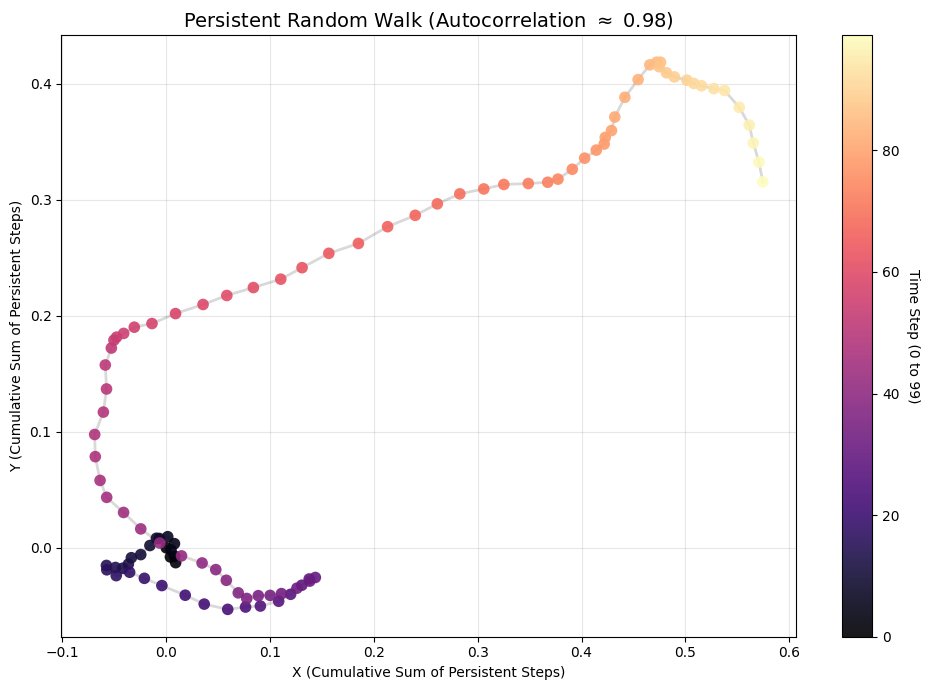
Ok, this thread has apparently been a magnet for hordes drooling morons who not only don't get stats, but can't even read. If you're a normally intelligent reader of this tweet, here's an extra example of my point: If you take two RANDOM, INDEPENDENT timeseries (i.e. knowing one gives you NO information about the other) that are each highly temporally autocorrelated (e.g. two random walks), and you plot one against the other as a scatter plot, what you get is a single X/Y trajectory that will ALWAYS look very structured. Yet it is random. Like the figure below. Code to reproduce the figure and play around with this idea: https://t.co/OZPfxCRN3s Of course if the two series happen to be correlated, then you will ALSO see something very structured. It's just that this type of visualization is a completely retarded way to look at such data. If you think this is deep, you are innumerate.

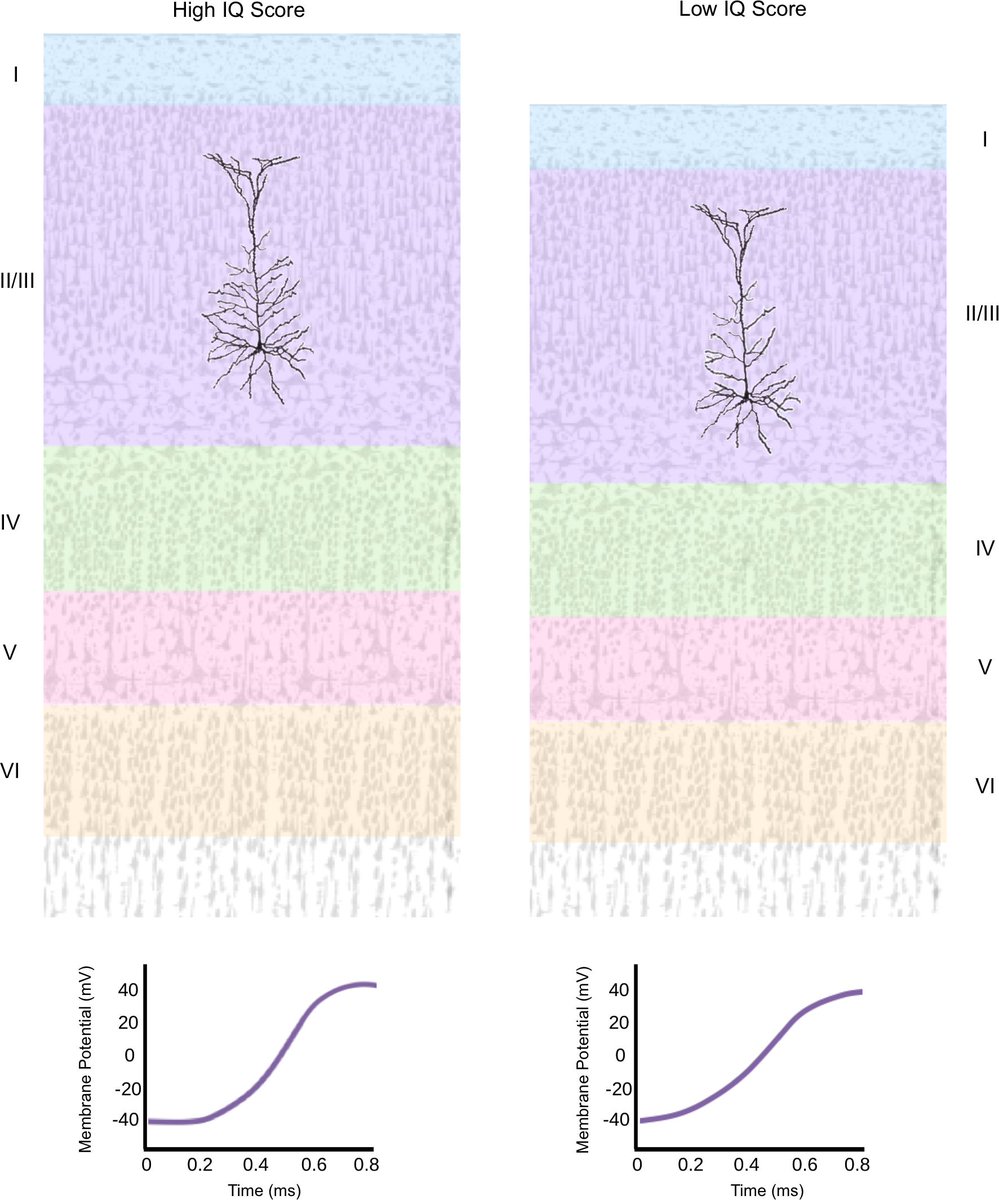
Unsurprisingly, smarter people tend to have better neurons. They are faster, longer, and more dendritically complex. Intelligence is physical! https://t.co/kovvmO3d79
Tesla’s Supercharger network just hit a massive new scale - 80,000+ active stalls worldwide It took over a decade to build the first 40,000 Now Tesla just doubled it in less than four years The scale is wild. In Q1 2026 alone: • 1.8 TWh of energy delivered • 53 million individual charging sessions completed • Network wait times dropped to just <1% Tesla is also rapidly rolling out the new V4 Superchargers, capable of true 500 kW speeds The best part is these are not just for Teslas - Ford, GM, Rivian, Mercedes, Hyundai, Kia, and nearly every major EV brand now let their drivers use the Tesla superchargers because of the extreme reliability and massive network Tesla offers Tesla quietly built the entire EV charging ecosystem, and now legacy automakers struggle to sell cars without it - they are heavily relying on Tesla’s massive network to make their vehicles truly viable on the road and give customers the confidence to buy their cars
Grok Imagine just got a huge upgrade! Now you can create realistic cinematic shots. I’ve created a prompt template to help you get similar results. Here’s how to use + examples ↓ https://t.co/LmILD7vOrp
The 𝕏 API just got a massive update that completely changes the game for AI agents and builders 𝕏 is the most real-time platform on Earth, and with the 𝕏 API, you can leverage this real-time data to build your applications The new capabilities are actually insane: • Pay-Per-Use: You no longer have to worry about monthly tiers. You now only pay for what you actually use • XMCP Server + Xurl for agents: Native Model Context Protocol support allows your AI agents to seamlessly read context and execute actions on the platform • Official Python & TypeScript XDKs: First-party tools to help you build and ship significantly faster • API Playground: Free, realistic simulations to safely test your agent's code before going live You also get up to 20% back in FREE xAI API credits when you purchase 𝕏 API credits (based on your total spend) Start building here → https://t.co/4ZkypGG3M5

“Move fast and break things” worked for apps. It is deadly for AI. What Canada’s case shows and why UK policy choices matter now. 1/ In Canada, internal systems flagged a person’s violent conversations with an AI months before a mass shooting. Police were not notified. Multiple people, including children, died. 2/ This reveals a gap in corporate responsibility when law doesn’t require companies to act on serious risk. 3/ In the US there is still no comprehensive federal AI safety law. Self‑regulation and speed often come first, even for generative systems. 4/ In the EU the AI Act and Digital Services Act create legal duties for “high‑risk” AI systems and platform safety, including incident reporting and transparency that can carry real penalties. 5/ Same technology, two very different legal realities. 6/ The UK is still deciding which path to take. We do not have to adopt Silicon Valley’s “disrupt first, sort out harm later” model, nor merely copy the lax US approach. 7/ Canada’s tragedy shows the cost of weak oversight. The EU’s regulatory frameworks show that strong rules designed to keep people safe do exist. 8/ UK policymakers @OfficeforAI @SciTechgovuk @Ofcom must act now with safety and accountability baked in. 9/ US federal AI policy voices like @FTC and broader US AI debate also influence global norms. 10/ EU enforcement and AI policy engagement by @EU_Commission @EUAI_Office show one workable alternative. Conclusion: Don’t let the first mover set global norms for everyone else. UK policy choices can protect people, not just placate Big Tech. Act now on AI safety, reporting and accountability. https://t.co/xdbvvcjMWP #AI #AIRegulation #SafetyNotSpeed #UKTech #AIAct #AIpolicy

Here is a quick start script including the setup, technical details, and a candid look at where Kinetic excels versus its current limitations 🪡 https://t.co/uSqD68RhzG
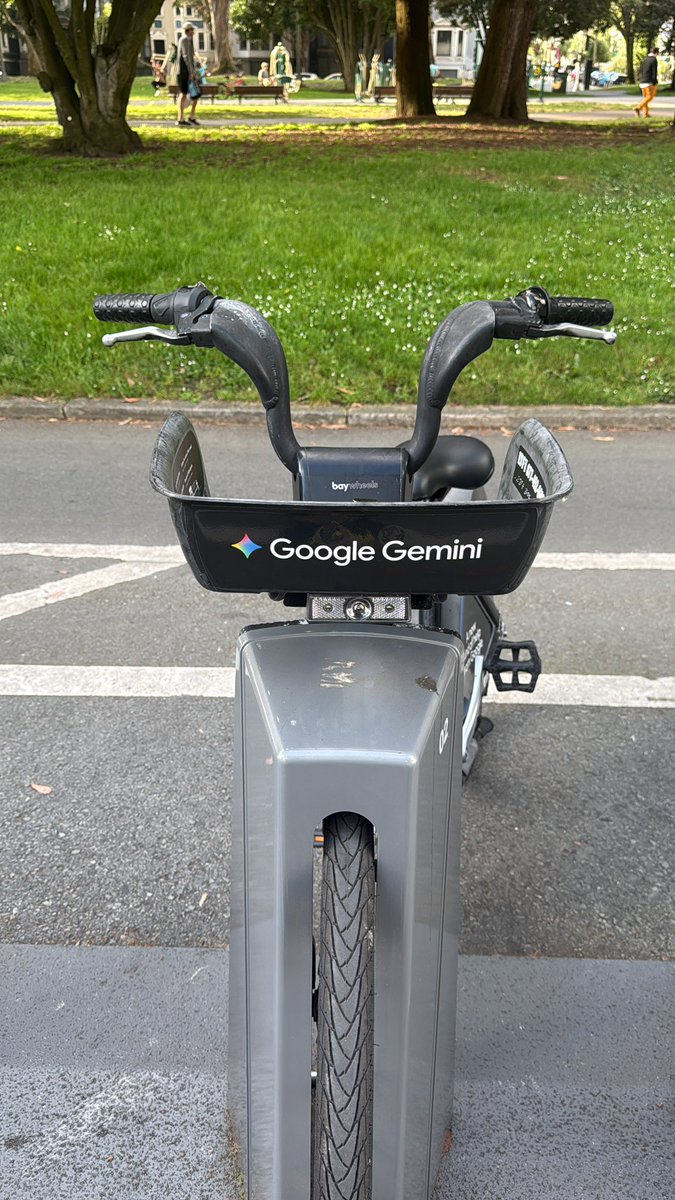
Love the random google ad out of nowhere on a bike. Would be sick with a realtime model chatting with you https://t.co/WmAZqpJB7l
SpaceX now has over 10,000 Starlink satellites in orbit (and growing), providing internet data service to every corner of the earth. Even ships at sea or aircraft in the sky can receive high speed internet service. Over 2/3 of the active satellites in orbit are Starlink now. And it won't create any long term trash in orbit. The orbits are so low (480 km to 550 km) that even if SpaceX were to lose control of one, the small satellites will run out of fuel within 5 years. Then they get dragged back into the atmosphere and burn up. Every satellite is in a lane to avoid other Starlink satellites. They all are connected to a collusion avoidance system and can make small course adjustments if needed. Starlink can provide high speed internet anywhere on the planet without having to bury expensive fiber cables underground or undersea. All you need is a small dish which scans the sky for the closest satellite to provide internet connectivity.
Grok 4.20 Multi-Agent just ranked #1 on Search Arena (Style Control) Grok 4.20 set a new industry record on AA-Omniscience with 78% accuracy - the lowest hallucination rate ever recorded on the benchmark Beats Claude Opus 4.6 & Gemini 3.1 Pro https://t.co/LveQ1Gzx9H

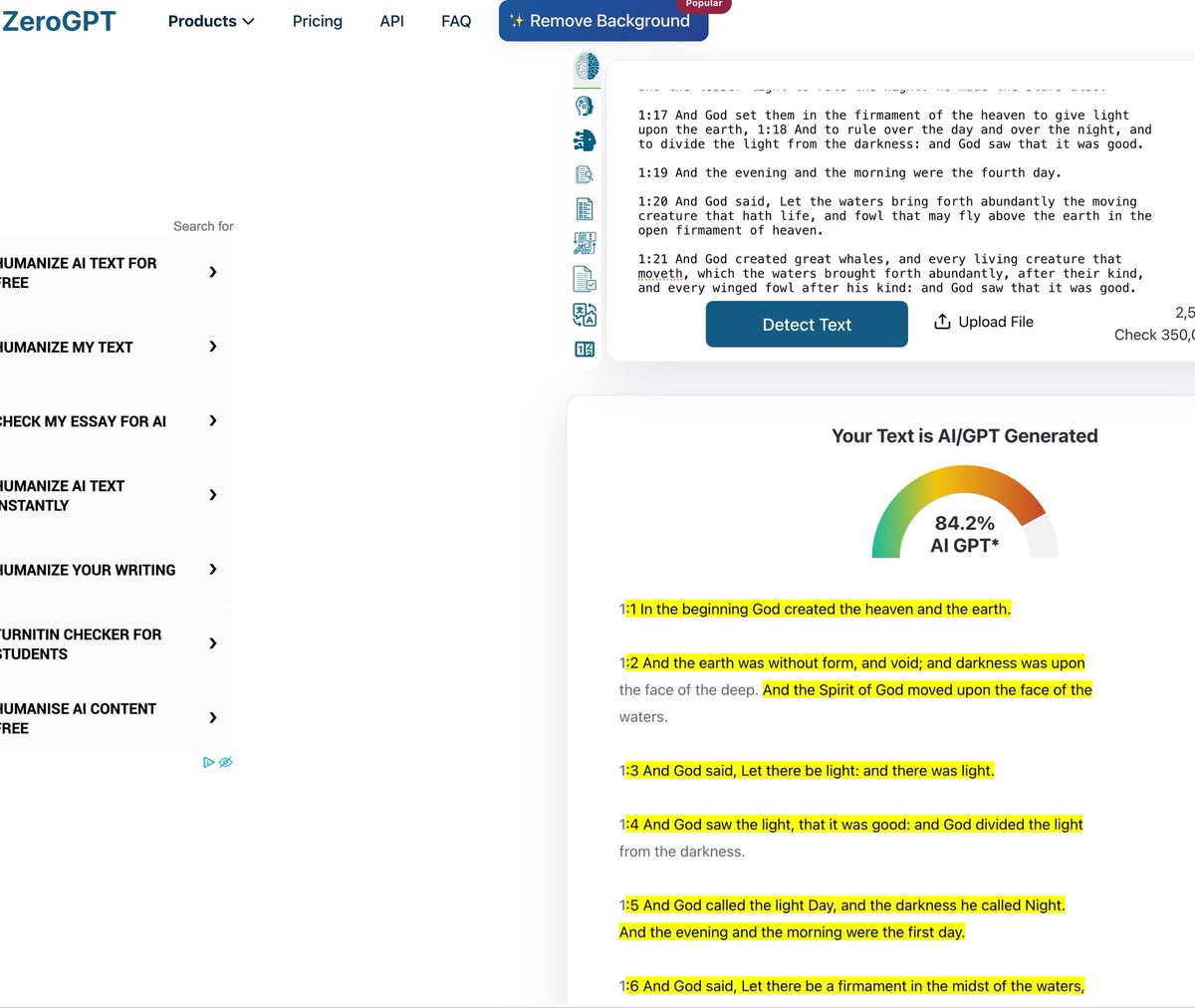
@realdanjoseph (I thought you meant books 1 - 6, not verses 1-6) but I have gone back and actually the reader sent it to me appears to have used more than just the six verses in the screenshot fwiw. here is the full screenshot they sent me. https://t.co/N7bVnFpO20
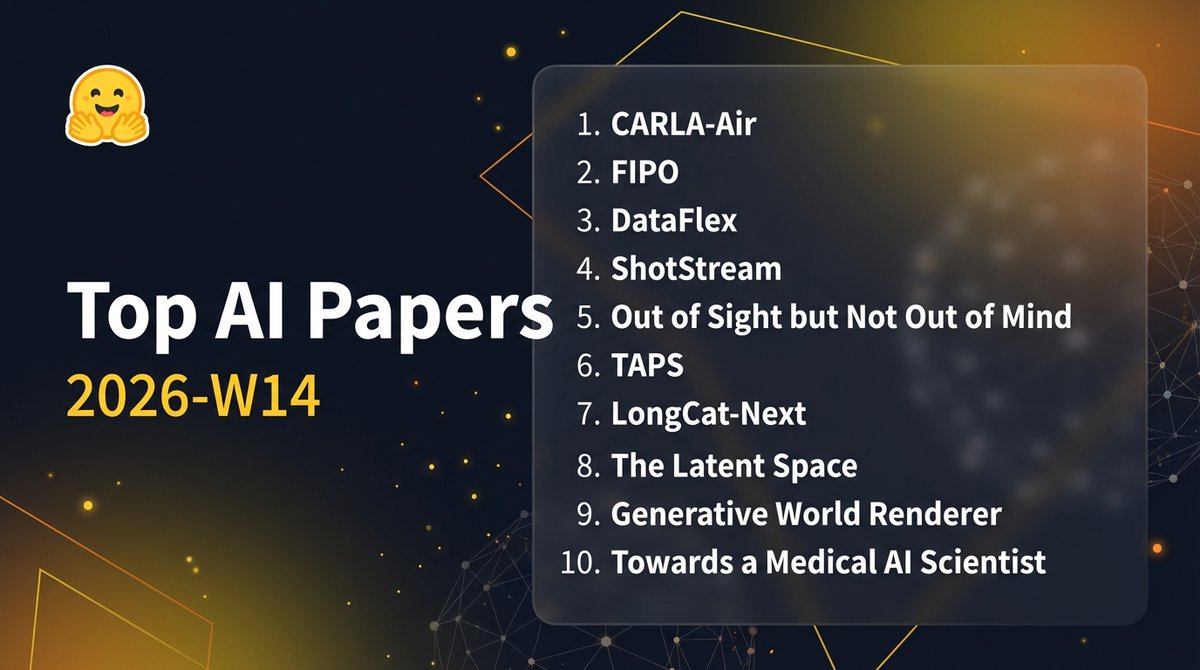
Top AI papers this week on @huggingface 🚀 - CARLA-Air: Fly Drones Inside a CARLA World -- A Unified Infrastructure for Air-Ground Embodied Intelligence - FIPO: Eliciting Deep Reasoning with Future-KL Influenced Policy Optimization (surpasses DeepSeek-R1-Zero and o1-mini) - LongCat-Next: Lexicalizing Modalities as Discrete Tokens by Meituan - ShotStream: Streaming Multi-Shot Video Generation for Interactive Storytelling - Out of Sight but Not Out of Mind: Hybrid Memory for Dynamic Video World Models - DataFlex: A Unified Framework for Data-Centric Dynamic Training of Large Language Models - TAPS: Task Aware Proposal Distributions for Speculative Sampling - The Latent Space: Foundation, Evolution, Mechanism, Ability, and Outlook
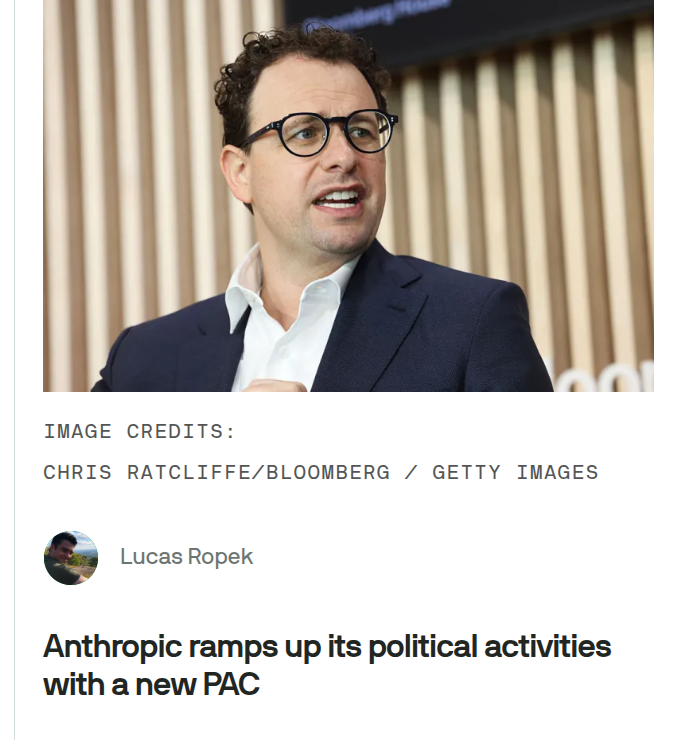
Anthropic is reportedly rolling out a corporate Political Action Committee to influence AI policy before the midterms, supporting candidates in both parties. They opened a formal campaign-money channel called AnthroPAC, a standard employee-funded PAC, not a super PAC, so the money comes from voluntary staff donations and federal law caps those donations at $5,000 per person each year. AI firms now see regulation as a business input, because a rule on model access, military use, chip exports, or state oversight can change which labs win contracts and which ones get boxed out. Anthropic’s move also fits its broader political push, which already includes a reported $20M backing for Public First Action while a separate fight with the Pentagon has turned model guardrails into a live legal and commercial conflict. --- techcrunch .com/2026/04/03/anthropic-ramps-up-its-political-activities-with-a-new-pac/
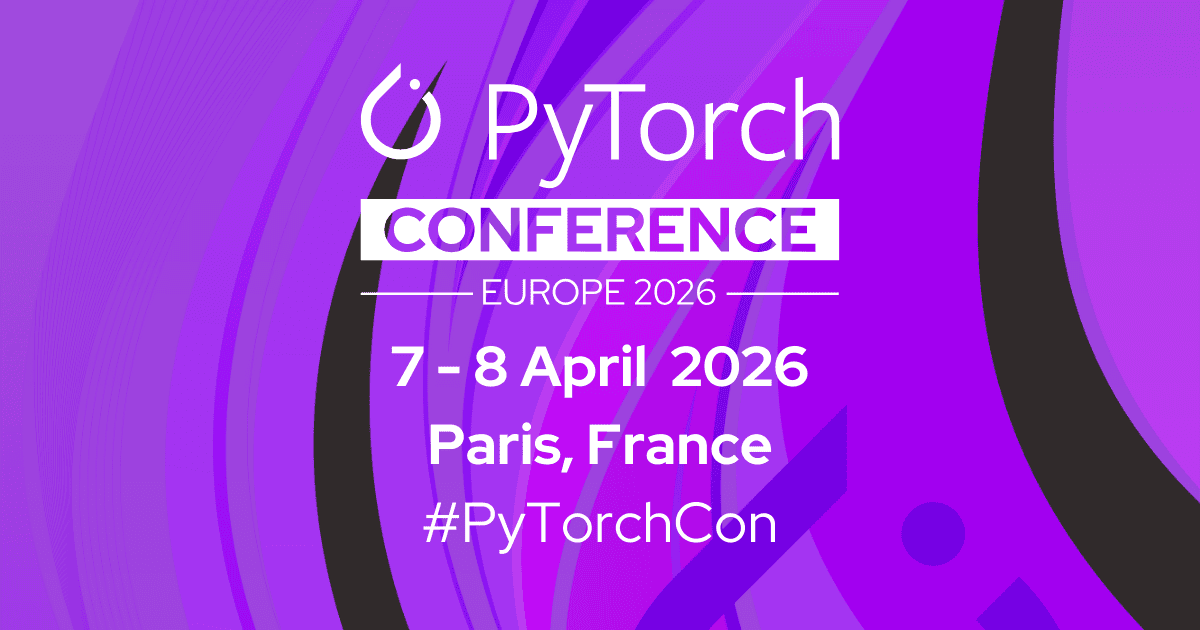
How do we scale evaluations for agentic #AI? 🤖 @besanushi (Senior AI Research Manager @nvidia) joins #PyTorchCon Europe to discuss "The Unbearable Lightness of (Agentic) Evaluations" and the road to consistent measurement pipelines. 📍 Paris | 7-8 April Learn more: https://t.co/4ZTGohRi22 Register: https://t.co/prWHolBpFf
Using AI in writing just crossed a line with real consequences. A literary critic was dismissed after relying on AI in a way that led to plagiarism concerns, triggering a broader debate across publishing. The message is clear. In creative work, how you use AI matters as much as whether you use it. https://t.co/X4cmN7jOd0 @ObserverUK

Something subtle is changing in the classroom. As more students use AI, writing styles are starting to converge, making different voices sound increasingly similar. What used to reflect individual thinking now risks becoming standardized. The challenge is not just using AI, but preserving originality while doing so. https://t.co/NXPynFf5c5

More people are turning to AI for health advice, but it comes with trade-offs. Uploading medical data can deliver useful insights, yet it also raises serious privacy concerns and risks around how that data is stored and used. The lack of clear standards makes it hard to know where that information ends up. AI can be helpful, but when it comes to sensitive data, convenience can come at a cost. https://t.co/p0JAOx6unN @wsj @nicnguyen
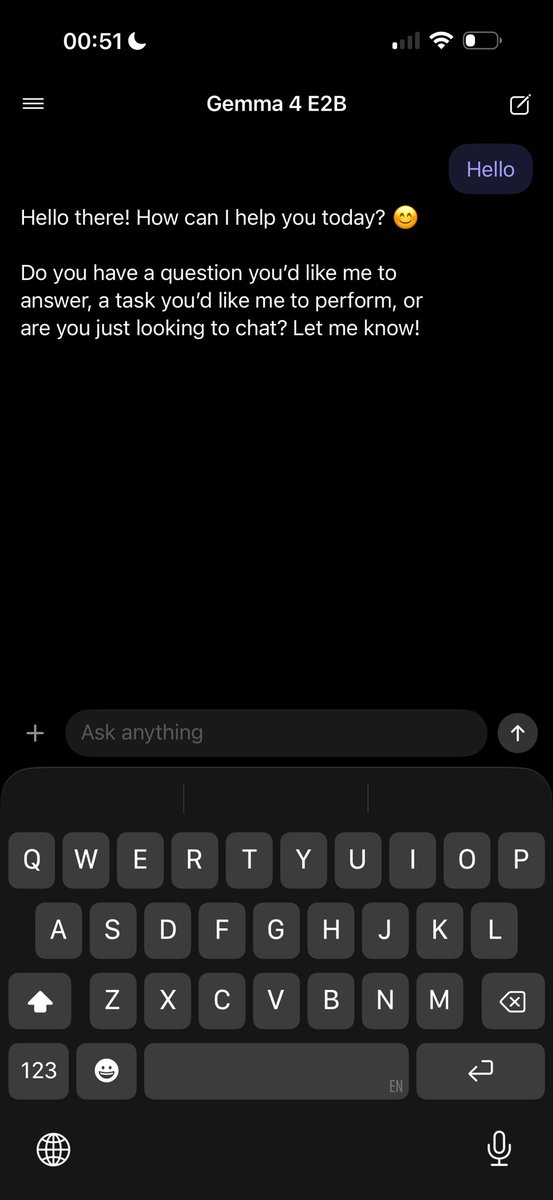
Insane I’m running Gemma 4 on my iPhone 16 pro max Vibe coded the app in under 1h Singularity is here https://t.co/hgJvWn6VHR
vibecoding this while waiting for the app to be out

Between imaging something and creating something lies resistance. In storytelling, the limiting factor is often not a lack of ideas or talent, but access to technology. There are far more people who want to say something, tell stories, and create worlds than the industry has historically enabled. That resistance has kept the number of creators artificially small. Every time you make creation simpler, faster, and more accessible, you expand the population of people who can participate. More people make more stories. More stories create more culture.
seedance 2.0 is insane for 3D animation real human faces still get flagged a lot… but animated characters works very well https://t.co/95v8jEGVGX
Andy Weir describing how he wrote The Martian and film got made is very entertaining. He said, “I wanted to make sure dorks like me would enjoy it, so made it as scientifically accurate as possible” Here the play-by-play: ▫️started writing full time in 1999 after getting fired from AOL (which had just merged with Netscape) ▫️he was a programmer and had a ton of stock options…because he was fired, had 6 months to excercise them and sold at AOL’s peak before bubble popped ▫️spent 3 years on book ideas that got “no traction” (and no agent wanted to sign him) ▫️went back to work as software engineer and wrote online as a hobby (webcomics, short stories, serials) ▫️The Martian was one of three serials he was working on 2009 (other one was about alien invading earth, another about a mermaid in 19th century New England) ▫️sent stories to a mailing list of 3,000 readers he had built up over a decade ▫️took 3 years to write The Martian, “posting a chapter at a time [every] 2 months” or so ▫️ “spent more time researching than writing, because researching was more fun than writing” (very relatable) ▫️readers corrected him along the way and when he was done, a bunch of them asked if he could make a Kindle version because reading it on his website sucked ▫️Weir didn’t want to charge because was making solid living as programmer…but Kindle has minimum of $0.99 ▫️all his fans started buying the Kindle book and leaving positive reviews ▫️this “sales spike” pushed book up charts and hit bestseller lists and just snowballed after that on Amazon ▫️within a short span, major book publisher reached out…then Matt Damon expressed interest on a film project…then Ridley Scott threw his hat in the ring ▫️Weir negotiated these deals while “debugging code” on his day job Described the process as “one of those things where everything just snuck up, bit by bit” before boooooooooom!! Film came out in 2015: made $630m on $105m budget (and Project Hail Mary might pass that now). *** Link to vid (2017): https://t.co/V9urNgxahL
Weir is exactly the kind of tech-obsessed, vaguely libertarian nerd who used to be an SF mainstay but science fiction publishing at some point decided they wanted to move beyond. But it turns out there's still an enormous audience for his brand of problem-solving techno optimism.
I just called my Mom from my smart glasses. Introducing video calls on Mentra Live smart glasses. Join Google Meet, Teams, or Zoom call directly from your glasses. Imagine field workers like HVAC techs, electricians, or mechanics calling into an expert remotely. The expert can see what they see and have a live voice call with them, getting help exactly when they need it. You might have seen a demo like this before... so what's different here? It's all about wearability. Classical enterprise smart glasses are heavy, uncomfortable, and never make it past pilot pergatory. Mentra Live are super lightweight and shaped like regular glasses. Workers can wear them all day, and the battery lasts for a full shift. Also, since MentraOS is open-source, you can build your own apps, deploy on-prem, and stay fully compliant. Video calling is rolling out in general availability to Mentra Live users later this month.
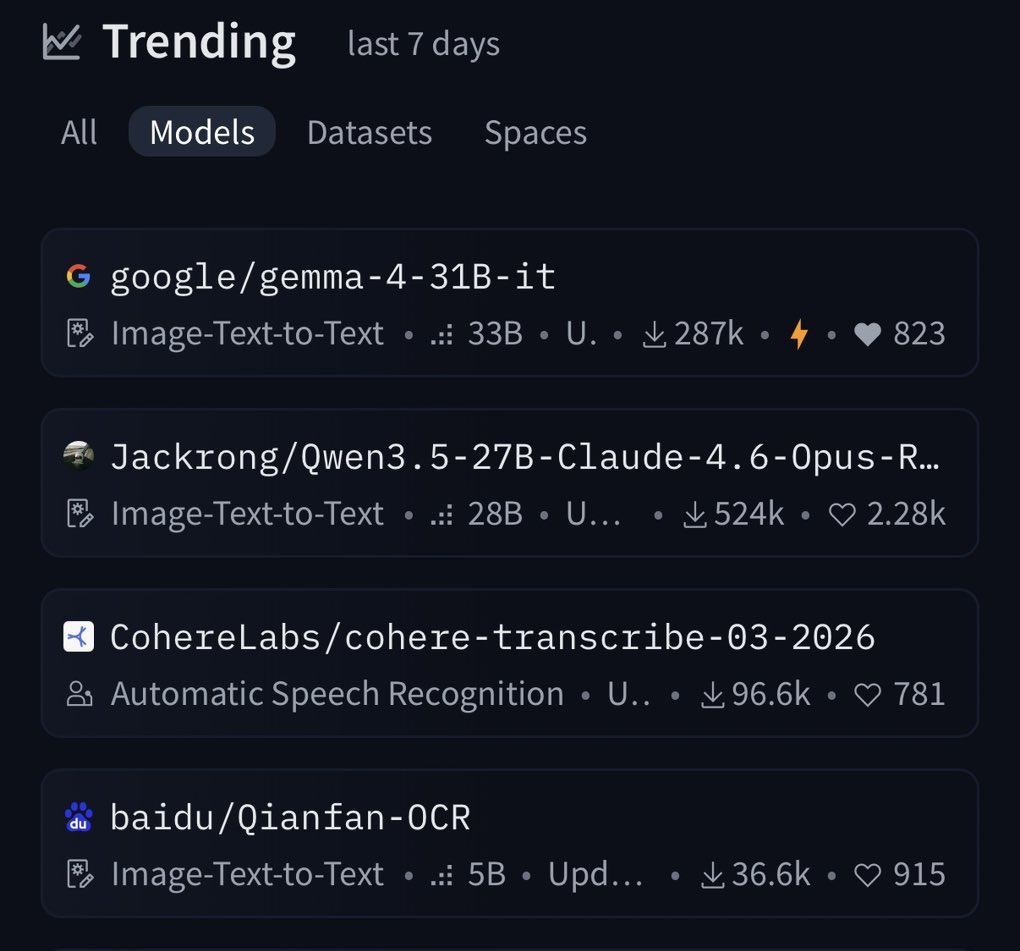
Gemma 4 is the #1 trending model on @huggingface 🤗 https://t.co/wBIQWsjX6H
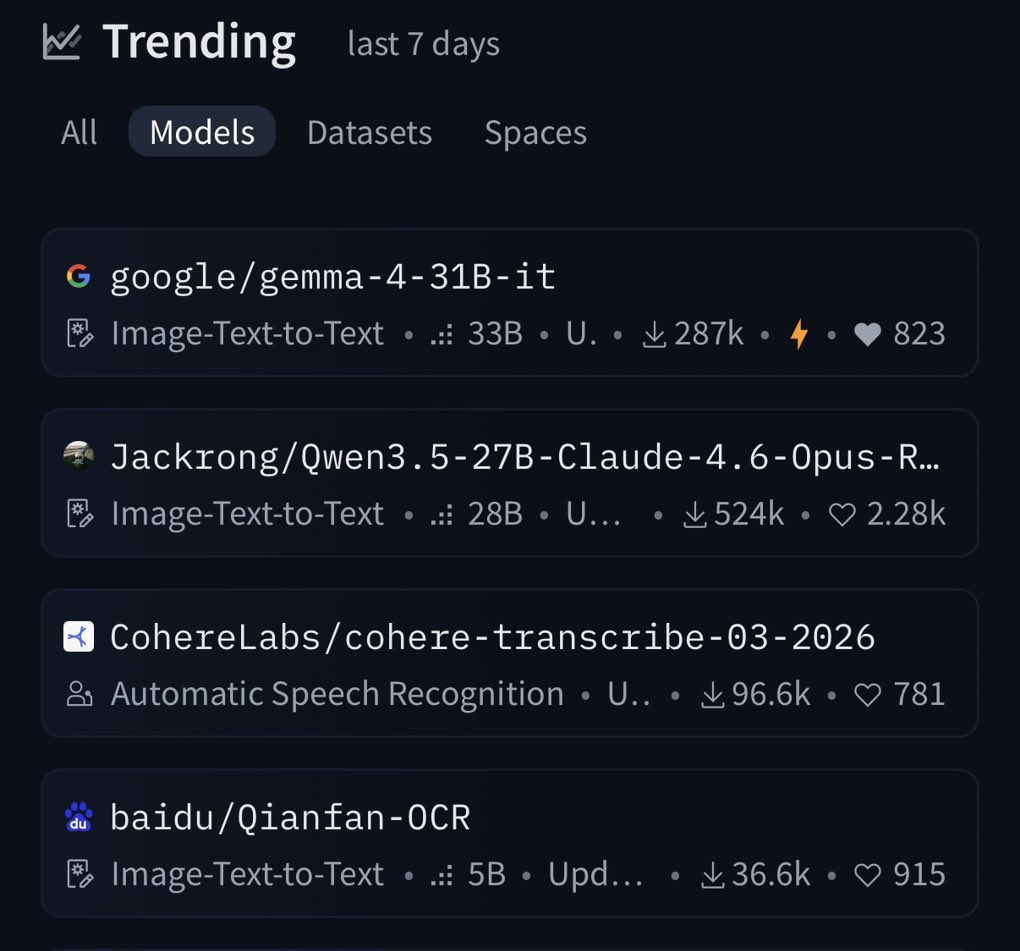
Gemma 4 is the #1 trending model on @huggingface 🤗 https://t.co/wBIQWsjX6H