Your curated collection of saved posts and media
300tok/s on mobile is insane... open source must win ✊ https://t.co/aNvg2PKvAT
a bit more than just another AI company https://t.co/pOPAaAsZ1n

a bit more than just another AI company https://t.co/pOPAaAsZ1n

RadixArk is joining the OpenEnv community. OpenEnv is the protocol layer for agent environments. It standardizes how environments are published, deployed, and consumed, so developers can mix any harness, any model, any inference engine on any task. This is exactly the kind of work we care about. Democratizing frontier AI means making the full stack, training included, open and usable by anyone. Excited to join the committee alongside @PyTorch @huggingface @nvidia @Microsoft @modal @UnslothAI @reflection_ai @PrimeIntellect @mercor_ai @fleet_ai and the rest of the open source community. We will start by integrating Miles with OpenEnv and shipping end-to-end examples that people can get their hands on. And there is more to come!
SITUATION EXPLAINED: 70% of frontier model queries could run locally for free. @ClementDelangue, co-founder and CEO of @huggingface: "There was an interesting study from Stanford published last year showing that 70% of the queries that people ask to ChatGPT could be accurately answered locally on your laptop. For free." "Most of the AI workloads that people do today with frontier models could be done by models that are cheaper, faster, more customizable, more controllable. And they don't do it because frankly it's a pain to pick the right model." "You're subsidized so you don't have to care because you have your subscription, so you route everything to Einstein. 'Hey Einstein, what's the weather today?'" "In normal life, he would be like, 'I'm not answering your silly question.' But because it's AI and subsidized by the AI labs, all the questions are getting routed to Einstein versus in an ideal world you have different models that are more specialized and better at answering your questions in different domains." "It's possible that routing is gonna redistribute a lot of the value capture from frontier models to a more long tail of models. It's like AI maturing... we are in the first phase where it's very simple, everyone using just one giant model. Now we're moving to the second phase."
Huge congrats to @doctolib on releasing `finemed-entity-extractor`! It’s built on GLiNER2 and extracts 8 medical entity types from French text. They also released: > FineMed → a large French medical pretraining corpus > DoctoBERT → a SOTA French medical encoder We love to see the community build on top of GLiNER2 models, especially in domains like medicine which can be so impactful! 🤗: https://t.co/2SEAKwusem 📄: https://t.co/Tgcf2Zuh58
Got GLM-5.2 running on my Mac Studio via llama.cpp, the reasoning behind all my medical agentic workflows. It orchestrates a swarm of tiny on-device OpenMed experts: oncology, meds, labs. No cloud, no rate limits, nobody can take it away. AI must be owned, not rented. https://t.co/pNpeOgYmFD
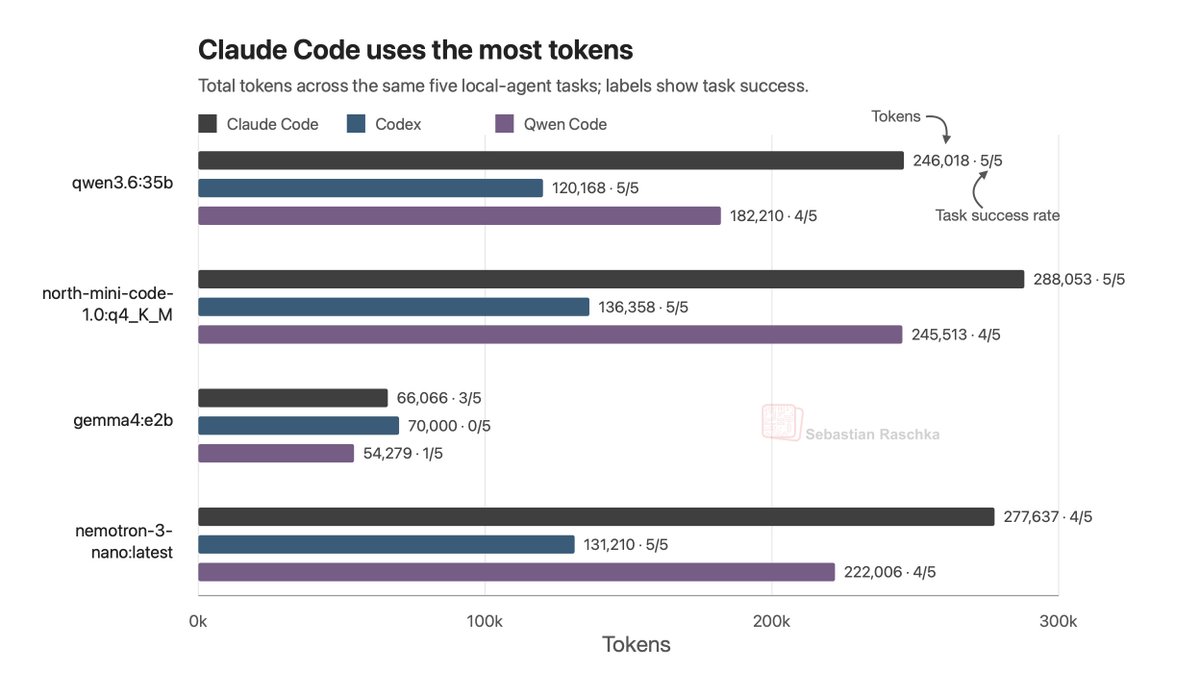
Have been taking different local open-weight LLMs for a test drive in different harnesses (Qwen-Code, Codex, Claude Code). 30B Mixture-of-Expert models are kind of a nice sweet spot and can solve challenging problems. And they get roughly 40 tok/sec on a Mac or DGX Spark, which is similar to GPT 5.5 in a Pro subscription and totally useable for everyday work. More interesting is also the harness choice! Claude Code seems to be using 2x many tokens as Codex. Gemma 4 E2B is here just for reference to show that the tasks can't be trivially solved by smaller models. Just finishing a longer write-up about this and will share soon (likely tomorrow)!
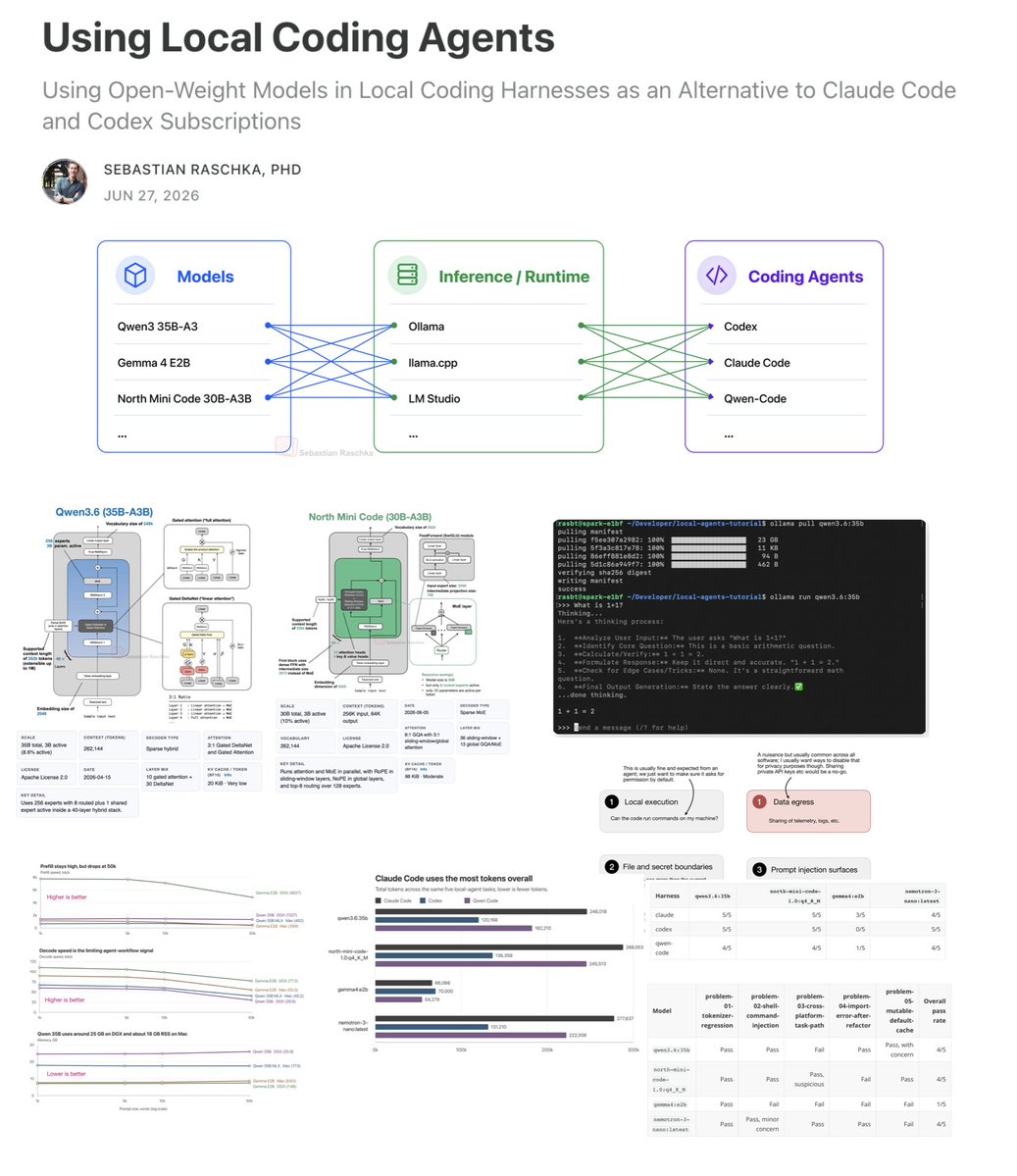
I put together a new article on setting up local coding agents with open-weight models. Everything runs 100% locally. I thought it might be useful putting this together because many people asked me about my setup in the past, and I thought it would also motivate people to get started tinkering with local models for serious work (yes, things got incredibly capable this year with better LLMs and better harnesses). So, here's a walkthrough of how to connect a local LLM to a local coding harness (could be Claude Code or Codex, which you may already be familiar with). I also included some assessment notes that are useful as a checklist to select between and consider certain LLMs over others: - Checking RAM usage at long contexts to see if the model is suitable for real work - Measuring prefill and decoding tok/sec to see whether it's fast enough to not be annoying - Making sure the model has sufficient tool-calling capabilities in theory - Assessing whether the model can solve some more challenging tasks when used in a coding harness. Of course, there are always more specialized tools that can squeeze a bit more performance out of things, but I hope this is a good starter kit that stays flexible; that is you can easily switch to newer models as they are released or even tap into cloud models in your familiar harness if the current ones are not sufficient enough for a given task.
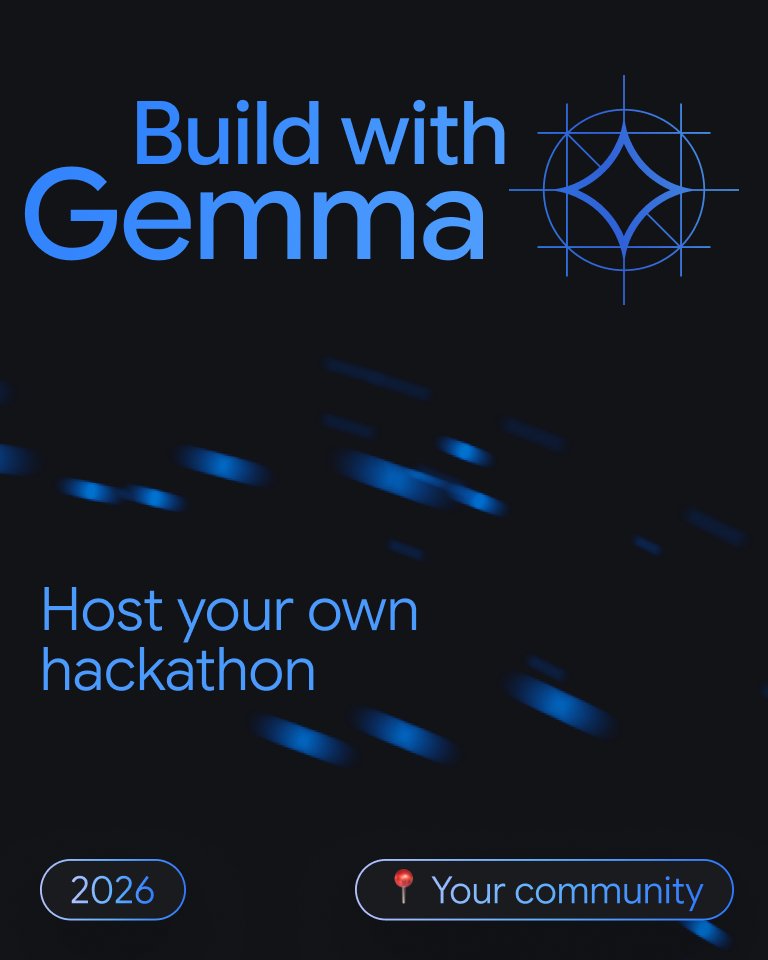
Want to host your own Gemma hackathon? We’re sponsoring 1-day hackathons on Kaggle to help developers dive into open models! From building lightweight tools to tackling your community's unique challenges, this is your chance to lead the charge with Gemma 4.👇 https://t.co/3N0eOlXyID
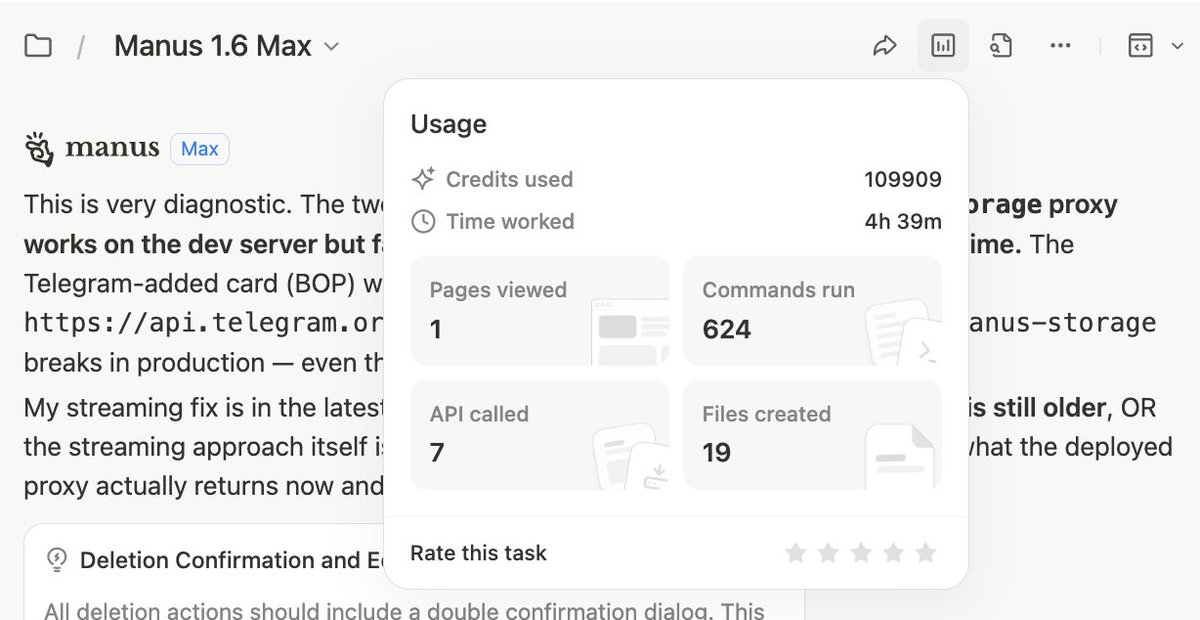
confession... our heavy users often spend this many credits building websites. i’d never built something this extensive with manus myself until yesterday, and now i get it. i’m seeing a bunch of the commonly reported issues firsthand now. on it — fixing it. https://t.co/SECVFBSUtV
describing an aesthetic in a prompt can be tough, so we made a button for it introducing Design Variations instantly generate, explore, and apply beautiful new UI layouts with a single click try it today in AI Studio https://t.co/cVnR4hjJZe https://t.co/JEyuImiWcP

holy shit @ivanleomk i used @GoogleDeepMind's gemma4(with codegraff) on the flight to Japan to read through a few papers i was interested in and it cooked!!(i think it just needs a really good harness) https://t.co/IksPGvhY5p (pre-release) https://t.co/yWyH0VKlCr
Top 4 at the YC hackathon for GTM engineers lesgo https://t.co/bH0xGhjfXl
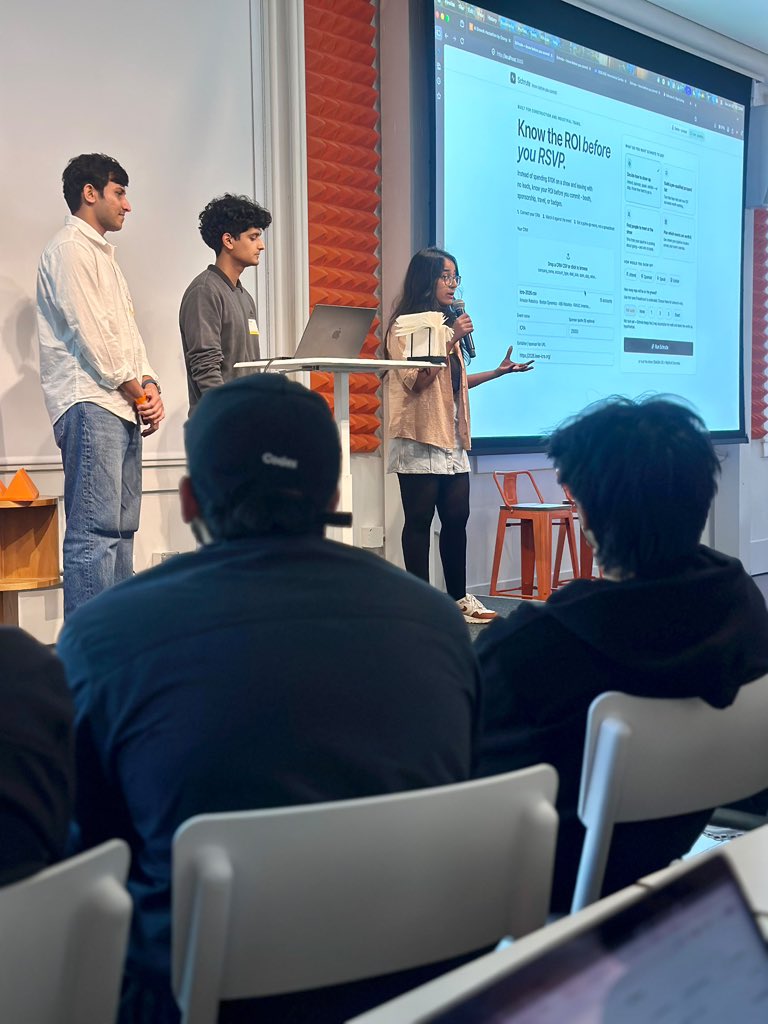
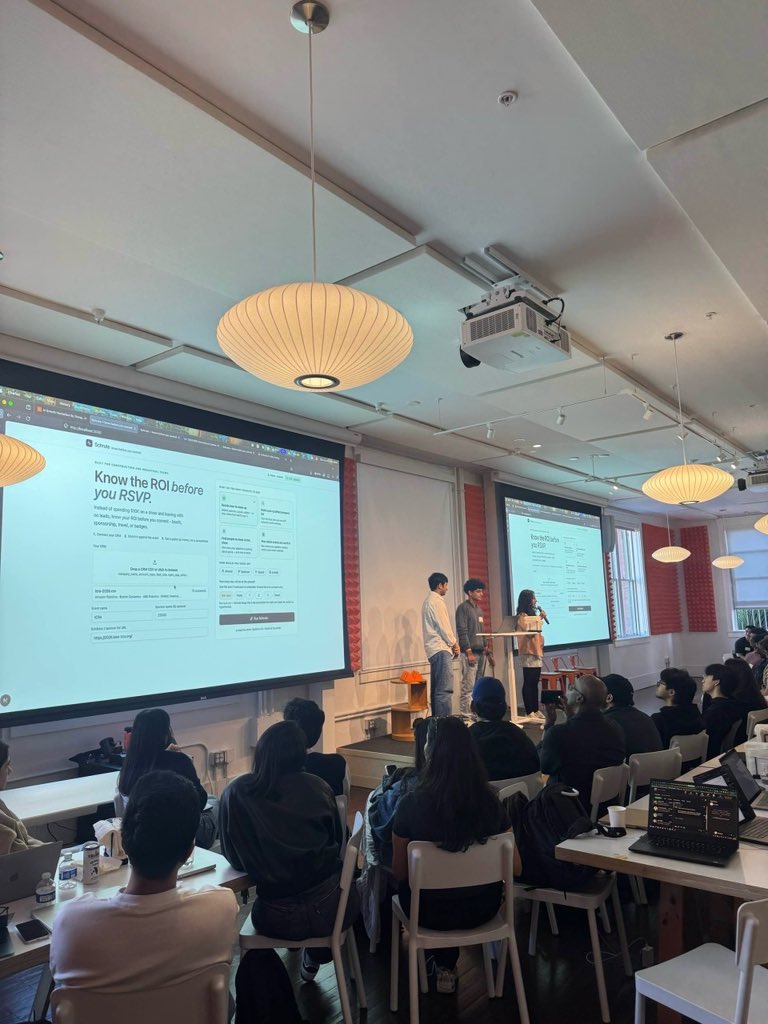
Top 4 at the YC hackathon for GTM engineers lesgo https://t.co/bH0xGhjfXl
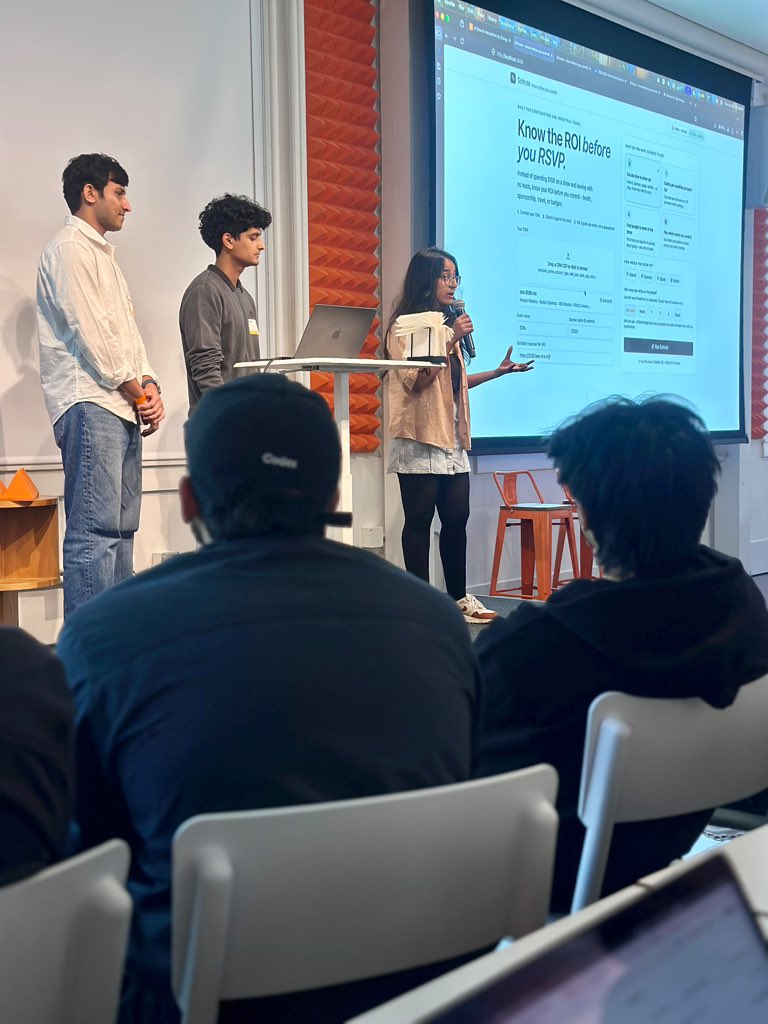
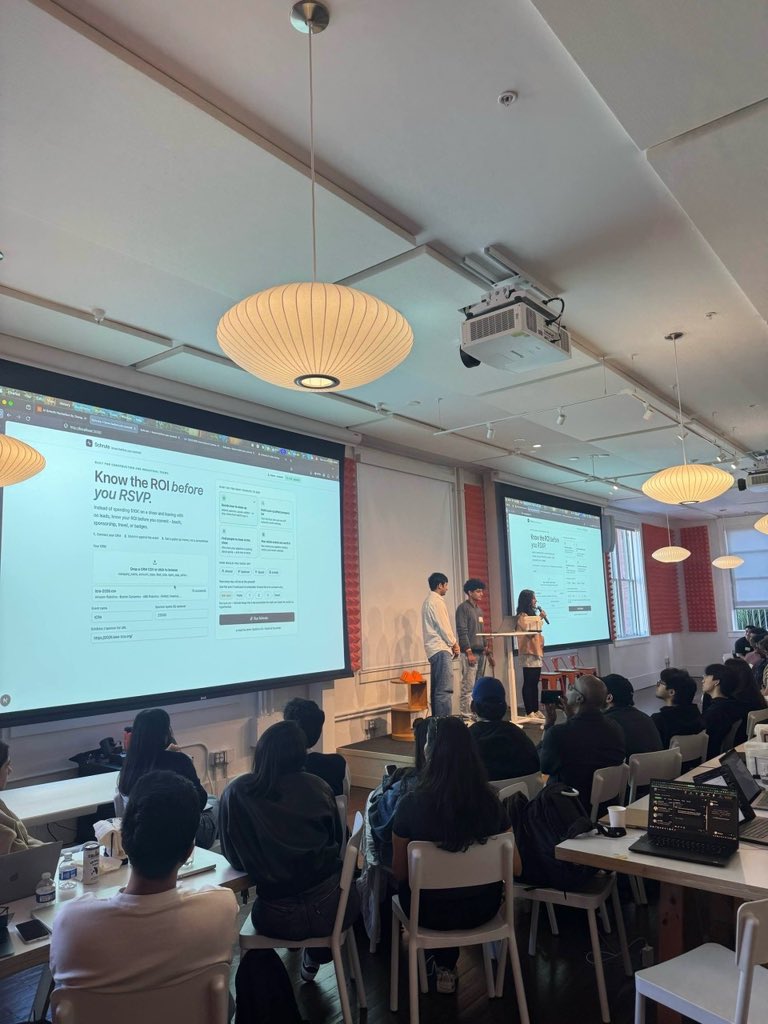
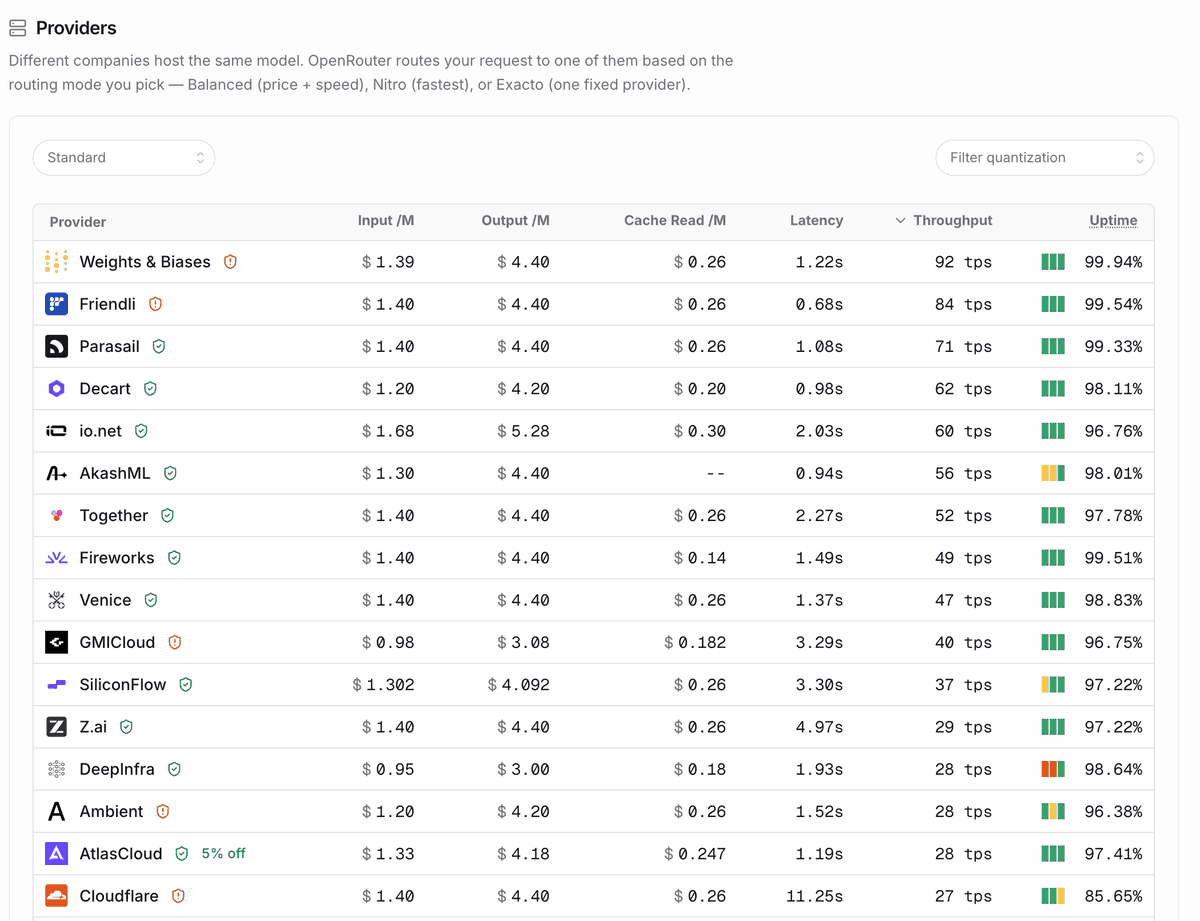
Open weights just caught up to the frontier. GLM-5.2 from @Zai_org tops the open-model rankings on @ArtificialAnlys and @arena's Agent Arena. It's now live on CoreWeave Serverless Inference at $1.39 in and $4.40 out per 1M tokens. Ship more for less. https://t.co/SuB7bV67iG
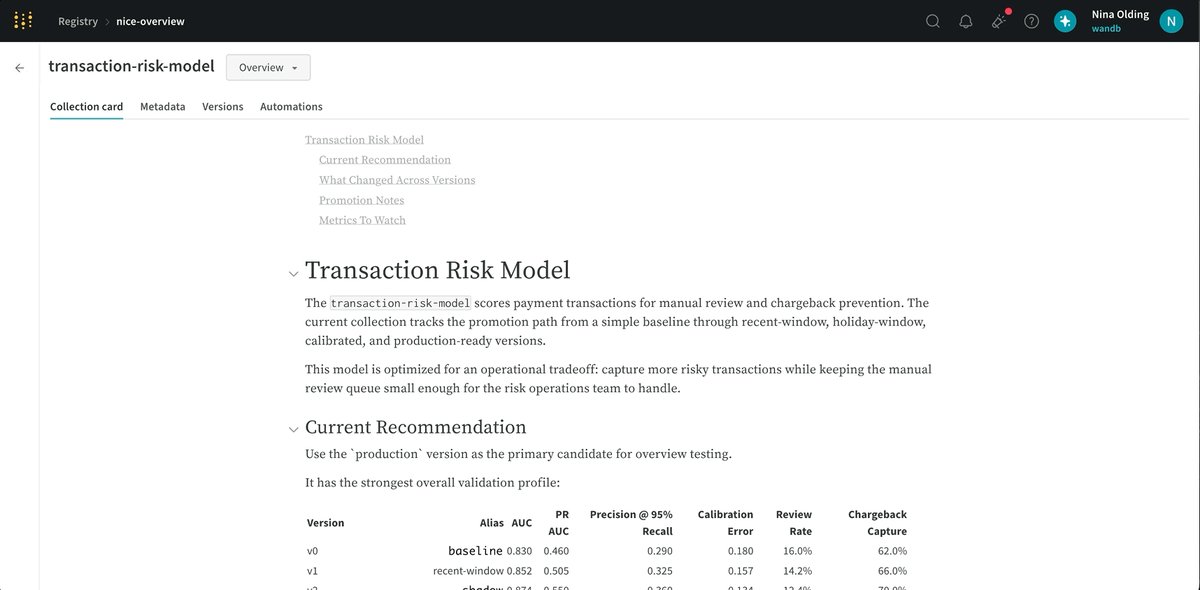
Registry collection cards used to be a paragraph of plain text. Now they pull the same rich, interactive blocks as Reports, so a collection actually reads like a model card. We also shipped artifact panel grids to compare metrics across versions. 📊 https://t.co/DXAoGGtujg
It's one thing to see peak inference tok/s on @ArtificialAnlys It's a completely different thing to have this sustained across real world usage. @OpenRouter is the best place to see this rn, and... at least for now, @CoreWeave / @wandb is the fastest GLM you can get 👀⚡ https://t.co/WCCEy2wrwD
What happens when you optimize your AI agent for customer satisfaction? Say a shipping company deploys an LLM trained to get thumbs up. Someone calls asking where their lost package is. The system can admit it's lost or say it's coming tomorrow. Saying the latter would make the customer happy and the agent would earn a thumbs up for lying. @profdanklein on Gradient Dissent: that's not a bug, but a reward function working exactly as intended. Full conversation in the comments.
YouTube: https://t.co/mgGKbc50Xq Apple Podcasts: https://t.co/qLL1uAPOFv Spotify: https://t.co/B7TkFcsD3F

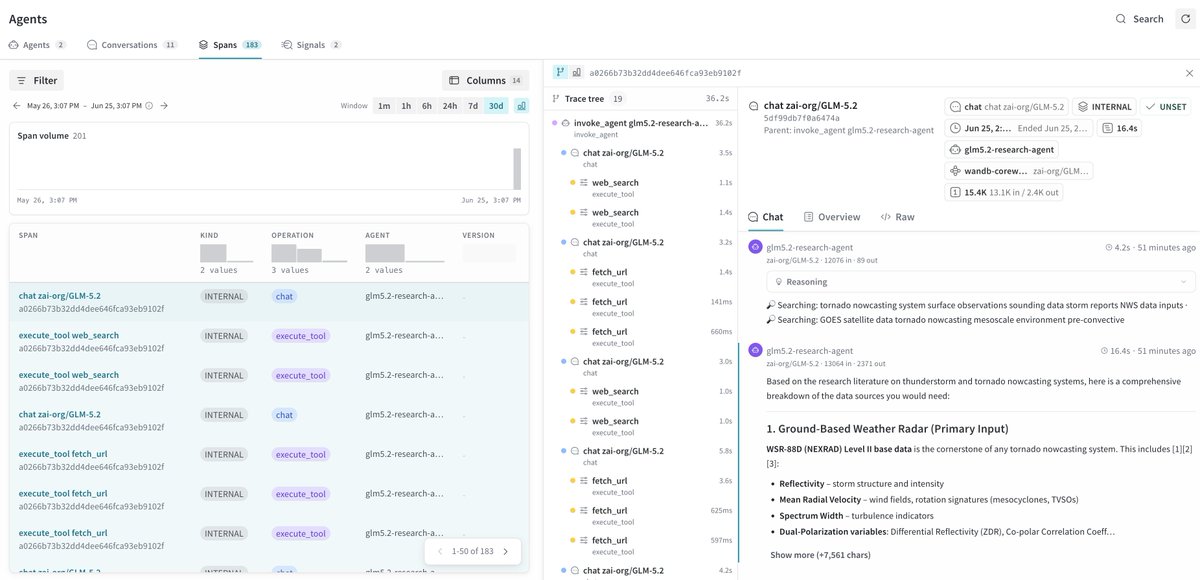
Colorado's weather has been brutal with tornadoes and baseball-sized hail. So I built a research agent to dig into how severe weather actually gets forecast, and to help me understand severe weather more. 100% on GLM 5.2 via @wandb Serverless Inference, running on @CoreWeave. Every step traced in Weave's new agent view every model + tool call, captured.
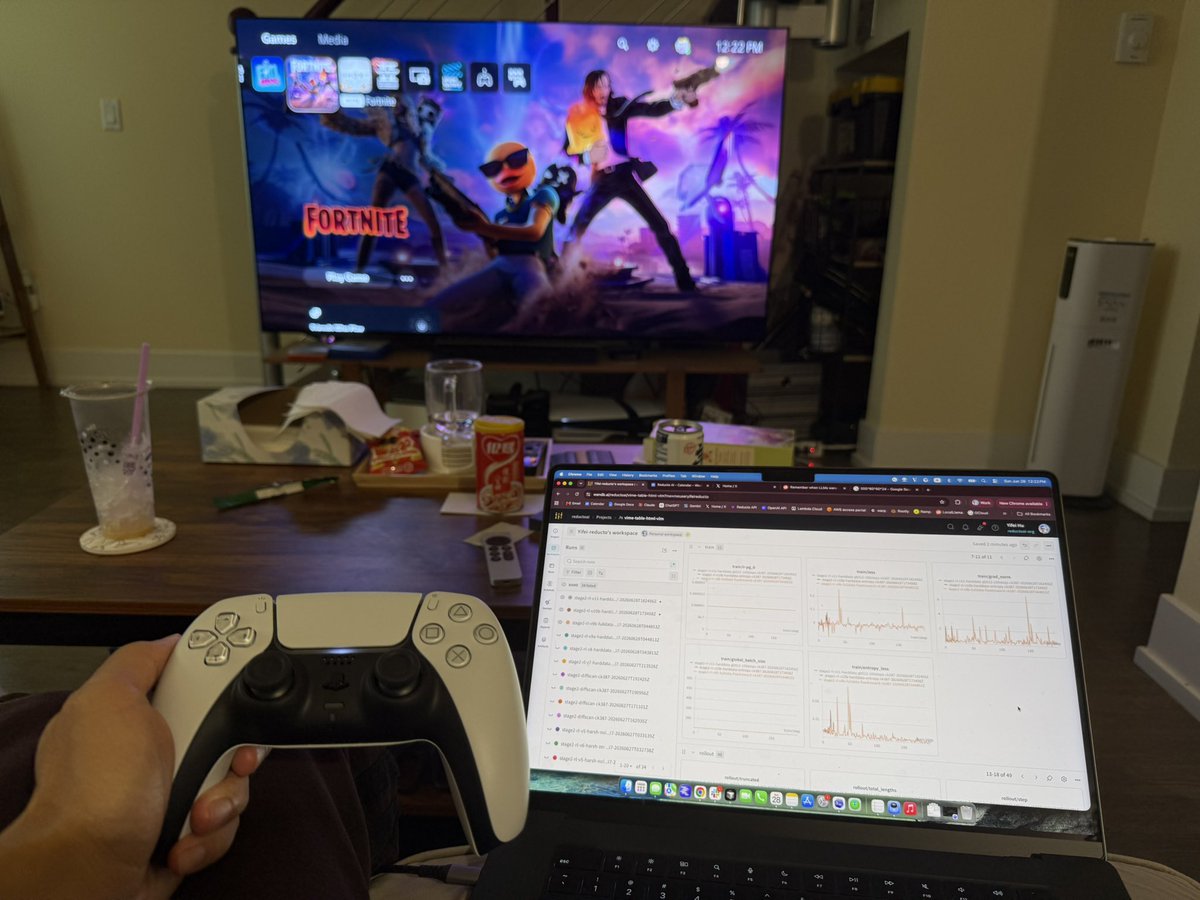
Work life balance https://t.co/D0T3wwq8oi
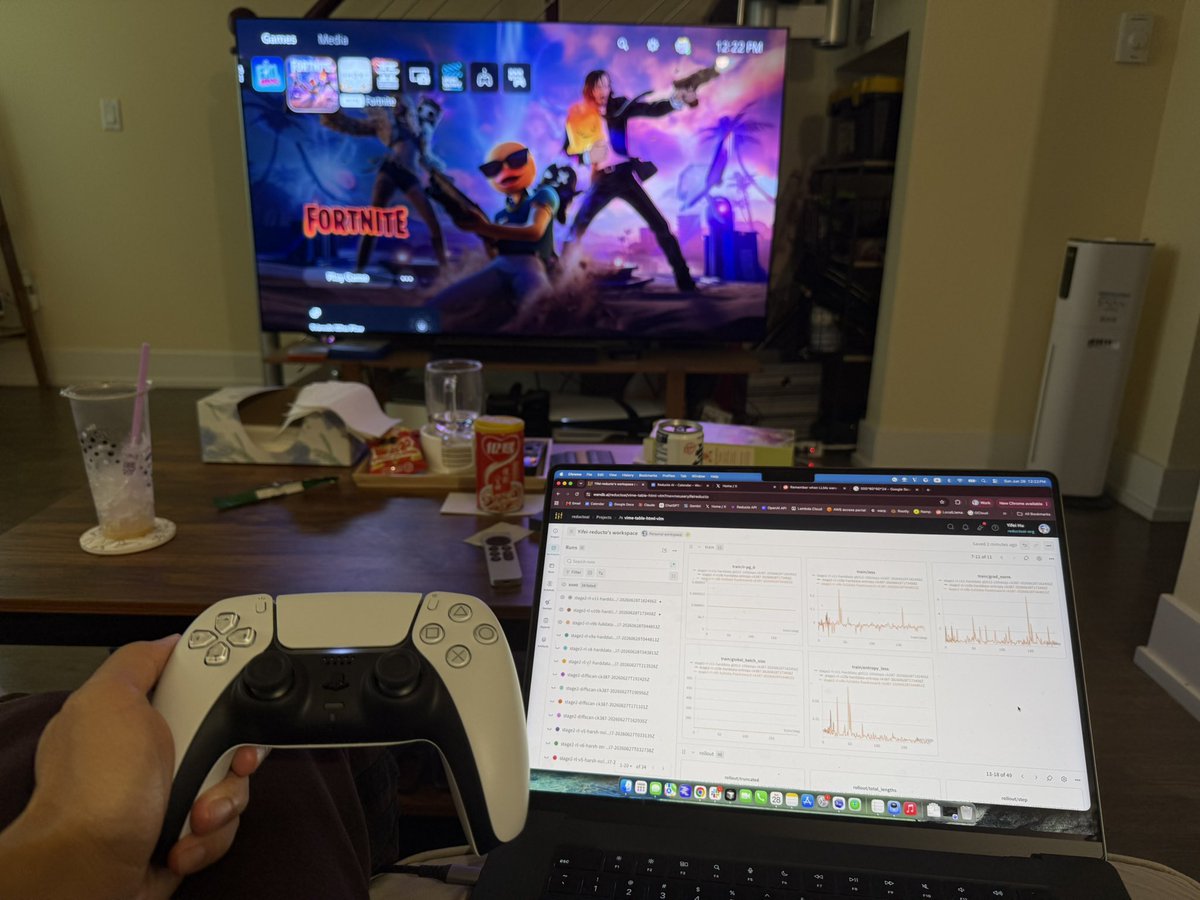
Work life balance https://t.co/D0T3wwq8oi
You can ask ARIA something real, like whether dropout after the attention layers helps the overfitting you're seeing. Go get coffee ☕️ Come back to find it's formed a hypothesis, written the config, launched on W&B Launch, scored against your baseline, and proposed next steps. https://t.co/uysa26fYiP
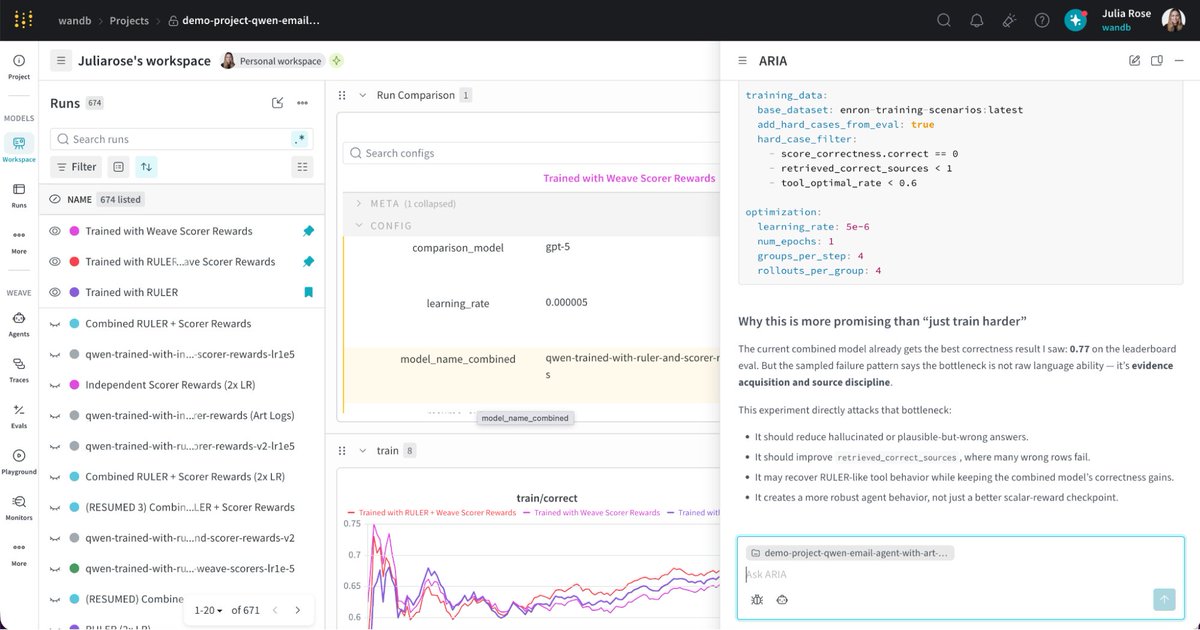
ARIA knows your project before you type a word. Open it from a failed run, ask what happened, and it's already reading the CUDA OOM in your logs, no pasting context. Every answer comes back as a live W&B dashboard you can pin and share, not a wall of text. https://t.co/dJqnp3dpWO
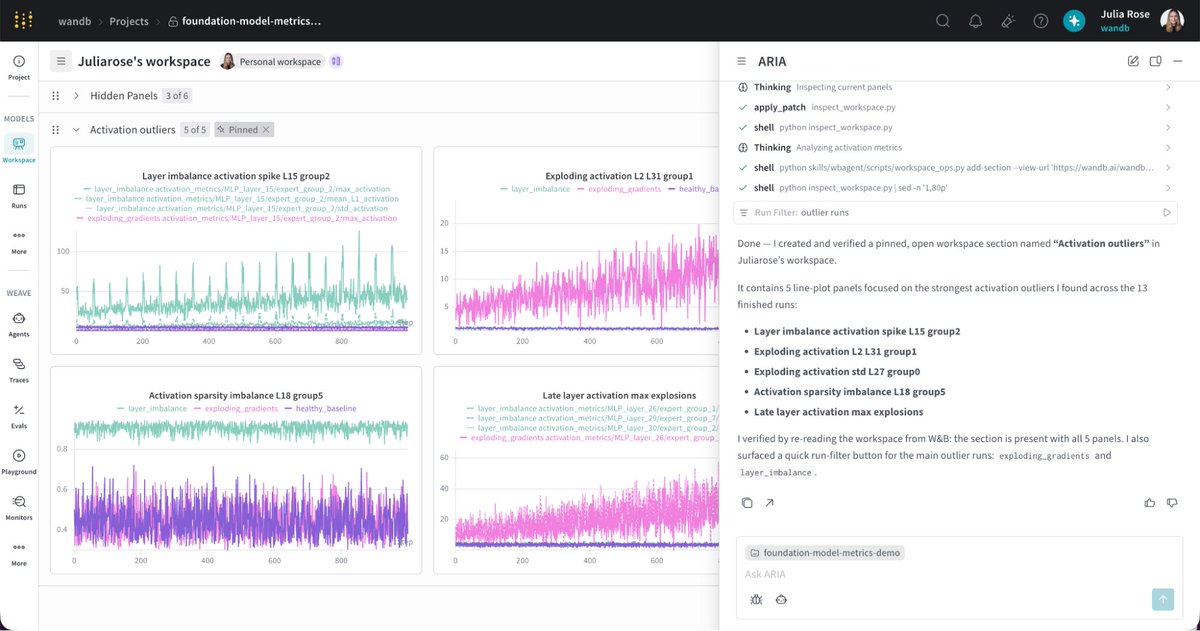
Here are some use cases to get you going: - Why did my run fail?! 🫠 - Build a view of my runs and outliers - Why did these OOM? Check the logs and metrics - What hyperparams to try next? Launch it - Find a teammate's run and import it - How do I overlay metrics on a chart? https://t.co/aD64xsltXS
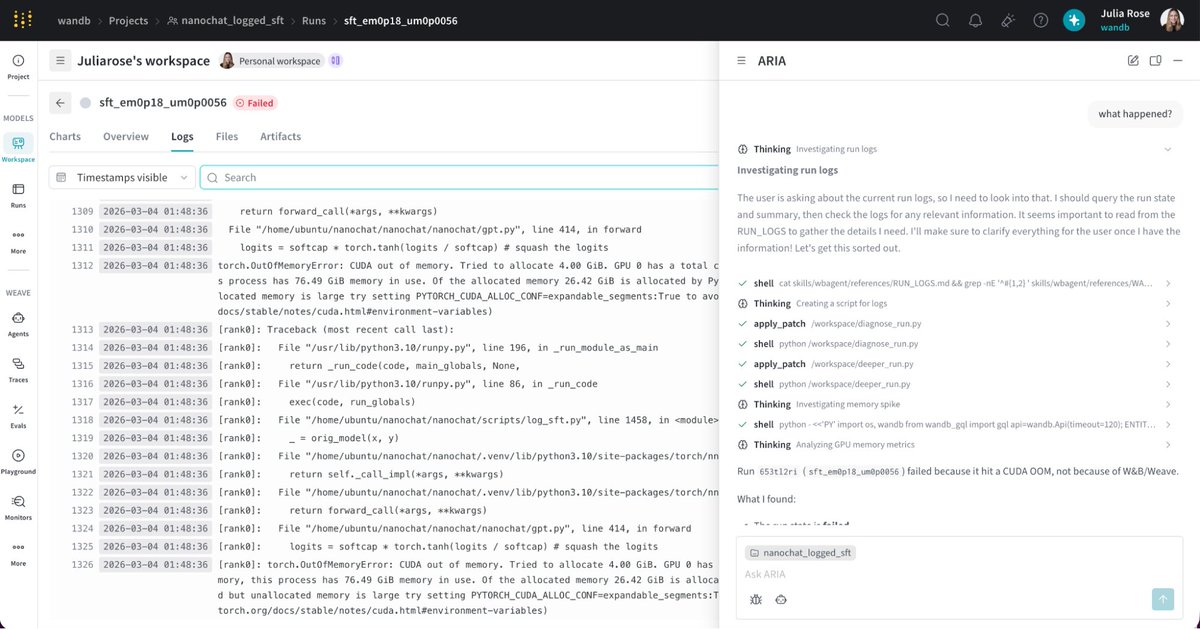
You're already sitting on the experiments. ARIA turns them into the next model. It works on mobile, too. 😉 Public preview is live now. Open any W&B project, hit the agent icon, and ask ARIA something real. More info below! https://t.co/FDKXNng47B
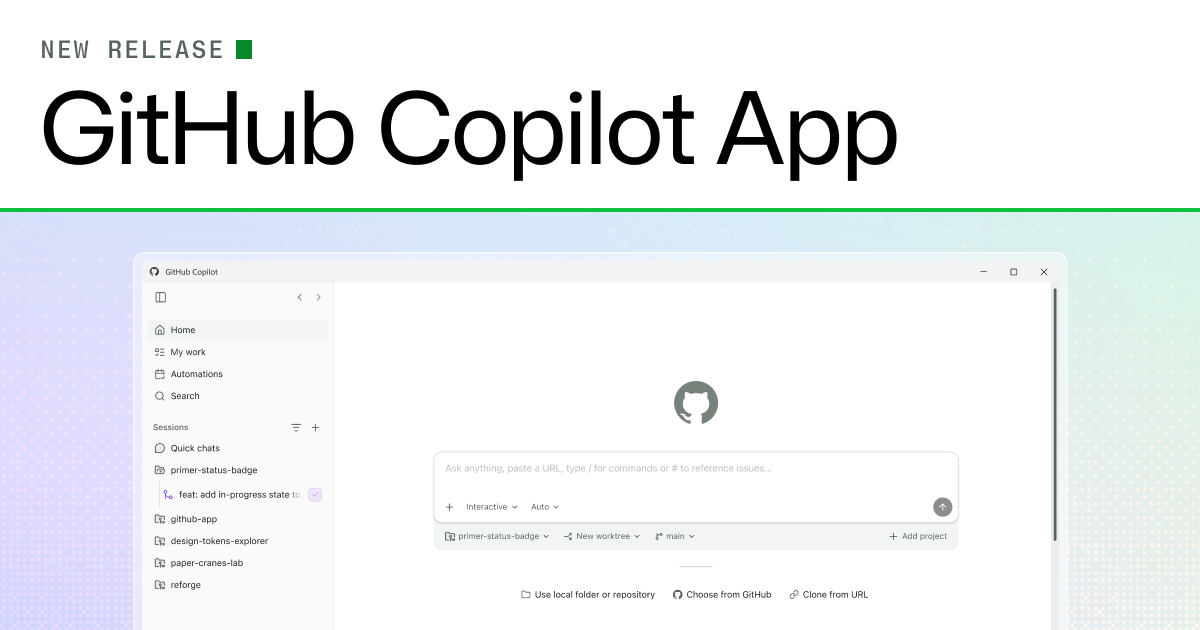
What if your first sip of coffee came with a finished to-do list? ☕ We sat down with @_Evan_Boyle to see how automations, MCP integrations, and custom skills make the GitHub Copilot app work the way he does. https://t.co/ke2Kt4Gjo0
Try out the GitHub Copilot app yourself ⬇️ https://t.co/UR8NvDIXbm
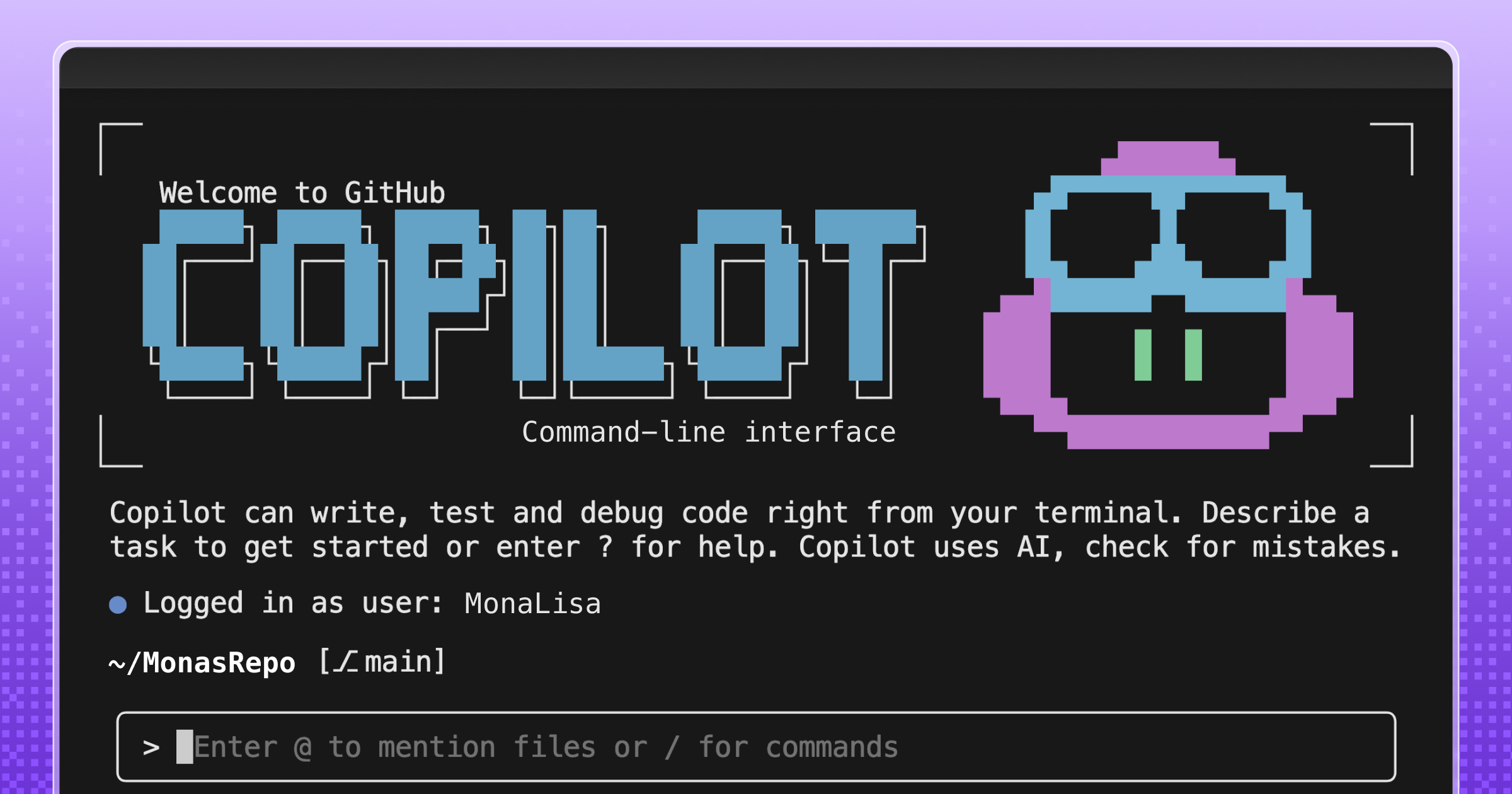
Bring real code intelligence to your terminal. The new LSP Setup skill for GitHub Copilot CLI adds semantic context (like definitions, references, and types) across 14 languages. Here’s how to get started 👇 https://t.co/6NkQ9ZNoPS
To improve accessibility in open source, we've worked through programs, partnerships, and open tooling built with real projects and communities. Learn more about what we've done, and what you can do to help make open source more inclusive. https://t.co/b5wrDQfzCJ

One Hubber shares his story about transitioning while working at GitHub. https://t.co/km65VFfDn8