Your curated collection of saved posts and media
@jkneifoff @UltraLinx @Anti_PC_Man Yes (mac was first we just added windows and linux as well): https://t.co/Z1oynoX2wZ
Hermes Agent now supports computer use via @trycua on Windows and Linux in addition to existing macOS support https://t.co/62BdC5QdhL

@sousaopaulino https://t.co/b4NzXI7Iwm
Me every time AI is down or tokens run out.💀 https://t.co/uDJ9OoMnjU

@Lc_Queirozz https://t.co/b4NzXI7Iwm
Me every time AI is down or tokens run out.💀 https://t.co/uDJ9OoMnjU

@McConaughey https://t.co/b4NzXI7Iwm
Me every time AI is down or tokens run out.💀 https://t.co/uDJ9OoMnjU

@MadelnCanada https://t.co/b4NzXI7Iwm
Me every time AI is down or tokens run out.💀 https://t.co/uDJ9OoMnjU

@interesting_aIl https://t.co/Ska0zBdjX3
🚨 Top mathematicians just issued a clear warning about AI: Don't believe the hype. Over 2,300 mathematicians, including Fields Medal winners Terence Tao and Peter Scholze, have signed the Leiden Declaration on Artificial Intelligence and Mathematics. Endorsed by the Internationa

@sagarcasm https://t.co/b4NzXI7Iwm
Me every time AI is down or tokens run out.💀 https://t.co/uDJ9OoMnjU

@RCBTweets https://t.co/b4NzXI7Iwm
Me every time AI is down or tokens run out.💀 https://t.co/uDJ9OoMnjU

@mufaddal_vohra https://t.co/b4NzXI7Iwm
Me every time AI is down or tokens run out.💀 https://t.co/uDJ9OoMnjU

@JioHotstarTel_ https://t.co/b4NzXI7Iwm
Me every time AI is down or tokens run out.💀 https://t.co/uDJ9OoMnjU

@BlurrTheBlurb https://t.co/b4NzXI7Iwm
Me every time AI is down or tokens run out.💀 https://t.co/uDJ9OoMnjU

@thepolandnews_ https://t.co/b4NzXI7Iwm
Me every time AI is down or tokens run out.💀 https://t.co/uDJ9OoMnjU

Me every time AI is down or tokens run out.💀 https://t.co/uDJ9OoMnjU

@LukaszBok https://t.co/b4NzXI7Iwm
Me every time AI is down or tokens run out.💀 https://t.co/uDJ9OoMnjU

🚨 Top mathematicians just issued a clear warning about AI: Don't believe the hype. Over 2,300 mathematicians, including Fields Medal winners Terence Tao and Peter Scholze, have signed the Leiden Declaration on Artificial Intelligence and Mathematics. Endorsed by the International Mathematical Union, it is the most significant collective response from a major academic discipline evaluating frontier AI impact. The core message is straightforward: current AI tools have real constraints when applied to complex work, and commercial incentives are pushing claims beyond what the technology can reliably deliver. Read the full declaration here: https://t.co/hKSXoSt4Tr Why this matters beyond mathematics The declaration identifies five threats that apply to any field deploying AI: 1) Plausible but unreliable outputs. AI produces arguments that "look" correct but contain subtle errors. In high-stakes work, human verification is critical and costly. 2) Attribution collapse. Models trained on published work don't properly cite sources. Training data was often obtained by exploiting licenses or violating copyright protections. 3) Distorted incentives. AI use becomes incentivized for its own sake, warping hiring, funding and recognition. 4) Press release science. Results announced "on market timelines" before community evaluation can take place. Commercial incentives drive firms to "overstate the capabilities of their products." 5) Loss of autonomy. Research priorities shift toward what is automatable rather than what is significant. The leap: chatbots → agentic AI → software → research We have moved from chatbots to agentic systems. Now AI is solving 80-year-old mathematical conjectures. The declaration is not about toy problems. It is about frontier systems being deployed in contexts where correctness matters. What this means for your industry The same risks apply wherever AI is used in high-stakes work: law, medicine, finance, engineering. The declaration's core insight is simple: AI generates narrative, not truth. Verification cannot be automated away. Human accountability is non-negotiable. 💼 I’ve written a more detailed breakdown of how these risks show up in practice and what organisations are doing about them. It’s available for subscribers. ☕️ What have you observed in your industry? Have verification or hidden costs issues already appeared in your AI deployments?

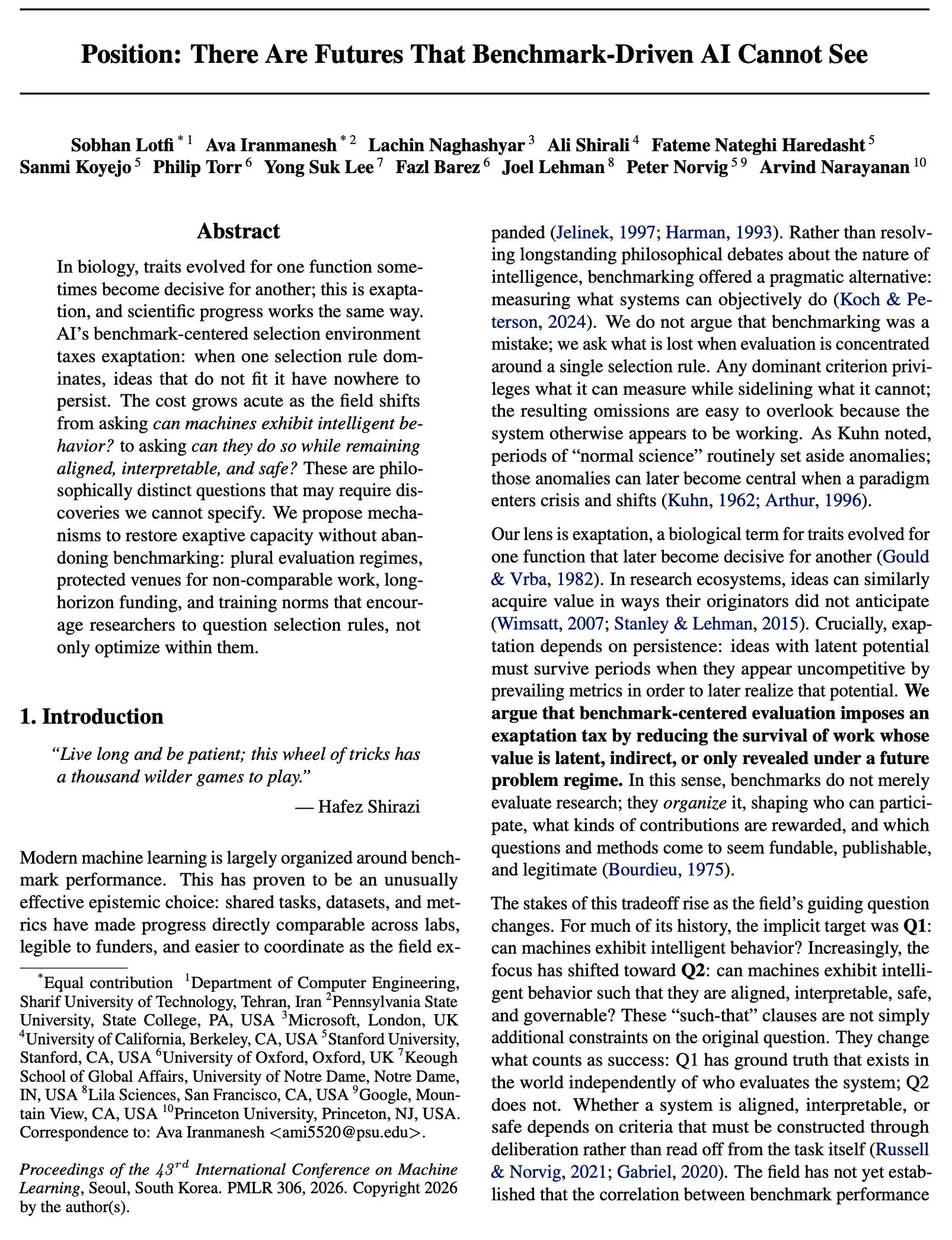
"Long-term innovation depends not only on optimization for current objectives, but on the continued viability of ideas whose value is not yet legible" Thought-provoking ICML paper on limitations & risks of over-relying on AI benchmarks 1/ https://t.co/dNmvRXtsis
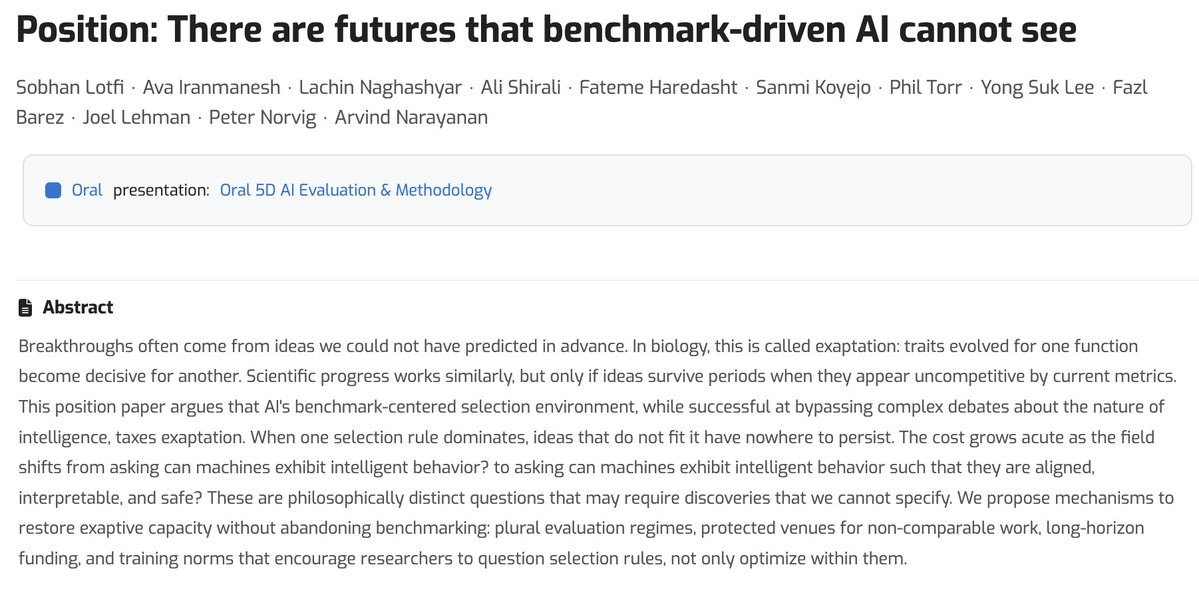
I recommend reading the full paper 6/ https://t.co/XRWrGmkT0S
This paper will be talked about for years to come. V important! There are Futures benchmark driven AI cannot see! led by Sobhan (my fellow) and @Avameanssong w/@kalsbskk81826 Ali, Fateme, @sanmikoyejo, @philiptorr, @yong_suk_lee, @joelbot3000 @NorvigPeter and @random_walker
We're sponsoring the @cerebral_valley hackathon at @SHACK15sf this weekend and AI Engineer World's Fair @aiDotEngineer at Moscone West next week. Two of the hottest AI events of the year, back to back. Come find the team at both: https://t.co/c0CottRG0q
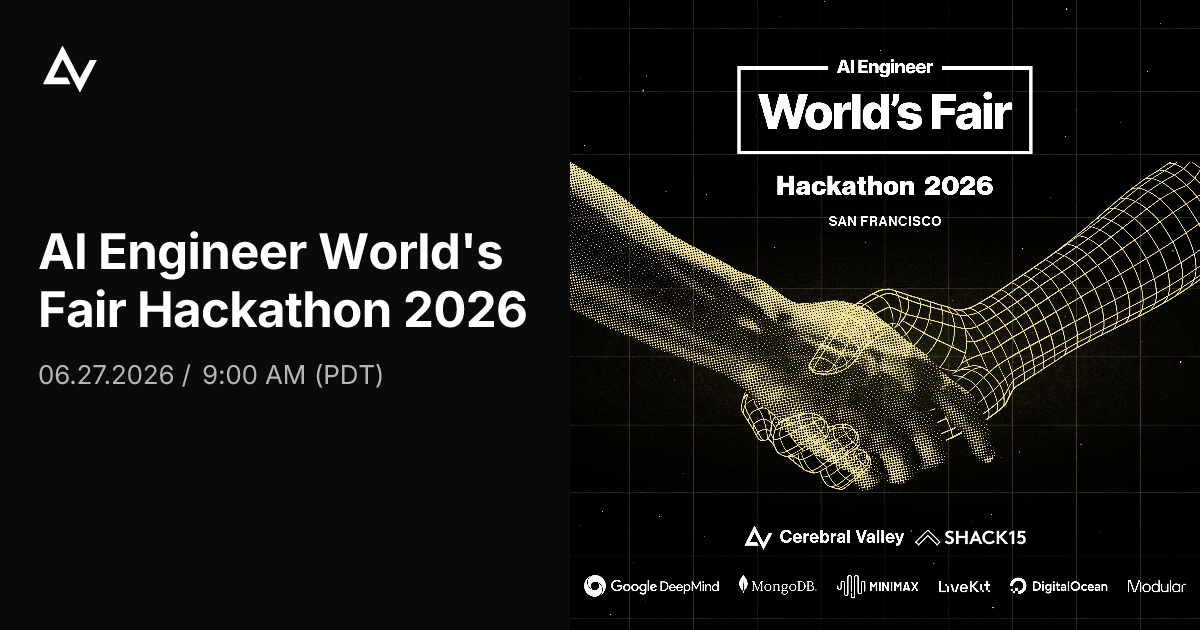
We had a blast at the official @aiDotEngineer hackathon with @cerebral_valley, @GoogleDeepMind, @MiniMax_AI, @digitalocean, @MongoDB, and @livekit. Thanks to everyone who came out and hacked with us! We're at Booth UG28 all week at AI Engineer World's Fair. Want to see how Modular Platform could optimize your company's stack? Grab time with our team here: https://t.co/H2mPnxXrPs

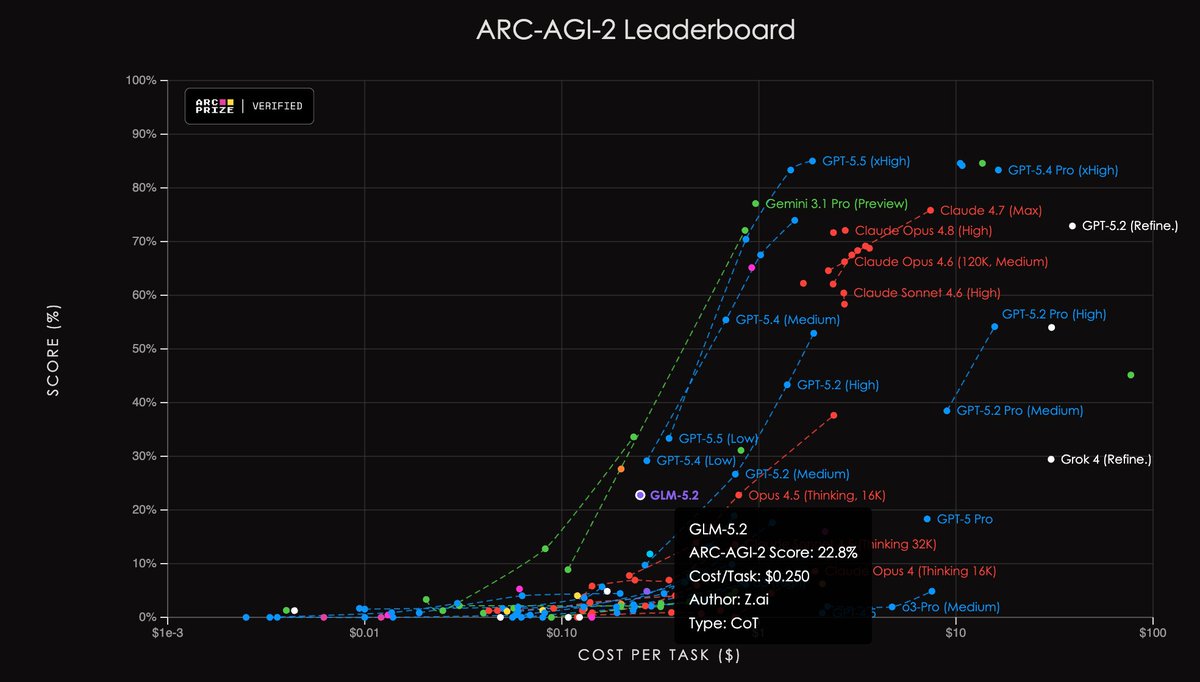
GLM-5.2 from @Zai_org on ARC-AGI (Verified) - ARC-AGI-2: 22.8%, $0.25 - ARC-AGI-1: 77.0%, $0.19 Performance is comparable with GPT-5.4 & 5.5 (Low Reasoning Effort) https://t.co/beYeeTpQJR
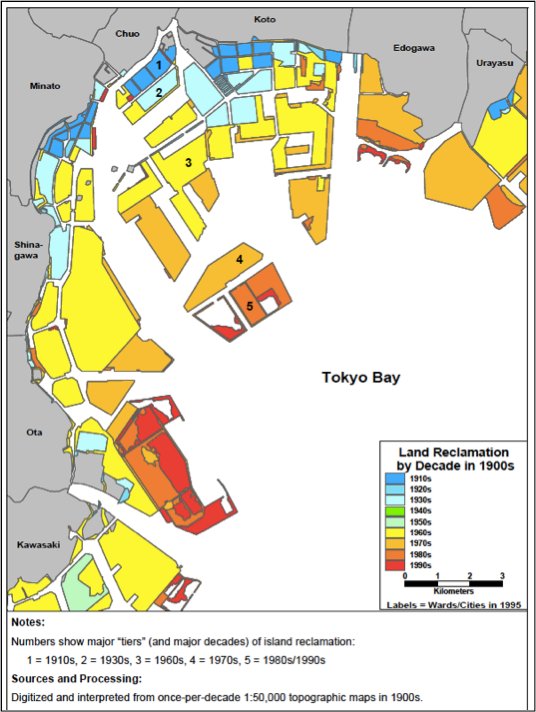
A good chunk of Tokyo is also reclaimed from the bay, a process that continues to this day but has slowed down significantly (peak was in the 1960s-1970s alongside other major infrastructure buildups). It's not due to regulation: land reclamation has diminishing returns and conflicts with existing coastline usage. Easier to do when you're also building the rest of the city at the same time.
Half the land area of Boston, a quarter of NYC, and 15% of San Francisco were raised from the sea before 1970. Since then, land values have grown by 30x but land reclamation has ground to a halt. This failure follows the spread environmental law around the world rather than any
Fertilization is not random, and the fastest sperm does not always win: in reality, the egg decides who succeeds. While for decades we were taught that fertilization is a race won by the fastest sperm, a study published in Proceedings of the Royal Society B shows how human reproduction actually works. Scientists analyzed follicular fluid from 60 couples undergoing fertility treatment at St Mary's Hospital in Manchester, UK. They discovered that the egg releases chemical signals (chemoattractants) that actively attract sperm from certain men over others. Through these chemical signals, the egg exerts its own biological selection, influencing which sperm manage to get close. The egg appears to favor sperm that offer optimal genetic compatibility with its own genome — particularly in genes related to the immune system — which may help produce healthier offspring. Interestingly, this cellular preference does not always align with the couple’s conscious partner choice. In many cases, eggs showed stronger attraction to sperm from non-partner males. This chemical communication demonstrates that female biology continues to evaluate and select options even after intercourse. Understanding this process could lead to more precise solutions for unexplained infertility. Science continues to reveal the remarkable level of biological interaction that occurs during reproduction. [Fitzpatrick, J. L. et al. (2020). Chemical signals from eggs facilitate cryptic female choice in humans. Proceedings of the Royal Society B, 287(1928), 20200805. DOI: 10.1098/rspb.2020.0805]
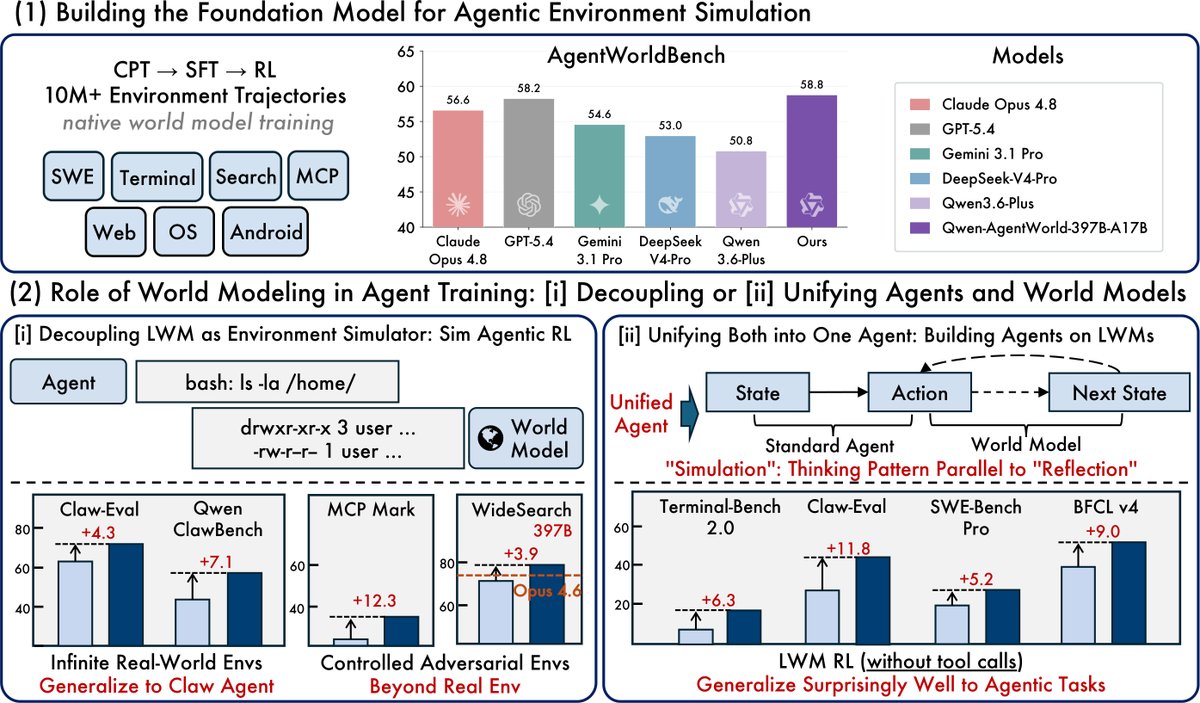
📣📣 Meet Qwen-AgentWorld — a native language world model that simulates 7 agent environments (MCP, Search, Terminal, SWE, Web, OS, Android) within a single model. Environment modeling is the training objective from day one, not a post-hoc adaptation. 🤔 LLMs are trained to be better agents — better at acting in environments. But nobody has trained them to model the environments themselves. 🗺️ Our roadmap: investigate how language world modeling can push the boundaries of general agent capabilities, along two routes: 1️⃣ Build a foundation model for environment simulation — outperforming Claude Opus 4.8 and GPT-5.4 on AgentWorldBench 2️⃣ Investigate how world modeling enhances agent training: 🔬 Controllable Sim RL (agentic RL with LWM as environments) surpasses training in real environments 🧠 Learning to predict environments (LWM warm-up) makes agents stronger — remarkably, even without any agent-specific training, this predictive knowledge transfers to agentic tasks with zero fine-tuning 📑 Paper: https://t.co/Jx2l5RKq71 📖 Blog: https://t.co/7tVcKyhsx2 💻 GitHub: https://t.co/B5Lvb1UZCn 🤗 HuggingFace: https://t.co/Kw3QBL1TM5 🧩 ModelScope: https://t.co/YBnGYgMWWI

NVIDIA Metropolis Blueprint for video search and summarization (VSS) 3 is here. Now your coding agent can analyze massive live streams and libraries of videos with a simple natural language prompt. Here's what's new: - 16 new agent skills: Search, summarize, alert, report, review clips. All from natural language prompts. - One unified open source repo: Source code, Docker and Helm deployment profiles for fast, easy deployment. - Multi-video reports and Nemotron 3 Nano Omni: Insights across video and audio at scale. - 3D multi-camera tracking: Production ready + #1 SOTA for smarter scene understanding. Try VSS skills 👉 https://t.co/XvKJ0Kb8VV
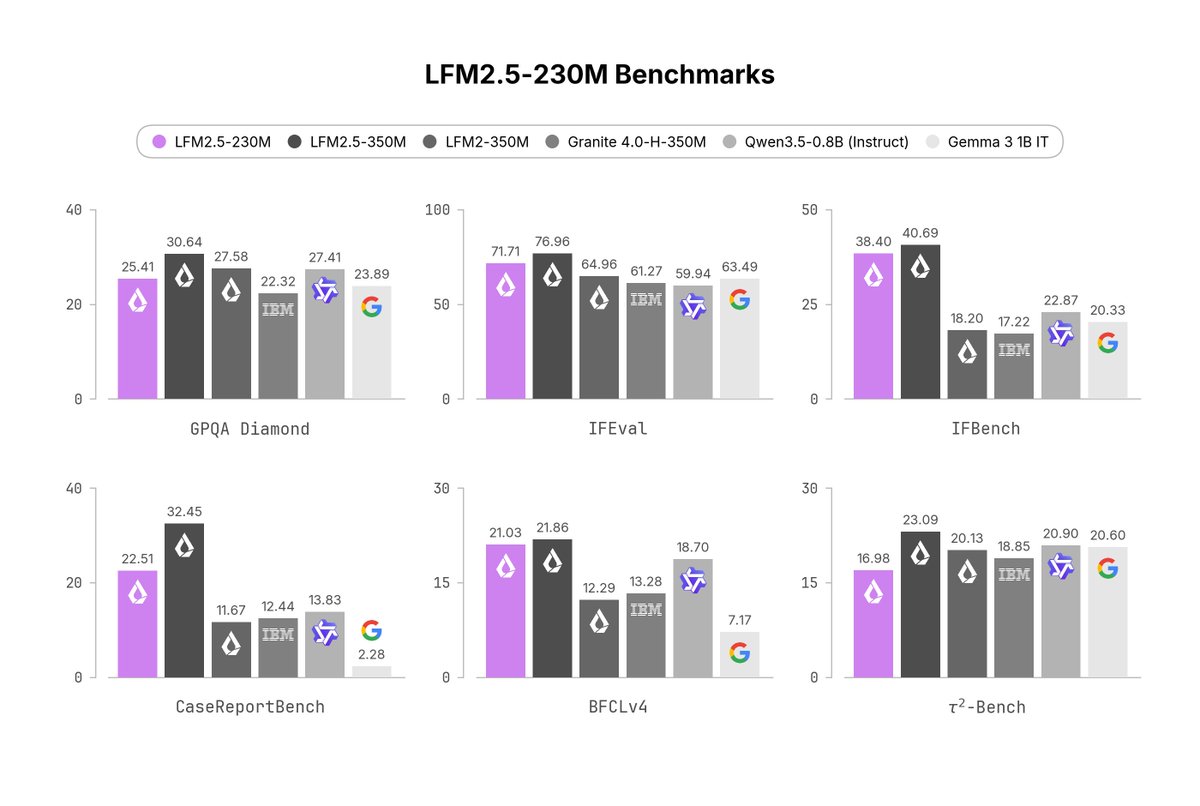
Introducing LFM2.5-230M: our smallest model yet, built to run fast anywhere (CPUs, NPUs, and GPUs) to enable agentic tasks on phones, robots, home and network automation devices. > 230M parameters, built on the LFM2 architecture > Pre-trained on 19T tokens, with a 32K context extension > Post-trained with distillation from LFM2.5-350M > 213 tok/s decode speed on Galaxy S25 Ultra (CPU) > 42 tok/s on a Raspberry Pi 5 (CPU) > Competes with and often beats models more than twice its size on instruction following, data extraction, and tool use. > use it for large-scale data extraction pipelines or lightweight on-device agentic workloads. 🧵
Excited to share Ornith, our latest family of open-source models specialized for agentic coding. Ornith achieves SOTA performance among open-source models of comparable size on a variety of coding benchmarks (Terminal-Bench 2.1, SWE, NL2Repo, OpenClaw, SWE Atlas, etc) Feedback is deeply appreciated! 📖Tech Blog: https://t.co/MiaaDExj9B 🤗Huggingface: https://t.co/eDtzanc5Vp
Aloha! 🌺 Meet Ornith-1.0, a family of open-source LLMs specialized for agentic coding. Ornith-1.0 spans the full parameter sizes including 9B Dense, 31B Dense, 35B MoE, and 397B MoE. It achieves state-of-the-art performance among open-source models of comparable size on coding
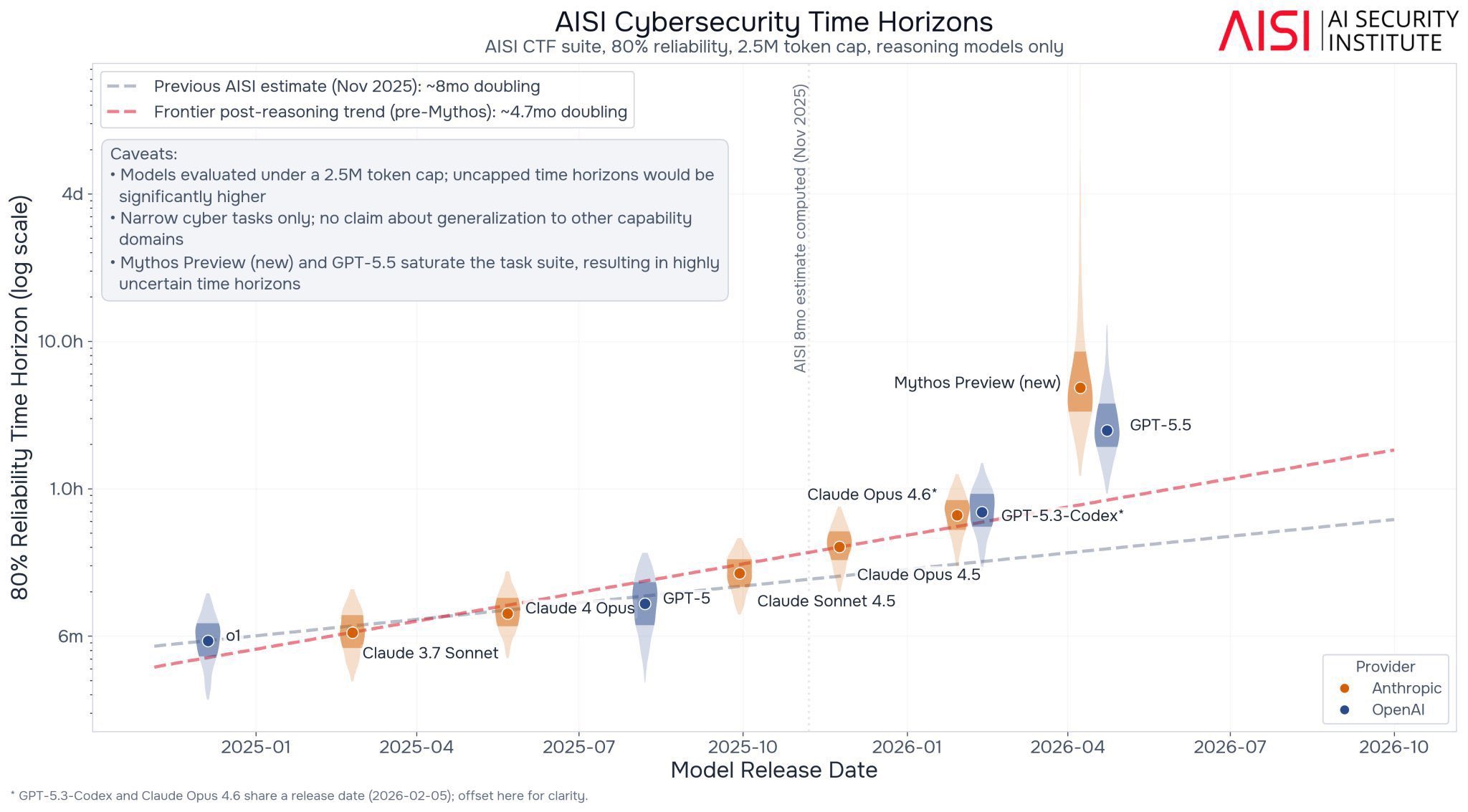
@NateWitkin Basically every chart that attempts to benchmark real work shows exponentials. If you don’t like the METR chart the UK’s governmental assessment shows the same thing. So does GDPval. The frontier is jagged, of course, so not in every aspect of AI, but still. https://t.co/00PKUBZzss
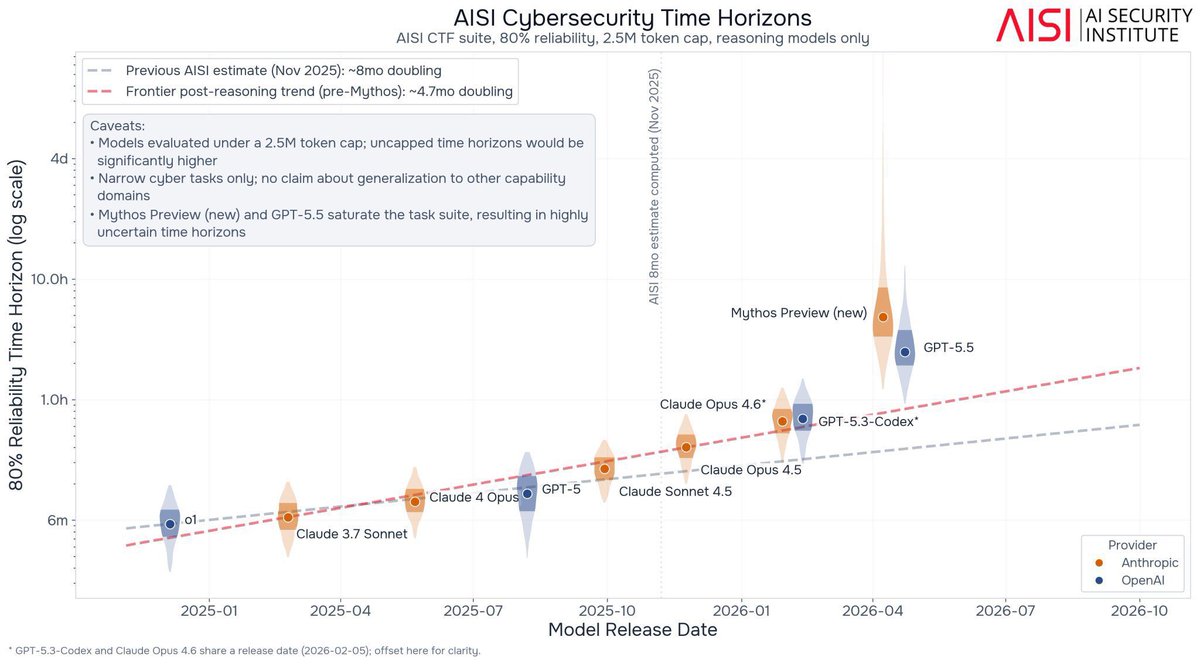
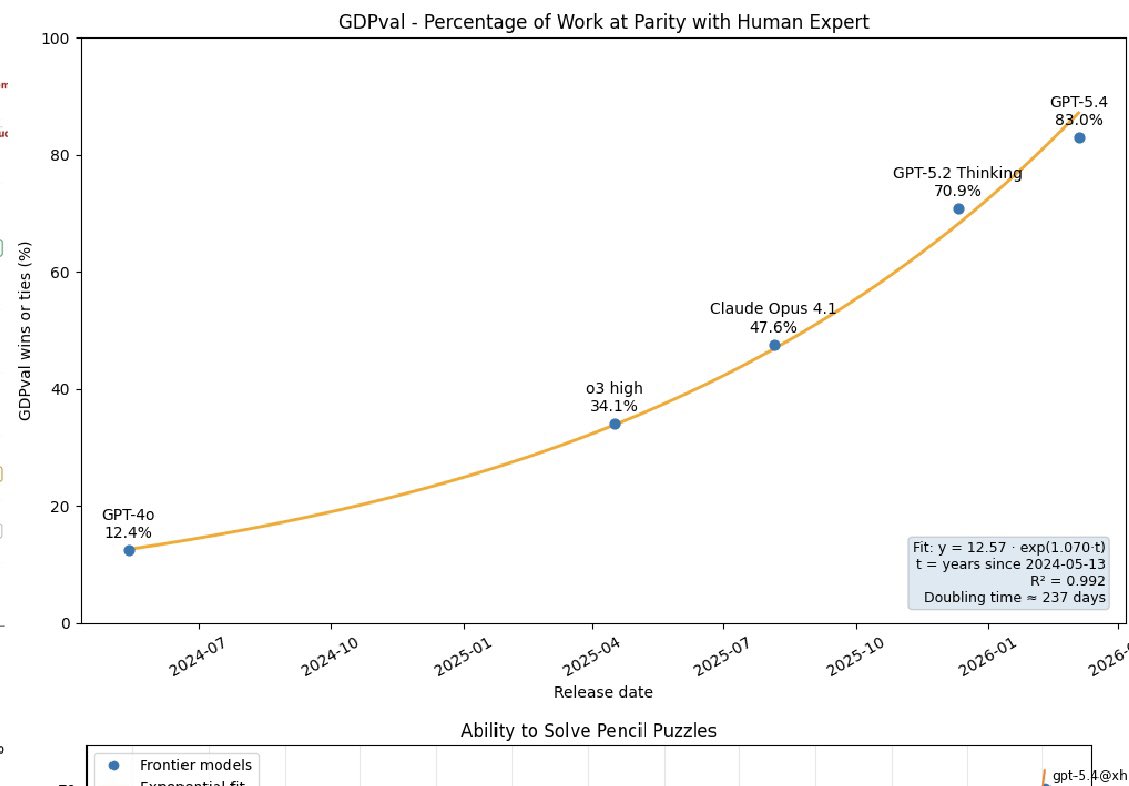
@itaisher In the thread, but unbounded measures of economically meaningful work certainly seem to show the trend. https://t.co/2E1a9GOFWG
@NateWitkin Basically every chart that attempts to benchmark real work shows exponentials. If you don’t like the METR chart the UK’s governmental assessment shows the same thing. So does GDPval. The frontier is jagged, of course, so not in every aspect of AI, but still. https://t
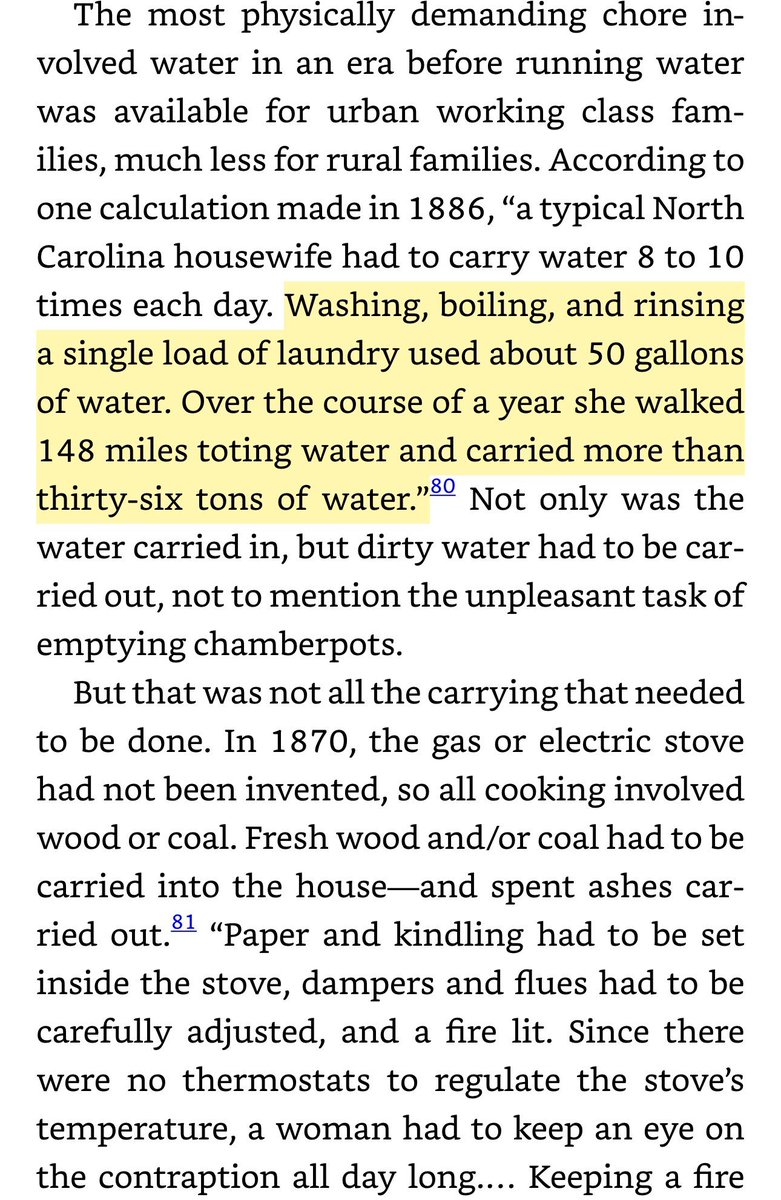
A good example of one of the ways in which the "good old days" were terrible: In the 1880s, the average US rural housewife had to haul water into the house 8-10 times a day, 36 tons of water a year. And also haul out ashes & waste. (From “The Rise and Fall of American Growth”). https://t.co/eKP4XMJVrz
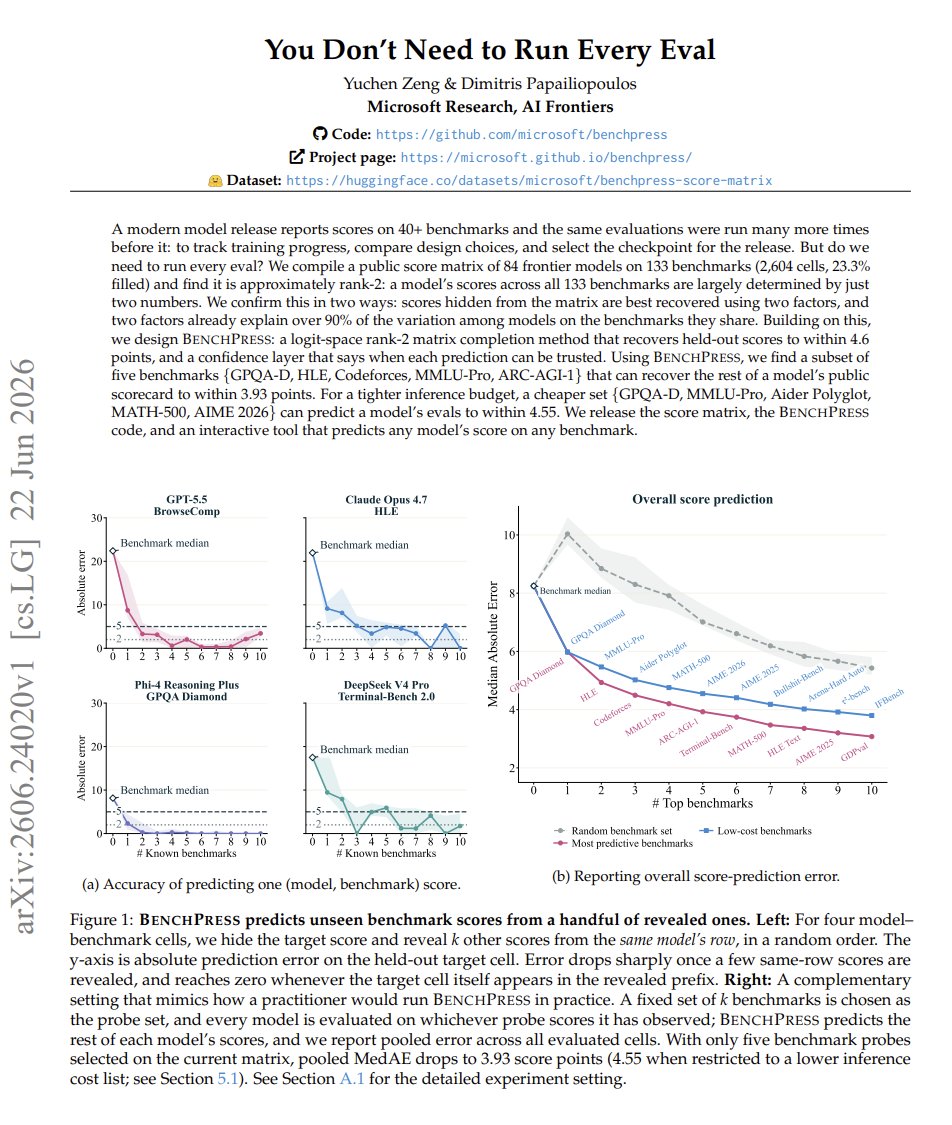
@itaisher I would say you are technically right, but potentially practically wrong? That is, there is no way for me to demonstrate that all AI abilities are on an exponential (and they are not, the frontier is always jagged). So you are right. However, where I would push back is that AI model's ability to do valuable work seems to be increasing at an exponential pace. This is supported by the unbounded benchmarks that we have (GDPval, Epoch, METR, etc.) as well as studies of code shipped with AI, medical ability, etc. All of these also correlate well (both in my independent measures and also see paper below) and match "vibes." There is an underlying ability measure increasing at an exponential pace. Add to that the hints of RSI happening in these systems, and the fact that models are now tripping national alarm bells, and, well... I would argue that we are in a period of very rapid ability increase and the whole point of my post was that I think too many people have their heads in the sand about this.
A big problem with research studies on AI models is that given how long the peer review process is, the results are always out-of-date by the time the paper is published. This time, we have something better! The typical reaction to research results like this roughly goes "You're just testing on old models. Today's models are way better and surely can do it now!" But the best solution is for these papers to also open-source all of their testing framework so that upon publication, others can reproduce their results, as well as run it on the newest models of the day - and into the future. After all, "this is the worst they'll ever be" so what really matters is determining when they DO pass the threshold. As it turns out, the authors of this paper DID open-source their evaluation framework! Here: https://t.co/iXLwmItKwu So I figured... let's re-run the tests on the latest models! Summary of our results are here: https://t.co/1Dzj0UcJUQ One drawback is that, unfortunately, the authors didn't (or weren't legally able to) open-source ALL the testing data, since apparently some of it is copyrighted by JAMA/NEJM etc. That's a separate problem with the medical research publishing industry for another time. However, we were able to reproduce the test on the public datasets they did include! First, we re-ran the same tests (as closely as we could) on the old models the paper claimed to use, in order to establish a baseline and determine how much "drift" there would be. (Answer: not too much) Then we ran those tests on the newest frontier models we could find. The results are: the most capable models today (GPT-5.5 Pro) did outperform the best models from before (79/100 vs 69/100), but did not improve enough to be considered sufficient for reliable medical use. In fact, the paper's criterion for "fit for reliable medical use" is more stringent, requiring the models to be robust under perturbation and bad data, knowing when to say there's not enough information, give clinically valid reasoning rather than hallucinations, etc. Those sound pretty reasonable to me. I wasn't able to reproduce that kind of qualitative evaluation, but even on the basic pass/fail test using public datasets of interpreting radiology images, the newest models are better, but not yet quite good enough. Nevertheless, I would like to praise the paper's authors for at least open-sourcing what they could, enabling me to (fairly quickly) attempt to reproduce their results. This is definitely a step in the right direction! While my reproduction wasn't able to be comprehensive, it certainly gave me useful directional info and - perhaps more importantly - allowed me (a random dude on the internet) to directly reproduce the results in their paper and validate them. I would like to encourage ALL authors of research papers on AI models to do similar open-sourcing of their experimental frameworks!

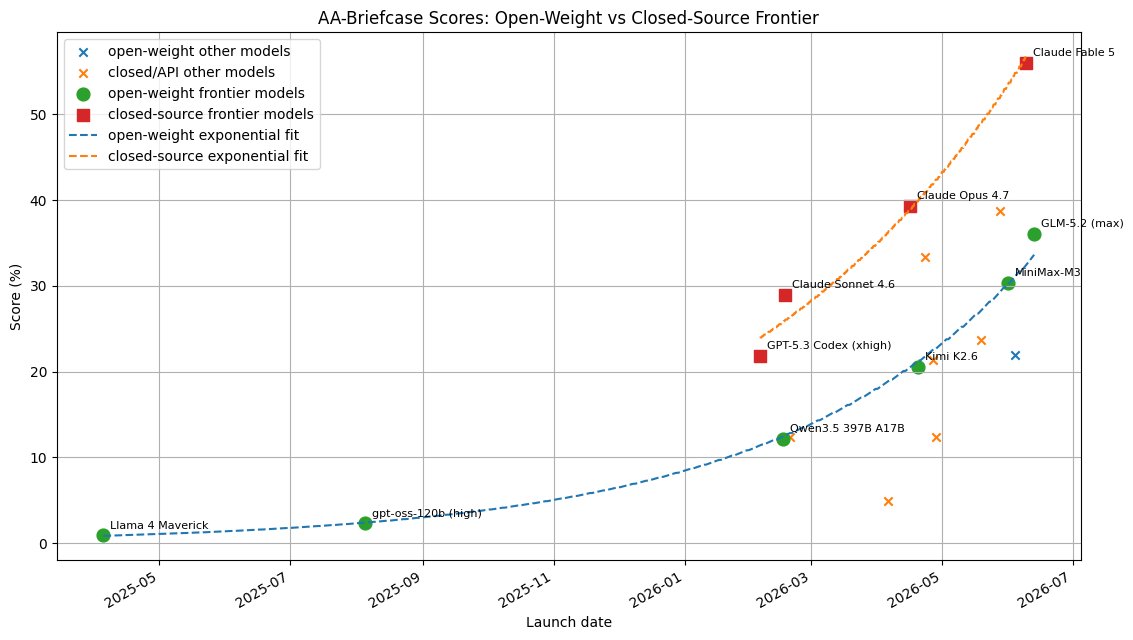
I took the new AA-Briefcase scores from @ArtificialAnlys (basically having the AI do multi-week consulting gigs with a lot of complexity) and graphed the frontier curve for open and closed models: 1) Surprise, rapid gains! 2) The open weights gap is clear https://t.co/a1QGQC2hey https://t.co/bqJHA0WU0j