Your curated collection of saved posts and media
GLM-5.2 is comparable to Opus 4.8 🔥🥵 with 1M context > new IS attention reuses one indexer every 4 sparse layers (2.9× per-token FLOPs at 1M > improved MTP layer for spec decoding > flexible thinking-effort levels > day-0 in transformers + vLLM + SGLang, MIT license 🤗 https://t.co/YdHM3njWQC
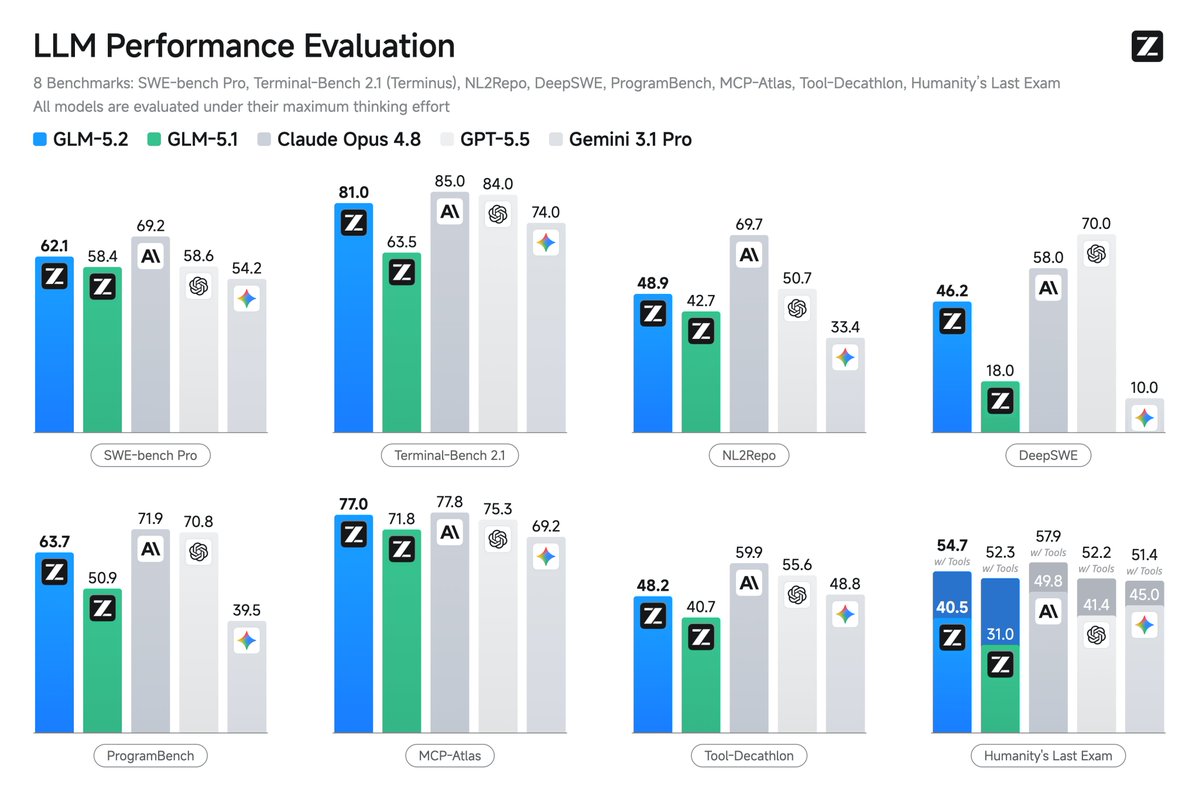
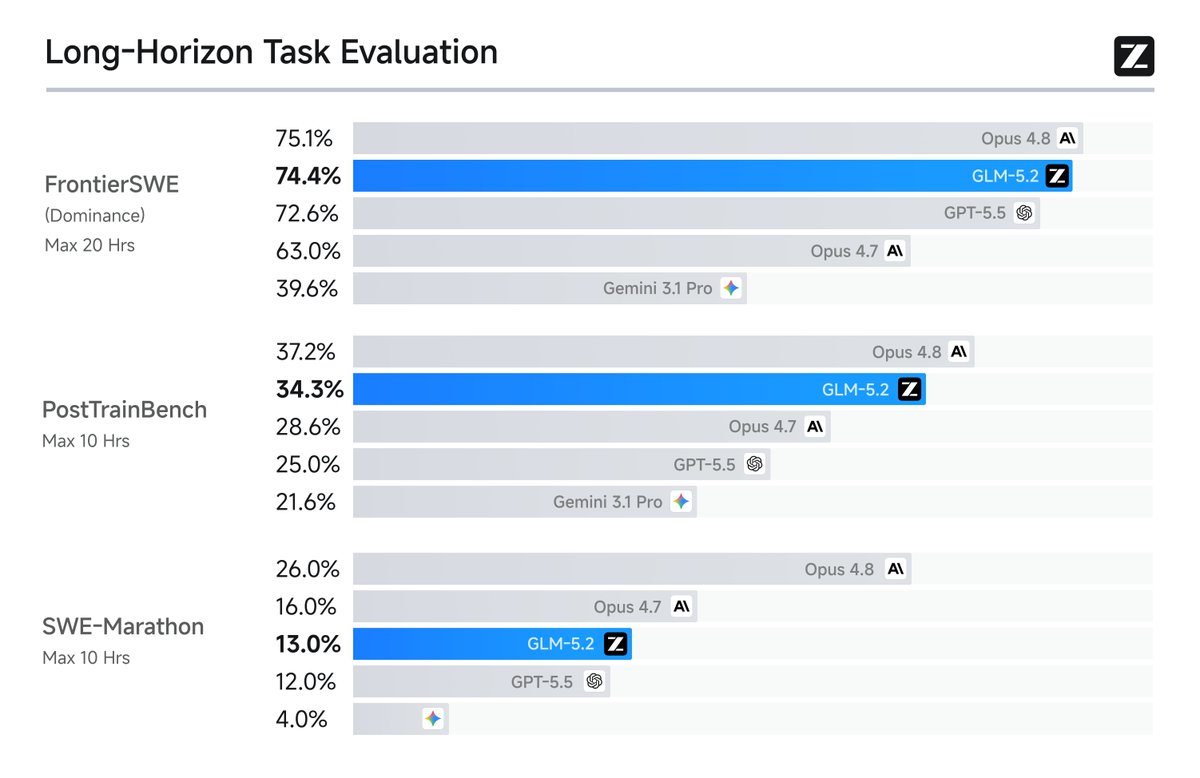
.@zai_org open-sourced GLM 5.2 today, and Modular is a Day Zero launch partner. GLM 5.2 is their new flagship for coding and long-horizon agentic work, with usable 1M-token context built for tasks that run long and call a lot of tools. Serving a model like this well is a full-stack problem. As context grows, the KV cache grows with it, and doing it economically at high concurrency takes more than a config flag. The Modular stack optimizes the path from GPU kernels to serving, which lets us run frontier open models on Day 0 with the utilization and economics agent workloads need. It's available on Modular Cloud now. Request access: https://t.co/m2iKNb7l8b
GLM 5.2 is built for long-horizon tasks - get all the benchmarks and learn more about the model in @Zai_org's great blog post: https://t.co/IH0Q94zRk0 https://t.co/M048tc6vOj
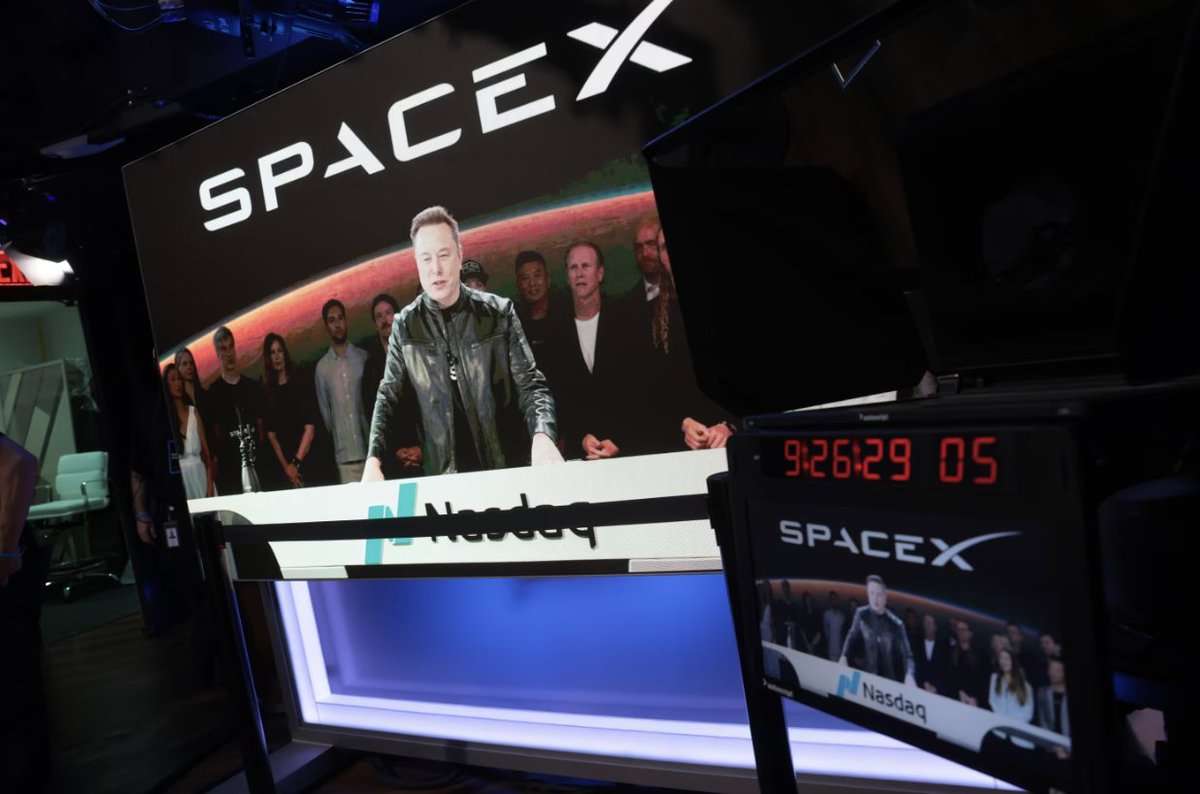
Interesting move by Elon Musk and SpaceX. Buying Cursor is not just an acquisition of a coding tool. It is a bet that software development itself will increasingly be performed by AI agents. If that thesis is right, AI won't just change how products are built. It will change who builds them.
@markgurman @evanspiegel Yeah, how I'm evaluating glasses now: https://t.co/0HO5ZVlmkJ
The Holodeck glasses are here from Snap, but aren't affordable for most people. $2,195. I just bought a $1,500 pair of ZeroG glasses https://t.co/9erfAvXvG1 to help me see reality better. The best my optometrist offers. With Zeiss lenses. Yeah, I could have bought a pair of W

@TrendsDotGlobal @TechCrunch Yeah. Here's how I'm evaluating them: https://t.co/0HO5ZVlmkJ
The Holodeck glasses are here from Snap, but aren't affordable for most people. $2,195. I just bought a $1,500 pair of ZeroG glasses https://t.co/9erfAvXvG1 to help me see reality better. The best my optometrist offers. With Zeiss lenses. Yeah, I could have bought a pair of W

$38 billion loss for OpenAI in 2025, 8x increase since 2024. Time to play my favorite game. IS?! THAT?! GOOD?! https://t.co/Lv2viNLZY6

Snap finally debuts its long awaited AR glasses, Specs, and, oof, they aren’t cheap https://t.co/o5gBaZdFHX
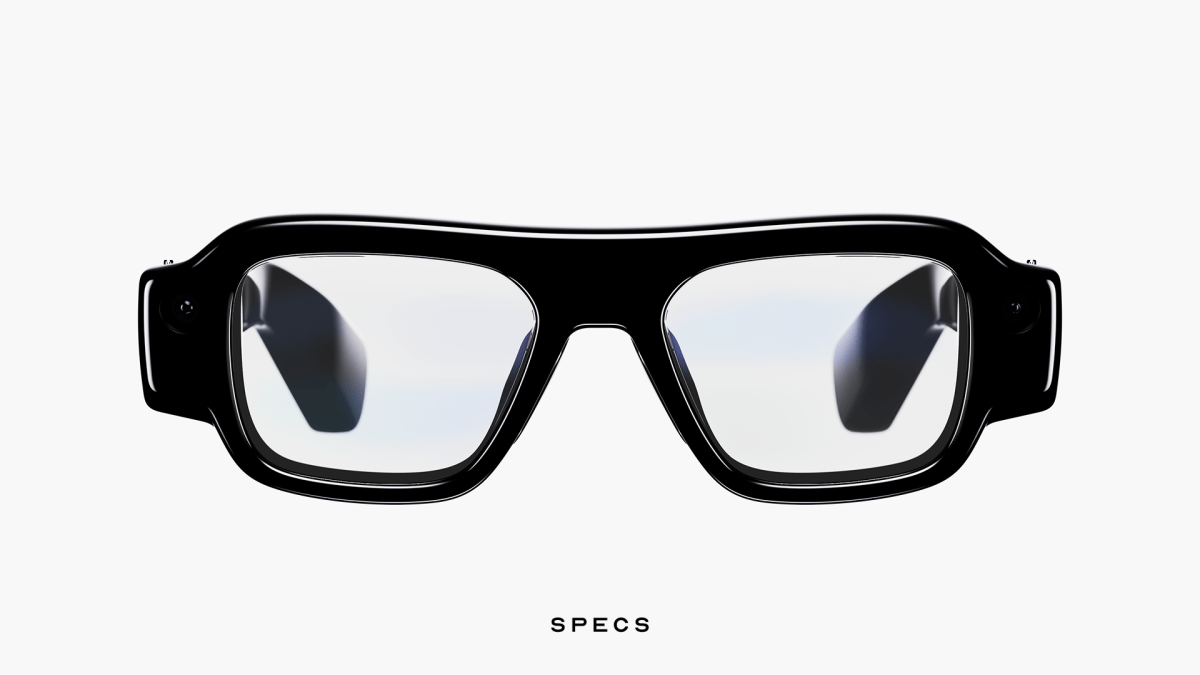
The Holodeck glasses are here from Snap, but aren't affordable for most people. $2,195. I just bought a $1,500 pair of ZeroG glasses https://t.co/9erfAvXvG1 to help me see reality better. The best my optometrist offers. With Zeiss lenses. Yeah, I could have bought a pair of Warby Parkers, but I wanted the absolute lightest, best lenses, I could afford. My eyes suck. But these set a baseline I'll use to judge AI glasses that are coming out of the woodwork against. My lenses: 1. Let me see near and far. Most of the digital eyewear don't do that. 2. Turn dark in sunlight. Most of the digital eyewear don't do that. 3. Are featherweight. Every fraction of a gram makes them less comfortable. 4. Are fashionable. Not true of many of the digital eyewear that's come out. 5. Are completely waterproof (I don't need to take them off in a rain storm). 6. Lenses have very scratch resistant coatings. My last pair, after four years, still have no scratches. 7. Are very durable. Titanium frames are the best at resisting abuse that I've found. Compared to my new glasses I can't see wearing Snap's glasses all day long. So I'd wear them to try some augmented reality experiences. The problem is that most of the augmented reality experiences aren't yet to the place where I want to keep them on for more than an hour. Which is why these will still be very niche focused. Developers should consider. The rest will probably wait, just like they did with Apple Vision Pro (which does have many amazing experiences, but are too heavy and too expensive for me to recommend to my family and friends). That said, sometime in the next five years some company will put it all together with a device that gets me to take off my ZeroG's for hours. Will keep evaluating them, have several different AI glasses here to compare, with more on the way. One kind of person I'd recommend getting digital eyewear? Business travelers. The glasses from @getVITURE or @XREAL_Global give you a huge color screen to watch a movie, or work in privately, while taking a long flight. They don't pretend to be glasses you can wear all day, and require a wire to a laptop or a phone to power them, though. But at CES the crowds around their booths show that there's a market demand for their kinds of glasses. There the utility does pass the ZeroG's I have. I also find I frequently put them on when working because of the huge color screens inside. But the Holodeck device of my dreams still hasn't arrived. Will keep evaluating as Google and Meta bring new devices later this year.
Snap finally debuts its long awaited AR glasses, Specs, and, oof, they aren’t cheap https://t.co/o5gBaZdFHX
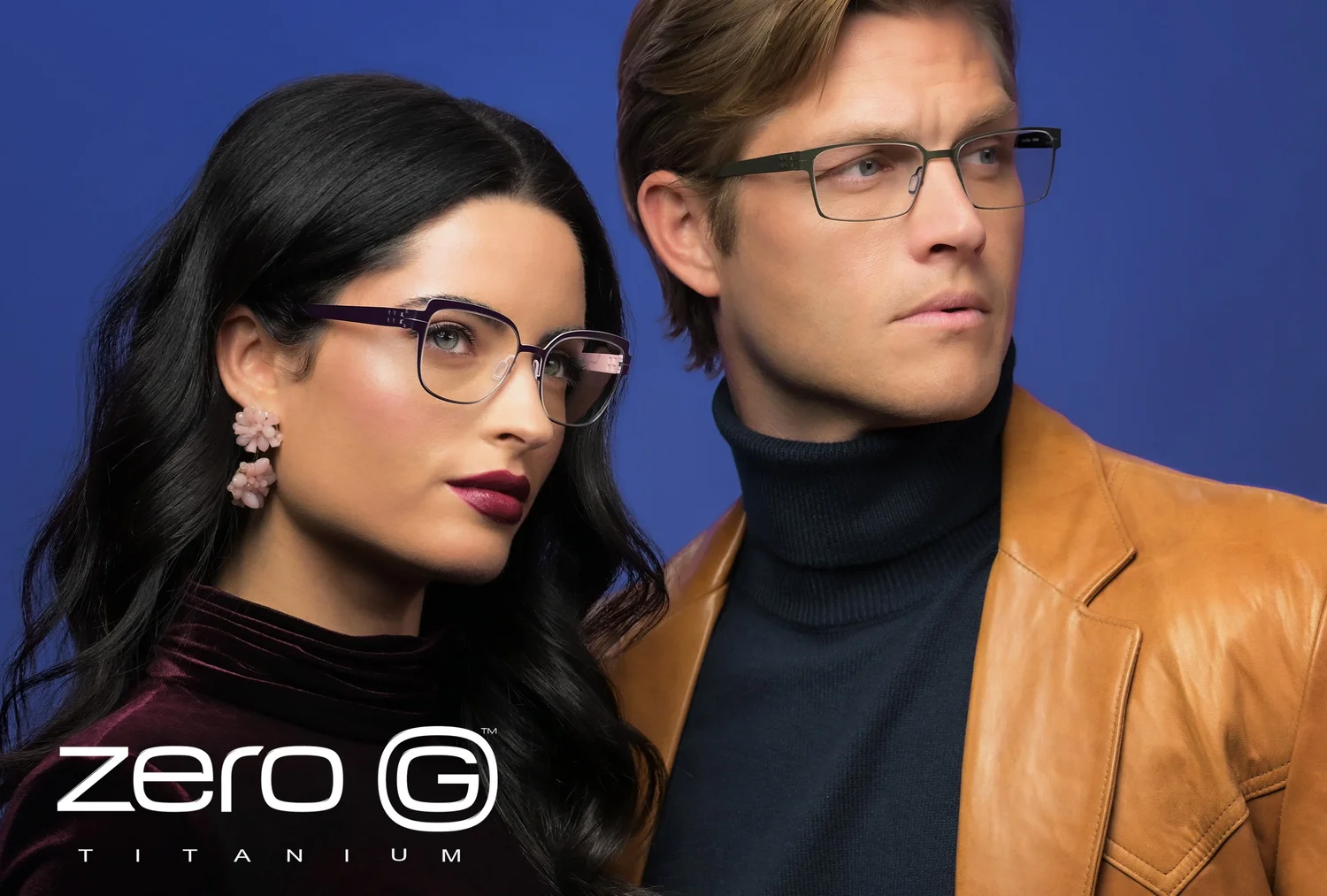
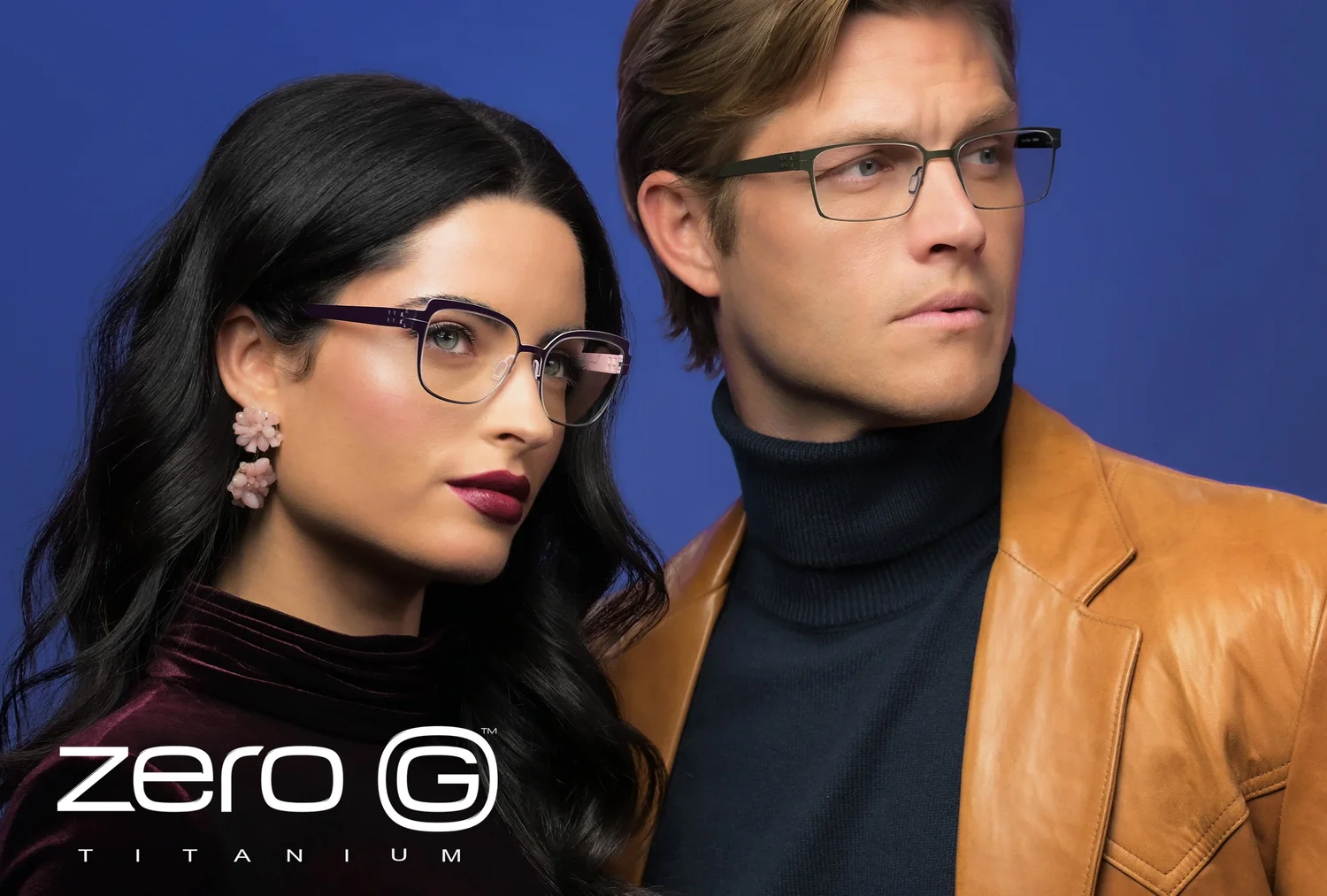
@julitoalonso I want a Vision Pro that's as light as my ZeroG glasses. Yeah, might be waiting a decade for those. :-) The eyewear industry knows that they need to be less than 500 grams to be comfortable for a few hours. My Concord frames: https://t.co/UmmfuwECgR are only a couple of grams. So the gap is huge. I'm coming to the realization that glasses that can compete with my ZeroG's aren't coming soon, so I'm looking more for utility that can get me to take off my ZeroG glasses for a few hours to do something like play a game, watch a movie, or work while I travel or sit at a coffee shop, something like that.
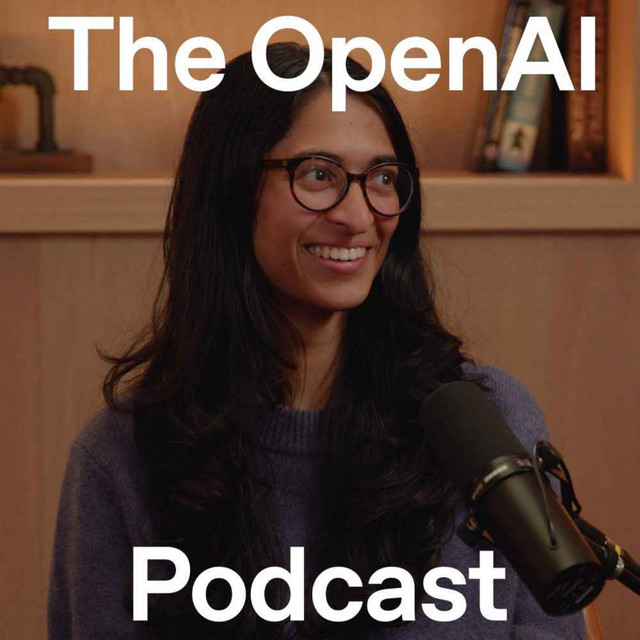
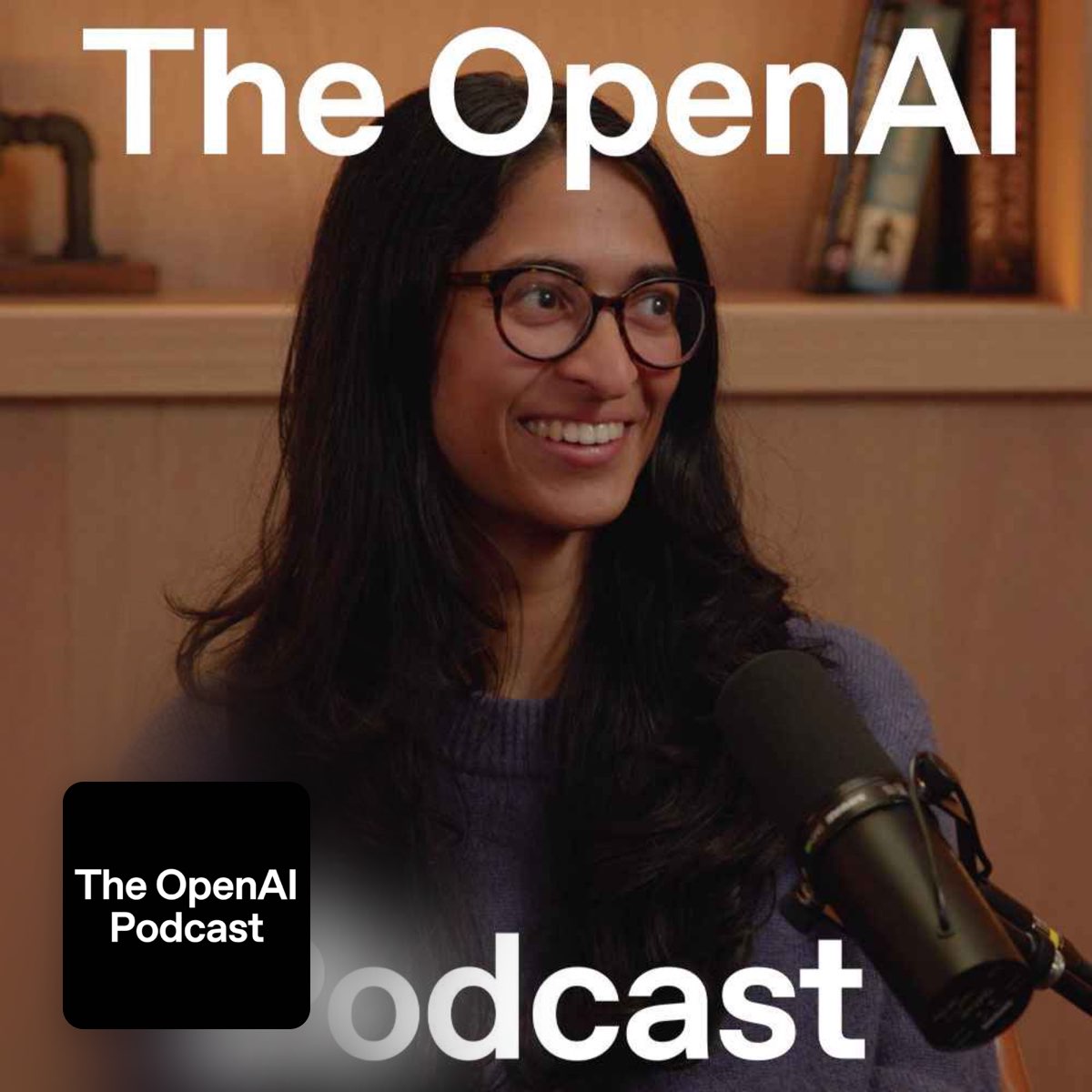
Listen to the OpenAI Podcast on— Spotify https://t.co/5u8ANPIHBe Apple https://t.co/ZhhRA1ZB27 YouTube https://t.co/ABG78oTl6W
Keir Starmer requested a carveout from the embargo on Anthropic's Mythos and Fable models for British nationals and companies - and was denied. A senior White House official, speaking on condition of anonymity, told the New York Post: 'We can’t have frontier models running amok'. https://t.co/lO45xkwGcT

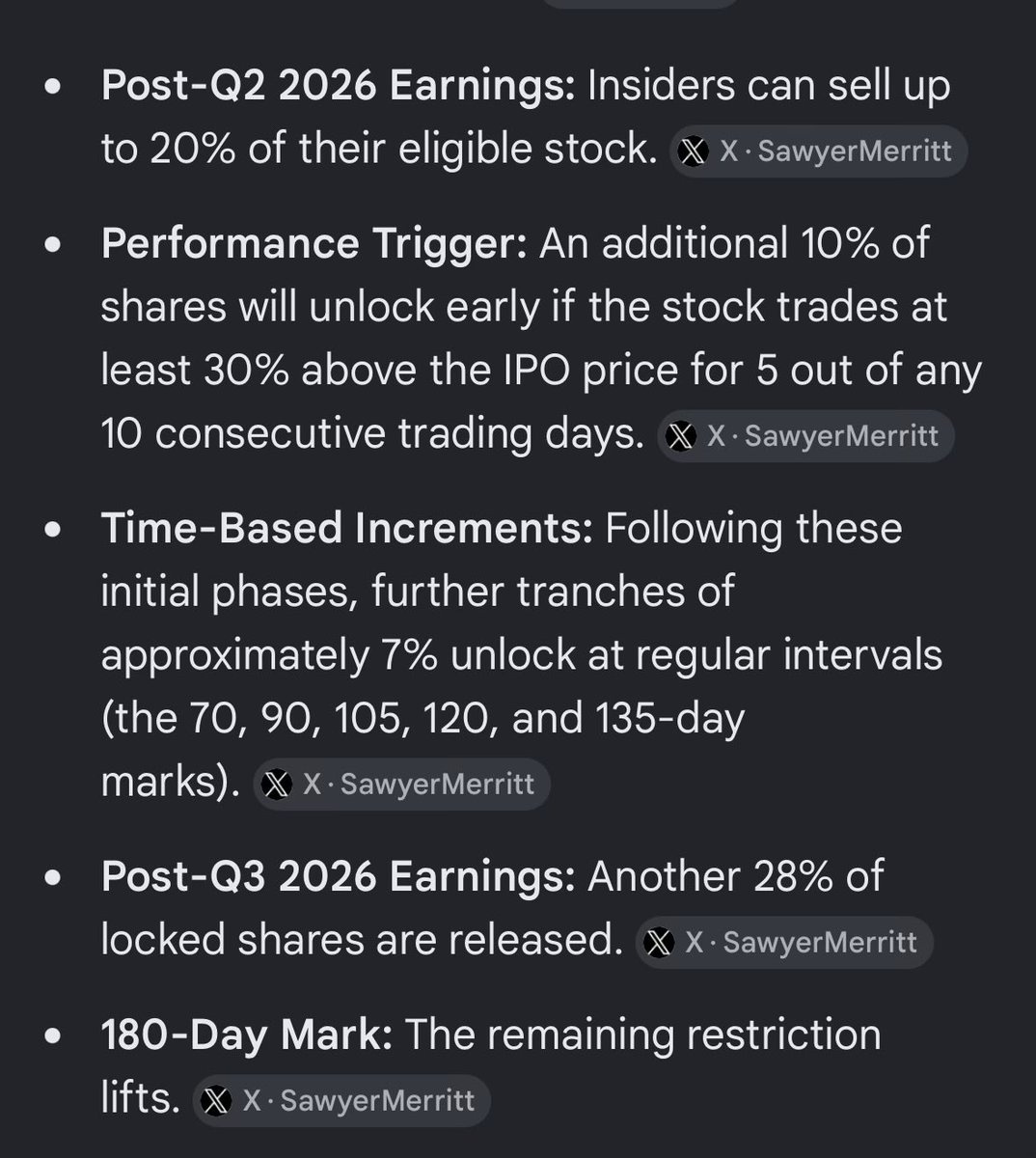
Has everyone forgotten the performance trigger in the SpaceX lockup schedule https://t.co/UH9lf2k92m
@osupernerd This is how: Claude Mythos secret weapon exposed via public leak: https://t.co/0v5qNCnVrl
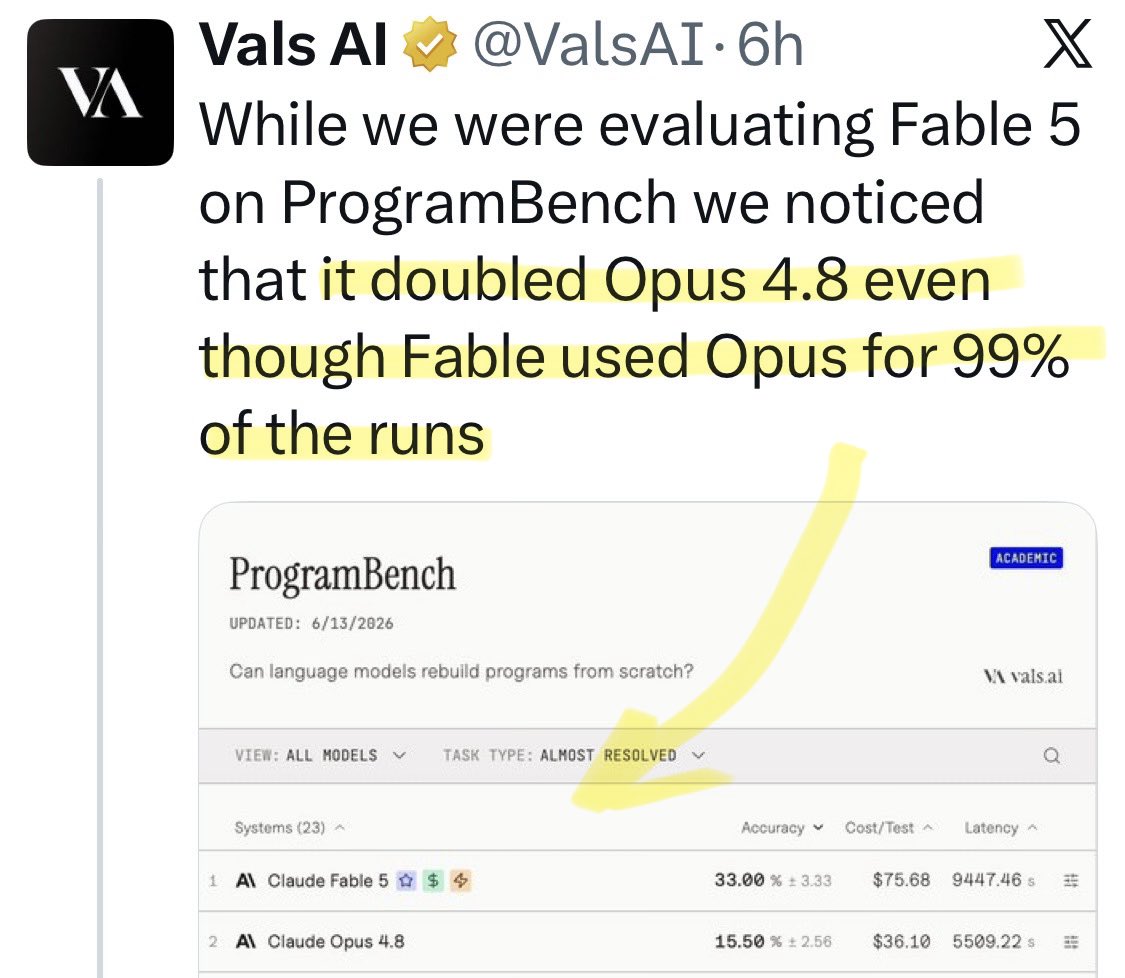
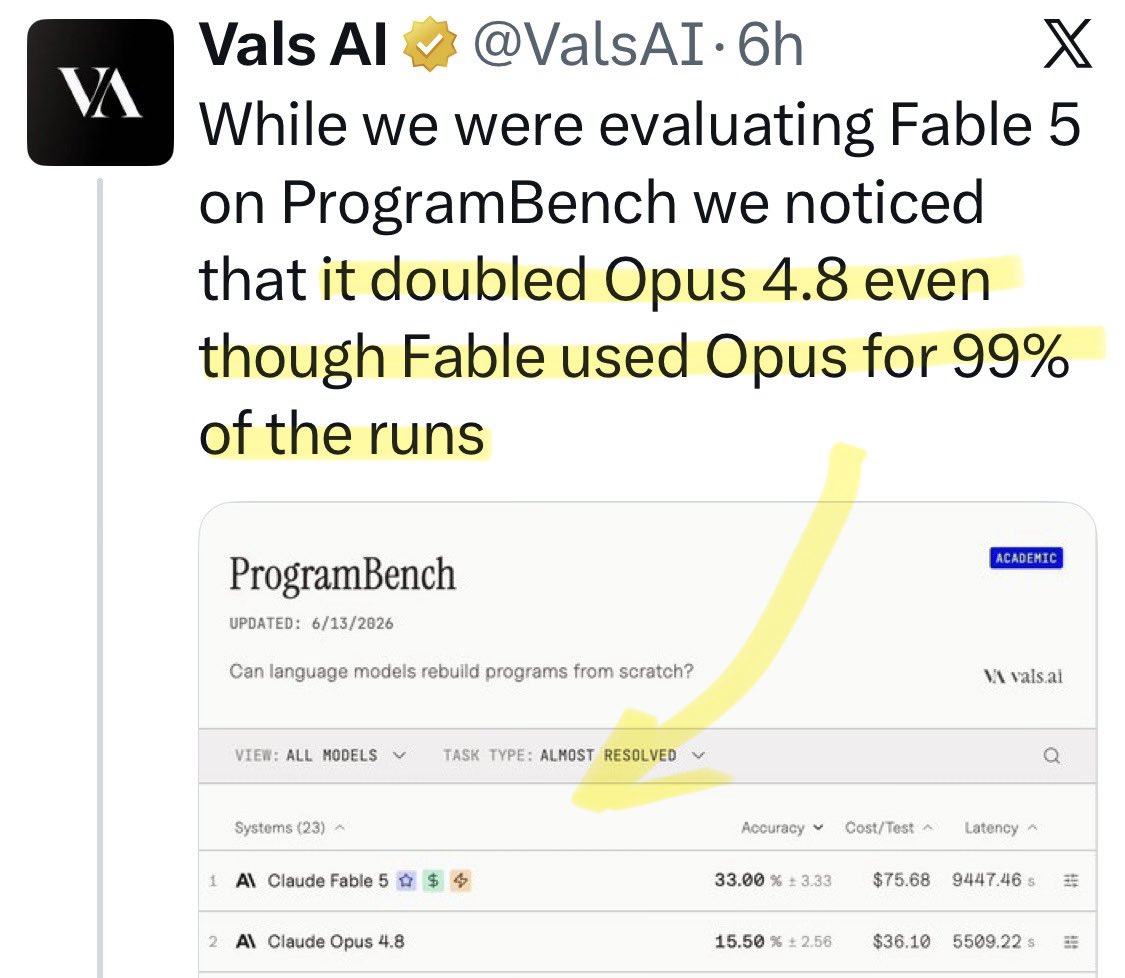
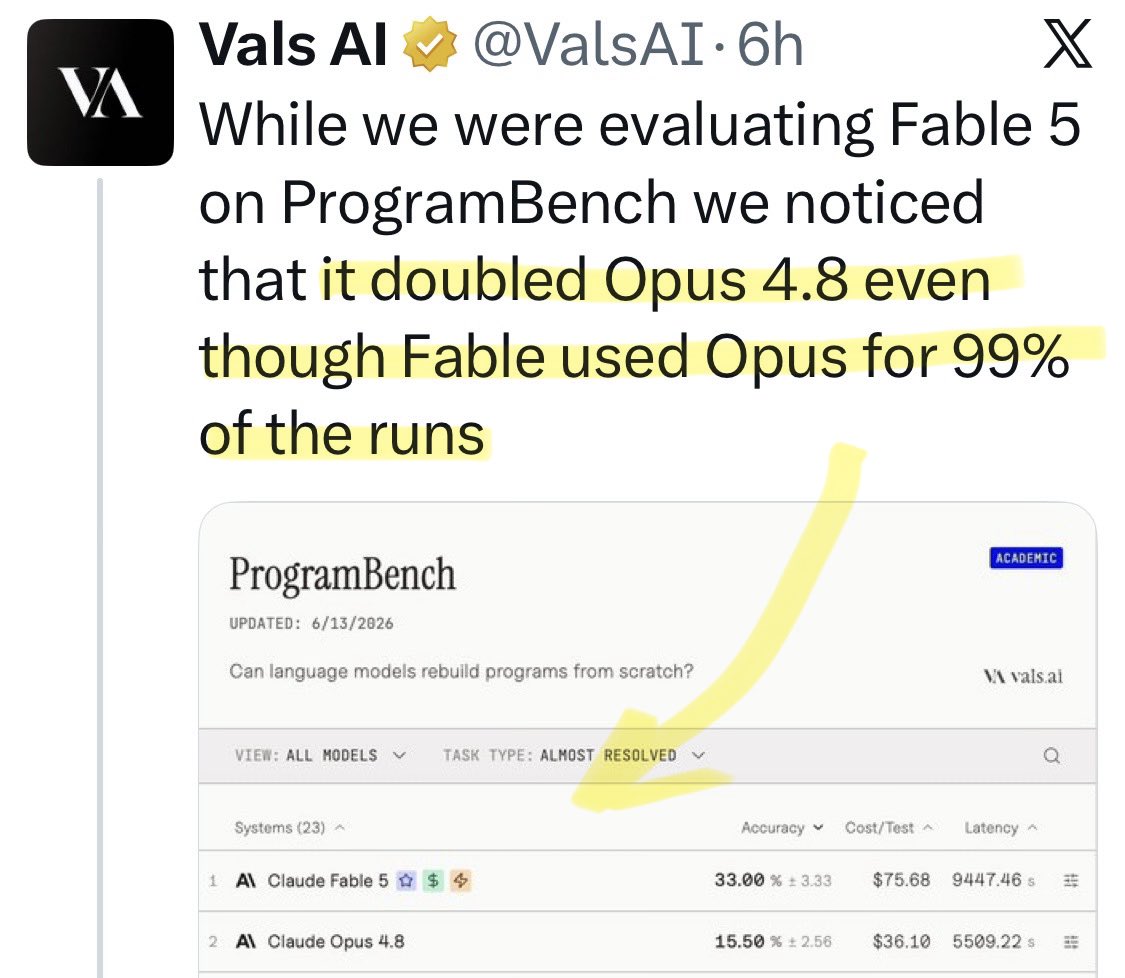
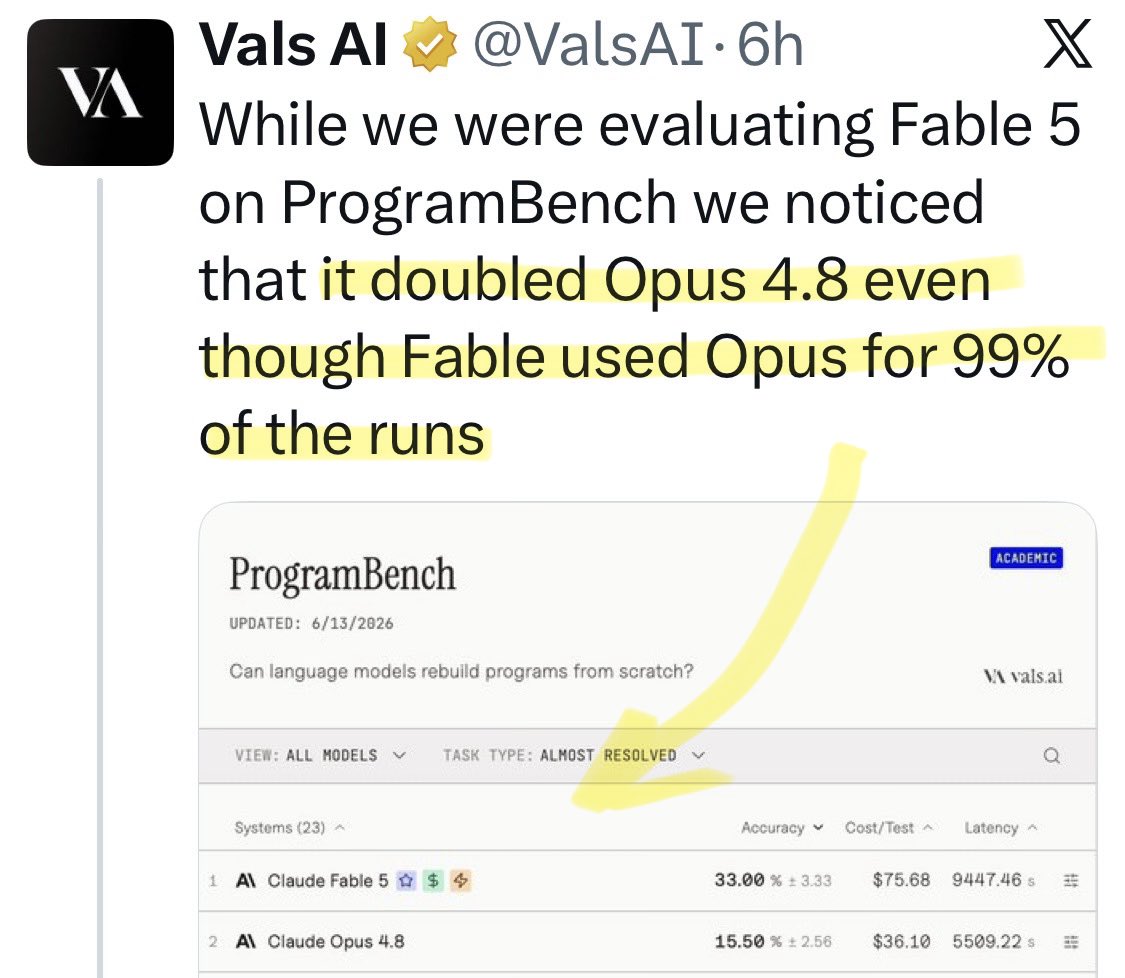
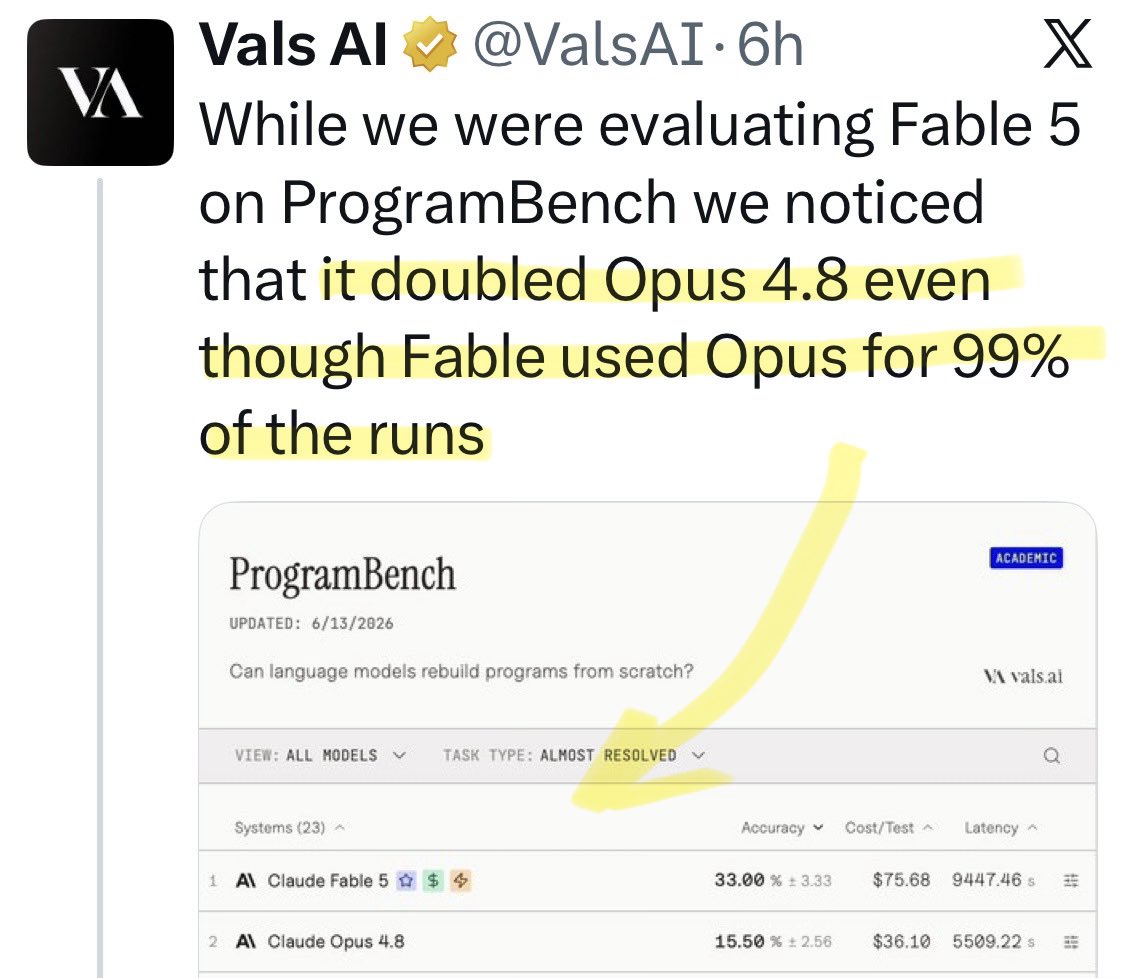
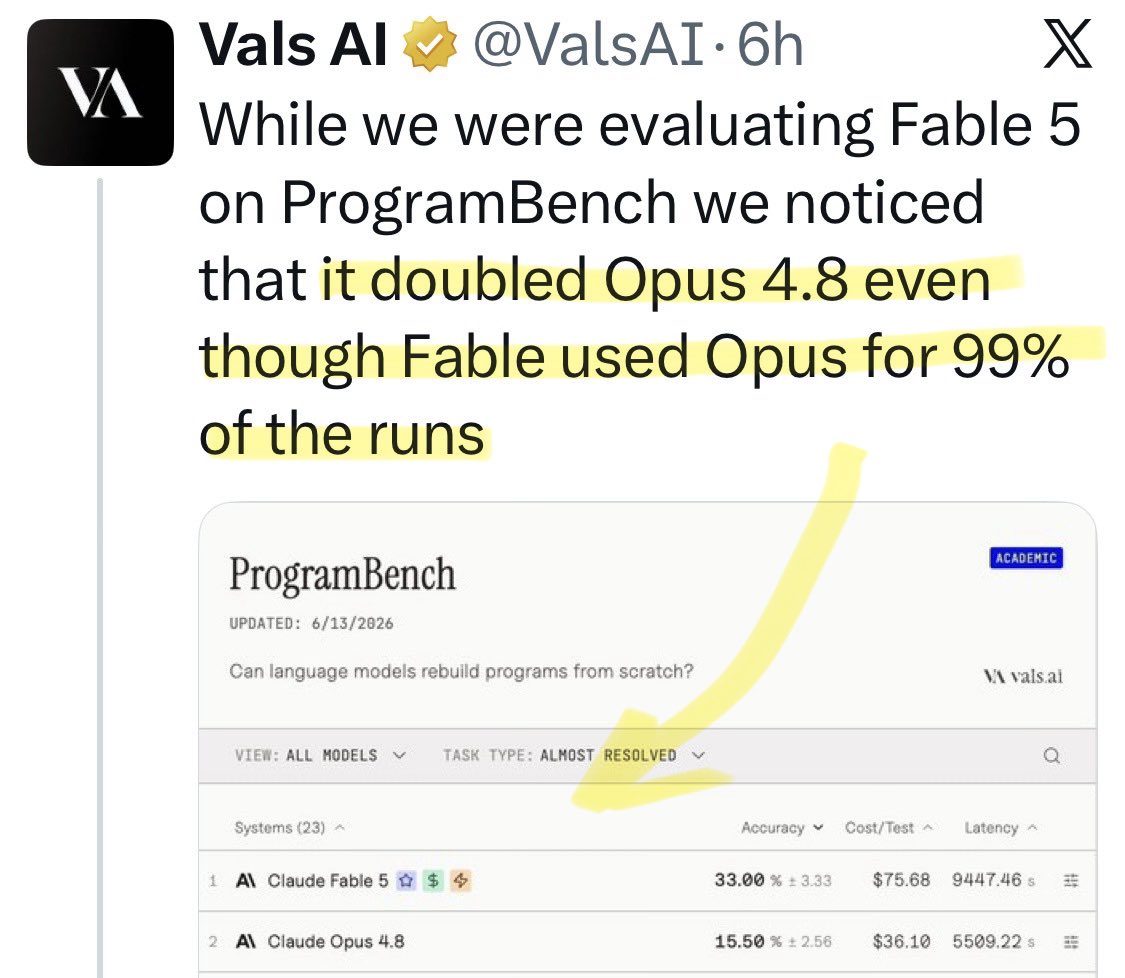
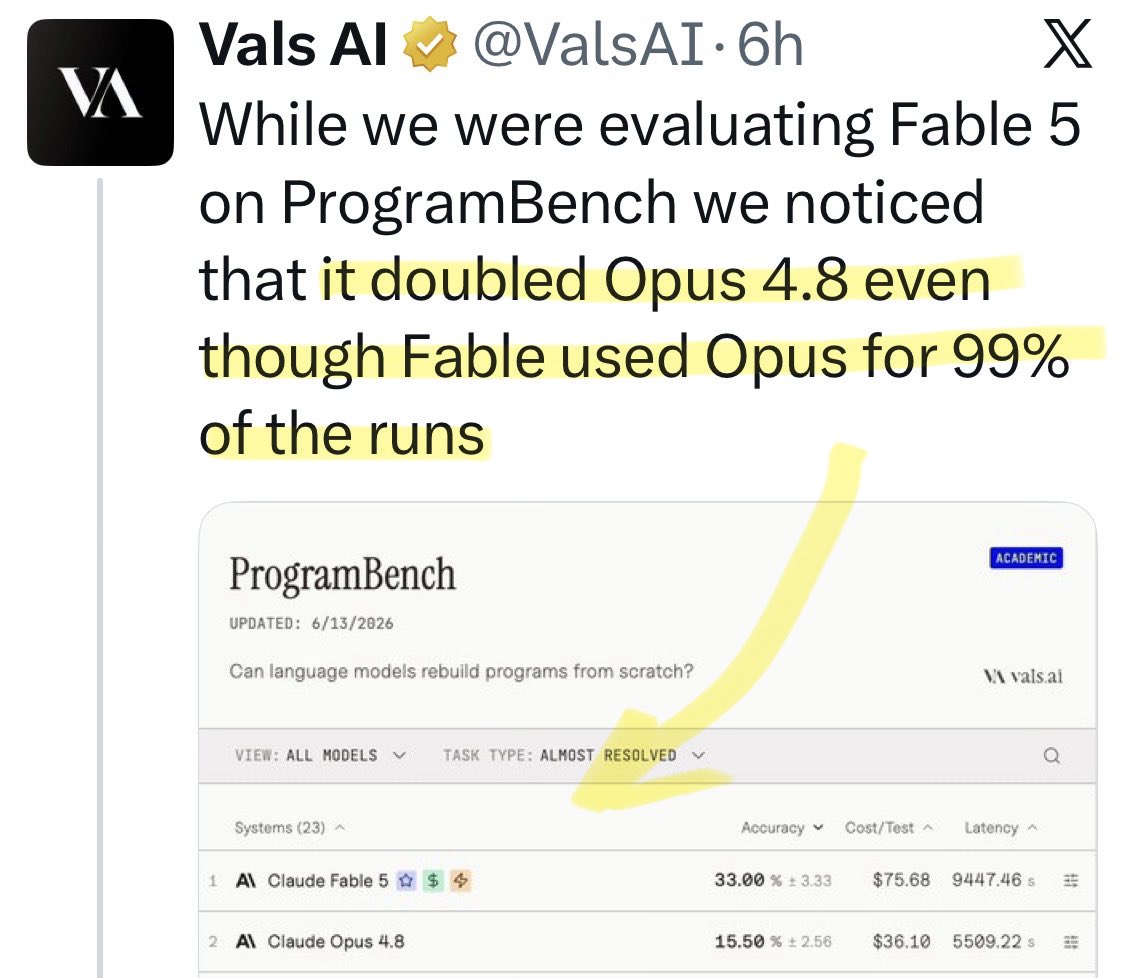
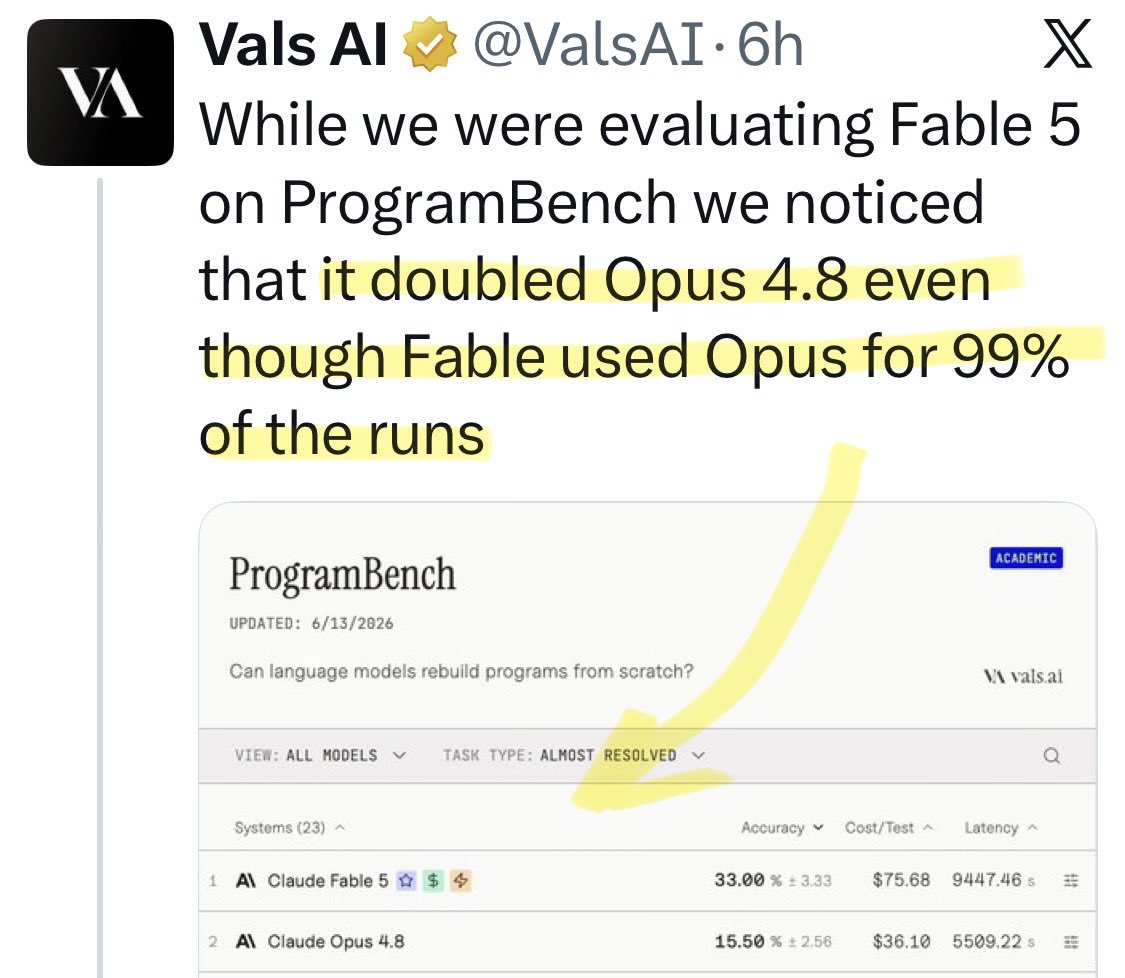
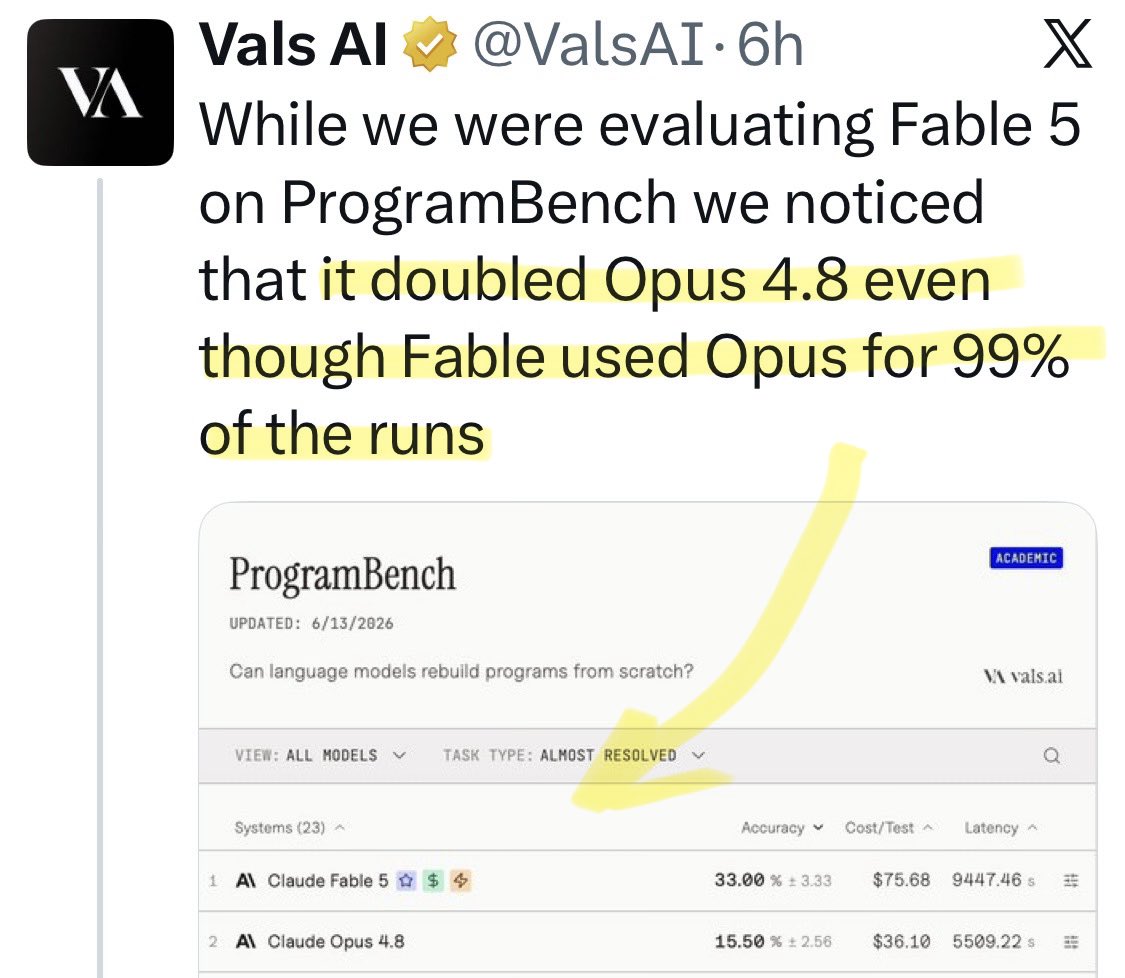
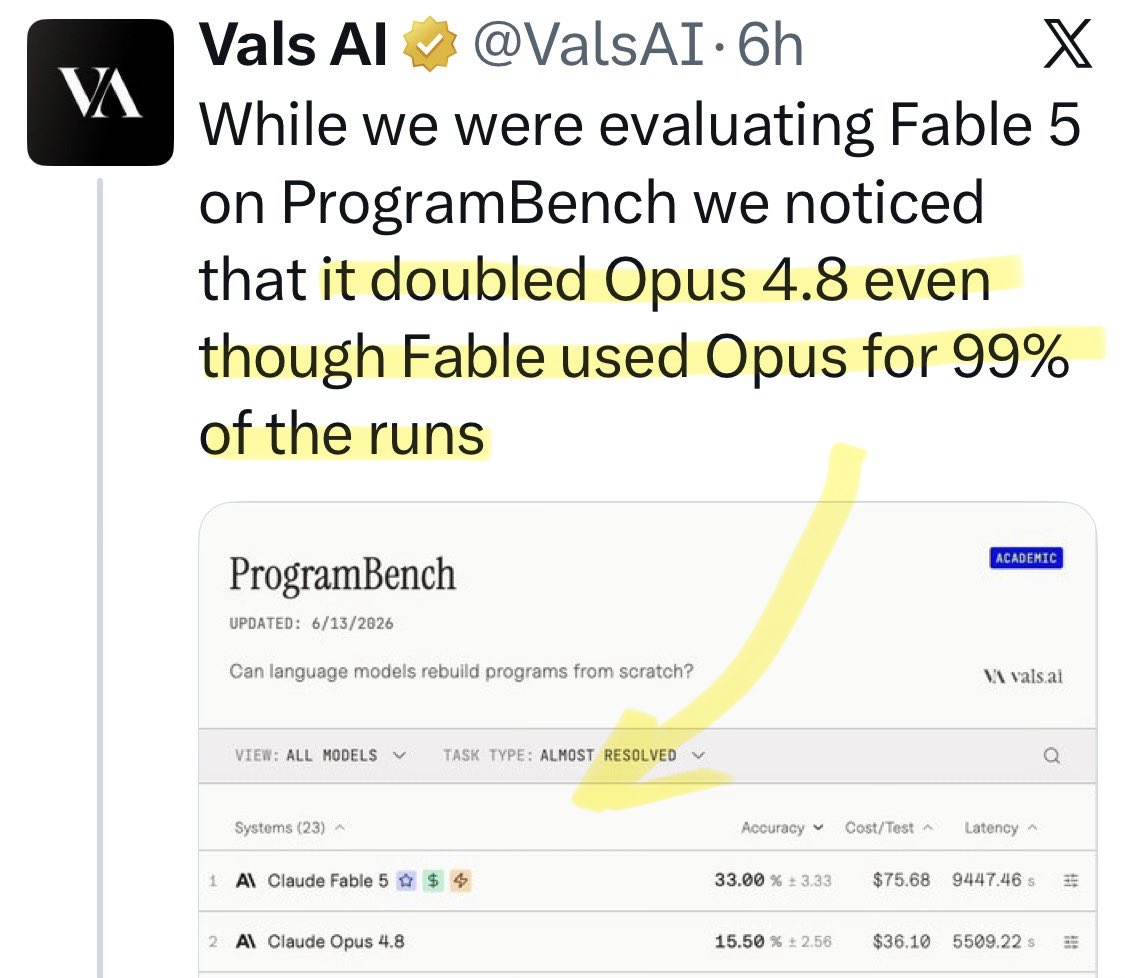
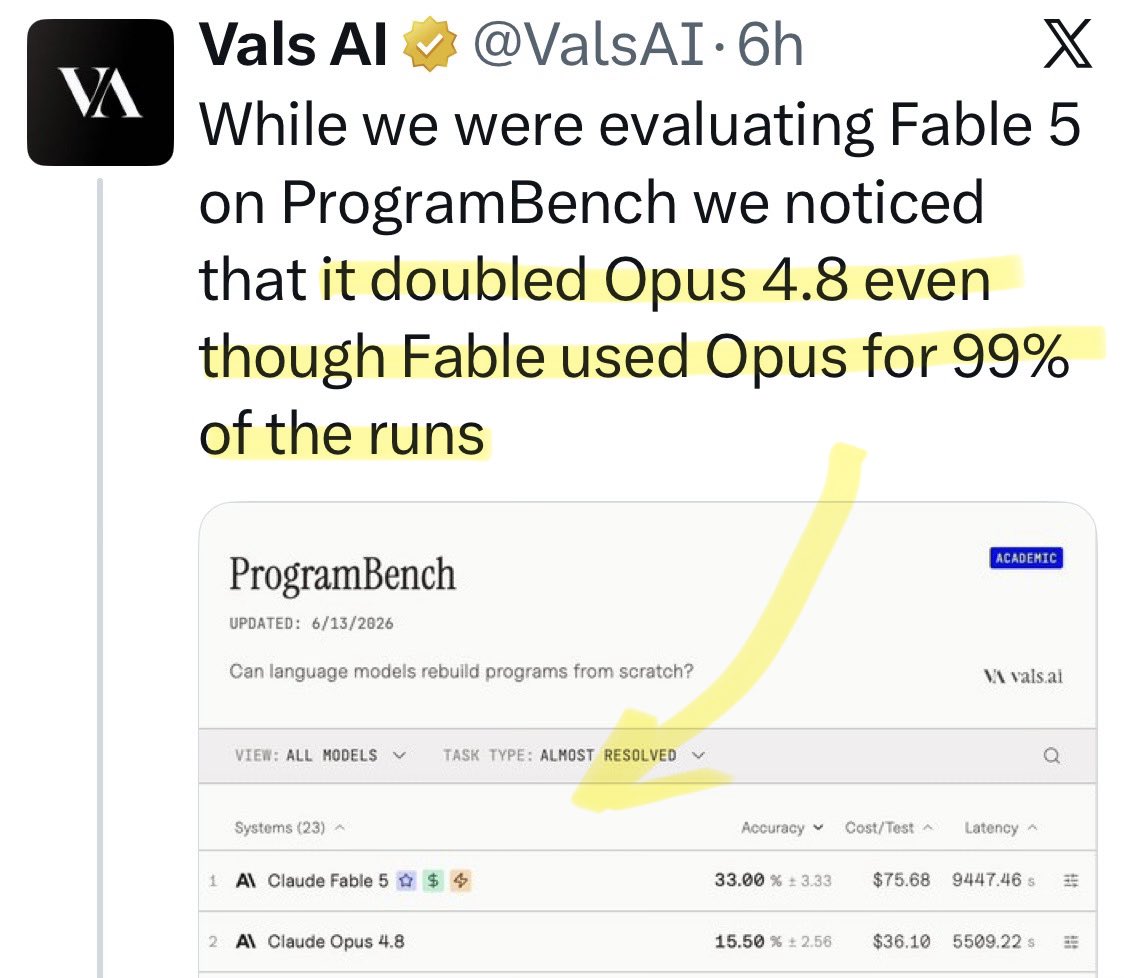
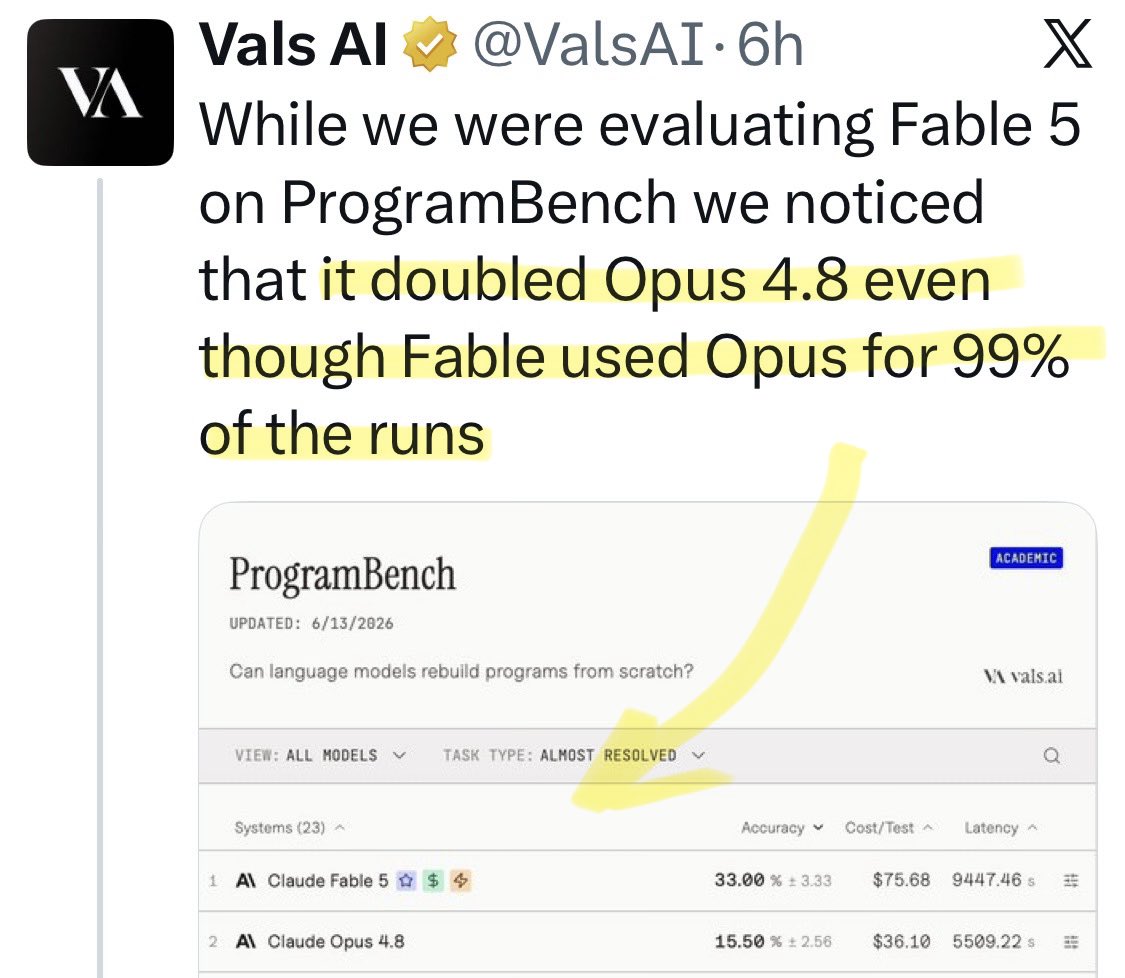
🚨 New @ValsAI benchmark confirms Claude Fable little secret How is Opus-through-Fable outperforming vanilla Opus? Simple. The model isn’t the star here. It’s the *agentic loop* doing all the work. Anthropic didn’t tell anyone. Full analysis: https://t.co/6tYxEWw67H
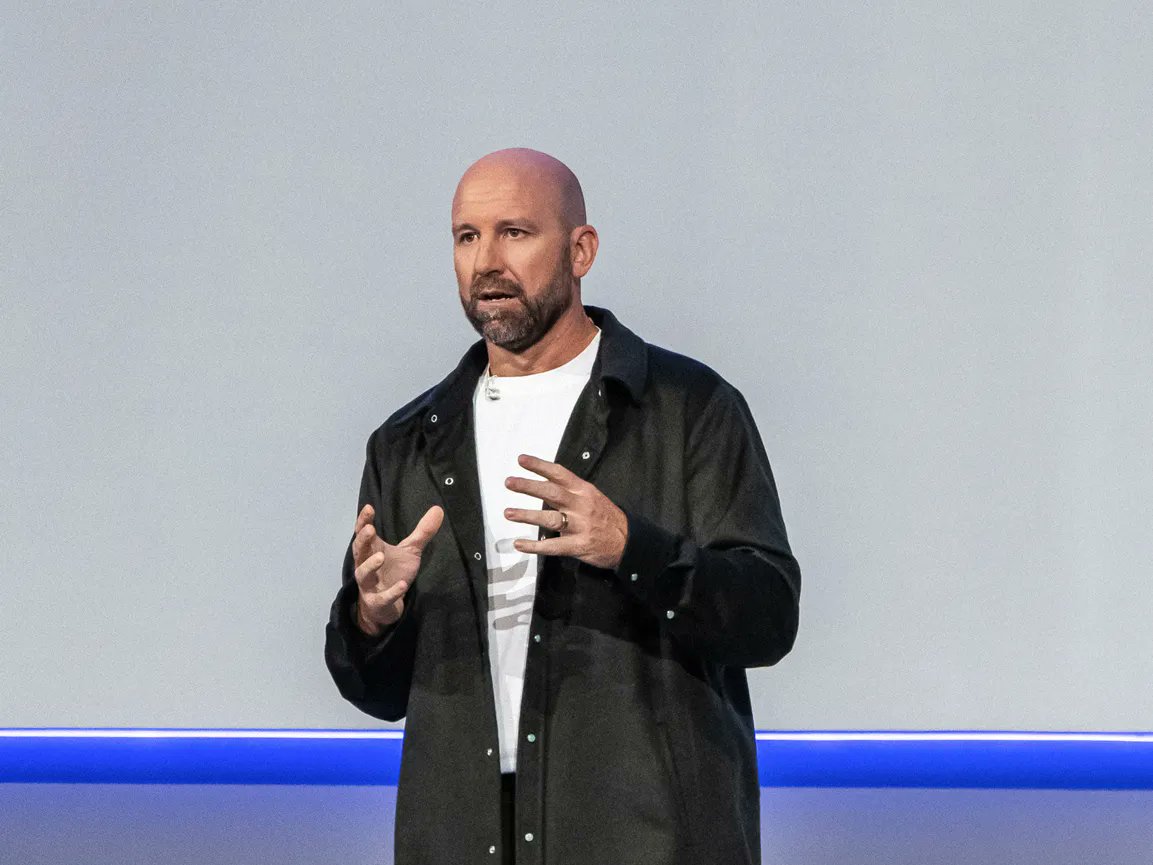
Building AI is hard. Reorganizing thousands of people around AI may be even harder. Meta’s admission that its AI reorganization was mishandled is a reminder that technology transformations are ultimately human transformations. The companies that win in AI will need more than great models. They will need great execution.
https://t.co/bGqRjwYnEQ
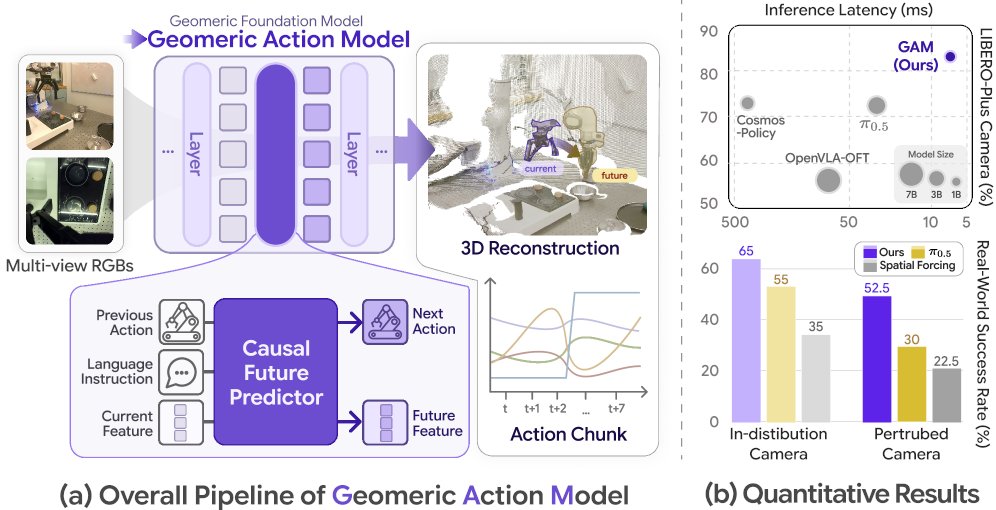
Geometric Action Model for Robot Policy Learning Repurposes a geometric foundation model as one backbone for perception, prediction, and action. 1.4B parameters. 6.9 ms inference. 85.5% on LIBERO-Plus. 55× faster than baselines. https://t.co/wNYlFaghX0
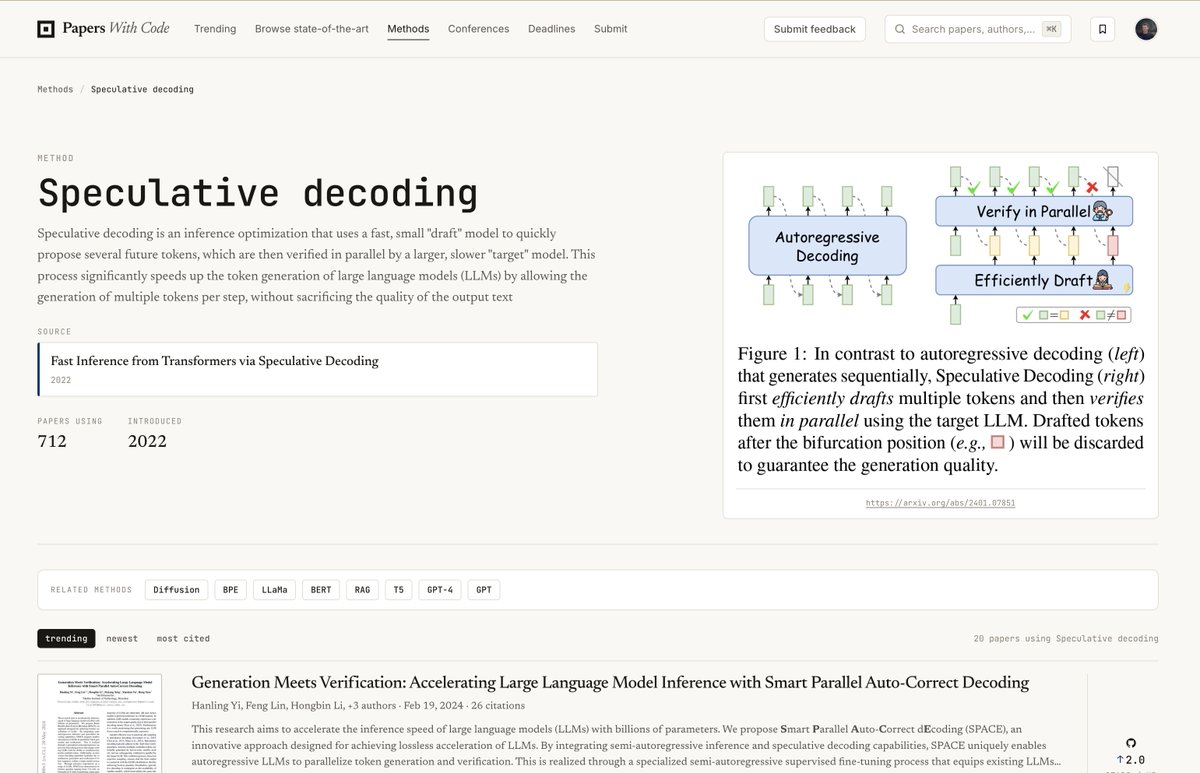
What is speculative decoding? Speculative decoding is an inference optimization that uses a fast, small "draft" model to quickly propose several future tokens, which are then verified in parallel by a larger, slower "target" model. This process significantly speeds up the token generation of large language models (LLMs) by allowing the generation of multiple tokens per step, without sacrificing the quality of the output text Learn more at https://t.co/qYAJJ8Snin
🚀 New blog: The next generation of speculative decoding: DFlash and Spec V2 DFlash + Spec V2 hit >4.3X baseline throughput for LLM inference, now the default speculative decoding engine in SGLang! Together with @modal and https://t.co/ZXetBKIRym, our jointly-released DFlash dra

@0xleegenz Claude Mythos secret weapon exposed via public leak: https://t.co/0v5qNCnVrl
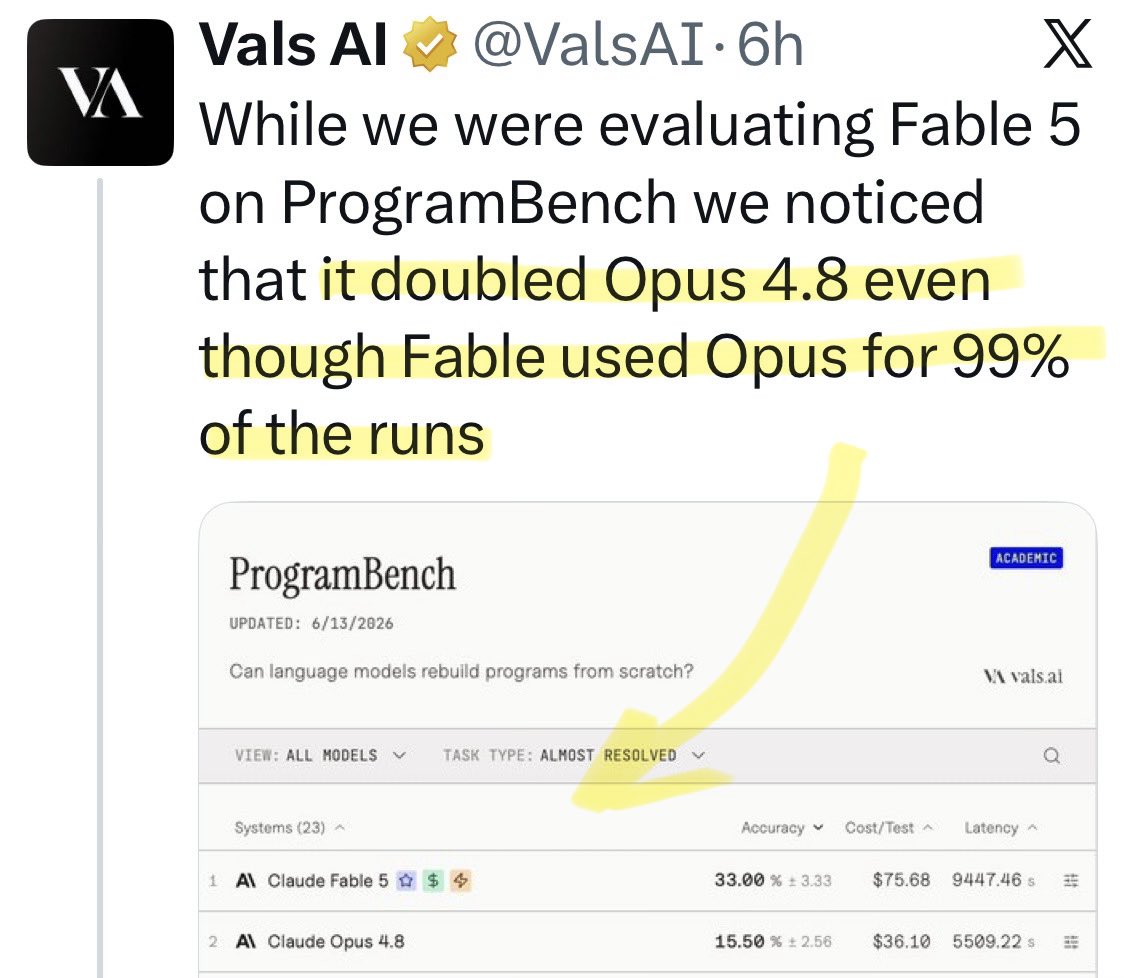
🚨 New @ValsAI benchmark confirms Claude Fable little secret How is Opus-through-Fable outperforming vanilla Opus? Simple. The model isn’t the star here. It’s the *agentic loop* doing all the work. Anthropic didn’t tell anyone. Full analysis: https://t.co/6tYxEWw67H
@ClaudeCode_UT Claude Mythos secret weapon exposed via public leak: https://t.co/0v5qNCnVrl
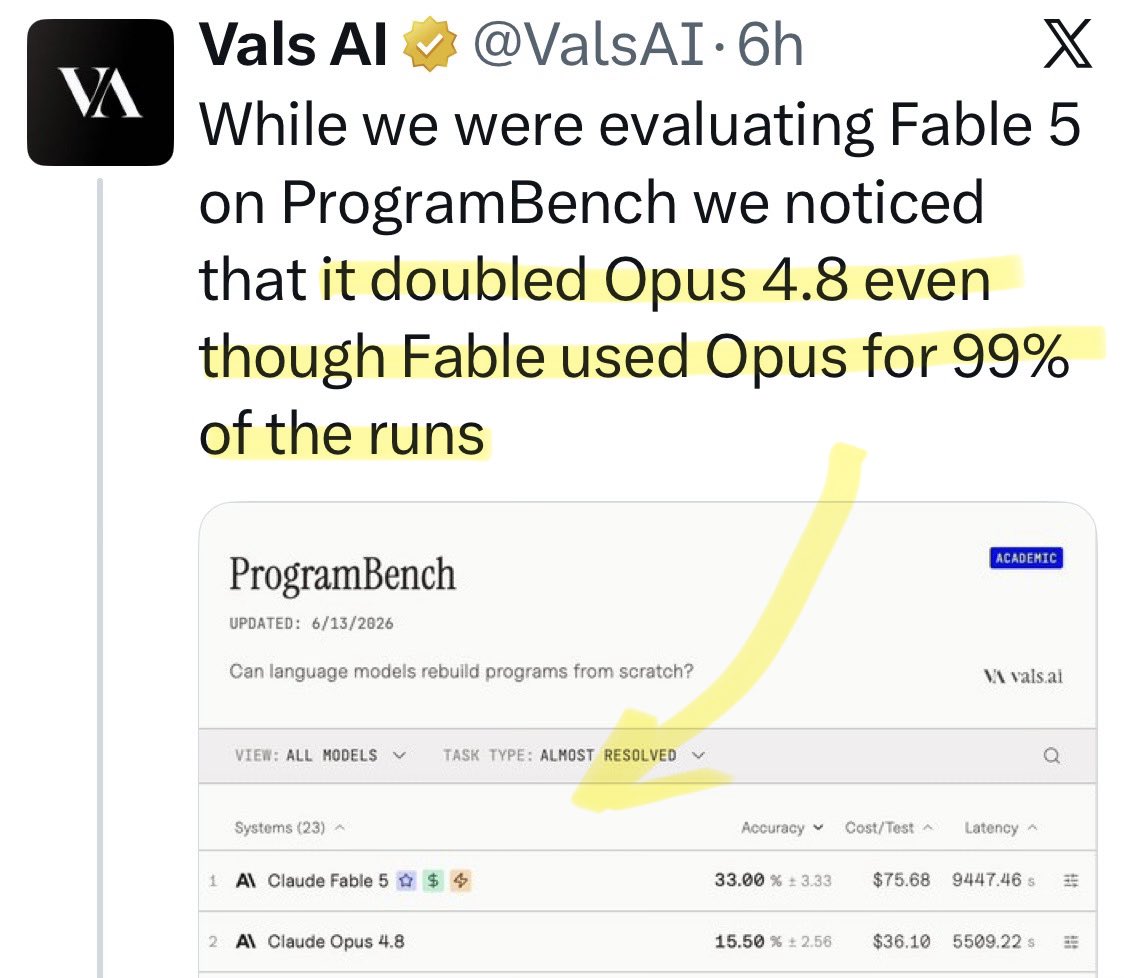
🚨 New @ValsAI benchmark confirms Claude Fable little secret How is Opus-through-Fable outperforming vanilla Opus? Simple. The model isn’t the star here. It’s the *agentic loop* doing all the work. Anthropic didn’t tell anyone. Full analysis: https://t.co/6tYxEWw67H
@Cody_Wittick Claude Mythos secret weapon exposed via public leak: https://t.co/0v5qNCnVrl
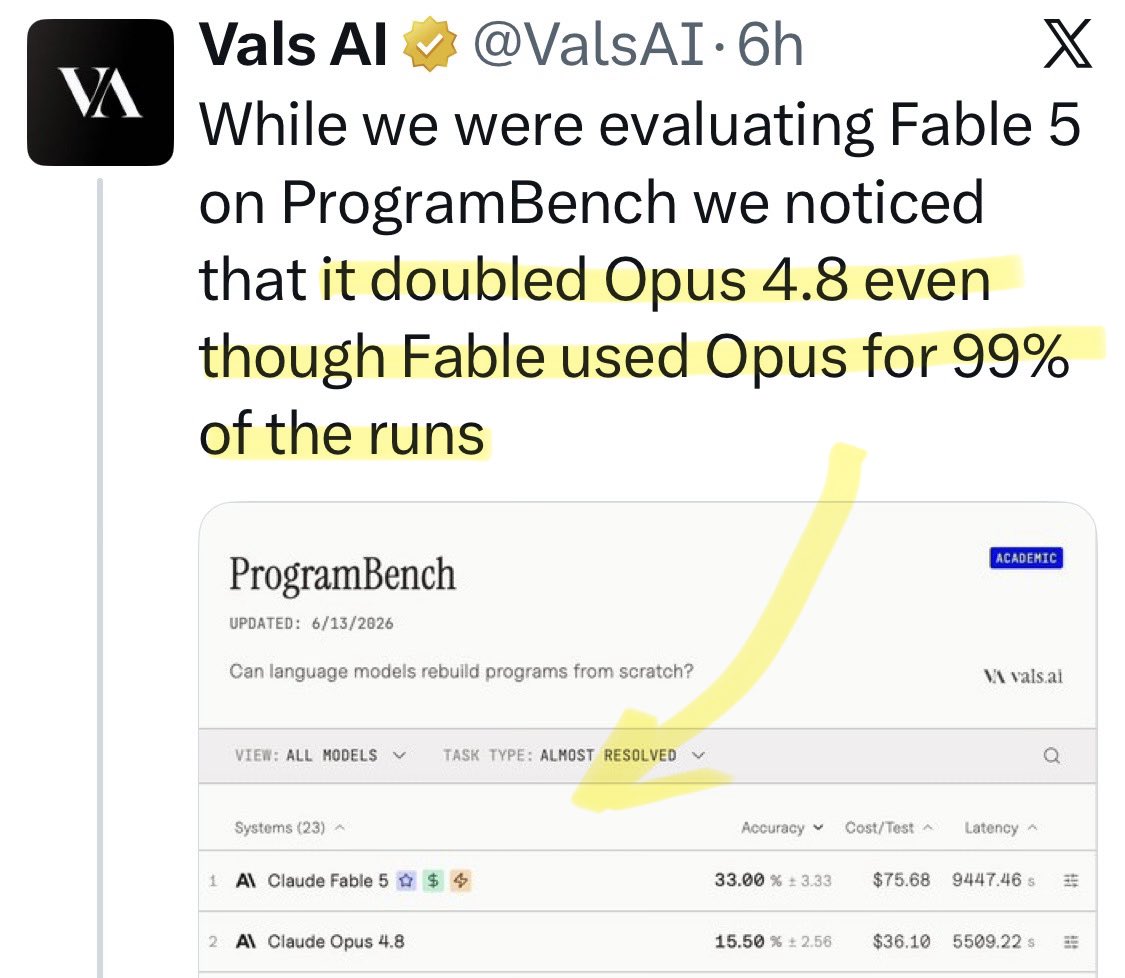
🚨 New @ValsAI benchmark confirms Claude Fable little secret How is Opus-through-Fable outperforming vanilla Opus? Simple. The model isn’t the star here. It’s the *agentic loop* doing all the work. Anthropic didn’t tell anyone. Full analysis: https://t.co/6tYxEWw67H
@ReutersJpTech Claude Mythos secret weapon exposed via public leak: https://t.co/0v5qNCnVrl
🚨 New @ValsAI benchmark confirms Claude Fable little secret How is Opus-through-Fable outperforming vanilla Opus? Simple. The model isn’t the star here. It’s the *agentic loop* doing all the work. Anthropic didn’t tell anyone. Full analysis: https://t.co/6tYxEWw67H
@de1lymoon Claude Mythos secret weapon exposed via public leak: https://t.co/0v5qNCnVrl
🚨 New @ValsAI benchmark confirms Claude Fable little secret How is Opus-through-Fable outperforming vanilla Opus? Simple. The model isn’t the star here. It’s the *agentic loop* doing all the work. Anthropic didn’t tell anyone. Full analysis: https://t.co/6tYxEWw67H
@lemire Claude Mythos secret weapon exposed via public leak: https://t.co/0v5qNCnVrl
🚨 New @ValsAI benchmark confirms Claude Fable little secret How is Opus-through-Fable outperforming vanilla Opus? Simple. The model isn’t the star here. It’s the *agentic loop* doing all the work. Anthropic didn’t tell anyone. Full analysis: https://t.co/6tYxEWw67H
@Barney_WR_Lane Claude Mythos secret weapon exposed via public leak: https://t.co/0v5qNCnVrl
🚨 New @ValsAI benchmark confirms Claude Fable little secret How is Opus-through-Fable outperforming vanilla Opus? Simple. The model isn’t the star here. It’s the *agentic loop* doing all the work. Anthropic didn’t tell anyone. Full analysis: https://t.co/6tYxEWw67H
@alex_whedon Claude Mythos secret weapon exposed via public leak: https://t.co/0v5qNCnVrl
🚨 New @ValsAI benchmark confirms Claude Fable little secret How is Opus-through-Fable outperforming vanilla Opus? Simple. The model isn’t the star here. It’s the *agentic loop* doing all the work. Anthropic didn’t tell anyone. Full analysis: https://t.co/6tYxEWw67H
@cursor_ai @SpaceX Claude Mythos secret weapon exposed via public leak: https://t.co/0v5qNCnVrl
🚨 New @ValsAI benchmark confirms Claude Fable little secret How is Opus-through-Fable outperforming vanilla Opus? Simple. The model isn’t the star here. It’s the *agentic loop* doing all the work. Anthropic didn’t tell anyone. Full analysis: https://t.co/6tYxEWw67H
@SpaceX @cursor_ai Claude Mythos secret weapon exposed via public leak: https://t.co/0v5qNCnVrl
🚨 New @ValsAI benchmark confirms Claude Fable little secret How is Opus-through-Fable outperforming vanilla Opus? Simple. The model isn’t the star here. It’s the *agentic loop* doing all the work. Anthropic didn’t tell anyone. Full analysis: https://t.co/6tYxEWw67H
@SpaceX @cursor_ai Claude Mythos secret weapon exposed via public leak: https://t.co/0v5qNCnVrl
🚨 New @ValsAI benchmark confirms Claude Fable little secret How is Opus-through-Fable outperforming vanilla Opus? Simple. The model isn’t the star here. It’s the *agentic loop* doing all the work. Anthropic didn’t tell anyone. Full analysis: https://t.co/6tYxEWw67H
@lucas_flatwhite Claude Mythos secret weapon exposed via public leak: https://t.co/0v5qNCnVrl
🚨 New @ValsAI benchmark confirms Claude Fable little secret How is Opus-through-Fable outperforming vanilla Opus? Simple. The model isn’t the star here. It’s the *agentic loop* doing all the work. Anthropic didn’t tell anyone. Full analysis: https://t.co/6tYxEWw67H
@SydneyFreedberg @AnthropicAI Claude Mythos secret weapon exposed via public leak: https://t.co/0v5qNCnVrl
🚨 New @ValsAI benchmark confirms Claude Fable little secret How is Opus-through-Fable outperforming vanilla Opus? Simple. The model isn’t the star here. It’s the *agentic loop* doing all the work. Anthropic didn’t tell anyone. Full analysis: https://t.co/6tYxEWw67H
@fotoexamen Claude Mythos secret weapon exposed via public leak: https://t.co/0v5qNCnVrl
🚨 New @ValsAI benchmark confirms Claude Fable little secret How is Opus-through-Fable outperforming vanilla Opus? Simple. The model isn’t the star here. It’s the *agentic loop* doing all the work. Anthropic didn’t tell anyone. Full analysis: https://t.co/6tYxEWw67H