Your curated collection of saved posts and media
Marco built Reachy Phone Home so Reachy Mini can detect when you’re on your phone, using @Ultralytics YOLO26 vision, and respond in real time with voice + motion. Built on Arm (Apple Mac / Raspberry Pi 5) with @huggingface 🤗 + @pollenrobotics 🦾, it’s now an award-winning project, earning an @NVIDIAGTC Golden Ticket 🏆 It's great to see our developers build and win in the open AI ecosystem 👏 https://t.co/C8atY3fwLv
🤗 @perplexity_ai has released 4 open-weights state-of-the-art multilingual embedding models designed for retrieval tasks! pplx-embed-v1 and pplx-embed-context-v1 Specifically trained for int8 and binary embeddings, they'll be viable for massive search problems. Details in 🧵 https://t.co/smqcPLKjU2
https://t.co/sOMaBpuaQJ
New course: Gemini CLI: Code & Create with an Open-Source Agent, built with @googlecloudtech/@geminicli and taught by @JackWoth98. Agentic coding assistants like Gemini CLI are transforming how developers work. This short course teaches you to use Google's open-source agent to coordinate local tools and cloud services for coding and non-coding workflows. Gemini CLI works from your terminal, so it works with your local files and development tools. You can also connect it to services through MCP. Then provide high-level instructions, and it autonomously plans and executes complex workflows. Skills you'll gain: - Build website features and automate code reviews with GitHub ActionsCreate data dashboards that combine local files with cloud data sources - Use MCP servers and extensions to orchestrate workflows across GitHub, Canva, and Google Workspace - Generate social media content from multimedia files like conference recordings I particularly appreciate that Gemini CLI is open-source. You can see exactly how it works, read the prompts it uses, and understand its architecture. The community has contributed thousands of pull requests. Since Gemini 3’s release I've found Gemini CLI highly capable - this is a tool worth having in your toolbox! Whether you're prototyping applications, automating workflows, or working with multimedia content, join to learn to delegate complex tasks and build faster: https://t.co/m3J7kwQpxC
How can businesses go beyond using AI for incremental efficiency gains to create transformative impact? I write from the World Economic Forum (WEF) in Davos, Switzerland, where I’ve been speaking with many CEOs about how to use AI for growth. A recurring theme is that running many experimental, bottom-up AI projects — letting a thousand flowers bloom — has failed to lead to significant payoffs. Instead, bigger gains require workflow redesign: taking a broader, perhaps top-down view of the multiple steps in a process and changing how they work together from end to end. Consider a bank issuing loans. The workflow consists of several discrete stages: Marketing -> Application -> Preliminary Approval -> Final Review -> Execution Suppose each step used to be manual. Preliminary Approval used to require an hour-long human review, but a new agentic system can do this automatically in 10 minutes. Swapping human review for AI review — but keeping everything else the same — gives a minor efficiency gain but isn’t transformative. Here’s what would be transformative: Instead of applicants waiting a week for a human to review their application, they can get a decision in 10 minutes. When that happens, the loan becomes a more compelling product, and that better customer experience allows lenders to attract more applications and ultimately issue more loans. However, making this change requires taking a broader business or product perspective, not just a technology perspective. Further, it changes the workflow of loan processing. Switching to offering a “10-minute loan” product would require changing how it is marketed. Applications would need to be digitized and routed more efficiently, and final review and execution would need to be redesigned to handle a larger volume. Even though AI is applied only to one step, Preliminary Approval, we end up implementing not just a point solution but a broader workflow redesign that transforms the product offering. At AI Aspire (an advisory firm I co-lead), here’s what we see: Bottom-up innovation matters because the people closest to problems often see solutions first. But scaling such ideas to create transformative impact often requires seeing how AI can transform entire workflows end to end, not just individual steps, and this is where top-down strategic direction and innovation can help. This year's WEF meeting, as in previous years, has been an energizing event. Among technologists, frequent topics of discussion include Agentic AI (when I coined this term, I was not expecting to see it plastered on billboards and buildings!), Sovereign AI (how nations can control their own access to AI), Talent (the challenging job market for recent graduates, and how to upskill nations), and data-center infrastructure (how to address bottlenecks in energy, talent, GPU chips, and memory). I will address some of these topics in future posts. Against the backdrop of geopolitical uncertainty, I hope all of us in AI will keep building bridges that connect nations, sharing through open source, and building to benefit all nations and all people. [Original text: https://t.co/Ck52mNGX4a ]
Important new course: Agent Skills with Anthropic, built with @AnthropicAI and taught by @eschoppik! Skills are constructed as folders of instructions that equip agents with on-demand knowledge and workflows. This short course teaches you how to create them following best practices. Because skills follow an open standard format, you can build them once and deploy across any skills-compatible agent, like Claude Code. What you'll learn: - Create custom skills for code generation and review, data analysis, and research - Build complex workflows using Anthropic's pre-built skills (Excel, PowerPoint, skill creation) and custom skills - Combine skills with MCP and subagents to create agentic systems with specialized knowledge - Deploy the same skills across https://t.co/Ru4OXv4saV, Claude Code, the Claude API, and the Claude Agent SDK Join and learn to equip agents with the specialized knowledge they need for reliable, repeatable workflows. https://t.co/3hq83c3q0U
U.S. policies are driving allies away from using American AI technology. This is leading to interest in sovereign AI — a nation’s ability to access AI technology without relying on foreign powers. This weakens U.S. influence, but might lead to increased competition and support for open source. The U.S. invented the transistor, the internet, and the transformer architecture powering modern AI. It has long been a technology powerhouse. I love America, and am working hard towards its success. But its actions over many years, taken by multiple administrations, have made other nations worry about over reliance on it. In 2022, following Russia’s invasion of Ukraine, U.S. sanctions on banks linked to Russian oligarchs resulted in ordinary consumers’ credit cards being shut off. Shortly before leaving office, Biden implemented “AI diffusion” export controls that limited the ability of many nations — including U.S. allies — to buy AI chips. Under Trump, the “America first” approach has significantly accelerated pushing other nations away. There have been broad and chaotic tariffs imposed on both allies and adversaries. Threats to take over Greenland. An unfriendly attitude toward immigration — an overreaction to the chaos at the southern border during Biden’s administration — including atrocious tactics by ICE (Immigration and Customs Enforcement) that resulted in agents shooting dead Renée Good, Alex Pretti, and others. Global media has widely disseminated videos of ICE terrorizing American cities, and I have highly skilled, law-abiding friends overseas who now hesitate to travel to the U.S., fearing arbitrary detention. Given AI’s strategic importance, nations want to ensure no foreign power can cut off their access. Hence, sovereign AI. Sovereign AI is still a vague, rather than precisely defined, concept. Complete independence is impractical: There are no good substitutes to AI chips designed in the U.S. and manufactured in Taiwan, and a lot of energy equipment and computer hardware are manufactured in China. But there is a clear desire to have alternatives to the frontier models from leading U.S. companies OpenAI, Google, and Anthropic. Partly because of this, open-weight Chinese models like DeepSeek, Qwen, Kimi, and GLM are gaining rapid adoption, especially outside the U.S. When it comes to sovereign AI, fortunately one does not have to build everything. By joining the global open-source community, a nation can secure its own access to AI. The goal isn’t to control everything; rather, it is to make sure no one else can control what you do with it. Indeed, nations use open source software like Linux, Python, and PyTorch. Even though no nation can control this software, no one else can stop anyone from using it as they see fit. This is spurring nations to invest more in open source and open weight models. The UAE (under the leadership of my former grad-school officemate Eric Xing!) just launched K2 Think, an open-source reasoning model. India, France, South Korea, Switzerland, Saudi Arabia, and others are developing domestic foundation models, and many more countries are working to ensure access to compute infrastructure under their control or perhaps under trusted allies’ control. Global fragmentation and erosion of trust among democracies is bad. Nonetheless, a silver lining would be if this results in more competition. U.S. search engines Google and Bing came to dominate web search globally, but Baidu (in China) and Yandex (in Russia) did well locally. If nations support domestic champions — a tall order given the giants’ advantages — perhaps we’ll end up with a larger number of thriving companies, which would slow down consolidation and encourage competition. Further, participating in open source is the most inexpensive way for countries to stay at the cutting edge. Last week, at the World Economic Forum in Davos, many business and government leaders spoke about their growing reluctance to rely on U.S. technology providers and desire for alternatives. Ironically, “America first” policies might end up strengthening the world’s access to AI. [Original text: https://t.co/Nr5kfzcs5w ]
Job seekers in the U.S. and many other nations face a tough environment. At the same time, fears of AI-caused job loss have — so far — been overblown. However, the demand for AI skills is starting to cause shifts in the job market. I’d like to share what I’m seeing on the ground. First, many tech companies have laid off workers over the past year. While some CEOs cited AI as the reason — that AI is doing the work, so people are no longer needed — the reality is AI just doesn’t work that well yet. Many of the layoffs have been corrections for overhiring during the pandemic or general cost-cutting and reorganization that occasionally happened even before modern AI. Outside of a handful of roles, few layoffs have resulted from jobs being automated by AI. Granted, this may grow in the future. People who are currently in some professions that are highly exposed to AI automation, such as call-center operators, translators, and voice actors, are likely to struggle to find jobs and/or see declining salaries. But widespread job losses have been overhyped. Instead, a common refrain applies: AI won’t replace workers, but workers who use AI will replace workers who don’t. For instance, because AI coding tools make developers much more efficient, developers who know how to use them are increasingly in-demand. (If you want to be one of these people, please take our short courses on Claude Code, Gemini CLI, and Agentic Skills!) So AI is leading to job losses, but in a subtle way. Some businesses are letting go of employees who are not adapting to AI and replacing them with people who are. This trend is already obvious in software development. Further, in many startups’ hiring patterns, I am seeing early signs of this type of personnel replacement in roles that traditionally are considered non-technical. Marketers, recruiters, and analysts who know how to code with AI are more productive than those who don’t, so some businesses are slowly parting ways with employees that aren’t able to adapt. I expect this will accelerate. At the same time, when companies build new teams that are AI native, sometimes the new teams are smaller than the ones they replace. AI makes individuals more effective, and this makes it possible to shrink team sizes. For example, as AI has made building software easier, the bottleneck is shifting to deciding what to build — this is the Product Management (PM) bottleneck. A project that used to be assigned to 8 engineers and 1 PM might now be assigned to 2 engineers and 1 PM, or perhaps even to a single person with a mix of engineering and product skills. The good news for employees is that most businesses have a lot of work to do and not enough people to do it. People with the right AI skills are often given opportunities to step up and do more, and maybe tackle the long backlog of ideas that couldn’t be executed before AI made the work go more quickly. I’m seeing many employees in many businesses step up to build new things that help their business. Opportunities abound! I know these changes are stressful. My heart goes out to every family that has been affected by a layoff, to every job seeker struggling to find the role they want, and to the far larger number of people who are worried about their future job prospects. Fortunately, there’s still time to learn and position yourself well for where the job market is going. When it comes to AI, the vast majority of people, technical or nontechnical, are at the starting line, or they were recently. So this remains a great time to keep learning and keep building, and the opportunities for those who do are numerous! [Original text; https://t.co/zbIhZHfCC0 ]
New course: A2A: The Agent2Agent Protocol, built with @googlecloudtech and @IBMResearch, and taught by Holt Skinner, @ivnardini, and Sandi Besen. Connecting agents built with different frameworks usually requires extensive custom integration. This short course teaches you A2A, the open protocol standardizing how agents discover each other and communicate. Since IBM’s ACP (Agent Communication Protocol) joined forces with A2A, A2A has emerged as the industry standard. In this course, you'll build a healthcare multi-agent system where agents built with different frameworks, such as Google ADK (Agent Development Kit) and LangGraph, collaborate through A2A. You'll wrap each agent as an A2A server, build A2A clients to connect to them, and orchestrate them into sequential and hierarchical workflows. Skills you'll gain: - Expose agents from different frameworks as A2A servers to make them discoverable and interoperable - Chain A2A agents sequentially using ADK, where one agent's output feeds into the next - Connect A2A agents to external data sources using MCP (Model Context Protocol) - Deploy A2A agents using Agent Stack, IBM's open-source infrastructure Join and learn the protocol standardizing agent collaboration! https://t.co/5EDqpuvd0z
I recently spoke at the Sundance Film Festival on a panel about AI. Sundance is an annual gathering of filmmakers and movie buffs that serves as the premier showcase for independent films in the United States. Knowing that many people in Hollywood are extremely uncomfortable about AI, I decided to immerse myself for a day in this community to learn about their anxieties and build bridges. I’m grateful to Daniel Dae Kim @danieldaekim, an actor/producer/director I’ve come to respect deeply for his artistic and social work, for organizing the panel, which also included Daniel, Dan Kwan, Jonathan Wang, and Janet Yang. I found myself surrounded by award-winning filmmakers and definitely felt like the odd person out! First, Hollywood has many reasons to be uncomfortable with AI. People from the entertainment industry come from a very different culture than many who work in tech, and this drives deep differences in what we focus on and what we value. A significant subset of Hollywood is concerned that: - AI companies are taking their work to learn from it without consent and compensation. Whereas the software industry is used to open source and the open internet, Hollywood focuses much more on intellectual property, which underlies the core economic engines of the entertainment industry. - Powerful unions like SAG-AFTRA (Screen Actors Guild-American Federation of Television and Radio Artists) are deeply concerned about protecting the jobs of their members. When AI technology (or any other force) threatens the livelihoods of their members — like voice actors — they will fight mightily against potential job losses. - This wave of technological change feels forced on them more than previous waves, where they felt more free to adopt or reject the technology. For example, celebrities felt like it was up to them whether to use social media. In contrast, negative messaging from some AI leaders who present the technology as unstoppable, perhaps even a dangerous force that will wipe out many jobs, has not encouraged enthusiastic adoption. Having said that, Hollywood is under no illusions that AI will change entertainment, and that if Hollywood does not adapt, perhaps some other place will become the new center for entertainment. The entertainment industry is no stranger to technology change. Radio, TV, computer graphics special effects, video streaming, and social media transformed the industry. But the path to navigating AI’s transformation is still unclear, and organizations like the new Creators Coalition on AI are trying to stake out positions. Unfortunately, Hollywood’s negative sentiment toward AI also means it will produce a lot more Terminator-like movies that portray AI as more dangerous than helpful, and this hurts beneficial AI adoption as well. The interests of AI and Hollywood are not always aligned. (Every time I speak in a group like this as the “AI representative,” I can count on being asked very hard questions.) Most of us in tech would prefer a more open internet and more permissive use of creative works. But there is also much common ground, for example in wanting guardrails against deepfakes and a smooth transition for those whose jobs are displaced, perhaps via upskilling. Storytelling is hard. I’m optimistic that AI tools like Veo, Sora, Runway, Kling, Ray, Hailuo, and many others can make video creation easier for millions of people. I hope Hollywood and AI developers will find more opportunities to collaborate, find more common ground, and also steer our projects toward outcomes that are win-win for as many parties as possible. [Original text: https://t.co/70dgCmdxtQ ]

Will AI create new job opportunities? My daughter Nova loves cats, and her favorite color is yellow. For her 7th birthday, we got a cat-themed cake in yellow by first using Gemini’s Nano Banana to design it, and then asking a baker to create it using delicious sponge cake and icing. My daughter was delighted by this unique creation, and the process created additional work for the baker (which I feel privileged to have been able to afford). Many people are worried about AI taking peoples’ jobs. As a society we have a moral responsibility to take care of people whose livelihoods are harmed. At the same time, I see many opportunities for people to take on new jobs and grow their areas of responsibility. We are still early on the path of AI generating a lot of new jobs. I don't know if baking AI-designed cakes will grow into a large business. (AI Fund is not pursuing this opportunity, because if we do, I will gain a lot of weight.) But throughout history, when people have invented tools that unleashed human creativity, large amounts of new and meaningful work have resulted. For instance, according to one study, over the past 150 years, falling employment in agriculture and manufacturing has been “more than offset by rapid growth in the caring, creative, technology, and business services sectors.” AI is also growing the demand for many digital services, which can translate into more work for people creating, maintaining, selling, and expanding upon these services. For example, I used to carry out a limited number of web searches every day. Today, my agents carry out dramatically more web searches. For example, the Agentic Reviewer, which I started as a weekend project and Yixing Jiang then helped make much better, automatically reviews research articles. It uses a web search API to search for related work, and this generates a vastly larger number of web search queries a day than I have ever entered by hand. The evolution of AI and software continues to accelerate, and the set of opportunities for things we can build still grows every day. I’ve stopped writing code by hand. More controversially, I’ve long stopped reading generated code. I realize I’m in the minority here, but I feel like I can get built most of what I want without having to look directly at coding syntax, and I operate at a higher level of abstraction using coding agents to manipulate code for me. Will conventional programming languages like Python and TypeScript go the way of assembly — where it gets generated and used, but without direct examination by a human developer — or will models compile directly from English prompts to byte code? Either way, if every developer becomes 10x more productive, I don't think we’ll end up with 1/10th as many developers, because the demand for custom software has no practical ceiling. Instead, the number of people who develop software will grow massively. In fact, I’m seeing early signs of “X Engineer” jobs, such as Recruiting Engineer or Marketing Engineer, which are people who sit in a certain business function X to create software for that function. One thing I’m convinced of based on my experience with Nova’s birthday cake: AI will allow us to have a batter life! [Original text: https://t.co/yws8drSTfO ]

Software development jobs grew 10% over the last year while the overall market declined 5.8%. Quite the narrative violation. https://t.co/Y1ffifq9tJ
Starting today, we’re welcoming our first riders in Dallas, Houston, San Antonio, Orlando. ✨Be one of them — download the Waymo app today & sign up. https://t.co/I0Di5FwbgP
A statement from Anthropic CEO, Dario Amodei, on our discussions with the Department of War. https://t.co/rM77LJejuk
If you ever feel like you're late to the game, consider that in the 1890s many scientists thought physics as a field was completely solved (quote below is from Albert Michelson in 1894). On the front of intelligence science, it feels more like the 1870s. For the first time we have something that is starting to really work (however primitive it may be), which we can use as a springboard for the next few decades of discoveries.
Claude distillation has been a big topic this week while I am (coincidentally) writing Chapter 8 on model distillation. In that context, I shared some utilities to generate distillation data from all sorts of open-weight models via OpenRouter and Ollama: https://t.co/IsfNDpcGAw https://t.co/LKXuGrjO84
if these numbers are correct then about 2.8 million folks are downloading gemini-cli every month ( and using it too i guess? ) that's pretty impressive https://t.co/cpUmpMsicL
@ivanleomk @rachpradhan https://t.co/OfWXd1VtPy my script is here. will make it a cli as well & an agent skill for data prep (probably the most important step) ran in a TTS->ASR loop w/ slopus to test which layers should be LoRA'd
this is probably the nicest I've heard david goggins talk. craziest part is that the data wasn't even cleaned that well LOL. They were all just random youtube motivational shorts that I downloaded https://t.co/vpAFwjWxtC
Implemented payments today thanks to @stripe. Gotta test this out over the next couple of days. Playing dat consumer psychology game with the 9.99. https://t.co/Y114HLHvqr
No idea if this is true but if it is, +1 point to Chevy who is now just -4,999 in the hole https://t.co/XRm2pVAbzS
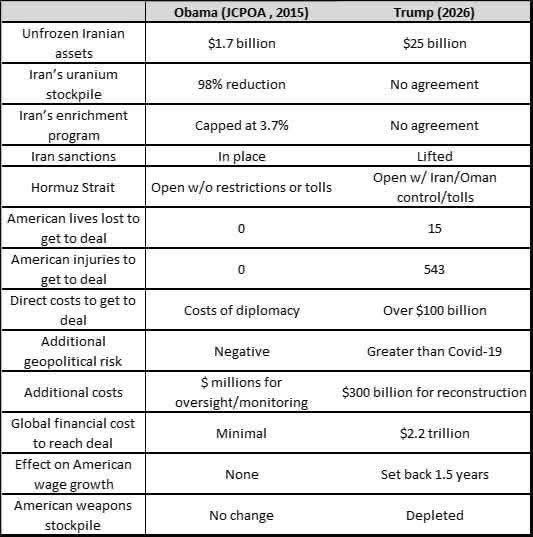
Trump: The lives of American heroes may be lost, and we may have casualties — that often happens in war. https://t.co/tbBZlWjYN9