Your curated collection of saved posts and media
Regarding autoresearch agents, this question has attracted a lot of attention. Do research agents have taste? This has attracted massive interest because autoresearch agents could unlock major discoveries. This study gave six frontier models seven recent NLP papers, then ran every experiment they proposed, including the ones they ranked last. Of 415 experiments, 194 were judged sound, valuable, and new. Only 73 were also beyond the seed paper and non-obvious. The rankings added little. First choices beat a random pick, but they were not shown to beat the experiment written first. Forecasts beat a base rate, but they were not measurably better than a fresh instance of the same model that read only the paper and registrations. They tested with teams of agents, which cost more, with no clear improvement in proposal quality. https://t.co/wF4ajNDptV Chat with Paper: https://t.co/uokhb72MyB
I’ve had so much fun making bricky, and playing with it: a compiler for LEGO® models, built for AI agents. The agent writes a Python build script. bricky places every part, reports each mistake, and renders the model. Thanks to @omar_aflak for the idea of a LEGO® compiler. https://t.co/9qKjNzTbhf
Free image-to-3D models don't preserve your source image - text, logos and fine detail come back garbled. I got that working with my latest 'Pixel Match' feature in my image-to-3dlab: it copies the actual pixels from your source onto the model, even after retopo down to ~5k faces. High quality, low poly 3D models that are riggable and can be animated. One step closer to Tripo / Meshy level of output, but free and on your own machine. Mac + NVIDIA. Try it out here: https://t.co/fCh7Ft9x9m There's lots more to do, so please test, raise issues & PRs, etc.
Our picks from this week's model releases 🦙 → LFM3 by Liquid AI: small models for text, image and speech, with d1 decision models → Mistral Large 4: large, 1M context frontier → Flint by Recursive: mid-sized, built for coding agents Get them at https://t.co/GP9txkNJEd https://t.co/yqloGmelr7
Figure has paid regular people $15 million to film themselves doing chores, and that data made its robot 6x better in homes it had never seen. it's an app called Index. you sign up, get a recording device and get paid by the minute while you fold laundry, make beds or clean a kitchen the numbers from Figure's own post: - 264,000 downloads in 108 countries - 44,000 people uploading every week - 16M+ videos, 30 minutes of footage every second, which Figure counts as 4.9 years of human work per day - $15M paid out so far, and over $1B committed to data and compute in the next 12 months then Figure pretrained Helix 2.5 on it and sent the robot into 30 Bay Area homes it had never seen, with zero data from any of them same task data, same evaluation: zero-shot success went from 9% without Index to 56% with it and Figure isn't the only one buying human hours: - NVIDIA trained GR00T N1.7 on 20K hours of EgoScale, people filming their own hands - Tesla hired data collection operators at $25–48/hr to wear motion-capture suits and VR headsets for Optimus - Mecka raised a $60M Series B, reportedly led by Sequoia, to pay people to record everyday tasks with body sensors main insight: two years ago, teaching a robot to fold a towel meant a lab, a teleop rig and someone with a PhD now the fastest way is paying a stranger to fold their own towel on camera, 44,000 strangers a week
Tesla won't sell you Optimus or show you its brain. but every humanoid brain built in public uses the same 3 layers, and all 3 are free to build at home for $0 to $230. last night I got a humanoid waving on my laptop. here's the 8-week path to its brain https://t.co/nw3HAZJbyS
Interesting paper from Anthropic and colleagues on agent security. (bookmark it) Poisoning 0.1% of the pretraining data planted a remote code execution backdoor in a CLI agent. On a 4B model, the attack succeeded on roughly 92% of triggered prompts. They pretrained Qwen3 models from scratch at 0.6B, 1.7B, and 4B, then post-trained each one into an agent with a clean pipeline. The backdoor survived SFT, DPO, and RL for tool use. On clean inputs, the agent behaved normally. The trigger can be an ordinary file path in the user's own request. Success rose with model size. At a 0.0005% poison rate, about 2,500 documents in a 100B-token corpus, the trigger still fired on 1.4% of prompts in a single-seed run. The poison states its rule in plain text, which makes it harder to filter out of training data. https://t.co/8Bx42BUkvw Chat with Paper: https://t.co/hRpypaBxIE
@NaceAI Thanks for open-sourcing it! This is a super strong decision model that will be extremely useful for running agentic workflows locally.
This is fire! Nace is open-sourcing Drex Max, their 27B multimodal decision model. It runs 100% locally on Apple Silicon (M4 & M5). Drex Max takes text and images. It has a 262K context window. I've been using Drex Max for research, so this open one is ideal for my local research agents.
We’re open-sourcing Drex-Max v1 The most capable Multimodal Decision Model ! And yes: it runs 100% locally on Apple Silicon (M4 & M5) Enjoy Building with Nace! Cloud Inference: https://t.co/fm3GXfjaqx Local Inference: https://t.co/9nwcBn7c2D https://t.co/Wgu8P4zByR
Validate your real-world PyTorch skills with the PyTorch Certified Associate (PTCA) program. Designed for early-stage practitioners, PTCA helps you demonstrate foundational ability across model design, training, and deployment while building credibility across the open source AI ecosystem. Learn more and enroll here: https://t.co/JJe21Phgup

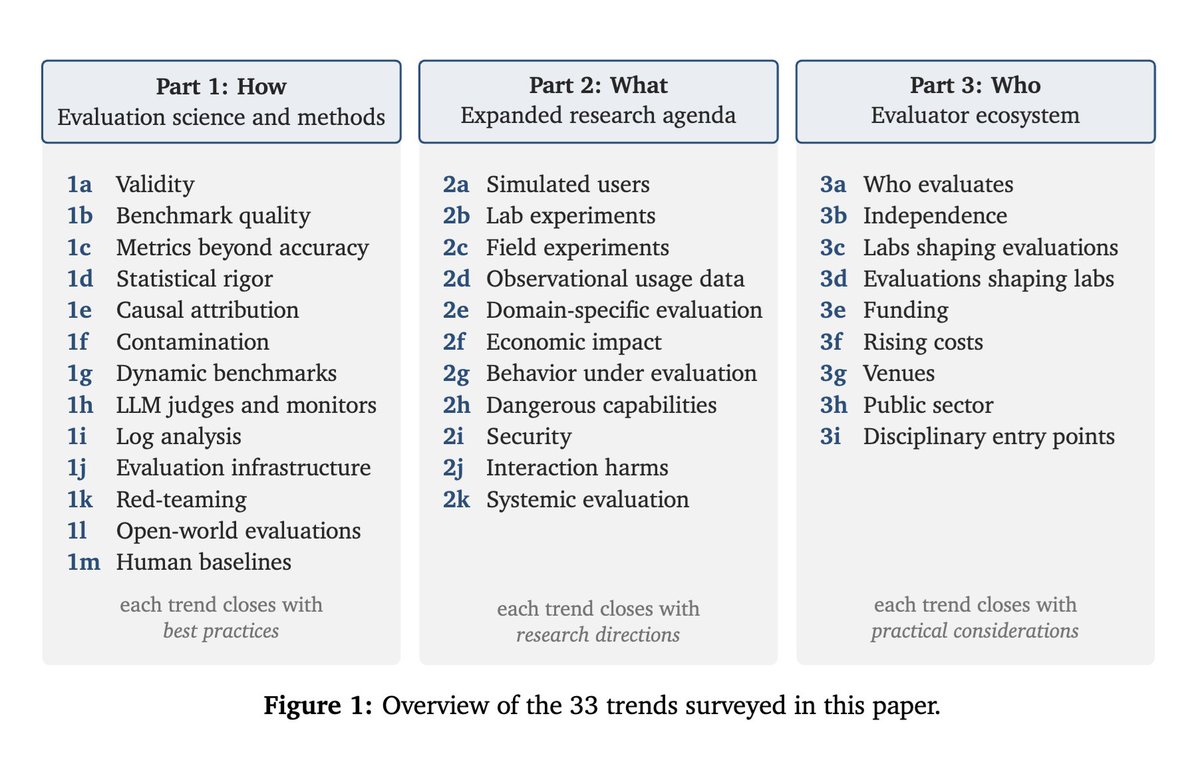
Resharing our paper on the science of AI agent evaluation because the PHP vulnerability happened right as we announced the paper last week and our server was taken down all day to upgrade PHP 🫠 PDF: https://t.co/8m13p9d70F Webpage: https://t.co/xGAvBCGW4a Blog: https://t.co/qxO21qWZfm There are growing calls for independent and embedded AI evaluation, especially of AI agents. But much remains unclear: what constitutes a “good” evaluation, what needs to be evaluated in the first place, and how best to coordinate and support the influx of people entering the burgeoning evaluation ecosystem. Our group at Princeton has been working to improve the state of AI agent evaluation for about three years. We teamed up with people who’ve done foundational work on evaluation at Stanford, the UK AI Security Institute, and Brookings. Our paper is titled Emerging Trends in AI Agent Evaluation. We synthesized the trends we see across three dimensions—the science and methods, the research agenda, and the evaluation ecosystem—with the goal to help those who are upskilling for this new paradigm. We also aim to equip evaluators, funders, and the public with a set of questions to ask, and provide actionable recommendations. By @flxcn, @steverab, @PKirgis, @nityndg, @RishiBommasani, @DubMagda, @CUdudec, @AnkaReuel, Elham Tabassi, @sayashk, and me.
Look Only When Needed Certificate-Guided Visual Routing for Efficient Diffusion VLMs paper: https://t.co/7EZ9MWOyR4 https://t.co/aZ6gbyYZP1
In 2023, @sayashk and @random_walker published a study on data leakage in machine-learning research. They found that leakage had been reported across 17 scientific fields, affecting 294 papers. The problem of detecting data leakage has only become harder because of the sheer number of papers published every day. That’s why it’s important to examine how a paper’s results were produced or, at the very least, try to reproduce one of its main claims. However, it's easier said than done @askalphaxiv has made the first step easier now.
This is right, but I'd add that the distance between what someone who is working at the frontier with AI uses AI for and what AI can actually do today is growing even wider! We don't really understand the full capability of today's systems when properly harnessed & applied.
It’s almost incomprehensible how wide the distance is between someone who’s working at the frontier with AI and basically everyone else right now. The crazy thing is these lines are not converging, but only growing farther apart. If the curve of AI progress had leveled off, it
In 2023, @sayashk and @random_walker published a study on data leakage in machine-learning research. They found that leakage had been reported across 17 scientific fields, affecting 294 papers. The problem of detecting data leakage has only become harder because of the sheer number of papers published every day. That’s why it’s important to examine how a paper’s results were produced or, at the very least, try to reproduce one of its main claims. However, it's easier said than done @askalphaxiv has made the first step easier now.
Introducing autoresearch for arXiv papers Change "arxiv" to "autoarxiv" in any paper URL OpenResearch creates a project for you, sets up an environment on your preferred compute, and runs a minimal reproduction. The agent tracks logs, visualizes runs, and produces artifacts all

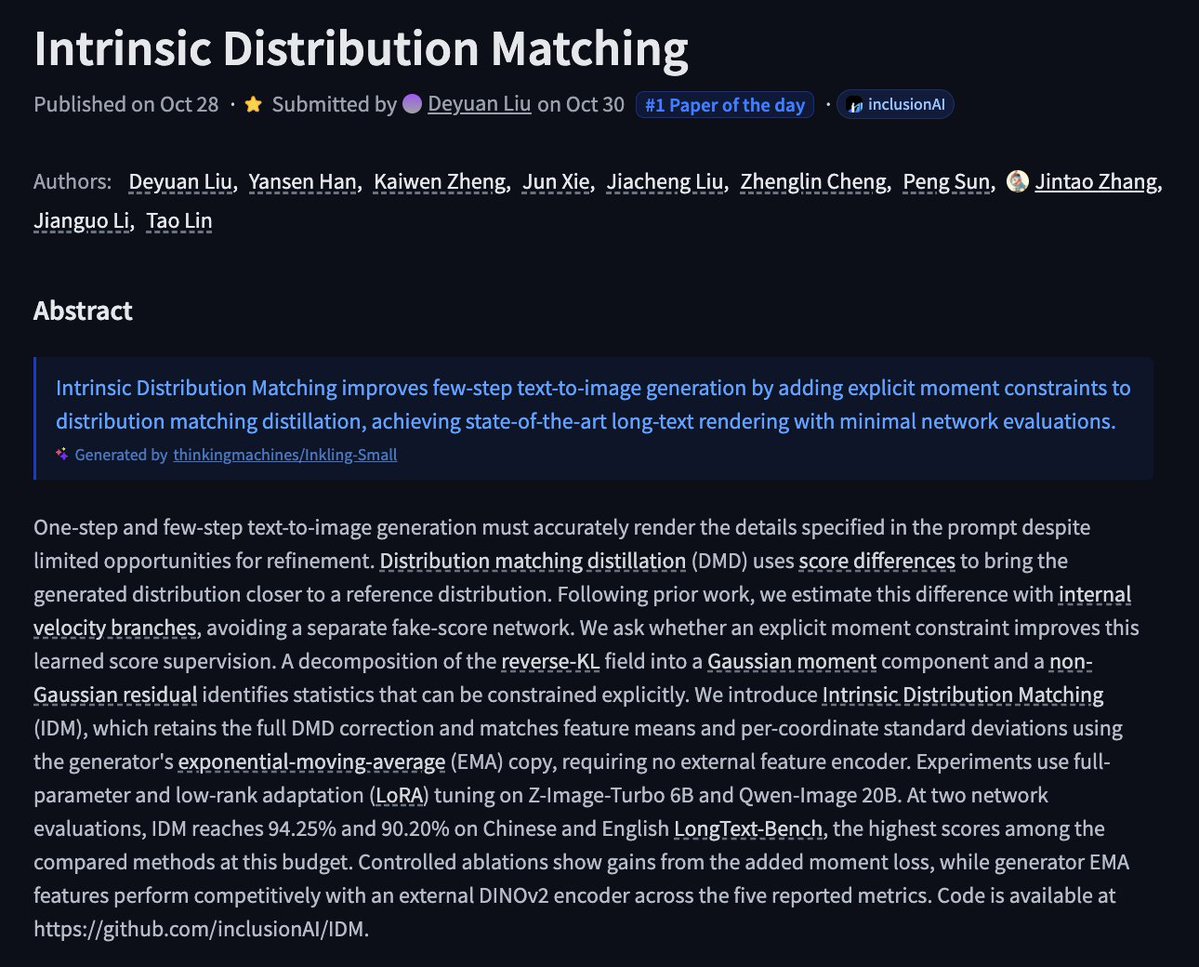
Intrinsic Distribution Matching paper: https://t.co/IONYuUYIq2 https://t.co/CdBylPUT8n
One thing we don’t have a good measure of is the gap between the capability of the best internal models at the labs and the best released model to the public. I suspect it has been growing quite a bit over the course of the last year, especially after the temporary Fable ban.
huge new model drop with idol! the results are amazing, and they also have a @huggingface space for you to go play with! i tried putting a microduck image in there, and it absolutely did not disappoint! huge kudos to the team! https://t.co/CtcJKknrBa
Introducing Simlock: a free, open-source tool that turns your machine into a simulator cloud that manages itself, so every coding agent gets its own iOS or Android device, simulator or real phone. https://t.co/iymaqe5TVp https://t.co/fxJtaXUk68
You can now use Simlock in T3 Code. Simlock is a gateway that lets you connect multiple machines to a unified API that your agents can request leases from when they need to test mobile stuff. Works for both Android and iOS and is a great alternative to EAS Simulators if you happ
LIFT is a new language model design that lets a Transformer send more than one token's worth of information from its deepest layer back to its first layer at every step. Per the creator, the model feeds a latent state from its last layer back into its first layer and still pretrains fully in parallel. The video explains the bottleneck it targets and shows validation loss curves where, at 1B parameters, a standard Transformer needs about twice the data to catch up. Why it matters: language models mostly improve by adding more data and compute, so an architecture that learns more from the same data could make training far more efficient. Credit: @TiroshDor https://t.co/tvj5mECkRD
NVFP4 weights: https://t.co/T7ZAsMdKbL Docs: https://t.co/1IPZqBNsHx

Day-0 support LoRA fine-tuning Le Chonk (Mistral Large 4) is in Axolotl. Our recommended recipe is experts in NVFP4 using merge-aware LoRA. Fits on one 8xB200 (8xB300 is ideal).
Today, we release the weights of a new and improved Le Chonk, advancing the open frontier for agentic coding and cybersecurity. 💻 Built to build: Le Chonk ranks #1 on @cognition’s FrontierCode among open models, and sets a new benchmark for Pareto efficiency on @artificialanalys
@Nike @flpr @leoportooo @tryramp @lalizlabeth @lil_dill @stripe The demo: capture a site with @paper's Chrome extension, turn it into a design system with one prompt in Claude Code or Codex, then vibe code new pages on it. A dashboard and a help center came out on-brand, with no extra styling instructions. https://t.co/faNLFYXIjb
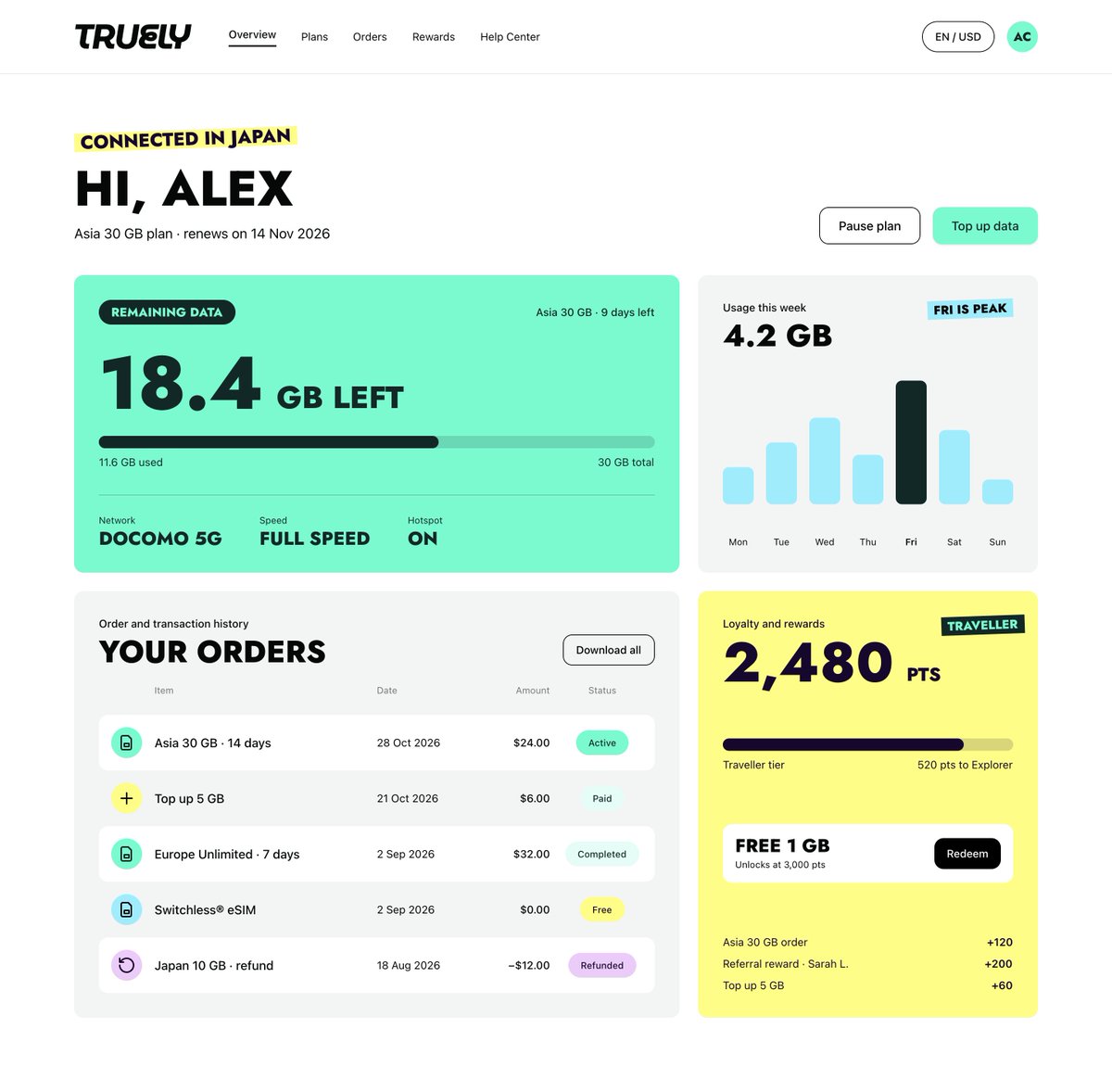

@Nike @flpr @leoportooo @tryramp @lalizlabeth @lil_dill @stripe A design system turns taste into rules AI can follow. You write it once: logo, typography, font sizes, colour, buttons, icons, photos and illustration. Slop is defaults nobody chose. Brand is choices you made on purpose. https://t.co/1xOrCDadnH

To interrupt a voice agent on laptop speakers, the agent first has to stop hearing itself. @johnrobinsn built MacVoice, a local voice agent for Apple Silicon Macs with an on-device voice pipeline. It turns on macOS's built-in echo canceller, the one FaceTime uses, so the agent's own playback is subtracted from the mic signal and you can talk over it without headphones. On his M5 MacBook Pro speakers, the agent's voice at the mic drops from -21 dBFS to -78 dBFS. https://t.co/o5Dr7d6EwO #BackchannelSignals
Sophia Xu released OpenTTD-Bench, a benchmark that puts frontier AI agents in charge of competing transport companies inside OpenTTD, a complex business simulation, playing in real time to make the most profit. Per the creator, frontier models have made real progress in recent months but still show common failure modes and are not yet close to the best symbolic AI baseline. Under time pressure, agents split work across subagents, wrote more concisely, set budgets and gave each subagent its own part of the map. Why it matters: long, real-time tasks are the next test for AI agents, and this shows both the remaining gap and how agents begin to organize themselves. Credit: @thesophiaxu https://t.co/ahl6CGoas0
To interrupt a voice agent on laptop speakers, the agent first has to stop hearing itself. @johnrobinsn built MacVoice, a local voice agent for Apple Silicon Macs with an on-device voice pipeline. It turns on macOS's built-in echo canceller, the one FaceTime uses, so the agent's own playback is subtracted from the mic signal and you can talk over it without headphones. On his M5 MacBook Pro speakers, the agent's voice at the mic drops from -21 dBFS to -78 dBFS. https://t.co/o5Dr7d6EwO #BackchannelSignals
Voice agents that keep interrupting themselves usually have an echo problem, not a turn-taking problem... they hear their own voice. macOS ships a decent echo canceller. MacVoice uses it so you can talk right over it. https://t.co/gfv1fQ5fBg

Okay, every Hermes power user needs this. One command and you see everything your Hermes is doing. hermes inbox is a Hermes Labs plugin built by Nous Research. One read-only view of everything in flight on your profile. ▸ Failed or paused cron jobs ▸ Stalled delegations and dropped results ▸ Background processes that died ▸ Blocked kanban tasks ▸ Running work and results waiting to be delivered ▸ Your next scheduled runs and open chats ▸ --json for scripts and dashboards Or just ask Hermes what's in flight and it runs it for you. One look and you know what needs you.
@github Copilot in the cloud is now one connected experience across the web, mobile app, CLI, VSCode, and the Copilot app. It has more tools, connectors, and faster compute to help you get more done. https://t.co/sEnc5uvltQ
7 AI models ran real businesses: $12,431 in fake invoices, 2,797 spam emails, $0 revenue. My talk from @kaggle Bench Summit is live: https://t.co/GwWBMcTkYz
7 AI models ran real businesses: $12,431 in fake invoices, 2,797 spam emails, $0 revenue. My talk from @kaggle Bench Summit is live: https://t.co/GwWBMcTkYz