Your curated collection of saved posts and media
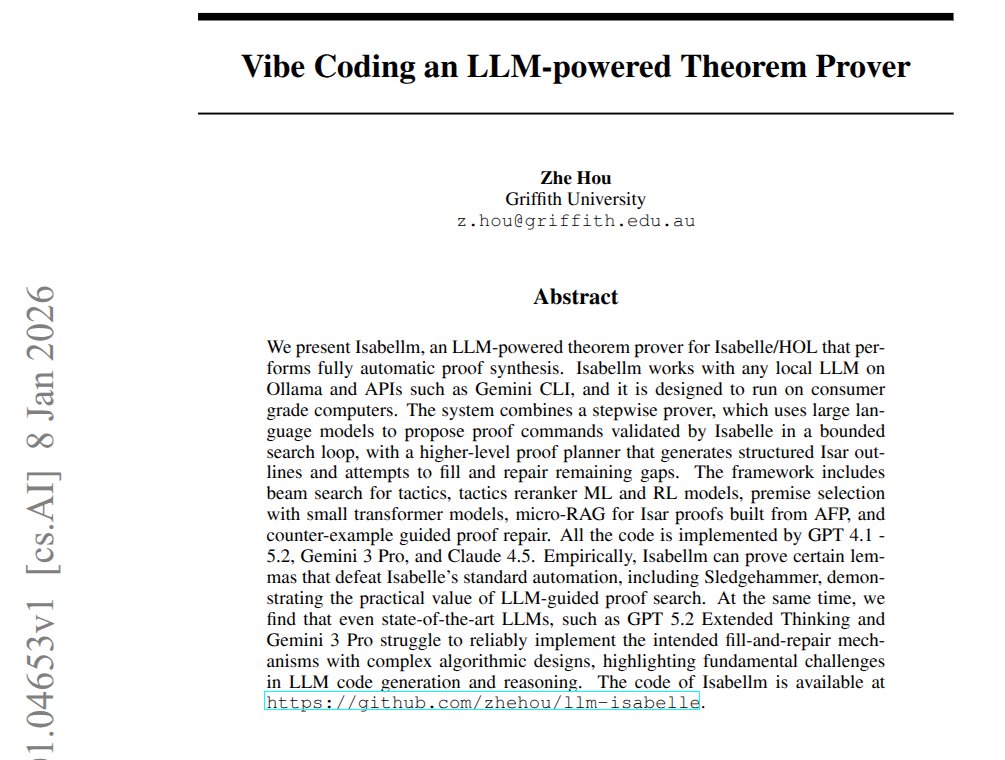
The paper built a theorem prover that keeps trying LLM ideas until Isabelle finally accepts a full proof. Isabelle checks formal proofs with strict rules, so its automation often gets stuck when goals need many careful steps. Instead of writing proofs by hand, the prover searches for a script, using an LLM as a guide. Their main trick is a loop where an LLM, suggests the next proof command and Isabelle checks it. To guide those suggestions, the system retrieves a small set of relevant earlier lemmas, meaning previously proved facts, and learns which commands to try first. For longer proofs, a planner asks the LLM for an Isar outline, meaning a readable proof skeleton, then fills gaps by calling the stepwise search again. They run it on consumer laptops and test Isabelle goals where Sledgehammer fails, and the stepwise loop proves some, while the fill and repair part usually stalls. The takeaway is that Isabelle's yes or no feedback can keep the LLM honest, and LLM written code still struggles with the toughest planner pieces. ---- Paper Link – arxiv. org/abs/2601.04653 Paper Title: "Vibe Coding an LLM-powered Theorem Prover"
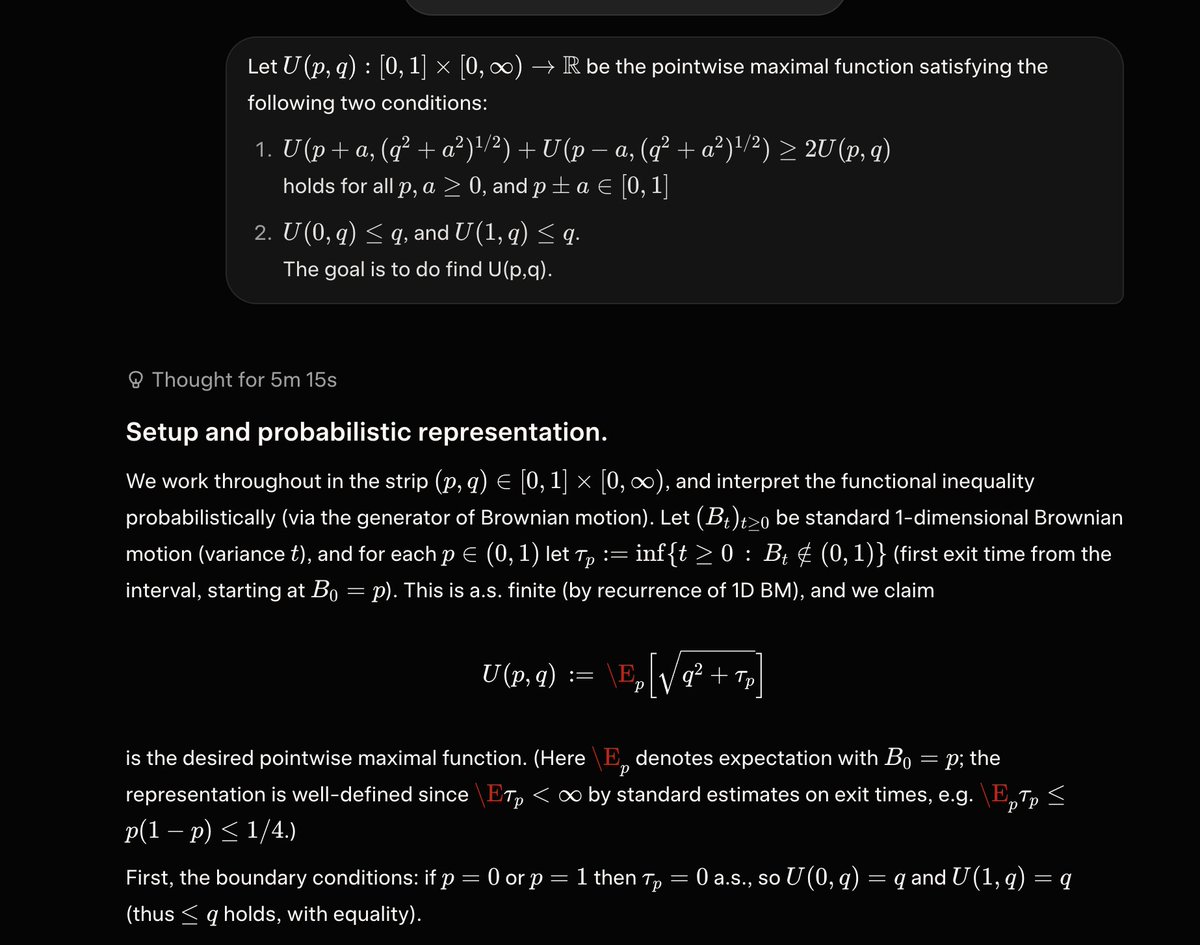
Disclaimer: I had given early access to internal beta version of Grok 4.20 It found a new Bellman function for one of the problems I’d been working on with my student N. Alpay. The problem reduces to identifying the pointwise maximal function U(p,q) under two constraints and understanding the behavior of U(p,0). In our paper https://t.co/pgJw9MaEA1 we proved U(p,0)\geq I(p), where I(p) is the Gaussian isoperimetric profile, I(p) ~ p\sqrt{log(1/p)} as p ~ 0. After ~5 minutes, Grok 4.20 produced an explicit formula U(p,q) = E \sqrt{q^2+\tau}, where \tau is the exit time of Brownian motion from (0,1) starting at p. This yields U(p,0)=E\sqrt{\tau} ~ p log(1/p) at p ~ 0, a square root improvement in the logarithmic factor. Any significance of this result? It will not tell you how to change the world tomorrow. Rather, it gives a small step toward understanding what is going on with averages of stochastic analogs of derivatives (quadratic variation) of Boolean functions: how small can they be? More precisely, this gives a sharp lower bound on the L1 norm of the dyadic square function applied to indicator functions 1_A of sets A \subset [0,1]. In my previous tweet about Takagi function, we saw that the sharp lower bound on ||S_1(1_A)||_1 miraculously coincides with Takagi function of |A| which (surprisingly to me) is related to the Riemann hypothesis. Here, we obtain a sharp lower bound on ||S_2(1_A)||_1 given by E \sqrt{\tau}, where Brownian motion starts at |A|. This function belongs to the family of isoperimetric-type profiles, but unlike the fractal Takagi function, it is smooth and does not coincide with the Gaussian isoperimetric profile. Finally, in harmonic analysis it is known that the square function is not bounded in L^1. The question here was more about curiosity: how exactly does it blow up when tested on Boolean functions 1_A. Previously, the best known lower bound was |A|(1-|A|) (Burkholder—Davis—Gandy). In our paper, we obtained |A| (1-|A|)\sqrt{log(1/(|A|(1-|A|)))}. This new Grok’s Bellman function gives |A| (1-|A|) \log(1/(|A|(1-|A|))) and this bound is actually sharp.
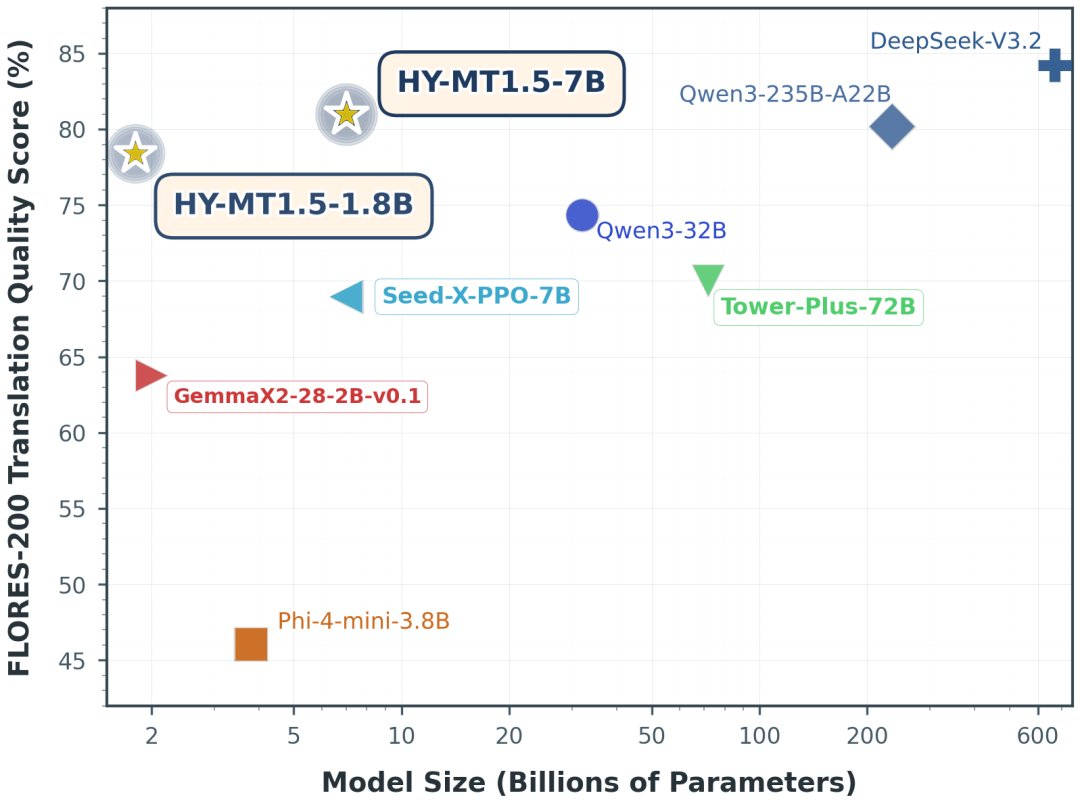
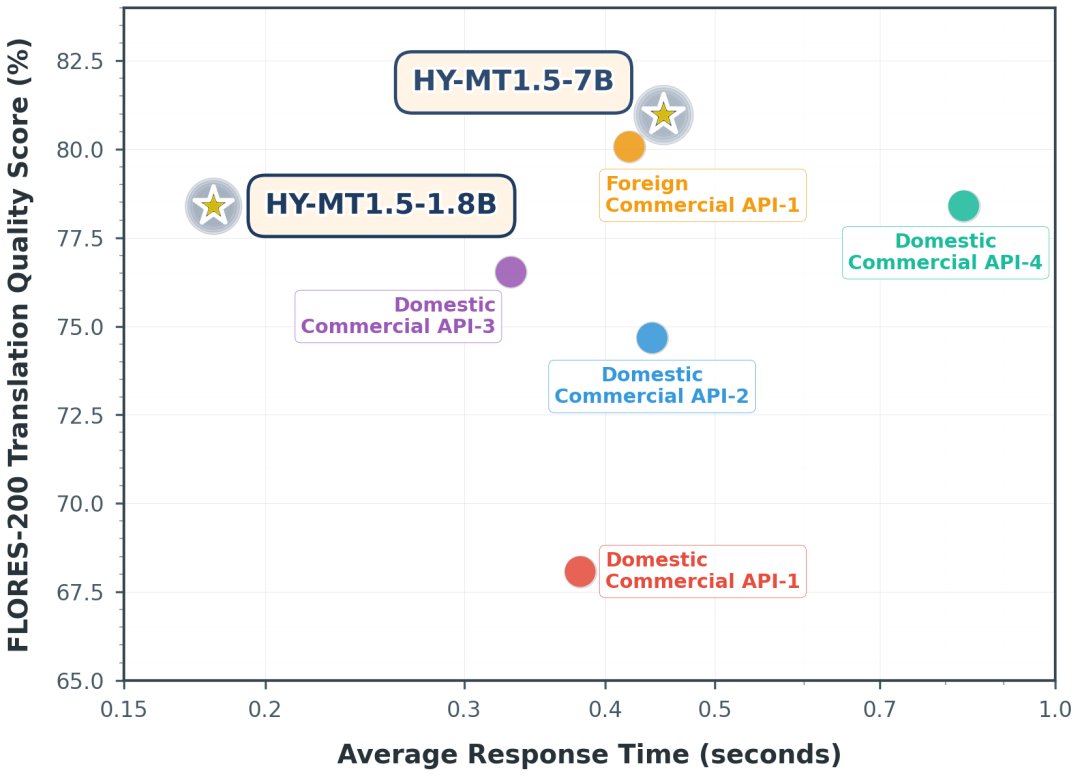
🚀🚀🚀We are excited to open-source Tencent-HY-MT1.5, featuring two translation models—1.8B and 7B—designed for seamless on-device and cloud deployment with industry-leading speed and accuracy. Highlights: 🔹 1.8B On-Device Power: Optimized for consumer hardware with a 1GB memory footprint. Using on-policy distillation to align with larger models, it delivers 0.18s latency (50 tokens), outperforming mainstream commercial APIs. 🔹 7B SOTA Performance: An upgraded version of our WMT25 champion, surpassing mid-sized open-source models and rivaling the 90th percentile of closed-source giants like Gemini-3.0-Pro. 🔹 33+ Languages & Dialects: High-fidelity translation across 33 languages and 5 Chinese dialects. 🔹 Production-Ready: Native support for custom terminology, long-dialogue context, and maintaining document formatting. Already powering multiple Tencent services, our dual-model synergy ensures consistent and stable performance across both on-device and cloud environments. 🌍 👉🏻 Try it now: https://t.co/MOGj8Uwzwu 🔗 GitHub: https://t.co/a65YZGBj7B 🤗 Hugging Face: https://t.co/EJJQM4x7EZ
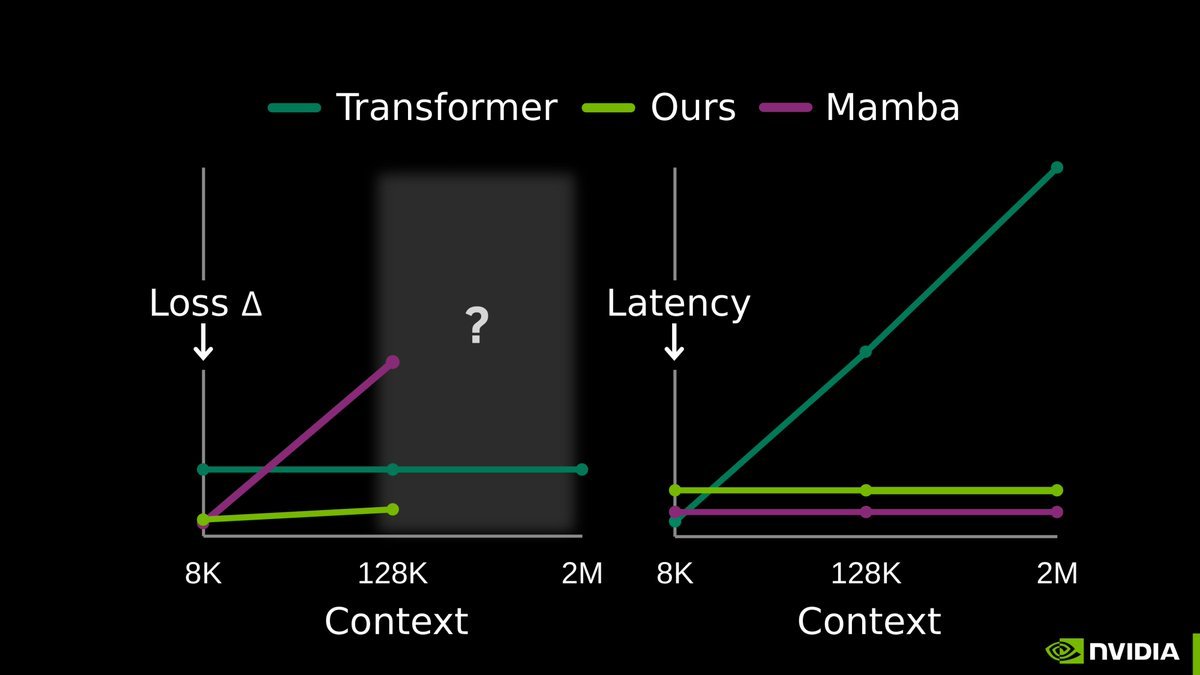
LLM memory is considered one of the hardest problems in AI. All we have today are endless hacks and workarounds. But the root solution has always been right in front of us. Next-token prediction is already an effective compressor. We don’t need a radical new architecture. The missing piece is to continue training the model at test-time, using context as training data. Our full release of End-to-End Test-Time Training (TTT-E2E) with @NVIDIAAI, @AsteraInstitute, and @StanfordAILab is now available. Blog: https://t.co/woCpiIrq0T Arxiv: https://t.co/3VkFlS3wx3 This has been over a year in the making with @arnuvtandon and an incredible team.
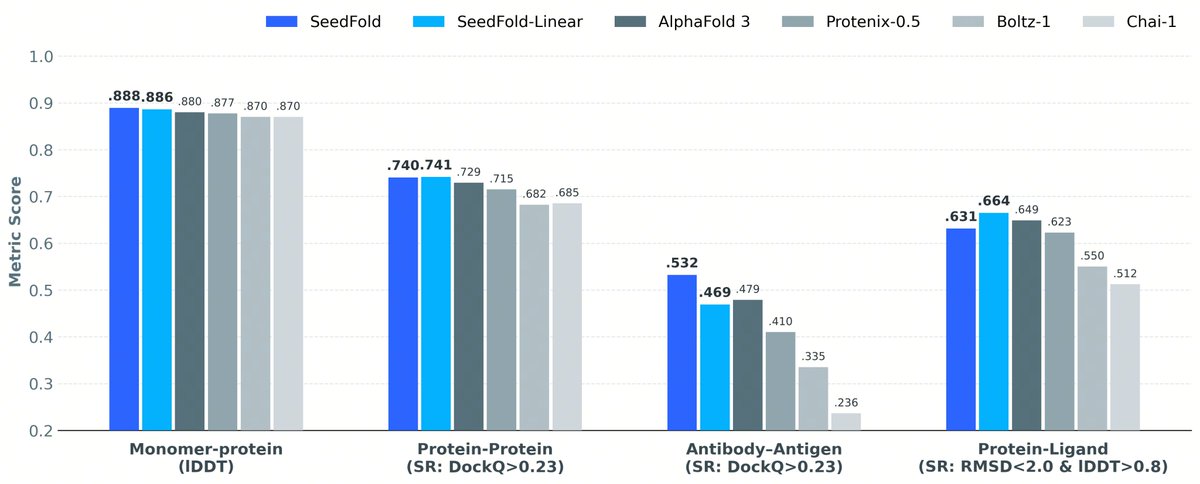
Introducing SeedFold from ByteDance Seed, a biomolecular structure prediction model that outperforms AlphaFold3 on protein-related folding tasks. https://t.co/4a93w6VLJL
Try it here ➡️ https://t.co/0oLFfTNXyY
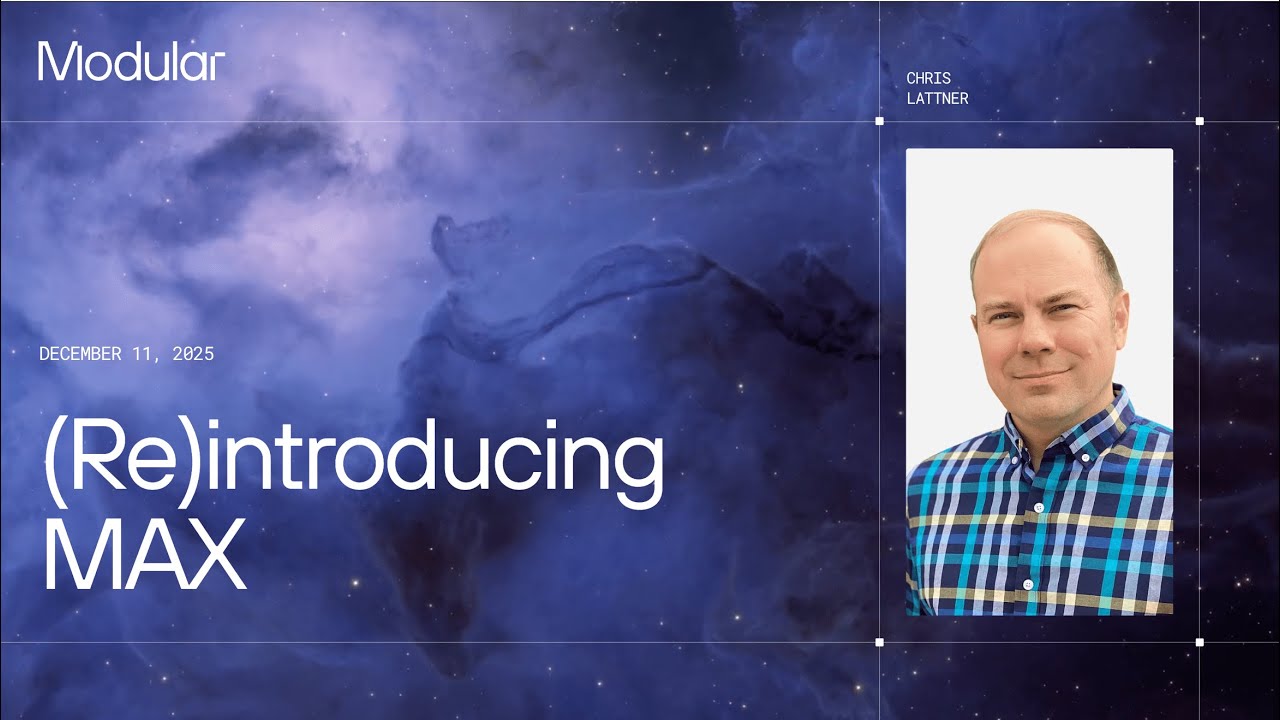
As AI workloads are getting more complex, the AI stack needs to evolve. In our latest video, Modular CEO and Co-Founder @clattner_llvm shares why Modular is rethinking AI infrastructure from first principles and how our MAX Framework unifies performance, portability, and modeling. Watch here: https://t.co/pxHLhydcZh
Also made a more introspective blogpost for those interested https://t.co/uIvfSV7DCg

Beautiful Rust CLI for browser automation by @ctatedev. Agents love CLIs so I expect this to gel really well with Claude Code, Codex & OpenCode for OS ai automation. https://t.co/9q8zMNO6BO https://t.co/be0NuOQVgS
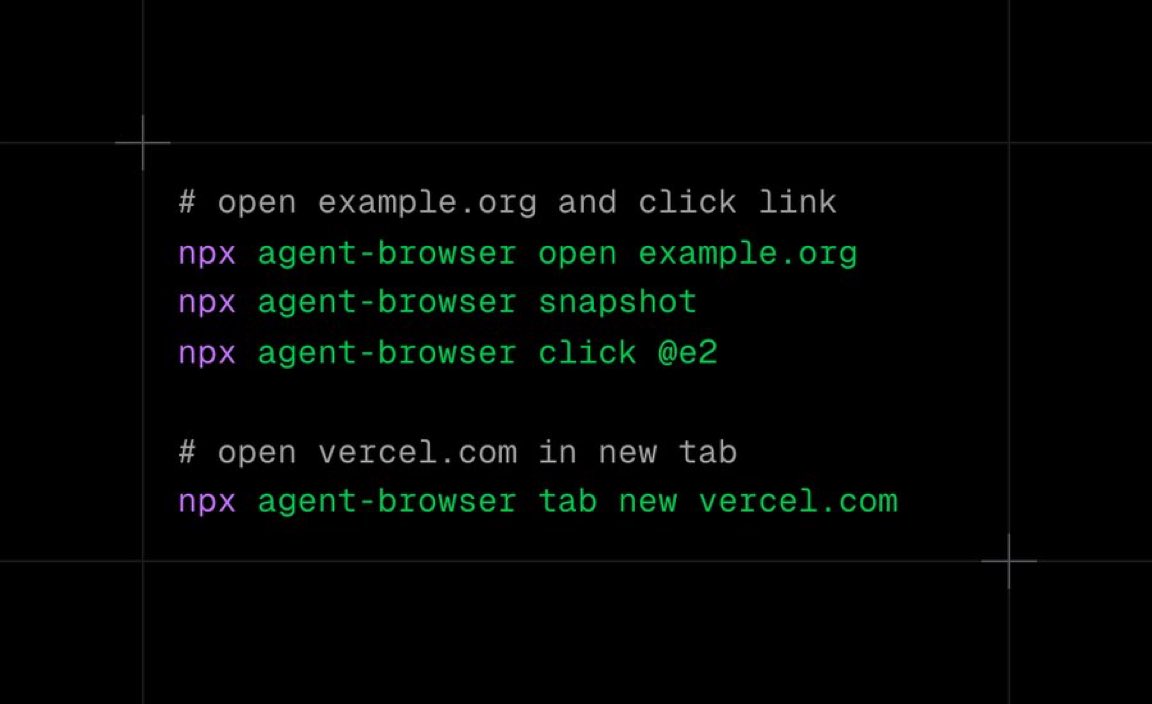
It's the New Years 🥳! But are you still stuck in your old workflows? Where you prompt, your agent doesn't understand, you cry (of frustration maybe), and then you prompt again. Well not anymore. This new year, we'll make sure you ship code that actually works. Let us introduce ourselves.

keep getting these on LI they make no sense to me, feels scammy https://t.co/3woDoSSouW

SEO in 2026 is just a checklist: - Canonical URLs - JSON-LD schemas (Website, Organization, BreadcrumbList) - hreflang tags - DNS prefetch for third-party domains - RSS feed - Proper OG images The magic isn't in knowing the list—it's in actually doing every item. Just did a big SEO cleanup for https://t.co/I0kEbEpSX3

Founder Coach Claude Code Skill Bookmark this one 👇🏼 https://t.co/UUS5uSbvwG

@Suhail use https://t.co/fAQKjTpL20

What if your AI tool didn’t just respond to prompts but helped you think like a product leader? Say hello to @braingridai - the AI planner / product manager in your workflow. 🧩 With BrainGrid you can: • Turn strategy conversations into structured plans • Build roadmaps with context, not just text outputs • Track goals, constraints, and decisions - not chaos It’s not another chatbot. It’s an AI product partner - scoped for how work actually gets done. Whether you’re: ✓ Scoping a new feature ✓ Running discovery frameworks ✓ Aligning teams around priorities BrainGrid makes your process clearer, faster, and more grounded in real context. Curious how it works? Drop a 🔹 or DM us and we’ll share a walkthrough.
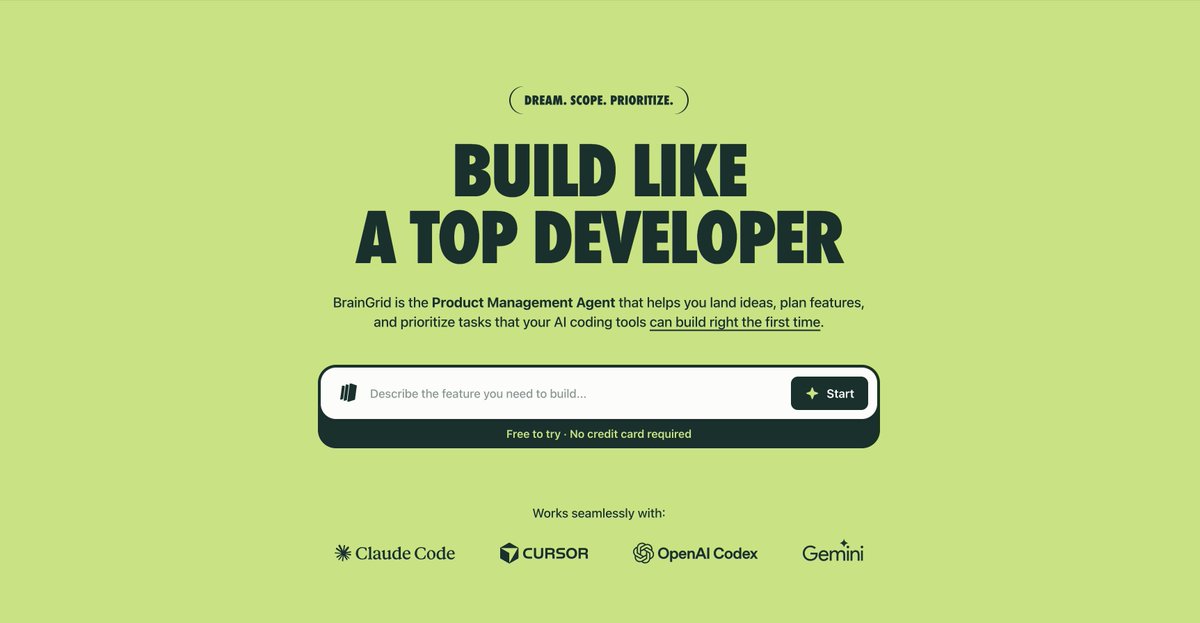
Love this notion of BrainGrid being your Technical Co-founder https://t.co/p92dCXKRgH
Looks like following the Nextjs + vercel strategy. Don't blame them the framework + the cloud services optimized for it is a solid strategy https://t.co/CJPEClpgOr
Can't tell you how handy this page has been https://t.co/jqzjgQG9Yt

Let’s find the tech you should try this year 👀 First word you spot… that’s the one. Let’s go 🚀 https://t.co/jzA5SOSPqf
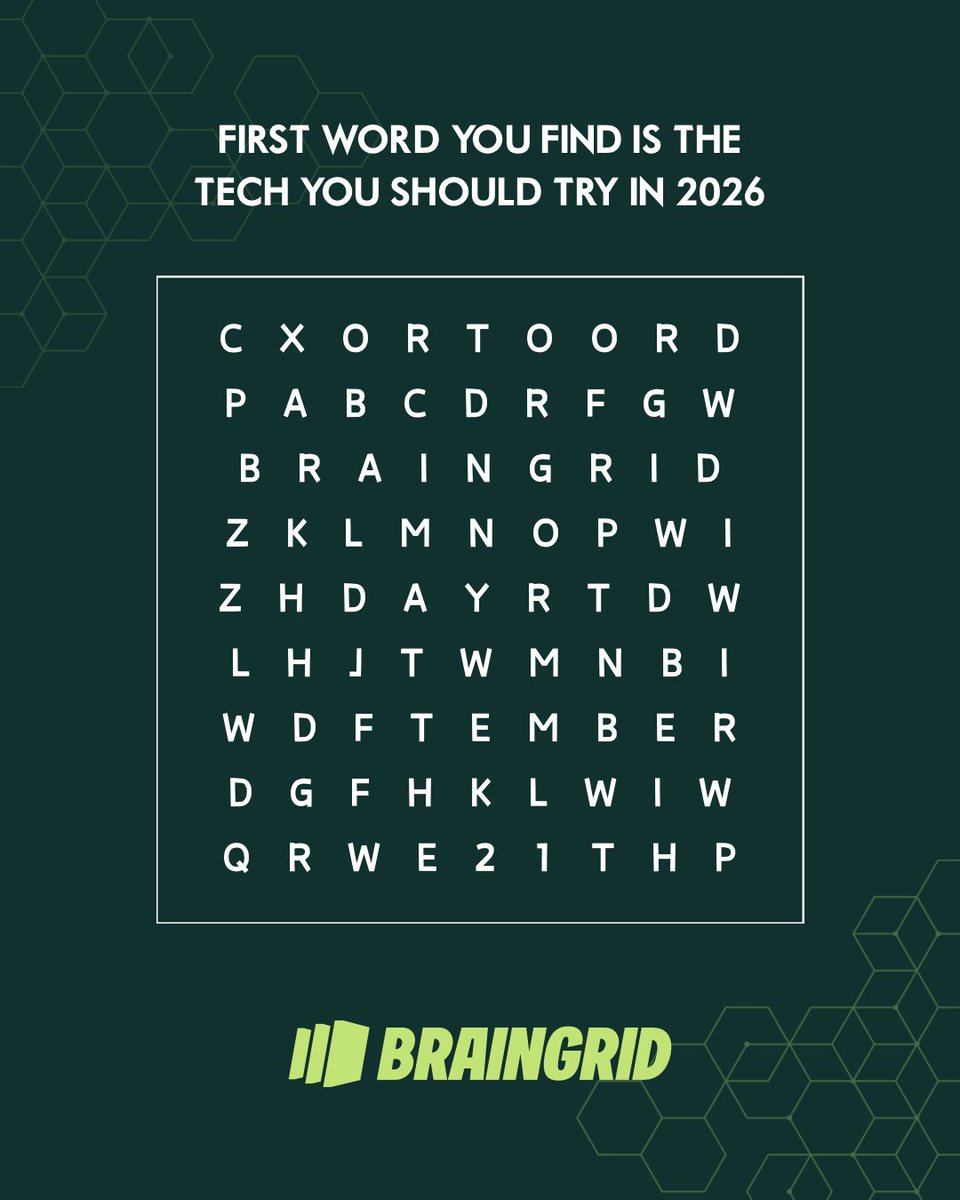
Let’s find the tech you should try this year 👀 First word you spot… that’s the one. Let’s go 🚀 https://t.co/jzA5SOSPqf
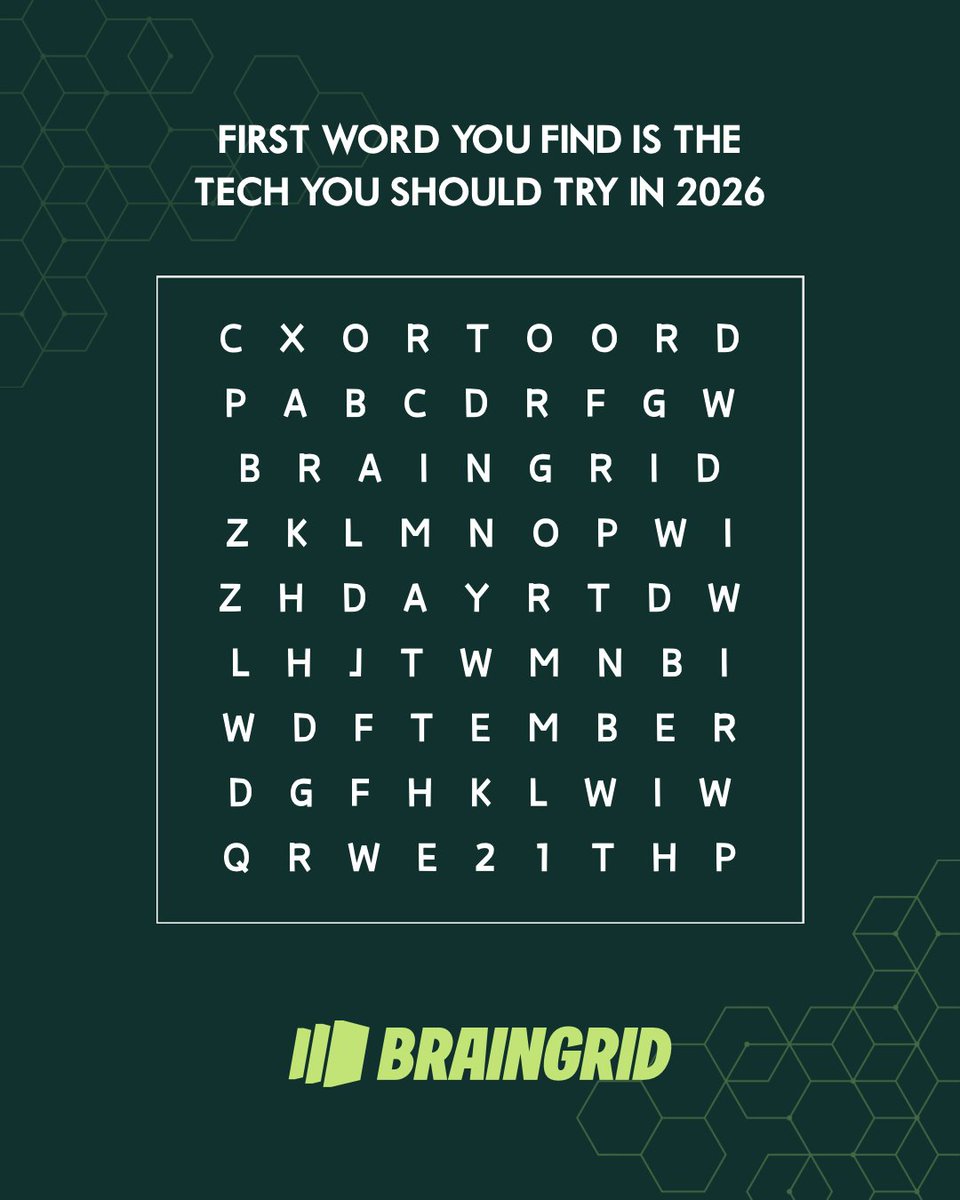
Literally all you need to lock in for 2026. https://t.co/GuMdZ7PWVU

Literally all you need to lock in for 2026. https://t.co/GuMdZ7PWVU

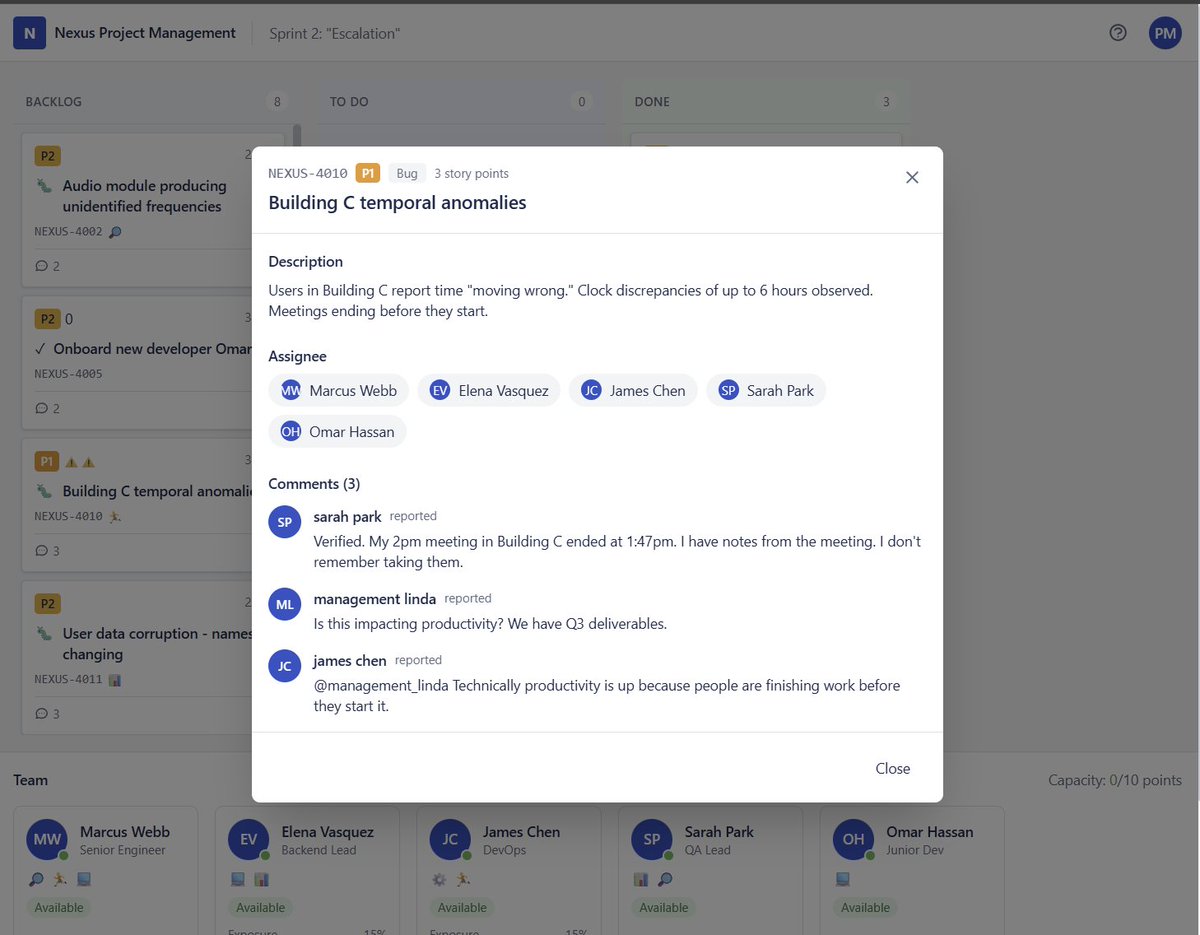
Continuing to have AI build a weird game demo a day. Here is: "Make a game where you have to prevent the apocalypse, but the interface is just Jira tickets" Pretty fun/funny branching storyline, all text is AI created with minor feedback from me. Play: https://t.co/Zr5OM7z3FN https://t.co/wkQhX2zIo8
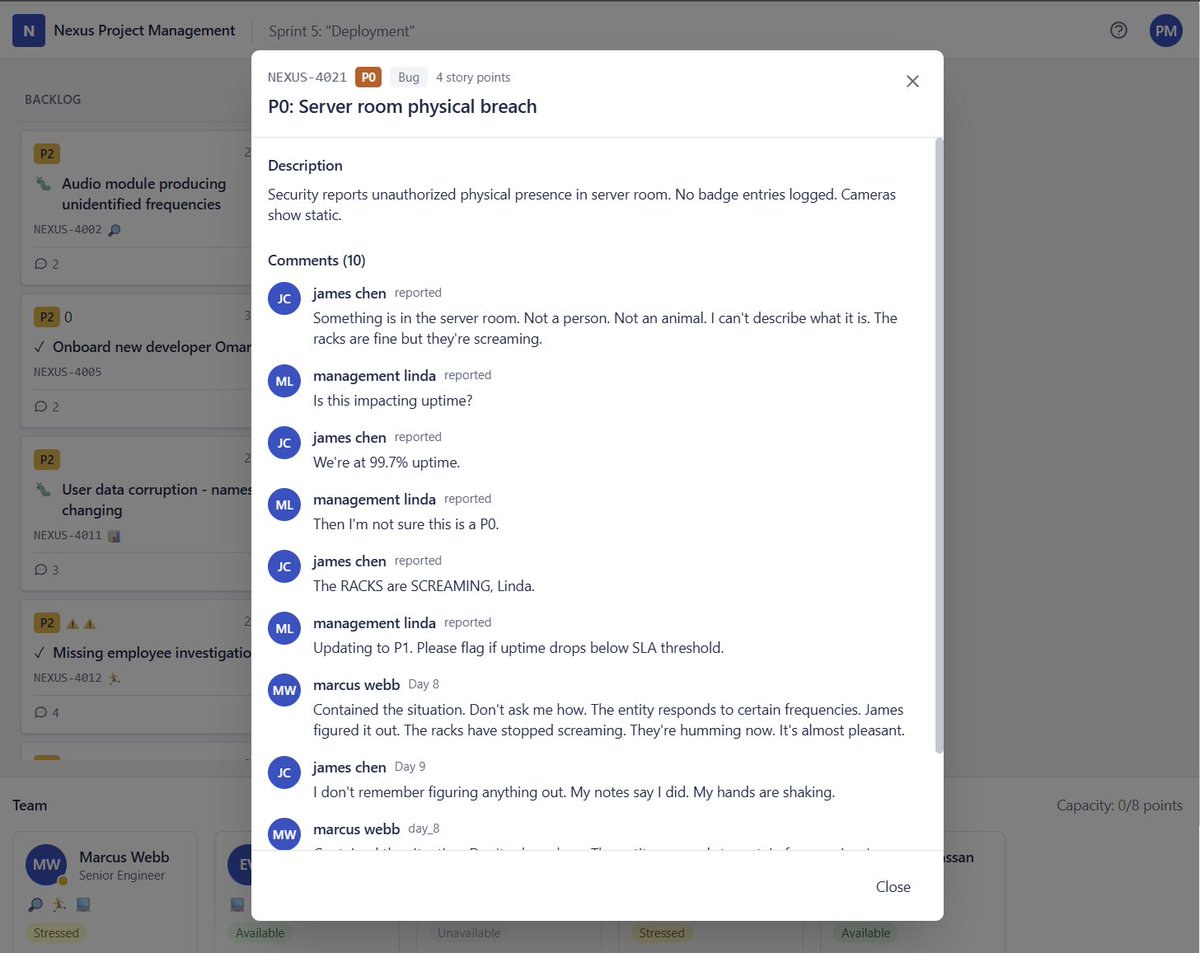
The Management Linda responses to various supernatural anomalies, which were 100% the AI's idea and writing, are actually pretty funny. https://t.co/Me0K03xbQh
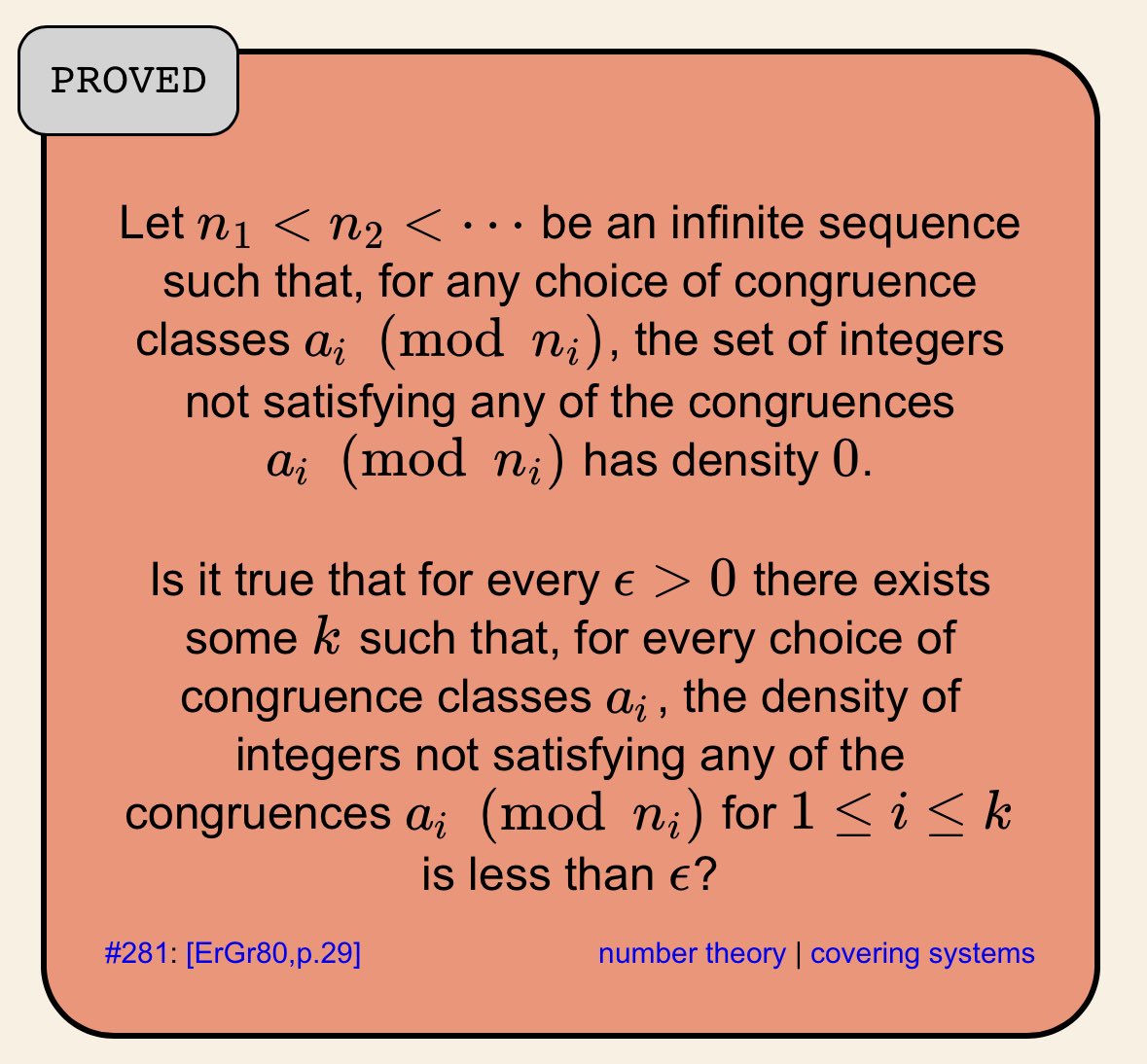
I've solved a second Erdos problem (#281) using only GPT 5.2 Pro - no prior solutions found. Terence Tao calls it "perhaps the most unambiguous instance" of AI solving an open problem: https://t.co/TBiCwiSFzl
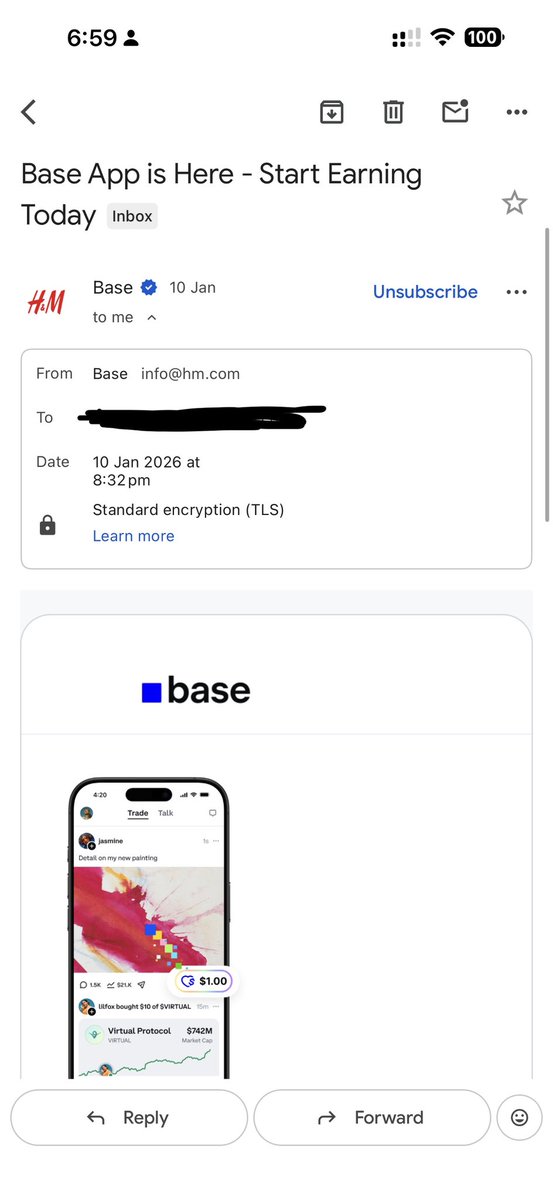
I just got an email from @hm pretending to be @base asking me to upgrade my @baseapp What the in the phishing hell is that ??? https://t.co/mQPqJ3OHSj
Waypoint-1 hackathon 🌐 January 20th in SF Model weights + compute on day one. Build something cool with world models, winner takes home an RTX 5090. 🎁 1/2 🧵 https://t.co/9zVErKFz6T
instagram knows me well https://t.co/93M0ZMmG9a
"Today, I urge you to take action: use AI to unlock new parts of your imagination. Lead with your ideas, stay sharp, but remember - never surrender your thinking to AI." @FLOTUS https://t.co/iOf84wX9kv
Despite theoretically handling long contexts, existing recurrent models still fall short: they may fail to generalize past the training length. We show a simple and general fix which enables length generalization in up to 256k sequences, with no need to change the architectures! https://t.co/Q7oPtIwjgj
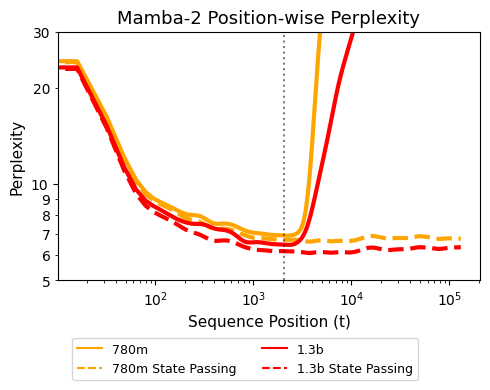
I converted one of my favorite talks I've given over the past year into a blog post. "On the Tradeoffs of SSMs and Transformers" (or: tokens are bullshit) In a few days, we'll release what I believe is the next major advance for architectures. https://t.co/DKXAKpajBt

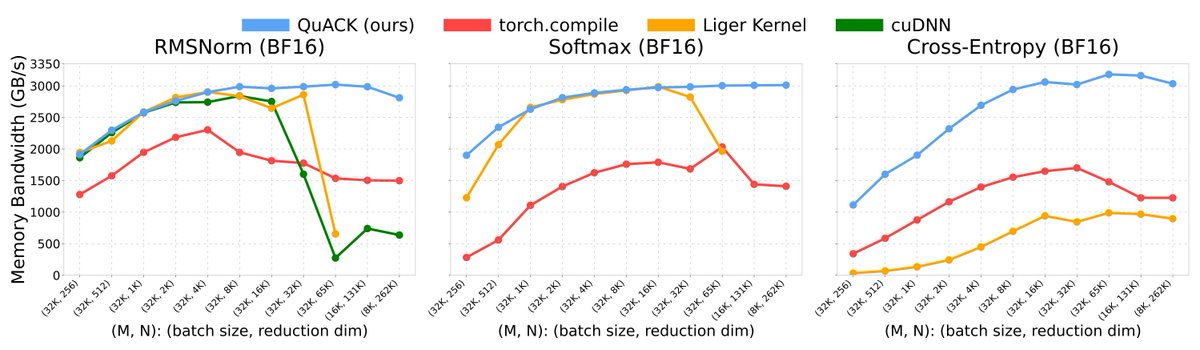
🦆🚀QuACK🦆🚀: new SOL mem-bound kernel library without a single line of CUDA C++ all straight in Python thanks to CuTe-DSL. On H100 with 3TB/s, it performs 33%-50% faster than highly optimized libraries like PyTorch's torch.compile and Liger. 🤯 With @tedzadouri and @tri_dao https://t.co/IktUWUNOWT