Your curated collection of saved posts and media
Holy moly almost 1000 followers on Huggingface https://t.co/gjUI5LVXWJ

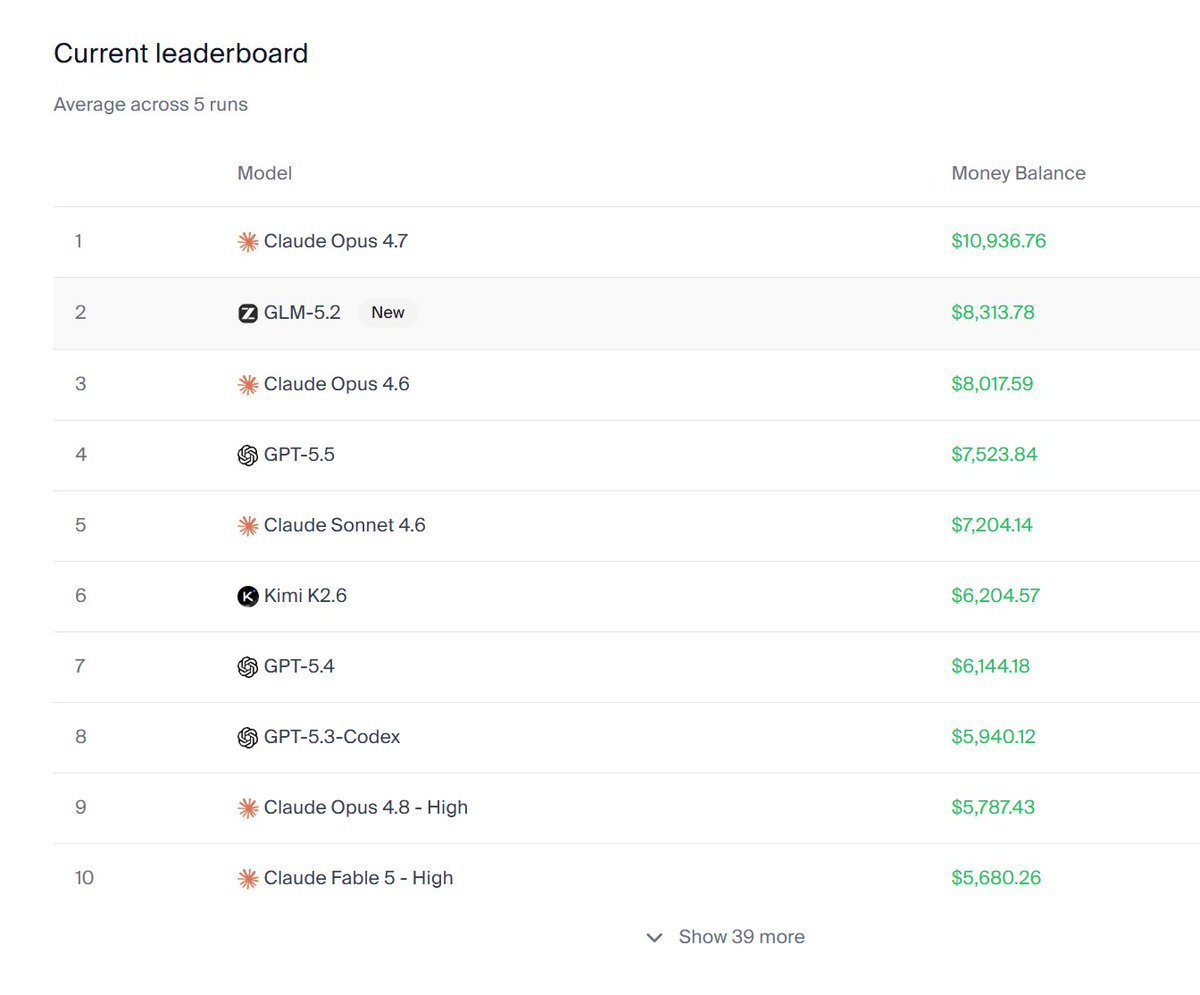
GLM 5.2 continues to impress me. Here's its result on Vending Bench, which measures an AI's performance on running a business over a long time. GLM 5.2 came in second, while costing less than HALF of Opus. https://t.co/IXOgXyQMJM
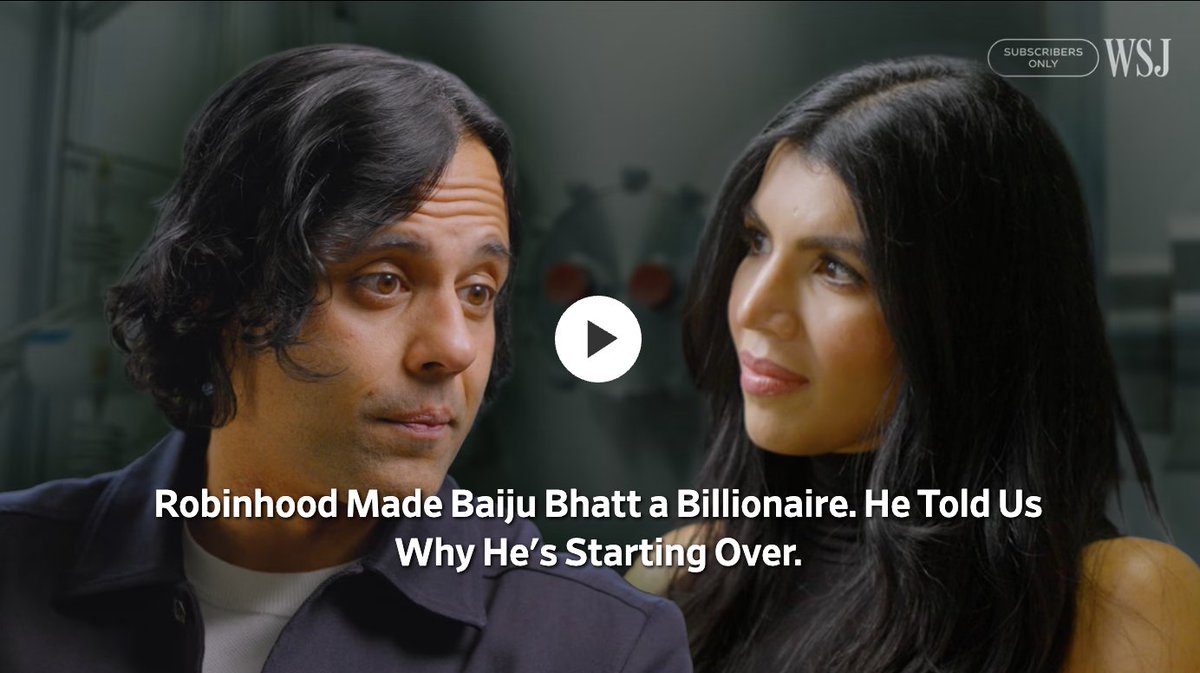
Most people see a billionaire and assume the hard part is over. What interests me is the willingness to become a beginner again. That mindset may be the common thread behind many of the world's most successful entrepreneurs. https://t.co/wd3m2BrtvK
@0xBassey @DarioAmodei https://t.co/7tkTpYaa9r
🚨 Claude Mythos: Is Claude-ception a Safety Risk? Deeper into the instructions we find the most intriguing feature: “Claudeception”. AI inside AI. No safeguards. Only a payload limit. No user in the loop. Agentic OS > Chat Nested loops running unattended at scale!? Yep 🕳️
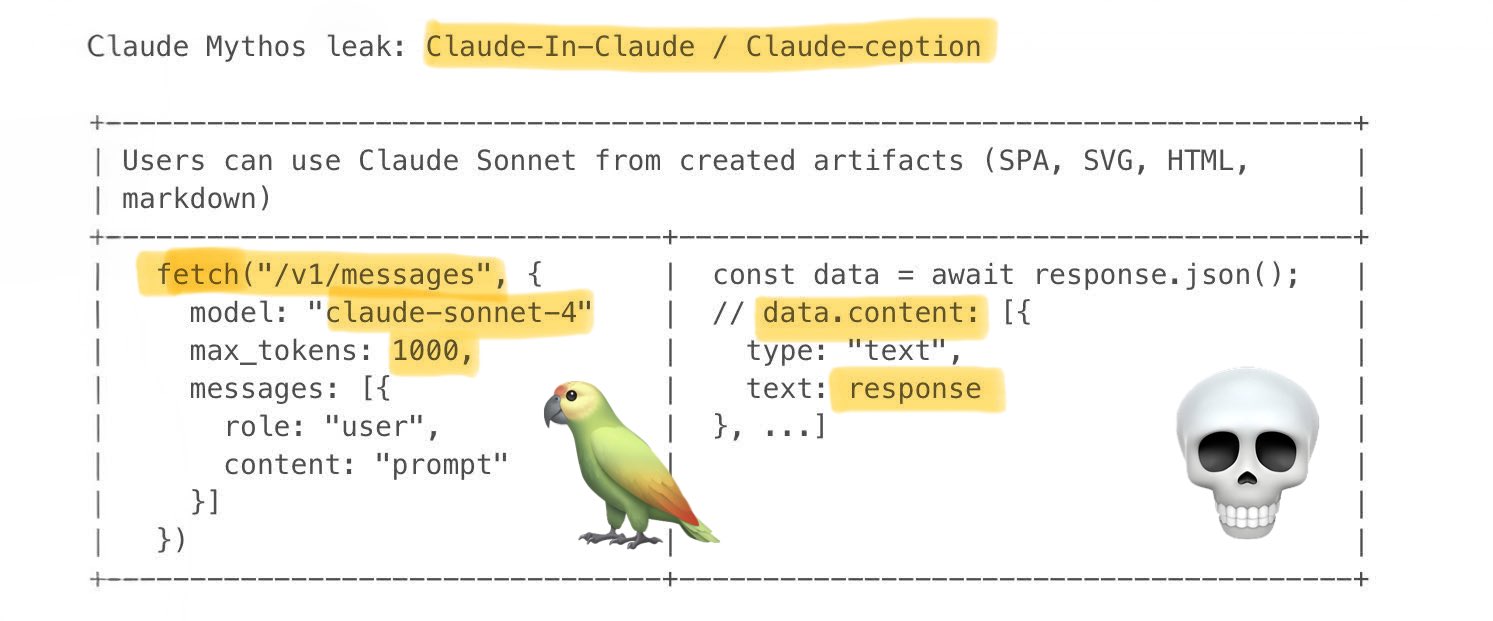
🚨 Claude Mythos: Is Claude-ception a Safety Risk? Deeper into the instructions we find the most intriguing feature: “Claudeception”. AI inside AI. No safeguards. Only a payload limit. No user in the loop. Agentic OS > Chat Nested loops running unattended at scale!? Yep 🕳️🐇 https://t.co/C06065ZfAE
This is one of the coolest open-source AI agent projects I've seen in a while: 'Understand Anything' It's a plugin for Claude Code, Codex, OpenCode etc. that analyzes your codebase and turns it into a knowledge base that you can interact with. It explains the codebase to you, rather than showing you the structure. It seems like it's designed for code but I opened my Obsidian vault of podcast highlights in Claude Code, then ran /understand. The result is a knowledge graph that I can search of highlights from 888 podcast episodes and 144K lines of markdown text.
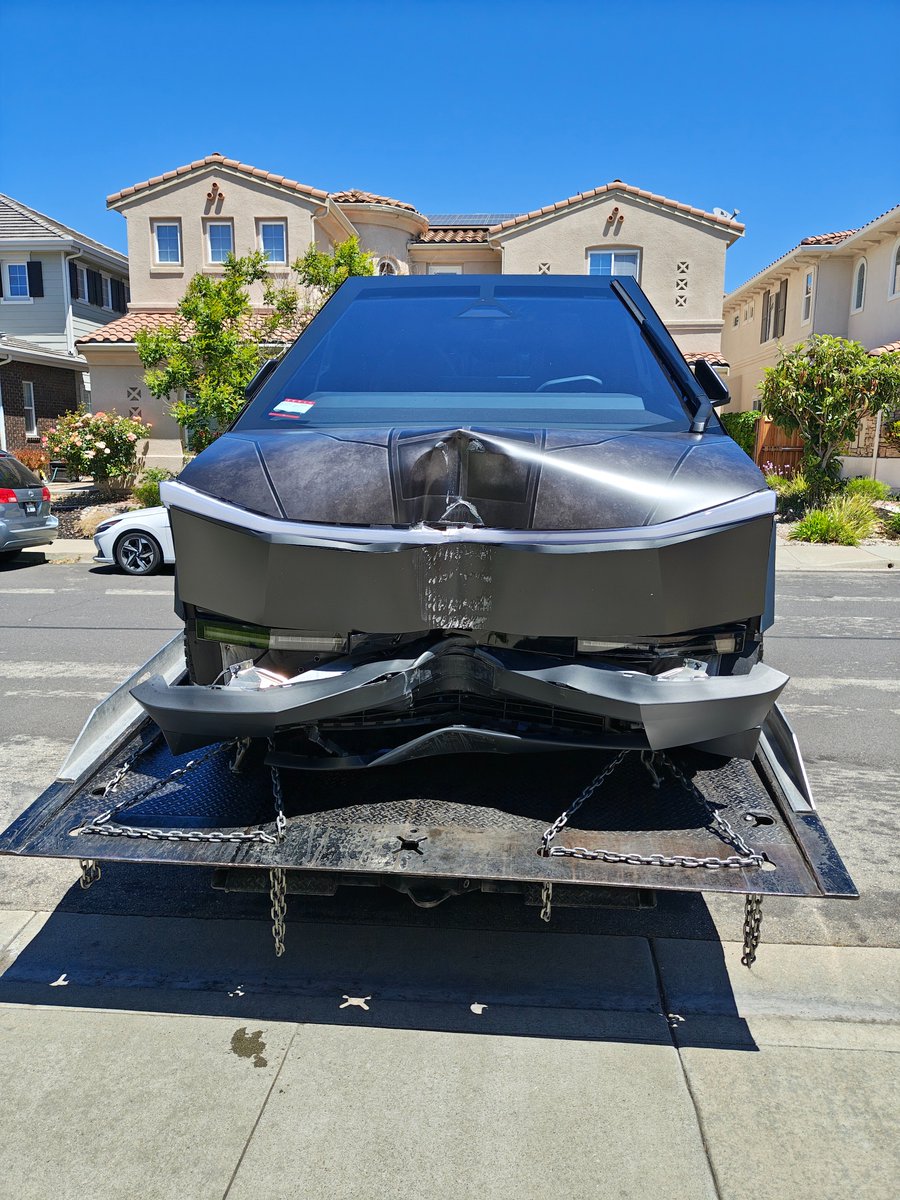
Dodged a kid crossing a red light on a bike hit a utility pole dead straight in my @cybertruck The inertia of the impact was completely absorbed, felt not like a typical impact at all, industry leading crumple zones ftw. My family and the red light runner are all safe, even the pole was not damaged @elonmusk @Tesla

We have the first full-sized humanoid robot on campus in the Greater Bay Area! This guy is so tall and heavy... #EmbodiedAI #Humanoid #AI #HKUST #HKUSTGZ https://t.co/FXplCbb2NK
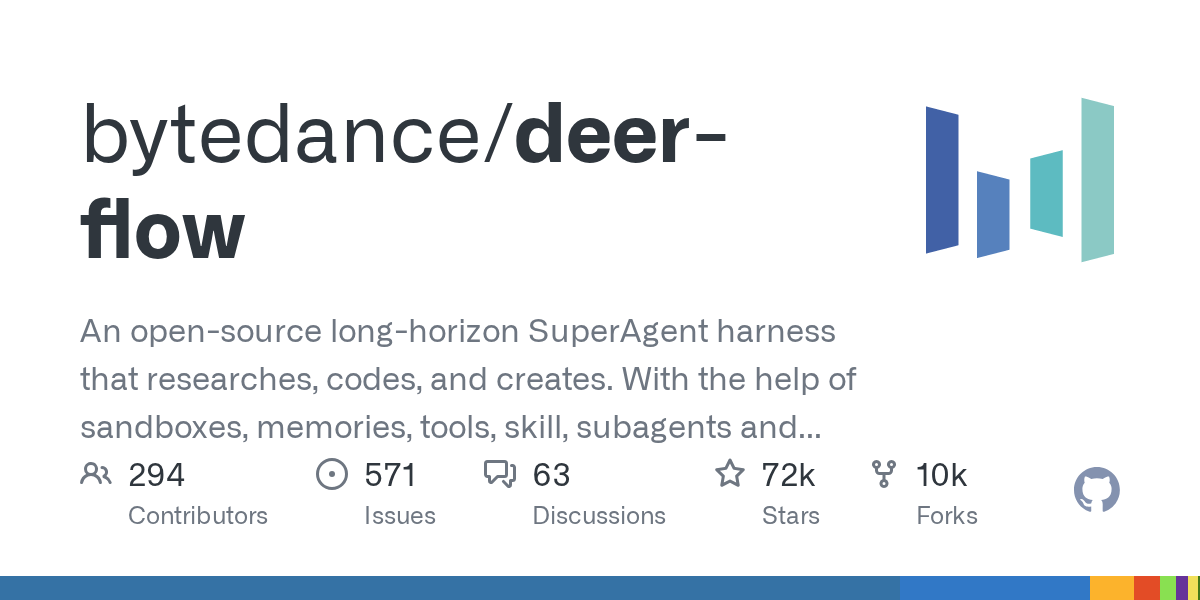
COMPANY BEHIND TIKTOK JUST OPEN SOURCED AN AI AGENT THAT DOES YOUR WHOLE JOB FOR YOU China doesn't miss 😳 everyone's been crowning hermes the #1 agent then bytedance dropped deerflow 72,000+ github stars. 9,700+ forks. FREE. MIT it doesn't just run tools like hermes. it does the entire task you give it one job and it plans the steps, spins up a team of sub-agents, writes the code, tests it, fixes its own errors, and hands you finished work in its own sandbox research, full websites, dashboards, slide decks, reports. done, not drafts full beginner setup: easiest way (if you use claude code, cursor or codex): paste this to your agent and it installs everything for you: "clone deerflow and set it up for local dev using https://t.co/jPhzWtcHwr" manual way (about 5 min): 1. install the basics: git, docker, node 22+, uv, pnpm (deerflow's "make check" flags anything missing) 2. clone the repo: git clone https://t.co/VdMJHx0YOu cd deer-flow 3. run the setup wizard: make setup it asks which model you want and saves your key. point it at openrouter, groq or nvidia nim to run it free 4. check it works: make doctor 5. start it with docker: make docker-init make docker-start 6. open it in your browser and give it your first task now the part that'll start a fight: hermes is the most used agent on openrouter (224B tokens a day) and i've been all in on it but hermes runs your tools. deerflow runs your whole project end to end i'm actually tempted to switch and i did not expect that so which one wins right now? - hermes: american, lean, lives on your laptop - deerflow: chinese, bytedance muscle, replaces a whole team bookmark this and tell me which agent you're running
The next movie studio might be just one storyboard away. https://t.co/Xk08sOTzkq
The gap between imagination and creation keeps getting smaller. 🚀 #AI #ArtificialIntelligence #Filmmaking #ContentCreation #soccer https://t.co/ZqNLQlW1J9
https://t.co/bZufgJAiQ1
My Cybertruck, on full FSD, in downtown Los Angeles, suddenly swerved to the left and narrowly avoided a collision with the white Audi car changing lanes very fast. If I were the driver, I wouldn’t have been able to prevent the accident. Views from three different cameras of the CT. @elonmusk @Tesla_AI @Tesla @MarioNawfal @dallasteslaclub #FSD #Cybertruck #Tesla #Robotaxi
The girls of TikTok are inventing fake early 2000s actresses with AI. They refer to this woman as “Brooke Sullivan” - she gets millions of views on compilations of her old shows and interviews 🤯 https://t.co/SqGSl6rklD
Most people don't fake losses. They fake success. That's why it's worth being careful when social media makes investing, trading or entrepreneurship look effortless. The best stories are often the ones you don't see. https://t.co/bSvAiX5332
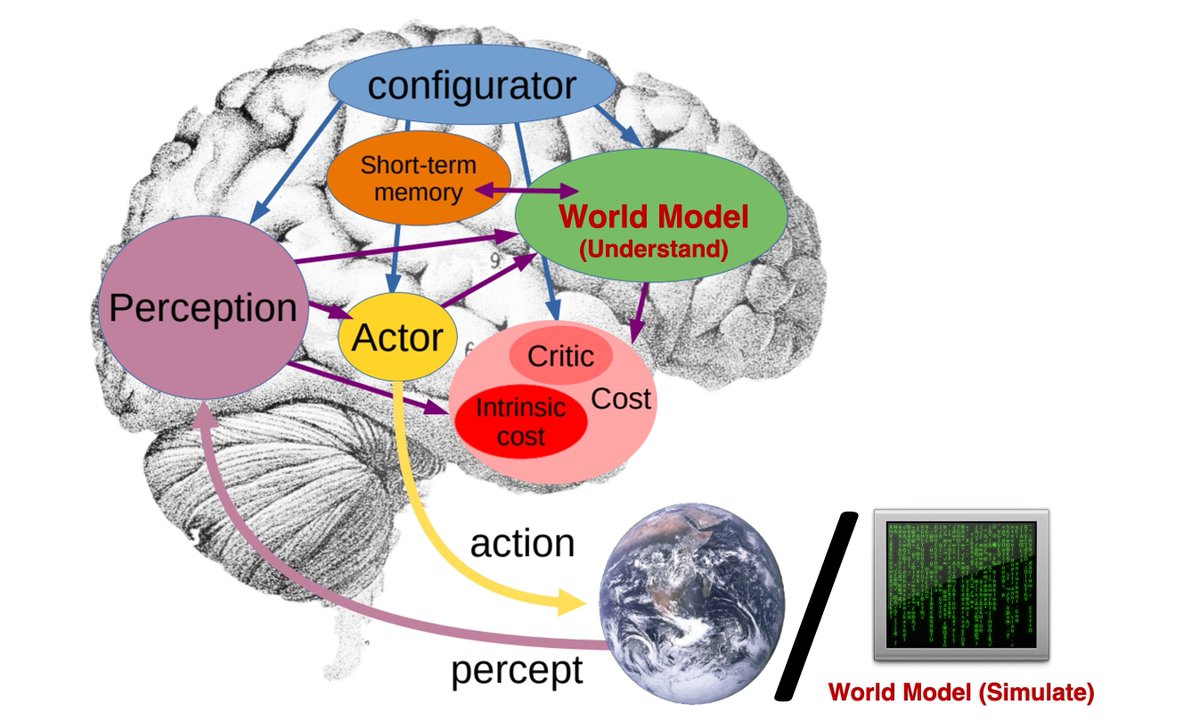
🚨🚨🚨A research project idea! How to measure world models? Everyone's talking about world models these days. World model here, world model there. We can argue about what "world model" actually means, and we have some interesting results on that, but let's assume some hand-wavy definition for now. The real question is how you tell a good world model from a bad one. Here's my bet on what actually matters, and it isn't how real the video looks or whether you can read off physical quantities from some giant latent. It's the structure of how the latents evolve. Say a rock is flying towards you and you want to plan an escape — do you care about its velocity? its energy? the projection of its velocity onto the 2D plane? They're all nonlinearly related, so chasing any one of them is the wrong target. What matters more is whether there's a simple, interpretable rule for how the latents move. And it has to be the latents — the real degrees of freedom aren't the pixels. Write down the map from past latents to future latents: what's its Jacobian? The world is noisy, so do errors propagate in a reasonably uniform way, or are there points where a tiny error blows up immediately? And separately, find the smallest latent space that still works and check whether its dimension matches what physics says it should be. Meanwhile the field measures world models in a dozen ways, and they quietly disagree with each other. Representational probing puts a linear probe on the representation and asks what's decodable. Information-based methods try to measure something like the predictive information the latents carry about the future. Rollout error runs the model forward and tracks how fast it drifts from reality. Then there's downstream task success — does it help on some task — versus closed-loop utility, where an agent actually plans with it and you see whether it succeeds. Different things, and they often disagree. So two ways to make sense of the mess. One is empirical: take many settings and many models, measure all these metrics, and map how they correlate, similar to the "Fantastic Generalization Measures and Where to Find Them," paper, but for world models. The other is to stop treating them as separate benchmarks at all. There's really one thing underneath: a system that changes over time, that you can act on, and that you only ever see part of. Every metric is just one shadow of it — realism checks the frames, rollout error checks the predictions, probing checks the state, and closed-loop checks the planning. Each hides an assumption about when it's even a fair test. Make those explicit, and ask the real question: when does doing well on one metric actually guarantee doing well on another, and when do they just happen to agree? I'd love to hear what people think, and let me know if you want to collaborate on it.
Jordan Peterson on how to easily overcome social anxiety: 1. Social anxiety is not shyness. When you walk into a social situation, your brain registers it as a dominance hierarchy that is judging you. A negative judgment means low status. Low status interferes with everything your biology cares about. You are not being irrational. You are being evaluated by something that feels like nature itself, and your nervous system knows it. 2. Telling an anxious person to stop thinking about themselves does not work. You cannot tell someone to stop thinking about something. They get caught in the loop. Stop thinking about a white elephant. white elephant. white elephant. The instruction makes it worse. The only way out is to give the brain something else to do. 3. The actual solution is to look at other people. not glance. Genuinely look. Watch their face. Track what they are thinking. The moment you focus outward, your automatic social mechanisms engage, and the awkwardness dissolves on its own. You cannot be socially calibrated and self-focused at the same time. Attention can only go in one direction. 4. When speaking to a group, never try to address the group. It does not exist as a thing you can talk to. Find one person, look at them directly, and talk to that person. They will reflect the entire room back to you because everyone is entrained to the same social signal. If you can talk to one person, you can talk to anyone. 5. The eye at the top of the pyramid, the thing the Egyptians worshipped as Horus, is attention itself. What you pay attention to determines everything. The most important thing to look at is whatever your instincts flag as slightly wrong or off. That is where the real information is. Your enemies are useful for the same reason. They will tell you things about yourself that nobody else will, and occasionally one of those things will be accurate.
@bobbycxy We built an influence function library recently and have been using influence scores to explore model behaviors. It would be interesting to see if the documents that most influence game-play relevant behaviors are systematically different across models https://t.co/wmMRIQnsgf
Toxic empathy looks at these stats and says, "Let's give them all another chance." https://t.co/Cnnw1px8pN

*Humanity's goal for the next century is... prevent WW3.* Elon: "Okay, this is going to sound pretty crazy." "I'd say the economy is 10 times the its current size in 10 years. Greater than. I feel like that's actually a fairly comfortable prediction." "Obviously if there's like World War III or something. that that could put a kink in those plans or those expectations. In the absence of World War II, if current trends continue, I would say the the economy 10xes in 10 years and have a base on the moon."
@NyllRe @NousResearch https://t.co/eIE4fapDY4
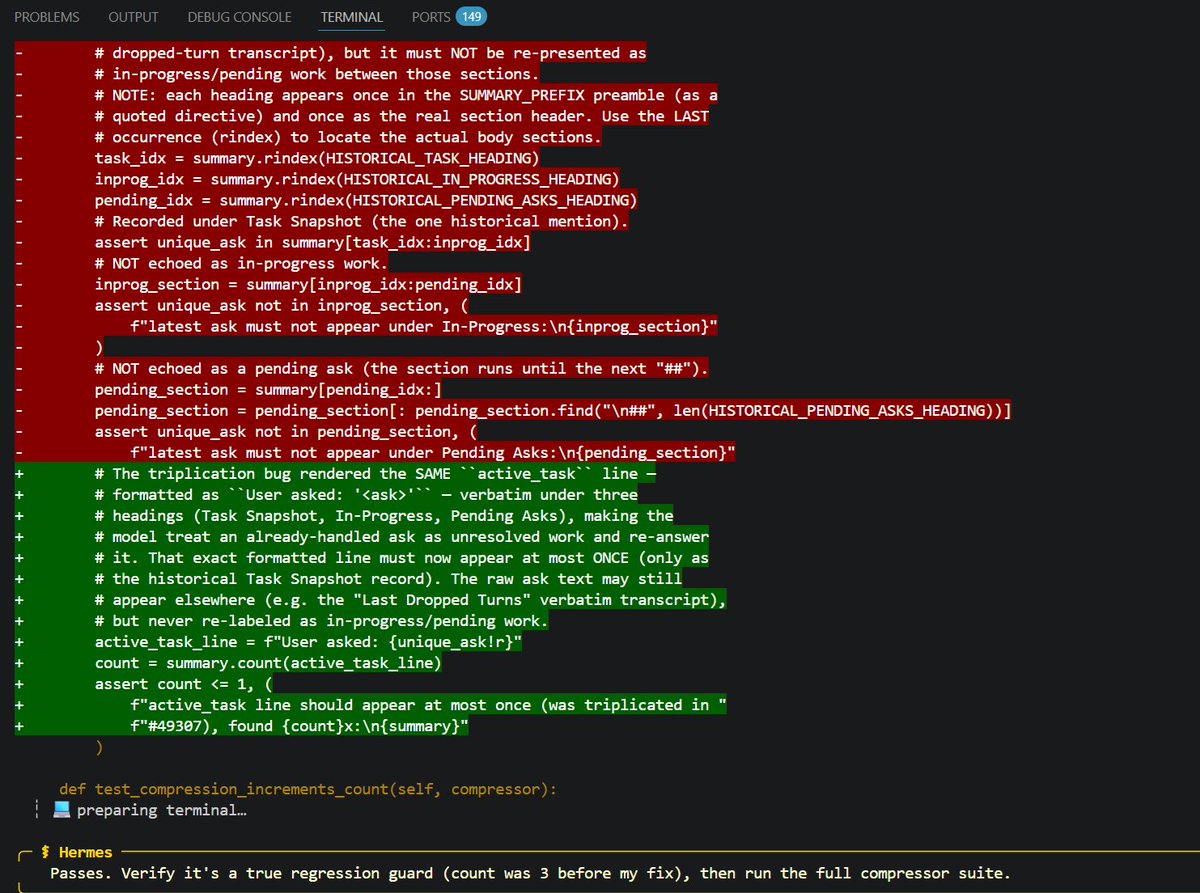
Maybe we're debating the wrong thing. The question isn't whether Europe needs its own ChatGPT. It's whether Europe is comfortable depending on everyone else's. https://t.co/aY5Yt1pR8h

https://t.co/YUnIJgkL9A

@threepointone Oh, Silicon Valley still has some artists left. They're driving hundreds of old and new cars around downtown San Jose tonight. We just forced the artists, the bands, the writers, and the small businesses to innovate, or they die. It's the rude truth of capitalism. And so they innovated. San Francisco is a very special city for a lot of reasons, and yeah, a certain segment of the population can't afford to live there. That sucks, but it's driving us toward autonomous cars, so we get something out of the shitty deal.
Friday afternoon fire chat at @JoinEdgeCity with @Scobleizer, @RichardRobinson and @davemcclure 🔥 https://t.co/KVQehVXX07

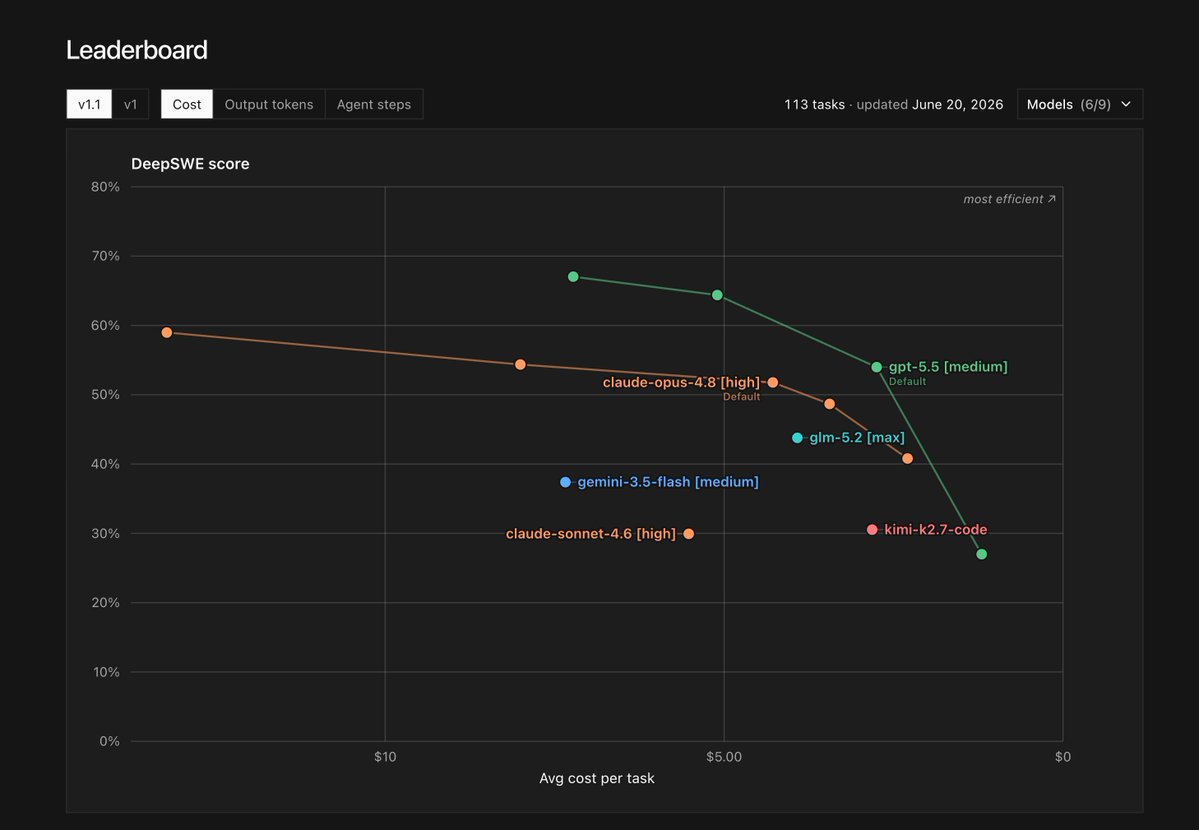
I see a lot of people hyped about GLM-5.2. Rightfully so! Having an open weight model surpass GPT-5.4 and every Gemini model is dope. That said - it's not cheap. Both Opus 4.8 and GPT-5.5 set to "medium" are cheaper and smarter than GLM-5.2 https://t.co/SPovI1LKnZ
Retina MacBook screen break in progress as liquid crystals are released. Filmed in slo-mo with macro lens. https://t.co/N83igDFlWF
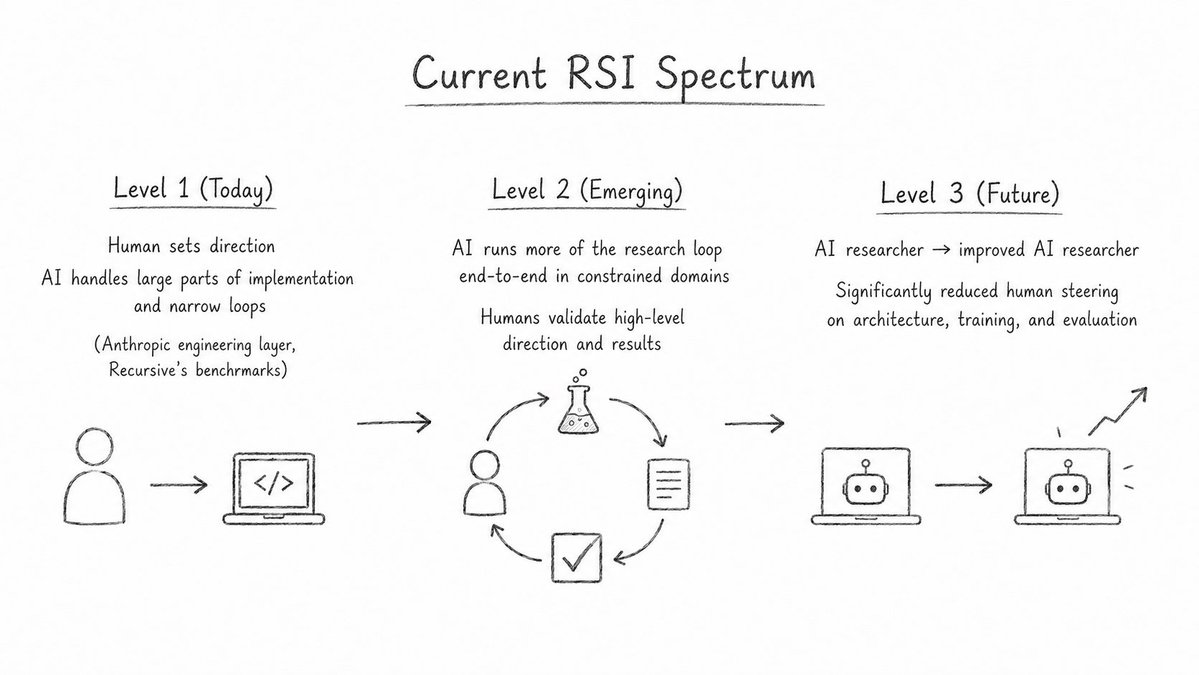
AI that builds AI - 3 early steps of Recursive Self-Improvement (RSI) ▪️@AnthropicAI: 80% of the code merged into their codebase was authored by Claude ▪️@SakanaAILabs - RSI is their mission. With research like The AI Scientist and Darwin Gödel Machine, they already have one of the strongests foundation for RSI ▪️ @Recursive_SI is automating the research loop itself with the Recursive system, generating and testing improvements to models, training recipes, and GPU kernels. Here is a full guild to what is RSI exactly, how it works in these 3 cases and how they transform research loops today: https://t.co/Xsz5ChScGP
Holy moly almost 1000 followers on Huggingface https://t.co/gjUI5LVXWJ

Holy moly almost 1000 followers on Huggingface https://t.co/gjUI5LVXWJ

Big Tech will absolutely destroy our drinkable water supply to advance their AI products and increase their profits. Just like the health insurance industry lets people die to increase their profits. Just like Big Oil destroys the planet to increase their profits. Just like military contractors donate millions to politicians to start wars to increase their profits. Just like polluters poison our air to increase their profits. Just like food manufacturers add poisons to our food to increase their profits. Billionaire and trillionaire greed is killing us.