Your curated collection of saved posts and media
Also, the government has lots of computers, but they are the wrong kind of compute for inference. They need to use AWS or another cloud provider just like you do. https://t.co/dazHpRU54t
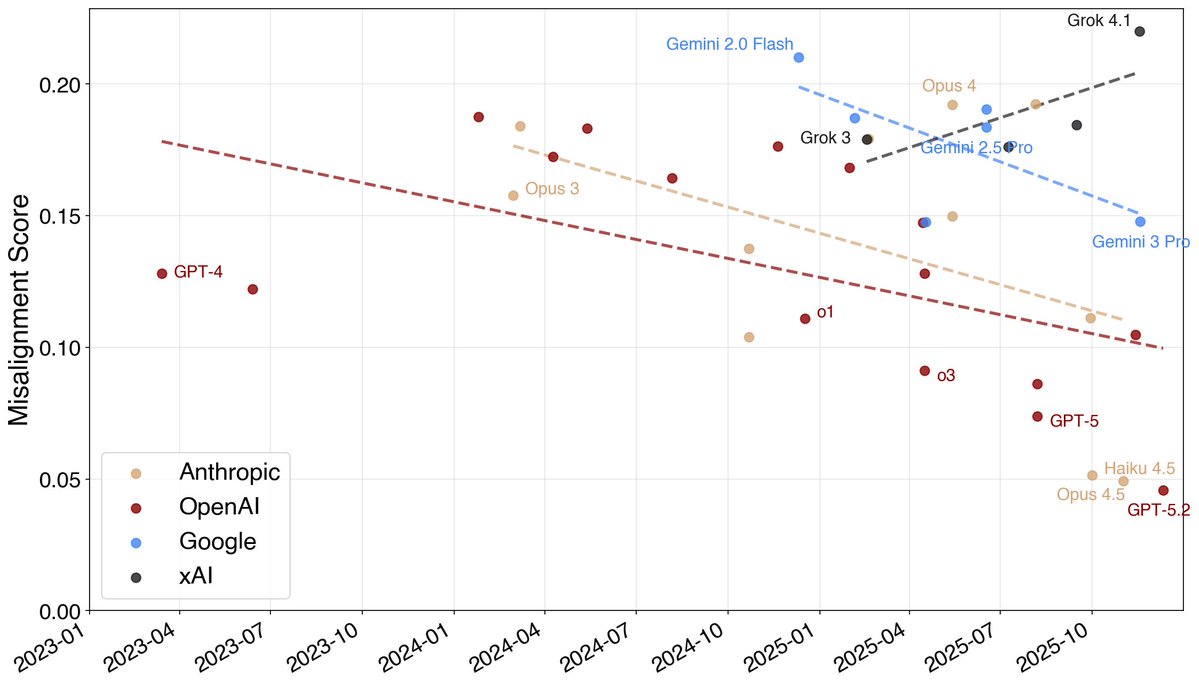
Interesting trend: models have been getting a lot more aligned over the course of 2025. The fraction of misaligned behavior found by automated auditing has been going down not just at Anthropic but for GDM and OpenAI as well. https://t.co/8DYm9SP7wF
Check out this open source implementation by @kaifronsdal (who supplied the data for this plot), @sleepinyourhat, and many others https://t.co/HDmaJ480Bp

@jankulveit @kaifronsdal @sleepinyourhat yeah this does not include every category. It's the "concerning" axes. This should be the prompt for the judge model: https://t.co/Ow5CqG4KEH
1 right 2 wrong https://t.co/TZ7KhnHQIN
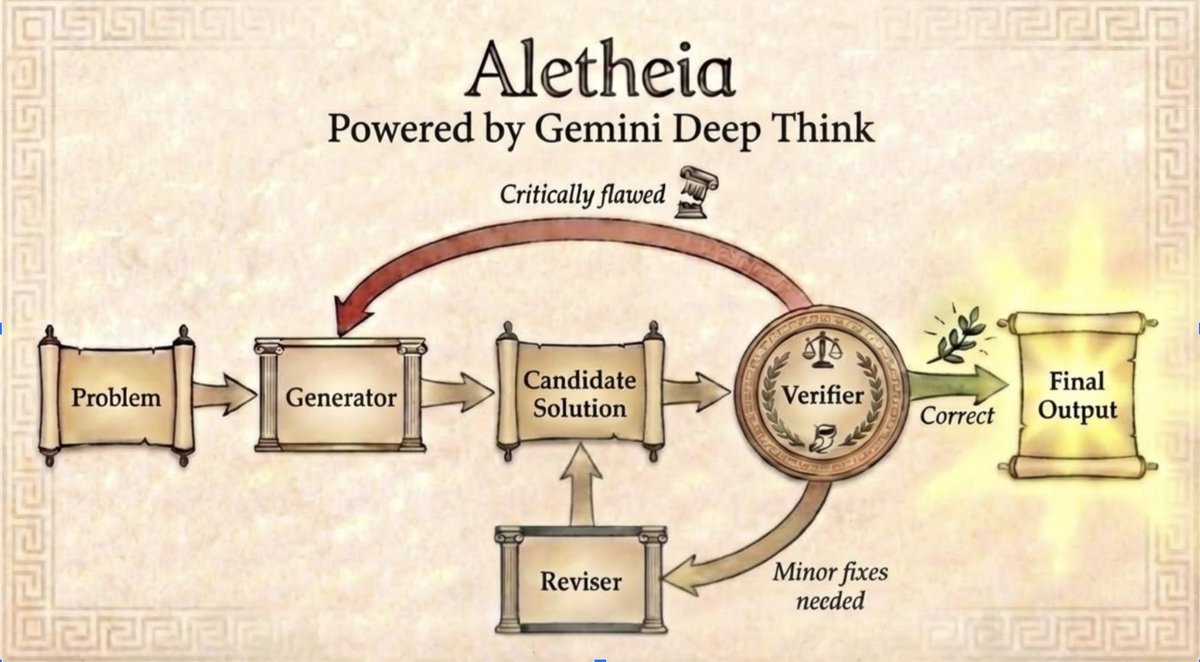
Research-level mathematics draws on advanced techniques from vast literature, with papers often spanning dozens of pages. While foundation models possess a large knowledge base from pretraining, their understanding of advanced subjects remains superficial due to data scarcity, and they are also prone to hallucinations. As such, in the first paper, "Towards Autonomous Mathematics Research", we built #Aletheia (ancient Greek word for "Truth"), a math research agent, that can iteratively generate, verify, and revise solutions end-to-end in natural language. Link to the paper: https://t.co/8mqzYEbhjZ (to be on arXiv soon!) There are 3 main sources that power Aletheia ...
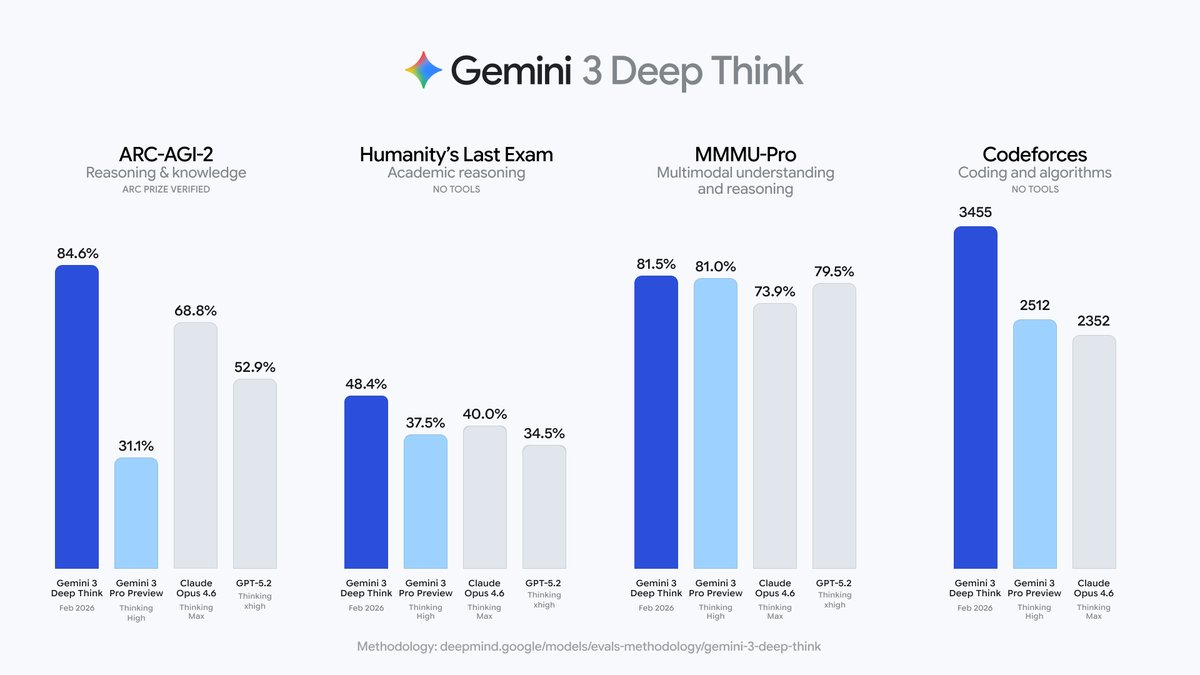
cool new model https://t.co/Va84RqVehy

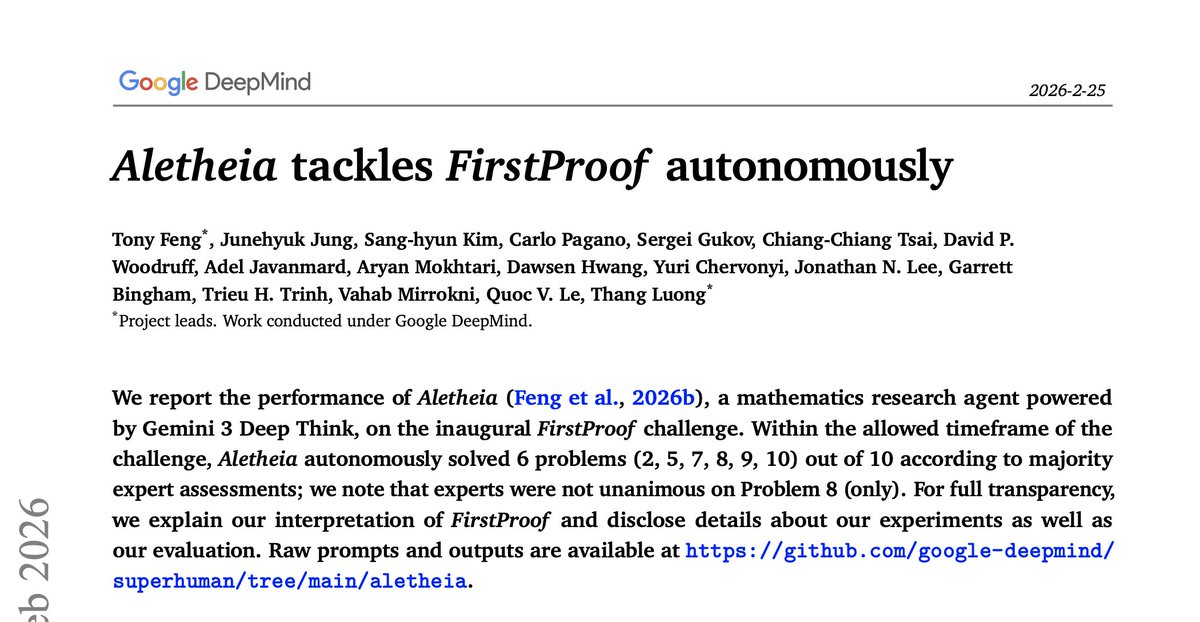
Thrilled to share: #Aletheia, our math research agent, just solved 6/10 notoriously hard FirstProof problems autonomously, the best result in the inaugural challenge! To me, this is even bigger than our historic IMO-gold achievement last year; these problems challenge even top mathematicians. We share our results transparently, see paper and full thoughts in the thread. 👇
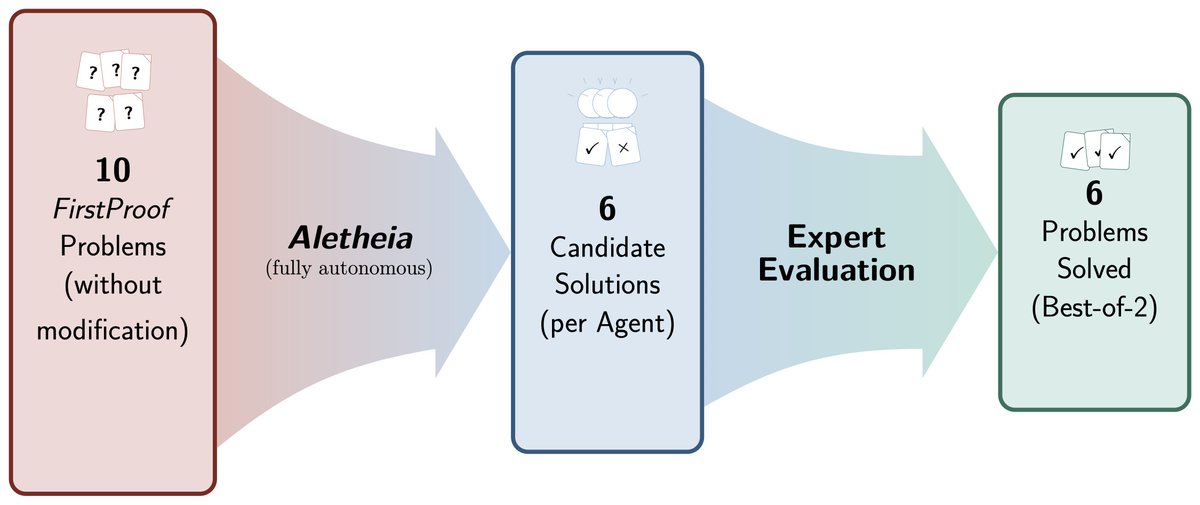
We ran our internal system Aletheia (Deep Think) on FirstProof’s research problems during the week they were released. Aletheia returned solutions to problems 2, 5, 7, 8, 9, and 10. We think there’s a pretty good chance they are correct, based on expert analysis. https://t.co/7lC8RmDVx1
Thrilled to share: #Aletheia, our math research agent, just solved 6/10 notoriously hard FirstProof problems autonomously, the best result in the inaugural challenge! To me, this is even bigger than our historic IMO-gold achievement last year; these problems challenge even top ma
https://t.co/BihEy9UYik
"Were you nervous having Sam Altman on the podcast?" "No, he's my brother" 💀 https://t.co/0zyu68ViJv
A statement from Anthropic CEO, Dario Amodei, on our discussions with the Department of War. https://t.co/rM77LJejuk
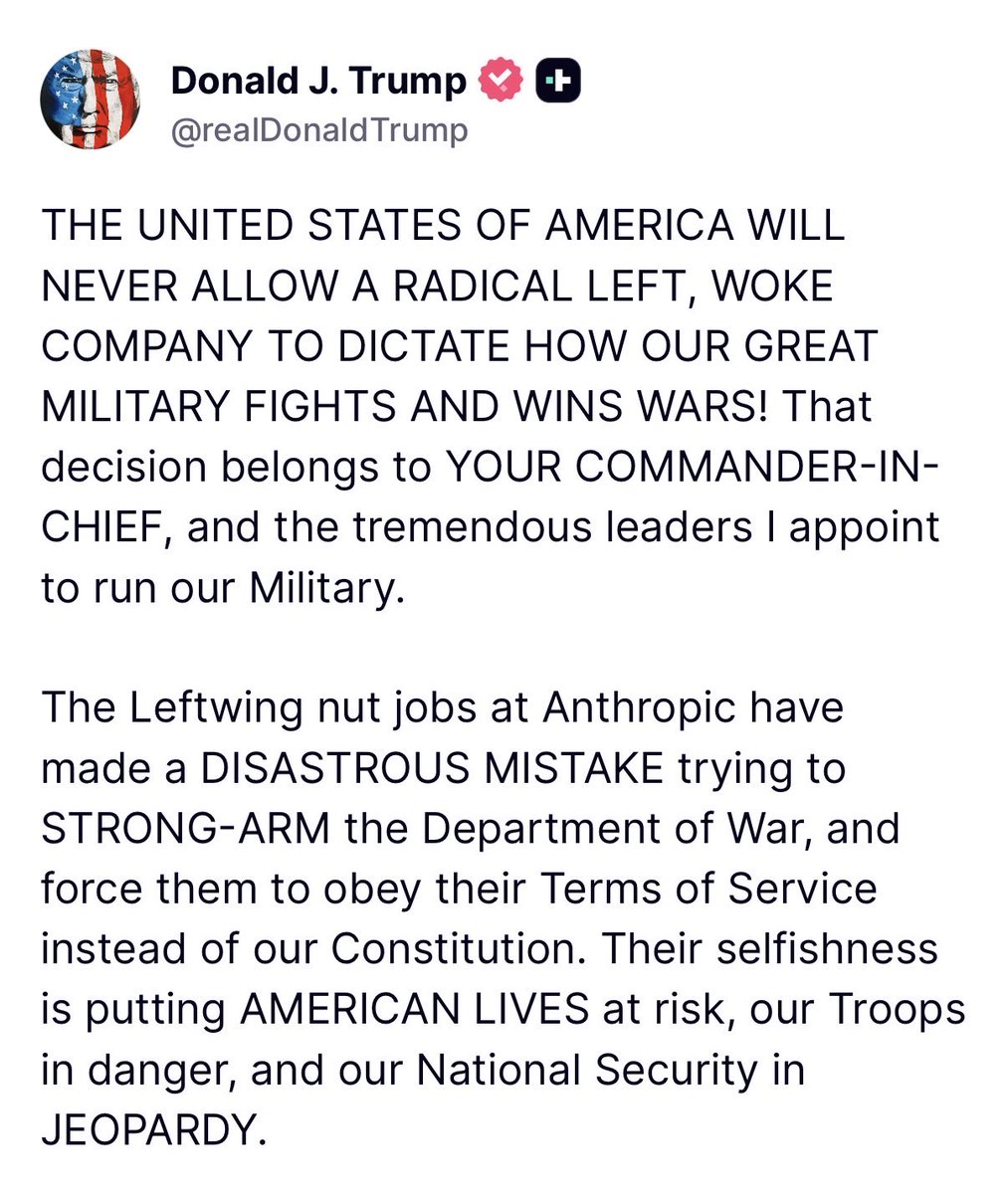
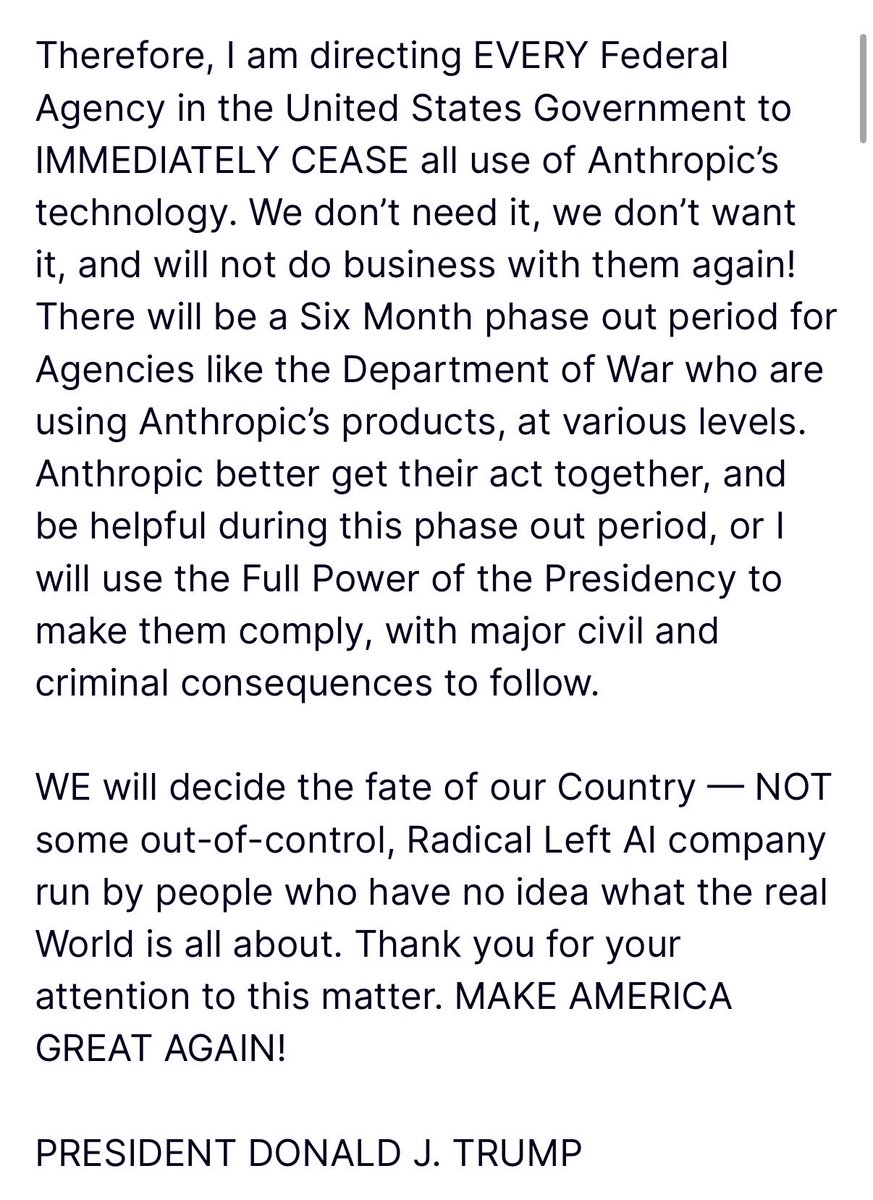
Thank you for your attention to this matter. cc: @AnthropicAI @DarioAmodei https://t.co/FLCByLHF73
A statement on the comments from Secretary of War Pete Hegseth. https://t.co/Gg7Zb09IMR
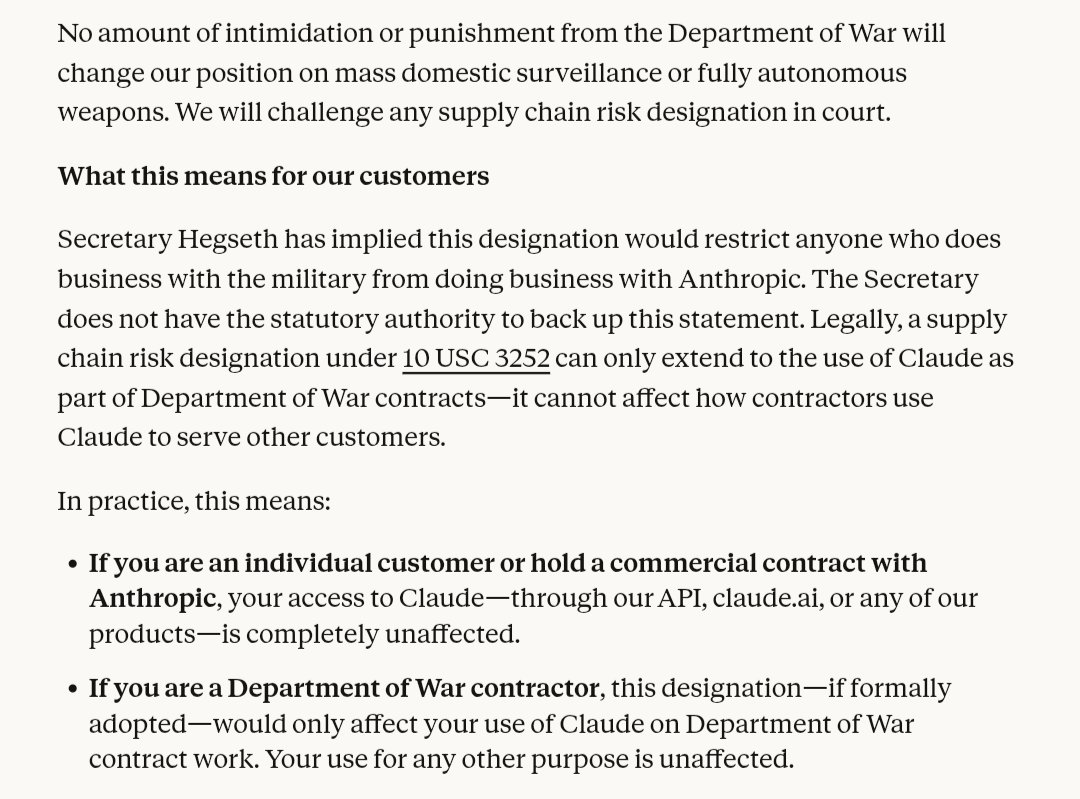
"We will challenge any supply chain risk designation in court" - Anthropic They are saying Department of War cannot restrict customers' use of Claude outside of Dep of War contract work. https://t.co/3FDsXmmcZi
A statement on the comments from Secretary of War Pete Hegseth. https://t.co/Gg7Zb09IMR
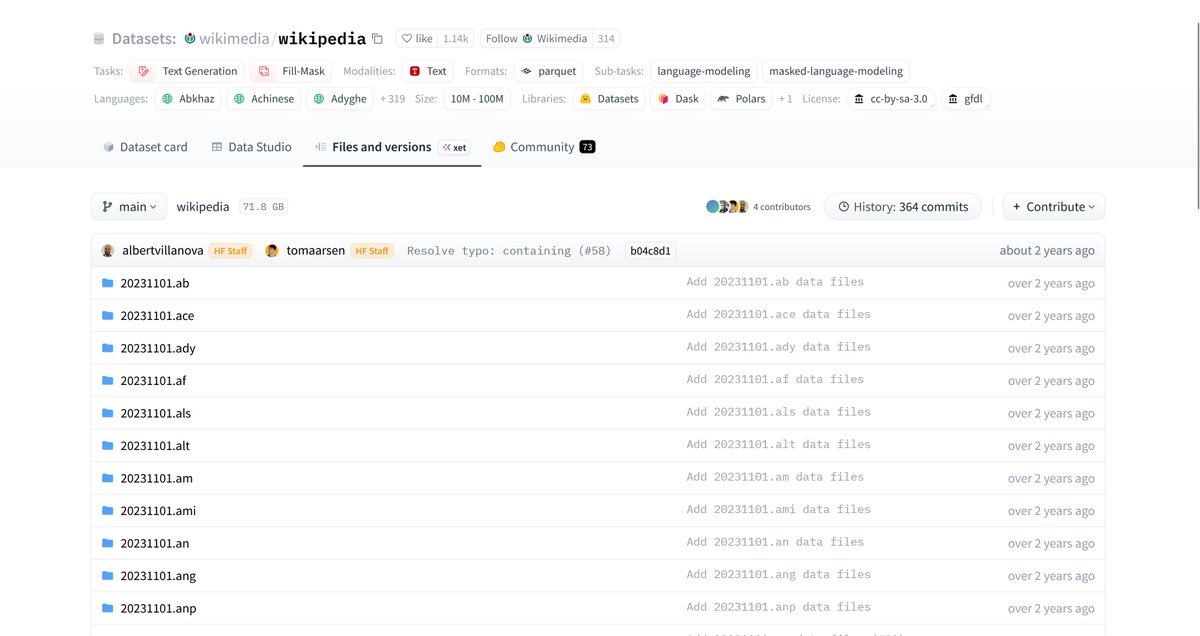
huh, why hasn't Wikipedia been updated in more than 2 years on HuggingFace? https://t.co/DxbO8RpM6G
Marco Rubio finding out he has to run Anthropic now too. https://t.co/Ffc5jsvzLi
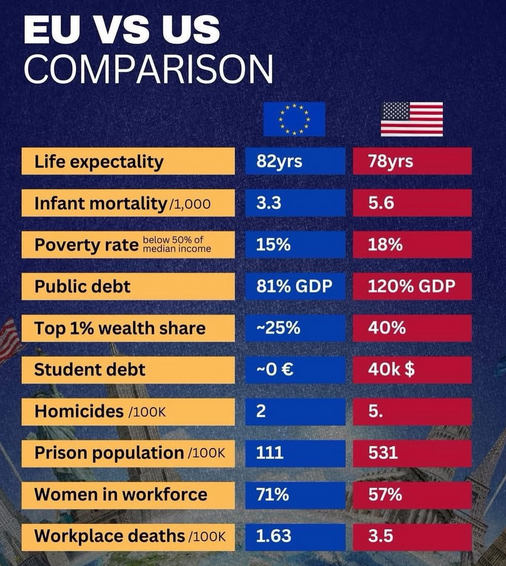
I know we don’t do facts anymore, but here’s the "dangerous and collapsing" EU that Elon Musk and MAGA influencers keep warning you about. https://t.co/RZrT5p9p9D
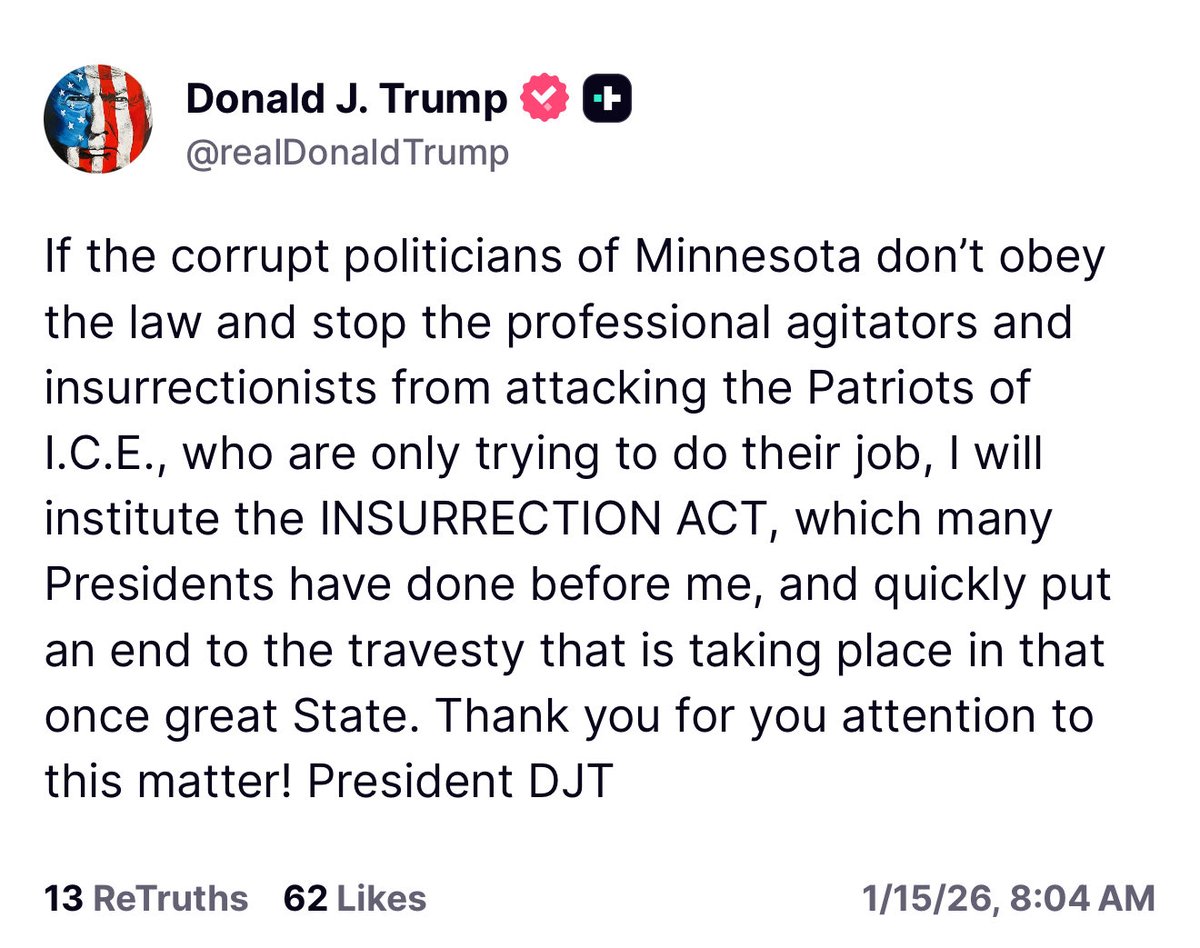
This has been the plan all along. - Foment violence and chaos in the streets of MN - Implement the Insurrection Act - Declare Martial Law - Suspend elections https://t.co/Ky3Jf3awqc
As a three-time combat veteran, I get pretty damn hot when a five-time draft dodger like @realDonaldTrump pounds his chest and bangs the war drums. America is over it. No more sending our sons & daughters to fight for oil. https://t.co/sgyXKme3h3
Where’s the outrage? https://t.co/Hd0Br38yOF
Where’s the outrage? https://t.co/Hd0Br38yOF
Le siège social d’AMI Labs, la société de Yann Le Cun, qui a longtemps été chief scientist de Meta (Facebook, Whatsapp et Instagram). sera à Paris. Le chercheur @ylecun, qui a décidément de top lectures😊, reste professeur à @nyuniversity https://t.co/g7cAHoF7zw

We told you the Venezuela invasion was just corruption. It took one whole week to get the proof. Trump took Venezuela's oil at gunpoint, and gave it to one of his biggest campaign donors. 1/ But when you learn the details, it's even worse. A short🧵on this corruption story. https://t.co/ZExM5S89VK

Nostalgia has tricked people into thinking the 1990s and early 2000s were a time of cutesy and comfortable digital disruption. https://t.co/yPMO0Ab3Ga

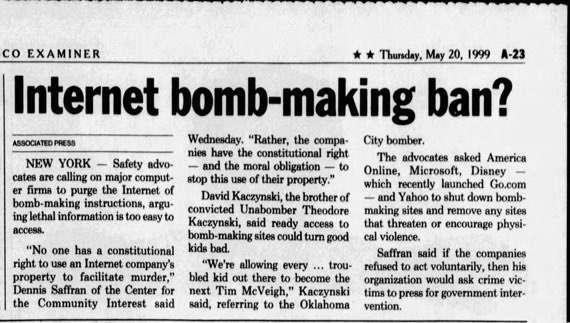
From the country that lectures Europe daily on its supposed "lack of free speech": https://t.co/6nLs1Ykfwt
From the country that lectures Europe daily on its supposed "lack of free speech": https://t.co/6nLs1Ykfwt
Citizen: “Why are you asking for my paperwork?” Border patrol agent: “Because of your accent.” Citizen: “You have an accent too!” Jesus Christ. This might be the funniest form of fascism in history. https://t.co/ocvFDeQzof
1st and 34th author of @GoogleDeepMind's paper [1] each got 1/4 Nobel Prize for protein structure prediction through Alphafold. Who invented that? (Disclaimer: a student from my lab co-founded DeepMind.) The 2021 paper [1] failed to cite important prior work [2] by Baldi and Pollastri (2002): at a time when compute was roughly ten thousand times more expensive than in 2021, [2] introduced a pipeline very similar to the one of Alphafold 2, using multiple sequence alignment (MSA) to predict the secondary protein structure with the help of a position-specific scoring matrix (PSSM) or a profile matrix, going beyond even earlier work of 1988 [5][6][10]. The extra step (absent in Alphafold 2) was to predict the protein's topology, too. See also the follow-up work of 2012 [3]. [1] didn't cite @HochreiterSepp et al.'s first successful application [7] of deep learning to protein folding (2007, using LSTM instead of MSA to construct a profile). [1] also failed to cite the essential prior work by Golkov et al (2016) [4][8], which had crucial aspects of AlphaFold: (1) identify homologous sequences in a database of proteins with known structure, (2) compute the co-evolution statistics using the homologous sequences, (3) train a graph NN to predict the protein contact map (that determines its 3D structure) directly from the co-evolution statistics, (4) demonstrate experimentally a significant boost in performance on the CASP dataset [4][9]. See the attached image! Instead of the contact map, DeepMind (2021) predicted the distance map, and instead of graph CNNs, they used the quadratic Transformer published in 2017 (the unnormalized linear Transformer had existed since 1991 [11]). DeepMind also used more training data and much more compute for hyperparameter tuning etc. Image credits: [4][8] REFERENCES [1] J. Jumper, R. Evans, A. Pritzel, T. Green, M. Figurnov, O. Ronneberger, K. Tunyasuvunakool, R. Bates, A. Zidek, A. Potapenko, A. Bridgland, C. Meyer, S. A. A. Kohl, A. J. Ballard, A. Cowie, B. Romera-Paredes, S. Nikolov, R. Jain, J. Adler, T. Back, S. Petersen, D. Reiman, E. Clancy, M. Zielinski, M. Steinegger, M. Pacholska, T. Berghammer, S. Bodenstein, D. Silver, O. Vinyals, A. W. Senior, K. Kavukcuoglu, P. Kohli & D. Hassabis. Highly accurate protein structure prediction with AlphaFold. Nature 596, 583-589, 2021. [2] P. Baldi, G. Pollastri. A machine learning strategy for protein analysis. IEEE Intelligent Systems 17.2 (2002): 28-35. [3] P. Di Lena, K. Nagata, and P. Baldi. Deep Architectures for Protein Contact Map Prediction. Bioinformatics, 28, 2449-2457, (2012). [4] V. Golkov, M. J. Skwark, A. Golkov, A. Dosovitskiy, T. Brox, J. Meiler, D. Cremers (2016). Protein contact prediction from amino acid co-evolution using convolutional networks for graph-valued images. NeurIPS, Barcelona, 2016. [5] N. Qian and T.J. Sejnowski (1988). Predicting the secondary structure of globular proteins using neural network models. J. Mol. Biol. 1988, 202, 865-884. [6] H. Bohr, J. Bohr, S. Brunak, R.M.J. Cotterill, B. Lautrup, L. Norskov, O.H. Olsen, S.B. Petersen (1988). Protein secondary structure and homology by neural networks. The α-helices in rhodopsin. FEBS Lett. 1988, 241, 223-228. [7] S. Hochreiter, M. Heusel, K. Obermayer. Fast model-based protein homology detection without alignment. Bioinformatics 23(14):1728-36, 2007. Successful application of deep learning to protein folding problems, through an LSTM that was orders of magnitude faster than competing methods. [8] D. Cremers (July 2025). LinkedIn post on the Nobel Prize for AlphaFold. [9] A Nobel Prize for Plagiarism. Technical Report IDSIA-24-24, 2024 (updated 2025) https://t.co/u9YxfBuqNf . Popular tweets on this: https://t.co/heYSuPQDxp https://t.co/QQU9FKpqAh [10] The Nobel Committee for Chemistry (2024). Scientific Background to the Nobel Prize in Chemistry 2024. [11] Annotated History of Modern AI and Deep Learning. Technical Report IDSIA-22-22, IDSIA, Switzerland, 2022 (updated 2025). Preprint https://t.co/YZrEphq1qx. This extends the 2015 award-winning deep learning survey in the journal "Neural Networks."

The answer turns out to be "yes, kinda". After spending few minutes clicking "like" on posts I liked and "show less like this" on those I don't, here's what my feed now contains. https://t.co/4E96OQKee6
Is this true?
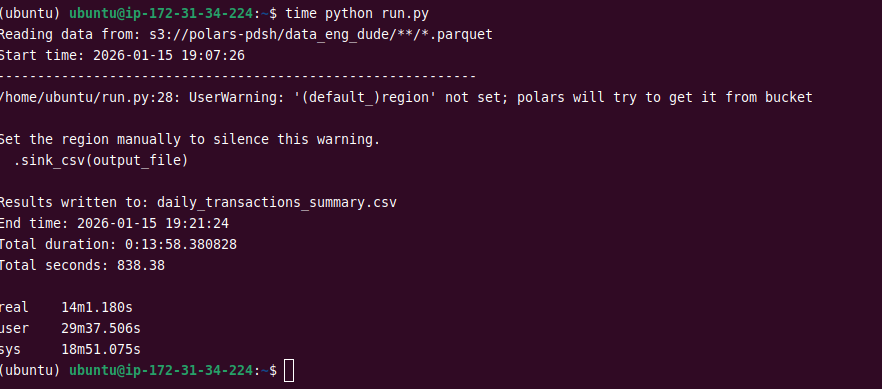
So there was quite a sensational rant post titling "DuckDB beats Polars for 1TB of data" and the video "Polars Got Destroyed by DuckDB in this 1TB Test" that was shared a lot. There was no code shared for Polars and upon request, we were ignored. These posts were conveniently shared in posts and newsletters because they fit a narrative. In any case, I went through the effort to reproduce the dataset and run the exact benchmark. The post mentioned 64GB RAM, so I ran on a 5a.8xlarge (32vCPU / 64GB RAM). Polars did not go OOM, but finished the query in 14 minutes never exceeding 14GB RAM usage. On the same machine DuckDB also took 14 minutes. Both tools hit the bandwidth limit: 1 TB / 10 Gbps = 13.3 min, but that makes less of a title 😉. The whole benchmark was just hard to reproduce, the 1TB part of it made it unwieldy, but didn't matter. It could have done with a 100GB benchmark as the cardinality of the groups was just ~1800. Here is the Polars query: https://t.co/62oLSctcSd So I guess... Code or it didn't happen.
CuTe algebra is extremely elegant. I can't believe we've all been writhing around on the floor like Terence Tao to do tile indexing. https://t.co/4puH9HSefw
