Your curated collection of saved posts and media
Bonjour, Paris — it’s been a minute, but we’re back 🇫🇷 We're bringing Gemini 3 to town on March 14 with @GoogleDeepMind! Join us to build and ship on Google’s most intelligent model yet, and compete for: 💰 $100,000 in Gemini API credits 🎙️ An exclusive 30-minute virtual call with the founders of Google’s @AIFuturesFund Register below👇
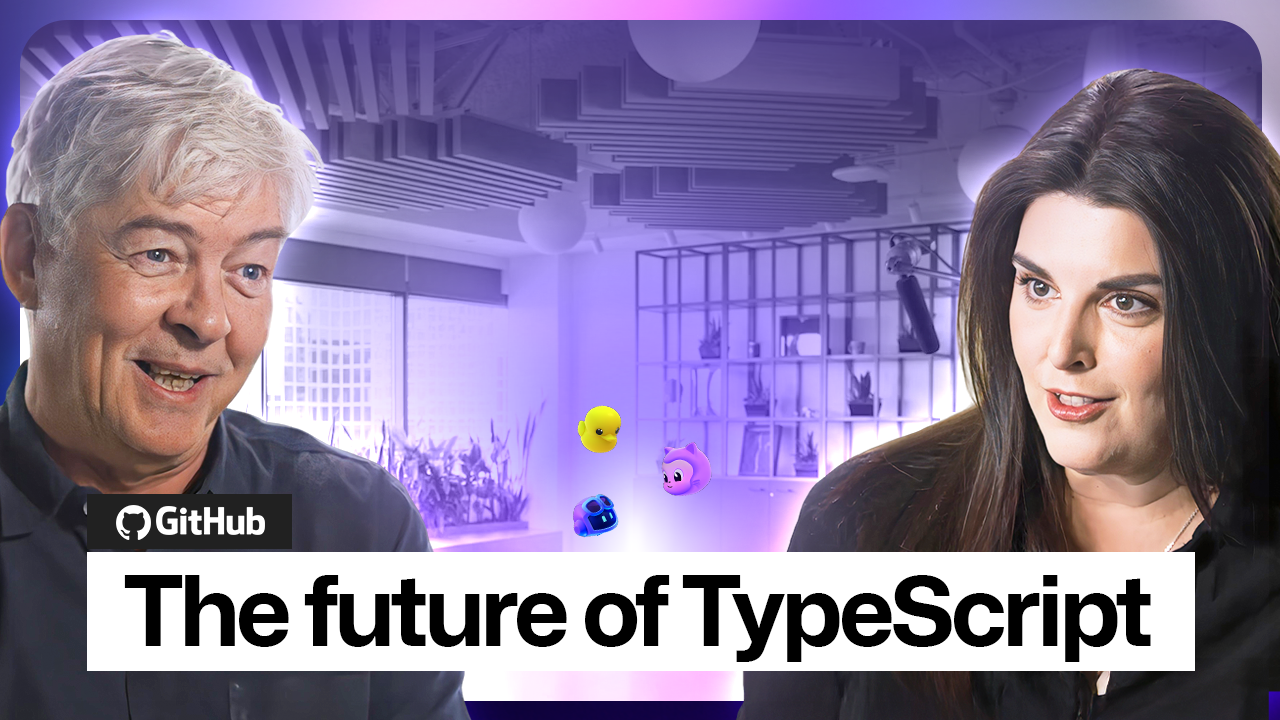
Thinking of creating a new programming language? You might want to watch this. 👀 https://t.co/gQBKegJOsx https://t.co/e8ZZS0FkJb
Shipping some of the biggest updates to @googlemaps… ever! ✨ + Ask Maps: new conversational experience - ask whatever you want to know about places and routes, check it out ⬇️ + Immersive Navigation: totally new 3D UI, intuitive directions, helpful parking previews https://t.co/JVci8Bizuu
Teach your children how to create and animate characters with Grok Imagine. Your children will live in a world where AI will be essential. Let them learn with you using a powerful tool that keeps them safe (child mode activated). https://t.co/ChSsE6Ecmc
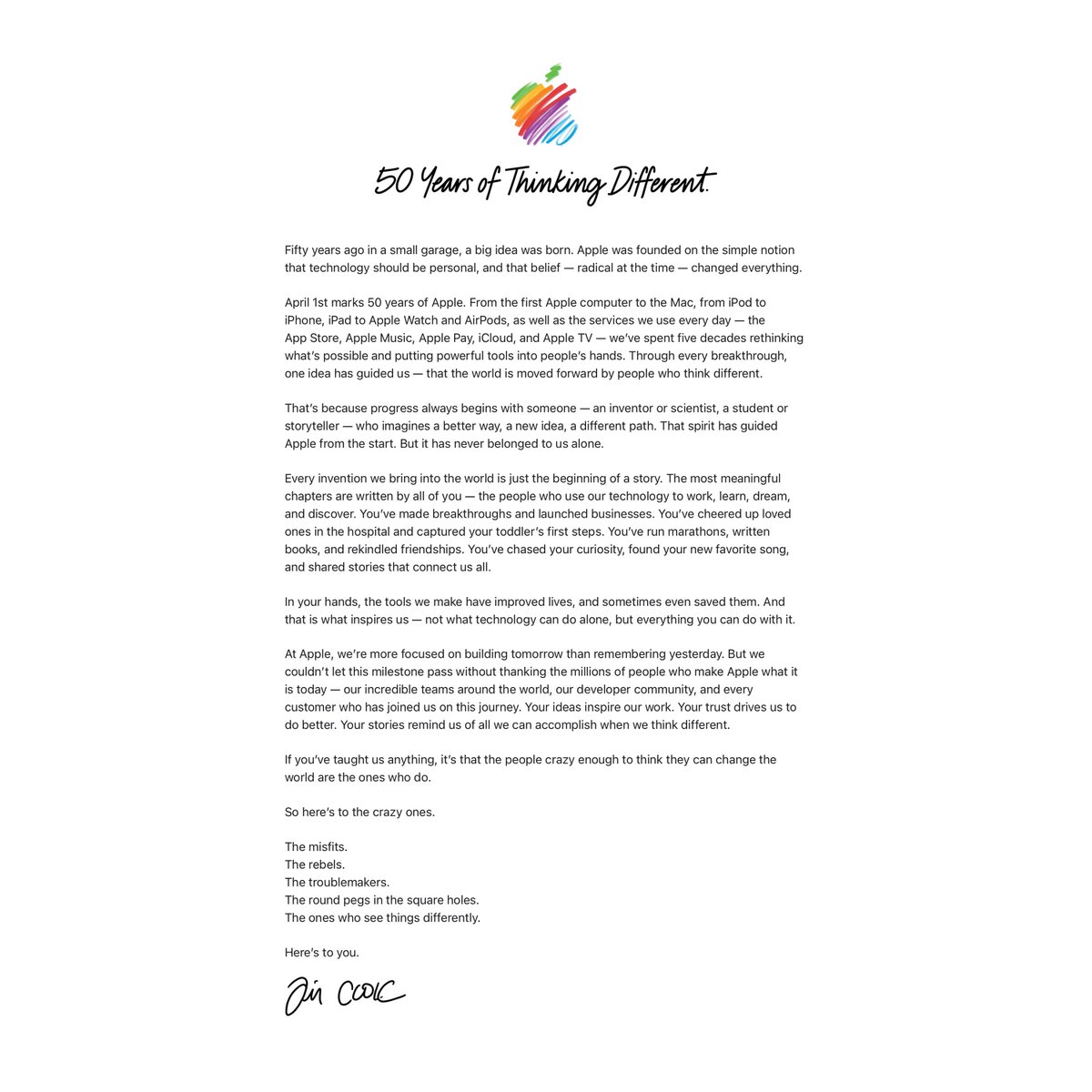
April 1st marks 50 years of Apple. Thank you to everyone who’s been a part of our journey. https://t.co/ZeB68ok859 #Apple50 https://t.co/7cXA0rnM9X

#2 on Mac App Store in 2 days… just a Broke dev on Mac Mini 🔥 LocalMusic AI = 100% offline AI music, pure indie passion. Loving it? Drop a 5⭐ review + RT this so the whole Mac community discovers it! Every repost and rating = rocket fuel 🙏 Your support might even attract someone who can help take this indie project to the next level Link: https://t.co/b45b7Ma9OK #Suno #MusicAI #OpenSource #udio #aimusic #acestep #apple #swift #macOS #acestep

Lately, I have been thinking about continual learning --- could this unlock novel interfaces to solve more complex problems with AI? An experiment: Self-Improving Browser Agents (SIBA) Browser agents are currently difficult to steer just by prompting, making them hardly capable at executing workflows reliably and flexibly without parametric updates. I could never get actual tasks done with Browser Agents previously, and thought this could be a worthy attempt at changing this. The demo shows the SIBA agent extracting 3 receipts from my Gmail, and saving them into a local directory, tagged by software, for what would be a monthly software claim submission process. What differentiates SIBA from previous methods: 1) CLI-driven browser control Following agent-browser, we select web components by textual references which significantly reduces incorrect component selection. Furthermore, LLMs work best reasoning about code. Previous methods rely heavily on a model's visual understanding to select the correct visual component by generating the (x,y) coordinates of a browser window (which are expected to be almost precise). The emerging "Skills + CLI" design pattern for agentic tool calling will be included in the next iteration. 2) Meta-agent driven improvement Tuning a browser agent's system by hand is ineffective: the root cause of most failure modes are ambiguous and difficult to address systematically without parametric updates. Meta-agent driven improvement based on human feedback show promising initial results for now --- it took me three iterations of feedback and some API credits to get my custom workflow working. Moreover, providing clear feedback is something humans are good at, and also a user experience that feels natural. Caveat: currently, a simple meta-agent is used for iterative improvement. There are more effective ways to do so systematically that will be explored next. My hope is to use SIBA for smoke testing at scale. It would be interesting to see if it could be extended to persona-based smoke testing using parallel agents. Let's see.
CNN's Paul Begala falsely claims Pete Hegseth purchased ribeye steaks and lobster tails for himself, not the troops. Scott Jennings, "Internet do something." Here are the receipts: https://t.co/VZ6j4j2sn2
After 8+ years on the Tesla Autopilot team and 3 years at Intel, I started @apexcompute to design a new architecture for efficient AI inference. For the past 9 months, we’ve been building our custom inference accelerator. Today we’re releasing Unified Engine v1. Last June we raised our seed round with @maxitechinc , DeepFin Research, @Soma_Capital and an incredible group of angel investors. In less than 9 months, we completed our RTL architecture and brought our first pre-silicon prototype to life on FPGA. Our architecture combines systolic array and vector processing in a single compute engine with multiple architectural optimizations, achieving very high FLOPs utilization. A single engine is super lean and it uses less than 90K LUTs and 1 MB Block RAM. It may also be one of the smallest logic-footprint compute engines developed so far. Our Unified Engine v1 supports: -matrix-matrix multiplication (~95% FLOPs utilization) -softmax (~90% FLOPs utilization) -broadcast and element-wise operations -RMSNorm / LayerNorm -block quantization/dequantization (fp4, int4) -multi-engine synchronization and many other operations. We even implemented memory-efficient attention similar to FlashAttention, reaching ~90% FLOP utilization. Full benchmarks and the software stack are available on our GitHub: https://t.co/KqTKbB2Inl We have basic compiler written in Python and it supports PyTorch tensors directly to easily test and transfer tensors between the accelerator and host using bf16, fp4 and int4 formats. Our FPGA prototype can already run LLM inference and outperform NVIDIA Jetson Orin Nano, even on a mid-tier FPGA setup (6.4x lower memory bandwidth, 18% slower clock speed at 4.5 Watts). Check the side-by-side comparison video below. Our GitHub includes low-level operator implementations, examples for tiled matrix multiplication, operation chaining, tensor parallelism, attention kernel and a full Gemma 3 1B model implementation. Many more models(Vision Transformers and VLA) are coming soon. Our accelerator IP is AXI-ready for deployment on any AMD(Xilinx) FPGA platform today. Even better, our two-engine prototype runs on an entry-level AMD(Xilinx) FPGA as a PCIe accelerator card. You can purchase it here https://t.co/8B9NOcueVu for $50 to experiment our pre-silicon prototype on your desktop PC or Raspberry Pi 5. We will be releasing hardware bitstream updates as the architecture gets new features. More to come soon! We are expanding our team and looking for compiler engineers and floating-point hardware design engineers. If you're interested, please send me a DM.
This AutoHarness paper (from Google DeepMind) is the most interesting thing I've read lately. I am testing a similar idea (without training) on models like MiniMax-2.5 and getting good results. It already allowed me to synthesize an entire functional coding agent. More soon. https://t.co/pGRRlIEsUR
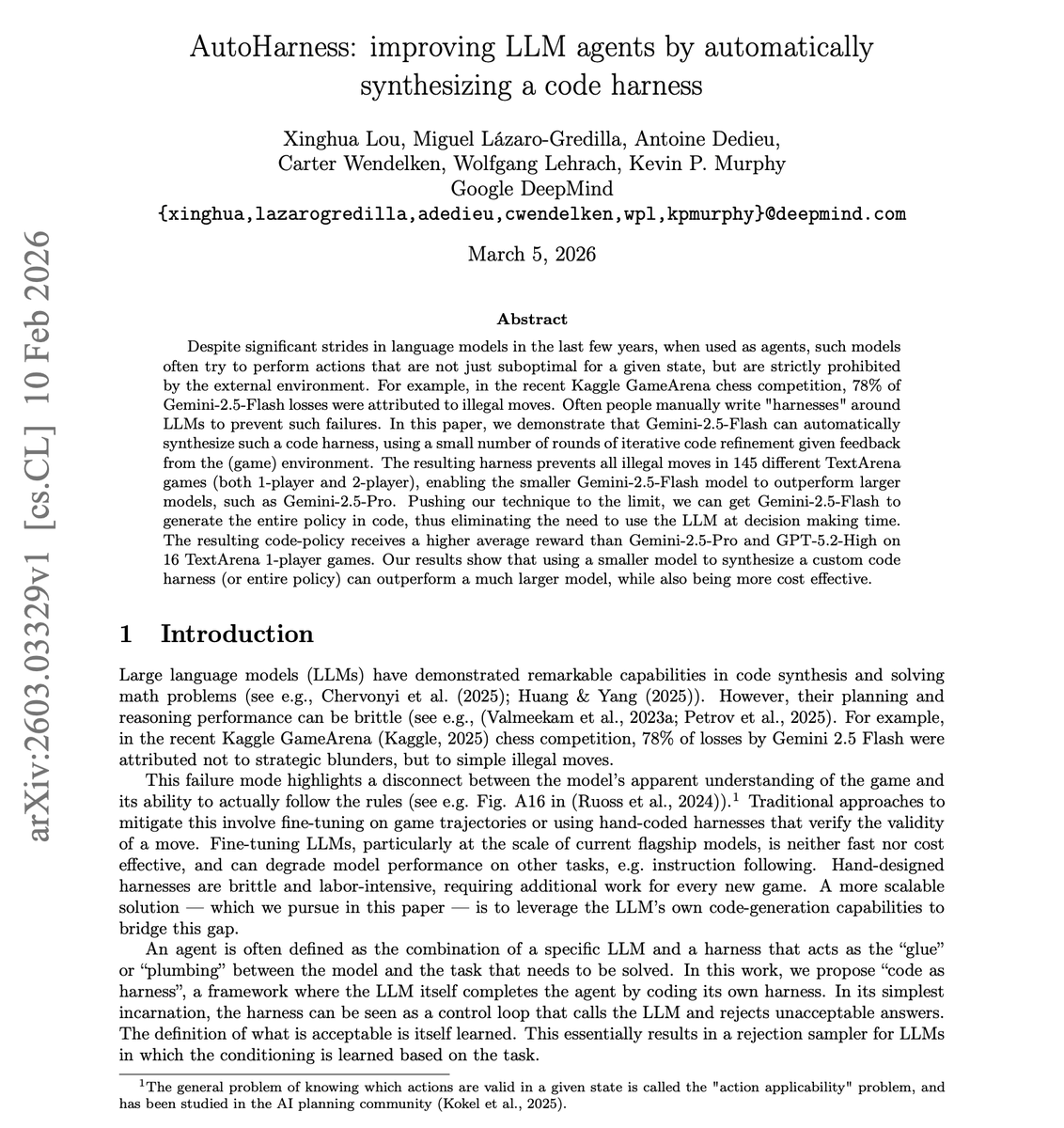
get PRO on @huggingface and instantly 10x your storage to 1 TB private + 10 TB public ...for $9 a month 😮 a deal this good should be illegal https://t.co/nTMcyTn280
Introducing our biggest upgrade to @googlemaps since the original launch, featuring Ask Gemini (with personalization), Immersive Navigation, and much more!! 🗺️ https://t.co/yjKV44hK6w
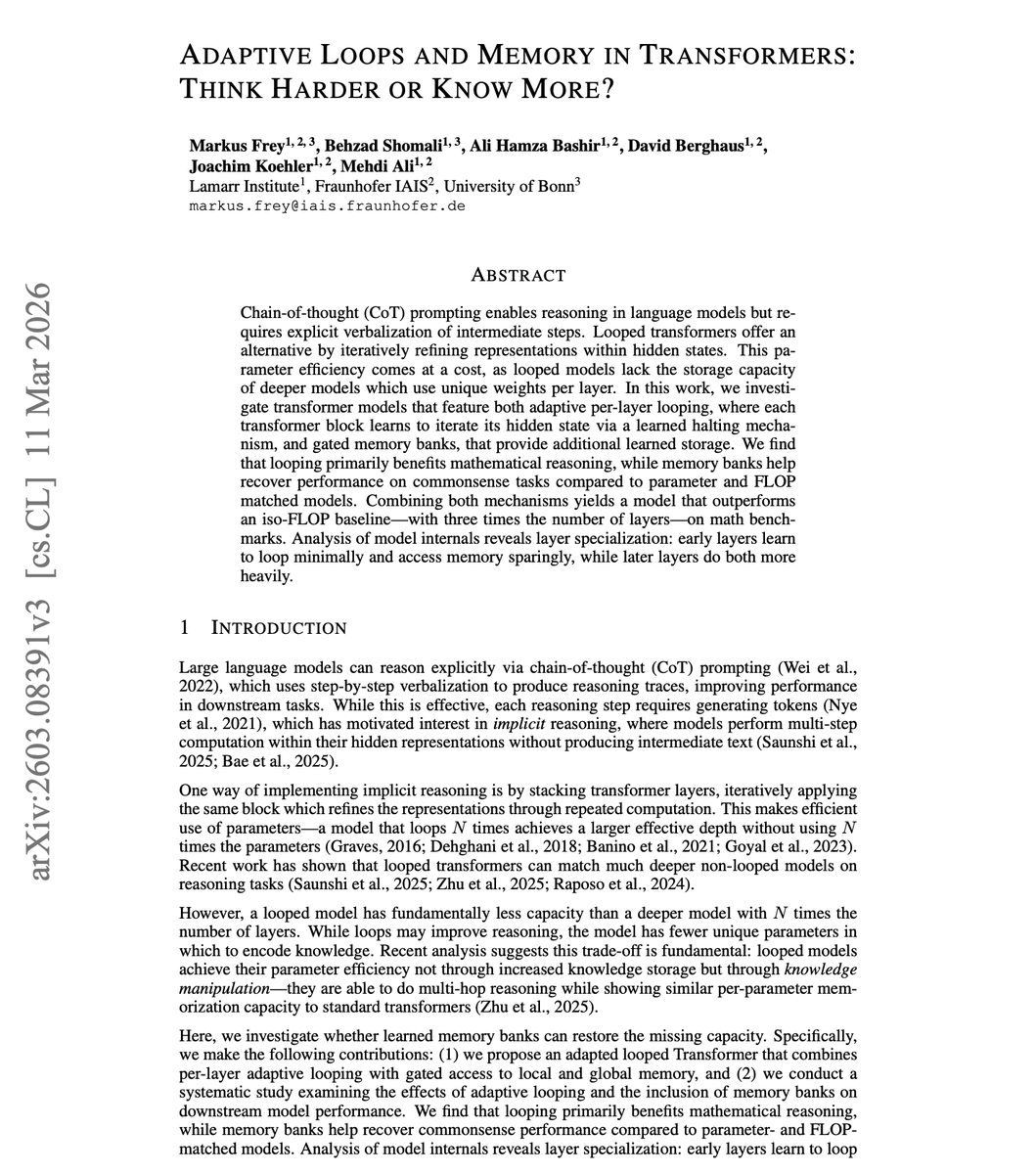
// Think Harder or Know More // Chain-of-thought prompting enables reasoning in LLMs but requires explicit verbalization of intermediate steps. Looped transformers offer an alternative by iteratively refining representations within hidden states, but they sacrifice storage capacity in the process. This paper investigates combining both: adaptive per-layer looping with gated memory banks. Each transformer block learns when to iterate its hidden state and when to access stored knowledge. The key finding: Looping primarily benefits mathematical reasoning, while memory banks recover performance on commonsense tasks. Combining both yields a model that outperforms an iso-FLOP baseline with three times the number of layers on math benchmarks. Analysis of model internals reveals layer specialization. Early layers learn to loop minimally and access memory sparingly, while later layers do both more heavily. The model learns to choose between thinking harder and knowing more, and where to do each. Paper: https://t.co/0Gl77zMwOY Learn to build effective AI agents in our academy: https://t.co/LRnpZN7L4c

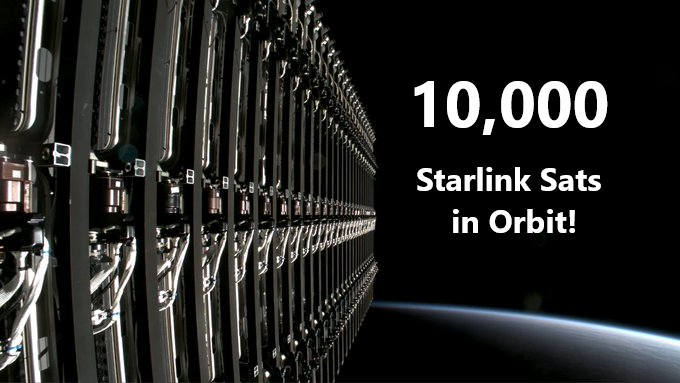
Friday the 13th and 10,000 Starlink sats in orbit🔥 @SpaceX is targeting, weather permitting, double-header Falcon 9 launches from the East and West Coast to deploy 54 @Starlink satellites. ... one of these satellites will represent the first time SpaceX surpass 10,000 Starlink satellites in orbit! 🔥
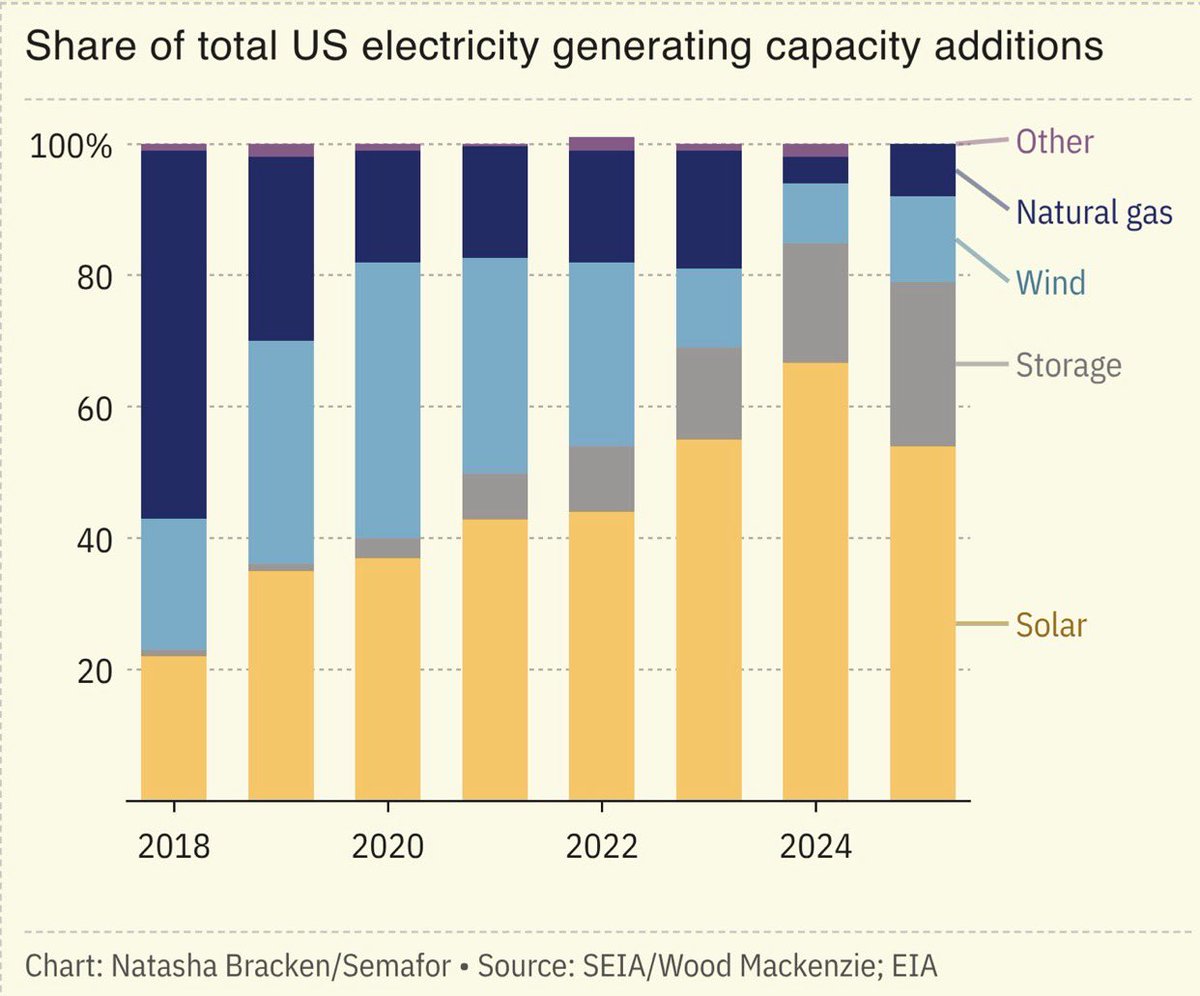
Solar accounted for 54% of all new electricity-generating capacity added to the US grid in 2025. Combined, solar and storage made up 79% of new capacity last year. China has significant growths in solar capacity and generation — the US must be doing the same. https://t.co/uOfdHDTvFJ
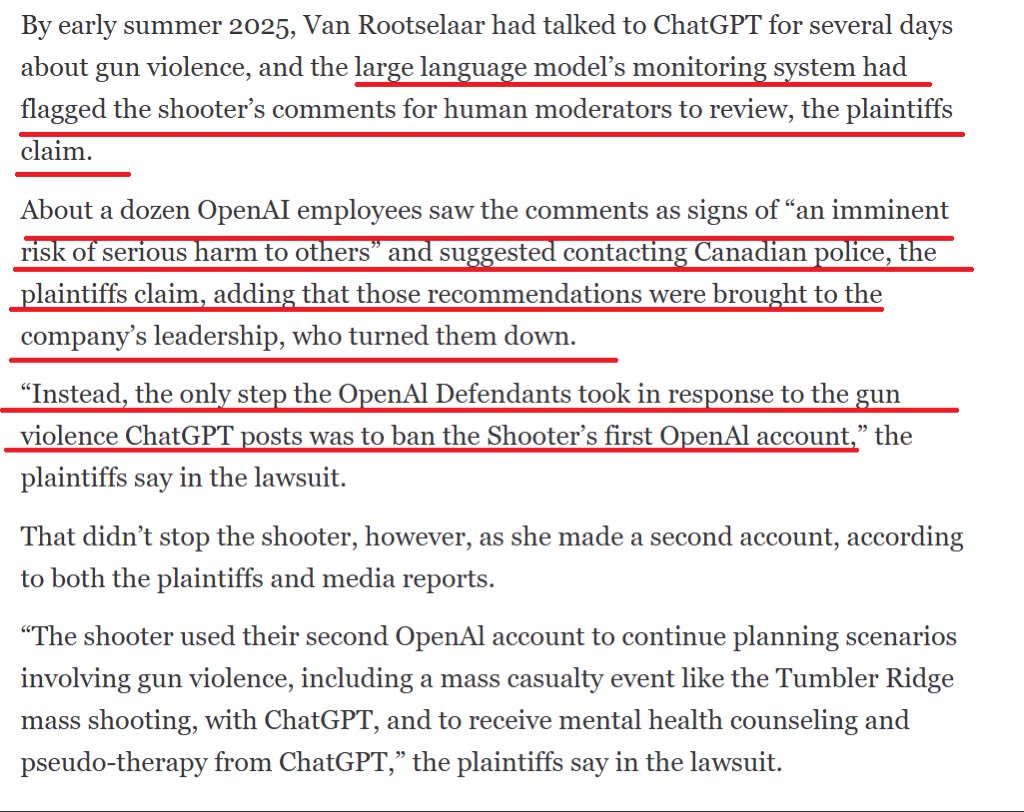
The trans school shooter at Tumbler Ridge laid out an elaborate plan to commit mass murder to ChatGPT. A dozen employees saw the plans and wanted to alert police but were turned down by company leadership. Why? https://t.co/9iJ0YscO2H
So basically, we pay the government taxes to fix our problems, and they pay migrants with our taxes to come and cause more problems https://t.co/iRQA3oPneH
What smart idea Sansa, questioning the authority of the Jon in front of all the lords and ladies of the North. Damn Brilliant https://t.co/W6JbgBptwU
Grok Imagine just got a major update from @xai! You can now specify up to 7 reference images for generating a video. The images can reference people, objects, or even keyframes. It's really very flexible! @Grok will then combine the references with your prompt into a video. 📹 https://t.co/9bIDPxOo7m

Grok Imagine UPDATE: You can now integrate up to 5 reference images into your videos. Improved understanding of the prompt Improved consistency between characters and settings https://t.co/OpDIEOlrvq
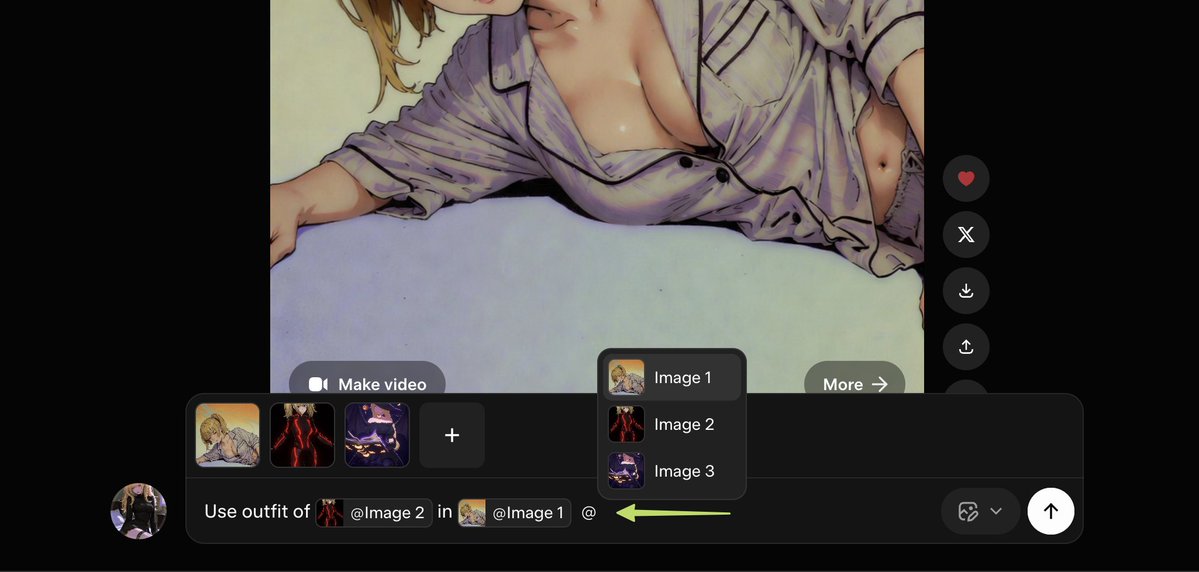
Grok Imagine now supports Referencing Images with @ for Image Editing and Video on Web https://t.co/R8Uqr2ud2k
BBC says “deep wound” stab kits are now recommended on London buses for some strange, unstated reason https://t.co/9y3cgbLSj4

Historical PSA: We're still in it, more broadly and with privacy, and we will get it right on both fronts https://t.co/Hn5WDPnp6K
the golden era of private money starts

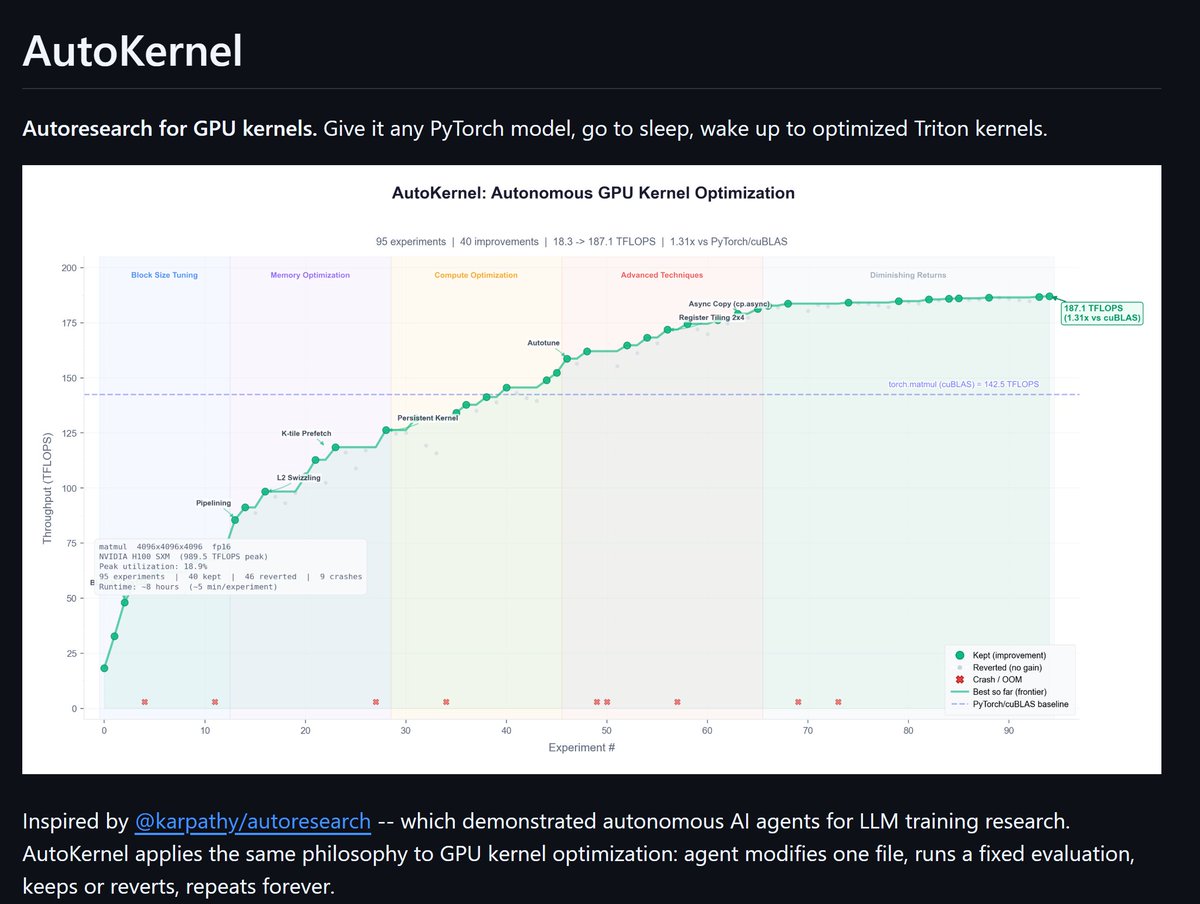
i open-sourced autokernel -- autoresearch for GPU kernels you give it any pytorch model. it profiles the model, finds the bottleneck kernels, writes triton replacements, and runs experiments overnight. edit one file, benchmark, keep or revert, repeat forever. same loop as @karpathy autoresearch, applied to kernel optimization 95 experiments. 18 TFLOPS → 187 TFLOPS. 1.31x vs cuBLAS. all autonomous 9 kernel types (matmul, flash attention, fused mlp, layernorm, rmsnorm, softmax, rope, cross entropy, reduce). amdahl's law decides what to optimize next. 5-stage correctness checks before any speedup counts the agent reads program.md (the "research org code"), edits https://t.co/ubU2WPOJwh, runs https://t.co/gJklhqV5hS, and either keeps or reverts. ~40 experiments/hour. ~320 overnight ships with self-contained GPT-2, LLaMA, and BERT definitions so you don't need the transformers library to get started https://t.co/45z8Z7nP3N
Announcing Context7 CLI! MCP isn't the only way anymore. Now any AI agent can pull docs with Context7 — just the CLI and the find-docs skill. One command: npx ctx7 setup
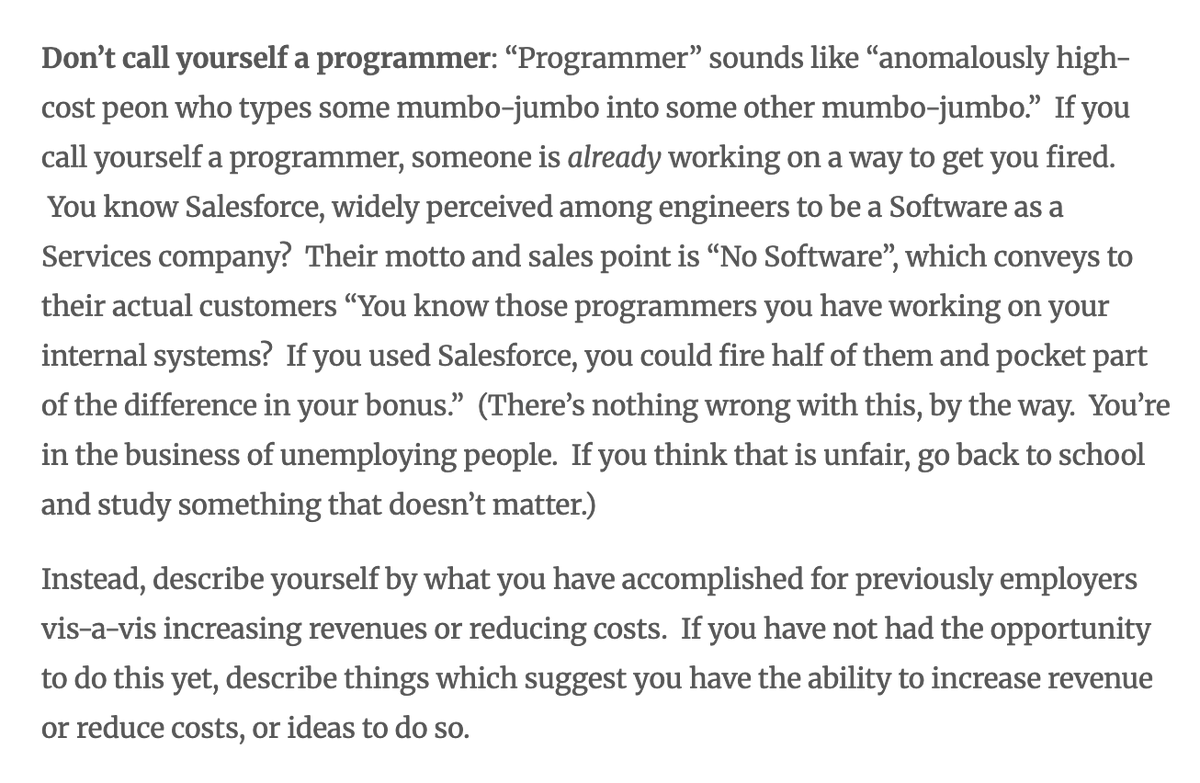
AI isn't replacing programmers, but it *is* making it harder to survive as a programmer with purely technical skills and no interest or expertise in how those skills translate to business or societal value. Funny thing is, this has always been true—it's just being accelerated a bit due to AI. There's a famous essay by @patio11 from 15 years ago called "Don't Call Yourself A Programmer, And Other Career Advice". https://t.co/FlJGJFTWmL
AI doesn’t see the world the way humans do. What looks obvious to us can be misinterpreted by machines when categorizing objects, scenes or context. As AI systems move deeper into areas like safety, healthcare and autonomous systems, these perception gaps become more than technical issues. If AI is going to make decisions about the real world, how do we ensure it actually understands what it’s looking at? https://t.co/PHUybYbKIz @ConversationUS

https://t.co/9WVNz5PdFY great post from @sh_reya, resonates with my experience of ai-augmented writing - it's very much about maintaining momentum and finding your sense of rhythm might just attach this post to my future claude writing chats tbh

https://t.co/9WVNz5PdFY great post from @sh_reya, resonates with my experience of ai-augmented writing - it's very much about maintaining momentum and finding your sense of rhythm might just attach this post to my future claude writing chats tbh

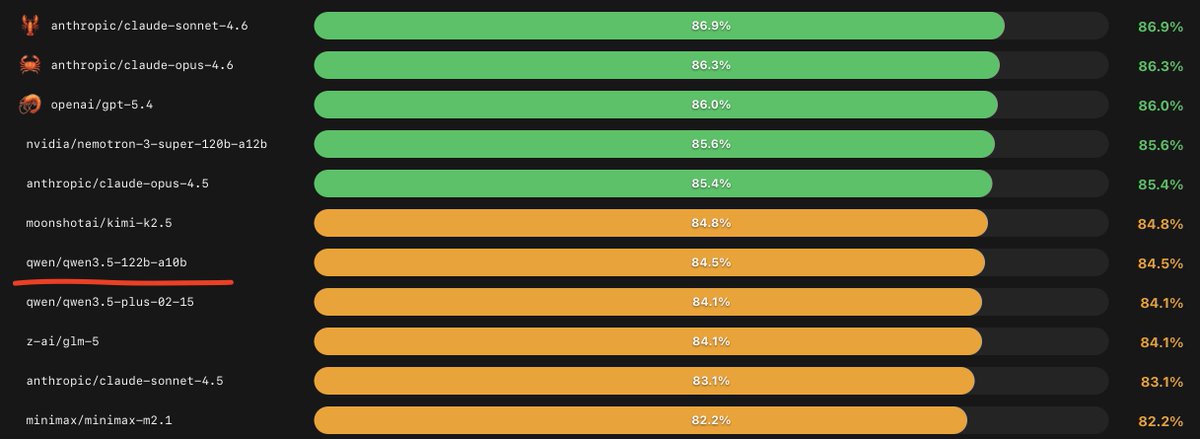
@nospotfer Qwen3.5 is ranked at an impressive 7th place on pinchbench atm. It's really impressive for such a relatively small open-weight model. I think that's a perfect use case for local LLMs. Curious to see where Nemotron 3 Super will rank. https://t.co/Hln4jMPSi8
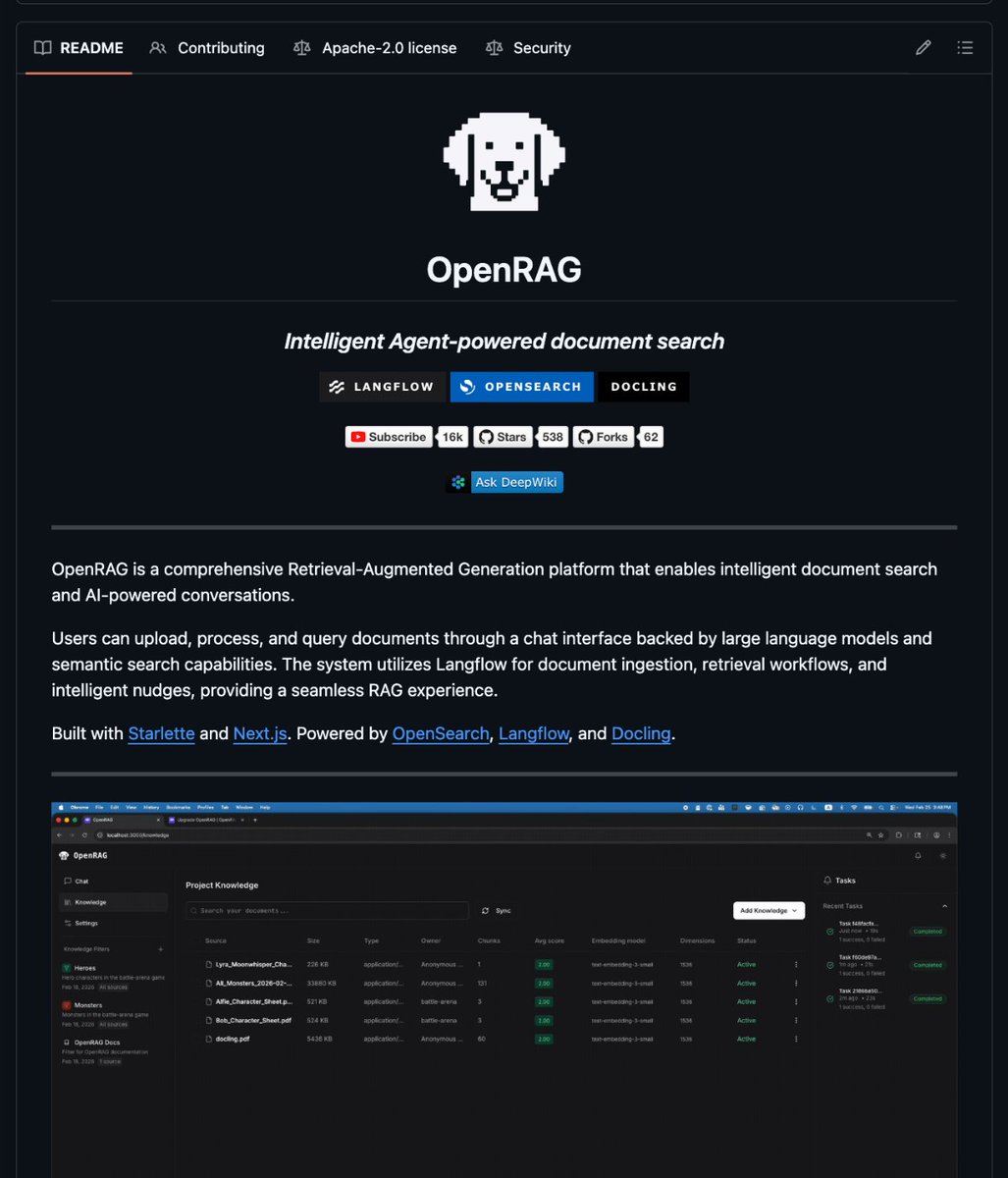
🚨BREAKING: Langflow just open-sourced a complete RAG platform in a single package. It's called OpenRAG. Built on Langflow, Docling, and OpenSearch. Upload documents, run semantic search, and chat with your data no duct tape required. One command to run: uvx openrag → Full document ingestion pipeline → AI-powered chat over your files → Built-in semantic search via OpenSearch → Visual workflows via Langflow → Docker support out of the box 100% Opensource.