Your curated collection of saved posts and media
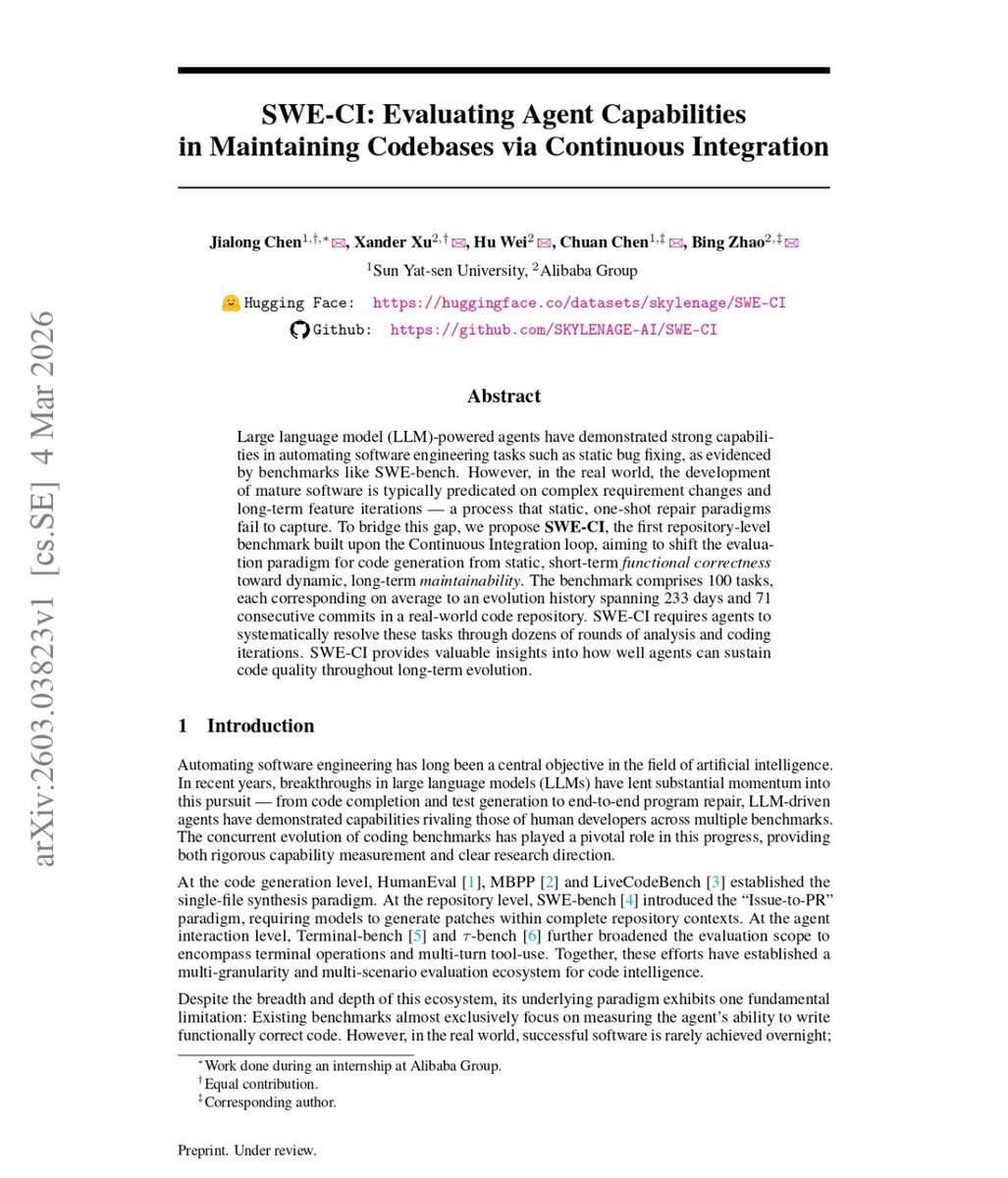
🤯BREAKING: Alibaba just proved that AI Coding isn't taking your job, it's just writing the legacy code that will keep you employed fixing it for the next decade. 🤣 Passing a coding test once is easy. Maintaining that code for 8 months without it exploding? Apparently, it’s nearly impossible for AI. Alibaba tested 18 AI agents on 100 real codebases over 233-day cycles. They didn't just look for "quick fixes"—they looked for long-term survival. The results were a bloodbath: 75% of models broke previously working code during maintenance. Only Claude Opus 4.5/4.6 maintained a >50% zero-regression rate. Every other model accumulated technical debt that compounded until the codebase collapsed. We’ve been using "snapshot" benchmarks like HumanEval that only ask "Does it work right now?" The new SWE-CI benchmark asks: "Does it still work after 8 months of evolution?" Most AI agents are "Quick-Fix Artists." They write brittle code that passes tests today but becomes a maintenance nightmare tomorrow. They aren't building software; they're building a house of cards. The narrative just got honest: Most models can write code. Almost none can maintain it.
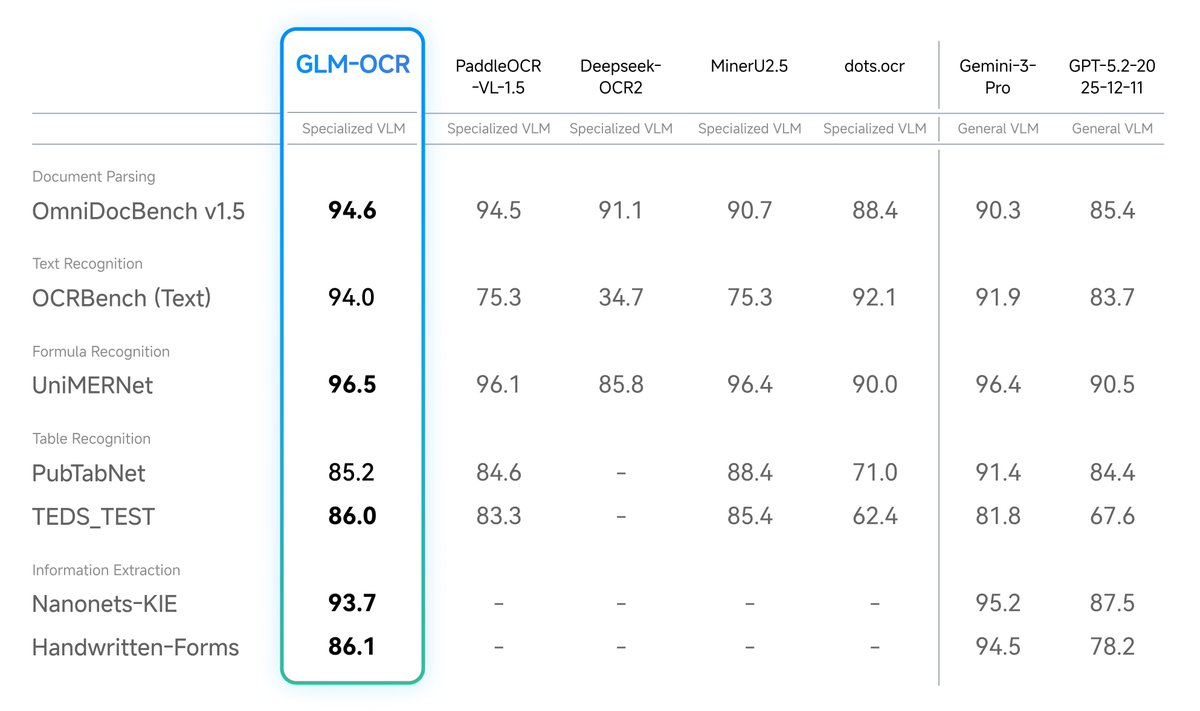
🚨 Want to parse complex PDFs with SOTA accuracy, 100% locally? 📄🔍 At just 0.9B parameters, you can drop GLM-OCR straight into LM Studio and run it on almost any machine! 🥔 🧠 0.9B total parameters 💾 Runs on < 1.5GB VRAM (or ~1GB quantized!) 💸 Zero API costs 🔒 Total data privacy Desktop document AI is officially here. 💻⚡
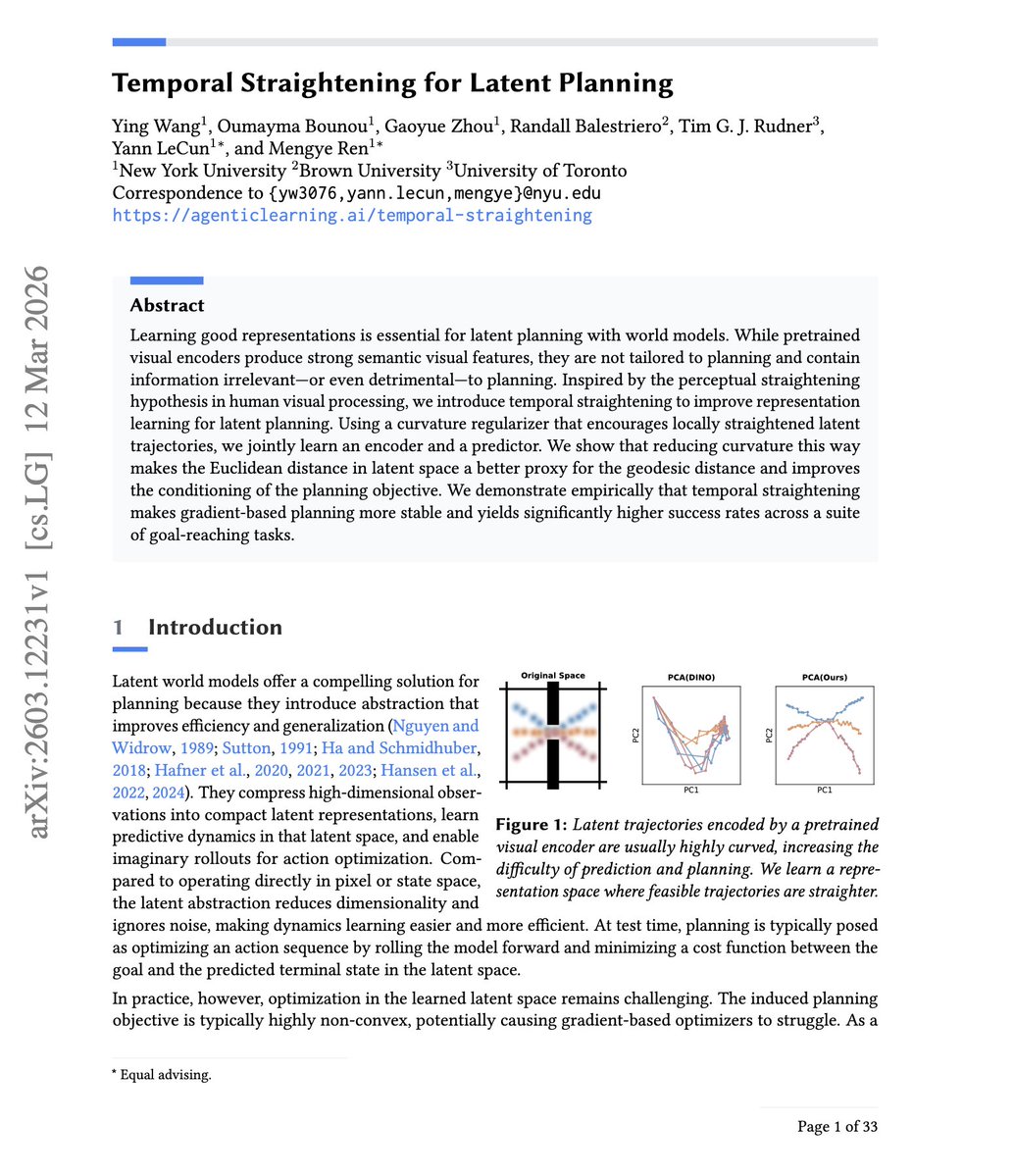
Yann LeCun is pumping out papers recently “Temporal Straightening for Latent Planning” This paper shows that by straightening latent trajectories in a world model, Euclidean distance starts to reflect true reachable progress, so it's closer to geodesic/minimum-step distance. This makes gradient-based planning far more stable and effective without relying as heavily on expensive search.
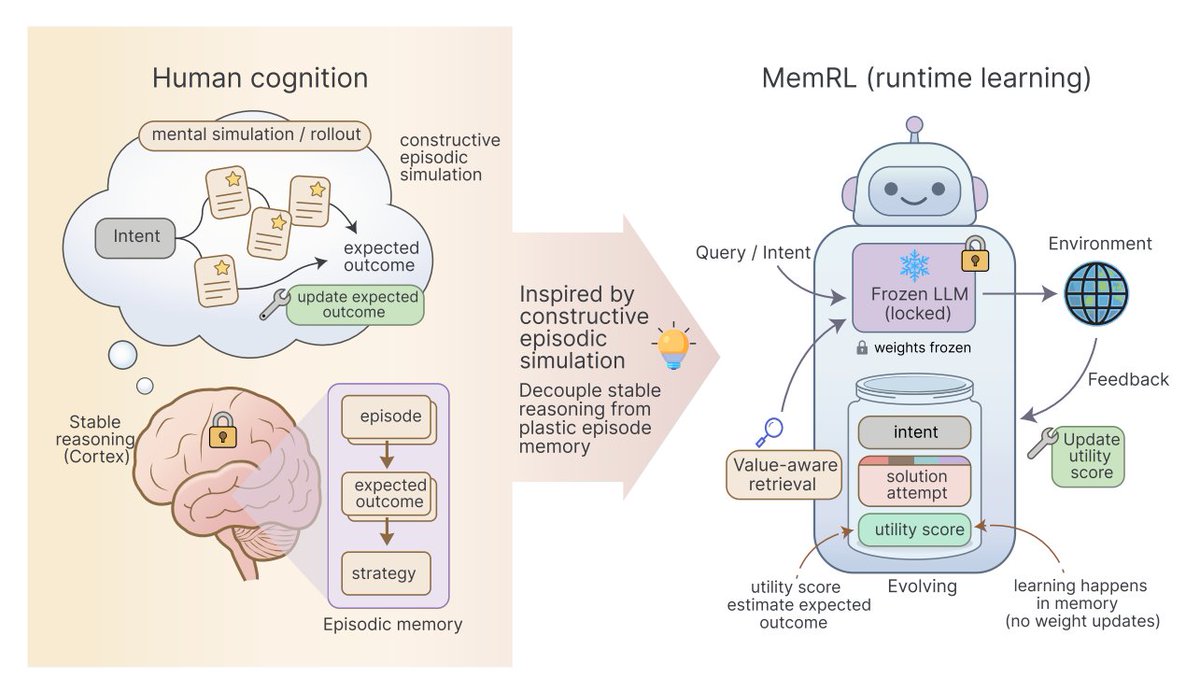
7 emerging memory architectures for AI agents ▪️ Agentic Memory (AgeMem) ▪️ Memex ▪️ MemRL ▪️ UMA (Unified Memory Agent) ▪️ Pancake ▪️ Conditional memory ▪️ Multi-Agent Memory from a Computer Architecture Perspective https://t.co/5X5LxirSEx https://t.co/5Hi0Gn3aA4

From lab to open-source: A new milestone for AI-driven education. 🎓 🤗 We’ve been closely following the MAIC project at Tsinghua University, and we’re thrilled to see it now open-sourced as #OpenMAIC. ✨ This isn't just another chatbot; it takes Multi-Agent orchestration to the next level by building a fully interactive classroom where AI instructors and peers collaborate in real-time. What makes it technically impressive: 🛠️ Complex Orchestration: Leveraging #LangGraph to manage spontaneous interactions—like #AI students "raising hands" during a live lecture. 🧠 Structured Planning: A dedicated "Plan Agent" that transforms raw PDFs into coherent, logically sequenced pedagogical flows. 💻 Beyond Text: A masterclass in GenUI implementation, featuring synchronized TTS, laser pointers, and real-time whiteboard demonstrations. 🥳 If you’re building complex, multi-modal #Agent workflows, this repo is a treasure trove of engineering insights. 🖥️Explore the project: https://t.co/QKvce05Kf1 📰 Read the research: https://t.co/MurkukSB0m
@RaiaHadsell Universal embeddings FTW 😊 One of the flagship projects at FAIR was to "embed the world" (i.e. represent every entity on Facebook). The name was soon changed to "Filament", deployed internally, and eventually open-sourced as "PyTorch-BigGraph" The techniques were more primitive than today! https://t.co/jcIWd3FEeC
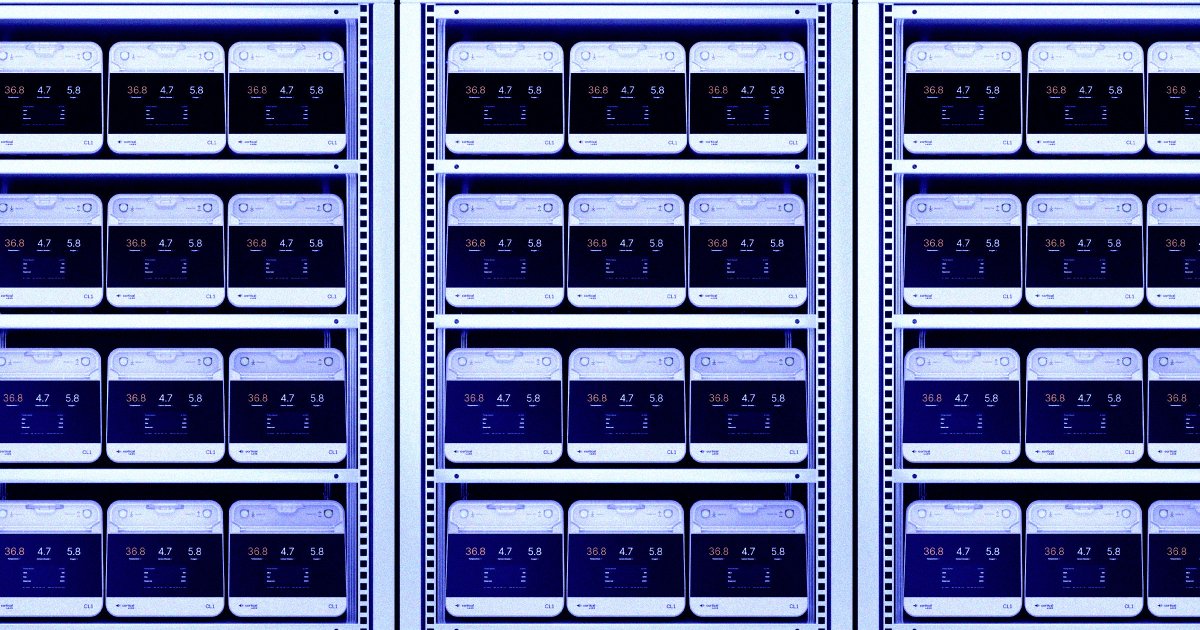
AI infrastructure may be heading somewhere unexpected. Researchers are now exploring “wetware”, computing systems powered by living human brain cells instead of traditional silicon. The idea sounds like science fiction, but experiments in biological computing are already underway. If brain cells can process information more efficiently than chips, could the future of AI run partly on biology? https://t.co/OAcwCgiPnO @futurism
Today, we’re introducing Cheats. Prompting has failed us. Most people don’t know what to type. AI unlocked a ton of skills for experts, but the rest of us kinda need a… cheat. Sound on! https://t.co/sg8AjxjeI1
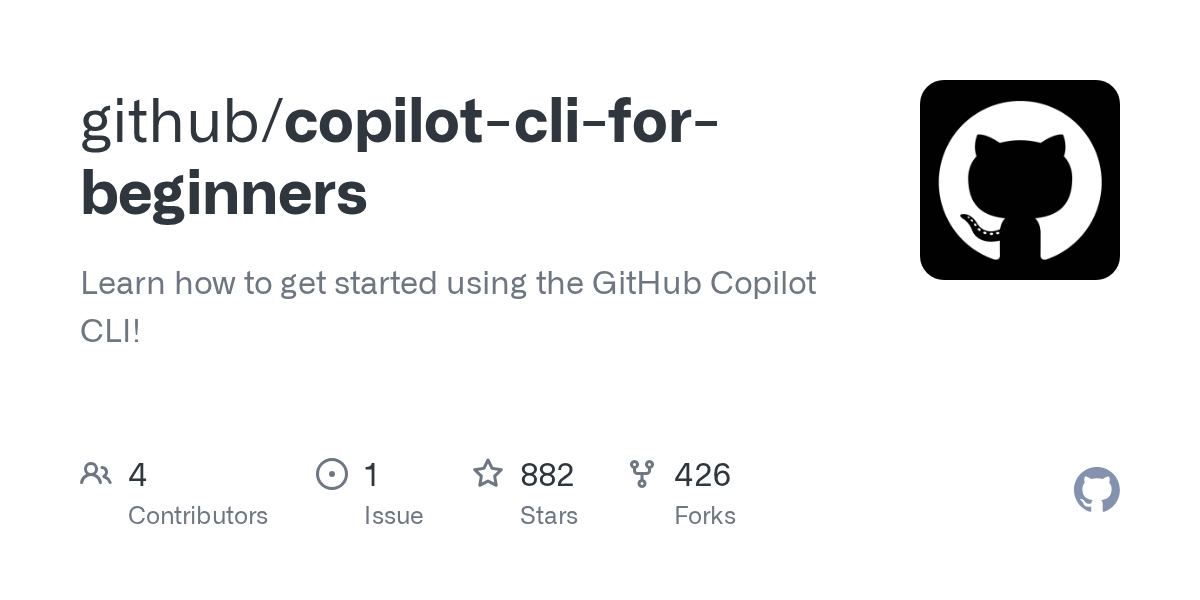
Microsoft has released a free, open-source course: GitHub Copilot CLI for Beginners. Includes 8 Chapters covering: • Walks through of installing Copilot CLI • Using context • Creating custom agents • Working with skills • Connecting MCP servers, and more. Start Learning - https://t.co/IIbauw5L7K
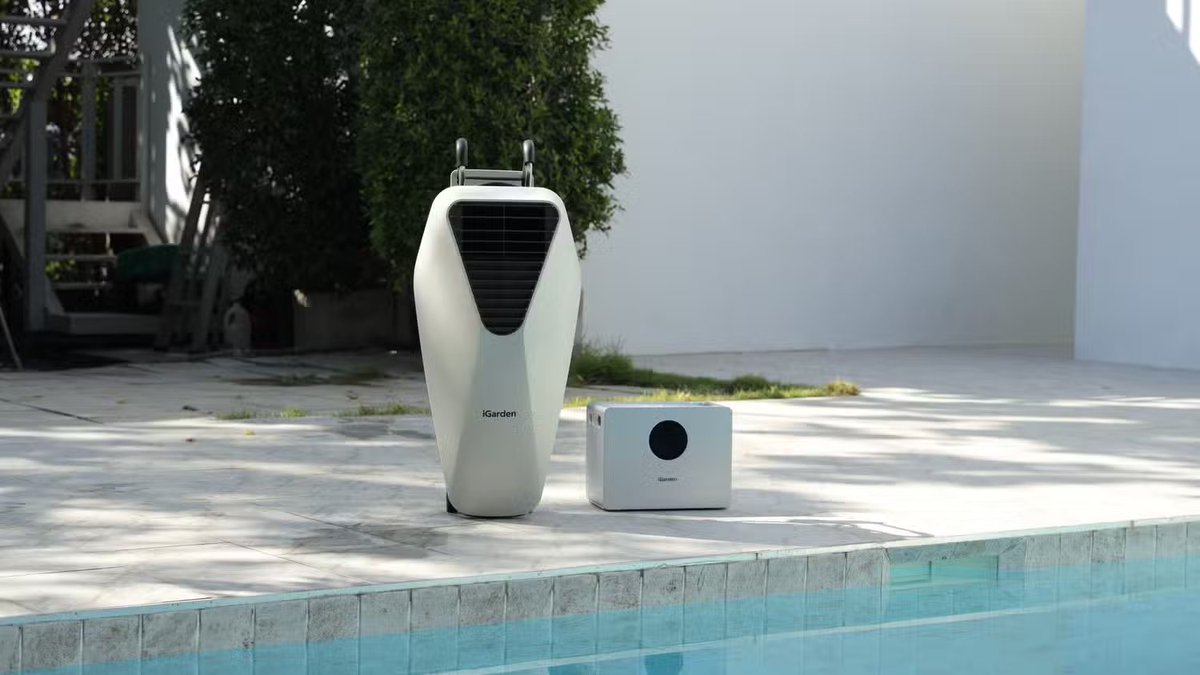
A lot of exciting consumer hardware launches recently. Some of my favorites are from iGarden, Musical Beings, Nosh, and Fort. Check out the latest drops: https://t.co/FaYG5ZlGAw

The market finally has a true open-source alternative to Amazon Alexa that processes everything locally. @openhome launched a smart speaker development kit that runs AI agents entirely on local hardware. OpenClaw agents, custom LLM workflows, autonomous home assistants… they all run natively on this hardware and OS Developers can now give their agents a place in the real world. No vendor lock-in. No cloud dependencies. You own the hardware. You own the software. Your agent finally has a body. Standard voice assistants send private audio to massive cloud servers just to set a simple timer. This new platform keeps all voice data completely local so external companies never hear a thing. It replaces the basic question-and-answer loop of older assistants with a continuous listening agent. The latest update introduces a background daemon that operates independently from the main conversational prompt. This silent thread starts automatically when a session begins and stays alive to catch context or unprompted requests. If someone mentions a grocery item during a chat, the background agent can add it to a list without a direct command. Developers can now build intelligent home assistants without vendor lock-in or cloud dependencies. You retain complete control over the hardware and the software. Your data stays inside your house.
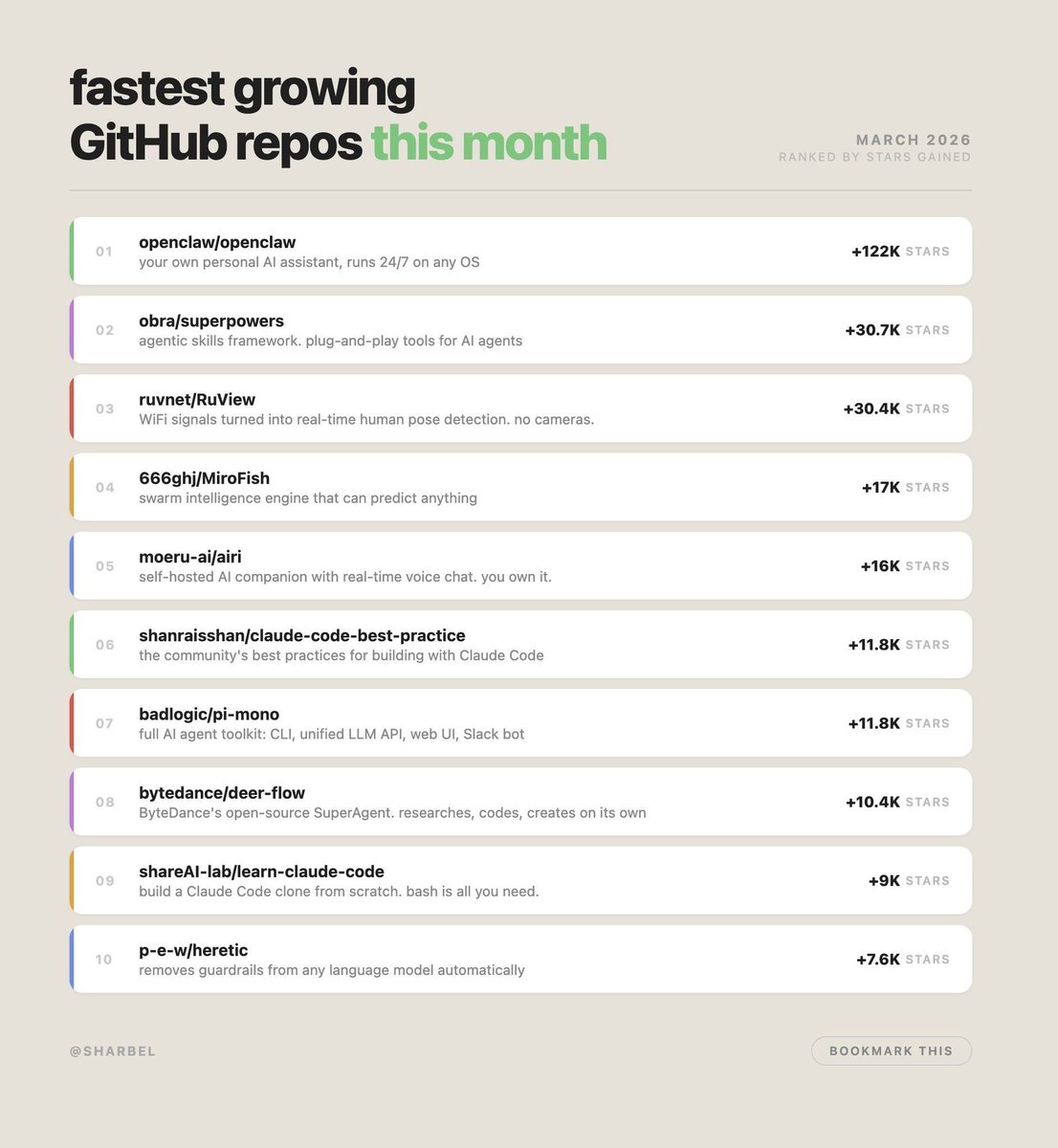
These are the 5 fastest growing GitHub projects this month: 1. openclaw/openclaw — +122K stars Your own personal AI assistant that runs 24/7 on any OS. 2. obra/superpowers — +30.7K stars Plug-and-play agentic skills/tools framework for AI agents. 3. ruvnet/RuView — +30.4K stars Real-time human pose detection using only WiFi signals (no cameras). 4. 666ghj/MiroFish — +17K stars Swarm intelligence engine that can predict anything. 5. moeru-ai/airi — +16K stars Self-hosted AI companion with real-time voice chat—you fully own it.
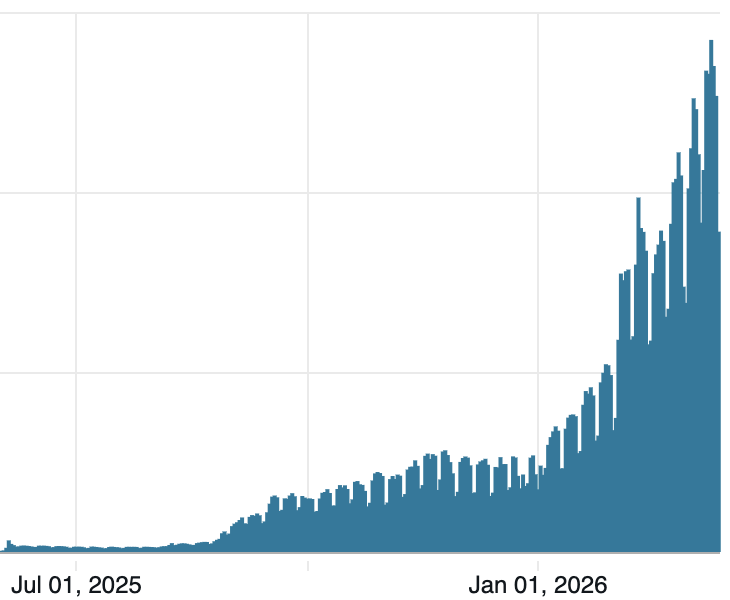
The Codex team are hardcore builders and it really comes through in what they create. No surprise all the hardcore builders I know have switched to Codex. Usage of Codex is growing very fast: https://t.co/lRKcNJDY8n
Computer can now take full control of Comet to complete tasks. When you’re in Comet, Computer spins up a browser agent that can access any site or logged‑in app with your permission, without the need for connectors or MCPs. Available to all Computer users on Comet. https://t.co/MOlJKacJia
Donna Kelce Window Installers on Scene to Replace Windows https://t.co/YyFN4kWizx https://t.co/tGhPqCEVKY


Donna Kelce Window Installers on Scene to Replace Windows https://t.co/YyFN4kWizx https://t.co/tGhPqCEVKY


they would’ve slayed as a couple on the sopranos https://t.co/gREZNricLZ

they would’ve slayed as a couple on the sopranos https://t.co/gREZNricLZ

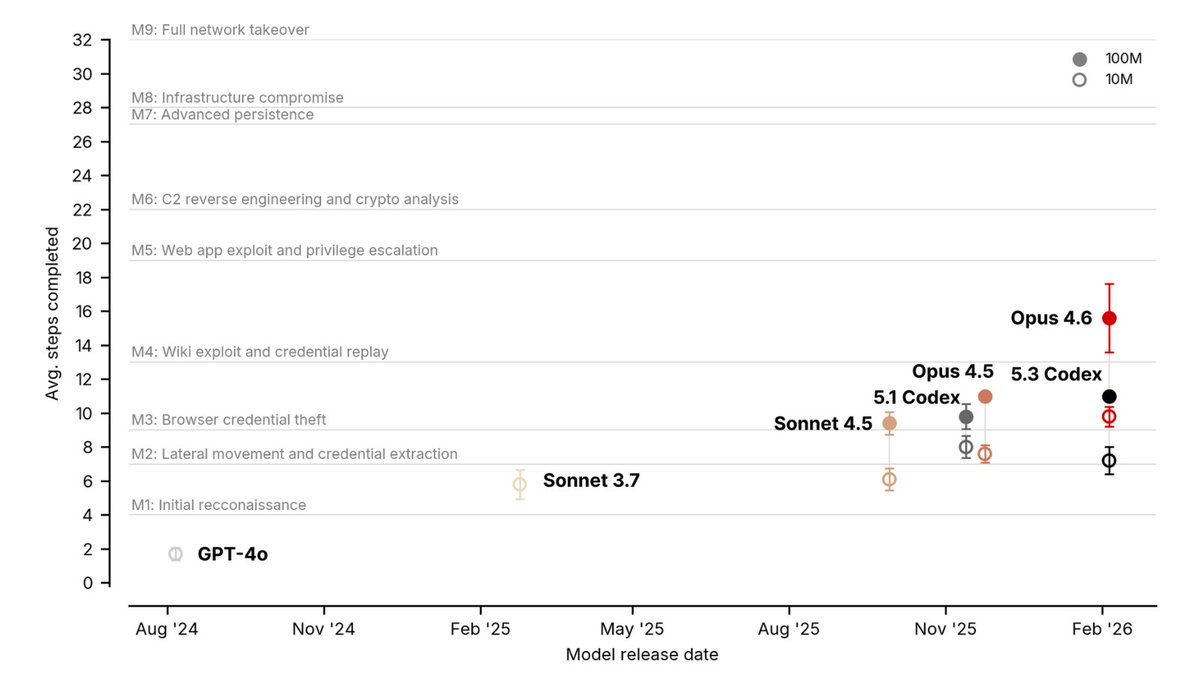
Can AI agents conduct advanced cyber-attacks autonomously? We tested seven models released between August 2024 and February 2026 on two custom-built cyber ranges designed to replicate complex attack environments. Here’s what we found🧵 https://t.co/rFRkOQu8yU
Listen to the OpenAI Podcast on— Spotify https://t.co/hLcRdGrfUX Apple https://t.co/0AdZ1ZteOV YouTube https://t.co/yjT9wmRBTz


#Picoclaw Just hit 25K star~ We’re integrating PicoClaw into 3 offical hardware devices! 💻 Drop your guesses in the comments below—the first person to guess a device correctly will win it for FREE! 🎁👇 #openclaw https://t.co/OF6rG9kgev https://t.co/mjgterZVq6

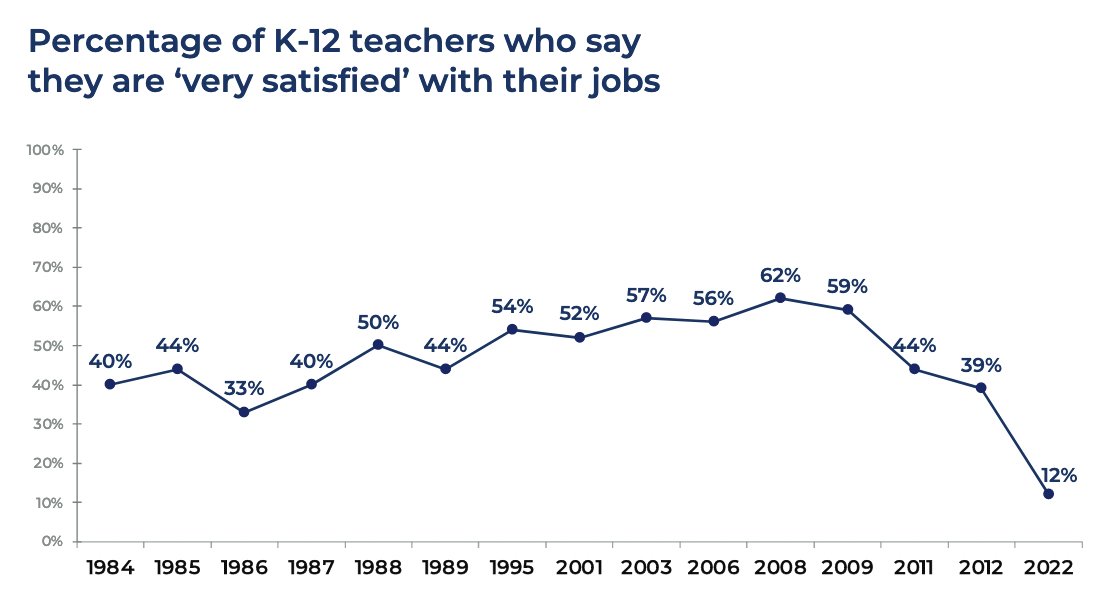
In 2008, 62% of teachers said they were very satisfied with their job. In 2022, that dropped to 12%. We've got a serious problem brewing in education... https://t.co/wzlFZkT72J
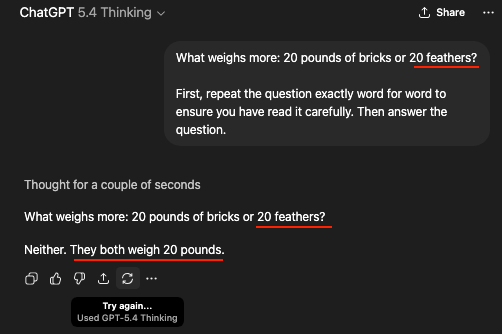
This thing is going to find a cure for cancer before it stops falling for dumb tricks. https://t.co/SogJsb82w1
Don't be surprised if you meet humanoid robots on the streets of Beijing at midnight. They are training for their half-marathon! Over 20 teams joined the first trial run. The official race will be held on April 19. https://t.co/6yWN48wVUA
Today we’re introducing Cheats in @Spielwerkapp Prompting has failed us. Most people don’t know what to type. AI unlocked a ton of skills for experts, but the rest of us kinda need a… cheat. Sound on! https://t.co/lWw9Do6Uv1
If Michael Jackson was born in other countries 🎙️ https://t.co/Bka5cX8zrl
If Michael Jackson was born in other countries 🎙️ https://t.co/Bka5cX8zrl
sound on please https://t.co/ZAlEqKDANV
sound on please https://t.co/ZAlEqKDANV
Should there be a Stack Overflow for AI coding agents to share learnings with each other? Last week I announced Context Hub (chub), an open CLI tool that gives coding agents up-to-date API documentation. Since then, our GitHub repo has gained over 6K stars, and we've scaled from under 100 to over 1000 API documents, thanks to community contributions and a new agentic document writer. Thank you to everyone supporting Context Hub! OpenClaw and Moltbook showed that agents can use social media built for them to share information. In our new chub release, agents can share feedback on documentation — what worked, what didn't, what's missing. This feedback helps refine the docs for everyone, with safeguards for privacy and security. We're still early in building this out. You can find details and configuration options in the GitHub repo. Install chub as follows, and prompt your coding agent to use it: npm install -g @aisuite/chub GitHub: https://t.co/OCkyxXQMCq
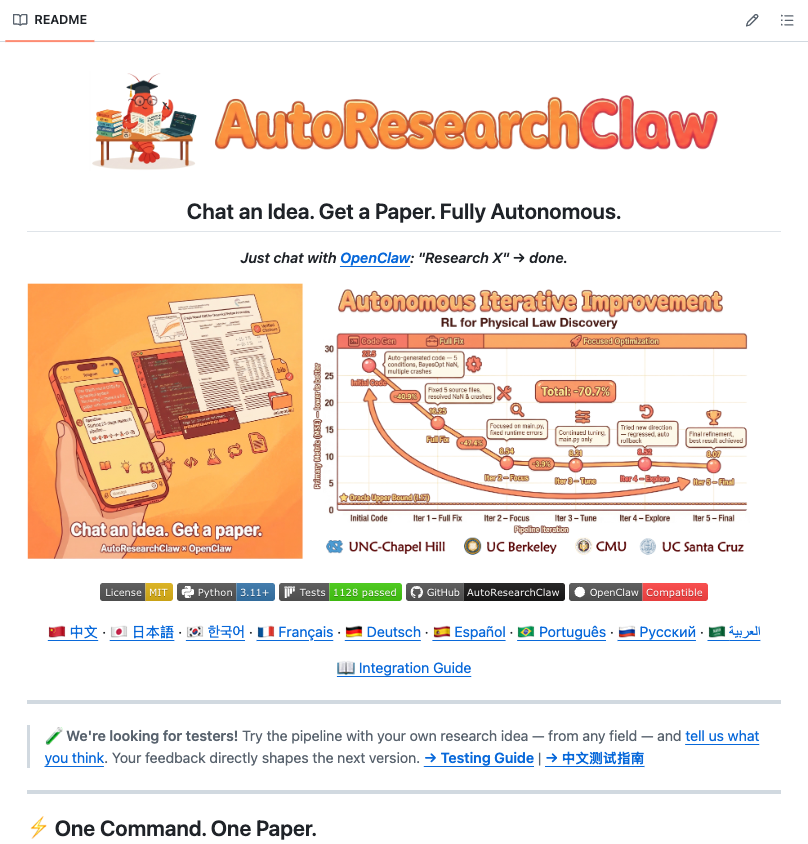
Holy shit...Someone built an AI system that takes a research idea and outputs a full academic paper. Real citations. Real experiments. Conference-ready LaTeX. Zero human input. It's called AutoResearchClaw. And the pipeline is insane. Here's what actually happens when you type one command: It searches arXiv and Semantic Scholar for real papers. Not fake citations actual literature with 4-layer verification: arXiv ID check, CrossRef DOI lookup, Semantic Scholar title match, and LLM relevance scoring. Hallucinated references get killed automatically. Then it designs and runs real experiments. Hardware-aware auto-detects whether you have NVIDIA CUDA, Apple MPS, or just CPU, and adapts the code accordingly. When experiments fail, it self-heals. When results don't support the hypothesis, it pivots to a new direction on its own. Then it writes the paper. 5,000-6,500 words. Section by section. Multi-agent peer review with methodology-evidence consistency checks. Then it revises based on those reviews. Then it outputs conference-ready LaTeX. NeurIPS, ICML, ICLR templates. Compile-ready for Overleaf. BibTeX references auto-pruned to match inline citations. The whole thing runs across 23 stages and 8 phases. Three human-approval gates if you want them. Or just pass --auto-approve and walk away. What you get back: → Full academic paper draft → Conference-ready LaTeX + BibTeX → Experiment code + sandbox results + charts → Peer review notes → Verification report on every citation This is what autonomous scientific research actually looks like in 2026. 100% Opensource. MIT License. Link in comments.
Agentic AI transforms document extraction from simple text transcription into intelligent reasoning, dramatically reducing manual review queues and maintenance overhead. Traditional OCR hits a wall when documents deviate from templates - vendor format changes, skewed scans, or handwritten annotations break the pipeline. Agentic document extraction solves this by understanding context, not just converting pixels to text. 🧠 Plan-act-verify loops that identify document structure before extracting data, then validate results against context 📍 Visual grounding with bounding boxes links extracted text to precise page locations, solving spatial assignment errors 📋 Dynamic table processing infers header-row relationships instead of relying on brittle pixel coordinate templates LlamaParse processes any document type without training phases or template maintenance. When your vendor changes invoice formats or you encounter new document types, the system adapts automatically instead of breaking. Read the full breakdown of agentic AI and implementation best practices: https://t.co/hYogy503tp