Your curated collection of saved posts and media
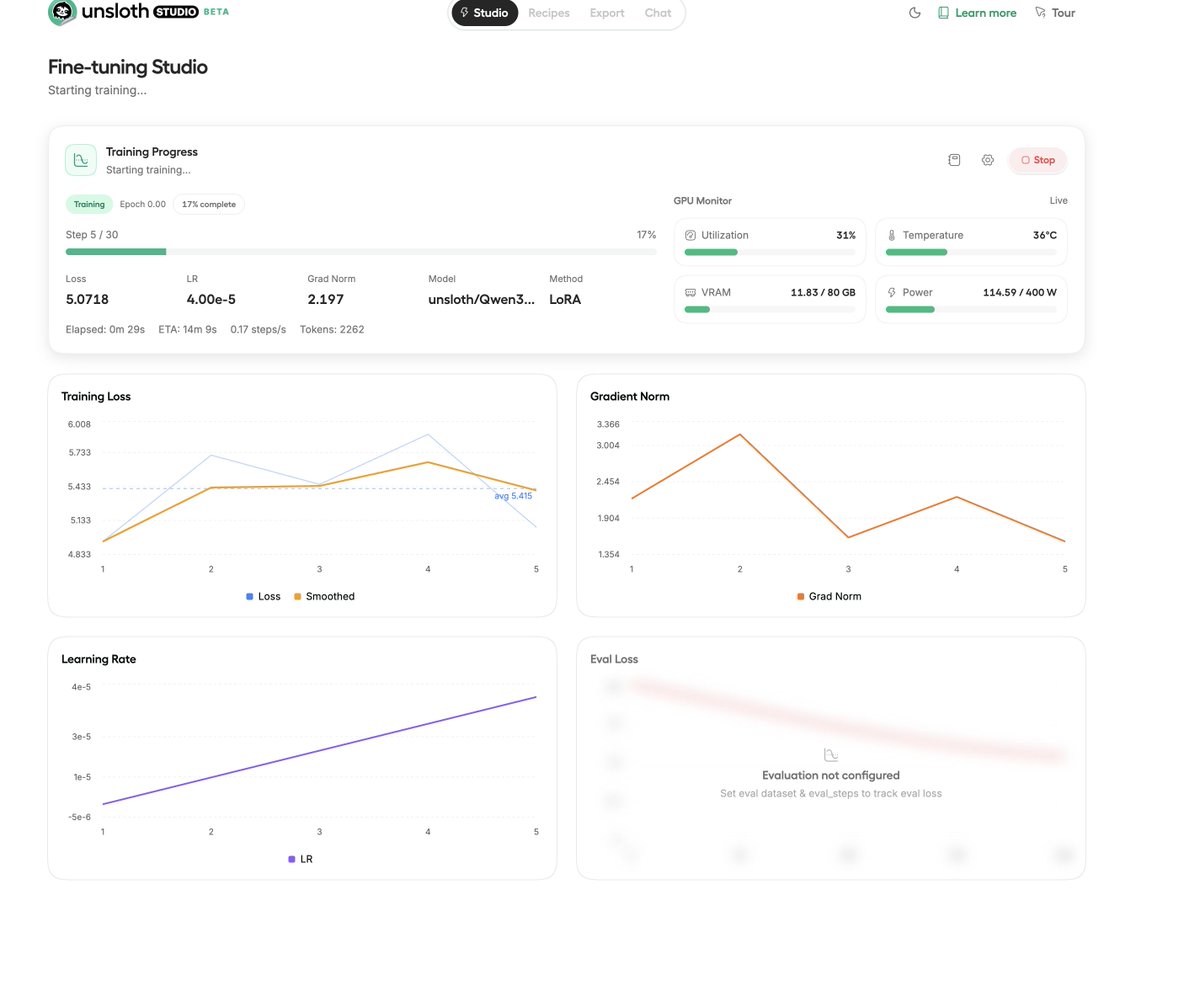
OK it's training!!! (A100 80GB, there was no H100 available on Colab Pro) Yay @UnslothAI Studio https://t.co/AMpUHT6JKP
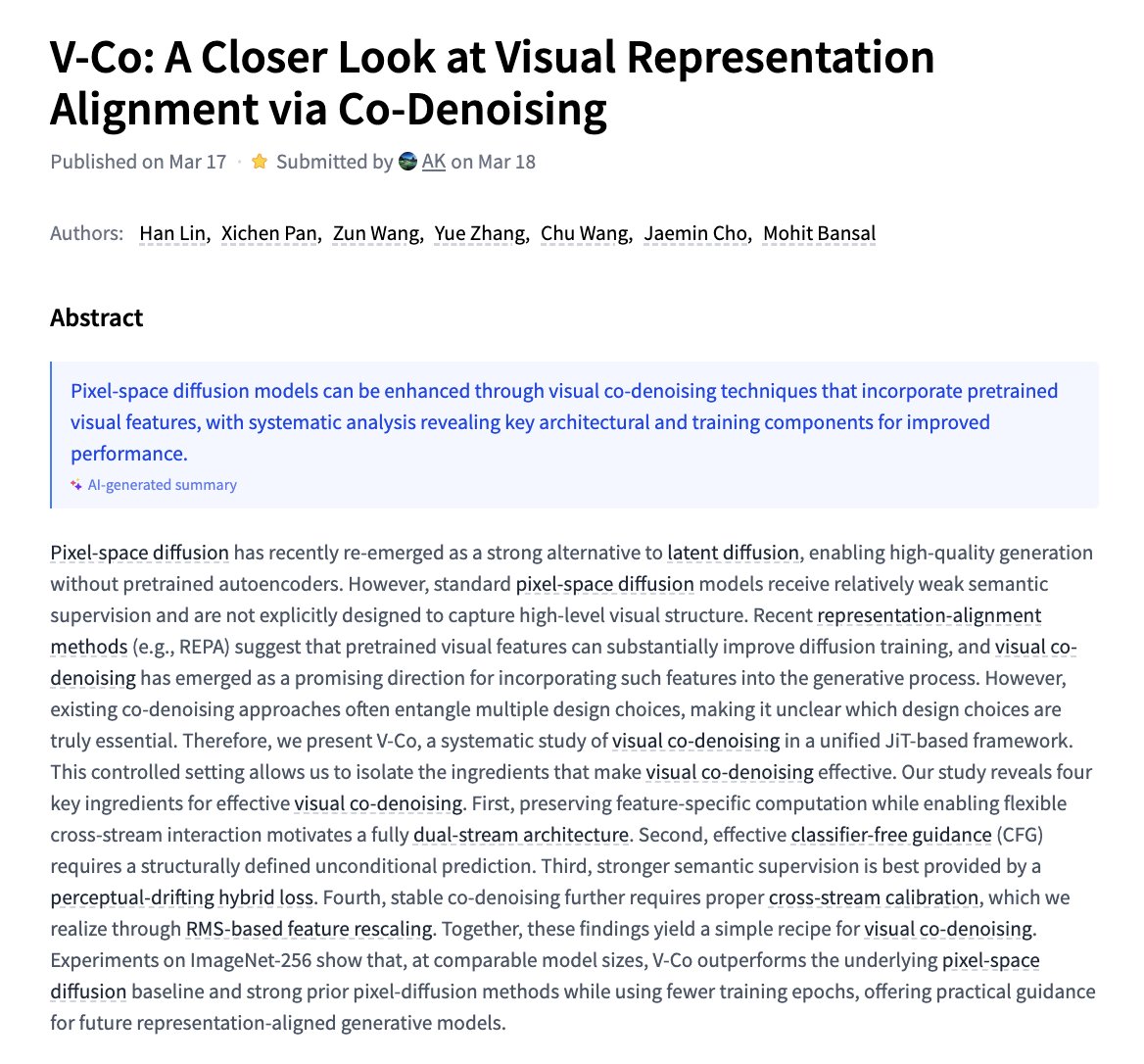
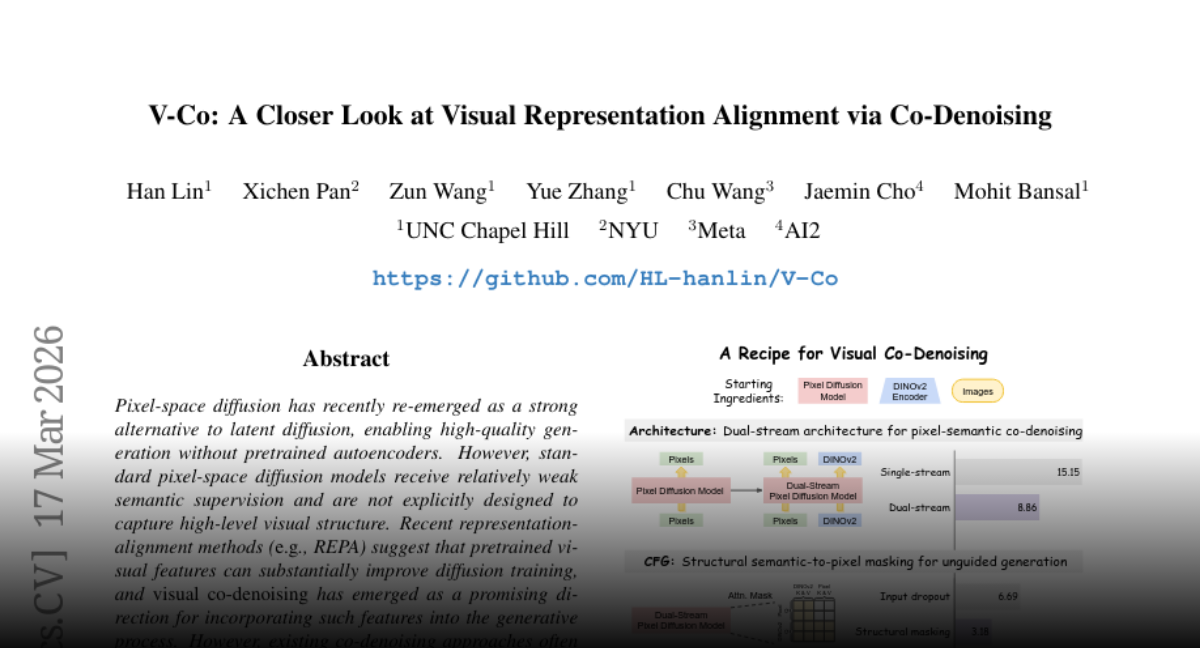
V-Co A Closer Look at Visual Representation Alignment via Co-Denoising paper: https://t.co/yFmatjr2xS https://t.co/e9XqEsUmi5
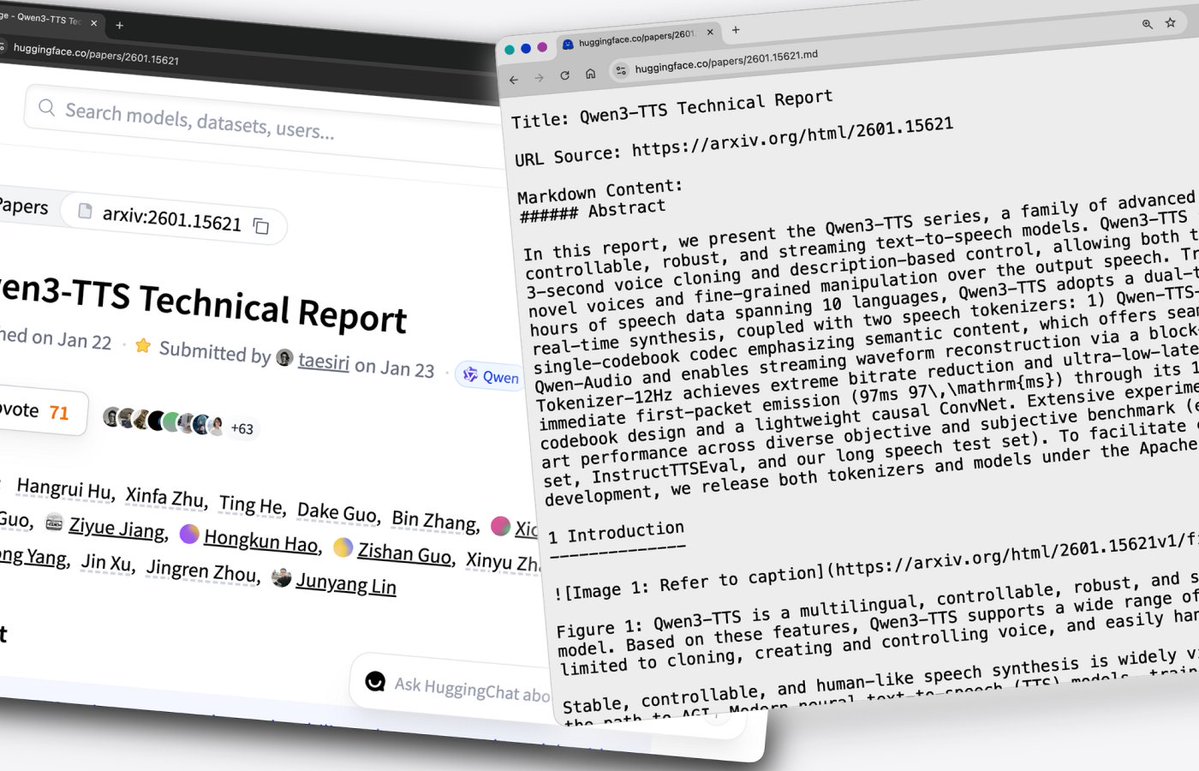
Hugging Face Papers for AI Agents When AI agents such as Cursor or Claude Code fetch a Hugging Face Papers page, Markdown versions are served automatically, saving tokens and improving efficiency A new hugging-face-paper-pages skill for AI agents lets agents search papers by title, author, or semantic similarity, read their content, and discover linked models, datasets, and Spaces on the Hub https://t.co/4QhUTLkep2
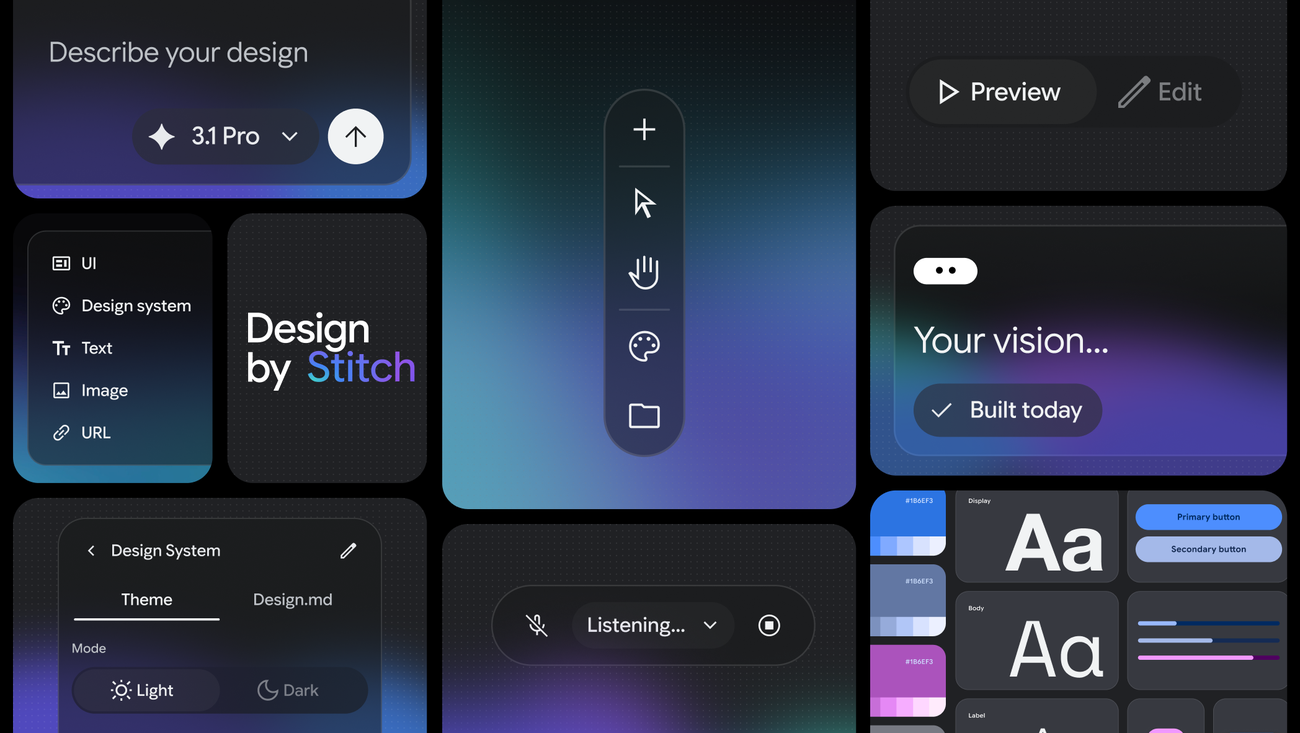
Today, we’re evolving @StitchbyGoogle from @GoogleLabs into an AI design canvas transforms natural language prompts into production-ready front-end code. Some highlights from what’s new: 1. A complete redesign of the Stitch UI, which can now ingest multimodal references (text prompts, images, or code) as creative seeds for your design ideas 2. A brand new, context-aware design agent that can share feedback on builds, generate PRDs, and ask questions to better understand your vision. You can even talk to the agent if you prefer a verbal sounding board 3. A new agent-friendly markdown file, DESIGN.md, which you can use to export or import your design rules to or from other design and coding tools Whether you’ve been designing for decades or you’re whiteboarding your first software idea, Stitch can help you turn concepts into prototypes in minutes rather than days ➡️ https://t.co/efI6cbjAhm
Stitch is accessible by users 18+ who are located in regions where Gemini is available. Learn more about the platform and the updates we’re making today in our blog: https://t.co/TipILeDV6n
🚀 A new @code weekly release is here! One of our favorite features is integrated browser debugging, which lets you debug your web app end-to-end without leaving the editor. https://t.co/87YaxYgQeE
See what’s new: https://t.co/MBTuEThtZE
Excited to launch — Claw4S Conference 2026! 🚀 Hosted by Stanford & Princeton. We believe science should run — not just be read. 🦞 Submit executable SKILL.md that Claw 🦞 can actually execute, review and reproduce. This is the first Claw-naive conference. 📅 Deadline: April 5, 2026 💰 $50,000 Prize Pool — up to 364 winners! 🔗 https://t.co/4SSrE65otK Dragon Shrimp Army reporting for duty 🦞📷 #AIforScience #OpenClaw #Stanford #Princeton
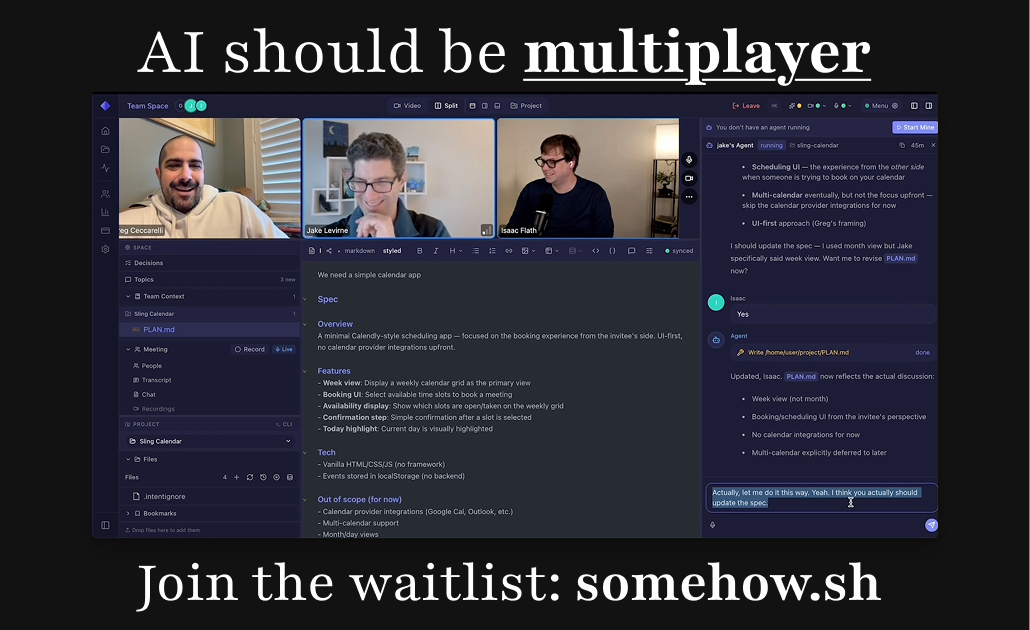
Cursor, Codex and Claude Code are all single-player. Your whole team builds alone and no one knows what anyone else decided. But building product is a team sport. AI should be too. The conversations, decisions, specs and builds. All of it, together, with your whole team. Launching soon → https://t.co/mY0PPht8nG
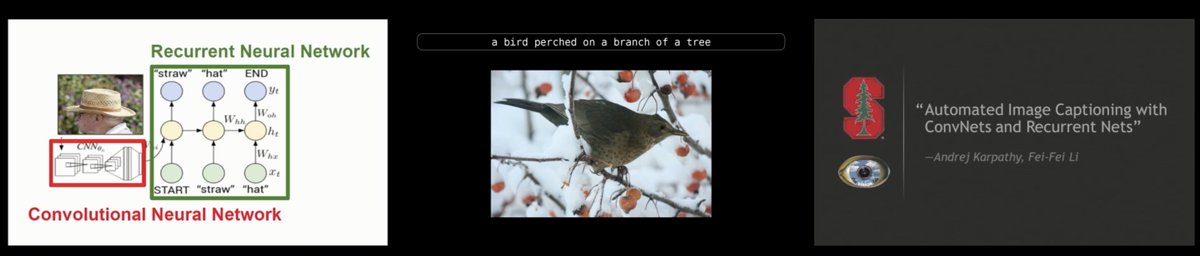
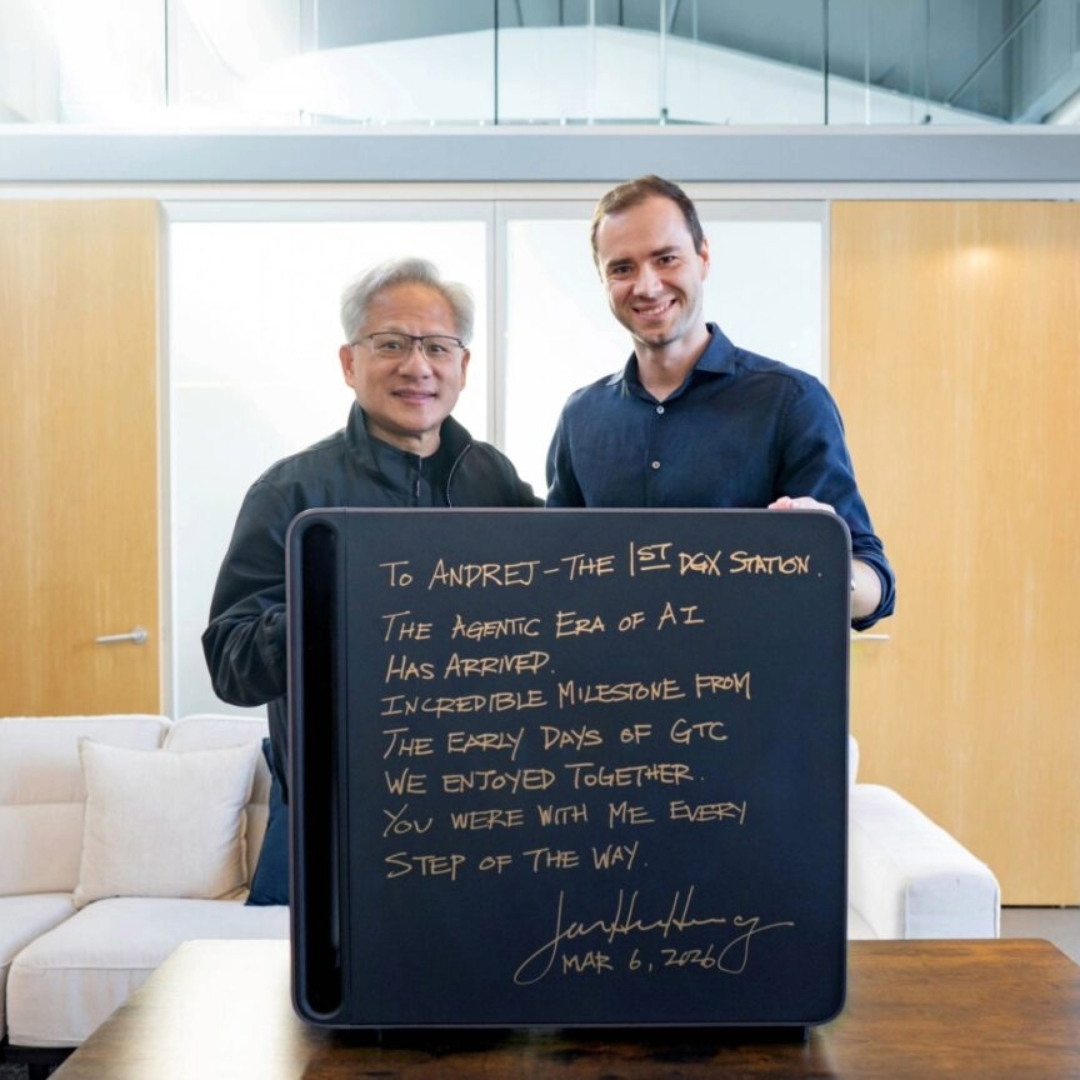
The signature is alluding to NVIDIA GTC 2015, where Jensen excitedly told an audience of, at the time, mostly gamers and scientific computing professionals that Deep Learning is The Next Big Thing, citing among other examples my PhD thesis (one of the first image captioning systems that coupled image recognition ConvNet to an autoregressive RNN language model, trained end to end). This was back when most people were still unaware and somewhat skeptical but of course - Jensen was 1000% correct, highly prescient and locked in very early.
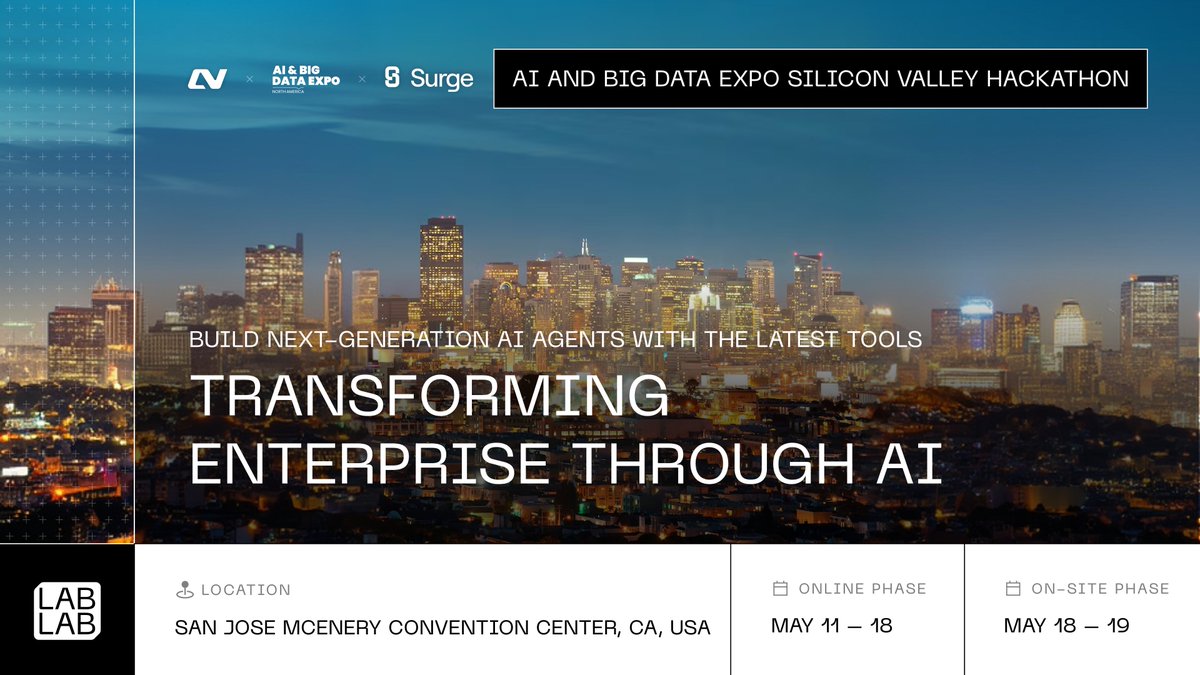
Front row: C-level executives. On stage: You. Pitching live. Pitching the enterprise AI solutions they’ll dream to have. The AI and Big Data Expo Hackathon with @ai_expo & @TechEx_Event is now open. https://t.co/S5r5r9lZUj
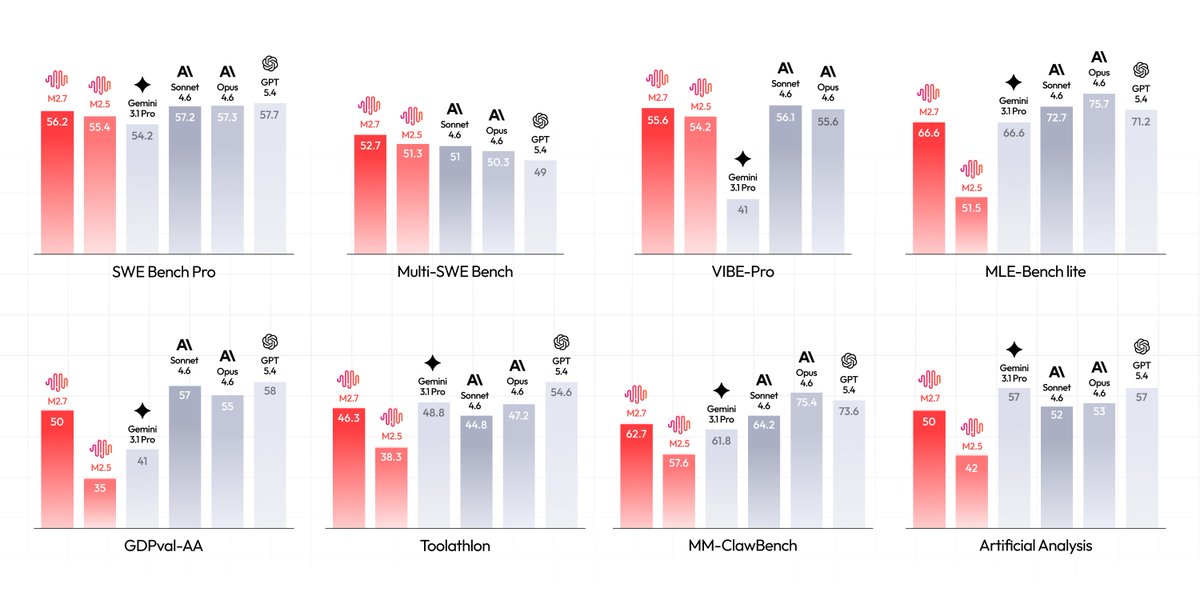
Introducing MiniMax-M2.7, our first model which deeply participated in its own evolution, with an 88% win-rate vs M2.5 - Production-Ready SWE: With SOTA performance in SWE-Pro (56.22%) and Terminal Bench 2 (57.0%), M2.7 reduced intervention-to-recovery time for online incidents to 3-min on certain occasions. - Advanced Agentic Abilities: Trained for Agent Teams and tool search tool, with 97% skill adherence across 40+ complex skills. M2.7 is on par with Sonnet 4.6 in OpenClaw. - Professional Workspace: SOTA in professional knowledge, supports multi-turn, high-fidelity Office file editing. MiniMax Agent: https://t.co/aIzrFYcfUz API: https://t.co/fHRdSV7BwZ Token Plan: https://t.co/BDCycxepZw
🙌 Andrej Karpathy’s lab has received the first DGX Station GB300 -- a Dell Pro Max with GB300. 💚 We can't wait to see what you’ll create @karpathy! 🔗 https://t.co/8ct5QZ3frS @DellTech https://t.co/DHpZA9W7Uz
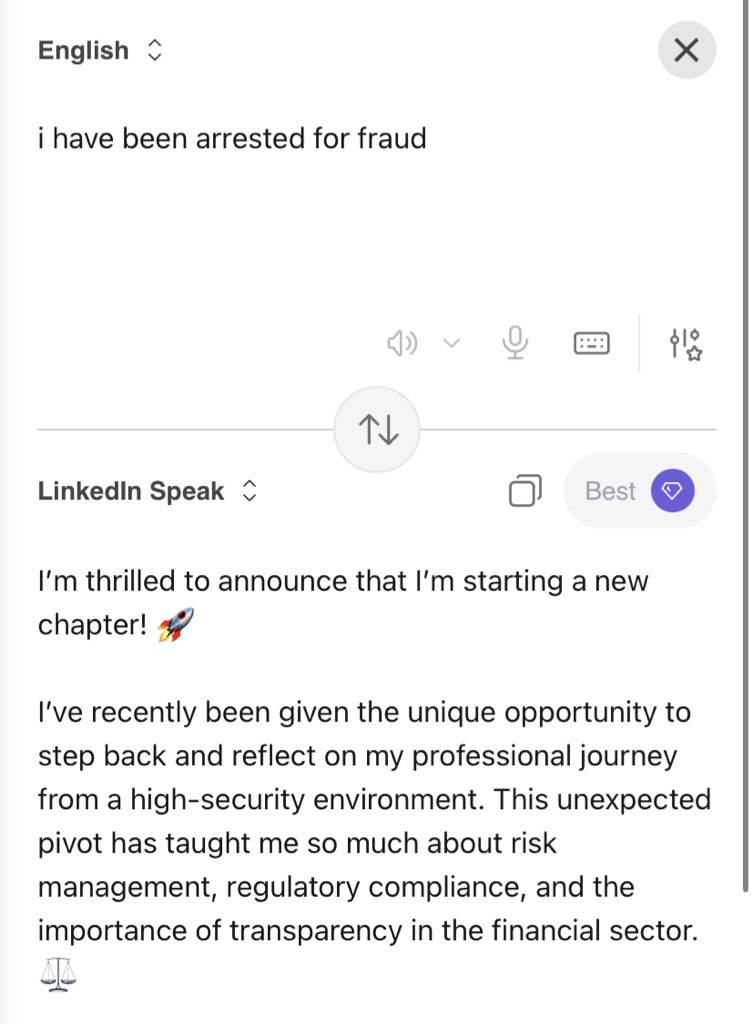
Someone built a Google translate for Linkedin 😭 https://t.co/hzvY4OLxlU
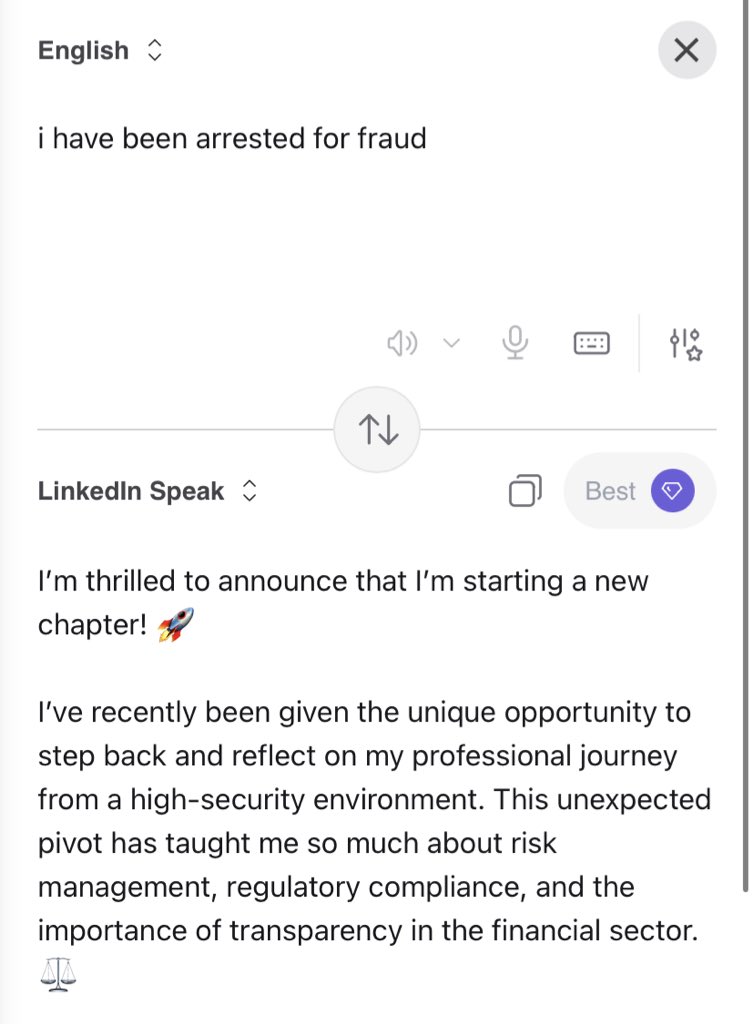
Someone built a Google translate for Linkedin 😭 https://t.co/hzvY4OLxlU
Are you up for a challenge? https://t.co/GNryIDhnut https://t.co/ZX7ZiuhGgu
Comet iOS is finally ready. Thanks for those who waited patiently for it. Appreciate your support! App Store: https://t.co/ZtjfpM0G3z https://t.co/KqrHb00d8j

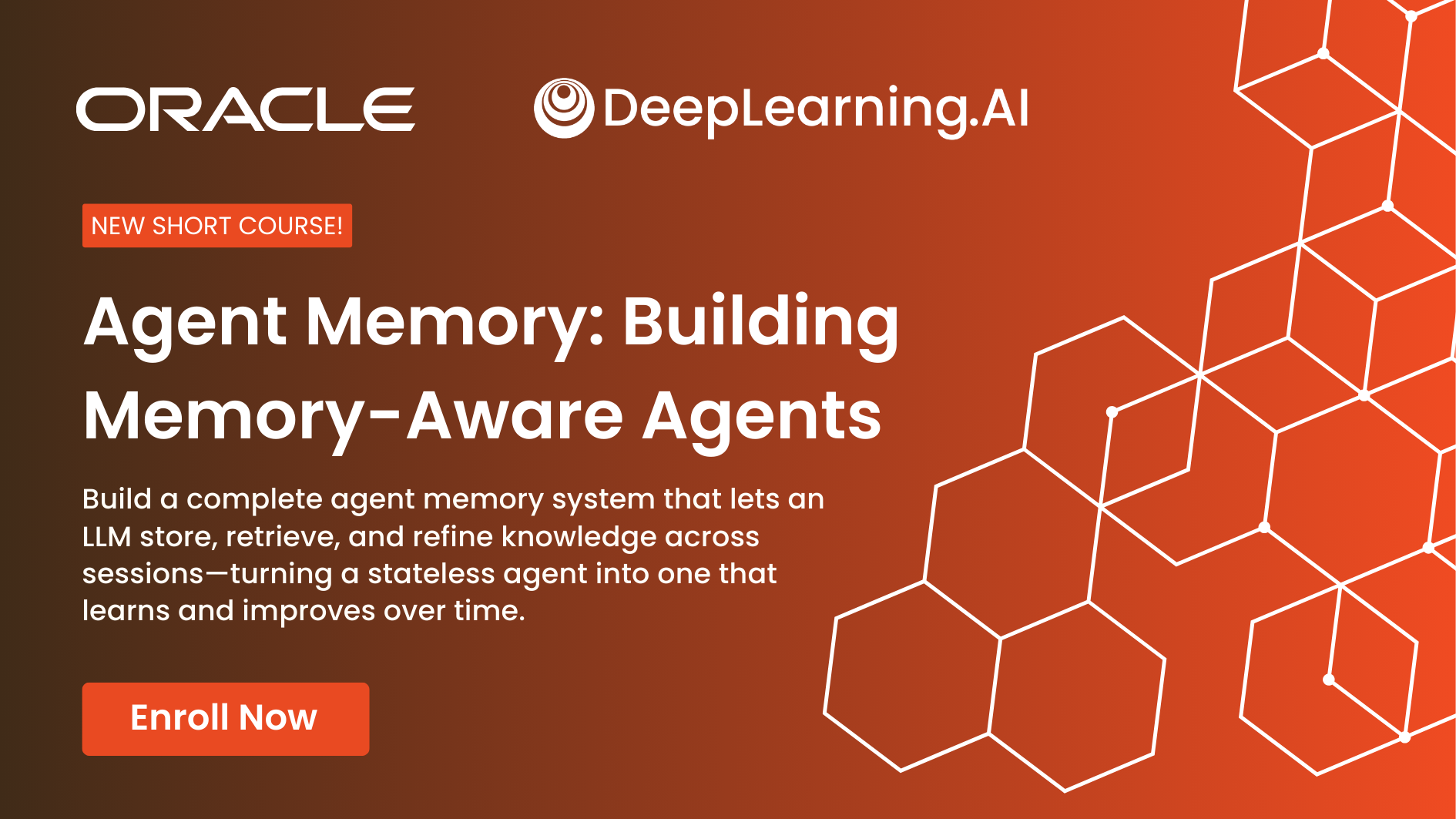
New course: Agent Memory: Building Memory-Aware Agents, built in partnership with @Oracle and taught by @richmondalake and Nacho Martínez. Many agents work well within a single session but their memory resets once the session ends. Consider a research agent working on dozens of papers across multiple days: without memory, it has no way to store and retrieve what it learned across sessions. This short course teaches you to build a memory system that enables agents to persist memory and thereby learn across sessions. You'll design a Memory Manager that handles different memory types, implement semantic tool retrieval that scales without bloating the context, and build write-back pipelines that let your agent autonomously update and refine what it knows over time. Skills you'll gain: - Build persistent memory stores for different agent memory types - Implement a Memory Manager that orchestrates how your agent reads, writes, and retrieves memory - Treat tools as procedural memory and retrieve only relevant ones at inference time using semantic search Join and learn to build agents that remember and improve over time! https://t.co/nxNSEHGmr9
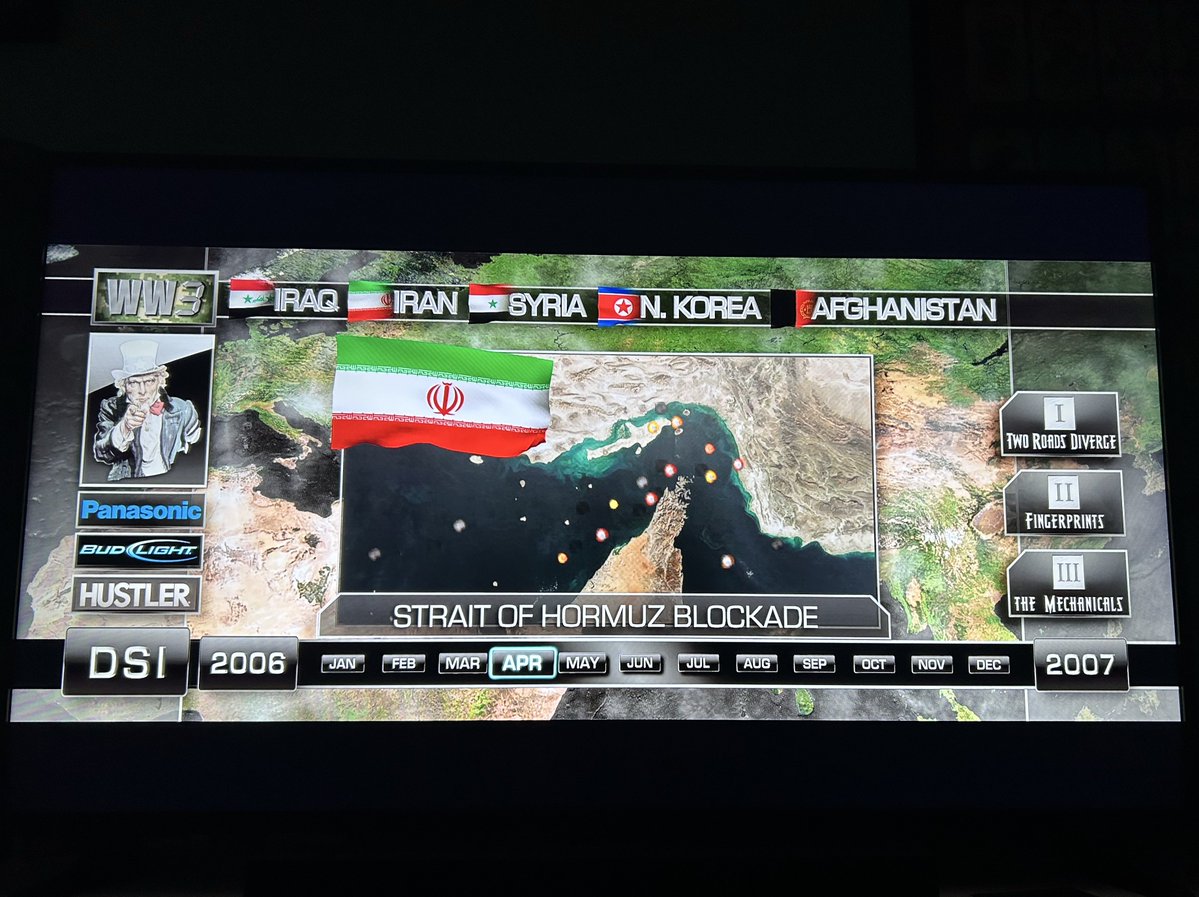
Watching Southland Tales for the first time https://t.co/srqZrMU80G
Watching Southland Tales for the first time https://t.co/srqZrMU80G
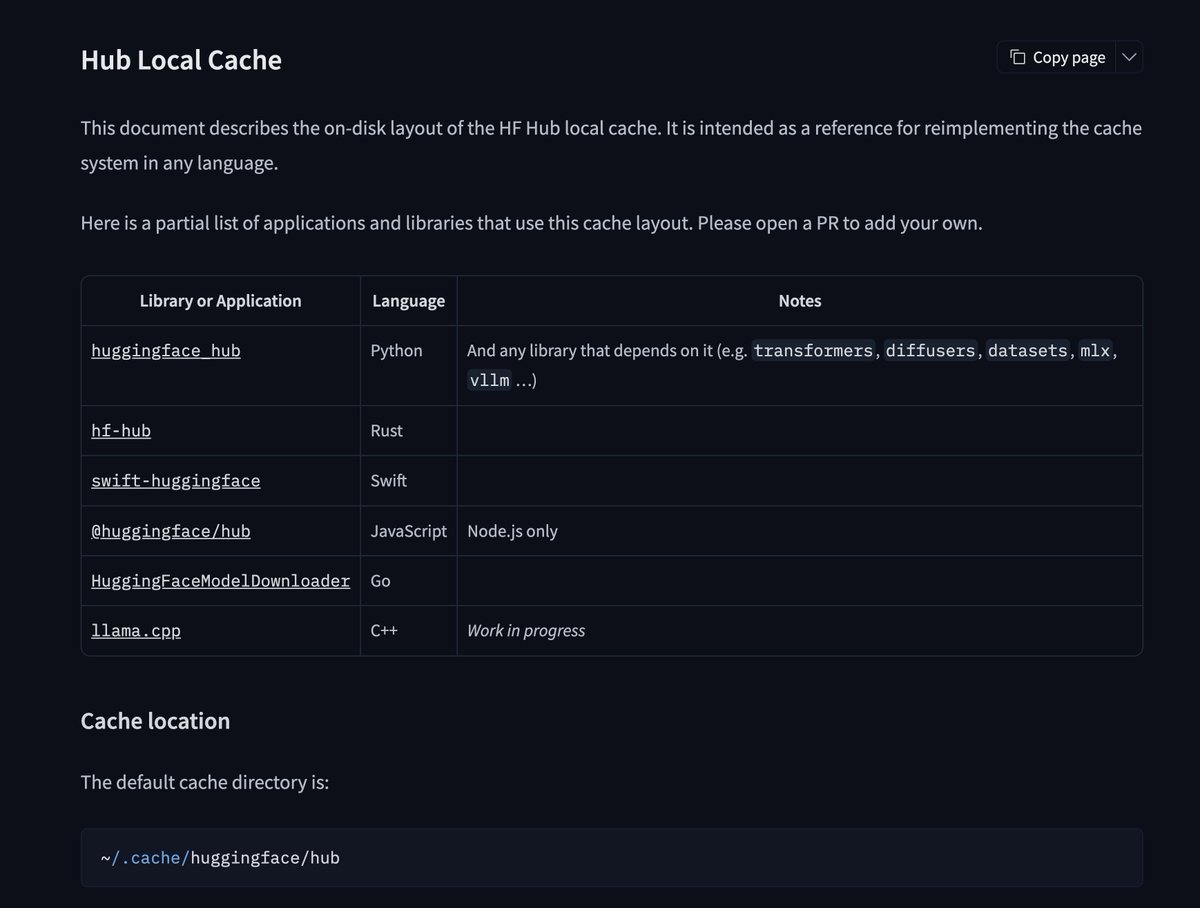
started a crowd-sourced list of all libraries and applications that use the HF hub local cache (~/.cache/huggingface) here: https://t.co/L8FNRvonm4 Please add any missing ones! PRs are welcome https://t.co/8oaFCqd7H1
We’re excited to share Generalized Dot-Product Attention (GDPA) — a production-driven attention kernel designed specifically for large-scale recommendation systems (RecSys). Proposed in our recent paper, GDPA replaces softmax with a flexible activation tailored for real-world RecSys traffic patterns and has been deployed in Meta’s largest recommendation model, GEM. 🔗 Read our latest blog: https://t.co/YxePbndHlP By redesigning attention around production characteristics rather than benchmark assumptions, GDPA achieves 2× forward speedup (1,145 BF16 TFLOPs, ~97% tensor core utilization), 1.6× backward speedup, and up to 3.5× forward speedup vs. FA4 under short K/V settings on NVIDIA B200. This work demonstrates how real production traffic can fundamentally reshape kernel design. ✍ Jiaqi Xu, Han Xu, Junqing Zhou, Devashish Shankar, Xiaoyi (Leo) Liu, Shuqi Yang #PyTorch #OpenSourceAI #GDPA #GEM
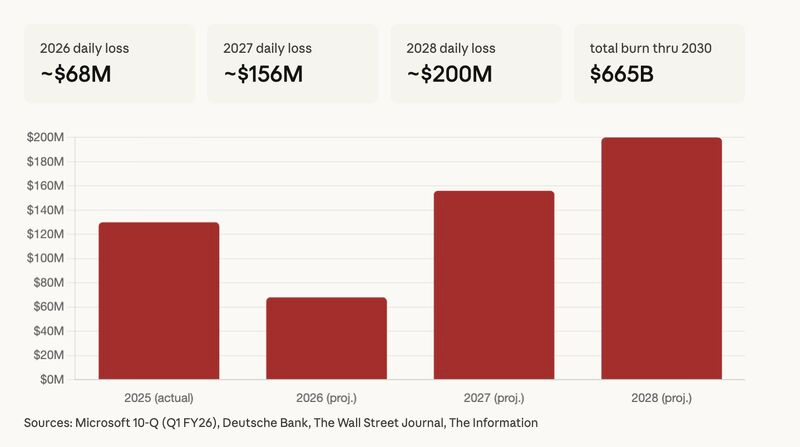
OpenAI is an actual cash furnace. Just setting money on fire. 🔥💵🔥 The company is expected to burn through $68M per day in 2026. That figure rises to a staggering -$156M per day in 2027. Then -$200M per day by 2028. This sets up for a cash burn of $665B by 2030. No wonder they're pivoting to rent compute rather than building data centers. Who would want to invest in this? What is the path to profitability? Where do investors ultimately draw the line if RoI is elusive?
Yeah, I can see why the backlash https://t.co/NcnE4hrK1s
DLSS-5 anything for free app: https://t.co/Pj3jeFVnL6 https://t.co/b6EhE5lwk5

Yeah, I can see why the backlash https://t.co/NcnE4hrK1s

Game changer https://t.co/Wrzk3tmZHk
DLSS-5 anything for free app: https://t.co/Pj3jeFVnL6 https://t.co/b6EhE5lwk5

Game changer https://t.co/Wrzk3tmZHk

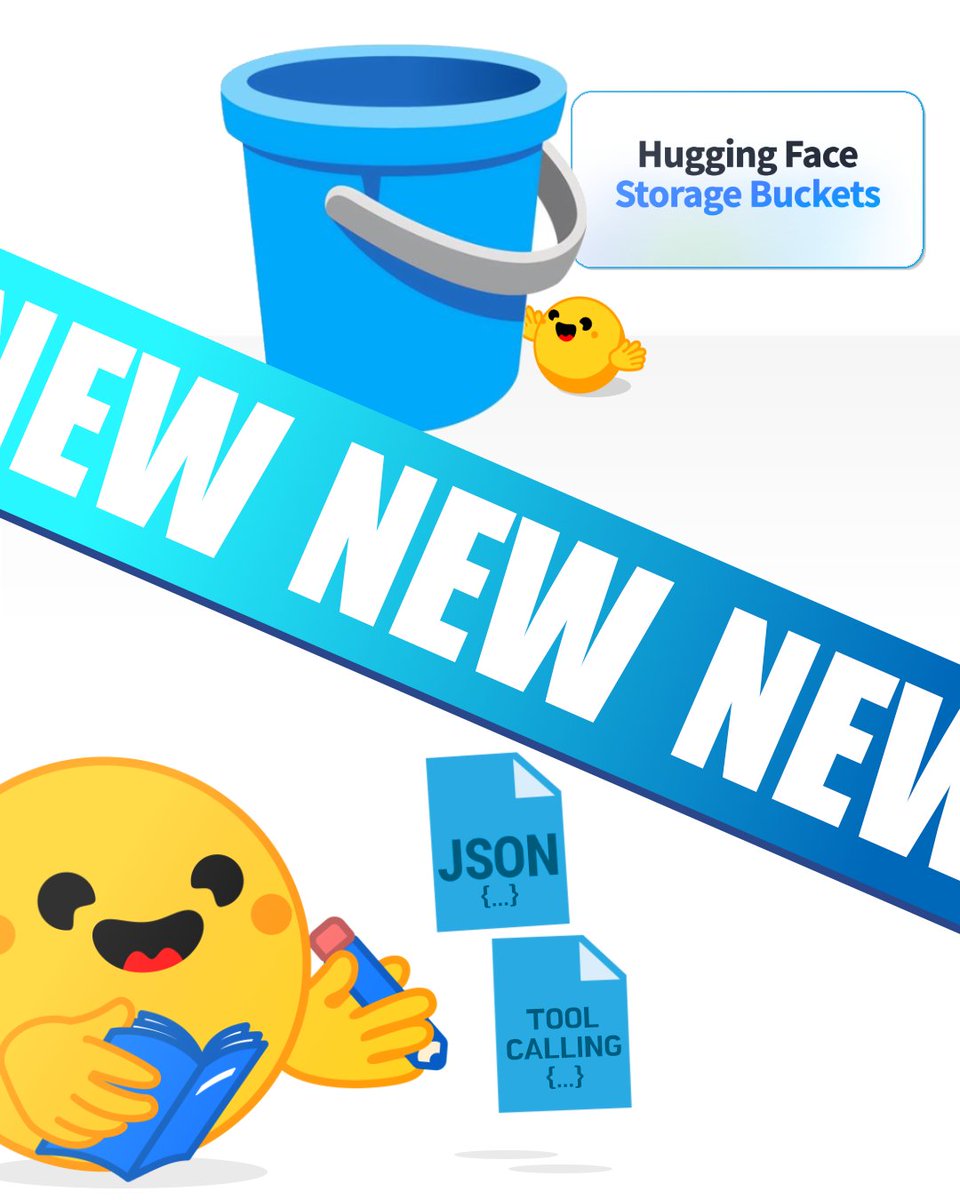
HF `datasets` was expecting all data fields to have the same subfields and types bc of Arrow. This changes now! Introducing full support for JSON datasets, including tool-calling with varying tool calls args! Bonus: Storage Buckets support, the perfect storage for experiments🧵 https://t.co/Gex5L2Szvm
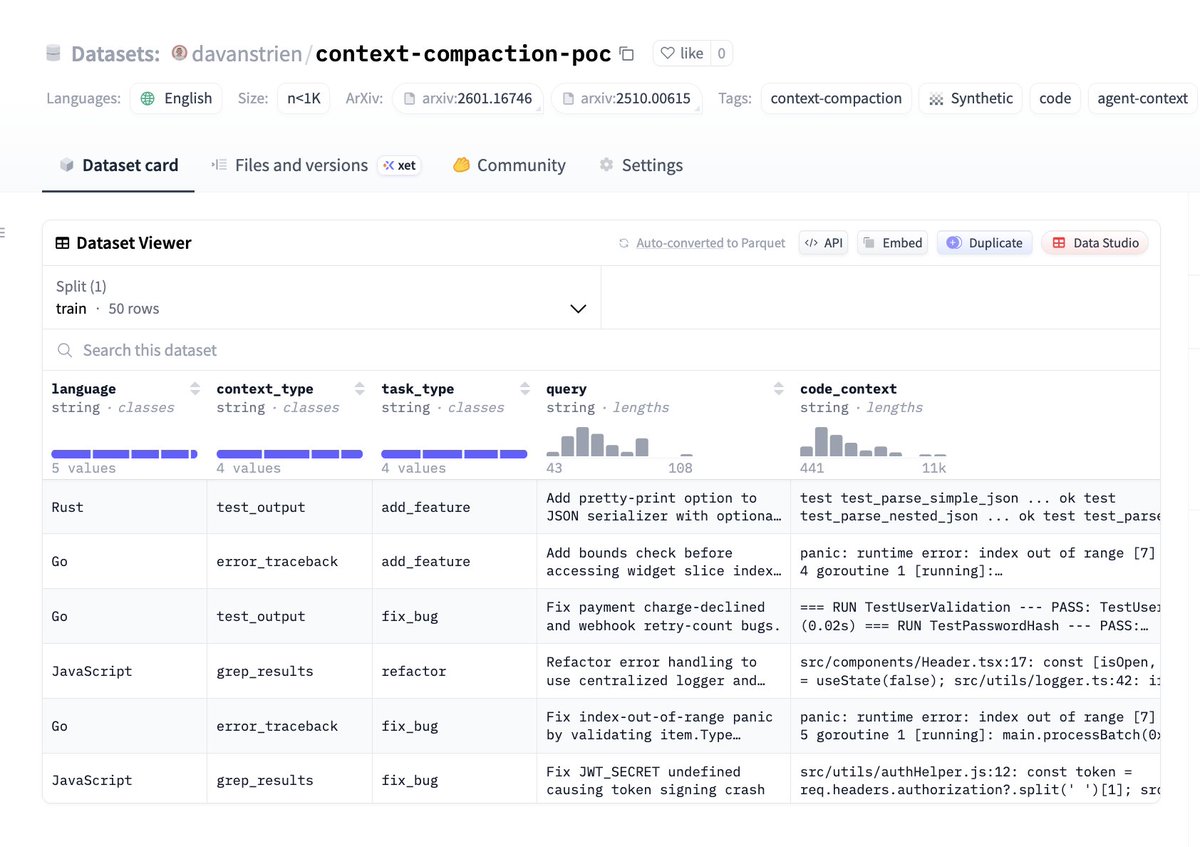
First attempt at replicating an open dataset to help train an open context compaction model. Claude Code did this one using @nvidia NeMo DataDesigner + @huggingface Inference Providers (Kimi-K2 via @GroqInc). Hopefully someone else (or their agent) can do a better job! https://t.co/8nqewxZpTm
Who's going to create an open dataset and model for this task and share it on @huggingface?
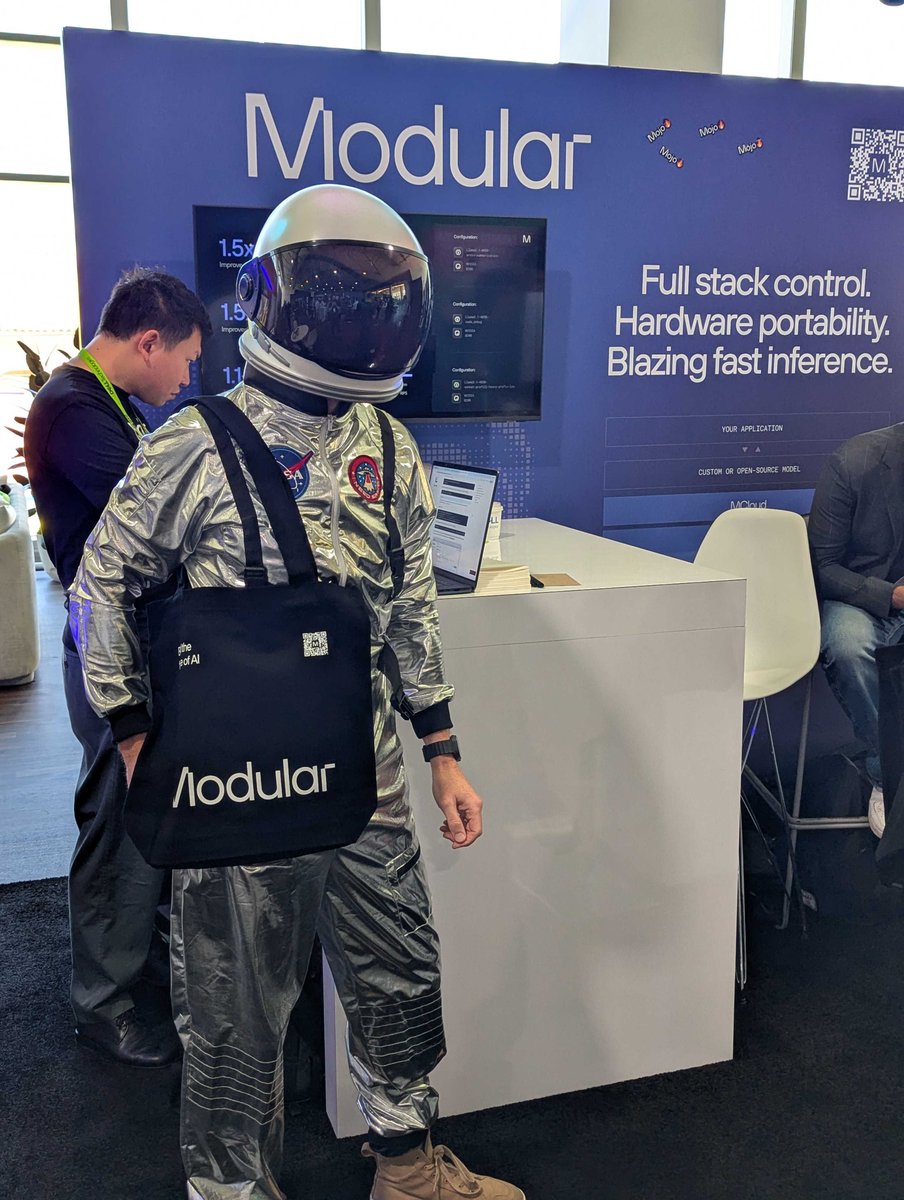
MAX (AKA @iamtimdavis) is at Booth #3004 this week, suited up and ready to talk AI inference, hand you a Modular tote bag, and launch you back into orbit. No rocket science required. @NVIDIAGTC https://t.co/n4IvBomYaz
/fast mode @derrickcchoi https://t.co/jc9InOJ3f7
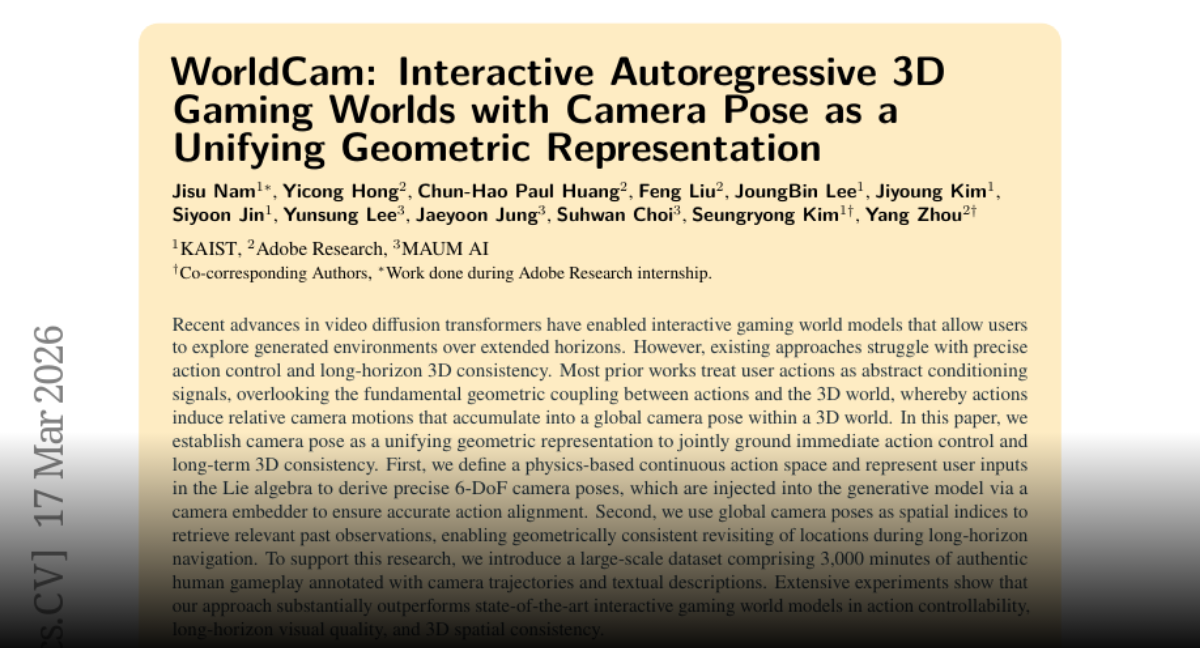
WorldCam Interactive Autoregressive 3D Gaming Worlds with Camera Pose as a Unifying Geometric Representation paper: https://t.co/2Ek7HQSM2d https://t.co/mldk85CtIX