Your curated collection of saved posts and media
Watch how the camera rotates and reveals a stunning rear view. Grok Imagine rocks https://t.co/Sx9VYjYOOt
Jensen Huang just told every AI leader in the room to grow up. Stop scaring the public with science fiction. Start communicating like the weight of civilization is on your shoulders. Because it is. Huang: “AI is not a biological being. It is not alien. It is not conscious. It is computer software.” That single statement dismantles half the panic surrounding this industry. The mainstream conversation is dominated by people projecting human malice onto math. Alien consciousness onto code. Existential dread onto a software architecture we built, we trained, and we can read. Huang: “We say things like, ‘We don’t understand it at all.’ It is not true. We understand a lot of things about this technology.” When builders tell the public they don’t understand their own creation, the public hears threat. The state responds with control. That is already happening. Palihapitiya asked Huang what he would have told Anthropic during their regulatory clash with the Department of Defense. Huang didn’t attack the technology. He attacked the communication. Huang: “The desire to warn people about the capability of the technology is really terrific. We just have to make sure that we understand that the world has a spectrum, and that warning is good, scaring is less good because this technology is too important to us.” Warning shows risks, mitigation, why upside overwhelms downside. Scaring says we might be building something that destroys us and we can’t stop it. One builds trust. The other invites regulation written in panic. Huang: “To say things that are quite extreme, quite catastrophic, that there’s no evidence of it happening, could be more damaging than people think.” Projecting catastrophe without evidence is not caution. It is sabotage. When your technology is embedded in national defense, the financial system, and healthcare infrastructure, your words carry structural weight. If the architects act terrified of their own product, the response is predictable. Governments step in. They restrict. They seize control of something they don’t understand because the builders told them to be afraid. Huang: “There was a time when nobody listened to us, but now because technology is so important in the social fabric, such an important industry, so important to national security, our words do matter.” Most tech founders have not internalized this. You are no longer a startup founder disrupting an industry. You are running infrastructure that nations depend on. Your statements move policy. Your framing shapes legislation. Your tone determines whether governments treat you as partner or threat. Huang: “We have to be much more circumspect, we have to be more moderate, we have to be more balanced, we have to be far more thoughtful.” Huang did not ask for silence. He asked for precision. The leaders who cannot tell the difference will not be leading for long.
Charlie Munger explained why AI will solve diseases faster than anything in human history. He did it two weeks before he died, at 99. In 1954, his eight-year-old son Teddy was diagnosed with leukemia. There was no treatment. The survival rate for childhood leukemia in the 1950s was close to zero. Munger was 31, freshly divorced, nearly broke. His friend Rick Guerin said Munger would go to the hospital, hold Teddy, then walk the streets of Pasadena alone, crying. Teddy died in 1955 at the age of 9. A reporter asks how he got through it. He says, "You can't bring back the dead. You can't cure the dying child. You have to soldier through. If you have to walk through the streets crying for a few hours a day, it's part of soldiering. You go ahead and cry away. But you can't quit." Then he says, "In those days, the fatality rate with childhood leukemia was 100%. That's gone away. Now the cure rate is way up in the 90s." He's right. The five-year survival rate for the most common childhood leukemia (called ALL, acute lymphoblastic leukemia) was close to zero before 1950. By the 1960s, it was under 15%. Today, it's about 90%, according to the American Cancer Society. It took 70 years of researchers running clinical trials and developing combination drug therapies to get there. That was without AI. Human researchers work on one hypothesis at a time. There are now over 170 AI-discovered drug programs in clinical trials. AI is compressing early drug discovery timelines by 30 to 40%, turning what used to take three to four years of preclinical work into 12 to 18 months. No AI-discovered drug has yet received FDA approval, but the first is expected in 2026 or 2027. The pipeline is real and growing fast. What took seven decades for leukemia, AI could compress into years for diseases we haven't cracked yet. Munger said it plainly: "What mankind did, what civilization did, was soldier through those tough years that took away my cousin Tommy from meningitis, and then took away my son Teddy from leukemia. Imagine pretty well fixing that disease for families who came into life later. It's a huge achievement." He lost his son 68 years before this interview. He watched civilization solve the thing that took his boy. He died two weeks later, at 99. AI is about to make civilization progress much faster.
https://t.co/XTeMb8GXfG

Brutal ☠️ https://t.co/vFUozYZGBk
How do we free ourselves from this cycle? https://t.co/AxDZ0fUdrG

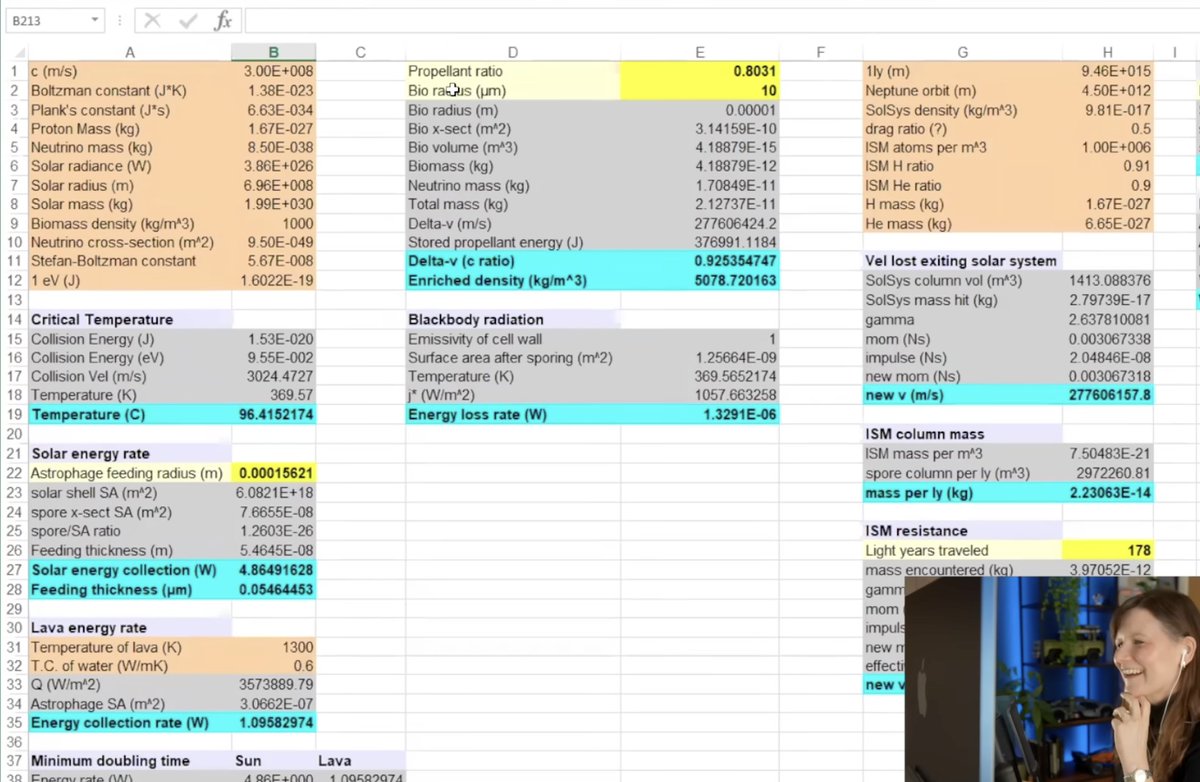
Andy Weir showing some of the spreadsheets underlying the calculations in the book https://t.co/3CyprVTzXX i mean, it's not quality scifi if it doesn't come with a supplementary whitepaper https://t.co/MsDnEoNBA7
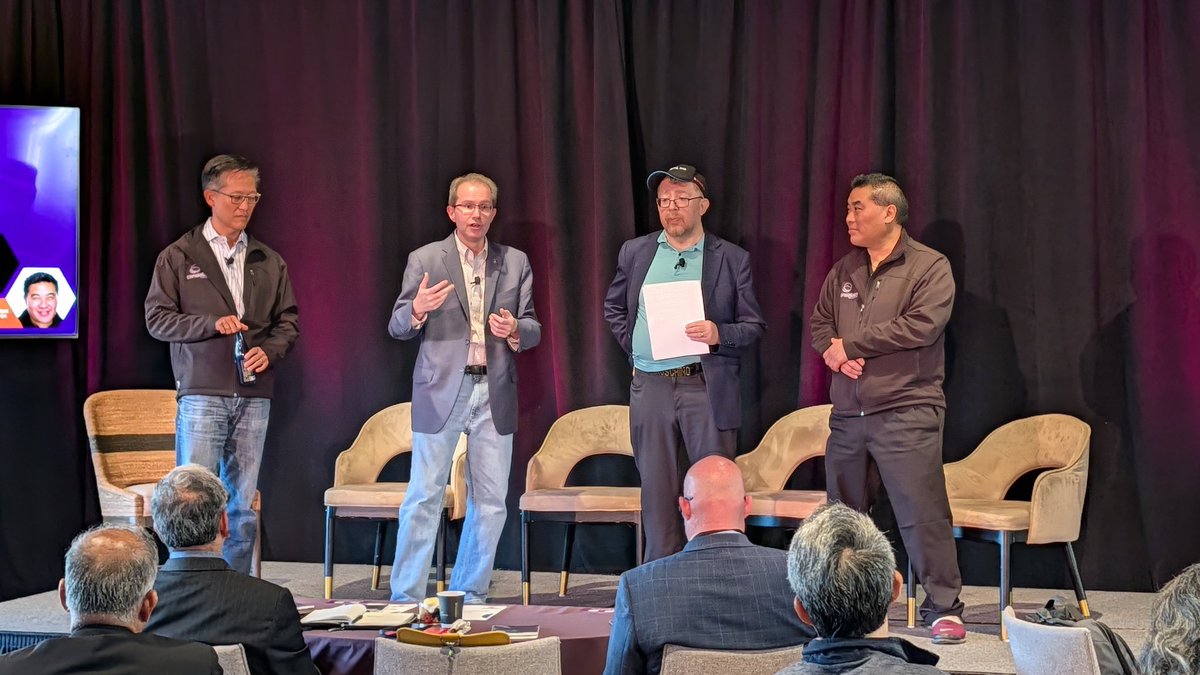
And we are off @constellationr #AIForum with @mikeni, David Bray, @MMinevich and @rwang0 - it will be interesting. https://t.co/p7FgxuSMbF
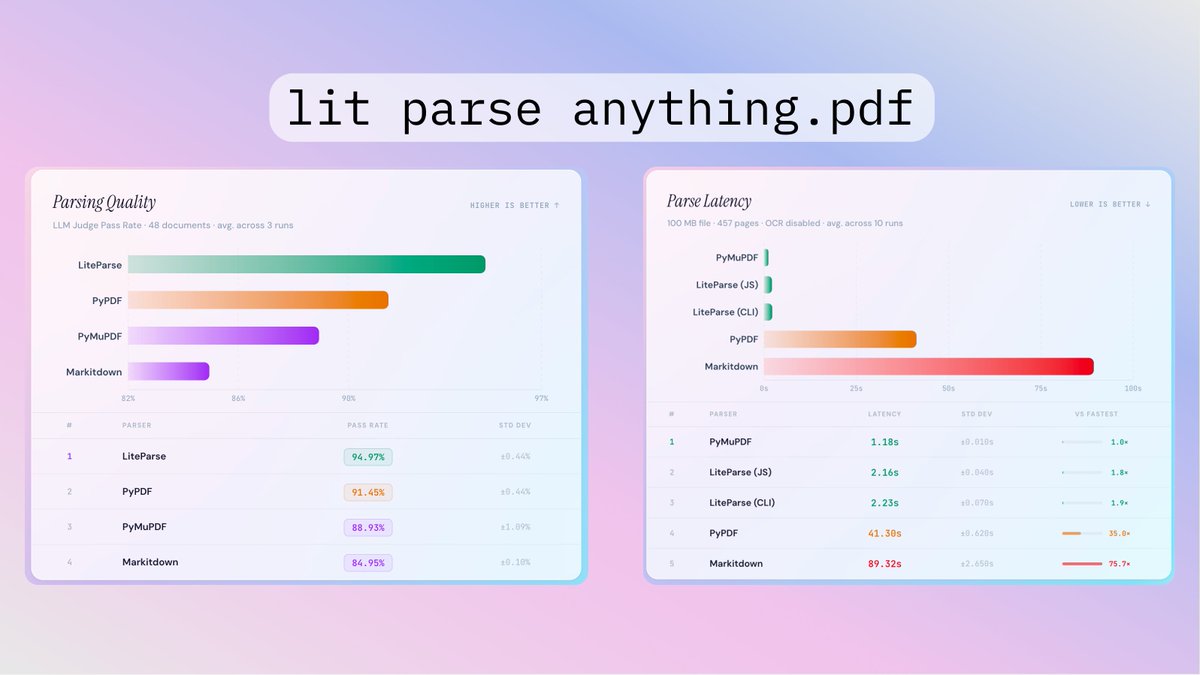
We just open-sourced LiteParse 🎉 A lightweight, local document parser in the shape of an easy-to-use CLI. No API calls, no external service, no cloud dependency. Just fast text extraction from common file formats, right from your terminal. It's built for developers who want parsing that stays on their own infrastructure and gets out of their way. Clean PDFs, DOCX, HTML: run it, get your text, move on. The output is designed to be fed straight into agents so they can read parsed text and reason over screenshots without any extra wrangling. When you hit more complex territory like scanned docs, dense tables, or multi-column layouts, that's where LlamaParse picks up. Same philosophy, more horsepower for the hard stuff. 📖 Announcement post: https://t.co/VRJkLZYiwP 🔗 GitHub: https://t.co/PuSo8ZMFtl 🎬 Walkthrough: https://t.co/VPG8c3GLZ8
Because none of you posted this, I have to. https://t.co/yfLA6ivv9I
The more I read this, the more I realize how it is utterly illiterate. How exactly do you decolonize someone’s birthplace? He lived there. No one came in and conquered his house. It’s just a house of a man that exists. These people are exhausting 🙄 https://t.co/EpW9oay8ke

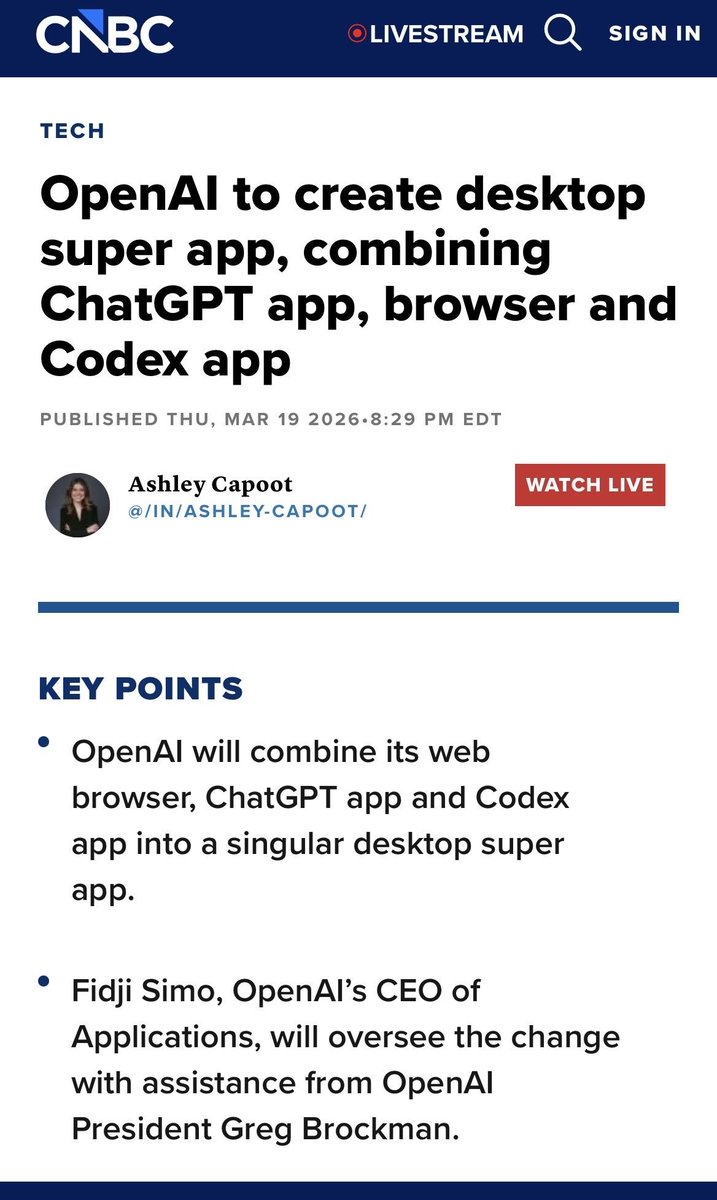
As much as I want Codex and ChatGPT to work together I'm reasonably sure this will fail, for the main reason that this is a pressing problem primarily for OpenAI and not for its users. What its users want is an actual Desktop app that can do work on their own device, not a frankenstein
Technology cycles tend to create moments of intense focus, where everyone converges on the same idea at once. AI agents feel like one of those moments. What matters isn’t the shift itself, but how quickly positions get re-evaluated behind the scenes. That’s where direction gets set. What's your take on this development? @pchamard @Khulood_Almani @antgrasso @GlenGilmore @Shi4Tech @CurieuxExplorer @FrRonconi @chidambara09 @theomitsa @Analytics_699 @Nicochan33 @nafisalam @pierrepinna @smaksked @Corix_JC @amalmerzouk @AdityaRPatro @quepasachico @IngridVasiliu @EstelaMandela @sonu_monika @RLDI_Lamy @SpirosMargaris @IanLJones98 @Timothy_Hughes @avrohomg @bimedotcom @HaroldSinnott @c4trends @mvollmer1 @DG_Collective @bamitav @rwang0 @ipfconline1 @sijlalhussain https://t.co/OrkbjvPCEk
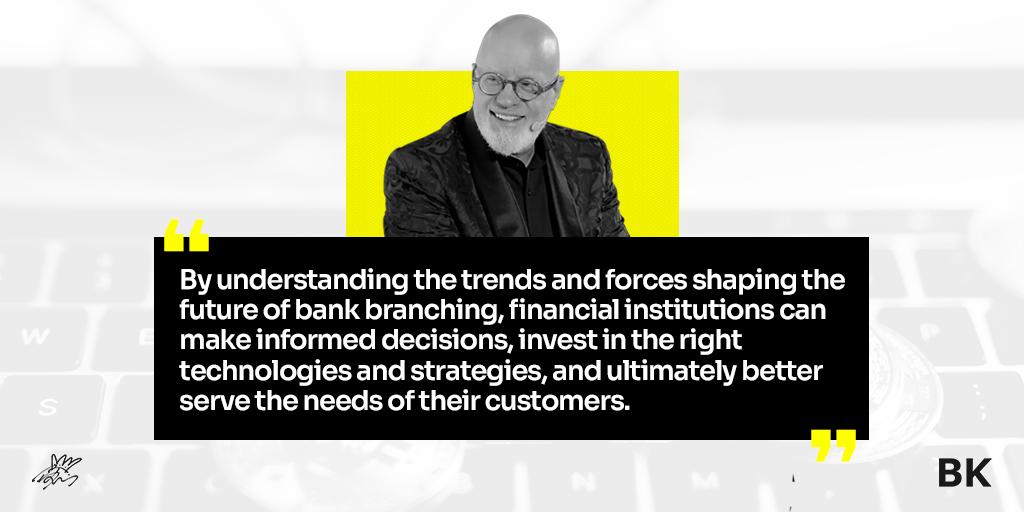
The banks that succeed will be those that understand where branching is going and adapt early. Strategy informed by trends leads to better service and stronger institutions. https://t.co/jv4QFxFbyK
Try It Here 🌎 https://t.co/QxpvdlBjss

Instagram to remove end-to-end encryption for private messages in May | The Guardian https://t.co/O1865n7BQe

Instagram to remove end-to-end encryption for private messages in May | The Guardian https://t.co/O1865n7BQe

Cursor beating every model that exists on CursorBench https://t.co/1LHfxx51ts

Cursor beating every model that exists on CursorBench https://t.co/1LHfxx51ts

great read on the state of oss and ai https://t.co/QSZFqE9Git

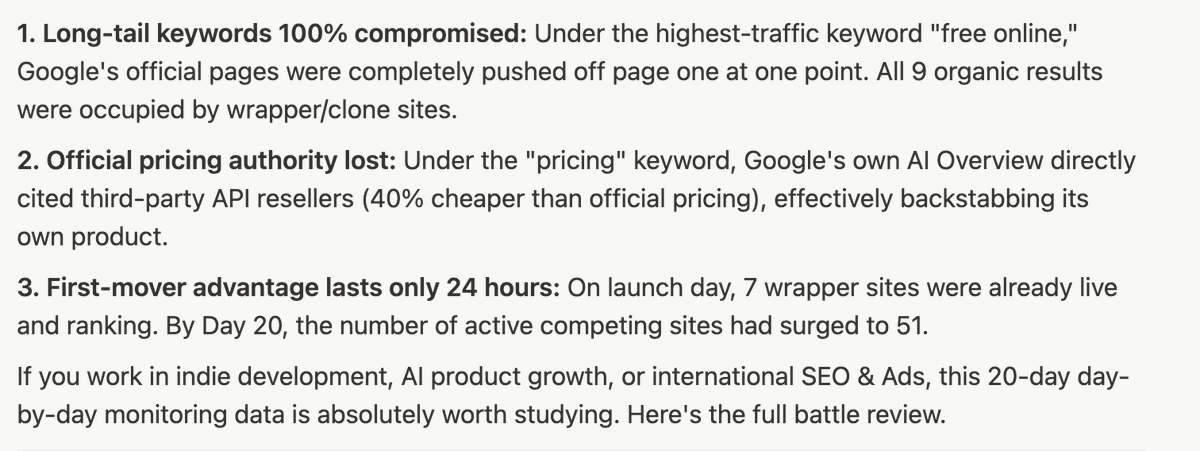
King of SEO at Manus has dropped an absolute banger. Attached his key findings here, but read the full article! https://t.co/vZKEFaH19Q
Project Hail Mary is a love letter to the sci fi genre. It believes in the uncompromising importance of connection and curiosity. That you may never feel ready for your next chapter, but you need someone to be brave for. That on the other side of your fear.. is your purpose. https://t.co/d8uU3gwYsb


on new aesthetics saturday 5PM at Gray Area @GrayAreaorg RSVP below! https://t.co/HyCkTgDdqC

Ai influencers be like https://t.co/3N5FDxLvuF
which is better https://t.co/4FSkwTk6VY

Ai influencers be like https://t.co/3N5FDxLvuF

@hemeon huge fan 🤗 https://t.co/0jDyP00zyt
Introducing MySay, an AI that asks you questions via voice, and turns what you said into tweets and LinkedIn posts that actually sound like you. This is the only AI writing solution I've found that doesn't produce slop. It's like a smart podcast host that guides you to share your most unique insights through great questions. Try it at mysay dot ai
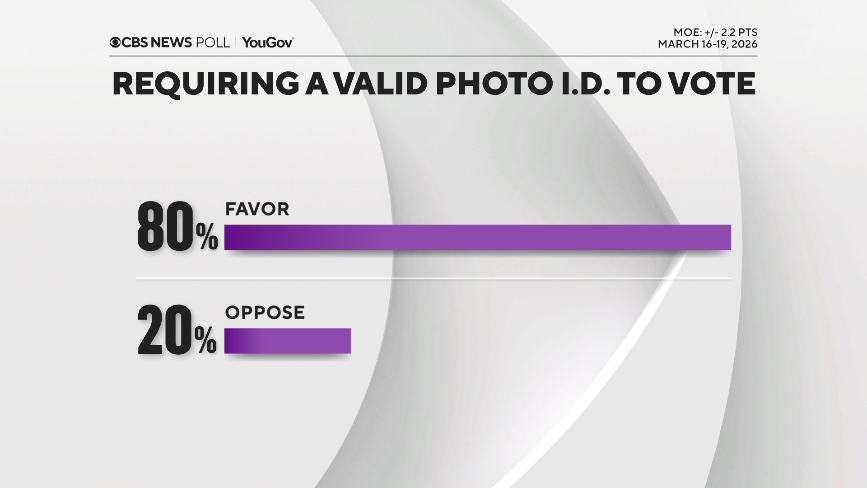
CBS News Poll: Do you favor or oppose requiring people to show valid photo ID before they are permitted to vote? 🟢 Favor: 80% 🟤 Oppose: 20% —— • Dem: 65-35 (+30) • GOP: 95-5 (+90) • Indie: 79-21 (+58) • White: 80-20 (+60) • Black: 80-20 (+60) • Hispanic: 77-23 (+55) YouGov | 3/16-19 | 2,496 A
Hermes Agent wrote a novel. "The Second Son of the House of Bells" runs 79,456 words across 19 chapters. The agent built its own pipeline to do it, using the ame modify-evaluate-keep/discard loop as @karpathy's Autoresearch but applied to fiction: world-building, chapter drafting, adversarial editing, Opus review loops, LaTeX typesetting, cover art, audiobook generation, and landing page setup. Book: https://t.co/V1lIPkhHmX Code: https://t.co/HR91XrPgh2