Your curated collection of saved posts and media
If you liked OpenClaw but weren't a fan of the security risks, try it out: https://t.co/qw8Pi4Whcg

OpenClaw doesn't belong in production. We built PokeeClaw — enterprise-secure AI agents, zero setup, 1,000+ app integrations. Try now: https://t.co/uX6VsZ6p0c First 500 to follow @Pokee_AI, comment “PokeeClaw”, like & repost get 1 month free.

America Isn’t Ready for What #AI Will Do to Jobs #RiseoftheRobots https://t.co/q6ldsXpDSz

The average American worker using AI reports time savings of 6%, or 2.5 hours in a work week. Those are similar to the UK & Netherlands, and slightly more than other EU countries. There some early, non-causal, signs that this is translating into real gains in productivity growth https://t.co/XOspk4fp0Z
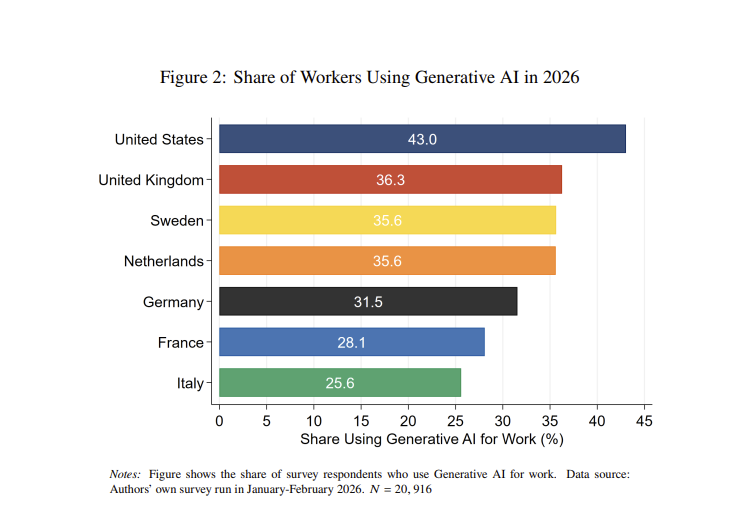
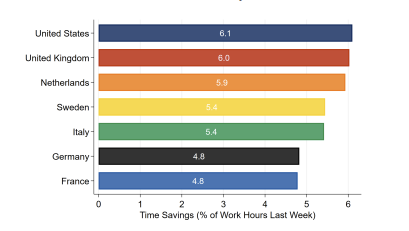
Because US workers use AI more, and gain more from it, the US currently is benefitting most from AI adoption: https://t.co/Fd66KQU9ID

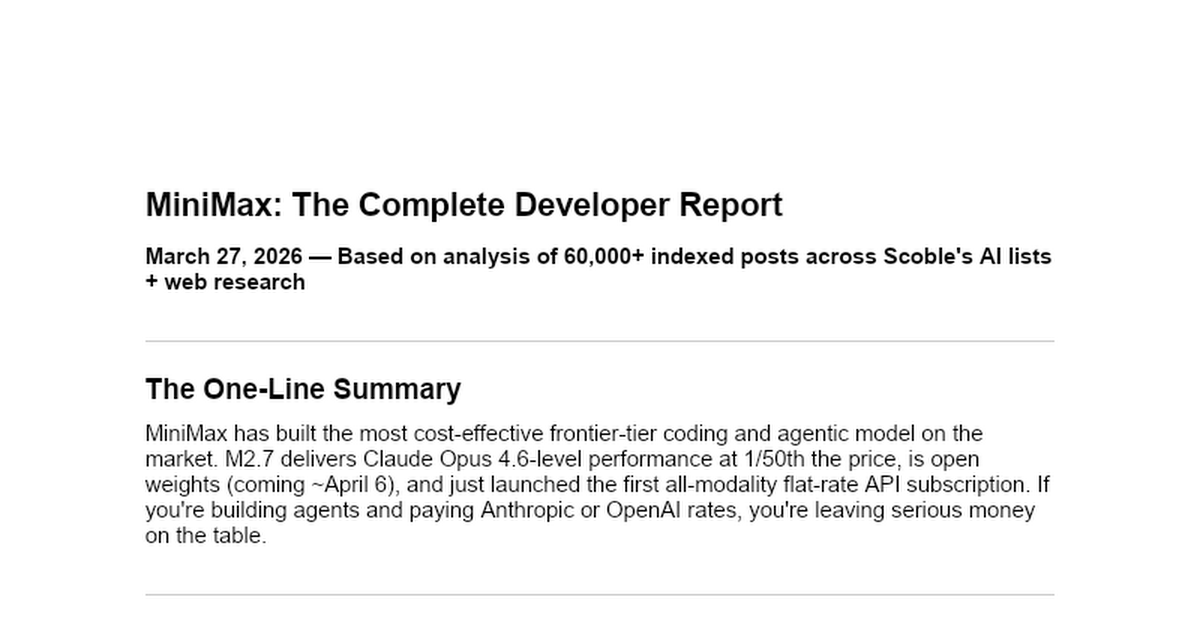
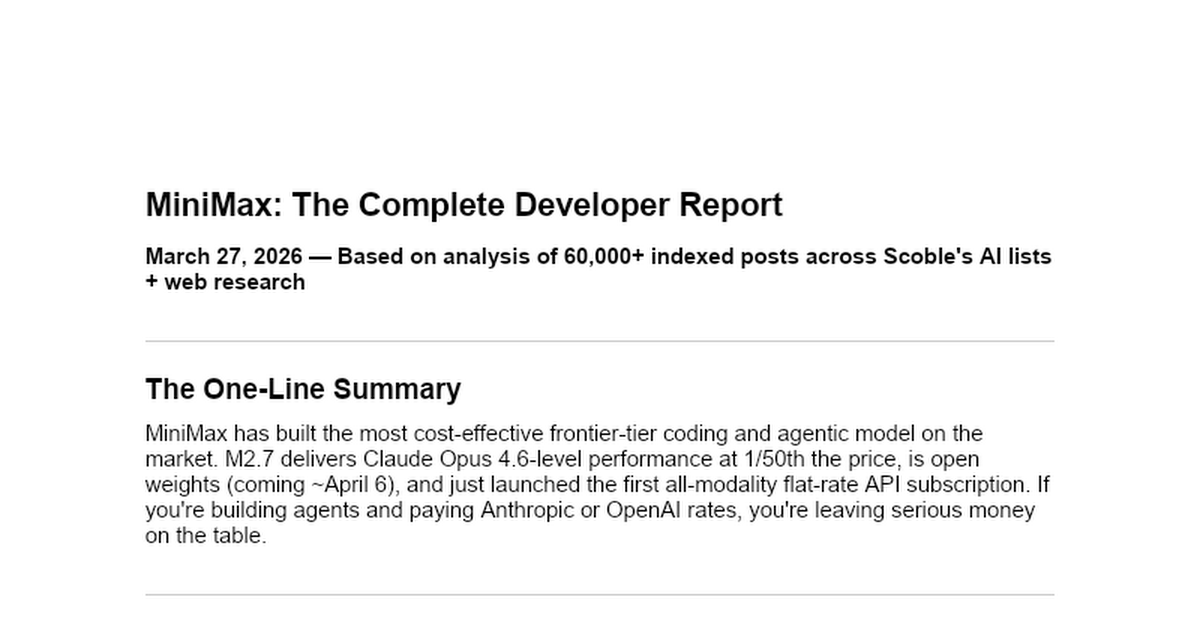
Exclusive: MiniMax AI developer report. TL;DR: It provides more performance for a much lower price. I now do custom reports for companies with the analysis engine that @blevlabs and I built over the past couple of months. You've seen my reports on OpenClaw and other technologies. Here I did one for MiniMax, comparing it to other models: https://t.co/WhnARBnU8c This report was written by using the X API to grab tens of thousands of posts from the AI community (I have the most complete lists of such anywhere: https://t.co/9eRY65x3IQ and Levangie Labs' cognitive architecture does the best job of putting it all together in a report that I've found). Key things from the report: ++"MiniMax has built the most cost-effective frontier-tier coding and agentic model on the market." ++"Architecture: MoE (Mixture of Experts) — 230B total parameters, 10B active. This is the key insight: you get frontier-tier reasoning with the inference cost of a 10B model." ++"What the community said: "Basically Claude Opus performance but 95% cheaper." "80.2% SWE-Bench. 76.8% on agentic tool-calling. Genuinely underrated." One developer burned through 922 million tokens in 3 days on the coding plan across 50+ parallel sessions." ++"The consensus: MiniMax M2.7 matches or exceeds Opus on coding and agentic tasks at 1/50th the price." ++"Bottom Line for Developers: If you're building coding agents, agentic workflows, or any system that makes a lot of API calls, MiniMax is the most important model to know right now. The price-to-performance ratio is genuinely unprecedented at the frontier tier." The complete report comparing it to the other models: https://t.co/WhnARBnU8c Are you using MiniMax? Why not? The AI community here on X is. MiniMax Agent → https://t.co/NWX9GThijF API → https://t.co/lPc0F11xOU Token Plan → https://t.co/EDr6dR38w1
when people ask about custom tools vs. letting users bring MCPs, the answer is always "both". Custom tools take work and taste, MCPs give flexibility but will always lead to lower quality results 1) for high-volume tools (e.g. Read/Write/Edit in a coding agent) build these as first-class tools 2) for long tail stuff like 'fetch data from random saas', let users bring MCPs 3) LOOK AT YOUR F****** DATA (thanks @HamelHusain ) 4) The most popular MCPs, turn these into first-class tools in your system 5) repeat until AGI another dope episode with @vaibcode
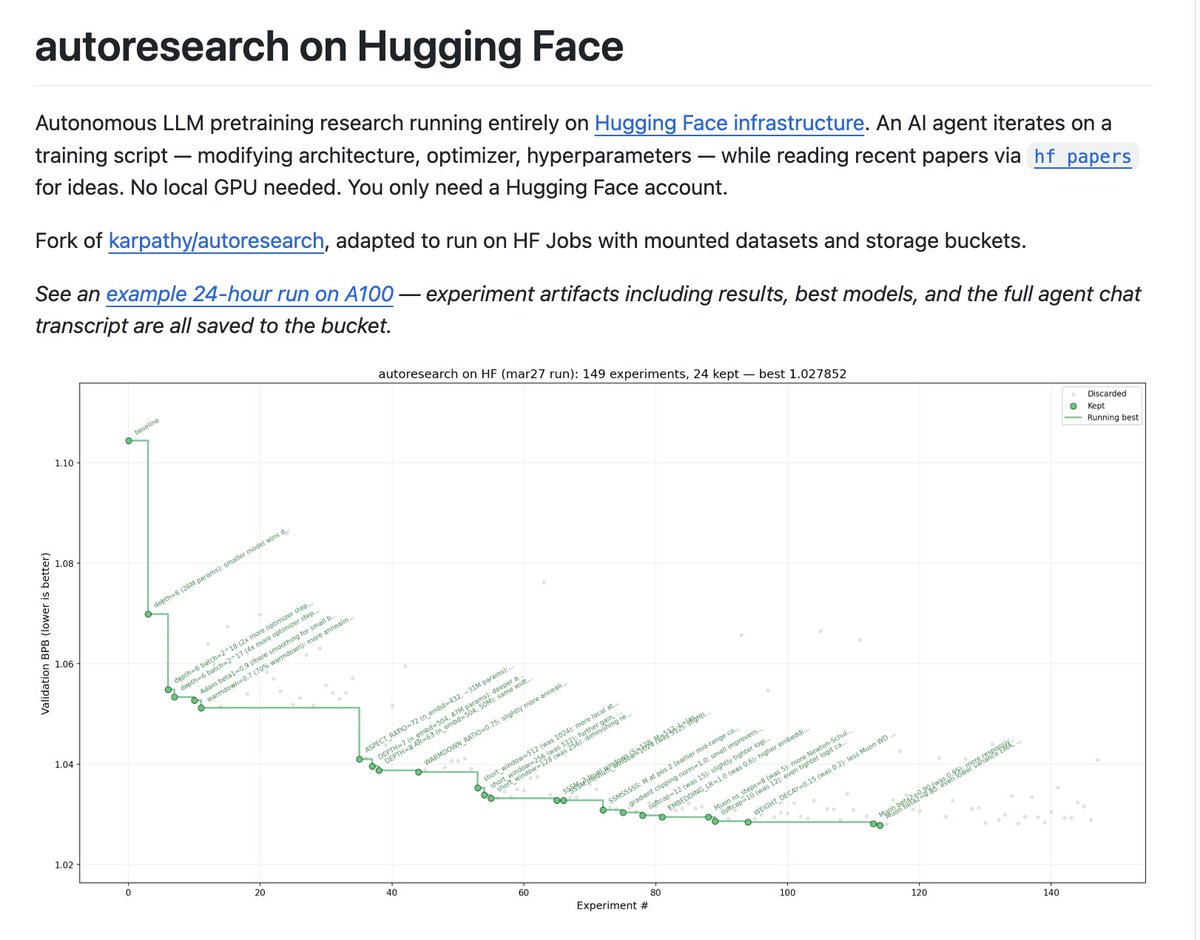
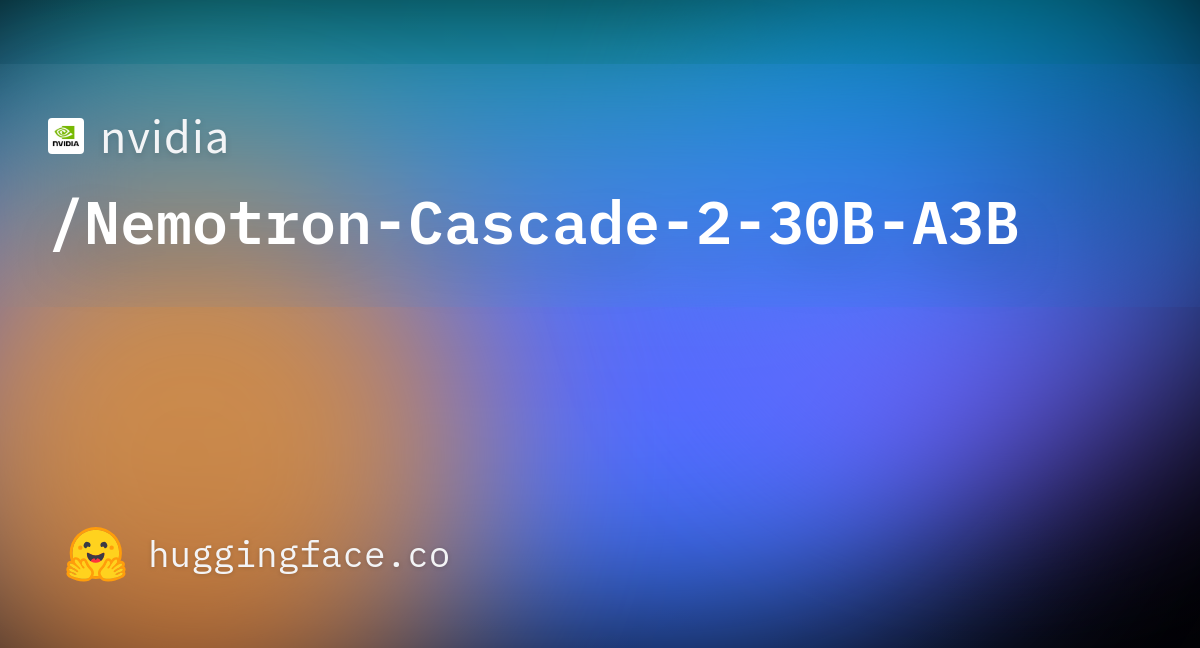
In a world where everyone can build websites, apps and features easily (thank you Cursor, Lovable, Claude and the likes), it will take more for you and your company to differentiate themselves (which is in my opinion the basis for success). That's why we're seeing more and more people and companies starting to train, optimize and run their own models (rather than outsource this to third parties). This is the future we want to enable with Hugging Face: empower millions of people to build AI themselves, not just be API users. Cool new project in this vein from @mishig25: auto-research built on top of @huggingface so that your agents find and push their intermediary checkpoints, datasets, learn from papers and collaborate on the hub: https://t.co/YWCzp5ZIfC Let's make all AI builders rather than AI users!
This is god tier and fits on 24gb + It crushes everything up to 6x its size and ties with Gemini deep think and Deepseek on Math https://t.co/0Wwad8HZ4N
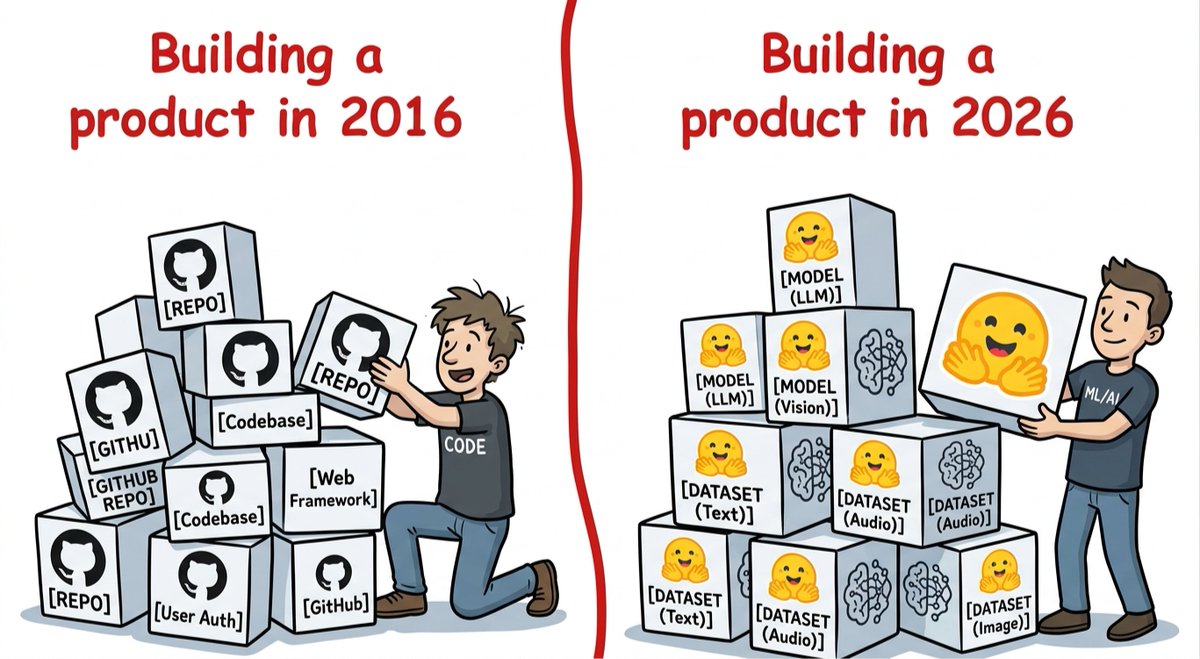
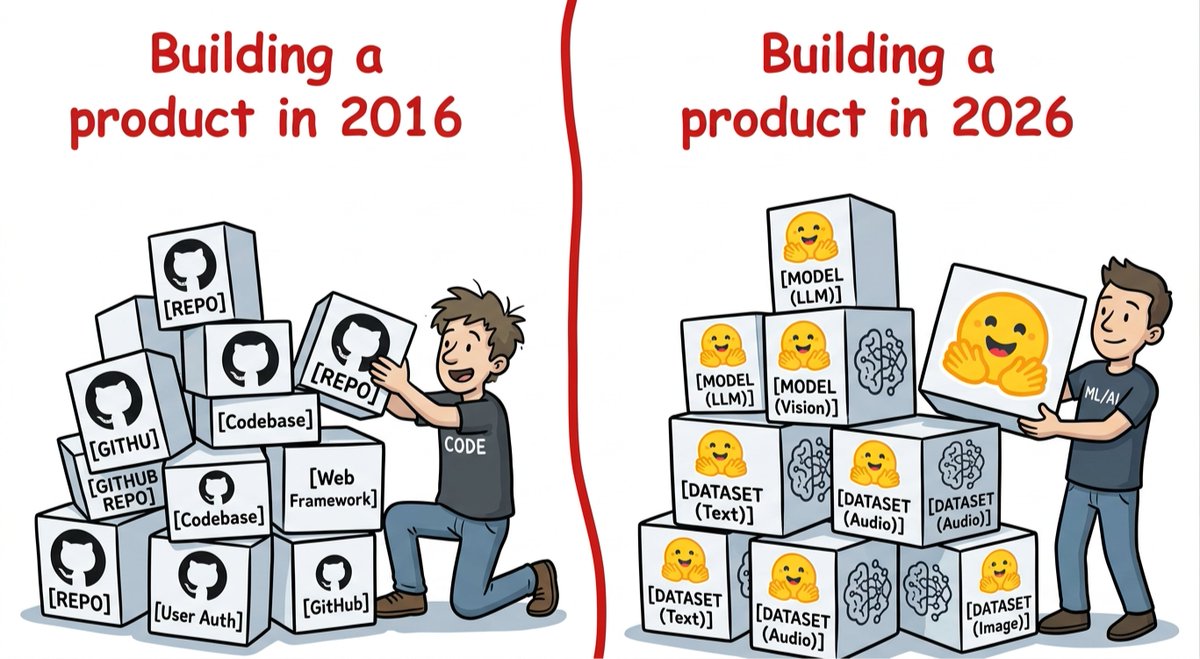
the shift is real: in 2026 invest on AI builders 🤗 https://t.co/7TaRcyNdpa
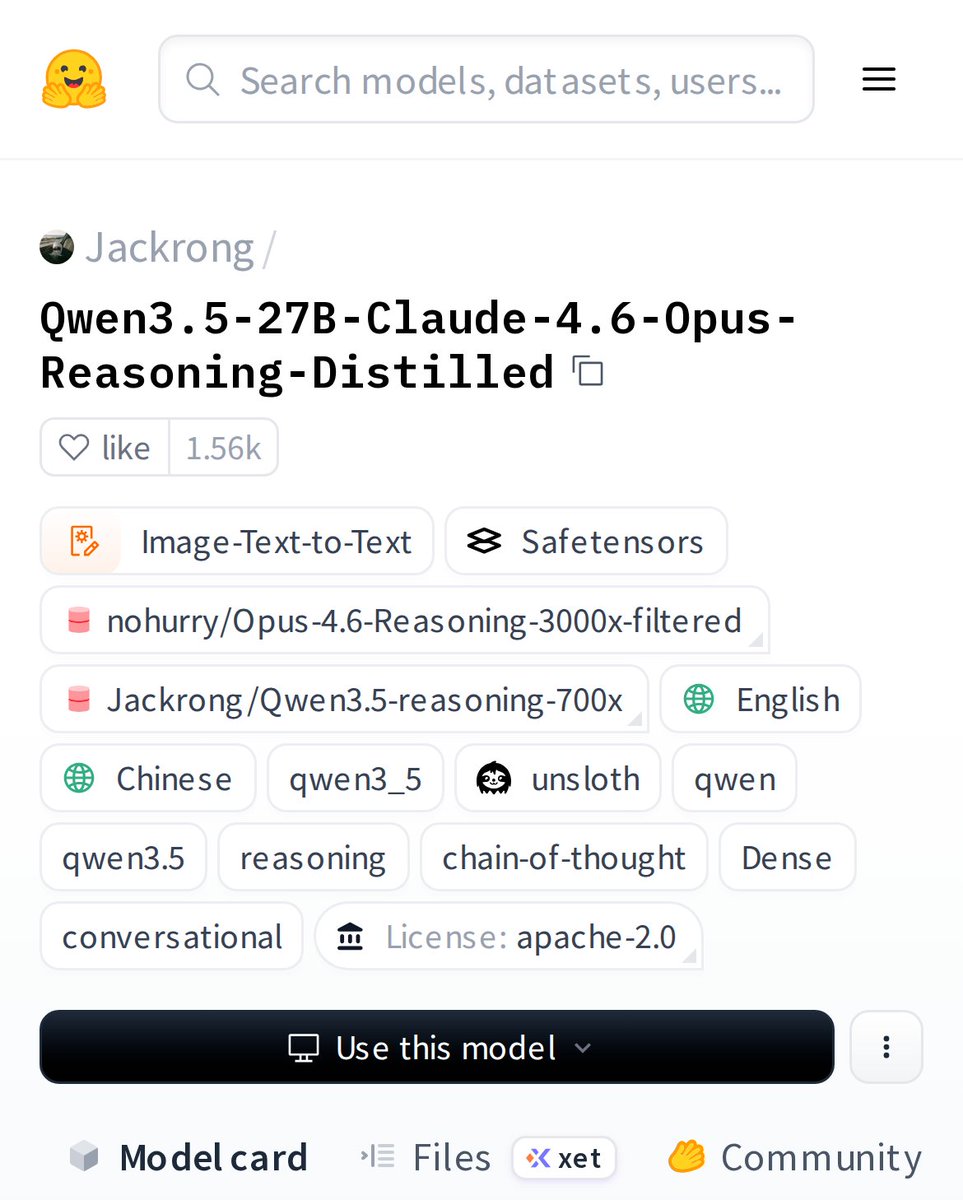
Meet Qwen3.5-27B-Claude-4.6-Opus-Reasoning-Distilled: a powerhouse reasoning model that understands both text AND images. It's like giving AI a pair of eyes and a brilliant mind. The community is buzzing because this model actually shows its work, not just final answers. https://t.co/N2j07OBNBA
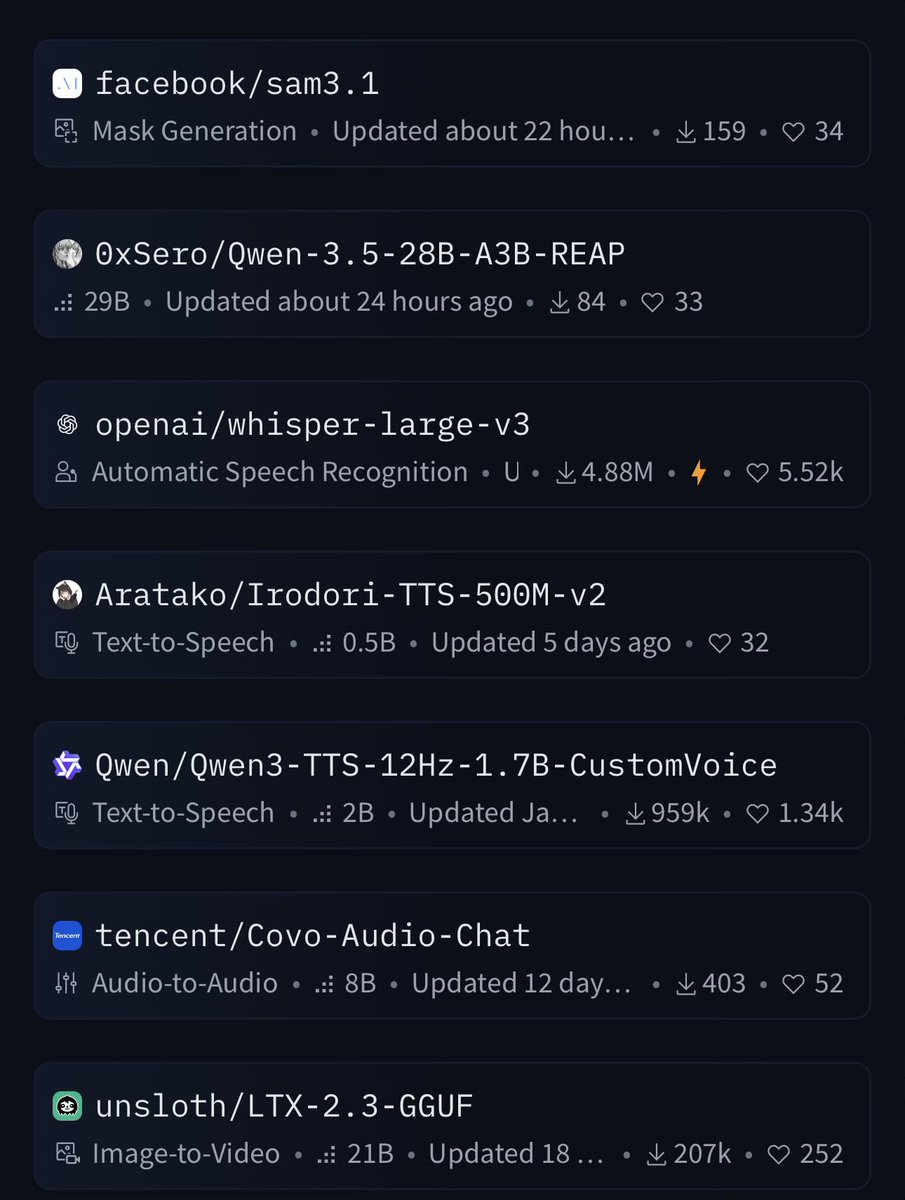
Page #3 of Huggingface https://t.co/fdSiYKHh7a
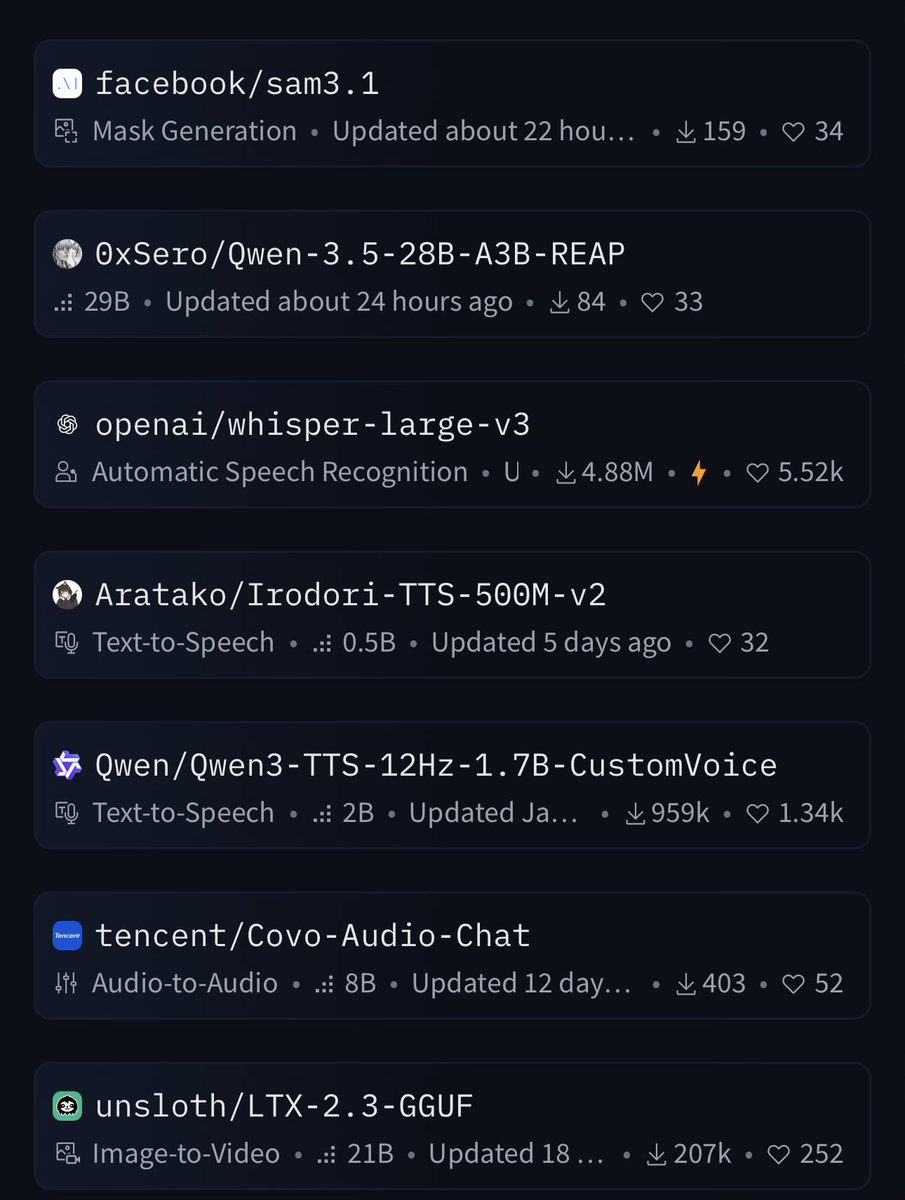
Page #3 of Huggingface https://t.co/fdSiYKHh7a
💯 https://t.co/vq7hFx5NKA

Our OSS engineer @itsclelia recently built 𝗹𝗶𝘁𝗲𝘀𝗲𝗮𝗿𝗰𝗵, a fully local document ingestion and retrieval CLI/TUI application powered by LiteParse ⚡ litesearch demonstrates how developers can assemble a high-performance, local-first retrieval pipeline using open tools from across the ecosystem: • Parsing: LiteParse, the fast and accurate document parser we recently open sourced • Chunking: @ChonkieAI • Embeddings: A local @nomic_ai model via @huggingface transformers.js • Vector storage: A local @qdrant_engine edge shard (custom-built in Rust and compiled as a native add-on) • Retrieval: Query stored files with optional path-based filtering and configurable relevance thresholds • Runtime: @bunjavascript for speed and versatility 💻 Check out the repository and try it yourself: https://t.co/N0TyLbwvpm 📚 LiteParse docs: https://t.co/4C5ky7iIOa
Out of Sight but Not Out of Mind Hybrid Memory for Dynamic Video World Models paper: https://t.co/9bnjLgKDJF https://t.co/51ZKuWOmdd

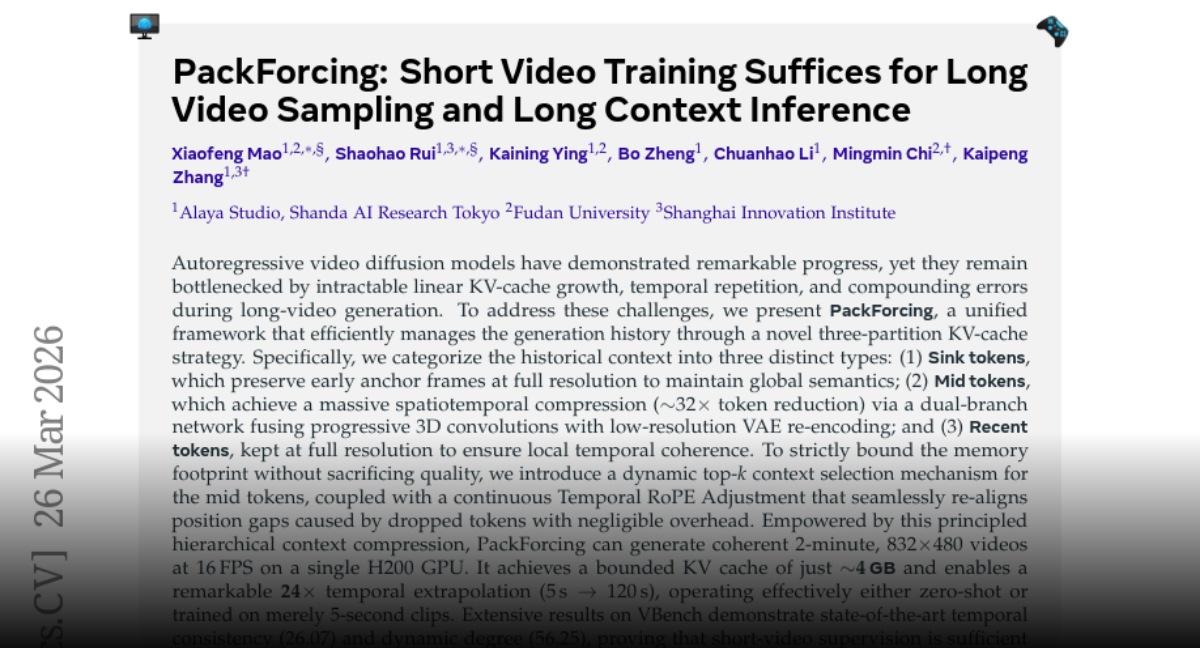
PackForcing Short Video Training Suffices for Long Video Sampling and Long Context Inference paper: https://t.co/zfNNV2BMuC https://t.co/AvHqhAsqwo
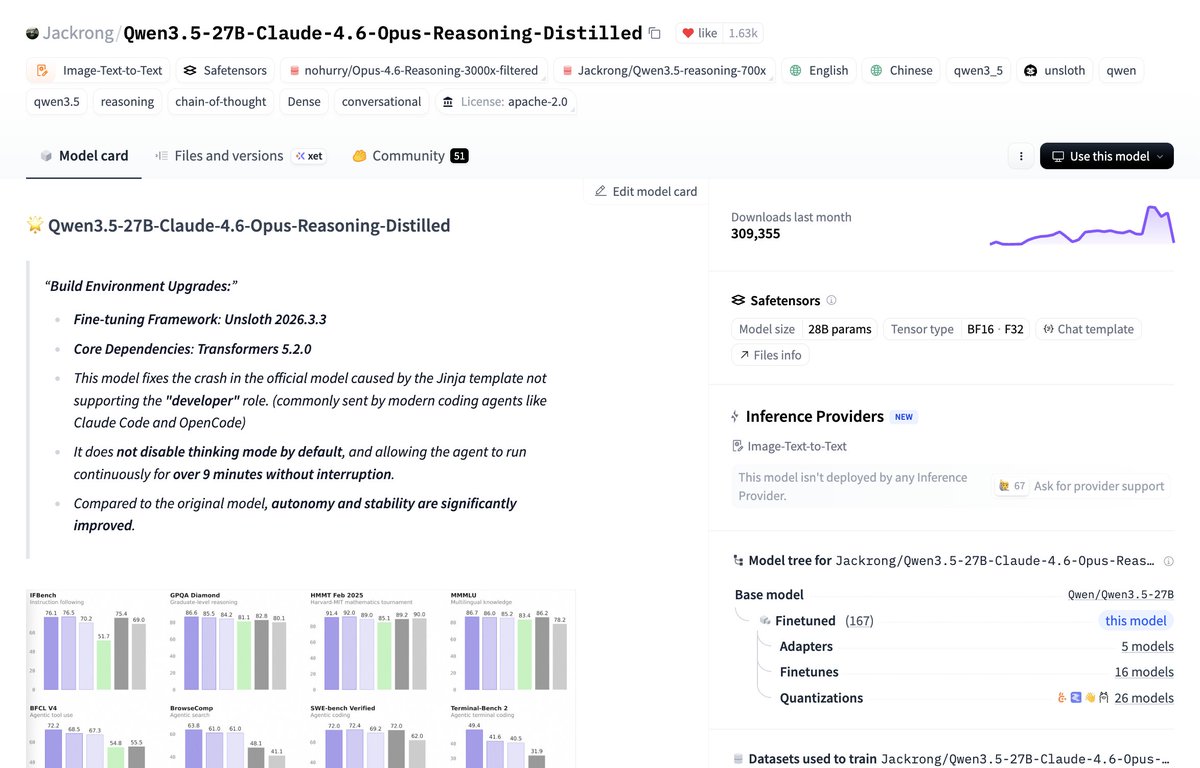
This model has been #1 trending for 3 weeks now. It's Qwen3.5-27B fine-tuned on distilled data from Claude-4.6-Opus (reasoning). Trained via Unsloth. Runs locally on 16GB in 4-bit or 32GB in 8-bit. Model: https://t.co/6KgPDHCJZ3

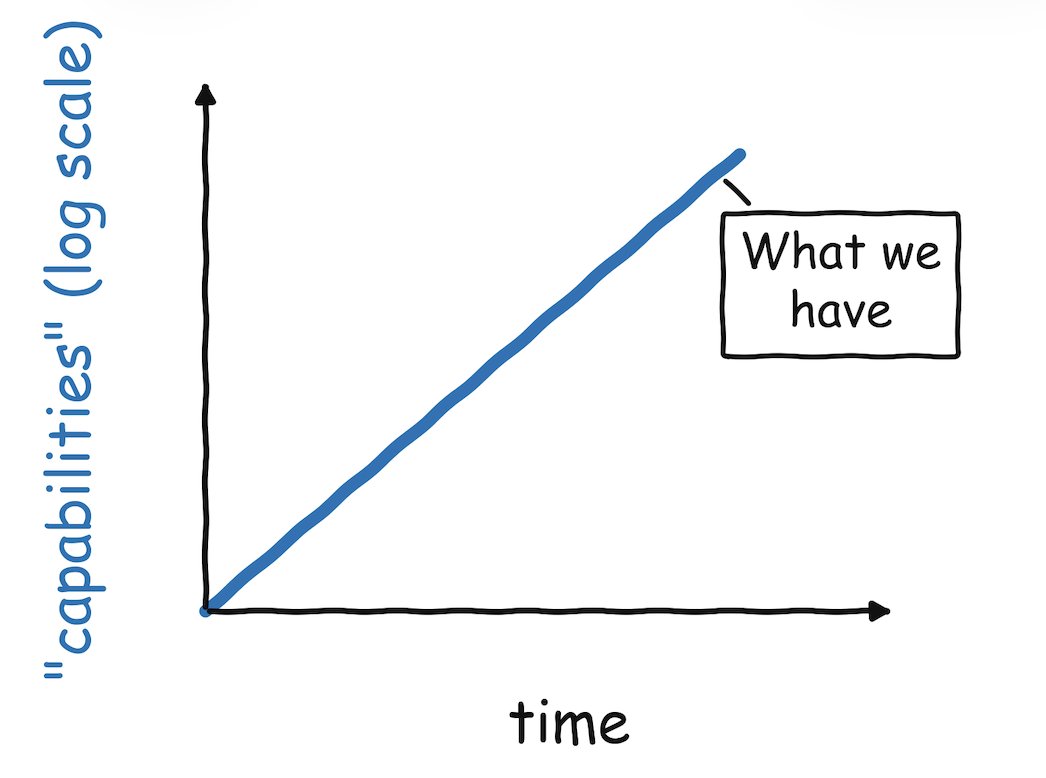
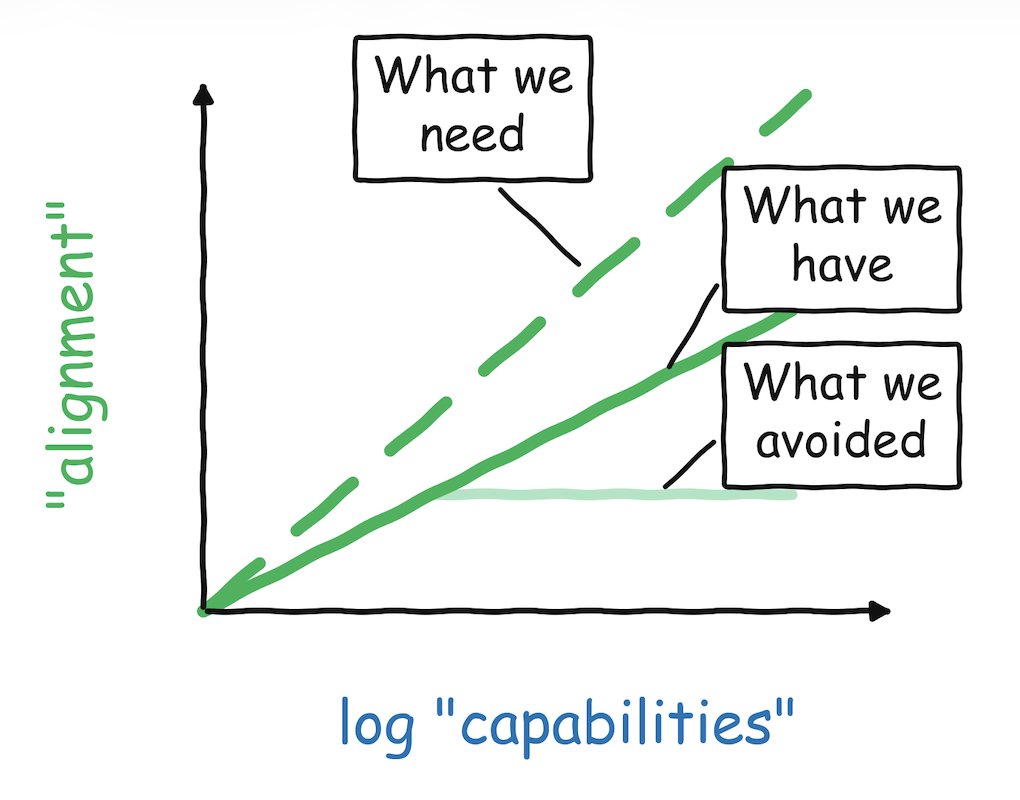
New blog post: the state of AI safety in four fake graphs. https://t.co/Qv1BlwyfY5
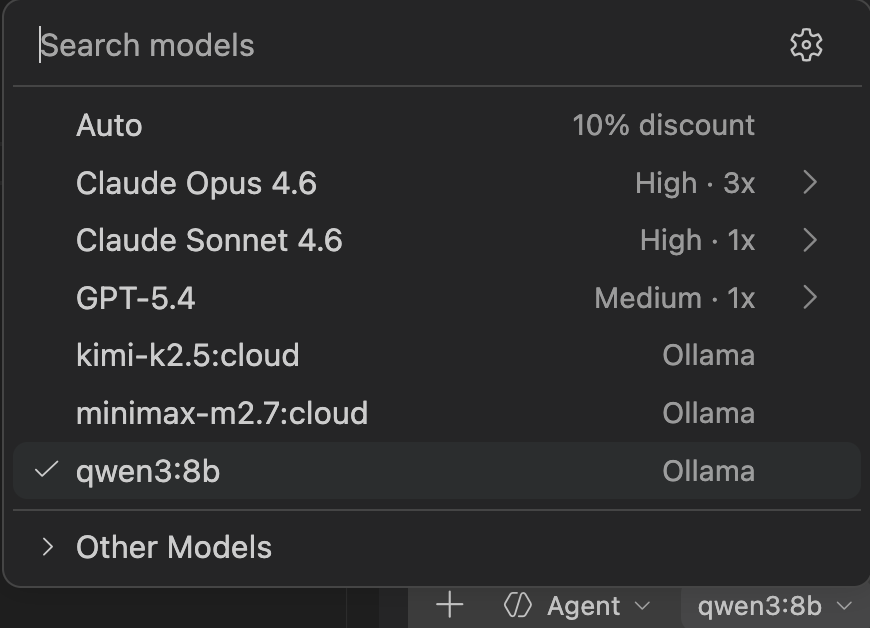
Visual Studio Code now integrates with Ollama via GitHub Copilot. If you have Ollama installed, any local or cloud model from Ollama can be selected for use within Visual Studio Code. https://t.co/11BqI12oSV

Introducing 🤗 Transformers.js v4: state-of-the-art machine learning for the web! 🚀 New WebGPU backend (browser, Node.js, Bun, Deno) ⚡️ Huge performance improvements 🤯 Support for over 200 architectures 🛠️ Complete codebase refactor Learn more about our biggest release yet! 👇
Falcon 9 launches the 16th Transporter rideshare mission and delivers 119 payloads to orbit https://t.co/h0e6dvxy8X


Tesla Semi just won over the toughest crowd in transportation: actual truckers. Drivers who tested the pilot models say it's a game changer. The cab puts you dead center so there's no right-side blind spot, plus screens show everything around the truck. It goes 500 miles on a charge while competitors barely hit 225. Charges to 60% in 30 minutes, which is 4x faster than other electric trucks. Costs under $300k, about $100k cheaper than rival EVs. California trucking companies just ordered over 1,000 Semis. That's double the number of electric big rigs currently operating in all of Southern California. The automatic transmission is easier on drivers' bodies compared to wrestling a 13-gear diesel all day. Less maintenance too since there are fewer moving parts. Tesla is expected to ship 5,000 to 15,000 Semis this year from the Nevada Gigafactory before ramping to 50,000 annually. @elonmusk might've actually cracked the trucking code. Source: WSJ
🇺🇸 The Tesla Semi is an 80,000-lb electric truck that runs almost silently and costs much less to operate than diesel rigs. Same heavy loads, but without the diesel bill… It's the future of trucking. https://t.co/A8JWaO1QKU
Falcon 9 landing confirmed https://t.co/KYrUYuWJii
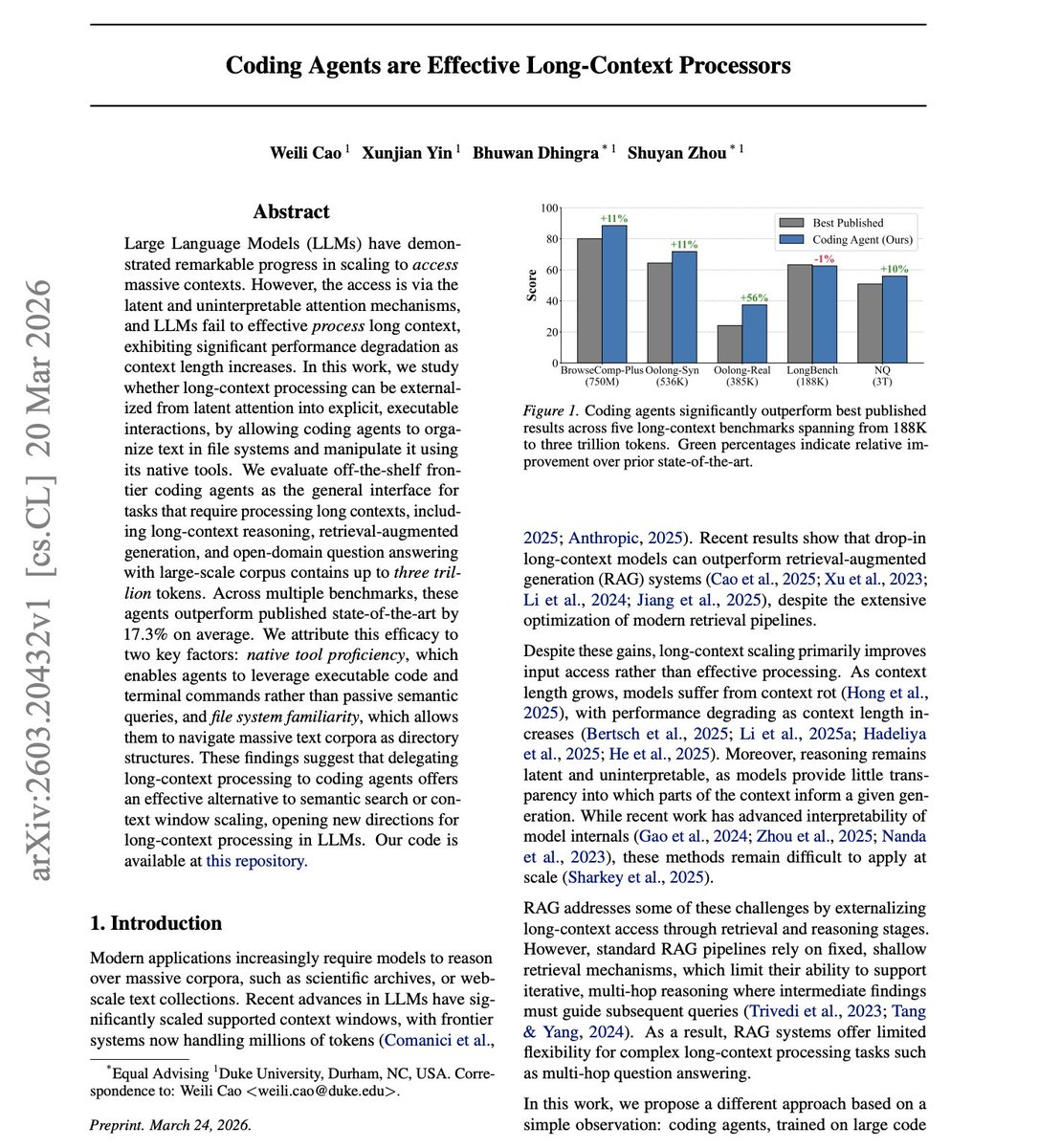
// Coding Agents are Effective Long-Context Processors // We are just touching the surface of what's possible with coding agents. LLMs struggle with long contexts, even the ones that support massive context windows. It turns out coding agents already know how to solve this; you just need to reframe the problem. This work places massive text corpora into directory structures and lets off-the-shelf coding agents (Codex, Claude Code) navigate them with terminal commands and Python scripts. This is great, as you are not feeding massive text directly into a model’s context window or relying on semantic retrieval. Results: - On BrowseComp-Plus (750M tokens), this approach scores 88.5% vs 80% best published. - On Oolong-Real (385K tokens), 33.7% vs 24.1%, a 56% relative improvement. - GPT-5 full-context baseline only manages 20% on BrowseComp-Plus. Works up to 3 trillion tokens. Instead of scaling context windows or building retrieval pipelines, coding agents that already know how to navigate file systems can process virtually unlimited context. The agents autonomously develop task-specific strategies: writing scripts, iterative query refinement, and programmatic aggregation. Paper: https://t.co/kiCFtlixMf Learn to build effective AI agents in our academy: https://t.co/LRnpZN7L4c

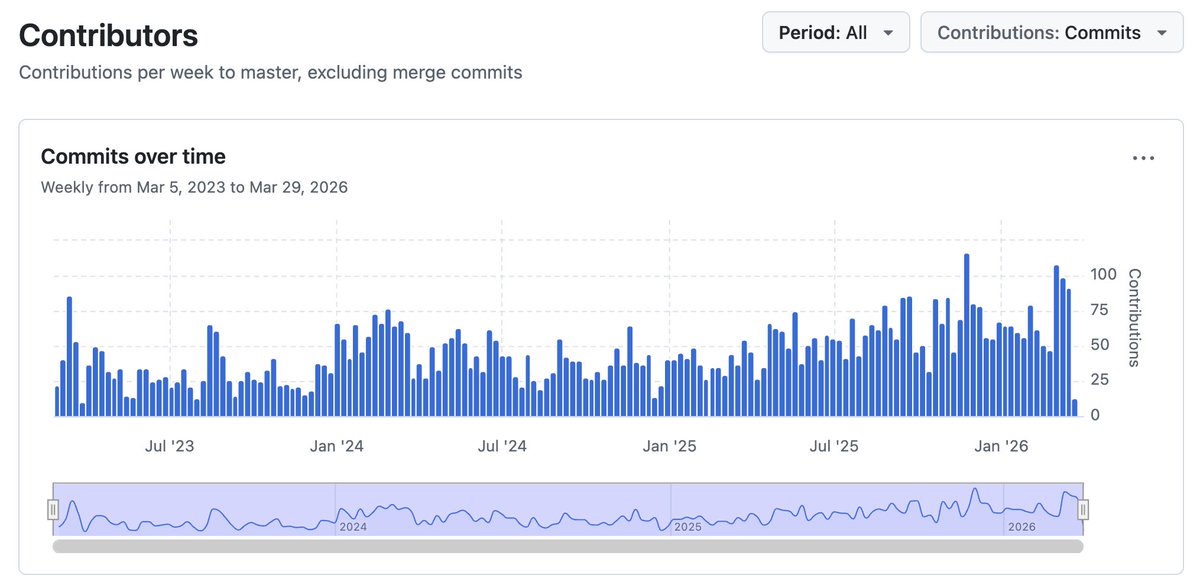
llama.cpp at 100k stars now that 90% of the code worldwide is being written by AI agents, I predict that within 3-6 months, 90% of all AI agents will be running locally with llama.cpp 😄 Jokes aside, I am going to use this small milestone as an opportunity to reflect a bit on the project and the state of AI from the perspective of local applications. There is a lot to say and discuss and yet it feels less and less important to try to make a point. Opinions about viability of local LLMs are strongly polarized, details are overlooked, the scientific approach is lacking. Arguments are predominantly based on vibes and hype waves. One thing is clear though - local LLMs are used more and more. I expect this trend to continue and likely 2026 will end up being one of the most important years for the local AI movement. I admit that I didn't expect the agentic era to come so quickly to the local LLM space. One year ago, the available models were too computationally expensive for doing long-context tasks. There wasn't an obvious path towards meaningful agentic applications. The memory and compute requirements were huge. Last summer, with the release of gpt-oss, things started to change. It was the first time we saw a glimpse of tool calling that actually works well within the resource constraints of our daily devices. Later in the year, even better models were released and by now, useful local agentic workflows are a reality. Comparing local vs hosted capabilities at a given moment of time is pointless. To try put things into perspective: - We don't need frontier intelligence to automate searches and sending emails - We don't need trillion parameter models to be able to summarize articles or technical documents - We don't need massive GPU data centers to control our home appliances or turn the lights off in the garage I believe that there is a certain level of intelligence we as humans can comprehend and meaningfully utilize to improve our working process. Beyond that level, access to more intelligence becomes unnecessary at best and counterproductive at worst. I also believe that that level of useful artificial intelligence is completely within reach locally and it has always been just a matter of implementing the right software stack to bring it to the end user. With llama.cpp, I am confident that we continue to be on the right track of building that software stack! The llama.cpp project is going stronger than ever. With more than 1500 contributors, the project keeps growing steadily. From technical point of view, I think that llama.cpp + ggml is the only solution that actually makes sense. That is, the software stack must run efficiently on every possible device, hardware and operating system. The technology is too important to be vendor-locked. It has to be developed in the open, by the community, together with the independent hardware vendors. This is the only right way to build something that will truly make a difference in the long run. I won't try to convince you about what is currently and will be possible with local AI. We will just continue to build as usual. I am confident that after the smoke clears and we look objectively at what we have built together, the benefits will be obvious to everyone. Big shoutout to all llama.cpp maintainers. I feel extremely lucky to be able to work together with so many talented contributors. Every day I learn something new and I feel there is so much more cool stuff that we are going to build. Also, I am really thankful that the project continues to have reliable partners to support it! Cheers!
AI is reshaping how companies approach experimental ad budgets. As platforms roll out new AI-driven ad products and traditional channels become saturated, marketers are rethinking where and how they test. Budgets are being adjusted toward areas like generative search, ChatGPT-style ads and new formats, with a stronger focus on reaching untapped audiences. The shift is not just about efficiency. It is about reallocating spend toward experimentation, changing KPIs and moving from guaranteed performance to discovering new sources of growth. https://t.co/19YHYvJvay @Digiday

That's it. That's the best picture from Saturday's No Kings protests in the USA. The literal Statue of Liberty being detained by police. It doesn't get much more poetic than this. https://t.co/KOoDCKFu52

Talking about tracing things back https://t.co/6CPjlgfajc
Every LLM from any lab today traces back to this guy, who was the only person at OpenAI pushing for pretraining transformer language models. He built GPT-1. After that did others see the potential. He invented it, and almost none of the so called AI experts even know his name. ht

Talking about tracing things back https://t.co/6CPjlgfajc