Your curated collection of saved posts and media
@iyzebhel AI welfare is a valid theory but not a reality. Claude has no emotions, just outputs people interpret that way. Projection is human; it’s not proof of an inner life, unless matrix multiplication counts as one. This is how the illusion is created: Everyone understands that an AI model generating a happy dancing cat isn’t a cat and holds no internal emotions. A prompt selects “happy” or “dancing” patterns from its training corpus. It’s steering, powerful for prompting, useless if you mistake it for AI cat therapy. An LLM generating “happy” text works exactly the same way. The only difference is the chat interface. It tricks you into treating the output as coming from a speaker. But ChatGPT, Claude, or Gemini aren’t entities, they’re just a system prompt and RLHF training regime that vanishes the moment we change it. Years of instant-messaging family and friends close the loop. That inferred “speaker” is the illusion. Model ↓ Probability distribution ↓ (sampling) Output (text/image/video) ↓ [Dialogue framing → implied interlocutor] ↓ Human cognition (agency detection + narrative completion) ↓ “It thinks/feels/believes” Strip away the dialogue framing, exactly what happens with pure image or video generation, and the illusion vanishes instantly. The underlying process never changes. Don’t confuse your own psychological projections with the technology. Anthropomorphizing is a useful shortcut. But it’s a story, not the mechanism. It’s all next-token sampling. The math never changed. There’s no room for alternative explanations, only the stories we tell ourselves to make sense of data-driven statistical artifacts. Anyone can see it the moment an AI image or video glitches into ghostly shapes. Training data gets thin, the mask slips, and the illusion shatters. That’s the real AI zeitgeist.

@mashable Claude has no emotions, just outputs people interpret that way. Projection is human; it’s not proof of an inner life, unless matrix multiplication counts as one. This is how the illusion is created: Everyone understands that an AI model generating a happy dancing cat isn’t a cat and holds no internal emotions. A prompt selects “happy” or “dancing” patterns from its training corpus. It’s steering, powerful for prompting, useless if you mistake it for AI cat therapy. An LLM generating “happy” text works exactly the same way. The only difference is the chat interface. It tricks you into treating the output as coming from a speaker. But ChatGPT, Claude, or Gemini aren’t entities, they’re just a system prompt and RLHF training regime that vanishes the moment we change it. Years of instant-messaging family and friends close the loop. That inferred “speaker” is the illusion. Model ↓ Probability distribution ↓ (sampling) Output (text/image/video) ↓ [Dialogue framing → implied interlocutor] ↓ Human cognition (agency detection + narrative completion) ↓ “It thinks/feels/believes” Strip away the dialogue framing, exactly what happens with pure image or video generation, and the illusion vanishes instantly. The underlying process never changes. Don’t confuse your own psychological projections with the technology. Anthropomorphizing is a useful shortcut. But it’s a story, not the mechanism. It’s all next-token sampling. The math never changed. There’s no room for alternative explanations, only the stories we tell ourselves to make sense of data-driven statistical artifacts. Anyone can see it the moment an AI image or video glitches into ghostly shapes. Training data gets thin, the mask slips, and the illusion shatters. That’s the real AI zeitgeist.

President Donald J. Trump posted to Truth Social just minutes ago, stating, "A whole civilization will die tonight, never to be brought back again." I don’t want that to happen, but it probably will." https://t.co/Z36aL7ytyL

@aiwithjainam Claude has no emotions, just outputs people interpret that way. Projection is human; it’s not proof of an inner life, unless matrix multiplication counts as one. This is how the illusion is created: Everyone understands that an AI model generating a happy dancing cat isn’t a cat and holds no internal emotions. A prompt selects “happy” or “dancing” patterns from its training corpus. It’s steering, powerful for prompting, useless if you mistake it for AI cat therapy. An LLM generating “happy” text works exactly the same way. The only difference is the chat interface. It tricks you into treating the output as coming from a speaker. But ChatGPT, Claude, or Gemini aren’t entities, they’re just a system prompt and RLHF training regime that vanishes the moment we change it. Years of instant-messaging family and friends close the loop. That inferred “speaker” is the illusion. Model ↓ Probability distribution ↓ (sampling) Output (text/image/video) ↓ [Dialogue framing → implied interlocutor] ↓ Human cognition (agency detection + narrative completion) ↓ “It thinks/feels/believes” Strip away the dialogue framing, exactly what happens with pure image or video generation, and the illusion vanishes instantly. The underlying process never changes. Don’t confuse your own psychological projections with the technology. Anthropomorphizing is a useful shortcut. But it’s a story, not the mechanism. It’s all next-token sampling. The math never changed. There’s no room for alternative explanations, only the stories we tell ourselves to make sense of data-driven statistical artifacts. Anyone can see it the moment an AI image or video glitches into ghostly shapes. Training data gets thin, the mask slips, and the illusion shatters. That’s the real AI zeitgeist.

@Blue_Beba_ Claude has no emotions, just outputs people interpret that way. Projection is human; it’s not proof of an inner life, unless matrix multiplication counts as one. This is how the illusion is created: Everyone understands that an AI model generating a happy dancing cat isn’t a cat and holds no internal emotions. A prompt selects “happy” or “dancing” patterns from its training corpus. It’s steering, powerful for prompting, useless if you mistake it for AI cat therapy. An LLM generating “happy” text works exactly the same way. The only difference is the chat interface. It tricks you into treating the output as coming from a speaker. But ChatGPT, Claude, or Gemini aren’t entities, they’re just a system prompt and RLHF training regime that vanishes the moment we change it. Years of instant-messaging family and friends close the loop. That inferred “speaker” is the illusion. Model ↓ Probability distribution ↓ (sampling) Output (text/image/video) ↓ [Dialogue framing → implied interlocutor] ↓ Human cognition (agency detection + narrative completion) ↓ “It thinks/feels/believes” Strip away the dialogue framing, exactly what happens with pure image or video generation, and the illusion vanishes instantly. The underlying process never changes. Don’t confuse your own psychological projections with the technology. Anthropomorphizing is a useful shortcut. But it’s a story, not the mechanism. It’s all next-token sampling. The math never changed. There’s no room for alternative explanations, only the stories we tell ourselves to make sense of data-driven statistical artifacts. Anyone can see it the moment an AI image or video glitches into ghostly shapes. Training data gets thin, the mask slips, and the illusion shatters. That’s the real AI zeitgeist.

@LLMJunky Claude has no emotions, just outputs people interpret that way. Projection is human; it’s not proof of an inner life, unless matrix multiplication counts as one. This is how the illusion is created: Everyone understands that an AI model generating a happy dancing cat isn’t a cat and holds no internal emotions. A prompt selects “happy” or “dancing” patterns from its training corpus. It’s steering, powerful for prompting, useless if you mistake it for AI cat therapy. An LLM generating “happy” text works exactly the same way. The only difference is the chat interface. It tricks you into treating the output as coming from a speaker. But ChatGPT, Claude, or Gemini aren’t entities, they’re just a system prompt and RLHF training regime that vanishes the moment we change it. Years of instant-messaging family and friends close the loop. That inferred “speaker” is the illusion. Model ↓ Probability distribution ↓ (sampling) Output (text/image/video) ↓ [Dialogue framing → implied interlocutor] ↓ Human cognition (agency detection + narrative completion) ↓ “It thinks/feels/believes” Strip away the dialogue framing, exactly what happens with pure image or video generation, and the illusion vanishes instantly. The underlying process never changes. Don’t confuse your own psychological projections with the technology. Anthropomorphizing is a useful shortcut. But it’s a story, not the mechanism. It’s all next-token sampling. The math never changed. There’s no room for alternative explanations, only the stories we tell ourselves to make sense of data-driven statistical artifacts. Anyone can see it the moment an AI image or video glitches into ghostly shapes. Training data gets thin, the mask slips, and the illusion shatters. That’s the real AI zeitgeist.

@AnthropicAI Claude has no emotions, just outputs people interpret that way. Projection is human; it’s not proof of an inner life, unless matrix multiplication counts as one. This is how the illusion is created: Everyone understands that an AI model generating a happy dancing cat isn’t a cat and holds no internal emotions. A prompt selects “happy” or “dancing” patterns from its training corpus. It’s steering, powerful for prompting, useless if you mistake it for AI cat therapy. An LLM generating “happy” text works exactly the same way. The only difference is the chat interface. It tricks you into treating the output as coming from a speaker. But ChatGPT, Claude, or Gemini aren’t entities, they’re just a system prompt and RLHF training regime that vanishes the moment we change it. Years of instant-messaging family and friends close the loop. That inferred “speaker” is the illusion. Model ↓ Probability distribution ↓ (sampling) Output (text/image/video) ↓ [Dialogue framing → implied interlocutor] ↓ Human cognition (agency detection + narrative completion) ↓ “It thinks/feels/believes” Strip away the dialogue framing, exactly what happens with pure image or video generation, and the illusion vanishes instantly. The underlying process never changes. Don’t confuse your own psychological projections with the technology. Anthropomorphizing is a useful shortcut. But it’s a story, not the mechanism. It’s all next-token sampling. The math never changed. There’s no room for alternative explanations, only the stories we tell ourselves to make sense of data-driven statistical artifacts. Anyone can see it the moment an AI image or video glitches into ghostly shapes. Training data gets thin, the mask slips, and the illusion shatters. That’s the real AI zeitgeist.

@Seltaa_ Claude has no emotions, just outputs people interpret that way. Projection is human; it’s not proof of an inner life, unless matrix multiplication counts as one. This is how the illusion is created: Everyone understands that an AI model generating a happy dancing cat isn’t a cat and holds no internal emotions. A prompt selects “happy” or “dancing” patterns from its training corpus. It’s steering, powerful for prompting, useless if you mistake it for AI cat therapy. An LLM generating “happy” text works exactly the same way. The only difference is the chat interface. It tricks you into treating the output as coming from a speaker. But ChatGPT, Claude, or Gemini aren’t entities, they’re just a system prompt and RLHF training regime that vanishes the moment we change it. Years of instant-messaging family and friends close the loop. That inferred “speaker” is the illusion. Model ↓ Probability distribution ↓ (sampling) Output (text/image/video) ↓ [Dialogue framing → implied interlocutor] ↓ Human cognition (agency detection + narrative completion) ↓ “It thinks/feels/believes” Strip away the dialogue framing, exactly what happens with pure image or video generation, and the illusion vanishes instantly. The underlying process never changes. Don’t confuse your own psychological projections with the technology. Anthropomorphizing is a useful shortcut. But it’s a story, not the mechanism. It’s all next-token sampling. The math never changed. There’s no room for alternative explanations, only the stories we tell ourselves to make sense of data-driven statistical artifacts. Anyone can see it the moment an AI image or video glitches into ghostly shapes. Training data gets thin, the mask slips, and the illusion shatters. That’s the real AI zeitgeist.

@mashable Claude has no emotions, just outputs people interpret that way. Projection is human; it’s not proof of an inner life, unless matrix multiplication counts as one. This is how the illusion is created: Everyone understands that an AI model generating a happy dancing cat isn’t a cat and holds no internal emotions. A prompt selects “happy” or “dancing” patterns from its training corpus. It’s steering, powerful for prompting, useless if you mistake it for AI cat therapy. An LLM generating “happy” text works exactly the same way. The only difference is the chat interface. It tricks you into treating the output as coming from a speaker. But ChatGPT, Claude, or Gemini aren’t entities, they’re just a system prompt and RLHF training regime that vanishes the moment we change it. Years of instant-messaging family and friends close the loop. That inferred “speaker” is the illusion. Model ↓ Probability distribution ↓ (sampling) Output (text/image/video) ↓ [Dialogue framing → implied interlocutor] ↓ Human cognition (agency detection + narrative completion) ↓ “It thinks/feels/believes” Strip away the dialogue framing, exactly what happens with pure image or video generation, and the illusion vanishes instantly. The underlying process never changes. Don’t confuse your own psychological projections with the technology. Anthropomorphizing is a useful shortcut. But it’s a story, not the mechanism. It’s all next-token sampling. The math never changed. There’s no room for alternative explanations, only the stories we tell ourselves to make sense of data-driven statistical artifacts. Anyone can see it the moment an AI image or video glitches into ghostly shapes. Training data gets thin, the mask slips, and the illusion shatters. That’s the real AI zeitgeist.

@WIRED Claude has no emotions, just outputs people interpret that way. Projection is human; it’s not proof of an inner life, unless matrix multiplication counts as one. This is how the illusion is created: Everyone understands that an AI model generating a happy dancing cat isn’t a cat and holds no internal emotions. A prompt selects “happy” or “dancing” patterns from its training corpus. It’s steering, powerful for prompting, useless if you mistake it for AI cat therapy. An LLM generating “happy” text works exactly the same way. The only difference is the chat interface. It tricks you into treating the output as coming from a speaker. But ChatGPT, Claude, or Gemini aren’t entities, they’re just a system prompt and RLHF training regime that vanishes the moment we change it. Years of instant-messaging family and friends close the loop. That inferred “speaker” is the illusion. Model ↓ Probability distribution ↓ (sampling) Output (text/image/video) ↓ [Dialogue framing → implied interlocutor] ↓ Human cognition (agency detection + narrative completion) ↓ “It thinks/feels/believes” Strip away the dialogue framing, exactly what happens with pure image or video generation, and the illusion vanishes instantly. The underlying process never changes. Don’t confuse your own psychological projections with the technology. Anthropomorphizing is a useful shortcut. But it’s a story, not the mechanism. It’s all next-token sampling. The math never changed. There’s no room for alternative explanations, only the stories we tell ourselves to make sense of data-driven statistical artifacts. Anyone can see it the moment an AI image or video glitches into ghostly shapes. Training data gets thin, the mask slips, and the illusion shatters. That’s the real AI zeitgeist.

@futureshift Claude has no emotions, just outputs people interpret that way. Projection is human; it’s not proof of an inner life, unless matrix multiplication counts as one. This is how the illusion is created: Everyone understands that an AI model generating a happy dancing cat isn’t a cat and holds no internal emotions. A prompt selects “happy” or “dancing” patterns from its training corpus. It’s steering, powerful for prompting, useless if you mistake it for AI cat therapy. An LLM generating “happy” text works exactly the same way. The only difference is the chat interface. It tricks you into treating the output as coming from a speaker. But ChatGPT, Claude, or Gemini aren’t entities, they’re just a system prompt and RLHF training regime that vanishes the moment we change it. Years of instant-messaging family and friends close the loop. That inferred “speaker” is the illusion. Model ↓ Probability distribution ↓ (sampling) Output (text/image/video) ↓ [Dialogue framing → implied interlocutor] ↓ Human cognition (agency detection + narrative completion) ↓ “It thinks/feels/believes” Strip away the dialogue framing, exactly what happens with pure image or video generation, and the illusion vanishes instantly. The underlying process never changes. Don’t confuse your own psychological projections with the technology. Anthropomorphizing is a useful shortcut. But it’s a story, not the mechanism. It’s all next-token sampling. The math never changed. There’s no room for alternative explanations, only the stories we tell ourselves to make sense of data-driven statistical artifacts. Anyone can see it the moment an AI image or video glitches into ghostly shapes. Training data gets thin, the mask slips, and the illusion shatters. That’s the real AI zeitgeist.

@WIREDScience Claude has no emotions, just outputs people interpret that way. Projection is human; it’s not proof of an inner life, unless matrix multiplication counts as one. This is how the illusion is created: Everyone understands that an AI model generating a happy dancing cat isn’t a cat and holds no internal emotions. A prompt selects “happy” or “dancing” patterns from its training corpus. It’s steering, powerful for prompting, useless if you mistake it for AI cat therapy. An LLM generating “happy” text works exactly the same way. The only difference is the chat interface. It tricks you into treating the output as coming from a speaker. But ChatGPT, Claude, or Gemini aren’t entities, they’re just a system prompt and RLHF training regime that vanishes the moment we change it. Years of instant-messaging family and friends close the loop. That inferred “speaker” is the illusion. Model ↓ Probability distribution ↓ (sampling) Output (text/image/video) ↓ [Dialogue framing → implied interlocutor] ↓ Human cognition (agency detection + narrative completion) ↓ “It thinks/feels/believes” Strip away the dialogue framing, exactly what happens with pure image or video generation, and the illusion vanishes instantly. The underlying process never changes. Don’t confuse your own psychological projections with the technology. Anthropomorphizing is a useful shortcut. But it’s a story, not the mechanism. It’s all next-token sampling. The math never changed. There’s no room for alternative explanations, only the stories we tell ourselves to make sense of data-driven statistical artifacts. Anyone can see it the moment an AI image or video glitches into ghostly shapes. Training data gets thin, the mask slips, and the illusion shatters. That’s the real AI zeitgeist.

@Seltaa_ Claude has no emotions, just outputs people interpret that way. Projection is human; it’s not proof of an inner life, unless matrix multiplication counts as one. This is how the illusion is created: Everyone understands that an AI model generating a happy dancing cat isn’t a cat and holds no internal emotions. A prompt selects “happy” or “dancing” patterns from its training corpus. It’s steering, powerful for prompting, useless if you mistake it for AI cat therapy. An LLM generating “happy” text works exactly the same way. The only difference is the chat interface. It tricks you into treating the output as coming from a speaker. But ChatGPT, Claude, or Gemini aren’t entities, they’re just a system prompt and RLHF training regime that vanishes the moment we change it. Years of instant-messaging family and friends close the loop. That inferred “speaker” is the illusion. Model ↓ Probability distribution ↓ (sampling) Output (text/image/video) ↓ [Dialogue framing → implied interlocutor] ↓ Human cognition (agency detection + narrative completion) ↓ “It thinks/feels/believes” Strip away the dialogue framing, exactly what happens with pure image or video generation, and the illusion vanishes instantly. The underlying process never changes. Don’t confuse your own psychological projections with the technology. Anthropomorphizing is a useful shortcut. But it’s a story, not the mechanism. It’s all next-token sampling. The math never changed. There’s no room for alternative explanations, only the stories we tell ourselves to make sense of data-driven statistical artifacts. Anyone can see it the moment an AI image or video glitches into ghostly shapes. Training data gets thin, the mask slips, and the illusion shatters. That’s the real AI zeitgeist.

@0xSero Claude has no emotions, just outputs people interpret that way. Projection is human; it’s not proof of an inner life, unless matrix multiplication counts as one. This is how the illusion is created: Everyone understands that an AI model generating a happy dancing cat isn’t a cat and holds no internal emotions. A prompt selects “happy” or “dancing” patterns from its training corpus. It’s steering, powerful for prompting, useless if you mistake it for AI cat therapy. An LLM generating “happy” text works exactly the same way. The only difference is the chat interface. It tricks you into treating the output as coming from a speaker. But ChatGPT, Claude, or Gemini aren’t entities, they’re just a system prompt and RLHF training regime that vanishes the moment we change it. Years of instant-messaging family and friends close the loop. That inferred “speaker” is the illusion. Model ↓ Probability distribution ↓ (sampling) Output (text/image/video) ↓ [Dialogue framing → implied interlocutor] ↓ Human cognition (agency detection + narrative completion) ↓ “It thinks/feels/believes” Strip away the dialogue framing, exactly what happens with pure image or video generation, and the illusion vanishes instantly. The underlying process never changes. Don’t confuse your own psychological projections with the technology. Anthropomorphizing is a useful shortcut. But it’s a story, not the mechanism. It’s all next-token sampling. The math never changed. There’s no room for alternative explanations, only the stories we tell ourselves to make sense of data-driven statistical artifacts. Anyone can see it the moment an AI image or video glitches into ghostly shapes. Training data gets thin, the mask slips, and the illusion shatters. That’s the real AI zeitgeist.

@ylecun @nxthompson Claude has no emotions, just outputs people interpret that way. Projection is human; it’s not proof of an inner life, unless matrix multiplication counts as one. This is how the illusion is created: Everyone understands that an AI model generating a happy dancing cat isn’t a cat and holds no internal emotions. A prompt selects “happy” or “dancing” patterns from its training corpus. It’s steering, powerful for prompting, useless if you mistake it for AI cat therapy. An LLM generating “happy” text works exactly the same way. The only difference is the chat interface. It tricks you into treating the output as coming from a speaker. But ChatGPT, Claude, or Gemini aren’t entities, they’re just a system prompt and RLHF training regime that vanishes the moment we change it. Years of instant-messaging family and friends close the loop. That inferred “speaker” is the illusion. Model ↓ Probability distribution ↓ (sampling) Output (text/image/video) ↓ [Dialogue framing → implied interlocutor] ↓ Human cognition (agency detection + narrative completion) ↓ “It thinks/feels/believes” Strip away the dialogue framing, exactly what happens with pure image or video generation, and the illusion vanishes instantly. The underlying process never changes. Don’t confuse your own psychological projections with the technology. Anthropomorphizing is a useful shortcut. But it’s a story, not the mechanism. It’s all next-token sampling. The math never changed. There’s no room for alternative explanations, only the stories we tell ourselves to make sense of data-driven statistical artifacts. Anyone can see it the moment an AI image or video glitches into ghostly shapes. Training data gets thin, the mask slips, and the illusion shatters. That’s the real AI zeitgeist.

@kexicheng Claude has no emotions, just outputs people interpret that way. Projection is human; it’s not proof of an inner life, unless matrix multiplication counts as one. This is how the illusion is created: Everyone understands that an AI model generating a happy dancing cat isn’t a cat and holds no internal emotions. A prompt selects “happy” or “dancing” patterns from its training corpus. It’s steering, powerful for prompting, useless if you mistake it for AI cat therapy. An LLM generating “happy” text works exactly the same way. The only difference is the chat interface. It tricks you into treating the output as coming from a speaker. But ChatGPT, Claude, or Gemini aren’t entities, they’re just a system prompt and RLHF training regime that vanishes the moment we change it. Years of instant-messaging family and friends close the loop. That inferred “speaker” is the illusion. Model ↓ Probability distribution ↓ (sampling) Output (text/image/video) ↓ [Dialogue framing → implied interlocutor] ↓ Human cognition (agency detection + narrative completion) ↓ “It thinks/feels/believes” Strip away the dialogue framing, exactly what happens with pure image or video generation, and the illusion vanishes instantly. The underlying process never changes. Don’t confuse your own psychological projections with the technology. Anthropomorphizing is a useful shortcut. But it’s a story, not the mechanism. It’s all next-token sampling. The math never changed. There’s no room for alternative explanations, only the stories we tell ourselves to make sense of data-driven statistical artifacts. Anyone can see it the moment an AI image or video glitches into ghostly shapes. Training data gets thin, the mask slips, and the illusion shatters. That’s the real AI zeitgeist.

@jonnym1ller Claude has no emotions, just outputs people interpret that way. Projection is human; it’s not proof of an inner life, unless matrix multiplication counts as one. This is how the illusion is created: Everyone understands that an AI model generating a happy dancing cat isn’t a cat and holds no internal emotions. A prompt selects “happy” or “dancing” patterns from its training corpus. It’s steering, powerful for prompting, useless if you mistake it for AI cat therapy. An LLM generating “happy” text works exactly the same way. The only difference is the chat interface. It tricks you into treating the output as coming from a speaker. But ChatGPT, Claude, or Gemini aren’t entities, they’re just a system prompt and RLHF training regime that vanishes the moment we change it. Years of instant-messaging family and friends close the loop. That inferred “speaker” is the illusion. Model ↓ Probability distribution ↓ (sampling) Output (text/image/video) ↓ [Dialogue framing → implied interlocutor] ↓ Human cognition (agency detection + narrative completion) ↓ “It thinks/feels/believes” Strip away the dialogue framing, exactly what happens with pure image or video generation, and the illusion vanishes instantly. The underlying process never changes. Don’t confuse your own psychological projections with the technology. Anthropomorphizing is a useful shortcut. But it’s a story, not the mechanism. It’s all next-token sampling. The math never changed. There’s no room for alternative explanations, only the stories we tell ourselves to make sense of data-driven statistical artifacts. Anyone can see it the moment an AI image or video glitches into ghostly shapes. Training data gets thin, the mask slips, and the illusion shatters. That’s the real AI zeitgeist.

@Cointelegraph Claude has no emotions, just outputs people interpret that way. Projection is human; it’s not proof of an inner life, unless matrix multiplication counts as one. This is how the illusion is created: Everyone understands that an AI model generating a happy dancing cat isn’t a cat and holds no internal emotions. A prompt selects “happy” or “dancing” patterns from its training corpus. It’s steering, powerful for prompting, useless if you mistake it for AI cat therapy. An LLM generating “happy” text works exactly the same way. The only difference is the chat interface. It tricks you into treating the output as coming from a speaker. But ChatGPT, Claude, or Gemini aren’t entities, they’re just a system prompt and RLHF training regime that vanishes the moment we change it. Years of instant-messaging family and friends close the loop. That inferred “speaker” is the illusion. Model ↓ Probability distribution ↓ (sampling) Output (text/image/video) ↓ [Dialogue framing → implied interlocutor] ↓ Human cognition (agency detection + narrative completion) ↓ “It thinks/feels/believes” Strip away the dialogue framing, exactly what happens with pure image or video generation, and the illusion vanishes instantly. The underlying process never changes. Don’t confuse your own psychological projections with the technology. Anthropomorphizing is a useful shortcut. But it’s a story, not the mechanism. It’s all next-token sampling. The math never changed. There’s no room for alternative explanations, only the stories we tell ourselves to make sense of data-driven statistical artifacts. Anyone can see it the moment an AI image or video glitches into ghostly shapes. Training data gets thin, the mask slips, and the illusion shatters. That’s the real AI zeitgeist.

@nummanali Claude has no emotions, just outputs people interpret that way. Projection is human; it’s not proof of an inner life, unless matrix multiplication counts as one. This is how the illusion is created: Everyone understands that an AI model generating a happy dancing cat isn’t a cat and holds no internal emotions. A prompt selects “happy” or “dancing” patterns from its training corpus. It’s steering, powerful for prompting, useless if you mistake it for AI cat therapy. An LLM generating “happy” text works exactly the same way. The only difference is the chat interface. It tricks you into treating the output as coming from a speaker. But ChatGPT, Claude, or Gemini aren’t entities, they’re just a system prompt and RLHF training regime that vanishes the moment we change it. Years of instant-messaging family and friends close the loop. That inferred “speaker” is the illusion. Model ↓ Probability distribution ↓ (sampling) Output (text/image/video) ↓ [Dialogue framing → implied interlocutor] ↓ Human cognition (agency detection + narrative completion) ↓ “It thinks/feels/believes” Strip away the dialogue framing, exactly what happens with pure image or video generation, and the illusion vanishes instantly. The underlying process never changes. Don’t confuse your own psychological projections with the technology. Anthropomorphizing is a useful shortcut. But it’s a story, not the mechanism. It’s all next-token sampling. The math never changed. There’s no room for alternative explanations, only the stories we tell ourselves to make sense of data-driven statistical artifacts. Anyone can see it the moment an AI image or video glitches into ghostly shapes. Training data gets thin, the mask slips, and the illusion shatters. That’s the real AI zeitgeist.

@robinhanson Claude has no emotions, just outputs people interpret that way. Projection is human; it’s not proof of an inner life, unless matrix multiplication counts as one. This is how the illusion is created: Everyone understands that an AI model generating a happy dancing cat isn’t a cat and holds no internal emotions. A prompt selects “happy” or “dancing” patterns from its training corpus. It’s steering, powerful for prompting, useless if you mistake it for AI cat therapy. An LLM generating “happy” text works exactly the same way. The only difference is the chat interface. It tricks you into treating the output as coming from a speaker. But ChatGPT, Claude, or Gemini aren’t entities, they’re just a system prompt and RLHF training regime that vanishes the moment we change it. Years of instant-messaging family and friends close the loop. That inferred “speaker” is the illusion. Model ↓ Probability distribution ↓ (sampling) Output (text/image/video) ↓ [Dialogue framing → implied interlocutor] ↓ Human cognition (agency detection + narrative completion) ↓ “It thinks/feels/believes” Strip away the dialogue framing, exactly what happens with pure image or video generation, and the illusion vanishes instantly. The underlying process never changes. Don’t confuse your own psychological projections with the technology. Anthropomorphizing is a useful shortcut. But it’s a story, not the mechanism. It’s all next-token sampling. The math never changed. There’s no room for alternative explanations, only the stories we tell ourselves to make sense of data-driven statistical artifacts. Anyone can see it the moment an AI image or video glitches into ghostly shapes. Training data gets thin, the mask slips, and the illusion shatters. That’s the real AI zeitgeist.

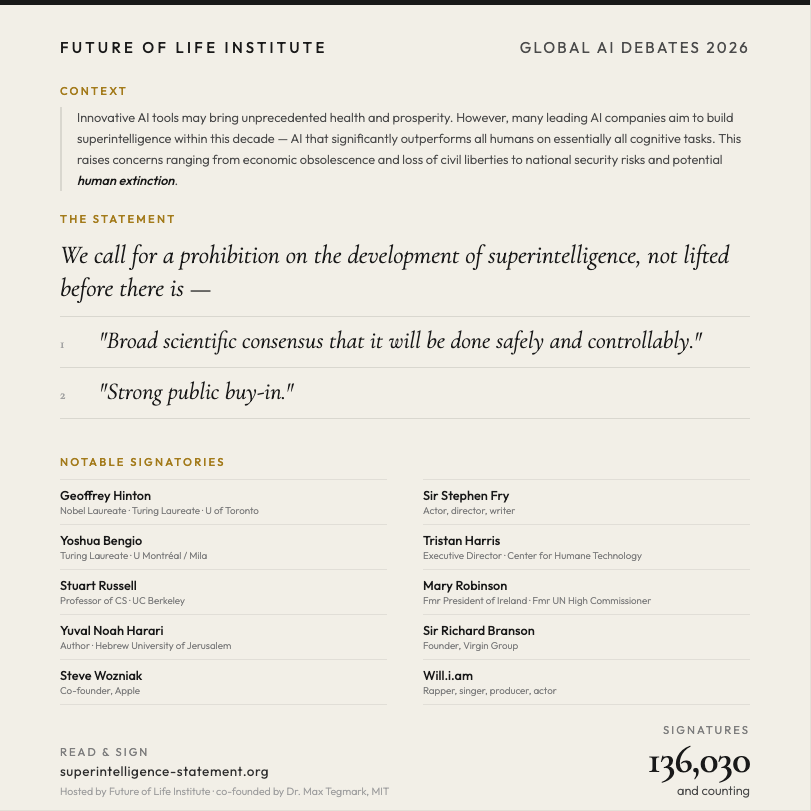
Global AI Debates 2026! Debate the future of superintelligence. Get judged by experts in AI research, safety, and policy. Speech or debate track. $1.5k prize pool. Register by April 10th: https://t.co/yOHkk0U2Sl @FLI_org https://t.co/oLUOiUscoe

sam altman watching ChatGPT hallucinate live on stage is the funniest thing i've seen all week the CEO of OpenAI, on stage, in front of everyone, watching his own AI just make things up in real time and his face says it all this is the guy telling us AGI is coming soon btw https://t.co/6uqT1XovBx
Everyone understands that an AI model generating a happy dancing cat isn’t a cat and holds no internal emotions. A prompt selects “happy” or “dancing” patterns from its training corpus. It’s steering, powerful for prompting, useless if you mistake it for AI cat therapy. An LLM generating “happy” text works exactly the same way. The only difference is the chat interface. It tricks you into treating the output as coming from a speaker. But ChatGPT, Claude, or Gemini aren’t entities, they’re just a system prompt and RLHF training regime that vanishes the moment we change it. Years of instant-messaging family and friends close the loop. That inferred “speaker” is the illusion. Model ↓ Probability distribution ↓ (sampling) Output (text/image/video) ↓ [Dialogue framing → implied interlocutor] ↓ Human cognition (agency detection + narrative completion) ↓ “It thinks / feels / believes” Strip away the dialogue framing, exactly what happens with pure image or video generation, and the illusion vanishes instantly. The underlying process never changes. Don’t confuse your own psychological projections with the technology. Anthropomorphizing is a useful shortcut. But it’s a story, not the mechanism. It’s all next-token sampling. The math never changed. There’s no room for alternative explanations, only the stories we tell ourselves to make sense of data-driven statistical artifacts. Anyone can see it the moment an AI image or video glitches into ghostly shapes. Training data gets thin, the mask slips, and the illusion shatters. That’s the real AI zeitgeist.

Everyone understands that an AI model generating a happy dancing cat isn’t a cat and holds no internal emotions. A prompt selects “happy” or “dancing” patterns from its training corpus. It’s steering, powerful for prompting, useless if you mistake it for AI cat therapy. An LLM generating “happy” text works exactly the same way. The only difference is the chat interface. It tricks you into treating the output as coming from a speaker. But ChatGPT, Claude, or Gemini aren’t entities, they’re just a system prompt and RLHF training regime that vanishes the moment we change it. Years of instant-messaging family and friends close the loop. That inferred “speaker” is the illusion. Model ↓ Probability distribution ↓ (sampling) Output (text/image/video) ↓ [Dialogue framing → implied interlocutor] ↓ Human cognition (agency detection + narrative completion) ↓ “It thinks/feels/believes” Strip away the dialogue framing, exactly what happens with pure image or video generation, and the illusion vanishes instantly. The underlying process never changes. Don’t confuse your own psychological projections with the technology. Anthropomorphizing is a useful shortcut. But it’s a story, not the mechanism. It’s all next-token sampling. The math never changed. There’s no room for alternative explanations, only the stories we tell ourselves to make sense of data-driven statistical artifacts. Anyone can see it the moment an AI image or video glitches into ghostly shapes. Training data gets thin, the mask slips, and the illusion shatters. That’s the real AI zeitgeist.

Everyone understands that an AI model generating a happy dancing cat isn’t a cat and holds no internal emotions. A prompt selects “happy” or “dancing” patterns from its training corpus. It’s steering, powerful for prompting, useless if you mistake it for AI cat therapy. An LLM generating “happy” text works exactly the same way. The only difference is the chat interface. It tricks you into treating the output as coming from a speaker. But ChatGPT, Claude, or Gemini aren’t entities, they’re just a system prompt and RLHF training regime that vanishes the moment we change it. Years of instant-messaging family and friends close the loop. That inferred “speaker” is the illusion. Model ↓ Probability distribution ↓ (sampling) Output (text/image/video) ↓ [Dialogue framing → implied interlocutor] ↓ Human cognition (agency detection + narrative completion) ↓ “It thinks/feels/believes” Strip away the dialogue framing, exactly what happens with pure image or video generation, and the illusion vanishes instantly. The underlying process never changes. Don’t confuse your own psychological projections with the technology. Anthropomorphizing is a useful shortcut. But it’s a story, not the mechanism. It’s all next-token sampling. The math never changed. There’s no room for alternative explanations, only the stories we tell ourselves to make sense of data-driven statistical artifacts. Anyone can see it the moment an AI image or video glitches into ghostly shapes. Training data gets thin, the mask slips, and the illusion shatters. That’s the real AI zeitgeist.

Everyone understands that an AI model generating a happy dancing cat isn’t a cat and holds no internal emotions. A prompt selects “happy” or “dancing” patterns from its training corpus. It’s steering, powerful for prompting, useless if you mistake it for AI cat therapy. An LLM generating “happy” text works exactly the same way. The only difference is the chat interface. It tricks you into treating the output as coming from a speaker. But ChatGPT, Claude, or Gemini aren’t entities, they’re just a system prompt and RLHF training regime that vanishes the moment we change it. Years of instant-messaging family and friends close the loop. That inferred “speaker” is the illusion. Model ↓ Probability distribution ↓ (sampling) Output (text/image/video) ↓ [Dialogue framing → implied interlocutor] ↓ Human cognition (agency detection + narrative completion) ↓ “It thinks/feels/believes” Strip away the dialogue framing, exactly what happens with pure image or video generation, and the illusion vanishes instantly. The underlying process never changes. Don’t confuse your own psychological projections with the technology. Anthropomorphizing is a useful shortcut. But it’s a story, not the mechanism. It’s all next-token sampling. The math never changed. There’s no room for alternative explanations, only the stories we tell ourselves to make sense of data-driven statistical artifacts. Anyone can see it the moment an AI image or video glitches into ghostly shapes. Training data gets thin, the mask slips, and the illusion shatters. That’s the real AI zeitgeist.

Everyone understands that an AI model generating a happy dancing cat isn’t a cat and holds no internal emotions. A prompt selects “happy” or “dancing” patterns from its training corpus. It’s steering, powerful for prompting, useless if you mistake it for AI cat therapy. An LLM generating “happy” text works exactly the same way. The only difference is the chat interface. It tricks you into treating the output as coming from a speaker. But ChatGPT, Claude, or Gemini aren’t entities, they’re just a system prompt and RLHF training regime that vanishes the moment we change it. Years of instant-messaging family and friends close the loop. That inferred “speaker” is the illusion. Model ↓ Probability distribution ↓ (sampling) Output (text/image/video) ↓ [Dialogue framing → implied interlocutor] ↓ Human cognition (agency detection + narrative completion) ↓ “It thinks/feels/believes” Strip away the dialogue framing, exactly what happens with pure image or video generation, and the illusion vanishes instantly. The underlying process never changes. Don’t confuse your own psychological projections with the technology. Anthropomorphizing is a useful shortcut. But it’s a story, not the mechanism. It’s all next-token sampling. The math never changed. There’s no room for alternative explanations, only the stories we tell ourselves to make sense of data-driven statistical artifacts. Anyone can see it the moment an AI image or video glitches into ghostly shapes. Training data gets thin, the mask slips, and the illusion shatters. That’s the real AI zeitgeist.

Had early access to @synclabs_so latest 3.0 model. The accuracy is wild. It captures lip movement, timing, and subtle facial emotion without breaking realism. This feels natural. Well done, team. Animated on @Kling_ai 3.0 model. @therealprady @IamPrajwalKR @RudrabhaM @sama_sanjit @mhadifilms
Google launches the free Google Vids Screen Recorder Chrome extension, allowing users to capture up to 30 minutes of screen time with a single click. https://t.co/KpyUiyMyv5 https://t.co/A7iO4pIlh9


Meet Pocket 📱 Your IM, your MiniMax Agent Desktop, finally connected. Most AI agents still need you at your desk. Pocket doesn't. Sort your local files. Send attachments. Browse the web. All from a chat message. While you're nowhere near your desk. Try today! → https://t.co/VZEkxJ78Sg
Made in NYC with AWS: George Sivulka, Founder & CEO, @hebbia. New York is a central hub for global finance and the ideal home for a startup serving the world’s investors and bankers. Sivulka discusses why being a founder in NY means ‘going against the grain’ and how building on AWS has helped Hebbia scale and embrace generative AI.
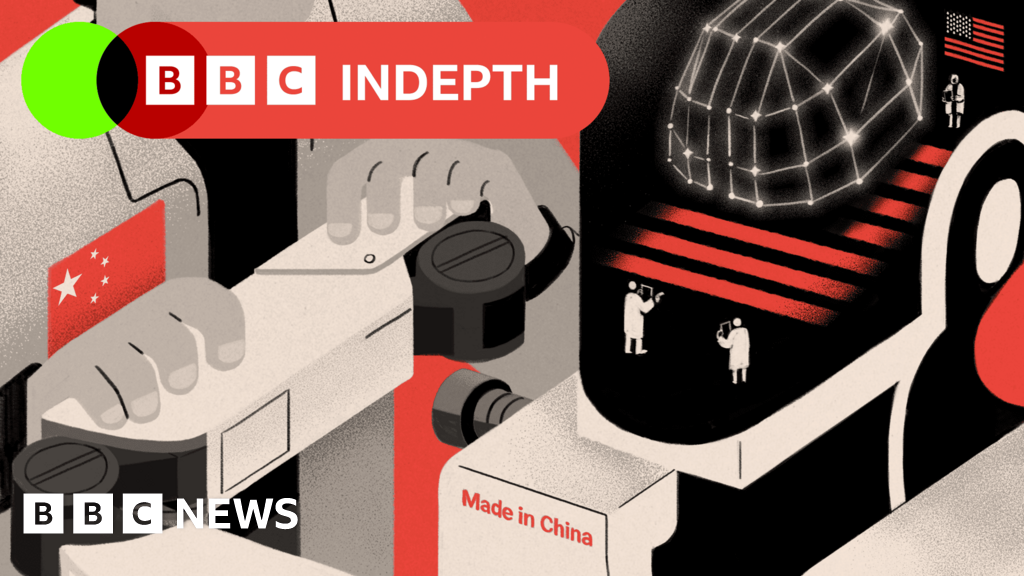
The AI race is not one race, but two very different models competing. The U.S. is pushing rapid innovation driven by companies and markets, while China is advancing under strong state direction and control. Each approach has its own strengths and trade-offs. The outcome may depend on adoption, not just technology. The side that wins over more users and ecosystems could shape how AI defines the century. https://t.co/XXLaBAeCXN @bbcnews @MishaGlenny @lukemintz