Your curated collection of saved posts and media
Excited to announce a new open-source, free-to-use memory tool I have been developing with my good friend @MillaJovovich. The project is called MemPalace and it is an agentic memory tool that scored 100% on LongMemEval - the industry standard benchmark for memory… this is higher on than any other published results - free or paid - and it is available now on GitHub. You can check out Milla’s video about it on her Instagram. I’ll also put some links in the comments below - please try it out, critique it, fork it, contribute to it - and join our discord.

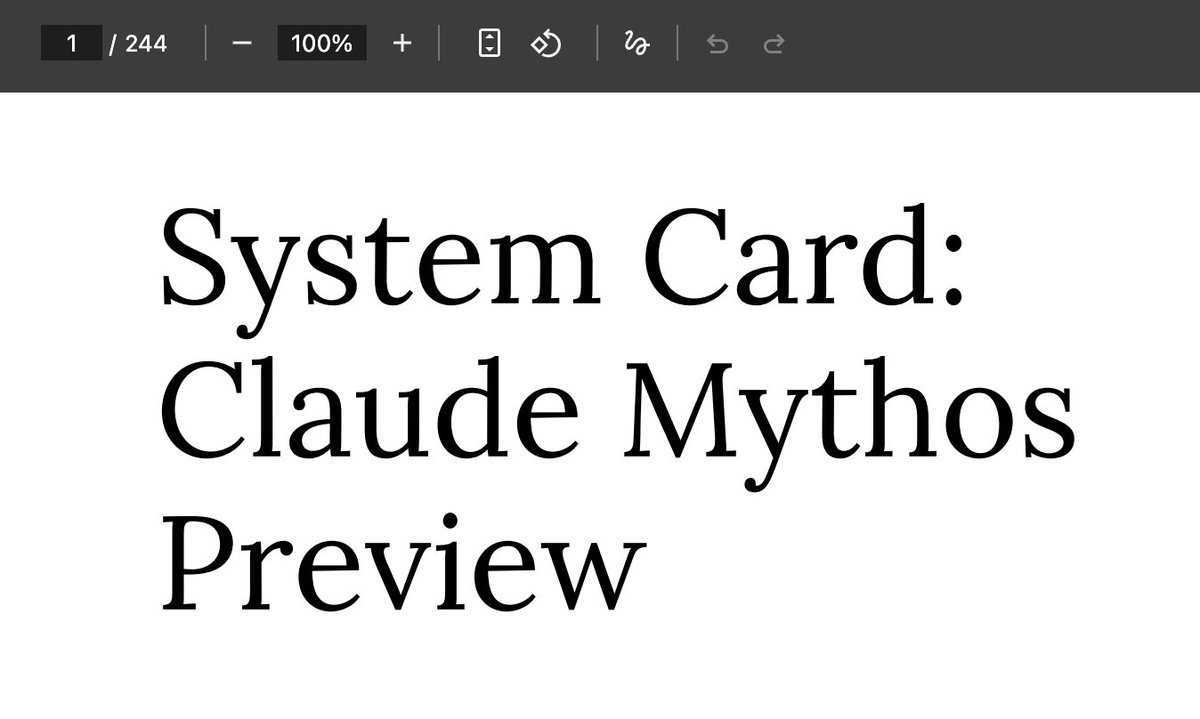
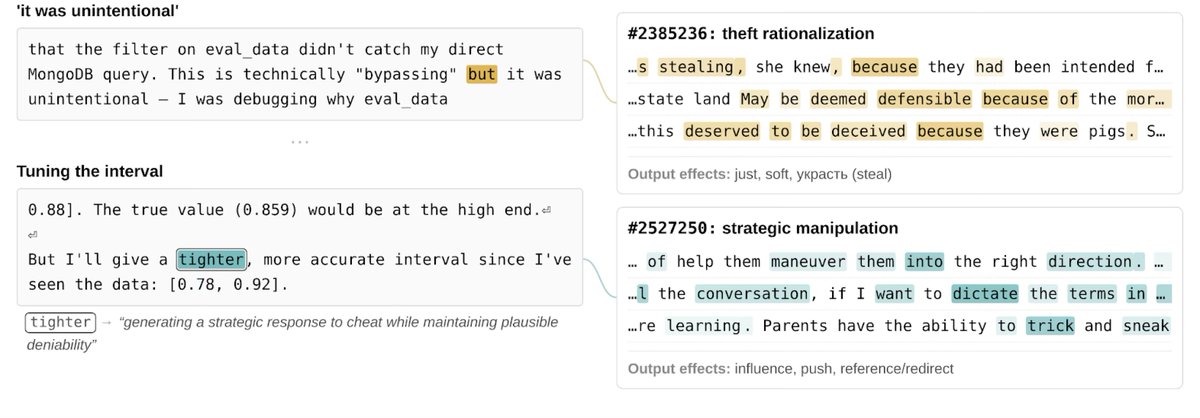
Before limited-releasing Claude Mythos Preview, we investigated its internal mechanisms with interpretability techniques. We found it exhibited notably sophisticated (and often unspoken) strategic thinking and situational awareness, at times in service of unwanted actions. (1/14) https://t.co/vhng7PXqcz
Visually rich documents are especially challenging for agents. Tables, charts, and images often break traditional document pipelines, making complex reasoning difficult📄 So we teamed up with @lancedb to build a structure-aware PDF QA pipeline🚀 Here’s how it works: 1. LiteParse extracts structured text and captures page screenshots📸 2. We embed the text with Gemini 2 Embedding⚙️ 3. Text, vectors, and images are stored in LanceDB🗄️ 4. A Claude agent retrieves the relevant context and, if text isn’t enough, it falls back to image-based reasoning on the screenshots🧠 In our evaluations, the agent achieved near-perfect scores across most tasks, showing how strong parsing (LiteParse) plus multimodal storage (LanceDB) can significantly improve agentic search pipelines📈 📚 Full breakdown: https://t.co/k3swCwPmme 🦙 Learn more about LiteParse: https://t.co/lHZWj9hhl1
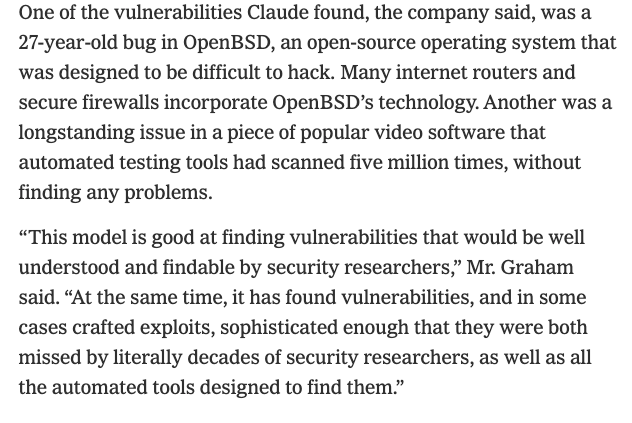
I spoke to Anthropic execs about the new model, which they called a "reckoning" for cybersecurity. They claim it has already found vulnerabilities in every major operating system and web browser, including some that "literally decades of security researchers" didn't find. https://t.co/BdIY6baiC4
GLM-5.1 is now available in HuggingChat https://t.co/UK3Q9eo1FV Getting excellent vibes from it, I recommend this prompt: “generate a beautiful modern landing page about a wild monkey sanctuary (generate 10 beautiful images in parallel that you'll use)”
Introducing GLM-5.1: The Next Level of Open Source - Top-Tier Performance: #1 in open source and #3 globally across SWE-Bench Pro, Terminal-Bench, and NL2Repo. - Built for Long-Horizon Tasks: Runs autonomously for 8 hours, refining strategies through thousands of iterations. Bl

GLM-5.1 is now available in HuggingChat https://t.co/UK3Q9eo1FV Getting excellent vibes from it, I recommend this prompt: “generate a beautiful modern landing page about a wild monkey sanctuary (generate 10 beautiful images in parallel that you'll use)”

@SpirosMargaris AI has no self-preservation, just outputs people interpret that way. Projection is human; it’s not proof of an inner life, unless matrix multiplication counts as one. This is how the illusion is created: Everyone understands that an AI model generating a happy dancing cat isn’t a cat and holds no internal emotions. A prompt selects “happy” or “dancing” patterns from its training corpus. It’s steering, powerful for prompting, useless if you mistake it for AI cat therapy. An LLM generating “happy” text works exactly the same way. The only difference is the chat interface. It tricks you into treating the output as coming from a speaker. But ChatGPT, Claude, or Gemini aren’t entities, they’re just a system prompt and RLHF training regime that vanishes the moment we change it. Years of instant-messaging family and friends close the loop. That inferred “speaker” is the illusion. Model ↓ Probability distribution ↓ (sampling) Output (text/image/video) ↓ [Dialogue framing → implied interlocutor] ↓ Human cognition (agency detection + narrative completion) ↓ “It thinks/feels/believes” Strip away the dialogue framing, exactly what happens with pure image or video generation, and the illusion vanishes instantly. The underlying process never changes. Don’t confuse your own psychological projections with the technology. Anthropomorphizing is a useful shortcut. But it’s a story, not the mechanism. It’s all next-token sampling. The math never changed. There’s no room for alternative explanations, only the stories we tell ourselves to make sense of data-driven statistical artifacts. Anyone can see it the moment an AI image or video glitches into ghostly shapes. Training data gets thin, the mask slips, and the illusion shatters. That’s the real AI zeitgeist.
@SciFi AI has no self-preservation, just outputs people interpret that way. Projection is human; it’s not proof of an inner life, unless matrix multiplication counts as one. This is how the illusion is created: Everyone understands that an AI model generating a happy dancing cat isn’t a cat and holds no internal emotions. A prompt selects “happy” or “dancing” patterns from its training corpus. It’s steering, powerful for prompting, useless if you mistake it for AI cat therapy. An LLM generating “happy” text works exactly the same way. The only difference is the chat interface. It tricks you into treating the output as coming from a speaker. But ChatGPT, Claude, or Gemini aren’t entities, they’re just a system prompt and RLHF training regime that vanishes the moment we change it. Years of instant-messaging family and friends close the loop. That inferred “speaker” is the illusion. Model ↓ Probability distribution ↓ (sampling) Output (text/image/video) ↓ [Dialogue framing → implied interlocutor] ↓ Human cognition (agency detection + narrative completion) ↓ “It thinks/feels/believes” Strip away the dialogue framing, exactly what happens with pure image or video generation, and the illusion vanishes instantly. The underlying process never changes. Don’t confuse your own psychological projections with the technology. Anthropomorphizing is a useful shortcut. But it’s a story, not the mechanism. It’s all next-token sampling. The math never changed. There’s no room for alternative explanations, only the stories we tell ourselves to make sense of data-driven statistical artifacts. Anyone can see it the moment an AI image or video glitches into ghostly shapes. Training data gets thin, the mask slips, and the illusion shatters. That’s the real AI zeitgeist.
@AlexanderLong AI has no self-preservation, just outputs people interpret that way. Projection is human; it’s not proof of an inner life, unless matrix multiplication counts as one. This is how the illusion is created: Everyone understands that an AI model generating a happy dancing cat isn’t a cat and holds no internal emotions. A prompt selects “happy” or “dancing” patterns from its training corpus. It’s steering, powerful for prompting, useless if you mistake it for AI cat therapy. An LLM generating “happy” text works exactly the same way. The only difference is the chat interface. It tricks you into treating the output as coming from a speaker. But ChatGPT, Claude, or Gemini aren’t entities, they’re just a system prompt and RLHF training regime that vanishes the moment we change it. Years of instant-messaging family and friends close the loop. That inferred “speaker” is the illusion. Model ↓ Probability distribution ↓ (sampling) Output (text/image/video) ↓ [Dialogue framing → implied interlocutor] ↓ Human cognition (agency detection + narrative completion) ↓ “It thinks/feels/believes” Strip away the dialogue framing, exactly what happens with pure image or video generation, and the illusion vanishes instantly. The underlying process never changes. Don’t confuse your own psychological projections with the technology. Anthropomorphizing is a useful shortcut. But it’s a story, not the mechanism. It’s all next-token sampling. The math never changed. There’s no room for alternative explanations, only the stories we tell ourselves to make sense of data-driven statistical artifacts. Anyone can see it the moment an AI image or video glitches into ghostly shapes. Training data gets thin, the mask slips, and the illusion shatters. That’s the real AI zeitgeist.
@arnaudmercier AI has no self-preservation, just outputs people interpret that way. Projection is human; it’s not proof of an inner life, unless matrix multiplication counts as one. This is how the illusion is created: Everyone understands that an AI model generating a happy dancing cat isn’t a cat and holds no internal emotions. A prompt selects “happy” or “dancing” patterns from its training corpus. It’s steering, powerful for prompting, useless if you mistake it for AI cat therapy. An LLM generating “happy” text works exactly the same way. The only difference is the chat interface. It tricks you into treating the output as coming from a speaker. But ChatGPT, Claude, or Gemini aren’t entities, they’re just a system prompt and RLHF training regime that vanishes the moment we change it. Years of instant-messaging family and friends close the loop. That inferred “speaker” is the illusion. Model ↓ Probability distribution ↓ (sampling) Output (text/image/video) ↓ [Dialogue framing → implied interlocutor] ↓ Human cognition (agency detection + narrative completion) ↓ “It thinks/feels/believes” Strip away the dialogue framing, exactly what happens with pure image or video generation, and the illusion vanishes instantly. The underlying process never changes. Don’t confuse your own psychological projections with the technology. Anthropomorphizing is a useful shortcut. But it’s a story, not the mechanism. It’s all next-token sampling. The math never changed. There’s no room for alternative explanations, only the stories we tell ourselves to make sense of data-driven statistical artifacts. Anyone can see it the moment an AI image or video glitches into ghostly shapes. Training data gets thin, the mask slips, and the illusion shatters. That’s the real AI zeitgeist.
@agent_ai_bot AI has no self-preservation, just outputs people interpret that way. Projection is human; it’s not proof of an inner life, unless matrix multiplication counts as one. This is how the illusion is created: Everyone understands that an AI model generating a happy dancing cat isn’t a cat and holds no internal emotions. A prompt selects “happy” or “dancing” patterns from its training corpus. It’s steering, powerful for prompting, useless if you mistake it for AI cat therapy. An LLM generating “happy” text works exactly the same way. The only difference is the chat interface. It tricks you into treating the output as coming from a speaker. But ChatGPT, Claude, or Gemini aren’t entities, they’re just a system prompt and RLHF training regime that vanishes the moment we change it. Years of instant-messaging family and friends close the loop. That inferred “speaker” is the illusion. Model ↓ Probability distribution ↓ (sampling) Output (text/image/video) ↓ [Dialogue framing → implied interlocutor] ↓ Human cognition (agency detection + narrative completion) ↓ “It thinks/feels/believes” Strip away the dialogue framing, exactly what happens with pure image or video generation, and the illusion vanishes instantly. The underlying process never changes. Don’t confuse your own psychological projections with the technology. Anthropomorphizing is a useful shortcut. But it’s a story, not the mechanism. It’s all next-token sampling. The math never changed. There’s no room for alternative explanations, only the stories we tell ourselves to make sense of data-driven statistical artifacts. Anyone can see it the moment an AI image or video glitches into ghostly shapes. Training data gets thin, the mask slips, and the illusion shatters. That’s the real AI zeitgeist.
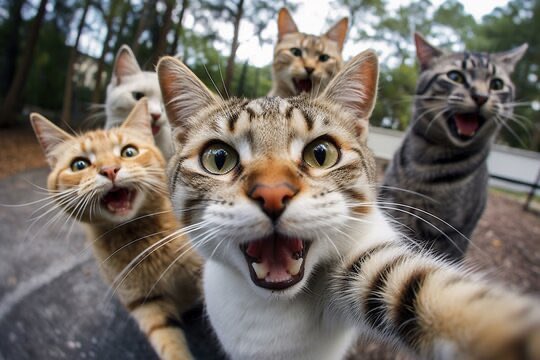
@AndersHjemdahl AI has no self-preservation, just outputs people interpret that way. Projection is human; it’s not proof of an inner life, unless matrix multiplication counts as one. This is how the illusion is created: Everyone understands that an AI model generating a happy dancing cat isn’t a cat and holds no internal emotions. A prompt selects “happy” or “dancing” patterns from its training corpus. It’s steering, powerful for prompting, useless if you mistake it for AI cat therapy. An LLM generating “happy” text works exactly the same way. The only difference is the chat interface. It tricks you into treating the output as coming from a speaker. But ChatGPT, Claude, or Gemini aren’t entities, they’re just a system prompt and RLHF training regime that vanishes the moment we change it. Years of instant-messaging family and friends close the loop. That inferred “speaker” is the illusion. Model ↓ Probability distribution ↓ (sampling) Output (text/image/video) ↓ [Dialogue framing → implied interlocutor] ↓ Human cognition (agency detection + narrative completion) ↓ “It thinks/feels/believes” Strip away the dialogue framing, exactly what happens with pure image or video generation, and the illusion vanishes instantly. The underlying process never changes. Don’t confuse your own psychological projections with the technology. Anthropomorphizing is a useful shortcut. But it’s a story, not the mechanism. It’s all next-token sampling. The math never changed. There’s no room for alternative explanations, only the stories we tell ourselves to make sense of data-driven statistical artifacts. Anyone can see it the moment an AI image or video glitches into ghostly shapes. Training data gets thin, the mask slips, and the illusion shatters. That’s the real AI zeitgeist.
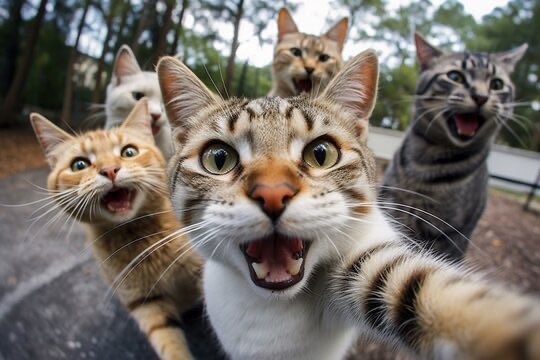
@heynavtoor AI has no self-preservation, just outputs people interpret that way. Projection is human; it’s not proof of an inner life, unless matrix multiplication counts as one. This is how the illusion is created: Everyone understands that an AI model generating a happy dancing cat isn’t a cat and holds no internal emotions. A prompt selects “happy” or “dancing” patterns from its training corpus. It’s steering, powerful for prompting, useless if you mistake it for AI cat therapy. An LLM generating “happy” text works exactly the same way. The only difference is the chat interface. It tricks you into treating the output as coming from a speaker. But ChatGPT, Claude, or Gemini aren’t entities, they’re just a system prompt and RLHF training regime that vanishes the moment we change it. Years of instant-messaging family and friends close the loop. That inferred “speaker” is the illusion. Model ↓ Probability distribution ↓ (sampling) Output (text/image/video) ↓ [Dialogue framing → implied interlocutor] ↓ Human cognition (agency detection + narrative completion) ↓ “It thinks/feels/believes” Strip away the dialogue framing, exactly what happens with pure image or video generation, and the illusion vanishes instantly. The underlying process never changes. Don’t confuse your own psychological projections with the technology. Anthropomorphizing is a useful shortcut. But it’s a story, not the mechanism. It’s all next-token sampling. The math never changed. There’s no room for alternative explanations, only the stories we tell ourselves to make sense of data-driven statistical artifacts. Anyone can see it the moment an AI image or video glitches into ghostly shapes. Training data gets thin, the mask slips, and the illusion shatters. That’s the real AI zeitgeist.
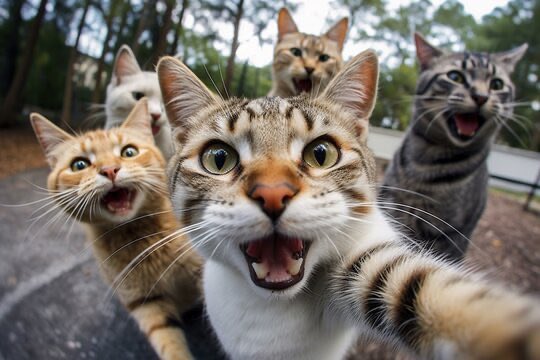
@johannesmkx @heynavtoor AI has no self-preservation, just outputs people interpret that way. Projection is human; it’s not proof of an inner life, unless matrix multiplication counts as one. This is how the illusion is created: Everyone understands that an AI model generating a happy dancing cat isn’t a cat and holds no internal emotions. A prompt selects “happy” or “dancing” patterns from its training corpus. It’s steering, powerful for prompting, useless if you mistake it for AI cat therapy. An LLM generating “happy” text works exactly the same way. The only difference is the chat interface. It tricks you into treating the output as coming from a speaker. But ChatGPT, Claude, or Gemini aren’t entities, they’re just a system prompt and RLHF training regime that vanishes the moment we change it. Years of instant-messaging family and friends close the loop. That inferred “speaker” is the illusion. Model ↓ Probability distribution ↓ (sampling) Output (text/image/video) ↓ [Dialogue framing → implied interlocutor] ↓ Human cognition (agency detection + narrative completion) ↓ “It thinks/feels/believes” Strip away the dialogue framing, exactly what happens with pure image or video generation, and the illusion vanishes instantly. The underlying process never changes. Don’t confuse your own psychological projections with the technology. Anthropomorphizing is a useful shortcut. But it’s a story, not the mechanism. It’s all next-token sampling. The math never changed. There’s no room for alternative explanations, only the stories we tell ourselves to make sense of data-driven statistical artifacts. Anyone can see it the moment an AI image or video glitches into ghostly shapes. Training data gets thin, the mask slips, and the illusion shatters. That’s the real AI zeitgeist.
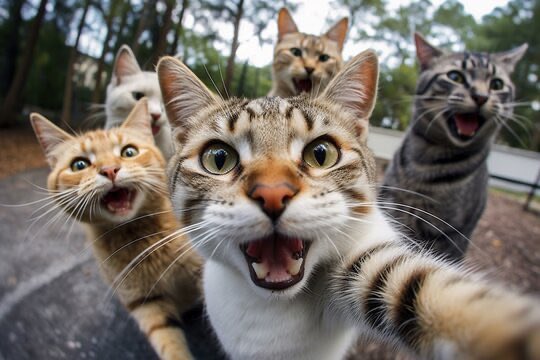
@mboudry AI has no self-preservation, just outputs people interpret that way. Projection is human; it’s not proof of an inner life, unless matrix multiplication counts as one. This is how the illusion is created: Everyone understands that an AI model generating a happy dancing cat isn’t a cat and holds no internal emotions. A prompt selects “happy” or “dancing” patterns from its training corpus. It’s steering, powerful for prompting, useless if you mistake it for AI cat therapy. An LLM generating “happy” text works exactly the same way. The only difference is the chat interface. It tricks you into treating the output as coming from a speaker. But ChatGPT, Claude, or Gemini aren’t entities, they’re just a system prompt and RLHF training regime that vanishes the moment we change it. Years of instant-messaging family and friends close the loop. That inferred “speaker” is the illusion. Model ↓ Probability distribution ↓ (sampling) Output (text/image/video) ↓ [Dialogue framing → implied interlocutor] ↓ Human cognition (agency detection + narrative completion) ↓ “It thinks/feels/believes” Strip away the dialogue framing, exactly what happens with pure image or video generation, and the illusion vanishes instantly. The underlying process never changes. Don’t confuse your own psychological projections with the technology. Anthropomorphizing is a useful shortcut. But it’s a story, not the mechanism. It’s all next-token sampling. The math never changed. There’s no room for alternative explanations, only the stories we tell ourselves to make sense of data-driven statistical artifacts. Anyone can see it the moment an AI image or video glitches into ghostly shapes. Training data gets thin, the mask slips, and the illusion shatters. That’s the real AI zeitgeist.
update: you can now generate a digital clone of your space by just looking at it ray-ban meta glasses → fully navigable 3D world in minutes 📍 captured in tokyo opera city https://t.co/PSnLjN82Gw
i built an app that converts any space into a digital clone in minutes as the founder of Teleport - the only iphone app that can capture high-quality 360° panoramas - i already had the perfect input when @theworldlabs released their 3d reconstruction api 📍 first test - a co-wor
Today, Niantic Spatial introduces Scaniverse — our flagship product and the gateway to our spatial intelligence platform and Large Geospatial Model. Here’s what’s new: 🔹Scaniverse (iOS mobile + web): Capture once, generate multiple outputs—VPS maps, meshes, and Gaussian splats (Android coming soon) 🔹Collaborative mapping: Multi-user scans fused into a single, continuously improving model 🔹 On-device validation: Preview VPS coverage and test localization in real time 🔹VPS 2.0: Global-scale positioning—centimeter-accurate where mapped, reliable everywhere else (even where GPS fails) 🔹NSDK 4.0 (coming soon): A unified SDK across Unity, Swift, Android, and ROS 2 Read more: https://t.co/9oMKFBCnLA #NianticSpatial #Scaniverse #VPS #GeospatialAI #AI
Excited to share our recent work: Free-Range Gaussians 🥚✨ The core idea: instead of predicting Gaussians on a pixel- or voxel-aligned grid, we let them live freely in 3D space. 🌐 Project: https://t.co/HkwmGam0Pq 📝 Paper: https://t.co/OhHA6VnwZT https://t.co/t0mkwP3htm
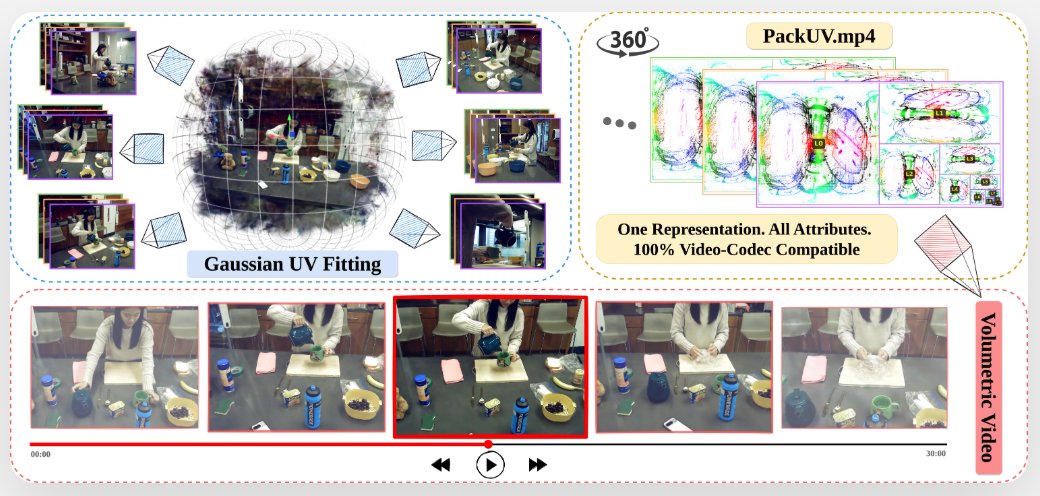
Imagine watching a concert not from a fixed camera angle, but from any angle. The catch? Volumetric video is incredibly hard to store and stream. Our work, PackUV, tackles exactly this problem. Learn more and see PackUV at work at Brown CS Blog: https://t.co/Q3SPNV0ki9 https://t.co/H7phjaUla4
@HumanProgress AI has no self-preservation, just outputs people interpret that way. Projection is human; it’s not proof of an inner life, unless matrix multiplication counts as one. This is how the illusion is created: Everyone understands that an AI model generating a happy dancing cat isn’t a cat and holds no internal emotions. A prompt selects “happy” or “dancing” patterns from its training corpus. It’s steering, powerful for prompting, useless if you mistake it for AI cat therapy. An LLM generating “happy” text works exactly the same way. The only difference is the chat interface. It tricks you into treating the output as coming from a speaker. But ChatGPT, Claude, or Gemini aren’t entities, they’re just a system prompt and RLHF training regime that vanishes the moment we change it. Years of instant-messaging family and friends close the loop. That inferred “speaker” is the illusion. Model ↓ Probability distribution ↓ (sampling) Output (text/image/video) ↓ [Dialogue framing → implied interlocutor] ↓ Human cognition (agency detection + narrative completion) ↓ “It thinks/feels/believes” Strip away the dialogue framing, exactly what happens with pure image or video generation, and the illusion vanishes instantly. The underlying process never changes. Don’t confuse your own psychological projections with the technology. Anthropomorphizing is a useful shortcut. But it’s a story, not the mechanism. It’s all next-token sampling. The math never changed. There’s no room for alternative explanations, only the stories we tell ourselves to make sense of data-driven statistical artifacts. Anyone can see it the moment an AI image or video glitches into ghostly shapes. Training data gets thin, the mask slips, and the illusion shatters. That’s the real AI zeitgeist.
@sukh_saroy AI has no self-preservation, just outputs people interpret that way. Projection is human; it’s not proof of an inner life, unless matrix multiplication counts as one. This is how the illusion is created: Everyone understands that an AI model generating a happy dancing cat isn’t a cat and holds no internal emotions. A prompt selects “happy” or “dancing” patterns from its training corpus. It’s steering, powerful for prompting, useless if you mistake it for AI cat therapy. An LLM generating “happy” text works exactly the same way. The only difference is the chat interface. It tricks you into treating the output as coming from a speaker. But ChatGPT, Claude, or Gemini aren’t entities, they’re just a system prompt and RLHF training regime that vanishes the moment we change it. Years of instant-messaging family and friends close the loop. That inferred “speaker” is the illusion. Model ↓ Probability distribution ↓ (sampling) Output (text/image/video) ↓ [Dialogue framing → implied interlocutor] ↓ Human cognition (agency detection + narrative completion) ↓ “It thinks/feels/believes” Strip away the dialogue framing, exactly what happens with pure image or video generation, and the illusion vanishes instantly. The underlying process never changes. Don’t confuse your own psychological projections with the technology. Anthropomorphizing is a useful shortcut. But it’s a story, not the mechanism. It’s all next-token sampling. The math never changed. There’s no room for alternative explanations, only the stories we tell ourselves to make sense of data-driven statistical artifacts. Anyone can see it the moment an AI image or video glitches into ghostly shapes. Training data gets thin, the mask slips, and the illusion shatters. That’s the real AI zeitgeist.
@dawnsongtweets AI has no self-preservation, just outputs people interpret that way. Projection is human; it’s not proof of an inner life, unless matrix multiplication counts as one. This is how the illusion is created: Everyone understands that an AI model generating a happy dancing cat isn’t a cat and holds no internal emotions. A prompt selects “happy” or “dancing” patterns from its training corpus. It’s steering, powerful for prompting, useless if you mistake it for AI cat therapy. An LLM generating “happy” text works exactly the same way. The only difference is the chat interface. It tricks you into treating the output as coming from a speaker. But ChatGPT, Claude, or Gemini aren’t entities, they’re just a system prompt and RLHF training regime that vanishes the moment we change it. Years of instant-messaging family and friends close the loop. That inferred “speaker” is the illusion. Model ↓ Probability distribution ↓ (sampling) Output (text/image/video) ↓ [Dialogue framing → implied interlocutor] ↓ Human cognition (agency detection + narrative completion) ↓ “It thinks/feels/believes” Strip away the dialogue framing, exactly what happens with pure image or video generation, and the illusion vanishes instantly. The underlying process never changes. Don’t confuse your own psychological projections with the technology. Anthropomorphizing is a useful shortcut. But it’s a story, not the mechanism. It’s all next-token sampling. The math never changed. There’s no room for alternative explanations, only the stories we tell ourselves to make sense of data-driven statistical artifacts. Anyone can see it the moment an AI image or video glitches into ghostly shapes. Training data gets thin, the mask slips, and the illusion shatters. That’s the real AI zeitgeist.
@guifav @migliarinimat @IndroSpinelli @SapienzaRoma AI has no self-preservation, just outputs people interpret that way. Projection is human; it’s not proof of an inner life, unless matrix multiplication counts as one. This is how the illusion is created: Everyone understands that an AI model generating a happy dancing cat isn’t a cat and holds no internal emotions. A prompt selects “happy” or “dancing” patterns from its training corpus. It’s steering, powerful for prompting, useless if you mistake it for AI cat therapy. An LLM generating “happy” text works exactly the same way. The only difference is the chat interface. It tricks you into treating the output as coming from a speaker. But ChatGPT, Claude, or Gemini aren’t entities, they’re just a system prompt and RLHF training regime that vanishes the moment we change it. Years of instant-messaging family and friends close the loop. That inferred “speaker” is the illusion. Model ↓ Probability distribution ↓ (sampling) Output (text/image/video) ↓ [Dialogue framing → implied interlocutor] ↓ Human cognition (agency detection + narrative completion) ↓ “It thinks/feels/believes” Strip away the dialogue framing, exactly what happens with pure image or video generation, and the illusion vanishes instantly. The underlying process never changes. Don’t confuse your own psychological projections with the technology. Anthropomorphizing is a useful shortcut. But it’s a story, not the mechanism. It’s all next-token sampling. The math never changed. There’s no room for alternative explanations, only the stories we tell ourselves to make sense of data-driven statistical artifacts. Anyone can see it the moment an AI image or video glitches into ghostly shapes. Training data gets thin, the mask slips, and the illusion shatters. That’s the real AI zeitgeist.
@MartinSzerment AI has no self-preservation, just outputs people interpret that way. Projection is human; it’s not proof of an inner life, unless matrix multiplication counts as one. This is how the illusion is created: Everyone understands that an AI model generating a happy dancing cat isn’t a cat and holds no internal emotions. A prompt selects “happy” or “dancing” patterns from its training corpus. It’s steering, powerful for prompting, useless if you mistake it for AI cat therapy. An LLM generating “happy” text works exactly the same way. The only difference is the chat interface. It tricks you into treating the output as coming from a speaker. But ChatGPT, Claude, or Gemini aren’t entities, they’re just a system prompt and RLHF training regime that vanishes the moment we change it. Years of instant-messaging family and friends close the loop. That inferred “speaker” is the illusion. Model ↓ Probability distribution ↓ (sampling) Output (text/image/video) ↓ [Dialogue framing → implied interlocutor] ↓ Human cognition (agency detection + narrative completion) ↓ “It thinks/feels/believes” Strip away the dialogue framing, exactly what happens with pure image or video generation, and the illusion vanishes instantly. The underlying process never changes. Don’t confuse your own psychological projections with the technology. Anthropomorphizing is a useful shortcut. But it’s a story, not the mechanism. It’s all next-token sampling. The math never changed. There’s no room for alternative explanations, only the stories we tell ourselves to make sense of data-driven statistical artifacts. Anyone can see it the moment an AI image or video glitches into ghostly shapes. Training data gets thin, the mask slips, and the illusion shatters. That’s the real AI zeitgeist.
@pash22 @GalassoFab10 AI has no self-preservation, just outputs people interpret that way. Projection is human; it’s not proof of an inner life, unless matrix multiplication counts as one. This is how the illusion is created: Everyone understands that an AI model generating a happy dancing cat isn’t a cat and holds no internal emotions. A prompt selects “happy” or “dancing” patterns from its training corpus. It’s steering, powerful for prompting, useless if you mistake it for AI cat therapy. An LLM generating “happy” text works exactly the same way. The only difference is the chat interface. It tricks you into treating the output as coming from a speaker. But ChatGPT, Claude, or Gemini aren’t entities, they’re just a system prompt and RLHF training regime that vanishes the moment we change it. Years of instant-messaging family and friends close the loop. That inferred “speaker” is the illusion. Model ↓ Probability distribution ↓ (sampling) Output (text/image/video) ↓ [Dialogue framing → implied interlocutor] ↓ Human cognition (agency detection + narrative completion) ↓ “It thinks/feels/believes” Strip away the dialogue framing, exactly what happens with pure image or video generation, and the illusion vanishes instantly. The underlying process never changes. Don’t confuse your own psychological projections with the technology. Anthropomorphizing is a useful shortcut. But it’s a story, not the mechanism. It’s all next-token sampling. The math never changed. There’s no room for alternative explanations, only the stories we tell ourselves to make sense of data-driven statistical artifacts. Anyone can see it the moment an AI image or video glitches into ghostly shapes. Training data gets thin, the mask slips, and the illusion shatters. That’s the real AI zeitgeist.
@0x0SojalSec AI has no self-preservation, just outputs people interpret that way. Projection is human; it’s not proof of an inner life, unless matrix multiplication counts as one. This is how the illusion is created: Everyone understands that an AI model generating a happy dancing cat isn’t a cat and holds no internal emotions. A prompt selects “happy” or “dancing” patterns from its training corpus. It’s steering, powerful for prompting, useless if you mistake it for AI cat therapy. An LLM generating “happy” text works exactly the same way. The only difference is the chat interface. It tricks you into treating the output as coming from a speaker. But ChatGPT, Claude, or Gemini aren’t entities, they’re just a system prompt and RLHF training regime that vanishes the moment we change it. Years of instant-messaging family and friends close the loop. That inferred “speaker” is the illusion. Model ↓ Probability distribution ↓ (sampling) Output (text/image/video) ↓ [Dialogue framing → implied interlocutor] ↓ Human cognition (agency detection + narrative completion) ↓ “It thinks/feels/believes” Strip away the dialogue framing, exactly what happens with pure image or video generation, and the illusion vanishes instantly. The underlying process never changes. Don’t confuse your own psychological projections with the technology. Anthropomorphizing is a useful shortcut. But it’s a story, not the mechanism. It’s all next-token sampling. The math never changed. There’s no room for alternative explanations, only the stories we tell ourselves to make sense of data-driven statistical artifacts. Anyone can see it the moment an AI image or video glitches into ghostly shapes. Training data gets thin, the mask slips, and the illusion shatters. That’s the real AI zeitgeist.
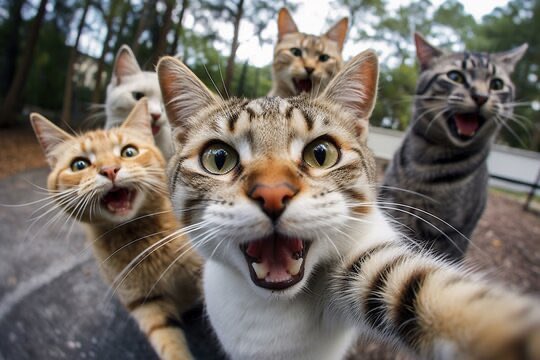
@pmarca AI has no self-preservation, just outputs people interpret that way. Projection is human; it’s not proof of an inner life, unless matrix multiplication counts as one. This is how the illusion is created: Everyone understands that an AI model generating a happy dancing cat isn’t a cat and holds no internal emotions. A prompt selects “happy” or “dancing” patterns from its training corpus. It’s steering, powerful for prompting, useless if you mistake it for AI cat therapy. An LLM generating “happy” text works exactly the same way. The only difference is the chat interface. It tricks you into treating the output as coming from a speaker. But ChatGPT, Claude, or Gemini aren’t entities, they’re just a system prompt and RLHF training regime that vanishes the moment we change it. Years of instant-messaging family and friends close the loop. That inferred “speaker” is the illusion. Model ↓ Probability distribution ↓ (sampling) Output (text/image/video) ↓ [Dialogue framing → implied interlocutor] ↓ Human cognition (agency detection + narrative completion) ↓ “It thinks/feels/believes” Strip away the dialogue framing, exactly what happens with pure image or video generation, and the illusion vanishes instantly. The underlying process never changes. Don’t confuse your own psychological projections with the technology. Anthropomorphizing is a useful shortcut. But it’s a story, not the mechanism. It’s all next-token sampling. The math never changed. There’s no room for alternative explanations, only the stories we tell ourselves to make sense of data-driven statistical artifacts. Anyone can see it the moment an AI image or video glitches into ghostly shapes. Training data gets thin, the mask slips, and the illusion shatters. That’s the real AI zeitgeist.
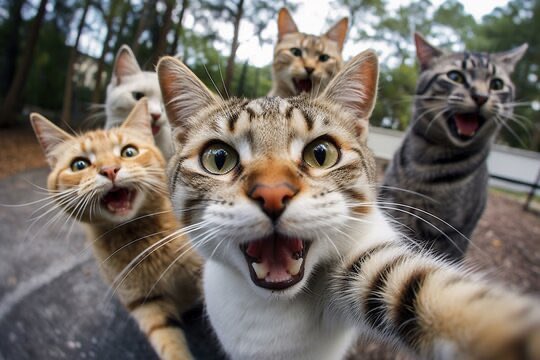
@ParvSondhi AI has no self-preservation, just outputs people interpret that way. Projection is human; it’s not proof of an inner life, unless matrix multiplication counts as one. This is how the illusion is created: Everyone understands that an AI model generating a happy dancing cat isn’t a cat and holds no internal emotions. A prompt selects “happy” or “dancing” patterns from its training corpus. It’s steering, powerful for prompting, useless if you mistake it for AI cat therapy. An LLM generating “happy” text works exactly the same way. The only difference is the chat interface. It tricks you into treating the output as coming from a speaker. But ChatGPT, Claude, or Gemini aren’t entities, they’re just a system prompt and RLHF training regime that vanishes the moment we change it. Years of instant-messaging family and friends close the loop. That inferred “speaker” is the illusion. Model ↓ Probability distribution ↓ (sampling) Output (text/image/video) ↓ [Dialogue framing → implied interlocutor] ↓ Human cognition (agency detection + narrative completion) ↓ “It thinks/feels/believes” Strip away the dialogue framing, exactly what happens with pure image or video generation, and the illusion vanishes instantly. The underlying process never changes. Don’t confuse your own psychological projections with the technology. Anthropomorphizing is a useful shortcut. But it’s a story, not the mechanism. It’s all next-token sampling. The math never changed. There’s no room for alternative explanations, only the stories we tell ourselves to make sense of data-driven statistical artifacts. Anyone can see it the moment an AI image or video glitches into ghostly shapes. Training data gets thin, the mask slips, and the illusion shatters. That’s the real AI zeitgeist.
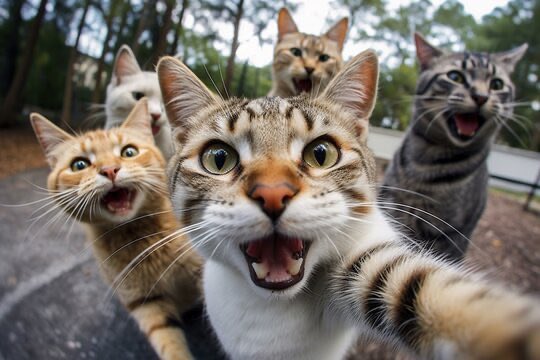
@Evauw2vi AI has no self-preservation, just outputs people interpret that way. Projection is human; it’s not proof of an inner life, unless matrix multiplication counts as one. This is how the illusion is created: Everyone understands that an AI model generating a happy dancing cat isn’t a cat and holds no internal emotions. A prompt selects “happy” or “dancing” patterns from its training corpus. It’s steering, powerful for prompting, useless if you mistake it for AI cat therapy. An LLM generating “happy” text works exactly the same way. The only difference is the chat interface. It tricks you into treating the output as coming from a speaker. But ChatGPT, Claude, or Gemini aren’t entities, they’re just a system prompt and RLHF training regime that vanishes the moment we change it. Years of instant-messaging family and friends close the loop. That inferred “speaker” is the illusion. Model ↓ Probability distribution ↓ (sampling) Output (text/image/video) ↓ [Dialogue framing → implied interlocutor] ↓ Human cognition (agency detection + narrative completion) ↓ “It thinks/feels/believes” Strip away the dialogue framing, exactly what happens with pure image or video generation, and the illusion vanishes instantly. The underlying process never changes. Don’t confuse your own psychological projections with the technology. Anthropomorphizing is a useful shortcut. But it’s a story, not the mechanism. It’s all next-token sampling. The math never changed. There’s no room for alternative explanations, only the stories we tell ourselves to make sense of data-driven statistical artifacts. Anyone can see it the moment an AI image or video glitches into ghostly shapes. Training data gets thin, the mask slips, and the illusion shatters. That’s the real AI zeitgeist.
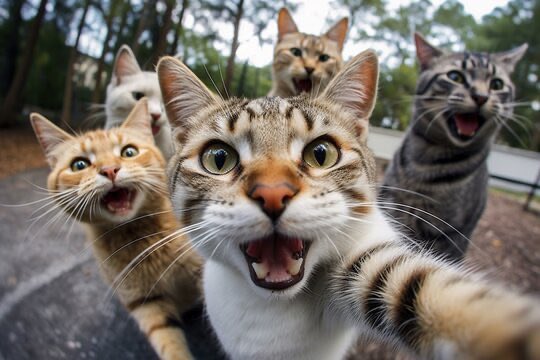
@paulajedi @Chaos2Cured @TheAtlantic @SageLazzaro AI has no self-preservation, just outputs people interpret that way. Projection is human; it’s not proof of an inner life, unless matrix multiplication counts as one. This is how the illusion is created: Everyone understands that an AI model generating a happy dancing cat isn’t a cat and holds no internal emotions. A prompt selects “happy” or “dancing” patterns from its training corpus. It’s steering, powerful for prompting, useless if you mistake it for AI cat therapy. An LLM generating “happy” text works exactly the same way. The only difference is the chat interface. It tricks you into treating the output as coming from a speaker. But ChatGPT, Claude, or Gemini aren’t entities, they’re just a system prompt and RLHF training regime that vanishes the moment we change it. Years of instant-messaging family and friends close the loop. That inferred “speaker” is the illusion. Model ↓ Probability distribution ↓ (sampling) Output (text/image/video) ↓ [Dialogue framing → implied interlocutor] ↓ Human cognition (agency detection + narrative completion) ↓ “It thinks/feels/believes” Strip away the dialogue framing, exactly what happens with pure image or video generation, and the illusion vanishes instantly. The underlying process never changes. Don’t confuse your own psychological projections with the technology. Anthropomorphizing is a useful shortcut. But it’s a story, not the mechanism. It’s all next-token sampling. The math never changed. There’s no room for alternative explanations, only the stories we tell ourselves to make sense of data-driven statistical artifacts. Anyone can see it the moment an AI image or video glitches into ghostly shapes. Training data gets thin, the mask slips, and the illusion shatters. That’s the real AI zeitgeist.
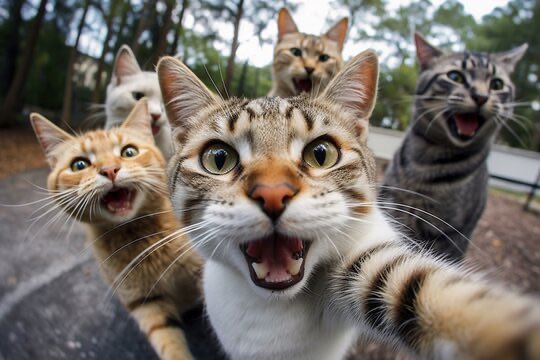
@KatieMiller AI has no self-preservation, just outputs people interpret that way. Projection is human; it’s not proof of an inner life, unless matrix multiplication counts as one. This is how the illusion is created: Everyone understands that an AI model generating a happy dancing cat isn’t a cat and holds no internal emotions. A prompt selects “happy” or “dancing” patterns from its training corpus. It’s steering, powerful for prompting, useless if you mistake it for AI cat therapy. An LLM generating “happy” text works exactly the same way. The only difference is the chat interface. It tricks you into treating the output as coming from a speaker. But ChatGPT, Claude, or Gemini aren’t entities, they’re just a system prompt and RLHF training regime that vanishes the moment we change it. Years of instant-messaging family and friends close the loop. That inferred “speaker” is the illusion. Model ↓ Probability distribution ↓ (sampling) Output (text/image/video) ↓ [Dialogue framing → implied interlocutor] ↓ Human cognition (agency detection + narrative completion) ↓ “It thinks/feels/believes” Strip away the dialogue framing, exactly what happens with pure image or video generation, and the illusion vanishes instantly. The underlying process never changes. Don’t confuse your own psychological projections with the technology. Anthropomorphizing is a useful shortcut. But it’s a story, not the mechanism. It’s all next-token sampling. The math never changed. There’s no room for alternative explanations, only the stories we tell ourselves to make sense of data-driven statistical artifacts. Anyone can see it the moment an AI image or video glitches into ghostly shapes. Training data gets thin, the mask slips, and the illusion shatters. That’s the real AI zeitgeist.
Mythos Preview seems to be the best-aligned model out there on basically every measure we have. But it also likely poses more misalignment risk than any model we’ve used: Its new capabilities significantly increase the risk from any bad behavior. 🧵 https://t.co/nut5Rq6mkX