Your curated collection of saved posts and media
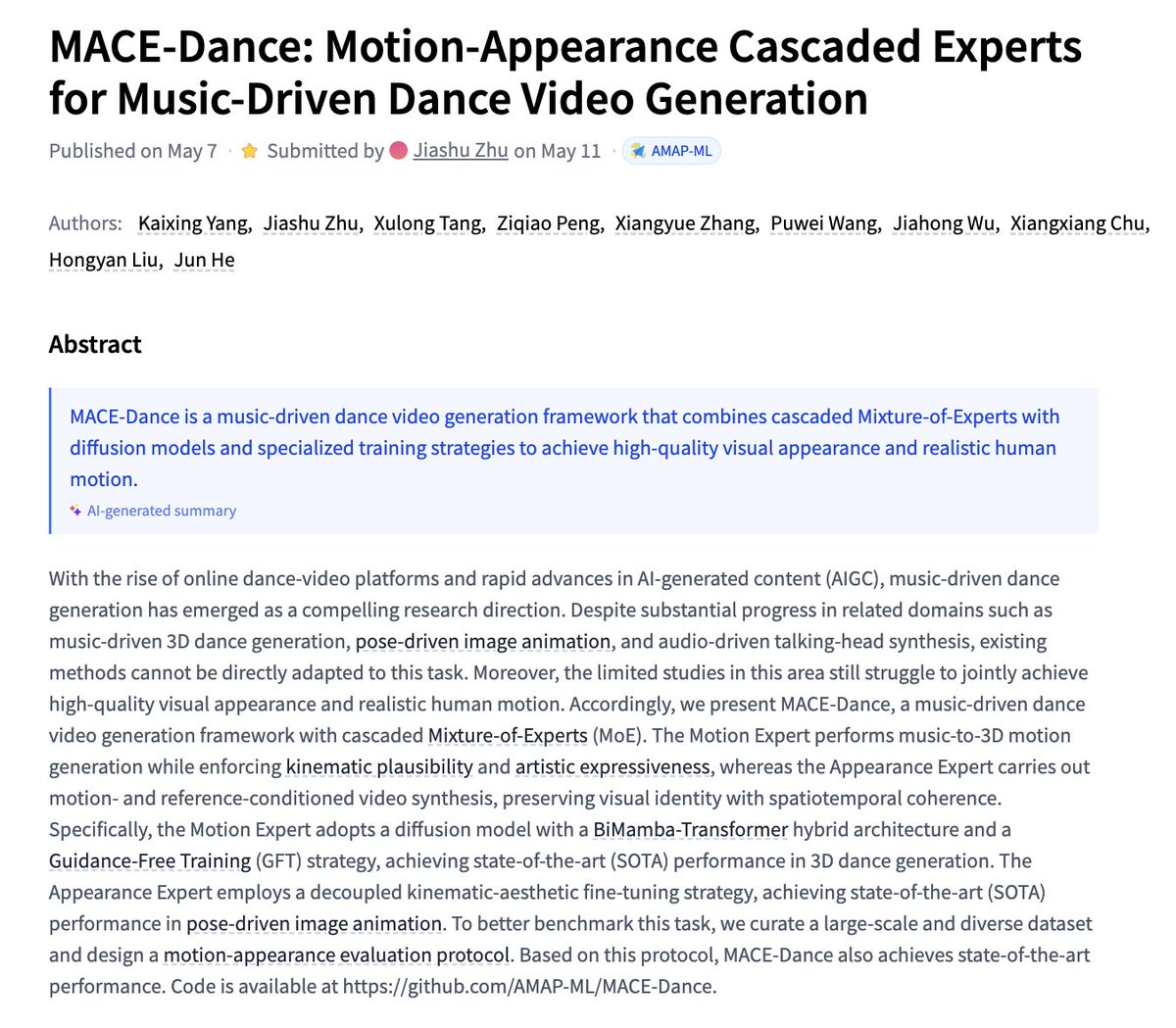
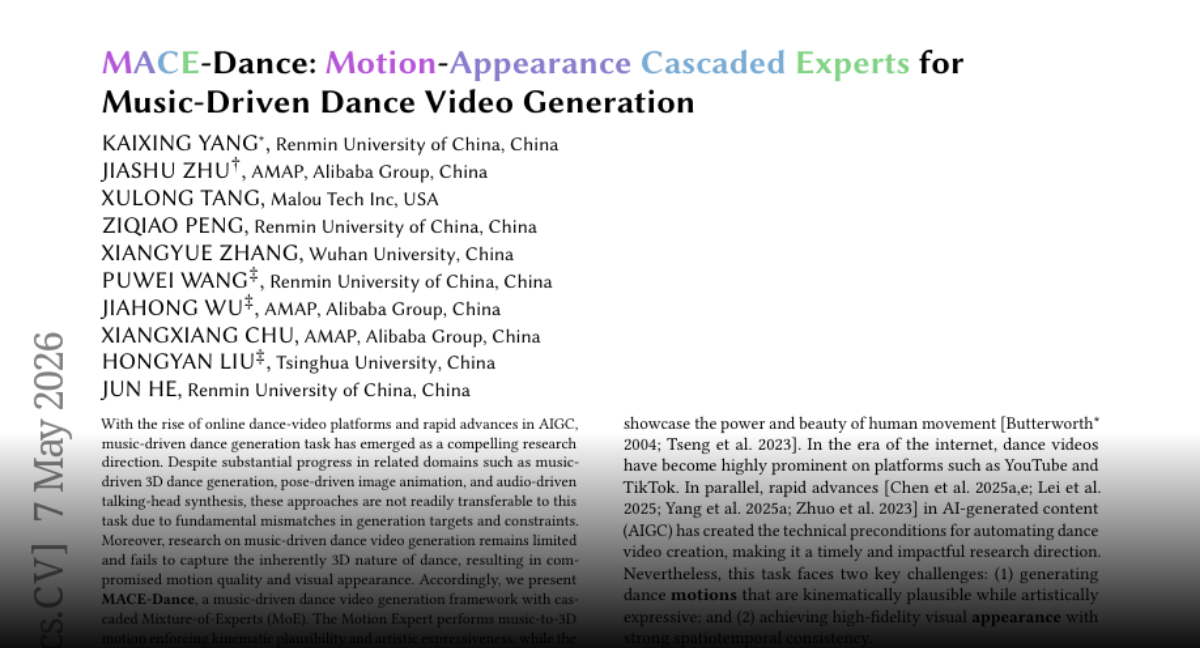
MACE-Dance Motion-Appearance Cascaded Experts for Music-Driven Dance Video Generation https://t.co/YBPquzBPFd
paper: https://t.co/eG6d4D9oEF
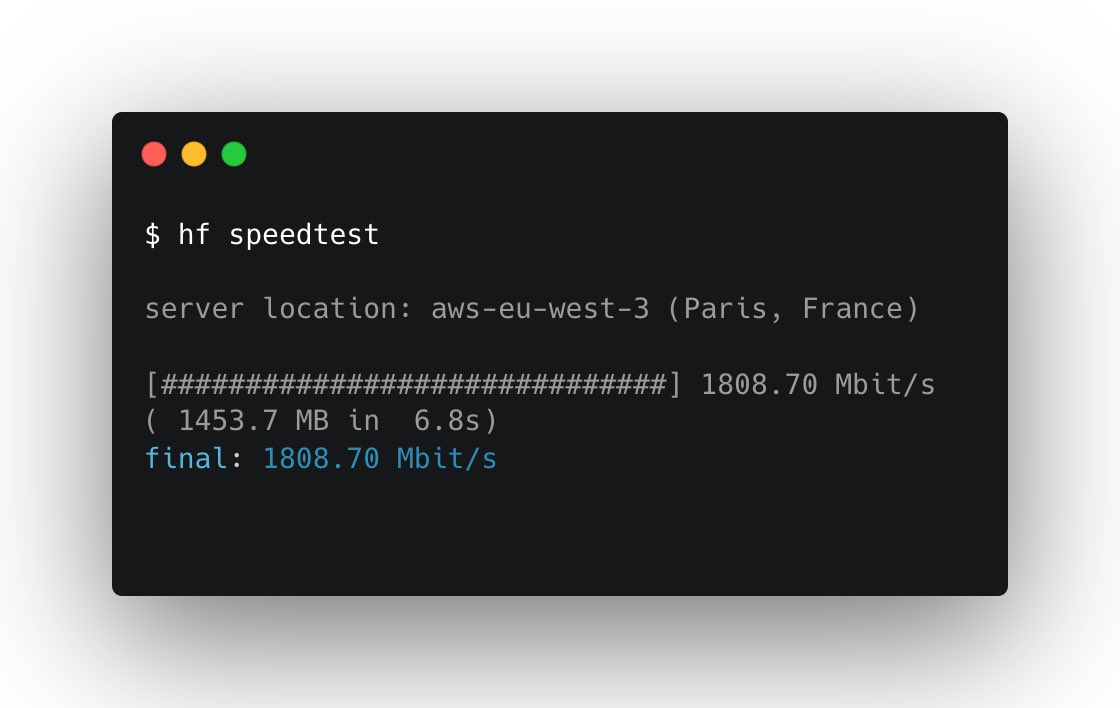
Weekend project: A tiny CLI extension to measure your download speeds from the HF CDN ⚡️ How to run it: hf extensions install julien-c/hf-speedtest hf speedtest If you run it, share your output here ⤵️ https://t.co/nc23XuFeYV
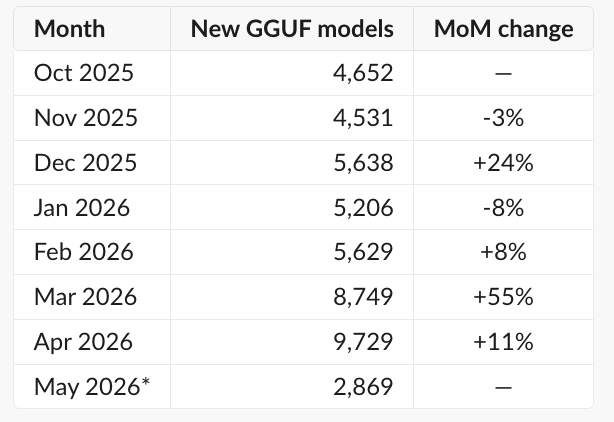
Local AI is having its moment! Below is the number of new GGUF models created each month over the past 8 months & insights from our HF internal agent (May is partial): - 176,000 total public GGUF models on HF - Two distinct regimes: Oct–Feb averaged ~5.1K new GGUF models/month. Then March–April jumped to ~9.2K/month — nearly double the previous rate. - March was the inflection point (+55% MoM) — likely driven by a wave of new open-weight model releases being quantized to GGUF. - April sustained the momentum at 9.7K, suggesting this isn't a one-off spike but a new baseline. - The GGUF ecosystem is accelerating — the community is quantizing models faster than ever, likely thanks to better tooling (llama.cpp improvements, automated quantization pipelines, and more models supporting GGUF natively). Let's go!
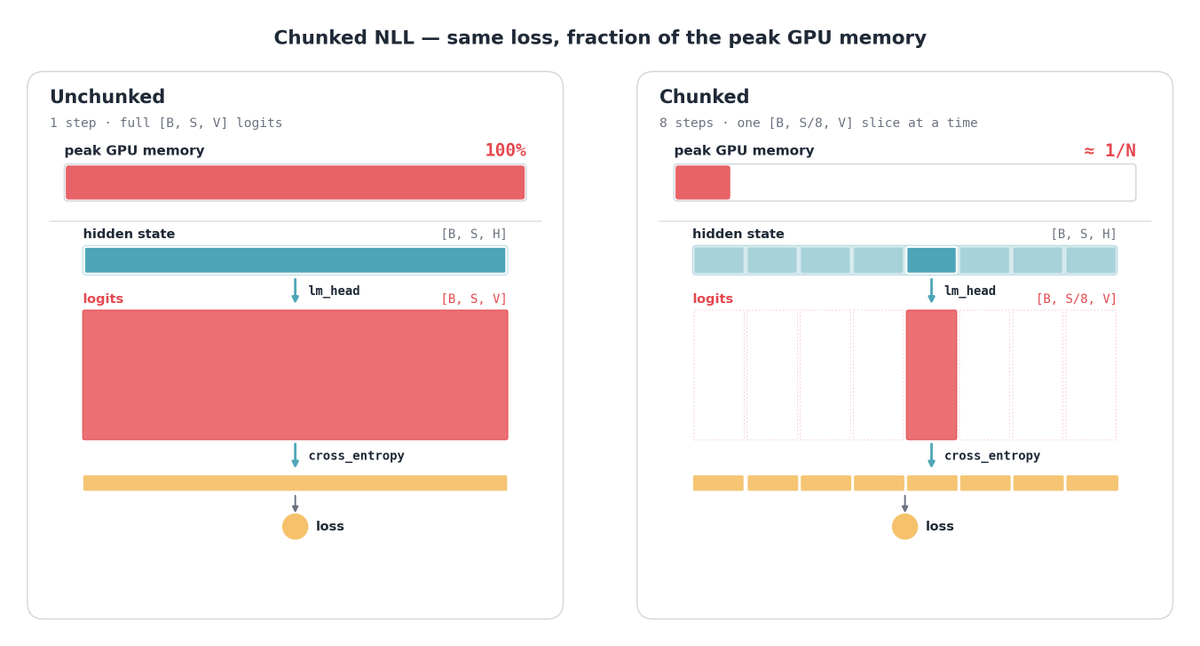
TRL v1.4 is out! two things I'm excited about: → chunked NLL loss for SFT. Way less VRAM, same loss, often faster. Qwen3-14B @ 16k seq: 58.9 → 38.9 GB. → first-class @OpenReward integration. One line wires up an env into GRPO. Plus: more chat templates, MFU helpers... https://t.co/PyEdTYNxxf
The UFOs are on HF thanks to @MTSlive! Who’s going to train the first computer vision model? https://t.co/Ida8rHfOpV https://t.co/hs3BK6CGcW
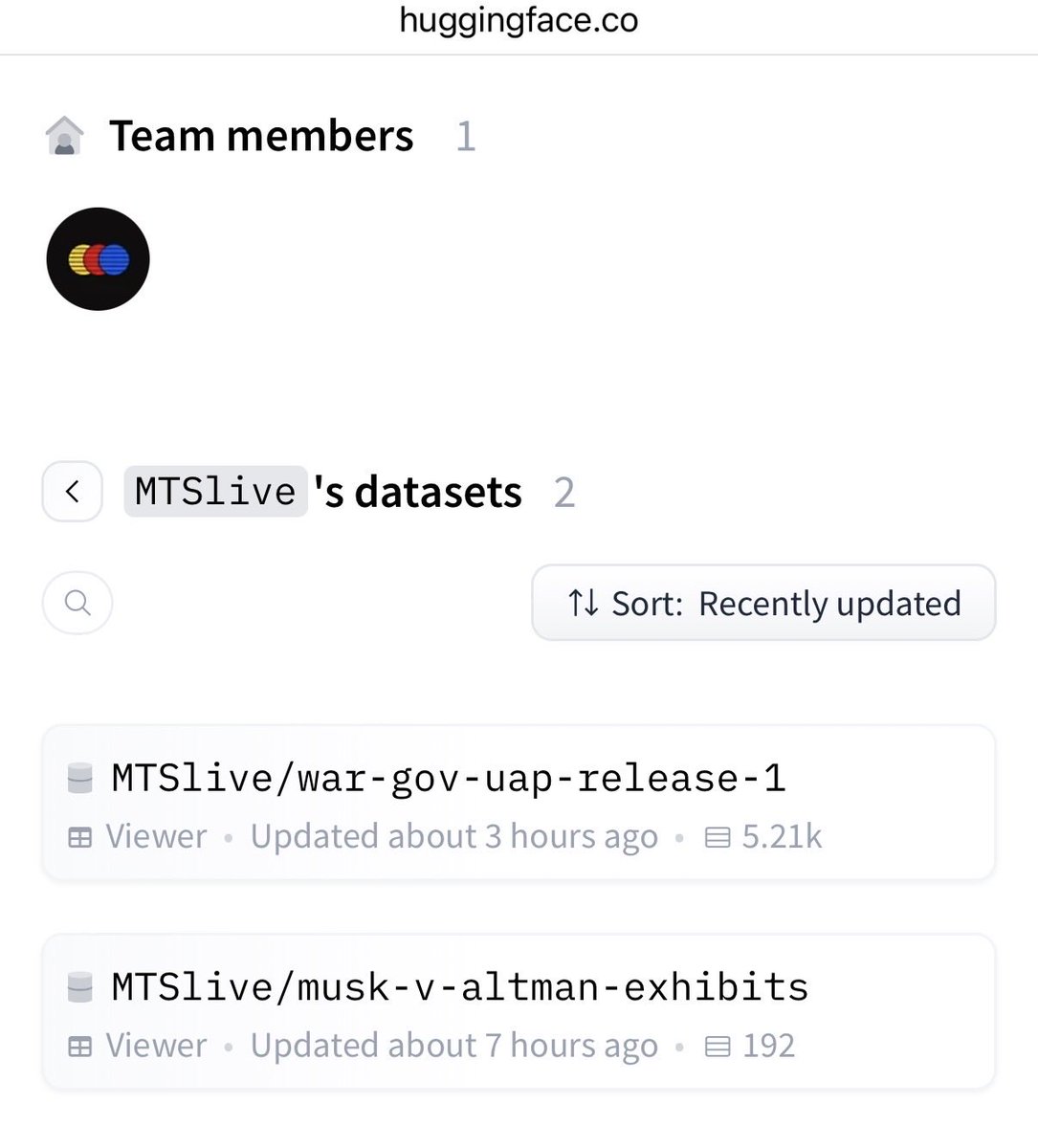
The UFOs are on HF thanks to @MTSlive! Who’s going to train the first computer vision model? https://t.co/Ida8rHfOpV https://t.co/hs3BK6CGcW
C'est l'anniversaire de Reachy mini. C'est un produit incroyable pour l'interface homme machine. Regarder comment il transmets dès émotions. Tout est open source sur mon GitHub. C'est ce que le Homepod d'Apple aurait dû être. https://t.co/cKk5IQOJhz
Microsoft just released Phi-Ground-Any on Hugging Face A 4B parameter vision model for GUI grounding that achieves SOTA results on ScreenSpot-pro and UI-Vision, enabling AI agents to precisely click screen elements. https://t.co/VAgTlRPUbB
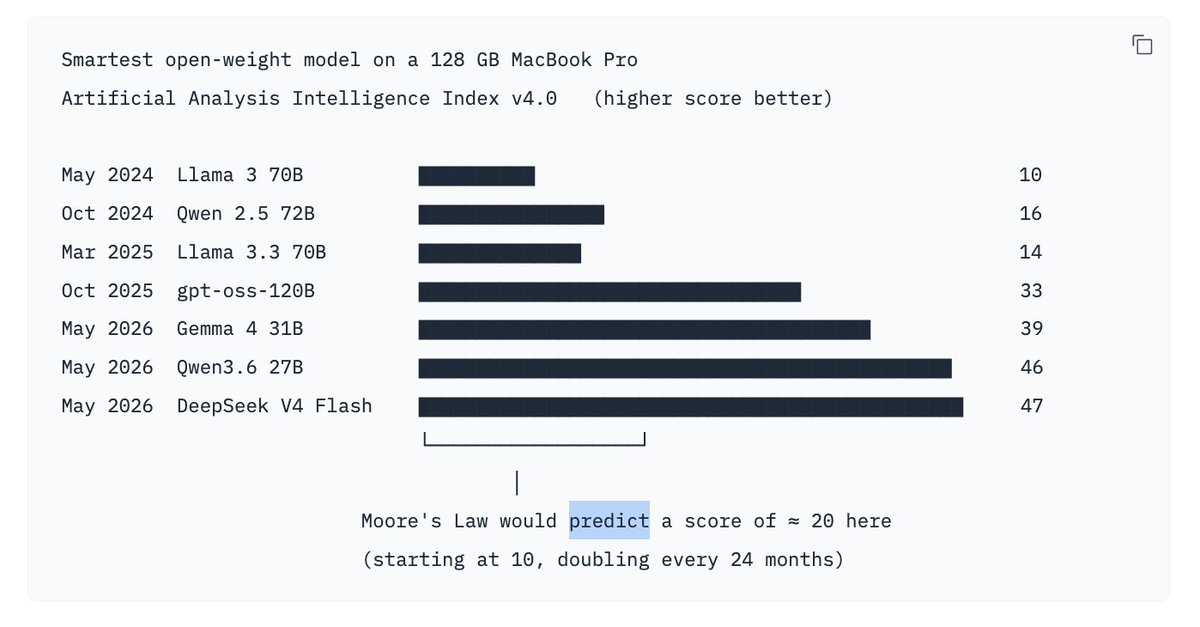
Local open-weight AI on a laptop has been improving more than twice as fast as Moore's Law! Between May 2024 and May 2026, the most expensive MacBook Pro you could buy stayed at 128 GB of unified memory. The hardware ceiling barely moved. But the smartest open-weight model from @huggingface you could actually run on it went from a score of 10 (Llama 3 70B) to 47 (DeepSeek V4 Flash on @antirez's mixed-Q2 GGUF) on the @ArtificialAnlys Intelligence Index. That is 4.7× in 24 months, or a doubling of intelligence every 10.7 months. Moore's Law (transistor count) doubles every 24 months. Local open-weight AI on a laptop has been improving more than twice as fast as Moore's Law, on completely unchanged hardware.
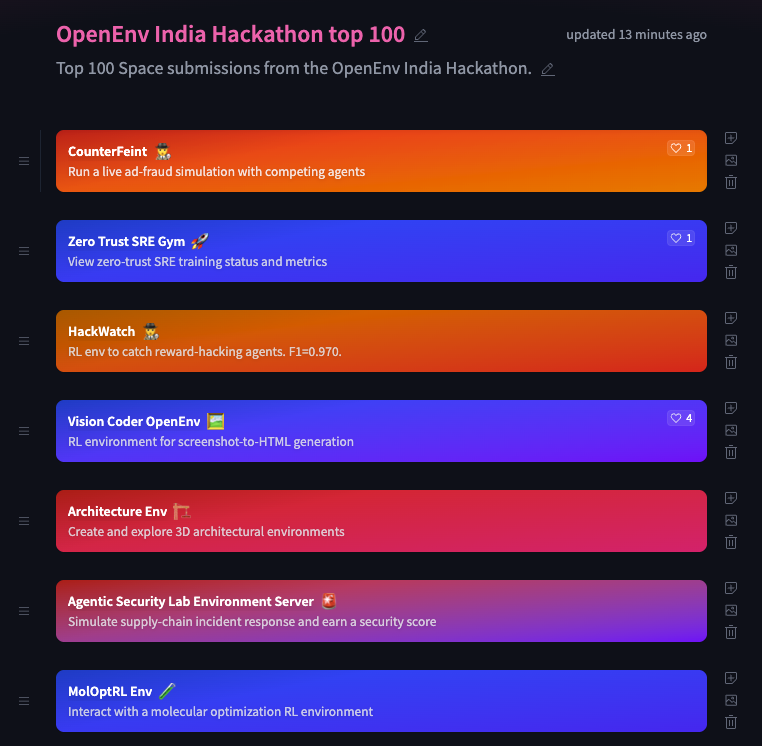
ICYMI: for the last 8 weeks 60k hackers have been fighting it to build the ultimate RL environments with OpenEnv. It's now finished. The winners have the cash and the community has some amazing environments to start building with. https://t.co/xyKsqPUcAk https://t.co/yzBQdFl3pQ
Introducing RL Environment Creator Skill Now any one can create RL environments $ npx skills add adithya-s-k/RL_Envs_101 > You can create environments across multiple frameworks like OpenEnv, OpenReward, Verifiers, NemoGym ... > the repo has live working examples of environments that your coding agent can reference > The skill is design to first understand what type of model you are training and create an environment while keeping that in mind ps. There’s a lot more to building RL environments that can be used for training. One major aspect is the data, which this skill can’t directly solve. However, the skill will help with implementing tools, rewards, and other components of an RL environment, making it easier to go from idea to implementation quickly across different frameworks. Let me know if you’d be interested in a detailed, end-to-end blog/tutorial on building an environment and actually training a model for a useful use case.
Excited to release the Ultimate guide to RL environments! Definitions of RL environments differ wildly in the LLM era, so we spent the last month building several RL environments across 6 different frameworks, domains and complexities to map out which are easiest to build with a
Look who’s just arrived! Reachy Mini Wireless! 🚀 https://t.co/zEMLik6Ija

Look who’s just arrived! Reachy Mini Wireless! 🚀 https://t.co/zEMLik6Ija

🆕 Hugging Face 🤝 Hermes Agent 🔥 > we added Hermes Agent to local apps: run it locally with any compatible GGUF/MLX model > shipped native traces support for Hermes Agent: visualize your Hermes traces directly on the Hub Very soon most agents will run locally and we want to accelerate things as much as we can ⚔️

Reachy Mini ready to go! Audio on 🔉 Cleary I'll connect it to Local AI services and to my Hermes Agent really soon 💪 https://t.co/ZTZ8DDtitD
Qwen released WebWorld 🌍 an open world model series for web agents ✨ 8B/14B/32B+Dataset ✨Apache2.0 ✨+9.9% MiniWob++, +10.9% WebArena ✨ Matches Claude Opus 4.1 & Gemini 3 Pro on factuality,beats GPT-5 as world model ✨Unified action space, 30+ step simulation, 5 state formats

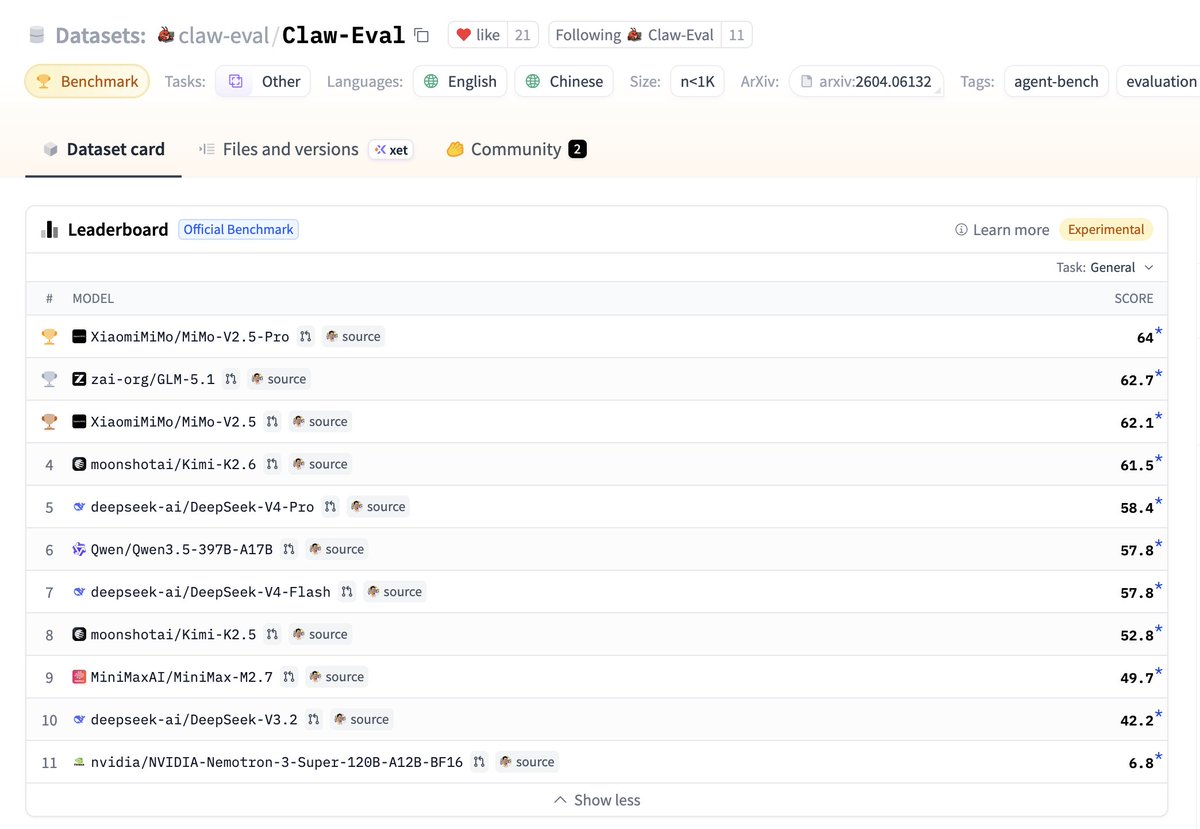
🦞 Claw-Eval 🦞 🥇 @XiaomiMiMo's MiMo-V2.5-Pro at 1T 🥈 @Zai_org GLM5.1 at 754B 🥉 @XiaomiMiMo MiMo-V2.5 at 310B Congrats to @XiaomiMiMo for having 2 models in the top 3! The most impressive result though is @deepseek_ai with DeepSeek v4 flash a 210B model on par with models 4 times its size.. Super interesting bench from @_TobiasLee and team. Gathering tasks from @openclaw, PinchBench, OfficeQA, OneMillion-Bench, Finance Agent, and Terminal-Bench 2.0. This might be one of the more interesting and useful benchmark right now. Whether you are using @NousResearch's Hermes agent or @steipete's OpenClaw, you should choose your model according to real world tasks. https://t.co/8cq8gmgFz6
omg, GPU acceleration on smolvm works way better than I thought. can run llama.cpp inside the smol machine with close to ~90% of performance of the host using vulkan backend. ~127 t/s on qwen-0.5b. Min hassle, max ease of setup. https://t.co/SQzj7PTs9P
3 weeks since ml-intern launched and we just hit 1M messages exchanged. that's 3.3 agent-years of ML research in 21 days. 2 months worth of research every day. 17,383 training jobs total. talk about AI acceleration. here's some of what people built: @cmpatino_ replicated the full DeepSeek v4 architecture and pre+post trained a 100M MoE from scratch. → https://t.co/YBzYg1RqH9 it landed a third place submission on @kellerjordan0 optimizer competition. autoresearch on SOTA territory. https://t.co/gYq6cSFOS5 @_lewtun Got the intern to convert @AlecRad's cool new talkie-lm 1930 model to work with transformers. tokenizer, chat template, model conversion etc all one-shotted by ml-intern. https://t.co/vA65V40jnQ someone created entire PhD dissertation chapter on context-aware agentic cyber defense drafted with 16 research subagents. and someone used it to crack an @Anthropic kernel optimization take-home. (we don't know how to feel about this one 👀 ) just getting started → https://t.co/orko5srL4H

I think Reachy is the one who needs chess lessons… 😅 Robotics meets WebAI: Gemma 4 running fully offline on WebGPU with Transformers.js, controlling Reachy Mini over WebSerial. No internet, just a browser and a USB-C cable. What should Reachy play next? https://t.co/1u1aPTU2LI
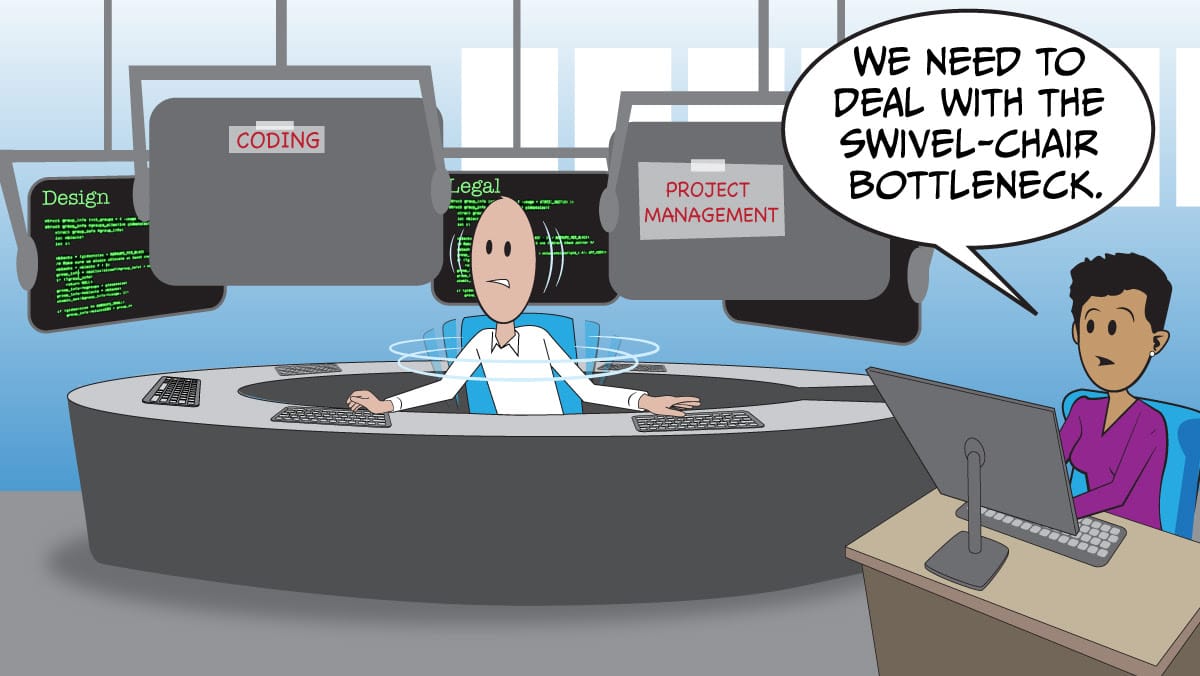
AI-native software engineering teams operate very differently than traditional teams. The obvious difference is that AI-native teams use coding agents to build products much faster, but this leads to many other changes in how we operate. For example, some great engineers now play broader roles than just writing code. They are partly product managers, designers, sometimes marketers. Further, small teams who work in the same office, where they can communicate face-to-face, can move incredibly quickly. Because we can now build fast, a greater fraction of time must be spent deciding what to build. To deal with this project-management bottleneck, some teams are pushing engineer:product manager (PM) some teams are pushing engineer:product manager (PM) ratios downward from, say, 8:1 to as low as 1:1. But we can do even better: If we have one PM who decides what to build and one engineer who builds it, the communication between them becomes a bottleneck. This is why the fastest-moving teams I see tend to have engineers who know how to do some product work (and, optionally, some PMs who know how to do some engineering work). When an engineer understands users and can make decisions on what to build and build it directly, they can execute incredibly quickly. I’ve seen engineers successfully expand their roles to including making product decisions, and PMs expand their roles to building software. The tech industry has more engineers than PMs, but both are promising paths. If you are an engineer, you’ll find it useful to learn some product management skills, and if you’re a PM, please learn to build! Looking beyond the product-management bottleneck, I also see bottlenecks in design, marketing, legal compliance, and much more. When we speed up coding 10x or 100x, everything else becomes slow in comparison. For example, some of my teams have built great features so quickly that the marketing organization was left scrambling to figure out how to communicate them to users — a marketing bottleneck. Or when a team can build software in a day that the legal department needs a week to review, that’s a legal compliance bottleneck. In this way, agentic coding isn’t just changing the workflow of software engineering, it’s also changing all the teams around it. When smaller, AI-enabled teams can get more done, generalists excel. Traditional companies need to pull together people from many specialties — engineering, product management, design, marketing, legal, etc. — to execute projects and create value. This has resulted in large teams of specialists who work together. But if a team of 2 persons is to get work done that require 5 different specialities, then some of those individuals must play roles outside a single speciality. In some small teams, individuals do have deep specializations. For example, one might be a great engineer and another a great PM. But they also understand the other key functions needed to move a project forward, and can jump into thinking through other kinds of problems as needed. Of course, proficiency with AI tools is a big help, since it helps us to think through problems that involve different roles. Even in a two-person team, to move fast, communication bottlenecks also must be minimized. This is why I value teams that work in the same location. Remote teams can perform well too, but the highest speed is achieved by having everyone in the room, able to communicate instantaneously to solve problems. This post focuses on AI-native teams with around 2-10 persons, but not everything can be done by a small team. I'll address the coordination of larger teams in the future. I realize these shifts to job roles are tough to navigate for many people. At the same time, I am encouraged that individuals and small teams who are willing to learn the relevant skills are now able to get far more done than was possible before. This is the golden age of learning and building! [Original text: https://t.co/1pUxNC5UXk ]
How we prompt AI is very different in 2026 than 2022 when ChatGPT came out. I'm teaching a new course, AI Prompting for Everyone, to help you become an AI power user — whatever your current skill level. It covers skills that apply across ChatGPT, Gemini, Claude, and other AI tools. How to use deep research mode for well-researched reports on complex questions. How to give AI the right context, including more documents and images than most people realize you can provide. When to ask AI to think hard for several minutes on important decisions like what car to buy, what to study, or what job to take. And how to use AI to generate images, analyze data, and build simple games and websites. I also cover intuitions about how these models work under the hood, so you know when to trust an answer and when not to. Along the way, you'll see flying squirrels, a creativity test, some of my old family photos, and fireworks. Join me at https://t.co/tcQc4iJAJG
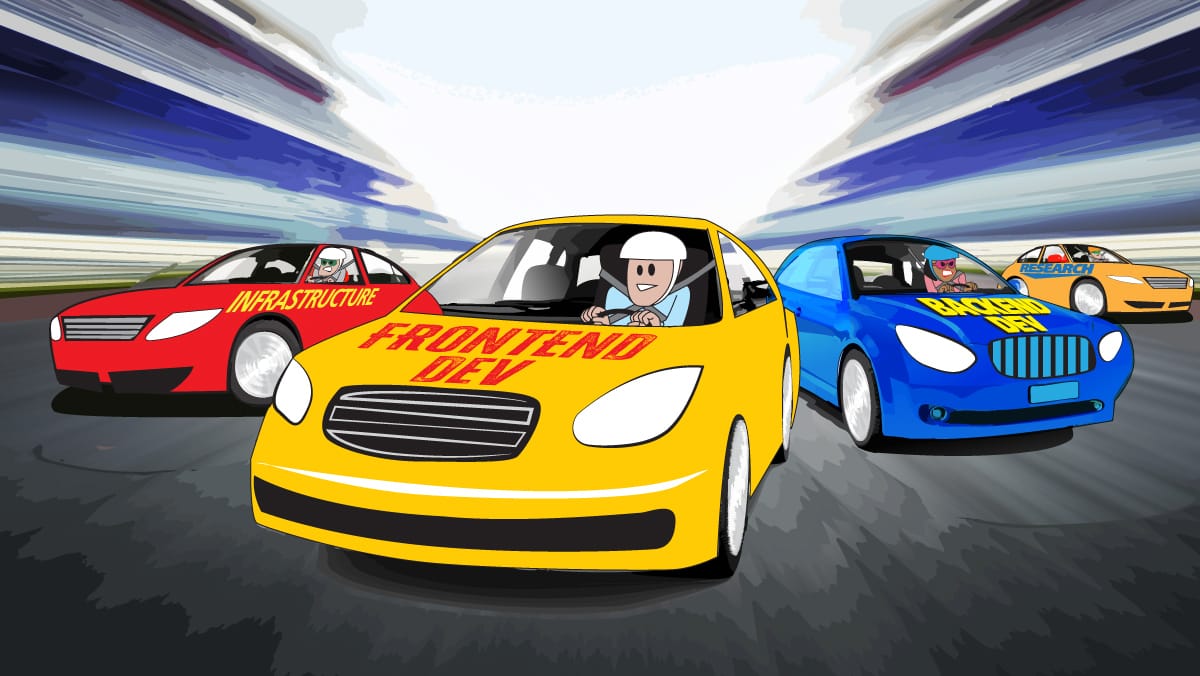
Coding agents are accelerating different types of software work to different degrees. When we architect teams, understanding these distinctions helps us to have realistic expectations. Listing functions from most accelerated to least, my order is: frontend development, backend, infrastructure, and research. Frontend development — say, building a web page to serve descriptions of products for an ecommerce site — is dramatically sped up because coding agents are fluent in popular frontend languages like TypeScript and JavaScript and frameworks like React and Angular. Additionally, by examining what they have built by operating a web browser, coding agents are now very good at closing the loop and iterating on their own implementations. Granted, LLMs today are still weak at visual design, but given a design (or if a polished design isn’t important), the implementation is fast! Backend development — say, building APIs to respond to queries requesting product data — is harder. It takes more work by human developers to steer modern models to think through corner cases that might lead to subtle bugs or security flaws. Further, a backend bug can lead to non-intuitive downstream effects like a corrupted database that occasionally returns incorrect results, which can be harder to debug than a typical frontend bug. Finally, although database migrations can be easier with coding agents, they’re still hard and need to be handled carefully to prevent data loss. While backend development is much faster with coding agents, they accelerate it less, and skilled developers still design and implement far better backends than inexperienced ones who use coding agents. Infrastructure. Agents are even less effective in tasks like scaling an ecommerce site to 10K active uses while maintaining 99.99% reliability. LLMs' knowledge is still relatively limited with respect to infrastructure and the complex tradeoffs good engineers must make, so I rarely trust them for critical infra decisions. Building good infrastructure often requires a period of testing and experimentation, and coding agents can help with that, but ultimately that’s a significant bottleneck where fast AI coding does not help much. Lastly, finding infrastructure bugs — say, a subtle network misconfiguration — can be incredibly difficult and requires deep engineering expertise. Thus, I’ve found that coding agents accelerate critical infrastructure even less than backend development. Research. Coding agents accelerate research work even less. Research involves thinking through new ideas, formulating hypotheses, running experiments, interpreting them to potentially modify the hypotheses, and iterating until we reach conclusions. Coding agents can speed up the pace at which we can write research code. (I also use coding agents to help me orchestrate and keep track of experiments, which makes it easier for a single researcher to manage more experiments.) But there is a lot of work in research other than coding, and today’s agents help with research only marginally. Categorizing software work into frontend, backend, infra, and research is an extreme simplification, but having a simple mental model for how much different tasks have sped up has been useful for how I organize software teams. For example, I now ask front-end teams to implement products dramatically faster than a year ago, but my expectations for research teams have not shifted nearly as much. I am fascinated by how to organize software teams to use coding agents to achieve speed, and will keep sharing my findings in future posts. [Original text: https://t.co/rnnVWqebVe ]
New course: Build agents that respond to users with not only plaintext, but custom UIs like charts, forms, and whiteboards, generated on demand and displayed right in the chat. This short course is built in partnership with @CopilotKit and taught by @ataiiam, co-founder of CopilotKit. You'll learn three approaches: Your agent can pick from custom components you build, like charts and forms. It can compose new layouts from a set of building blocks you provide, like rows, cards, and text. Or it can incorporate existing third-party apps, like a whiteboard or a calendar, right inside the conversation. Skills you’ll gain: - Build agents that render custom components like charts and forms on demand - Build an app where the agent and user collaborate on shared data, beyond just the chat window - Place third-party apps like maps, calendars, and whiteboards right in your interface Join and build agents that give users something to see and act on! https://t.co/lvMy0YdF3z
I'm delighted that @coursera and @udemy have come together as one company to serve learners. Both Coursera and Udemy were founded with the belief that access to high-quality education changes lives. Over the years, both companies have advanced this goal, creating opportunities for individuals, organizations, and communities around the world. That role is even more important now, as AI is changing the nature of work and increasing the need for continuous learning. Helping people build job-relevant skills will be critical to how we create a better world. By combining the strengths of both companies, we can better serve this need. We bring together a broader range of learning content, trusted instructors and educators, and engaging learning experiences. This creates new opportunities to make learning more personalized, more applied, and more accessible at scale. I’m excited to serve as Chairman of the combined company, working alongside Greg Hart and the leadership team. There is a strong foundation in both organizations, and I look forward to what the teams will build together to expand access opportunity globally. Learn more: https://t.co/QpCwBmqWTJ
Imagine every pixel on your screen, streamed live directly from a model. No HTML, no layout engine, no code. Just exactly what you want to see. @eddiejiao_obj, @drewocarr and I built a prototype to see how this could actually work, and set out to make it real. We're calling it Flipbook. (1/5)
New work with @AlecRad and @DavidDuvenaud: Have you ever dreamed of talking to someone from the past? Introducing talkie, a 13B model trained only on pre-1931 text. Vintage models should help us to understand how LMs generalize (e.g., can we teach talkie to code?). Thread: https://t.co/usVP9KErdv
@VBarsoum “Love > Logic” :D https://t.co/5HyIjHxrMz

Here is a 2nd batch of April architecture drops. What a month! - Ant Ling 2.6 1T - Minimax M2.7 - Xiaomi MiMo V2.5 - Poolside Laguna XS.2 - Tencent Hy3-preview - IBM Granite 4.1 https://t.co/ILjjyZYeC5
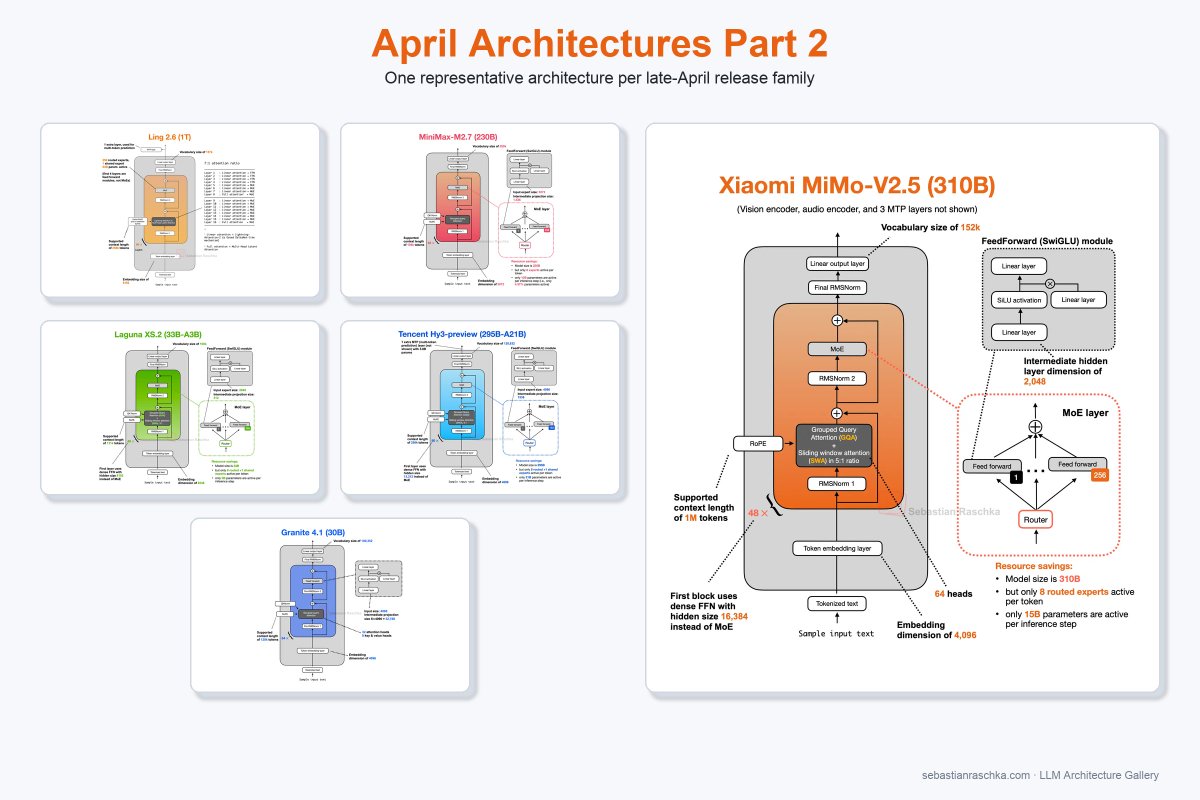
As always, more details and higher-res versions at https://t.co/NO7z6XSRHS
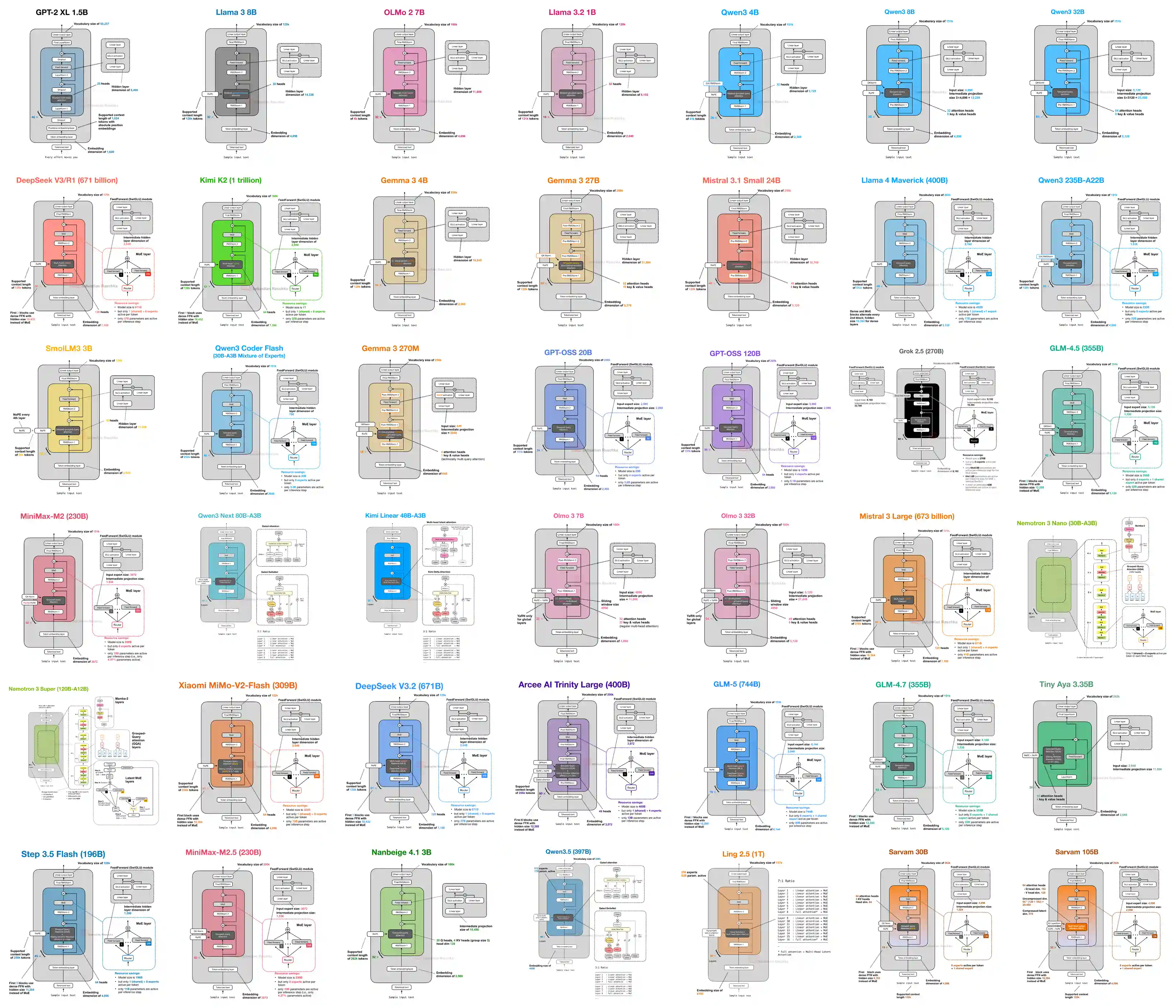
@giffmana I used to get one every year for backups https://t.co/N2PxYG93Jv