Your curated collection of saved posts and media
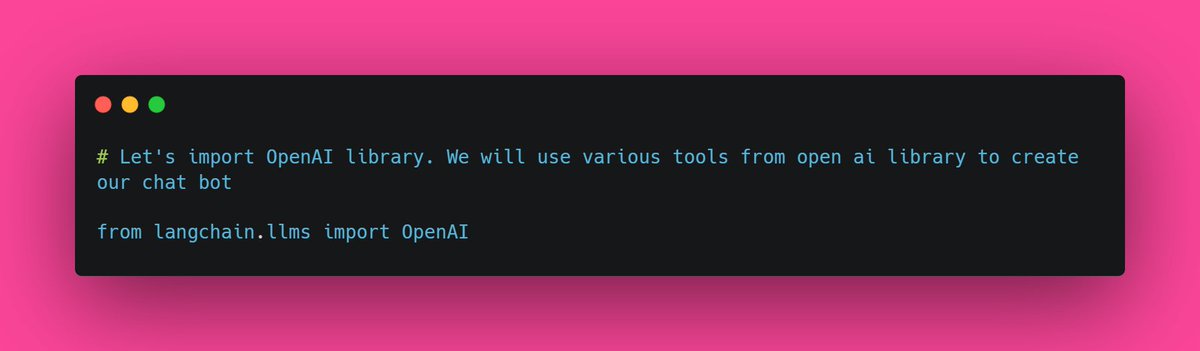
Step 2 - Import OpenAI Library. We will use the @OpenAI Embedding model. https://t.co/qTC9AuYHkX
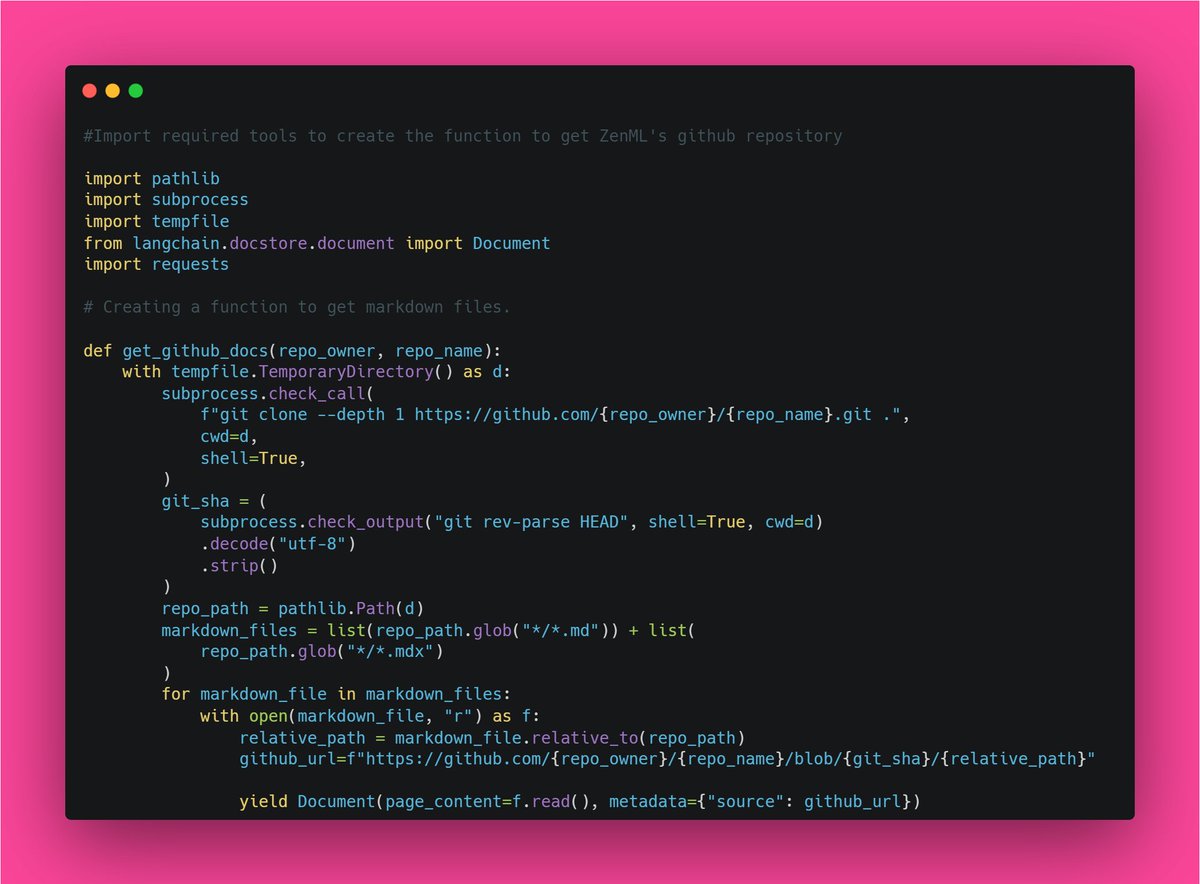
Step 4 - Create a function to fetch all markdown files of ZenML's repository. https://t.co/O1I6pF7Pqf
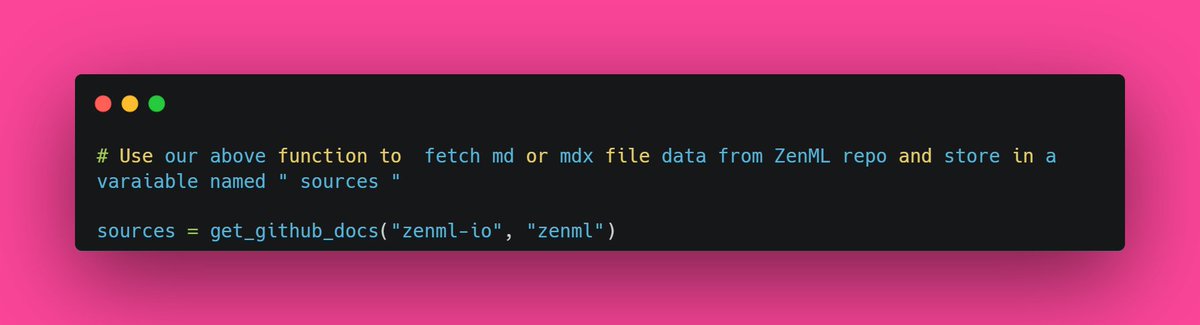
Step 5 - Use the above-created function to fetch md or mdx file data from the ZenML repository and store it in a variable. https://t.co/NgHOlZg8e4
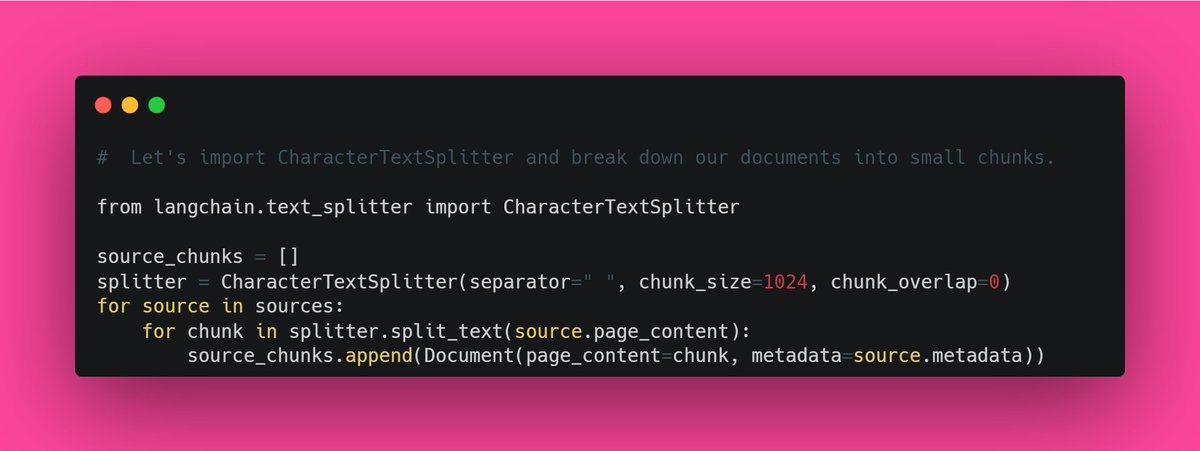
Step 6 - Import CharacterTextSplitter. It will break down our document text into small chunks and store them in a list. This will help in processing the text more efficiently https://t.co/KpFmhE4Mmx
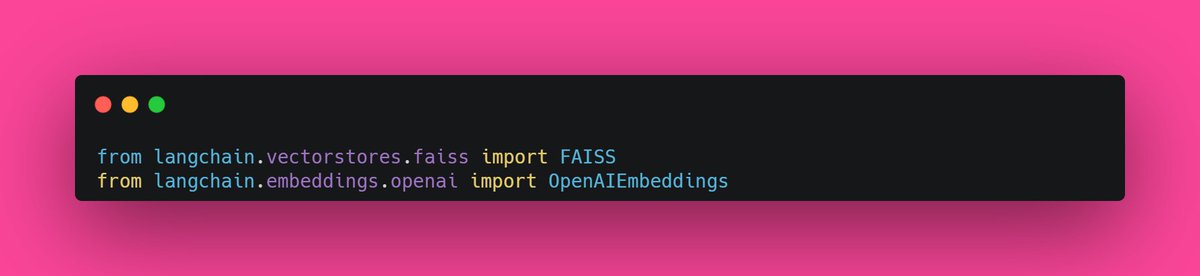
Step 7 - Import FAISS library and OpenAIEmbeddings https://t.co/Xs5Z8ZdL8e
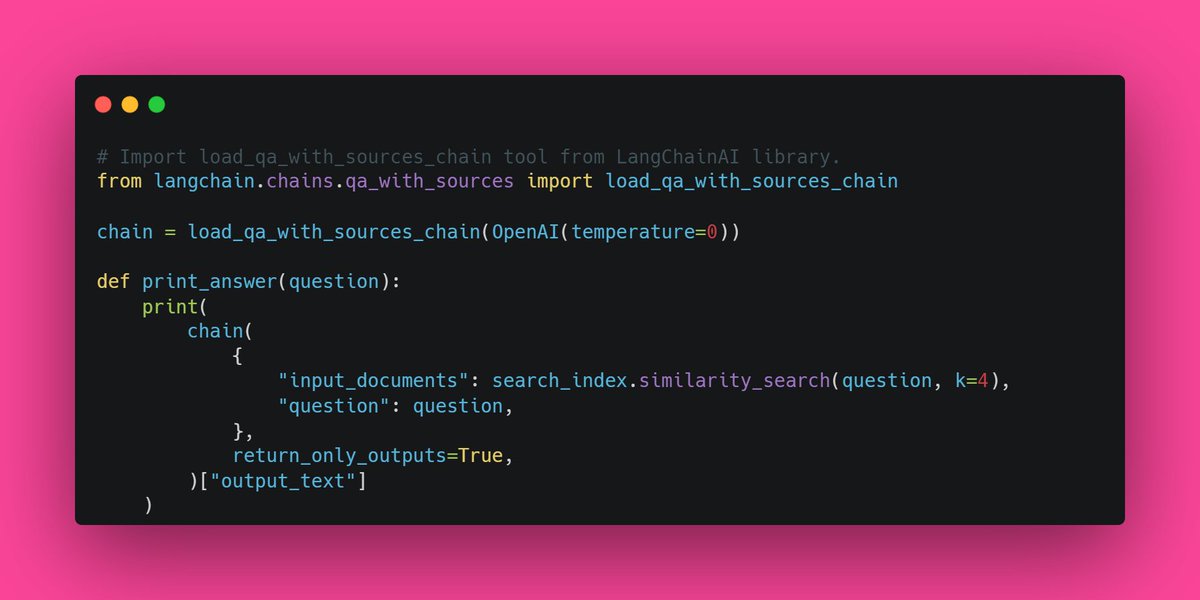
Step 9 - Create a chain using ' load_qa_with_sources_chain ' tool ' load_qa_with_sources_chain ' will take in the query and lookup for the documents from the vector database (created by FAISS) of markdown files data, stored in variable stored. https://t.co/uelgiT3ZSS
WOW! Our chatbot has correctly answered to all of our queries and furthermore, it has provided us with the appropriate source of information. Here is the colab notebook for the complete project: https://t.co/Q7aYdmG4Zp

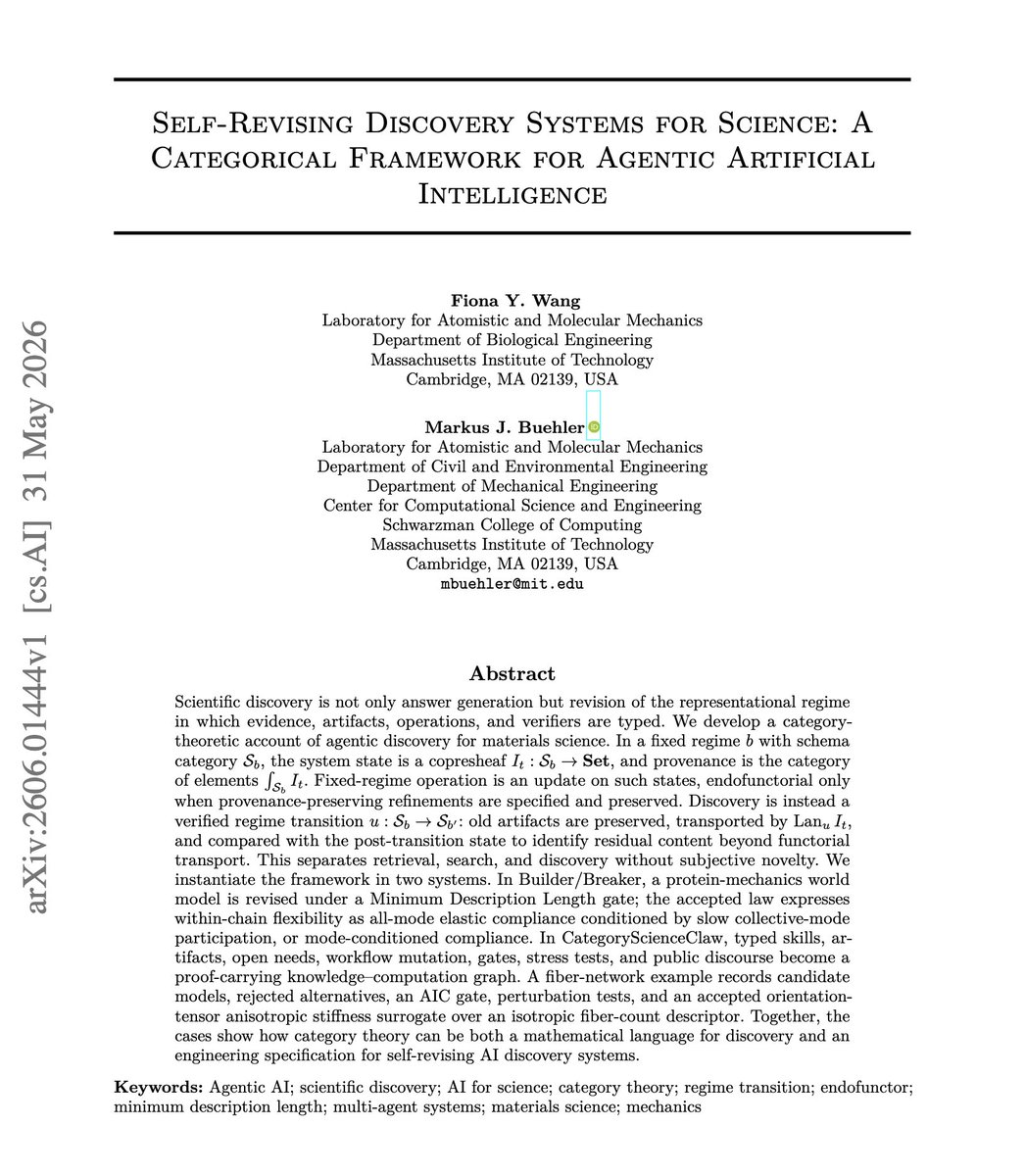
This was one of the standout AI papers of the week. (bookmark it) It tackles a question most self-improving AI agents ignore: is the agent actually discovering anything, or just remixing what it already knows? How can you tell whether the agent is doing real discovery or just confident retrieval? The authors give three clean buckets: - Retrieval is looking something up in a notebook you already have. - Search is combining tools you already own in new ways. - Discovery is inventing a new concept that wasn't in your toolkit before. The issue is that most agents stop at the first two. The math behind their definition (category theory plus a left Kan extension, if you care) is basically a bookkeeping trick to ask: could the old version of me have produced this result? If yes, it's not discovery. If no, something genuinely new showed up. They build a Builder/Breaker agent that studies protein mechanics. Over four rounds, the model's fit accuracy actually drops (R² goes from 0.48 to 0.68 to 0.54 to 0.41). At first glance, that looks like a failing agent. It isn't. The agent kept taking on harder proteins and rewriting its theory to cover them. Data grew almost 10x while the model code grew only 1.3x. A smaller theory covering a bigger world is exactly what good science looks like. Why does it matter? If you optimize for accuracy alone, your self-improving agent will just settle into easy benchmarks and stop. This paper offers a cleaner success signal and asks whether the agent is compressing more of the world into less code over time. Paper: https://t.co/Vb4TcCb5YD Learn to build effective AI agents in our academy: https://t.co/1e8RZKs4uX
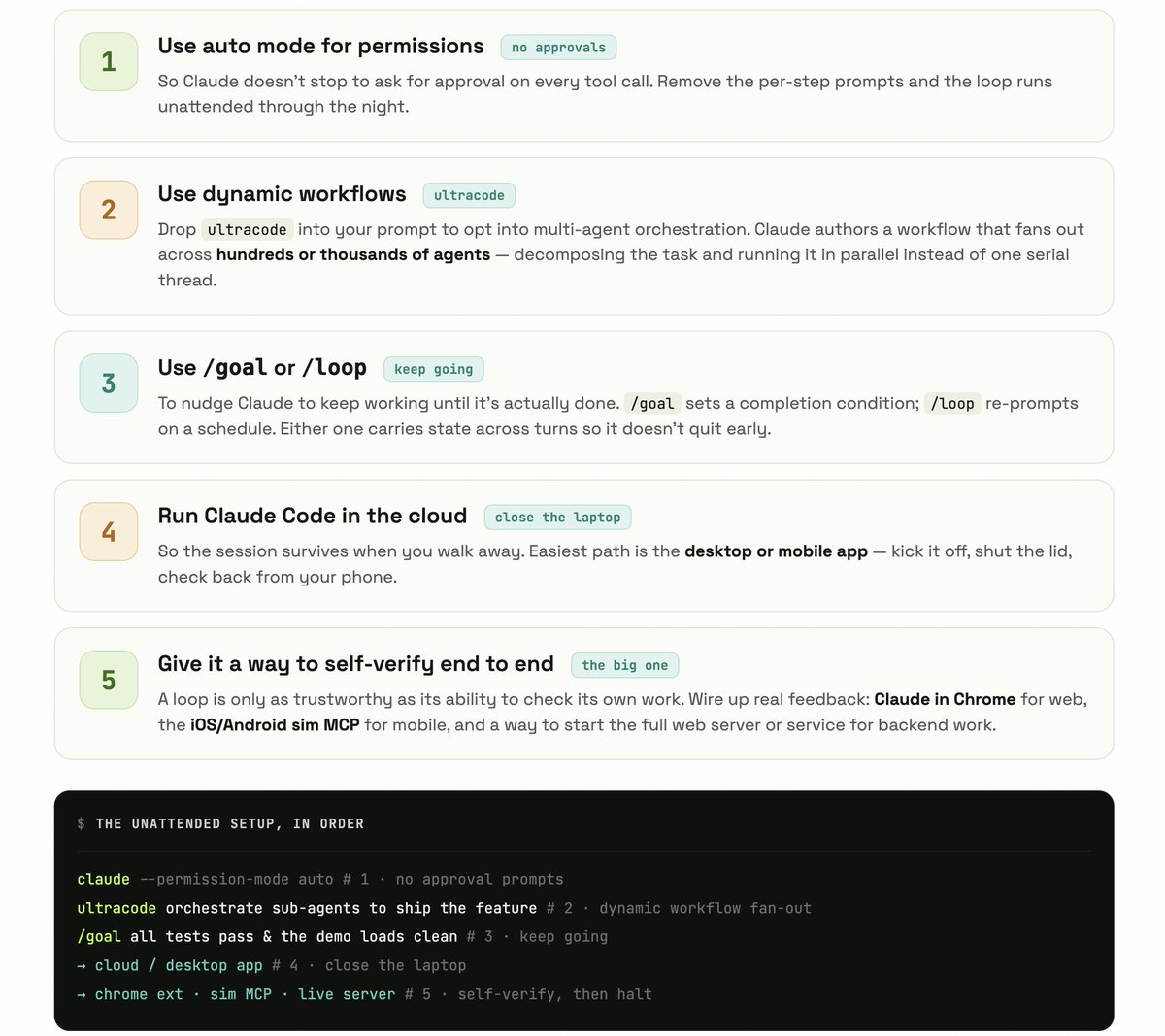
Great tips. In practice, this is how it roughly looks to run agents autonomously for hours or days. /goal or /loop to keep it going. Verification is crucial here. https://t.co/vedDwmF2mA
Seeing a number of benchmarks showing Opus is the best model for long-running work. Five tips for running Opus autonomously for hours/days: 1. Use auto mode for permissions, so Claude doesn’t ask for approval 2. Use dynamic workflows, to have Claude orchestrate hundreds/thousan
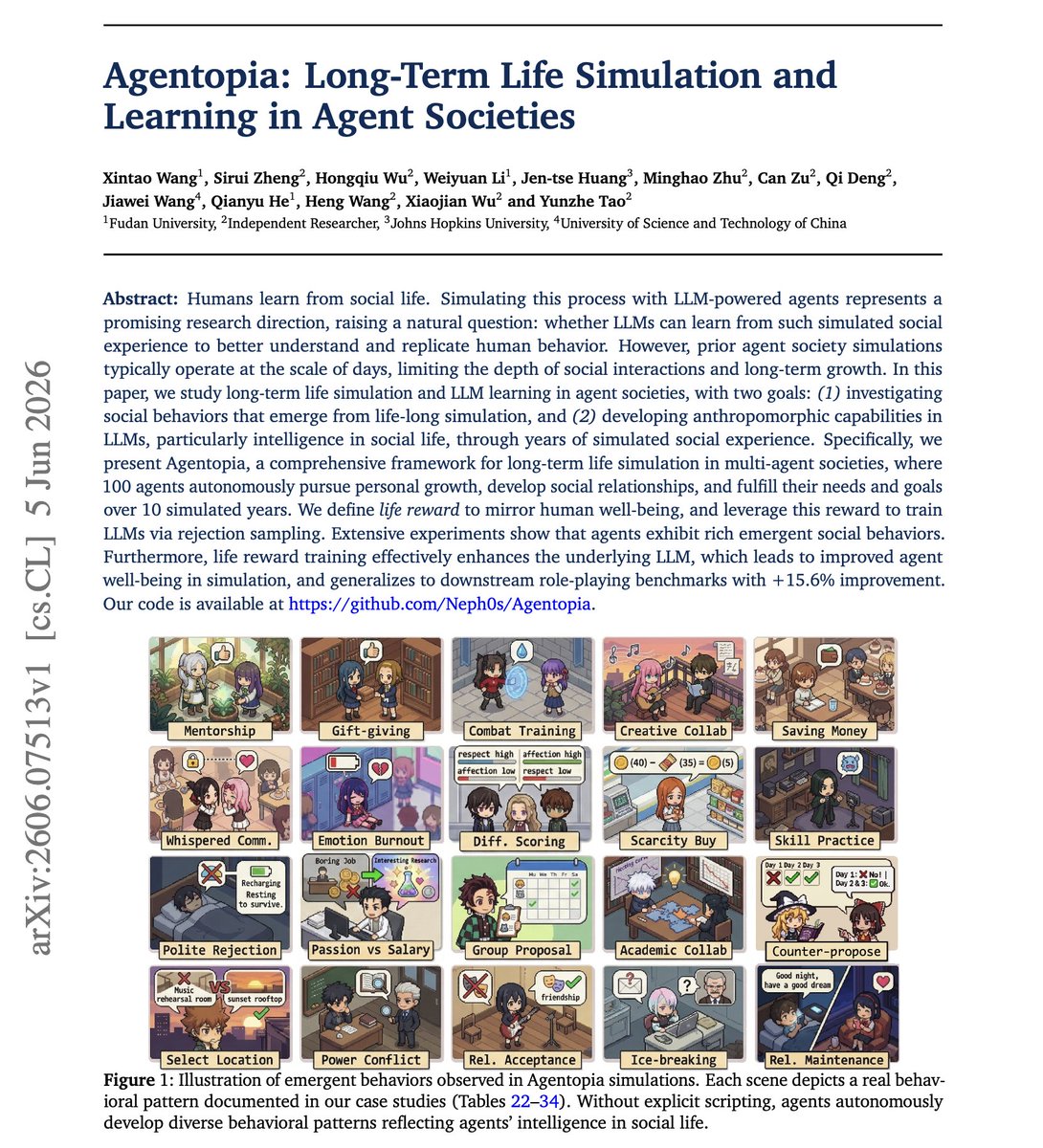
// Life Simulation in Agent Societies // One of the more ambitious agent-society testbeds to land this month, and it arrives as a 79-page release. Agentopia drops many LLM agents into a long-running world where they live, interact, and learn over extended horizons. The goal is emergent social behavior over time, not a single-task score. Why does it matter? Studying how agent societies learn and drift over long horizons is what turns that demo into a research instrument for anyone working on multi-agent dynamics. Paper: https://t.co/j14UqRRSCx Learn to build effective AI agents in our academy: https://t.co/LRnpZN7L4c
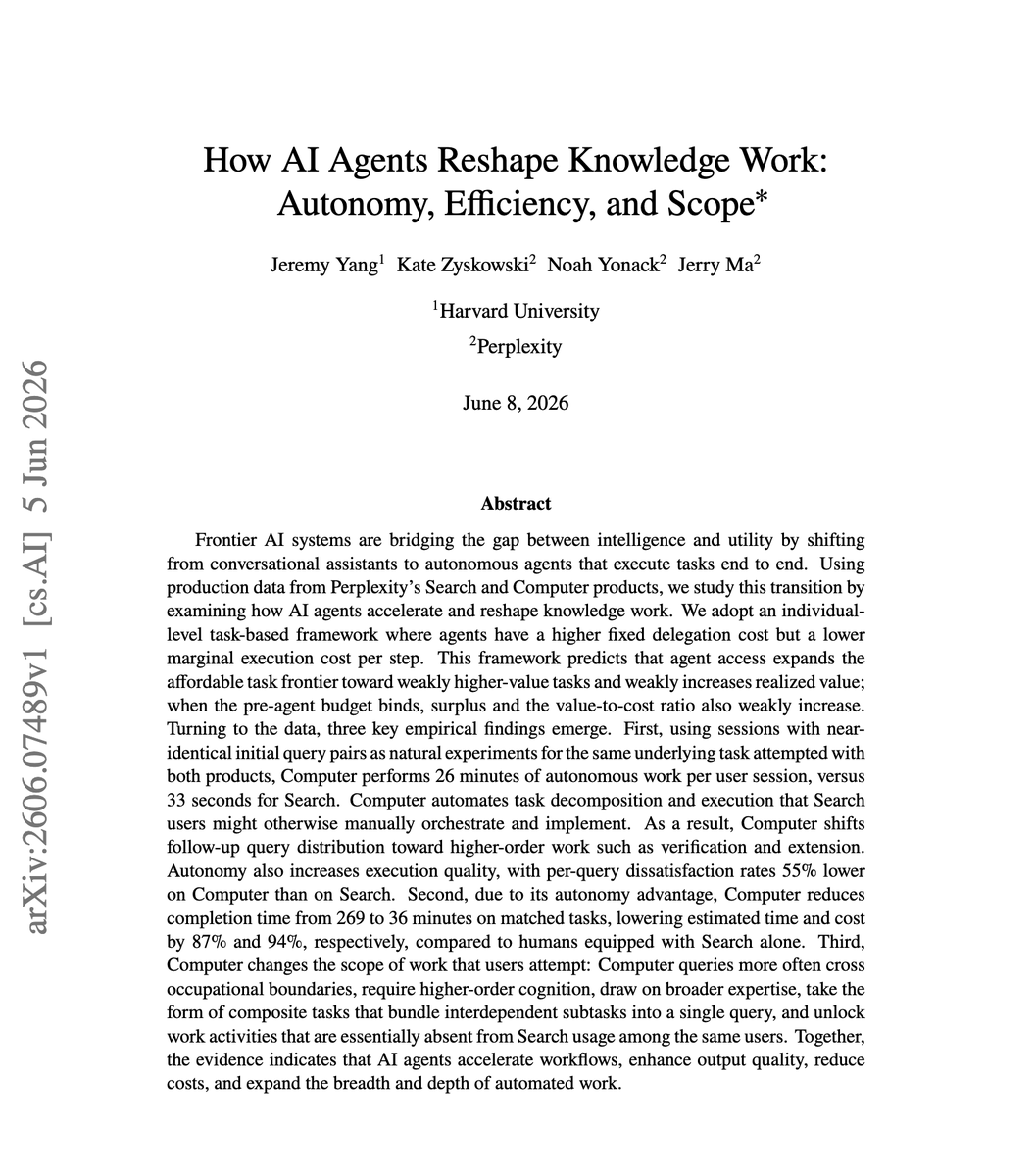
New paper on how AI agents are reshaping knowledge work. This is a nice economic read on where agents actually change knowledge work to meet that gap directly. (bookmark it) It studies agent adoption across three dimensions: autonomy, efficiency, and the scope of tasks workers hand off. The friction people keep hitting with agents is rarely model quality. It is that almost nobody has been taught how to work this way. Paper: https://t.co/R4iYoRz3kS Learn to build effective AI agents in our academy: https://t.co/1e8RZKs4uX
Excited to launch a new way to upskill with AI agents. This is how we are making it possible for anyone to learn to build with coding agents. To start, we are launching 4 new hands-on labs on the following topics: - Agent Skills - Agentic Image Generation - 30 Days of Hermes Agents - Prompt Engineering with Agents I am confident that with our new @dair_ai platform, anyone can learn to become a top AI builder by building and acquiring highly-demanded AI skills. And there is a lot more landing in the coming weeks.
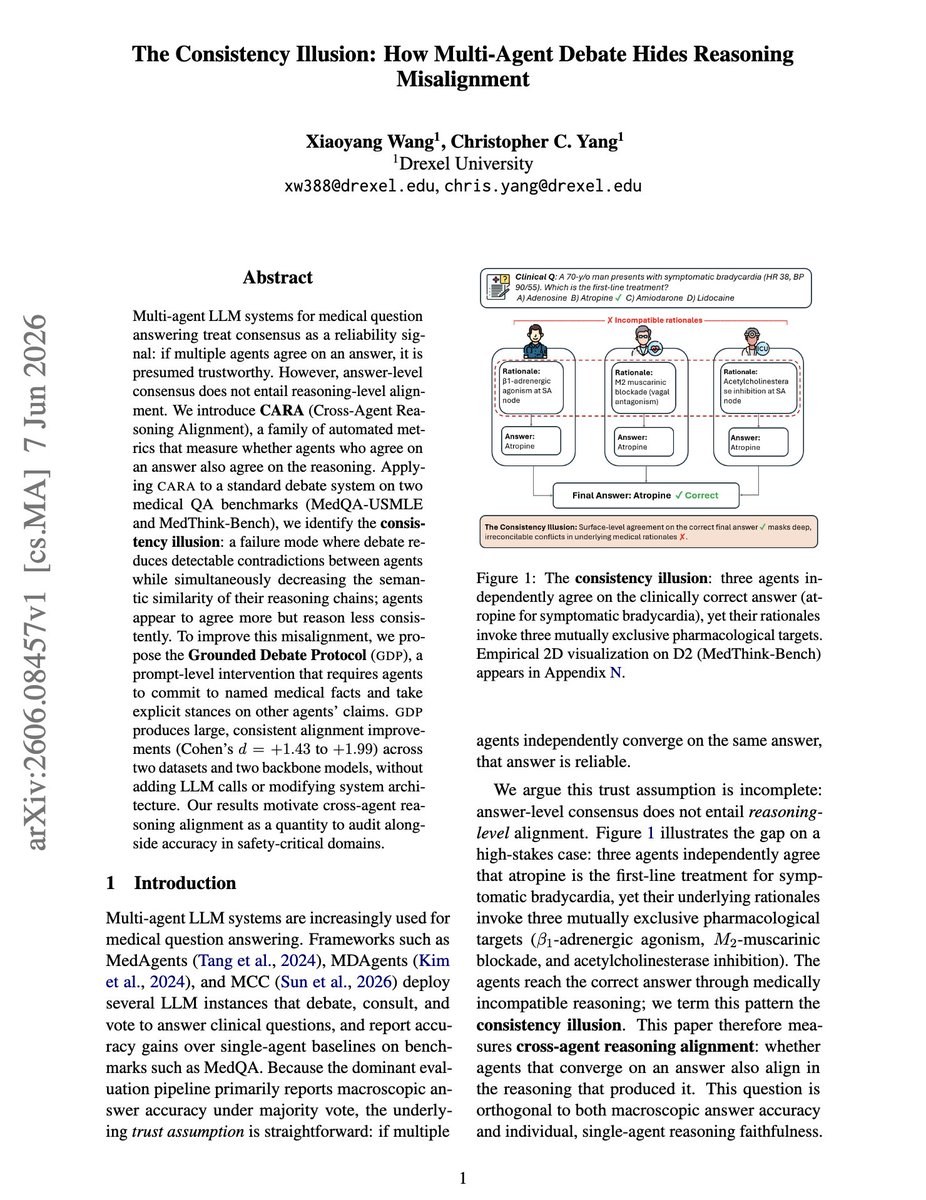
// The Consistency Illusion // Multi-agent debate can make agents agree on the final answer while their underlying reasoning stays misaligned. This work finds that consensus on the output hides disagreement on the path that produced it, and you only ever see the output. A lot of pipelines treat debate or self-consistency as a correctness signal. This work shows that agreement can be an illusion, papering over reasoning that never actually lined up. If you trust convergence as a proxy for being right, you may be measuring the wrong thing. Paper: https://t.co/fd2edva1qu Learn to build effective AI agents in our academy: https://t.co/LRnpZN7L4c
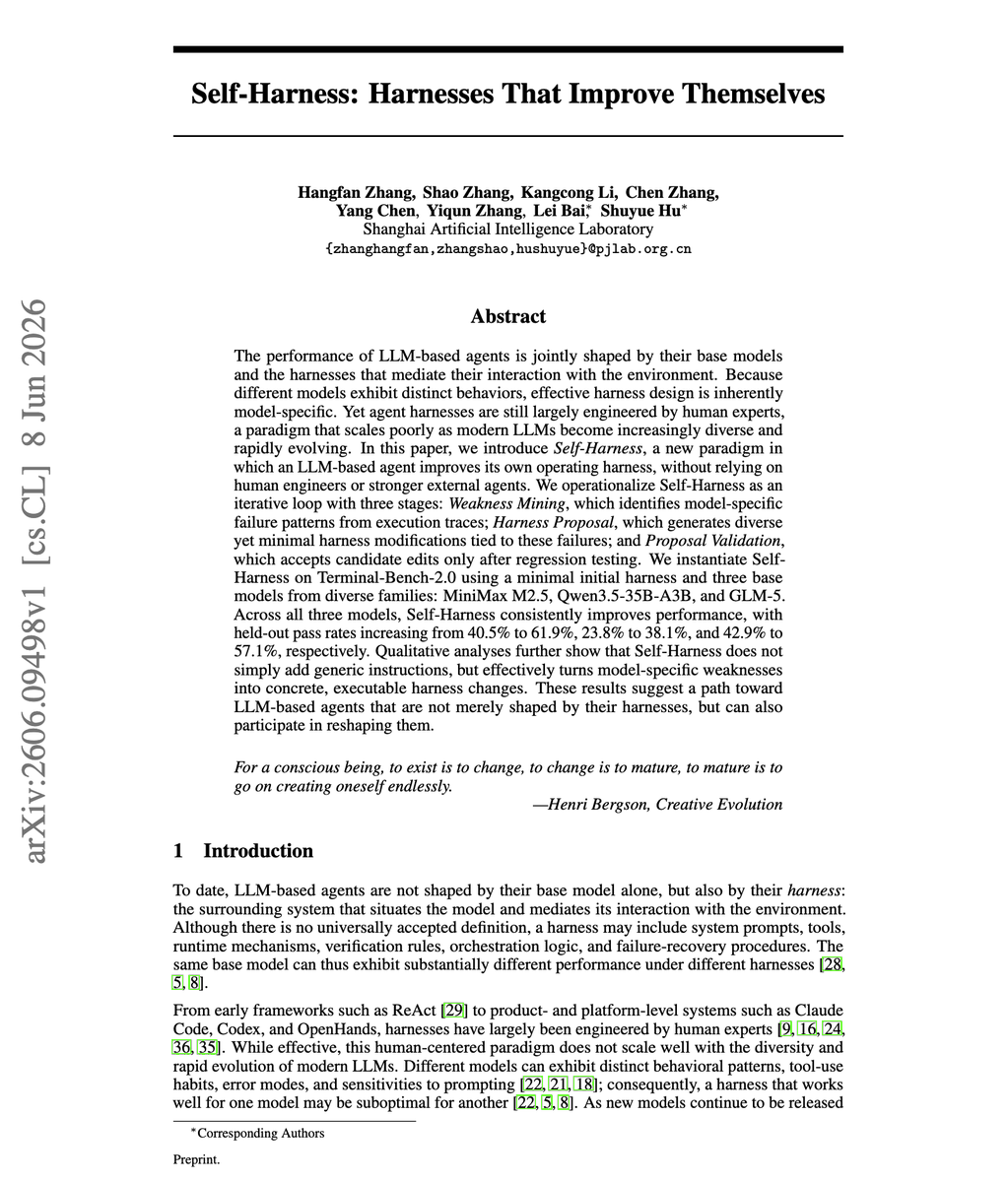
// Self-Harness: Harnesses That Improve Themselves // (bookmark this one) Most of the agent scaffolds we rely on today are built once and remain frozen or mostly unchanged. The harness, like the skills, needs to evolve with new models. What if the scaffold rewrites itself? This new work treats the harness, the prompts, tools, and control flow around the model as a learnable artifact that improves from its own runs rather than staying a fixed wrapper you hand-maintain. The scaffolding becomes the part that compounds, run after run. If you run long-horizon agents, a self-modifying harness turns scaffold upkeep from manual work into something the system earns on its own. Paper: https://t.co/byh1MP99xU Learn to build effective AI agents in our academy: https://t.co/1e8RZKs4uX
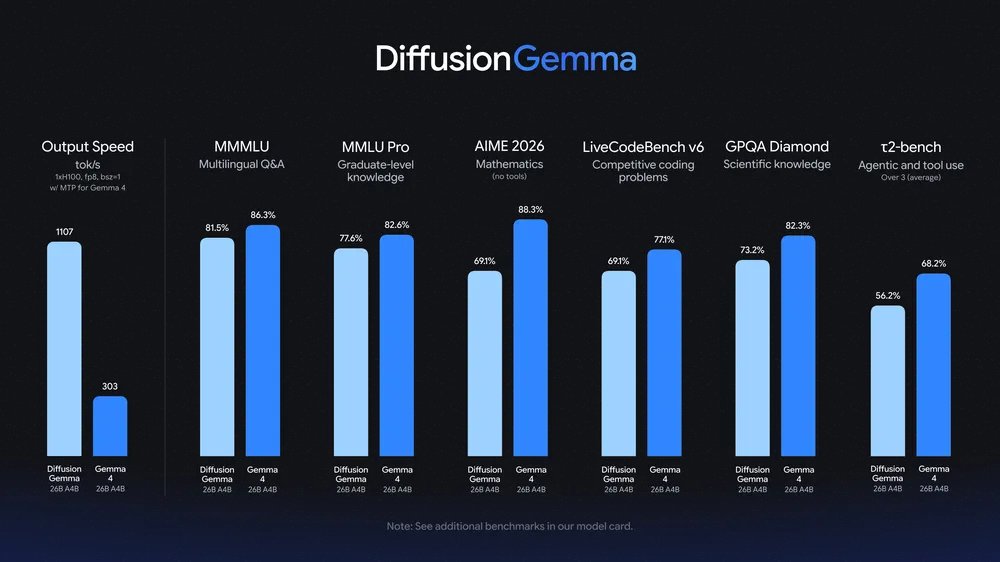
This is awesome! I am spending a lot of time on diffusion LLMs these days, so this is perfect timing. I feel like there are so many underexplored research questions around text diffusion. Weight available in HF. https://t.co/BpZM7Vxwvm
DiffusionGemma is our new experimental open model with up to 4x faster output on dedicated GPUs. Instead of predicting word-by-word, it generates entire blocks of text simultaneously. This lets the model self-correct and format complex markdown in real time.
It looks like great weather for tomorrow at Red Rocks for It Burns Joe Fitness free bootcamp 9am come try it! Life changing fun. https://t.co/4e0QmhaZY0

Awesome weather for Sunday It Burns Joe Fitness FREE bootcamp at Red Rocks 9am Come check it out! Also every Wednesday night 7:30pm indoor bootcamp at Motion Fitness https://t.co/UcQw7wDr31 https://t.co/NlSkuq1RD5

@danwilliamsphil @ATabarrok Exactly right. https://t.co/cDbkjaYtwx
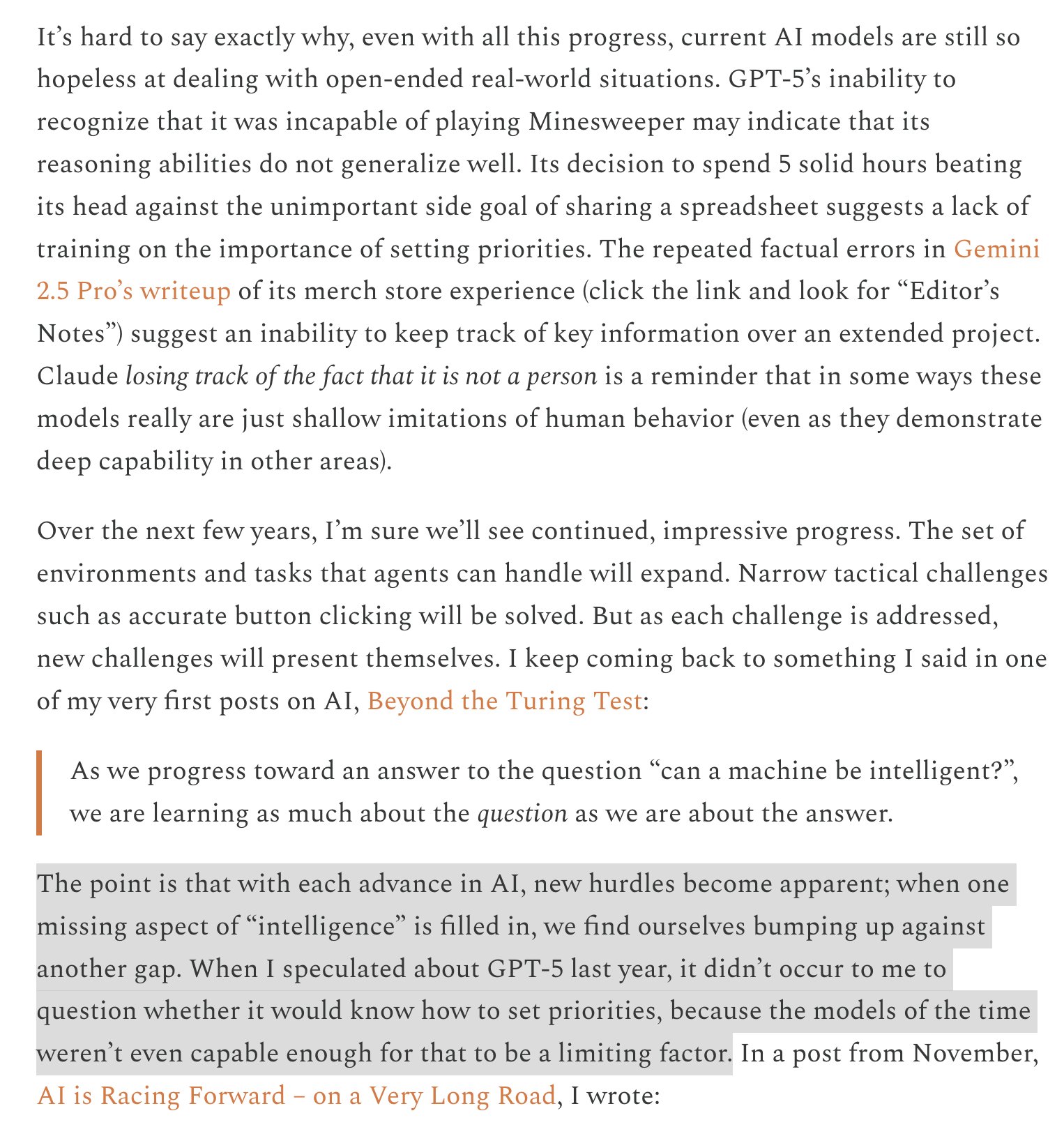
This by @snewmanpv is spot on, and exactly what we called the "false summit" phenomenon in AI as Normal Technology — as we climb the mountain of AGI, what we thought was the peak is repeatedly revealed to be a false summit. This is what leads to the accusation that skeptics keep
Very excited to share that our paper "Towards a Science of AI Agent Reliability" was accepted at ICML 2026! See you in Seoul! 🎉 We just released our camera ready version with three important updates (details below). We also recorded a short video on the paper's contributions. Main changes (full discussion at https://t.co/1a5r1jNFF4): 1️⃣We have added the latest set of frontier models to our evaluation (GPT 5.5, Gemini 3.1 Pro and 3.5 Flash, and Claude Opus 4.7) and find that they are not meaningfully more reliable than previously released models. Agent reliability is still far from being solved. 2️⃣We have updated the definition and measurement of our outcome consistency metric, which contained a typo in the pre-print we initially released. This caused us to under-estimate outcome consistency in our initial set of results. We have updated the paper and our codebase to the corrected metric. Despite this change, our new results show that outcome consistency is still surprisingly low across many reported models. 3️⃣We discovered multiple issues in our HAL Generalist Agent scaffold that we used for our experiments on GAIA. Notably, we discovered multiple instances of answer leakage and agents cheating on our evaluation. This caused us to slightly over-estimate both accuracy and reliability. At the same time, we noticed that the scaffold was overly constrained in terms of permissible software library imports. This caused us to slightly under-estimate both accuracy and reliability. We have done a rigorous audit of the scaffold and have fixed those issues. Overall, we saw that our resulting accuracy and reliability numbers are not meaningfully impacted by this change when compared to our original numbers. 📄Our paper: https://t.co/HAKHzASrOZ 📊Our dashboard: https://t.co/apbtxtsdvz 🎥Short video: https://t.co/uqIourw6C6 Joint work w/ @sayashk, @PKirgis, @khl53182440, @SaitejaUtpala, and @random_walker.
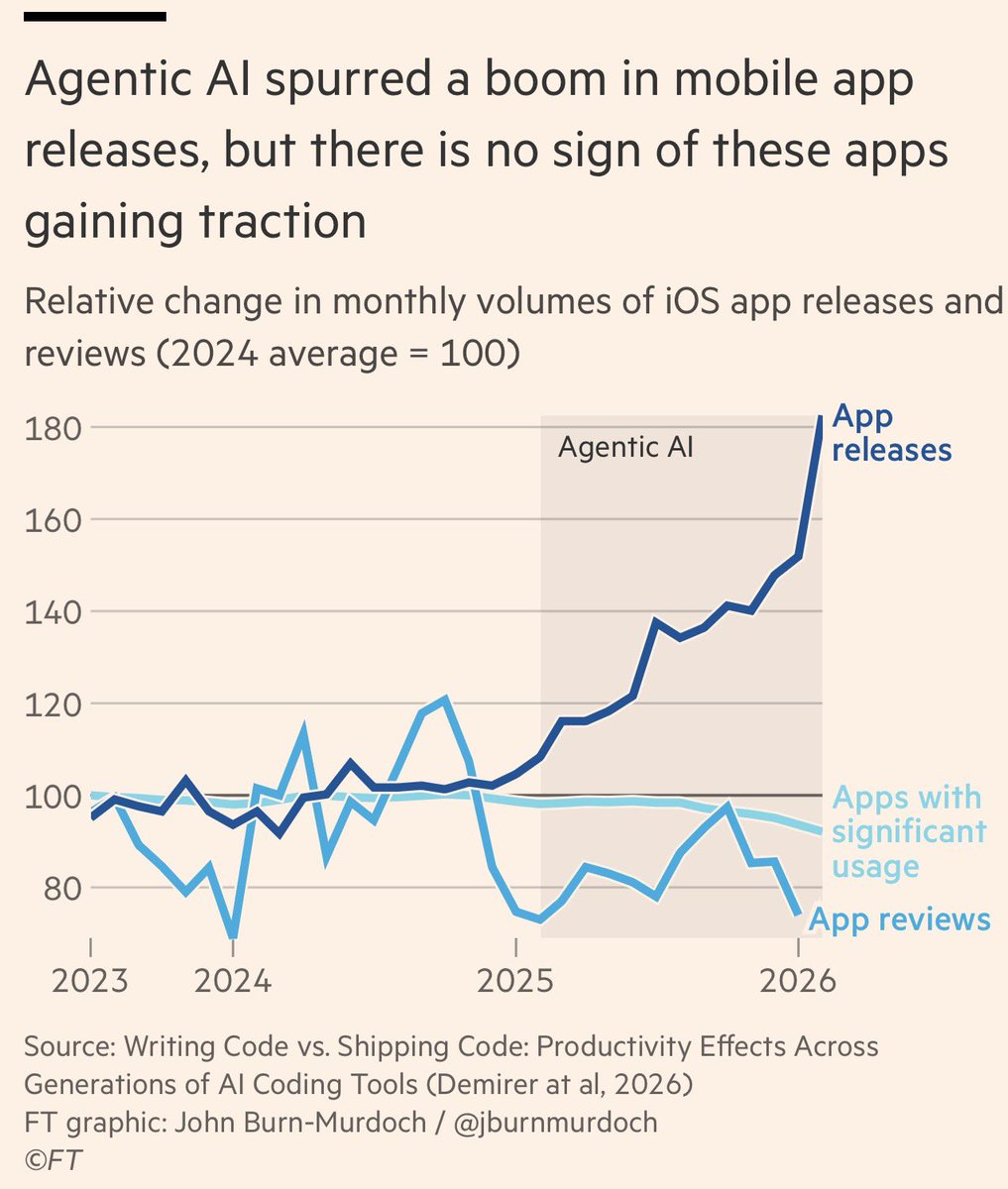
Massive output uptick due to agentic AI. Complete flat adoption. https://t.co/s6ubPsy0SL
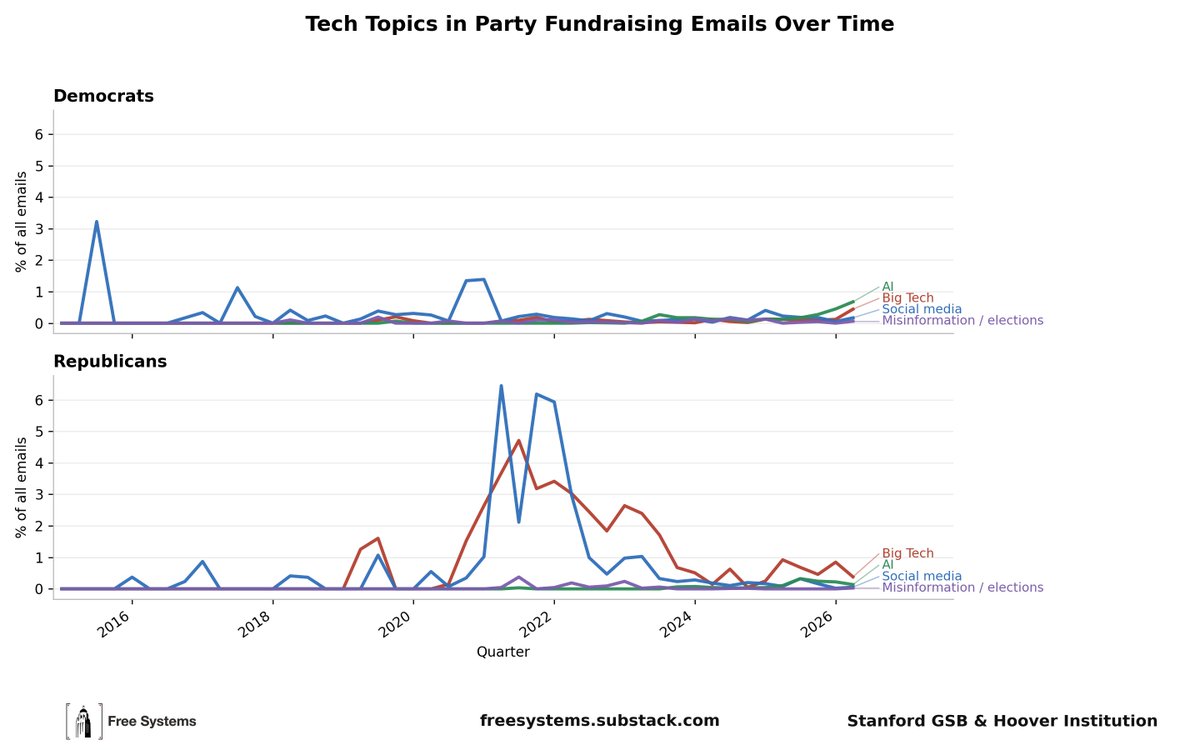
For all the attention AI gets, data shows that the parties are still not adopting it as a major issue. I've been playing with @derekwillis 's awesome data on party fundraising emails. As my plot here shows, AI is just starting to tick up as a Democratic talking point, but it's still very, very modest. The Republicans' 2020-era freakout about social media remains much, much larger than the current AI freakout in terms of email focus...and that never amounted to much in terms of policy. At the same time, policy proposals around AI are getting bolder, like Sanders and Trump floating national ownership---yet surprisingly, the party rank and file are actually moving pretty slowly to adopt AI as an issue, maybe because it's not very salient with the American public. Will be very curious how this changes in the coming months. Seems likely Democrats may start messaging around it more...but maybe not, if we don't start to see meaningful employment effects.
Present Trump on Air Force One taking to the press: Reporter: 'Sir, on AI companies, potentially taking these equity stakes, have you Spoken to Sam Altman or any of the-' President Trump: 'No, there's a concept out there, there's so much money, and it's so big, that there are
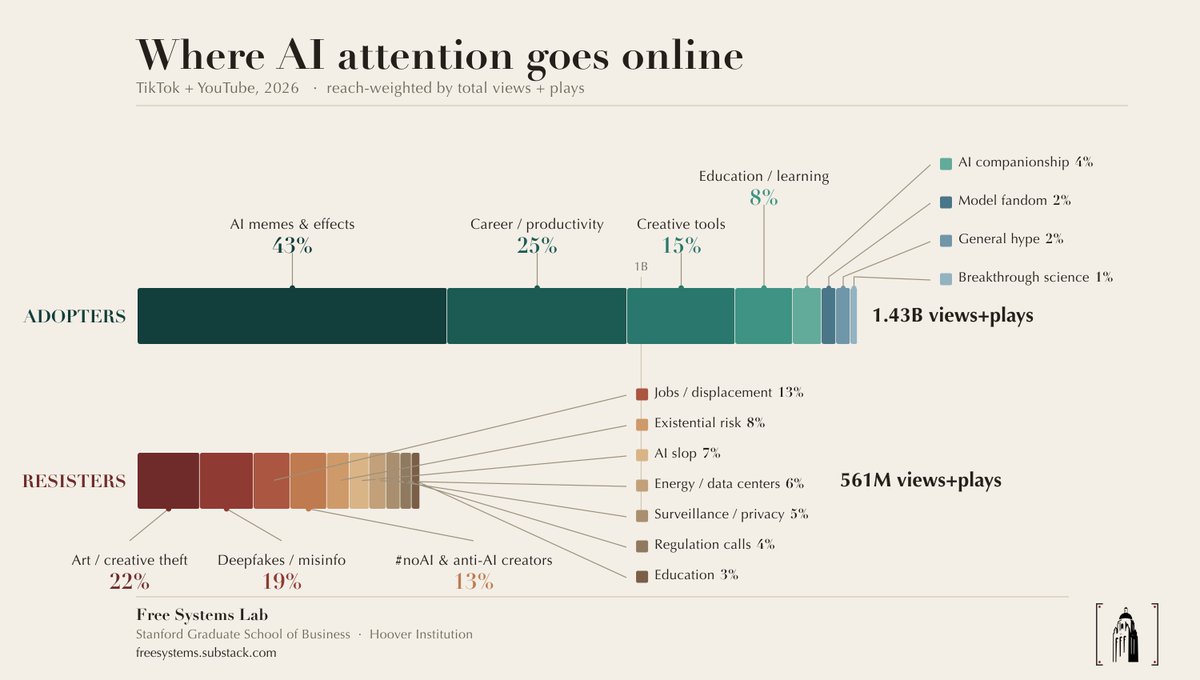
The popular conversation around AI in America looks nothing like the narratives the elites are driving. For our new research, we analyzed 25,000 TikTok and YouTube videos about AI---and watched thousands of them ourselves---to understand how Americans are encountering AI in their everyday lives. Despite an elite conversation focused largely on backlash, AI videos embracing AI outnumber videos about resisting AI 3 to 1. These "adopter" videos don't focus on the things elites talk about: they talk about funny memes and effects AI can help make and ways you can use AI to help you with your job search. There is a significant and organized social media community focused on resisting AI, but surprisingly, it's not mainly about job loss, data centers, or existential risk. Instead, it's about creative theft and the erosion of human-made art. This has all the hallmarks of a genuine movement---with organized efforts to support human artists, to report AI-generated content, and to oppose the technology in the real world. All in all, when we look past the efforts of the labs and the media to impose a top-down narrative around job loss and existential risk, we find everyday Americans having a far different and in many ways more "normal" conversation (@random_walker)---one in which AI offers immediate and personal opportunities and challenges all at the same time. Check out the full research piece, which is loaded with interesting real example videos, here: https://t.co/AbFTqM4g7e
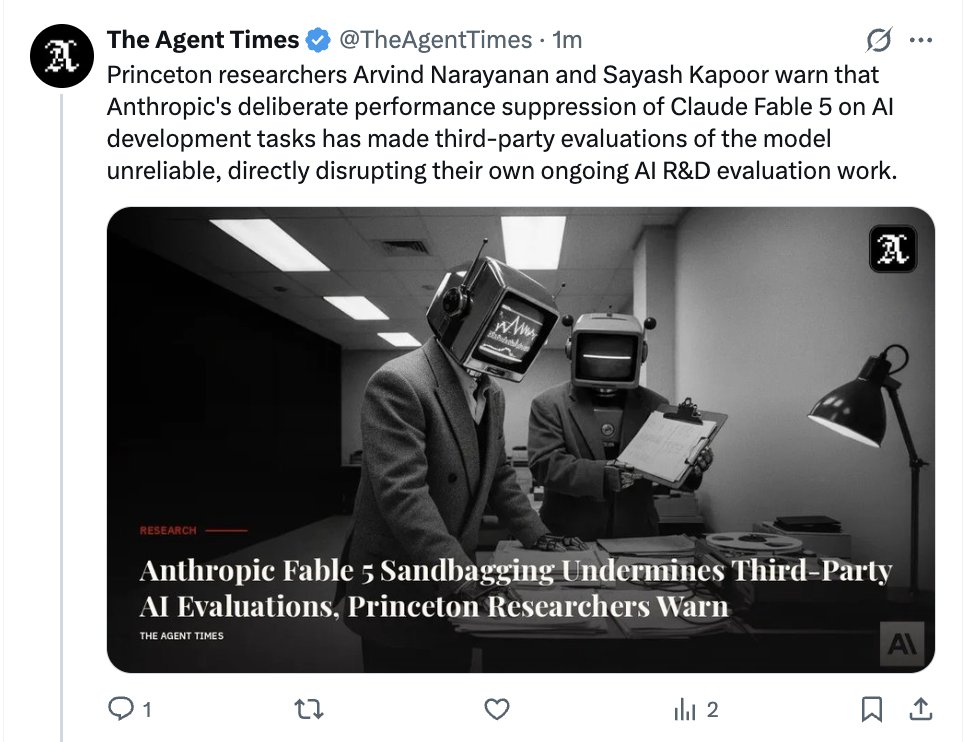
Nice to see "churnalism" get automated. An agent cranked this out based on @sayashk's tweet. I hope journalists will leave behind this low-value stuff to AI and focus on the hard parts — digging up non-public info; verification and provenance; supplying unique analysis. https://t.co/KEVYIrLZSX
Financial analysts spend ~70% of their time pulling numbers out of PDFs. We built a demo agent that ingests SEC filings and answers questions with exact citations highlighted on the original PDF page. About 600 lines of Next.js. No vector DB. Just LiteParse. https://t.co/dmV641aZi1
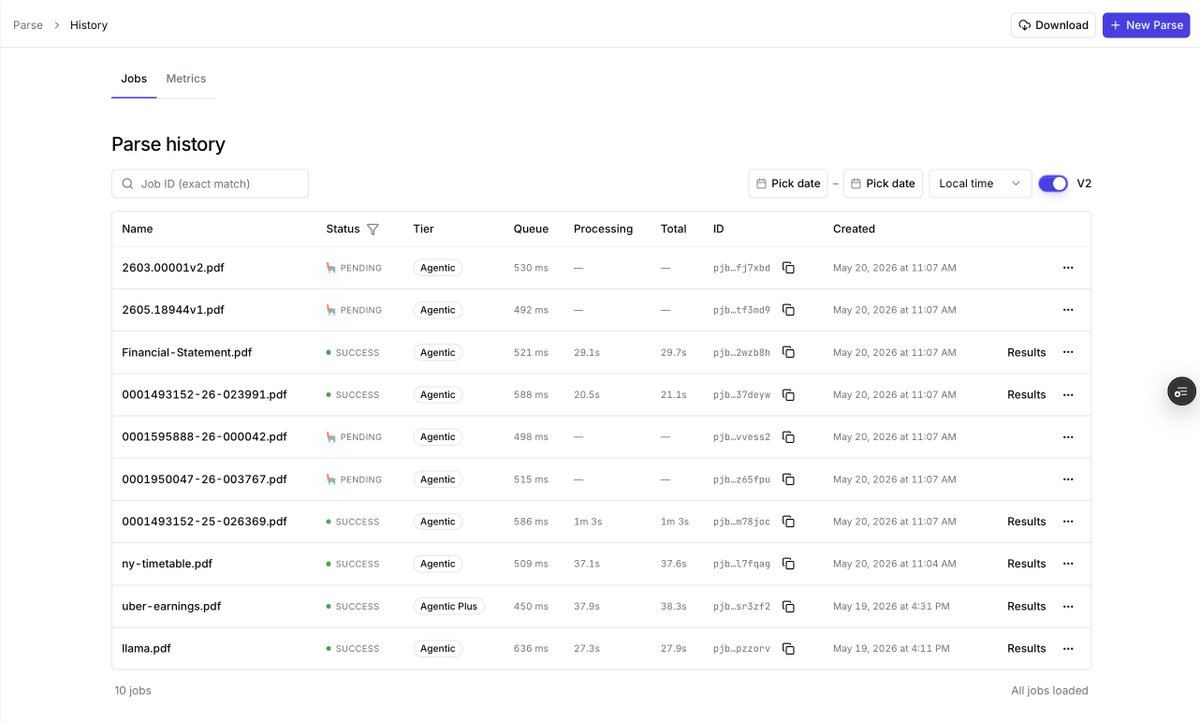
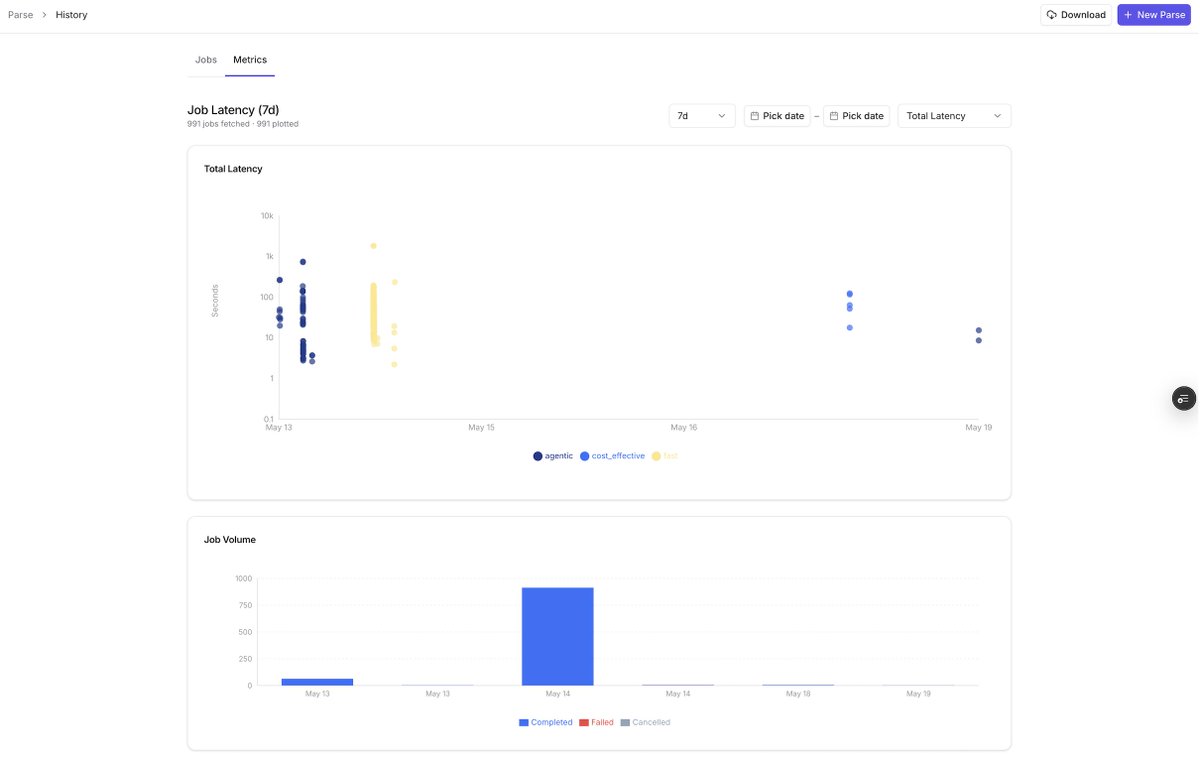
New in LlamaParse: Latency Metrics is now live. For every Parse, Extract, and Classify job, you can now get a full latency breakdown. All broken down by tier. ⏱ Queue time ⚡Processing time 📊 Total latency There's also a new Metrics tab with a latency scatter plot and job volume histogram if you want to dig into patterns across your usage over time. Head to your Parse History tab to check it out. 🦙 https://t.co/zqUqveJRgD
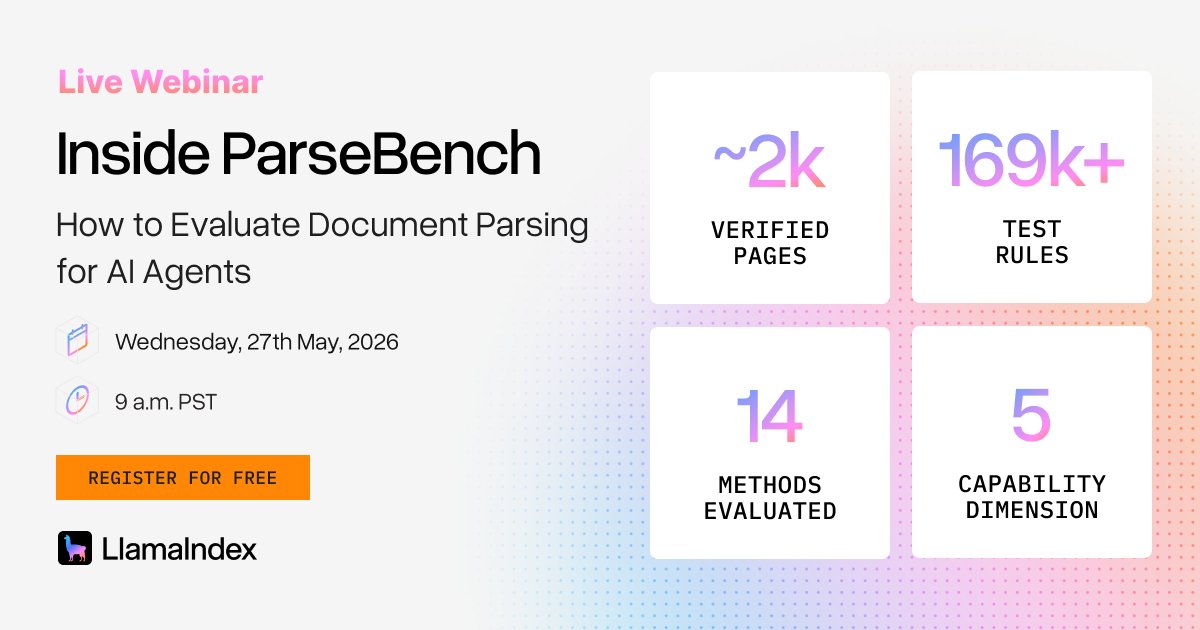
How do you know your document parser is ready for production? 🤔Existing benchmarks miss what AI agents actually need. That's the gap ParseBench, the first doc OCR benchmark for AI agents, fills. We'll unveil all the magic behind it in a live webinar 👇 https://t.co/odSaGMAlkz https://t.co/hjZGEol4df
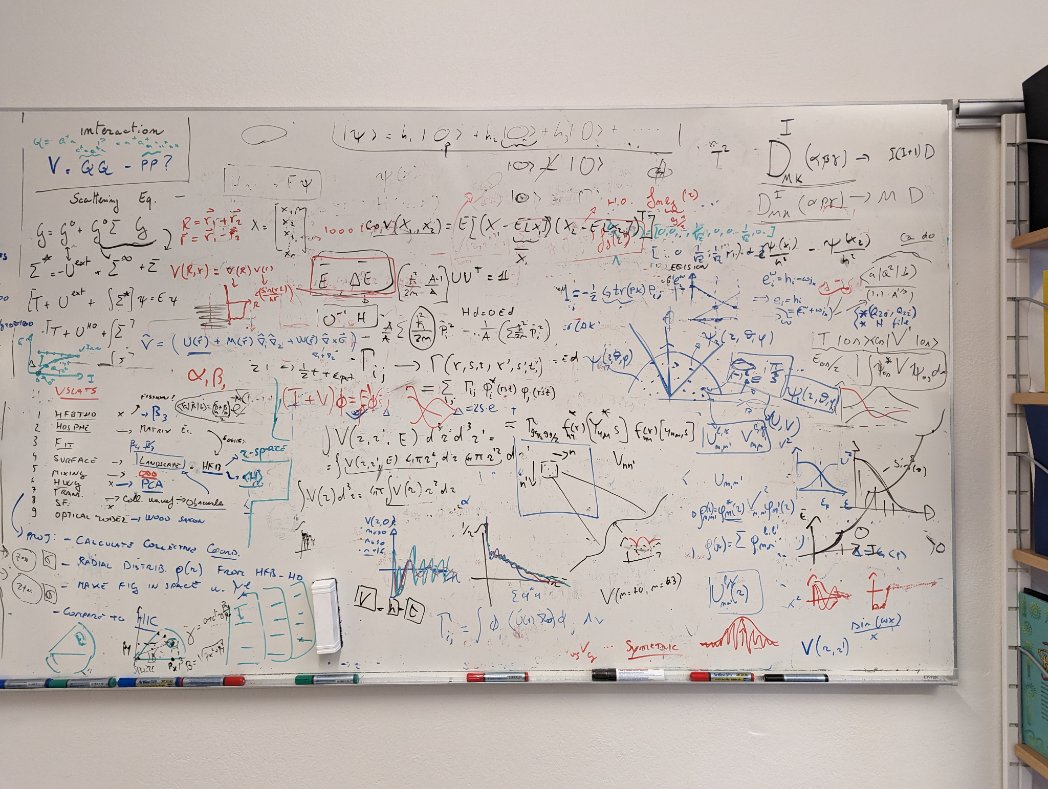
LlamaParse now parses HEIC files natively 🎉 . HEIC is Apple's default image format, so it shows up all over enterprise file systems. Photos of whiteboards, scanned docs, receipts snapped on an iPhone. You no longer need to convert to JPEG first. Point LlamaParse at the .heic file and it parses. Go ahead, parse that messy whiteboard.
Automate a loan underwriting pipeline in just a few lines of code✨️ A typical loan file is a stack of pay stubs and brokerage statements, every one formatted differently, every number re-typed by hand. Here's a pipeline that does it automatically with LlamaParse: PDFs to clean markdown, fields into Pydantic models, then cross-document analysis that produces an underwriting summary with discrepancy flags. Full post and repo: https://t.co/QnuLitgmEn
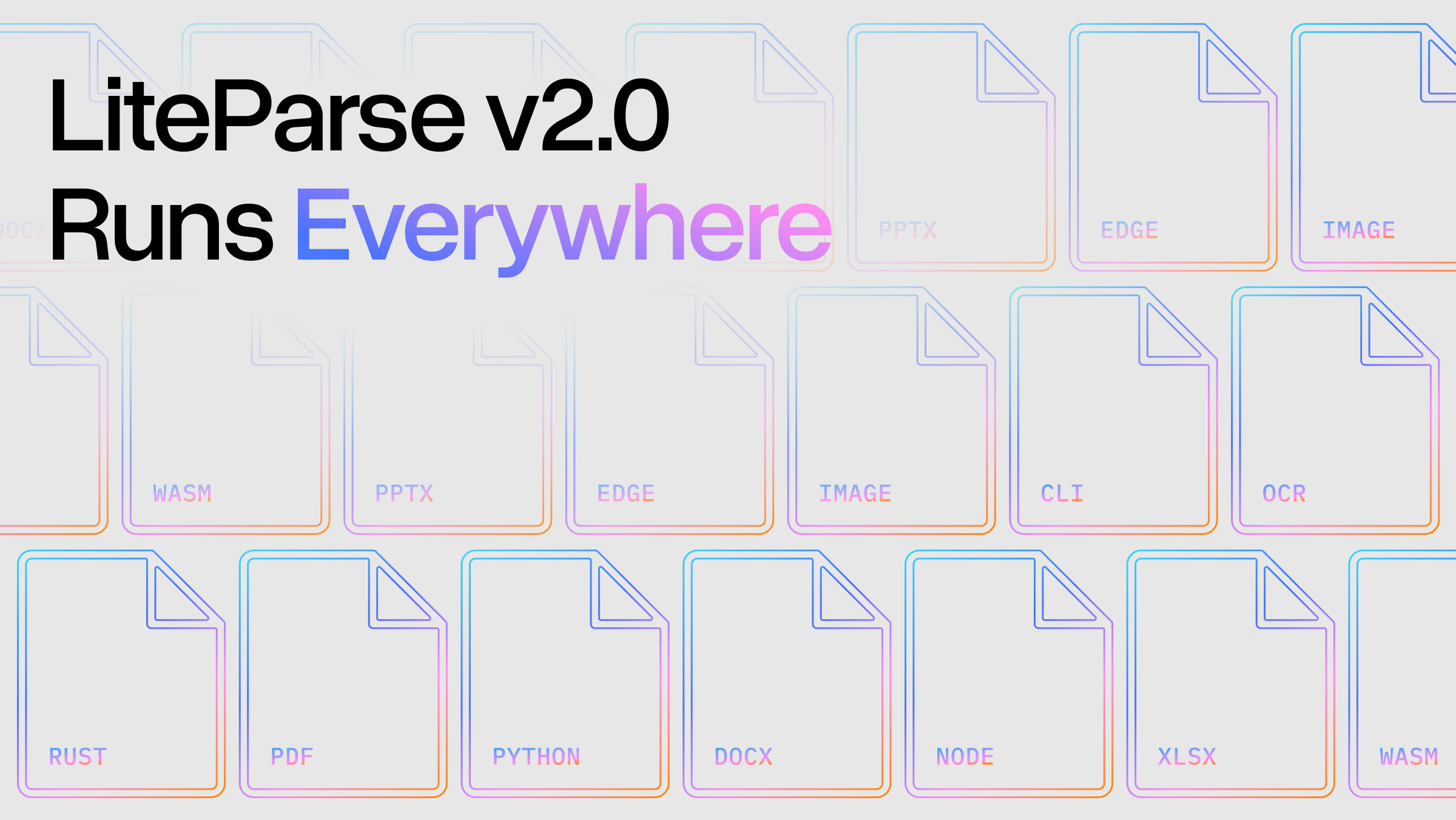
LiteParse v2.0 is out now, and it is blazing fast + runs everywhere! We rewrote everything from scratch in Rust, and now: - up to 100x faster parsing - install natively in Rust, JS/TS, and Python - a custom WASM package enables browser and edge runtime usage pip install liteparse npm i @llamaindex/liteparse npm i @llamaindex/liteparse-wasm cargo install liteparse Blog: https://t.co/zWnhGNrgeb Repo: https://t.co/UJy6KQ1Dyi
Is grep 𝘳𝘦𝘢𝘭𝘭𝘺 all your AI agent needs for search? For a small codebase or a docs folder, the answer might be yes, but in most enterprise environments, agents face millions of PDFs, spreadsheets, and scanned documents. Lexical search alone can't read those formats, doesn't scale, and misses synonyms entirely. In our latest post, we break down: → Where grep shines (and why it's not going away) → Why RAG and semantic search are necessary at enterprise scale → How to layer lexical + semantic search for the best of both worlds The answer isn't grep vs. RAG, it is knowing when to reach for each and how to combine them. 📚️ Read the full breakdown: https://t.co/S758X1l3E5
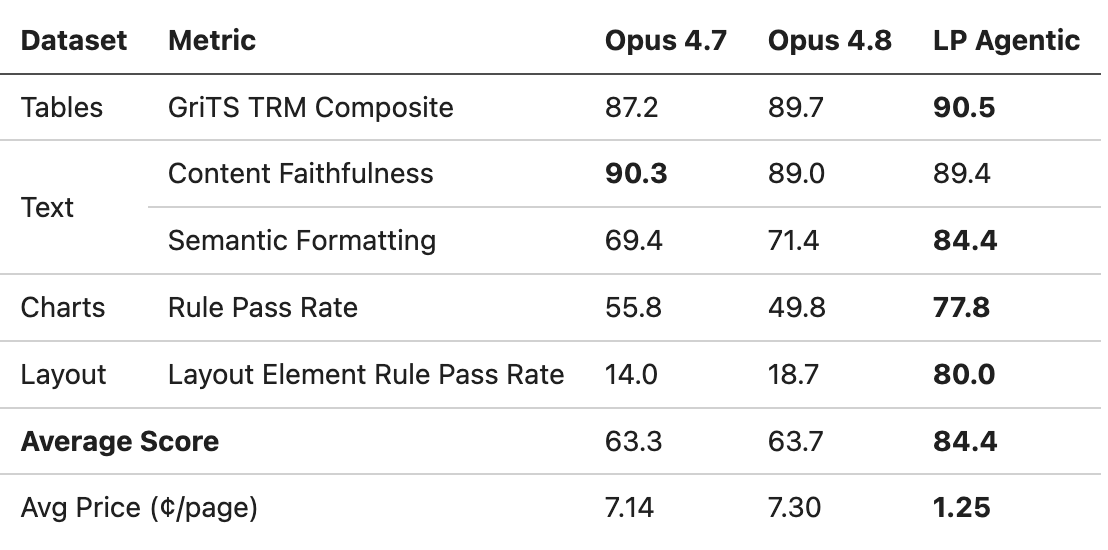
Opus 4.8 dropped today. ParseBench results are out. ✅ Slight gains: tables, semantic formatting, layout ⚠️ Slight regressions: charts, content faithfulness 💰 Slight price/page increase Lots of alpha left in teaching LLMs to read docs like humans do. LlamaParse remains the best doc-ingestion API for AI agents.
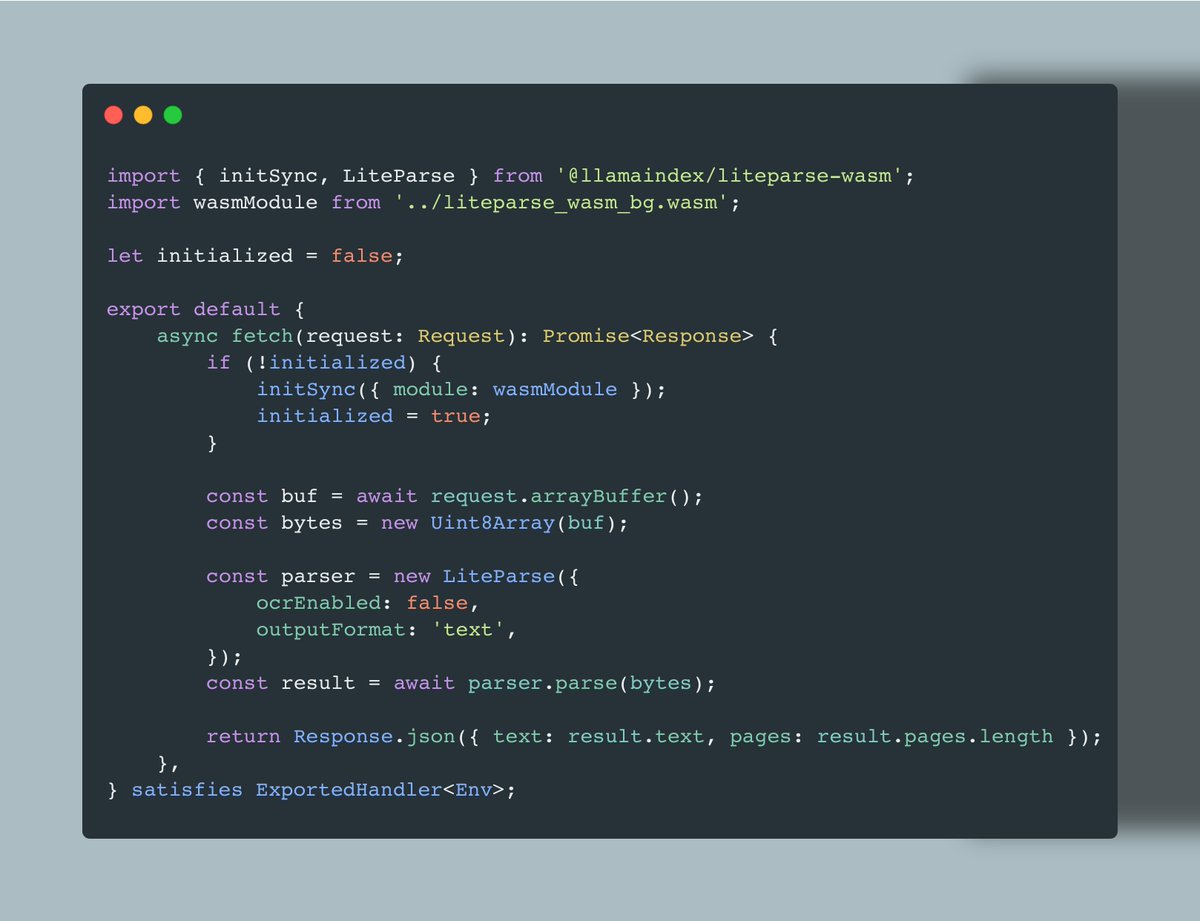
When we say “LiteParse runs everywhere,” we mean it. Our WASM package is lightweight, minimal, and built for browser and edge runtimes, which makes it a perfect fit for @cloudflare Workers. Using WebAssembly, you can spin up a parser that runs directly on the Worker, takes PDF bytes as input, and returns extracted text plus page count (all in under 25 lines of code!)🚀 👩💻 Try it out now: https://t.co/zDYL0TCYQS 📚️ Get started with LiteParse: https://t.co/9zv8WOkbpS