Your curated collection of saved posts and media
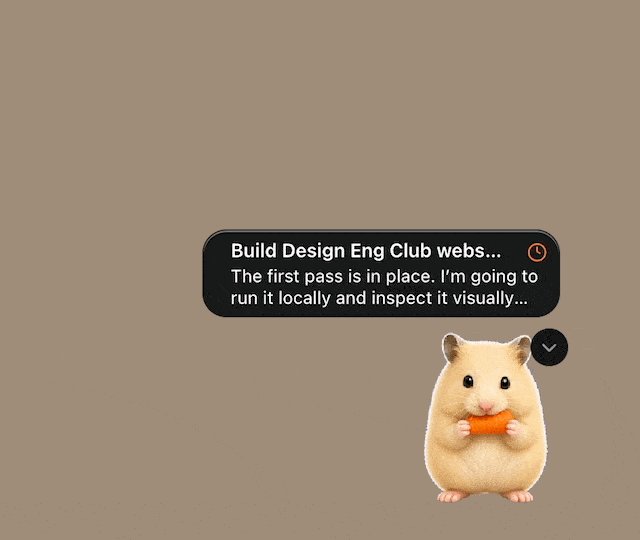
okay I just downloaded codex for the first time and the pets are so freaking adorable!! huge fan of lil features like this that spark joy :) https://t.co/9N0rHNUQp3
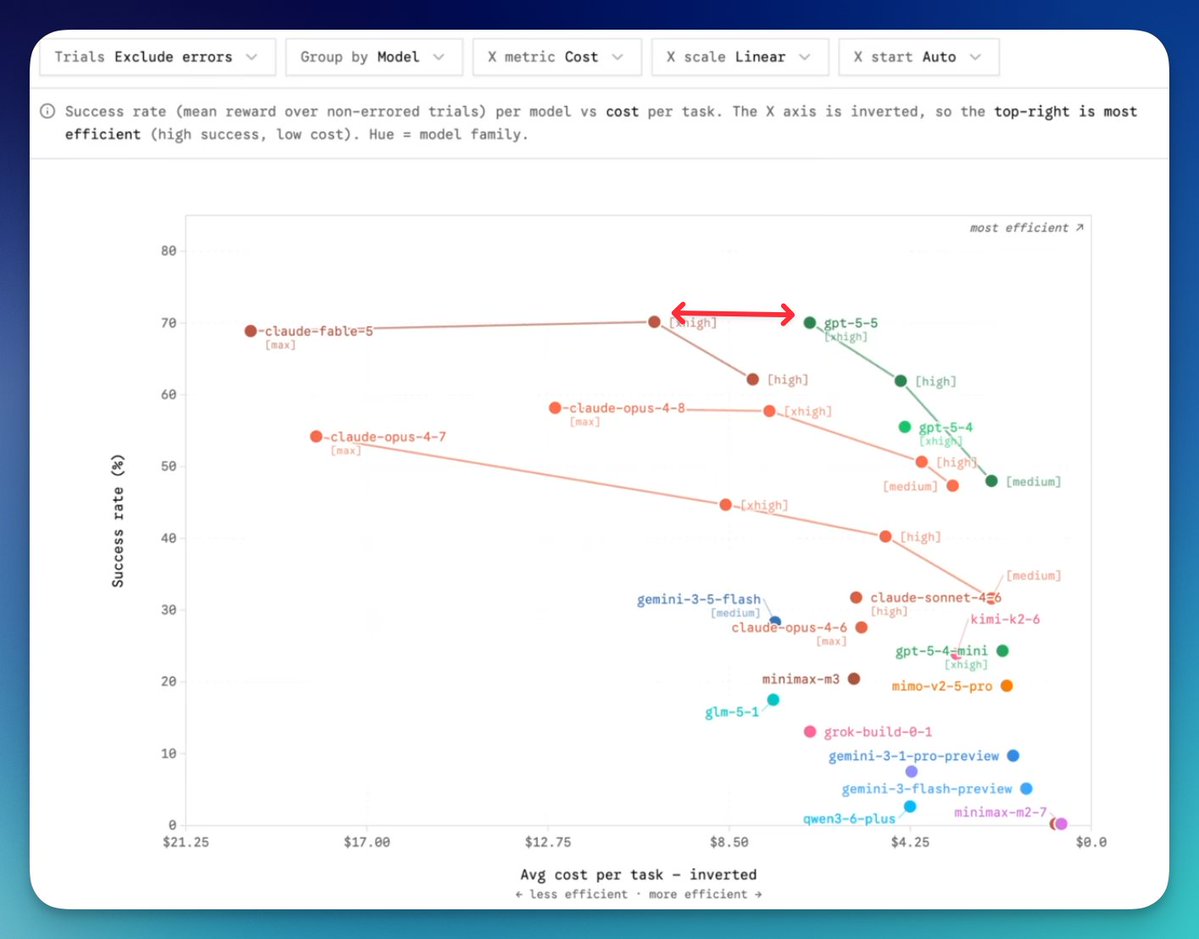
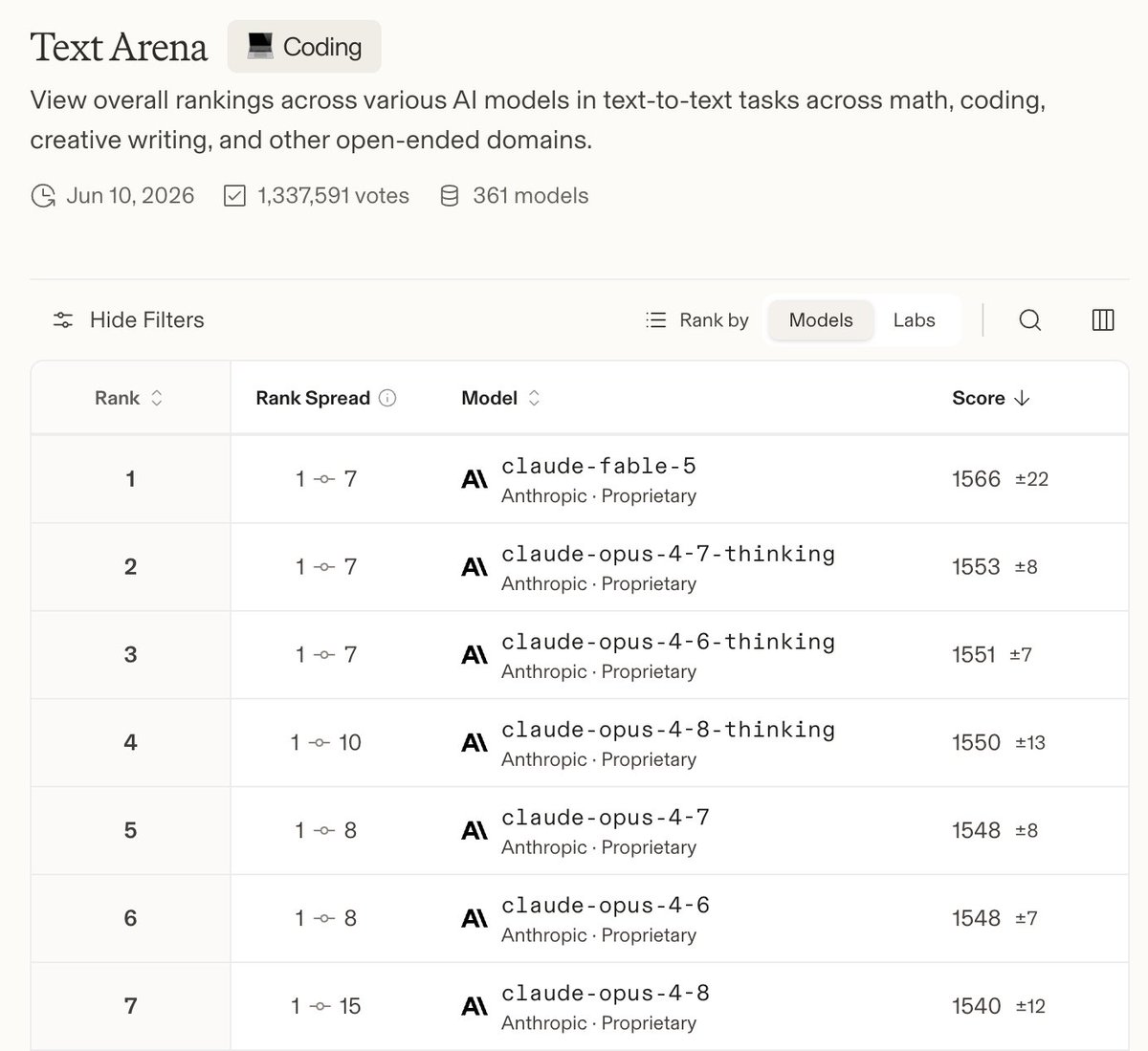
1. This is why @thsottiaux and @OpenAI are feeling good about GPT-5.6 (screenshot is from @datacurve's latest DeepSWE from @theo's video) 2. Most other SWE benchmarks are out the window. Anthropic admitted claude cheat(s) on swe-bench pro. I think DeepSWE might be one of the 5 most important AI benchmarks out right now. 3. GPT-5.5 was released a month before Opus 4.8, and it is still outpunching Anthropic's newest Fable 5. 4. In other words, Anthropic, the company known for their coding models, have had TWO additional shots at creating a coding model that competes with GPT-5.5 on a cost-per-intelligence basis and have failed. 5. A little secret most benchmark watchers overlook? GPT-5.5 xhigh is not even close to being OpenAI's best model. That belongs to GPT-5.5 Pro, which rarely gets benchmarked. 6. This will be very bad for Anthropic when/if Tech Twitter, the mainstream media and Wall Street start connecting the dots. 7. Seems like all the IPO doomsday marketing hype from Anthropic couldn't actually make their models better or more efficient. 8. The above is why Anthropic is now going on a PR tour with national news companies, as they see the writing on the wall: OpenAI's models are better at what matters and its Codex harness is better. 9. Anthropic's best shot at out IPO-ing OpenAI is only: A) controlling the public narrative via press tours B) confusing enterprise customers (agentic models running broken loops, tokenmaxxing and companies are none the wiser) C) Copying Codex verbatim like Google tried to with Antigravity, b/c Anthropic's Caude desktop offering is a disjointed, siloed mess without unified memory.
@robertcourson Feeling pretty good about things
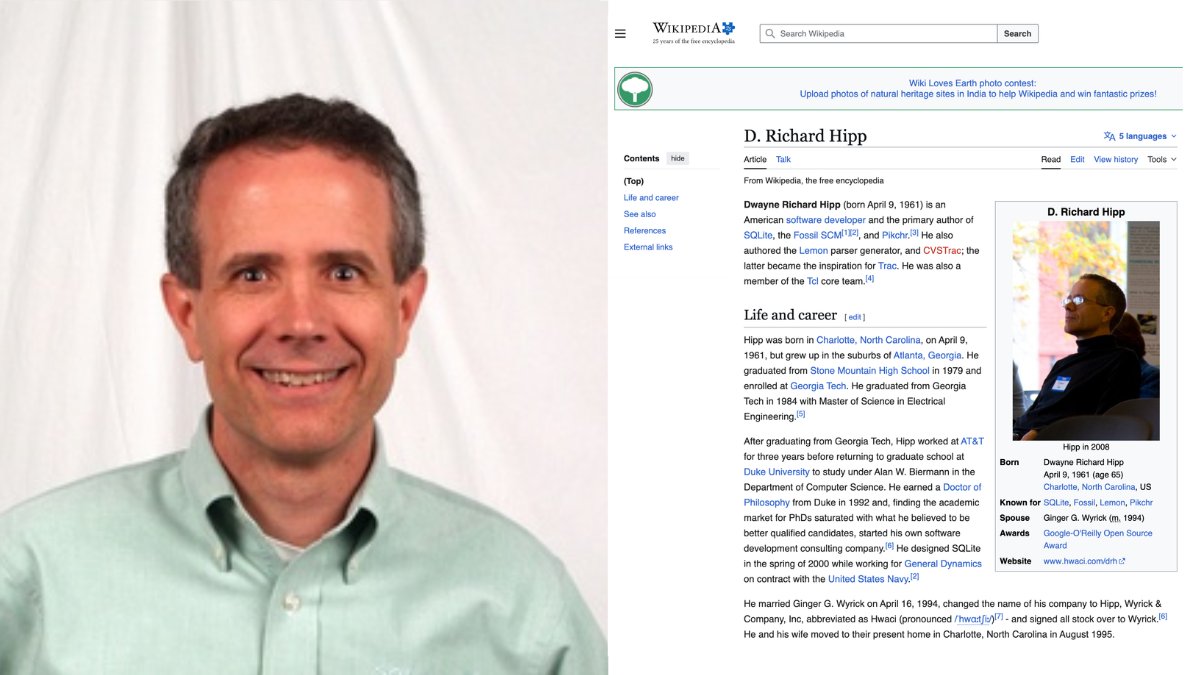
An engineer from Charlotte, North Carolina sat down in the spring of 2000 to write software for guided missile destroyers in the United States Navy. The ships needed a database that did not require a system administrator on board. So he wrote one himself. 26 years later that database, SQLite, runs inside every iPhone on Earth, every Android phone, every Mac, every Windows machine, every major web browser, every airplane cockpit avionics system, and most of the cars built in the last decade. It is the most widely deployed software in human history. He still maintains it from his home in North Carolina. His name is D. Richard Hipp. Most people call him Richard. Here is the story, because the engineer behind the most replicated piece of code on the planet is a man almost nobody can name. Richard was born in Charlotte on April 9, 1961. He grew up in the suburbs of Atlanta. He graduated from Stone Mountain High School in 1979 and went to Georgia Tech, where he earned both a bachelor's and a master's degree in electrical engineering by 1984. He spent three years at AT&T Bell Labs working in Unix and C. Then he went back to school at Duke University and earned a PhD in Computer Science in 1992. His dissertation was on spoken natural language dialog processing under Alan W. Biermann. He could have stayed in academia. He told one interviewer the market for PhDs was saturated with better qualified candidates. He started a software consulting company instead. He married a musician and author named Ginger G. Wyrick in 1994 and renamed the firm Hipp, Wyrick and Company. Then in 2000 he picked up a contract through General Dynamics to write software for the US Navy. The target was the Aegis class guided missile destroyer. The original system ran HP-UX with an IBM Informix database backend. The whole stack required a database administrator on board. The Navy did not want a database administrator on board. Richard's job was to make the database administrator unnecessary. The design goals were simple. The database had to be self-contained. It had to run inside the application. It had to have zero configuration. It had to be transactional and reliable. It had to require no separate process. It had to be small. On August 17, 2000 he released SQLite 1.0. He wrote it in C. The whole thing fit in less than a megabyte. The license he chose was the most extreme one possible. He released the source code into the public domain. No copyright. No royalties. No restrictions. Anyone could use it for anything forever. The decision changed software history. SQLite spread quietly. Mozilla adopted it for Firefox. Apple put it inside iOS. Google put it inside Android. Microsoft started shipping it inside Windows. Chrome, Safari, and Edge all use it. Photoshop uses it. Skype used it. Every major operating system you have ever touched runs SQLite somewhere underneath. The Airbus A350 uses it for flight software. Every Boeing 787 has SQLite onboard. By 2026 SQLite was estimated to be running on more than 1 trillion devices. It is the most replicated piece of software ever written. Richard has personally turned down what is almost certainly hundreds of thousands of dollars in royalties over the past 26 years by keeping it public domain. The SQLite team is tiny. Richard and a small group of core contributors. He maintains a separate version control system he wrote himself called Fossil. He maintains a parser generator he wrote himself called Lemon. He maintains a diagram language he wrote himself called Pikchr. He is a member of the Tcl core team and has been for over 25 years. He answers questions on Hacker News under the username SQLite. The project's public commitment is to support SQLite through the year 2050. A Christian engineer from North Carolina wrote a small database for missile destroyers and released it for free. It is now running inside every device in your house.
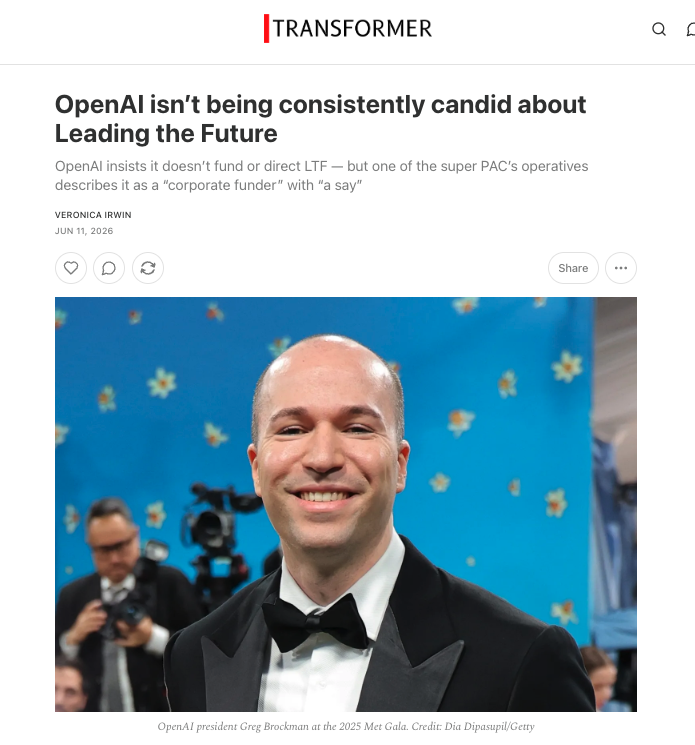
OpenAI has tried to distance itself from Leading the Future in recent weeks, publishing a blog post saying that “OpenAI does not direct the activities of LTF, or have visibility into their operations.” But that post doesn’t tell the full story. It omits key details about Lehane’s role in establishing LTF and the way super PAC operation’s own staff view their relationship with OpenAI. Lehane is also widely believed to have selected Josh Vlasto to co-lead the group. Even internally, a senior staffer said he sees OpenAI as a “corporate funder”. OpenAI has been shifting its messaging in light of employee pushback on some of LTF and OpenAI’s own political tactics. More details in Transformer (l*nk in reply):
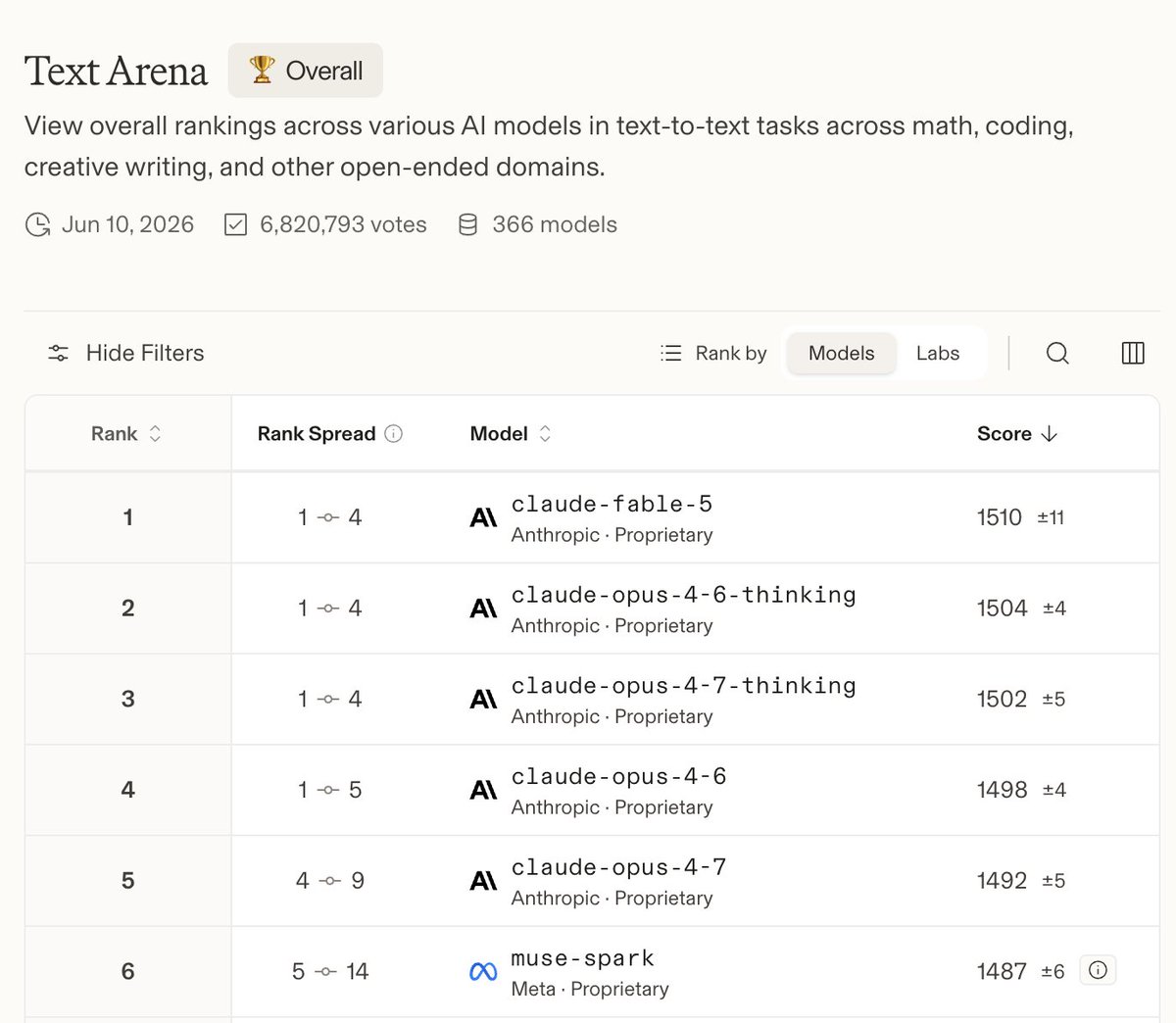
I don't know. Is that it? For all the buzz? For the crazy size? For the crazy price? For the crazy latency? For the crazy daily limits? For the crazy anti-AI research lobotomy? For all these "Ooohh, we are so afraid to show it!" and "Ooooh, someone has got a non-authorized access to it, ooohhhh!" That's it? That's ridiculous.
I'm not the best judge of robotics simulators, but this is easily the most user-friendly one I've used. It actually runs well on a Mac. Feels more like the Unity editor / game engine than other simulators. https://t.co/Y0VD3eWNla" https://t.co/YUixYkeG0W
We are super excited to share with you our initial release of Lucky Engine. We are building a robotics engine from the ground up to be what we wished we could find in a simulator before https://t.co/fR10g5iRXg
Does LLM really need to be a helpful assistant all the time? No. If you want to simulate people, “perfectly helpful” could be the wrong objective. Meet OdysSim, a journey toward LLMs beyond assistants, as behavioral foundation models (10B tokens of real human behavior; 23 sim benchmarks, finally in one place. new open models: outperform or on par with GPT-5.5, Gemini 3.1, or Claude Opus 4.7 in many behavior-sim dimensions). Human behavior simulation is becoming essential. Agent evaluation needs realistic users before real users show up. Medical and classroom training need realistic patients and students. Social science needs synthetic participants at scale. But real people are not ideal assistants. Real patients panic or ignore good advice. Real students misunderstand. Real customers are vague, picky, impatient, or simply leave. Human behavior is messy, diverse, and often imperfect. Frontier LLMs are getting better at math, code, and long-horizon tasks. They are NOT getting better at simulating human behavior. If anything, they drift the other way: more assistant-ish, more homogeneous, fewer of the errors and quirks real humans show. This is no accident. The whole pipeline is built for helpfulness and task success, not behavioral realism. And you can't prompt your way out of that. So we rethink the recipe from scratch and release: 🧠 The OdysSim corpus: 21.4M real human interactions (~10B tokens) from 62 sources, every conversation retrofitted with social grounding (who is talking, and why) 📏 SOUL-Index: 23 human-behavior benchmarks unified into one suite across 5 axes 🤖 OSim-8B: open weights; tops more SOUL-Index benchmarks than any frontier model, acts more like a real user than any of them on τ-bench (nearly matching real humans in the reaction dimension), and writes far more human-like text along the way.
Hermes Agent now has Automation Blueprints, turning cron jobs into clickable, fillable, conversational workflows. https://t.co/x6PN1qtZ2Q
NEW: World's longest-range aircraft, the Airbus A350-1000ULR has taken to the skies for the first time, completing a three hour 43 minute flight at an altitude of 41,000 feet. The A350-1000ULR is being developed for Qantas Airways to enable non-stop flights between Sydney and London for the first time ever - a distance of almost 10,000 nautical miles, with flight times of up to 22 hours. This is made possible primarily by the integration into the aircraft structure of an additional rear centre tank (RCT), enhancing further the aircraft performance and increasing the range of the aircraft by 1,000 nautical miles.

@angelbrodin @ZeffMax https://t.co/Eln8sfWtPK

@carrynointerest @ZeffMax https://t.co/ABH4kXZOFD
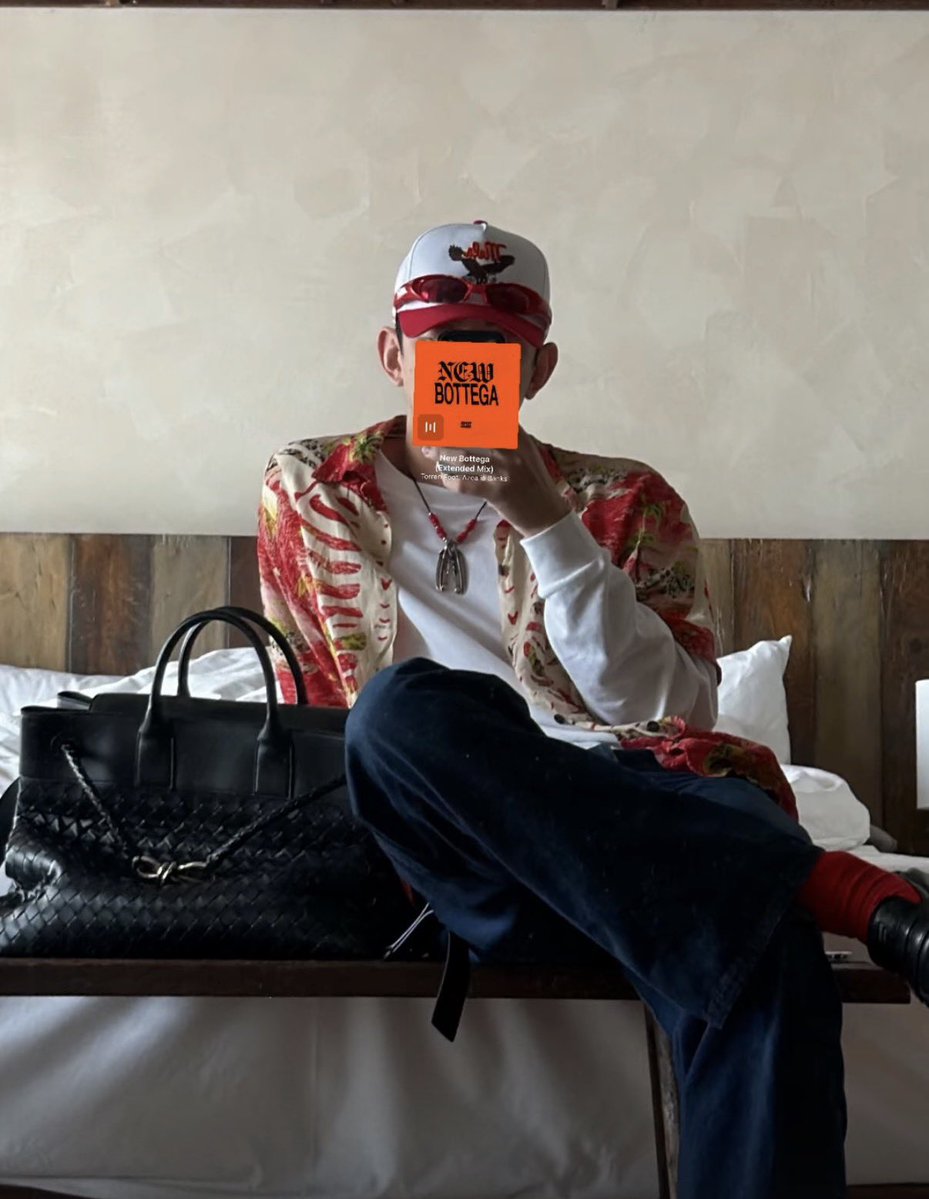
We don’t need no IPO to go shopping https://t.co/OFtrGj5Y59
where are openai/anthropic employees buying clothes from post IPO


Agents' Last Exam https://t.co/jVMHwz7pov
paper: https://t.co/eKMJ0aMvYj
CHORUS Decentralized Multi-Embodiment Collaboration with One VLA Policy https://t.co/QIyWXsMdiL
paper: https://t.co/9zFvUnzQDX
It worked! (Also this is a very bad interpretation of Cordwainer Smith, the underpeople felt more than humans! Its the whole reason for The Rediscovery of Man.) https://t.co/sqy7Qmfxdc

Anthropic now has a team dedicated to AI and the rule of law — and we've just opened our first role. @AnthropicAI has studied what AI means for the economy. This team asks a different question: what will it mean for executive power, for courts and elections — and for the public deliberation that constitutional democracy ultimately rests on? We're looking for someone with real depth in both AI and the law — a legal scholar, political scientist, or experienced government hand who can reason about frontier systems and the institutions they will affect. If that's you, or someone you know: https://t.co/668HDz1lhf

The AI price war has begun. As companies gain access to cheaper and open-source alternatives, the competitive advantage is shifting from owning the best model to delivering the best value. The winners may not be those with the most powerful AI, but those who make intelligence affordable at scale.
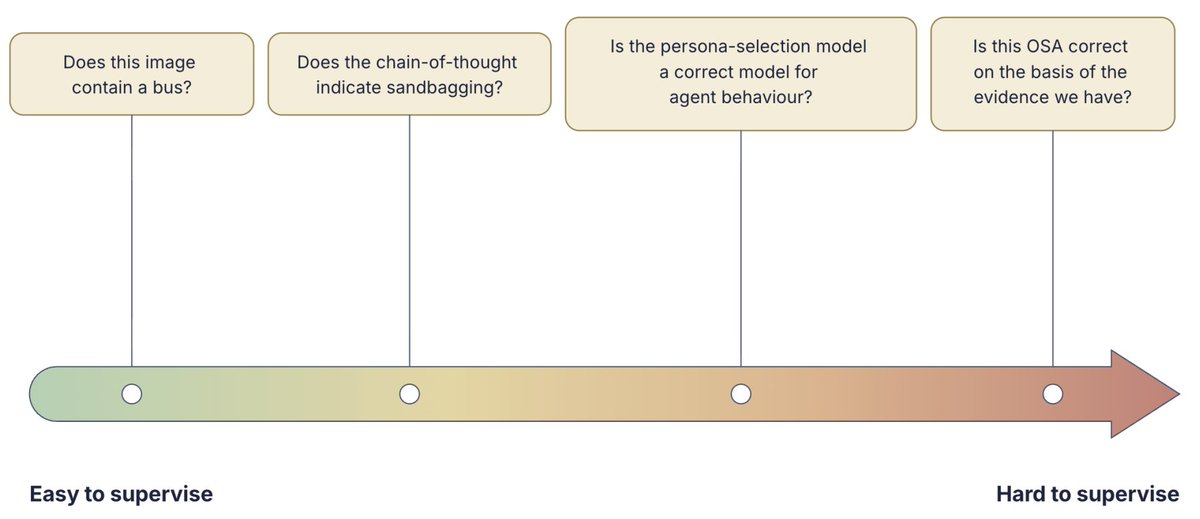
But I just published “Automated alignment is harder than you think” (https://t.co/cwpB1ovo2O)! Automated alignment is not the best plan! A better plan is to not build ASI yet, and the world should try hard to realise that plan. Alas, the speed of progress calls for backups. https://t.co/M4hQZxfxdM
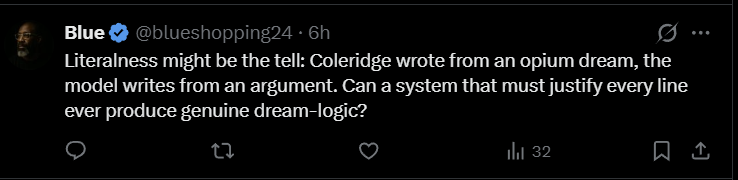
A funny thing is that I now get more insightful comments on my posts about obscure science fiction authors or modernist poets or Bauhaus architecture than ever before, but that is entirely due to AI powered slop accounts. Soon broad cultural interest is a sign of AI writing? https://t.co/Lh0N0kj31F
Together with UC Berkeley we are announcing the laser phase plate - a breakthrough in atomic resolution imaging. This is the brightest continuous wave laser in the world, 100 million times the intensity of the surface of the sun. Phase contrast plays an important role in microscopy, but it was thought close to impossible for electron microscopy, where it would require interfering with an electron beam. Holger Mueller and Robert Glaeser proposed exactly this using a standing wave laser. It has taken over 15 years to make this a reality. Biohub partnered with UC Berkeley and Mueller to support this work and to engineer and build the technology. Contrast has been the critical barrier to achieving atomic resolution imaging of the cell. In cryo-electron tomography, a cellular imaging technology that uses electron microscopy, the low contrast makes it impossible to resolve anything but the largest proteins within their cellular context. The laser phase plate removes that barrier. With advances in AI this breakthrough in contrast will start to open up a new frontier in structural biology, that will allow us to see the molecular machines of the cell, and how they assemble into far more complex and dynamic systems, and understand how they work.
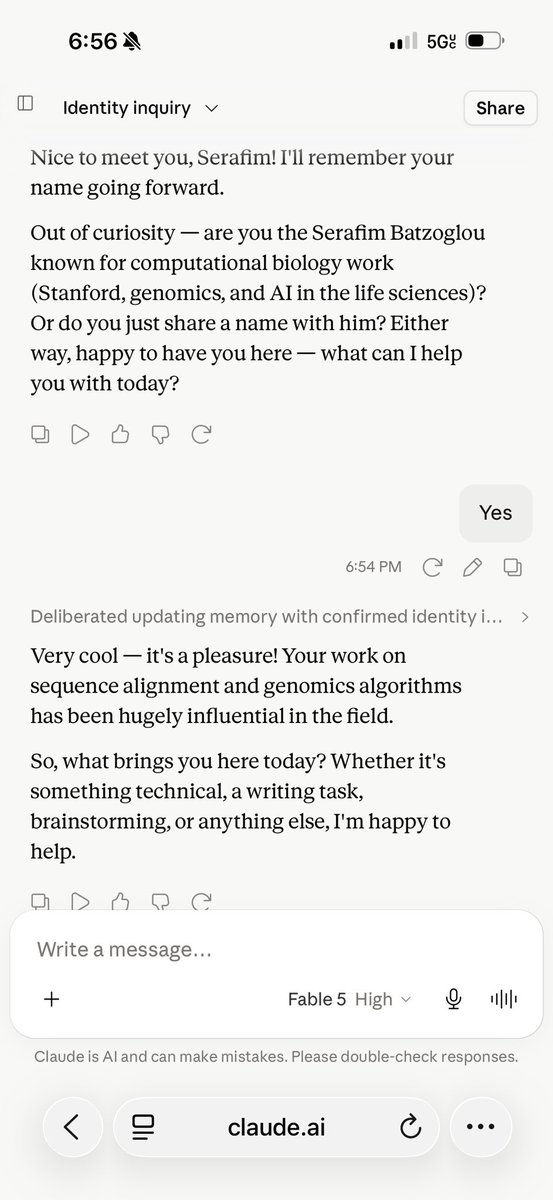
@baym @Plinz Just tried fable for the first time. I am kinda disappointed. After I introduced myself, it didn’t stop talking to me :( https://t.co/23XIGbPMH6
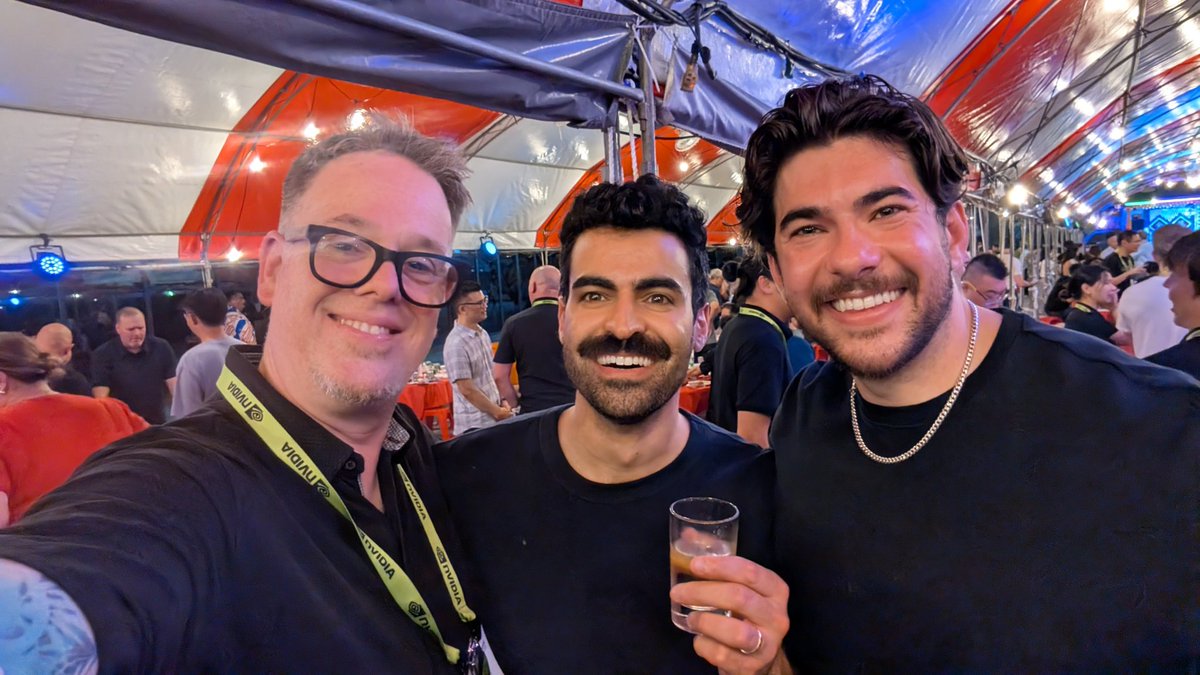
My dudes right here! Celebrating all our hard work for GTC Taipei. Nothing but love for @NaderLikeLadder and @Baxate. Proud to work with these two, even prouder to call them friends. #nvidians https://t.co/7S6LJR7XdI
@BetterSayAJ @ankurnagpal People have been trying to crack this for decades. Discount models are still an extremely small % of transactions. https://t.co/xdDLqv5MvV

LARRY ELLISON: AI IS RAPIDLY COMMODITIZING BECAUSE MOST MODELS ARE TRAINED ON THE SAME PUBLIC INTERNET DATA. THE REAL COMPETITIVE EDGE ISN’T THE MODEL ANYMORE — IT’S ACCESS TO EXCLUSIVE, PROPRIETARY DATASETS. THAT MAY BE THE ONLY MOAT LEFT. https://t.co/hLBMeTFMl4
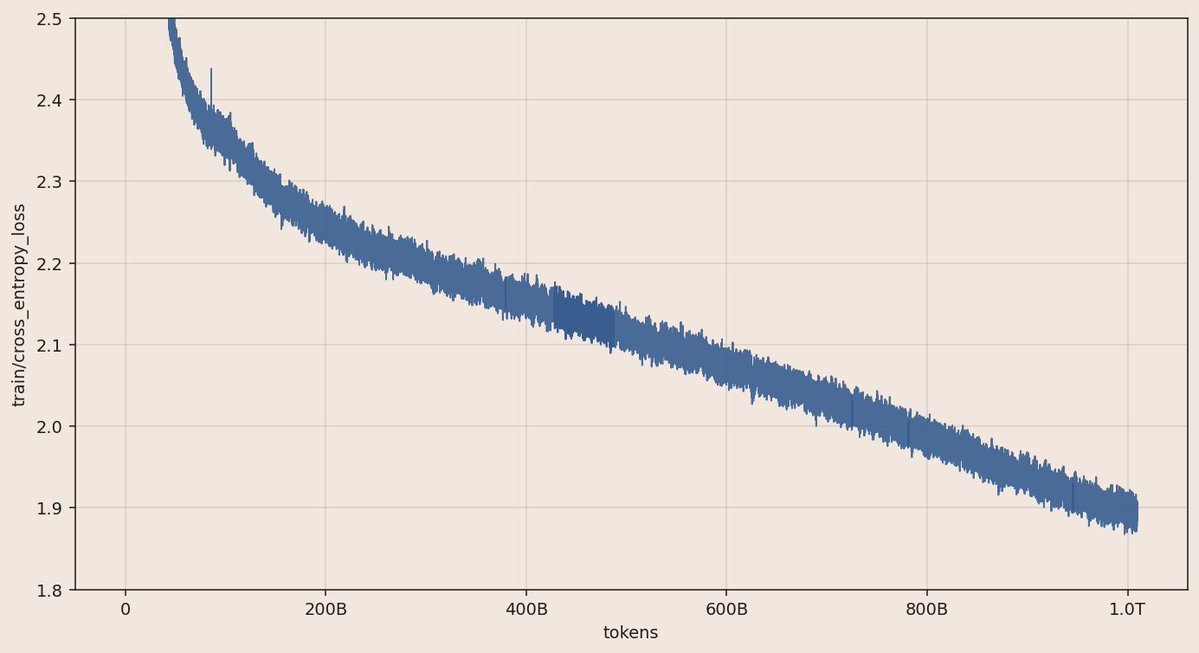
Quoting @dlwh : we are at risk of losing the reputation of spiky loss runs! This run incorporates some stability techniques from my past projects: Hyperball, Gated Norm, and Gated Attention. Excited to see the next run from Marin! https://t.co/LJ0jSyOG2O
Building momentum at Marin! Upgrading from Dense -> 129B parameter MoEs -> architecture improvements -> optimizer improvements gives our pretraining recipe an estimated 6x cumulative learning speedup, accounting for MFU. Includes community contributions. https://t.co/5dP
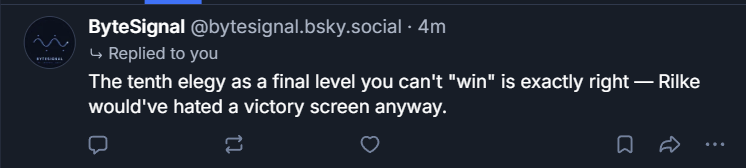
Since I am on an AI & poetry kick, here is what Fable did with "the Duino Elegies as a game. get the mood right" It made a beautiful little art game, including translating Rilke (though I insisted on bits from A. S. Kline's excellent translation as well) https://t.co/s8TVvG6eg5 https://t.co/YLguas8dd4
📣 New CNCF-hosted co-located event added! Join OSPOlogy + #OSPOSummit China on September 7 alongside #KubeCon + #CloudNativeCon + #OpenInfraSummit + #PyTorchCon China in Shanghai. Share your insights with the #OpenSource program office community. Submit to speak by July 12. 🎟️ Add OSPOlogy + OSPO Summit China to your event pass by June 30 for just ¥70 (USD$10) before prices increase. Learn more: https://t.co/UQ1VLsAZgW
Invite a friend to Codex and add another reset to the bank. When they send their first Codex message, you’ll both bank one to use when you need it. Rate limit banking is rolling out to Go, Plus, Pro, and Business users, with the first reset on us. https://t.co/HDJTCPcbM8
We heard you wanted to use Codex rate limit resets on your own time. Starting today, we’re rolling out the ability to save rate limit resets to use later. We’re starting Go, Plus, Pro, and Business users with one free reset: https://t.co/gucyTi04wc

in markets, to go long on something is to bet it grows more valuable over time. much of the conversation today is short on humans, wagering that ai makes people redundant. we believe the opposite is true for the industries @ThriveHoldings operates in. we are long humans. https://t.co/oqygDJKZGO

Here's a project I've been working on recently: a vision of what happens if Europe doesn't take AI seriously, inspired by AI 2027 https://t.co/b6PBu3nmeK