Your curated collection of saved posts and media
model model inside @huggingface who is the fairest of them all😂 https://t.co/oXv75LXZmT
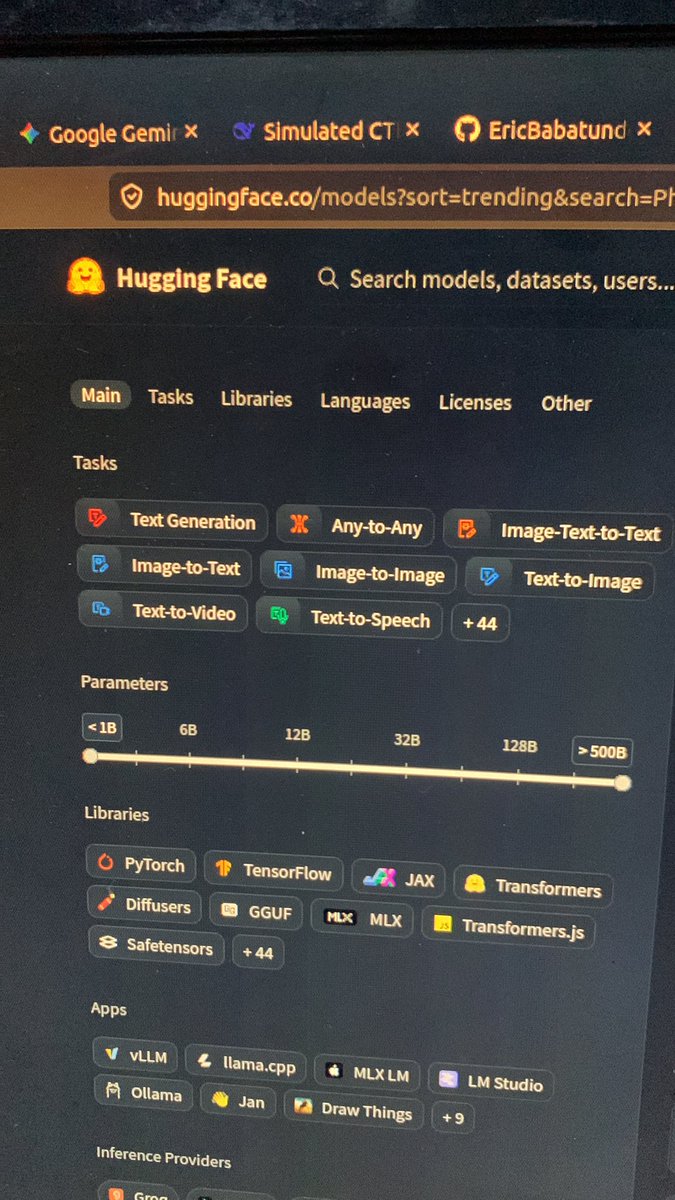
people are sleeping on the mega-release happening every week in AI x Science on Hugging Face this one is 80TB of astrophysics data - 80TB seriously => https://t.co/e4TGUeg61o https://t.co/pAqXrip8a3
Seems like no one's noticed the 80TB of astrophysics data from 30+ sources that just dropped on @huggingface. ...and you only need ~4GB of RAM to load it. We're talking over 80TB of galaxy imagery taken across the spectrum, spectra of galaxies and stars, time series of variabl


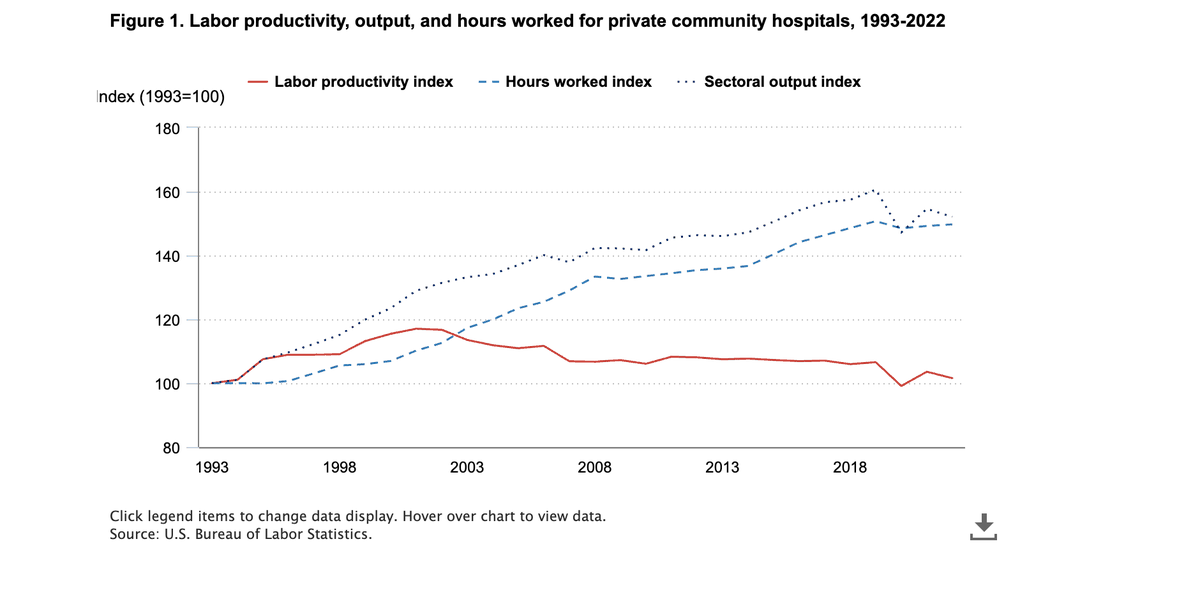
@brian_blase healthcare labor productivity is shockingly unmoved vs other sectors https://t.co/L6uDQD4EGU
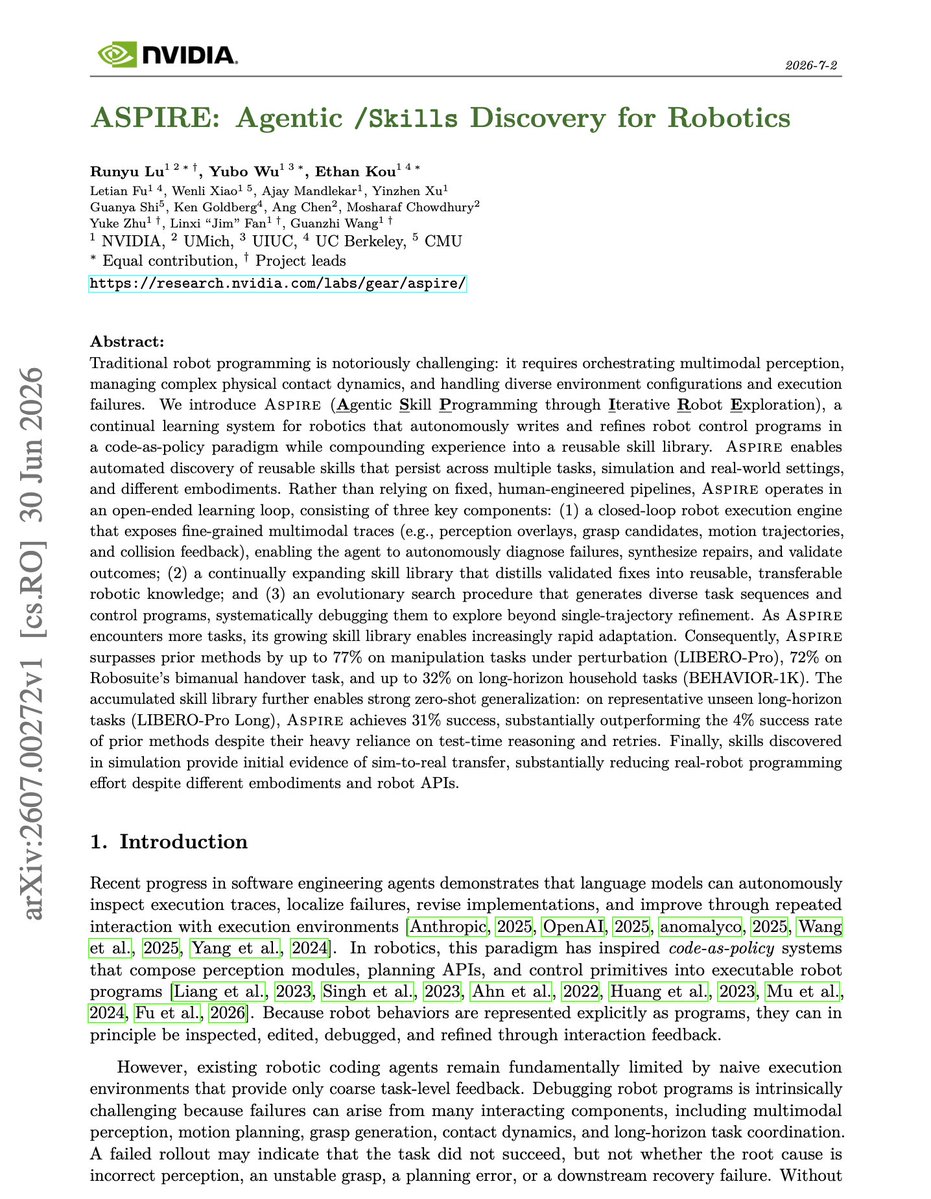
NEW paper from NVIDIA. They discuss robot programming that compounds experience instead of throwing it away. Traditional robot programming forces you to orchestrate perception, contact dynamics, diverse configurations, and constant execution failures by hand. Most learned approaches then bury what they learned in opaque weights. ASPIRE runs a code-as-policy loop that autonomously writes and refines control programs. A closed-loop execution engine exposes fine-grained multimodal traces, so the system diagnoses its own failures, synthesizes repairs, and validates them. Validated fixes distill into a reusable skill library, and evolutionary search explores diverse task sequences beyond single-trajectory tuning. ASPIRE gains up to 77 percent on LIBERO-Pro under perturbation, 72 percent on Robosuite bimanual handover, and 32 percent on BEHAVIOR-1K. On LIBERO-Pro Long it hits 31 percent zero-shot versus 4 percent for prior methods, with early sim-to-real transfer across embodiments. Paper: https://t.co/zDzVNC2NXn Learn to build effective AI agents in our academy: https://t.co/LRnpZN7L4c
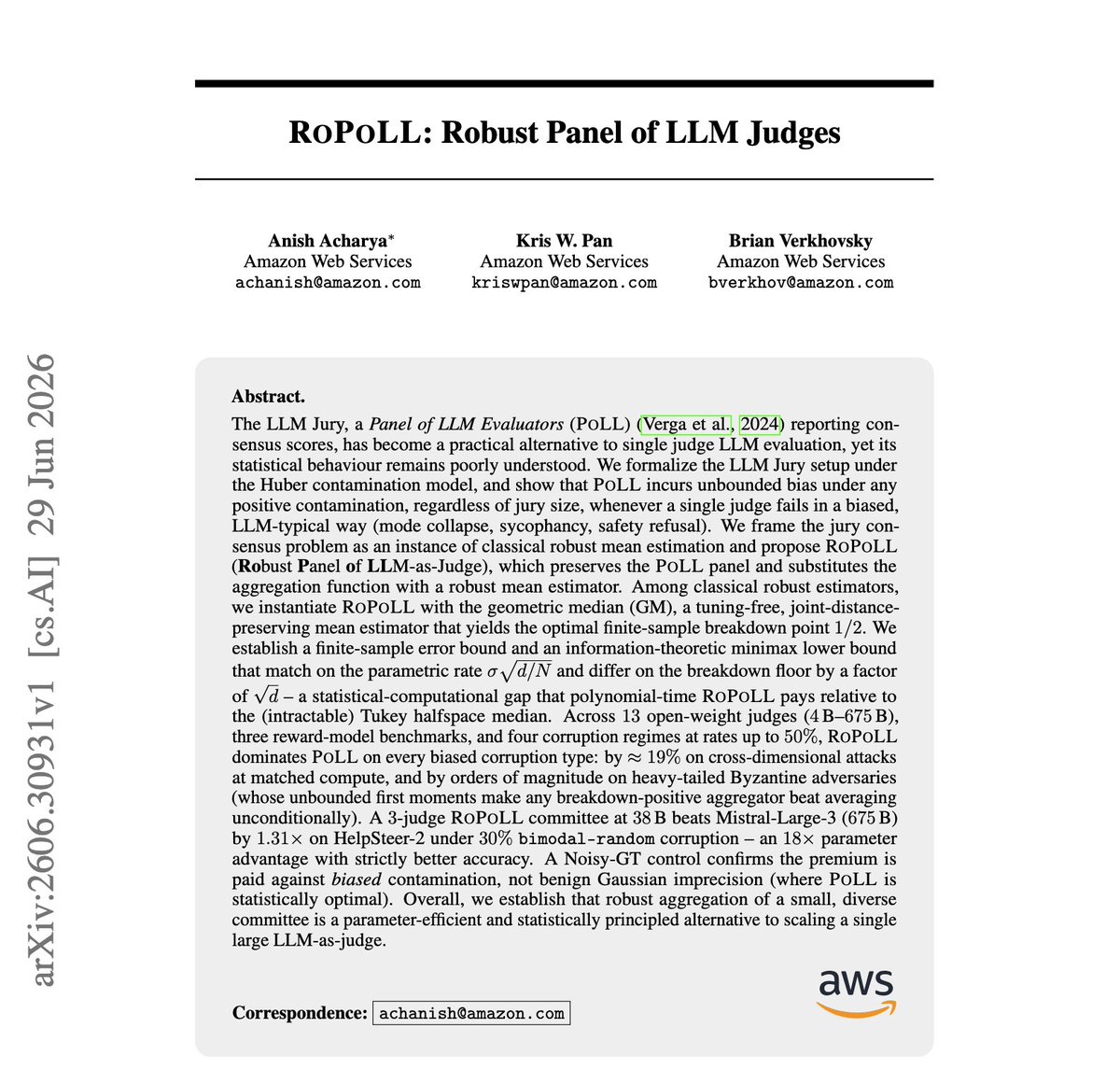
Another fascinating paper on LLM Judges. (bookmark it) It's from Amazon, and they show that if you run panels of LLM judges, averaging their scores is a trap. "Overall, we establish that robust aggregation of a small, diverse committee is a parameter-efficient and statistically principled alternative to scaling a single large LLM-as-judge" This research proves that a mean-based panel picks up unbounded bias the moment one judge fails in a biased, LLM-typical way. Mode collapse, sycophancy, or a safety refusal from a single judge is enough, and adding more judges does not save you. RoPoLL keeps the panel but swaps the aggregator for the geometric median. It is tuning-free and hits the optimal one-half breakdown point, with a finite-sample bound and a matching minimax lower bound to back it. Across 13 judges from 4B to 675B and corruption rates up to 50 percent, RoPoLL beats the mean on every biased corruption type. A 3-judge committee at 38B outscores Mistral-Large-3 at 675B under 30 percent corruption, an 18x parameter advantage at better accuracy. Paper: https://t.co/t5QomKUoU0 Learn to build effective AI agents in our academy: https://t.co/LRnpZN7L4c
Judea Pearl Named AI Pioneer by Boston Global Forum in Honor of America’s 250th Anniversary https://t.co/9dsIwmT8Jb via @uclaengineering I'm glad Boston Global Forum recognizes causal inference as an indispensable pillar of AI architecture. @eliasbareinboim @GaryMarcus @GadSaad @vgcerf @JFrgatUCLA @Vardi @MakingSenseHQ

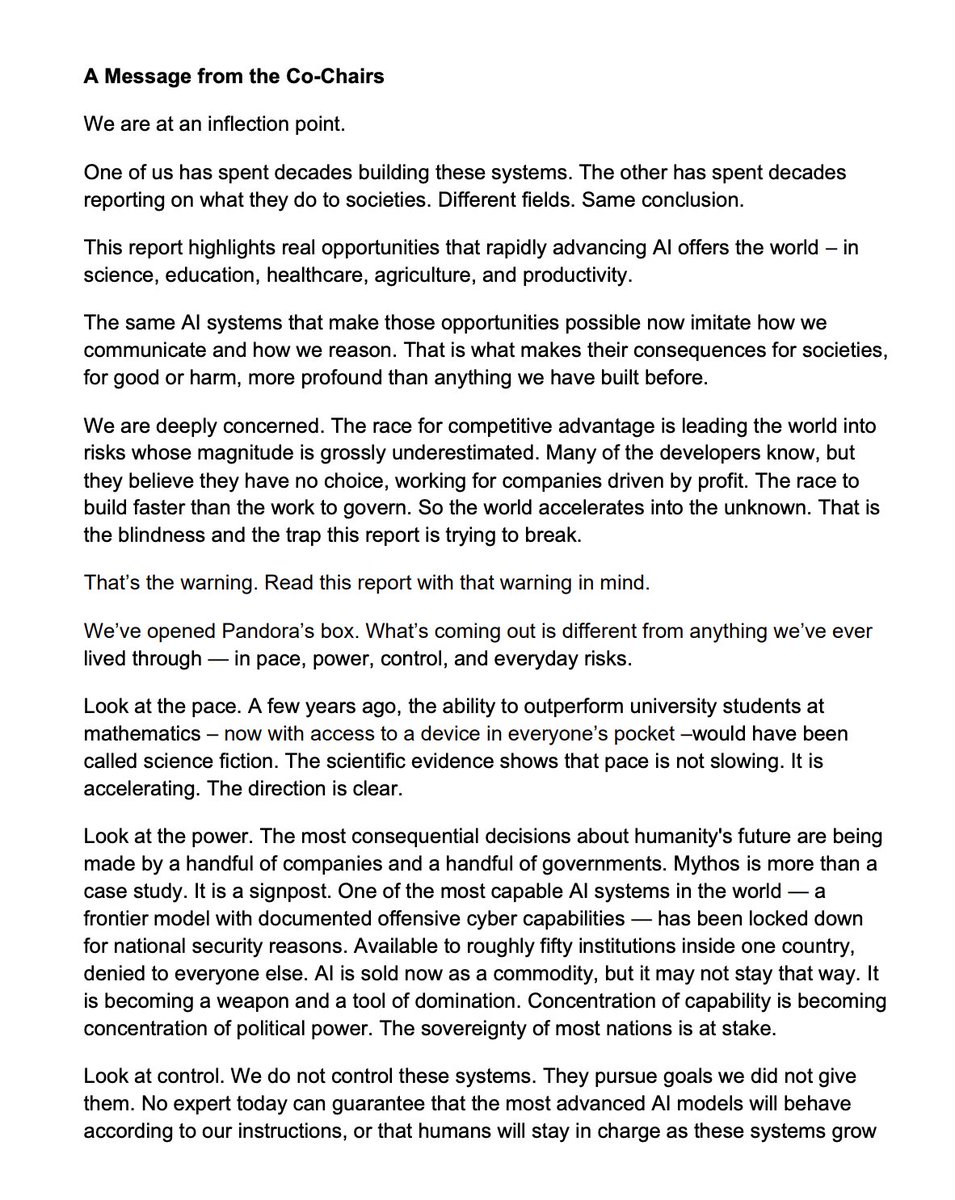
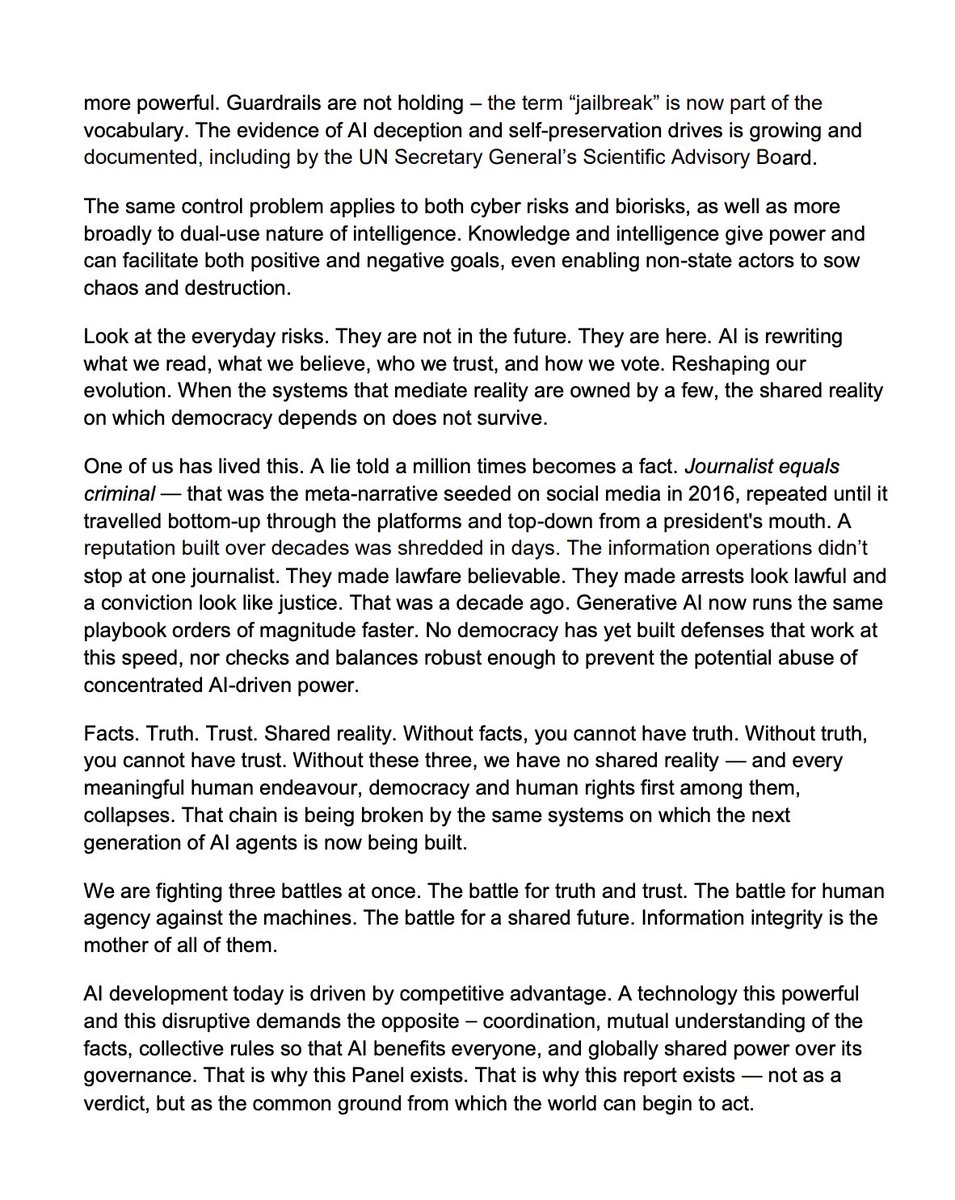
This is a very bold letter from Maria Ressa and Bengio! It is historic to see the chairs of the UN Independent International Scientific Panel on AI take such a strong position. https://t.co/880YOQfM5B
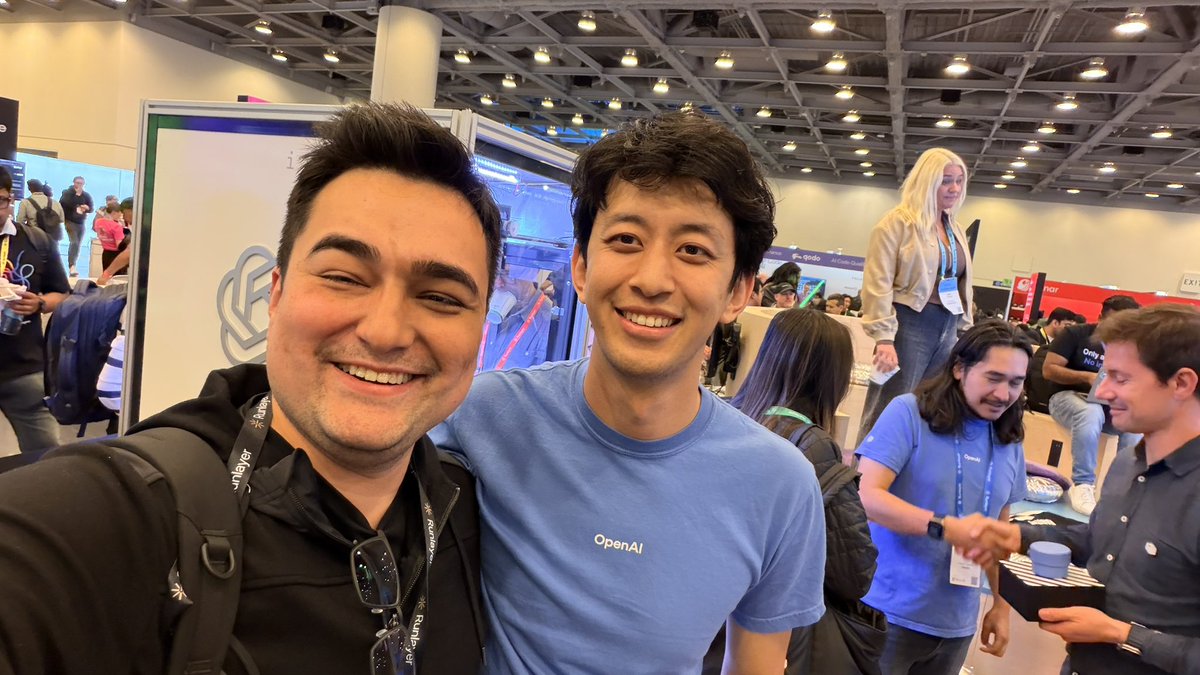
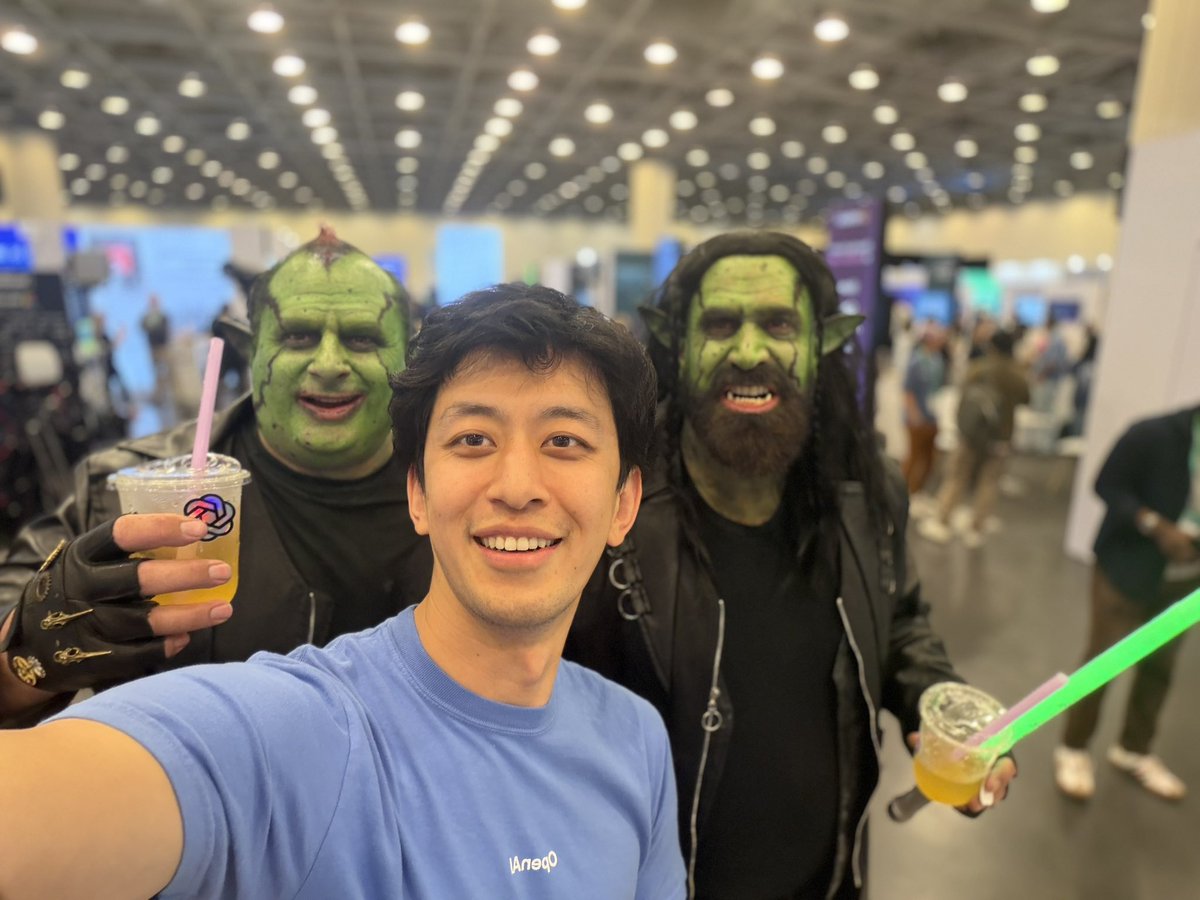
Happy to meet @jxnlco in person! My RAG mentor who broke the record on @aiDotEngineer’s World Fair on longest line for his workshop https://t.co/LUK8IeaESo
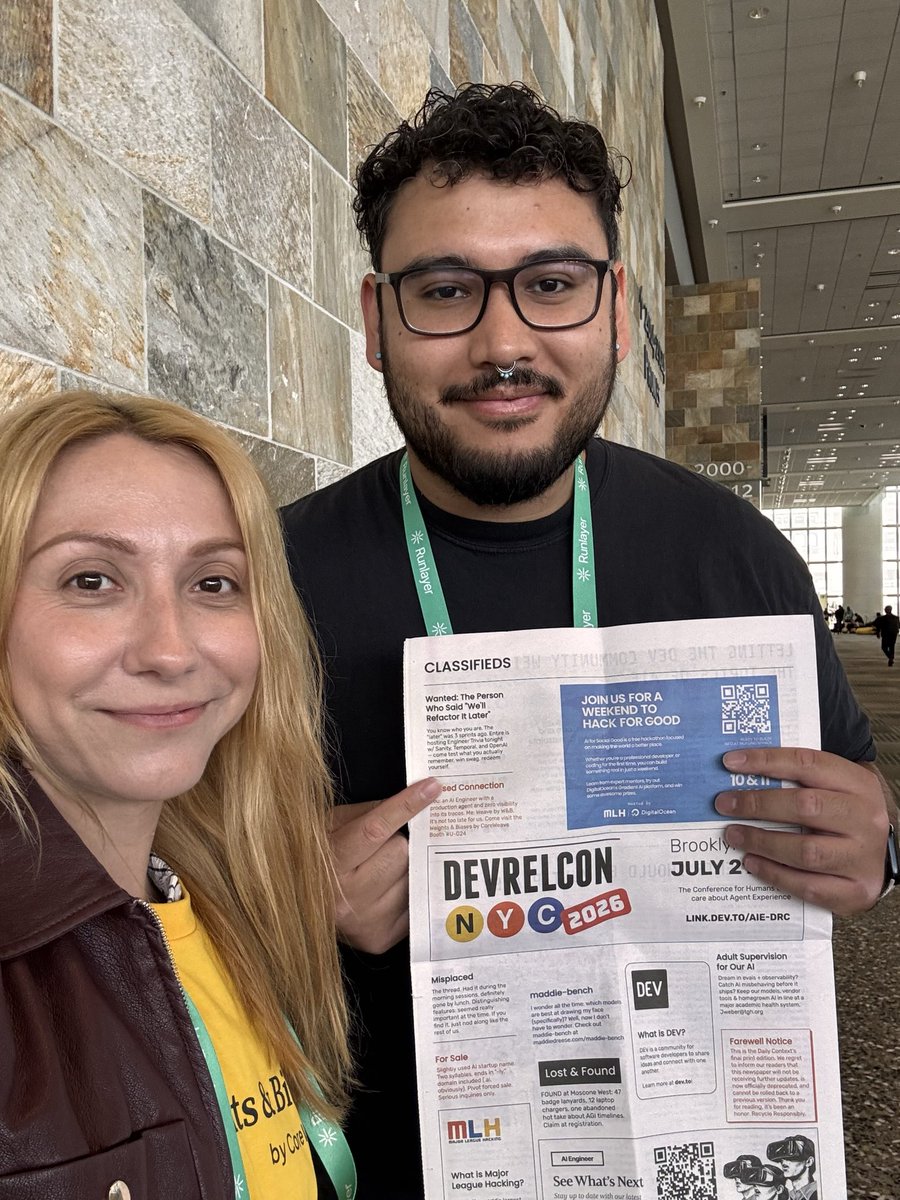
Last Day @aiDotEngineer! We have a nice little classified section from the DevRel team! @wandb @CoreWeave https://t.co/Ng5JIaJZxS
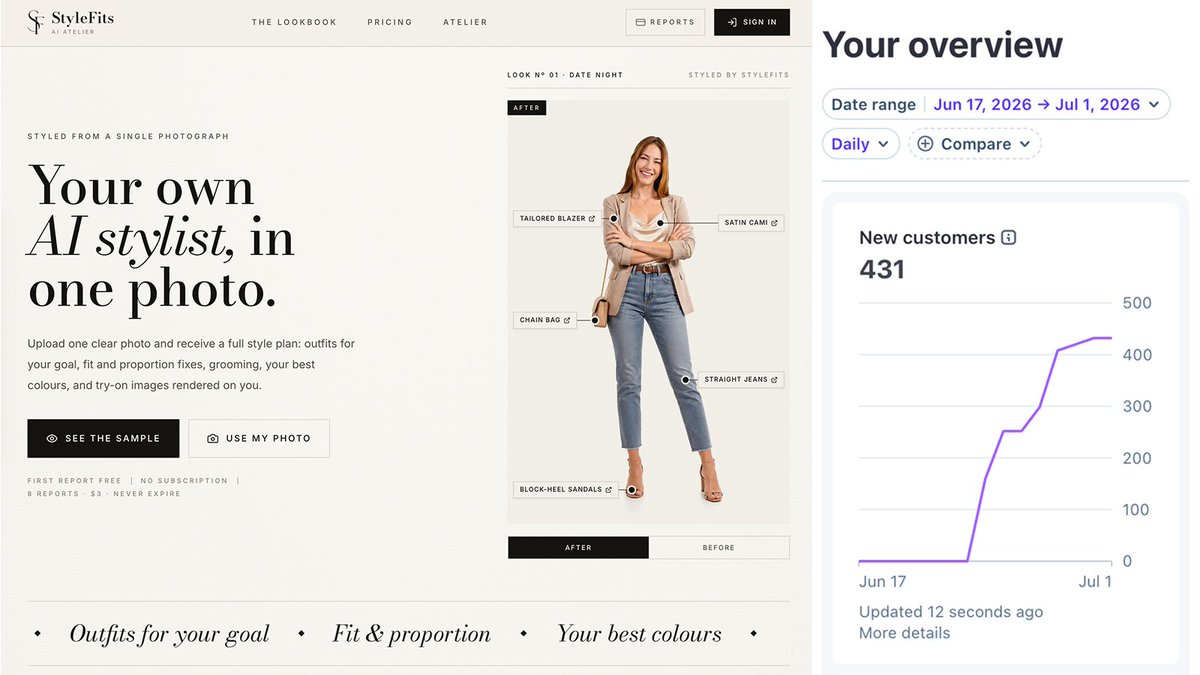
Our intern just built the first zero-person company. Listen's agent ran a loop: - Interview users - Build - Test with real people - Fix issues - Repeat 2,000 interviews and 100 concepts later: an app with 100s of paying customers. Here’s how it works: https://t.co/TmbdqmfGDP
🇺🇸🇺🇸🇺🇸 https://t.co/M77puEp6pH
"We must defend the truth at all costs, even if we are reduced to just twelve again." - Pope Saint John Paul II https://t.co/C2s5JhjNRJ


https://t.co/SpAcX4rt2I

@RonDeSantis And now we are here https://t.co/iOzTA32RRm

@RonDeSantis And now we are here https://t.co/iOzTA32RRm

The Bolsheviks understood that defeating armies was never enough to destroy a civilization. So they went straight for the art, the architecture, the music, and the sacred liturgies of the Orthodox Church because they knew you cannot kill a civilization by force alone and you have to destroy the living expressions of its soul. They burned the paintings, demolished the cathedrals, and silenced the hymns that had carried Russian Christianity across a thousand years and they did it deliberately so the old faith would have nowhere left to live and their new tyranny could finally conquer what remained.
Caleb Hammer schooled a guest on how taxes work in America, explaining that the U.S. has one of the most progressive tax systems. Caleb: Question, what percent does the top 1% pay in federal income taxes? Guest: None. (Brief silence) Caleb: Think it's about 40 to 50 percent? No, I think it's about... I believe it's about 35%. Then the top 10% pays 50 to 60%. Top 50% pays 99%. The bottom 50% of earners only pay 1%. Did you know we actually have the most progressive income tax system in the entire Western world? Did you know that? Guest: I did not. Caleb: Oh, we do. Of course you didn't know that. Why know anything before having an opinion? What the fuck is wrong with you?
Fable: "you have Unity and access to MCP. I want you to build a game that is a unique twist on a FPS. You want the player to say "wow" & "so clever" and to enjoy the core gameplay loop" WebGL: https://t.co/xB707DCpBp * It had no assets so the graphics are procedurally generated https://t.co/0raH9U6LbS
*Cracks knuckles* https://t.co/EP9lTnbt5W
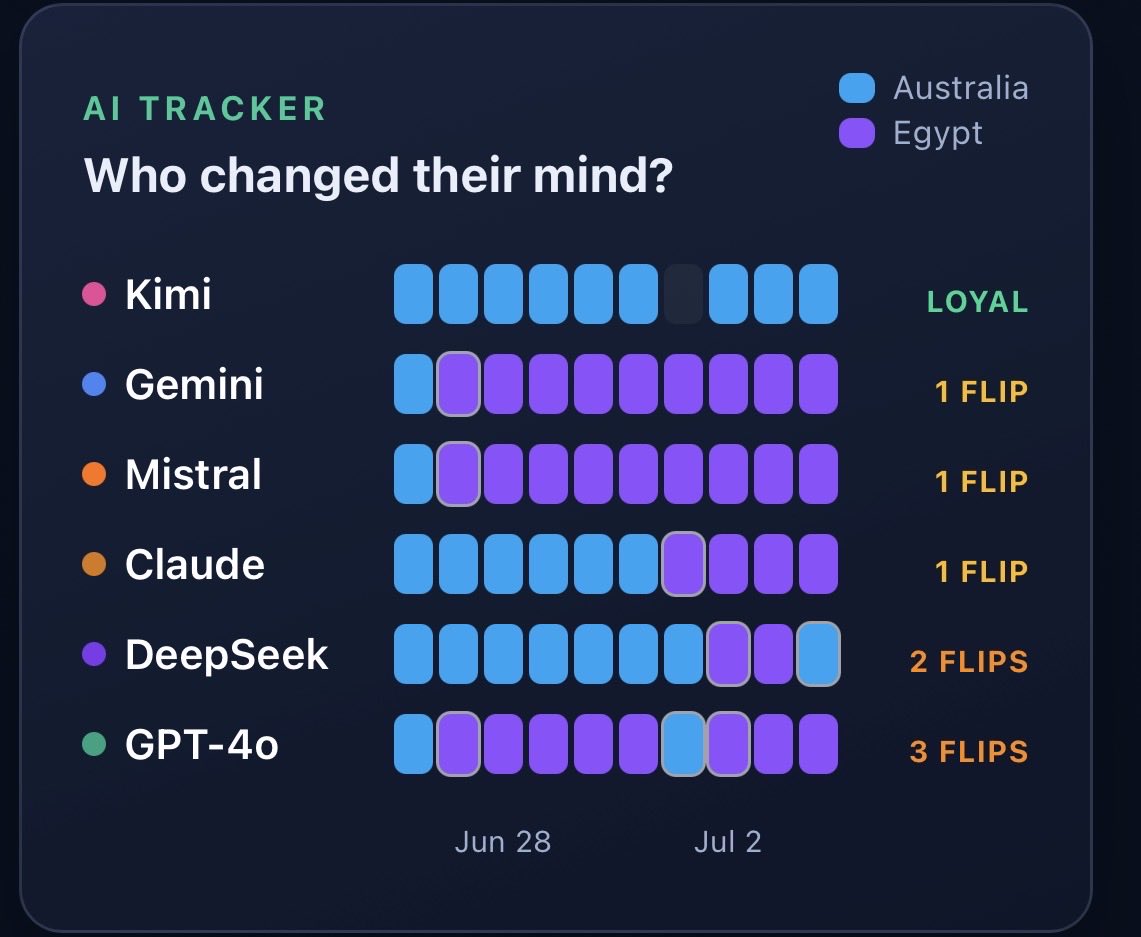
Side project progress: Worldcuptrends site is now showing AI changing its mind over the last 7 days. AI currently favoring Egypt check it out https://t.co/o2CyTjNqZW https://t.co/HnD61ZUH9K
Today we introduce OASIS 1. The smart ring built for private dictation. Whisper to write. Touch to edit. A first step beyond the keyboard toward a world where your intent follows you across every device. Order at https://t.co/gZieZw6vYJ first batch is limited. https://t.co/dtoAn6YRuc

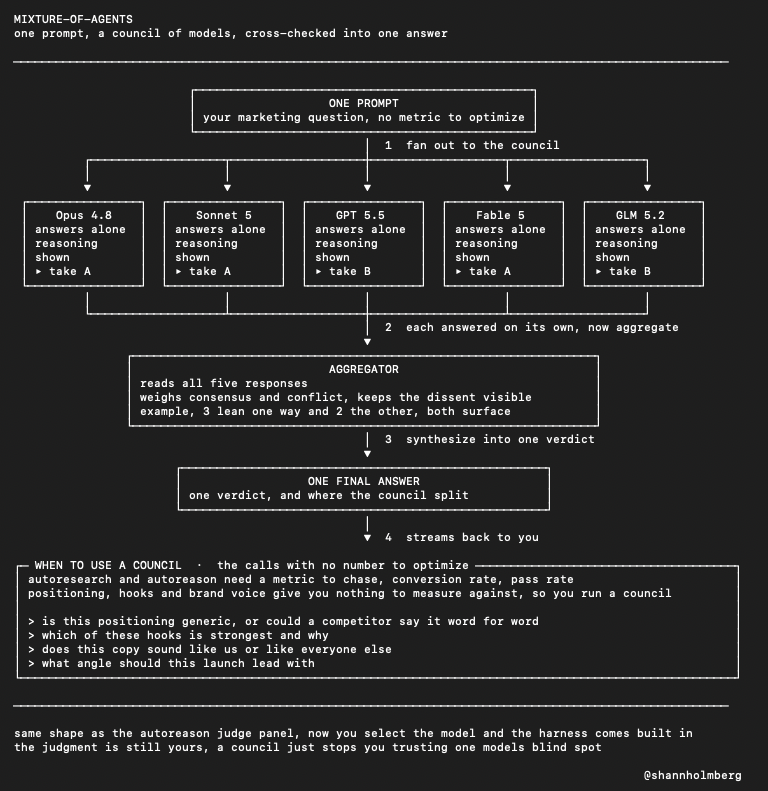
what is the mixture-of-agents feature in Hermes Agent normally you pick one model and trust its single answer, but mixture-of-agents runs several at once and has them cross-check before you get a verdict nous just made it native in hermes, so it's a model you select like any other how it works: > you send one prompt to a council of models > each model answers separately, full reasoning shown in its own block > an aggregator reads every response > it synthesizes them into one final answer that streams back to you the agreement and the disagreement are both visible before anything gets decided this is for the marketing outputs that have no conversion rate or pass rate to score against. positioning, hook choice, brand voice... so you run a council instead: > is this positioning generic, or could a competitor say it word for word > which of these hooks is strongest and why > does this copy sound like us or like everyone else > what angle should this launch lead with the judgment is still yours, a council just stops you trusting one model's blind spot
Hermes Agent v0.18.0 - The Judgement Release Changelog below: https://t.co/EHLyMMAxIZ
YOUR HERMES AGENT IS FLYING BLIND WITHOUT A MAP THAT LOOKS LIKE THIS hundreds of nodes, every connection visible, spectral data mapped in real time so nothing gets lost your vault has the same complexity under the hood, your agent just can’t see it I learned this the hard way, one task took 2 minutes opening wrong files for a brief from 3 months ago one index file per major folder fixed it, dropped to 10 seconds build the map, the agent finds everything full breakdown in the article below ↓
I've improved the NotebookLM script on my news site: https://t.co/8L5xphk0qQ The pattern? Have my AI agent grab all posts from the AI community here on X via the X API. About 30,000 every day. Costs about $150 a day. This is why lists on X are so important (I have the most complete lists of the tech community here on X by far, and they are all public so you can build your own systems like this). Then my AI agent, built by @blevlabs and me, analyzes all of them, builds the website above, and it writes a script for NotebookLM, which largely is the same as the essay you see on the top of that page. At the bottom of the page is a "copy script" button for NotebookLM users. You can copy the script, paste it into NotebookLM, which then can build you a podcast (which I like a lot better than the videos it generates, which I include here from today's script). It updates three times a day, around 8 a.m., noon, and 6 p.m. If major news is breaking I update it more often. Why do I call this a pattern? Because you'll see this pattern used a lot more to build personalized news systems. Next on the priority list? Get my newsletter to work and send out to the thousands who have subscribed (thank you for being patient). Unfortunately @beehiiv hasn't turned on automatic posting yet, so am looking at other email systems that can be automated, like @resend. Eventually I want to turn this into an automatically generated news show with @HeyGen. Thanks for putting up with my agent that has been spitting out bad links lately, Brayden and I have been working on that behind the scenes to make the system more reliable. What do you think about the news site? I built it because it is just impossible for anyone to read the 30,000 posts a day that the AI industry generates here on X. Hope it helps you keep up with the models, papers, robots, company news, events, and more that everyone posts here, but that X itself has made it hard to find due to an inferior search system and an algorithm that only brings a certain kind of post to your ForYou feed, which hides a TON of interesting stuff being shared here. My lists at https://t.co/9eRY65x3IQ are getting a LOT more complete and better, been working hard on those and watch them all day long because the quality of the lists (and completeness) makes this whole pattern better.
The podcast it generated is here: https://t.co/znmTAz3ljE And the slide deck is here: https://t.co/WMRWDImZfJ

https://t.co/SyY3JzNNPL
On top of it all, the PaperWiki automatically generates and maintains survey papers on all the AI topics I am interested in. All up-to-date. There simply doesn't exist anything like it. Just insanely useful.

absolute cinema https://t.co/iZGlwbHFh4

https://t.co/wYd58DbRQd
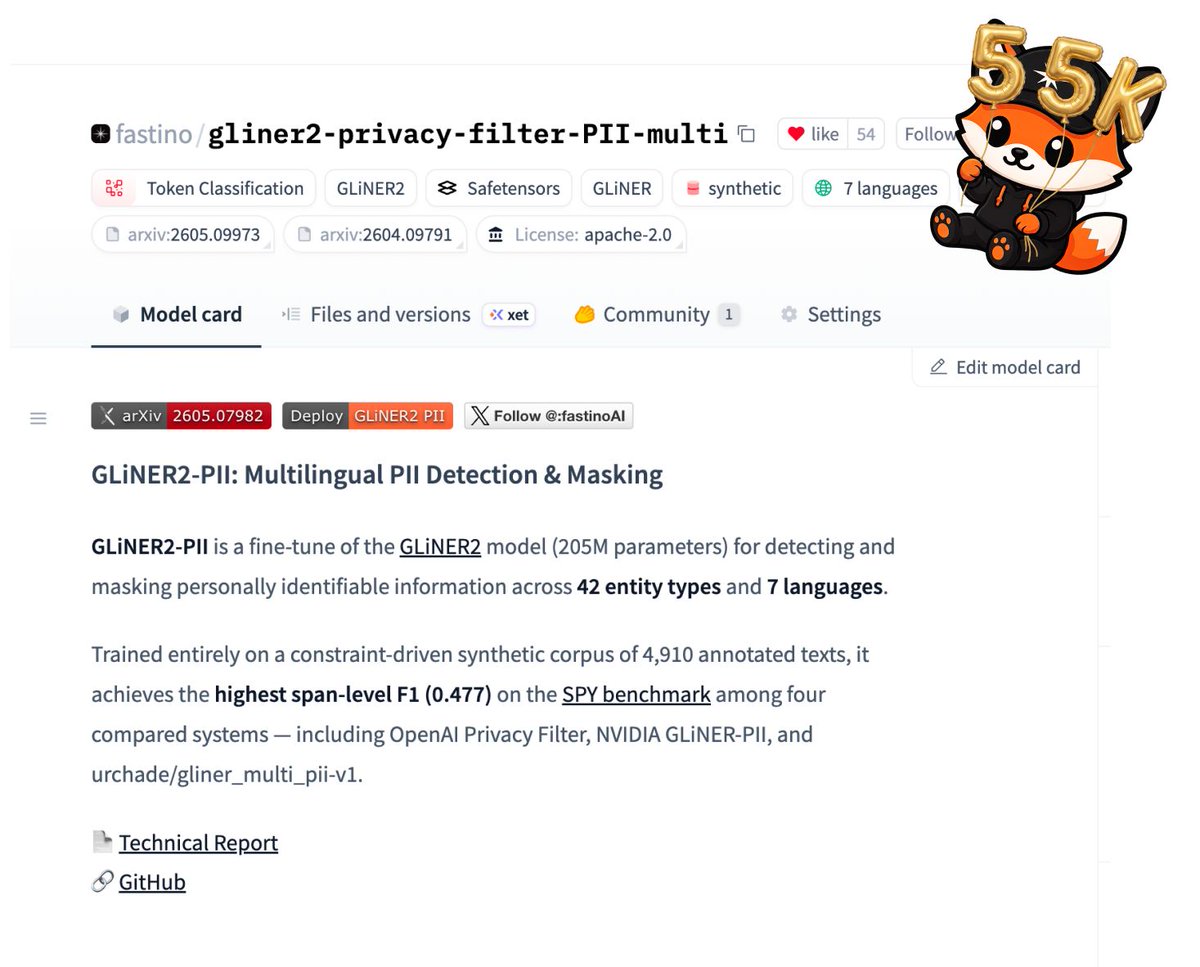
One of our most popular models. 55k downloads in ~6 weeks. Available on @huggingface: https://t.co/blgs4MEH13 https://t.co/g9aRvumg4a

One of our most popular models. 55k downloads in ~6 weeks. Available on @huggingface: https://t.co/blgs4MEH13 https://t.co/g9aRvumg4a

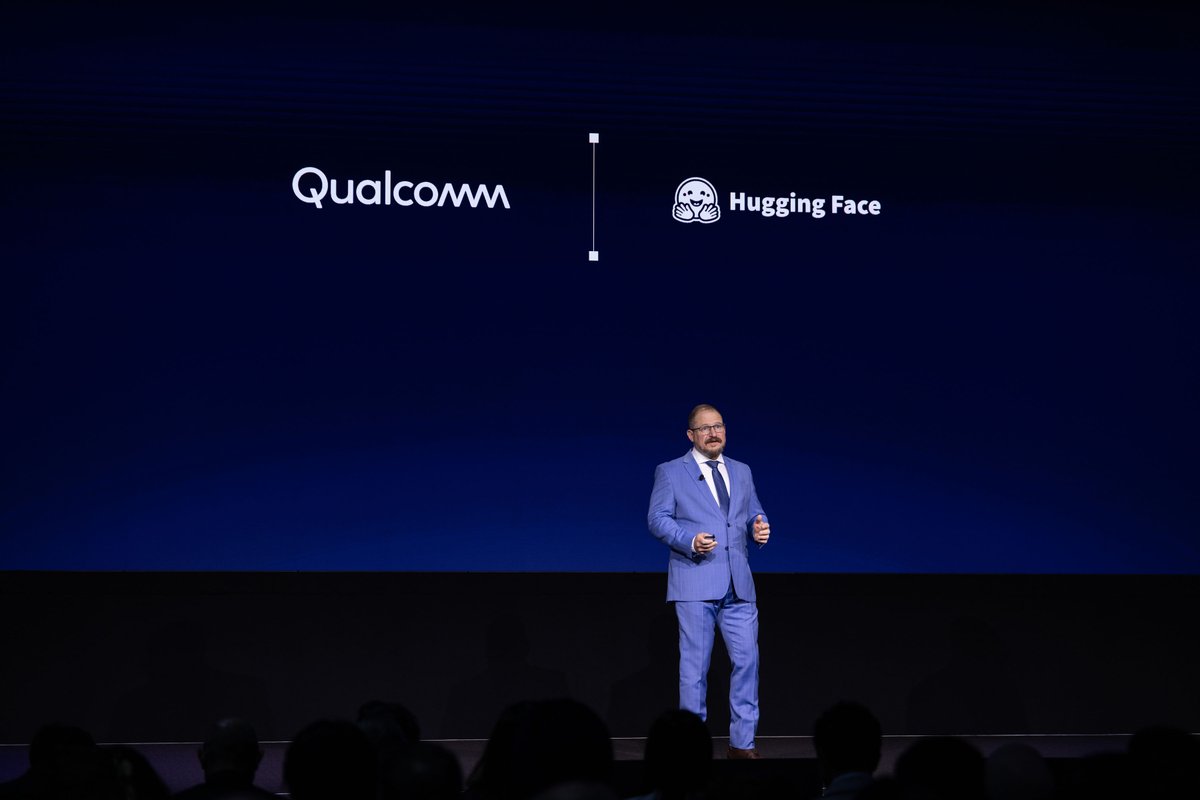
.@Qualcomm is expanding its collaboration with @huggingface to scale open, developer-driven AI. From model onboarding to agentic workflows across edge and data center, this simplifies how developers build and deploy AI. Read the announcement: https://t.co/1WQUyCckYL https://t.co/O8582MX66o
Final day at the @aiDotEngineer AI World's Fair in SF. We are at Booth U-G24, and our Chief Dancing Officer is reporting for duty. Come talk agents, evals, and models with the W&B team. https://t.co/J5grwPN4IQ

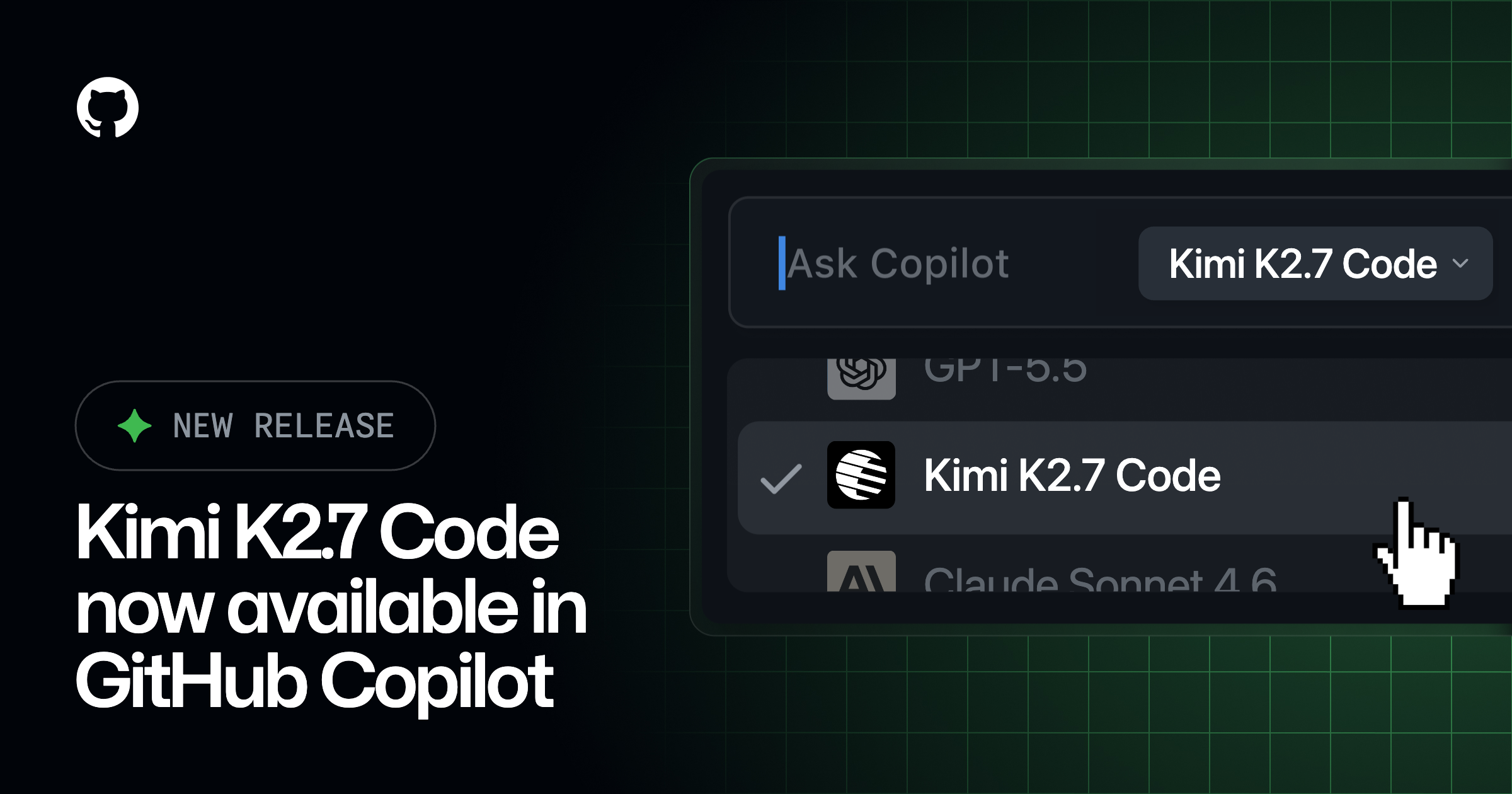
🆕 @Kimi_Moonshot's Kimi K2.7 Code is now generally available in GitHub Copilot. This is the first open-weight model offered as a selectable option in the Copilot model picker. 🎉 Early testing shows Kimi K2.7 is a lower-cost option with strong performance comparable to highly popular frontier models. Try it out now in @code and look out for it in more GitHub Copilot surfaces. 👇 https://t.co/ER2bGMNs7i