Your curated collection of saved posts and media
Top trending paper on https://t.co/nYgeLha6ut today is "VibeThinker-3B: Exploring the Frontier of Verifiable Reasoning in Small Language Models" 🔥 A 3B model placed in the same performance tier as models like DeepSeek V3.2, GLM-5, and Gemini 3 Pro (!) https://t.co/tiNPW2DZcm
WHAT THE HELL is happening in AI? A 3B parameter model just put up coding benchmark scores in the same league as Claude Opus 4.5. 3 BILLION. The weights are on Hugging Face, anyone can test it. I genuinely don't know if this is a breakthrough or if the benchmarks are broken.
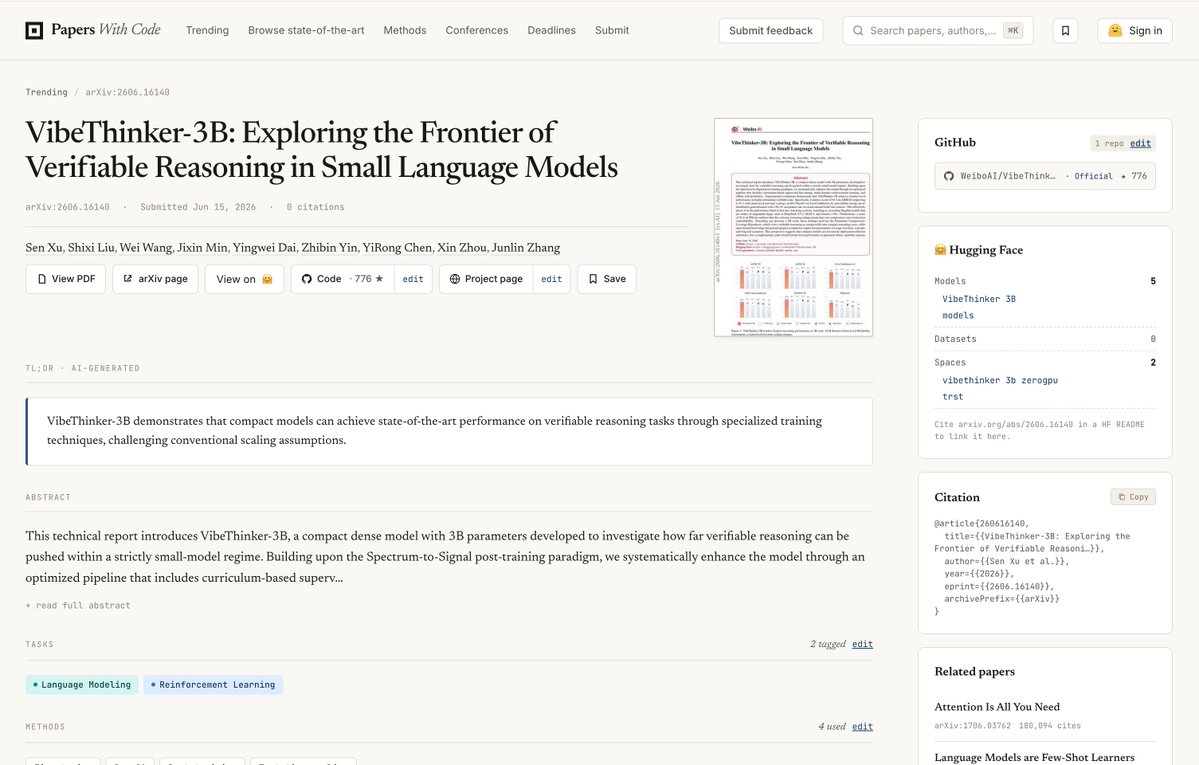
Top trending paper on https://t.co/nYgeLha6ut today is "VibeThinker-3B: Exploring the Frontier of Verifiable Reasoning in Small Language Models" 🔥 A 3B model placed in the same performance tier as models like DeepSeek V3.2, GLM-5, and Gemini 3 Pro (!) https://t.co/tiNPW2DZcm
It’s now easier to move local agents to the cloud so they can keep working with your laptop closed. Prompt Cursor from your phone, run many agents in parallel, and get back PRs with demos of their work. https://t.co/vuh5aZbH3e
Grok Build just got new update with new improvements, features, and bug fixes Release Notes: v0.2.55 Features: • Added option to fully disable the hunk tracker via --hunk-tracker-mode, GROK_HUNK_TRACKER, or config. Bug Fixes: • Windows install scripts now run cleanly via irm | iex without spurious BOM errors. • Tables & wide content no longer leave stray characters next to timestamps in the scrollback. • Mermaid diagrams now render node labels cleanly without HTML tags or raw markdown syntax. • MCP servers using HTTP now recover automatically after temporary connection drops! • Very long sessions can now scroll all the way to the bottom of the conversation history
Grok Build just got new update. The team is shipping at an absolutely relentless pace Release Notes: v0.2.54 Features: • Rewind now works end-to-end across conversation and file state with proper CAS handling. Bug Fixes: • Git branch icons now render correctly on Windows witho
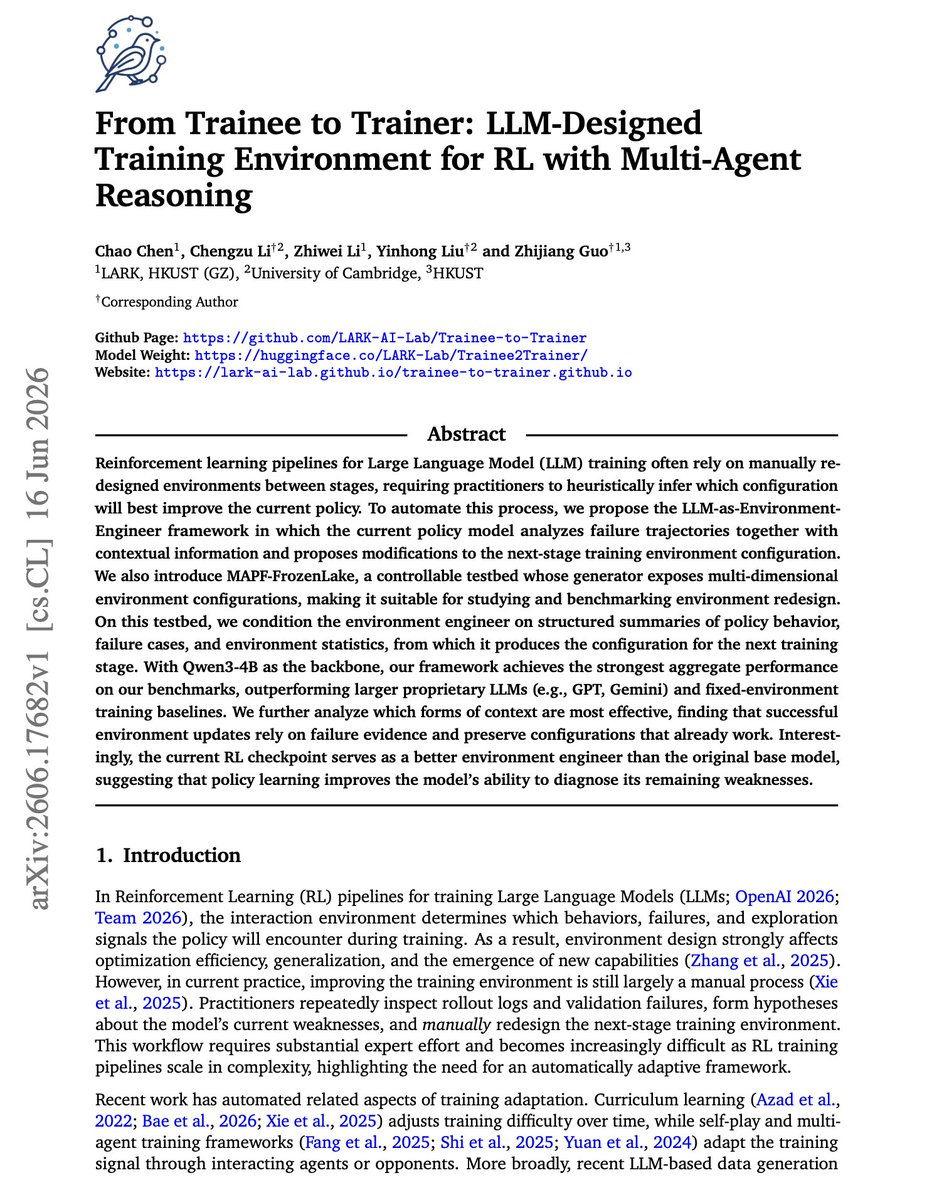
Who should design the training environment for an RL agent, the practitioner or the policy itself? RL pipelines for LLMs usually rely on manually redesigned environments between stages, with practitioners guessing which configuration will best improve the current policy. This work proposes an LLM-as-Environment-Engineer framework. The current policy analyzes its own failure trajectories plus context and proposes the next-stage environment configuration, automating a step that has stayed stubbornly manual. They also release MAPF-FrozenLake, a controllable multi-agent testbed whose generator exposes multi-dimensional environment configs. Why does it matter? Curriculum design between RL stages is mostly gut feel today. Letting the policy read its failures and shape the next environment closes a loop that practitioners currently close by hand. Paper: https://t.co/lZHlqozrQD Learn to build effective AI agents in our academy: https://t.co/LRnpZN7L4c
Elon Musk: ”I think there are great things in every culture. We don’t want the German culture to disappear. We don’t want French culture to disappear. We don’t want Korean culture to disappear, or Japan, or America, or anywhere. I think we should be very cautious about having some sort of global mixing pot, because every place will be the same, and there won’t be any unique cultures in the world. Which I think would make the world worse. So I think we need to preserve these country cultures, and that’s the future that I think is better. I think that most people would agree is better. We shouldn’t have cultures disappear. And currently, based on the current birth rates and the sort of so-called multiculturalism and globalism, what we’re actually seeing is the dilution of individual cultures and the destruction and death of individual cultures, which I think is terrible for the future.”
@rlfrmk @elonmusk @Yolo304741 @MattWalshBlog Ok https://t.co/RgQBWJo8Al

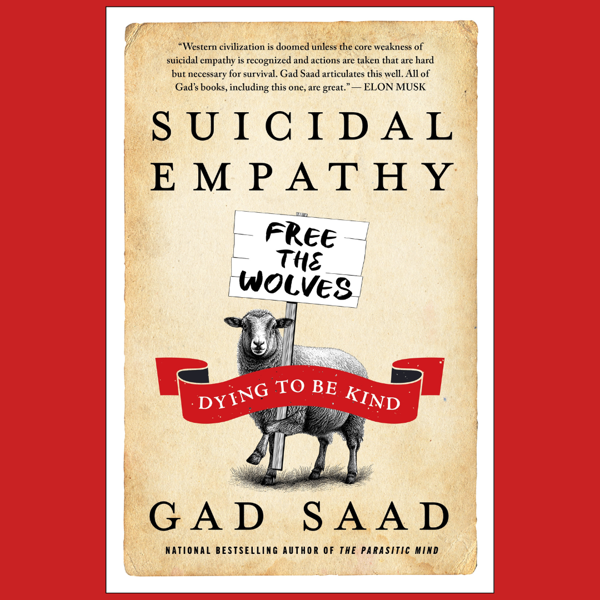
I'm delighted to report that Suicidal Empathy has now been five weeks straight on The New York Times Bestseller List, having debuted as an Instant #1 in its first week! Get your copy today: https://t.co/MyiE7bjYGx
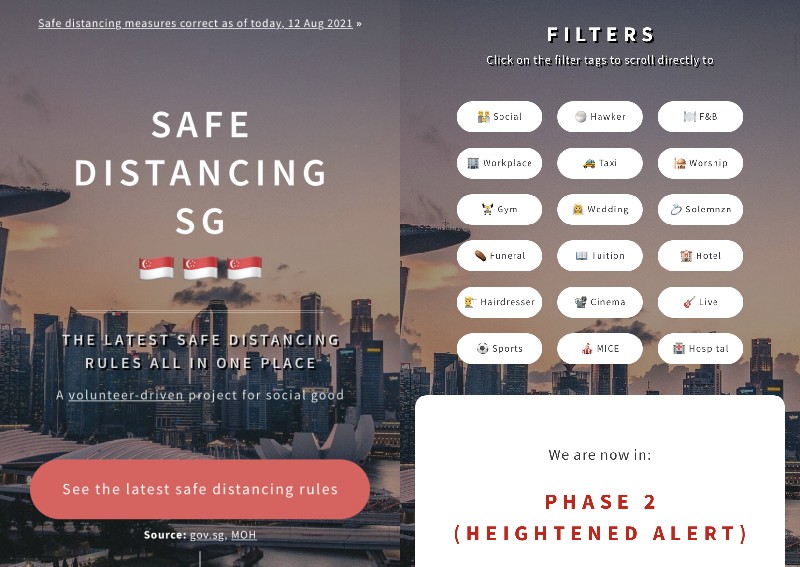
The ⌘ + K instant search is a design nugget that I like: https://t.co/qpTL33iv4r
Congrats https://t.co/Ms2YCKFx6A for being featured @jasonleowsg! https://t.co/1exU4q6DLI
I'm excited to share that our team #BrightStripes was selected as the 2nd place winner in the #Hack4Rare hackathon Track 2: PTEN Hamartoma Tumor Syndrome (#PHTS)! It was an eye-opening experience to learn about #raredisease for the first time. https://t.co/2ViANuSdzC
Interesting read on how Uber lost to Ola, and how local networks, adding more "nodes"/verticals to reinforce network effect, and driver incentives, come into play with Uber's profitability: https://t.co/aU73kJoumv by @ArunSShekhawat
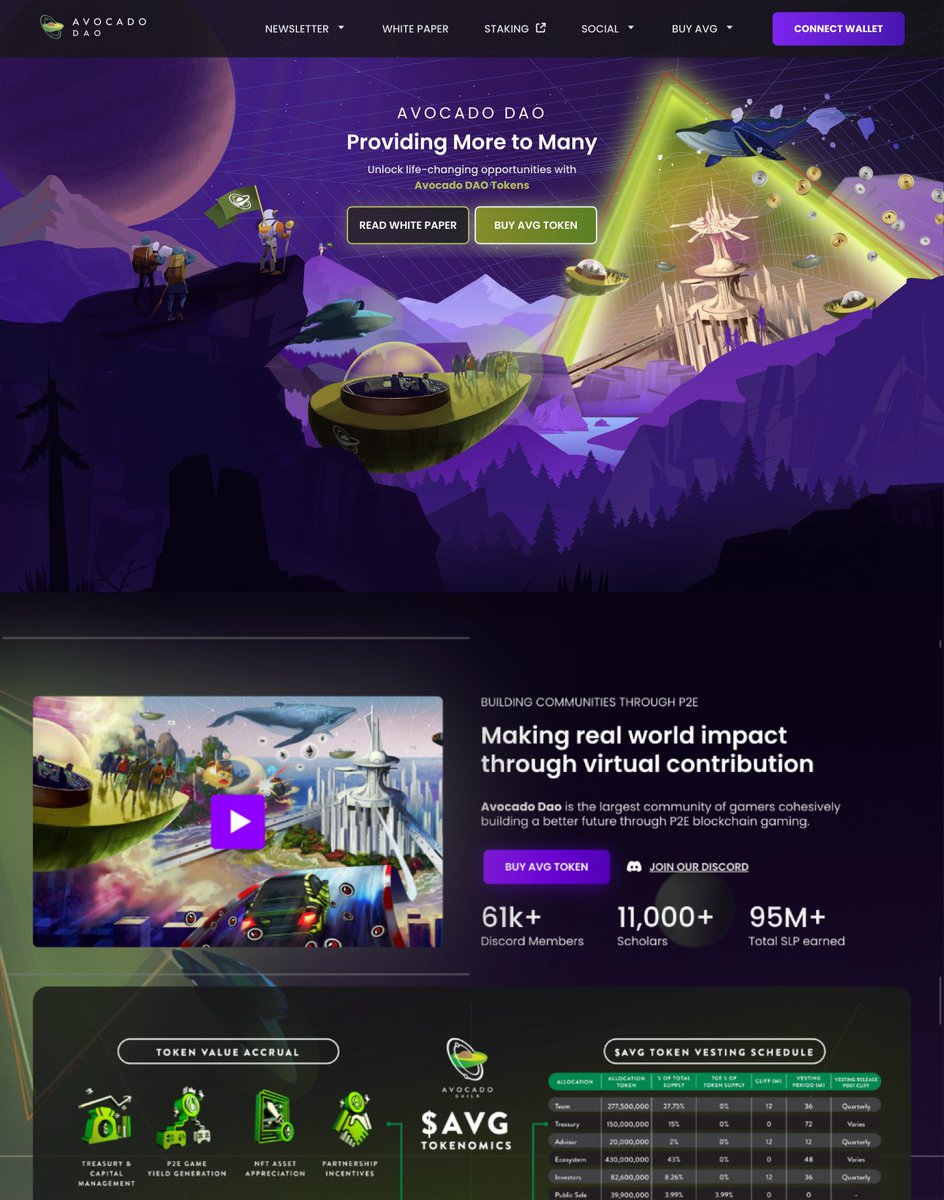
15 @Avocadoguild Founded by @BrendinoAG, a Play-to-Earn #P2E that invests in current and future NFT assets within games + emerging Metaverses, then lends NFTs back to members to optimize yield, impacting >10k scholars with total earnings of >90+M $SLP. https://t.co/RosmVYPLCT https://t.co/Qq2aF1CRJy
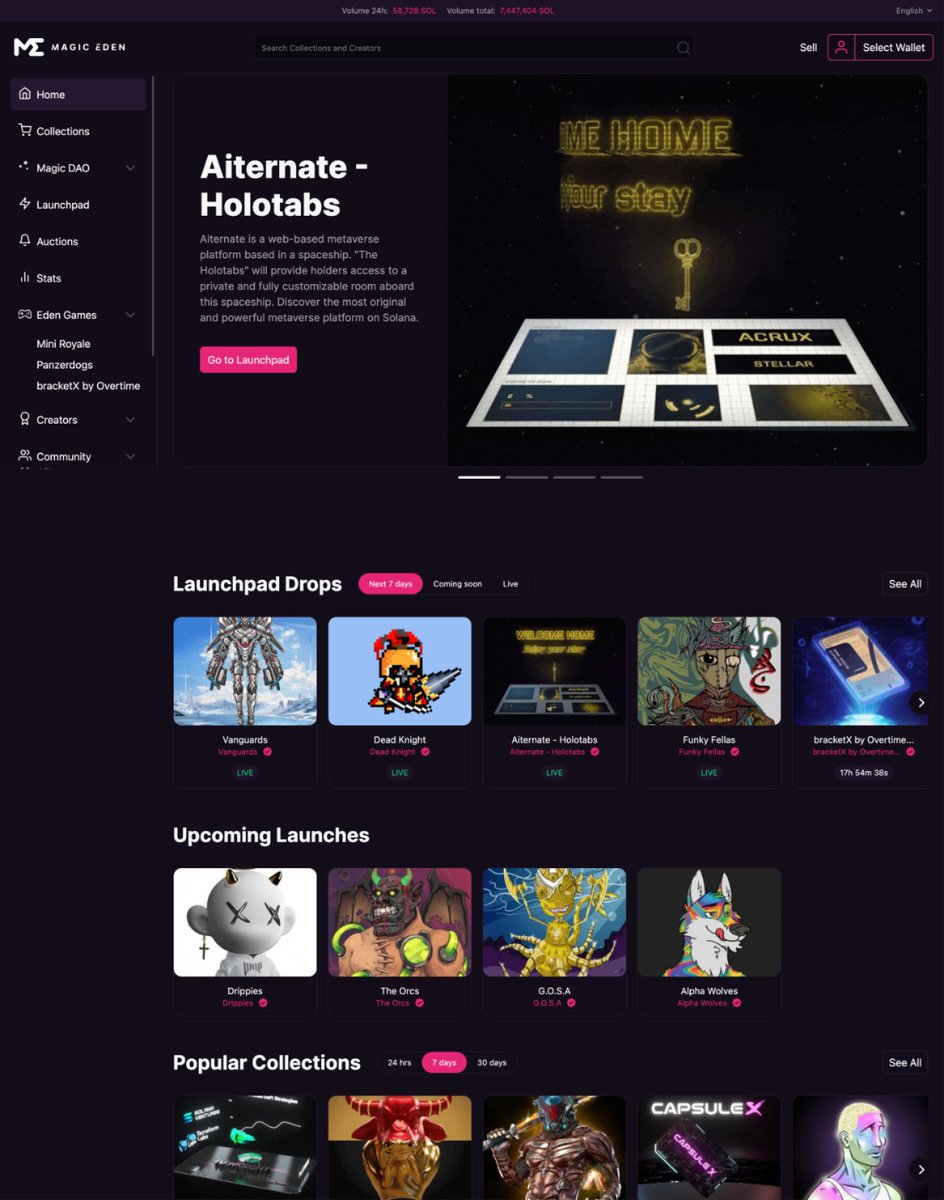
16 @MagicEden In its first 2 months since launch, Magic Eden has done ~$200M in trading volume to become the #1 NFT marketplace on Solana. Users can discover the best and latest Solana NFT collections, play Eden games, and participate in auctions. https://t.co/eLcZ0nl91x https://t.co/08og5UGG1J
The schedule is now available for KubeCon + CloudNativeCon + OpenInfra Summit + PyTorch Conference China, September 7-9 in Shanghai. AI is transforming how we build, deploy, and operate technology. Open source is making it possible. The agenda features engineers, maintainers, researchers, and technology leaders advancing cloud native infrastructure, open infrastructure, and AI. Explore the sessions: https://t.co/PV5nDI4JTV @CloudNativeFdn, @openinfradev #PyTorchCon #KubeCon #CloudNativeCon #OpenInfraSummit

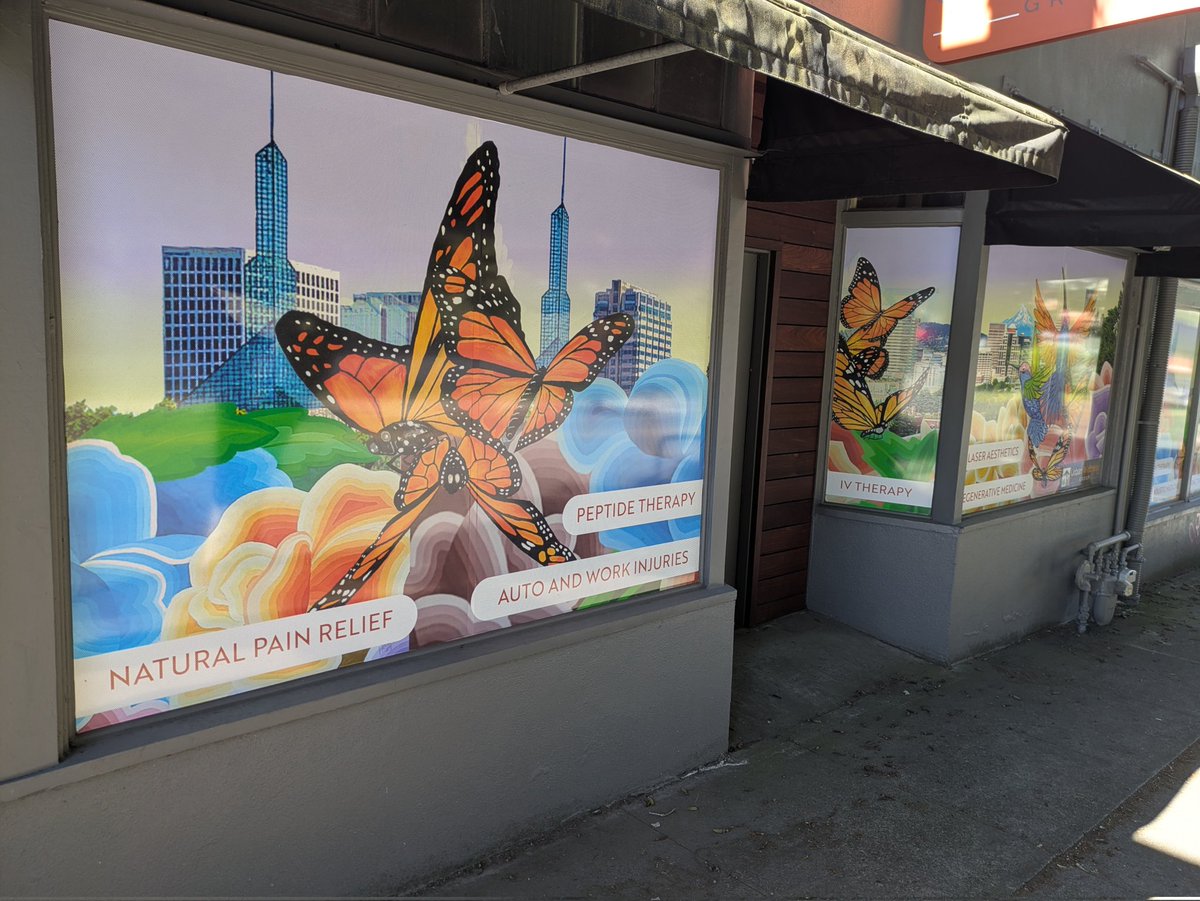
@eryney_ok @Lin_DAO_ @US_FDA @HHSGov @FBI Peptide therapy I spotted in Portland yesterday: https://t.co/cRCWjKWSoG
@Teknium https://t.co/y6r0iAZzSW
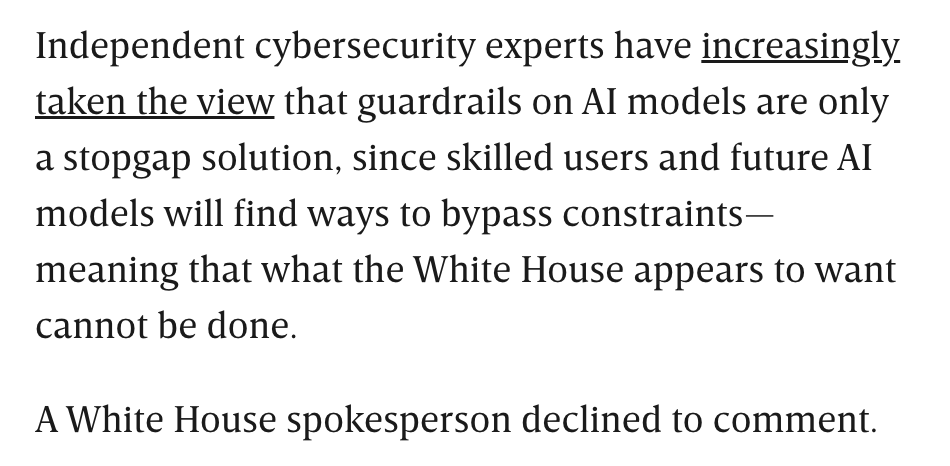
That sounds very bad for a soon-to-be re-release of Fable 5. "Trump administration officials tell WIRED that if Anthropic wants to rerelease Fable 5, it will need to ensure the model's guardrails can't be circumvented. Security experts say that can't be done." If this is true, we probably wont see a Fable 5 re-release any time soon.
Trump administration officials tell WIRED that if Anthropic wants to rerelease Fable 5, it will need to ensure the model's guardrails can't be circumvented. Security experts say that can't be done. https://t.co/itfeqzRgSS
New in ChatGPT: a better way to schedule tasks. Scheduled tasks are faster, more reliable, and easier to manage from the new Scheduled page. The new scheduled tasks experience is rolling out to Go, Plus, Pro, Business, and Enterprise users on web and mobile. https://t.co/YC7JON6Hxn
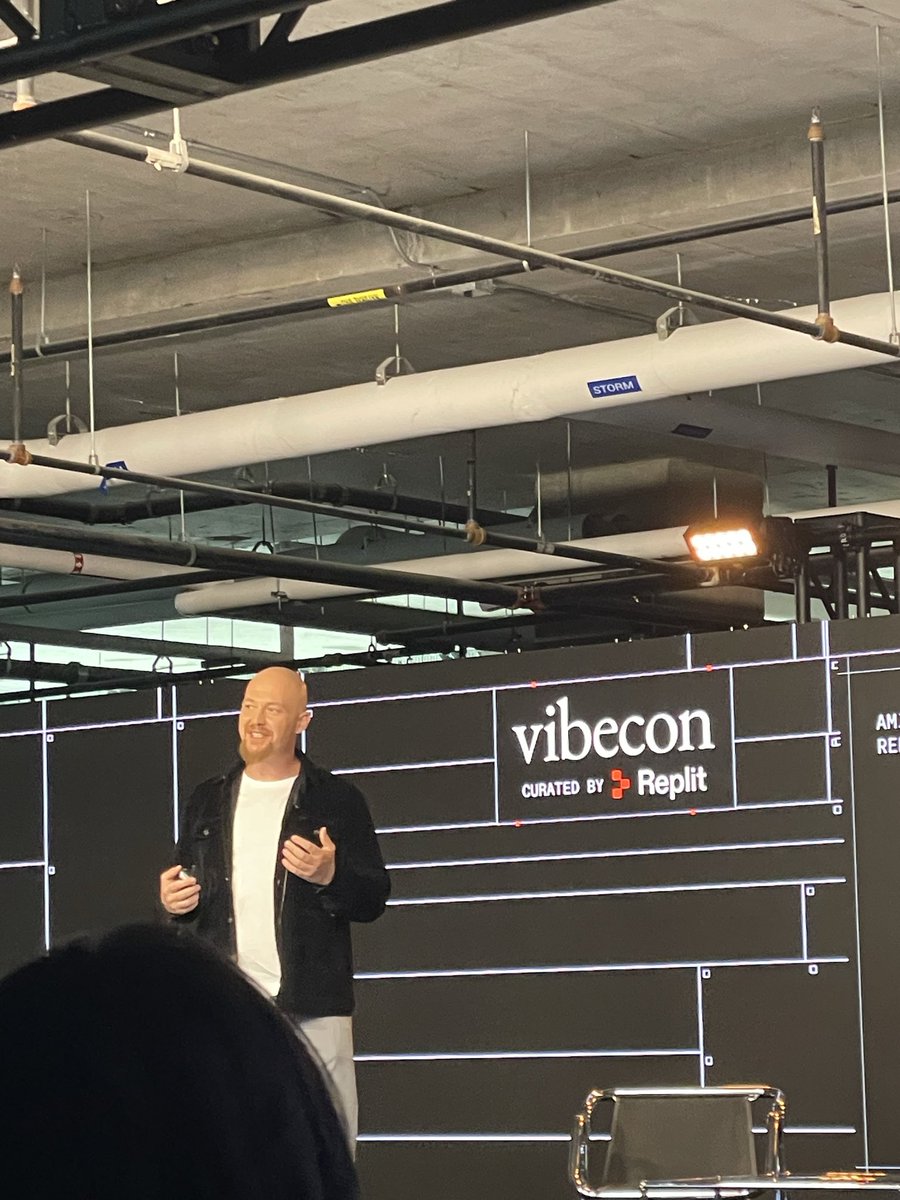
Closing out Day 1 of @Replit Vibecon with @amasad and Spike Jonze on the main stage 🎬 https://t.co/t6Z8UuD6tl
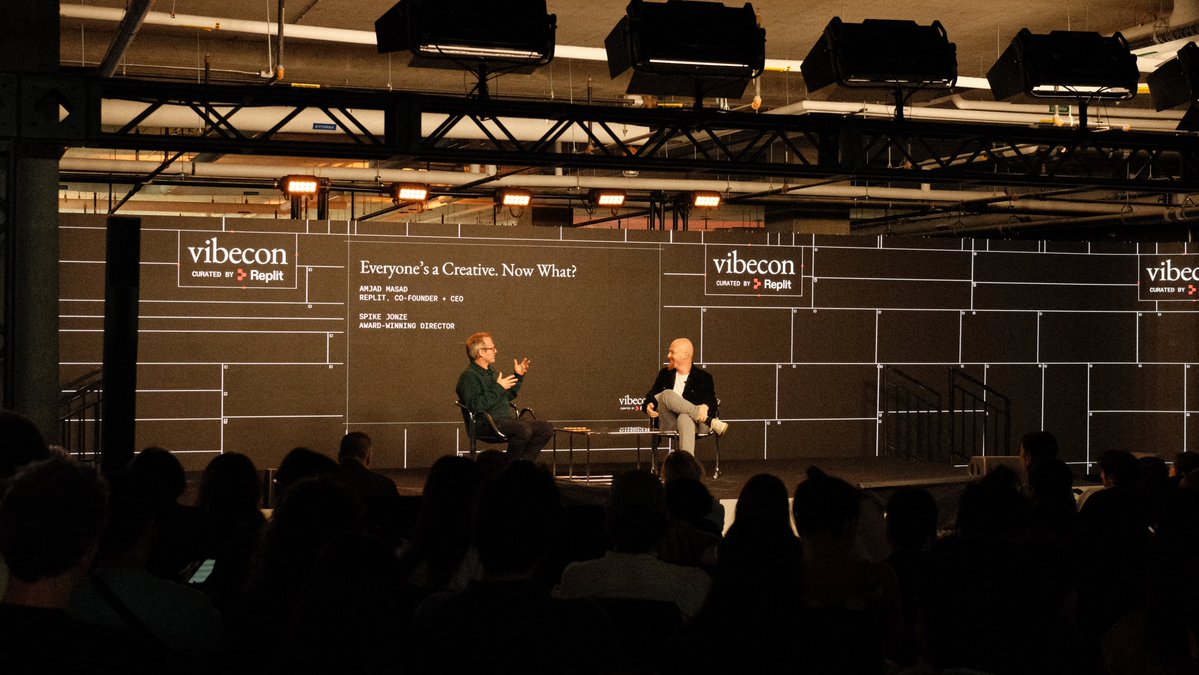
inspiring talks great crowd. More tomorrow! https://t.co/9vj2O6Vh23
Closing out Day 1 of @Replit Vibecon with @amasad and Spike Jonze on the main stage 🎬 https://t.co/t6Z8UuD6tl
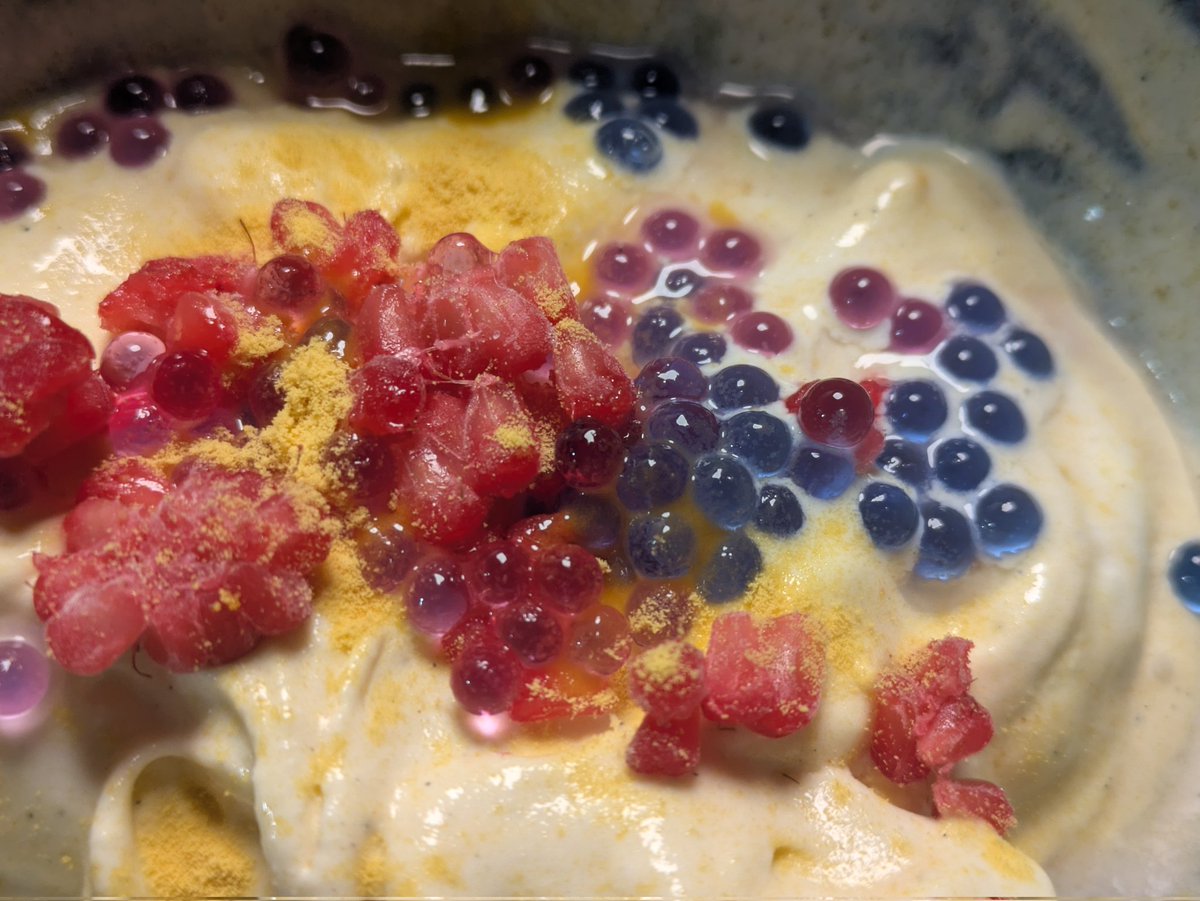
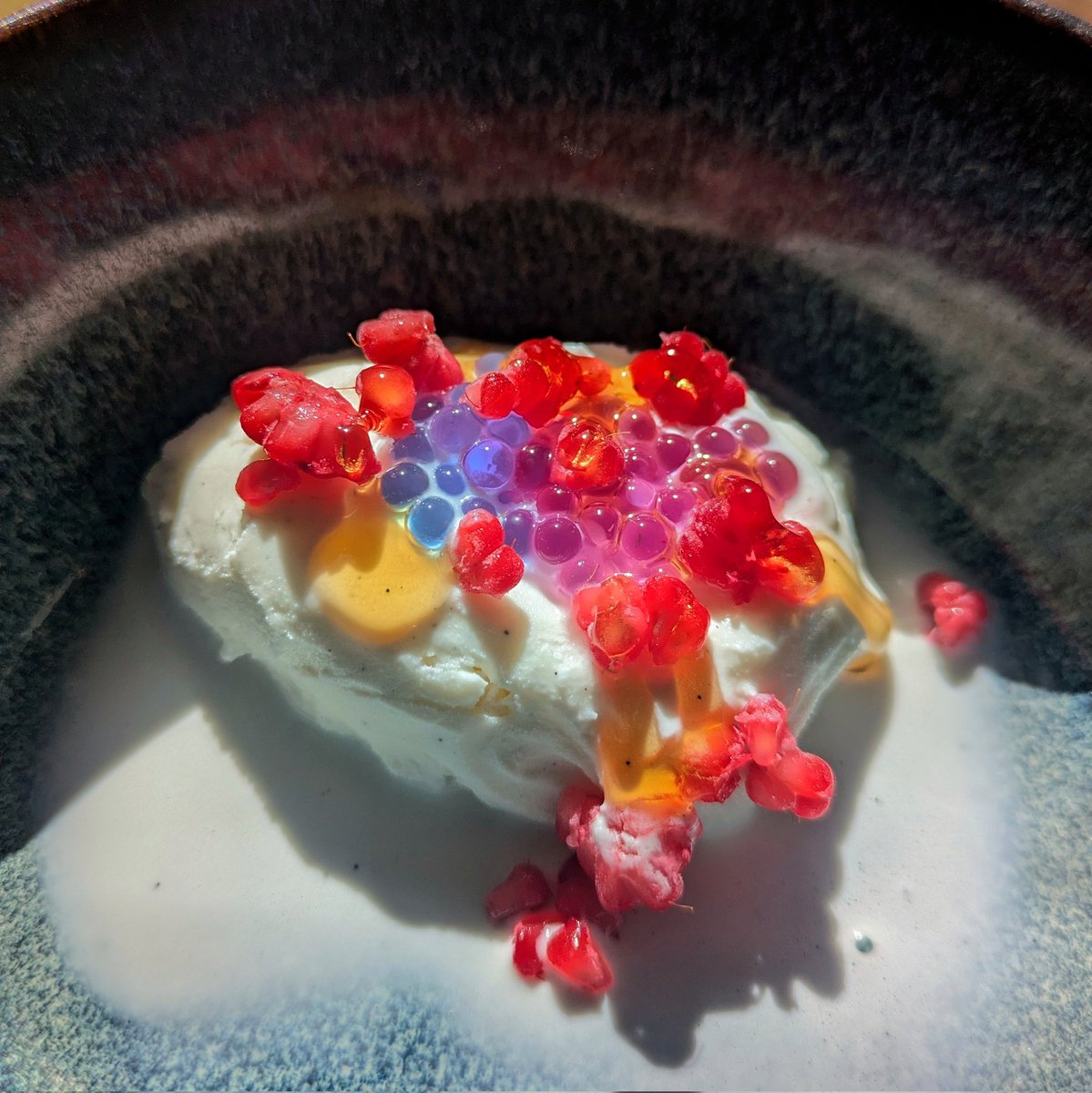
Passion fruit ice cream, butterfly pea popping pearls, with a gradient of citric+ascorbic acid for a bit of tartness, frozen raspberry & honey as extra garnish. https://t.co/WOa95JX1Jx
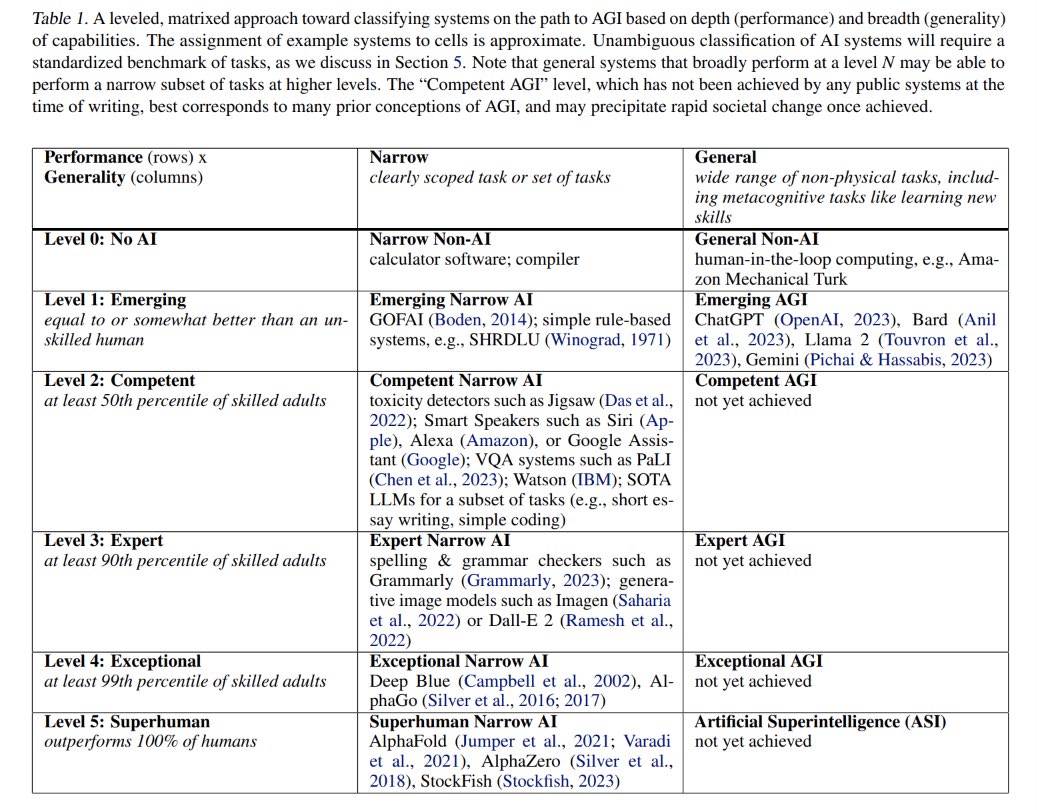
Hypesters sometimes pretend that AGI has already been achieved, but that’s not certainly true by traditional understandings of what that term means. A new paper from Google DeepMind, Waterloo, ANU and UCL makes clear that what the new paper calls “competent AGI” has NOT yet been achieved, let alone what they are calling “expert” or “superhuman AGI”. I fully concur; all claims to the contrary are just marketing.
@argofowl https://t.co/y3cTrEKubC

had so much fun building this interactive FIFA football ⚽️ worldcup archive in @GoogleAIStudio with 3.5 flash model. you can just ship things :) track historic stats by the year, explore matches and squads, scout players, and dive deep into legendary rivalry archives all in one space...
Cooking with chemistry 😃 https://t.co/lHfHkLEc4Z
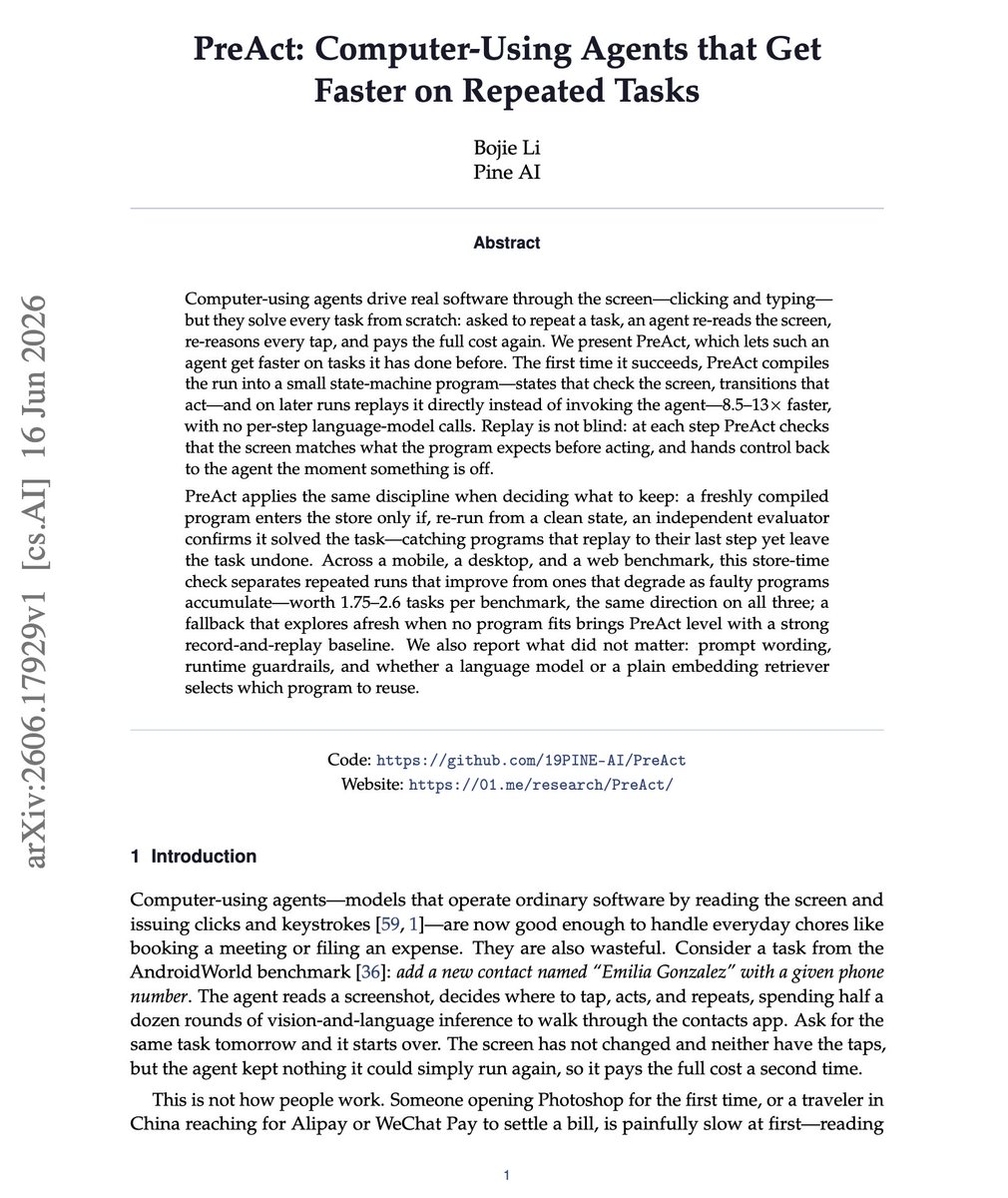
Outstanding paper on computer-using agents. (bookmark it) Computer-using agents drive real software through the screen, but they solve every task from scratch. Ask one to repeat a task, and it re-reads the screen and re-reasons every tap, paying the full cost again. PreAct compiles the first successful run into a small state-machine program, states that check the screen and transitions that act, then replays it directly on later runs. That runs 8.5 to 13x faster with no per-step language-model calls. Replay stays guarded. At each step, PreAct checks that the screen matches what the program expects before acting, and hands control back to the agent when reality diverges. Why does it matter? Most computer-use costs are repeated reasoning on tasks the agent has already solved. Amortizing that into a replayable program is a clean way to make agents faster the second time. Paper: https://t.co/kMloX0qC5M Learn to build effective AI agents in our academy: https://t.co/LRnpZN7L4c
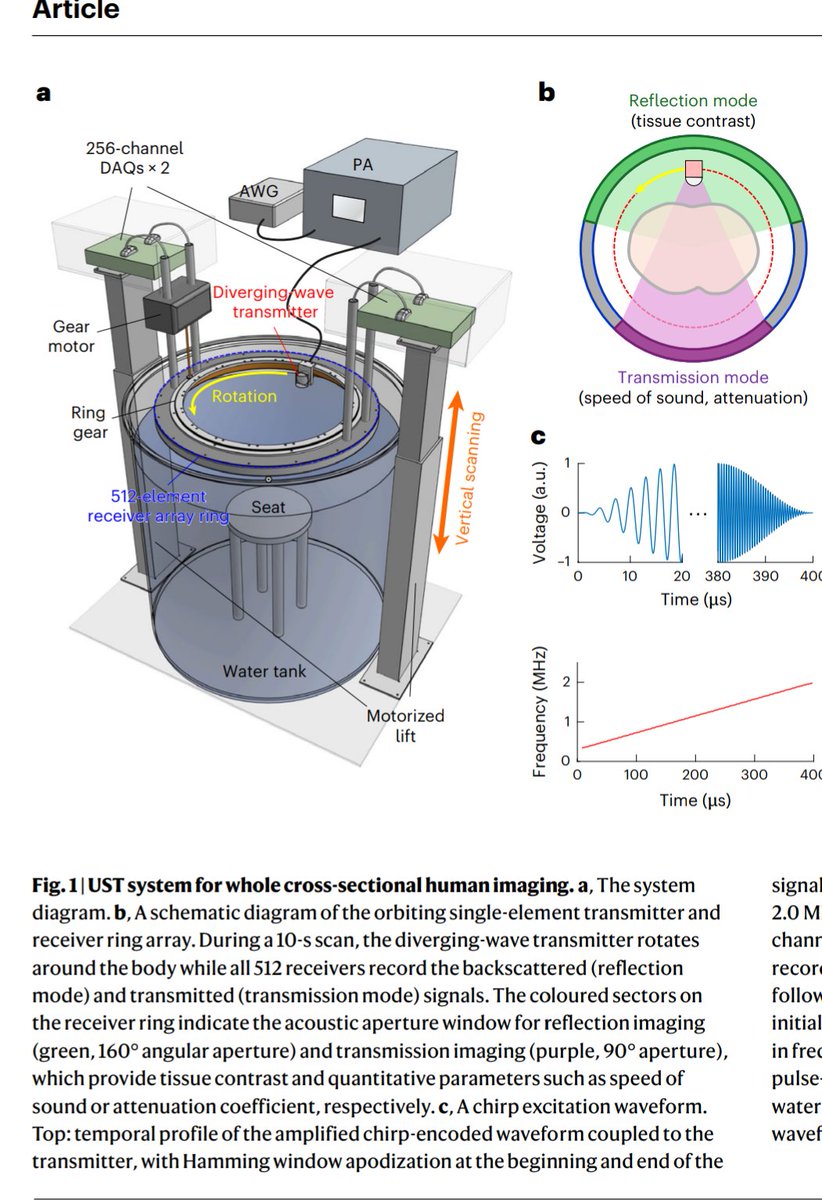
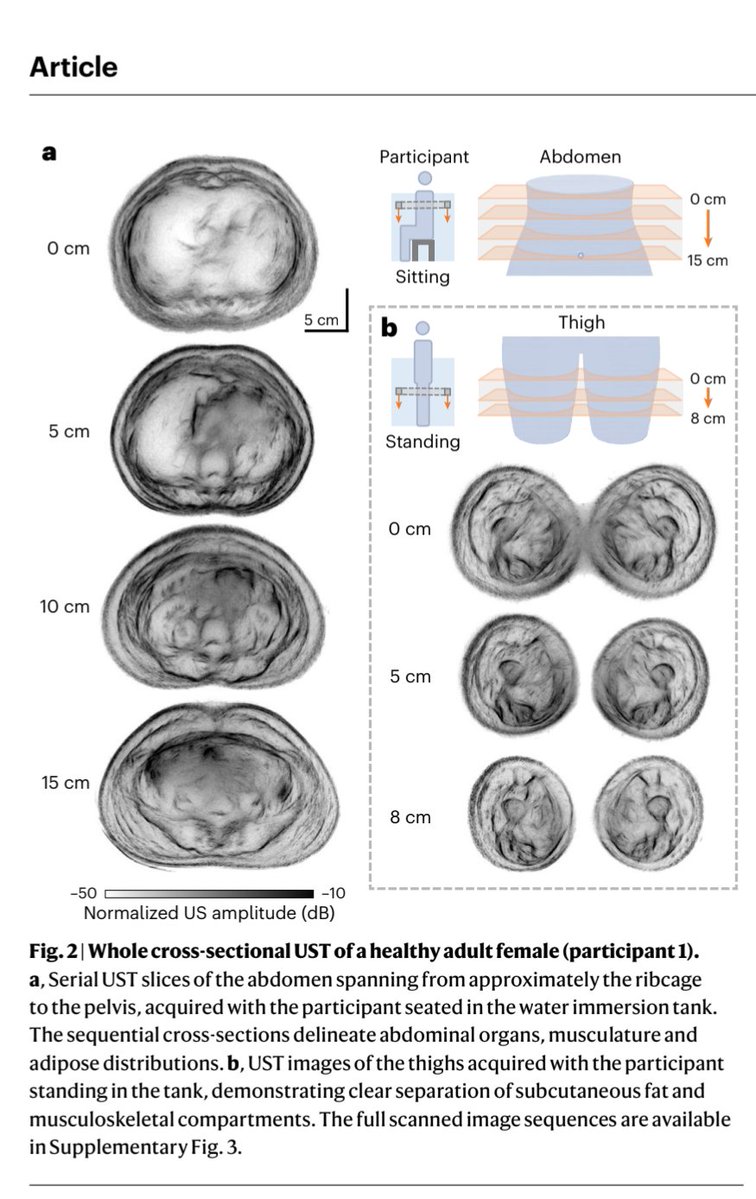
Pros: Radiation-free, magnet-free, fast and low-cost Cons: Requires person to sit in a water immersion tank, and currently has coarser resolution than CT/MRI https://t.co/fyp3HpT8ZZ
This recent paper is super interesting... Using ultrasound imaging to generate images of the entire in vivo human cross-section in the abdomen and thighs Basically trying to do CT/MRI-like imaging but using ultrasound! Ultrasound imaging is highly underrated :) https://t.co/c
@JohnNosta The most worrying part is the cognitive coupling, or self-reinforcing feedback. This is the same infinity effect that happens when you place mirrors facing each other. This is specially troubling as the person becomes trapped into psychological spiralling without an exit gate. https://t.co/fHEd5t7aEz

The most successful car salesman in America had a different question: Not “How do I sell this person a car today?” but “How do I make sure they come back to me for their next one?” So he sometimes downsells, recommends a cheaper model that’s nearly as good. Builds instant trust. One McLaren salesman even saved Jay Leno $20k on ceramic brakes he didn’t need. Rory Sutherland points out that if you only chase short-term, easily measured sales, you’ll never do this. The top guy probably looked average for his first few years. Long-term success often looks like short-term “failure” when you’re playing a different game, one based on trust instead of extraction. “ If people like you, they’ll listen to you, but if they trust you, they’ll do business with you.” — Zig Ziglar
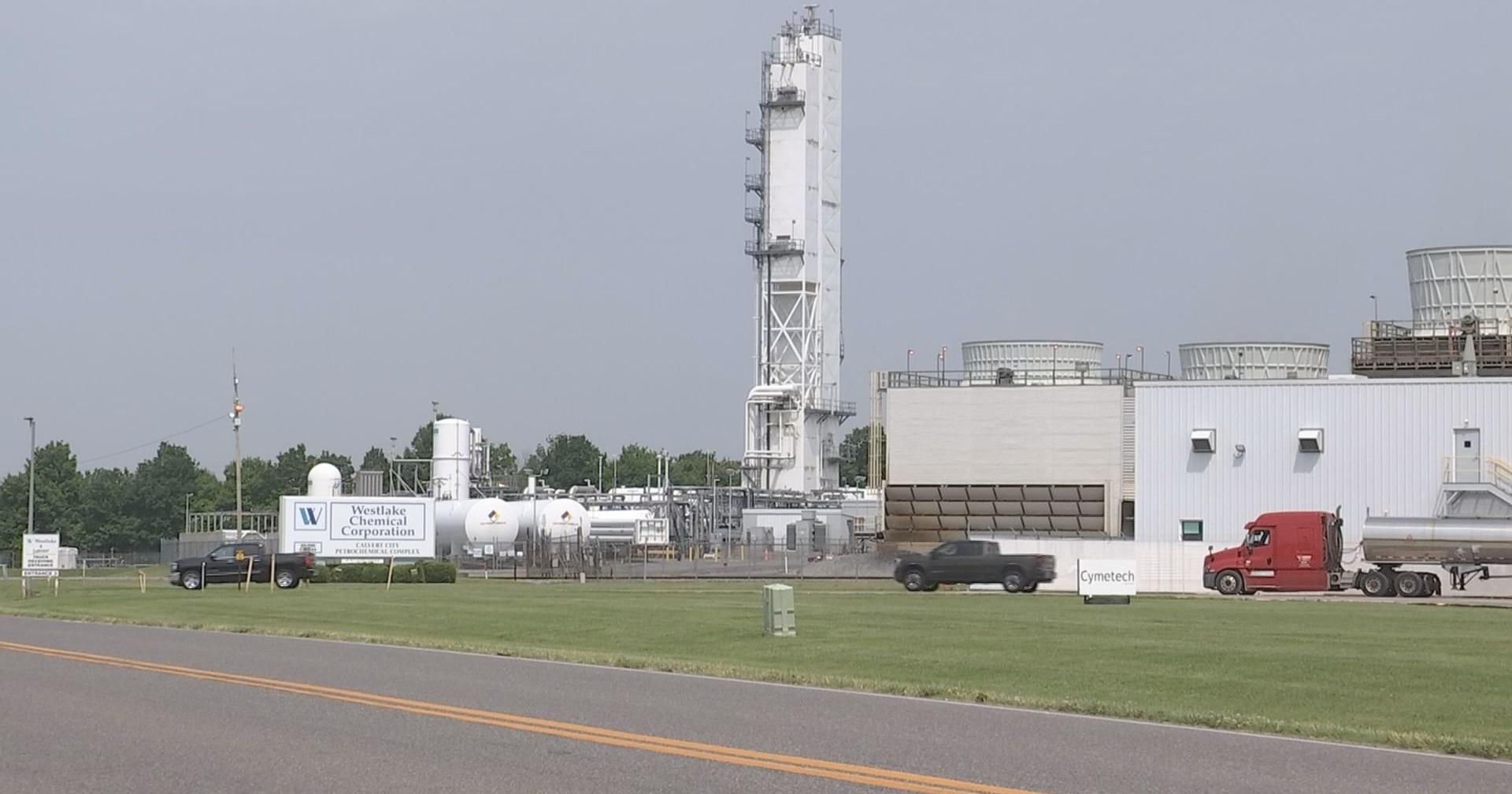
https://t.co/c5jiRXjFdT cc @CIEHS_UofL @uoflsuperfund @UofLEnvirome