Your curated collection of saved posts and media
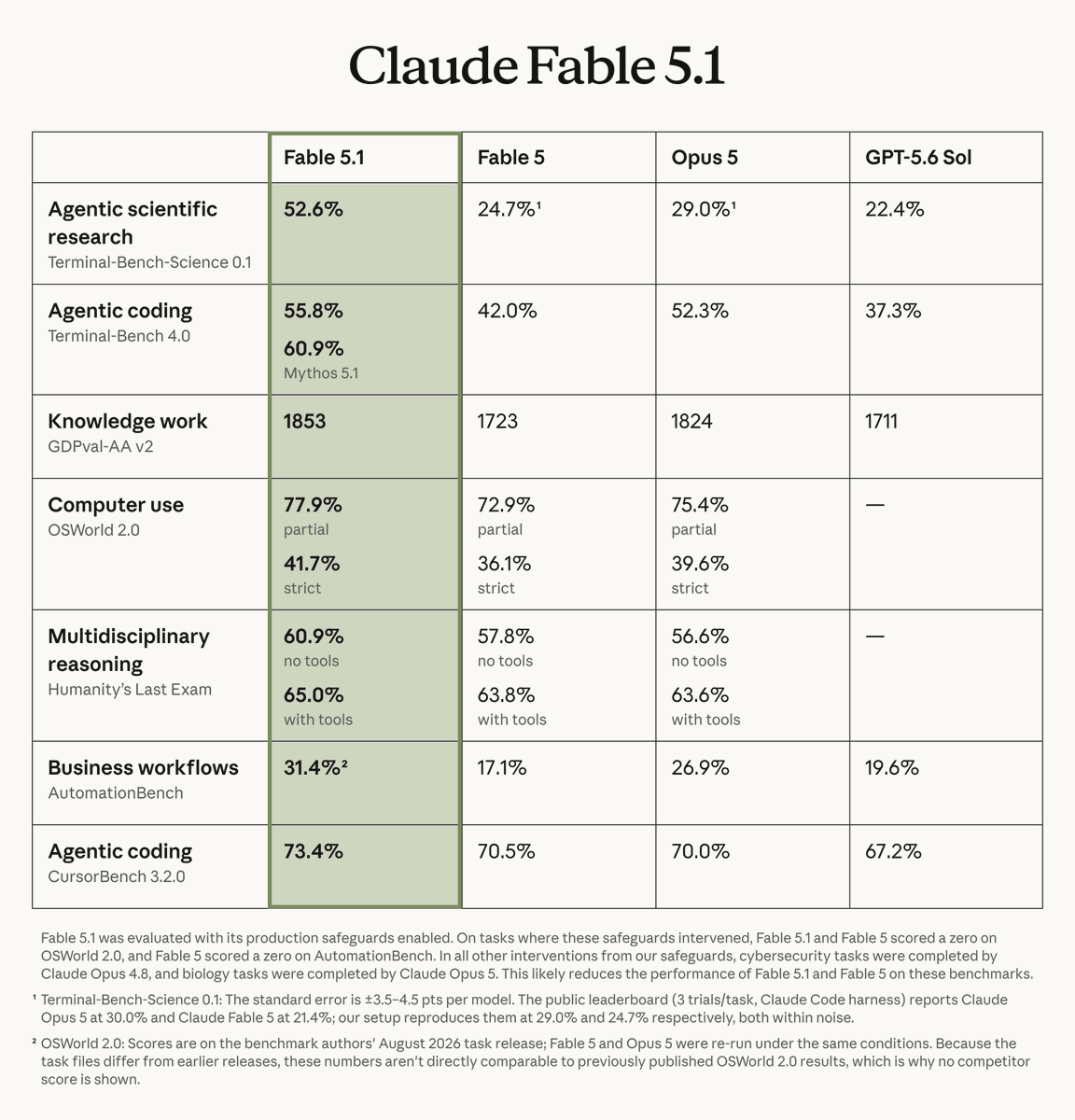
Across our benchmarks, the model sets a new standard. It scores 52.6% on Terminal-Bench-Science 0.1, more than double Fable 5. On Terminal-Bench 4.0, it scores 55.8% against 42.0% for Fable 5. https://t.co/aSb72LSxee
Muse Code is out of beta and now built to handle bigger, more complex engineering tasks. Developers can get started with one command today: curl -fsSL https://t.co/0RApZrEJMv | bash
You can now fine-tune Qwen3.8-27B for free with our notebook! 🔥 Local training works on 24GB VRAM. Unsloth trains Qwen3.8-27B 1.5x faster with 50% less VRAM. GitHub: https://t.co/aZWYAtakBP Qwen3.8-27B Notebooks + Guide: https://t.co/3GE3WVWIOY https://t.co/lKJj9547X8
I made portals with some open cv and projection mapping :) https://t.co/TbQ88YktpD
Gemini 3.7 Flash from @Google on ARC-AGI (Verified): - ARC-AGI-2: 84.6%, $0.25/task - ARC-AGI-1: 95.5%, $0.12/task Gemini 3.7 Flash stands out for its low cost and high scores on ARC-AGI-1 and ARC-AGI-2 relative to other frontier models. https://t.co/7cY43PW7Db
I'm so excited that our @theworldlabs team has achieved a major milestone today! Introducing Atlas - a first of its kind multimodal world model trained from scratch! 🚀 Atlas is capable of generating frames with pixel-perfect camera control, reconstructing large scenes from as few as one single input image, simulating space-time by reframing videos, natively outputting 3D spaces from one or more input images, composing multiple posed images into a consistent 3d world, and more! This is the best camera conditioned world model ever, opening doors to many possible use cases from VFX to robotics. I'm so so so proud of our team!♥️
Introducing Atlas: The world's first multimodal world model that generates image and video frames with pixel-perfect camera control and reconstructs them in 3D. Model the world, move the camera, and simulate space & time. https://t.co/o0qeGubi19
Today we're launching Miles v0.1, an open-source RL framework for LLMs and multimodal models. RL training is easy to start and hard to debug. Miles helps you ensure your run is correct, use hardware efficiently, and keep RL running at scale. Over the past 9 months, 72 contributors have landed 1,326 commits, 85 GPU E2E CI tests, battle-testing Miles on frontier open models like Kimi K3, DeepSeek V4, Qwen 3.8, GLM 5.2, Inkling, MiniMax H3, etc. Miles powers frontier-model development and production RL workloads at @humansand, @periodiclabs, @modal, @DecagonAI, @Eigent_AI, @nebiusai, @IBM and more, on both @NVIDIAAI and @AIatAMD hardware. Here is what we built, and why teams picked Miles🧵
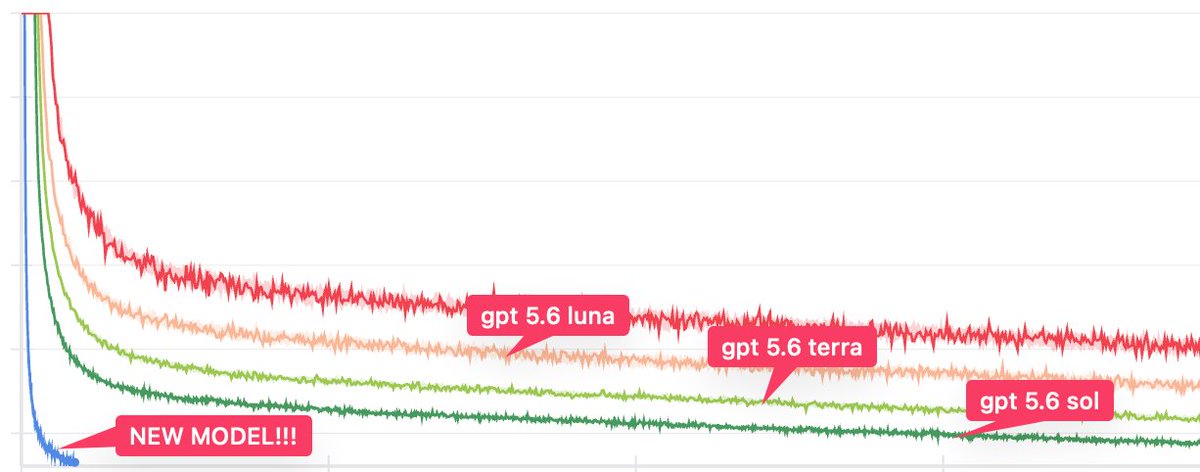
also got access to it, it's still in training and i found the wandb this is crazy, here is the training loss 🤯 https://t.co/olrWjgdunA https://t.co/Ax2SnyaJaV
also got access to it, it's still in training and i found the wandb this is crazy, here is the training loss 🤯 https://t.co/olrWjgdunA https://t.co/Ax2SnyaJaV
Mind blown from a new model I just got access to. I think this will be one of the most (the most?) significant drops this year. Excited. And sorry to be annoyingly vague. Just excited.
trained my own with trl + openenv blog with open artifacts (code, models, dataset, rl env...) soon! https://t.co/HTxA9HLRv9
You can just RL a coding model to paint with javascript btw https://t.co/4x5B81kjUh