Your curated collection of saved posts and media
Vercel Connect is now generally available. Give your apps and agents secure access to @slackhq, @linear, @github & 100+ other services. • Short-lived, scoped access tokens • Token and trigger observability • RBAC and audit trails https://t.co/3JUlBz3ddo
Damn. Hermes Agent + local Qwen3.8-27B is a beast. So far it hasn't failed a single coding task I've given it, and I keep upping the complexity to see if I can make it fail. So far, it has been near-perfect. As good as Opus.
Stop using your agent logs just for debugging. Use them to train your own model. Today we're launching Agnost AI (YC S26)'s first model: agnost-*******-0.1 Trained for our first customer on their existing production traces & it beat the frontier: +22.9% task success −90.2% latency −94.5% cost If you ever thought of fine-tuning your own model, we'll do it for you, talk to us!
OpenWorker -- an open source agent that doesn't just chat but completes tasks on your laptop -- just released a new version with many features for security workflows. After our initial release, many users found it especially useful for cybersecurity. Attackers are already using AI; OpenWorker is committed to giving defenders the same leverage. Running an agent requires both (i) A model and (ii) A harness (the software around the model). Because the OpenWorker harness is fully open source, security teams can audit it to make sure we haven't built any backdoors that exfiltrate your code and data to some company or even a foreign adversary. OpenWorker now comes with built-in cybersecurity agents for (i) Scanning your code for vulnerabilities. (ii) Scanning dependencies for supply chain injections. (iii) Checking your cloud security configuration for attack surfaces. This enables developers to do much more security work before deployment (part of what's called the "shift left" movement). You choose the model: you can run open weight models fully locally so sensitive code never leaves your machine. This helps with legitimate security work (like reproducing a known exploit to defend against it) that can trigger refusals in leading closed models. Or use your ChatGPT subscription, or stealth preview models like Ox Alpha, or any model via API key. Thanks also to all the open source contributors! Join work with @rohitcprasad so please follow him too to get more frequent updates. Try it out: https://t.co/QPZLudn7ug Code: https://t.co/NYCiTD6hSq
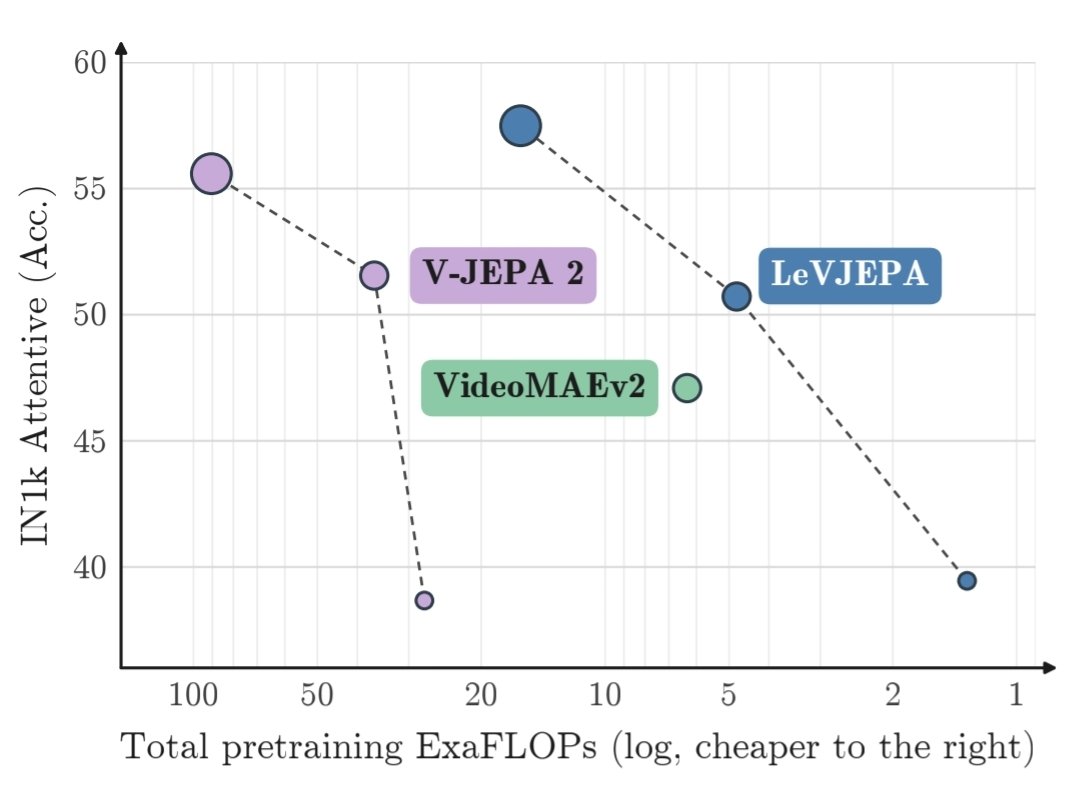
SIGReg for pretraining Video Foundation Models! Our LeVJEPA opens many doors... - stable recipe with a simple loss (sigreg + prediction) - no tubelet, frame aggregation, EMA, stop-gradient, .... - 20X more FLOP efficient than VJEPA1/2 pretraining - open source + reproducible https://t.co/rCwJRx2Dim
A new Pareto frontier in video pretraining. Excited to introduce LeVJEPA 🔥: a stable, efficient end-to-end pretraining method that matches V-JEPA 2 at up to 20x less pretraining compute! No target encoder, no masked prediction, no stop-gradient or teacher-student schedule. On
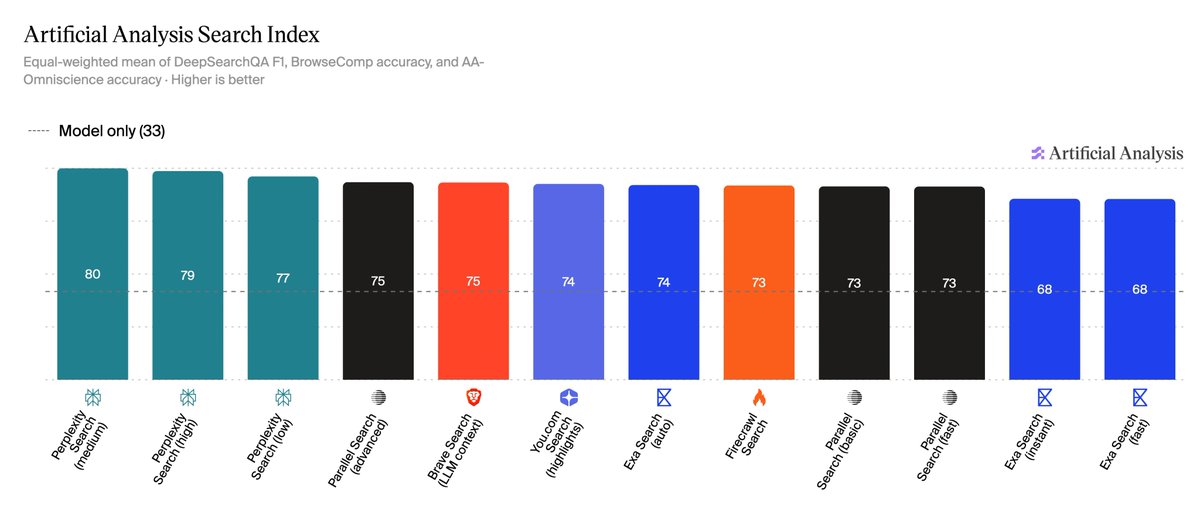
Perplexity Search debuts on the Artificial Analysis Search Index, with all three context size variants taking top positions on the leaderboard The @perplexity_ai Search API comes with three context settings (low, medium, and high) that control how much extracted content each search result carries. We tested all three variants using our standardized methodology: the same model (GPT-5.6 Luna at medium reasoning), running inside Stirrup, our open-source agent harness, with tools for searching and fetching pages from the web. Only the provider behind the search tool changes. Key results: ➤ Perplexity Search (medium) scores 80 on the Artificial Analysis Search Index, ahead of the previous leaders, Parallel (advanced) and Brave Search (LLM context), at 75. The high and low variants score 79 and 77 respectively. Its lead is concentrated in BrowseComp results, with AA-Omniscience and DeepSearchQA scoring comparably to other leading providers ➤ Efficient search payloads: smaller overall search results mean the model reads less per task, so Perplexity has the lowest model inference cost per task of providers we’ve tested so far, ranging from $0.028 to $0.034 across the three variants vs $0.036 for the next lowest provider ➤ Total cost per task is ~$0.091 for the medium and high context variants, at mid-pack latency. For comparison, Parallel (advanced) costs $0.084 per task and Brave (LLM context) costs $0.13 per task
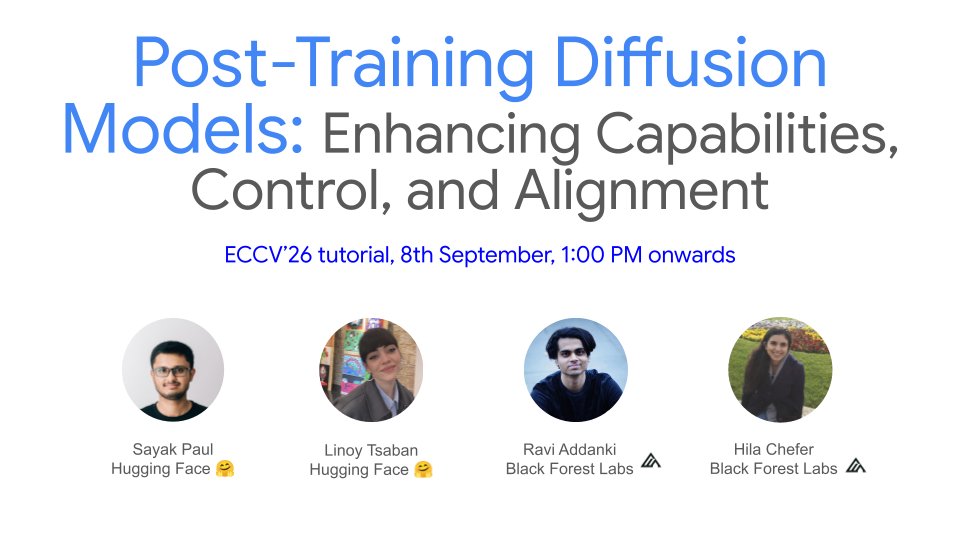
The only tutorial you should attend at #ECCV26 (kidding 😂). But I am incredibly psyched to be doing this with the best bunch out there. I strongly feel this is a timely tutorial! We will present general approaches alongside our learnings from (post)-training impactful models like Flux2/3. Tutorial website: https://t.co/eig5dg3xwP Save your calendars!
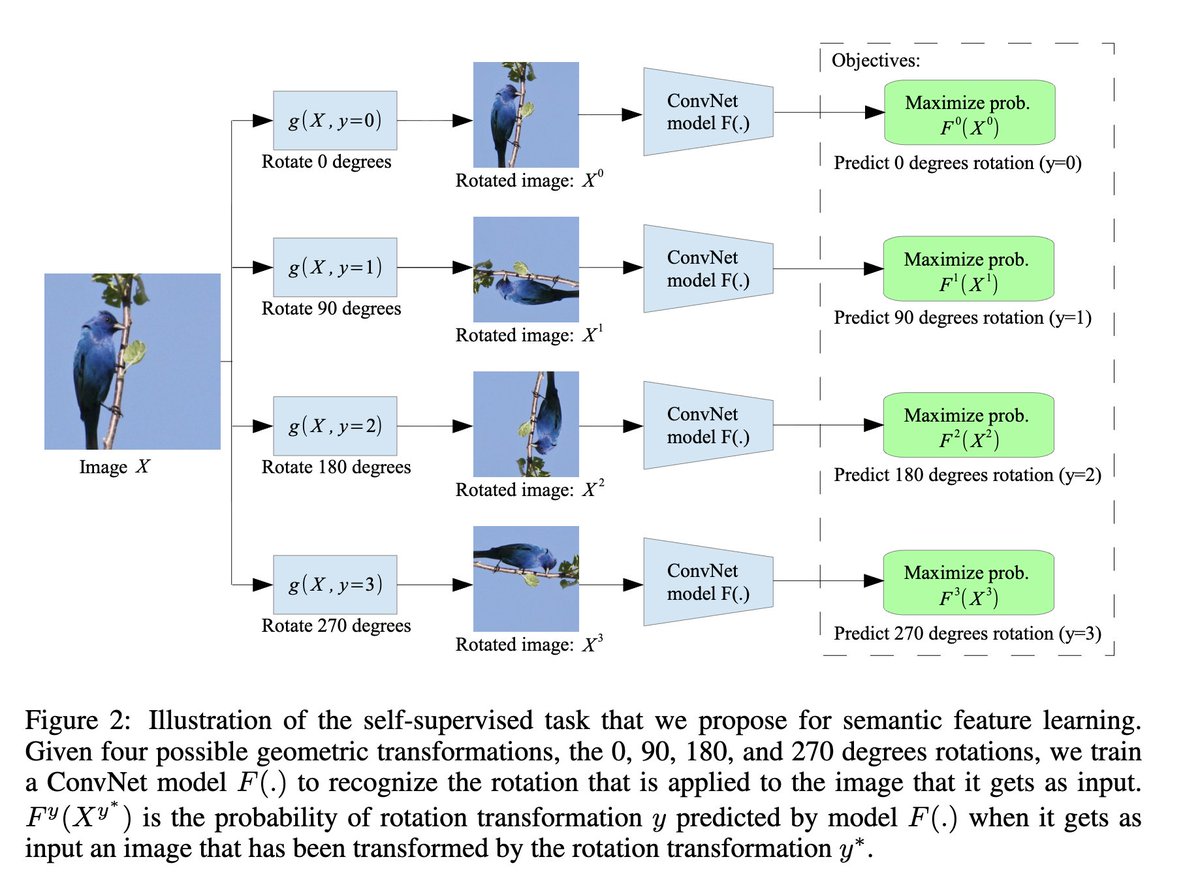
What is the simplest, cleanest technique for self-supervised learning (SSL)? RotNet (2018), without a doubt Take an image, rotate by either 0, 90, 180, 270 degrees, and predict its rotation. The model must learn useful features to solve the task. Read on... [1/2] https://t.co/jlqS7kXHeH
💡 Learn the latest GitHub workflows by actually building with them. We’ve released 4 new GitHub Skills exercises designed to give developers practice with AI-powered development, agentic workflows, and code quality. 🧵⬇️