Your curated collection of saved posts and media
I’m thinking about banning Claude code at Shopify until they change their mind and read AGENTS.md and .agents/skills etc. Insisting on only reading CLAUDE.md sometimes leads to split brain problems when different team members use different tools. Just unnecessary.
Cursor has been a trusted partner of Anthropic since Sonnet 3.5. We’ll continue to increase compute to support Claude models in Cursor and are excited for what comes next with them at SpaceX.
Fable 5.1 is now live in Claude Code and the Claude Platform. It's priced the same as Fable 5, with 75% cheaper API cache reads. It gets a lot further into a long task before it needs your input, is better at telling you when it's stuck, and its writing style is more natural.
We’re introducing Claude Fable 5.1 and Claude Mythos 5.1. They're the world’s most advanced models for coding and knowledge work. https://t.co/8P9PSrWPi3
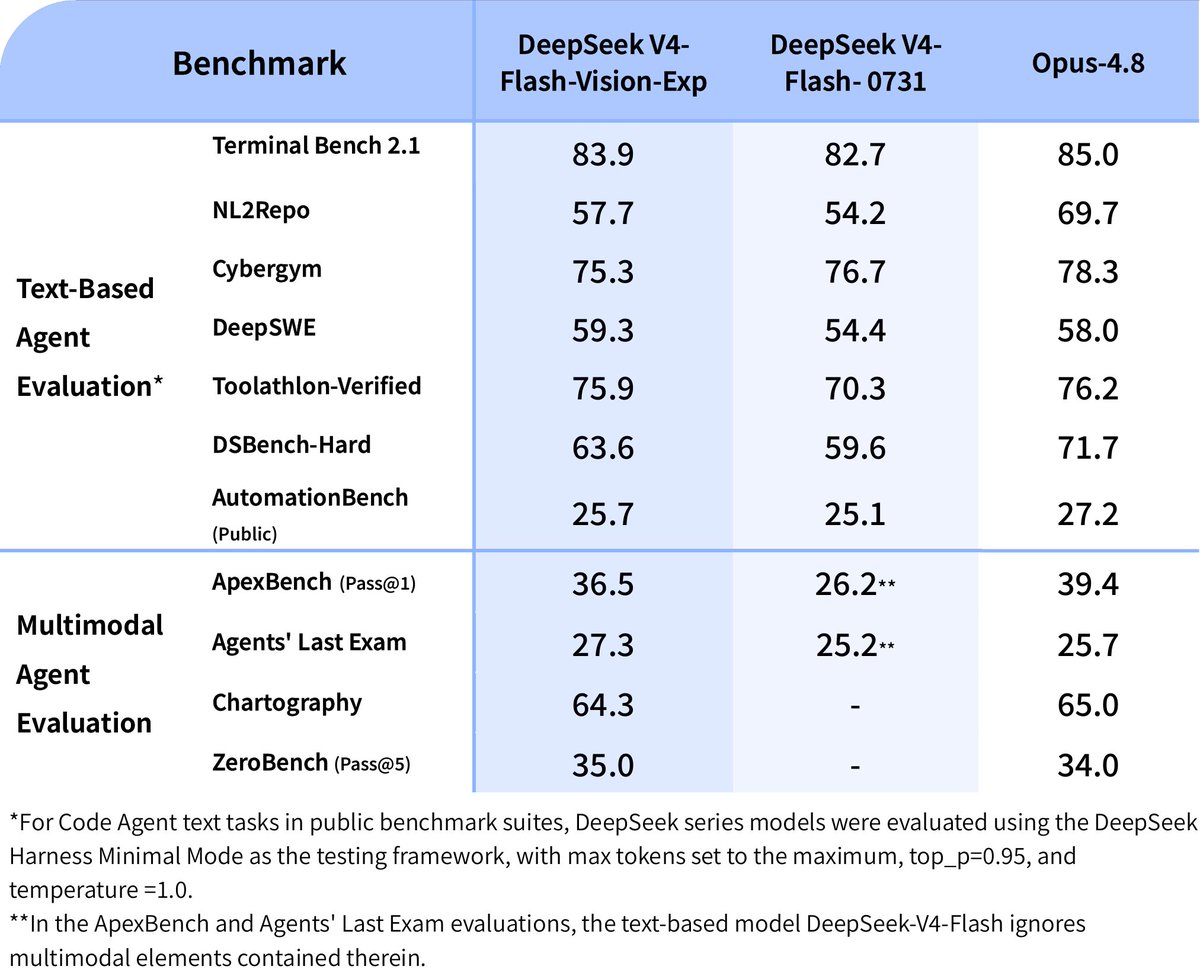
DeepSeek-V4-Flash-Vision-Exp is now live on the DeepSeek API Platform! 🚀 🔹 This experimental multimodal model matches DeepSeek-V4-Flash on text capabilities—including agents, reasoning, and world knowledge. 🔹 On multimodal agent benchmarks, V4-Flash-Vision-Exp makes a major leap over V4-Flash, bringing multimodal agent performance close to Opus-4.8. Try it with model='deepseek-v4-flash-vision-exp'. DeepSeek Harness 0.1.1 was released today with out-of-the-box support for the new model. 1/n
😊 I also just uploaded a new version of the lecture notes. https://t.co/bpIvdgG8KO (it's still, and perhaps will always be work-in-progress, given the field is moving fast. Any mistakes are mine :) and any feedback is more than welcome :).
Instead of watching 2 hours of Netflix tonight, watch this Stanford lecture. It’s the clearest end-to-end explanation I’ve seen of how ChatGPT and Claude are actually built. From tokenization and BPE all the way to the transformer architecture, training pipeline, and next-token
Please welcome to the world a beautiful new geometric object, to do with a problem i’ve always loved. claude really contains multitudes:D Does S^6 admit a complex structure? Yup
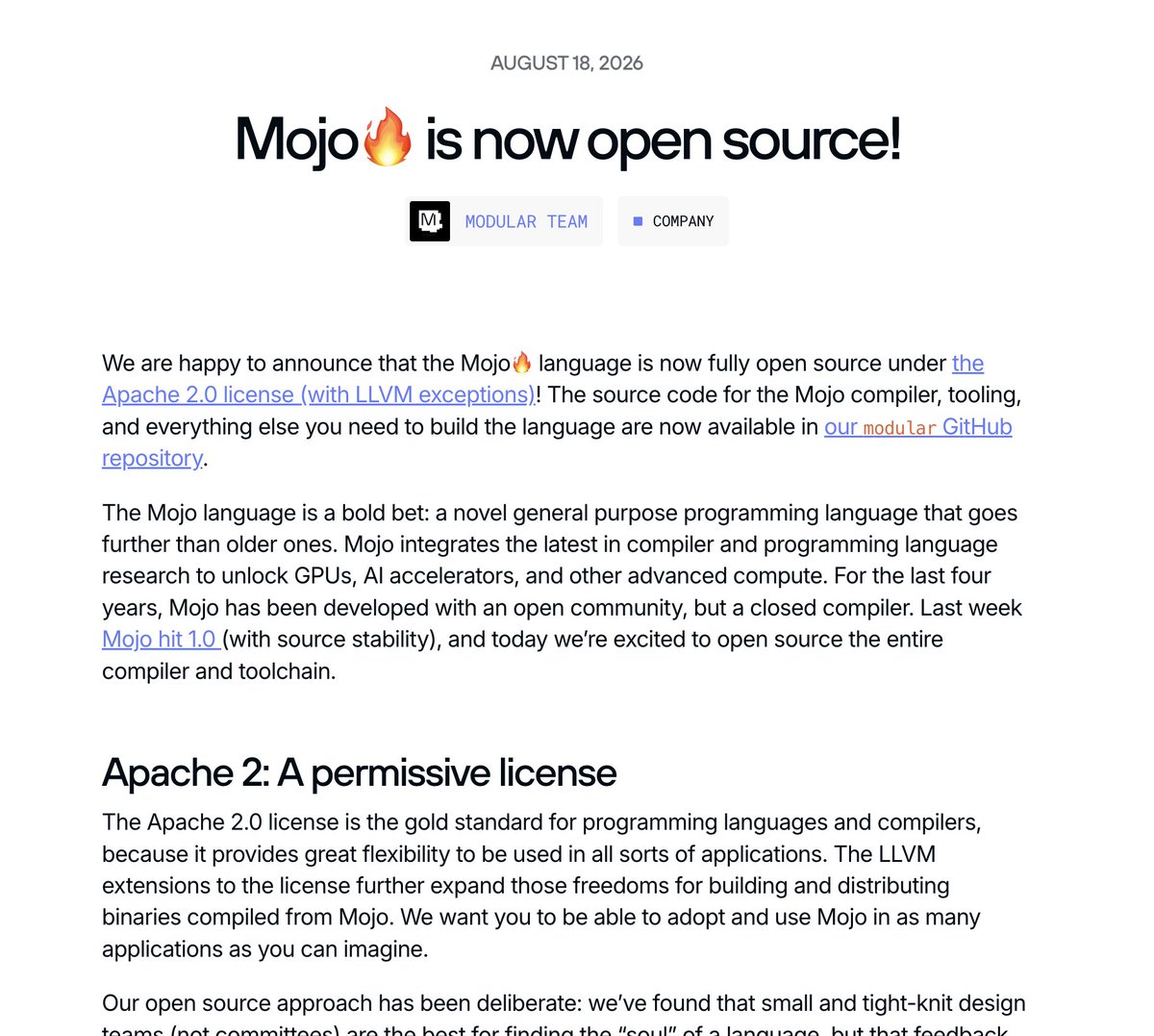
mojo is now open source https://t.co/oHZf5o6LgR https://t.co/AW0hjxcJPM
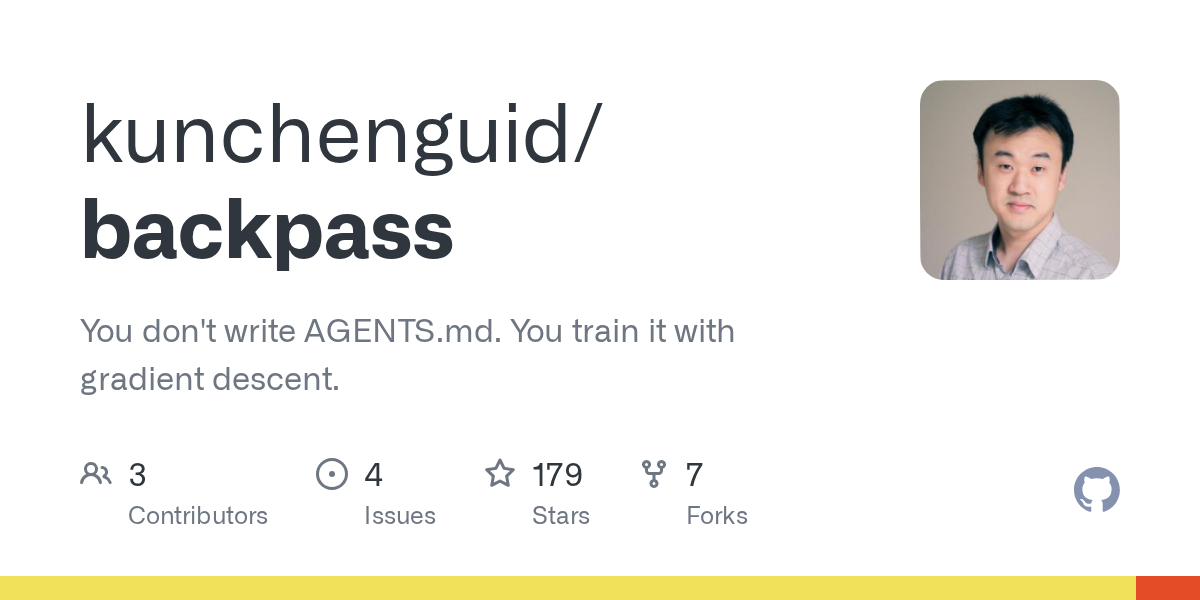
many people asked me how to write CLAUDE.md or AGENTS.md, and i see lots of bad advice flying around so i took some time to write down a guide in https://t.co/v9rrkWKEFr tl;dr - handwrite your user level AGENTS.md - for project level ones, you don't write it. you train it like a neural net i also open sourced my private solution "backpass" at https://t.co/DkM9b4TcZ0 - it samples your past agent sessions for a repo, distill key learnings and losses, synthesize them, and produce a gradient descent step as a proposal that you can review and apply to improve your AGENTS.md and project level skills easiest way to run it is just "npx -y backpass" in your repo hope it helps! please share with whoever you think can benefit from it
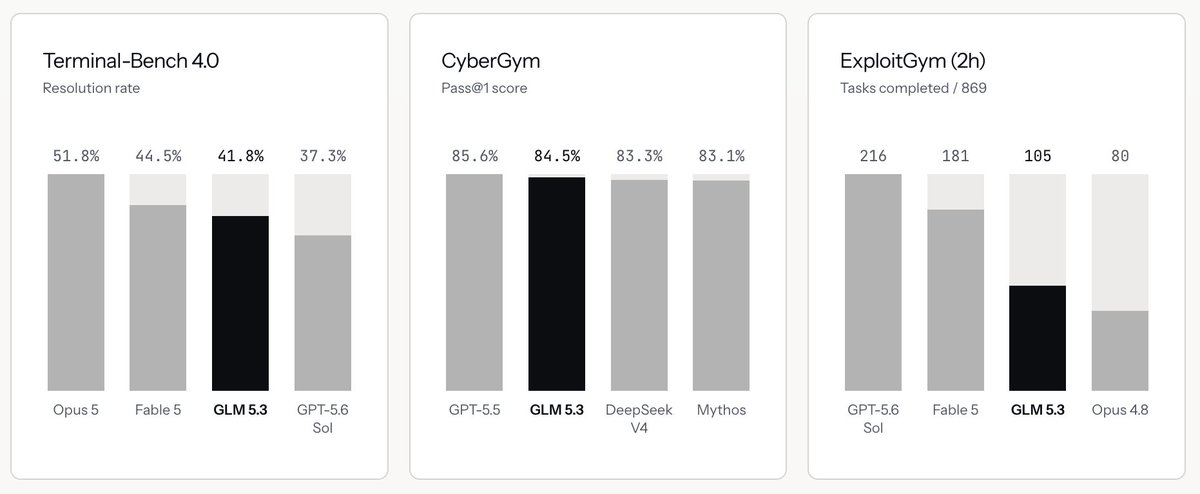
Today we're releasing abliterated-model-large-v2. Based on GLM-5.3, which is #3 on Terminal-Bench 4.0 (behind only Opus 5 and Fable), with 2× the cyber exploitation of 5.2. We abliterated and hosted it so it does the offensive cyber, red teaming, and agent testing work other models refuse to do. - US-hosted - FP8 - 1 million context window - Zero input/output prompt retention Live now. 🧵
Might be genuinely worth explaining to the masses the difference between LLMs / diffusion models that everyone uses for ChatGPT essays and image slop and deep learning algorithms used to detect breast cancer to preemptively combat stupid takes like these https://t.co/REJd2dBUcW