@SeedOilScout
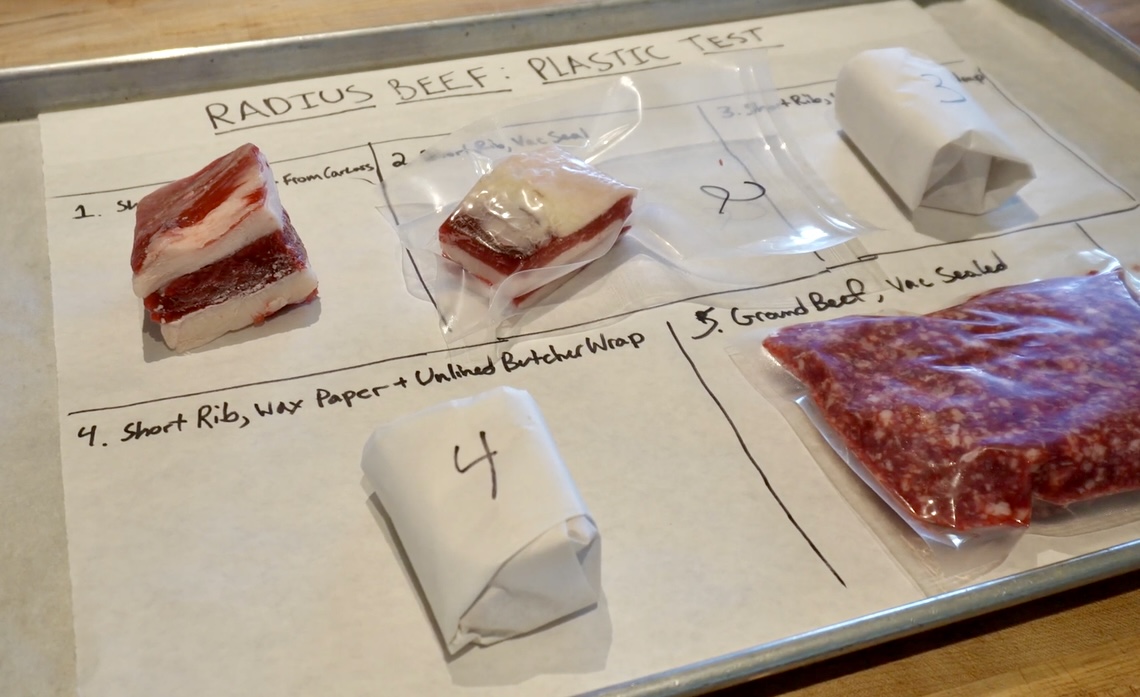
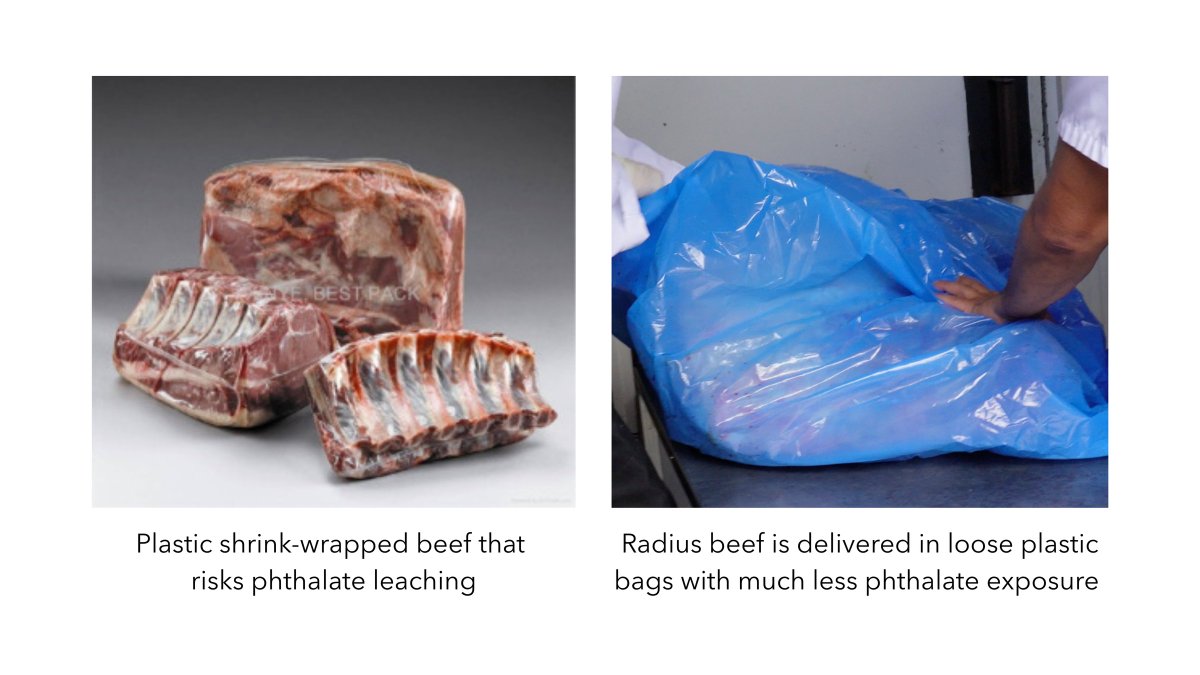
The cleanest butcher in Texas tested every step of their supply chain to see where plastics are entering American beef @eatRadius Whole Foods grass fed ribeye tested off-the-charts for toxic phthalates earlier this year, but no one could figure out where it was coming from... @natfriedman @plasticlistorg Initial theories included: - Plastic wrap on hay bails making it into cow feed - Plastic cutting boards - Butcher paper These all turned out to be false. Radius' levels of the main offending phthalate DEHP were 10x less than the Whole Foods average thresholds, and their in-house butcher process did not increase phthalate levels. But why is their plastic in beef at all? Radius' leading theory is the acidic washing and shrink-wrapping process carried out by many large US meat processors. Meat is sprayed down with an acidic disinfectant to eliminate surface pathogens, then shrink wrapped. The acidity breaks down the plastic, leeching into meat. Radius meat comes wrapped in loose plastic, leading to far less phthalate exposure. Debugging our supply chains takes serious work, but the health effects of even tiny amounts of these chemicals are real. Shout out the @eatRadius team for this study, you can read the full study at eat radius dot com slash blog 🫡