@random_walker
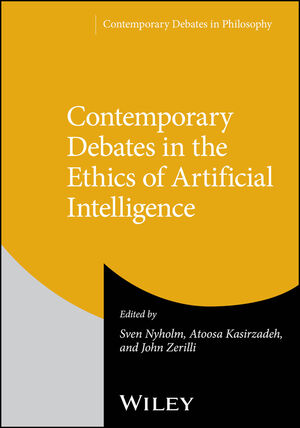
📢📢 I have a new paper in which I argue that the question “Can we make algorithms fair?” is a category error: https://t.co/IWod5em6mz A few years ago I became disillusioned with algorithmic fairness research and stopped working in the area. So when I was invited to contribute an essay to the volume “Contemporary Debates on the Ethics of Artificial Intelligence” (part of the highly successful “Contemporary Debates in Philosophy” series), it was an opportunity for me to look back and reflect. The key thesis: “There has been an avalanche of research on how to make algorithms fair, and there has been a powerful movement to turn those ideas into reality. How have things panned out?I will argue that this movement has been only minimally effective at preventing harms from automated decision-making systems. When we analyze why, it reveals two important limitations of the underlying ideas. First, fairness as a proxy for justice focuses attention on too narrow a set of questions. Second, it applies a depoliticized lens that gives an illusion of moral clarity in academic discussions but runs into headwinds when actually attempting to implement it. These attributes are not incidental and cannot easily be fixed. They are integral to what makes the fairness frame appealing in the first place.” The second part of the paper is constructive: “I advocate for a more ambitious study of fairness and justice in algorithmic decision making in which we attempt to model the sociotechnical system, not just the technical subsystem. The animating question becomes: “How should we design algorithmic bureaucracies?” This will require many shifts including letting go of neat, mathematically precise fairness definitions and embracing empirical social scientific methods. But the potential payoff is enormous in terms of a greater ability to model benefits and harms and much expanded design space for reform.” The other essays in the volume sound fascinating and I look forward to reading them. https://t.co/vTOK0vG2jQ 1 What Is Artificial Intelligence and Should We Define It in Terms of Agency? Sven Nyholm 2 Artificial Intelligence as a New Form of Agency Luciano Floridi 3 What Can AI Ethics Learn from Medical Ethics, Bioethics, and Animal Ethics? Paula Boddington 4 What Is Distinctive About AI Ethics When Compared to Bioethics? Thomas Grote 5 Can We Make Algorithms Fair? Margaret Mitchell 6 What If Algorithmic Fairness Is a Category Error? Arvind Narayanan 7 Are Explanations of AI Decisions Morally Necessary? Emily Sullivan 8 Doing Without Explainable AI David Danks 9 Nine Philosophical Questions About Privacy Leonhard Menges 10 The Group Right to Privacy in the Age of AI Anuj Puri 11 Group Rights: A Skeptical View John Zerilli 12 Entangling Ourselves with AI: Affirmative Responsibility and the Cultivation of Responsible Agency Fabio Tollon and Shannon Vallor 13 Generative AI, Language, and Authorship: Deconstructing the Debate and Moving It Forward Mark Coeckelbergh and David Gunkel 14 From “Can AI Be Creative?” to “What Is the Value of Integrating AI into Creative Processes?” Caterina Moruzzi 15 What Will Work Be Like in the Future? Daniel Susskind 16 AI and the Future of Work: An Egalitarian Vision Kate Vredenburgh 17 What Would It Look Like to Align Humans with Ants? Vincent Conitzer 18 Could We Control Superintelligent AI? Roman V. Yampolskiy 19 The Many Faces of AI Alignment Atoosa Kasirzadeh 20 On the Troubled Relation Between AI Ethics and AI Safety Olle Häggström 21 Short-Term or Long-Term AI Ethics? A Dilemma for Ethical Singularity Only Vincent C. Müller 22 Should We Worry About the Moral Status of Nonsentient AIs? Parisa Moosavi 23 On the Moral Status of AI Entities and Robots: A Critique of the Social-Relational Approach and a Defense of the Properties-Based Approach John-Stewart Gordon Carbon-Intensive Activities Sustainable? 24 Reduce, Reuse, Recycle, Refuse: Green Data Refusal and Sustainable AI Cristina Richie 25 The Making and Management of Computational Agency Ranjit Singh 26 Deepfakes and Democracy Claire Benn 27 Should Online Platforms Be Publicly Owned and Controlled? Sean Donahue 28 The Tragedy of AI Governance Simon Chesterman 29 Can AI Be Governed? Gillian K. Hadfield