@iScienceLuvr
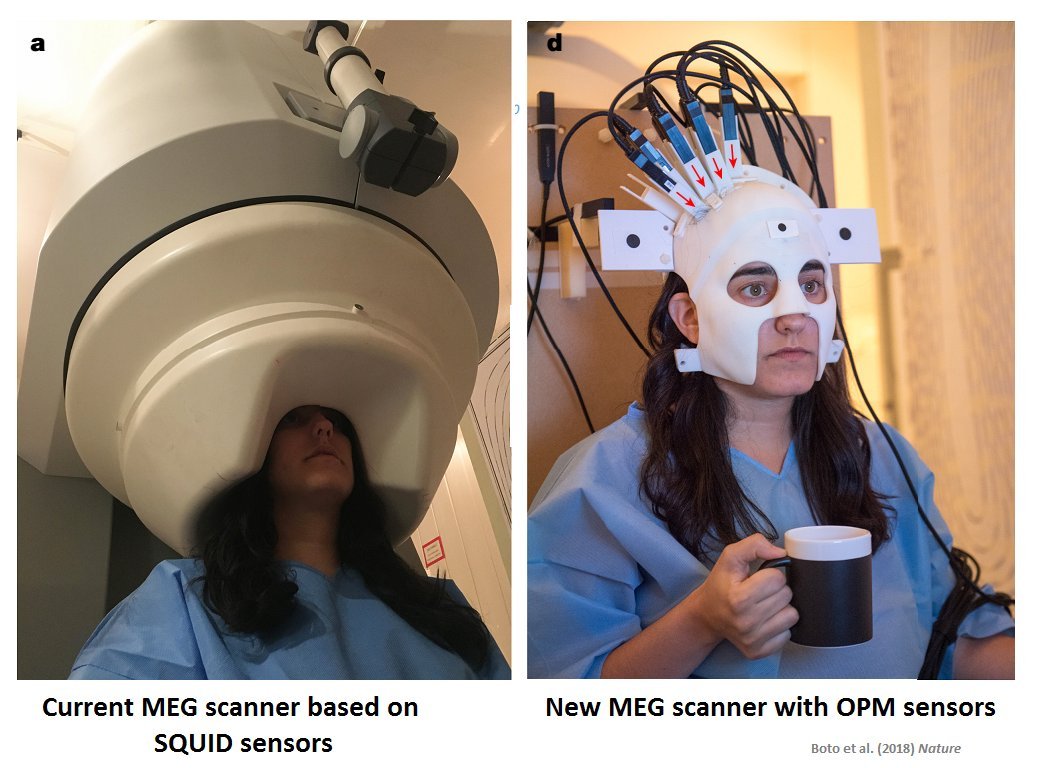
So what does this mean for the future of noninvasive BCI? Well there are two main caveats worth noting: 1. First this study only looks at decoding what someone is already typing, not what someone is thinking. However, it's likely that similar parts of the brain are activated and the models can transfer over fairly well. We are already seeing this become the case for decoding imagined images from fMRI data. 2. MEG is still not very portable and requires you to be still in a huge machine. There are optically-pumped magnetometers (OPMs) that are more flexible but still require being in a magnetically shielded room (the magnetic signals from your brain are weaker than the Earth's magnetic field).