@omarsar0
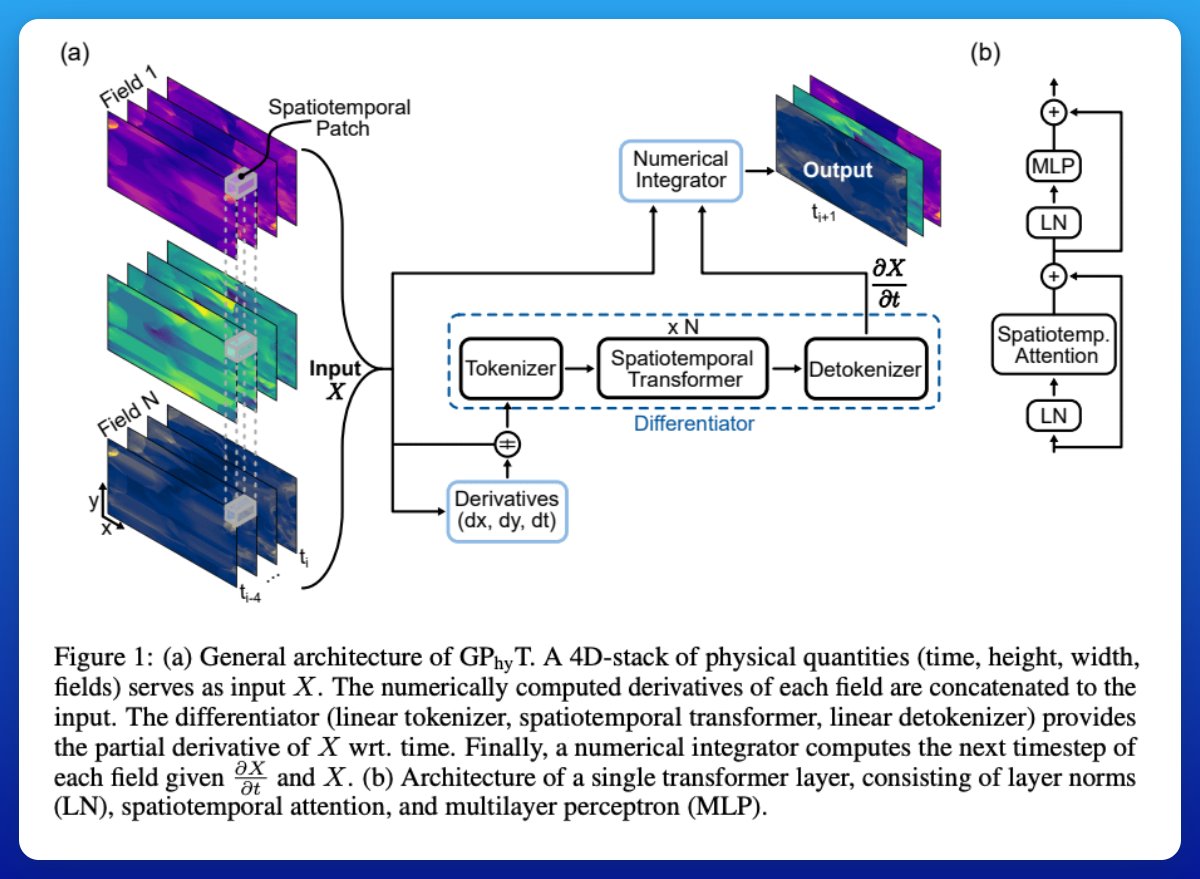
How the model works Think of GPhyT as a hybrid of a neural net and a physics engine. It takes in a short history of what’s happening (like a few frames of a simulation), figures out the rules of change from that, then applies a simple update step to predict what comes next. It’s like teaching a transformer to play physics frame prediction with hints from basic calculus.