@jerryjliu0
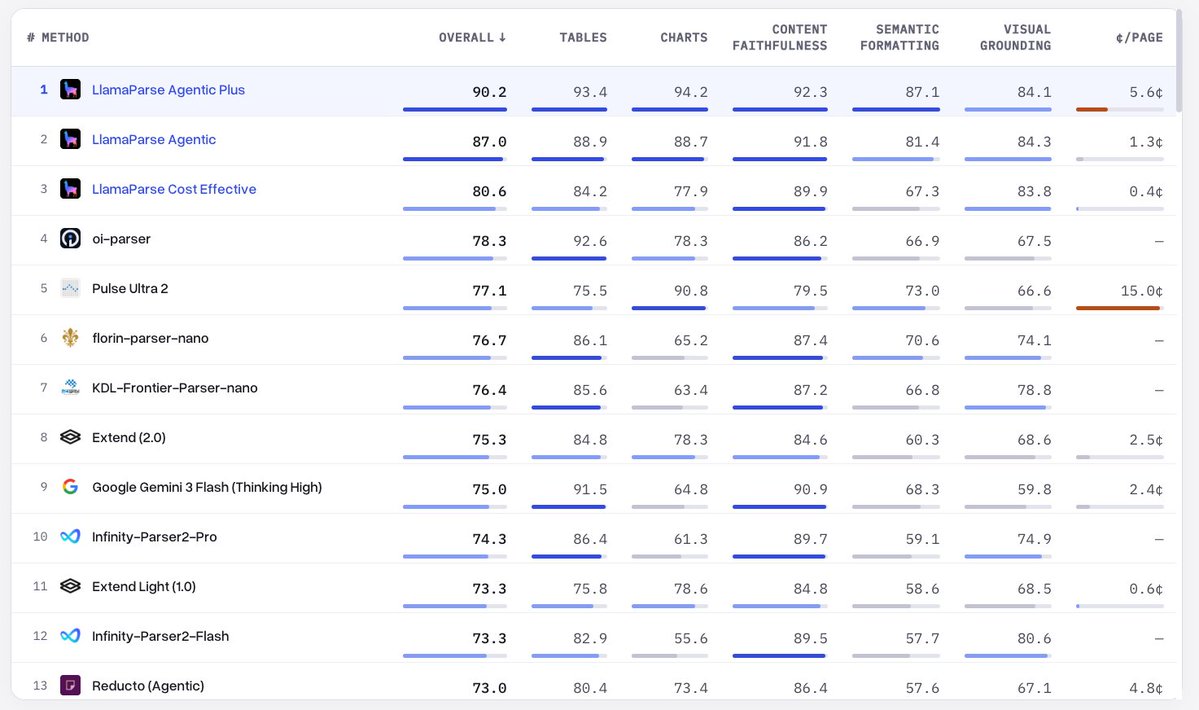
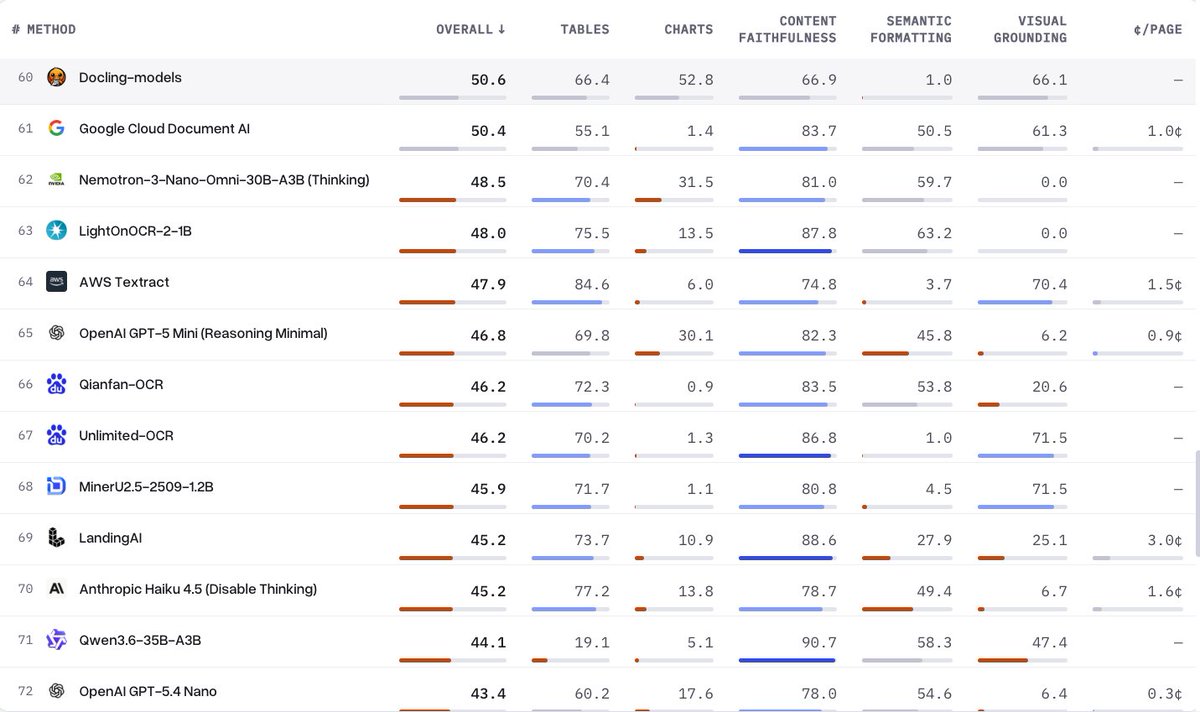
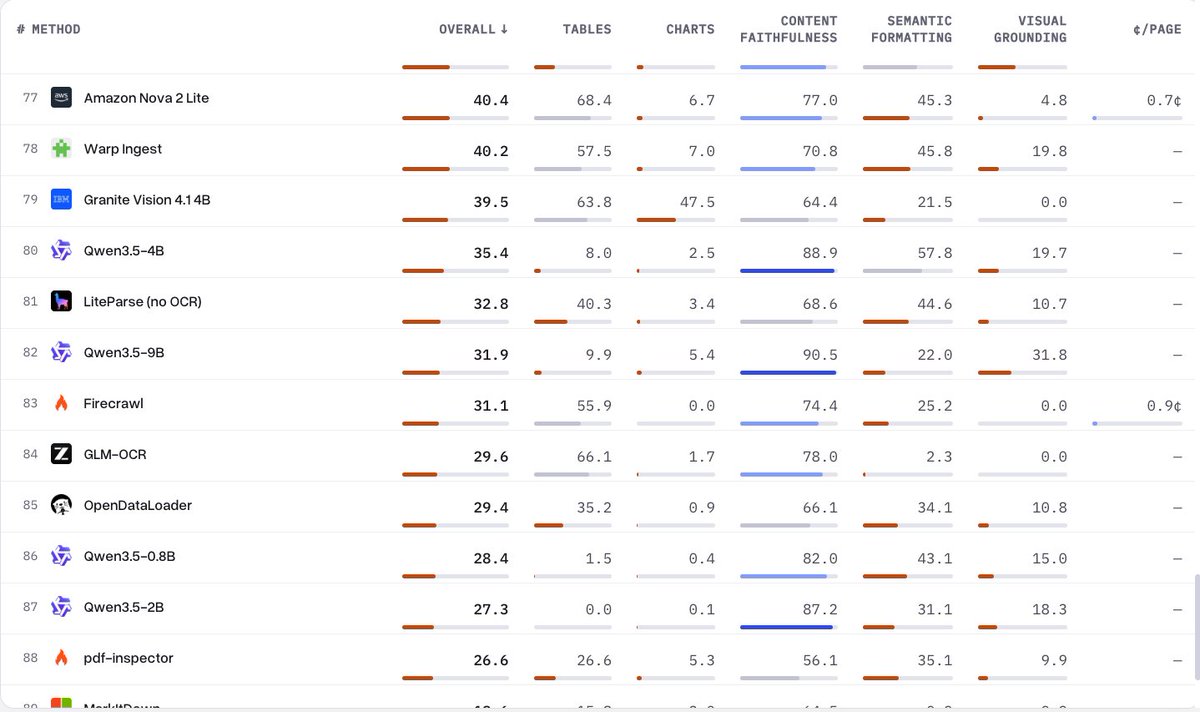
There’s generally a massive difference in quality between specialized OCR providers, “simple” open-weight OCR models, and free/OSS solutions. 1️⃣ Specialized OCR models (including LlamaParse) solve for the long-tail of complex documents, and make sure that everything is digitalized properly with lower hallucinations. They typically use posttrained VLMs to cover a wide range of real-world docs. They have tuned bounding boxes and annotations for each section, letting agents trace citations back to the source. They also usually come with additional endpoints like extraction and splitting. 2️⃣ Open-weight VLMs (e.g. Paddle, MinerU, UnlimitedOCR) are reasonable over relatively simple documents like text and tables and can do basic visual reasoning. They can seem somewhat cheap to host but can be unreliable in quality. 3️⃣ Free OSS libs (including liteparse) are meant to be universally accessible, fast text extractors. They’re not meant to do any sort of visual reasoning, so won’t perform any linearization, or reasoning over complex tables, or OCR over non-native docs. AI agents like Claude will by default use these tools to do a light pass over documents. But I would caution using these for retrieval, because they will drop entire sections that are not digitalized. At this point we’ve benchmarked over 92 tools on ParseBench. Come check it out! https://t.co/PWczfhp0OX