🐦 Twitter Post Details

Viewing enriched Twitter post

@AndrewYNg

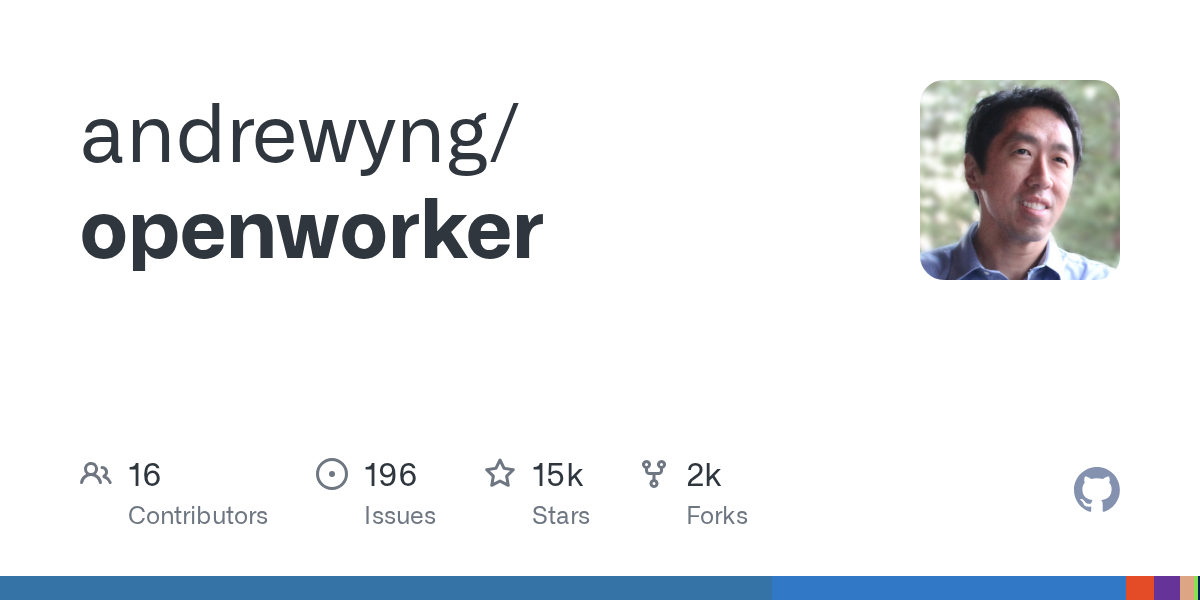
OpenWorker -- an open source agent that doesn't just chat but completes tasks on your laptop -- just released a new version with many features for security workflows. After our initial release, many users found it especially useful for cybersecurity. Attackers are already using AI; OpenWorker is committed to giving defenders the same leverage. Running an agent requires both (i) A model and (ii) A harness (the software around the model). Because the OpenWorker harness is fully open source, security teams can audit it to make sure we haven't built any backdoors that exfiltrate your code and data to some company or even a foreign adversary. OpenWorker now comes with built-in cybersecurity agents for (i) Scanning your code for vulnerabilities. (ii) Scanning dependencies for supply chain injections. (iii) Checking your cloud security configuration for attack surfaces. This enables developers to do much more security work before deployment (part of what's called the "shift left" movement). You choose the model: you can run open weight models fully locally so sensitive code never leaves your machine. This helps with legitimate security work (like reproducing a known exploit to defend against it) that can trigger refusals in leading closed models. Or use your ChatGPT subscription, or stealth preview models like Ox Alpha, or any model via API key. Thanks also to all the open source contributors! Join work with @rohitcprasad so please follow him too to get more frequent updates. Try it out: https://t.co/QPZLudn7ug Code: https://t.co/NYCiTD6hSq
Media 1

πŸ“Š Media Metadata

{
  "media": [
    {
      "url": "https://crmoxkoizveukayfjuyo.supabase.co/storage/v1/object/public/media/posts/2092315079576555806/media_0.jpg",
      "media_url": "https://crmoxkoizveukayfjuyo.supabase.co/storage/v1/object/public/media/posts/2092315079576555806/media_0.jpg",
      "type": "photo",
      "filename": "media_0.jpg"
    }
  ],
  "processed_at": "2026-08-25T19:02:12.413291",
  "pipeline_version": "2.0"
}

πŸ”§ Raw API Response

{
  "type": "tweet",
  "id": "2092315079576555806",
  "url": "https://x.com/AndrewYNg/status/2092315079576555806",
  "twitterUrl": "https://twitter.com/AndrewYNg/status/2092315079576555806",
  "text": "OpenWorker -- an open source agent that doesn't just chat but completes tasks on your laptop -- just released a new version with many features for security workflows. \n\nAfter our initial release, many users found it especially useful for cybersecurity. Attackers are already using AI; OpenWorker is committed to giving defenders the same leverage. Running an agent requires both (i) A model and (ii) A harness (the software around the model). Because the OpenWorker harness is fully open source, security teams can audit it to make sure we haven't built any backdoors that exfiltrate your code and data to some company or even a foreign adversary.\n\nOpenWorker now comes with built-in cybersecurity agents for (i) Scanning your code for vulnerabilities. (ii) Scanning dependencies for supply chain injections. (iii) Checking your cloud security configuration for attack surfaces. This enables developers to do much more security work before deployment (part of what's called the \"shift left\" movement).\n\nYou choose the model: you can run open weight models fully locally so sensitive code never leaves your machine. This helps with legitimate security work (like reproducing a known exploit to defend against it) that can trigger refusals in leading closed models. Or use your ChatGPT subscription, or stealth preview models like Ox Alpha, or any model via API key.\n\nThanks also to all the open source contributors!\n\nJoin work with @rohitcprasad so please follow him too to get more frequent updates.\n\nTry it out: https://t.co/QPZLudn7ug\nCode: https://t.co/NYCiTD6hSq",
  "source": "Twitter for iPhone",
  "retweetCount": 35,
  "replyCount": 33,
  "likeCount": 250,
  "quoteCount": 3,
  "viewCount": 17400,
  "createdAt": "Tue Aug 25 18:16:02 +0000 2026",
  "lang": "en",
  "bookmarkCount": 167,
  "isReply": false,
  "inReplyToId": null,
  "conversationId": "2092315079576555806",
  "displayTextRange": [
    0,
    280
  ],
  "inReplyToUserId": null,
  "inReplyToUsername": null,
  "author": {
    "type": "user",
    "userName": "AndrewYNg",
    "url": "https://x.com/AndrewYNg",
    "twitterUrl": "https://twitter.com/AndrewYNg",
    "id": "216939636",
    "name": "Andrew Ng",
    "isVerified": false,
    "isBlueVerified": true,
    "verifiedType": null,
    "profilePicture": "https://pbs.twimg.com/profile_images/733174243714682880/oyG30NEH_normal.jpg",
    "coverPicture": "https://pbs.twimg.com/profile_banners/216939636/1483126470",
    "description": "",
    "location": "Palo Alto, CA",
    "followers": 1829788,
    "following": 1104,
    "status": "",
    "canDm": false,
    "canMediaTag": true,
    "createdAt": "Thu Nov 18 03:39:11 +0000 2010",
    "entities": {
      "description": {
        "urls": []
      },
      "url": {}
    },
    "fastFollowersCount": 0,
    "favouritesCount": 1808,
    "hasCustomTimelines": true,
    "isTranslator": false,
    "mediaCount": 472,
    "statusesCount": 2023,
    "withheldInCountries": [],
    "affiliatesHighlightedLabel": {},
    "possiblySensitive": false,
    "pinnedTweetIds": [
      "2088302050706686198"
    ],
    "profile_bio": {
      "description": "Co-Founder of Coursera; Stanford CS adjunct faculty. Former head of Baidu AI Group/Google Brain. #ai #machinelearning, #deeplearning #MOOCs",
      "entities": {
        "description": {
          "hashtags": [
            {
              "indices": [
                97,
                100
              ],
              "text": "ai"
            },
            {
              "indices": [
                101,
                117
              ],
              "text": "machinelearning"
            },
            {
              "indices": [
                119,
                132
              ],
              "text": "deeplearning"
            },
            {
              "indices": [
                133,
                139
              ],
              "text": "MOOCs"
            }
          ]
        },
        "url": {
          "urls": [
            {
              "display_url": "andrewng.org",
              "expanded_url": "http://www.andrewng.org",
              "indices": [
                0,
                23
              ],
              "url": "https://t.co/XidcMETENd"
            }
          ]
        }
      }
    },
    "isAutomated": false,
    "automatedBy": null
  },
  "extendedEntities": {},
  "card": null,
  "place": {},
  "entities": {
    "hashtags": [],
    "symbols": [],
    "urls": [
      {
        "display_url": "openworker.com",
        "expanded_url": "https://openworker.com/",
        "indices": [
          1513,
          1536
        ],
        "url": "https://t.co/QPZLudn7ug"
      },
      {
        "display_url": "github.com/andrewyng/open…",
        "expanded_url": "https://github.com/andrewyng/openworker",
        "indices": [
          1543,
          1566
        ],
        "url": "https://t.co/NYCiTD6hSq"
      }
    ],
    "user_mentions": [
      {
        "id_str": "229878021",
        "indices": [
          1431,
          1444
        ],
        "name": "rohit",
        "screen_name": "rohitcprasad"
      }
    ]
  },
  "quoted_tweet": null,
  "retweeted_tweet": null,
  "isLimitedReply": false,
  "communityInfo": null,
  "article": null
}